

SUBSCRIBE TO OUR FREE NEWSLETTER
Daily news & progressive opinion—funded by the people, not the corporations—delivered straight to your inbox.
5
#000000
#FFFFFF
To donate by check, phone, or other method, see our More Ways to Give page.
Daily news & progressive opinion—funded by the people, not the corporations—delivered straight to your inbox.
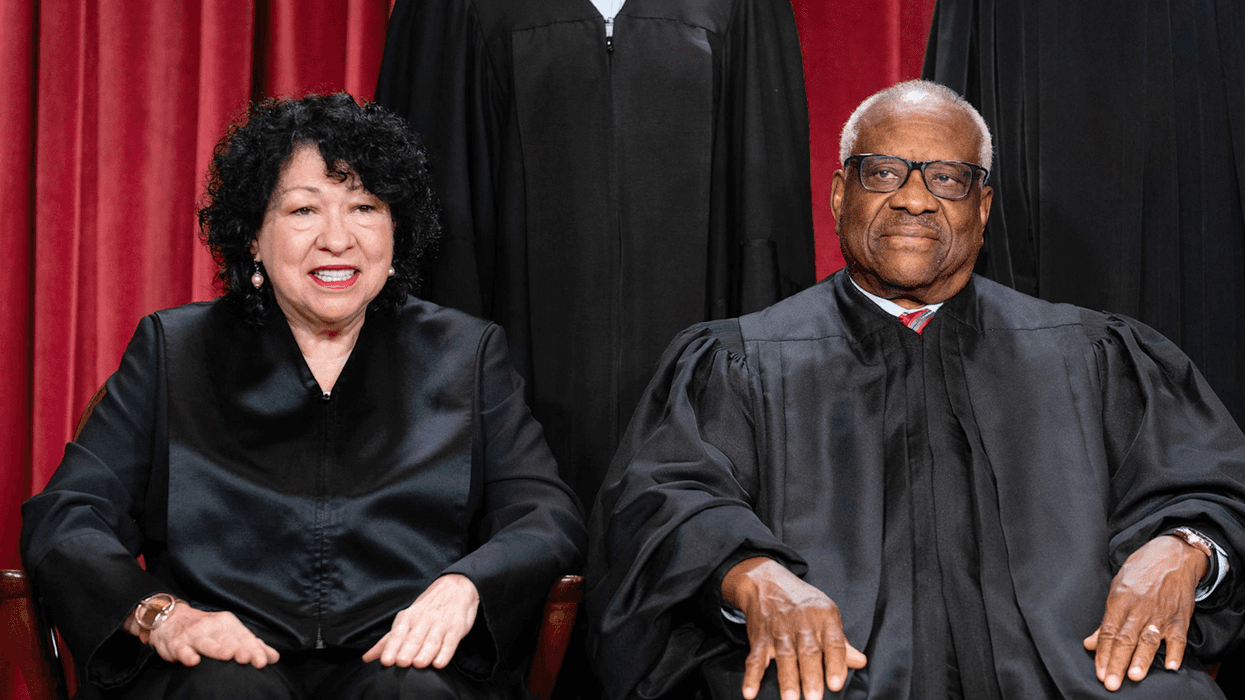
"Cowering liberals think this is a manners contest while conservatives are waging an ideological war," said one observer.
While one liberal US Supreme Court justice apologized Wednesday for mildly condescending remarks about a colleague, one of the high court's most right-wing members compared progressives to the Nazi leader Adolf Hitler—a contrast that one prominent observer called "a perfect commentary on the asymmetry in politics" between liberals and the MAGA right.
Justice Sonia Sotomayor said she apologized for "inappropriate" public comments about Justice Brett Kavanaugh's upbringing during an April 7 speech at the University of Kansas School of Law. Sotomayor, who grew up in financial poverty in the Bronx, referred to Kavanaugh’s concurring opinion in Noem v. Vasquez Perdomo, in which the son of high-powered Washington, DC attorneys brushed off the potentially fatal consequences of immigration enforcement stops.
“This is from a man whose parents were professionals," Sotomayor told the audience, "and probably doesn’t really know any person who works by the hour.”
Meanwhile on Wednesday, Justice Clarence Thomas linked the progressive movement—which Americans have to thank for many of the rights they have today, from the five-day, 40-hour workweek, to food safety and environmental protection, to near-universal civil and voting rights—with some of the 20th century's worst mass murderers.
"Progressivism seeks to replace the basic premises of the Declaration of Independence and hence our form of government," Thomas told attendees of a University of Texas event commemorating the 250th anniversary of the document's signing. "It holds that our rights and our dignities come not from God, but from government."
Thomas called the declaration "one of the greatest anti-slavery documents in the history of the Western civilization," even though its proclamation that "all men are created equal" did not apply to the 20% of the American population who were enslaved Blacks, and a condemnation of slavery was stricken from the draft due to objections from slave owners.
However, Thomas argued that the ideals in the Declaration of Independence have "fallen out of favor" among progressives.
"Progressivism was the first mainstream American political movement, with the possible exception of the pro-slavery reactionaries on the eve of the Civil War, to openly oppose the principles of the declaration" Thomas asserted. "Progressives strove to undo the declaration's commitment to equality and natural rights, both of which they denied were self-evident."
"It requires of the people a subservience and weakness incompatible with a constitution premised on the transcendent origin of our rights," he continued, adding that it "led to the governments that caused the most awful century that the world has ever seen."
"Stalin, Hitler, Mussolini, and Mao all were intertwined with the rise of progressivism, and all were opposed to the natural rights on which our declaration are based," Thomas added, referring to Soviet leader Josef Stalin, the Nazi leader, and Chinese revolutionary Mao Zedong.
Balls and Strikes editor-in-chief Jay Willis responded to Thomas' remarks on Bluesky, writing that it is "genuinely funny that Sonia Sotomayor issued a public apology today for her mild criticism of a conservative colleague on a specific, substantive issue, and then a few hours later Clarence Thomas picked up a mic and was like ALL LIBERALS ARE AMERICA-HATING COWARDS."
"Clarence Thomas is a right-wing freak," Willis added. "This is an indistinguishable from what unironic retvrn guys post on X about, like, women being allowed to have bank accounts. Anyone who tells you he is a profound thinker or a serious jurist or whatever is not to be trusted."
Journalist Mehdi Hasan said on X that "if Dems had a spine, they’d run on impeaching this financially corrupt justice who got away with the allegations of sexual harassment during his hearings."
Many right-wingers, meanwhile, applauded Thomas' remarks, with Sen. Mike Lee (R-Utah)—who helped try to steal the 2020 election for President Donald Trump—posting on X that "progressivism *is* an existential threat to America."
During his speech, Thomas also expressed his admiration for Harlan Crow, the Republican megadonor whose largesse to the justice and his wife Virginia—who was also involved in efforts to subvert the 2020 presidential election—has included undisclosed gifts like luxury vacations and private school tuition for a relative.
He also praised John Yoo, his former clerk and senior Justice Department lawyer who authored the infamous "torture memos" for the George W. Bush administration and publicly argued that the president has the power to order the massacre of an entire village of civilians or the crushing of a child's testicles.
Thomas closed his speech with a call to action.
"Each of you will have opportunities to be courageous every day," he said. "It may mean speaking up in class tomorrow when someone around you expects you to live by lies. It may mean confronting today's fashionable bigotries, such as antisemitism. It may mean standing up for your religion when it is mocked and disparaged by a professor."
"It may mean not budging on your principles when it will entail losing friends or being ostracized," he continued. "It may mean running for your school board when you see that they are teaching your children to hate your values and our country. It may mean turning down a job offer that requires you to make moral or ethical compromises."
This, from a justice on the nation's highest court whose moral and ethical compromises in the form of “the number, value, and extravagance of the gifts" he took from a billionaire linked to a case before that same court has "no comparison in modern American history," according to a Senate report.
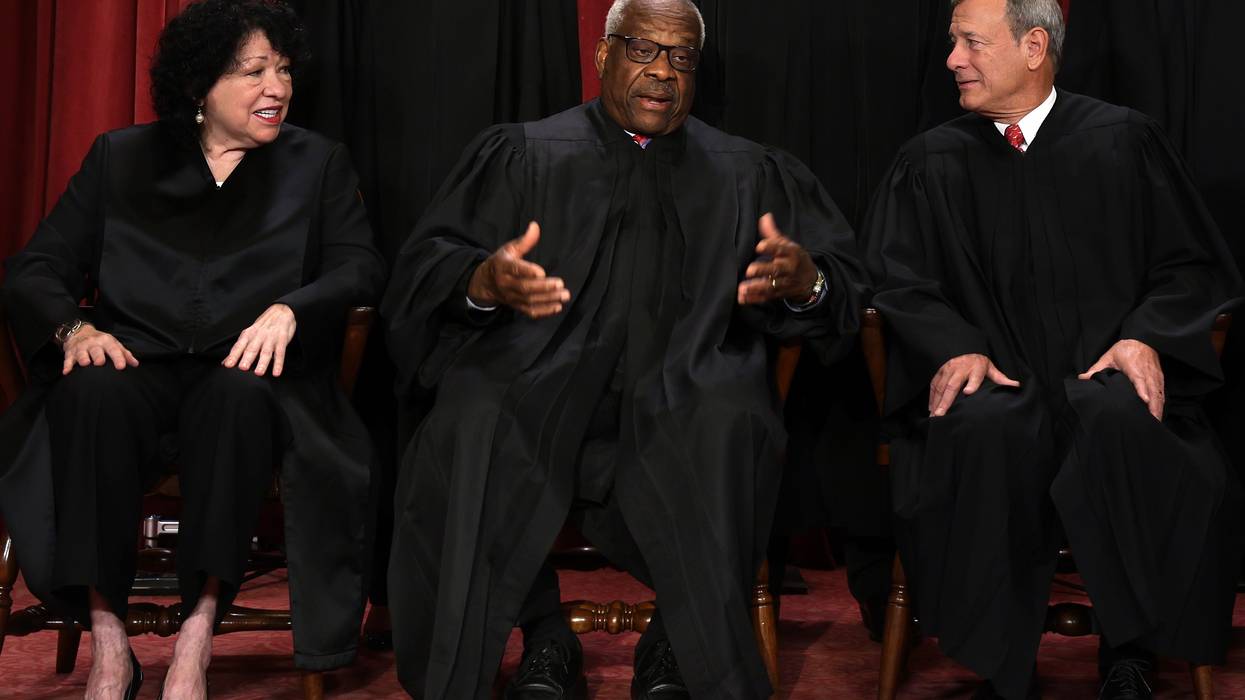
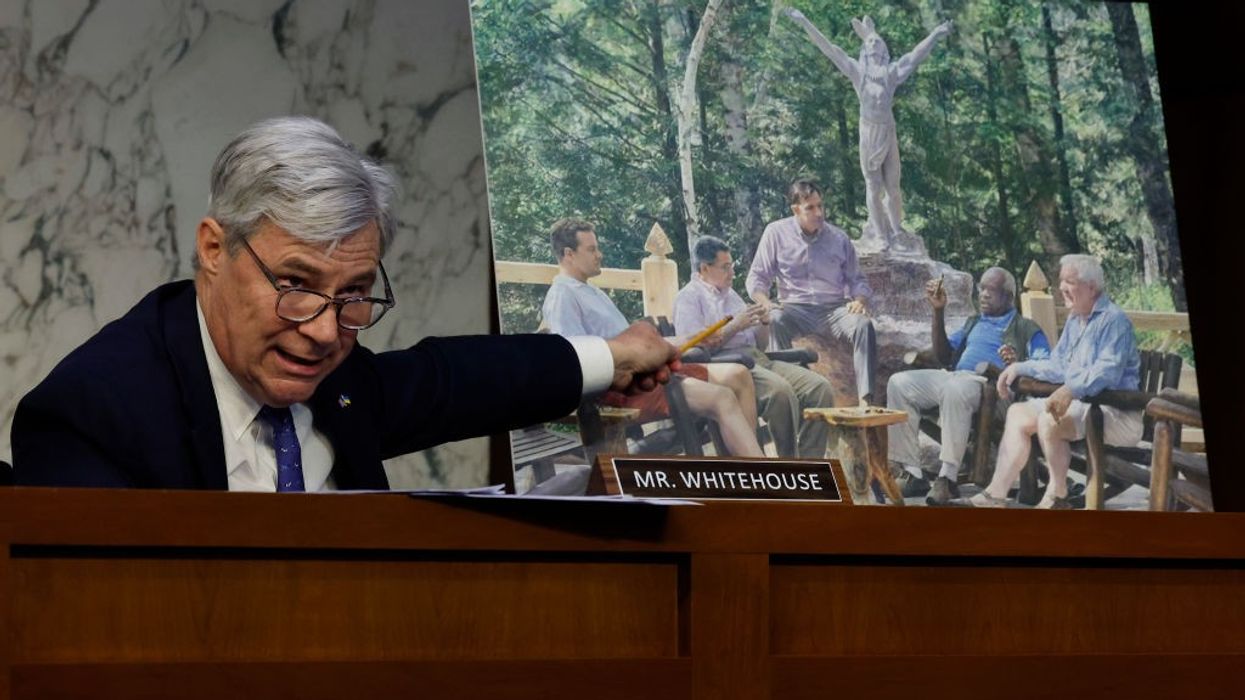
"By all appearances, the judicial branch is shirking its statutory duty to hold a Supreme Court justice accountable for ethics violations," said Sen. Sheldon Whitehouse.
Democratic Sen. Sheldon Whitehouse slammed the policy-setting body of the U.S. judiciary for declining his request to refer Supreme Court Justice Clarence Thomas to the Department of Justice over the right-wing judge's repeated failure to disclose luxury trips taken on the dime of billionaire benefactors.
Whitehouse (D-R.I.), a member of the Senate Judiciary Committee, said the decision by the Judicial Conference "contains a number of inconsistencies and strange claims, and ultimately doesn't address the only real question the Judicial Conference should've been focused on for the nearly two years it's spent on this matter: Is there reasonable cause to believe that Justice Thomas willfully broke the disclosure law?"
"By all appearances," Whitehouse added, "the judicial branch is shirking its statutory duty to hold a Supreme Court justice accountable for ethics violations."
In a letter to Whitehouse on Thursday, Judicial Conference Secretary Robert Conrad wrote that Thomas "has filed amended financial disclosure statements" addressing his past failure to divulge trips and other gifts funded by billionaires, including GOP megadonor Harlan Crow. Thomas has insisted he did not know he was required to disclose such gifts, a claim that Whitehouse and other critics have met with deep skepticism.
Conrad also expressed doubt that the Judicial Conference has the power to refer Supreme Court justices to the Justice Department, even as he acknowledged the body's referral authority under 5 U.S.C. § 13106(b).
That statute says the Judicial Conference "shall refer to the attorney general the name of any individual which such official or committee has reasonable cause to believe has willfully failed to file a report or has willfully falsified or willfully failed to file information required to be reported."
"There is at least reasonable cause to believe that Justice Thomas intentionally disregarded the disclosure requirement."
In April 2023, Whitehouse and Rep. Hank Johnson (D-Ga.) urged the Judicial Conference to "step in and refer Justice Thomas to the attorney general for investigation" after ProPublica revealed that in addition to funding luxury trips, Crow purchased property from the judge.
Thomas did not disclose the transaction, a failure that Whitehouse and Johnson characterized as "part of an apparent pattern of noncompliance with disclosure requirements."
"There is at least reasonable cause to believe that Justice Thomas intentionally disregarded the disclosure requirement to report the sale of his interest in the Savannah properties in an attempt to hide the extent of his financial relationship with Crow," the Democratic lawmakers wrote in their 2023 letter to the Judicial Conference.
The body's decision Thursday came days after the Senate Judiciary Committee uncovered two additional private jet and yacht trips Thomas took in 2021 at Crow's expense.
"It's clear that the justices are losing the trust of the American people at the hands of a gaggle of fawning billionaires," Sen. Dick Durbin (D-Ill.), chair of the Senate Judiciary Committee, said in a statement last month after his panel released a report on the Supreme Court's "ethical crisis."
The report accuses the Judicial Conference of failing "to adequately respond to the Supreme Court's ethical challenges," noting that the body's September 2024 changes to disclosure requirements "are oddly specific in expanding the personal hospitality exemption and seem more likely to absolve past misconduct and facilitate the acceptance of future largesse than strengthen judicial ethics."
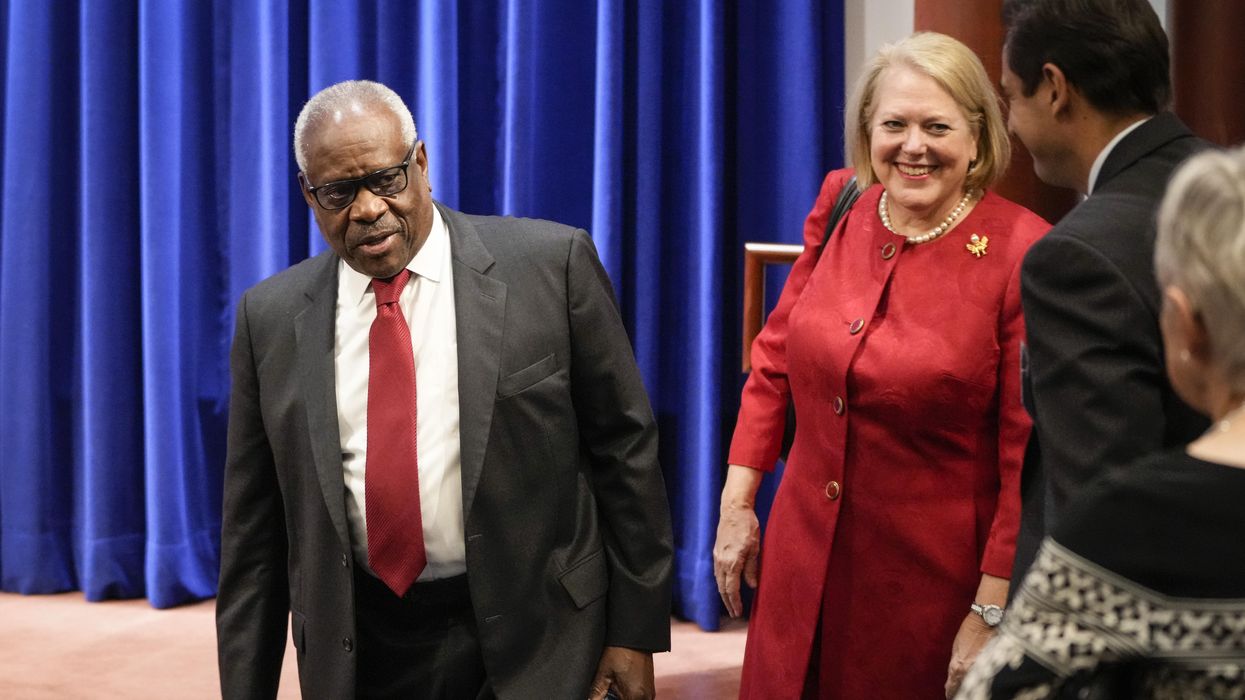
"The Supreme Court should be the gold standard for judicial ethics," said one reform advocate, "yet billionaires like Harlan Crow are buying the loyalty of justices one private jet flight at a time."
New reporting on Monday that U.S. Supreme Court Justice Clarence Thomas failed to report even more private travel gifted by a Republican mega-donor sparked renewed calls for reforms including a binding code of ethics for members of the nation's highest court.
The New York Times reported that Senate Finance Committee Chair Ron Wyden (D-Ore.) detailed in a letter to Michael Bopp, an attorney representing billionaire businessman Harlan Crow, how Thomas "has never disclosed" round-trip travel by Thomas and his wife, conservative activist Virginia Thomas, between Hawaii and New Zealand in November 2010 on Crow's private jet.
"Furthermore, it was revealed just a few weeks ago that Justice Thomas enjoyed complimentary use of private jets paid for by Mr. Crow on 17 different occasions since 2016, with nine of those flights coming in the last three years," Wyden wrote.
"While Justice Thomas has only recently updated his financial disclosures to include an eight-day voyage aboard the Michaela Rose in Indonesia in 2019, Justice Thomas still has not disclosed other trips on the Michaela Rose," the senator continued, referring to Crow's yacht. "Public reports show evidence that Justice Thomas was a passenger aboard the Michaela Rose in Greece, New Zealand, and elsewhere."
Thomas' 2023 disclosure, which was published in June, includes food and lodging during 2019 trips to Bali and Bohemian Grove—a secretive, men-only retreat in Sonoma County, California—paid for by Crow. The trips and other gifts for Thomas—including yacht excursions, flights on private jets, and private school tuition for the justice's grandnephew—were first revealed by ProPublica last year. Thomas claimed key disclosures were "inadvertently omitted at the time of filing."
Also in June, the advocacy group Fix the Court published a database listing 546 total gifts valued at over $4.7 million given to 18 current and former justices mostly between 2004 and 2023, as identified by the U.S. Federal Trade Commission (FTC). The database also lists "likely" gifts received by the justices and their estimated values, bringing the grand total to 672 gifts valued at nearly $6.6 million.
Thomas led the pack with 193 FTC-identified gifts collectively valued at over $4 million. Of these, he listed only 27 in financial disclosure reports.
Wyden wrote:
I seek to understand the means and scale of Mr. Crow's undisclosed largesse to Justice Thomas to inform several pieces of legislation that the committee is drafting, including but not limited to: reforms to the tax code concerning filing requirements for gift tax returns, audit requirements for Supreme Court justices, and comprehensive ethics reform that would strengthen the Ethics in Government Act and other laws related to the disclosure of complimentary private jet and yacht travel by Supreme Court justices...
Unfortunately, your prior responses to the committee have done nothing to address concerns that personal trips aboard Mr. Crow's superyacht and private jets for lavish vacations, including complimentary private jet travel for Justice Thomas, may have been used to help Mr. Crow avoid or evade paying federal taxes. This is not a particularly complicated matter. Mr. Crow could easily clarify for the committee whether tax deductions were claimed on superyacht and private jet use by Justice Thomas, but he refuses to do so.
This is particularly troubling in light of the committee's discovery of additional lavish international travel by Justice Thomas at Mr. Crow's expense that Justice Thomas has failed to properly disclose.
Wyden's letter asks Bopp to provide financial statements for Rochelle Charter, the holding company for the Michaela Rose, and to answer questions including whether Thomas ever reimbursed Crow for the private jet trip from Hawaii to New Zealand and other travel.
Last month, Sen. Sheldon Whitehouse (D-R.I.), who chairs a Senate Judiciary subcommittee on the federal courts and oversight, and Wyden asked the Biden administration to appoint a special counsel to investigate Thomas for alleged ethics violations.
Government ethics advocates weighed in on the new revelations.
"These new reports are as appalling as they are unsurprising," Demand Justice managing director Maggie Jo Buchanan said in a statement. "Justice Thomas' actions and—critically—[Supreme Court Chief Justice John Roberts'] refusal to assure the public that the court takes these never-ending revelations seriously, shows the necessity of meaningful and immediate reform."
"Trust for the Supreme Court remains at historic lows in part because the MAGA justices openly display their allegiances to wealthy billionaires and partisan interests instead of the public, whom they are meant to serve," Buchanan added. "We call on Congress to urgently pass full-scale reform, including an enforceable code of ethics as President [Joe] Biden proposed last week."
Biden called for, and Vice President Kamala Harris—who is replacing the incumbent atop the Democratic presidential ticket— endorsed reforms including term limits for Supreme Court justices, an enforceable code of ethics, and a constitutional amendment reversing the court's decision to grant presidents broad immunity for official acts.
Last year, the Supreme Court formally announced a new 14-page
code of conduct that watchdog groups dismissed as what the Revolving Door Project called a "toothless PR stunt."
Brett Edkins, managing director of policy and political affairs for the advocacy group Stand Up America, said Monday that "the Supreme Court should be the gold standard for judicial ethics, yet billionaires like Harlan Crow are buying the loyalty of justices one private jet flight at a time."
"Our nation's highest court has become a political plaything for the ultra-wealthy and well-connected," Edkins added. "Congress must step up as a co-equal branch of government and tackle the corruption plaguing the court. It's time for our leaders to restore integrity and transparency to the Supreme Court by passing a binding code of ethics and term limits."
The assault by the six right-wing justices on the Chevron doctrine is an assault on everyday people, carried out on behalf of corporations and the Court’s wealthy benefactors.
Last month, the Supreme Court broke with four decades of precedent and overturned Chevron deference, a cornerstone of administrative law that has been cited by federal courts over 18,000 times. The 6-3 ruling, handed down on party lines in the cases Loper Bright Enterprises v. Raimondo and Relentless Inc. v. Department of Commerce, eliminated a judicial doctrine that had long instructed federal courts to defer to federal agencies’ interpretations of ambiguous or unclear laws passed by Congress, rather than have judges act as regulatory policy-makers.
Chevron deference was established in the 1984 Supreme Court case Chevron v. Natural Resources Defense Council for two main reasons. First, because federal agencies are staffed with career civil servants and subject matter experts like scientists, researchers, and data analysts who understand the nitty-gritty details of regulatory policy-making far better than any given judge. Second was the importance of democratic accountability and the separation of powers, with Justice John Paul Stevens writing in the Chevron decision that “federal judges—who have no constituency—have a duty to respect legitimate policy choices made by those who do.”
In her blistering dissent for Loper Bright, Justice Elena Kagan excoriated the Court’s right-wing majority for “giv[ing] itself exclusive power over every open issue—no matter how expertise-driven or policy-laden—involving the meaning of regulatory law.” The Court itself had inadvertently showcased the danger of having judges act as regulatory experts a day earlier, when Justice Neil Gorsuch repeatedly confused the air pollutant nitrogen oxide with the anesthetic nitrous oxide (more commonly known as “laughing gas”).
But Chevron’s repeal is no laughing matter. Allowing unelected, lifetime-appointed federal judges to invalidate countless regulatory protections based purely on their own political preferences will open the floodgates to a corporate legal assault on crucial regulatory protections—from clean air and water, to food and drug safety, to labor and civil rights.
Curiously, Chevron was once celebrated by conservatives (including the late Antonin Scalia), as it allowed the Reagan administration to continue its industry-friendly regulatory approach unimpeded by the more liberal federal courts at the time (the DC Circuit ruling overturned by SCOTUS in Chevron was written by then-circuit judge Ruth Bader Ginsburg). But over the past decade, as Democrats regained control of the executive branch and used Chevron deference to check corporate power, conservatives have changed their tune. Aided by the GOP’s packing of the courts with Federalist Society alumni, the conservative legal movement and Big Business now see the unelected judiciary as the best long-term venue for dismantling the administrative state.
Allowing unelected, lifetime-appointed federal judges to invalidate countless regulatory protections based purely on their own political preferences will open the floodgates to a corporate legal assault on crucial regulatory protections—from clean air and water, to food and drug safety, to labor and civil rights.
Their most powerful ally in this effort has been Justice Clarence Thomas, a former supporter of Chevron doctrine whose about-face has been equally opportunistic. According to The Lever, Thomas—who wrote a landmark opinion upholding Chevron in 2005—began working to overturn the doctrine after he and his wife received lavish undisclosed gifts and financial support from wealthy conservative benefactors, including real estate mogul Harlan Crow and Federalist Society leader Leonard Leo. Records unearthed by ProPublica have also revealed that Thomas was invited to fundraising events held by fossil fuel billionaire Charles Koch, whose donor network has long sought the overturning of Chevron.
These wealthy benefactors played a hidden role in the successful overturning of Chevron this term by using the disputes about federal fishing fees in the Loper Bright and Relentless cases as stalking horses against the doctrine. Petitioners in both cases were represented pro bono by lawyers with close ties to the Koch network. In Loper Bright, herring fisherman Bill Bright was represented by three lawyers who also work for Americans for Prosperity, one of the Koch Network’s most prominent organizations. In Relentless, the petitioners were likewise represented free of charge by the New Civil Liberties Alliance (NCLA), a right-wing litigation group that has received over $5 million from Koch-affiliated organizations and $4 million from Leonard Leo’s dark money groups.
The Court’s power brokers have also used amicus curiae (“friend of the court”) briefs to engage in judicial lobbying. In Loper Bright and Relentless, we found 19 examples of this practice. Right-wing think tanks Cato Institute, Competitive Enterprise Institute, and Texas Public Policy Foundation—who all filed anti-Chevron doctrine amicus briefs in Loper Bright—have received millions in donations from Koch organizations. The Board of Trustees for the Manhattan Institute, another Koch-funded Loper Bright amicus filer, is chaired by Justice Samuel Alito’s wealthy fishing buddy Paul Singer and counts Harlan Crow’s wife Kathy among its members. Leonard Leo has similarly bankrolled several amicus filers, including the Mike Pence-led Advancing American Freedom, the anti-abortion group Students for Life of America, and (conspicuously) the recently-launched fishing industry lobby group NEFSA.
Despite these flagrant conflicts of interest, neither Justice Thomas nor Justice Alito recused themselves from Loper Bright or Relentless. In fact, the only Justice to recuse from either Chevron case was Ketanji Brown Jackson, who had participated in oral arguments for Loper Bright while serving as a circuit judge.
The devastating impact of Chevron repeal has been compounded by other radical party-line power-grabs made by the Court this term.
The Loper Bright decision is already bearing fruit for its corporate supporters. Just hours after the decision, Eastern District of Texas Judge Sean D. Jordan cited it in his decision to partially block a Department of Labor rule that would have made over 4 million workers eligible for overtime pay. Loper Bright has also been cited in at least four other legal challenges against the DOL’s protections for tipped and gig workers, as well as a new lawsuit filed by three New Jersey hospitals against HHS rules governing Medicare reimbursement. Experts at the Center for American Progress have outlined the many other regulatory protections that could be at risk post-Chevron, including fair housing and anti-discrimination rules, relief for student borrowers, the EPA’s new vehicle and power plant emissions standards, and the CFPB’s crackdown on predatory junk fees.
The devastating impact of Chevron repeal has been compounded by other radical party-line power-grabs made by the Court this term. In SEC v. Jarkesy, the conservative majority made it much harder for the federal government to prosecute white collar criminals, while also threatening the structure of many administrative agencies. And in Corner Post v. Board of Governors of the Federal Reserve System, the Justices functionally eliminated the statute of limitations for challenging new federal regulations. In her dissent for the latter, Justice Jackson warned that “the tsunami of lawsuits against agencies that the Court's holdings in this case and Loper Bright have authorized has the potential to devastate the functioning of the Federal Government.”
Of course for the right-wing, devastation is the goal. The Court’s dismantling of the administrative state follows Donald Trump’s own attempt to do so in the waning days of his presidency through the short-lived Schedule F scheme, which would have empowered the president to fire thousands of career civil servants at will and replace them with political loyalists. Though repealed by the Biden administration, restoring Schedule F remains a central plank of both Trump’s 2024 campaign and the Heritage Foundation’s Project 2025.
Corporate actors and right-wing activists are attacking the administrative state because they know how important it is for protecting the public from unchecked corporate power.
If nothing else, the end of Chevron should end debate among court-watchers as to whether any of the Roberts Court’s six conservative members (including Loper Bright author John Roberts himself) are “moderate.” Loper Bright is one more example in a series of landmark rulings— including Citizens United v. FEC, Janus v. AFSCME, Dobbs v. Jackson Women’s Health, and the recent Trump v. United States—which reveal what John Roberts and his Court actually care about. They have no regard for long-held precedent or for the rule of law, only far-reaching power-grabs that benefit the Federalist Society and Big Business. Their flagrant disregard for judicial ethics and the separation of powers should compel Congress to rein in the Court’s unchecked power by codifying Chevron deference into law, enacting a binding and enforceable Supreme Court ethics code, impeaching Justices Thomas and Alito, and expanding the Supreme Court.
Corporate actors and right-wing activists are attacking the administrative state because they know how important it is for protecting the public from unchecked corporate power. So long as the Supreme Court retains its corrupt right-wing majority, the future looks bright for Big Business. For the rest of us, the Court’s relentless power-grabs will make everyday life much worse.

"The next trip Justice Thomas takes should be into retirement. Resign," wrote one Democratic lawmaker.
The Senate Judiciary Committee revealed Thursday that Supreme Court Justice Clarence Thomas took at least three additional undisclosed trips on a private jet owned by Texas billionaire Harlan Crow, a finding that prompted yet another round of calls for the right-wing judge to step down.
New details of Thomas' luxury travel emerged from negotiations between the Senate committee—which authorized a subpoena for Crow last year—and the billionaire's attorneys.
Documents the committee obtained from Crow "revealed travel and gifts that Justice Thomas has failed to disclose to date," including a May 2017 private jet trip from St. Louis to Kalispell, Montana and a return flight to Dallas; a March 2019 private jet trip from Washington, D.C. to Savannah, Georgia and back; and a June 2021 private jet trip from Washington, D.C. to San Jose, California and back.
Sen. Dick Durbin (D-Ill.), the chair of the Senate Judiciary Committee, said in a statement that "nearly $4.2 million in gifts and even that wasn't enough for Justice Thomas, with at least three additional trips the committee found that he has failed to disclose to date."
"The Senate Judiciary Committee's ongoing investigation into the Supreme Court's ethical crisis is producing new information—like what we've revealed today—and makes it crystal clear that the highest court needs an enforceable code of conduct, because its members continue to choose not to meet the moment," said Durbin. "As a result of our investigation and subpoena authorization, we are providing the American public greater clarity on the extent of ethical lapses by Supreme Court justices and the need for ethics reform."
"Thomas should resign immediately and I urge all my colleagues to demand the same."
The Senate panel's revelations came days after Thomas belatedly disclosed two luxury trips funded by Crow, a megadonor to the Republican Party. Thomas claims he "inadvertently omitted" the trips when he filed an earlier disclosure form.
The judiciary committee's Supreme Court investigation was spurred by a series of reports by the investigative outlet ProPublica, which uncovered dozens of billionaire-financed vacations Thomas has taken during his three decades on the bench. Ethics experts say Thomas likely violated the law by failing to disclose private jet flights and other gifts.
"A cadre of industry titans and ultrawealthy executives have treated him to far-flung vacations aboard their yachts, ushered him into the premium suites at sporting events, and sent their private jets to fetch him—including, on more than one occasion, an entire 737," the outlet reported last August. "It's a stream of luxury that is both more extensive and from a wider circle than has been previously understood."
ProPublica also uncovered a luxury fishing vacation that Justice Samuel Alito took with hedge fund billionaire Paul Singer, who later had business before the Supreme Court.
Earlier this week, Sen. Lindsey Graham (R-S.C.) blocked Senate Democrats' attempt to pass legislation that would require the Supreme Court to adopt a binding code of ethics and create new recusal requirements surrounding justices' acceptance of gifts.
Following the judiciary panel's new disclosures, Democratic lawmakers reiterated their calls for Thomas to resign.
"Clarence Thomas is corrupt as hell and the corruption at the Republican Supreme Court stinks to high heaven," Rep. Bill Pascrell, Jr. (D-N.J.) wrote on social media. "Thomas should resign immediately and I urge all my colleagues to demand the same."
Rep. Gerry Connolly (D-Va.) echoed Pascrell, writing: "The next trip Justice Thomas takes should be into retirement. Resign."
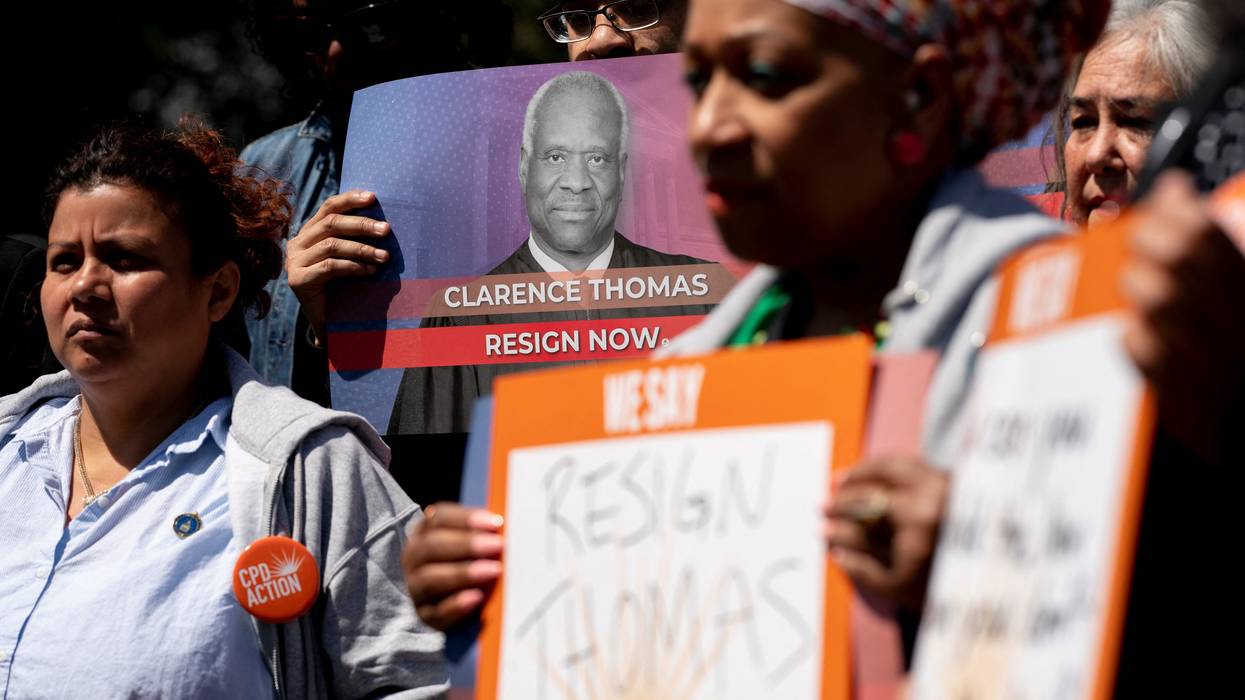
"The fact that he omitted the plane to Indonesia and the yacht... leads me to believe he and I have very different interpretations of his disclosure responsibilities, and that's a problem," said one campaigner.
Far-right U.S. Supreme Court Justice Clarence Thomas has officially—and belatedly—disclosed two luxury vacations gifted him by a billionaire Republican megadonor as eight of the nine high court judges released their financial disclosure statements on Friday.
Thomas' 2023 disclosure includes food and lodging during 2019 trips to Bali, Indonesia and Bohemian Grove—a secretive, men-only retreat in Sonoma County, California—paid for by billionaire real estate developer Harlan Crow. The trips and other gifts for Thomas—including yacht excursions, flights on private jets, and private school tuition for the justice's grandnephew—were first revealed by ProPublica last year.
In his 2023 disclosure, Thomas claims information about the 2019 trips was "inadvertently omitted at the time of filing," and that the justice "sought and received guidance from his accountant and ethics counsel" as he prepared this year's report.
This fits a pattern: In 2011, Thomas attributed his failure to disclose his wife's income to a "misunderstanding of the filing instructions." In 2023, he said he "inadvertently failed to realize" that he needed to publicly disclose a real estate deal with Crow.
"The fact that he omitted the plane to Indonesia and the yacht around Indonesia leads me to believe he and I have very different interpretations of his disclosure responsibilities, and that's a problem," Gabe Roth, executive director of the watchdog Fix the Court, told The Washington Post.
The justices' disclosures also show that three members of the court—Justices Brett Kavanaugh, Neil Gorsuch, and Ketanji Brown Jackson—received six-figure payments for book deals.
"Each justice would be capable of earning 10 times their current salary in the private sector, so it's reasonable for them to want to boost their income as authors, especially those with inspiring life stories," said Roth. "This may be an unpopular opinion, but I don't see anything ethically compromising about it so long as the justices don't use their offices to hawk books, they speak to ideologically diverse audiences on their book tours, and they recuse from petitions involving their publishers."
Jackson also took four tickets to a Beyoncé concert worth over $3,700.
"Justice Jackson is 'Crazy in Love' with Beyoncé's music. Who isn't?" Supreme Court spokesperson Patricia McCabe told The Washington Post.
But Roth said that "next time... Justice Jackson should pay for her own Beyoncé tickets."
Justice Sonia Sotomayor was paid $1,900 to voice an animated version of herself on the PBS children's show "Alma's Way." Justice Elena Kagan was reimbursed for travel, lodging, and food by Notre Dame Law School following a speech she delivered there last September. Chief Justice John Roberts and Justices Sonia Sotomayor, Elena Kagan, Amy Coney Barrett, Neil Gorsuch, and Brett Kavanaugh did not receive any gifts last year, according to their disclosure forms. Justice Samuel Alito was again granted an extension to file.
The justices' disclosures came a day after Fix the Court published a database listing 672 gifts worth nearly $6.6 million that current and former Supreme Court judges received, mostly since 2004. Thomas accounted for 193 gifts with an estimated value of more than $4 million that were identified by the U.S. Federal Trade Commission.
The disclosures also came in the same week that Congressman Dan Goldman (D-N.Y.) introduced the Supreme Court Ethics and Investigations Act, which would create a Supreme Court Office of Investigative Counsel tasked with investigating ethical improprieties and reporting them to Congress.
A code of conduct officially endorsed by the Supreme Court last November was widely panned as a toothless public relations stunt.
Thomas' gifts from wealthy donors—and his failure to report them—have driven calls for his recusal from some cases and even his resignation or impeachment.
Responding to Fix the Court's database, Sen. Ron Wyden (D-Ore.) noted Friday that former Supreme Court Justice Abe Fortas "resigned in shame" in 1969 "over a payment that was less than a tiny fraction of what Clarence Thomas has taken from his billionaire pals."
"Republicans are protecting this obvious corruption by blocking any attempt to hold Thomas accountable," Wyden added.
Citing a "moral failure," the nonpartisan group Veterans for Responsible Leadership asserted Friday that "Clarence Thomas needs to face impeachment."
"Failing to disclose those gifts is an acknowledgment he knew it was wrong," the group added. "The character of the court needs to be above reproach, so he must be shown the door."

"The Supreme Court's gifts shouldn't be a secret—Congress must pass a binding code of ethics now," said one advocate.
U.S. Supreme Court justices have received millions of dollars in gifts over the past two decades—with far-right Justice Clarence Thomas being the main beneficiary of this largesse, according to a detailed analysis published Thursday.
The advocacy group Fix the Court published a database listing 546 total gifts valued at over $4.7 million given to 18 current and former justices mostly between 2004 and 2023, as identified by the U.S. Federal Trade Commission (FTC). The database also lists "likely" gifts received by the justices and their estimated values, bringing the grand total to 672 gifts valued at nearly $6.6 million.
The database was published a day before the justices are expected to release their financial disclosure reports.
"Supreme Court justices should not be accepting gifts, let alone the hundreds of freebies worth millions of dollars they've received over the years," Fix the Court executive director Gabe Roth said in a statement Thursday.
Thomas led the pack with 193 FTC-identified gifts collectively valued at over $4 million. Of these, he listed only 27 in financial disclosure reports.
According to Fix the Court, Thomas' gifts consisted mainly of
free trips to Bohemian Grove—a secretive, men-only retreat in Northern California—and Topridge, the private lakeside resort in upstate New York owned by billionaire Republican megadonor Harlan Crow.
By dollar amount, the late Justice Antonin Scalia came in a distant second with 67 gifts worth over $210,000 combined, while Justice Samuel Alito took 16 gifts valued collectively at just over $170,000. At the low end of the database, Justice Brett Kavanaugh received a single gift worth $100, while former Justice David Souter was also given one gift with a value of $349.
According to the analysis:
The tally includes the amount of principal and interest—$253,686—we believe Tony Welters forgave in 2008 for the luxury RV he gifted to Thomas the decade before. FTC's numbers include the tuition gifts, $144,400 across six years, Thomas received for his grandnephew... It captures the value of Thomas' yacht trips to Russia, the Greek Isles, and Indonesia, as well as some new information on the Thomas flights Tony Novelly paid for and the Scalia and Alito fishing trips Robin Arkley paid for that's included in the congressional record. The value of the gifts Scalia received on his ill-fated trip to Marfa, Texas, in 2016 are also included.
"Public servants who make four times the median local salary, and who can make millions writing books on any topic they like, can afford to pay for their own vacations, vehicles, hunting excursions, and club memberships," said Roth, "to say nothing of the influence the gift-givers are buying with their 'generosity.'"
"The ethics crisis at the court won't begin to abate until justices adopt stricter gift acceptance rules," he added.
Thomas' gifts from billionaire Republican donors—and his refusal to report them—have fueled calls for his recusal from some cases and even resignation.
Following intense public pressure, the Supreme Court last November announced it had formally adopted a code of conduct that was promptly slammed as a "toothless PR stunt" by the watchdog Revolving Door Project and others.
"The ethics crisis at the court won't begin to abate until justices adopt stricter gift acceptance rules."
"Headline after headline about Supreme Court justices accepting lavish vacations and eye-poppingly expensive gifts is bound to erode trust in the court," U.S. Sen. Jeff Merkley (D-Ore.) said on social media Wednesday. "We need to pass the Supreme Court Ethics, Recusal, and Transparency Act and enforce a real code of ethics."
Fix the Court and other groups also support the Supreme Court Ethics and Investigations Act, which was introduced earlier this week by Congressman Dan Goldman (D-N.Y.) and would create a Supreme Court Office of Investigative Counsel tasked with investigating ethical improprieties and reporting them to Congress.
Reacting to the new analysis, the pro-democracy group Stand Up America said, "The Supreme Court's gifts shouldn't be a secret—Congress must pass a binding code of ethics now."
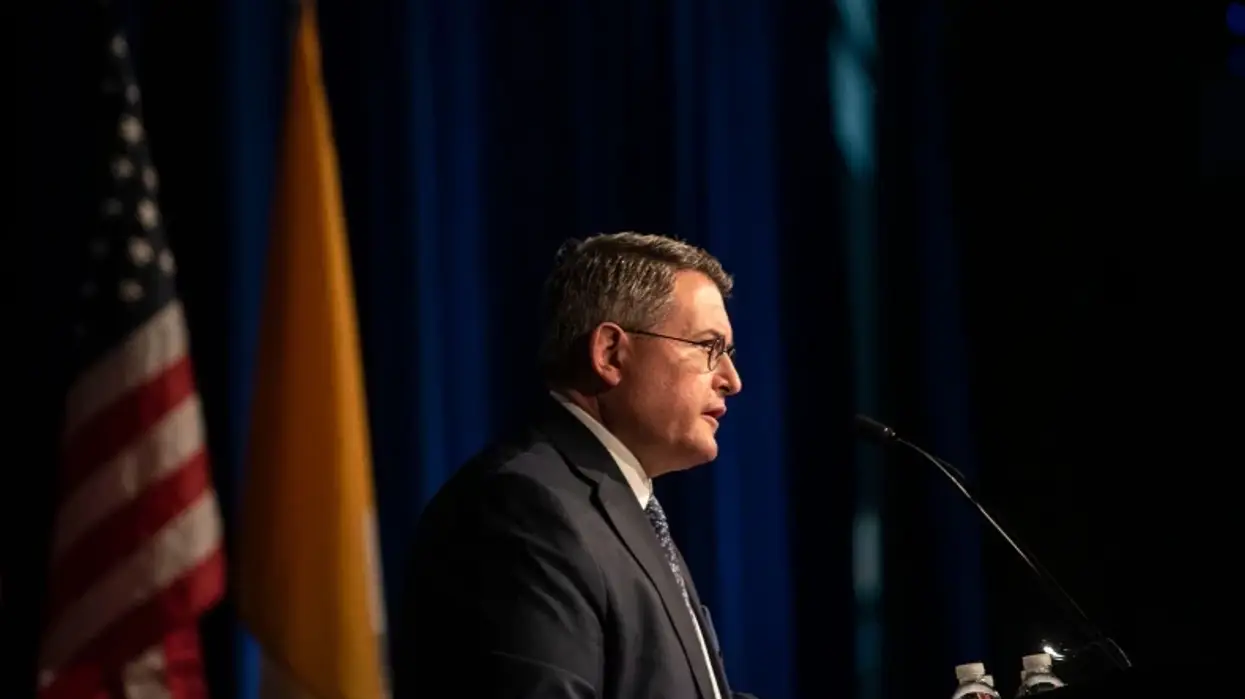
Democratic lawmakers on the U.S. Senate Judiciary Committee on Thursday said Republican members' conduct spoke volumes as the GOP used "every permutation" of obstruction to try to prevent the panel from subpoenaing billionaire megadonor Harlan Crow and Federalist Society co-chairman Leonard Leo over their gifts to right-wing U.S. Supreme Court justices—a ploy that ultimately failed.
A committee meeting was marked by a tumultuous back-and-forth between Republicans and Democrats, with lawmakers including Texas GOP Sens. John Cornyn and Ted Cruz accusing the Democrats of enacting a vendetta against conservative justices on the high court with their vote in favor of ordering Crow and Leo to testify.
Both men have refused to provide the committee with information regarding reports that they funded luxury trips and other gifts for right-wing Justices Clarence Thomas and Samuel Alito.
As a leader of the Federalist Society, Leo has also played a key role in securing seats on the Supreme Court for some of its most conservative members, paving the way for the court to overturn Roe v. Wade and significantly weaken states' abilities to regulate gun ownership, among other rulings.
Stand Up America applauded committee Chair Dick Durbin (D-Ill.) and the other Democrats for voting to subpoena Crow and Leo, saying the move—in the face of Republican obstruction and claims that the subpoenas would "destroy" the committee—helped to reassert Congress' role as a co-equal branch of government.
"Billionaires like Harlan Crow believe they can buy loyalty on the Supreme Court, turning our nation's highest court into a political plaything for the ultrawealthy and well-connected," said Brett Edkins, managing director of policy and political affairs for Stand Up America. "Today, the Senate Judiciary Committee sent a strong message that the rich and powerful cannot evade scrutiny or accountability."
"The American people deserve answers," Edkins continued. "Today's vote brings us one step closer to understanding the full scope of Justice Thomas' and Alito's wrongdoing and restoring honesty and integrity to the Supreme Court."
Earlier this month, the Supreme Court announced for the first time the establishment of an ethics code, but advocates said that without any enforcement mechanisms in place, the code would not go far in ensuring an end to lavish gifts like those paid for by Crow and Leo.
"We need a Supreme Court that works for all of us, and we need assurance that it is," said Maya Wiley, president and CEO of the Leadership Conference on Civil and Human Rights. "Following the court's recent adoption of its own code of conduct, which is insufficient and lacks any mechanism for enforcement, this urgent work must continue."
"As the committee exercises its crucial oversight authority to ensure abuses of power don't go unchecked in our federal judiciary, Congress must continue to act," Wiley said. "It is unacceptable that abuses of power could become more frequent and severe—further corroding the public's faith in our judicial system and undermining our democracy."
Sen. Sheldon Whitehouse (D-R.I.) outlined on social media the efforts Republicans went to on Thursday to stop Democrats from subpoenaing Leo and Crow—invoking the "two-hour rule" which required the meeting to end by 12:00 pm, interrupting the vote repeatedly, and staging a walkout.
"They're also saying we have no business doing this," Whitehouse said. "Wait a second—the judicial conference is a body Congress established, the disclosure laws are laws passed by Congress. The idea that Congress can't oversee how an agency that it created is implementing laws it passed, is frankly nonsense."
Crow told Forbes after the vote that the subpoena was "invalid" and demonstrated "the unlawful and partisan nature of this investigation."
Leo echoed Republican members when he issued his own statement, saying Democrats "have been destroying the Supreme Court; now they are destroying the Senate.
"I will not cooperate with this unlawful campaign of political retribution," said Leo.
The right-wing activist's response did not come as a surprise to progressive critics.
"For wealthy fascists like Leonard Leo, the law is something to exploit, not obey," said veteran journalist Mark Jacob.
The committee could seek to enforce the subpoenas in court or refer the matter to the U.S. Justice Department if Leo and Crow follow through on their threat to not comply with the orders.
As the committee determines how to get to the bottom of the allegations against the right-wing activists, said Wiley, progressives must continue their "ongoing push to confirm highly qualified federal judges who are professionally and demographically diverse and committed to civil and human rights."
"That is how we build an equal justice judiciary that works for everyone," she said. "Communities across the nation depend on federal jurists to fairly administer justice for all people, and we must do whatever it takes to ensure that they do."
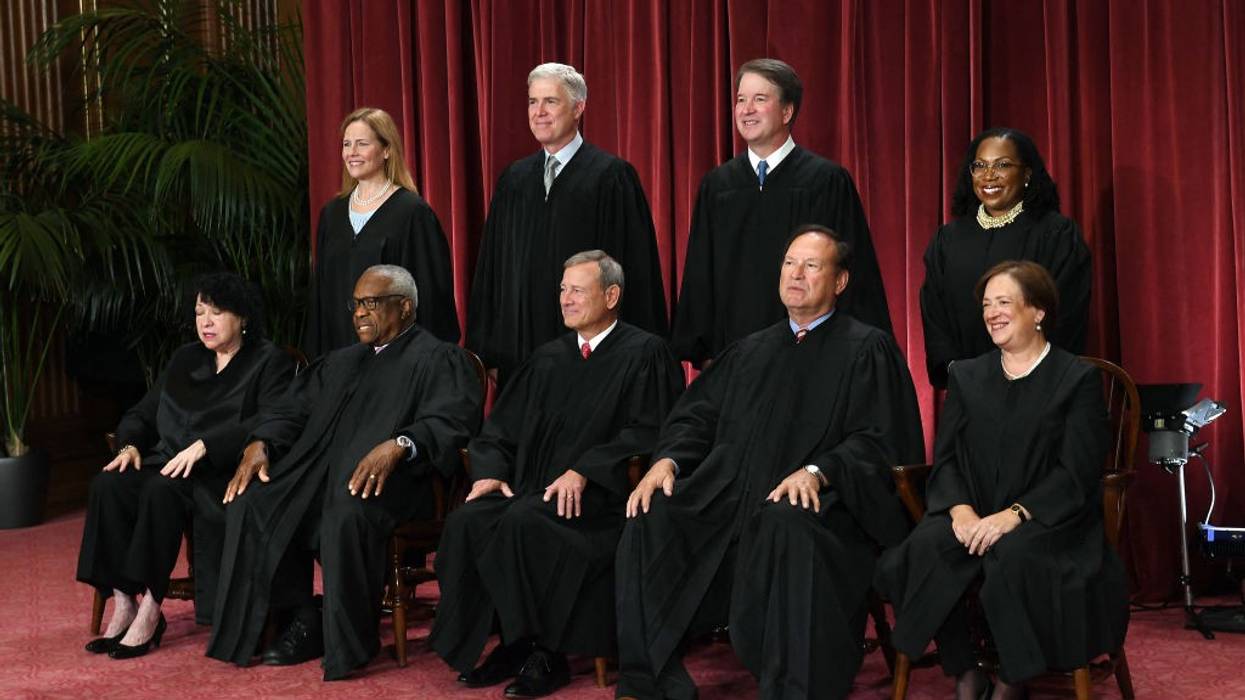
By issuing this toothless code of conduct, the Supreme Court attempts to circumvent necessary reforms and enables more lavish gifts and lucrative speaking engagements from their wealthy patrons.
After months of ethics scandals and scrutiny from advocates, the U.S. Supreme Court released a code of conduct on November 15, with all nine justices signing on. According to the opening statement, the justices wanted to allegedly dispel a “misunderstanding that the justices of this Court, unlike all other jurists in this country, regard themselves as unrestricted by any ethics rules.”
But the code isn’t fostering understanding; it’s a mere facade, a paper-thin veiled attempt at responsibility that ultimately serves as nothing more than a PR stunt in the guise of genuine accountability. Once rumored ethical concerns have now become regular fixtures in national headlines about clear ethics violations. Deep investigations by multiple outlets have revealed a pattern and practice of questionable behavior. Congress must see through this stunt, conduct a thorough investigation, and enact binding, enforceable federal legislation covering ethics reform and court expansion.
It’s not a surprise that the code arrives just as the Senate Judiciary Committee is debating subpoenas for Harlan Crow, who has given millions of dollars in gifts to Clarence Thomas, and Leonard Leo, whose wealth influenced a far-right takeover of the court. Public opinion of the court is at historic lows. Congress is responding to public pressure and finally considering action on ethics reform. By issuing this toothless code of conduct, the Supreme Court attempts to circumvent necessary reforms and enables more lavish gifts and lucrative speaking engagements from their wealthy patrons.
The justices claim they adapted their new code of conduct from rules governing judges lower on the federal bench. But there is a key and glaring difference: The justices make the provisions of their code discretionary, thus enabling the Supreme Court to be the only federal entity not subject to an enforceable ethical code of conduct. Justices further skirt addressing conflicts of interest, misconduct, and when recusal is necessary.
The unenforceable code relies not on congressional or executive branch oversight, but on the justices’ self-reporting and self-regulation. It does not address donor influence or failure to disclose gifts over a specified amount. It leaves recusal for conflicts of interest up to individual justices. There are no procedures for public complaints or any formal reviews or investigations of rule-breaking. In contrast, the lower courts’ rules have multiple references to enforcement and disciplinary procedures, and Bloomberg even suggests that non-SCOTUS justices “divest from financial interests ‘that might require frequent disqualification.’”
Congress cannot continue to allow the Supreme Court to act as conduits for far-right billionaires. We must instead issue common-sense reforms to end the blatant corruption and mitigate the decades of far-right takeover. Luckily, we already have the blueprint.
First, the Senate Judiciary Committee must issue subpoenas to Harlan Crow and Leonard Leo and thoroughly investigate the ethics violations. The U.S. public has a right to know the extent of judicial misconduct and the influence of far-right megadonors on the Supreme Court’s business.
Second, Congress must pass a binding, enforceable Supreme Court ethics bill that outlines clear rules regarding recusals, gifts, and conflicts of interest. The legislation must also outline specific consequences if justices break the code and the body charged with investigating misconduct. Several ethics bills are already being considered, including the Supreme Court Ethics, Recusal, and Transparency Act (SCERT), marked up by the Senate Judiciary Committee earlier this year.
Congress must see through this stunt, conduct a thorough investigation, and enact binding, enforceable federal legislation covering ethics reform and court expansion.
Finally, Congress must rebalance the court by passing the Judiciary Act and adding four seats. Court expansion is the simplest and most effective way to undo decades of conservative court-packing and the far-right takeover of the courts. The Judiciary Act, sponsored by Representative Hank Johnson in the House and Senator Ed Markey in the Senate, already has 65 cosponsors. The ethics crisis is a symptom of deeper institutional rot that can only be fixed through rebalancing the court.
Public pressure to stop this ethics circus is mounting. A Morning Consult poll found 3 in 4 voters support a binding ethics code. Likewise, a Demand Justice commissioned YouGov poll found that 59% of Americans are less likely to “support a congressional candidate who opposes ethics reform at the Supreme Court.” While Justice Samuel Alito claims that congressional oversight of Supreme Court ethics is unconstitutional, he ignores hundreds of years of precedent. There’s a lot of work to do, but momentum and precedent are on our side.
Congress cannot continue to sit back and let the ultraconservative Supreme Court dictate national policy at the behest of their far-right patrons. Now is the time to do their duty, rein in the court’s corruption, and undo the far-right court packing that’s wreaked havoc on our democratic systems.
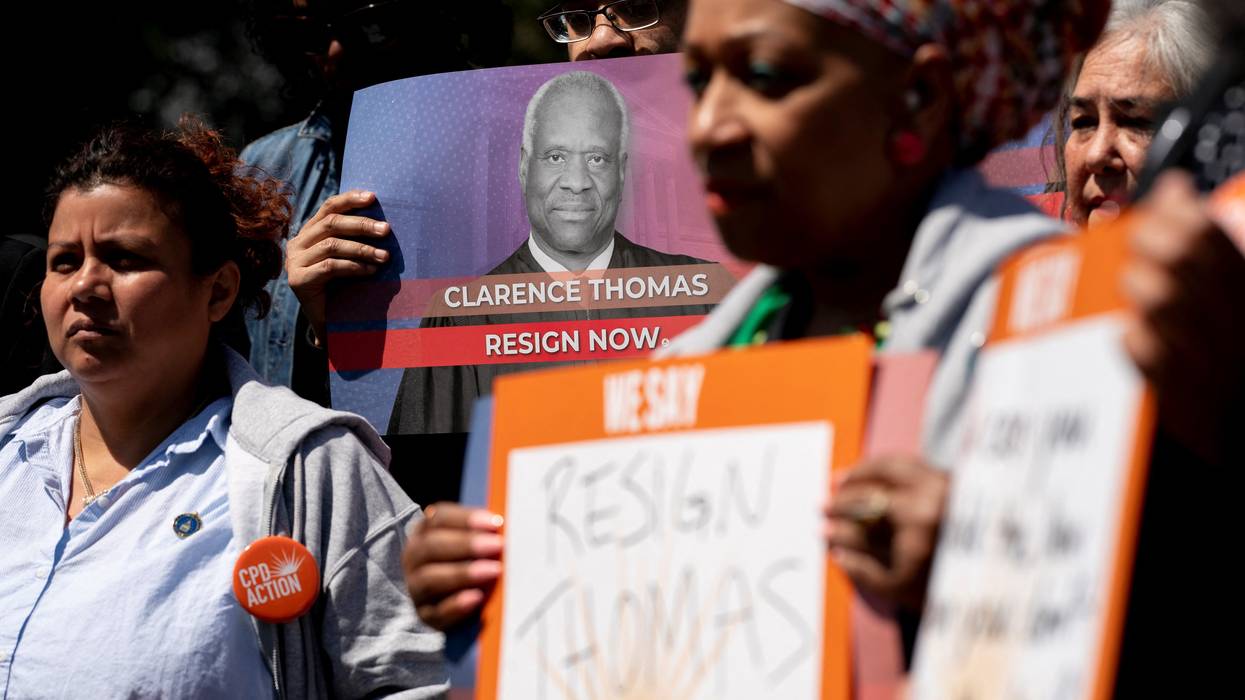
"Americans can see through the court's failed attempt at a code of conduct," said one group. "It's time for Congress to take action and pass actual ethics reform."
Nearly three-quarters of U.S. voters want federal lawmakers to pass a stricter ethics policy for the nation's Supreme Court, according to polling results released Tuesday by the progressive advocacy group Demand Justice.
The poll was conducted by YouGov after the Supreme Court announced last week that it had formally adopted a new code of conduct following months of outrage over reporting on relationships between right-wing justices and billionaires. YouGov explained to those surveyed that justices have been criticized for failing to disclose taking gifts and travel from political donors.
YouGov also told voters that supporters of a stricter ethics code say the newly adopted policy "has no way to actually enforce the rules" and believe "Congress should continue to investigate corruption allegations," while opponents of congressional action believe members of the court should be "allowed to determine their own rules without interference" and trusted to enforce them.
Across party lines, 74% of voters agreed that Congress should approve a stricter ethics code and continue to probe "the ties between justices and political megadonors," including 90% of Democrats, 70% of Independents, and 57% of Republicans.
In response to the findings, End Citizens United said that "Americans can see through the court's failed attempt at a code of conduct. It's time for Congress to take action and pass actual ethics reform."
As Common Dreams reported when the new code was announced last week, critics have condemned it as a "toothless PR stunt" intended to curb media coverage of potential corruption and "halt momentum for transparency and real reform."
Amid a wave of reporting about Justices Clarence Thomas and Samuel Alito's connections to billionaire megadonors and Leonard Leo—who leads the Federalist Society, a primary force in pushing U.S. courts to the right—Democrats on the Senate Judiciary Committee passed the Supreme Court Ethics, Recusal, and Transparency (SCERT) Act in July.
However, the bill is unlikely to win approval from the full Senate or GOP-controlled House of Representatives. Still, the Senate panel—chaired by Sen. Dick Durbin (D-Ill.)—is expected to continue its probe, possibly with subpoenas targeting Leo and Thomas benefactor Harlan Crow.
Demand Justice was among over a dozen groups that last week called on the committee to issue subpoenas, arguing that "we must learn the full scope of these hidden efforts to improperly influence the Supreme Court and the extent of Justices Thomas' and Alito's ethical wrongdoings."