

SUBSCRIBE TO OUR FREE NEWSLETTER
Daily news & progressive opinion—funded by the people, not the corporations—delivered straight to your inbox.
5
#000000
#FFFFFF
To donate by check, phone, or other method, see our More Ways to Give page.
Daily news & progressive opinion—funded by the people, not the corporations—delivered straight to your inbox.
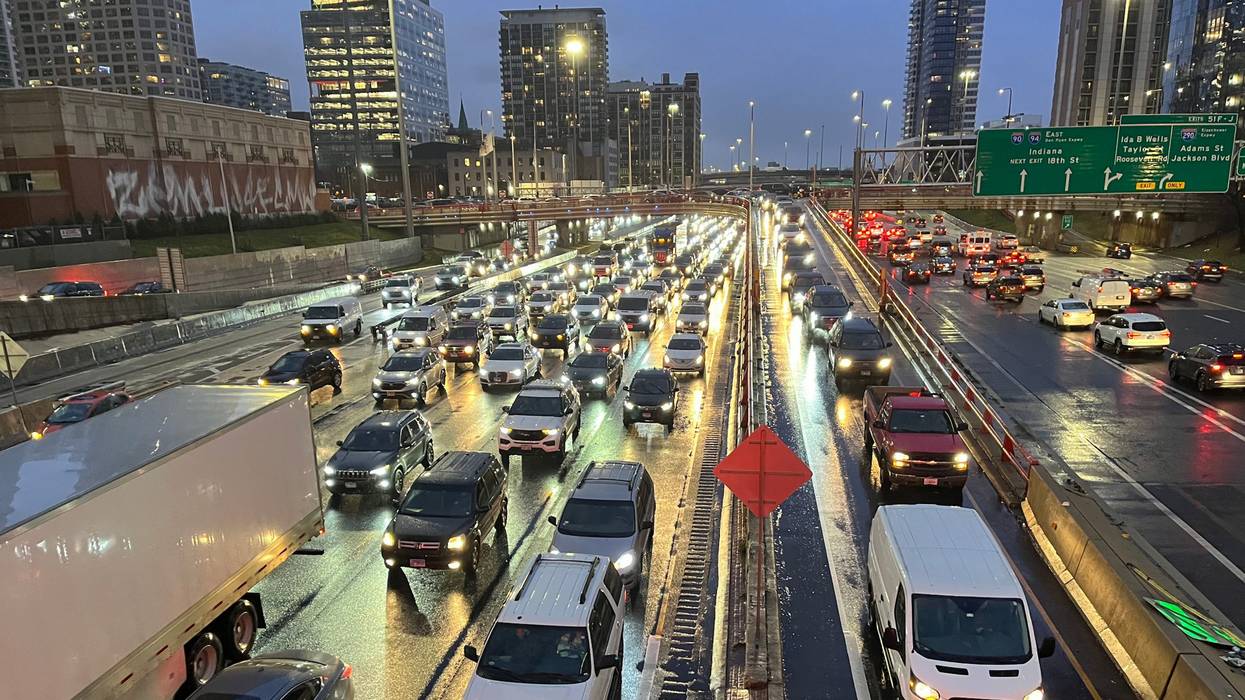
One campaigner from the green group decried the "dangerous attempt to roll back progress on climate, clean air, and cleaner cars" by some lawmakers skeptical of the new EPA rules.
The Sierra Club on Wednesday launched a multistate digital ad campaign aimed at persuading seven U.S. senators—six of them Democrats—to back the Biden administration's already weakened tailpipe pollution standards for passenger cars and light-duty trucks.
The new campaign targets Sens. Bob Casey (D-Pa.), John Fetterman (D-Pa.), Tim Kaine (D-Va.), Mark Kelly (D-Ariz.), Kyrsten Sinema (I-Az.), Jon Tester (D-Mt.), and Mark Warner (D-Va.), who have been critical of the Environmental Protection Agency's (EPA) recently finalized federal clean vehicle standards.
"The Sierra Club urges all senators to protect their constituents from toxic vehicle pollution and support these clean car standards that will save families money and give car buyers more choice," Will Anderson, the green group's deputy legislative director, said in a statement.
"The popular clean car standards are the latest commonsense action by the Environmental Protection Agency to tackle our nation's most polluting sector—transportation—and they work," Anderson added. "Trying to undo them is a dangerous attempt to roll back progress on climate, clean air, and cleaner cars that will benefit communities across the country."
Some of the ads are custom-tailored to individual lawmakers. Responding to Fetterman's recent criticism of the new EPA rules, one of the videos argues that "repealing this standard would harm Pennsylvania's growing clean energy economy, undermine efforts to clean up our air, and hurt children and seniors with asthma and other respiratory problems."
"We urge Sen. Fetterman to protect Pennsylvania families who will benefit from this lifesaving standard that will create jobs and give car buyers more options—not Big Polluters and their Republican allies who want to roll back climate progress," the video adds.
The EPA estimates that the new standards will prevent 1 billion tons of greenhouse gas emissions and provide $13 billion in annualized net benefits for consumers and the climate. While some environmentalists have hailed the new rules as the strongest ever of their kind, others argue they don't go far enough.
Dan Becker, director of the Center for Biological Diversity's Safe Climate Transport Campaign, last month claimed that "the EPA caved to pressure from Big Auto, Big Oil, and car dealers and riddled the plan with loopholes big enough to drive a Ford F-150 through."
The new Sierra Club campaign launched the day after a federal appellate panel upheld the Biden administration's 2022 decision to preserve California's strict vehicle emission standards, which have been adopted by 17 states and the District of Columbia. California's mandate is more stringent than the new EPA standards, which set no quotas for zero-emission vehicle sales.
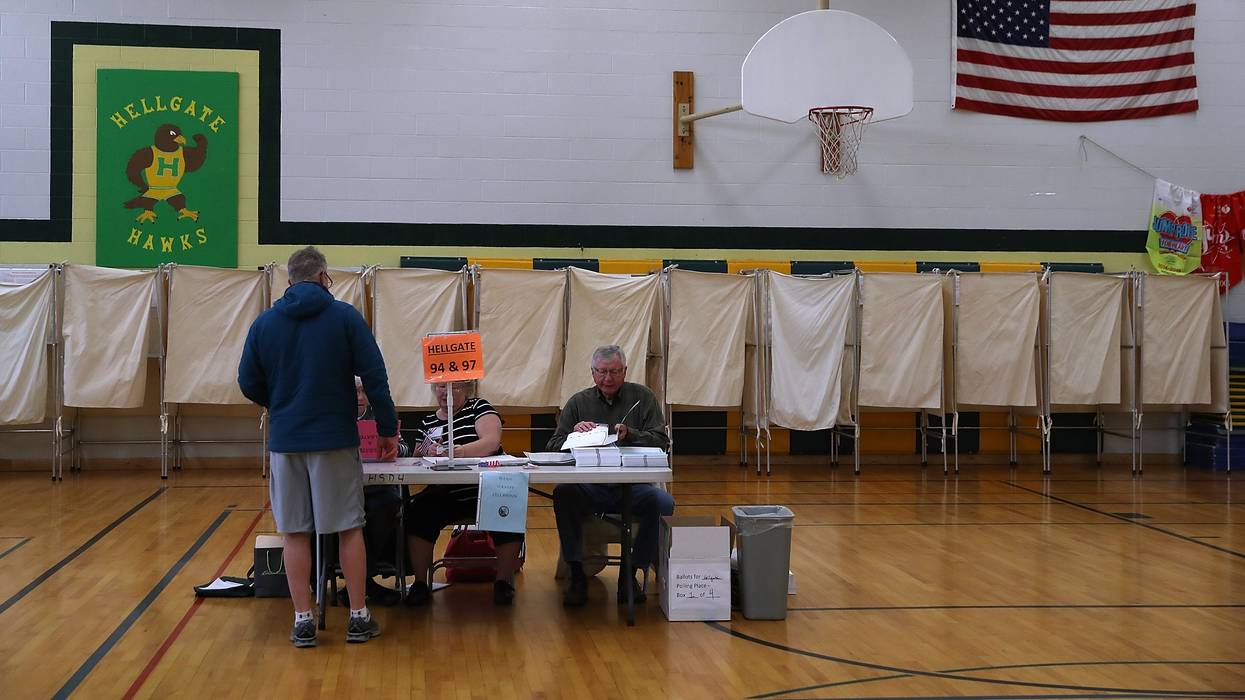
The laws disproportionately impacted the ability of Native people to participate in voting, the court noted.
Native rights groups were among those applauding a decision by the Montana Supreme Court late Wednesday as four voting restrictions, passed by the Republican-controlled state legislature in the wake of former President Donald Trump's 2020 election loss, were struck down as "unconstitutional."
The sweeping 2021 laws had ended same-day voter registration, eliminated the use of student ID cards as a form of identification for voters, banned the distribution of absentee ballots to teenagers who would turn 18 by Election Day, and prohibited third parties from collecting ballots and returning them on behalf of voters.
Indigenous rights groups and tribes including Native Voice, Montana Native Vote, the Blackfeet Nation, the Confederated Salish and Kootenai Tribes of the Flathead Reservation, the Fort Belknap Indian Community, and the Northern Cheyenne Tribe filed a lawsuit in 2021 to challenge H.B. 176 and H.B. 530, the two laws pertaining to same-day registration and ballot collection.
Chief Justice Mike McGrath noted that Native people were disproportionately affected by the two laws, writing that it is "much more difficult on average for people living on reservations to either get to a polling place on or before Election Day, or to mail an absentee ballot prior to election day."
The summary of the majority opinion said the laws "violate the fundamental right to vote provided to all citizens by the Montana Constitution."
The court upheld a district court ruling from 2022.
"Today's Montana Supreme Court decision is a great victory for our clients and all Native Americans in Montana, who have asked for nothing more than the ability to exercise their fundamental right to vote," said Jonathan Topaz, staff attorney at the ACLU's Voting Rights Project. "Once again, courts have struck down the Montana Legislature's attempts to unconstitutionally burden the constitutional rights of Native Americans across the state. We will continue to fight for Native American voters in Montana and across the country to preserve their fundamental, constitutional right to vote."
Jacqueline De León, staff attorney for the Native American Rights Fund, called the 4-3 ruling "a resounding win for tribes in Montana."
"Despite repeated attacks on their voting rights, tribes and Native voters in Montana stood strong, and today the Montana Supreme Court affirmed that the state's legislative actions were unconstitutional," said De León. "Native voices deserve to be heard and this decision helps ensure that happens."
Josh Douglas, a law professor at University of Kentucky, wrote at Election Law Blog that the state Supreme Court "put real teeth into [the] state constitutional protection for voters," recognizing that the Montana Constitution goes further than federal law in protecting voting rights.
As the state constitution reads, "All elections shall be free and open, and no power, civil or military, shall at any time interfere to prevent the free exercise of the right of suffrage."
"The court refused to follow federal precedent, noting that '[t]his court can diverge from the minimal protections offered by the United States Constitution when the Montana Constitution clearly affords greater protection—or even where the provision is nearly identical,'" wrote Douglas. "State courts have various tools within state constitutions to robustly protect voters. The Montana Supreme Court's decision offers a solid roadmap for how to use state constitutional language on the right to vote. Other state supreme courts should follow the Montana Supreme Court's lead."
The ruling comes as Sen. Jon Tester (D-Mont.) faces a competitive race for reelection.
Ronnie Jo Horse, executive director of Western Native Voice, said the ruling "reinforces the principle of equitable access to voting services and the protection of the rights for all voters."
"We are very pleased with today's landmark ruling," said Horse. "It stands as a testament to justice prevailing in defense of the rights of Montanans, especially those of Native American communities."

"Forty-five million people with student loan debt will never forget when politicians, led by Republican extremists, went out of their way to push millions of working families, including their own constituents, into economic catastrophe," said one advocate.
Economic justice advocates cried foul Thursday after the U.S. Senate passed legislation that aims to block President Joe Biden's pending student debt cancellation plan and reverse already-delivered relief.
Democratic Sens. Joe Manchin (W.Va.) and Jon Tester (Mont.), along with right-wing Independent Sen. Krysten Sinema (Ariz.), joined Senate Republicans in supporting H.J. Res. 45.
The Congressional Review Act (CRA) resolution, which House Republicans approved last week with the help of Democratic Reps. Jared Golden (Maine) and Marie Gluesenkamp Perez (Wash.), passed the Senate by a margin of 52-46. Democratic Sens. Michael Bennet (Colo.) and Mark Warner (Va.) didn't vote. The White House has vowed to veto the measure.
Passage of the legislation elicited a firestorm of criticism from progressive advocates and lawmakers.
"Forty-five million people with student loan debt will never forget when politicians, led by Republican extremists, went out of their way to push millions of working families, including their own constituents, into economic catastrophe by passing this reckless CRA resolution," Student Borrower Protection Center (SBPC) executive director Mike Pierce said in a statement.
"The American people are watching and expect President Biden to keep his promise to veto this horrendous bill."
The Biden administration's popular move to erase up to $20,000 in student debt for millions of federal borrowers with individual incomes below $125,000 and to improve the income-driven repayment (IDR) program is currently on hold as the U.S. Supreme Court considers a pair of deeply flawed legal challenges. A decision in the case is expected sometime this month, but right-wing lawmakers are doing everything in their power to sink the president's relief initiative regardless of how the high court rules.
Last week, the SBPC and the American Federation of Teachers warned of the "ruinous impact" H.J. Res. 45 would have on millions of working-class households nationwide, with AFT president Randi Weingarten condemning it as "an immoral clawback of the absolute worst kind."
In addition to blocking the potential cancellation of up to $20,000 in student debt per eligible borrower as well as money-saving changes to the IDR program, the CRA resolution would nullify the seventh and possibly eighth extensions of the federal student loan payment freeze first enacted by President Donald Trump in response to the Covid-19 pandemic. As a result, it would retroactively undo several months of already-canceled payments and waived interest charges, immediately leaving tens of millions of people past due on their loans.
Furthermore, the CRA resolution seeks to reinstate the student debt of more than 260,000 public service workers whose loan balances have been wiped clean since September 2022. If that were to happen, a combined debt burden of nearly $20 billion, which amounts to more than $72,000 per person, would be put back on the shoulders of teachers, nurses, first responders, and others who recently finished making 10 years of qualifying payments under the Public Service Loan Forgiveness program that was enacted on a bipartisan basis in 2007 and streamlined by the Biden administration in 2021.
"Despite right-wing proponents' attempts to gaslight their own colleagues and the American people on the impact of this bill, this effort would push hundreds of thousands of public service workers back into debt and require the government to charge tens of millions of borrowers for interest that has already been canceled," said Pierce. "If enacted, it will cause irreparable damage to an already severely broken student loan system and undermine Americans' trust in our government."
"Today's vote makes crystal clear exactly who stood up and fought to protect the economic livelihoods of millions of people with student loan debt—and who schemed to keep them drowning in the debt despair of our nation's student loan crisis," he added. "The American people are watching and expect President Biden to keep his promise to veto this horrendous bill and deliver on his promise of student loan debt relief once and for all."
Ahead of a Wednesday vote to bring H.J. Res. 45 to the Senate floor, Sen. Elizabeth Warren (D-Mass.) said that "Republicans in Congress have shown time and time again that they'd much rather deliver relief to giant corporations and protect tax cheats than help working Americans whose biggest sin was trying to get an education."
On Thursday, the Massachusetts lawmaker called the bill's passage "shameful," and expressed confidence that Biden "will veto" it. Congress doesn't appear to have the two-thirds majority in each chamber needed to override a veto.
Ahead of Thursday's vote, Sen. Patty Murray (D-Wash.), a senior member and former chair of the Senate Health, Education, Labor, and Pensions (HELP) Committee, stressed that "this Republican bill wouldn't only rip away relief for borrowers who qualify under the president's plan."
"This CRA could impact the pause on loan payments and cause major problems for borrowers who have received relief through the Public Service Loan Forgiveness and income-driven repayment programs," Murray continued. "That means these Republican efforts could create the perfect storm for more than 260,000 public service workers who have already earned relief."
"Today's vote makes crystal clear exactly who stood up and fought to protect the economic livelihoods of millions of people with student loan debt—and who schemed to keep them drowning."
"If Republicans were to get their way and pass this bill into law," she added, "people across the country would have relief they are counting on snatched away from them, plans they have made upended, less money in their pockets, and monthly payments not just abruptly restarted—but maybe even abruptly jacked up by hundreds of dollars."
Sen. Ed Markey (D-Mass.), a member of the HELP committee, echoed that sentiment.
"Republicans' cruel attempt to stand in the way of President Biden's plans to provide relief to tens of millions of Americans suffering under the crushing weight of student loan debt is damaging to our economy and wildly out of touch with the financial realities facing working families," said Markey.
"The loan forgiveness the president is proposing would mean the difference between buying a home, starting a business, and getting an economic leg up for nearly 50 million working and middle-class Americans, particularly for borrowers of color and their families," he concluded. "If you kicked Republicans in the heart, you'd break your toe."

"The senators who voted to remove these protections shamefully put corporate profits over our right to clean drinking water, healthy water-reliant economies, and sustainable water supply," said one critic.
U.S. President Joe Biden's vow to veto a Republican-led resolution that would gut his administration's water protections did not stop four Democratic senators and one ex-Democrat from helping the GOP send the measure to his desk on Wednesday.
Democratic Sens. Catherine Cortez Masto (Nev.), Joe Manchin (W.Va.), Jacky Rosen (Nev.), and Jon Tester (Mont.) along with now-Independent Sen. Kyrsten Sinema (Ariz.) joined with all Republicans present to pass H.J. Res. 27 in a 53-43 vote.
Passed by the GOP-controlled House early this month mostly along party lines—nine Democrats supported the measure while just one Republican opposed it—the resolution takes aim at regulations finalized by the Biden administration in late December.
"A majority of senators elected to represent the American people have chosen to side with corporate polluters."
Reversing one of many rollbacks under former President Donald Trump, under the Biden rule, the Environmental Protection Agency (EPA) defines "waters of the United States" (WOTUS) that are protected under the Clean Water Act as "traditional navigable waters, the territorial seas, interstate waters, as well as upstream water resources that significantly affect those waters."
In an early March policy statement threatening what is now expected to be Biden's second veto, the White House explained that "H.J. Res. 27 would leave Americans without a clear 'waters of the United States' definition. The increased uncertainty would threaten economic growth, including for agriculture, local economies, and downstream communities."
"Farmers would be left wondering whether artificially irrigated areas remain exempt or not," the White House warned. "Construction crews would be left wondering whether their waterfilled gravel pits remain exempt or not."
"Compared to the kind of uncertain, fragmented, and watered-down regulatory system that H.J. Res. 27 might compel," the White House added, "the final rule will secure substantial and valuable benefits each year in critical flood protections, enhanced water quality, and the treasured recreational activities—fishing, swimming, boating, and more—that fill the lives and livelihoods of tens of millions of U.S. households that depend on healthy wetlands and streams."
If they all choose to run, Manchin, Rosen, Sinema, and Tester, are up for reelection next year. Cortez Masto, who narrowly won reelection in November, told the Nevada Appeal on Wednesday that the Silver State's "unique water needs are unlike any other state, and this administration's rule forces our local governments, farmers, ranchers, and businesses to jump through unnecessary red tape."
As E&E News noted Wednesday:
One vulnerable Democrat facing a tough reelection campaign opted to stick with his party. Arizona Sen. Mark Kelly's vote had previously been an open question, but during a recent hearing, he repeatedly questioned the use of the Congressional Review Act to target WOTUS.
The CRA allows for a simple majority to overturn recent rules, but also hinders the government's ability to pursue a similar rule. Kelly expressed concern the resolution might unravel any efforts to make Clean Water Act enforcement suitable to states like his.
"Restoring critical protections for waters across the country should be a simple and easily supported effort. Yet a majority of senators elected to represent the American people have chosen to side with corporate polluters and play politics with one of our most critical natural resources," declared Sierra Club executive director Ben Jealous. "This is inexcusable."
"Access to clean, safe water is a human right and should never be determined by where someone lives, how much money they make, or the color of their skin," he said. "The Sierra Club has and will continue to work with our allies to protect our waters, and we call President Biden to swiftly veto the WOTUS Congressional Review Act resolution."
Earthjustice senior legislative counsel Julián González similarly called out the senators and called for a swift veto, while also warning that "protections for clean water are constantly under attack from polluting industries, and this will not be the last Republican attempt to significantly weaken the Clean Water Act during this Congress."
"The Clean Water Restoration Rule is grounded in the scientific consensus of how waters and wetlands are hydrologically connected and incredibly important to protect," González stressed. "This is a welcome step forward from the Trump administration's pro-polluter dirty water."
"Unfortunately, instead of relying on the science, Republicans—and some Democrats—are choosing to ally themselves with dirty industries whose mission is to eliminate any and all meaningful protections for our waters," he continued. "The senators who voted to remove these protections shamefully put corporate profits over our right to clean drinking water, healthy water-reliant economies, and sustainable water supply."
"We urge members of Congress who supported this resolution to reflect on why they are tossing aside concerns of people from all walks of life who value our waters in order to support those who would decimate the Clean Water Act if they had their way," González added. "Finally, we applaud President Biden for indicating he will reject this effort and veto this resolution when it reaches his desk."
"It's wrong that some lawmakers would play politics with Americans' financial futures by preventing retirement fund managers from considering all risks—including financial risks related to climate—when making investment decisions," said one activist.
U.S. President Joe Biden is expected to issue his first veto after two Democrats—Sens. Joe Manchin of West Virginia and Jon Tester of Montana—partnered with the GOP on Wednesday to pass legislation that would block his administration's rule allowing retirement plan managers to consider climate and other factors in investment decisions.
The 50-46 Senate vote came a day after a 216-204 House vote in which Rep. Jared Golden (D-Maine) joined with Republicans to advance the resolution about the U.S. Department of Labor (DOL) rule on environmental, social, and governance (ESG) factors—which is notably opposed by fossil fuel companies.
"The DOL rule simply restores the longtime status quo of allowing retirement plans to consider important financial factors like how a company is run, whether its practices match its values, and the risks it faces from global disruptions like climate change," said Rachel Curley, democracy advocate with the group Public Citizen, in a statement Wednesday.
"Repealing a rule protecting retirement savings for millions of workers is irresponsible and puts personal political ambitions above long-term financial responsibility," Curley continued. "Leaving investors in the dark is a disservice to our entire economy. Anyone claiming to care about workers voting to overturn such a reasonable rule is clearly playing politics with workers' retirement savings in a way that flies in the face of common sense."
Public Citizen is among dozens of groups—including Americans for Financial Reform, Environmental Defense Fund (EDF), League of Conservation Voters, and Interfaith Center on Corporate Responsibility—that have warned against blocking the rule this week.
"It's wrong that some lawmakers would play politics with Americans' financial futures by preventing retirement fund managers from considering all risks—including financial risks related to climate—when making investment decisions," declared EDF senior vice president for political affairs Elizabeth Gore. "The standards they're trying to undermine help fund managers make the best possible decisions when investing our money."
In a policy statement on Monday, the Biden administration stressed that the DOL rule "is not a mandate—it does not require any fiduciary to make investment decisions based solely on ESG factors. The rule simply makes sure that retirement plan fiduciaries must engage in a risk and return analysis of their investment decisions and recognizes that these factors can be relevant to that analysis."
"The president will continue to deliver for America's workers," the statement pledged, concluding that if the resolution reached his desk, "he would veto it."
As Politico reported Wednesday:
Biden's threat in a way gives moderate Democrats a free pass to distance themselves from the president because they don't face the risk of the rollback actually being implemented.
Asked whether Democratic leadership had pressured him to vote "no," Tester told reporters that they gave a presentation to the broader caucus Tuesday. But "it wasn't like, pestering."
[...]
Manchin took to the Senate floor to blast the Biden DOL rule as "just another example of how our administration prioritizes a liberal policy agenda over protecting and growing the retirement accounts of 150 million Americans."
During a floor speech Wednesday, Senate Majority Leader Chuck Schumer (D-N.Y.) took aim at the GOP, saying in part that "for a long time, my Republican friends prided themselves—prided themselves!—for being the party of free markets. The party of small government. The party opposed to injecting political ideology into the decisions of private investors and managers and companies."
"But apparently, all that was talk. Because today, our Republican friends are making an effort to limit free market choice and inject hard-right ideology into private sector decision-making," he continued. "Now, the hard-right has made a lot of noise trying to make ESG their dirty little acronym. They say this is about wokeness, that this is a cult, that it's some grave intrusion into finance. It's the same predictable, uncreative, unproductive attacks they use for anything they don't like."
Even if Biden vetoes the resolution, his DOL rule still faces another hurdle, as CNN analyst and University of Texas School of Law professor Steve Vladeck pointed out on Twitter.
"The Biden ESG rule is also currently the subject of a legal challenge filed by Texas and a group of other red states in federal district court in Amarillo, where—stop me if you've heard this before—it had a 100% chance of being assigned to Judge [Matthew] Kacsmaryk," Vladeck said, referring to a right-wing judge who is expected to soon rule on a crucial abortion medication case.
As President Joe Biden aims to assure the world that the United States will fulfill its promise to slash its greenhouse gas emissions in half from 2005 levels by the end of the decade, a new report published Friday reveals that the members of the U.S. Senate who would have to pass climate legislation are heavily invested in the fossil fuel industry.
Sludge reports the households of at least 28 U.S. senators--in both the Democratic and Republican caucuses--hold a combined minimum of $3.7 million and as much as $12.6 million in fossil fuel investments.
According to the report:
Of the 28 senators, at least 20 hold publicly traded stocks in companies like oil supermajor Chevron, pipeline giant Enterprise Products, or electric utility NextEra that belong to trade associations that are lobbying Congress against taking up strong legislation to curb polluting emissions.
Five senators are invested in energy funds built around oil and gas assets, and three own nonpublic stock in private fossil fuel companies. The investments, held by the senators, their spouse, jointly, or a dependent, are disclosed to the Senate Office of Public Records in very broad ranges and often buried in hundreds of pages of scanned paper forms, making a more precise count of their total value impossible.
At least half a dozen of the senators sit on environment- or climate-related committees. The household of Senate Energy and Natural Resources Committee Chair Joe Manchin (D-W.Va.)--who has worked incessantly to destroy or dilute climate action in the Build Back Better Act and beyond--has received over $1 million in income from Enersystems, a coal brokerage firm the senator founded in the 1980s.
According to Sludge, Manchin "has stripped the Democrats' budget reconciliation bill of major climate programs that would have transitioned coal-fired plants like the one where the company, now run by his son, holds a prime fuel services contract," while the committee he chairs "also added more than $11.3 billion in funding to the bipartisan infrastructure bill that could benefit his family company's niche waste coal industry."
Other Democratic senators whose households are heavily invested in fossil fuels include:
Earlier this year, Common Dreams reported that six Democratic senators--Manchin, Chris Coons (Del.), Maggie Hassan (N.H.), Mark Kelly (Ariz.), Kyrsten Sinema (Ariz.), and Jon Tester (Mont.)--have received hundreds of thousands of dollars in combined campaign contributions from fossil fuel corporations, some of which have touted their purported support for climate action, over the past decade.