

SUBSCRIBE TO OUR FREE NEWSLETTER
Daily news & progressive opinion—funded by the people, not the corporations—delivered straight to your inbox.
5
#000000
#FFFFFF
To donate by check, phone, or other method, see our More Ways to Give page.
Daily news & progressive opinion—funded by the people, not the corporations—delivered straight to your inbox.
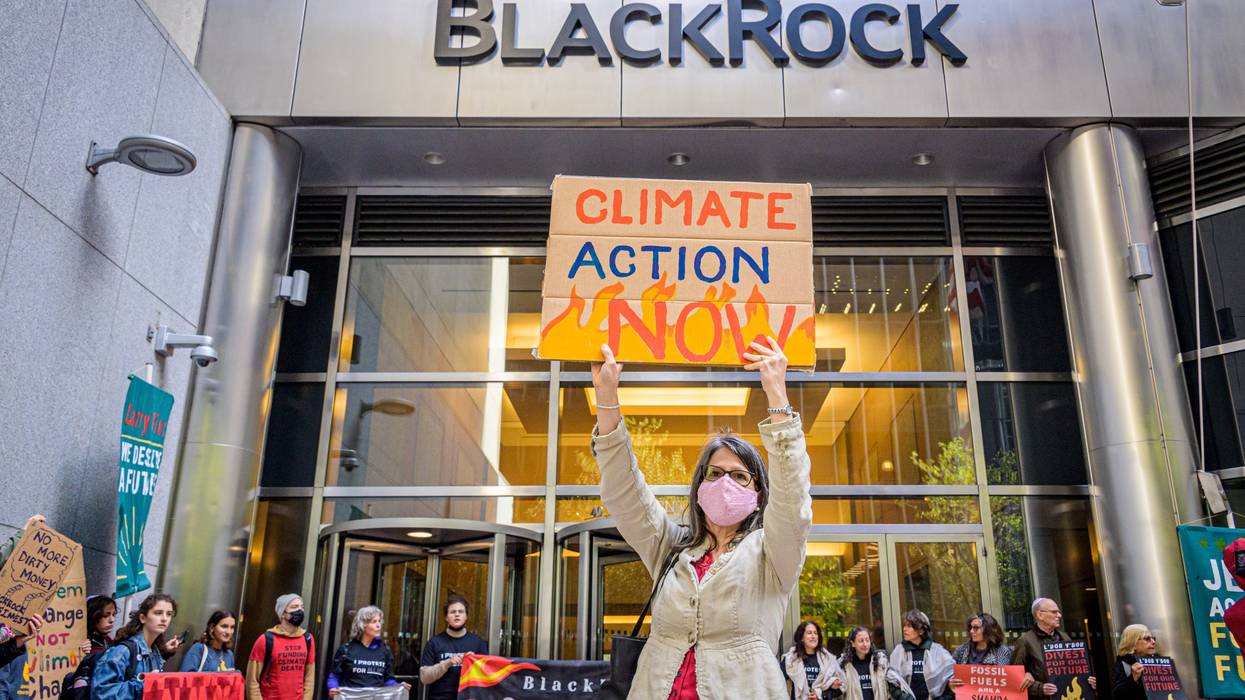
"This is a massive win for Dutch pensioners—not to mention all living creatures on Earth."
Pensioenfonds Recreatie just became the latest Dutch pension fund to ditch US-based BlackRock, the world's largest asset manager and a leading investor in climate-wrecking fossil fuels.
Recreatie, which is for workers in the Netherlands' recreation sector, last Friday named Cardano as the new manager of its €450 million—or $525 million—equity portfolio.
Xander den Uyl, a board member at the pension fund, told the Dutch publication Pensioen Pro that AF Advisors "assessed a long list of asset managers—including BlackRock—based on a dozen criteria," including cost as well as environmental, social, and governance (ESG) policy, and Cardano was the strongest.
HUGE NEWS: Superpolluting firm BlackRock just lost ANOTHER $525 million in Dutch pension funds due to concerns over its funding of coal, oil, and gas. This is a massive win for Dutch pensioners – not to mention all living creatures on Earth. 🧵
— Stop the Money Pipeline (@stopmoneypipeline.bsky.social) August 19, 2026 at 3:01 PM
BlackRock announced in February 2024 that it was transferring its Climate Action 100+ membership to its international arm and last year, just before anti-ESG President Donald Trump returned to power, it left the Net Zero Asset Managers Initiative.
Den Uyl said BlackRock's ESG controversies did not help the asset manager in the review process but "were not decisive," and described the switch to Cardano as "a business decision."
Asked about the development by IPE, a BlackRock spokesperson said: "We respect the fund's decision. We remain proud to manage more than €350 billion on behalf of Dutch clients."
However, as journalists and campaigners have noted this week, Recreatie's decision followed similar moves by other Dutch pension funds. PFZW said last September that it had stopped investing in stock funds managed by BlackRock, and PME in December pulled around €5 billion, or $5.9 billion.
By abandoning "megapolluter" BlackRock, Recreatie "is sending an important message," Fossil Free Netherlands said Tuesday. "Powerful entities that backtrack on climate policy under pressure from Trump will lose European clients. It matters who you partner with as a pension fund—and whose power you strengthen."
"BlackRock is one of the largest investors in fossil fuel companies worldwide and profits from the genocide in Gaza," Fossil Free Netherlands stressed. "BlackRock is one of the largest shareholders in many companies and, as a result, wields enormous influence over both the stock prices of individual companies and the global economy. Moreover, the company consistently prioritizes short-term profits over what matters to us all: a livable climate, fair working conditions, and human rights."
🎉 En wéér breekt een pensioenfonds met mega vervuiler BlackRock.Pensioenfonds Recreatie haalt 450 miljoen euro weg bij de Amerikaanse vermogensreus, onder andere vanwege onvrede met BlackRocks klimaatbeleid.Lees hier meer: fossielvrij.nl/blackrock-vl...
[image or embed]
— Fossielvrij NL (@fossielvrijnl.bsky.social) August 18, 2026 at 8:54 AM
In addition to the decisions by PFZW and PME, Fossil Free Netherlands pointed to European pension funds cutting ties "with the equally unscrupulous and powerful State Street," and an ongoing search for asset managers for New York City's pension funds, the latter of which was also highlighted by US campaigners this week.
New York Communities for Change senior director Jose Gonzalez said in a statement that Recreatie's "exit from BlackRock is the latest in a string of international funds that understand the urgency and long-term fiduciary responsibility resulting from climate change," and comes after NYC Comptroller Mark Levine announced the search, which is considering "ESG factors and limits on carbon."
"In the US context, although heartened by Comptroller Levine's June announcement that the pension systems will bid out contracts for its money managers, it is imperative that the comptroller is serious about meeting its 2040 net zero goals," the campaigner said. "NYC should continue to lead domestically on divestment, and with other pension funds as a universal owner. The proof will be when the comptroller's office moves AUM out of dirty managers like BlackRock and State Street to cleaner ones."
Alec Connon, Stop the Money Pipeline coalition director, also welcomed that "as much of the country swelters under extreme heat and breathes in toxic wildfire smoke, more and more major pension funds are moving money away from the world's dirtiest asset managers."
"As it continues its search for a new asset manager," he added, "New York City and Comptroller Levine have a great chance to continue the funds' climate leadership by divesting from BlackRock and selecting a new asset manager that takes the climate crisis and climate financial risk seriously."

The sooner we stop expecting companies like Exxon to be voluntary agents of social change, the sooner we can stop the flow of hypocrisy and greenwashing and start working on resolving the social and environmental crises that blight the lives of billions.
President Donald Trump has long called global warming a hoax, but his sweeping anti-climate agenda has stunned even many of his supporters. Since returning to the White House, he’s withdrawn the US from the Paris Treaty, rolled back critical greenhouse gas regulations, and opened up millions of acres of previously protected public land for oil and gas drilling.
In response, big oil and gas companies have abandoned, without the slightest resistance, the showy public commitments they had previously made to climate transition. For example, BP has slashed green energy expenditures by 70%, Equinor has cut back its renewable capacity targets by almost 40%, and Chevron has reduced its carbon-reduction capital expenditures to about 5% of its total capital expenditures. None of the world’s 12 largest oil and gas companies plan to decrease fossil fuel production, and all of them project that fossil fuels will continue to overwhelm other sources of energy for the foreseeable future, according to a recent evaluation.
Far from a change of heart, this is simply Big Oil returning to form. The petroleum industry has never been serious about curbing emissions, 90% of which globally come from fossil fuels. Indeed, after decades of investment, renewables still account for a minuscule amount—about 0.13%—of total energy produced by the world’s largest 250 oil and gas companies, according to a recent research paper. “I think the article resolves the debate on whether the fossil fuel industry is honestly engaging with the climate crisis or not,” said the paper’s lead researcher. “Their interest ends with their profits.”
Some oil companies, such as ExxonMobil, continue to promise to reduce emissions to net zero by 2050. This appears to align them with the consensus of climate science that this is necessary globally to limit warming to 1.5°C (2.7°F) above preindustrial levels. However, Exxon is typical in designating a narrow target of greenhouse gases to eliminate: only those from its own operations, mainly pumping and refining oil and gas, and from buying electricity generated by fossil fuels. This conveniently ignores greenhouse gases from the consumption of its gasoline and other petroleum products, as well as those of its suppliers—which exceed by four times the total covered by Exxon’s commitment.
We should have realized that companies, like Exxon, that knowingly act in pursuit of catastrophe cannot be trusted to stop of their own accord.
Exxon wants us to believe that running its pump jacks and refineries on solar and wind power puts it on the side of the climate transition. It’s cynical buffoonery. But it’s also a sign that America’s leaders and electorate have been willfully blind. We should have realized that companies, like Exxon, that knowingly act in pursuit of catastrophe cannot be trusted to stop of their own accord. As Shakespeare might have said, “The fault, dear Brutus, is not in Big Oil but in ourselves.”
The past is prologue. Ever since the advent of industrial capitalism in America in the early 1800s, corporations have consistently served one master, shareholders, delivering them profits by open competition in free markets. From the start, elites have insisted that corporations must regard financial and social objectives as mutually exclusive, even as a single-minded quest for profitability has pushed the system to its breaking point.
We saw the injustice of this belief in the late 19th century, when “robber barons”—who had clawed their way to the top of an unregulated, chaotic economy—justified poverty wages and harsh working conditions by co-opting Charles Darwin’s new theory of evolution, popularized as “survival of the fittest.” Railroad magnate Charles Elliott Perkins—who embodied Social Darwinism by rising from office boy to president of one of the nation’s largest railroads—declared his creed: “That a man is entitled to a living wage is absurd… [If] you take from the strong to give to the weak, you encourage weakness; therefore, let men reap what they and their progenitors sow.”
Early capitalism was marred by periodic, destructive economic downturns. But over time, government acquired fiscal and monetary tools to smooth the boom-and-bust cycles and soften the hard edges of fierce profit seeking through welfare programs, especially during the Progressive Era (1890s-1920) and the New Deal (1933-1938).
However, the bedrock of the corporate mission stayed solid even as the government built new structures on top of it. During the New Deal, for example, leading industrialists joined the American Liberty League to oppose innovations like Social Security. A League leader, echoing his counterpart six decades earlier, proclaimed, “You can’t recover prosperity by seizing the accumulation of the thrifty and distributing it to the thriftless and unlucky.”
The permanent establishment of a taxpayer-funded social safety net in the postwar period only reaffirmed corporations’ unwavering fealty to shareholder value. The president of the mighty Dow Chemical Company, Leland Doan, wrote in 1957: “Any activity labeled ‘social responsibility’ must be judged in terms of whether it is somehow beneficial to the immediate or long-range welfare of the business... I hope we never kid ourselves that we are operating for the public interest per se.”
The corporate community resisted even when the tide of public opinion turned against the malign Jim Crow segregation system in the 1950s and ’60s. When US Steel was accused of workplace discrimination in 1963, prominent academic Andrew Hacker struck back forcefully: “If corporations ought to be doing things they are not now doing—such as hiring Negroes on an equal basis with whites—then it is up to government to tell them so. The only responsibility of corporations is to make profits, thus contributing to a prosperous economic system.”
Predictably, that same decade, the corporate establishment dismissed the emergence of the environmental movement. In 1962, when Rachel Carson’s Silent Spring shocked the nation by exposing the harm to human and animal life posed by the unrestricted use of pesticides, a chemical industry spokesman responded, “If man were to follow the teachings of Miss Carson, we would return to the Dark Ages, and the insects and diseases and vermin would once again inherit the earth.”
Milton Friedman, Nobel Prize-winning economist and chief economic adviser to Ronald Reagan, famously summed up the unchanging corporate consensus in words still widely quoted today: “There is one and only one social responsibility of business—to use its resources and engage in activities designed to increase its profits.”
For the most part, investors have held their noses and counted their gains. But starting almost a century ago, in 1928, when the invention of mutual funds opened up the stock market to the middle class, “ethical” funds, as they came to be known, entered the arena. They were marketed to individuals and families who wanted their portfolios to reflect their values, and to asset managers who wanted their clients to consider them good citizens.
It is folly to ask business to do the work of government.
For a long time, these socially responsible funds were a negligible part of the industry because they typically underperformed the market. These funds used a strategy called negative screening—excluding certain “sin” industries, such as cigarettes, liquor, and weapons. Unfortunately, negative screening typically yields lower returns (sin often pays in the stock market!) and greater price volatility, due to limited diversification. In addition, there is no reason to believe that negative screening has any discernible effect on stock prices, so it has no power to compel corporations to reform.
The answer to this quandary finally came in the early 2000s, in the form of a new stock-picking tool called Environmental, Social, and Governance, or “ESG” for short. The seductive promise of ESG is “doing well by doing good”—or getting rich by investing in companies that make the world better. On the back of this dream, capital invested in accordance with ESG principles has grown monumentally, to as much as $30 trillion, about one-quarter of the global total of assets under management.
ESG claims that adroitly managing environmental and social risks will improve profitability and, therefore, stock prices. But ESG only counts risks that are financially material, ignoring all social or environmental harm for which a company faces no financial penalty. As you might expect, this often bears perverse results. For example, cigarette companies kill their customers—you can’t get more anti-social than that!—but smoking is legal, and Big Tobacco rarely faces liability for cancer from smoking. That is why tobacco companies are sometimes awarded good ESG scores and even appear in some ESG stock funds. Likewise, fossil fuel companies, which have historically made high returns and avoided significant regulatory penalties, appear in 80% of ESG funds.Whether it be alcoholism, gambling addiction, gun deaths, climate change, or other iniquities, the damage that companies inflict on society without literally paying for it—or the negative externalities, as they’re called in economics—entirely escapes ESG’s radar.
Worse, the key assumption of ESG—that adept social risk management translates into higher profitability—is fundamentally unprovable. Many studies have attempted to show a strong positive correlation between specific ESG policies, like emissions reductions or heightened employee benefits, and financial metrics, like cost of debt or return on assets. But, as I explain in my forthcoming book on socially responsible investment, very few succeed. In the end, the research only allows you to draw one conclusion with confidence: that it is simply not possible to precisely define ESG practices at a granular level, measure their direct effect on financial performance, and compare these results validly across different companies.
But that does not stop ESG rating agencies from trying. ESG ratings have grown into a big business, since fund managers pay dearly for them to guide their stock selection. The rating agency reports are typically long, detailed, and quantitative—but completely unreliable. These reports may look sober and professional, like credit rating reports from companies such as S&P Global or Moody’s. But credit rating agencies are analyzing real financial values to assess a tangible corporate quality: its ability to repay its debts. The numbers are verifiable and have a proven relevance to the projected outcome. That is why credit ratings have a 90% correlation; S&P and Moody’s seldom disagree substantially on a company’s rating.
ESG ratings, by contrast, are all over the map, with a correlation of only 40%. Analysts point to three key factors: the rating agencies choose different terms to measure; they measure them with incompatible methods; and they use contradictory methodologies to combine these idiosyncratic measurements into final ratings. These discrepancies build on each other to produce wildly variant final scores. A company denigrated as a dog in ESG terms by one rating agency may be lauded as a star by another.
If ESG is just an illusion, and negative screening a disappointment, how should investors direct their capital to make corporations more socially responsible? The answer is, they shouldn’t bother.
In the game of capitalism, the role of corporations is to make as much money as they can, while playing by the rules. The role of the state, as we learned in the Progressive Era and the New Deal, is to revise the rules periodically to ensure fair play and a socially positive outcome—without hobbling the players. We do want fierce competition, but we don’t want to destroy the playing field in the process.
Today, corporate profits are at their highest proportion of GDP in 50 years, while wages are at their lowest. Overall, income inequality has never been greater, not even in the Gilded Age, the period immediately preceding the Progressive Era, when many toiled in Dickensian poverty while a few, like the Vanderbilt dynasty, flaunted their extravagant and lavish lifestyles. Now, like then, the people, with justification, are losing faith in the system.
Like our Progressive forebears, we will have to revamp capitalism in order to rescue it. Key objectives must include rebuilding organized labor, since what benefits unions benefits the middle class. We’ll also need to break up de facto corporate cartels that stifle competition, squeeze wages, and lower productivity. To counter the existential threat of climate change, we need a cap-and-trade system that makes industry a partner in carbon reduction, not an opponent, and can serve as a model for other public-private partnerships.
It is folly to ask business to do the work of government. The sooner we stop expecting companies like Exxon to be voluntary agents of social change and acknowledge that they are amoral profit machines, the sooner we can stop the flow of hypocrisy and greenwashing and start working on resolving the social and environmental crises that blight the lives of billions. The path to greater corporate social responsibility leads through the voting booth and the statehouse, not through Wall Street and the C-suite.
This piece was originally published by The MIT Press Reader.
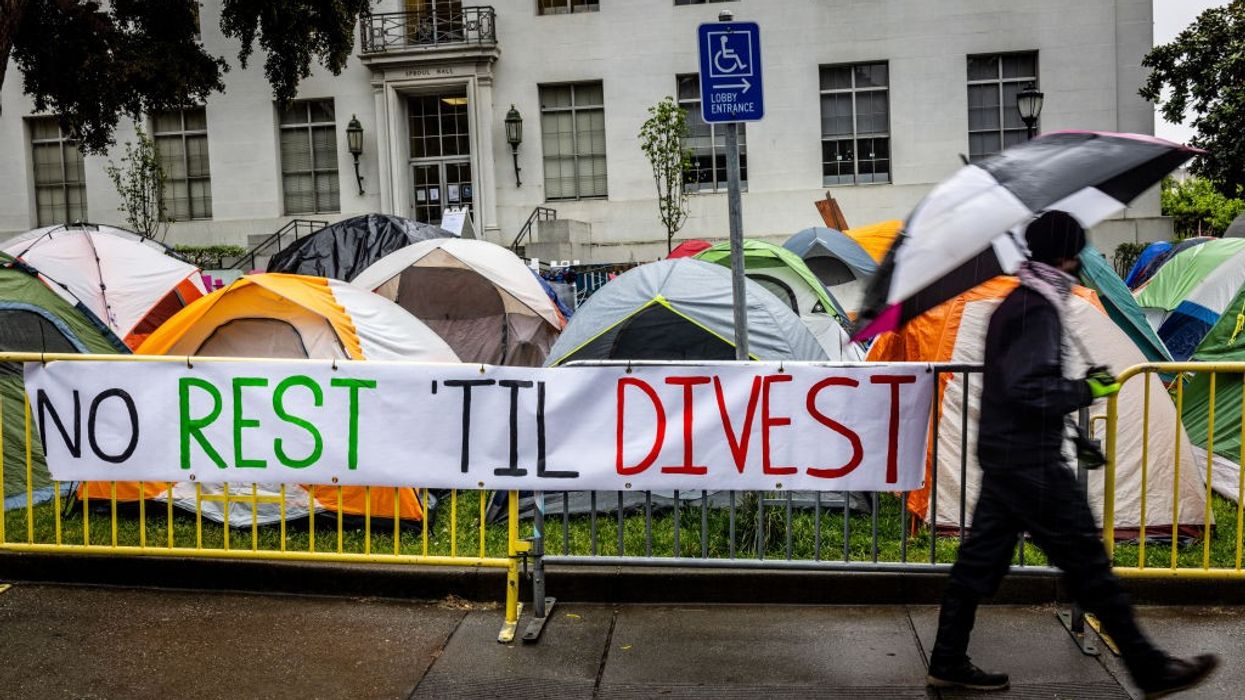
Yes, schools and other institutions should divest from companies involved in war crimes or fueling the climate crisis. But individuals can also divest. Here's how.
On Sunday, May 26—as graduating students at my school, Wesleyan University, tossed their caps into the air—bombs rained down on a tent camp for displaced Palestinians in the southern Gaza city of Rafah, killing 45 people, including a number of women and children. The weapons that killed them, GBU-39 bombs, were made by Boeing and supplied by the U.S.
"Many of the dead bodies were severely burned, had amputated limbs, and were torn to pieces," according to a local physician. In addition, the bomb blasts and ensuing fires wounded another 249 people.
The next day, Israel's prime minister, Benjamin Netanyahu, called the bombing a "tragic accident," but by Tuesday, Israeli shelling and airstrikes killed another 37 Palestinians in the area, most of them sheltering in tents. "We will enter Rafah because we have no other choice," Mr. Netanyahu had warned earlier, in his campaign to defeat Hamas after last year's heinous October 7 attack on Israel.
In American terms, this concentration of explosive force would be like dropping five Hiroshima-size bombs over a land mass one quarter the area of Oklahoma City, with triple its population.
It is this mounting civilian death toll—carried out with U.S. weapons—that spurred students to protest and set up encampments in the spring on nearly 140 college campuses, including Wesleyan. Although each encampment was different, student protesters were largely united in calling on their school to divest any holdings in companies supporting the war. The divestment they were calling for was strictly institutional, but as I will explain later, it's also possible for individuals to carry out acts of divestment on their own.
In the first three months of the war alone, Israel dropped 45,000 bombs on Gaza, the majority of which were designed or manufactured by the United States. Perhaps the most controversial of these weapons is the 2,000-pound "bunker busting" Mark-84 bomb, which has a lethality area equivalent to 58 soccer fields. In the first month of the war, Israel dropped more than 500 Mark-84 bombs, often in densely populated areas, according to a CNN analysis (and these 500 bombs, made by General Dynamics, are only a small fraction of at least 5,000 that the U.S. sent to Israel after the Hamas attack).
As described in a United Nations Human Rights Council report, the explosive blast from a Mark-84 bomb "can rupture lungs, burst sinus cavities, and tear off limbs hundreds of feet from the blast site, according to trauma physicians. When it hits, the [bomb] generates an 8,500-degree fireball, gouges a 20-foot crater as it displaces 10,000 pounds of dirt and rock and generates enough wind to knock down walls blocks away and hurl metal fragments a mile or more."
All told, the explosive force of munitions Israel has used on Gaza since October 7 is estimated to be 75 kilotons—five times larger than the nuclear bomb dropped on Hiroshima. In the case of Gaza, though, its 141 square-mile territory is less than half the size of Hiroshima. In American terms, this concentration of explosive force would be like dropping five Hiroshima-size bombs over a land mass one quarter the area of Oklahoma City, with triple its population.
One of the most catastrophic results of this bombing is that roughly 1 out of every 133 Palestinian children in Gaza has now been killed—a number which, when scaled to match the U.S. population, would translate into the deaths of more than half a million American children.
It is hard to imagine the bitterness and hatred that such a death toll would generate in the United States, yet only three days into the war, Israel Defense Forces spokesperson Daniel Hagari publicly acknowledged that Israel's bombing campaign was "focused on what causes maximum damage"—not on the accuracy of where bombs land or the need to minimize collateral damage.
In keeping with that focus, nearly half of all bombs Israel used in Gaza during the first two months of war were unguided, and even U.S. President Joe Biden warned that Israel risked losing international support due to its "indiscriminate bombing."
Wesleyan student protesters began sleeping in tents on April 28, and their encampment ultimately grew to more than 100 tents by the time it disbanded on May 20. The tent community was peaceful and advanced a set of demands, the foremost of which was that the university administration disclose its financial investments and then divest from companies and institutions which are supporting or profiting from the war and occupation of Palestinian territory.
As someone with Israeli family members, it pains me to say that I agree with the call for divestment. My agreement is not only because of the profound loss of life on both sides of the war, but for three additional reasons.
(1) Israeli leaders are violating international humanitarian law. Put simply, it's illegal to starve civilians or willfully impede relief supplies as a method of war. Nonetheless, Israeli Prime Minister Netanyahu announced on October 18 that "we will not allow humanitarian assistance in the form of food and medicines from our territory to the Gaza Strip." As a result of that policy, "full-blown famine" hit Northern Gaza by May, according to the executive director of the U.N. World Food Program. Even worse, the program predicts that if the war continues, more than 1 million people (half the population of Gaza) will face life-threatening levels of starvation by mid-July.
Here is what Article 8(2)(b)(xxv) of the Rome Statute of the International Criminal Court says about starving civilians and impeding relief efforts:
For the purpose of this Statute, "war crimes"... [includes] Intentionally using starvation of civilians as a method of warfare by depriving them of objects indispensable to their survival, including wilfully impeding relief supplies.
To be sure, one could argue that Mr. Netanyahu's statement doesn't accurately represent the Israeli government's official position, but several other top leaders have also publicly called for withholding food and humanitarian relief. For instance, Defense Minister Yoav Gallant said on October 9: "I have ordered a complete siege on the Gaza Strip. There will be no electricity, no food, no fuel, everything is closed... We are fighting human animals and we are acting accordingly."
Likewise, on October 12 Energy Minister Israel Katz posted this statement on social media: "No electrical switch will be turned on, no water hydrant will be opened, and no fuel truck will enter until the Israeli abductees are returned home."
And National Security Minister Itamar Ben-Gvir has gone on record as saying that it would be a "grave mistake" for the Israeli government to allow "the transfer of humanitarian aid" into Gaza unless Hamas frees Israeli hostages.
There's a relatively quick and simple step that individual citizens can take, not as a substitute for institutional divestment, but as a complement to it. They can make sure their own financial holdings are divested.
In other words, the starvation of civilians and suspension of humanitarian aid is explicit, sustained, and willful. Even Israel's closest military ally and defender, the United States, issued a report on May 10 concluding that Israel has "contributed significantly to a lack of sustained and predictable delivery of needed assistance" and likely violated international humanitarian law (for more on that report, and claims by a former U.S. State Department official that it understated violations of international law, see coverage in The Guardian and PBS NewsHour).
Along similar lines, many Americans believe that laws have been broken. A national poll of Americans by The Economist/YouGov in May asked the following question: "Do you think Israel has violated any international laws in Gaza?" Only 28% of respondents answered, "No."
Indeed, on May 20, the International Criminal Court (ICC) prosecutor requested arrest warrants for Benjamin Netanyahu and Yoav Gallant, charging them with war crimes and crimes against humanity, and citing violations of Article 8(2)(b)(xxv) of the Rome Statute. (The prosecutor also sought to arrest three Hamas leaders for a list of crimes that included rape, torture, and kidnapping.)
In addition, the ICC appointed an independent Panel of Experts in International Law to render an opinion on whether there were "reasonable grounds" to believe that crimes had been committed. In its report, the panel unanimously concluded:
[T]here are reasonable grounds to believe that Netanyahu and Gallant formed a common plan, together with others, to jointly perpetrate the crime of using starvation of civilians as a method of warfare. The Panel has concluded that the acts through which this war crime was committed include... cutting off supplies of electricity and water, and severely restricting food, medicine, and fuel supplies.
Although President Biden called the ICC prosecutor's charges "outrageous," the next day a report documented that Israeli soldiers and police officers were tipping off far-right activists about the location of aid trucks delivering vital supplies to Gaza, colluding with vigilantes to block the trucks from reaching their destination. Then, on June 12, a commission established by the U.N. Human Rights Council released a finding that "Israel has committed war crimes, crimes against humanity, and violations of international humanitarian law and human rights law."
(2) U.S. taxpayers are funding Israel's activities in Gaza. Since its founding in 1948, Israel has been the world's largest recipient of U.S. foreign aid, totaling more than $300 billion in American taxpayer money, adjusted for inflation. Moreover, military aid to Israel shows no sign of slowing down. Between 2019 and 2023, nearly 70% of Israeli arms imports came from the U.S., and since the Israel-Hamas war began last year, the U.S. has supplied Israel with weapons via more than 100 arms transfers.
Even after the U.S. State Department released its May 10 report concluding that Israel was likely committing crimes, the U.S. has continued to underwrite Israel's actions in Gaza with $12.5 billion in military aid during fiscal year 2024—the second-highest level of U.S. military aid ever provided to Israel.
In a very real sense, then, Israel's war in the Middle East has become America's war—a joint project, as reflected in the results of a national poll conducted in April. When Americans were asked whether they thought the U.S. was at war in the Middle East, 56% said either yes or they weren't sure.
By supplying most of the bombs dropped in Gaza while knowing that humanitarian assistance is being withheld, the U.S. is not only morally culpable—it is breaking federal law. Providing military aid to Israel under such circumstances violates Section 620I of the 1961 U.S. Foreign Assistance Act, which bans foreign aid to any country that "prohibits or otherwise restricts, directly or indirectly, the transport or delivery of United States humanitarian assistance."
On March 11, eight U.S. senators sent a letter to President Biden raising precisely this concern, and on March 27, six additional members of Congress sent a similar letter reiterating the point:
It is apparent that the Netanyahu government is repeatedly interfering in U.S. humanitarian operations in direct violation of the Humanitarian Aid Corridor Act—Section 620I of the Foreign Assistance Act of 1961... We [are] imploring you to enforce U.S. law with the Netanyahu government.
Providing Israel with weapons used in the commission of war crimes also violates Article Seven of the Arms Trade Treaty, adopted by the U.N. General Assembly, ratified by 113 states, signed by 28 others (including the U.S. and Israel), and supported by several Nobel Peace Prize recipients, notable among them Holocaust survivor Elie Wiesel.
Nor is the problem limited to the 2,000-pound bombs made by the United States. On June 6, Israel killed at least 40 people—including women and children—with American-made GBU-39 small diameter bombs in an attack on a school where Palestinians were sheltering. One day later, the U.N. publicly announced that it was adding the Israel Defense Forces (as well as Hamas and Palestinian Islamic Jihad) to a global list of offenders that violate the rights of children. Because the United States is still supplying Israel with lethal weapons while being aware of how the weapons are being used, many people around the world regard the U.S. as complicit.
(3) Divestment can promote political change and moral alignment. Divestment movements have been around since at least 1783, when Quakers urged members of their community to divest their holdings from the slave trade. As explained by sociology professor David S. Meyer:
[T]he idea wasn't to financially cripple the slave trade. The idea was to get their [own] conduct in line with their beliefs so they could advocate more effectively, sort of a strike against hypocrisy.
Consistent with this explanation, modern-day divestment campaigns rarely have a major financial effect on the targeted countries or businesses, but they can raise public awareness about an issue, signal its urgency, and generate political action. One such political campaign was the global movement to divest from South Africa, which is widely credited as having hastened the end of apartheid in that country and provided a model for the movement to divest from Israel.
When I asked Wesleyan student protesters why they were calling for divestment, some said that they hoped it would help publicize the plight of Palestinians and contribute to political change. Others spoke of moral alignment, saying that they didn't want Wesleyan to fund or support war crimes. And still others felt that schools should not profit from war, arms sales, or the death of civilians. As climate activist Bill McKibben famously said when explaining the logic behind divesting from fossil fuel companies, "If it is wrong to wreck the climate, then it is wrong to profit from the wreckage."
Joining the call for divestment also offers a way for student voices to be heard, for protesters to network within and across campuses, and for students to exert more collective leverage than if they act alone. In the case of Wesleyan, for example, students were able to secure a promise from the administration to have the Board of Trustees consider a proposal later this year to divest Wesleyan's $1.5 billion endowment, $25-30 million of which is currently invested in aerospace and defense businesses.
One of the most powerful aspects of university divestment is that it makes a statement from a respected institution known for its erudition and scholarly expertise. At the same time, a promise to consider divestment is not the same as a promise to divest, and even if a school were to opt for divestment—as Wesleyan has with respect to fossil fuels, and as it may in the future with respect to defense contractors—the process could take months or years to complete, by which time the war in Gaza would presumably have ended.
In the meanwhile, there's a relatively quick and simple step that individual citizens can take, not as a substitute for institutional divestment, but as a complement to it. They can make sure their own financial holdings are divested.
This is no small thing. American college and university endowments total an estimated $839 billion—an astronomical amount that would have far-reaching political effects if it were divested—but the divestment campaigns on college campuses miss a source of funds 45 times larger: $38.4 trillion in U.S. retirement accounts held by individual employees.
Even after the current war is over, we will be better off in a world that divests from companies selling weapons of mass destruction, fossil fuels, and tobacco products than in a world that financially invests in their growth.
In a matter of minutes, many employees with retirement accounts can divest by moving their assets into environmental, social, and governance (ESG) funds that exclude defense contractors. ESG funds also typically exclude fossil fuel companies, the tobacco industry, and corporations known for worker abuses.
In days gone by, these "socially responsible" or "sustainable" investment funds tended to perform more poorly than broad mutual funds set up to mirror market indexes such as the S&P 500. Not anymore. In fact, according to a New York University meta-analysis of more than 1,000 research papers, today's ESG funds often outperform other funds.
To take just one example, the Statista Research Department compared the classic S&P 500 index and an ESG S&P 500 index between 2021 and 2024, and it found that by the fourth quarter of 2021, "the S&P 500 ESG index began to steadily outperform the S&P 500 by four points on average."
A Morgan Stanley study of more than 10,000 mutual funds from 2004 to 2018 also found that ESG funds tend to be less risky than other mutual funds, especially when markets are turbulent. The conclusion, according to the Morgan Stanley Institute for Sustainable Investing, is that "incorporating ESG criteria into investment decisions makes good sense financially."
Of course, not everyone has a retirement fund, but for those who do, these results are reassuring. What they suggest is that individual employees can divest from defense contractors like Boeing and General Dynamics—makers of the GBU-39 and Mark-84 bombs discussed earlier—without compromising retirement savings.
This divestment option applies to a broad range of retirement accounts, including traditional and Roth IRAs, 401(k) plans, 403(b) plans, and 457(b) plans. For further details on how to divest, see these tips on how to divest retirement accounts.
All well and good, you might say, but what about after a cease-fire or the war ends—would it still be worth the effort to divest? Without question, my answer is yes. First, cease-fires are often fragile. In the 2014, for example, Israel and Hamas had nine truces, during which more than 2,000 people were killed, before there was a relatively lasting agreement to stop the fighting. And even after the current war is over, we will be better off in a world that divests from companies selling weapons of mass destruction, fossil fuels, and tobacco products than in a world that financially invests in their growth.
Admittedly, personal and institutional divestment are both blunt instruments, and ESG investing has its critics. Nevertheless, ESG investments are growing worldwide and estimated to reach $53 trillion by next year (one third of all global assets under management). The reason for this meteoric growth is not just that ESG investment strategies exclude certain industries. They also embrace prosocial values and goals that are aligned with emergent global regulations, priorities, and needs.
In short, ESG investing is here to stay, and personal divestment can serve as a refusal to support or profit from the use of American-made weapons in Gaza—a small but significant statement. As Mahatma Gandhi reportedly said with respect to the impact of individual actions, "Almost anything you do will be insignificant, but it is very important that you do it."
Diversifying your workforce represents a worthy goal. Yet, corporate social responsibility awards distract from what really matters to pharmaceutical company customers: whether or not they can afford life-saving medicines.
Corporate “Environmental and Social Governance” (ESG) performance ratings are less than worthless. Yet, companies cannot wait to show off when they make the cut.
Giddy communications shops rush out press releases boasting their inclusion on lists that purportedly showcase a commitment to ethical business practices. Many variables determine the gold star awardees that peacock for the public and shareholders. The common-sense metrics include how well a corporation treats its employees and customers. Others weigh how well companies reduce carbon emissions or strive for diversity in hiring practices.
While monitoring the carbon emissions of a natural gas company seems worthy, does it matter how much a pharmaceutical giant commits to climate change initiatives? What if the drug maker went all-in on diversity, but raised many of its drug prices 30 percent or more in under a year? In the end, who cares how much a drug company “greens” its production if sky-high price hikes make its products unaffordable to many Americans.
People living with HIV likely care more about sticker shock at the pharmacy counter than the diversity of Gilead’s sales force and research & development team.
Take Gilead Sciences as one example. In 2022, the California-headquartered drug maker cleaned up at the ESG awards ceremony. Gilead took home the Best Diversity, Equity & Inclusion (DE&I) Prize at Corporate Secretary and IR Magazine’s ESG Integration Awards. The company also earned the nod from the Association of Corporate Citizen Professionals as its first Corporate Social Impact Team of the Year designee. Fierce Pharma, a news outlet dedicated to reporting on the drug industry, ranked Gilead #2 on its Big Pharma list for corporate DEI efforts. Finally, JUST Capital and CNBC recognized Gilead as one of America’s most just companies, ranking it fifth overall in the pharmaceuticals and biotech industry. Paeans to DEI pay dividends.
Diversifying your workforce represents a worthy goal. Yet, corporate social responsibility awards distract from what really matters to pharmaceutical company customers: Can they afford their prescriptions, often in Gilead’s case, for life-saving HIV therapeutics?
The awards committees must have missed Gilead’s recent unsavory business practices. A 2023 New York Times story revealed how Gilead gamed the patent system, keeping Americans living with HIV on the less effective and not as safe Truvada to maximize profits before its patent expired. Gilead had already started researching the safer and more effective design of tenofovir (tenofovir alafenamide), but shelved it in favor of monopolistic profits for the older version. Then, just before the patent expired, Gilead brought the successor drug Descovy to market.
The shenanigans with Descovy don’t stop with mere patent profiteering. In under two years, Gilead doubled the price of its HIV-prevention drug. In the third quarter of 2020, Gilead charged healthcare safety net providers $445.11 for the PrEP medication; by the second quarter of 2022, the price hit $987.55. Pandemic-related inflation caused price hikes for innumerable goods and services, but inflation did not double pharmaceutical ingredient and manufacturing costs.
2022 marked a banner year in charity claw-backs from one of America’s supposed “most just” companies. According to its most recent financial report, Gilead generated over $27 billion in revenue, netting $4.59 billion in profit. Domestic sales of HIV medications accounted for $13.8 billion in sales. Despite beaucoup revenues with healthy profits for the year, Gilead made drastic changes to its Advancing Access Medication Assistance Program, a vital patient assistance program. Gilead reduced reimbursements to nonprofit healthcare providers that rely on the program for their low-income, uninsured patients living with HIV.
What if the drug maker went all-in on diversity, but raised many of its drug prices 30 percent or more in under a year?
The drug maker announced the changes would “support the long-term sustainability” of the initiative—code for trimming expenditures so the company generates greater profits. Just as troubling, the Gilead Foundation—the drug maker’s philanthropic arm—made substantial cuts to its charitable giving from the prior year. In 2021, Gilead donated equity securities to the foundation totaling $212 million. The following year, the drug maker slashed such donations by 59 percent, providing only $85 million in funds. The drop-off came despite no change in revenues.
ESG awards for corporate culture and commitment to diversity disregard the real ethical concerns in the pharmaceutical industry. People living with HIV likely care more about sticker shock at the pharmacy counter than the diversity of Gilead’s sales force and research & development team. The following metrics for drug companies make much more sense: Monitor patent manipulation that emphasizes profits at the expense of health outcomes; evaluate whether the company made it harder to access patient assistance programs; and, above all, highlight the affordability of prescription drugs. Have prices increased beyond inflation and costs from the previous year?
When an ESG award for the pharmaceutical industry focuses on these standards, then the recipient drug maker will actually have something to brag about.

ALEC politicians considered model policies and resolutions related to an Article V constitutional convention, so-called “woke” capitalism, school curricula, the environment, gutting regulations, and more.
State lawmakers, corporate lobbyists, and right-wing operatives got together in Scottsdale, Arizona, last week for the 2023 States and Nation Policy Summit hosted by the American Legislative Exchange Council, or ALEC. The summit—one of the largest annual gatherings of the ALEC faithful, along with the summer meeting—caps off ALEC’s 50th anniversary year.
Following its 50th Annual Meeting in July, ALEC held a formal gala on October 4 at the National Portrait Gallery in Washington, D.C., where attendees were met with protests highlighting the pay-to-play group’s “50 Years of Harm.” ALEC also organized a “50th Anniversary Policy Day” at the U.S. Capitol that featured discussions on artificial intelligence; environmental, social, and corporate governance (ESG) investment strategies; school privatization; and the “state tax cut revolution,” as an agenda obtained by the Center for Media and Democracy (CMD) details.
Meeting at the four-star Westin Kierland Resort & Spa in Scottsdale, ALEC politicians considered model policies and resolutions related to an Article V constitutional convention, so-called “woke” capitalism, school curricula, the environment, gutting regulations, and more.
Among the slate of Republican politicians and other right-wing speakers were former Arizona Governor Doug Ducey, U.S. Speaker of the House Mike Johnson (via video), former U.S. Speaker of the House Newt Gingrich, Arizona State Supreme Court Justice Clint Bolick, and many others.
ALEC prioritized its push for an Article V constitutional convention early in the opening session with multiple speakers who advocated for the radical move to rewrite our nation’s founding document.
In his address, the new House speaker (and ALEC alumnus) called the size of the federal debt “the greatest present threat to our national security” and announced “plans for a bipartisan debt commission to study and propose solutions to begin reducing our debt and putting America back on a path to fiscal responsibility.”
Johnson has long supported the Convention of States, one of the right-wing groups lobbying for state resolutions to hold a constitutional convention. The group relies on ALEC as a tool to reach state legislators to back its extreme plan to rewrite the U.S. Constitution in order to drastically curtail federal powers and lock in minority rule.
He noted that several states are considering whether to file a case against Congress with the goal being “to get a case before the Supreme Court to force the Congress to discharge its constitutional responsibilities.”
ALEC used this most recent policy summit to double down on a strategy first presented in 2020 claiming that unrelated and outdated state resolutions should be counted to meet the threshold of the 34 state calls needed to hold a constitutional convention. Using this rationale, the threshold was reached in 1979, making Congress legally required to convene a constitutional convention immediately.
U.S. Rep. Jodey Arrington (R-Texas) presented the bill he has introduced (HCR 24) to do just that, claiming Congress has “failed in its constitutional duty to count applications and call a ‘Convention for proposing Amendments.’”
“Working with my friend and our fearless leader in the House, Speaker Mike Johnson, I’m going to continue to push to pass this important legislation to stave off a sovereign debt crisis, to rein in the reckless and wasteful spending in Washington, and to return power back to the sovereign states,” Arrington said.
David Walker, former comptroller general of the U.S., discussed steps being taken to force the issue in the courts. “The Federal Fiscal Sustainability Foundation (of which I’m a board member) has financed the drafting of a declaratory judgment filing by a prominent D.C. firm with significant Supreme Court experience,” Walker explained. He noted that several states are considering whether to file a case against Congress with the goal being “to get a case before the Supreme Court to force the Congress to discharge its constitutional responsibilities. We need more states to join this effort.”
Utah State Rep. Ken Ivory (R) also called on ALEC lawmakers to urge the Supreme Court to act. “Please join us in the state of Utah as we look into the legal mechanisms that we have under the Constitution… to declare that Congress must count the applications,” Ivory implored. “And if, as we believe, we’ve already achieved 34 applications to Congress for a fiscal responsibility convention, call [it]… and hold a Convention of States.”
In a workshop titled “Article V: The People’s Voice and State’s Empowerment Tool,” ALEC lawmakers heard from “legal experts” who delved “into the merits of a Declaratory Judgment suit against Congress, specifically addressing its negligence since 1979 in calling a Convention for an inflation-fighting Fiscal Responsibility Amendment.”
Members of ALEC’s Federalism and International Relations Task Force heard a similar presentation called “Article V—Next Steps If the 34-State Threshold Was Met in 1979.”
Task force members then took a secret vote on a Resolution Demanding Congress Call the Fiscally Responsible Amendment Convention as Article V Mandated in 1979 Stipulating Ratification by State Convention, where “We the People Rule.” This resolution not only calls on Congress to hold a constitutional convention, it requires the states’ governors, attorneys general, and legislative councils “to seek judicial enforcement” if they fail to do so.
Attacks on so-called woke capitalism and sustainable investing were featured prominently throughout the summit.
ALEC’s Tax and Fiscal Policy Task Force held a discussion on “States Keeping Politics Out of Pensions” and reconsidered the Proxy Voting Integrity and Transparency Act that failed to pass at the annual meeting in July. Now that this model bill—which seeks to prevent government entities managing public pension plans from considering ESG factors when engaging in the proxy voting process—didn’t pass this time either, it’s likely dead.
At their meeting, members of the Energy, Environment, and Agriculture Task Force voted on making adjustments to the Model Policy Amending the Prudent Management of Institutional Funds Act, but it didn’t move. The changes would have prohibited the consideration of ESG factors in the management of public institutional funds.
This model is also hosted on the Heritage Foundation website, as are most anti-ESG model policies introduced at ALEC meetings over the past few years.
At the closing session, Andy Puzder, former CEO of CKE Restaurants, the parent company of the popular fast-food chains Carl’s Jr. and Hardee’s and a visiting fellow at Heritage, once again drummed up fears about ESG as a lens for investing, calling it a “Neo-Marxist investment strategy.”
Puzder has spoken at multiple ALEC meetings and drafted many of the anti-ESG bills the corporate bill mill has circulated since the summer of 2021, when it held its annual meeting in conjunction with the State Financial Officers Foundation, an association of right-wing state treasurers and other fiscal managers that is staunchly opposed to making decisions about public policy and funds based on factors such as climate change, equity and inclusion, and social justice.
At last year’s ALEC policy summit, Puzder compared the fight against ESG to his father’s generation’s fight against Nazism.
In addition to demonizing sustainable investing in his remarks last week, Puzder promoted the only anti-ESG model bill that has been approved by ALEC’s board of directors: the State Government Employee Retirement Protection Act. The bill, which he helped draft, prohibits anyone managing state, local, or university public pensions from considering the climate emergency or other social or political factors when investing pension funds.
Puzder also promoted anti-boycott bills that he refers to as “contracting legislation.” Originally called the Eliminate Political Boycotts Act but renamed at the December 2022 summit, this model bill bars companies with 10 or more employees from receiving state contracts if they take into account any “social, political, or ideological interests” to limit their commercial relations with fossil fuel, logging, mining, or agricultural businesses—and instructs legislatures to “insert additional industries if needed,” as CMD first reported.
ALEC’s board rejected the anti-boycott model due to opposition from the American Bankers Association, state bankers associations, and others.
ALEC lawmakers also considered passing The Science of Reading Act. This model bill would require all schools to adopt the “science of reading” method of instruction in place of older approaches to teaching students how to read, prohibit the use of any other reading curricula, and require all new teachers to take 80 hours of additional training “aligned with the science of reading.” The training must be “provided by an organization accredited by the International Dyslexia Association”—which offers a clue as to which special interests likely drafted the model bill, something ALEC keeps secret. This is totally at odds with the National Center on Improving Literacy, which maintains that the “science of reading” is a body of research and not “a program, an intervention, or a product you can buy.” The bill does not include language on funding.
The unfunded “science of reading” curriculum has proven to be difficult to roll out and expensive to implement for school districts in states where this new reading program is mandated by law. Education scholar Diane Ravitch argues that there is no such thing as “the science” of reading. “There are better and worse ways of teaching, but none is given the mantle of ‘science,’” Ravitch points out. “Calling something ‘science’ is a way of saying ‘my approach is right and yours is wrong.’”
ALEC politicians in the Energy, Environment, and Agriculture Task Force meeting debated An Act to Prevent Lawsuit Abuse Regarding Ethylene Oxide Emissions, which would protect medical device manufacturers and distributors from potential lawsuits that may stem from a new rule from the Environmental Protection Agency regulating emissions of the cancer-causing chemical.
ALEC lawmakers serving on the Federalism and International Relations Task Force also heard a presentation titled “Protecting State Critical Infrastructure—A National and Homeland Security Imperative” and voted on the Statement of Principles on Securing and Protecting Public Utility Infrastructure. The model legislation makes the case that protecting public utility infrastructure is a matter of both “homeland security” and “environmental protection.”
This may also suggest a renewed interest from ALEC in pushing its 2018 model policy designed to criminalize and quell environmental protests in and around fossil fuel infrastructure.
ALEC’s sister organization, the American City County Exchange (ACCE) also introduced a couple of model bills to attendees.
The Homelessness Crisis Mitigation Act would prevent cities or towns within a given county from addressing the critical needs of the unhoused “without first entering into a shared services agreement with [COUNTY] to provide said services.” This would create a significant hurdle for social service agencies and possibly prevent shelters or other temporary housing options from being offered to those in need.
The Local Taxpayer Protection Act would require the vote of two-thirds of a county legislature in order to increase property taxes, raising the threshold needed and making it more difficult for counties trying to finance policies and programs unfunded by state legislatures.
In the Commerce, Insurance, and Economic Development Task Force, members considered the Regulatory Sunset Act, which calls for any rule or regulation enacted or amended after the model’s passage to be terminated after five years and gives the legislature power to control any renewals. Regulatory agencies would have to notify the legislature a year in advance and provide a cost-benefit analysis for each regulation they wish to renew. This would create an extensive amount of additional work for state agencies and state legislatures, many of which operate part-time, and put health, environmental, workplace, and other regulations that keep Americans safe at risk of lapsing.
Other new model policies considered at the ALEC summit include:
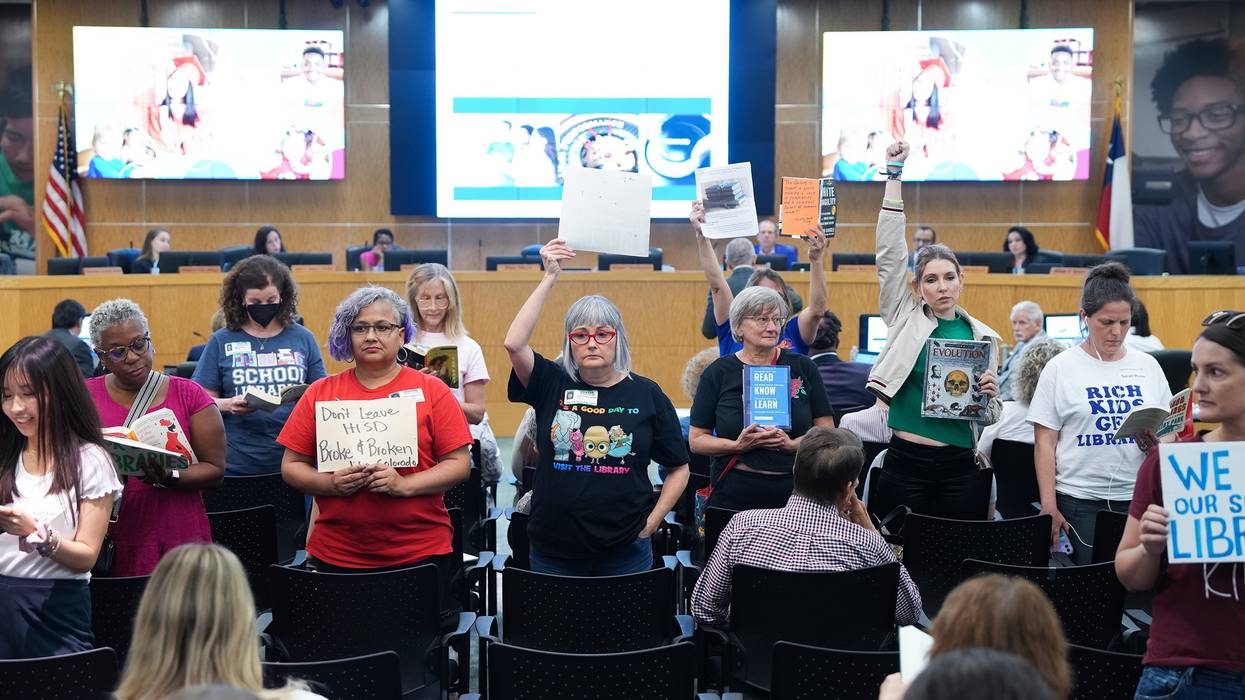
"The same bad actors who are calling for racist, homophobic, and transphobic book bans are also calling for climate denial in science textbooks," said one critic.
Seven of 12 proposed science textbooks for Texas 8th graders were rejected Friday by the Republican-controlled state Board of Education because they propose solutions to the climate emergency or were published by a company with an environmental, social, and governance policy.
The Texas Tribune reported that the 15-member board, which for the first time was required to include climate education for 8th graders, approved five of 12 proposed science textbooks, but called on their publishers to remove content deemed false or presenting a negative portrayal of oil and gas in the nation's biggest fossil fuel producer.
"America's future generations don't need a leftist agenda brainwashing them in the classroom to hate oil and natural gas," said Republican state energy regulator Wayne Christian, who had urged the board to choose books that promote planet-heating fossil fuels.
Some board members also objected to textbooks that did not include alternatives to the theory of evolution. One textbook was approved only after the removal of images highlighting that human beings—taxonomically classified as great apes—share ancestry with monkeys.
"Teaching creationism or any of its offshoots, such as intelligent design, in Texas' public schools is unlawful, because creationism is not based in fact," Chris Line, an attorney with the Freedom from Religion Foundation, said Friday. "Courts have routinely found that such teachings are religious, despite many new and imaginative labels given to the alternatives."
"Federal courts consistently reject creationism and its ilk, as well as attempts to suppress the teaching of evolution, in the public schools," Line added.
State standards approved by the board's conservative majority in 2021 do not include creationism as an alternative to evolution. The standards also acknowledge that human activities contribute to climate change.
Despite an overwhelming scientific consensus that human activity—primarily, the burning of fossil fuels—drives global heating, Republican board Secretary Patricia Hardy argued before the vote that such a stance amounts to "taking a position that all of that is settled science, and that our extreme weather is caused by climate change."
One textbook was rejected because its publisher has an environmental, social, and governance (ESG) policy. ESG frameworks account for workplace diversity, the treatment of employees, and preparedness for the climate crisis.
Democratic board member Marisa Perez-Diaz said during debate on the textbooks that "my fear is that we will render ourselves irrelevant moving forward when it comes to what publishers want to work with us and will help us get proper materials in front of our young people, and for me that's heartbreaking."
The National Science Teaching Association—a group of 35,000 U.S. science educators—on Thursday implored the board to reject "misguided objections to evolution and climate change [that] impede the adoption of science textbooks in Texas."
As in other GOP-run states, Texas officials have pushed book bans and other restrictions in schools and libraries, even as they portray themselves as champions of freedom. According to freedom of expression defenders PEN America, only Florida banned more books in schools than Texas during the 2022-23 academic year.
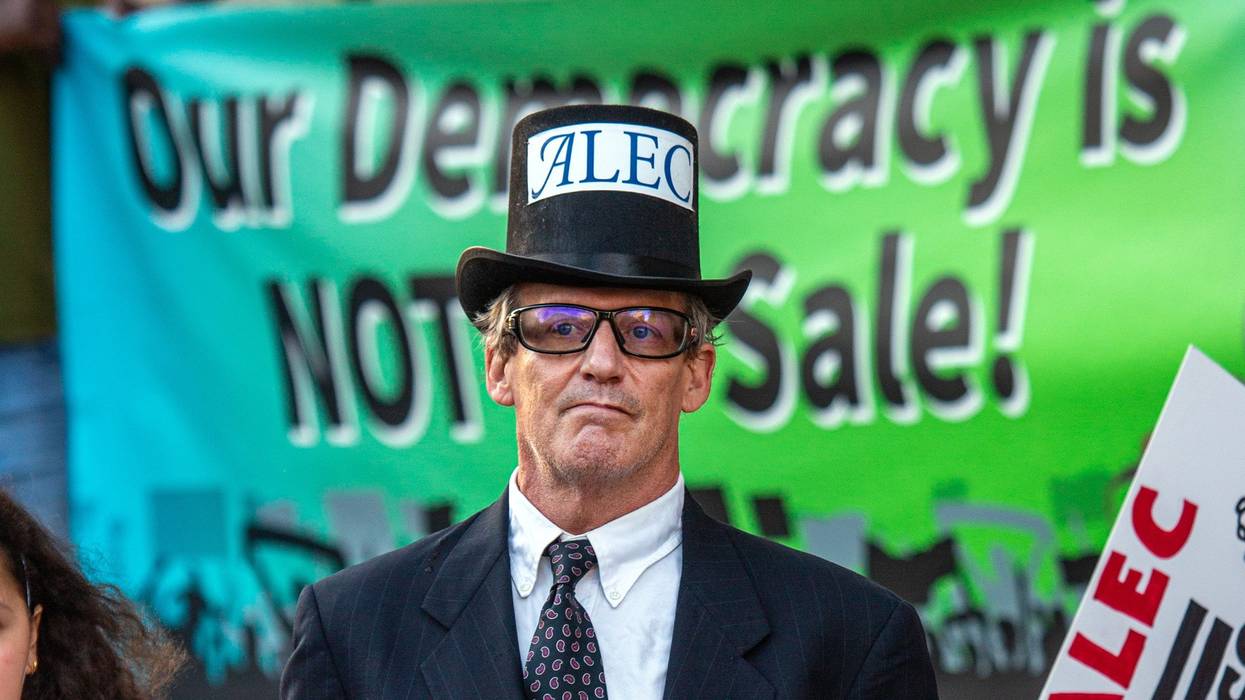
The American Legislative Exchange Council, which funnels right-wing model legislation to state houses, has "a really regressive agenda for our nation," one campaigner said.
As the American Legislative Exchange Council celebrated its 50th anniversary Wednesday night, a coalition of public interest groups gathered to wish them "a happy unbirthday," in the words of one critic opposed to the shadowy right-wing organization.
ALEC is a pay-to-play network of legislators and private sector operators who have spent the last half a century drafting pro-corporate legislation that members then push to state houses across the country. The advocacy organizations opposed to ALEC—including Common Cause, Greenpeace, the Union of Concerned Scientists, and True North Research—gathered to say that 50 years is "more than enough."
"ALEC's anniversary is nothing to celebrate because it has played such a fundamental role in undermining the American dream," Lisa Graves, executive director of True North Research and an expert on the group's activities, told Common Dreams.
"Fifty years of harm is absolutely enough."
ALEC has been the driving force behind a plethora of state laws that demonstrate "a really regressive agenda for our nation," Graves said. These include right-to-work laws, voter ID laws, laws criminalizing climate protests, and, in recent years, laws barring the use of environmental, social, and governance (ESG) criteria in investing.
The groups are hoping to use ALEC's 50th anniversary to draw attention to its past activities as well as solidify as well as solidify opposition to its anti-democratic operations going forward.
"We want to make sure that every American knows that, if Americans are behind bars in your state, in a private prison, you can thank ALEC for that," Svante Myrick, president and CEO of People for the American Way, said in a press briefing ahead of Wednesday's rally. "If there are laws in your state that make it harder for Black people and brown people to vote, you can thank ALEC for that. If there are laws that make it a crime to protest against polluters and climate change in your state, you can thank ALEC for that."
Looking ahead, the coalition aims to pressure the corporations and even nonprofits that associate with ALEC to disengage, with a new petition launching Thursday.
Outside the National Portrait Gallery in Washington, D.C., on Wednesday evening, the groups held a rally to coincide with the ALEC gala event and confronted the attendees.
"It was a good action with a lot of the core groups represented there to make sure that these ALEC legislators and their sponsors arriving in their tuxedos and their formal gowns were greeted by representatives of a lot of people across the country who object to the type of corruption that ALEC represents," Graves said.
In 2011, when Graves received a trove of ALEC draft legislation from a whistleblower while she was executive director of the Center for Media and Democracy (CMD), a coalition of groups launched a pressure campaign that persuaded more than 120 corporations to drop their ALEC memberships, including ExxonMobil, Dow, and Coca-Cola.
Since then, however, "they've gotten a little sneakier about it," Viki Harrison, the director of Common Cause's Constitutional Convention and Protecting Dissent programs, said during the press briefing.
Instead of joining ALEC as a member outright, corporations will sponsor a cigar bar or whiskey night at an ALEC gathering, for example. The new petition, therefore, will be sent to the presidents, CEOs, and members of the board of any corporation who is still attending conferences or hosted events.
"Anybody who is still involved, we say dump ALEC," Harrison said. "Fifty years of harm is absolutely enough."
The new round of targets will include the hosts and host committee members of Wednesday's gala, who include usual suspects like Newt Gingrich, Mike Pence, and Philip Morris; major companies like Guarantee Trust Life Insurance and the United Parcel Service; but also, surprisingly, the Humane Society of the United States, according to a list obtained by CMD.
The Humane Society's participation was particularly shocking, Graves said, because one of the model ALEC bills she covered in 2011 made it harder for pet owners to sue if their pets died because of corporate wrongdoing.
Another notable name on Wednesday's list, Graves said, was Leonard Leo right-hand man William Hild, who leads Consumers' Research, Consumers' Research, a right-wing front group that promotes itself as a consumer advocacy group while promoting corporate interests. This reflects the strengthening relationship between ALEC and Leo, the Federalist Society co-chair and architect of the current far-right Supreme Court. When Leo received a $1.6 billion donation from billionaire Barre Seid in 2021, he funneled $200,000 of it to ALEC, and in exchange ALEC pushed voter suppression legislation nationwide.
"Because ALEC is a pay-to-play operation, it goes where the money is, and the money is with Leo," Graves said.
ALEC has also taken up Leo's so-called "anti-woke agenda" and opposition to ESG investment guidelines in particular, Graves said. Both Texas and Arkansas have passed ALEC-drafted legislation barring their state governments from doing business with companies that have guidelines against investing in fossil fuels or firearms, Alan Leveritt, founder and publisher of the Arkansas Times, explained during Wednesday's press briefing. Leveritt said this had cost Arkansas an additional $30 million and Texas $300 to $500 million as the states had to move pension funds from larger firms like BlackRock to smaller companies with higher management fees.
"They have essentially raised taxes on the consumers and the retirees in the state of Arkansas and all these other states," Leveritt said.
Harrison said the anti-ESG push was especially alarming because it went against the conservative principle of allowing financial actors to make their own decisions without government interference.
"It's the antithesis of what the republican party has always said they are," she told Common Dreams.
In addition, Graves noted, ALEC bills tend to single out restrictions on fossil fuel investments and even limit investments in renewable energy "at a time when our climate is demonstrably growing worse due to the burning of fossil fuels."
In response, groups like Common Cause, CMD, People for the American Way, and Greenpeace are increasing their collaboration to shine the light on ALEC's activities. Because ALEC pushes legislation covering almost every major issue, "they feel we can't keep an eye on everything," Harrison said.
She and her coalition partners want to make sure that "activists in each state don't feel like they're seeing that bill by themselves."
Concerned citizens can help by researching the issues they care about, seeing if there is ALEC-backed legislation in place that targets them, and speaking to their state legislators about where the bills came from and how to challenge them.
‘We have to ask ourselves," Myrick said during the briefing, "will the next 50 years belong to ALEC, or will it belong to us?"
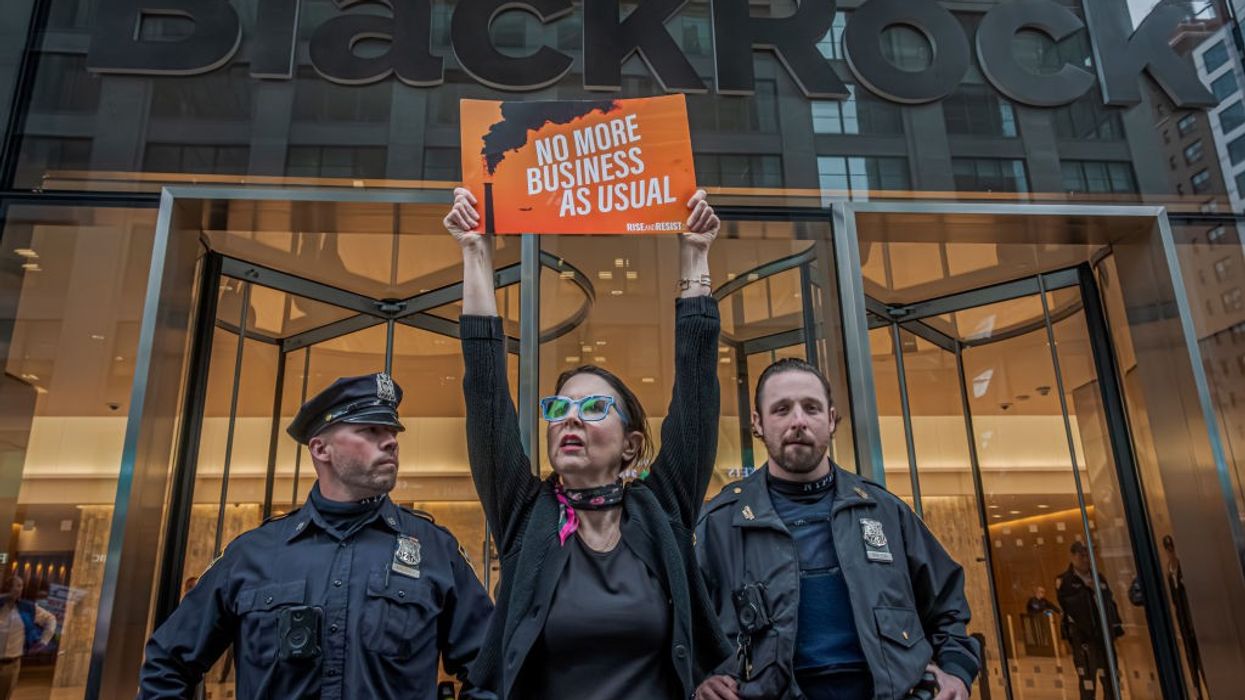
While our planet was experiencing its hottest month of all time, the Earth’s biggest pile of cash named to its board of directors the CEO of the world’s largest oil company, Saudi Aramco.
A problem with conspiracy theories—aside from the fact that they always get around to involving “ the Jews”—is that they distract us from what’s happening in plain sight.
So, in case you missed it, here’s the biggest thing that happened in the world last week: While our planet was experiencing its hottest month of all time, the Earth’s biggest pile of cash (the asset manager BlackRock, with $8.59 trillion dollars under management) named to its board of directors the CEO of the world’s largest oil company, Saudi Aramco, which has produced more carbon emissions than any firm on earth.
This decision was barely even noted— The New York Times produced a nine-paragraph account in its Dealbook newsletter. And yet think of what it means. It is the ultimate signal that the world’s financial community has decided to essentially give up on even the modest commitments they made a couple of years ago in Glasgow, where they said they would work to decarbonize their portfolios.
It’s gross when the PGA does business with the murderous Saudi regime; it’s life-or-death for everyone when the biggest business in the world sucks up to the biggest oil company.
Two things have happened since they made those big pledges (BlackRock’s Larry Fink said at the time, “We are on the edge of a fundamental reshaping of finance” to deal with the climate crisis). First, the war in Ukraine produced huge profits for the oil industry, as their old pal Vladimir Putin (who once hung a medal around the neck of Exxon’s CEO) pushed the price of petroleum into the stratosphere. And second, the oil industry’s bought-and-paid-for politicians in red-state America wrote nasty letters about “ESG investing” and threatened to break ties with the Wall Street firms that were “going woke.” Those two developments were more than enough to persuade barons like Fink to walk back their professed concern with a planet on fire. He is clearly a go-along get-along guy, and where we’re going is—well, if not hell then someplace with a similar temperature. (So far seven people have died and 85 have been hospitalized in Phoenix simply from burns from touching the pavement). It’s gross when the PGA does business with the murderous Saudi regime; it’s life-or-death for everyone when the biggest business in the world sucks up to the biggest oil company.
So what does stand-up leadership look like? Here’s Brad Lander, the comptroller of New York City. It’s not a sexy job (not like, say, running for president as your first public office). He’s the money guy, balancing the city’s books. But New York City has a lot of money, and that money gives you the power to do useful things that help people. When it got unbearably hot, Lander put out a video pointing out that the big banks the city does business with were still bankrolling the fossil fuel industry. It is straightforward, powerful, plainspoken:
And a few days later, when the Saudi Aramco news came out, Lander was again just about the only public servant I saw react:
“BlackRock has clearly stated that climate risk is an investment risk, but actions speak louder than words,” New York City Comptroller Brad Lander said in an emailed statement. “At a time when financial institutions need to take a collective approach to addressing the financial risks from climate change, BlackRock shareholders expect climate-competent, not climate-conflicted, directors.”
This matters. BlackRock is the largest external money manager for the city of New York. Lander can move that business and it will hurt BlackRock; and his words will at least be heard in the din of Wall Street. Others are starting to figure out just how irredeemable the fossil fuel industry is. Here, for instance, is an editorial in the Los Angeles Times last week that I think is the most forthright declaration ever on Big Oil by a major American newspaper. Forget pretending that the Exxons and Aramcos will ever change their stripes: instead, “kick them to the curb.” I’m going to quote from it at length because the paper’s editorial board was not engaging in the usual tentative to-ing and fro-ing. They just said it:
It should be obvious by now that fossil fuel companies have no real plans to change in response to the climate crisis. And that the only way forward is without them.
Some high-profile environmental leaders have come to a similar conclusion recently, among them influential climate negotiator Christiana Figueres, under whose tenure as executive secretary of the United Nations Framework Convention on Climate Change the landmark 2015 Paris agreement was developed. She wrote in Al Jazeera earlier this month that after years of holding out hope that oil and gas companies would wake up and participate in the decarbonization of the economy, their actions over the last 12 months have changed her mind.
Former Vice President Al Gore, a longtime champion for climate action, has also been speaking with refreshing frankness about fossil fuel industry obstruction, decrying “anti-climate plotting” by companies that refuse to disclose their emissions or commit to phasing them out while they successfully push government policies to slow down the transition to clean energy.
It’s a little late for powerful voices from older generations to come to the realization that fossil fuel companies aren’t operating in good faith and will fight climate action until the bitter end. But it’s welcome nonetheless, and there’s clear generational shift in that direction that offers some hope. Polling last year by the Pew Research Center found that while most Americans are reluctant to ditch fossil fuels, younger adults are much more supportive of phasing out oil, gas, and coal entirely.
This is the spirit that we desperately need—the spirit that focuses on the actual, the concrete, the things before our eyes. Like the unbearable heat. Not long before his assassination, Robert F. Kennedy gave a speech at the University of Kansas where he spoke about the real with as much eloquence as any American ever mustered. There was a man who could have been forgiven a conspiracy theory or two—after all, his brother had been killed just five years before. But here’s where he was focused:
Our Gross National Product, now, is over $800 billion dollars a year, but that Gross National Product—if we judge the United States of America by that—that Gross National Product counts air pollution and cigarette advertising, and ambulances to clear our highways of carnage. It counts special locks for our doors and the jails for the people who break them. It counts the destruction of the redwood and the loss of our natural wonder in chaotic sprawl. It counts napalm and counts nuclear warheads and armored cars for the police to fight the riots in our cities. It counts Whitman's rifle and Speck's knife, and the television programs which glorify violence in order to sell toys to our children. Yet the gross national product does not allow for the health of our children, the quality of their education, or the joy of their play. It does not include the beauty of our poetry or the strength of our marriages, the intelligence of our public debate or the integrity of our public officials. It measures neither our wit nor our courage, neither our wisdom nor our learning, neither our compassion nor our devotion to our country, it measures everything in short, except that which makes life worthwhile. And it can tell us everything about America except why we are proud that we are Americans.
Brad Lander, born the next year, is heir to that tradition, and so are the editorialists of the Los Angeles Times, and so are all the other Americans who keep their eye on the moment.

Where information and educational systems are increasingly being used as tools for thought control, more and more people will be going through life ill-equipped to understand how much ecological peril humanity faces, or how deep a transformation will be required of us.
In recent years, almost half of US state legislatures have passed laws that directly undermine local communities’ efforts to curb climate change. More prominent in the headlines, though, have been bills targeting public education and violating a host of constitutional rights, many of them now signed into law. These “culture war” laws don’t directly address climate. But unless they are struck down, they could permanently limit society’s ability to deal with the climate emergency.
In June, 16 young, environmentally conscious plaintiffs asked a Montana judge to strike down a law of the first type, one that bars state agencies from taking greenhouse-gas emissions into account when considering whether to issue permits for fossil fuel–related projects. They alleged that because their quality of life was being degraded by climate change, the law in question violates a sentence in Article IX of the state constitution: “The state and each person shall maintain and improve a clean and healthful environment in Montana for present and future generations.”
Unfortunately, surging attempts to MAGAfy red-state education systems could lead future cohorts of young people to become less eager than the Montana 16 to challenge the fossil-fuel juggernaut. Anya Kamenetz recently reported for Grist on an especially egregious effort now underway: a campaign to completely purge the subject of climate change from public school curricula. The story focused on a May 3 school board hearing in New Jersey at which activists raised a ruckus over a board policy (of a kind adopted in various forms by 20 states) to encourage teaching of climate in public schools. The arguments they put forward were very much in the vein of those against, for example, teaching the truth about US racial history: climate education, the activists argued, constitutes “indoctrination,” is too “divisive,” and scares children.
Among the objectors were groups with histories of opposition to abortion, interracial marriage, and the teaching of critical race theory (though it is not even taught in public schools). Now those groups had climate in their crosshairs as well. The effort to purge climate education from the classroom isn’t likely to succeed in New Jersey, but it continues to come under threat in red states. For instance, legislation proposed or passed in Ohio, Kentucky, Indiana, Texas, and South Dakota requires that “both sides” of the assertion that humans cause climate change must be taught (though there is no valid “other side”).
These stories highlight two complications in the struggle to finally push national climate policy across the starting line. First, red-state governments across the country are hitting us with a hailstorm of laws and regulations to boost fossil fuels and suppress climate action. Second, right-wing politicians and lobbying groups are pushing for legislation that will tighten state governments’ control over education, the media, local governments, and other institutions. The word “climate” may not show up in these latter measures, but they can nonetheless erode US society’s ability to deal with ecological breakdown in the decades ahead.
In his 2021 book Laboratories of Autocracy, David Pepper catalogued a decade of red-state attacks on a wide array of constitutional rights. Additional heavy-handed repression by state legislatures has been reported in the past two years, with an increasing share aimed at climate and energy issues. In two intersecting bands of territory reaching from Idaho to Florida and from Texas to Ohio, states under full GOP control are denying state contracts to companies that show insufficient fealty to the oil, gas, and coal industries, overruling local regulation of fossil fuels, criminalizing protest against fossil fuels, violating land rights to build pipelines, limiting pollution enforcement, and denying environmental justice to marginalized communities.
Prominent among legislative measures that undermine climate action are so-called preemption bills, which prohibit certain actions by local governments. Until recently, such measures were narrowly targeted. For example, laws now on the books in 24 states nullify city ordinances that ban hookups for gas furnaces, stoves, and water heaters in new home construction. But now two states have escalated the preemption game with sweeping new laws that could tie city and county governments’ hands on just about any issue. One of the states (predictably, given its anti-democratic reputation of late) is Texas, where the state assembly passed and Gov. Greg Abbott signed into law a bill that forbids any local regulations that aren’t explicitly authorized in the state’s labor, natural resources, agriculture, or insurance codes. The effect will be to make it much harder for cities to stop companies from discharging pollution into the air, water, or ground, including greenhouse-gas emissions. The bill, drafted in part by the National Federation of Independent Business (NFIB), was by no means a homegrown grassroots initiative.
Florida, too, has presented its business owners the gift of a new preemption law. Under it, a company can file in court to overturn any local ordinance that it considers “unreasonable,” which immediately blocks enforcement while the case is pending. Just about every business owner believes that just about every local ordinance they don’t like is unreasonable, so the flood of suits filed under this law could drown out most local regulation, particularly environmental rules.
As of this spring, more than half of US state legislatures were weighing restrictive education laws. There’s been ample discussion about state laws and rules that seek to purge from K–12 education anything that would not have been taught in the 1950s. For example, we’ve seen “Don’t Say Gay” bills, most infamously in Florida, that ban talk about sexuality and gender; prohibit teaching of anything that, according to the Georgia General Assembly, could make a student feel “anguish, guilt, or any form of psychological distress” because of their race or gender; and punish schools that, in the Arizona legislature’s disingenuous opinion, “usurp the fundamental right of parents to direct the upbringing, education, health care, and mental health of their children.” And Florida (again) in 2022 banned more than 40 percent of math textbooks that publishers had submitted for approval. Math books? Really? Governor DeSantis explained, surreally, “They took the ‘woke’ out and sent us back normal math books.”
Meanwhile, the American Library Association reports that—as in fascist or totalitarian societies and dystopian fiction—2022 saw the largest number of attempted book bans since they started tracking in 2001. The book-banning frenzy is having destructive consequences for libraries: staff resignations, board meetings collapsing under the weight of book-banners’ rage, deep cuts in funding, and outright closings. For fear of being caught distributing prohibited books, some county governments in Tennessee, Texas, and yes, Florida have taken the drastic step of cutting off online access to their libraries’ entire digital collections.
Many of these laws will deprive students of an effective, well-rounded education, circumscribing what can be taught or even discussed in public schools. The goal is to render future electorates incapable of seeing through rightist propaganda—a kind of thought control meant to impose ideological limits on society as a whole. If MAGA state governments manage to discourage critical thinking and wall off an entire generation (or two) from vast areas of knowledge in history and science, large segments of the US population will be ill-equipped to even understand climate change, much less to support action that could prevent ecological meltdown.
For Big Brother-style control of public colleges and universities, Florida is the “canary in the coal mine,” as the American Association of University Professors wrote this May in a blistering report. A 2022 law dubbed by DeSantis the “Stop WOKE Act,” which is currently blocked and under appeal in federal court, would, among other things, bar from the college classroom any subject matter that might make students “feel guilt, anguish, or other forms of psychological distress because of actions . . . committed in the past by other members of the same race, color, national origin or sex.” Note the similar wording (“feel guilt, anguish . . .”) in this law affecting colleges and the aforementioned Georgia law for K–12 schools, which passed around the same time.
And consider another sprawling bill to overhaul higher education that the Florida legislature passed and DeSantis signed into law. Fabiola Cineas writes on Vox that under the law, which took effect July 1,
general education courses cannot be based on “theories that systemic racism, sexism, oppression, and privilege are inherent in the institutions of the United States and were created to maintain social, political, and economic inequities.” Relatedly, the law requires schools to provide students with an “economic security report,” to inform them of which degrees correspond with the highest and lowest annual earnings.
“Ultimately,” notes Cineas, “the lawmakers want the state’s public colleges and universities to develop goals to ‘promote the state’s economic development’ by attracting tech firms and venture capital to the state.”
Florida’s campaign to focus higher education on moneymaking at the expense of actual education is increasingly echoed in the broader MAGA world. Some are outright claiming that too many people are getting too much education. The 29-year-old right-wing extremist and popular talk-show host Charlie Kirk has written a book called The College Scam. In it, he urges high school graduates to go to a trade school or enlist in the military rather than go to college. And on air, he has said, “Sending your child to four-year college is a big risk. You’re going to play Russian roulette with their values.” Now, Kirk need no longer worry about kids who attend college in some states, where they’ll be shielded from having to learn about the real world or develop critical thinking skills.
The threat extends well beyond education. Attacks on press freedom will further restrict the public’s awareness and knowledge. And the stepped-up suppression of other First Amendment rights—especially the right to political dissent and protest—will have a chilling effect on climate action. The better informed a society is, and the better its grounding in critical thinking, the more likely it is to take the threat posed by fossil fuels seriously and act accordingly. Conversely, the substitution of propaganda for journalism, and indoctrination for education, in MAGA-ruled states will blow a hole in any national effort to curb the heating of the Earth.
It’s important to add that the ability of states to override local control can play a crucial positive role when used to foster democracy and justice. States must, for instance, block local governments from practicing racial discrimination or violating state restrictions on weapons. One of the most important uses of state preemption has been to override local zoning laws that discriminate. Preemptive zoning laws could also be highly effective for reducing greenhouse-gas emissions, by quashing local zoning regulations that permit only single-family housing across large areas. Such zoning rules are largely responsible for suburban sprawl, long work commutes, infrastructure building booms, and construction of fully detached houses with bloated square footage—all of which vastly increase the average household’s carbon footprint. To promote climate protection and enhance quality of life and social justice, legislatures in Oregon, Washington State, California, Connecticut, Virginia, Maryland, Nebraska, and Utah have considered or passed laws that bar local governments from mandating solely single-family housing, either broadly or in certain areas.
Such sensible state governance, while heartening to see, is clearly not a panacea, when not only Texas and Florida, but almost half of our state legislatures are aiming to establish one-party rightist regimes. On July 4, in one of his periodic essays that address this unnerving prospect, Ron Brownstein gave a historical analysis:
The general trend in American life from the 1950s through the 2010s was to nationalize more rights and to restrict the ability of states to curtail those rights. Now, though, the red states are engaged in the most concerted effort over that long arc to roll back the “rights revolution” and restore a system in which people’s basic civil rights vary much more depending on where they live. . . . The chasm between the civil rights and liberties available in blue and red states has widened to the point where it will be highly explosive for either side to attempt to impose its social regime on the other.
For now, the answer to a central question that Brownstein asks in the essay—“Can the United States continue to function as a single unified entity?”—seems to be “No way.” In those states where information and educational systems are increasingly being used as tools for thought control, more and more people will be going through life ill-equipped to understand how much ecological peril humanity faces, or how deep a transformation will be required of us.
Those of us who are living under such regimes, as well as those who are not, must confront and overcome this movement—call it our century’s counterpart to the 1850s Know-Nothing Party—that is hell-bent on stripping away our rights to read, teach, learn, dissent, and acquire the collective knowledge essential to achieving an ecological transformation.
"The Leo money machine has concocted a perfect distraction from the unpopular, industry-friendly, anti-middle-class policies the Republican House majority is pursuing, like $1 trillion in new tax breaks."
Leonard Leo, a figure known for orchestrating the far-right takeover of the U.S. judiciary, is spearheading a dark money network that's fueling the House GOP's assault on environmental, social, and corporate governance, an investing approach that ostensibly considers climate impacts and other societal factors.
With House Republicans set to hold a hearing Wednesday and consider a slew of bills as part of their "ESG month," the watchdog group Accountable.US released a memo and research spotlighting Leo's role in the frenzied attack on what's been dubiously called "woke capitalism."
The group notes in its new memo that through the dark money organization Consumers' Research, Leo "has engaged in an aggressive campaign targeting corporations for making climate-friendly investments," helping lead the "far-right crusade against responsible investing."
While Leo doesn't have a formal role with Consumers' Research, the group's executive director, Will Hild, recently described Leo as an "adviser to the organization."
Further, as Accountable.US observes, "Leo's dark money DonorsTrust group has funneled $6 million to Consumers' Research, which has, in turn, spent millions to publicly shame Fortune 500 CEOs and pressure firms against responsible investing. Leo's for-profit consulting firm, CRC Advisors, has also raked in hundreds of thousands from Consumers' Research."
Late last year, Consumers' Research joined more than a dozen Republican attorneys general in demanding a federal investigation into Vanguard, accusing the behemoth asset manager of "meddling with [the] energy industry to achieve progressive political goals at the expense of market efficiency," despite the firm's massive support for fossil fuels.
Just days later, as The Washington Post reported, "Vanguard announced it was quitting a coalition called the Net Zero Asset Managers Alliance and shelved its own modest pledges to cut the amount of greenhouse gas emissions linked to companies in which it invests. Leaders of Consumers' Research were surprised—and elated."
Leo told the Post in an email earlier this year that "Consumers' Research and its leader Will Hild are executing the most impactful pushback I know against ESG and other aspects of woke corporate culture."
"It's time that businesses that are out of step with the sentiments of most Americans pay a price for their standing up for woke special interest instead of consumers," Leo added, not mentioning that polls have shown a majority of U.S. voters support allowing asset managers to take climate into account in their investment decisions.
Groups controlled by Leo, the co-chairman of the right-wing Federalist Society, have also bankrolled state-level Republican politicians who have introduced more than 160 bills nationwide attacking sustainable investing policies, which companies often don't adhere to in any case.
Accountable.US points to a recent report by Pleiades Strategy, which highlights "clear connections between anti-ESG legislation, the fossil fuel industry, and right-wing figures."
"Involved right-wing activist groups have received funding from foundations controlled by executives from Koch Industries, which has significant fossil fuel operations. Many have received substantial funding from organizations controlled by Leonard Leo, including the Marble Freedom Trust, the 85 Fund, and the Concord Fund," the report reads. "In potential violation of IRS nonprofit laws, Leo's for-profit consulting firm, CRC Advisors, is a top contractor for many of the organizations."
In its new research, Accountable.US notes that "between 2013 and 2019, Consumers' Research paid CRC Advisors over $600,000 for public relations work. In 2020, CR paid CRC Advisors nearly $113,000, followed by a whopping nearly $625,000 in 2021."
"Leo's dark money DonorsTrust group has funneled $6 million to Consumers' Research, which has, in turn, spent millions to publicly shame Fortune 500 CEOs and pressure firms against responsible investing."
Accountable.US argues that by stoking political stunts like ESG month, "the Leo-money machine has concocted a perfect distraction from the unpopular, industry-friendly, anti-middle-class policies the Republican House majority is pursuing, like $1 trillion in new tax breaks for profiteering corporations and the billionaires Leonard Leo serves."
Politico reported Monday that with their upcoming hearings, Republicans on the House Financial Services Committee intend to "target the process in which advocates pressure public companies to adopt environmental, social, and governance (ESG) goals using the shareholder voting process."
Earlier this year, congressional Republicans and two Democratic senators—Joe Manchin of West Virginia and Jon Tester of Montana—joined forces to pass a resolution aimed at making it more difficult for pension fund managers to take climate and other considerations into account when making investment decisions.
President Joe Biden vetoed the measure.
"While framed around holding Wall Street to account," Politico reported, "Financial Services Committee Republicans appear to be picking spots where they'll minimize friction with the industry’s biggest players."
That's hardly surprising given that Rep. Patrick McHenry (R-N.C.)—the chair of the financial services pane—and other Republicans on the committee are major recipients of industry cash.