

SUBSCRIBE TO OUR FREE NEWSLETTER
Daily news & progressive opinion—funded by the people, not the corporations—delivered straight to your inbox.
5
#000000
#FFFFFF
To donate by check, phone, or other method, see our More Ways to Give page.
Daily news & progressive opinion—funded by the people, not the corporations—delivered straight to your inbox.
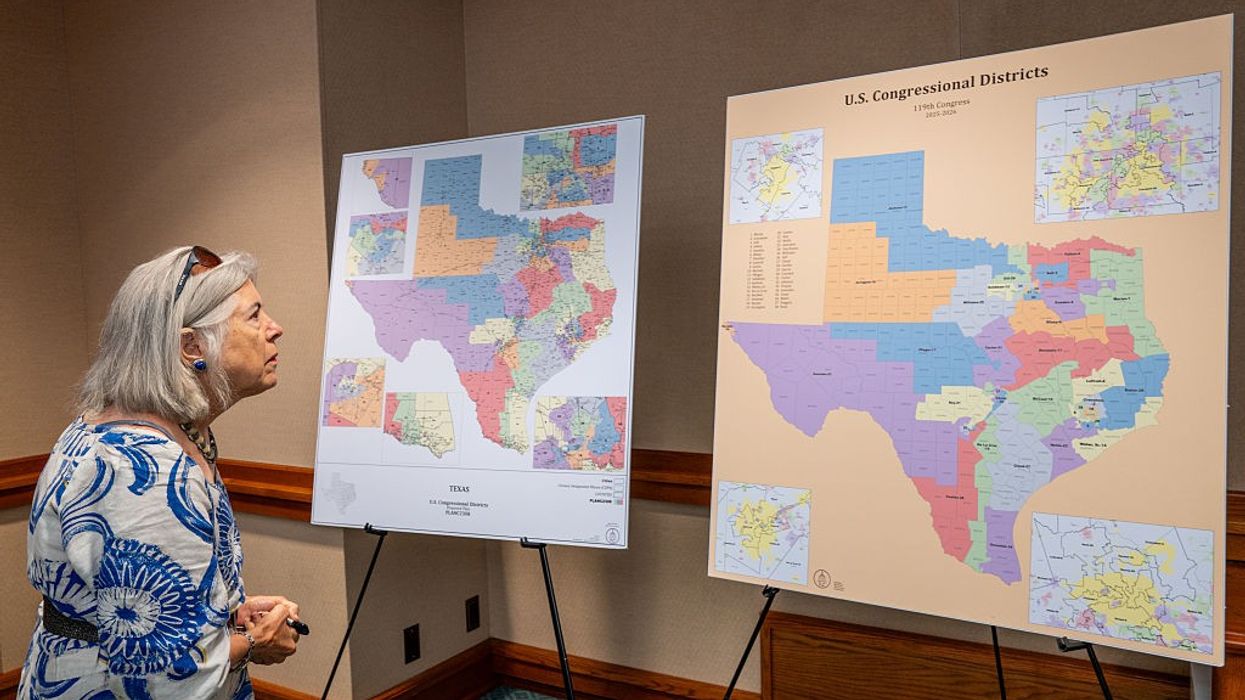
"We will not sit idly by while political leaders manipulate voting maps to entrench their power and subvert our democracy," said the head of Common Cause.
As Republicans try to rig congressional maps in several states and Democrats threaten retaliatory measures, a pro-democracy watchdog on Tuesday unveiled new fairness standards underscoring that "independent redistricting commissions remain the gold standard for ending partisan gerrymandering."
Common Cause will hold an online media briefing Wednesday at noon Eastern time "to walk reporters though the six pieces of criteria the organization will use to evaluate any proposed maps."
The Washington, D.C.-based advocacy group said that "it will closely evaluate, but not automatically condemn, countermeasures" to Republican gerrymandering efforts—especially mid-decade redistricting not based on decennial censuses.
Amid the gerrymandering wars, we just launched 6 fairness criteria to hold all actors to the same principled standard: people first—not parties. Read our criteria here: www.commoncause.org/resources/po...
[image or embed]
— Common Cause (@commoncause.org) August 12, 2025 at 12:01 PM
Common Cause's six fairness criteria for mid-decade redistricting are:
"We will not sit idly by while political leaders manipulate voting maps to entrench their power and subvert our democracy," Common Cause president and CEO Virginia Kase Solomón said in a statement. "But neither will we call for unilateral political disarmament in the face of authoritarian tactics that undermine fair representation."
"We have established a fairness criteria that we will use to evaluate all countermeasures so we can respond to the most urgent threats to fair representation while holding all actors to the same principled standard: people—not parties—first," she added.
Common Cause's fairness criteria come amid the ongoing standoff between Republicans trying to gerrymander Texas' congressional map and Democratic lawmakers who fled the state in a bid to stymie a vote on the measure. Texas state senators on Tuesday approved the proposed map despite a walkout by most of their Democratic colleagues.
Leaders of several Democrat-controlled states, most notably California, have threatened retaliatory redistricting.
"This moment is about more than responding to a single threat—it's about building the movement for lasting reform," Kase Solomón asserted. "This is not an isolated political tactic; it is part of a broader march toward authoritarianism, dismantling people-powered democracy, and stripping away the people's ability to have a political voice and say in how they are governed."
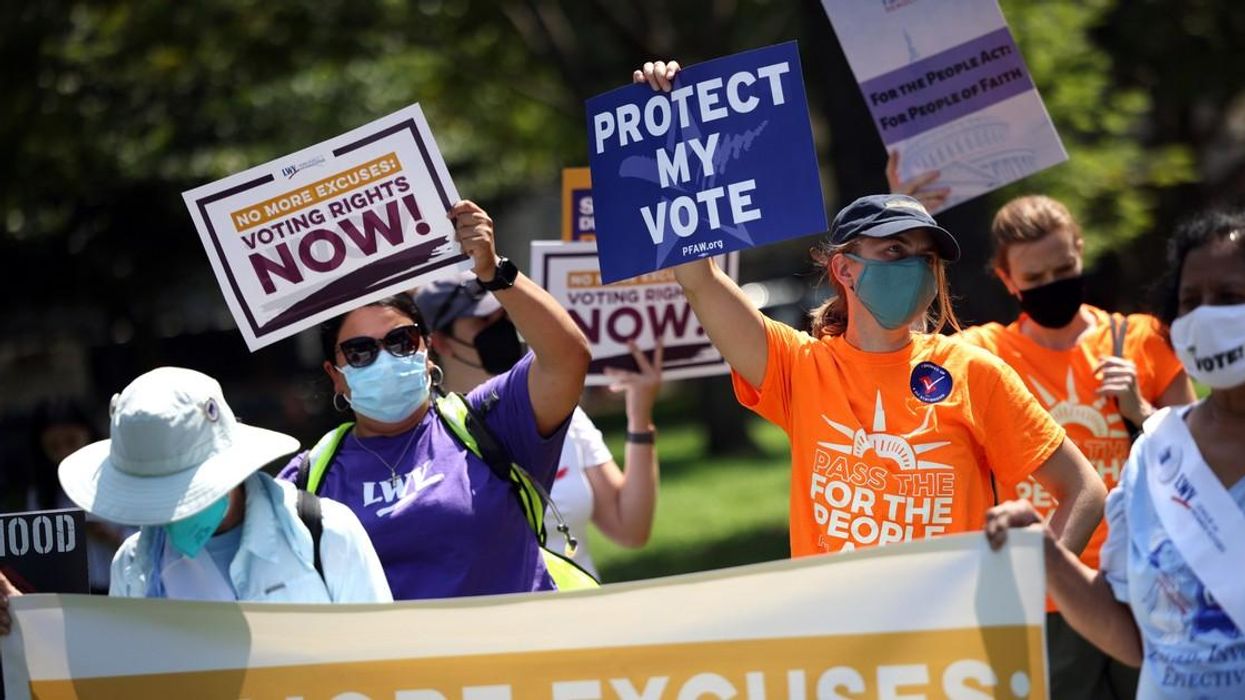
One group said it has registered over 100,000 new voters since U.S. President Joe Biden dropped out of the 2024 race.
The group behind a popular get-out-the-vote technology platform said Friday that it's registered more than 100,000 new U.S. voters since President Joe Biden withdrew from the 2024 presidential race, a surge that came amid mounting Republican efforts to make it harder to register and vote.
Vote.org said that 84% of voters registered in the new wave are under age 35. Nearly 1 in 5 new registrees is 18 years old. Andrea Hailey, the group's CEO, said that "since 2020, we have led the largest voter registration drive in U.S. history," with more than 7.8 million people registered.
After dropping out, Biden endorsed Vice President Kamala Harris to face former Republican President Donald Trump and Sen. JD Vance (R-Ohio) in the November election. The new presumptive Democratic candidate has already earned endorsements from many Democrats in Congress and groups advocating on issues including climate, labor, and reproductive rights.
Vote.org's success comes as Republicans at the federal level are proposing and passing legislation creating obstacles to the ballot box.
Earlier this month, U.S. House Republicans passed Rep. Chip Roy's (R-Texas)
Safeguard American Voter Eligibility (SAVE) Act, which would require proof of American citizenship to vote in federal elections. Republicans claim the bill is meant to fix the virtually nonexistent "problem" of noncitizen voter fraud.
However, Rep. Summer Lee (D-Pa.)
slammed the bill as a "xenophobic attack" meant to silence "Black voices, brown voices, LBGTQIA+ voices, [and] young voices."
Lee said the SAVE Act underscores the need to pass her recently introduced Right to Vote Act, "which would establish the first-ever affirmative federal voting rights guarantee, ensuring every citizen may exercise their fundamental right to cast a ballot."
Earlier this year, U.S. Senate Democrats also reintroduced the John R. Lewis Voting Rights Advancement Act, legislation its sponsors say will "update and restore critical safeguards of the original Voting Rights Act."
Meanwhile, Republican-controlled state legislatures and red-state governors are enacting laws imposing tough restrictions on voter registration, with violations punishable by stiff fines that critics say are meant to dissuade people from registration drives and similar efforts.
Again under the guise of preventing fraud, Republican Florida Gov. Ron DeSantis last year signed legislation limiting voter registration drives, with fines of up to $250,000 for violators.
"These draconian laws and rules are like taking a sledgehammer to hit a flea," Cecile Scoon, an attorney and president of the Florida chapter of the League of Women Voters,
told The New York Times in an article published Friday.
Three years after Kansas passed a law making "false representation" of an election official a crime, campaigners say it's become extremely difficult to sign up new voters.
"In 2020, even with the pandemic, we had registered nearly 10,000 Kansans to vote. Now, we haven't been able to register anyone," Davis Hammet, president of the youth voter mobilization group Loud Light, told the Times.
In Louisiana, Republican state lawmakers quietly passed legislation making it easier for election officials to toss out absentee ballots with missing details, limiting how people can mail in other voters' ballots, and restricting the ability to assist people with disabilities with their ballots.
"What we've found is that these measures have a disproportionate impact on voters with disabilities, both Black and white," NAACP Legal Defense Fund senior policy counsel Jared Evans
told Nola.com earlier this week.
"It's clear that their goal is to make it harder to vote, harder for specific communities to vote especially," Evans added. "What they don't realize is that these laws hurt white voters, too."
In Nebraska, Republican Secretary of State Bob Evnen last week
ordered county election offices to stop registering voters with past felony convictions who have not received official pardons. The move came after the state's unicameral Legislature passed a bill granting voting eligibility to felons immediately after they have completed their sentences instead of waiting two years.
"We refuse to accept thousands of Nebraskans having their voting rights stripped away," ACLU of Nebraska legal and policy fellow Jane Seu said in a statement. "We are confident in the constitutionality of these laws, and we are exploring every option to ensure that Nebraskans who have done their time can vote."
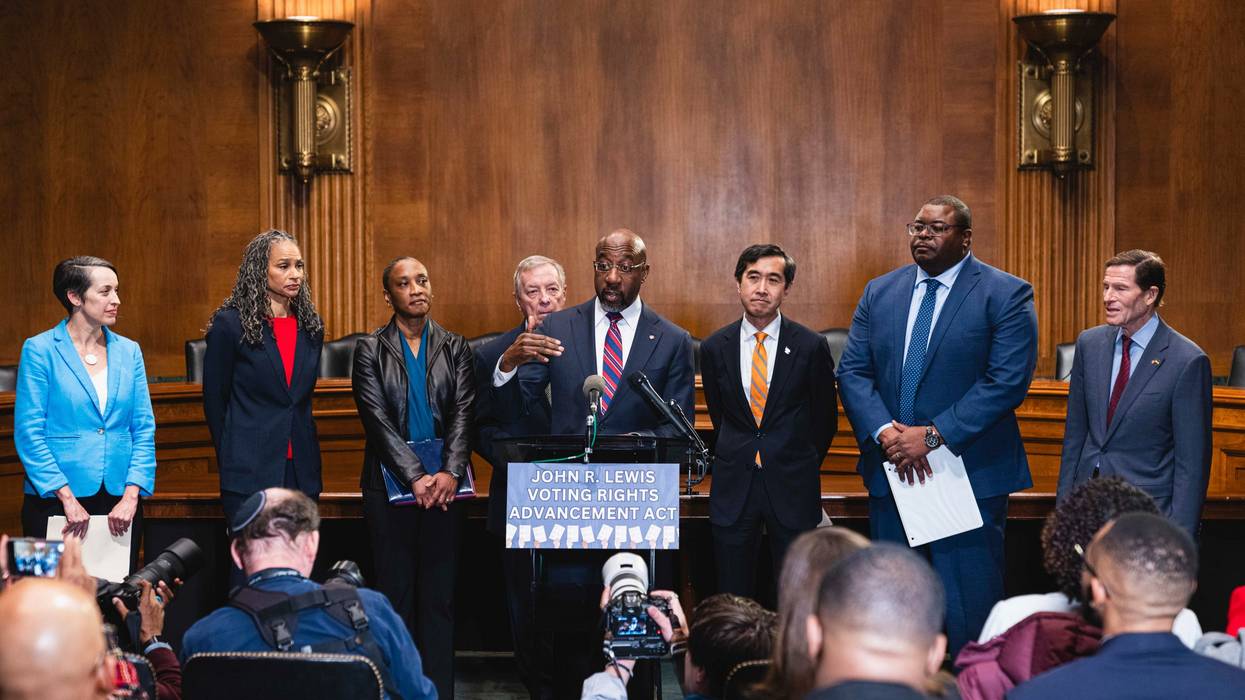
One advocate said the John R. Lewis Voting Rights Advancement Act is "critically important for Congress to pass at a moment in our history when the freedom to vote is under attack in our nation."
Civil and voting rights advocates on Thursday cheered the reintroduction of the John R. Lewis Voting Rights Advancement Act, legislation its sponsors say will "update and restore critical safeguards of the original Voting Rights Act."
Introduced by Sens. Dick Durbin (D-Ill.), Raphael Warnock (D-Ga.), Chuck Schumer (D-N.Y.), Cory Booker (D-N.J.), Laphonza Butler (D-Calif.), and Richard Blumenthal (D-Conn.), S.B. 4—a companion to H.R. 14, introduced last September—is named in honor of John Lewis, a late civil rights icon and longtime Georgia congressman. Republicans filibustered the previous iteration of the bill.
"In our nation, there's no freedom more fundamental than the right to vote," said Durbin. "But over the past several years, there has been a sustained effort to chip away at the protections guaranteed to every American under the Voting Rights Act. That's why we've joined together today to reintroduce a bill that would not only restore the protections of the Voting Rights Act, but strengthen it."
We just re-introduced the John R. Lewis Voting Rights Advancement Act. I’m joined by @SenSchumer, @SenatorWarnock, and civil rights group leaders now.
Our message it’s clear: we must ensure that democracy works for all of us. https://t.co/SH7ujaLfjw
— Senator Dick Durbin (@SenatorDurbin) February 29, 2024
Warnock said: "I was Congressman Lewis' pastor, but he was my mentor and hero because he believed voting is a sacred undertaking that's about more than a person's voice, it's about their humanity. That's why this legislation is more important than ever, because the fight to protect voting rights and voting access for every eligible American remains unfinished and even worse, so much of the progress Congressman Lewis fought for is being rolled back."
NAACP Legal Defense Fund president Janai Nelson called the bill "a vital piece of legislation that will safeguard the fundamental right to vote by strengthening and restoring the Voting Rights Act, one of the most impactful civil rights laws in our nation's history."
"It is fitting that this critical legislation is put forward as we approach the 59th anniversary of Bloody Sunday, when Black Americans—including civil rights hero John Lewis—endured brutal state-sponsored violence while marching for basic rights, which led to the enactment of the Voting Rights Act."
"The fight to protect voting rights and voting access for every eligible American remains unfinished and even worse, so much of the progress Congressman Lewis fought for is being rolled back."
The landmark VRA was meant to ensure that state and local governments could not "deny or abridge the right of any citizen of the United States to vote on account of race or color."
However, the VRA has been eroded in recent decades by Republican-controlled state legislatures across the country, including with restrictions on voter registration, reduction in early voting options, and voter identification laws. These measures disproportionately disenfranchise minority voters, and some GOP officials have admitted that they are intended to give Republican candidates an electoral edge.
In 2013, the U.S. Supreme Court dealt a major blow to the VRA in Shelby County v. Holder, which eviscerated a key section of the law that required jurisdictions with a history of racist disenfranchisement to obtain federal approval prior to altering voting rules. In 2021, the nation's high court voted 5-4 in Brnovich v. Democratic National Committee to uphold Arizona's voting restrictions—even as Chief Justice John Roberts acknowledged that they disproportionately affect minorities.
"Since Shelby and more recently Brnovich v. DNC made it even harder to challenge discriminatory voting laws, states have continued to limit access to the ballot and use the redistricting process to dilute Black voters' voices," Nelson asserted. "States that were formerly protected—including Alabama, Georgia, Louisiana, Mississippi, South Carolina, and Texas—are all places where LDF has been forced to bring recent litigation to challenge unlawful racial discrimination in voting."
Common Cause president Virginia Kase Solomón asserted that the protections proposed in the new bill "are critically important for Congress to pass at a moment in our history when the freedom to vote is under attack in our nation."
"A bedrock of our democracy, the freedom to vote has been under sustained assault since the 2020 election with dozens of anti-voter laws passed in states all across the country to make it harder for Americans—particularly in Black and brown communities—to have a say in choosing their elected leaders," she added.
Arturo Vargas, CEO of the National Association of Latino Elected and Appointed Officials, said in a statement that "in the Shelby decision, the U.S. Supreme Court acknowledged that there is still discrimination in our nation's electoral process—and this bill would provide strong and robust safeguards to combat it."
"We urge Congress to work in a bipartisan manner to pass the John R. Lewis Voting Rights Advancement Act and help make our democracy more responsive to all of our nation's voices," he added.
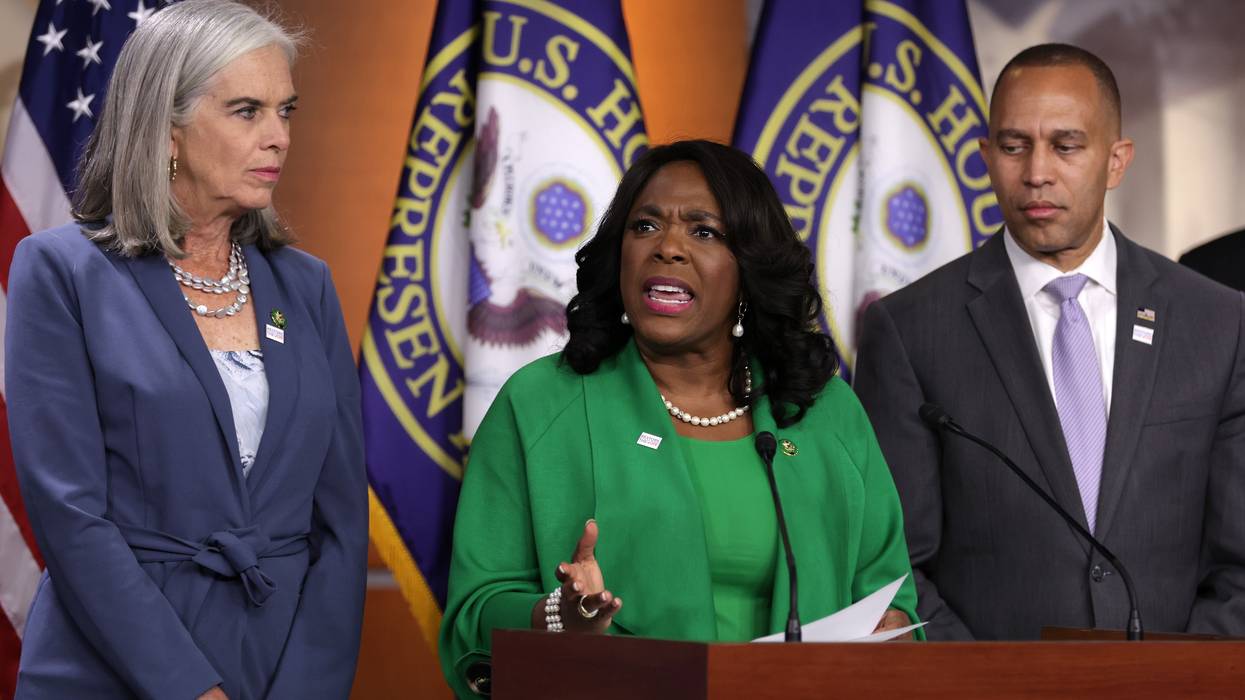
"It will take passage of the John R. Lewis Voting Rights Advancement Act to curb this new generation of assaults on the freedom to vote," said one campaigner.
Although it is nearly certain to go nowhere in a Republican-dominated U.S. House of Representatives, pro-democracy groups nationwide celebrated on Tuesday as Congresswoman Terri Sewell reintroduced the John R. Lewis Voting Rights Advancement Act.
"Generations of Americans—many in my hometown of Selma, Alabama—marched, fought, and even died for the equal right of all Americans to vote," Sewell (D-Ala.) said in a statement. "But today, their legacy and our very democracy are under attack as MAGA extremists target voters with new laws to restrict voting access."
"The fight for voting rights has never been more urgent," she argued, explaining that the legislation—named for the late Democratic Georgia congressman and civil rights leader—aims to restore and modernize the full protections of the Voting Rights Act of 1965 (VRA), which was gutted by the U.S. Supreme Court a decade ago in Shelby County v. Holder.
The bill is backed by every House Democrat but faces tough odds in both chambers. Early last year, Democratic right-wing Sen. Joe Manchin (W.Va.) and Sen. Kyrsten Sinema (Ariz.), who switched from Democrat to Independent in December, worked with Republicans to block a megabill that included the Freedom to Vote Act and the John Lewis legislation.
Still, U.S. advocacy groups on Tuesday applauded the lawmakers' renewed push for federal voting rights reforms—as they did in July, when Democratic leaders reintroduced the Freedom to Vote Act.
"The John Lewis Voting Rights Advancement Act is key in preserving democracy, full stop," declared Public Citizen executive vice president Lisa Gilbert. "A decade after the Supreme Court gutted 'preclearance' protection in the Voting Rights Act, more than half of U.S. states have passed over 90 laws that make it harder to vote for communities of color, in particular."
"Without this legislation, we risk further entrenching anti-democratic, partisan forces that want to choose their own voters," Gilbert warned.
According to the Declaration for American Democracy coalition:
In the last decade since the Shelby County v. Holder Supreme Court decision gutted key enforcement mechanisms in the Voting Rights Act, at least 29 states have passed 94 laws making it harder to vote, with at least 11 states enacting 13 restrictive voting laws in 2023 alone.
Attacks on our freedom to vote disproportionately impact Black, Latino, Asian, Native, and other voters of color. Since Shelby v. Holder, the racial turnout gap has grown significantly in 5 of the 6 states previously covered by the preclearance sections of the Voting Rights Act.
Sylvia Albert, Common Cause's director of voting and elections, stressed that "this ongoing effort to suppress the vote harkens back to the shameful Jim Crow era. At that time, it took the passage of the Voting Rights Act of 1965 and rigorous enforcement by the U.S. Department of Justice to curb the wholesale abuses and attacks on the freedom to vote."
"Today it will take passage of the John R. Lewis Voting Rights Advancement Act to curb this new generation of assaults on the freedom to vote and to strengthen the ability of the Department of Justice to protect that sacred freedom with the tools it used for decades," she asserted, specifically calling out Republican-controlled state legislatures that have tried "to silence Black and Brown voters after they showed up to vote in record numbers during the 2020 election."
Noting that the VRA "has a long history of bipartisan support," Leslie Proll of the Leadership Conference on Civil and Human Rights said: "We applaud our elected officials who have responded to the call of the majority of people in this country who support new legislation to protect the vote. We need federal action now."
Michael Waldman, president and CEO of the Brennan Center for Justice at New York University School of Law, also highlighted previous bipartisan support for the VRA, pointing out that "the last time the Voting Rights Act was reauthorized, in 2006, it gained 98 votes in the Senate." He called on Congress to swiftly pass the "urgently needed" John Lewis bill and the Freedom to Vote Act.
Organizations focused on key issues like abortion rights and the climate emergency also demanded action on the proposal.
"This legislation is long overdue," said a 15-member coalition that included Clean Water Action, Climate Hawks Vote, the Climate Reality Project, Earthjustice, EDF Action, Environmental Law & Policy Center, Greenpeace USA, Interfaith Power & Light, League of Conservation Voters, the National Wildlife Federation, NextGen America, Sierra Club, Union of Concerned Scientists, WE ACT for Environmental Justice, and Zero Hour.
"We cannot effectively tackle the critical issues our nation faces—like combating the climate crisis, advancing environmental justice, and protecting our air, lands, waters, biodiversity, wildlife, and oceans—without fixing the broken system that caters to corporate polluters and disenfranchises too many voters," the coalition argued.
Meanwhile, NARAL Pro-Choice America said on social media that "voting rights and reproductive freedom are deeply intertwined."
"Anti-abortion extremists attack voting rights knowing that it is critical to electing repro champions," the organization added. "Congress MUST pass the John Lewis Voting Rights Act."
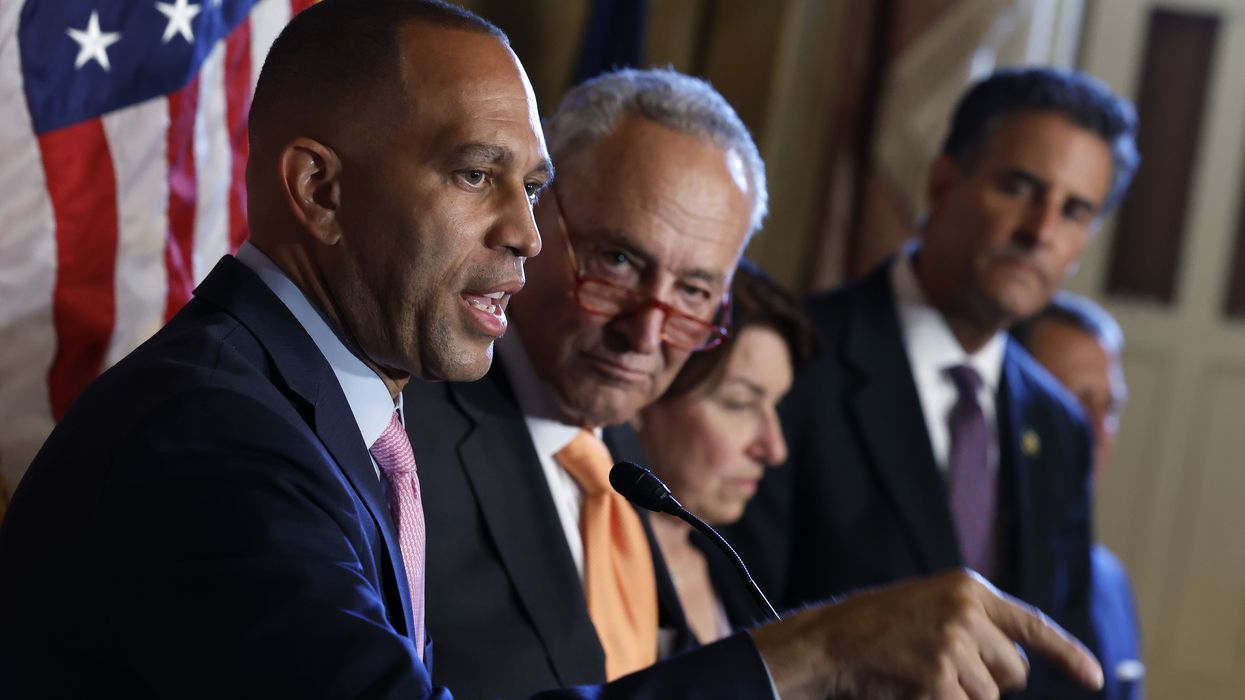
"We are in dangerous territory," warned one activist. "We must enshrine our democratic freedoms in federal legislation that would blunt the multipronged attacks on our democracy."
Democracy defenders on Tuesday applauded as Democratic leaders from both chambers of Congress came together to reintroduce the Freedom to Vote Act, which aims to improve voter access and electoral administration, boost election integrity, and increase civic participation and empowerment.
"Today’s introduction of the Freedom to Vote Act is the first step to injecting a renewed commitment to democratic principles," said Christine Wood and Allison Pulliam, co-directors of the Declaration for American Democracy coalition. "We believe every eligible voter should have their vote counted, every candidate should be able to run without caving in to big influence and big money, and every elected official should be beholden to constituents first."
Senate Majority Leader Chuck Schumer (D-N.Y.) and House Minority Leader Hakeem Jeffries (D-N.Y.) joined the bill's sponsors—Sen. Amy Klobuchar (D-Minn.) and Rep. John Sarbanes (D-Md.)—and other Democrats for a Tuesday press conference, during which they condemned MAGA Republicans' attacks on U.S. democracy.
"These attacks demand a federal response," said Klobuchar. "The Freedom to Vote Act will set basic national standards to make sure all Americans can cast their ballots in the way that works best for them, regardless of what ZIP code they live in. This bill will ensure Americans can request a mail-in ballot and have access to drop boxes, have at least two weeks of early voting, and can register to vote on Election Day."
"It's past time for Congress to act and protect Americans' freedom to vote."
While the bill is unlikely to reach the desk of President Joe Biden—who is running for reelection—during this term, given the GOP-controlled House and divided Senate hamstrung by the filibuster, campaigners echoed Democrats' assertions of the need for the bill's reforms.
"It has been 10 years since the U.S. Supreme Court gutted voting rights, and two years since a president attempted to overturn the will of voters to remain in power," noted Public Citizen executive vice president Lisa Gilbert—calling out former President Donald Trump, who is seeking the GOP's 2024 nomination despite inciting the January 6, 2021 insurrection.
"Between the Shelby v. Holder decision and extremists in Congress and state houses—supported by wealthy interests who don't want democracy—we are in dangerous territory," Gilbert warned. "We must enshrine our democratic freedoms in federal legislation that would blunt the multipronged attacks on our democracy."
Stand Up America founder and president Sean Eldridge agreed, declaring that "it's past time for Congress to act and protect Americans' freedom to vote. As MAGA Republicans continue to erect barriers to the ballot box, particularly for communities of color, we need national standards to ensure voting access for every American, no matter where they live."
Cliff Albright, co-founder and executive director of Black Voters Matter, said that "the reintroduction of the Freedom to Vote Act is essential to overcoming the obstacles of new voter suppression laws we see taking shape every day in states like Mississippi, Alabama, Florida, and Georgia. In addition to the wave of voter suppression laws seen in 2021 and 2022, this year has seen hundreds of additional voter suppression bills attempted, and at least 11 states have passed such restrictions."
"Just yesterday, lawmakers in Alabama voted to advance a new congressional map that does not include a second majority-Black district, completely ignoring the U.S. Supreme Court's recent ruling that mandates the state's maps must include this majority-Black district," he pointed out. "The fight for our rights is playing out on the state level and continues to permeate our daily lives in the South. That is why national legislation that is pro-voter and anti-corruption is absolutely necessary at this moment in history."
A coalition of climate and environmental groups—Clean Water Action, Climate Hawks Vote, Earthjustice, Endangered Species Coalition, Greenpeace USA, Interfaith Power & Light, League of Conservation Voters, National Wildlife Federation, Natural Resources Defense Council, Sierra Club, Union of Concerned Scientists, and WE ACT for Environmental Justice—also celebrated the bill's reintroduction.
"While we recognize that our democracy has never truly worked for all Americans, the Freedom to Vote Act will help move us closer to the mountaintop, where every American has equitable access to the ballot, and a brighter light will shine on the fossil fuel billionaires and corporations who pour big money into anti-environmental politicians and misleading ads hampering our ability to combat the climate crisis," the coalition said.
Trevor Potter, president of Campaign Legal Center and a Republican former chairman of the Federal Election Commission, highlighted that "the aims of the Freedom to Vote Act—prohibiting partisan gerrymandering, protecting the freedom to vote, and increasing the transparency of money spent in federal elections—are supported by a significant majority of Americans, regardless of party."
While opposition to the Freedom to Vote Act has mostly come from GOP lawmakers, some Democrats have helped block it. Early last year, Democratic right-wing Sen. Joe Manchin (W.Va.), who is suspected of considering a 2024 presidential run, and Sen. Kyrsten Sinema (Ariz.), who switched from Democrat to Independent in December, teamed up with Republicans to kill a proposed change to the Senate filibuster that would have cleared the way for passing a voting rights package.
At the time, lawmakers were fighting to pass a megabill that included not only the Freedom to Vote Act but also the John R. Lewis Voting Rights Advancement Act, legislation named for a late Democratic congressman and civil rights icon. Some campaigners also emphasized the importance of the latter on Tuesday.
Leslie Proll, senior director of the voting rights program at the Leadership Conference on Civil and Human Rights, similarly stressed the importance of both bills.
"We urge both chambers of Congress to pass the Freedom to Vote Act so we can build a multiracial democracy that works for all of us," said Proll. "We also look forward to Congress reintroducing and passing the John R. Lewis Voting Rights Advancement Act to restore and strengthen the Voting Rights Act."
Common Cause interim co-president Marilyn Carpinteyro on Tuesday sent a letter to all members of Congress on behalf of her group and its more than 1.5 million members and supporters "in strong support of the Freedom to Vote Act and in strong opposition to the 'American Confidence in Elections' (ACE) Act," which was introduced by House Republicans earlier this month.
"The ACE Act is a giant step backward and would silence the voices of everyday Americans by putting up barriers to voting and by allowing millions of dollars more in secret money to infiltrate our political system," Carpinteyro wrote. "To strengthen free and fair elections and help get big, secret money out of politics, Congress must instead pass the Freedom to Vote Act."
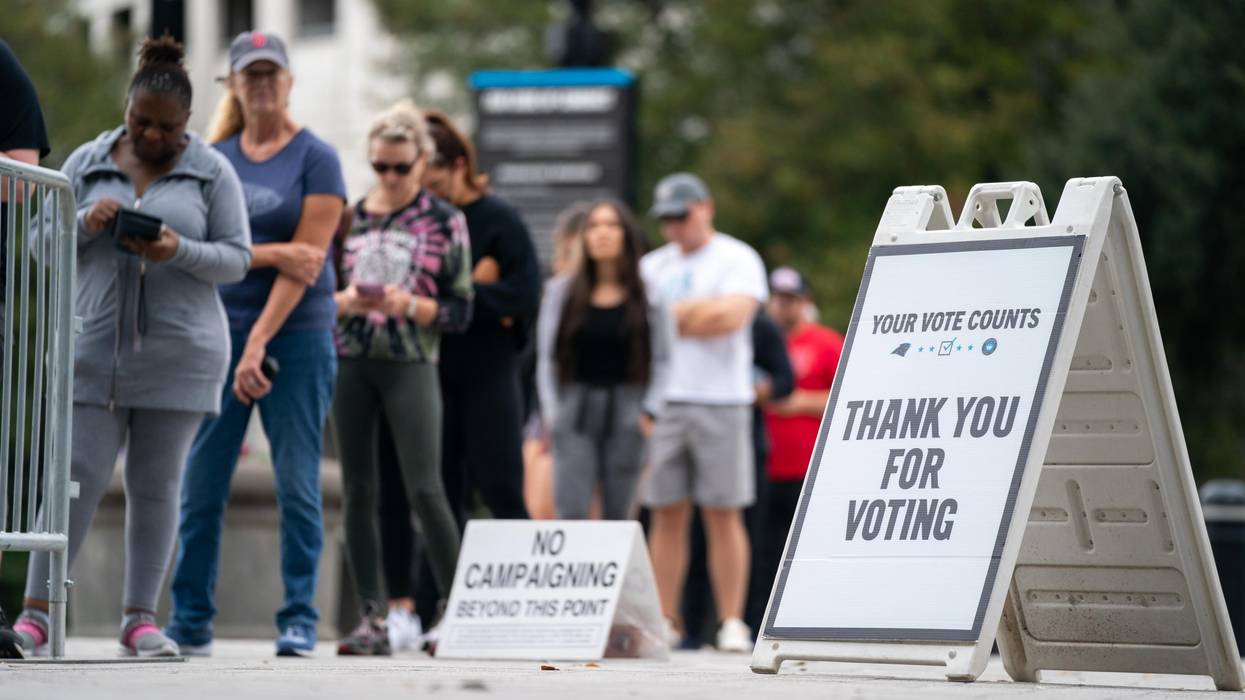
At least 29 of the voter suppression laws passed since the Shelby v. Holder County decision would have been subject to the preclearance provision that the ruling ended.
Since the U.S. Supreme Court handed down its ruling in Shelby County v. Holder exactly 10 years ago Sunday, at least 29 states have enacted nearly 100 restrictive laws including many that are racially discriminatory, according to an analysis by the Brennan Center for Justice.
The nonpartisan law and policy think tank said Friday that at least one-third of the voting restrictions—29 of them—passed in the last decade were enacted in 11 states which would have been subject to preclearance, the anti-discrimination rule that provided crucial protections as part of the 1965 Voting Rights Act (VRA) before Shelby was decided.
Under preclearance, jurisdictions that had histories of barring people from voting based on their race were required to get federal approval before introducing new voting policies.
"Without this guardrail, voters lost a bulwark against discriminatory voting policies, and states previously subject to preclearance were free to implement discriminatory restrictions on voting access without advance checks," wrote Jasleen Singh and Sara Carter at the Brennan Center. "Many states did exactly that. Along with a prior decision narrowly interpreting constitutional protections for voting rights, Shelby County also sent a message to the nation that the federal courts would no longer play their historic role as a robust protector of voting rights."
"Since the 2020 election, 20 states passed 32 laws restricting mail voting access. Overall, 22 states passed 41 such laws since Shelby County. Some of these new restrictions have a clear racially discriminatory impact."
Texas wasted no time in announcing that a strict voter ID law, previously blocked by preclearance, would go into effect the same day that Shelby was handed down. Similar restrictions, which have been found to have a disproportionate effect on low-income voters and people of color, followed in at least nine states including Mississippi, Alabama, and North Carolina.
Since 2020—when the coronavirus pandemic upended voting and Republicans spread baseless lies about so-called "voter fraud" after former President Donald Trump lost his bid for reelection—GOP state legislators have largely turned their focus to restricting measures that offer flexibility to voters, such as mail-in ballots, said the Brennan Center.
"Since the 2020 election, 20 states passed 32 laws restricting mail voting access. Overall, 22 states passed 41 such laws since Shelby County," wrote Singh and Carter. "Some of these new restrictions have a clear racially discriminatory impact."
"For example," they added, "the Brennan Center studied a 2021 Texas law requiring a voter to include their driver's license number or the last four digits of their social security number on mail ballot applications and mail ballots and requiring the number to match the individual’s voter file data. During Texas's March 2022 primary, thousands of mail ballots and mail ballot applications were rejected, disproportionately cast by Latino, Asian, and Black voters."
A number of state legislatures have also taken advantage of the Shelby ruling as they have drawn new district maps.
Sherrilyn Ifill, former president of the NAACP Legal Defense Fund and a senior fellow at the Ford Foundation, said Sunday that she knew in 2013 that the Shelby ruling was "catastrophic," but did not predict that the Republican Party would "turn voter suppression into part of its national policy."
Before 2013, said Democracy Docket, which offers analysis and expert commentary on voting rights, the U.S. Department of Justice had blocked more than 3,000 proposed voter suppression laws under the VRA.
The Brennan Center pointed out that within its ruling in 2013, the Supreme Court stated that Congress could pass a new
"coverage formula" to determine which jurisdictions would be covered by a preclearance provision.
"And it should," wrote Singh and Carter, "by passing the John R. Lewis Voting Rights Advancement Act to restore the Voting Rights Act to its full strength, as well as the Freedom to Vote Act to set nondiscriminatory baseline national standards for voting and elections."
In an op-ed at Newsweek on Sunday, U.S. Rep. Terri Sewell (D-Ala.) wrote that another voting rights-related ruling by the Supreme Court earlier this month, Allen v. Milligan, was "energizing" as the high court affirmed that Alabama had racially gerrymandered its electoral map.
However, she said, "we cannot rely on this Supreme Court, or the courts generally, to consistently protect our freedom to vote. We must, together, act."
In addition to passing the John R. Lewis Voting Rights Advancement Act and the Freedom to Vote Act, she wrote, "we must also engage in robust voter education and outreach efforts, empowering communities with knowledge and resources to help overcome anti-voting barriers."
While Ifill said she did not predict the extent to which the GOP would go to stop marginalized communities from voting, she "also did not predict the extraordinary determination of voters, who, even at the height of a deadly global pandemic refused to be bowed," she said. "That they would stand in line and risk their very lives to vote, despite efforts of Republicans and the indifference of the Supreme Court.
"The Shelby decision was catastrophic, yes," she added. "But we didn't give in and we won't give in. We will find a way to overcome every obstacle to our right to participate as first class citizens in American political life. We will vote and organize and litigate, and legislate until we win."