

SUBSCRIBE TO OUR FREE NEWSLETTER
Daily news & progressive opinion—funded by the people, not the corporations—delivered straight to your inbox.
5
#000000
#FFFFFF
To donate by check, phone, or other method, see our More Ways to Give page.
Daily news & progressive opinion—funded by the people, not the corporations—delivered straight to your inbox.
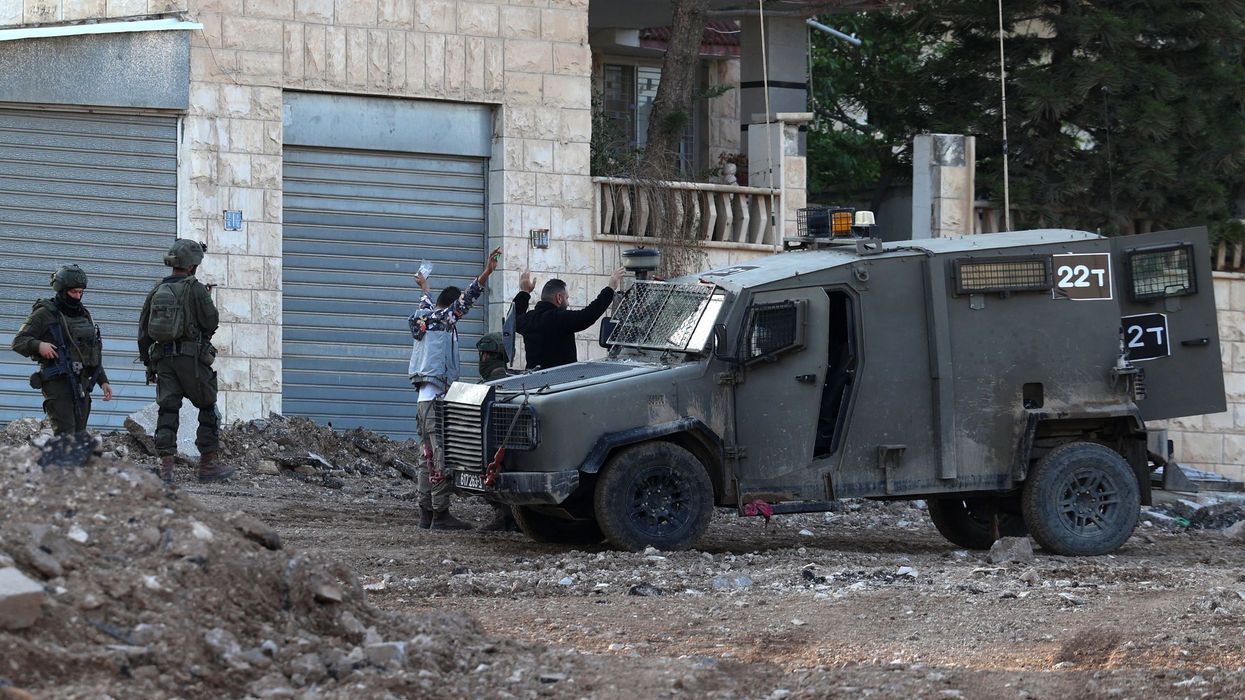
A UN official decried the incident as "yet another apparent summary execution" by Israeli forces.
The United Nations on Friday accused Israeli security forces of carrying out a "brazen" killing of two Palestinian men who were seen surrendering in video footage.
The footage, which was first aired by the Palestinian Broadcasting Corporation and reposted on X by Drop Site, shows two Palestinian men exiting with their hands raised from a building in the West Bank city of Jenin that had been surrounded by Israeli forces.
The two men then crawled out of the building entrance and knelt down with their hands still raised before apparently being instructed by Israeli forces to go back toward the entrance of the building. The two men did so, and were then shot dead by at least one Israeli officer.
🚨 Watch: Footage from Palestine National TV shows Israeli soldiers executing two detained Palestinians in cold blood during a raid in Jenin in the northern occupied West Bank today.
Their hands were raised, they posed no threat, and Israeli soldiers murdered them anyway. https://t.co/9JA9eisaK4 pic.twitter.com/8v0sv1kdBF
— Drop Site (@DropSiteNews) November 27, 2025
According to France 24, United Nations rights office spokesman Jeremy Laurence told reporters on Friday that the incident was "yet another apparent summary execution" by Israeli forces.
"We are appalled at the brazen killing by Israeli border police yesterday of two Palestinian men in Jenin," he emphasized.
Laurence added that UN rights chief Volker Turk was demanding "independent, prompt, and effective investigations into the killings of Palestinians," and for those involved in the killings to "be held fully to account."
The Palestinian Authority, which identified the two men killed by Israeli officers as 37-year-old Yussef Ali Asa'sa and 26-year-old Al-Muntasir Billah Mahmud Abdullah, accused Israeli forces of carrying out "brutal" executions that amounted to a "war crime."
In a joint statement, Israeli police and the military said that the "incident is under review by the commanders on the ground, and will be transferred to the relevant professional bodies," and they claimed that the two men killed were "wanted individuals who had carried out terror activities, including hurling explosives and firing at security forces."
Despite pledges for a review of the incident, BBC reports that Israeli national security minister Itamar Ben-Gvir has already given a thumbs-up to officers' actions and he responded to footage of the incident by saying, "Terrorists must die."
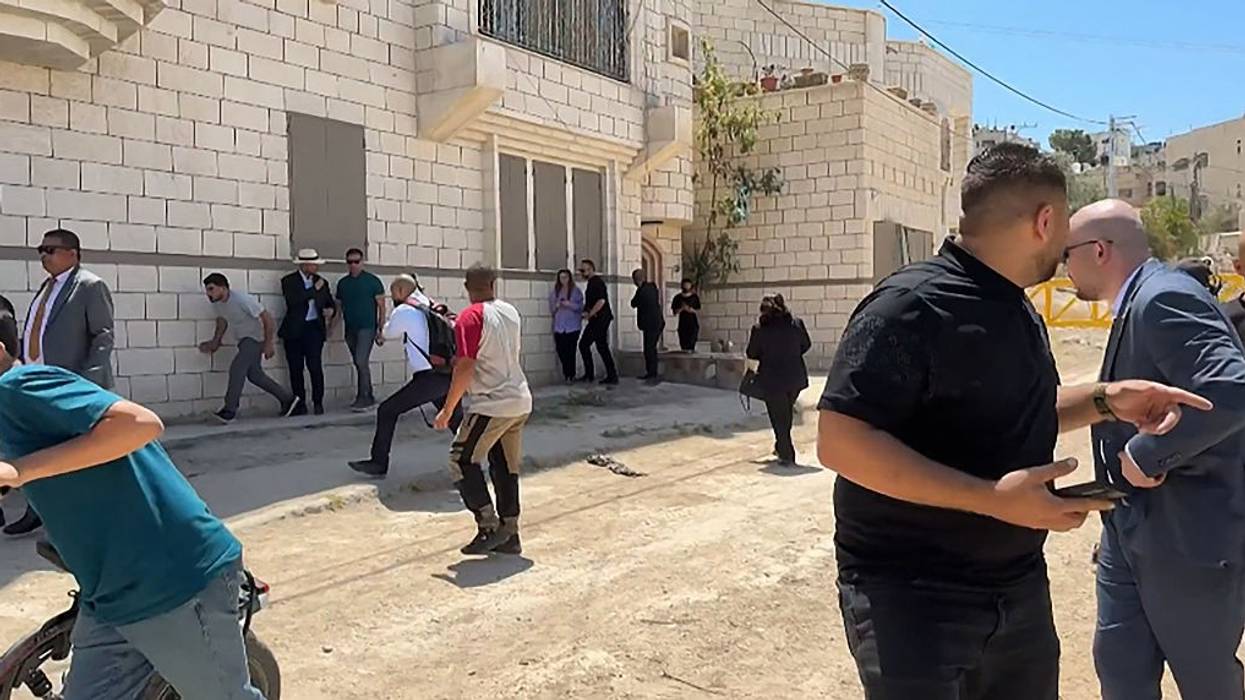
Among those shot at were representatives of three nations that threatened "concrete actions" if Israel doesn't end its assault and siege on Gaza and others that support a genocide case against the country.
Israeli occupation forces fired what they called "warning shots" at a large delegation of international diplomats visiting the besieged Jenin refugee camp in the West Bank on Wednesday, an incident many critics said was an attempt to intimidate countries that just two days earlier issued an ultimatum to stop annihilating Gaza and others that have joined a genocide case against Israel.
Palestinian officials were briefing a group of more than 20 diplomats about the crisis in the illegally occupied West Bank—where Israeli soldiers and settlers have killed and wounded thousands of Palestinians including hundreds of children since October 2023 while pushing ahead with massive land theft and colonization—when they came under fire.
According to the Israeli Foreign Ministry, the delegation "deviated" from the route approved by Israeli occupation authorities "and entered an area where they were not authorized to be," prompting Israel Defense Forces (IDF) soldiers to fire "warning shots to distance them away."
"The IDF regrets the inconvenience caused," the ministry added.
Israeli soldiers intentionally fired at a delegation of about 30 Arab & EU diplomats, ambassadors and consuls, visiting Jenin refugee camp, in the West Bank. Israel claims "it was an accident" and that they fired "warning shots" because they "felt in danger". Israel was trying to intimidate them.
[image or embed]
— Anonymous ( @youranoncentral.bsky.social) May 21, 2025 at 6:06 AM
Israeli media reported IDF troops fired shots in the air. However, video footage of the incident appears to show soldiers aiming their guns and firing straight ahead in the direction of the diplomats as they scrambled for cover. Israeli officials have often been caught lying about the actions of IDF troops in Palestine.
The delegation included diplomats from the European Union and countries including Austria, Brazil, Bulgaria, Canada, Chile, China, Egypt, France, India, Japan, Jordan, Lithuania, Mexico, Morocco, Poland, Portugal, Romania, Russia, Spain, Sri Lanka, Turkey, and the United Kingdom.
On Monday, three of those countries—France, the United Kingdom, and Canada—issued a rare joint statement condemning Operation Gideon's Chariots, the ongoing Israeli campaign to conquer and indefinitely occupy all of Gaza and ethnically cleanse much of its population.
On Tuesday, the U.K. announced it is suspending negotiations with Israel on a free trade agreement, explaining that "it is not possible to advance discussions on a new, upgraded FTA" with a government "that is pursuing egregious policies in the West Bank and Gaza."
Israeli Prime Minister Benjamin Netanyahu and Yoav Gallant, his former defense minister, are wanted by the International Criminal Court for alleged war crimes and crimes against humanity in Gaza including extermination and forced starvation.
The U.K. additionally sanctioned three far-right Israeli extremists, including settler leader Daniella Weiss, as well as three illegal settlement outposts and two groups "that have supported, incited, and promoted violence against Palestinian communities in the West Bank."
Also on Tuesday, European Commission Vice President Kaja Kallas—who is the E.U.'s foreign policy chief—said the 27-nation bloc would review its political and economic agreement with Israel in light of the "catastrophic" situation in Gaza.
Brazil, Chile, China, Egypt, Jordan, Mexico, Spain, and Turkey have either joined or expressed support for the South Africa-led genocide case against Israel currently before the International Court of Justice—which last year found that Israel's 58-year occupation of the West Bank, including East Jerusalem, and Gaza is an illegal form of apartheid that must be ended as soon as possible.
Israel's 592-day assault and siege on Gaza has left more than 189,000 Palestinians dead, maimed, or missing and over 2 million others forcibly displaced, starved, or sickened, according to the Gaza Health Ministry.
The Palestinian Authority Ministry of Foreign Affairs condemned what it called Wednesday's "heinous crime" against the diplomats.
"The delegation was undertaking an official mission to observe and assess the humanitarian situation and document the ongoing violations perpetrated by the occupying forces against the Palestinian people," the ministry said. "This deliberate and unlawful act constitutes a blatant and grave breach of international law and of the fundamental principles of diplomatic relations as enshrined in the 1961 Vienna Convention on Diplomatic Relations."
Kallas said Wednesday that "any threats on diplomats' lives are unacceptable."
"Israel is also a signatory to the Vienna Convention, I mean the obligation to guarantee the security of all foreign diplomats," Kallas noted. "We definitely call on Israel to investigate this incident and also hold accountable [those] who are responsible for this."
The governments of other countries whose diplomats were targeted on Wednesday condemned the incident, with some, including France and Italy, summoning their Israeli ambassadors.
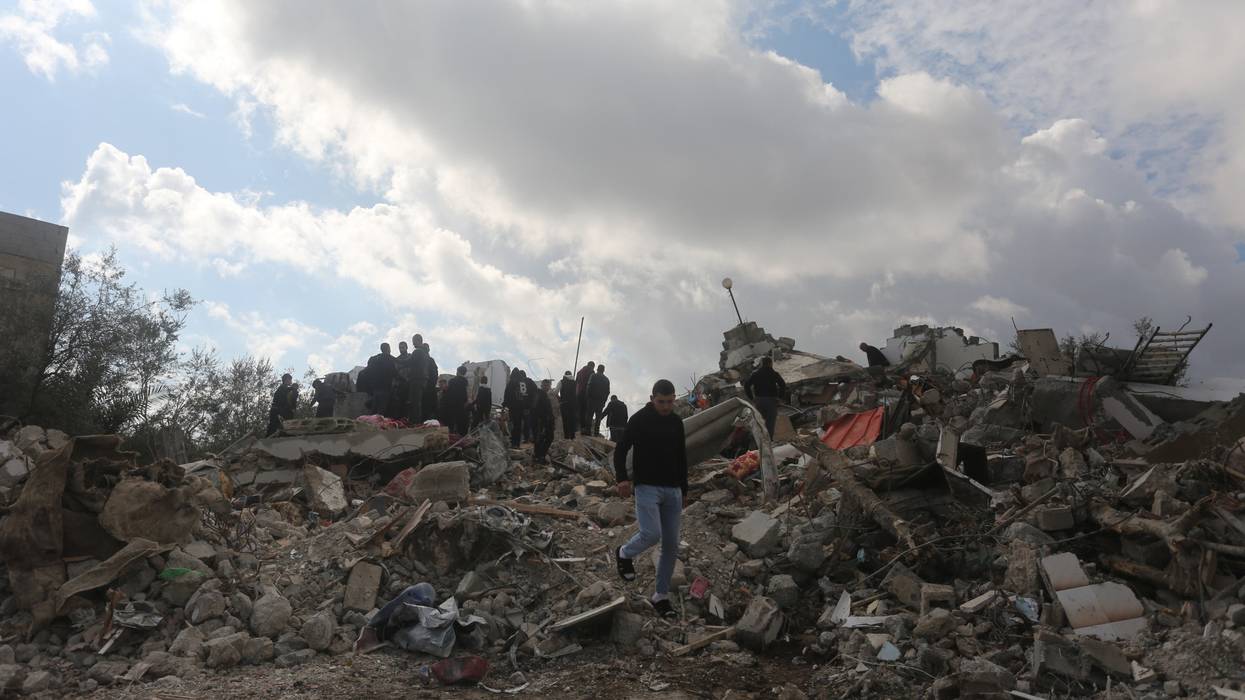
"This echoes the tactics Israeli forces have employed in Gaza."
Israeli Defense Minister Israel Katz said Wednesday that Israel's military is applying "lessons" learned during its bombardment of Gaza to recent attacks on the West Bank—and a leading human rights group warned that as in Gaza, the Israel Defense Forces' actions are resulting in "significant humanitarian consequences."
Operations like "Iron Wall" in the West Bank refugee camp of Jenin and a "surge in settler attacks" that have been backed by the IDF "have heightened insecurity, displacement, and severe restrictions on Palestinian freedom of movement," said the Norwegian Refugee Council (NRC) on Thursday.
Iron Wall began Tuesday, with the IDF launching airstrikes and ground attacks in the West Bank two days after a cease-fire took effect in Gaza.
At least 12 Palestinians have been killed in the Iron Wall attacks and 40 people have been injured, including medical workers, according to the Palestinian Ministry of Health.
After months of warnings from rights organizations that the IDF cut off access to essential services for Gaza residents with a near-total humanitarian aid blockade and the relentless bombardment of the enclave, the NRC said that Israeli forced have "increased checkpoints, roadblocks, and other physical barriers throughout the West Bank."
"These measures further fragment Palestinian communities, restrict access to essential services, and prevent humanitarian agencies, like NRC, from reaching the communities we serve," said the group.
The latest violence in the West Bank is part of a broader trend, with Israel having begun launching airstrikes in the territory after October 7, 2023, for the first time since the Second Intifada in 2000-05.
The IDF launched Iron Wall in Jenin two weeks after a shooting attack that Israel blamed on gunmen in the refugee camp, which has long been a hub for Palestinian resistance groups and is also home to more than 24,000 Palestinians who are registered in the camp.
Katz said in a statement Wednesday that with the Jenin raid, the IDF is applying "the first lesson from the method of repeated raids in Gaza."
"We will not allow the arms of the Iranian regime and radical Sunni Islam to endanger the lives of [Israeli] settlers [in the West Bank] and establish a terrorist front east of the state of Israel," he said.
In addition to the attacks in Jenin, masked Israeli settlers have been filmed setting fire to homes and vehicles in towns across the Israeli-occupied territory in what the Israel-based human rights group B'Tselem called an effort to "impose a 'price tag' for the release of Palestinians" as part of the cease-fire agreement in Gaza.
Residents told Al Jazeera that "constant gunfire and explosions" have been heard in Jenin since Iron Wall began, and the United Nations Relief and Works Agency for Palestine Refugees in the Near East (UNRWA) reported that the IDF has left the camp "nearly uninhabitable."
An estimated 2,000 families have been displaced from the Jenin area since December, according to the agency.
"We are seeing disturbing patterns of unlawful use of force in the West Bank that is unnecessary, indiscriminate, and disproportionate. This echoes the tactics Israeli forces have employed in Gaza," said Angelita Caredda, NRC's Middle East and North Africa regional director. "Under international law, Israel must bring its occupation of Palestinian territory to an end as rapidly as possible. Until then, it must fully comply with its obligations as an occupying power, including the protection of civilians."
In addition to airstrikes and ground attacks, the governor of Jenin, Kamal Abu al-Rub, told Agence France-Presse that Israeli military bulldozers have destroyed all roads leading to the camp and to the nearby hospital. Twenty Palestinians from villlages in the Jenin area have been detained since Iron Wall began on Tuesday, according to the governor.
"What we are seeing in Jenin camp is horrific, said one paramedic trained by Doctors Without Borders. "People are targeted while being evacuated, and the wounded cannot be reached by ambulance."
In 2024, Israeli demolitions in the West Bank reached a record high, said the NRC, with 1,768 structures destroyed. IDF soldiers and settlers killed at least 499 Palestinians in the territory last year.
U.S. President Donald Trump has selected at least two nominees for high-level diplomatic positions—Rep. Elise Stefanik (R-N.Y.) for U.N. ambassador and former Arkansas Gov. Mike Huckabee for ambassador to Israel—who have expressed support for right-wing Israeli officials' claim that Israel has a "Biblical right" to the West Bank.
Amid the settler violence and Jenin raid, Caredda called on the international community to "take decisive action to stop these violations and end the occupation."
"Impunity for serious violations of international law has allowed Israel to unlawfully escalate violence in the occupied West Bank," said Caredda.
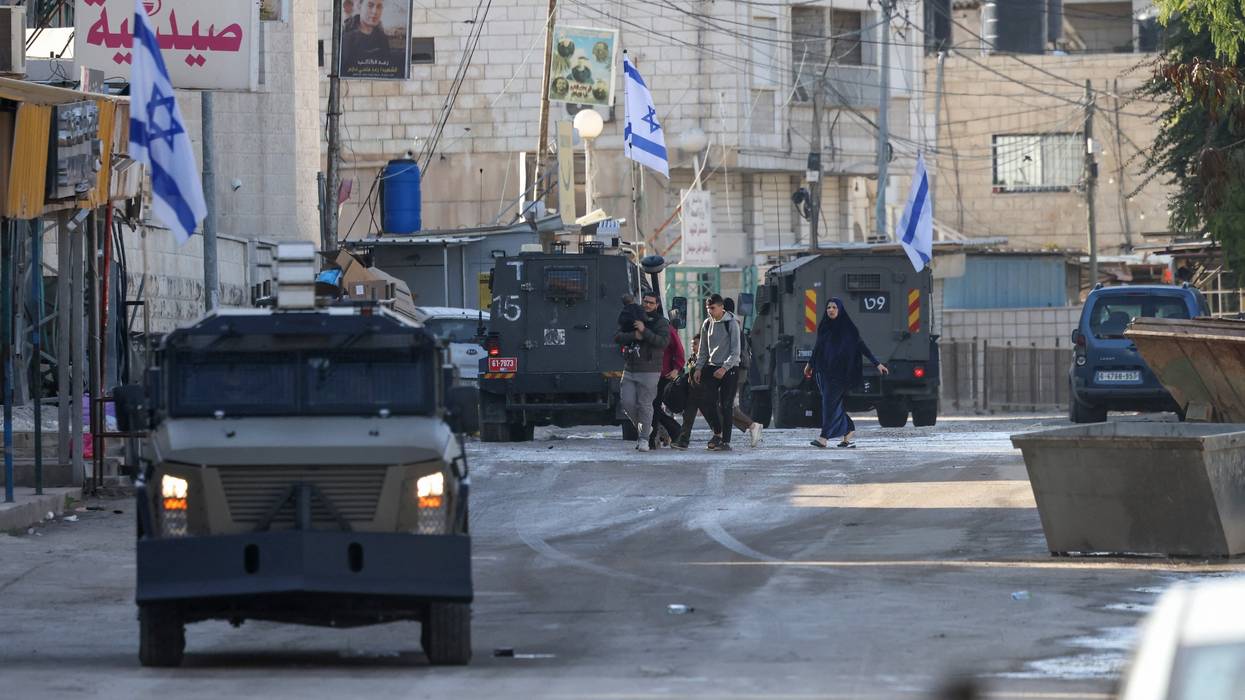
"There is no cease-fire for Palestinians," said Palestinian writer Yara Hawari.
Israeli security forces on Tuesday launched an attack on the West Bank city of Jenin, just a day after U.S. President Donald Trump rescinded Biden-era sanctions that were levied on extremist Israeli settlers in the West Bank accused of carrying out violence against Palestinians.
Trump moved to overturn the sanctions even after Israeli settlers in the illegally occupied West Bank carried out attacks against Palestinians communities earlier this week. The events highlight the threat of future violence in the West Bank.
A resident of Jenin, Asaad Salim, told the outlet Middle East Eye that the Tuesday attack on Jenin began with Israeli special forces infiltrating a neighborhood in the east of the city. Salim reported Israeli warplanes firing on the city and the Jenin refugee camp and armed clashes took place between Palestinian resistance fighters and the Israeli army, per Middle East Eye.
"There are bodies in the streets, and many people are injured, but no one can reach them. Ambulances can't move due to the intense and sudden assault," Salim told the outlet.
At least eight Palestinians were killed and 35 people were injured, per Reuters, citing Palestinian health services.
"There is no cease-fire for Palestinians," wrote Palestinian writer Yara Hawari, reacting to an Al Jazeera news alert that Israeli forces had attacked the Jenin refugee camp. Her remarks were in reference to a cease-fire deal that went into effect on Sunday, halting hostilities in the war-torn Gaza strip.
The Israeli army and Shin Bet security service announced Tuesday's operation, calling it a counter-terrorism measure codenamed "Iron Wall," according to the Israeli newspaper Haaretz. It will continue "as long as necessary," the outlet reported.
According to Reuters, Israel's far-right Finance Minister Bezalel Smotrich said that the operation was the beginning of a "strong and ongoing campaign" against militant groups "for the protection of settlements and settlers." Smotrich earlier had said he was pleased with Trump's decision to lift sanctions on settlers who are accused of violence against Palestinians, per Reuters.
At multiple points last year, Israel launched attacks on Jenin, and just last week Israeli airstrikes killed three people there, according to Palestinian officials. In December, forces with the Palestinian Authority—which administers parts of the West Bank—stormed the Jenin refugee camp and began a crackdown on armed groups in the camp, which has long been a site of armed struggle and resistance to Israel.

"The decision to freeze Al Jazeera's work and prevent its journalists from conducting their duties is an attempt to hide the truth about events in the occupied territories, especially what is happening in Jenin and its camps," the network wrote.
The Qatar-based media network Al Jazeera issued a strongly worded statement Thursday deploring the decision by the Palestinian Authority to temporarily ban the outlet's operations in the West Bank.
The network wrote that "Al Jazeera is shocked by this decision," which it called "nothing but an attempt to dissuade the channel from covering the rapidly escalating events taking place in the occupied territories."
The official Palestinian news agency—WAFA—wrote that the Palestinian Authority made the decision, which was handed down on Wednesday, because of Al Jazeera's "repeated violations of Palestinian laws and regulations." Al Jazeera has been accused of "broadcasting inciteful content" and "interfering in internal Palestinian affairs," but the statement from WAFA didn't offer a further explanation of how the network had broken the law.
The suspension will remain in effect until the network "addresses its legal status in accordance with Palestinian regulations," per WAFA.
The Palestinian Authority has governing authority over parts of the Israeli-occupied West Bank, including cities like Jenin and Ramallah. The Palestinian Authority is viewed with suspicion by many Palestinian people because of its security coordination with Israel.
In December, forces with the Palestinian Authority stormed the Jenin refugee camp and began a crackdown on armed groups in the camp, which has long been a site of armed struggle and resistance to Israel. Al Jazeera covered the operation.
In Jenin, a young woman who—according to Democracy Now!—had been active in "documenting the Palestinian Authority's crackdown on armed groups fighting the Israeli occupation," was shot dead this past weekend. The family of the young reporter, Shatha al-Sabbagh, says that the Palestinian Authority security forces are responsible for her death.
A spokesperson from the Palestinian Authority denied this accusation during an interview with Al Jazeera on Sunday.
"The decision to freeze Al Jazeera's work and prevent its journalists from conducting their duties is an attempt to hide the truth about events in the occupied territories, especially what is happening in Jenin and its camps," Al Jazeera wrote in their statement. The network added that the move aligns "with the previous action taken by the Israeli government, which closed Al Jazeera's office in Ramallah."
In May 2024, Israel shuttered Al Jazeera's operations within Israel on security grounds, and a couple months later raided the network's office in Ramallah.
Officials in Israel have long accused Al Jazeera—one of the most prominent media outlets in the Arab world—of being a "mouthpiece" for Hamas, according to The New York Times.
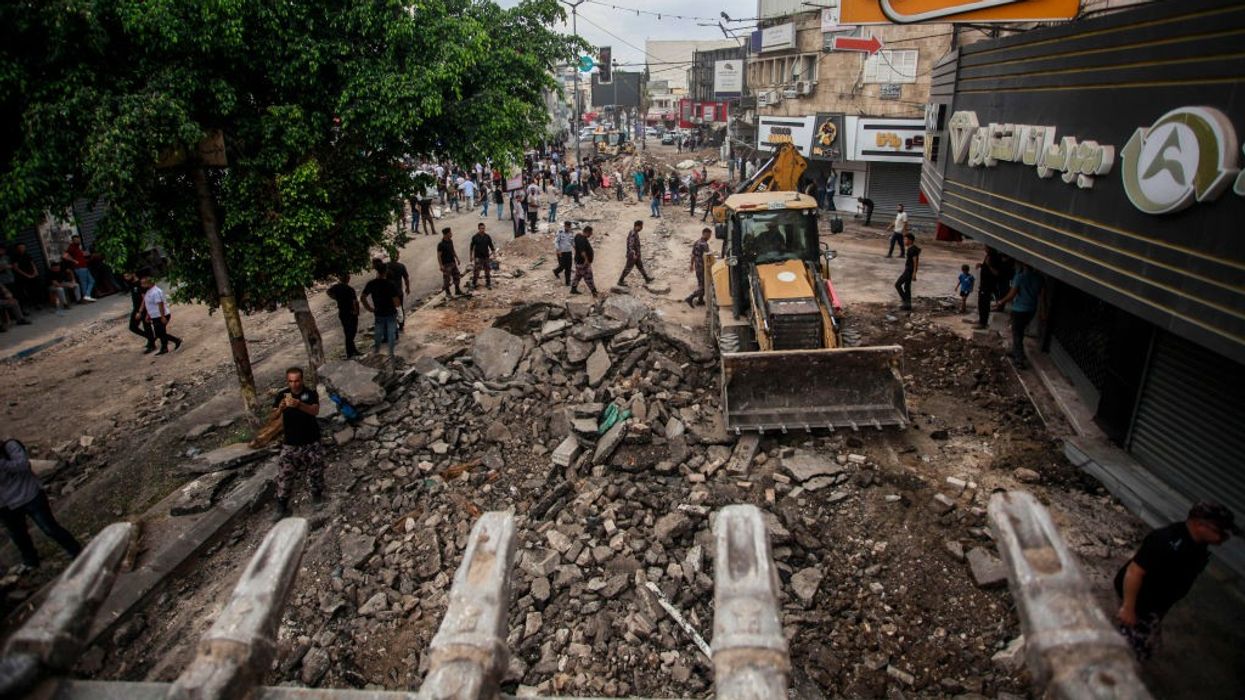
"We watched their bulldozers tear up streets, demolish businesses, pharmacies, schools," said one local leader. "They even bulldozed the town soccer field, and a tree in the middle of a road."
As the world watched Israel's assaults on Lebanon and the Gaza Strip, The New York Times on Wednesday also directed attention to the West Bank, detailing how "Israeli military bulldozers tore up mile after mile" of Jenin and Tulkarm in recent weeks.
While "nearly nightly raids" by the Israel Defense Forces (IDF) "have become the norm" in the West Bank since the Hamas-led October 7 attack, the military last month "launched one of its most extensive and deadliest raids" in the illegally occupied Palestinian territory in years, the newspaper reported, citing videos and interviews with residents.
"We watched their bulldozers tear up streets, demolish businesses, pharmacies, schools. They even bulldozed the town soccer field, and a tree in the middle of a road," said Kamal Abu al-Rub, governor of Jenin. "What was the point of all of this?"
In addition to ground operations in the West Bank, the IDF has increased airstrikes that critics say run afoul of international law. The military defended the strikes and told the Times that in recent raids, troops found weapon stockpiles and killed or arrested dozens of militants—but also caused some "unavoidable harm to certain civilian structures."
In response to videos included in the reporting, freelance journalist Pete Tucker accused Israeli soldiers of "methodically laying waste to" the West Bank.
Malini Ranganathan, an associate professor at American University's School of International Service, said on social media that "Israel's criminality knows no limits. IDF bulldozers have been obliterating the West Bank, even tearing up roundabouts."
Israeli forces have damaged homes, shops, and roads along with internet, electricity, phone, water, and sewage lines in the West Bank. Emergency crews have been unable to respond to hundreds of calls per day, because they can't reach people in need.
"They are imposing conditions, materially and psychologically, that make people feel: Gaza is coming to you," Al Haq director Shawan Jabarin told the Times. "There is a feeling among Palestinians across the West Bank that what is coming is very bad—that it will be a plan to kill and expel us."
Since the October 7 attack on Israel that killed more than 1,100 people, Israeli forces have slaughtered at least 41,455 Palestinians in Gaza and 716 in the West Bank. Across the Palestinian territories, over 100,000 others have been injured over the past year. The bloodshed led to an ongoing genocide case at the International Court of Justice (ICJ).
The ICJ in July issued a nonbinding advisory opinion that Israel's decadeslong occupation of Gaza and the West Bank, including East Jerusalem, is illegal and must end "as rapidly as possible." Instead, Israel has ramped up attacks on not only the Palestinian territories, but also Lebanon, home to the political and paramilitary group Hezbollah.
This week's bombing campaign in Lebanon—which has killed at least 569 people—sparked fresh calls for the Biden administration to finally cut off weapons to Israel, as did the new reporting from the Times, which has been accused of pro-Israel bias in its coverage of the assault on Gaza.
Meanwhile, Israeli destruction in the West Bank continues. The International Middle East Media Center reported that "on Wednesday, Israeli soldiers invaded the town of Beit Ula, west of Hebron in the occupied West Bank's southern part, [and] bulldozed over 20 dunams of land, uprooting more than 600 fruit-bearing trees, and demolishing several agricultural structures and wells."

"We are seeing frequent allegations of Palestinian children being detained on their way home from school, or shot while walking on the street," said the U.N. agency.
Three days after the International Court of Justice issued an advisory opinion stating that Israel's occupation of the West Bank and Gaza is unlawful, the United Nations children's rights agency said that after decades of being "exposed to horrific violence," the number of children who have been killed in the West Bank since last October has skyrocketed.
Since Israel began its bombardment of the Palestinian territories nearly 10 months ago—with Gaza the primary target of Israel Defense Forces (IDF) attacks, but with West Bank communities also subjected to raids and other violence—143 Palestinian children have been killed in the West Bank, according to the U.N. Children's Fund (UNICEF).
The number represents a 250% increase compared to the nine months preceding the Hamas-led attack on southern Israel, after which the IDF began retaliating in the occupied territories.
"The situation has deteriorated significantly, coinciding with the escalation of hostilities inside Gaza," said Catherine Russell, executive director of UNICEF. "We are seeing frequent allegations of Palestinian children being detained on their way home from school, or shot while walking on the streets. The violence needs to stop now."
More than half of the killings have been reported in the cities of Nablus, Tulkarm, and Jenin, the latter of which was the site of a major raid by Israeli forces earlier this month, in which 12 Palestinians were killed. All three cities have seen a rise in "militarized law enforcement operations" over the last two years, said UNICEF, as Israeli soldiers and settlers have stormed parts of the territory " to scare Palestinians out of" their homes, as the International Crisis Group reported last year.
Some of the killings of children in the West Bank over the last 10 months have received international attention, like the Israeli forces' shooting of two children, Basil Suleiman Abu al-Wafa and Adam Samer al-Ghoul, during a raid on the Jenin refugee camp in November.
Al-Ghoul, who was nine, was shown on CCTV footage trying to run away from IDF soldiers when he was gunned down.
"Children's right to life must be upheld and children should never be the target of violence, no matter who or where they are," said UNICEF in a statement, noting that more than 440 Palestinian children have also been injured by live ammunition in the West Bank since last October.
The agency said that as the death toll has risen in the West Bank, children have reported being afraid to walk through their own neighborhoods or attend school.
The children killed there since October are among more than 500 Palestinians killed in IDF raids and settler attacks over the last 10 months—more than three times the number killed there in 2022.
Since October, two Israeli children have been killed in fighting the West Bank, said UNICEF.
"The true cost of the violence in the state of Palestine and Israel will be measured in children's lives—those lost and those forever changed by it," said Russell. "What the children desperately need is an end to violence and a lasting political solution to the crisis, so that they can reach their fullest potential in peace and safety."

"These unlawful killings are in blatant violation of international human rights law," said the rights group.
While Israeli officials continue to claim, despite all evidence to the contrary, that the Israel Defense Forces are targeting Hamas in their bombardment of occupied Palestine, a new report from Amnesty International on Monday details the extent to which the military has frequently used lethal force against civilians across the West Bank in addition to the more than 27,000 people it has killed in Gaza.
Calling for an investigation into possible war crimes, the group said it had analyzed four cases in which the IDF has used "unlawful lethal force" against people in the occupied West Bank and blocked medical professionals from reaching injured residents, with Amnesty's Crisis Evidence Lab verifying 19 videos and four photos of the incidents.
The events documented in the report account for the deaths of 20 Palestinians, including seven children. Since October 7, when the IDF began attacking the West Bank and Gaza in retaliation for a Hamas-led attack on southern Israel, at least 360 people have been killed by Israeli forces in the West Bank, including 94 children, according to the United Nations Office for the Coordination of Humanitarian Affairs (OCHA).
Erika Guevara-Rosas, Amnesty's director of global research, advocacy, and policy, said the surge in unlawful deadly attacks in the West Bank have been perpetrated "under the cover of the relentless bombardment and atrocity crimes in Gaza."
"These unlawful killings are in blatant violation of international human rights law and are committed with impunity in the context of maintaining Israel's institutionalized regime of systematic oppression and domination over Palestinians," said Guevara-Rosas. "These cases provide shocking evidence of the deadly consequences of Israel's unlawful use of force against Palestinians in the West Bank. Israeli authorities, including the Israeli judicial system, have proven shamefully unwilling to ensure justice for Palestinian victims."
The report was released days after a team of Israeli forces disguised themselves as medical staff and civilians and raided Ibn Sina Hospital in the West Bank city of Jenin, killing three Palestinians who they claimed—without evidence—were planning an attack on Israel.
OCHA has recorded a sharp increase in "search and arrest operations" by the IDF in the occupied West Bank since October 7, with 54% of the 4,382 Palestinians injured in Israel's assault sustaining their injuries during raids.
In the early days of the Israeli onslaught, 13 people, including six children, were killed during a raid on Nour Shams refugee camp in Tulkarem that began on October 19 and went on for 30 hours. IDF soldiers "stormed more than 40 residential homes, destroying personal belongings and drilling holes in the walls for sniper outposts" during the operation, which Israel said was in response to an improvised explosive device that was thrown at border police by Palestinians.
Israeli authorities cut off water and electricity to the camp and used bulldozers to destroy infrastructure, while stopping at least two ambulances from reaching people who were injured.
One person killed in the raid was 15-year-old Taha Mahami, who was "unarmed and posed no threat to the soldiers at the time he was shot, based on witness testimony and videos reviewed by Amnesty International."
"They did not give him a chance. In an instant, my brother was eliminated," said Fatima Mahamid, the victim's sister. "Three bullets were fired without any mercy. The first bullet hit him in the leg. The second—in his stomach. Third, in his eye. There were no confrontations… there was no conflict."
When the children's father, Ibrahim Mahamid, tried to carry his injured son out of the line of fire, he was shot in the back by the IDF, sustaining damage to his internal organs.
"Neither Taha nor Ibrahim Mahamid posed a threat to security forces or anyone else when they were shot," said Amnesty. "This unnecessary use of lethal force should be investigated as possible war crimes of wilful killing and willfully causing great suffering or serious injury to body or health."
In another "egregious" incident in October in Tulkarem, two eyewitnesses interviewed by Amnesty described Israeli forces opening fire from a watch tower on a crowd of at least 80 people who were holding a peaceful protest in solidarity with Gaza.
IDF soldiers opened fire on journalists wearing clearly visible "Press" markings as well as on a Palestinian man who was riding past the protest on a bike.
By carrying out such attacks, said Amnesty, Israel is violating international standards including the U.N. Basic Principles on the Use of Force and Firearms by Law Enforcement Officials.
"These standards prohibit the use of force by law enforcement officials unless strictly necessary and to the extent required for the performance of their duty and require that firearms may only be used as a last resort—when strictly necessary for military personnel or police to protect themselves or others against the imminent threat of death or serious injury," said the group. "Willful killings of protected persons and willfully causing great suffering or serious injury to protected persons are grave breaches of the Fourth Geneva Convention and war crimes."
Guevara-Rosas said the incidents documented in the report, and the Israeli onslaught in the West Bank and Gaza as a whole, "is a litmus test for the legitimacy and reputation" of the International Criminal Court, which prosecutes war crimes, and that "it cannot afford to fail it."
"In this climate of near total impunity, an international justice system worth its salt must step in," said Guevara-Rosas. "The prosecutor of the International Criminal Court must investigate these killings and injuries as possible war crimes of willful killing and willfully causing great suffering or serious injury."

"Unarmed and running away," said Palestine's envoy to the U.K. "But Israeli soldiers still killed this child in Jenin today in the same indiscriminate manner that they have been killing thousands of children in Gaza."
Israeli troops shot and killed two Palestinian children during a Wednesday morning raid on the Jenin refugee camp in the illegally occupied West Bank, where more than 240 people have been killed by occupation soldiers and Jewish settler-colonists since early October.
Fifteen-year-old Basil Suleiman Abu al-Wafa and Adam Samer al-Ghoul, who was either 8 or 9, were shot dead by Israel Defense Force (IDF) troops during the raid, the Palestinian Health Ministry said.
According to Al Jazeera, al-Wafa was shot in the chest and died in a hospital, while al-Ghoul was shot in the head. Graphic CCTV footage posted on social media shows al-Ghoul trying to run away as he is gunned down. Another boy is seen dragging him away, with blood trailing behind the victim's body.
"Palestinian children in Jenin have been a routine target for the Israeli military."
The children were shot as IDF troops forced residents of the ad-Damj neighborhood from their homes at gunpoint before destroying streets there and bombing at least one home with an armed drone.
The Palestine Red Crescent Society said Israeli forces subsequently prevented paramedics from reaching Palestinians wounded during the raid.
"Unarmed and running away," Husam Zumlot, Palestine's ambassador to the United Kingdom, wrote on social media. "But Israeli soldiers still killed this child in Jenin today in the same indiscriminate manner that they have been killing thousands of children in Gaza."
Ayed Abu Eqtaish, accountability program director at the advocacy group Defense of Children International-Palestine (DCIP), noted in a statement that "Palestinian children in Jenin have been a routine target for the Israeli military."
"It is shocking that Israeli forces, sitting in an armored vehicle, can fatally shoot two children in broad daylight and the international community will refuse to hold them accountable," Abu Eqtaish added.
An IDF spokesperson said Israeli troops opened fire with live rounds after "explosives" were thrown at them. Al-Ghoul can be seen in CCTV footage holding a very small object, which he drops after being shot.
Two Palestinian men—Muhammad Jamal Zubaidi and Wissam Ziad Hanoun—were also killed during the Jenin raid. Palestine's WAFA News Agency reported that occupation forces took their bodies.
The Palestinian Health Ministry said at least 242 Palestinians, including more than 50 children, have been killed by Israeli soldiers and settlers in the West Bank and East Jerusalem since October 7, when Hamas-led attacks on southern Israel left approximately 1,200 Israeli civilians and soldiers dead and around 240 others kidnapped. Over 2,750 other Palestinians have been injured.
Israeli forces have killed more than 100 Palestinian children in the West Bank and East Jerusalem so far this year, according to DCIP, making 2023 the deadliest year ever recorded.
Occupation forces have also arrested more than 3,300 Palestinians in the West Bank and East Jerusalem, including 35 people—one of them a 12-year-old child—since Tuesday. Israeli authorities have arrested nearly as many Palestinians during the six-day cease-fire with Hamas as they have freed during the concurrent prisoner exchanges.
Meanwhile in Gaza, officials reported that 160 Palestinian bodies were recovered from the rubble on Tuesday and Wednesday during the relative calm of the cease-fire. Gaza civil defense officials said at least 7,000 bodies remain buried under the bombed-out buildings.
More than 15,000 Palestinians—including over 4,000 women and 6,100 children—have been killed by Israeli bombs and bullets since October 7.
Gaza and United Nations officials also said Wednesday that more than 80% of Gazans—or around 1.8 million people—have been forcibly displaced by the Israeli onslaught, which has destroyed or damaged more than 300,000 homes.

Both Netanyahu and Gallant stand to gain from diverting attention from the reasons behind the ongoing rebellion in Palestine.
Despite their complicated and often uneasy relationship, Israeli Prime Minister Benjamin Netanyahu and his Defense Minister Yoav Gallant agree on one thing: Iran is behind Israel's security problem.
The socioeconomic polarization in Israel, the country's political and judicial crises, the ongoing settlers' pogroms in the West Bank, the repeated calls for religious war by Tel Aviv's far-right ministers—all of these myriad problems are suddenly negligible. The problem is Iran.
Though Iran, as a common enemy, often unites all major Israeli political parties, the supposed Iranian threat this time around is quite different.
Typically, every Palestinian attack on Israeli soldiers, armed settlers, or even civilians is preceded by a multitude of deadly Israeli army raids or settler attacks on Palestinian communities.
"We are in the midst of a terrorist onslaught that is being encouraged, directed, and financed by Iran and its proxies," said Netanyahu of a Palestinian attack that killed a settler and wounded another near the occupied Palestinian city of Al-Khalil (Hebron) on August 21.
The attack came only two days after another, which killed two Israeli settlers near the town of Huwwara, near Nablus, in the northern West Bank.
Huwwara, a small town of 5,500 people, was the site of an outright pogrom by large mobs of armed Israeli Jewish settlers on February 26.
Amnesty International described what occurred in the town as follows: "On the night of Sunday 26 February, hundreds of state-backed Israeli settlers carried out a spree of attacks against Palestinians (in Huwwara)… Settlers torched dozens of Palestinian cars, homes, and orchards and physically assaulted Palestinians, including with metal bars and rocks."
Typically, every Palestinian attack on Israeli soldiers, armed settlers, or even civilians is preceded by a multitude of deadly Israeli army raids or settler attacks on Palestinian communities.
Not a day passes without Israeli violence in occupied Palestine. Reports by the United Nations and Palestinian, Israeli, and international rights groups indicate that this year is the most violent in the West Bank in nearly two decades.
More than 200 Palestinians have been killed and nearly 30 Israelis since January 2023, according to a statement to the U.N. Security Council by U.N. Middle East envoy Tor Wennesland on August 21.
Wennesland described the violence as a "concerning trend," attributing it to a "growing sense of despair about the future," U.N. News reported.
The U.N. humanitarian agency, OCHA, had similar findings. It said that nearly 600 settler-related "incidents" were reported in the Occupied Territories in the first six months of 2023. Settler attacks have resulted in "Palestinian casualties, property damage, or both."
Neither Wennesland nor OCHA mentioned Iran in their statements, nor did the constant stream of reports on Israel's ongoing violence, incitement or, at times, outright calls for genocide by settlers and their leaders in Netanyahu's government.
As for the reason behind the "sense of despair" mentioned in Wennesland's U.N. briefing, the Israeli anti-settlement organization Peace Now may have an answer.
In a statement issued on August 17, the Israeli group said that Netanyahu's government is advancing a plan for "unprecedented investment" of nearly $200 million in illegal Jewish settlements in the West Bank.
"There are clauses that have not yet determined the allocation amounts, so the total amount is expected to increase significantly," Peace Now said on its website.
Since a large sum of the funds is described as "undefined" grants, the illegal settlements are allowed "to use the money for almost any purpose."
This can only mean expansion of the illegal settlements, construction of new outposts, ethnically cleansing Palestinians, and paving the way for full de jure annexation of the West Bank.
The term "ethnic cleansing" is not being used lightly here.
Aside from the "incremental genocide" happening daily throughout the Occupied Territories, at times large communities are being expelled, en masse.
The Norwegian Refugee Council (NRC) recently reported on the eviction of nearly 500 Palestinians from seven communities in the West Bank in a matter of 20 months, many of them from the Ras At-Tin Bedouin community, north of Ramallah.
"Entire Palestinian communities being wiped off the map, a shameful legacy of unrelenting violence, intimidation, and harassment perpetrated by Israeli settlers and, in some cases, encouraged by Israeli authorities," Ana Povrzenic, NRC's Country Director for Palestine, commented on the findings.
The list is endless, and nothing suggests that Iran is relevant to any part of this discussion.
The direct link between the Israeli occupation and Palestinian relations cannot be denied by any honest observer.
But neither Netanyahu nor Gallant is expected to be honest in their depiction of what is occurring in Palestine now.
As if reading from the same script, Gallant agreed with his boss on the alleged Iranian threat. "The most significant change on the ground is related to Iranian financing and intent," Gallant said, declaring that "Iran is looking for any way to harm the citizens of Israel."
The irony is that the Netanyahu-Gallant political conflict since March has fueled the greatest political crisis, arguably, in the history of the Israeli state. The crisis is enduring.
Yet, now both are emerging as the stalwarts of Israeli security against a supposed Iranian threat. But why would the two agree on anything? And why Iran, in particular? And why now?
Both Netanyahu and Gallant stand to gain from diverting attention from the reasons behind the ongoing rebellion in Palestine.
For Netanyahu, blaming Iran allows him to stoke the fire of instability in the Middle East, unite all Israelis behind their supposed defender, and avoid any accountability for the ongoing human rights violations in Palestine.
As for Gallant, blaming Iran elevates the military and all branches of intelligence services; instead of being seen as failing to stop homegrown Palestinian struggle, he wants to paint an alternative image of a heroic army fighting an "existential threat" hatched elsewhere.
This is not a simple case of lacking self-awareness, but a deliberate diversion of the actual problem: the Israeli occupation and apartheid.
Throughout the years, Israel has insisted that Palestinians are not political actors capable of making their own collective decisions, and that some bogeymen elsewhere—the Arabs, the Iranians, the communists, the Islamists, and so on... —are to blame.
But Tel Aviv is wrong. For Israel to understand the reasons behind the growing Palestinian resistance in all of its forms, it needs to look at the devastated refugee camps of Jenin, Balata, and Nur Shams—not Tehran—for the answers.