

SUBSCRIBE TO OUR FREE NEWSLETTER
Daily news & progressive opinion—funded by the people, not the corporations—delivered straight to your inbox.
5
#000000
#FFFFFF
To donate by check, phone, or other method, see our More Ways to Give page.
Daily news & progressive opinion—funded by the people, not the corporations—delivered straight to your inbox.
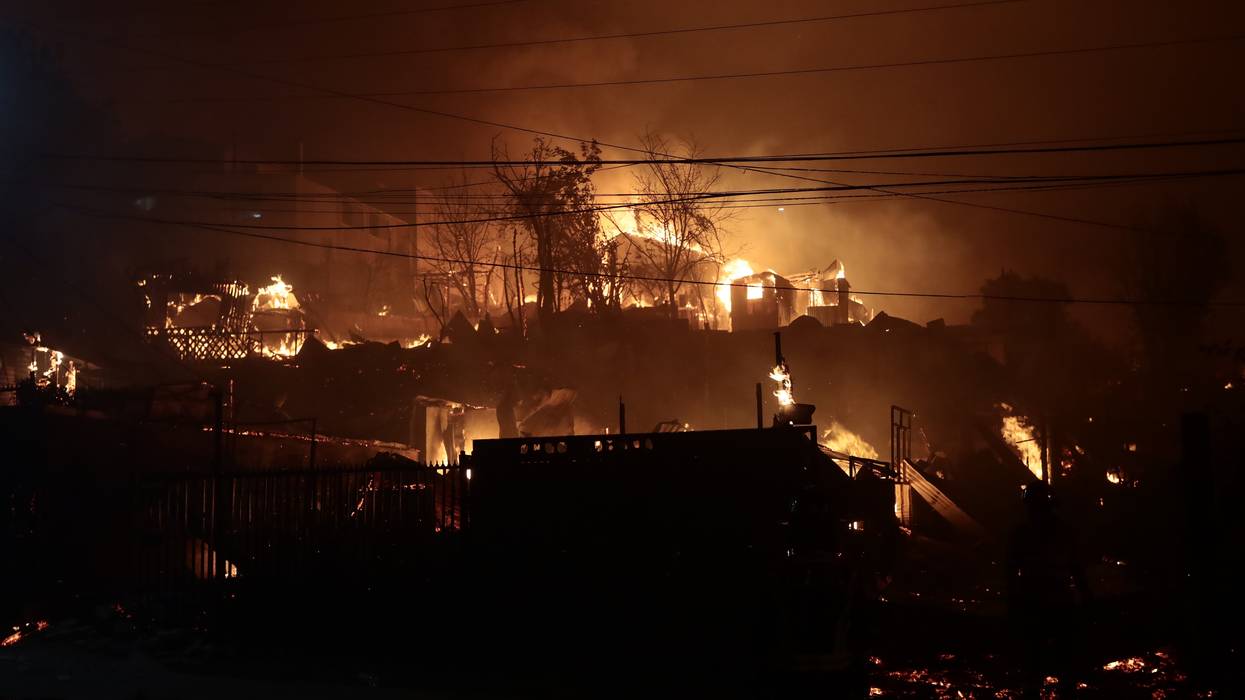
"The first priority, as you know, in these emergencies is always to fight and extinguish the fire. But we cannot forget, at any time, that there are human tragedies here," said the country's president.
On the heels of another historically hot year for Earth, disasters tied to the fossil fuel-driven climate emergency have yet again turned deadly, with wildfires in Chile's Ñuble and Biobío regions killing at least 18 people—a figure that Chilean President Gabriel Boric said he expects to rise.
The South American leader on Sunday declared a "state of catastrophe" in the two regions, where ongoing wildfires have also forced more than 50,000 people to evacuate. The Associated Press reported that during a Sunday press conference in Concepción, Boric estimated that "certainly more than a thousand" homes had already been impacted in just Biobío.
"The first priority, as you know, in these emergencies is always to fight and extinguish the fire. But we cannot forget, at any time, that there are human tragedies here, families who are suffering," the president said. "These are difficult times."
According to the BBC, "The bulk of the evacuations were carried out in the cities of Penco and Lirquen, just north of Concepción, which have a combined population of 60,000."
Some Penco residents told the AP that they were surprised by the fire overnight.
"Many people didn't evacuate. They stayed in their houses because they thought the fire would stop at the edge of the forest," 55-year-old John Guzmán told the outlet. "It was completely out of control. No one expected it."
Chile's National Forest Corporation (CONAF) said that as of late Monday morning, crews were fighting 26 fires across the regions.
As Reuters detailed:
Authorities say adverse conditions like strong winds and high temperatures helped wildfires spread and complicated firefighters' abilities to control the fires. Much of Chile was under extreme heat alerts, with temperatures expected to reach up to 38ºC (100ºF) from Santiago to Biobío on Sunday and Monday.
Both Chile and Argentina have experienced extreme temperatures and heatwaves since the beginning of the year, with devastating wildfires breaking out in Argentina's Patagonia earlier this month.
Scientists have warned and research continues to show that, as one Australian expert who led a relevant 2024 study put it to the Guardian, "the fingerprints of climate change are all over" the world's rise in extreme wildfires.
"We've long seen model projections of how fire weather is increasing with climate change," Calum Cunningham of Australia's University of Tasmania said when that study was released. "But now we're at the point where the wildfires themselves, the manifestation of climate change, are occurring in front of our eyes. This is the effect of what we're doing to the atmosphere, so action is urgent."
Sharing the Guardian's report on the current fires in Chile, British climate scientist Bill McGuire declared: "This is what climate breakdown looks like. But this is just the beginning..."
The most recent United Nations Climate Change Conference, where world leaders aim to coordinate a global response to the planetary crisis, was held in another South American nation that has faced devastating wildfires—and those intentionally set by various industries—in recent years: Brazil. COP30 concluded in November with a deal that doesn't even include the words "fossil fuels."
"This is an empty deal," Nikki Reisch of the Center for International Environmental Law said at the time. "COP30 provides a stark reminder that the answers to the climate crisis do not lie inside the climate talks—they lie with the people and movements leading the way toward a just, equitable, fossil-free future. The science is settled and the law is clear: We must keep fossil fuels in the ground and make polluters pay."
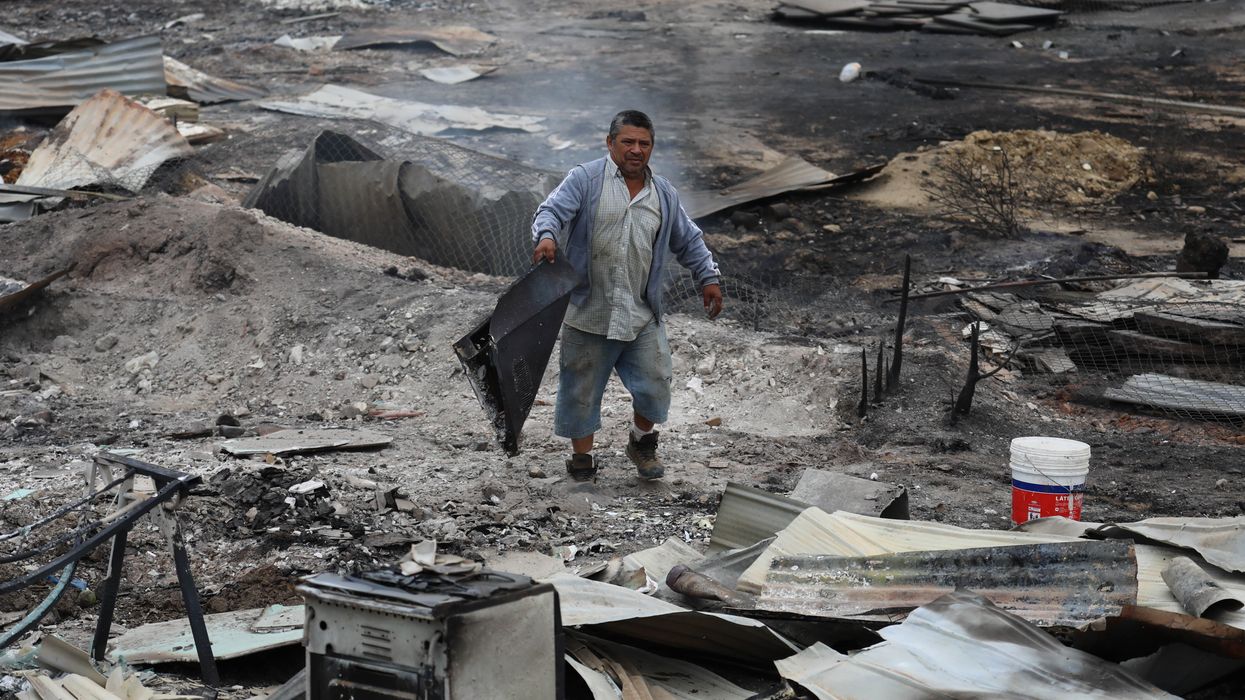
"We are becoming one of the most vulnerable territories in the world to fires," Chilean president Gabriel Boric said in 2023.
Extreme wildfires made more likely by the ongoing climate crisis killed at least 122 people in Chile, destroyed at least 6,000 homes, and damaged around 14,000 as the country entered a two-day morning period on Monday after a weekend of destruction and chaos.
The fires, which ignited in the coastal region of Valparaíso late last week, were "without a doubt" the deadliest in the country's history, Interior Minister Carolina Toha said, as Le Monde reported. President Gabriel Boric said Sunday that the fires were also Chile's deadliest disaster overall since an earthquake and tsunami in 2010 and that the death toll would "increase in a significant way."
"We're facing an unprecedented catastrophe," mayor of hard-hit city Viña del Mar Macarena Ripamonti said, "a situation of this magnitude has never happened in the Valparaíso region."
"There was smoke, the sky turned black, everything was dark. The wind felt like a hurricane. It was like being in hell."
The fires first ignited in hard-to-access wooded hillsides around Viña del Mar, a popular tourist destination on the coast, according to The Associated Press. But they then descended upon developed areas, fueled by drought and heatwave. With temperatures in the area reaching 40°C, the fires devoured a famous botanical garden in the city on Sunday and rendered at least 1,600 people homeless, according to AP. The nearby towns of Quilpe and Villa Alemana were also impacted.
"From one moment to the next, the fire reached the botanical park. In ten minutes the fire was already on us," Jesica Barrios, whose Viña del Mar home was one of those destroyed, told Reuters. "There was smoke, the sky turned black, everything was dark. The wind felt like a hurricane. It was like being in hell."
Another resident of nearby Villa Independencia evacuated her home on Friday to find it destroyed on Monday.
"It's like a war zone, as if a bomb went off," 63-year-old Jacqueline Atenas said. "It burned like someone was throwing gasoline on the houses. I don't understand what happened... There was a lot of wind, a lot of wind and big balls of fire that would fly by."
Drone footage shared by The Guardian showed blocks of homes torched and reduced to rubble and ashes.
"We need help, pet food, supplies, clothing," one woman told
The Guardian. "I don't know. My house, I lost everything, everything."
Boric declared an emergency in Chile's central and southern regions due to the fires. "All of Chile is suffering," Boric said, "but we will stand up once again."
Deputy Interior Minister Manuel Monsalve said that 165 fires were still blazing as of Sunday night, though cooler and cloudier weather predicted for the next few days should help firefighters to control them, according to Reuters. The AP reported that fires burned less intensely on Monday.
Toha said that 43,000 hectares had burned as of Saturday, according to AFP. On Sunday, Toha said around 1,400 firefighters had been sent to fight the flames, as BBC News reported. The military is also assisting emergency services.
There are reports that some of the fires may have been intentionally started.
"These fires began in four points that lit up simultaneously," Valparaíso Governor Rodrigo Mundaca said Sunday, as AP reported. "As authorities we will have to work rigorously to find who is responsible."
El Niño conditions have also brought a drought and heatwave to southern South America during its summer, creating ideal conditions for fire. At the same time, scientists point out that this occurs in the broader context of an ongoing climate crisis driven primarily by the burning of fossil fuels.
"No country can address the Climate Crisis alone. We need a global phase out of fossil fuels."
The fires ignited weeks after a study published in Nature on January 23 concluded that "the concurrence of El Niño and climate-fueled droughts and heatwaves boost the local fire risk and have decisively contributed to the intense fire activity recently seen in Central Chile."
Fires burned three times as many acres last decade compared to the one before, and six of the seven most destructive fire seasons in Chile's history have happened since 2014.
"In the last few years, our country has lived through the impacts of climate change," Boric said last year, which also saw intense fires, as Mongabay reported. "We are becoming one of the most vulnerable territories in the world to fires."
This is not an experience unique to Chile, as Canada's record-breaking wildfire season during summer 2023 attests. Texas Tech University climate scientist Katharine Hayhoe explained on social media that "climate change is the difference between dropping a match into green, wet wood vs. bone-dry kindling that's been baking in unseasonably warm temps for weeks. That's how climate change is making wildfires bigger and more dangerous, regardless of their cause."
In a thread on social media, Cardiff University School of Social Sciences graduate student Aaron Thierry explained the climactic context for Chile's fires, including an ongoing drought and record-breaking heatwave and increased fires across South America.
While Chile's government is aware of and taking action on the problem, "no country can address the Climate Crisis alone," Thierry said. "We need a global phase out of fossil fuels. That means all countries need politicians who will deliver this transformative shift in governance. That means we need to get out and vote for them!"
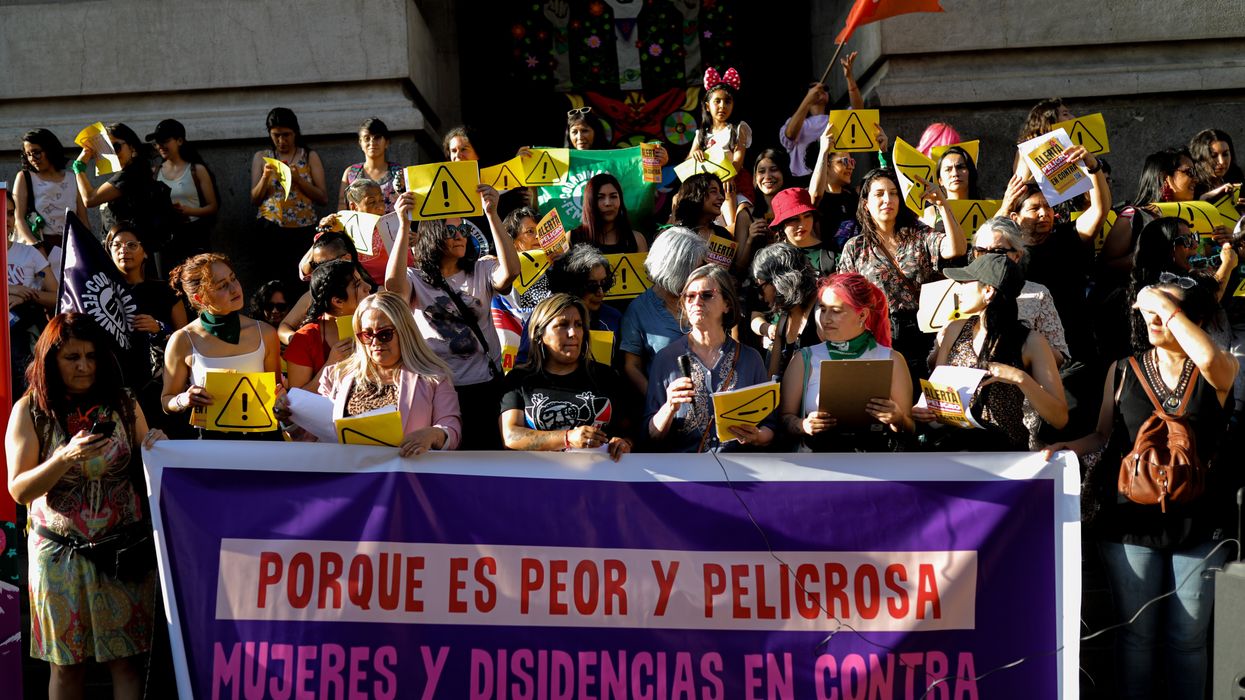
The proposed right-wing constitution would have further imperiled abortion rights and boosted the private sector's role in key areas, including healthcare and education.
Chilean voters on Sunday rejected a proposed right-wing constitution that would have further weakened abortion rights and allowed the private sector to extend its reach in the country's healthcare, education, and pension systems.
Sunday's vote marks the second time in as many years that Chileans have spurned a replacement for the current constitution, which was drafted during Gen. Augusto Pinochet's murderous U.S.-backed dictatorship and subsequently amended dozens of times.
Last year, after a massive far-right disinformation campaign, voters rejected a progressive constitution that would have enshrined gender equality, formally recognized the nation's Indigenous groups, strengthened workers' rights, and expanded the welfare state, including by making public colleges tuition-free.
The new proposal, crafted by elected members of a constitutional council dominated by conservatives, "placed private property rights and strict rules around immigration and abortion at its center," Reuters reported.
The proposed replacement would have slightly tweaked the current constitution to protect "the life of who is unborn," a change that observers said would have opened the door to the total criminalization of abortion. The procedure is currently legal in Chile only in cases of rape, a nonviable fetus, or a threat to the life of the mother.
Progressive International co-general coordinator David Adler warned that the proposed rewrite "threatened to enshrine an extremist neoliberal model in the country's constitution, extending Pinochet's original vision to include provisions against abortion and same-sex marriage."
Former Chilean President Michelle Bachelet, who also served as United Nations high commissioner for human rights, told The Associated Press that she voted against the new proposal because she prefers "something bad to something worse."
The proposal failed with 56% opposed, and Chilean President Gabriel Boric said his government would not attempt to replace the constitution a third time, ending an effort that began with an overwhelming 2020 vote in favor of rewriting the document.
"Our country will continue with the current constitution, because after two plebiscites on proposed constitutions, neither managed to represent or unite Chile in its beautiful diversity," Boric said Sunday.
Paula Ávila-Guillen, an international human rights lawyer and executive director of the Women's Equality Center (WEC), said in a statement that "Chile rejected a constitution that jeopardized the three exceptions to abortion access and would have put the lives of Chileans at risk."
WEC noted that in addition to imperiling Chileans' minimal access to abortion, the proposed replacement "included text that would have allowed pharmacies to refuse to sell the morning-after pill" and "allowed schools to reject children with single mothers under the 'institutional conscientious objection.'"
"The will of the people is clear: The majority of Chileans support reproductive healthcare and will not stand by as their rights are taken away," said Ávila-Guillen. "From Chile to Ohio, this proves that when abortion is on the ballot, protecting abortion access always wins."
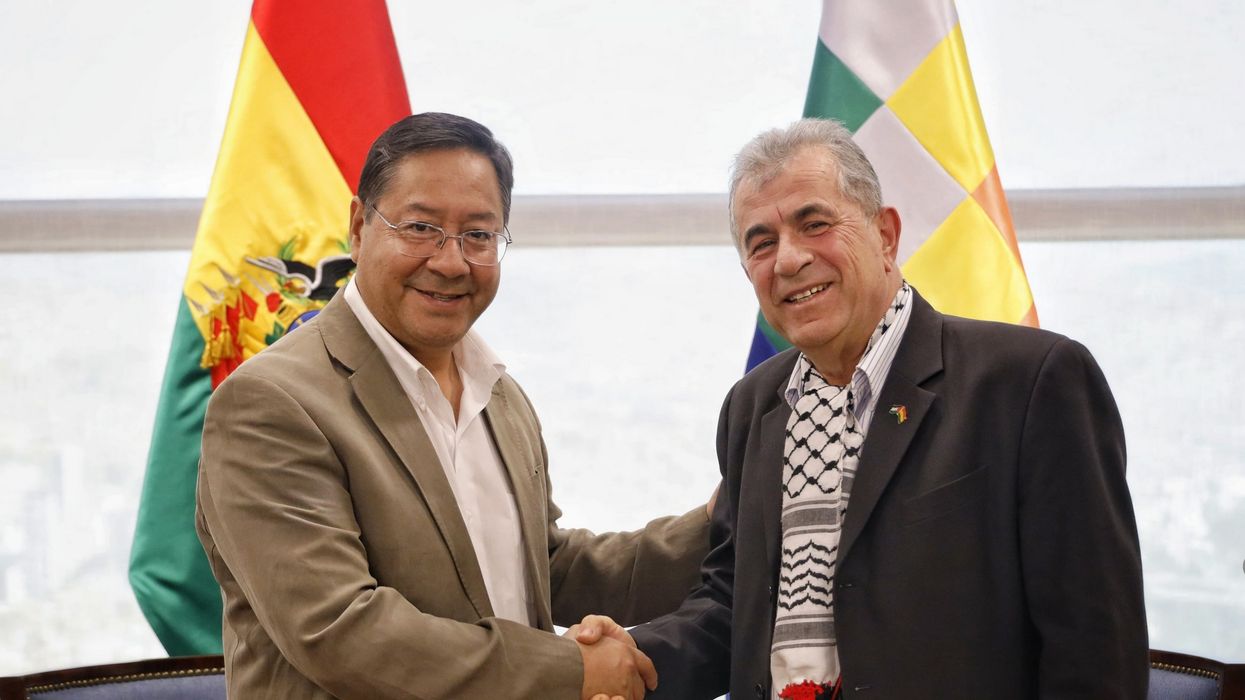
Meanwhile, the leftist leaders of Colombia and Chile and the kingdom of Jordan have recalled their ambassadors to Israel.
Citing "crimes against humanity," Bolivia's socialist administration on Tuesday became the first in the world to completely sever diplomatic relations with Israel over its war on Gaza, while the leftist governments of Chile and Colombia and Jordan's monarchy recalled their ambassadors from Tel Aviv.
"We are sending this official communication to the state of Israel in which, as stated, we make known our decision as the Plurinational State of Bolivia to break diplomatic relations with Israel," Bolivian Minister of the Presidency María Nela Prada told reporters at a Tuesday afternoon press conference.
"We also demand an end to the attacks in the Gaza Strip, which have so far caused thousands of civilian deaths and the forced displacement of Palestinians," she continued.
Prada said the decision by Bolivian President Luis Arce "is consistent with our pacifist policy," adding that her government will pursue "sanctions against those responsible for the war crimes that are being committed against the Palestinian people—not only now, but since many years."
The minister also vowed that Bolivia "will send humanitarian aid to those affected in the Gaza Strip, who are going through a serious health crisis," while calling on "brotherly nations" to "produce collective action" to "avoid genocide" in Gaza.
Speaking after Prada at Tuesday's press conference, Bolivian Deputy Foreign Minister Freddy Mamani said that "within the framework of its principled position of respect for life, Bolivia has decided to break diplomatic relations with Israel, in repudiation and condemnation of the aggressive and disproportionate Israeli military offensive being carried out in the Gaza Strip."
On Monday, Arce urged the United Nations Security Council to "prevent the genocide of the Palestinian people and pave a definitive solution for Palestine to exercise its right to self-determination, to have its own territory without illegal occupations, and fully enjoy the attributes of a free, sovereign, and independent state."
Bolivia's U.N. ambassador, Diego Pary, said Tuesday that his country "will be on the right side of history."
"The only formula that can truly guarantee peace and security in the region is the full recognition of state of Palestine in internationally recognized pre-1967 borders with East Jerusalem as its capital," he informed the U.N. General Assembly.
"Free Palestine is not just a cause of the Palestinian people, but rather a question of global justice and peace," Pary—a Quecha Indigenous leader—continued. "The liberty and dignity of human beings must be respected in all corners of this planet and it is our duty to work together to achieve a future in which Palestine can once and for all be free."
"To our brothers and sisters in Palestine, I reiterate, you are not alone," he added. "Bolivia stands with you, and the peoples of the world are with you."
In 2009, then-Bolivian President Evo Morales—who, like Arce, is a member of the Movement for Socialism party—joined leftist former Venezuelan President Hugo Chávez in breaking off diplomatic relations with Israel over its Operation Cast Lead invasion of Gaza, in which more than 1,400 Palestinians—most of them civilians—and 13 Israelis, almost all soldiers, were killed.
Bolivia and Israel restored relations in 2019 during the administration of right-wing former President Jeanine Áñez, who took power after a U.S.-backed coup.
Israel responded to Bolivia's move with a Foreign Ministry statement condemning "Bolivia's support of terrorism and its submission to the Iranian regime, which attest to the values the government of Bolivia represents."
Leftist Chilean President Gabriel Boric on Tuesday recalled Jorge Carvajal, his country's ambassador to Israel, "given the unacceptable violations of international humanitarian law that Israel has incurred in the Gaza Strip."
"Chile strongly condemns and observes with great concern that these military operations—which at this point in their development entail collective punishment of the Palestinian civilian population in Gaza—do not respect fundamental norms of international law," he added.
Boric cited the more than 8,000 Palestinians, "mostly women and children," killed by Israeli forces since October 7, when Hamas-led attacks on southern Israel left more than 1,400 people dead and over 200 kidnapped.
The Gaza Health Ministry said Wednesday that at least 8,796 Palestinians—including nearly 2,300 women and over 3,600 children—have been killed in Israeli attacks, while another 23,000 suffered injuries.
Last year, Boric put off accepting new Israeli Ambassador Gil Artzyeli's credentials in response to Israeli occupation forces' killing of Odai Trad Salah, a 17-year-old Palestinian boy, in the West Bank.
Boric also angered many Israeli officials last year by announcing that Chile would open an embassy in the illegally occupied West Bank.
Also on Tuesday, Colombia recalled its ambassador to Israel, Isaac Gilinski Sragowicz, with left-wing Colombian President Gustavo Petro writing on social media that "if Israel does not stop the massacre of the Palestinian people we cannot be there."
Petro's recall is the latest move in a diplomatic fracas between Colombia and Israel that erupted after Petro likened Israeli leaders' dehumanizing and genocidal statements about Palestinians to "what the Nazis said about the Jews" and called Gaza—often described as the "world's largest open-air prison"—a "concentration camp."
After Israel accused Petro of "hostile and antisemitic statements" and "support for the horrific acts of Hamas terrorists," the Colombian president hit back, saying Israel's war on Gaza is "genocide."
"They do it to remove the Palestinian people from Gaza and take it over," Petro wrote on social media after an Israeli bombardment of the Jabalia refugee camp killed and wounded at least scores and possibly hundreds of Palestinians—one of at least three massacres reportedly carried out by Israeli forces on Tuesday.
"The head of the state who carries out this genocide is a criminal against humanity," Petro added, referring to far-right Israeli Prime Minister Benjamin Netanyahu. "Their allies cannot talk about democracy."
On Wednesday, Jordan became the first Arab country having normalized relations with Israel to recall its ambassador over the war. Jordanian Foreign Minister Ayman Al-Safadi directed Rasan al-Majali, the Hashemite kingdom's ambassador to Israel, to return to Amman "as an expression of Jordan's position of rejection and condemnation of the raging Israeli war on Gaza, which is killing innocent people and causing an unprecedented humanitarian catastrophe."
Jordan—which in 1994 became the second Arab nation to officially recognize Israel—previously withheld its ambassador to Tel Aviv during Cast Lead, and recalled al-Majali in 2019 to protest Israel's imprisonment of Jordanian citizens Hiba al-Labadi and Abdulrahman Miri without charge or trial.
Al-Safadi said al-Majali's return is conditioned upon Israel stopping its war on Gaza and ending the "humanitarian crisis it has caused."

Museum exhibitions, concerts, theater, film screenings, colloquia, and marches mark 50 years since the Chilean coup on September 11, 1973.
Throughout Chile today, there is a massive outpouring of artistic and cultural activity to commemorate the events of September 11, 1973, when the democratically elected, socialist government of Salvador Allende was overthrown by a brutal military dictatorship that was supported by the Nixon administration through the aid of Nixon’s Secretary of State, Henry Kissinger, who helped to orchestrate the events that led to the coup. Thousands of Chileans were arrested, disappeared, tortured, or driven into exile under the dictatorship of General Augusto Pinochet who went on to rule the country for the next 18 years.
Allende famously proclaimed that his Popular Unity government would “have the flavor of red wine and empanadas.” And it is in that spirit that hundreds of events are happening throughout the month of September.
On the political front, both Sen. Bernie Sanders (I-Vt.) and Rep. Alexandria Ocasio-Cortez (D-N.Y.) have visited the country and met with Chilean President Gabriel Boric. In an interview with The Guardian, AOC stated: “I believe that we owe Chile, and not just Chile but many aspects of that region, an apology. I don’t think that apology indicates weakness; I think it indicates a desire to meet our hemispheric partners with respect.”
The idea that a country might develop a peaceful road to an alternative economy not based on rapacious greed, war mongering, profiteering, and the myth of the meritocracy was inspiring.
Tonight (September 11) a concert featuring three foundational music groups of the Nueva Canción Chilena (“New Chilean Song”) movement, Quilapayun, Inti-illimani, and Illapu will perform (along with other musical performers) outside the Estadio Nacional in a “Homage for Salvador Allende and the victims of the dictatorship.”
As part of a series of exhibitions, panel discussions, and cultural presentations, the Museum of Memory and Human Rights opened a new exhibit on September 6, entitled, “Judging and Filming Trials Against Humanity,” mounted as a collaborative project with the National Archive of France. Thematically based, it traces the experience of Chile, France, and Argentina explicating the history of legal trials against those who perpetrated crimes against humanity. This is one of a number of events that the museum is sponsoring.
The theater company La Situación is presenting an immersive, site specific experience that will allow spectators to relive the dramatic moments at the University of Santiago de Chile at the time of the coup, when students, officials, and academics were all set to attend the opening of an exhibition entitled “For Life…Always!”, which was to open on September 11, 1973, with Allende in attendance. The narrative unfolds through the spaces of the university where a group of 15 actors become the protagonists of what happened on that historic day.
The renowned ICTUS theater company has been presenting a reprise of their highly acclaimed 1984 play, Primavera con una Esquina Rota (based on Mario Benedetti’s novel and translated as “Springtime in a Broken Mirror”) in its own theater space since June.
Now celebrating 60 years of ongoing socially committed theater in Chile, ICTUS is the company that produced the internationally acclaimed play Something in the Air in 1985, based on the tragic murder of José Manuel Parada (the son of actor Roberto Parada) by the agents of the Carabineros Communications Directorate. The play is a a testimonial work (which starred Roberto Parada) where the story of the kidnapping already experienced is told in fiction. Something in the Air was given a North American premiere in 1988 in Toronto, produced by Toronto Workshop Productions and directed by Robert Rooney.
Another site specific event will happen on the eve of the coup at La Moneda, the presidential palace that was bombed by the military and the place where Allende died after delivering a final live radio broadcast to the nation. The commemoration is a woman only event, and organizers have asked those attending the silent memorial to dress in black and come with a candle and one sign for each woman that reads: “NUNCA+ (never).”
Professor Lidia Casas is director of the Institute for Human Rights at Diego Portales University. She explains the significance of the march this way:
The gender dimension of torture was silenced by most survivors and human rights organizations, today there is a new political scenario with negationist narratives from hard liner right-wing politicians. A congress woman declared sexual violence was an urban myth. For us feminist women, embracing in a human chain around the government palace is an act of resistance and a cri de coeur for a “never again” and remembrance.
Professor Casas also recently presented an open lecture on sexual violence at Santiago’s former Estadio Chile, inviting students to the women change room. The stadium was the largest site used for detention and torture in the days following the coup.
“Victor Jara. Two looks. 50 years,” is a photographic exhibition honoring the folksinger, theater director, and composer, Victor Jara, who was also a leader in the Chilean New Song movement of the 1960s and 70s. These photographs are seen through the lenses of Louis Poirot and Antonio Larreat, two essential names in the history of Chilean photography. The photographs and negatives comprise a collection of images that survived the dictatorship by being hidden within the country as well as being exported for safe keeping abroad during the period of the dictatorship.
Jara, often described in North America as the Chilean Bob Dylan, was one of the earliest victims of the coup when he was arrested by the regime and taken to the then-named “Estadio Chile,” where he was brutally tortured before being executed by the military on September, 16, 1973.
In further tribute to Jara as one of the leading cultural figures of the period, the Victor Jara Foundation has organized the Arts and Memory Festival. This four-day arts and music event, running from September 28 through October 1, is being held at the Víctor Jara Stadium (actually an arena now; the former Estadio Chile, where Víctor was held and killed).
The impressive lineup of artists includes Inti-Illimani; celebrated pianist Roberto Bravo; singer-songwriters from the period including Eduardo Peralta, Luis LeBert, and Mauricio Redolés; the iconic rock band Los Prisioneros; the Santiago Youth Symphony Orchestra; the Haitian-Chilean band; LA FA MI; and a whole host of plays and presentations by theater and dance ensembles as well as independent solo artists. The 2023 Joan Jara Arts and Memory Award will also be presented at the festival.
In Chile this month there is certainly “the flavor of red wine and empanadas,” throughout the country, which is how Allende described his uniquely Chilean experiment with democratic socialism. In September 1973, I was 25 years old and enrolled as a graduate student in education at Lehigh University in Pennsylvania. During that bleak period that saw Richard Nixon being sworn in for a second term as president of the United States, the events in Chile seemed so encouraging. The idea that a country might develop a peaceful road to an alternative economy not based on rapacious greed, war mongering, profiteering, and the myth of the meritocracy was inspiring. To then see this fragile movement succumb to the iron fist of reaction and brought to such a cruel and tragic end was equally depressing. Up to that time in my life I was never much of a joiner, but later that week when I read that a group called the “Chile Emergency Committee” had been formed, I joined immediately.
Now, fast-forward 50 years (and it does seem like just the blink of an eye), I’m seeing a whole new progressive movement still struggling to get a grip just as Popular Unity tried to do five decades ago. Here we are in North America looking South to the Chileans again with many of the same hopes and aspirations that were embodied in the Popular Unity government of Salvador Allende. Once again, so many of us are rooting for the Chileans to find a better way.
I read that Gabriel Boric, at 37, is the youngest president ever elected in Chile and he is the third youngest head of state in the world. I read also that he is the first president ever to have visible tattoos, one of which is apparently a lighthouse. A lighthouse! What a powerful metaphor as once again Chile tries to light the way—and all the while not wanting to forget its past.
As many Chileans today still proudly proclaim: “Salvador Allende presente!”
This article was written with research assistance from Patricio Mason in Santiago.

"I want to invite the Republican Party, that's won an unquestionable majority, to not make the same mistakes we made," leftist President Gabriel Boric said. "This process can't be about vendettas, but putting Chile first."
In another defeat for Chilean President Gabriel Boric and his fellow leftists, the country's right-wing parties on Sunday won a majority of seats on a 50-member commission tasked with rewriting the constitution imposed more than 40 years ago by Gen. Augusto Pinochet's military dictatorship.
Chile's Republican Party—led by Jose Antonio Kast, the far-right presidential candidate Boric defeated in a December 2021 runoff election—garnered just over 35% of the vote, according to the Chilean Electoral Service. A separate coalition of right-wing parties secured roughly 21%. Boric's left-wing coalition, meanwhile, captured nearly 29%, and centrist parties combined to take the remaining 14%.
The special election determined the makeup of the Constitutional Council that will soon write a new charter for the nation. Kast's far-right party won 23 seats, the other right-wing coalition picked up 11, and Boric's left-wing alliance gained 16. This means the Chilean right amassed the three-fifths majority needed to approve articles over the opposition of progressives.
As Reuters reported Monday: "The constitutional advisers elected on Sunday will start drawing up a new constitution in June based on a draft compiled by 24 constitutional experts appointed by Congress in March. Voters will then approve or reject the new proposal in December."
Sunday's outcome marked a continued reversal of recent political developments. As recently as October 2020, Chileans voted by a 4-to-1 margin to replace the neoliberal constitution that was implemented in 1980 under anti-democratic conditions.
In the wake of that historic plebiscite, voters in May 2021 elected a progressive slate of delegates to the constituent assembly originally put in charge of rewriting Pinochet's constitution, raising hopes that the citizen-led body would produce an emancipatory charter.
Following months of debate at 103 plenary sessions, Chile's gender-equal 154-member constituent assembly finalized a draft constitution in May 2022. The 178-page document aimed to empower workers with guaranteed labor rights and an expanded social welfare state, enshrine gender equality and Indigenous rights, and prioritize environmental protection.
However, the first rewrite was rejected last September by nearly 62% of voters. The defeat of what progressive scholars around the world hailed as a "visionary product" from which other countries have "much to learn" happened thanks in no small part to the right-wing forces that flooded the country with misinformation ahead of the vote.
The spread of misinformation by reactionary elements within Chile was mirrored by a global smear campaign led by corporate media outlets.
For example, The Economist—which actively helped foment the 1973 coup that overthrew democratically elected socialist Chilean President Salvador Allende and brought Pinochet to power—criticized the first rewrite as a "left-wing wish list," while The Financial Times denounced it as a threat to Chile's "business climate."
Delegates to the original convention sought to guarantee universal access to health, housing, education, and a livable planet as human rights in an effort to combat the inequality that has been so thoroughly entrenched by the existing neoliberal policy blueprint that remains in place more than three decades after Pinochet's ouster.
Now that Kast, a vocal Pinochet supporter, and his right-wing allies are playing a decisive role in the second rewrite, it is more likely than not that Chileans will be asked at the end of this year to vote for a new constitution that does not differ fundamentally from the old one.
Speaking in Santiago on Sunday, Kast declared that "today is the first day of a better future... Chile has defeated a failed government."
While Boric took office last March amid "a wave of optimism surrounding reform," Reuters noted, "his approval ratings have since plummeted as a struggling economy and rising crime have become the main concerns for voters."
"Boric also suffered a political defeat after throwing his weight behind the first rewrite," the news outlet noted. "The president has since distanced himself from the process but vowed to support it."
After he voted Sunday morning, Boric told reporters that "the government won't meddle with the process and will respect the entity's autonomy in its deliberation."
Following Kast's victory speech, Boric spoke from the presidential palace in Santiago, calling for unity and encouraging his right-wing opponents to learn from the failure of the initial rewrite.
"I want to invite the Republican Party, that's won an unquestionable majority, to not make the same mistakes we made," Boric said. "This process can't be about vendettas, but putting Chile first."
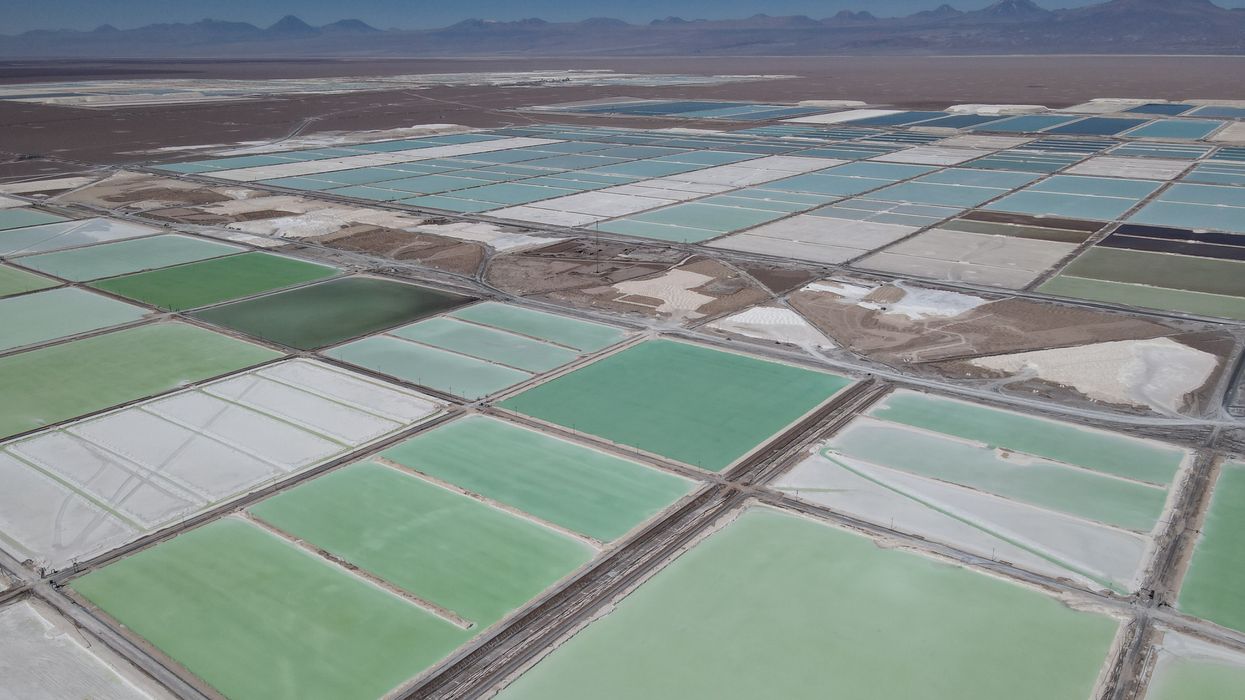
While striving for "a sustainable and developed economy," the leftist leader must contend with legislative divisions, potential industry opposition, and Indigenous and environmental resistance to large-scale mining.
Leftist Chilean President Gabriel Boric on Thursday announced plans to slowly nationalize the country's lithium industry, aiming to take advantage of massive reserves of the metal, key to electric vehicle batteries and other technology, while protecting the environment.
"Today we present a national lithium strategy that's technically solid and ambitious," Boric declared during a televised address, outlining his plan—which needs congressional approval—to create "a Chile that distributes wealth we all generate in a more just way."
"This is the best chance we have at transitioning to a sustainable and developed economy," he argued. "We can't afford to waste it."
Reuters reported that "Boric said the country would look to protect biodiversity and share mining benefits with Indigenous and surrounding communities."
About 60% of the world's reserves are located in the South American "lithium triangle," which includes Bolivia (21 million tons), Argentina (19.3 million tons), and Chile (9.6 million tons), according to the U.S. Geological Survey. For now, Chile is leading those nations in terms of production and ranked second globally last year, after Australia.
Currently, Chile's lithium operations are limited to the Chilean company SQM and the U.S. firm Albemarle. Under Boric's plan, the government would respect existing contracts with those industry giants—set to expire in 2030 and 2043, respectively.
However, all future contracts for the metal will involve government-controlled public-private partnerships, Boric explained. He ultimately envisions a national company focused on lithium, but because creating one could be delayed by legislative divisions, agreements will initially be led by the state-owned copper mining company, Codelco.
As the AP pointed out:
The minister of mining, Marcela Hernando, recently told Congress that the government cannot advance alone in the exploitation of lithium because "technology and knowledge are in private industry."
A public-private partnership is needed, Hernando said, though he added that "the state is the owner of lithium," which is an "uncompromisable" position of the government.
Boric's plan is part of a global trend. Mexican lawmakers voted last year to make lithium reserves federal property. Additionally, as the Financial Times noted, "Zimbabwe banned unprocessed lithium exports" and "Indonesia is curbing exports of commodities including nickel ore, which is used in batteries."
Thea Riofrancos—an Andrew Carnegie fellow, Providence College associate professor of political science, and Climate and Community Project member—tweeted Friday that resource nationalism is "all the rage" in the "Global South (Mexico, Indonesia, Bolivia) and North ('critical minerals' securitization) albeit from very distinct geoeconomic positions. But there's more to this."
"Boric situates this decision in the long sweep of Chilean history," referencing former President Salvador Allende's nationalization of copper, Riofrancos explained. "But this isn't a classic expropriation," because of the public-private partnership approach.
"Evidence from Latin America's Pink Tide era shows such partnerships can increase state revenues, which can fund social services and public infrastructure. But whether tech transfer and value chain upgrading occur is an open question," she said. "Boric flags both as crucial to his vision."
Riofrancos continued:
Just as importantly, and compared to both mid-century and Pink Tide era nationalizations, Boric cannot ignore the powerful wave of Indigenous and environmental resistance to large-scale mining in Chile and the region, nor the scientific evidence of damage to salt flat ecosystems.
Boric promises environmentally friendly extraction and conservation of 30% of Chile's salt flats (the location of lithium deposits), and promises a new model of public participation, including the first step [of] direct dialogue with representatives of Indigenous communities.
But these goals are in tension with his other key goal, which is to vastly expand lithium extraction in Chile's deserts as well as restore Chile to the position of top producer, a status now occupied by Australia (worth noting Argentina may soon overtake Chile for second place).
"And of course," she added, "all of these plans are subject to congressional approval and what I imagine will be a flurry of lobbying from the incumbent producers, SQM and Albemarle."
While Albemarle said that the development would have "no material impact on our business," Bloomberg highlighted that "SQM and Albemarle shares were down 7% and 4%, respectively, before the start of regular trading in New York on Friday."

"We cannot forget a community that is suffering from an illegal occupation, a community that is resisting, a community that is seeing its rights and dignity violated every day," Chile's leftist president said.
Palestinian officials and supporters welcomed leftist Chilean President Gabriel Boric's announcement this week that his country will open an embassy in the West Bank, which has been illegally occupied by Israeli apartheid forces for 55 years.
"We are going to raise our official representation in Palestine from having a charge d'affaires," Boric said at a Wednesday evening Christmas tree-lighting ceremony with Palestinian Christians.
"It always makes me very angry to look at the Middle East and not see Palestine on the map."
"Now we are going to open an embassy of our government to give it the corresponding representation, to demand in all spaces something so basic, so simple that today is not being done, which is that international law is respected," the president added. "Nothing more and nothing less."
"It always makes me very angry to look at the Middle East and not see Palestine on the map," Boric said.
As incoming right-wing Prime Minister Benjamin Netanyahu joins the long line of Israeli leaders and their boosters who deny the existence of the Palestinian people, Boric asserted that Palestine "exists [and] resists."
"We cannot forget a community that is suffering from an illegal occupation, a community that is resisting, a community that is seeing its rights and dignity violated every day," he said.
The Palestinian Ministry of Foreign Affairs applauded Boric's plan, saying in a statement that it "affirms the principled position of Chile and its president in support of international law and the right of the Palestinian people to establish their independent state."
Chile has been officially represented by an office in the Palestinian Authority since 1998. In 2011 the Chilean government recognized Palestine as a "free, independent, and sovereign state" and backed its entry into UNESCO, the United Nations Educational, Scientific, and Cultural Organization.
Palestine, meanwhile, has an embassy in Santiago, the Chilean capital. Palestine has established bilateral ties with nearly 140 nations.
Relations between Chile and Israel have been strained. In September, Boric delayed acceptance of the new Israeli ambassador's credentials after Israeli occupation forces fatally shot 17-year-old Odai Trad Salah in the head during a raid outside Jenin.
Chile boasts the largest Palestinian community outside of the Middle East. Its 300,000 members live peacefully with Chile's 30,000 Jews.