

SUBSCRIBE TO OUR FREE NEWSLETTER
Daily news & progressive opinion—funded by the people, not the corporations—delivered straight to your inbox.
5
#000000
#FFFFFF
To donate by check, phone, or other method, see our More Ways to Give page.
Daily news & progressive opinion—funded by the people, not the corporations—delivered straight to your inbox.
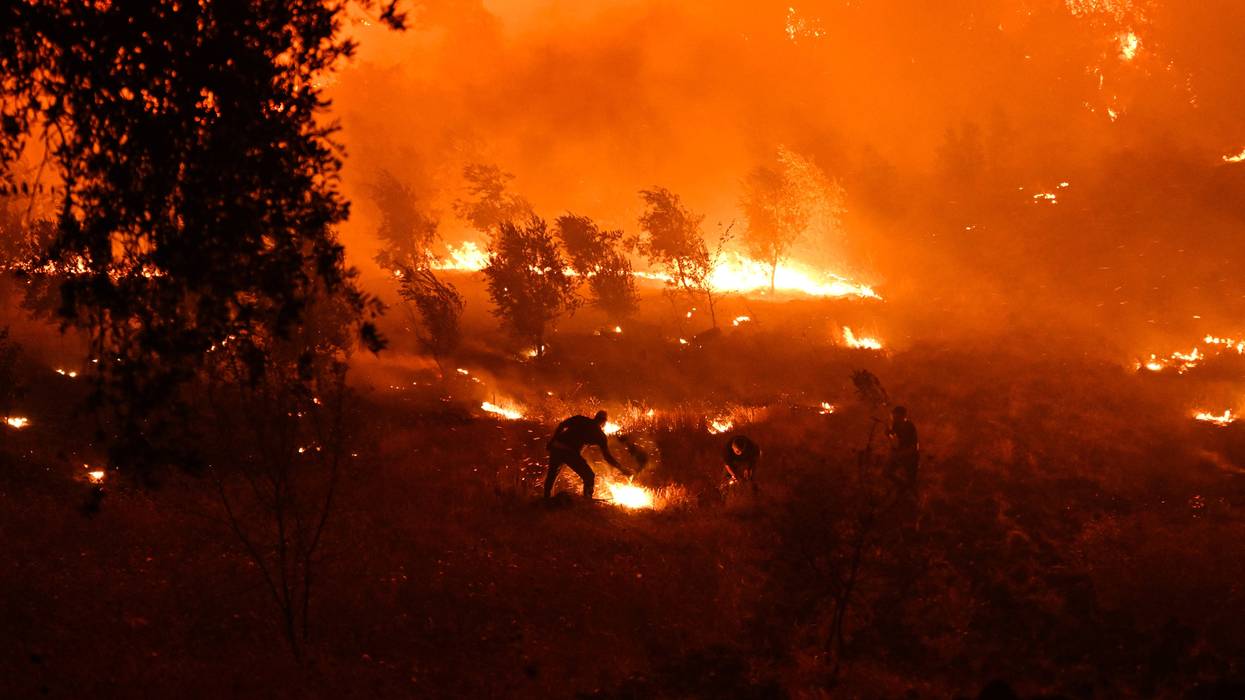
"The climate crisis is here, and the frequency and severity of extreme weather events are increasing day by day," said 350.org's Türkiye manager.
Scientists have long warned that the fossil fuel-driven climate crisis means more frequent and destructive wildfires, and blazes raging in Türkiye this week have sparked a fresh call to rapidly phase out planet-heating coal, gas, and oil.
As firefighters battled blazes in three southern Turkish provinces, Efe Baysal, Türkiye manager at the global advocacy group 350.org, pointed out that the country is set to host the next United Nations Climate Change Conference, COP31.
"In November, the world will gather in Antalya for COP31 to discuss the steps that must be taken against the climate crisis," Baysal said in a Wednesday statement. "Today, however, that same city is battling an uncontrollable wildfire that began in Aksu district of Antalya and spread throughout the region. Reports of fires are also coming in from Adana and Mersin."
"Our prayers are with those fighting the blazes on the ground to defend life," he continued. "The wildfires occurring primarily in Antalya demonstrate this truth once again: Rising temperatures create the conditions for fires to start more easily, spread faster, and become more destructive. The climate crisis is here, and the frequency and severity of extreme weather events are increasing day by day."
Baysal said that "assuming the COP31 presidency, Türkiye's responsibility is even more crucial. At COP31, Türkiye should aim to produce concrete outcomes to advance the transition away from fossil fuels. To make this leadership credible, Türkiye should announce a timeline for a phaseout of coal without delay."
"It should initiate a just transition to renewable energy that will reduce our dependence on coal, oil, and gas," he added. "It is not enough merely to respond to the consequences of the climate crisis. We must eliminate the causes that exacerbate it. COP31 is an opportunity for Türkiye to demonstrate true leadership in this direction."
Previous UN summits on the planetary crisis have ended in deep disappointment, with critics calling the "empty deal" that came out of COP30 in Brazil last year "a stark reminder that the answers to the climate crisis do not lie inside the climate talks," and, a year earlier, blasting COP29 in Azerbaijan as "a dumpster fire" and "a big F U to climate justice, to the poorest communities who are on the frontlines of climate breakdown."
Since those summits, there has been a constant stream of events that have fueled fears of a hotter world—and United Nations scientists are now warning that preventing at least a temporary temperature rise above 1.5°C, relative to preindustrial levels, is not possible, but humanity can still limit the damage by dramatically lowering emissions.
"This summer's scorching heat, raging wildfires, and deadly floods are a warning of what lies ahead," UN Secretary-General António Guterres said last week. "We must make the overshoot above 1.5 degrees as small and short as possible."
The fires in Türkiye have already proven deadly. The Aksu district mayor, Isa Yildirim, said on social media that one person died after suffering a heart attack during the fire there.
That blaze has also caused injuries. Citing the Turkish Anadolu Agency, The Associated Press reported that "two people were hospitalized with injuries to their legs while six others affected by smoke were treated on site."
As Deutsche Presse-Agentur detailed Wednesday:
Forest fires are common in Turkey in the summer months, fueled by long periods of drought and strong winds.
Cihan Erdönmez, an expert at Istanbul University, said triggers for the fires were often poorly maintained power lines running through forests.
Forestry Minister İbrahim Yumaklı said there had been more than 5,000 forest fires in Turkey in 2025 and 96% of them were directly or indirectly caused by humans.
Meanwhile, 350.org called the current blazes "a reminder that a hotter, drier climate will continue to exact its toll on ordinary people unless leaders act urgently to phase out fossil fuels."
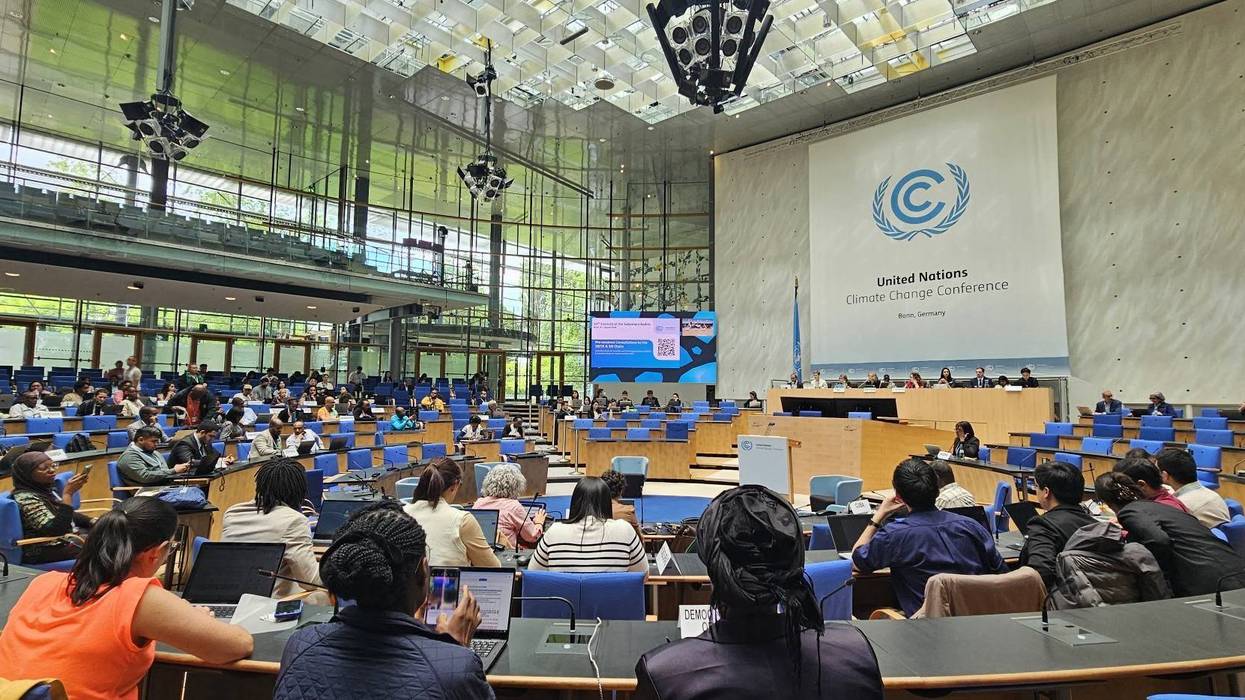
"A climate process that remains vulnerable to obstruction and corporate influence cannot deliver the action this crisis demands," said one group.
As international climate talks backed by the United Nations wrapped up Thursday in Bonn, Germany, campaigners stressed that policymakers must do more to curb the influence of polluting industries if such negotiations are going to have any hope of helping the world bring the fossil fuel era to an end.
The Bonn climate talks—officially the United Nations Framework Convention on Climate Change (UNFCCC) Mid-Year Subsidiary Bodies meetings, or SB64—serve as a technical and diplomatic staging ground for the next UN Climate Change Conference, or COP31, which is scheduled to take place in Antalya, Türkiye this November.
With current national climate pledges remaining far from what's needed to limit planetary warming to 1.5°C—the increasingly moribund target at the heart of the Paris Climate Agreement—experts and campaigners are taking aim at the UNFCCC’s reliance on consensus-based decision-making, which allows a handful of fossil fuel-producing nations and the oil, gas, and coal industries to block ambitious climate action and weaken international agreements.
“At the climate talks in Bonn, States failed to make meaningful progress and pushed back on already established agreements, exposing a critical truth: Climate justice should not be vetoed, and reform of the UNFCCC is needed to enable climate action at the speed and scale the crisis demands," Lien Vandamme, senior campaigner at the Center for International Environmental Law (CIEL), said in a statement Thursday.
The #JuneClimateMeetings further exposed the structural barriers slowing climate action: 🤝#ConsensusKillsAmbition, 🕴️Corporate influence,🪑Barriers to participation. It's high time for States to #FixTheUNFCCC.Read more in our statement: www.ciel.org/news/june-cl...
[image or embed]
— Center for International Environmental Law (@ciel.org) June 18, 2026 at 6:27 AM
Vandamme added that "effective multilateralism is the only way out of the climate crisis, and this process does not live up to that expectation."
Rallying under a "Friends of Science" banner, dozens of nations are calling out coordinated attacks by fossil fuel producers and the oil, gas, and coal industries on science that threatens their economic prospects.
“We see coordinated efforts to cast doubt on the best available science driven by a narrow set of interests, not by the needs of our people,” lead Panamanian negotiator Ana Aguilar said during a Wednesday press conference.
“We have seen this playbook before," she added. "Manufacture doubt, delay the response, and let the vulnerable people pay this bill.”
Lead Fijian negotiator Sivendra Michael put it more bluntly, telling reporters, "Anyone that is blocking references to science—they are not our friends."
There has been some progress. As CIEL noted:
It is encouraging that, after more than three decades, the UNFCCC has begun to acknowledge concerns around the corporate capture of the process. The open dialogue on transparency and integrity that happened in Bonn represents an important—but long overdue—step towards addressing the influence of polluting industries in the climate negotiations. This dialogue must be the start toward a meaningful, comprehensive policy to address corporate capture of climate negotiations. A climate process that remains vulnerable to obstruction and corporate influence cannot deliver the action this crisis demands.
Erika Lennon, CIEL's senior attorney, pointed to April's First Conference on Transitioning Away from Fossil Fuels in Santa Marta, Colombia, as a hopeful sign. The Santa Marta conference, which was free of major polluters like the United States, China, Russia, and India, took aim at what climate defenders called the “shamefully weak” draft text—called the Multirão Decision—produced at last November’s COP30 in Brazil. The final document removed all mentions of fossil fuels amid pressure from oil and gas-producing nations like the United States, Russia, and Saudi Arabia, and the presence of a record number of industry lobbyists.
“The Santa Marta Conference demonstrated that a fossil fuel phaseout is not out of reach," Lennon said Thursday. "But Bonn showed that the institutions meant to deliver that accountability remain constrained by outdated rules and undue influence from polluting interests."
"We need effective multilateralism and an effective climate regime, not one that is incapable of delivering accountability or tackling the root cause of the climate crisis, fossil fuels, at the speed and scale the crisis demands," she added. "As attention turns to COP31, governments must confront the structural barriers that continue to delay meaningful action, from consensus rules that allow a small number of states to block progress, to the absence of robust safeguards against conflicts of interest, or violations of the rights of meaningful participation of representatives from climate-vulnerable communities."