

SUBSCRIBE TO OUR FREE NEWSLETTER
Daily news & progressive opinion—funded by the people, not the corporations—delivered straight to your inbox.
5
#000000
#FFFFFF
To donate by check, phone, or other method, see our More Ways to Give page.
Daily news & progressive opinion—funded by the people, not the corporations—delivered straight to your inbox.
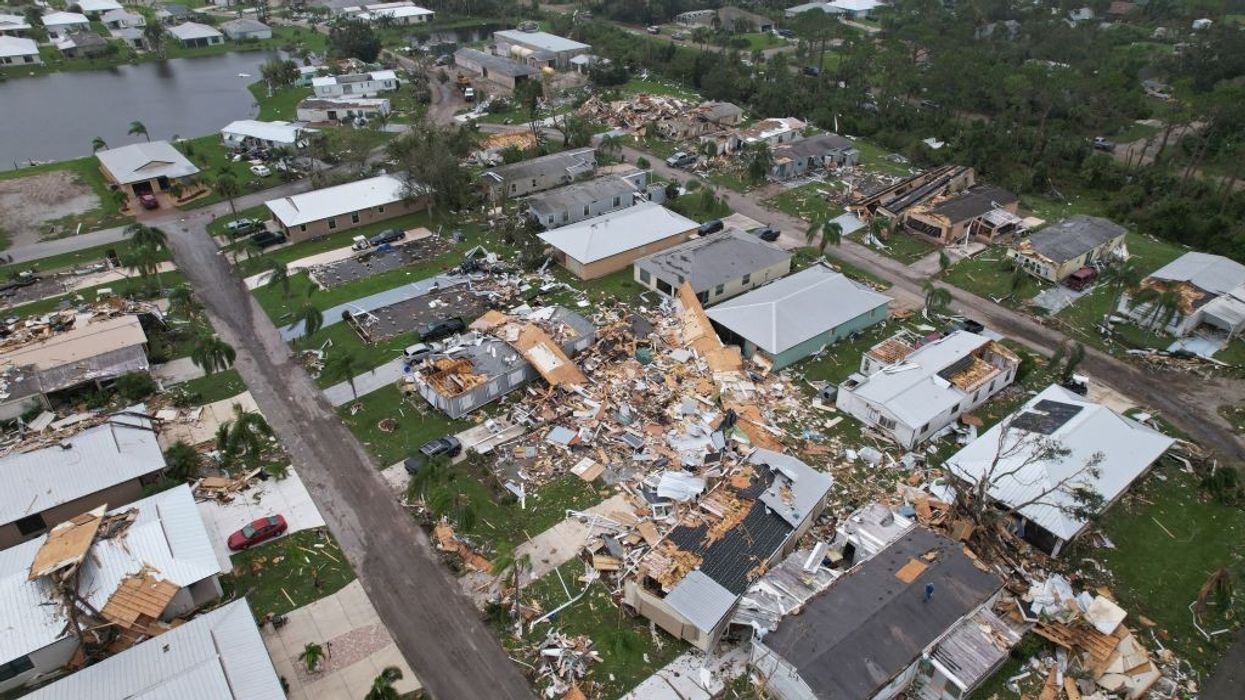
"The human suffering caused by the climate crisis reflects political choices. There is nothing natural about the growing severity and frequency of droughts, floods and storms," said the CEO of Christian Aid.
Climate disasters aren't cheap. In 2024, the 10 costliest extreme weather events not only extracted a toll in the form of human lives, but also each cost over $4 billion in economic damages—and some much more—according to a report released Monday from the global group Christian Aid.
"The human suffering caused by the climate crisis reflects political choices. There is nothing natural about the growing severity and frequency of droughts, floods and storms," said Christian Aid CEO Patrick Watt in a statement Monday.
"Disasters are being supercharged by decisions to keep burning fossil fuels, and to allow emissions to rise. And they're being made worse by the consistent failure to deliver on financial commitments to the poorest and most climate-vulnerable countries," he continued.
According to the report, the costliest climate disasters in terms of economic cost this year, in ascending order, were: Valencia floods in Spain; Bavaria floods in Germany; Rio Grande do Sul floods in Brazil; Storm Boris in Central Europe; Hurricane Beryl in the U.S., Mexico, and Caribbean islands; Typhoon Yagi in Southwest Asia; China floods in China; Hurricane Helene in the U.S., Mexico, and Cuba; Hurricane Milton in the U.S.; and U.S. storms in the United States.
Two items on the list—"China floods" and "U.S. storms"—are not a single event. The China floods refer to flood events across China that happened in June and July, and U.S. storms are all storms classified by the global professional services firm Aon as "severe convective storm" for the period between January and September, according to the report.
These U.S. storms, the most expensive climate disaster of 2024, amounted to over $60 billion in economic costs and 88 deaths, per the report. The second costliest, Hurricane Milton, caused 25 deaths and $60 billion in economic losses.
Hurricane Milton, which made landfall in Florida, was made worse by fossil fuel emissions: "In a world without climate change, Hurricane Milton would have made landfall as a Category 2 storm. Instead, it struck as a Category 3 hurricane, with stronger winds and more intense rainfall, causing extensive tornado activity, and damaging infrastructure in regions still recovering from previous hurricanes."
Specifically, "a rapid analysis by Climate Central showed that the unusually warm ocean temperatures, which fueled the hurricane's rapid intensification, were made 400-800 times more likely by climate change over the two weeks preceding the storm," according to the report.
The report's authors also caveat that the losses tallied in the document are likely an undercount. Most of the costs estimates are based on insured losses, meaning that the true financial costs are likely to be even higher (for example, it does not include economic costs stemming from crop production losses). Human costs are also often undercounted, the report's authors state.
Another important piece of context is that economic costs are generally higher in absolute terms for richer countries because the value of infrastructure and private property tends to be higher, living costs are greater, and more is covered by insurance—meaning losses are more calculable in financial terms, per the report. However, the death toll tends to be higher in poorer countries.
The deadliest climate disaster, according to the report, was Typhoon Yagi, which came in as the fifth most expensive climate disaster in terms of economic cost, and caused the deaths of over 829 people. The typhoon struck multiple countries in southeast Asia, causing landslides, flooding, and infrastructure damage in places including the Philippines, Laos, Vietnam, Myanmar, and Thailand. In Myanmar, for example, it devastated entire villages and decimated over 2.3 million hectares of agricultural land.
In its Monday statement, Christian Aid highlighted that "some of the most devastating extreme weather events in 2024 hit poorer nations, which have contributed little to causing the climate crisis and have the least resources to respond."
To that end, the group is calling on Global North countries to increase their commitment to climate finance and cease development of new fossil fuel projects.
The report also includes additional information about disasters that didn't make it into the top ten for economic damages, but are still of note. They include a drought that impacted countries in southern Africa between February and July and floods impacting Afghanistan and Pakistan between March and September.
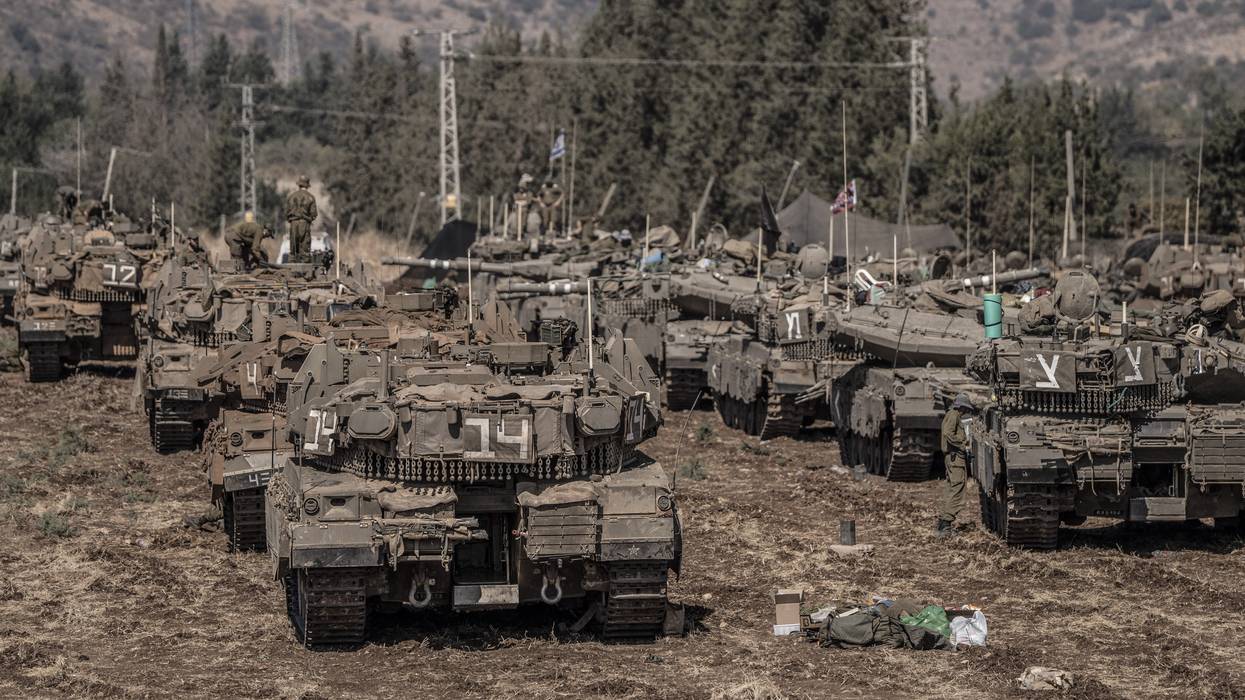
"Despite the Israeli government's serious escalation in Lebanon and indiscriminate bombings in Gaza and the West Bank, President Biden continues to funnel billions in lethal military aid."
Israeli forces appear poised to launch a ground invasion of Lebanon within days following a sustained bombing campaign that has killed more than a thousand people—including dozens of children—and displaced more than a million, heightening fears of a large-scale humanitarian disaster and a wider war that could consumer the entire region.
The Israel Defense Forces (IDF) has already carried out what were described as "limited ground incursions" across the Lebanese border, but a larger invasion could be imminent given the positioning of Israeli troops and rhetoric from top Israeli officials.
"We will use all the means that may be required—your forces, other forces, from the air, from the sea, and on land," Israeli Defense Minister Yoav Gallant told Israeli troops on Monday.
The mayor of a Christian-majority Lebanese village located roughly six miles from the Lebanon-Israel border told Reuters that locals "had received calls apparently from the Israeli army telling them to evacuate the area as soon as possible."
Humanitarian groups have warned that a full-scale ground invasion would be a disaster for the Lebanese people, many of whom have seen their lives upended by Israeli attacks over the past two weeks.
"We are gravely concerned about the possibility of an Israeli ground invasion of Lebanon," said Julie Mehigan, Christian Aid's head of Asia, the Middle East, and Europe. "The patterns we're seeing from the attacks of the last few days are reminiscent of what we've seen in Gaza these last few months. Massive displacement and killing of civilians, whole families killed in their homes, and schools converted into shelters. All the while Gaza is continually being bombed from land, air, and sea."
"We are on the precipice of yet another humanitarian calamity in the region," Mehigan added.
"Not only is this administration sending more bombs aimed at them and other civilians, they're also helping Netanyahu cover up his crimes. It's despicable."
The Biden administration, which provided the 2,000-pound bombs that Israel used to kill Hezbollah leader Hassan Nasrallah and dozens of civilians in an attack on Beirut late Friday, is reportedly prepared to give Israel approval to move troops into Lebanon as long as the invasion is "limited."
But the Israeli government, headed by far-right Prime Minister Benjamin Netanyahu, has repeatedly disregarded the Biden administration's stated conditions. As The New York Times observed Monday, the administration wanted the Israeli military to "eschew major combat operations" in the southern Gaza city of Rafah earlier this year. The IDF went on to launch a massive assault on the city, rendering it uninhabitable.
Akbar Shahid Ahmed, HuffPost's senior diplomatic correspondent, reported Monday that the Biden administration is unlikely to "veto" Israeli plans for a ground invasion of Lebanon and noted he is hearing a "growing sense" that "an Israeli invasion of Lebanon with U.S. backing (based on the idea it will be limited) is coming."
The possibility of an imminent Israeli ground invasion of Lebanon has heightened concerns of a full-blown regional war with potentially devastating global implications. Hezbollah has pledged to retaliate against Israel for the assassination of Nasrallah, and Iran—which has thus far acted with restraint—could also decide to intervene as Lebanon's government works to prevent the military conflict from spiraling.
Craig Mokhiber, a human rights attorney and former director of the New York office of the U.N. high commissioner for human rights, wrote on social media Monday that "as Israel continues its genocide in Palestine, expands its murderous rampage into Lebanon (perhaps even launching a ground invasion to ethnically cleanse the south) the West cheers and arms them, Arab governments sleep, the U.N. looks the other way, the [International Criminal Court] stalls, the Global South offers only symbolic objections, and the world is dragged passively toward WWIII."
Israel's intensifying assault on Lebanon has sparked fresh calls for a halt to U.S. arms transfers to the Israeli military, which relies heavily on American-made weaponry.
Maurice Mitchell, national director of the U.S.-based Working Families Party, said in a statement Monday that Israel's ongoing attacks on Lebanon "mark an extreme escalation that further threatens the stability of the region" and expressed support for an effort led by U.S. Sen. Bernie Sanders (I-Vt.) to block recently approved arms sales.
"Despite the Israeli government's serious escalation in Lebanon and indiscriminate bombings in Gaza and the West Bank, President Biden continues to funnel billions in lethal military aid to the Israeli government without conditions, including $8.7 billion last week," said Mitchell. "This coupled with new reports that the Israeli government violated international law by deliberately blocking humanitarian aid to families in Gaza underscores the urgent need to stop the flow of offensive weapons to the Israeli government.”
Abbas Alawieh, a Lebanese American from Michigan and a co-founder of the Uncommitted National Movement, said Monday that "every hour, I get messages from my family in Lebanon, asking when the American-funded bombs will stop."
"Not only is this administration sending more bombs aimed at them and other civilians, they're also helping Netanyahu cover up his crimes," said Alawieh. "It's despicable."
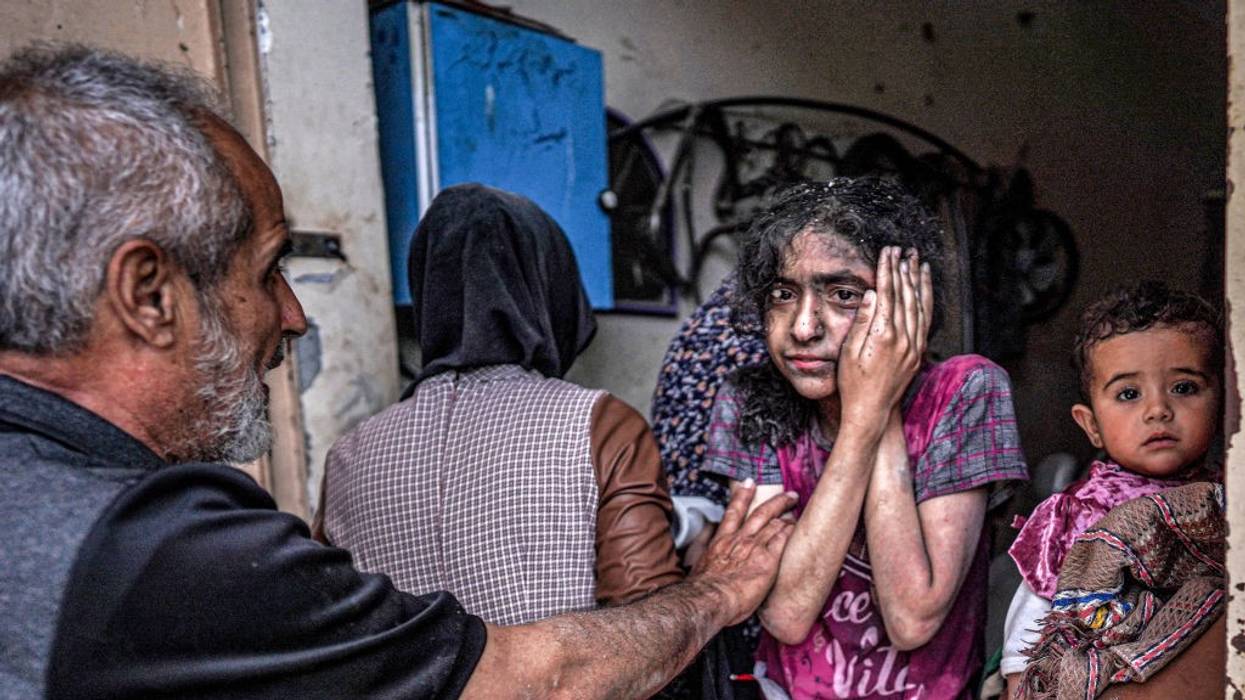
"We live in a constant state of fear and anxiety, with shells accompanying us around the clock, reaping lives, sparing only those fortunate enough to survive," one Palestinian girl wrote to U.K. Prime Minister Keir Starmer.
A U.K.-based humanitarian group on Tuesday delivered "heartbreaking" letters from two Palestinian girls—including one who lost her arm in an Israeli attack—imploring new Labour Prime Minister Keir Starmer to "intervene and help bring about a permanent cease-fire" in Gaza.
"We write to you with hearts full of sorrow and spirits crushed by the daily suffering inflicted upon us by the brutal war," wrote 15-year-old Mais Abdel Hadi, president of the youth-led Palestinian Children's Council, in a letter presented to Starmer's office in London by the charity Christian Aid. Palestinian Children's Council is a partner of the Palestinian Center for Human Rights.
"We live in a constant state of fear and anxiety, with shells accompanying us around the clock, reaping lives, sparing only those fortunate enough to survive," said Hadi, whose family is forcibly displaced due to the destruction of their home. "Destruction and devastation surround us on all sides. Our question is: Why must we children pay such a horrendous price?"
"Our question is: Why must we children pay such a horrendous price?"
According to the Gaza Health Ministry, an average of 58 children have been killed each day—approximately 16,000 in total—since Israel launched its retaliatory assault and siege of Gaza after the Hamas-led attacks last October 7.
The ministry—whose figures have been deemed reliable by Israeli intelligence—says that Israeli bombs and bullets have wounded more than 34,000 other Palestinian children, and that thousands more are missing and presumed dead and buried beneath the rubble of bombed-out homes and other buildings. Over 17,000 other Gazan children are orphaned.
"We wake up every day to the sound of bombs and rockets, with no safe place to seek refuge," Hadi stated. "This violent war has taken our homes, schools, families, relatives, friends, and classmates. It has forced us to sleep in poor tents and in the open air, our bodies scorched by the sun during the day and deprived of sleep at night due to constant airstrikes and random shelling."
"We need your support and urgent intervention to end this tragedy," she stressed to the newly-elected prime minister.
Hadi continued:
We demand an immediate cease-fire and the establishment of peace because we, the children of Palestine, deserve to live in safety and peace. We also urge you to work on rebuilding our schools and hospitals that have been destroyed and to provide the necessary psychological and educational support so we can regain our lives and futures.
Stop the death by starvation, the killing by denying medicine, and the destruction of health centers. Bring back life through songs, poems, and music. We are children who hope for a dignified life and do not wish for anyone to suffer.
Save our lives, dreams, and rights, and preserve our childhood. We are not just numbers or news in media reports; we are living souls, carrying hope in our hearts, awaiting your swift and effective action.
Sixteen-year-old Hala Abu Saleem, one of the thousands of child amputees in Gaza, asked: "Will my hand grow back? Or am I condemned to live without an arm?"
"I am not a terrorist to be exterminated," asserted Saleem, whose family is also forcibly displaced after their home was bombed. "I am not a terrorist for my house to be destroyed and my family killed. I am not a terrorist to live in a tent that is scorching during the day and freezing at night, unfit even for animals!"
"It's time for you to bear the consequences of your mistakes from over a century ago," Saleem added. The British Empire ruled Palestine in the early 20th century and facilitated Zionist colonization before reversing the policy amid resistance from the existing Arab population.
"End the occupation," she begged. "Stop the genocide!"
Starmer, who became prime minister on July 5, has given no indication that his administration will depart from the previous Conservative government's nearly unconditional support for Israel. As opposition leader, he sparked widespread outrage in Britain—a country that has seen massive pro-Palestine demonstrations over the past nine months—and beyond by initially supporting Israel's "right" to cut off water and electricity in Gaza, acts cited as evidence of genocide. He later retracted his statement.
The United Nations Children's Fund has described Gaza as "the most dangerous place in the world to be a child." More children were killed in the first four months of Israel's Gaza onslaught than in all the world's wars over the past four years, according to the U.N.'s Palestine relief agency. Israeli forces have allegedly deliberately targeted and executed children. Israeli warplanes are dropping shrapnel-packed fragmentation bombs that doctors say are eviscerating children's bodies and causing a "constant flow of amputations."
Israel also stands accused of using starvation as a weapon of war, killing dozens of children by malnutrition, dehydration, and lack of medical care.
In addition to killing, maiming, starving, and orphaning children, Israel's war has wrought what one Gaza mother described as "the complete psychological destruction" of youth living in the enclave.
Last month, U.N. Secretary-General António Guterres added Israel to the so-called "List of Shame" of countries that kill and injure children during wars and other armed conflicts.
Israel's conduct in the 283-day war—which has left more than 137,500 Palestinians in Gaza dead, maimed, or missing—is under investigation by the International Court of Justice in a South Africa-led genocide case.
International Criminal Court Prosecutor Karim Khan is also seeking to arrest Israeli Benjamin Netanyahu and Defense Minister Yoav Gallant for alleged crimes including extermination and forced starvation. Khan also applied for warrants to arrest three senior leaders of Hamas, which has governed the Gaza Strip since 2006.
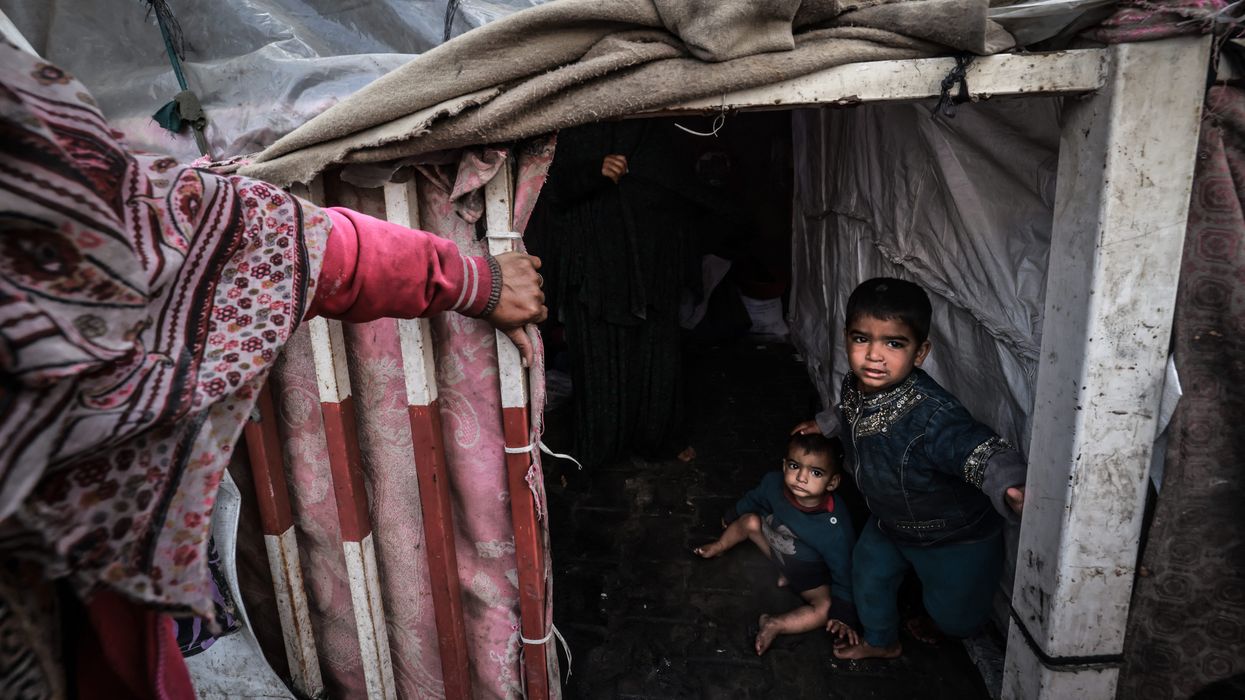
"There is nothing humanitarian about Israel's proposal to push civilians into 'humanitarian islands' in Gaza."
Aid groups reacted with alarm Thursday to the Israeli military's stated plan to transfer much of the population of Rafah—a small city in southern Gaza that's currently packed with more than 1.5 million people—to so-called "humanitarian islands" in the central part of the enclave.
William Bell, the head of Middle East policy and advocacy at Christian Aid, called the proposal "a preposterous idea" that the international community must reject in favor of an immediate, permanent cease-fire and a massive surge of humanitarian assistance.
"The half-baked plan to force more than a million displaced civilians out of Rafah into so-called 'humanitarian islands' further north beggars belief," said Bell. "And the suggestion that they will be safe simply cannot be given credence."
"How long will it take to build and equip these islands? And how much longer to get people to them?" Bell asked. "With Gaza on the brink of famine, children dying of malnutrition, and desperate families reportedly eating grass to survive, men, women, and children need lifesaving aid now."
"The past five months have taught us that places labeled 'safe zones' in Gaza quickly become death zones."
During a news briefing on Wednesday, Israel Defense Forces (IDF) spokesperson Daniel Hagari said the planned humanitarian zones would be created in concert "with the international community," but he did not provide specifics or a timeline.
Ahead of a planned ground invasion of Rafah, Hagari said the IDF intends to direct a "significant" portion of the city's population—most of which is living in makeshift tents—to designated areas in central Gaza, where he claimed they would be provided with temporary housing, food, and other necessities that Israel has systematically restricted.
Given that Rafah was once considered a relatively safe area for Palestinians displaced by Israel's assault and is currently under IDF bombardment, aid campaigners expressed deep skepticism that the plan outlined by Hagari is in any way viable or humane.
"There is nothing humanitarian about Israel's proposal to push civilians into 'humanitarian islands' in Gaza," said Melanie Ward, CEO of Medical Aid for Palestinians. "They are dangerous and must be stopped. The past five months have taught us that places labeled 'safe zones' in Gaza quickly become death zones."
An investigation published Wednesday by the London-based research firm Forensic Architecture shows how the Israeli military has used supposed humanitarian measures to advance its assault on Gaza's civilian population.
The investigation details the IDF's repeated bombardment of so-called "safe zones" to which it has instructed desperate Gazans to flee and makes the case that Israel's evacuation orders have functioned "as a tool of mass displacement, pushing civilians into unlivable areas that later come under attack."
NEW INVESTIGATION: Since 7 Oct 23, the Israeli army has weaponised humanitarian measures such as ‘evacuation orders’, ‘safe routes’ & ‘safe zones’ to support their military operations & facilitate the mass displacement of Palestinians.
View the platform: https://t.co/sOL45vXBcM pic.twitter.com/wr4SAtrIVj
— Forensic Architecture (@ForensicArchi) March 13, 2024
"Military evacuation of civilian populations is only legal under select, rare circumstances, and requires that displaced civilians be temporarily relocated to areas safe from conflict and with access to fundamental provisions for their safety and survival," the Forensic Architecture analysis said. "Where Israel's evacuation orders might individually be framed as humanitarian in nature, in fact when closely analyzed and considered over time, they reveal patterns of systematic mass displacement, with Palestinians deliberately and repeatedly being expelled from one unsafe and under-resourced location to another."
"A ground invasion in Rafah," the research firm argued, "would exacerbate the already dire humanitarian situation for the 1.5 million displaced Palestinians taking refuge there."
In an interview this past weekend, U.S. President Joe Biden said that an IDF incursion into Rafah would cross a "red line"—a remark that the White House has since tried to walk back after Israeli Prime Minister Benjamin Netanyahu vowed the planned assault would go ahead.
Asked about Israel's "humanitarian islands" proposal on Thursday, White House National Security Council spokesperson John Kirby said, "We can't confirm that that is in fact a plan that they have."
"Our position has not changed," Kirby said of a potential Rafah invasion. "We do not want to see large-scale operations in Rafah... unless there is [a] legitimate, executable plan to provide for the safety and security of the civilians that are there."
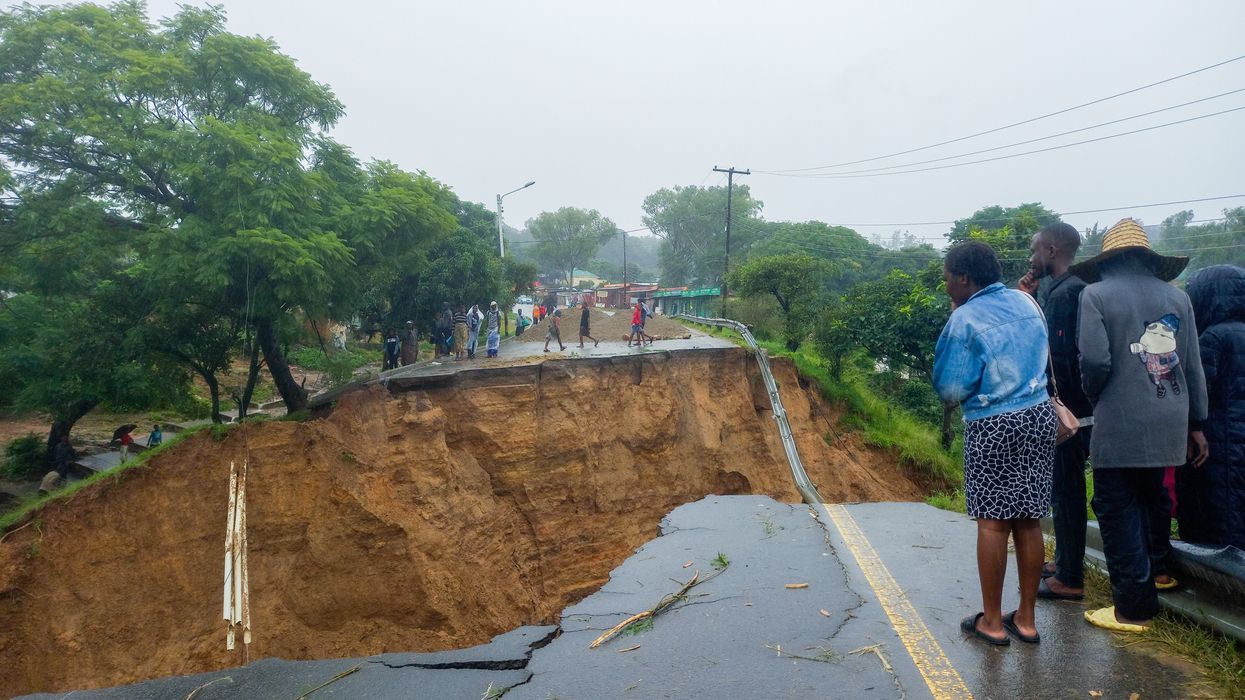
"There is a global postcode lottery that is stacked against the poor," Christian Aid's chief executive said on the publication of the charity's annual list of the year's costliest climate-driven disasters.
Christian Aid's annual list of the 20 costliest climate crisis-driven disasters of 2023, published Wednesday, reveals a "double injustice," as populations that have emitted relatively little greenhouse gas disproportionately suffer the impacts of extreme weather events ranging from floods to storms to wildfires.
While the disasters on the list impacted low-, medium-, and high-income countries, the U.K.-based charity observed that people in low-income nations have fewer resources to recover.
"When it comes to the climate crisis, there is a global postcode lottery that is stacked against the poor," Christian Aid chief executive Patrick Watt said in a statement. "In poorer countries, people are often less prepared for climate-related disasters and have fewer resources with which to bounce back. The upshot is that more people die, and recovery is slower and more unequal."
The disasters on the list reflect an accelerating climate emergency, as 2023 is set to be the hottest year both on the official record and in 125,000 years of human history.
"The effects of climate change are increasingly obvious, not least in the increasing frequency and severity of climate related disasters," Watt wrote in the report foreword. "Floods, storms, heatwaves, and droughts are all becoming more intense, and climate attribution science is becoming clearer that climate change is causing these more intense disasters."
The report focuses on disasters whose increased frequency or intensity have been linked to the burning of fossil fuels, excluding events like earthquakes. It draws primarily on the EM-DAT database of international disasters, supplementing with data from individual countries, insurers, and the United Nations. It then determines their per capita cost by dividing total damages by the impacted population.
"The worst negative impact of Cyclone Freddy that I shall never forget in my entire life is the destruction of the only house that we struggled to construct."
"This method offers a more individualized perspective of the disaster's impact, highlighting the financial strain on the average citizen rather than just the aggregate economic toll," the report authors explained.
The costliest climate disaster of 2023 was the wildfire that devastated Maui from August 8 to 11. The report found that the fires had a per capita cost of $4,161 for the people of Hawaii. While Hawaii is part of the U.S., a wealthy country, other commenters have noted that the fire reflected the legacy of the colonialism inflicted on Indigenous Hawaiians and land-use changes that favored first agricultural plantations and then tourism over maintaining a healthy ecosystem. Locals and climate justice advocates voiced concerns that the affected area would be rebuilt in the interests of wealthy developers rather than surviving residents.
Other headline-making disasters on the list included the flooding that inundated Libya in September and Cyclone Freddy in Malawi, which was the second deadliest cyclone in Africa since 2000.
Christian Aid's full list of the 20 costliest disasters of 2023 and their per capital price tag is as follows:
The report authors pointed out that per capita costs tend to be higher in wealthier countries that have higher costs of living and more insurance data to inform figures. This does not always reflect the relative impact of a disaster on a population. For example, a full recovery from Storm Freddy in Malawi is estimated to cost $680 million.
"Given the scale of the disaster, and the huge number of people affected, this may seem like a relatively low amount," the report authors noted, "but since the total of economy of Malawi is $13 billion, it represents 5%, a much higher proportion than in most other disasters on our list."
The per-person cost of that full recovery comes out to $33, which seems small by U.S. standards but amounts to more than 5% of the average annual income of $500 in Malawi.
"The worst negative impact of Cyclone Freddy that I shall never forget in my entire life is the destruction of the only house that we struggled to construct," 69-year-old widow and storm survivor Mofolo Chikaonda told Christian Aid.
Watt wrote in the foreword that "the fact that poorer countries and communities contribute little to global heating makes climate-related disasters a double inequality. This is an injustice that a growing number of poorer countries and civil society campaigners have rightly challenged."
The charity made several recommendations for the international community to prepare for and address climate disasters in a just manner.
"Governments urgently need to take further action at home and internationally to cut emissions and adapt to the effects of climate change," Watt said. "And where the impacts go beyond what people can adapt to, the loss and damage fund must be resourced to compensate the poorest countries for the effects of a crisis that isn't of their making."
A loss and damage fund to help poorer nations pay for the inevitable impacts of the climate crisis was agreed to at the 27th annual U.N. Climate Change Conference (COP27) in 2022 and had its details finalized at this year's COP28 in Dubai.
"Loss and damage costs are in the hundreds of billions of dollars annually in developing countries alone," Nushrat Chowdhury, Christian Aid's climate justice policy adviser in Bangladesh, said in a statement. "Wealthy nations must commit the new and additional money required to ensure the loss and damage fund agreed at COP28 can be quickly get help to those that need it most."
Christian Aid said that countries should agree on a New Collective Quantified Goal to fully fund climate mitigation, adaptation, and loss and damage; make sure poorer nations can quickly access the new loss and damage fund as it becomes operational in 2024; make vulnerable communities more resilient by investing in solutions like agroecology; increase funding for early warning and response systems; measure the impacts of disasters and share their findings; and establish social services at home to assist disaster victims while providing poorer nations with the debt relief, funding, and tax-rule reform they need so they can afford to help their own populations.

Christian Aid said its new report is "hopefully a wake-up call for politicians to take urgent climate action in 2023."
A faith-based coalition's annual report on the economic impact of climate-driven natural disasters revealed Tuesday that each of the costliest extreme weather events of 2022 caused more than $3 billion in damage.
The report—entitled Counting the Cost 2022: A Year of Climate Breakdown—was published by Christian Aid, a London-based relief agency of over 40 U.K. and Irish churches seeking more urgent climate action by Global North nations, which are most responsible for the greenhouse emissions that fuel global heating.
"Without major cuts in greenhouse gas emissions, this human and financial toll will only increase."
The costliest disaster in this year's report, Hurricane Ian, struck Cuba and the southeastern United States, killing more than 150 people in both countries, causing around $100 billion in damage, and displacing 40,000 people.
Other major natural disasters covered in the report include the floods in Pakistan that killed over 1,700 people while displacing seven million others and causing $30 billion in economic damage, and the European drought and heatwave, which killed more than 1,000 people and cost around $20 billion.
The report's contributors note that most of the damage estimates are based solely on insured losses and that the true financial cost of each event is likely even higher.
"The number of extreme weather events we have seen across the globe in both 2021 and again in 2022 should be a wake-up call to the international community," Newcastle University School of Engineering professor Hayley Fowler, who specializes in the impacts of climate change, said in a statement.
Christian Aid CEO Patrick Watt said that "having 10 separate climate disasters in the last year that each cost more than $3 billion points to the financial cost of inaction on the climate crisis."
"But behind the dollar figures lie millions of stories of human loss and suffering," he added. "Without major cuts in greenhouse gas emissions, this human and financial toll will only increase."
Christian Aid said the report underscores the importance of urgent climate action, including the speedy implementation of the loss and damage fund recently agreed upon at the COP27 climate summit in Egypt. Described by proponents as a form of climate reparations, the fund will be financed by wealthy nations in order to help countries of the Global South—which are least responsible for the planetary emergency—mitigate climate impacts.
"The creation of the loss and damage fund at the COP27 climate summit was a huge breakthrough for people living on the frontlines of this crisis. This report shows just how badly it is needed and the urgency with which we need to see it up and running," said Nushrat Chowdhury, Christian Aid's climate justice policy adviser in Bangladesh. "The people flooded in Pakistan or victims of Cyclone Sitrang in my country of Bangladesh need this support to rebuild their lives."
"Many people in the Global South dealing with these disasters cannot afford insurance to cover their losses and they often can't rely on the state to act as a safety net," Chowdhury added. "The fact they have done almost nothing to cause the climate emergency is why it is so unfair they are left to suffer without support. We must see that change in 2023."