SUBSCRIBE TO OUR FREE NEWSLETTER
Daily news & progressive opinion—funded by the people, not the corporations—delivered straight to your inbox.
5
#000000
#FFFFFF
To donate by check, phone, or other method, see our More Ways to Give page.
Daily news & progressive opinion—funded by the people, not the corporations—delivered straight to your inbox.
"The human suffering caused by the climate crisis reflects political choices. There is nothing natural about the growing severity and frequency of droughts, floods and storms," said the CEO of Christian Aid.
Climate disasters aren't cheap. In 2024, the 10 costliest extreme weather events not only extracted a toll in the form of human lives, but also each cost over $4 billion in economic damages—and some much more—according to a report released Monday from the global group Christian Aid.
"The human suffering caused by the climate crisis reflects political choices. There is nothing natural about the growing severity and frequency of droughts, floods and storms," said Christian Aid CEO Patrick Watt in a statement Monday.
"Disasters are being supercharged by decisions to keep burning fossil fuels, and to allow emissions to rise. And they're being made worse by the consistent failure to deliver on financial commitments to the poorest and most climate-vulnerable countries," he continued.
According to the report, the costliest climate disasters in terms of economic cost this year, in ascending order, were: Valencia floods in Spain; Bavaria floods in Germany; Rio Grande do Sul floods in Brazil; Storm Boris in Central Europe; Hurricane Beryl in the U.S., Mexico, and Caribbean islands; Typhoon Yagi in Southwest Asia; China floods in China; Hurricane Helene in the U.S., Mexico, and Cuba; Hurricane Milton in the U.S.; and U.S. storms in the United States.
Two items on the list—"China floods" and "U.S. storms"—are not a single event. The China floods refer to flood events across China that happened in June and July, and U.S. storms are all storms classified by the global professional services firm Aon as "severe convective storm" for the period between January and September, according to the report.
These U.S. storms, the most expensive climate disaster of 2024, amounted to over $60 billion in economic costs and 88 deaths, per the report. The second costliest, Hurricane Milton, caused 25 deaths and $60 billion in economic losses.
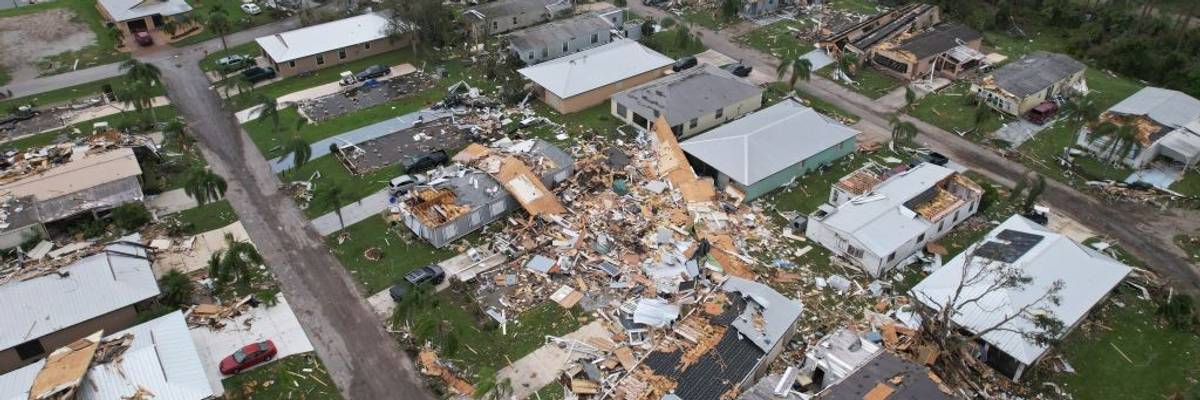
Hurricane Milton, which made landfall in Florida, was made worse by fossil fuel emissions: "In a world without climate change, Hurricane Milton would have made landfall as a Category 2 storm. Instead, it struck as a Category 3 hurricane, with stronger winds and more intense rainfall, causing extensive tornado activity, and damaging infrastructure in regions still recovering from previous hurricanes."
Specifically, "a rapid analysis by Climate Central showed that the unusually warm ocean temperatures, which fueled the hurricane's rapid intensification, were made 400-800 times more likely by climate change over the two weeks preceding the storm," according to the report.
The report's authors also caveat that the losses tallied in the document are likely an undercount. Most of the costs estimates are based on insured losses, meaning that the true financial costs are likely to be even higher (for example, it does not include economic costs stemming from crop production losses). Human costs are also often undercounted, the report's authors state.
Another important piece of context is that economic costs are generally higher in absolute terms for richer countries because the value of infrastructure and private property tends to be higher, living costs are greater, and more is covered by insurance—meaning losses are more calculable in financial terms, per the report. However, the death toll tends to be higher in poorer countries.
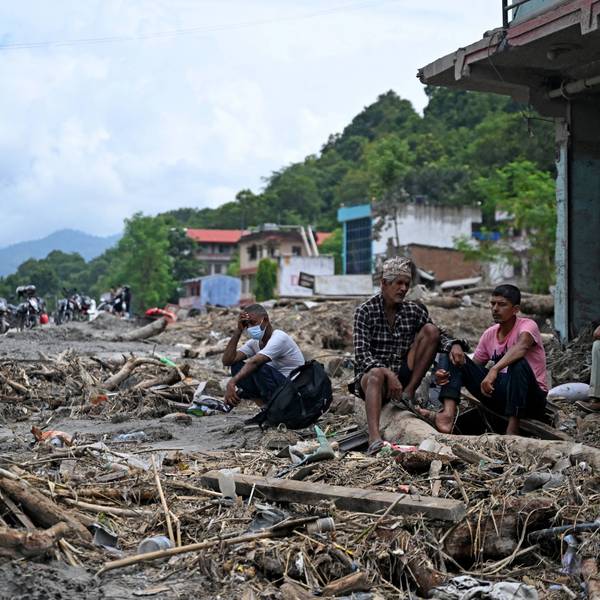
The deadliest climate disaster, according to the report, was Typhoon Yagi, which came in as the fifth most expensive climate disaster in terms of economic cost, and caused the deaths of over 829 people. The typhoon struck multiple countries in southeast Asia, causing landslides, flooding, and infrastructure damage in places including the Philippines, Laos, Vietnam, Myanmar, and Thailand. In Myanmar, for example, it devastated entire villages and decimated over 2.3 million hectares of agricultural land.
In its Monday statement, Christian Aid highlighted that "some of the most devastating extreme weather events in 2024 hit poorer nations, which have contributed little to causing the climate crisis and have the least resources to respond."
To that end, the group is calling on Global North countries to increase their commitment to climate finance and cease development of new fossil fuel projects.
The report also includes additional information about disasters that didn't make it into the top ten for economic damages, but are still of note. They include a drought that impacted countries in southern Africa between February and July and floods impacting Afghanistan and Pakistan between March and September.
Dear Common Dreams reader, It’s been nearly 30 years since I co-founded Common Dreams with my late wife, Lina Newhouser. We had the radical notion that journalism should serve the public good, not corporate profits. It was clear to us from the outset what it would take to build such a project. No paid advertisements. No corporate sponsors. No millionaire publisher telling us what to think or do. Many people said we wouldn't last a year, but we proved those doubters wrong. Together with a tremendous team of journalists and dedicated staff, we built an independent media outlet free from the constraints of profits and corporate control. Our mission has always been simple: To inform. To inspire. To ignite change for the common good. Building Common Dreams was not easy. Our survival was never guaranteed. When you take on the most powerful forces—Wall Street greed, fossil fuel industry destruction, Big Tech lobbyists, and uber-rich oligarchs who have spent billions upon billions rigging the economy and democracy in their favor—the only bulwark you have is supporters who believe in your work. But here’s the urgent message from me today. It's never been this bad out there. And it's never been this hard to keep us going. At the very moment Common Dreams is most needed, the threats we face are intensifying. We need your support now more than ever. We don't accept corporate advertising and never will. We don't have a paywall because we don't think people should be blocked from critical news based on their ability to pay. Everything we do is funded by the donations of readers like you. When everyone does the little they can afford, we are strong. But if that support retreats or dries up, so do we. Will you donate now to make sure Common Dreams not only survives but thrives? —Craig Brown, Co-founder |
Climate disasters aren't cheap. In 2024, the 10 costliest extreme weather events not only extracted a toll in the form of human lives, but also each cost over $4 billion in economic damages—and some much more—according to a report released Monday from the global group Christian Aid.
"The human suffering caused by the climate crisis reflects political choices. There is nothing natural about the growing severity and frequency of droughts, floods and storms," said Christian Aid CEO Patrick Watt in a statement Monday.
"Disasters are being supercharged by decisions to keep burning fossil fuels, and to allow emissions to rise. And they're being made worse by the consistent failure to deliver on financial commitments to the poorest and most climate-vulnerable countries," he continued.
According to the report, the costliest climate disasters in terms of economic cost this year, in ascending order, were: Valencia floods in Spain; Bavaria floods in Germany; Rio Grande do Sul floods in Brazil; Storm Boris in Central Europe; Hurricane Beryl in the U.S., Mexico, and Caribbean islands; Typhoon Yagi in Southwest Asia; China floods in China; Hurricane Helene in the U.S., Mexico, and Cuba; Hurricane Milton in the U.S.; and U.S. storms in the United States.
Two items on the list—"China floods" and "U.S. storms"—are not a single event. The China floods refer to flood events across China that happened in June and July, and U.S. storms are all storms classified by the global professional services firm Aon as "severe convective storm" for the period between January and September, according to the report.
These U.S. storms, the most expensive climate disaster of 2024, amounted to over $60 billion in economic costs and 88 deaths, per the report. The second costliest, Hurricane Milton, caused 25 deaths and $60 billion in economic losses.
Hurricane Milton, which made landfall in Florida, was made worse by fossil fuel emissions: "In a world without climate change, Hurricane Milton would have made landfall as a Category 2 storm. Instead, it struck as a Category 3 hurricane, with stronger winds and more intense rainfall, causing extensive tornado activity, and damaging infrastructure in regions still recovering from previous hurricanes."
Specifically, "a rapid analysis by Climate Central showed that the unusually warm ocean temperatures, which fueled the hurricane's rapid intensification, were made 400-800 times more likely by climate change over the two weeks preceding the storm," according to the report.
The report's authors also caveat that the losses tallied in the document are likely an undercount. Most of the costs estimates are based on insured losses, meaning that the true financial costs are likely to be even higher (for example, it does not include economic costs stemming from crop production losses). Human costs are also often undercounted, the report's authors state.
Another important piece of context is that economic costs are generally higher in absolute terms for richer countries because the value of infrastructure and private property tends to be higher, living costs are greater, and more is covered by insurance—meaning losses are more calculable in financial terms, per the report. However, the death toll tends to be higher in poorer countries.
The deadliest climate disaster, according to the report, was Typhoon Yagi, which came in as the fifth most expensive climate disaster in terms of economic cost, and caused the deaths of over 829 people. The typhoon struck multiple countries in southeast Asia, causing landslides, flooding, and infrastructure damage in places including the Philippines, Laos, Vietnam, Myanmar, and Thailand. In Myanmar, for example, it devastated entire villages and decimated over 2.3 million hectares of agricultural land.
In its Monday statement, Christian Aid highlighted that "some of the most devastating extreme weather events in 2024 hit poorer nations, which have contributed little to causing the climate crisis and have the least resources to respond."
To that end, the group is calling on Global North countries to increase their commitment to climate finance and cease development of new fossil fuel projects.
The report also includes additional information about disasters that didn't make it into the top ten for economic damages, but are still of note. They include a drought that impacted countries in southern Africa between February and July and floods impacting Afghanistan and Pakistan between March and September.
Climate disasters aren't cheap. In 2024, the 10 costliest extreme weather events not only extracted a toll in the form of human lives, but also each cost over $4 billion in economic damages—and some much more—according to a report released Monday from the global group Christian Aid.
"The human suffering caused by the climate crisis reflects political choices. There is nothing natural about the growing severity and frequency of droughts, floods and storms," said Christian Aid CEO Patrick Watt in a statement Monday.
"Disasters are being supercharged by decisions to keep burning fossil fuels, and to allow emissions to rise. And they're being made worse by the consistent failure to deliver on financial commitments to the poorest and most climate-vulnerable countries," he continued.
According to the report, the costliest climate disasters in terms of economic cost this year, in ascending order, were: Valencia floods in Spain; Bavaria floods in Germany; Rio Grande do Sul floods in Brazil; Storm Boris in Central Europe; Hurricane Beryl in the U.S., Mexico, and Caribbean islands; Typhoon Yagi in Southwest Asia; China floods in China; Hurricane Helene in the U.S., Mexico, and Cuba; Hurricane Milton in the U.S.; and U.S. storms in the United States.
Two items on the list—"China floods" and "U.S. storms"—are not a single event. The China floods refer to flood events across China that happened in June and July, and U.S. storms are all storms classified by the global professional services firm Aon as "severe convective storm" for the period between January and September, according to the report.
These U.S. storms, the most expensive climate disaster of 2024, amounted to over $60 billion in economic costs and 88 deaths, per the report. The second costliest, Hurricane Milton, caused 25 deaths and $60 billion in economic losses.
Hurricane Milton, which made landfall in Florida, was made worse by fossil fuel emissions: "In a world without climate change, Hurricane Milton would have made landfall as a Category 2 storm. Instead, it struck as a Category 3 hurricane, with stronger winds and more intense rainfall, causing extensive tornado activity, and damaging infrastructure in regions still recovering from previous hurricanes."
Specifically, "a rapid analysis by Climate Central showed that the unusually warm ocean temperatures, which fueled the hurricane's rapid intensification, were made 400-800 times more likely by climate change over the two weeks preceding the storm," according to the report.
The report's authors also caveat that the losses tallied in the document are likely an undercount. Most of the costs estimates are based on insured losses, meaning that the true financial costs are likely to be even higher (for example, it does not include economic costs stemming from crop production losses). Human costs are also often undercounted, the report's authors state.
Another important piece of context is that economic costs are generally higher in absolute terms for richer countries because the value of infrastructure and private property tends to be higher, living costs are greater, and more is covered by insurance—meaning losses are more calculable in financial terms, per the report. However, the death toll tends to be higher in poorer countries.
The deadliest climate disaster, according to the report, was Typhoon Yagi, which came in as the fifth most expensive climate disaster in terms of economic cost, and caused the deaths of over 829 people. The typhoon struck multiple countries in southeast Asia, causing landslides, flooding, and infrastructure damage in places including the Philippines, Laos, Vietnam, Myanmar, and Thailand. In Myanmar, for example, it devastated entire villages and decimated over 2.3 million hectares of agricultural land.
In its Monday statement, Christian Aid highlighted that "some of the most devastating extreme weather events in 2024 hit poorer nations, which have contributed little to causing the climate crisis and have the least resources to respond."
To that end, the group is calling on Global North countries to increase their commitment to climate finance and cease development of new fossil fuel projects.
The report also includes additional information about disasters that didn't make it into the top ten for economic damages, but are still of note. They include a drought that impacted countries in southern Africa between February and July and floods impacting Afghanistan and Pakistan between March and September.