
SUBSCRIBE TO OUR FREE NEWSLETTER
Daily news & progressive opinion—funded by the people, not the corporations—delivered straight to your inbox.
5
#000000
#FFFFFF
To donate by check, phone, or other method, see our More Ways to Give page.


Daily news & progressive opinion—funded by the people, not the corporations—delivered straight to your inbox.
"If there's ever been a time to discuss serious campaign finance reform, it is now," one advocate said. "We are sliding into a new era of American oligarchy, and unless we take decisive action, the integrity of our democracy is at risk."
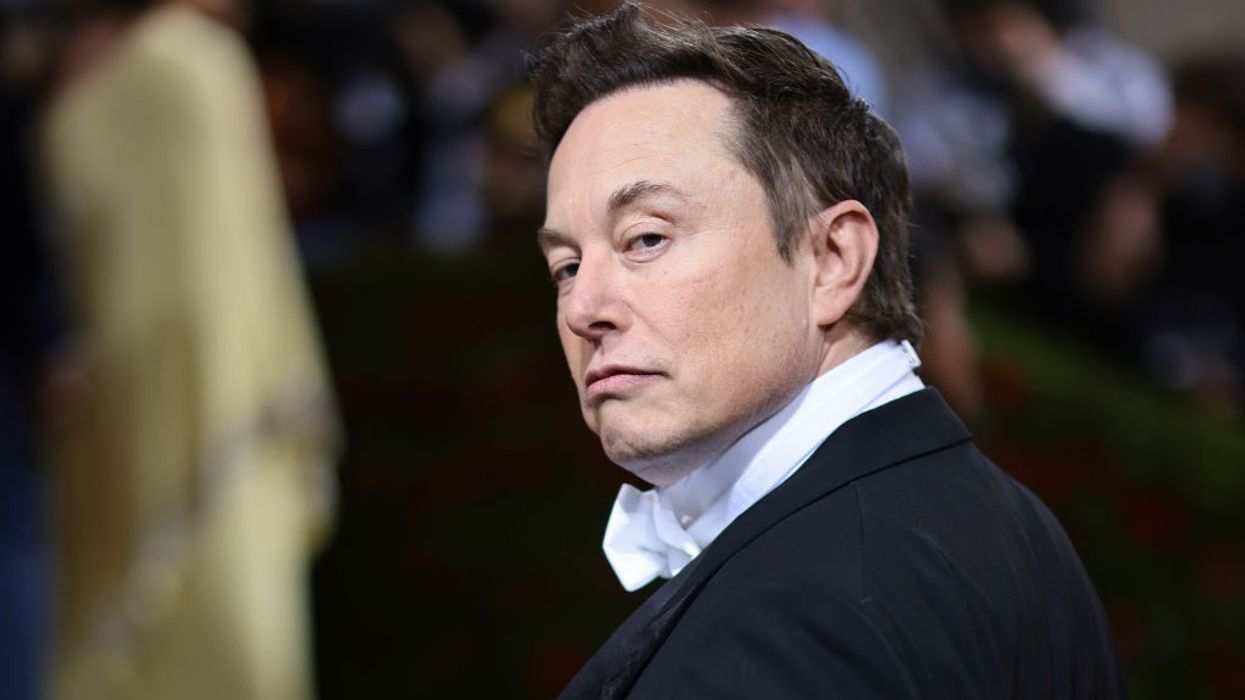
Trump-backer and richest person alive Elon Musk's role in almost forcing a government shutdown this week has revived calls for campaign finance reform, both nationally and within the Democratic Party.
As part of his campaign against a bipartisan continuing resolution (CR) that would have funded the government through March 14, Musk said that Republicans who voted for the bill should lose their seats during the 2026 midterms and that he would fund moderate primary challengers to Democrats in safe districts.
"The threat of limitless super-PAC spending from the world's wealthiest man could have proven enough to shut down the federal government days before Christmas," Joseph Geevarghese, the executive director of Our Revolution, told Common Dreams. "If there's ever been a time to discuss serious campaign finance reform, it is now. We are sliding into a new era of American oligarchy, and unless we take decisive action, the integrity of our democracy is at risk."
"How about the House add campaign finance reform to the CR so Republicans and Democrats alike can stop being so scared about what a billionaire man-child thinks before they vote on anything around here?"
Before the shutdown showdown, Musk was already incredibly influential in politics as a financial backer: He spent at least $277 million on the campaigns of President-elect Donald Trump and other Republicans in 2024, including over $19 million on House races alone. Musk also spoke at Trump campaign rallies and was tapped by the president-elect to co-lead a new Department of Government Efficiency with fellow billionaire Vivek Ramaswamy.
However, his efforts to sink a spending bill revealed by House Speaker Mike Johnson (R-La.) on Tuesday raised fresh concerns about his influence on elected politicians. His initial barrage of complaints against the CR—posted on his social media site X on Wednesday—precipitated a statement against the bill by Trump and Vice President-elect JD Vance. Johnson never brought the bill up for a vote.
As part of his initial Wednesday tweet storm, Musk wrote, "Any member of the House or Senate who votes for this outrageous spending bill deserves to be voted out in 2 years!"
In response to Musk's threats, Rep. Richard Neal (D-Mass.), the ranking member of the Ways and Means Committee, gave an impassioned speech on the House floor on Thursday.
"Can you image what the next two years are going to be like if every time that Congress works its will and then there's a tweet? Or from an individual who has no official portfolio, who threatens members on the Republican side with a primary and they succumb?" Neal said.
Musk, in response to a video of Neal's speech, tweeted, "Oh… forgot to mention that I'm also going to be funding moderate candidates in heavily Democrat districts, so that the country can get rid of those who don't represent them, like this jackass."
The statement sparked outrage and resistance from congressional Democrats.
"Everyone knows I'm always ready," Neal told Business Insider, while the Democrats on the Ways and Means Committee tweeted out sarcastic memes.
Rep. Alexandria Ocasio-Cortezcalled for change on social media on Friday, writing, "How about the House add campaign finance reform to the CR so Republicans and Democrats alike can stop being so scared about what a billionaire man-child thinks before they vote on anything around here?"
Ultimately, after another Republican-led spending bill failed to clear the House on Thursday, Johnson introduced a paired-down CR that included key measures backed by Democrats such as relief for disaster victims and aid for farmers. That bill passed the House on Friday and the Senate early Saturday, narrowly averting a government shutdown that would have deprived hundreds of thousands of federal employees of paychecks over the holidays.
But Musk's intervention established a precedent "that should upset every American who believes in our democratic form of government," Sen. Bernie Sanders (I-Vt.) said.
"Musk is getting carried away with himself, using his limitless fortune and his ownership of X to try to turn American politics to the authoritarian right," former U.S. Labor Secretary Robert Reichwrote on his Substack on Friday.
" Wealth inequality is rapidly undermining our democracy," Reich continued. "Musk is the poster boy for a wealth tax."
Musk's primary challenge to Neal bolstered calls for the Democratic National Committee (DNC) to ban super-PAC spending in its primaries.
"Elon Musk, worth $455 billion, spent $277 million to buy the Republican Party," Sanders staff director Warren Gunnels wrote on social media on Friday. "He has also pledged to replace Democrats in primaries with those who represent his special interests. If the DNC doesn't ban super PACs in primaries, what will this picture look like in 2 years?"
Reich also argued that "the DNC must bar dark money and limit campaign contributions in all Democratic primary campaigns. The incoming chair of the DNC, selected on February 1, should make this a key part of their strategy for the 2026 midterms and beyond."
"Our greatest hope is to restore people's faith in our democracy and increase participation across the board," said the chair of the campaign behind the measure likely bound for the U.S. Supreme Court.
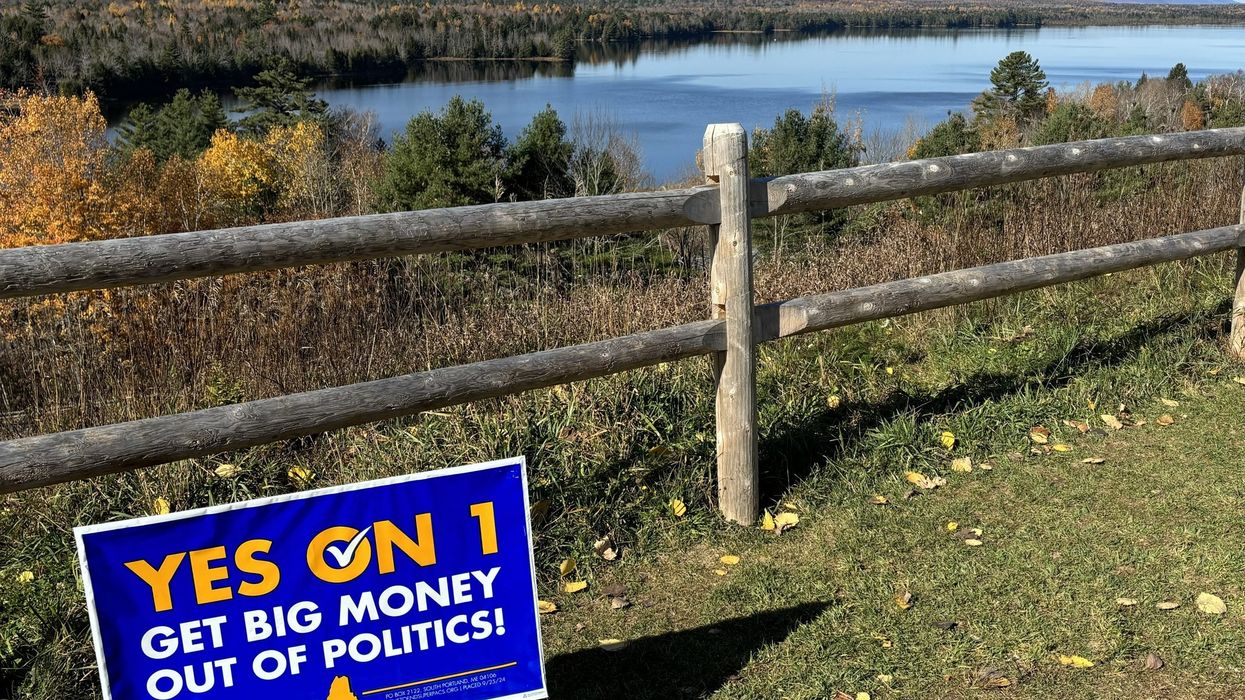
As billionaire-backed Republicans dominated U.S. elections on Tuesday, voters in Maine—among the top 10 states in terms of smallest populations—overwhelmingly approved a ballot measure to limit political spending, an initiative that could reach the country's top court.
Maine Question 1 targets super political action committees (PACs), dark money groups that, for the most part, are barred from directly contributing to or coordinating with a candidate but can raise and spend unlimited amounts of funds.
Question 1 asked Mainers, "Do you want to set a $5,000 limit for giving to political action committees that spend money independently to support or defeat candidates for office?"
WMTW reported earlier this year that "the $5,000 contributions cap would only apply to state races, not United States House or Senate races."
As of Wednesday afternoon, the measure had passed 531,573 to 186,707, or 74% to 26%, with 89% of the estimated vote reported, according to The New York Times.
"When the Supreme Court affirms what Maine voters have done, it could end super PACs everywhere."
"We're grateful to the Maine people for once again leading the way to help fix our broken political system," said Cara McCormick, chair of Maine Citizens to End Super PACs, which collected signatures to get the citizen-initiated measure on the ballot.
"The Maine people deserve a system that is not only free from corruption, but also free from the appearance of corruption," McCormick added. "Our greatest hope is to restore people's faith in our democracy and increase participation across the board."
The campaign highlighted that "some of America's leading constitutional law experts—Laurence Tribe, Lawrence Lessig, Neal Katyal, Al Alschuler, and others—have argued that Question 1 is the most immediate pathway to ending super PACs, the biggest source of dark money in elections."
Welcoming the measure's passage, Lessig declared Wednesday that "this is a great gift from Maine to democracy in America."
"We expect this initiative will be challenged," he explained. "But when the Supreme Court affirms what Maine voters have done, it could end super PACs everywhere."
As Maine Morning Star detailed Wednesday:
Since Buckley v. Valeo in 1976, the Supreme Court has allowed contributions to be regulated when there is a risk of "quid pro quo" corruption, essentially a favor for a favor. In the case of elections, if there is a risk someone could be making a donation to a candidate in exchange for a favor, only then can Congress regulate that contribution. In 2010, the Supreme Court extended this reasoning to corporations and unions in Citizens United v. Federal Election Campaign Act.
Three months later, in SpeechNow.org v. FEC, the U.S. Court of Appeals for the District of Columbia Circuit upheld that contributions to groups making independent expenditures can't corrupt or create the appearance of corruption. That decision essentially created the "super PAC," which can receive unlimited contributions but can’t contribute directly to candidates. Other lower federal and state courts followed suit, and the ruling was never reviewed by the Supreme Court.
The editorial boards of both the Bangor Daily News and Portland Press Herald backed the ballot measure, with the latter writing last month that "ours would be the first state in the nation since the Supreme Court's Citizens United ruling in 2010 to move to limit contributions to PACs that can make independent expenditures."
"We believe that political spending has spiraled out of control, in many cases, and that the absence of any limit on PACs is inappropriate and leaves America's system of campaigning and voting vulnerable to the whims of bad actors," the board argued. "If Maine can play a leading role in bringing some order and fairness to political spending nationally, we should seize the chance."
Gov. Tim Walz, a Democrat, has promised to sign the Democracy for the People Act "to put up a firewall to keep Minnesota's elections safe, free, and fair."
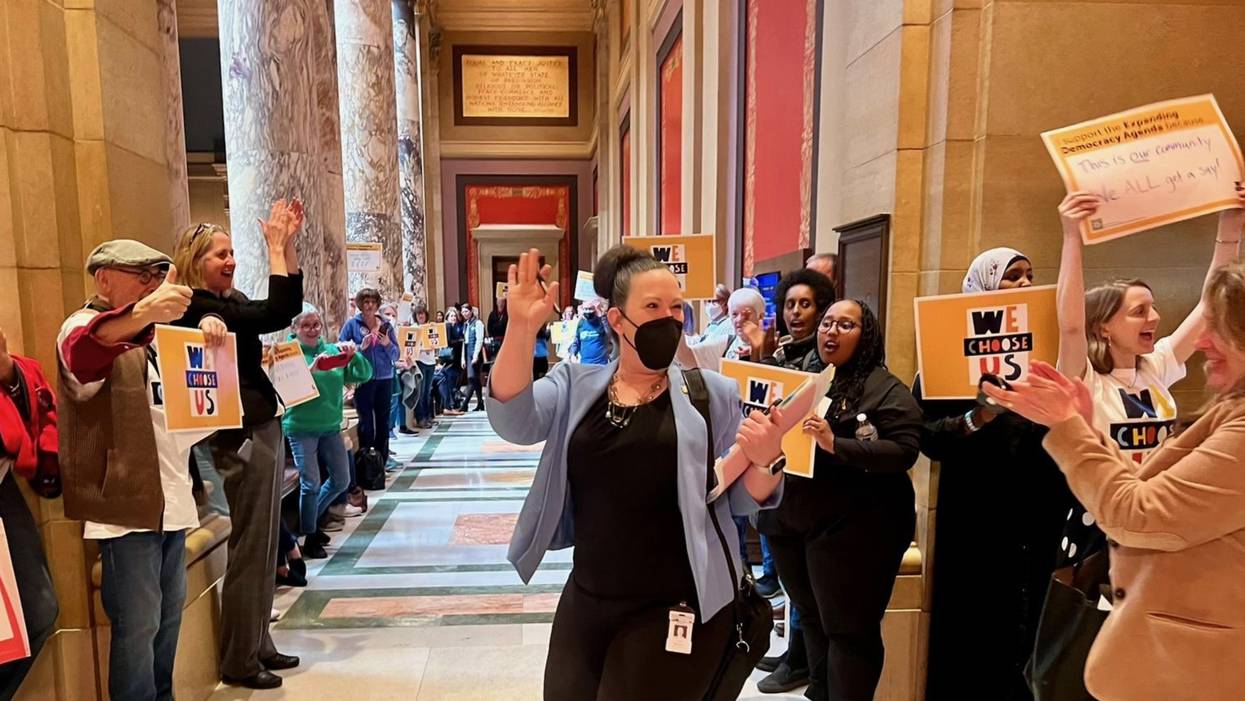
Campaign finance reform advocates on Thursday cheered final passage by legislators in Minnestoa of a bill prohibiting multinational corporations from spending money on state elections.
In a late-night 34-33 vote, the Minnesota Senate on Wednesday approved the Democracy for the People Act, an omnibus democracy bill that will ban companies with at least a 5% ownership stake by multiple foreign owners or a 1% stake by a single foreign owner from making political contributions in Minnesota state and municipal elections. The legislation also prohibits such companies from making "dark money" donations to super PACs.
"If there was a Mount Rushmore for electoral reform bills in the history of Minnesota... this would be on it," said Minnesota Secretary of State Steve Simon, a Democrat.
The measure—which was approved 70-57 along party lines by the state House of Representatives earlier this month—now heads to the desk of Gov. Tim Walz, a Democrat who has promised to sign it into law "to put up a firewall to keep Minnesota's elections safe, free, and fair."
"Multinational corporations are corrupting representative democracy by drowning out the voices of the people," said Alexandra Flores-Quilty, campaign director at Free Speech For People, whose model legislation heavily influenced the bill. "The Democracy for the People Act will help put power back in the hands of citizens."
According to the Center for American Progress (CAP):
This legislation will close a dangerous loophole opened by the U.S. Supreme Court's decision in Citizens United v. Federal Election Commission and reduce foreign influence in Minnesota's elections. It contains additional important measures to strengthen the freedom to vote and modernize the state's campaign finance system, including establishing automatic voter registration, enabling voters to opt in to automatically receive a mail-in ballot for each election, preregistering 16- and 17-year-olds to vote upon turning 18, prohibiting intimidation and interference with the voting process, and increasing disclosure of secret political spending.
"Today, Minnesota took a giant step forward to strengthening free and fair elections, setting a strong example for the nation," CAP senior fellow Michael Sozan said in a statement following the state Senate vote.
"At a time when many states are passing laws to suppress voters or subvert elections, Minnesota has become a national leader in protecting elections and empowering voters," Sozan added. "The provision to stop political spending by foreign-influenced U.S. corporations will limit the ability of foreign entities to spend money in Minnesota's elections and strengthen the ability of Minnesotans to chart their state's future."
There has been some momentum toward enacting similar legislation at the national level in recent years, including Sen. Elizabeth Warren's (D-Mass.) Anti-Corruption and Public Integrity Act, and Rep. Jamie Raskin's (D-Md.) Get Foreign Money Out of U.S. Elections Act.
As we head toward the Democratic National Convention, I often hear the question, "What does Bernie want?" Wrong question. The right question is what the 12 million Americans who voted for a political revolution want.
And the answer is: They want real change in this country, they want it now and they are prepared to take on the political cowardice and powerful special interests which have prevented that change from happening.
"What do we want? We want to end the rapid movement that we are currently experiencing toward oligarchic control of our economic and political life."
They understand that the United States is the richest country in the history of the world, and that new technology and innovation make us wealthier every day. What they don't understand is why the middle class continues to decline, 47 million of us live in poverty and many Americans are forced to work two or three jobs just to cobble together the income they need to survive.
What do we want? We want an economy that is not based on uncontrollable greed, monopolistic practices and illegal behavior. We want an economy that protects the human needs and dignity of all people -- children, the elderly, the sick, working people and the poor. We want an economic and political system that works for all of us, not one in which almost all new wealth and power rests with a handful of billionaire families.
The current campaign finance system is corrupt. Billionaires and powerful corporations are now, through super PACs, able to spend as much money as they want to buy elections and elect candidates who represent their interests, not the American people. Meanwhile, we have one of the lowest voter turnout rates of any major country on earth, and Republican governors are working overtime to suppress the vote and make it harder for poor people, people of color, seniors and young people to vote.
What do we want? We want to overturn the disastrous Citizens United Supreme Court decision and move toward public funding of elections. We want universal voter registration, so that anyone 18 years of age or older who is eligible to vote is automatically registered. We want a vibrant democracy and a well-informed electorate that knows that its views can shape the future of the country.
Our criminal justice system is broken. We have 2.2 million people rotting behind bars at an annual expense of $80 billion. Youth unemployment in a number of inner-cities and rural communities is 30 to 50 percent, and millions of young people have limited opportunities to participate in the productive economy. Failing schools all around the country produce more people who end up in jail than those who graduate college. Millions of Americans have police records as a result of marijuana possession, which should be decriminalized. And too many people are serving unnecessarily long mandatory minimum sentences.
What do we want? We want a criminal justice system that addresses the causes of incarceration, not one that simply imprisons more people. We want to demilitarize local police departments, see local police departments reflect the diversity of the communities they serve and end private ownership of prisons and detention centers. We want to create the conditions that allow people who are released from prison to stay out. We want the best-educated population on earth, not the most incarcerated population.
The debate is over. Climate change is real. It is caused by human activity, and it already is causing devastating damage in our country and to the entire planet. If present trends continue, scientists tell us the planet will be 5 to 10 degrees Fahrenheit warmer by the end of the century -- which means more droughts, floods, extreme weather disturbances, rising sea levels and acidification of the oceans. This is a planetary crisis of extraordinary magnitude.
What do we want? We want the United States to lead the world in pushing our energy system away from fossil fuel and toward energy efficiency and sustainable energy. We want a tax on carbon, the end of fracking and massive investment in wind, solar, geothermal and other sustainable technologies. We want to leave this planet in a way that is healthy and habitable for future generations.
What do we want? We want to end the rapid movement that we are currently experiencing toward oligarchic control of our economic and political life. As Lincoln put it at Gettysburg, we want a government of the people, by the people and for the people. That is what we want, and that is what we will continue fighting for.
Many years ago, I worked on a documentary about the how and why of political TV ads. The primary focus was on two media consultants: the late Bob Squier, a Democrat, and Bob Goodman, a Republican.
One ad of which Goodman was incredibly proud was for a fellow in Kentucky running against Todd Hollenbach, Sr., the incumbent judge/executive of Jefferson County. Produced in 1977, the spot featured a farmer complaining about taxes that he claimed Judge Hollenbach had raised and then lied about.
As he mucked out a barn and his faithful horse whinnied, the farmer declared, "Maybe Hollenbach ought to have my job, because in my business, I deal with that kind of stuff every day."
Then he threw a shovel of manure right at the camera.
Hollenbach lost to the candidate who approved this message: Mitch McConnell.
McConnell has been shoveling it ever since, but perhaps never as stunningly as on Tuesday when he spoke from the floor of the US Senate. The now-majority leader of the so-called greatest deliberative body in the world blustered, as he has several times in the last couple of weeks, that Senate Republicans would never, ever consider an appointment by President Obama to replace the still-dead Supreme Court Justice Antonin Scalia.
The president, McConnell, said, "has every right to nominate someone, even if doing so will inevitably plunge our nation into another bitter and avoidable struggle."
Excuse me, Senator, the bitter and undeniably avoidable struggle was created by you on the Saturday that Scalia's corpse was found. The body was barely cold when you crassly announced that the duly elected President of the United States should not name the judge's successor but must leave it to the next president - more than 300 days from now.
McConnell continued, "Even if he never expects that nominee to be actually confirmed but rather to wield as an election cudgel, he certainly has the right to do that." Again, Senator, it's you who is wielding the blunt object.
And then the majority leader had the chutzpah, as they say down home in his Bluegrass State, to add that "Obama also "has the right to make a different choice. He can let the people decide and make this a legacy-building moment rather than just another campaign roadshow."
Oh, brother, look who's talking. Of all the pompous, insincere bloviation, ignoring courtesy, tradition - let alone the US Constitution - in the name of Senator McConnell's misbegotten ambitions.
Psychiatrists call this "projection," the defensive method by which people take their own negative beliefs or feelings and attribute them to someone else - otherwise known as shifting blame. In McConnell's case, add to it a megadose of the cynical manipulation and crass opportunism characteristic of most of his political career.
Not that it was always so. McConnell began his political life as a liberal Republican - remember them? -- interning for legendary Kentucky senator and statesman John Sherman Cooper. He supported the Equal Rights Amendment and collective bargaining. Friends say he was pro-Planned Parenthood, and he even wrote an op-ed piece in the Louisville Courier-Journal favoring campaign finance reform. Former McConnell press secretary Meme Sweets Runyon told Jason Cherkis and Zach Carter at The Huffington Post, "He was kind of a good-government guy. He thought the government could do good and could be a solution."
But once Mitch McConnell got to Washington as an elected senator, the mood of the Republican Party shifted right, and so did he. Delay and obstruction became stepping stones. At the same time, the man who New York Times columnist Gail Collins famously described as having "the natural charisma of an oyster" developed a Jekyll-and-Hyde style of self-serving pragmatism - bashing government from Capitol Hill but using all of its perks to bolster support among his constituents.
In 2013, Cherkis and Carter wrote:
Up until the tea party-led ban on earmarks a few years ago, McConnell played out this dichotomy across Kentucky. In Washington, he voted against a health care program for poor children. In Kentucky, he funneled money to provide innovative health services for pregnant women. In Washington, he railed against Obamacare. In Kentucky, he supported free health care and prevention programs paid for by the federal government without the hassle of a private-insurance middleman. This policy ping-pong may not suggest a coherent belief system, but it has led to loyalty among the GOP in Washington and something close to fealty in Kentucky. It has advanced McConnell's highest ideal: his own political survival.
"McConnell's hold on Kentucky is a grim reminder of the practice of power in America -- where political excellence can be wholly divorced from successful governance and even public admiration," the Huffington Post reporters continued. "The most dominant and influential Kentucky politician since his hero Henry Clay, McConnell has rarely used his indefatigable talents toward broad, substantive reforms. He may be ruling, but he's ruling over a commonwealth with the lowest median income in the country, where too many counties have infant mortality rates comparable to those of the Third World. His solutions have been piecemeal and temporary, more cynical than merciful."
And so it goes. "He privileges the scoreboard above all," The New Yorker's Evan Osnos wrote in 2014. "Asked about his ideological evolution, he explained simply, 'I wanted to win.'"
Tailoring his positions to adjust to the shifting seasons, what sets Mitch McConnell apart is that his motives aren't ideological but so baldly about holding onto personal power. His opposition to Obama's naming of a Scalia replacement puts the majority leader in solid with the far-right Republicans he purportedly so dislikes but who have threatened his job security over the last few years, both at home and in DC.
Moreover, McConnell is desperate to keep a conservative majority on the Court to preserve the unbridled flow of campaign cash that the Citizens United decision let loose and that he so successfully has tapped for himself and the GOP. Unlike the young man who penned that campaign finance reform op-ed back in Louisville, fundraising has become his favorite thing, and he's scary good at it. As his former Republican Senate colleague Alan Simpson said, "When he asked for money, his eyes would shine like diamonds. He obviously loved it."
And even if a Democrat holds onto the White House next year, chances are McConnell - the man who once said that the most important thing was to make Barack Obama a one-term president -- will still play a power broker role in determining which Supreme Court candidate will successively run the 60-vote supermajority gauntlet needed for Senate approval. It's good to be king.
But if he wants us all to wait for a Republican president to choose the next appointment to the Court, he might want to think twice. Donald Trump bows before no man - just ask him -- and he shovels muck even better than that farmer who helped Mitch McConnell win his first public office.
While the 2016 U.S. presidential election fundraising numbers released Thursday by the Bernie Sanders campaign illustrate the power of a Main Street donor base, filings from Republican Jeb Bush and Democrat Hillary Clinton show their campaigns continue to be the darlings of Wall Street.
"Wall Street remains a crucial money base for both candidates even as they try to avoid appearing too cozy with the institutions that many voters blame for crashing the economy."
--Politico
The Federal Election Commission (FEC) reports indicate that Bush and Clinton--both of whom are facing challenges from insurgent candidates--"continued to win with bankers, even as their fundraising slowed down last quarter," Politico reported Friday:
Bush collected more than $922,000 from people who said they work in finance, about even with his take from the industry in the previous quarter, and amounting to 7 percent of his total haul. Clinton trailed with some $682,000 from self-identified bankers and investors, well below the $2 million she drew from the financial industry in the second quarter, but tracking an overall decline in her take.
Wall Street remains a crucial money base for both candidates even as they try to avoid appearing too cozy with the institutions that many voters blame for crashing the economy. Marco Rubio is also making a play for finance dollars, but last quarter netted only $201,754. Ted Cruz got $255,676 from bankers and investors.
Meanwhile, Reuters zeroed in on big bank financiers, noting that Bush raked in $107,000 from employees of firms like Citigroup, Goldman Sachs, and Bank of America. Clinton took in nearly $84,000 from employees of the same banks.
The Wall Street Journal added: "Of the top 10 employers listed by Mr. Bush's donors, half are financial firms: Goldman Sachs Group Inc., Morgan Stanley, Merrill Lynch, Neuberger Berman and Barclays, where Mr. Bush previously worked as a consultant making about $2 million a year."
"No other candidates came close to Clinton and Bush," according to Reuters.
Wall Street's support for its former champion in the U.S. Senate, Clinton, is not surprising, despite her recent pledges to get tough on corporate malfeasance and Wall Street greed.
"She's doing that because of Bernie," Camden Fine, the head of the Independent Community Bankers of America, said in an interview with Morning Consult this week. "She's gonna all of a sudden become Mrs. Wall Street if she's elected. So it's all Bernie theatrics right now. She's a Clinton, for God's sake. What do you expect?"
Indeed, Sanders raised $26.2 million during the same time period, with an average donation of $30. The campaign reported that only 270 of Sanders' 680,959 donors gave the maximum $2,700 allowed, while 77 percent gave $200 or less.
"What is really remarkable is the breadth of support for Bernie from so many people responding to his call for a political revolution to stand up for the middle class and take on the billionaire class," said campaign manager Jeff Weaver.
"Bernie's big base of small donors may give again and again. What is clear now is that this campaign to transform America will have the resources to fight all the way to the convention."
--Jeff Weaver, campaign manager
"Other campaigns are bankrolled by big donors who have given so much even under our current corrupt political system they can't legally give anymore," Weaver added. "Bernie's big base of small donors may give again and again. What is clear now is that this campaign to transform America will have the resources to fight to the convention."
However, warned Common Cause researcher Jay Riestenberg on Friday, "The question now for Sanders and [Republican candidate Ben] Carson is how long they can remain competitive when their opponents are collecting and stockpiling million-dollar checks in supposedly 'independent' super PACs and politically active non-profit groups, both of which can accept unlimited gifts from individuals, groups and corporations."
Super PACs backing various candidates have collected more than $300 million, according to the Center for Responsive Politics, and have spent less than 10 percent of the total. Two such groups supporting Bush reported more than $100 million in donations as of the end of June, and two groups aligned with Clinton reported more than $22 million simultaneously. The next super PAC reports are not due until early next year.
Campaign finance reform advocate and Harvard Law professor Lawrence Lessig announced Tuesday that he is forming a committee to explore entering the Democratic primary for president--a job from which he says he would resign as soon as Congress passed a package of pro-democracy reforms.
"I want to run," Lessig wrote in the Huffington Post on Tuesday. "But I want to run to be a different kind of president. 'Different' not in the traditional political puffery sense of that term. 'Different,' quite literally. I want to run to build a mandate for the fundamental change that our democracy desperately needs. Once that is passed, I would resign, and the elected Vice President would become President."
He calls it "Presidency as referendum," meant to address "the deep sense that most Americans have that their government is not theirs."
Lessig's campaign and potential White House residency would solely focus on passing the Citizen Equality Act of 2017, which he says aims to restore "the right that all of us have in a representative democracy to be represented equally."
"That right has been violated in America today--and brazenly so," he said. "In the way campaigns are funded, in the way the poor and overworked are denied equal freedom to vote, and in the way whole sections of American voters get written into oblivion by politically gerrymandered districts that assure their views are not represented, we have allowed the politicians to cheat us of the most fundamental commitment of a democracy: equal citizens. And until we find a way to create a mandate to demand equality for citizens, we will never find a way to make real change possible."
Among other things, the Citizen Equality Act calls for overturning Citizens United, instituting Ranked Choice Voting, and adopting a campaign finance proposal that would give every voter a voucher to contribute to fund congressional and presidential campaigns and provide matching funds for small-dollar contributions to congressional and presidential campaigns.
As for his successor, Lessig told the Washington Post that he would pick a vice president "who is, clearly, strongly identified with the ideals of the Democratic Party right now," offering Sen. Elizabeth Warren (D-Mass.) as one possibility. He said Sen. Bernie Sanders (I-Vt.), who has railed against big money in politics on the campaign trail, was another option.
Lessig acknowledges that Sanders, more than any other presidential candidate, has talked extensively about the need for electoral reform.
"Sanders is a rare hero among politicians," Lessig wrote at the HuffPo. "Throughout his career, he has been unwavering in his advocacy for the issues he believes in, however unpopular. There isn't a triangulating bone in his body. And as people have come to know him and his history, they are inspired by a man who has stuck by his principles and whose principles are now more relevant and true than ever. The picture of 28,000 people attending a rally more than a year before an election shows hope for a democracy."
But even an "extraordinary" candidate like Sanders, Lessig continued, "is always divided among the 8 or 10 issues at the core of their campaign."
"What should be obvious to everyone--or at least the 82% of Americans who believe 'the system is rigged'--is that none of these incredible reforms is possible until we un-rig the rigged system first," he argued. "We've lived through 'change you can believe in.' What we need now is a reason to believe in change."
This is not the first time Lessig has experimented with an unconventional strategy for effecting political change. As Politico reports, Lessig recently left his position as chairman and CEO of Mayday PAC, a high-profile Super PAC he co-founded to back candidates committed to reforming campaign finance laws. But despite spending more than $10 million in 2014, the Super PAC had a spotty record of success, seeing victory in just two of the eight races it targeted, according to an analysis by Politico.
For more, watch the video below:
On Tuesday the New York Times and CBS News released one of the most in-depth surveys in recent history on Americans' views about money in elections. The results weren't hard to interpret: across the board, Americans agree that money holds far too much sway and that sweeping changes are needed in our political system.
On Tuesday the New York Times and CBS News released one of the most in-depth surveys in recent history on Americans' views about money in elections. The results weren't hard to interpret: across the board, Americans agree that money holds far too much sway and that sweeping changes are needed in our political system. A full 85 percent of respondents said our current system is so flawed that it needs to either see fundamental changes or be rebuilt completely.
Although advocates working to get big money out of politics already knew this was an issue Americans care deeply about, the extent and strength of support for fundamental change revealed in the poll is significant. Voters don't want small tweaks to an otherwise functioning system. The message coming through is a far-reaching call for reform: the system is broken.
Notably, support for change was strong among those from all political backgrounds, underscoring the fact that Washington is the only place where campaign finance reform is a partisan issue. Support for restricting campaign donations among Republicans polled was almost as strong as support among Democrats polled. National party leaders who want to roll back what's left of our nation's campaign finance laws (we're looking at you, Sen. McConnell) would do well to take note that Republican voters are not on the same page as Republican leadership on this.
How did we get to a place where most Americans think the system is broken? Much of it is thanks to the conservative majority of the Supreme Court, which has been steadily knocking down the rules remaining about money in politics. From finding in Citizens United v. FEC (2010)that corporations have aFirst Amendment right to spend unlimited funds to influence elections to deciding in McCutcheon v. FEC (2014) that limits on the overall amount a wealthy donor can give to candidates, parties, and PACs are unconstitutional, this court has continually jumped at opportunities to weaken our democracy. As my colleague Paul Gordon noted this week, in these decisions the high court has also been chipping away at the acceptable rationale for laws limiting money in elections: "They acknowledge that laws can be passed to prevent corruption and its appearance, but they have reduced that concept to little more than outright bribery." So even as the Koch brothers and other billionaires buy political influence in a way that ordinary Americans could never dream of, in the view of the current Supreme Court, this is just democracy in action rather than a reason for concern.
Given this trend, it's discouraging but not surprising that the poll found deep cynicism among Americans about the potential for fixing our big money system. Nearly six in ten people said they were pessimistic that reform would happen.
Though it might not always make national headlines, at the local and state level change is already happening. From providing incentives to encourage small donor participation in our elections, to disclosing political spending, to pushing for a constitutional amendment to overturn decisions like Citizens United, there are real solutions we can rally behind that are already taking root in communities across the country. In 2014 in Connecticut, for example, 84 percent of incoming state officials were elected using the state's clean elections program. Thanks to this program, which offers grants to candidates who raise a certain number of small donations, candidates across the state are relying less on the wealthiest residents to propel them into office and more on the support of everyday people. A number of states across the country also passed new laws last year requiring increased disclosure of political spending. And on-the-ground organizing has pushed 16 states and more than 650 towns to call for a constitutional amendment that would allow lawmakers to set reasonable limits on money in elections.
Despite concerns about the possibility for reform, it's clear that the national political will for getting big money out of politics is there. And across the country, local leaders are already organizing to make it happen.
As 2016 U.S. presidential campaigns get underway, candidates are already raking in unprecedented amounts of donations--and being accused of violating campaign finance laws, according to new reports.
But the Federal Election Commission (FEC), the agency in charge of regulating campaign finance, and the U.S. Justice Department are unlikely to do anything to stop it.
According to commissioner statements, the FEC is hampered by internal partisan disputes that have prevented it from making progress on reining in abuse of those laws.
Reuters journalist Michelle Conlin on Thursday pointed to the "charade" campaign of former Florida Governor Jeb Bush, whose yet-undeclared candidacy status allows him to "skirt all sorts of campaign fundraising rules," as an example of the kind of election-season bonanza going unchecked by the government.
"Jeb Bush is seen as the most egregious possible violator of campaign finance law," Conlin said.
Reuters explains:
Campaign finance laws bar declared candidates from maintaining such a close relationship with an independent PAC. But Bush is not subject to such a bar since he has still not officially declared his candidacy - even though he effectively launched his campaign months ago.
...Yet even the most cleancut cases involving election law violations are perilous for federal prosecutors. As it turns out, one of the Justice Department's missions is to avoid getting involved in politics in the first place.
Current estimates put the cost of the 2016 presidential campaign at $10 billion—more than double the price tag of the 2012 season—and the election is expected to bring in record donations but little oversight. FEC chief Ann M. Ravel told the New York Times in May that the agency's internal gridlock made it "worse than dysfunctional."
The Times reported that some of the six commissioners "are barely on speaking terms, cross-aisle negotiations are infrequent, and with no consensus on which rules to enforce, the caseload against violators has plummeted. "
Those conflicts are compounded by the new era of political fundraising ushered in by the U.S. Supreme Court's 2010 ruling on Citizens United v. FEC, which opened the door for unlimited political spending by corporate entities, much of it undisclosed--as long as they donated without coordinating with candidates.
Reuters continues:
All of the people interviewed said the department would be reluctant to do anything during election season out of concern it would appear politically motivated.
They also noted that, even after the election, campaign finance cases would be extremely difficult to bring, especially since the department has been spooked by some high-profile failures in recent years.
...A little-noticed passage of the official manual that guides federal prosecutors specifically warns against interfering in elections. And two Justice Department officials speaking on the condition of anonymity said U.S. prosecutors are instructed to be cautious when contemplating bringing cases against politicians.
That's not to say that campaign insiders couldn't come forward with incriminating evidence of campaign finance law violations from behind the scenes--but whether the FEC would rush to make a case on those grounds remains to be seen.
"It's considered highly political to go after a presidential candidate before an election," Conlin said.
As the U.S. heads into the 2016 election cycle, where spending by candidates and outside groups is poised to approach $10 billion, groups dedicated to campaign finance reform are calling on broadcast media outlets to devote more coverage to America's broken election system.
"The stakes could not be higher," 18 campaign reform groups said in a letter sent Thursday to the heads of Fox News, CBS News, NBC News, ABC News, and PBS. "Now more than ever before, Americans deserve to know about the need for campaign finance reform. As the heads of the major broadcast news networks, we urge you to take greater action in the future to ensure that Sunday political talk shows and nightly news devote appropriate attention to campaign finance reform."
The organizations, which include Common Cause, Greenpeace, People For The American Way, and U.S. PIRG, say that a series of Supreme Court decisions relaxing campaign finance reform laws--especially Citizens United--have endangered both civic engagement and democracy.
However, the letter reads, "Major outlets have largely failed to educate viewers about this crisis."
The groups cite specific examples where mainstream media fell short, such as:
Noting how public opinion is turning away from "the regime of untrammeled money in elections," the letter beseeches the media corporations to improve their coverage of such reform efforts: "As the country heads into a critical election season, we hope your news and interview programs significantly increase coverage of the growing national movement working to elevate solutions to the epidemic of the unbridled influence of money in politics."
How major networks will respond to such a call remains to be seen. After all, as The Intercept's Lee Fang pointed out last week, media companies are positioned to benefit from unlimited campaign spending. In 2012, Les Moonves, president and chief executive of CBS, memorably said, "Super PACs may be bad for America, but they're very good for CBS."