
SUBSCRIBE TO OUR FREE NEWSLETTER
Daily news & progressive opinion—funded by the people, not the corporations—delivered straight to your inbox.
5
#000000
#FFFFFF
To donate by check, phone, or other method, see our More Ways to Give page.


Daily news & progressive opinion—funded by the people, not the corporations—delivered straight to your inbox.
"Our elections should belong to us, not to corporations owned or influenced by foreign governments whose interests may not align with our own," said the head of the committee behind the measure.
The Associated Press reported Monday that a federal appeals court recently blocked Maine from enforcing a ban on foreign interference in elections that the state's voters passed in 2023.
After Hydro-Quebec spent millions of dollars on a referendum, 86% of Mainers voted for Question 2, which would block foreign governments and companies with 5% or more foreign government ownership from donating to state referendums.
Then, the Maine Association of Broadcasters, Maine Press Association, Central Maine Power, and Versant Power sued to block the ballot initiative. According to the AP, last month, the 1st U.S. Circuit Court of Appeals in Boston affirmed a lower-court ruling that the measure likely violates the First Amendment to the federal Constitution.
Judge Lara Montecalvo wrote that "the prohibition is overly broad, silencing U.S. corporations based on the mere possibility that foreign shareholders might try to influence its decisions on political speech, even where those foreign shareholders may be passive owners that exercise no influence or control over the corporation's political spending."
As the AP detailed:
The matter was sent back to the lower court, where it will proceed, and there has been no substantive movement on it in recent weeks, said Danna Hayes, a spokesperson for the Maine attorney general's office, on Monday. The law is on the state's books, but the state cannot enforce it while legal challenges are still pending, Hayes said.
Just months before voters approved Question 2, Democratic Gov. Janet Mills vetoed the ban, citing fears that it could silence "legitimate voices, including Maine-based businesses." She previously vetoed a similar measure in 2021.
Still, supporters of the ballot initiative continue to fight for it. Rick Bennett, chair of Protect Maine Elections, the committee formed to support Question 2, said in a statement that "Mainers spoke with one voice: Our elections should belong to us, not to corporations owned or influenced by foreign governments whose interests may not align with our own."
A year after Maine voters approved that foreign election interference law, they also overwhelmingly backed a ballot measure to restrict super political action committees (PACs). U.S. Magistrate Judge Karen Frink Wolf blocked that measure, Question 1, last month.
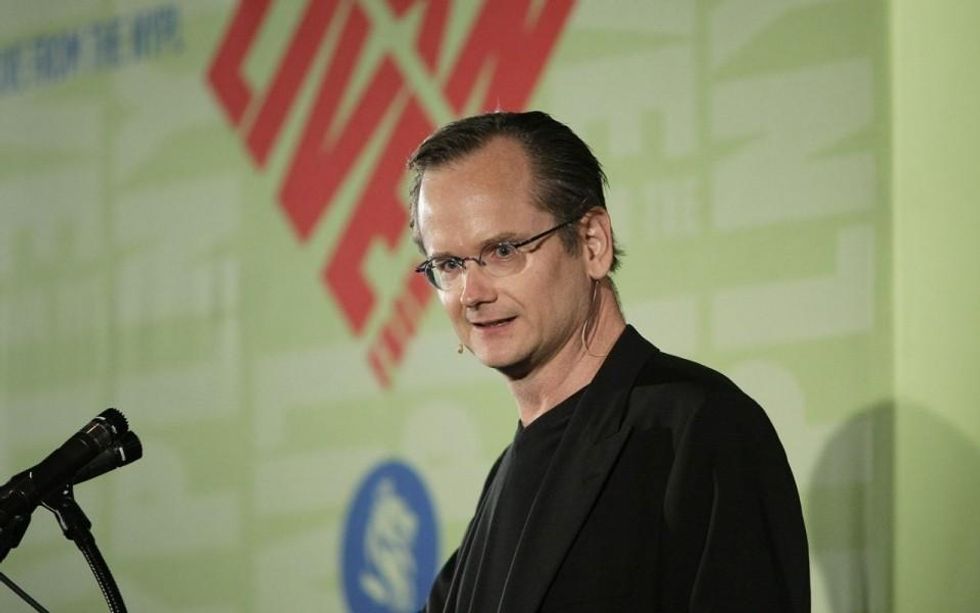
"We think ultimately the court of appeals is going to reverse this decision because it's grounded in a misunderstanding of what the Supreme Court has said," Lawrence Lessig, a Harvard professor and founder of the nonprofit Equal Citizens that helped put Question 1 on the ballot, told News Center Maine in July. "We are exhausted, all of us, especially people in Maine, with the enormous influence money has in our politics, and we want to do something about it."
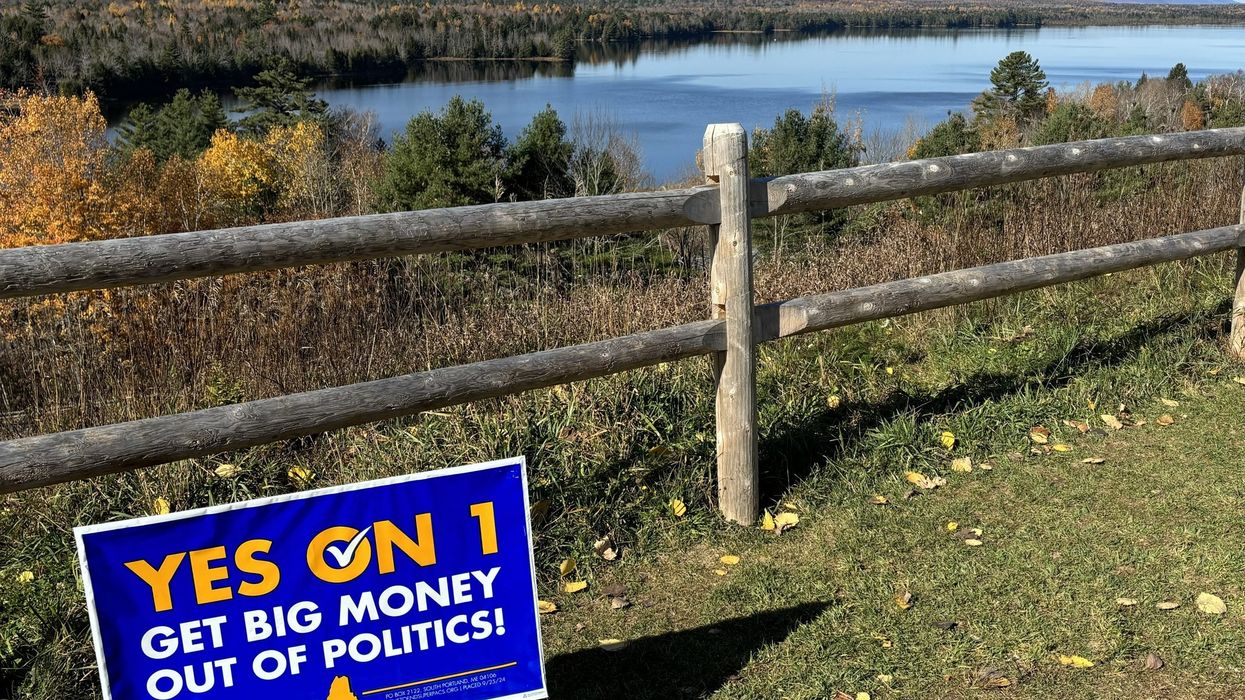
"Our greatest hope is to restore people's faith in our democracy and increase participation across the board," said the chair of the campaign behind the measure likely bound for the U.S. Supreme Court.
As billionaire-backed Republicans dominated U.S. elections on Tuesday, voters in Maine—among the top 10 states in terms of smallest populations—overwhelmingly approved a ballot measure to limit political spending, an initiative that could reach the country's top court.
Maine Question 1 targets super political action committees (PACs), dark money groups that, for the most part, are barred from directly contributing to or coordinating with a candidate but can raise and spend unlimited amounts of funds.
Question 1 asked Mainers, "Do you want to set a $5,000 limit for giving to political action committees that spend money independently to support or defeat candidates for office?"
WMTW reported earlier this year that "the $5,000 contributions cap would only apply to state races, not United States House or Senate races."
As of Wednesday afternoon, the measure had passed 531,573 to 186,707, or 74% to 26%, with 89% of the estimated vote reported, according to The New York Times.
"When the Supreme Court affirms what Maine voters have done, it could end super PACs everywhere."
"We're grateful to the Maine people for once again leading the way to help fix our broken political system," said Cara McCormick, chair of Maine Citizens to End Super PACs, which collected signatures to get the citizen-initiated measure on the ballot.
"The Maine people deserve a system that is not only free from corruption, but also free from the appearance of corruption," McCormick added. "Our greatest hope is to restore people's faith in our democracy and increase participation across the board."
The campaign highlighted that "some of America's leading constitutional law experts—Laurence Tribe, Lawrence Lessig, Neal Katyal, Al Alschuler, and others—have argued that Question 1 is the most immediate pathway to ending super PACs, the biggest source of dark money in elections."
Welcoming the measure's passage, Lessig declared Wednesday that "this is a great gift from Maine to democracy in America."
"We expect this initiative will be challenged," he explained. "But when the Supreme Court affirms what Maine voters have done, it could end super PACs everywhere."
As Maine Morning Star detailed Wednesday:
Since Buckley v. Valeo in 1976, the Supreme Court has allowed contributions to be regulated when there is a risk of "quid pro quo" corruption, essentially a favor for a favor. In the case of elections, if there is a risk someone could be making a donation to a candidate in exchange for a favor, only then can Congress regulate that contribution. In 2010, the Supreme Court extended this reasoning to corporations and unions in Citizens United v. Federal Election Campaign Act.
Three months later, in SpeechNow.org v. FEC, the U.S. Court of Appeals for the District of Columbia Circuit upheld that contributions to groups making independent expenditures can't corrupt or create the appearance of corruption. That decision essentially created the "super PAC," which can receive unlimited contributions but can’t contribute directly to candidates. Other lower federal and state courts followed suit, and the ruling was never reviewed by the Supreme Court.
The editorial boards of both the Bangor Daily News and Portland Press Herald backed the ballot measure, with the latter writing last month that "ours would be the first state in the nation since the Supreme Court's Citizens United ruling in 2010 to move to limit contributions to PACs that can make independent expenditures."
"We believe that political spending has spiraled out of control, in many cases, and that the absence of any limit on PACs is inappropriate and leaves America's system of campaigning and voting vulnerable to the whims of bad actors," the board argued. "If Maine can play a leading role in bringing some order and fairness to political spending nationally, we should seize the chance."
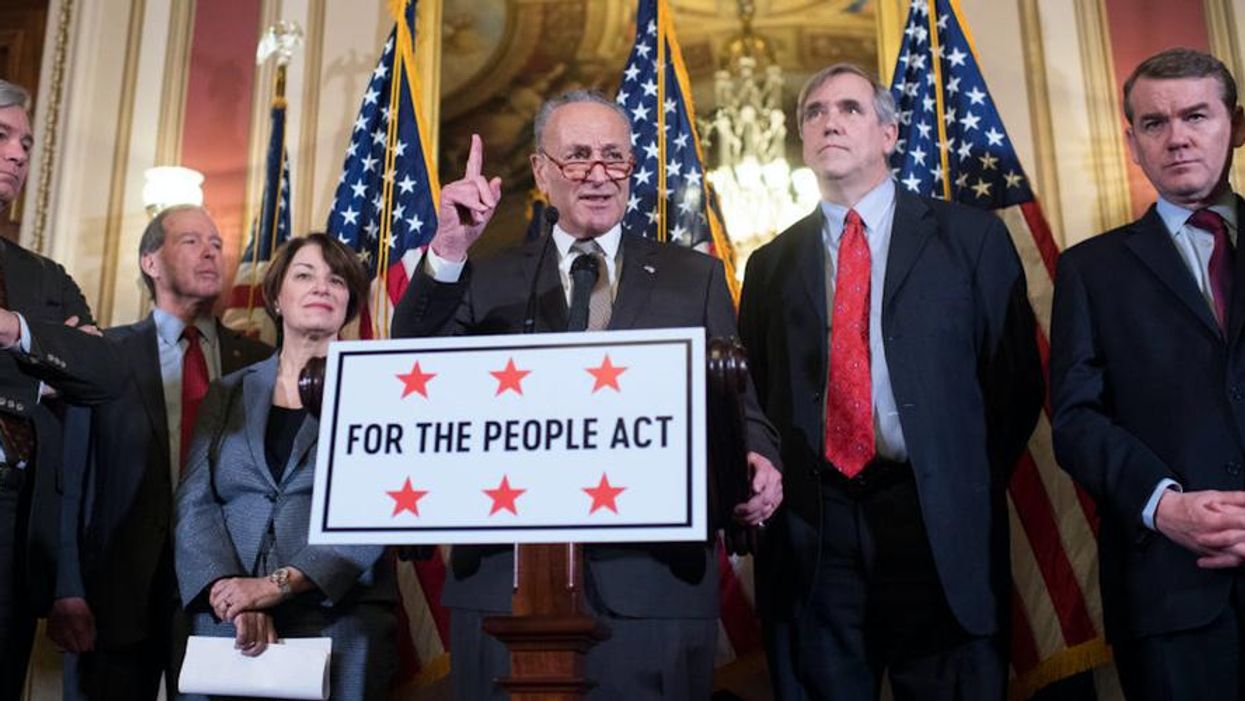
After decades of erosion by corporate and plutocratic interests and the battering ram that was the Donald Trump presidency, a new poll Friday suggests the democratic ideals enshrined in the landmark For the People Act enjoy broad support across the political spectrum.
"The most important parts give candidates a realistic chance to fund campaigns with small contributions only. That could liberate Congress from special interest funding."
--Lawrence Lessig,
Harvard Law School
Originally passed by the House of Representatives in 2019 but torpedoed by the Republican-controlled Senate, the For the People Act (pdf) would expand voting rights including for former felons, curtail partisan gerrymandering, strengthen ethics rules, limit money in politics and implement the DISCLOSE Act, and make Washington, D.C. a state--among other reforms.
The new survey, conducted by the left-leaning think tank Data for Progress and the advocacy group Equal Citizens, found a majority of self-described Democrats, Republicans, and independents support the For the People Act. Respondents were given the following information:
The For the People Act has been introduced in Congress. Supporters of the bill say it would limit the influence of big money in politics by empowering small donors, make voting easier and more secure, end gerrymandering, and give the public more information about who is lobbying our government. Opponents say it would be an overreach by the federal government and that states should control their own elections. Do you support or oppose the For The People Act?
Two-thirds, or 67%, of respondents answered affirmatively, including 77% of Democratic voters, 56% of Republicans, and 68% of independents. More than one-third (35%) of Democratic voters and 25% of Republicans "strongly support" the bill, while only 4% of Democrats and 11% of Republicans said they "strongly oppose" it.
\u201cRestoring democracy isn\u2019t just the right thing to do \u2014 it\u2019s the popular thing to do. \n\n67% of Americans agree: it\u2019s time to unrig the system and create a government #ForThePeople https://t.co/Ud2AwgFNhZ\u201d— Mondaire Jones (@Mondaire Jones) 1611324903
The original For the People Act was written by the late Rep. John Lewis (D-Ga.) and Rep. John Sarbanes (D-Md.). Senate Majority Leader Chuck Schumer (D-N.Y.), Sen. Amy Klobuchar (D-Minn.), and Sen. Jeff Merkley (D-Ore.) said it will be the very first bill they introduce in the current congressional session.
"From a violent insurrection at the Capitol to the countless attempts to silence the vote of millions of Americans, attacks on our democracy have come in many forms," said Schumer on Tuesday. "Senate Democrats are committed to advancing real solutions and fighting to uphold the core tenets of our constitution, which is why we are announcing today that the first bill of the new Congress will be the For the People Act."
Despite controlling both chambers of Congress, based on current rules at least 10 Senate Republicans will need to support holding a vote for the bill in order to avoid a filibuster. A flood of progressive voices and groups, including Justice Democrats and the Sunrise Movement, have recently urged Senate Democrats to eliminate the filibuster, which could be accomplished by a simple majority vote.
\u201cDemocrats have established campaign finance reform as a top priority in 2021\u2014the For the People Act aims to tackle corporate influence, \u201cdark money,\u201d foreign attempts to influence American elections and voter suppression practices.\n\nhttps://t.co/HXulWGibzl\u201d— OpenSecrets.org (@OpenSecrets.org) 1611325980
Lawrence Lessig, a professor at Harvard Law School and expert on campaign finance, calls the For the People Act "an incredibly important piece of comprehensive democracy reform."
"In my view, the most important parts give candidates a realistic chance to fund campaigns with small contributions only," Lessig told OpenSecrets. "That could liberate Congress from special interest funding."
In addition to broad popular support, the For the People Act is backed by some 180 progressive groups who have formed the Declaration for American Democracy coalition.
Members of the coalition include: the American Federation of Teachers, CodePink, Color of Change, Common Cause, Demand Progress, Greenpeace, Indivisible, the League of Conservation Voters, March for Our Lives, Planned Parenthood Action Fund, Progressive Democrats of America, Public Citizen, the Service Employees International Union, and the Southern Poverty Law Center.