

5
#000000
#FFFFFF
To donate by check, phone, or other method, see our More Ways to Give page.
Daily news & progressive opinion—funded by the people, not the corporations—delivered straight to your inbox.

"The outbreak had a big head start, it is still way ahead of us, and we are playing catch-up," said WHO Director-General Tedros Adhanom Ghebreyesus.
The World Health Organization on Wednesday announced that the outbreak of Ebola in the Democratic Republic of Congo is on pace to become the deadliest in history.
In a press conference, WHO Director-General Tedros Adhanom Ghebreyesus said that the current Ebola epidemic is already the second-largest ever recorded, and "is moving faster than any previous Ebola outbreak."
"At its current pace," Tedros added, "it is on track to eclipse the West African Ebola outbreak of 2014 to 2016."
There have been more 4,400 confirmed cases and over 2,000 deaths during the current outbreak, with 80% of deaths occurring in the Ituri province in the northeastern corner of the country.
The WHO chief said he was particularly concerned that many deaths in the region are happening in communities instead of in treatment centers, which suggests there are "chains of transmission we don't know about" and need to be tracked down to contain the outbreak.
"The outbreak had a big head start," he said, "it is still way ahead of us, and we are playing catch-up."
Tedros also shared some encouraging news about the epidemic, highlighting nearly 900 Ebola patients who have recovered "even without specific therapeutics and vaccines," which he noted were still undergoing clinical trials.
"For the first time, two vaccines specifically designed against Ebola Bundibugyo virus have now entered phase one safety trials in humans," he said. "In addition, two new animal studies of the vaccine against Zaire ebolavirus—the more common species—have shown promising evidence of cross protection in animals. On that basis, WHO has recommended inclusion of the vaccine in a phase three trial, which we hope to start as soon as possible."
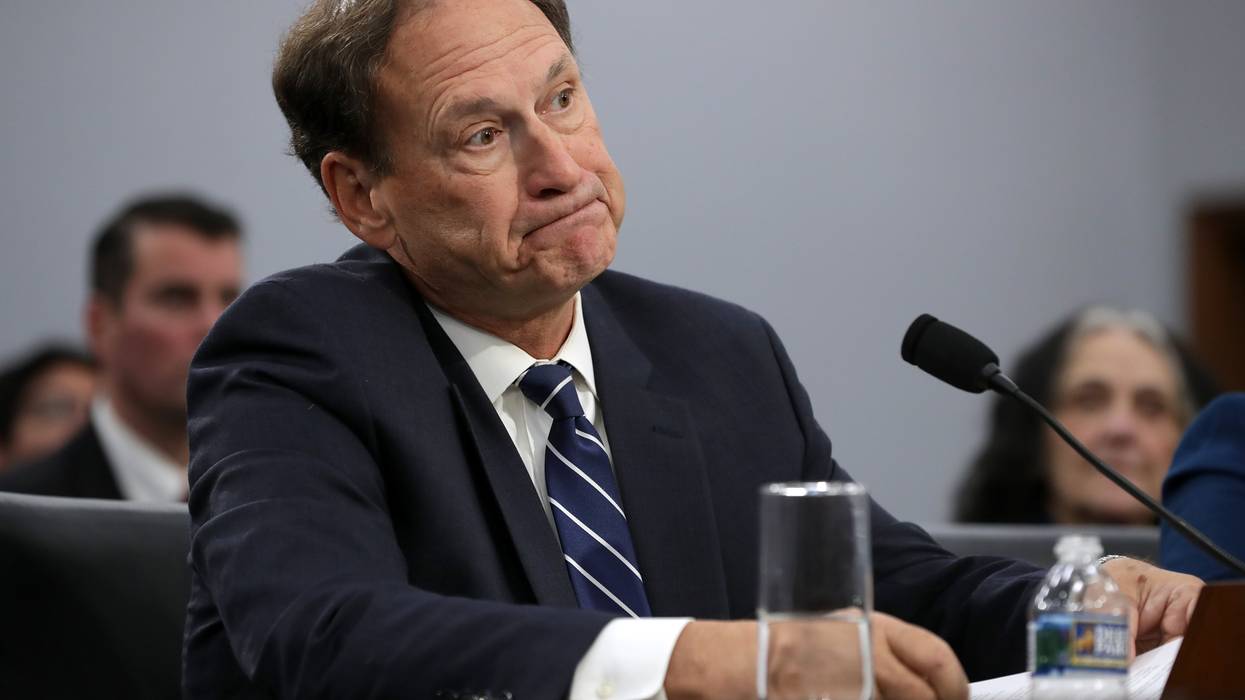
“A reasonable person would think if you’re invested in the industry that could benefit from the outcome of a lawsuit, then you could personally stand to benefit from the outcome," said one critic.
Calls for US Supreme Court Justice Samuel Alito to recuse himself from a major climate case mounted Tuesday after an analysis found that he made as much as $2.9 from oil and gas stocks from roughly the time he joined the nation's highest court in 2005 through 2024.
The analysis by judicial watchdog Court Accountability, reviewed exclusively by The Guardian, found that Alito earned between around $390,000 and $2.9 million from fossil fuel interests during his tenure as a justice.
"Between 2005 and 2024, Alito’s assets—not including his personal residence or other personal property not required to be reported on his financial disclosure—grew from a nominal value of $1.1 million to a value somewhere between $3.4 million and $8.4 million," the analysis states.
"Importantly, much of the Alitos’ oil- and gas-related wealth in this estimate comes from a single asset: a Grady County, Oklahoma property in which Martha-Ann Alito holds a 'mineral interest,'" the publication notes, referring to the right-wing justice's wife. It adds that "divergent values" on his financial disclosures apparently "indicate that Alito has significantly understated the value of the Grady County property."
These revelations come just weeks before the Supreme Court is scheduled to hear Suncor Energy (USA) Inc. v. County Commissioners of Boulder County, a potentially consequential case over whether federal law bars state and local governments from holding fossil fuel companies accountable for climate-related harms.
Progressive watchdogs say Alito's participation presents an obvious appearance of conflict—even though the justice does not currently own shares of either ExxonMobil or Suncor, the companies directly involved in the case. His disclosures show realized gains of between $105,004 and $216,000 from shares of ExxonMobil he owned and sold, and no previous ownership of Suncor shares. The records also show Alito has invested in around a dozen fossil fuel industry companies during his Supreme Court tenure.
“His impartiality may be reasonably questioned in terms of his affinity towards the industry that has helped build his nest egg,” Lisa Graves, co-founder of the judicial ethics watchdog Court Accountability, told The Guardian's Dharna Noor.
“A reasonable person would think if you’re invested in the industry that could benefit from the outcome of a lawsuit, then you could personally stand to benefit from the outcome, even if you don’t hold the stock in the specific company that happens to be the named plaintiff," Graves added.
“His impartiality may be reasonably questioned in terms of his affinity towards the industry that has helped build his nest egg."
Alito has repeatedly ruled in favor of the fossil fuel companies. He also recused himself in this year's Chevron USA v. Plaquemines Parish due to his stock in ConocoPhillips, one of whose subsidiaries is involved in the case.
Court Accountability and other groups recently called on the US Senate to investigate "Alito’s inconsistent history of recusals from cases from which he should be compelled to recuse under long-standing federal law, given his substantial holdings in individual oil and gas companies and other personal ties."
"His irregular recusal practice in oil and gas industry-related cases is undermining public confidence in the impartiality of the court," the groups warned in a May letter to Senate leaders. "They could not occur were he compelled to adhere to enforceable ethics standards against adjudicating cases where he has financial interests or the appearance of a conflict of interest where his impartiality might reasonably be questioned."
Alito has also come under fire for his relationship with Leonard Leo, a key architect of the conservative judicial movement who helped arrange a 2008 Alaska fishing trip for Alito involving billionaire donor Paul Singer, who later had business before the court. Alito did not disclose the private jet travel.
In 2023, the Supreme Court unveiled a code of conduct that was derided by the watchdog group Revolving Door Project (RDP) as a "toothless PR stunt."
“This unenforceable public relations document serves absolutely no purpose other than to permit the media to revert to pretending that our unaccountable and unethical Supreme Court retains legitimacy,” RDP founder and executive director Jeff Hauser said at the time.
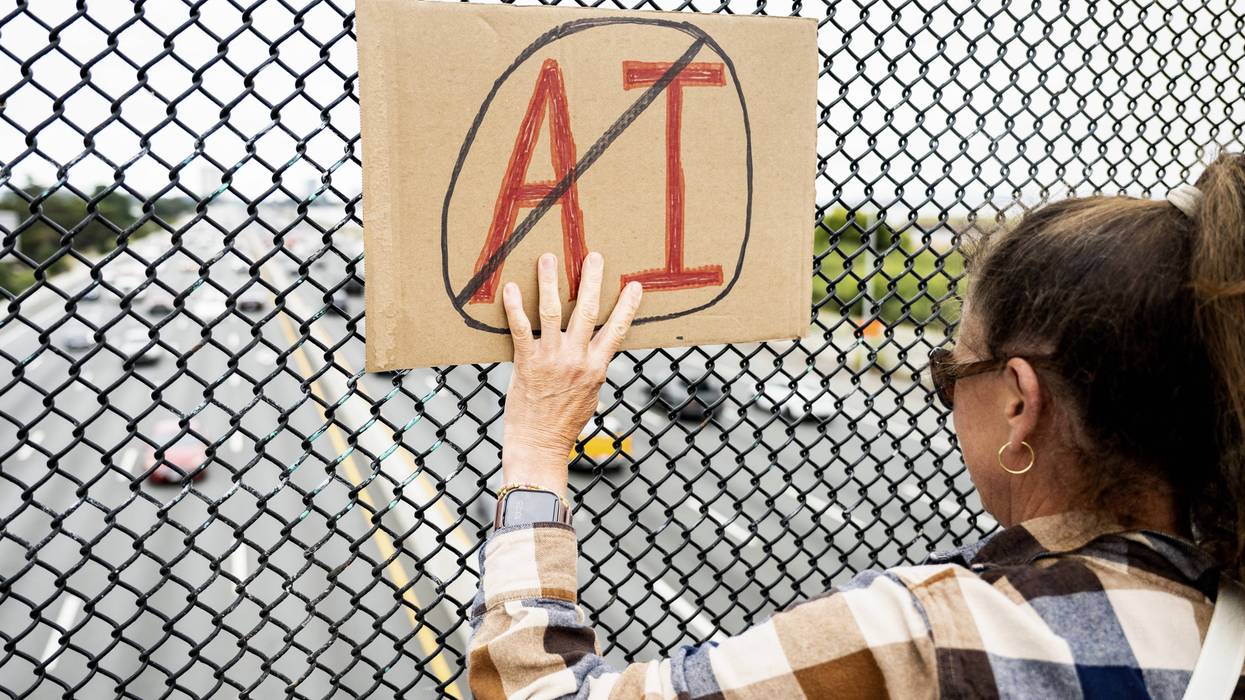
"New research confirms: AI, on sum, is a loser for global climate."
As people across the United States protest against artificial intelligence data centers and their impact on utility bills, the local environment, and the climate, a new study highlights an overlooked way AI is increasing emissions that heat the planet.
Holly Alpine co-founded the nonprofit Enabled Emissions Campaign with her husband, fellow Microsoft alum Will Alpine. For the study, published last week in the journal npj Climate Action, the couple partnered with Purdue University associate professor Maksym Chepeliev and independent researcher Nathan Geldner.
"Most assessments of AI's climate impact are framed as a trade-off between data center energy use and the emissions AI might help avoid," Holly Alpine said in a Tuesday statement. "What's missing entirely is the other side of the ledger for AI's applications: the emissions enabled from the additional fossil fuel production being made commercially viable."
"Our modeling quantifies both, and finds a significant net global emissions increase," she explained. "Until enabled emissions are recognized, measured, and governed, we're only addressing a fraction of AI's climate impact."
In the fossil fuel sector, AI's "applications predominantly expand the pool of economically viable supply by increasing extraction productivity, lowering production costs, and reducing operational risk, thus extending the industry’s economic viability," the study states. It notes that "these applications predominantly" increase emissions, but can also avoid some, such as "through methane leak detection or efficiency gains in power generation."
"Applied to renewables (and other low-carbon generation), AI's applications predominantly avoid emissions," the paper details. "They offer potential to accelerate deployment and optimize generation efficiency, for example, through forecasting, predictive maintenance, and power generation optimization, while also extending the productive life of installed capacity and improving grid integration."
Examining dozens of scenarios, the study's authors found that if AI is used by both the fossil fuel and renewable sectors to boost productivity, global emissions rise by 0.47-1.8 gigatonnes of carbon dioxide annually. They also found that when fossil fuel productivity gains are considered in isolation, the increase for climate-heating pollution is 3.3-13.3 times larger than current data center emissions, and up to eight times larger than those projected for such facilities by 2035.
New research confirms: AI, on sum, is a loser for global climateShort of significant policy to curb fossil fuel interests (ha!), AI will amplify CO2 emissions, not mitigate them, even when considering the prospects of any renewable gains AI buildout could motivatewww.nature.com/articles/s44...
[image or embed]
— Philip Loring (@philiploring.com) August 11, 2026 at 4:44 PM
Putting the study's figures into context, Wired pointed out that "at the low end, the research finds that the additional yearly emissions could be equal to Mexico's; at the high end, AI boosting the fossil fuel industry could add as much greenhouse gas emissions as Russia, the world’s fourth-largest emitter."
Will Alpine, the lead author, said that "I spent years building AI platform tools and have seen firsthand how they're used."
"Like any tool, AI can accelerate whatever it's applied to," he continued. "Yes, it can advance renewable energy, strengthen the grid, and improve efficiency. But it has also been boosting the productivity of the fossil fuel industry for years, and our research shows that effect is asymmetric: It acts as an economic lever that reinforces the viability and dominance of fossil fuels."
As The Guardian reported Tuesday:
Saudi Aramco said last year that it had embedded AI "in everything," increasing productivity and the number of wells, while earlier this summer Equinor attributed 27 discoveries on the Norwegian continental shelf to new seismic technologies and AI. The findings include the Lofn and Langermann oil wells, which the company said was the largest discovery it operated in 2025. "AI was key, from automated data interpretation to efficient well planning," it said in a video at its capital markets day in June.
Rystad Energy, an independent research and energy intelligence company based in Oslo, estimated in May that digitalization and AI would create close to $500 billion (£370 billion) in cumulative value for fossil fuel exploration and production companies between 2026 and 2030—the result of more efficient operations, increased production, and shorter development timelines. "The returns are already visible in the industry," its analysts wrote, citing hundreds of millions of dollars in reported AI-related savings from Equinor and Abu Dhabi's Adnoc.
Welcoming the study, Clara Vondrich, senior policy counsel for the Climate Program at the watchdog group Public Citizen, said that "this research exposes Big Tech as a lead accomplice to the fossil fuel industry in ways we never imagined. It's bad enough that communities are being hammered by rising energy bills as data centers gobble up insane amounts of fossil fuel power, but now we see that those emissions are just a fraction of the climate harms Big Tech is responsible for."
"To be clear, oil companies are not simply using publicly available AI tools: Big Tech is entering into bilateral contracts with oil companies, and selling them proprietary tools specifically designed for the purpose of accelerating oil production," Vondrich stressed. "You can't make this up: Big Tech companies, self-avowed climate champs for decades, are working hand-in-glove with Big Oil to find, dig, and burn more fossil fuels to make a buck."
"AI’s promise as a tool for advancing solutions to the climate crisis is fading as a cruel reality takes shape: Big tech companies are selling AI to the fossil fuel industry to accelerate our demise so they can turn a profit," she added. "These are the perverse outcomes resulting from our rigged market economy: access to cutting-edge AI goes to the highest bidder and Big Oil has some of the deepest pockets in the world. Meanwhile the externalities—runaway climate change manifesting this summer as historic heat domes and fires—are never counted, except as body counts. Today, Big Tech is Big Oil's number one accomplice."
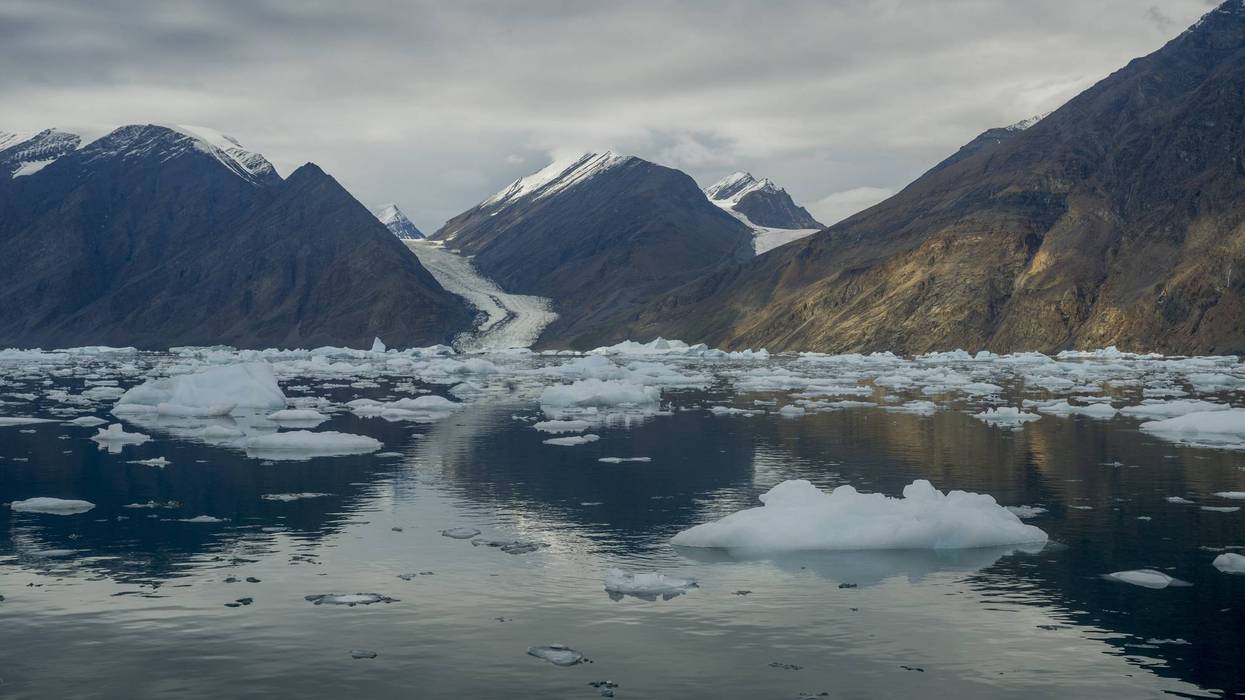
"For two decades," said one of the report's authors, "it has documented conditions across the Arctic system, bringing together physical and social sciences with real-world observations/data and consistent updates."
The Trump administration has reportedly decided to yank federal funding from an annual National Oceanic and Atmospheric Administration report that examined the state of the Arctic, which is warming significantly faster than other regions of the world as continued fossil fuel extraction and use drive up global temperatures.
Politico, which first reported the decision, noted that the move "jeopardizes public dissemination of the report that NOAA has published since 2006. It has previously been available on the agency’s website, requires NOAA staff for its production, and pools data from NOAA scientists for many of its findings."
Zack Labe, a climate scientist who has been an author on NOAA’s peer-reviewed Arctic Report Card since 2020, wrote on social media that the Trump administration's decision "is truly devastating."
"The Arctic Report Card has been one of my favorite scientific endeavors," Labe wrote. "For two decades, it has documented conditions across the Arctic system, bringing together physical and social sciences with real-world observations/data and consistent updates."
Speaking to the science news outlet EOS, Labe warned that "the loss of the Arctic Report Card would be significant not only for the scientific community, but also for decision-makers and the public."
"Written for a broad audience and developed by more than 100 scientists from around the world, the report is an important resource for consistently documenting changes in one of the fastest warming regions on our planet," Labe added. "Discontinuing it would create a significant gap in our ability to track and connect these changes from year to year, with implications for people and communities around the world."
Last year's edition of the report card found that "surface air temperatures across the Arctic from October 2024 through September 2025 were the warmest recorded since 1900."
"The last 10 years are the 10 warmest on record in the Arctic," the report observed.
The Trump administration, packed with fossil fuel industry allies and headed by a climate denier, has worked aggressively to gut federal initiatives designed to track the worsening impact of the global climate emergency. Since taking power last year, the administration has dismissed government scientists, scrubbed climate information from federal websites, stopped updating a database that tracked the country's costliest weather disasters, and picked a climate denier to oversee the federal government's flagship climate report.
Rick Thoman, an Arctic climate specialist, called the Trump administration's latest move "devastating news for Arctic environmental monitoring."
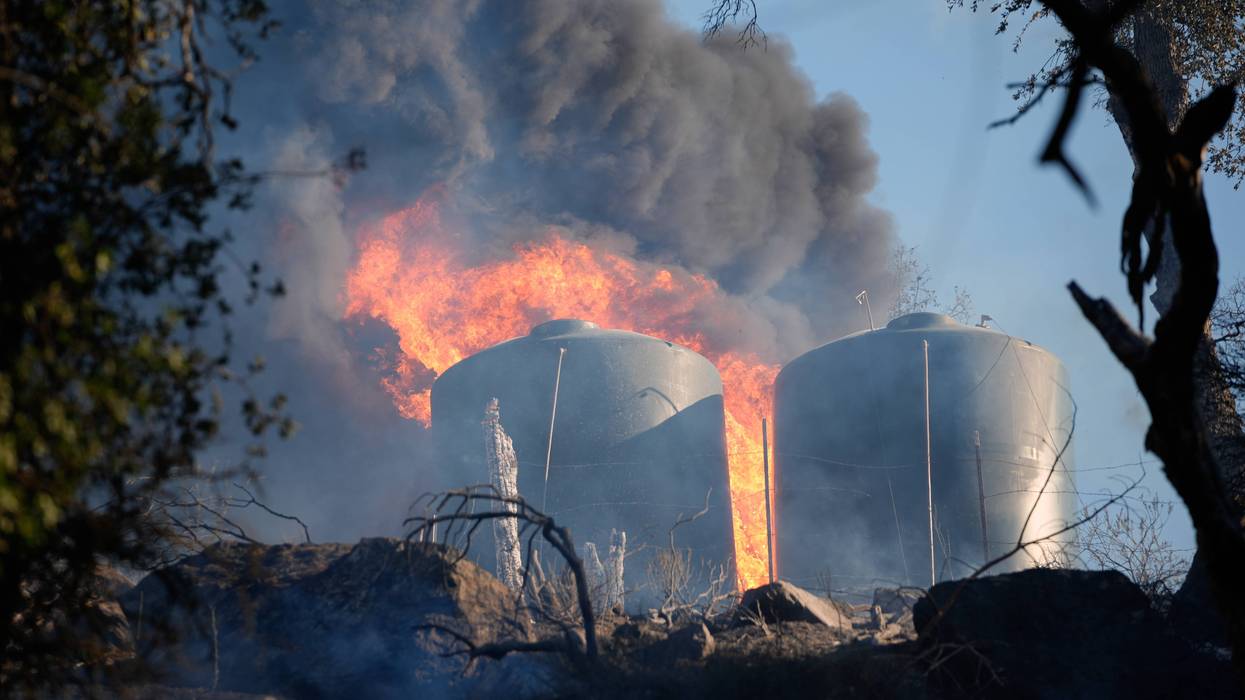
"If we're exceeding records from the Dust Bowl, that says that we're in deep trouble," warned one meteorologist.
While President Donald Trump continued his war on renewables and support for climate-wrecking fossil fuels, the contiguous United States endured the hottest July on record, according to data released Monday by his own government.
"July 2026 averaged 76.9ºF, the warmest month on record (1895-present)," National Oceanic and Atmospheric Administration (NOAA) announced. That figure was "3.3ºF above the 20th-century average. This was the warmest July—and warmest month—in the 132-year record, 0.1-0.2ºF warmer than July 1936 and July 2012."
The Associated Press highlighted that last month's average for the Lower 48 eclipsed "the Dust Bowl's July 1936 by an eighth of a degree," a development that meteorologist Jeff Masters of Yale Climate Connections described as alarming.
"It's not good when you’re breaking records from the Dust Bowl, which we are in this case," he told the AP. "And that was a crazy sort of situation where you put tens of millions of people in motion. You had this great migration because of the drought and the heat that hit the center of the US—just a cataclysmic event in US history. If we're exceeding records from the Dust Bowl, that says that we're in deep trouble."
Separately, Masters and fellow meteorologist Bob Henson wrote at Yale Climate Connections that "there's no denying the scorching conditions of the 1930s Dust Bowl. An impressive 24 of the 48 contiguous US states have yet to exceed the single hottest readings observed in each of those states during the 1930s."
"However, the Dust Bowl has been misused for years in climate-denial writing and speaking to argue that human activity isn't warming the nation's climate to any great degree. In fact, human influence played a vast part in the Dust Bowl itself," they explained. "Decades of overplowing by European settlers in the Plains and Midwest—in the erroneous belief that 'rain follows the plow'—left the landscape vulnerable when a sequence of multi-year droughts struck. Huge volumes of topsoil simply blew away, and the denuded land heated up far more quickly than better-managed land would have. The Dust Bowl intersected with the Great Depression to make the 1930s a period of profound misery for millions of Americans."
"A 2022 study, 'How the Great Plains Dust Bowl drought spread heat extremes around the Northern Hemisphere,' showed how the Dust Bowl's physical influence extended well beyond US borders," the pair added. "As lead author Gerald Meehl of the National Center for Atmospheric Research put it, 'This is a mechanism that arose in a unique way from human influence—not by burning fossil fuels but from plowing up the middle third of the US.'"
We just broke a heat record set during the Dust Bowl. 😬That record has been a favorite talking point of climate deniers. Now it's bitten the dust: yaleclimateconnections.org/2026/08/the-...New from @drjeffmasters.bsky.social and @bhensonweather.bsky.social
[image or embed]
— Yale Climate Connections (@climateconnections.bsky.social) August 10, 2026 at 2:50 PM
Wildfires broke out across Canada and in the United States' Pacific Northwest last month, burning over 140,000 acres in Oregon alone. NOAA found that "daytime maximum temperatures averaged 89.5ºF, 2.9ºF above average, ranking as the sixth-warmest month on record for average high temperatures, while overnight minimum temperatures averaged 64.2ºF, 3.7ºF above average, ranking as the warmest month on record for average low temperatures, surpassing July 2022 by 0.7ºF."
Those high temperatures overnight can be dangerous. Masters told the AP that "if you're talking heatwaves, that nighttime low is incredibly important for determining total heat stress... So if it doesn’t cool off at night, your body doesn't have time to readjust to all the heat."
While July set a new record in the United States, because of the fossil fuel-driven climate crisis, "this may be one of the coolest years we’re gonna experience for the rest of our lives," the meteorologist also said. He added that humanity needs "to stop burning so many fossil fuels. We also need to be spending money to adapt to the new climate that we've put in place."
Wildfires also impacted the European Union last month—and NOAA's new numbers came out as the EU's Copernicus Climate Change Service announced Monday that worldwide, last month was second warmest July on record, tied with 2024. The agency also found that the average global ocean surface temperature was the hottest ever recorded in July, fueled in part by El Niño conditions.
"Our leaders’ response has to be swifter and stronger than El Niño," argued Anne Jellema, executive director of the advocacy group 350.org. "We already know that global heating is supercharging extreme weather damage, and the public wants polluters to pay for it. With Big Oil's earnings skyrocketing while a global food crisis looms, now is the time to act. The only way to stave off a humanitarian disaster is to make those causing it pay upfront—before even more damage is done."
The Guardian pointed out that "an unusually strong El Niño event, a periodic climate feature where a section of the Pacific Ocean heats up causing weather around the world to alter, is likely to cause next year to be the hottest on record globally, surpassing a record set just in 2024. Some scientists think the developing El Niño could even ensure that this year is the one that breaks the record."
Michael Mann, a climate scientist at the University of Pennsylvania, told the newspaper that "the bottom line... is that we expect to set record global temperatures as long as carbon emissions continue to warm the planet, and typically these records are set during major El Niño events."

"Instead of building a modern, clean energy source to power its increased AI-driven electricity demand, Amazon chose to invest in a massive natural gas power plant to fuel its giant Texas data center."
Amazon is boasting that the new data center it plans to build in Pecos County, Texas will be self-sustaining in its use of electricity, as the company has acquired permits to build a 7.65 gigawatt gas plant to power the massive facility, ensuring it won't raise electricity prices for households in the area.
But the savings on utility bills will likely come at a cost for the US at large and the planet, as well as locals in West Texas.
According to reporting from Cleanview Newsletter on Friday, the site acquired by Amazon, GW Ranch, has a permit from the state allowing the construction of a gas power plant that could emit 33 million tons of carbon pollution, which would make it by far the largest single source of pollution in the US.
The James H. Miller Jr. Power Plant, which burns coal in Quinton, Alabama, is currently the biggest emitter of carbon dioxide, sending about 16 million tons of pollution into the atmosphere each year.
Power plants generally emit less than the maximum amount of carbon permitted, but the unprecedented limit for the new plant, which is being developed for Amazon by Pacifico Energy and will have 35 natural gas turbines, means it is likely that the company's project will far exceed the pollution caused by the plant in Alabama.
The permits viewed by Cleanview, which tracks data centers and sustainable energy development, show that the power plant would be disconnected from the state's electricity grid, at least at first, and an Amazon spokesperson said the company "believes in paying the full costs of powering our operations" and would not "raise electricity costs for Texas families."
The on-site power generation will be "designed to transition to grid-connected service as interconnection timelines allow," the spokesperson added—suggesting the data center could ultimately raise household electricity costs as well as supercharging carbon pollution in the area.
The company further tried to allay fears of the impact of the new data center and its dedicated power plant by saying it plans to use brackish water that isn't safe for irrigation or consumption at GW Ranch; along with data centers' impact on utility costs, communities have protested against the facilities across the country due to their massive water consumption.
But the advocacy group Climate Action Campaign said Sunday that in its rush to join the nationwide artificial intelligence data center buildout as President Donald Trump has demanded, Amazon "chose dirty power over clean."
"Instead of building a modern, clean energy source to power its increased AI-driven electricity demand, Amazon chose to invest in a massive natural gas power plant to fuel its giant Texas data center," said Margie Alt, the group's director. "During this excessively hot and dry summer, riddled with forest fires and unbearable air pollution, a move like this is truly unacceptable."
With Amazon pledging to eliminate its pollution-causing emissions by 2040, the company's decision to join Meta, Microsoft, and Google in investing in its own power plant to build a data center was an example of "yet another major corporation dodging accountability," said Alt.
"This isn’t innovation," she said. "Despite its massive resources, Amazon is shirking its own responsibility and the industry’s promises of computing progress without the economic or health burdens to local communities. The result of that broken promise is that communities will pay the consequences with their health and their wallets."
According to Cleanview, Pacifico Energy has plans to eventually build up to 750 megawatts of solar generation and 1.8 gigawatts for battery storage capacity at GW Ranch.
As it potentially doubles the amount of planet-heating carbon emissions that are currently sent into the atmosphere by the James H. Miller Jr. Power Plant, the plant at the GW Ranch site could heighten the risk of developing heart disease, asthma, chronic respiratory illnesses, and other health problems for people living and working in the area.
"Progress shouldn’t come at the expense of the rest of us just to power billionaires’ ambitions," said Alt. "Shame on you, Amazon!”
The project, Kathryn Guerra, a campaign director at the watchdog group Public Citizen, told The New York Times, will "absolutely have a huge impact on the environment, and on public health."
The project was made public weeks after Trump insisted that "smart" communities want data centers to be built in their vicinity—but numerous polls have shown the facilities, which offer few long-term jobs as they raise costs for families, are sparking outcry from across the political spectrum.
About 70% of respondents to a Gallup poll in March said they would oppose the construction of a data center in their area. About half of those who expressed opposition said they were mostly concerned with the environmental impact associated with data centers, or the potential for resources to be gobbled up by the facilities.
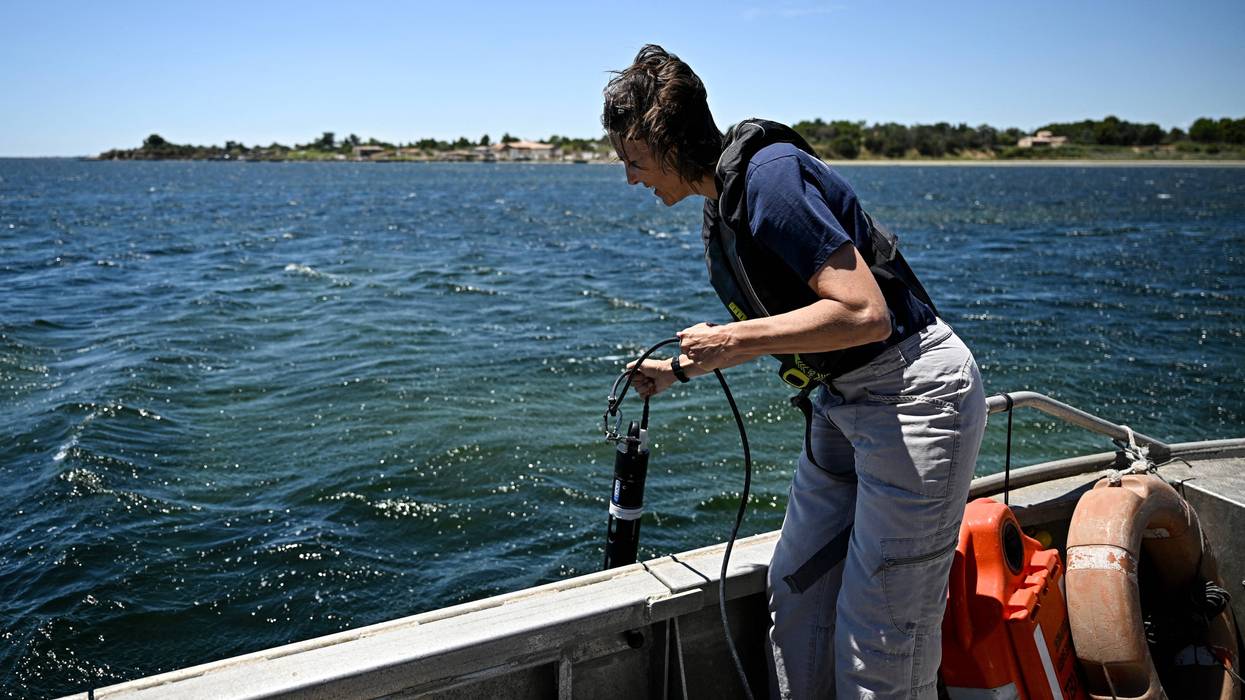
New data from Copernicus Climate Change Service, said one campaigner, shows that the "natural systems we depend on are being pushed closer to their limits.”
Last month's average global ocean surface temperature was the hottest ever recorded in the month of July, fueled in part by uniquely intense, fossil fuel-driven El Niño conditions that have wreaked deadly havoc around the world this summer.
The European Union's Copernicus Climate Change Service (C3S) said Monday that last month—which ranked as the second warmest July on record—"saw exceptionally high temperatures for the month across a large portion of the tropical Pacific, an area where El Niño conditions are present and forecast to further strengthen in the coming months." Average global sea surface temperatures (SSTs) were 20.96°C last month, surpassing the July 2023 record of 20.89°C.
"Around Europe, SSTs reached record highs for July along the Atlantic coast and western Mediterranean, associated with widespread strong or severe marine heatwave conditions," C3S said.
Brian O'Donnell, director of the Campaign for Nature, said the latest Copernicus data "is more than another climate milestone; it is a warning that the natural systems we depend on are being pushed closer to their limits."
"Governments have become very good at documenting these records. Now they need to become much better at safeguarding the forests, wetlands, and oceans that help regulate the climate and protect communities from the impacts of warming world," said O'Donnell. "With land and ocean temperatures across Europe breaching records, governments should be investing far more and delivering on their global commitment to protect at least 30% of land and ocean by 2030."
The new analysis was released as western Europe and other regions faced deadly heat, wildfires, drought, and other extreme weather as the international community, including the US and other leading polluters, fails to rein in fossil fuel use—and as oil and gas giants reap record profits.
“Our leaders’ response has to be swifter and stronger than El Niño," Anne Jellema, executive director of the environmental group 350.org, said Monday. "We already know that global heating is supercharging extreme weather damage, and the public wants polluters to pay for it. With Big Oil’s earnings skyrocketing while a global food crisis looms, now is the time to act. The only way to stave off a humanitarian disaster is to make those causing it pay upfront—before even more damage is done.”
Scientists have characterized this year's El Niño, which officially began on June 11, as historically strong and dangerous, earning it the informal "Super El Niño" label.
The Washington Post reported Monday that the 2026 El Niño is "on track to become the strongest ever recorded, with cascading effects on global climate peaking late this year and into next."
"El Niño’s effects have already been felt around the planet," the Post observed. "The higher frequency of heat domes worldwide, the nonstop temperature records in Peru and deadly storms in Chile can all be linked to this pattern. As can the destructive typhoons in the western Pacific Ocean and the relative calm of the Atlantic hurricane season so far."
United Nations Secretary-General António Guterres warned in remarks to reporters last month that El Niño is no longer just "on our doorstep."
"It is inside the house—and turning up the heat," said Guterres. "We have already endured a summer of extremes—record-shattering heat domes, apocalyptic wildfires raging in Spain, France, and far beyond. Thousands of lives lost in the scorching conditions.”
“But according to the latest science," he added, "this is only a warm-up act."
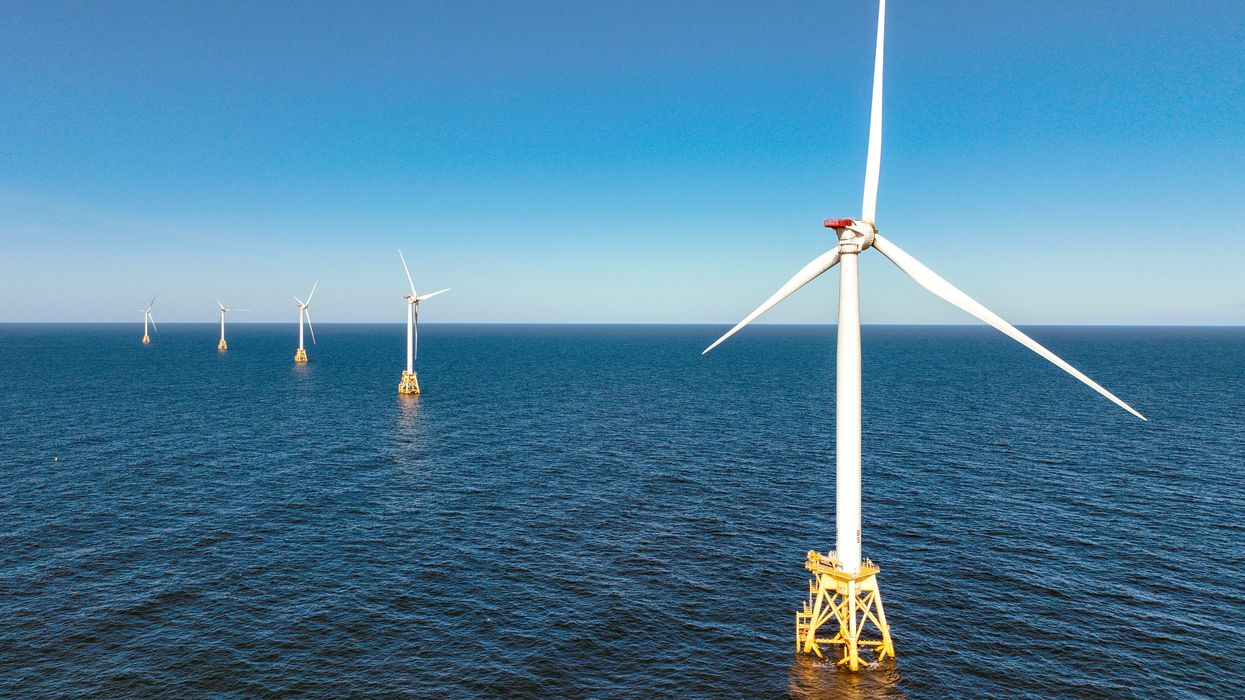
After RWE disclosed its new gas investments as part of the deal, one climate campaigner declared that "committing to reinvest over $1 billion in fossil fuels is a disastrous mistake."
Despite climate concerns and high prices from President Donald Trump's illegal war on Iran, his administration continued its assault on offshore wind this week, using another "taxpayer-funded bribe" to convince a company to instead invest in fossil fuels.
The German company RWE announced Thursday that it had reached a settlement with the US Department of the Interior to relinquish offshore wind leases off the coasts of New York, California, and Louisiana for $1.22 billion.
"After careful consideration, it was determined there is no path forward to permit these projects in the US for the foreseeable future," the firm said in a statement. "The company determined that this resolution best serves the interests of its stakeholders and allows it to direct resources toward energy projects that can be advanced with certainty."
RWE also disclosed that it would put $900 million toward an indirect 16% stake in a Louisiana liquefied natural gas project, and $300 million toward turbines for a pipeline of 15 natural gas peaking projects across target US markets.
Reuters reported that the deal is "the fifth, and largest, the administration has entered into this year as part of its wide-ranging effort to stop development of US offshore wind projects," which Trump has fought against since before becoming president. His current term has featured various moves collectively condemned as a "war against renewables."
The RWE deal was ripped by climate and labor advocates, as well as Senate Minority Leader Chuck Schumer (D-NY), who said that "everything the Trump administration does can be summed up in four words: CORRUPTION AT YOUR EXPENSE."
"Trump is again spending billions of taxpayer money to limit the US energy supply in favor of exporting more energy to countries like China," Schumer wrote on social media. "This will only make your utility bill MORE expensive."
Interior Secretary Doug Burgum fired back at Schumer, claiming that "your climate extremist energy 'transition' was actually energy SUBTRACTION," and "ZERO taxpayer money will be spent. It's a dollar-for-dollar repurposing of RWE's own money."
RWE explained that it had "invested more than $1 billion toward the leases and the development of these projects," and the new agreement resolves the company's "legal claims and provides $1.22 billion in settlement funds."
House Natural Resources Committee Democrats Ranking Member Jared Huffman (D-Calif.) joined Schumer and other critics in railing against the deal, saying Friday: "Trump just paid RWE over $1 BILLION in taxpayer money to walk away from offshore wind projects—including a project off Humboldt in my district—and invest in fossil fuels instead."
"This fake, illegal settlement kills good-paying jobs, raises electricity costs, and rewards Big Oil with taxpayer dollars," he continued. "When the accountability comes, and I promise you it's coming, everyone involved in these deals will answer for it."
This potential settlement has been feared for months. In May, over 50 US groups "alarmed to learn that RWE was contemplating a deal" sent a letter urging CEO Mark Krebber to resist the Trump administration's "bullying" and "vendetta against offshore wind."
Among those organizations was Friends of the Earth US, whose senior energy campaigner Raena Garcia declared Friday that "committing to reinvest over $1 billion in fossil fuels is a disastrous mistake."
"The Trump administration won't be around forever, and any company that cuts a deal like this should expect accountability eventually," Garcia added.
The BlueGreen Alliance, which brings together environmental groups and labor unions, has a webpage tracking the costs of the buyouts, which so far include $3.9 billion in taxpayer money, 21.15 gigawatts of anticipated energy, and over 57,000 projected jobs.
"The Trump administration is relentless in its war on offshore wind," alliance executive director Jason Walsh said of the latest deal. "Billions of taxpayers' dollars have gone to waste along with tens of thousands of lost potential jobs. At a time when energy demand and costs are rising, we are disheartened by this latest buyout. Now working people on three coasts will no longer get to reap the benefits of the clean and reliable energy that would have come from these projects."
The settlements still face legal hurdles. New York Attorney General Letitia James announced in June that she is leading a coalition that includes AGs from Connecticut, Maine, Massachusetts, New Jersey, Rhode Island, and Vermont in a lawsuit seeking to block one of them. California Attorney General Rob Bonta has sent a notice of intent to sue over another deal.
Despite Big Oil-backed Trump's attacks on renewables and support for climate-wrecking fossil fuels, new data shows that the United States is generating more power from the sun and wind than ever, as Common Dreams reported earlier Friday.
For example, in May, solar generation eclipsed every other source of electricity in Utah for the first time. Weber State University physics professor Dan Schroeder said that is "wonderful news for air quality, it's wonderful news for the climate, and it's wonderful news for jobs and the economy."
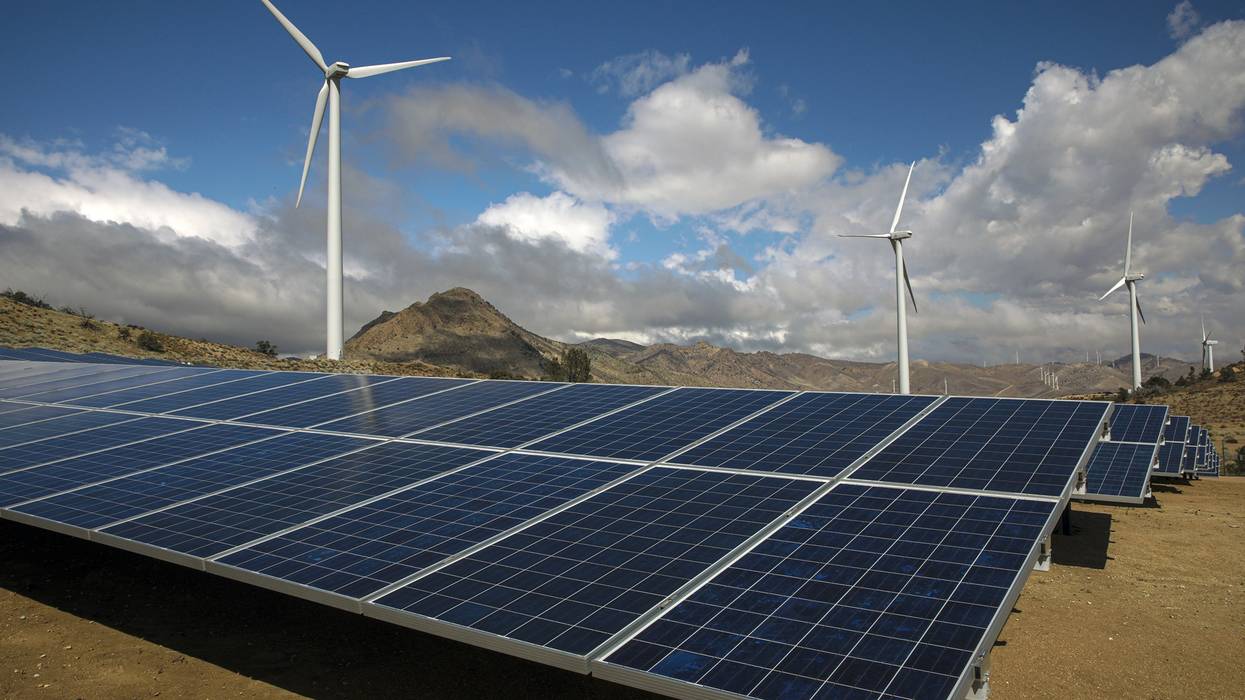
"Wind plus solar is on a tear right now," said one expert.
Despite the Trump administration's staunch support for the climate-wrecking fossil fuel industry and equally aggressive attacks on renewable energy, the US is generating more power from the sun and wind than ever, according to the latest figures on the matter.
Updated state-level data confirmed this week that solar generation eclipsed every other source of electricity in Utah for the first time in its history, with photovoltaic panels producing nearly 1 terawatt-hour in May. That's enough to power roughly 90,000 homes for an entire year, according to the US Department of Energy.
That amount represented nearly one-third of all electricity generated in Utah that month, according to data from the global energy think tank Ember. Natural gas generated 32% of Utah's electricity in May, while coal produced 28%, and wind 2%.
“The trend of more and more solar in Utah is wonderful news for air quality, it’s wonderful news for the climate, and it’s wonderful news for jobs and the economy,” Dan Schroeder, a physics professor at Weber State University in Ogden, told Grist in an article published on Thursday.
Meanwhile, California achieved an even more significant milestone. Solar was already the largest source of electricity generation in the Golden State. In May, solar produced 51% of California's electricity, the first time a renewable energy source generated more than half of a state's power for an entire month. Solar also outproduced natural gas in every month of 2026 through May, the last month confirmed.
Also in May, solar supplied more of the nation's electricity than coal for the first time, and solar and wind combined generated the majority of electricity in seven states and more than 30% of power in 20 states.
Good morning with good news: Solar & wind generated more than 50% of electricity in 7 US states & more than 30% in 20 states in May 2026! Top 10 S&W states:IA 67%SD 64%NM 63%CA 58.9%KS 58.3%MA 56.9%CO 51.8%VT 49%OK 48.6%ME 45.7%S&W generated 24.2% of US power in May.#energysky
[image or embed]
— John Hanger (@jrfhanger.bsky.social) August 7, 2026 at 4:42 AM
“We’re going to see milestones like this increasingly happen,” Logan Mitchell, a climate scientist and energy analyst with Utah Clean Energy, told Grist.
According to the US Energy Information Administration, approximately 51% of new utility-scale electricity generation in the United States is projected to come from the sun this year, as the nation is expected to add another 43.4 gigawatts of solar, compared to 6.3 gigawatts of natural gas generation and no new coal.
More broadly, the US produced nearly three times as much solar, wind, and geothermal power in 2025 than it did in 2016, with renewables accounting for more than 20% of the nation's power production, as shown by the recently launched State of Renewable Energy online dashboard published by Environment America Research & Policy Center and Frontier Group.
Renewables accounted for 21.4% of national retail electricity sales in 2025, up from just 8% in 2016. South Dakota led the nation by generating the equivalent of 95% of its retail electricity from wind, solar, or geothermal.
“In 2026, America is getting more power from the sun and wind than ever,” Wendy Wendlandt, president and chairwoman of Environment America Research & Policy Center, said in May. “Renewable energy is reliable, resilient, and shows up for free every day. When we replace polluting energy sources with solar and wind, it delivers a cleaner, healthier future for all Americans.”
The surge in renewables comes amid efforts by the administration of President Donald Trump—who ran on a "drill, baby, drill" energy platform during a 2024 presidential campaign generously supported by the fossil fuel industry—to boost oil, gas, and coal and roll back clean power initiatives.
At times, the Trump administration's animus toward renewables has been downright inane, like when Interior Secretary Doug Burgum—a billionaire who has personally profited from an oil lease on family land—infamously trashed solar by saying that "when the sun goes down, you have a catastrophic failure called sunset and there’s no solar energy produced," prompting some observers to question whether he's aware of batteries or how they work.
The One Big Beautiful Bill Act signed into law by Trump last year includes billions of dollars in handouts for the fossil fuel industry, boosts drilling on millions of acres of public lands, mandates oil and gas lease sales, and imposes new fees on renewable development. A report published last month by BlueGreen Alliance revealed that "23 manufacturing, clean energy, and industrial projects are already facing cancellations and delays representing at least $82.8 billion in capital investment, which could cost 111,765 jobs."
Last month, Common Dreams reported that Trump's rollback of clean energy policies will cost American consumers $650 billion in additional energy bills by 2040, based on figures from the San Francisco-based energy and climate policy think tank Energy Innovations.
Trump has also twice withdrawn the US from the Paris Agreement, rolled back Environmental Protection Agency rules, signed pro-fossil fuel executive orders—including one declaring what critics say is a "phony" energy emergency—resumed and accelerated approvals for new natural gas export terminals following a moratorium enacted during the Biden administration, and paid billions of taxpayer dollars to kill clean energy projects around the world.
The “energy emergency” has been invoked to fast-track fossil fuel permits, including for extraction projects on public lands. This, despite overwhelming evidence that burning fossil fuels is the leading driver of the climate emergency.
Still, clean energy advocates are buoyed by recent reports of rising renewables.
"Wind plus solar is on a tear right now," said Mitchell. "We may have achieved liftoff."
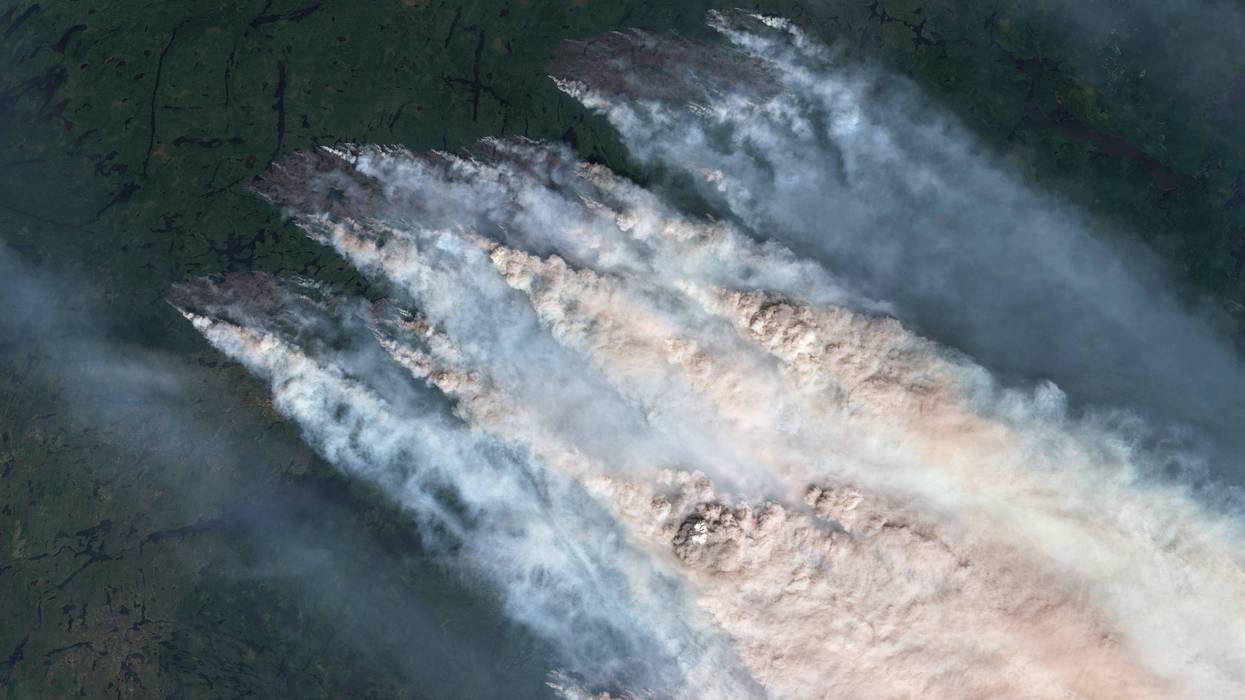
"Time and again we see the same results: Climate change is a key driver behind uncontrollably large and unprecedented fires."
Committed to climate denial, President Donald Trump has insisted in recent weeks that hundreds of wildfires currently burning across Canada are the result of the country's mismanagement of its vast boreal forests—but scientists confirmed in a study out Thursday that "human-induced climate change" made the fires twice as likely.
The World Weather Attribution (WWA), a consortium of scientists who study how planetary heating and the climate emergency fuel extreme weather, examined the weather conditions connected to fast-spreading fires, including extreme heat, drought conditions, humidity, and wind.
They measured the Canadian index for those conditions and then compared the country's current weather patterns to a world without the 1.4°C of warming that has occurred since humans began burning fossil fuels.
"The weeklong weather conditions that led to the fires in Ontario are now the type that can happen every six years or so," WWA reported.
In the Northwest Territories, where more than 5,000 square miles of forest burned, sending smoke drifting thousands of miles into the continental United States, WWA noted that lightning initially caused the fire, "but it was the climate conditions that took that initial ignition and made the fire burn intensely and spread too fast to control."
Theodore Keeping, a member of WWA and a weather expert at Imperial College London, told The Guardian that "adaptation alone is not enough. We need to rapidly move away from fossil fuels to avoid events like this becoming even more of a reality.”
“Smoke does not carry a passport, but carbon pollution does have a history. President Trump is pointing at the smoke while ignoring America's fingerprints on the climate conditions behind it.”
The weather conditions that dry out vegetation and make them more prone to catching fire are now expected to occur every 2-6 years in the Northwest Territories.
"If humanity hadn’t overheated the planet by burning coal, oil, and gas, the scientists determined, such extreme fire conditions would occur less than once every 40 years," said WWA.
The study was released as a new wildfire in the Vancouver area broke out, prompting air quality warnings and evacuations.
Wildfire smoke contains significant amounts of particulate matter (PM2.5), which can lodge itself in human lung cells and enter the bloodstream.
Trump asserted last month regarding Canada, "If they managed their forests, they wouldn’t have the fires.”
But Mike Flannigan, a fire scientist at Thompson Rivers University in British Columbia, who was not part of the WWA study, told ABC News that forest management and prevention efforts can only go so far in a country where much of the boreal forest is remote and hard to access.
“In Canada, when things are extreme, you have about a 30-minute window to put that fire out,” Flannigan said. "If you don't get there in 30 minutes, you're out of luck. And many of the fires that start in Canada are northern remote areas that are more than 30 minutes away from an airport. So even with perfect detection systems, we would get there too late and these fires are going to burn.''
By continuing to burn fossil fuels, Flannigan added, “we're putting nails in our coffins."
The study comes days after Trump's Interior Department moved to further expand offshore drilling by proposing weakened protections for drilling in the Arctic Outer Continental Shelf, and as his push for artificial intelligence data centers has sent the demand for natural gas soaring. He has also accelerated approvals for liquefied natural gas export terminals.
Andrew Weaver, a climate scientist at University of Victoria in British Columbia, noted that in addition to Trump's push for more fossil fuel extraction, the US has caused more carbon pollution than any other country in history.
“Smoke does not carry a passport, but carbon pollution does have a history," Weaver told ABC News. “President Trump is pointing at the smoke while ignoring America's fingerprints on the climate conditions behind it.”
WWA also found recently that wildfires in Spain this summer were made 20 times more likely by the climate emergency.
“What is going to be next?” Friederike Otto, a climate scientist at Imperial College London and a co-author of the study, said to The Guardian. “Time and again we see the same results: Climate change is a key driver behind uncontrollably large and unprecedented fires. This shouldn’t come as a surprise. The science has been clear for decades: Burning fossil fuels is making these wildfires more frequent, more intense, and more difficult to contain.”

Countries in Central America and southern Africa are expected to be hardest hit by El Niño this year, according to the United Nations World Food Program.
The United Nations World Food Program on Wednesday warned that close to 50 million more people across the world are facing the prospect of acute hunger due to the El Niño climate pattern that has emerged this summer.
By the end of the year, the WFP projects that 49 million more people could be unable to meet their daily food needs thanks to El Niño, which features warmer than average temperatures in the Pacific Ocean and can cause an increase in extreme weather.
Countries in Central America and southern Africa are expected to be hardest hit by El Niño this year. According to WFP's analysis, southern African nations are "particularly exposed because many households depend on rain-fed subsistence agriculture," while nations in Latin America and the Caribbean "could see one of the sharpest rises in food insecurity, with more than 16 million people affected."
"El Niño is a massive threat to the food security of millions who are already vulnerable," said Carl Skau, acting executive director of the WFP. "The sooner we help families to prepare for these climate shocks, the greater our ability to save lives and protect livelihoods."
WFP said it's boosting its hunger prevention efforts in eight countries that are particularly at risk, noting that it has already "triggered anticipatory action plans in South Sudan, Chad, Mauritania, Uganda, Guatemala, and El Salvador, providing more than $14 million in lifesaving responses to support half a million people."
Celeste Saulo, secretary-general of the World Meteorological Organization (WMO), warned in June that El Niño "will exacerbate drought and heavy rainfall and increase the risk of heatwaves both on land and in the ocean."
While El Niño is a recurring phenomenon, a Wednesday report in The Guardian noted that "its impacts and strength are being strongly affected by the climate crisis," with meteorological experts saying it could lead to the hottest year on record in 2027.