

SUBSCRIBE TO OUR FREE NEWSLETTER
Daily news & progressive opinion—funded by the people, not the corporations—delivered straight to your inbox.
5
#000000
#FFFFFF
To donate by check, phone, or other method, see our More Ways to Give page.
Daily news & progressive opinion—funded by the people, not the corporations—delivered straight to your inbox.
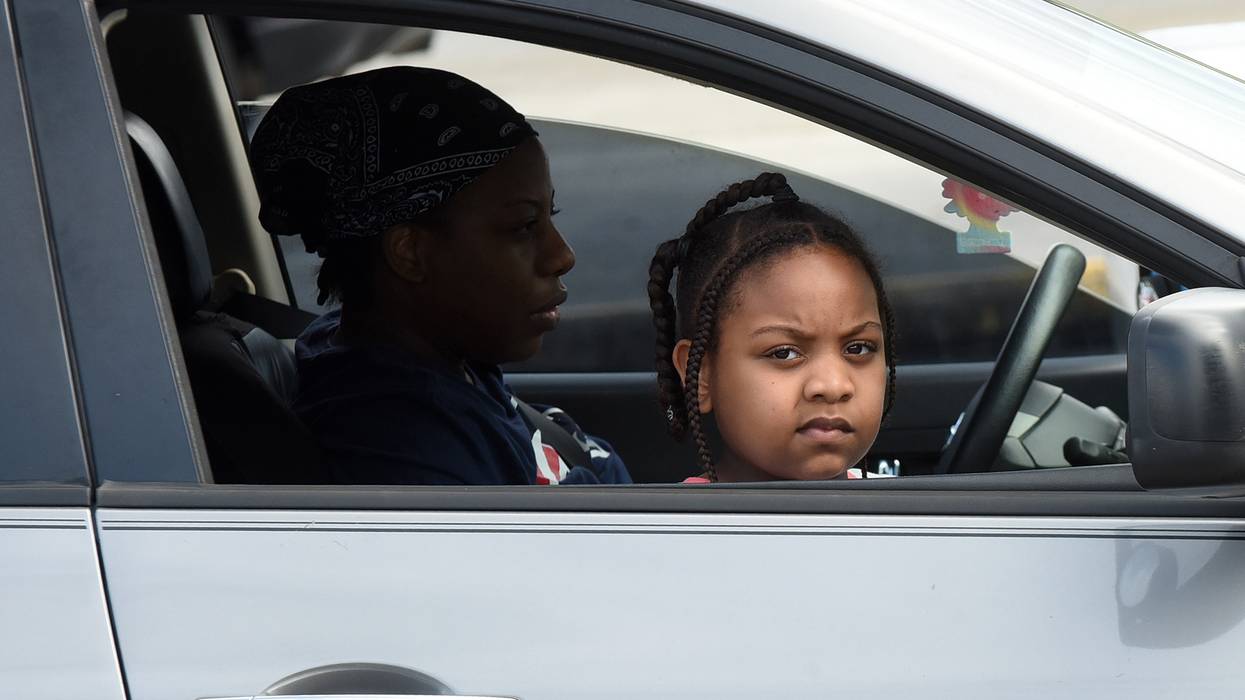
Gen Z women refuse to have our bodies and reproductive agency pressed into service in some futile attempt to balance the books of a chaotic economy.
Gen Z women like me are having fewer babies. That shouldn’t be a surprise—with prices for everything going up, our parents’ steady jobs, white picket fences, and retirement packages feel much less attainable for us.
But the government wants to make us change that. In the US and elsewhere, anxiety over aging populations and shrinking labor forces has been woven into the claim that women in their 20s somehow owe the economy more babies.
Our fertility becomes an asset on a balance sheet to counteract falling birth and marriage rates. Women who choose to put our own lives and interests first get branded “childless cat ladies,” as Vice President JD Vance once called us. But if being in no rush to get pregnant means I’m a selfish cat lady, I’m proud to claim the title.
A better path would be to pass policies that support women who do want to have children but can’t afford it: like paid leave, affordable and reliable childcare, and making family planning and perinatal care accessible for all.
Half of all pregnancies worldwide are unintended, reflecting a broad pattern where women’s power to choose when and whether to have children is compromised, contested, and unequally distributed. Pro-natalism—a set of policies or attitudes designed to pressure women into having more children—is part of that pattern. It stigmatizes those who resist as selfish.
To me at age 21, being “selfish” means finishing my degree before even thinking about starting a family. It means refusing to take on a dependent while still outgrowing my own dependency. It means treating my body and my reproductive choices as my own rather than as a budget line item or labor input. It means doing what I have to do to navigate an economy where costs are skyrocketing.
Today, the average cost of raising a child from birth to 18, including daycare ($17,264 annually for five years), food ($4,208 a year), and transportation ($4,422 a year) comes to over $300,000 and counting.
Under the so-called Big Beautiful Bill, Congress created $1,000 “Trump Accounts” as a “baby bonus” to encourage women to have more babies. But in that case, they’re missing a few zeroes. And since money is kept in a stock market index fund until the babies turn 18, it won’t help parents with the high costs of raising kids.
So much for the carrot. Then there’s the stick—attacking reproductive healthcare so pregnancy is harder to avoid. For starters, abortion bans have spread across the country since the Trump administration’s hand-picked Supreme Court justices overthrew Roe v. Wade.
Meanwhile, the Trump administration has removed federal funding for teen pregnancy prevention programs, opting for abstinence-focused, fertility-tracking curricula instead—which studies show result in higher teen pregnancy rates.
The administration has also undermined Title X, the only federal program providing family planning services to low-income people. Historically there has been bipartisan support for it. But last year, funding for 22 Title X grants was frozen, putting 834,000 people at risk of losing access to birth control, cancer screenings, STI testing, and more. That funding was later restored thanks to a lawsuit, but next year’s budget proposes to eliminate it again.
A better path would be to pass policies that support women who do want to have children but can’t afford it: like paid leave, affordable and reliable childcare, and making family planning and perinatal care accessible for all. These should be consistently funded, reliable commitments that don’t get yanked back when administrations change.
Rejecting these attacks doesn’t mean I don’t want a family or child someday. It means the choice belongs to me and to every woman, on her own terms. Gen Z women refuse to have our bodies and reproductive agency pressed into service in some futile attempt to balance the books of a chaotic economy.
No recycled misogynist insults about cat ladies, no performative “baby bonus” bribes, no motherhood medals are going to override my own power to choose when or whether I have a child. If that makes me selfish, it’s a label I accept happily.

The 1%’s record wealth and the 99%’s rising cost of living are not two distinct stories. They are one transaction, and we are on the paying end of it.
As we mark 15 years since Occupy Wall Street, it is worth remembering that the movement against inequality has a long lineage. The Gen Z-led protests flooding the streets of India, Kenya, Bolivia, and Tunisia today have been building for generations.
On the last day of November 1999, tens of thousands of people shut down the World Trade Organization summit in Seattle. Trade unionists marched alongside environmentalists, students locked arms with farmers, and for a few extraordinary days the people who run the global economy could not get into their own meeting.
The press called protesters a rabble with no coherent demand. They were wrong. The demand was simple and it has not changed: an economy that works for the many, not for a handful at the top.
Here is the lesson of the last decades, and the reason for hope: Every time the powerful have declared this movement finished, it has returned larger, sharper, and more connected than before.
That demand lands differently when you cannot afford the basics of life. In Seattle, the debate centred on trade rules. Today, people are doing the maths as they stand in front of a grocery food shop not knowing what they can afford to buy, tackle rents that consume the entire salary, and face energy bills that arrive like a threat. What was once an abstraction has become a household emergency.
Seattle did not come from nowhere. Five years earlier, the Zapatistas had risen in Southern Mexico on the day a free trade deal took effect, declaring that ordinary people had a right to refuse the terms being set for them from above.
The Jubilee movement had brought millions of people onto the streets and into churches to demand the cancellation of crushing debts owed by the world’s poorest countries.
By 2001 a hundred thousand people were meeting in Porto Alegre in Brazil under the banner “another world is possible,” and that same year a young man named Carlo Giuliani was shot dead protesting the G8 in Genoa, Italy.
The powerful learned early that this movement would not simply ask politely. It would demand systemic change.
Then came the crash. In 2008, the same financial system that had been sold to us as untouchable collapsed, and ordinary people were handed the bill while the bankers who broke it kept their bonuses. Out of that betrayal came the next great wave of action.
2011 brought Tahrir Square, the Spanish Indignados, the Greek fight against austerity, the Chilean students, and, in September, a small camp in the shadow of Wall Street.
The Occupy Wall Street movement gave the whole movement its slogan—“We are the 99%.” A single phrase that did what a thousand policy papers could not. The protesters drew the line. There is them, and there is the rest of us, and the rest of us are almost everyone.
Occupy’s camp was eventually cleared. Critics declared the moment over, the movement a failure, the slogan a fad. Look closer and you see something different.
The 1% have the money. We have the numbers, the history, and the truth.
The idea did not die. It moved into the bloodstream of public life. The language of the 1% vs the 99% is now spoken in parliaments and kitchens alike. Ideas once dismissed as fringe—taxing extreme wealth, cancelling illegitimate debt, treating billionaires as a policy problem rather than a national mascot—are now argued seriously by economists and demanded openly in the streets.
That is what a movement can do over time. Shift what people believe is normal, and then shift what they believe is possible.
We need that long memory now, because the case against the system has never been clearer. According to Oxfam, billionaire wealth hit a record $18.3 trillion in 2025, growing three times faster than in the previous five years, while the number of billionaires surpassed 3,000 for the first time in history. The richest 1% now own almost 44% of all the world’s wealth, while the poorest half of humanity holds barely half of 1% of all the world’s wealth.
Just 12 men hold more wealth than 4 billion people combined. Elon Musk recently became the first person in history to be worth a trillion dollars, in a world where 1 in 4 people goes hungry. This is not the weather. It is a result of a system, engineered by people with names and addresses who have rigged the rules in their own favor.
The other side of that ledger is the bill the rest of us pay. The same years that added a trillion to the top produced rents nobody can pay and food prices that climb faster than wages.
The 1%’s record wealth and the 99%’s rising cost of living are not two distinct stories. They are one transaction, and we are on the paying end of it. In the United States, rents across major cities have risen by more than a third since 2020, the cost of living now tops the list of voters’ concerns, and in 2025 Zohran Mamdani became mayor on an affordability platform in the very city where Occupy began.
And the wealthy know they are exposed, which is why they are buying protection. The super rich are now 4,000 times more likely to hold political office than the rest of us, and they have spent freely to capture the media, the courts, and the politics that might otherwise hold them to account. When wealth concentrates like this, democracy thins out. The fight against inequality and the fight for democracy are the same fight.
Here is the lesson of the last decades, and the reason for hope: Every time the powerful have declared this movement finished, it has returned larger, sharper, and more connected than before. Carnegie’s Global Protest Tracker recorded new anti-government protests in more than 70 countries in 2025.
The young people filling the streets today are not starting from zero. They stand on the shoulders of Seattle, Tahrir Square, Zuccotti Park, every square that was ever cleared, every campaign that was ever written off. And they are not marching over an abstraction. They are marching because the cost of a decent life has been priced out of reach while a few thousand people got richer than anyone in history.
So this one goes out to Gen Z, in every city and every country where the numbers no longer add up. Your time is now. You did not break this economy. You inherited the bill for it. Enough is enough.
The 1% have the money. We have the numbers, the history, and the truth. The only question that has ever mattered is whether we organize. Every generation before answered yes. Now it is yours to answer, and the world is waiting to hear it.
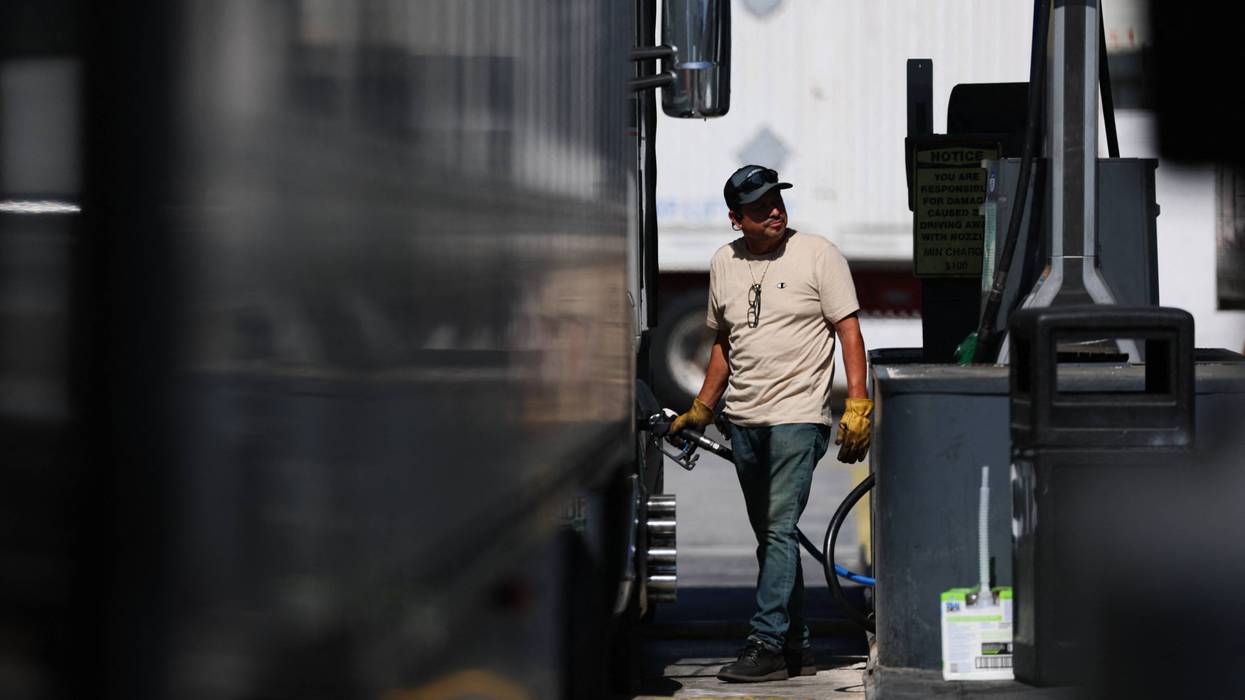
"Diesel touches almost everything Americans buy," said one expert.
The price of diesel fuel hit another record high on Friday, thanks in large part to President Donald Trump's illegal war with Iran.
New data released by the American Automobile Association showed the average price of diesel in the US increasing to $6.06, a 14% increase over the average price one month ago and a 64% increase from the average price one year ago.
In a Friday social media post, petroleum industry analyst Patrick De Haan reported that the price of diesel "is not slowing down," hitting an average of $6.07 as of 10:34 am ET.
De Haan also projected that Americans will collectively spend $711 million more on gasoline and diesel on Friday than they did a year ago, and warned "this number will continue to grow and could soon be $1 billion per day."
Rising diesel prices often portend higher inflation because it is the fuel used by trucks to ship goods across the country.
In an interview with The Associated Press published Friday, David Ortega, professor of food economics and policy at Michigan State University, warned that US consumers are likely in for another painful round of cost increases if the price of diesel stays at record highs.
“Early on, much of the cost increase gets absorbed along the supply chain through existing freight contracts and retailer margins,” said Ortega. “But as contracts reprice and fuel surcharges take hold, more of that cost makes its way to the grocery store.”
Ortega's analysis was echoed by Mark Tepper, CEO of Strategic Wealth Partners, who wrote in a social media post that "inflation could be about to get a lot more painful" if the price of diesel doesn't come down soon.
"Diesel touches almost everything Americans buy," Tepper explained. "Coming out of the pandemic, rising diesel prices were a leading indicator for the inflation that followed."
Diane Swonk, chief economist at audit services firm KPMG, said rising diesel costs, combined with the latest Consumer Price Index report from the Bureau of Labor Statistics showing continued elevated inflation, made it likely that the US Federal Reserve will hike interest rates.
"The Fed will begin hiking in September, removing what it gave us in rate cuts in late 2025," Swonk predicted. "We now expect three rate hikes by early 2026. The probability that the vote will be unanimous just rose."
The record diesel prices, and their subsequent impact on inflation, come less than two months before the midterm elections.
The social media account for Democrats in the US House of Representatives pounced on news of higher diesel prices, which they said would mean "higher delivery prices, more expensive groceries, and surging electric bills."
"Trump's war with Iran did this," the House Democrats added.
Alex Jacquez, senior vice president of policy, advocacy, and research at Groundwork Collaborative, also took a shot at the president's policies, noting that in recent weeks he has "imposed further tariffs on one of our closest trading partners and continues escalation in Iran."
"Trump promised to lower costs and improve daily life for Americans," Jacquez added. "He’s not only failed to deliver on that promise, he’s driven our economy over a cliff."
Willamette University historian Seth Cotlar argued that the spike in diesel fuel could have significant impact on the US Senate race in Maine, where Republican incumbent Sen. Susan Collins is vying for a sixth term in office.
"Home heating oil season is about to start up," Cotlar observed. "In Maine, about 50% of homes use heating oil which is almost identical to diesel. How’s that GOP affordability agenda coming Senator Collins?"
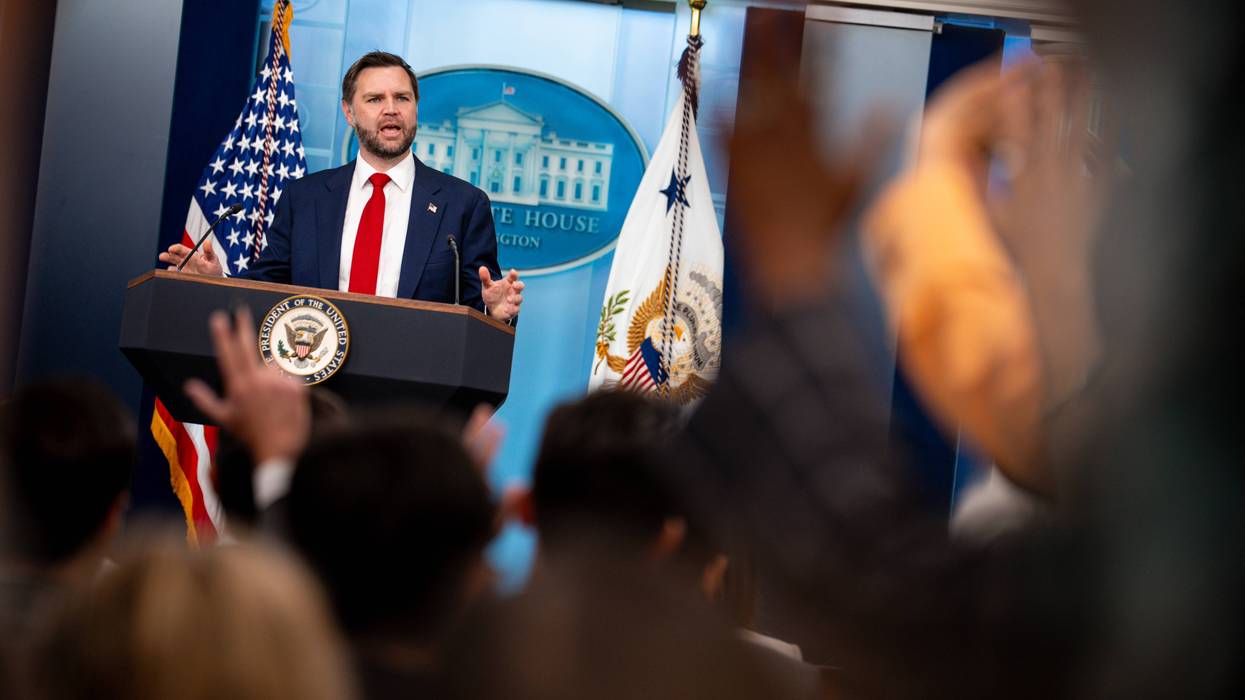
"Raiding an underfunded program solely to score culture war points is not pro-family—it’s a wasteful grift that I will fight every step of the way," said Sen. Patty Murray.
The top Democratic appropriator in the US Senate responded with alarm and outrage on Tuesday to news that the Trump administration is preparing a rule change that would siphon federal dollars away from a chronically underfunded program that helps working-class parents afford childcare.
The diverted funds would be used to finance a new federal subsidy for "married couples with one stay-at-home parent in certain income brackets," The New York Times reported late last week. The proposed change, a top priority of Vice President JD Vance, is "outrageous and backwards," Sen. Patty Murray (D-Wash.), ranking member of the Senate Appropriations Committee, said in a statement on Tuesday. Murray argued it would be illegal and immoral for the administration to shift taxpayer money away from the Child Care and Development Fund, which serves around 1 million families nationwide in a typical month.
"It’s not the 1950s in America—our government shouldn’t punish people for being single parents or choosing not to marry," said Murray. "Nobody cares what JD Vance thinks constitutes a ‘real’ family—single parents and parents who aren’t married pay taxes, too. Raiding an underfunded program solely to score culture war points is not pro-family—it’s a wasteful grift that I will fight every step of the way.”
The Times reported that "the policy change would effectively create a government incentive for parents to stay home with their children, an idea embraced as part of a broader conservative effort to advance policies that promote more mothers staying at home." Unmarried couples with one stay-at-home parent would not qualify for the newly proposed subsidy.
"The move could end up redirecting money away from working parents and their childcare providers, causing some to raise their rates or even close, critics said, potentially worsening what many experts say is a childcare crisis in the country," the newspaper added. "About 80% of the 870,000 families who currently get the childcare subsidies have single working parents, most of them mothers, according to Health Department data."
Rep. Rosa DeLauro (D-Conn.), House Democrats' top appropriator, said in a statement that "supporting stay-at-home parents should never come at the expense of working families."
“At a time when families are already struggling to find and afford childcare, this proposal would force more parents to compete for the same inadequate pot of money, threaten childcare providers, and disproportionately hurt single working parents, most of whom are mothers," said DeLauro, "If Republicans want to support families, they should join Democrats in passing the expanded Child Tax Credit and increasing access to affordable childcare—not rob Peter to pay Paul while imposing their preferred definition of what a family should look like."
Childcare costs—which run many families tens of thousands of dollars per year—are a major concern of US voters. One recent survey found that more than 80% see childcare costs as part of the nation's broader affordability crisis, and 76% view them as "a crisis or major problem" for families with young children.
But the Trump administration has so far done nothing to lower childcare costs—and has taken steps that could raise them and deny low-income families badly needed relief.
Earlier this year, roughly a month after launching his costly and destructive war on Iran, President Donald Trump suggested that the federal government should not provide any funding for childcare.
"We’re fighting wars," the president said. "We can’t take care of daycare. You gotta let a state take care of daycare, and they should pay for it too."
Amy Matsui, vice president for childcare and income security at the National Women’s Law Center, said it is "outrageous that the administration would propose siphoning money away from families who are struggling to afford childcare to send cash to married couples with a stay-at-home parent, when hundreds of thousands of families are on childcare waiting lists around the country."
"If this administration really wanted to support families," Matsui added, "it would invest more—not less—dollars in childcare, create a national paid family and medical leave program, expand access to a fully refundable Child Tax Credit, and restore health care and nutrition assistance."
"Trump and his regime have made corruption impossible to ignore, so Democrats should connect the administration’s self-dealing and abuses of power to the economic pressures voters are feeling."
Two leading progressive organizers on Tuesday argued that Democratic candidates don't need to choose between campaigning on affordability issues or against President Donald Trump's unprecedented corruption.
Ezra Levin and Leah Greenberg, co-executive directors of Indivisible, wrote in an op-ed published by The Guardian that a recent survey conducted with Lake Research Partners finds that the issues of affordability and government corruption are deeply intertwined.
"Affordability is essential," wrote Levin and Greenberg, "but our polling shows that the case for lowering costs becomes more compelling when paired with a clear commitment to take on corruption and special interests."
The reason for this, the organizers said, is that majorities of Americans are concerned about politicians rigging the political system to benefit themselves and about corruption costing taxpayers money.
Additionally, wrote Levin and Greenberg, vows to lower costs are more credible with voters when they come with concrete plans to take on corrupt corporate interests that are blamed for gouging consumers.
On top of that, they argued, "Trump and his regime have made corruption impossible to ignore, so Democrats should connect the administration’s self-dealing and abuses of power to the economic pressures voters are feeling."
In sum, the organizers emphasized that combining messages about affordability and corruption is "more persuasive than either message alone."
The Indivisible leaders' arguments echo those made by Dustin Guastella, director of operations for Teamsters Local 623 in Philadelphia, and Erica Etelson, president of the Rural Urban Bridge Initiative, who advocated for what they described as "kitchen-table populism" in an op-ed published in The Guardian last month.
Like Indivisible, Guastella and Etelson's organizations commissioned a poll conducted by Verasight testing progressive messages for the 2026 midterms, and came away with similar conclusions.
"The top-performing messages we tested have a simple formula," they wrote. "They promise to bring costs down, make the biggest corporations pay their fair share, and crack down on the people who game the system. Ultimately, they tell a simple story: Hard work should pay off."
With midterm elections less than two months away, there are signs of wide dissatisfaction with the state of the US economy.
Elections analyst Charlie Cook told The New Republic in an interview published Tuesday that he's seeing data indicating that worries about the economy are giving Democrats openings in places that would have once been solidly Republican.
The biggest driver of this economic anxiety, said Cook, appears to be Trump's illegal war with Iran, both because it broke a key 2024 campaign promise about no new wars in the Middle East, and because it has raised the price of countless consumer goods, including diesel fuel and fertilizer, which are both vitally important for US farmers.
“I mean, you take Iran—after promising no more wars and all that—but fuel, fertilizer, no more wars, you take tariffs,” Cook said, “and all this goes to the heart of his base, of, you know, small-town, rural, farm, all of that.”
“To have the people that are generally the most enthusiastic for you uniquely hurt,” Cook added, “now, that’s new territory.”
We need to hold lawmakers who make working people suffer to enrich the already wealthy accountable.
My mom worked harder than anyone I know. She wanted a good life for us. It was a hard life—I remember the Christmas she had to pawn our gifts to pay the light bill—but she made it special for us.
Now I have two kids of my own, and I want them to have every opportunity that other children have.
The landscape is tough out there. Like many Americans, I can’t afford childcare, and finding work that accommodates my need to care for my young children is hard. With inflation, the little income I have doesn’t go nearly as far as it used to.
I’m grateful to have assistance with food, housing, and healthcare through our social safety net programs.
Food programs like SNAP (also known as “food stamps”) and WIC (that’s the Special Supplemental Nutrition Program for Women, Infants, and Children) have literally saved our lives when we’ve been hungry. I wouldn’t be able to feed my children without them. And thanks to Medicaid, we have healthcare.
But I’m sick with worry about the cuts to SNAP and Medicaid that are barreling my way. The so-called “Big Beautiful Bill” slashed these programs last year so lawmakers could slash taxes for corporations and the wealthy, and some of the worst cuts will take place after this year’s midterms.
The uncertainty is causing so much stress. The first change I noticed is they cut off my eyeglasses subsidy. What’s next? Meanwhile, the cost of living keeps going up and up, outpacing wage gains for me and countless others. Our SNAP benefits cover much less than they did a year ago, and that’s before potential cuts take effect.
I feel like I’m waiting for a bomb to drop on me and my kids, and I’m not the only one.
“The average minimum-wage worker must work nearly 116 hours per week, nearly three full-time jobs, to afford a two-bedroom rental home,” the National Low Income Housing Coalition reports. That’s the truth—my own sister works three jobs and still has to live with roommates.
Lawmakers are telling us we can’t have healthcare now unless we work, even in areas with low wages. Yet those making the laws enjoy free government-socialized healthcare and high wages.
They say SNAP benefits can’t be used for a cake or soda for my child’s birthday. Yet no one would stop the wealthy from using their $1 trillion in tax cuts under the “Big Beautiful Bill” to buy their kid a yacht.
Poor and low-income people deserve to be happy too. We deserve healthcare, food, housing, and even a child’s small birthday party. It feels like we’re being punished for working regular jobs—and like lawmakers want to keep us down so we don’t fight back against this inequality.
But we are fighting back.
I’ve started attending our local town hall meetings and hearing the stories of injustice and poverty. I started volunteering with a non-profit organization in my community. I help get goods to people in need, even as I am also in need, because that’s what we do. Poor and low-income people help each other out, because we understand what it’s like to see our kids go without while we work our fingers to the bone.
But we can’t do it alone. We need to demand from lawmakers that instead of cutting our healthcare, food, and housing benefits, we need to expand them to meet the great need in this country. We need a livable wage so we can afford market rent and rising food prices.
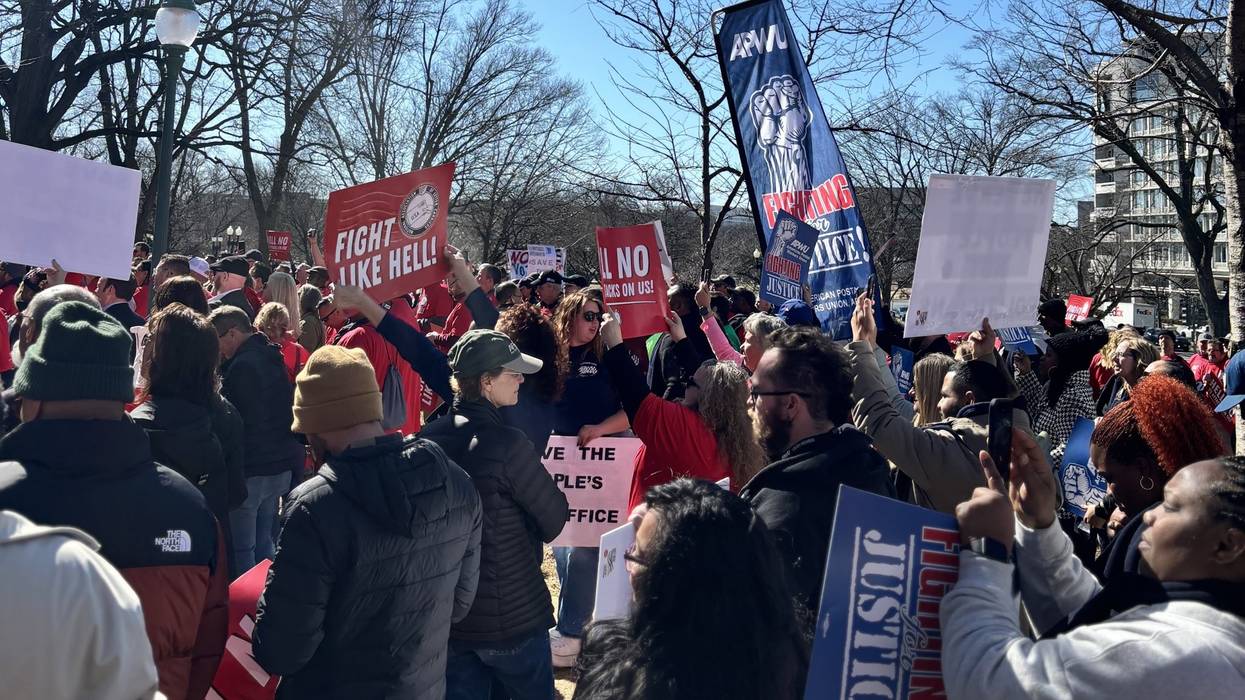
And we need to hold lawmakers who make working people suffer to enrich the already wealthy accountable.
The work that our families run on often happens where no one can see it. This Labor Day, as midterms near, I'm thinking about what it will take for the people who do that work—and the people who depend on it—to finally be counted.
What does it say about this country when you can work for more than 40 years and still can’t afford to stop?
I am 66 years old and have spent over 30 years caring for children across the South. When 2024 drew to a close, I tried to retire. I thought I had put in enough time to set myself free from the labor of surviving this economy.
But, as I worried, I couldn't afford it. The price of everything was increasing, including bread, and I realized I had no choice but to return to work within six months of my retirement.
You can tell workers like me that we should have saved more, planned better, chosen a better path toward our retirement. But here’s the problem many domestic and care workers encounter: You cannot save money you never had. When wages barely cover housing, groceries, medicine, and everything else life throws at you, retirement is less like a plan and more like a luxury. In 2025 (the year I was supposed to be retired), early educators had a median wage of $34,980. Other domestic workers, like house cleaners make an estimated median wage of $34,650, and home care workers in 2025 had a median annual income of $22,429. These wages reflect the reality that domestic workers overall are three times as likely to live in poverty as other workers.
With seven children and 18 grandchildren, I do not want another generation of women in my family to inherit a country’s economy where caring for others means giving up their own security.
I come from a legacy of domestic workers. My grandmother, Big Momma, was a Certified Nursing Assistant. My mother was a housekeeper. I became a childcare worker. Three generations of Black women in my family have cared for other people.
We are part of a much longer history, and that is why this work has never paid what it should.
In 1881, 20 Black laundresses organized a movement that grew to nearly 3,000 members and won better wages after striking. Nearly a century later, Dorothy Bolden organized domestic workers across this same city and founded the National Domestic Workers Union of America. Bolden understood that better working conditions and civic power went hand in hand and even made voter registration part of the strategy to organize domestic workers.
When this country finally wrote basic protections into law, such as the right to organize, a minimum wage, and a path to retirement, domestic workers and farmworkers were left out of these protections. That was intentional. Much of that work was done by Black women in the South; leaving it unprotected was no accident. A multigenerational legacy later, we are still living with the consequences these gaps created.
It’s why a person can care for children for over 32 years and still not be able to afford to retire. We didn’t fail to plan; our work was just kept out of sight and out of the protections other workers won.
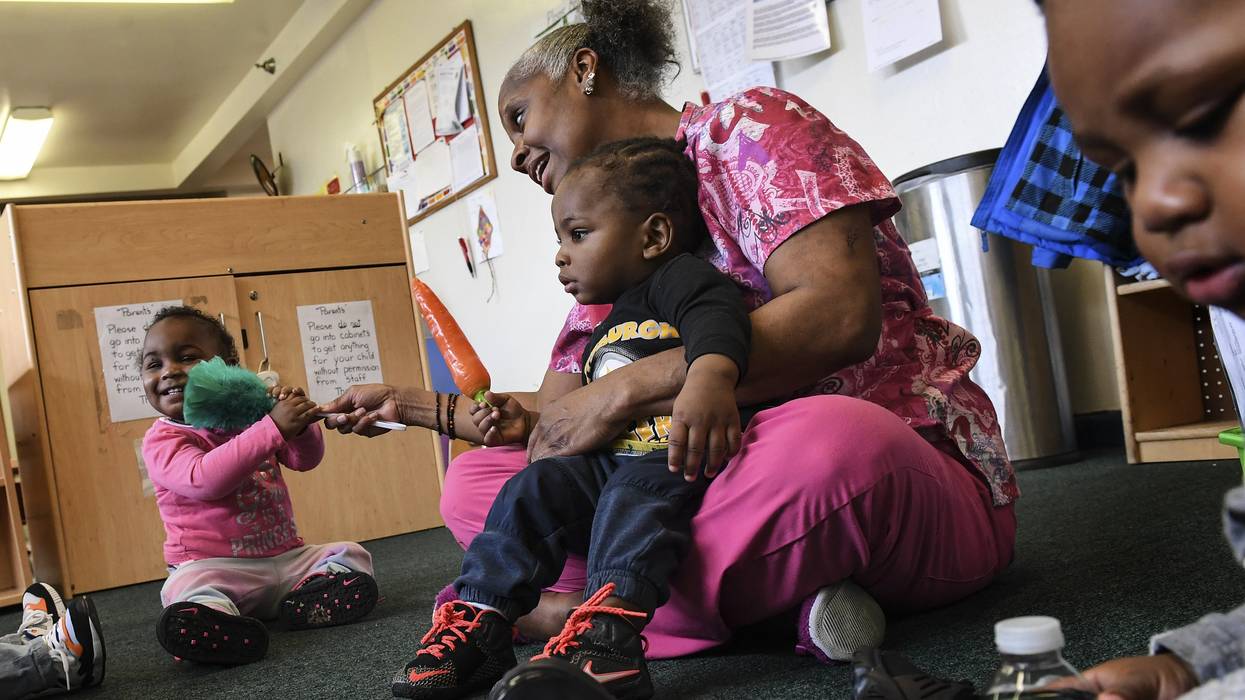
For most of my career as a childcare worker, children knew me as Miss Cathy. If one of them came to me crying because they were being bullied or something was wrong, I would tell them, "Miss Cathy is going to get to the bottom of it." And trust that Miss Cathy always did.
I adore my work and the children I care for. But loving your work should not require sacrificing your own security.
Or your health.
I have Graves’ disease—a disease that is twice as likely to impact Black women—and often, we face delayed diagnoses and advanced symptoms because of healthcare disparities. For years, I managed it by going to quick clinics when I could afford them and, most of the time, went without care when I couldn't. It was ironic: I was spending my days making sure other people's children were cared for while struggling to afford consistent care for myself. It was not until I turned 65 and qualified for Medicare that I finally had access to health coverage. And even that coverage is at risk.
But this essay is not meant to share all of the challenges I face in care work. No, I am writing this to emphasize that I am no longer the exception. We, as working-class people, have become the rule.
Across the United States, retirement is slipping out of reach for working people of every kind. Wages have not kept up with the cost of the roof over our heads, a simple doctor's visit, a full grocery cart, or care of any kind. More and more people are working into their late 60s, 70s, even 80s, not because they want to, but because stopping simply is not an option. For me, I work until God tells me to stop. The insecurity I’ve referenced has always shadowed domestic workers, and now it’s reaching the rest of the working class. My story reflects the lives of so many working people.
But domestic workers are building a constituency around care: domestic workers, family caregivers, parents, and everyone who understands that care is not some niche issue. It is part of whether a family can afford to live and whether the people who provide that care can afford to grow old, in my case, preferably with a crisp beverage on a beautiful beach.
The economy and affordability are on people's minds. It’s the only thing that’s on my mind. My bank account tells me that things are expensive.
For Black women like me, the right to be heard was never simple. Our grandmothers cleaned other people's homes and were told their voice did not matter in their own country. My father, who raised my siblings and me in 1960s Memphis, taught us that sitting out of the civic process was not optional; he refused to be invisible, and engaging with elected officials was a way to ensure that.
And it is not only domestic workers who have a stake in this. Every family with childcare needs, every person with an aging parent or disabled loved one at home, all of us who will need care someday—we all deeply depend on this work. When we make that care visible, when we insist that it be counted and prioritized, we are looking out for one another.
I want the people in elected office to hear that childcare lets parents go to work, that home care lets people live with dignity, and that we, the people who do that work, should be able to retire from it one day.
Domestic workers are more than our labor. We are neighbors, parents, and grandparents.
With seven children and 18 grandchildren, I do not want another generation of women in my family to inherit a country’s economy where caring for others means giving up their own security.
My grandmother cared for people. My mother cared for people. I spent 32 years caring for children. We have done our part.
This Labor Day, I want the people who represent us—and the country we have spent our lives caring for—to show us they will do theirs.
And if they don't, Miss Cathy is going to get to the bottom of it.
Placing the drive for profits before the needs of the human population is the normal operation of the capitalist system as ruling class interests use two-party politics to craft laws and policies that benefit elites, billionaires, and corporations.
The falling US share of the world economy—40% in 1960 versus 25% in 2026—is a driving force of economic nationalism stateside. Its rhetoric under President Donald Trump is America First, with abundant use of sanctions, tariffs, and war—directly with Iran and by proxy in Israel and Ukraine. On the note of warfare, the president has used military operations abroad as did Presidents Bill Clinton, Barack Obama and Joe Biden since the fall of the former Soviet Union on December 26, 1991, heralding a big change in the world order.
Another landmark change in the global order is China's share of the world economy (3.5-4% in 1960 versus 19-205 in 2026). Currently, China is a manufacturing world power. The nation is also blessed with a bevy of natural resources such as rare earth minerals like erbium and yttrium. Advanced electronics and artificial intelligence, prominent industries stateside in 2026, rely upon these two heavy elements.
Accordingly, given the history of US militarism and racism against Asians, the contradictions of economic nationalism, the America First rhetoric, are plentiful. President Trump refers to America's interest as "ours" and "we" when he speaks of other nations cheating the US. This is a bid to unite the class interests of elites (billionaires and corporations, key donors to Democrats and Republicans) with workers. Thus the economic rise of China is a big target of distortion.
China's prominent trading partners help to form the grouping of BRICS (Brazil, Russia, India, China, and South Africa) nations. There is a BRICS summit in New Delhi, India set for September 12-13.
An affordability crisis of working and poor people stateside as their tax dollars flow away from them and into the congressional-military-industrial complex is the tip of a proverbial iceberg.
Speaking of military operations, US Treasury Secretary Scott Bessent announced increased economic warfare against Iran plus any countries doing business with that Persian nation, the Shanghai Cooperation Organization (SCO) met in Kyrgyzstan. Nations’ heads of state attending this gathering ranged from China, Russia, India, Iran, and Pakistan to Belarus, Kazakhstan, Kyrgyzstan, Tajikistan, and Uzbekistan. The SCO also addressed measures to counter Uncle Sam’s deeds worldwide, including the US war against Iran and Israel's genocide of Palestinians.
In the SCO’s Bishkek declaration, the members also pledged to “support and strengthen an open, transparent, fair, inclusive, and non-discriminatory multilateral trading system based on generally accepted international principles and rules that promotes global economic development, ensures fair market access, and ensures special and differential treatment for developing countries.” Uncle Sam is looking at challenges to it alone calling the shots of a world order that gets its marching orders from Washington, DC. Meanwhile, the US is pursuing attempts to dominate other nations to boost the bottom line of America's elites.
Think of Uncle Sam’s taking of Venezuelan oil reserves, the details of which are emerging, glacially. Then there’s the talk from Washington of the US using tactical nuclear weapons to subdue Iran. The president has been threatening to take Greenland. He has also launched a trade war against Canada, a major US trading partner, claiming the neighbor to the north has been unfairly treating America.
Recall the president’s premise for his America First approach to jobs and economic gains? US global trade partners had been ripping off America. He was going to solve that problem, draining the swamp of Washington insider corruption, and so on. Wait. What?
For starters, US industry made the call to move abroad. To be clear, the deindustrialization of the Midwest and Northeast was a bipartisan priority that the political establishment facilitated, based on decisions made in corporate boardrooms. Democrats and Republicans supported corporate America moving production abroad to pursue higher returns on investment and weaker environmental policies.
Placing the drive for profits before the needs of the human population is the normal operation of the capitalist system. Ruling class interests use two-party politics to craft laws and policies that benefit elites, billionaires, and corporations.
The contradictions of economic nationalism and the world order are growing. An affordability crisis of working and poor people stateside as their tax dollars flow away from them and into the congressional-military-industrial complex is the tip of a proverbial iceberg. The worsening climate crisis that profits billionaires and corporations in the short-term as the political duopoly facilitates this ecocide is a wake-up call for movement politics.
"They are battling education funding cuts, out-of-control Immigration and Customs Enforcement agents, limitations on what they can say, much less teach, and an affordability crisis," said one union leader.
As the academic year kicks off, survey results released Wednesday by the second-largest teachers union in the United States show how educators are struggling because of underinvestment in schools and high prices under a Republican-controlled White House and Congress.
In the lead-up to classes resuming, Grow Progress last month surveyed 2,112 American Federation of Teachers (AFT) members who teach kindergarten through 12th grade about spending, stress, President Donald Trump's policies, and more.
The pollsters found that a majority of respondents anticipate spending at least $100 to $600 on supplies for their classrooms without being reimbursed. Over a quarter said that school funding issues shift costs to teachers, and supply prices keep rising.
While 61% said they are buying basic supplies, that's not all that teachers are shopping for this year. Nearly a third are spending on food, hygiene, and student care items, and around a quarter are purchasing specialized tools and accessibility supports as well as items for classroom setup, organization, and decor. Roughly a fifth are buying books and rewards for students.
Half of the teachers surveyed said they anticipate needing to buy food for their students at some point during this school year.
Over three-quarters of them reported seeing negative impacts of the Trump administration's policies in their schools and communities, with 61% selecting "very negative." They pointed to funding cuts and privatization of schooling, immigration enforcement that "traumatizes students and families," rising costs, vulnerable students losing support and protection, political pressure that restricts teaching and inclusion, and issues with bigotry and hostility.
Gasoline prices have stayed at record highs lately thanks to Trump's illegal war on Iran, which has responded by restricting traffic through the Strait of Hormuz, a key trade route. Just 15% of teachers said their commute will cost about the same this year, compared with 36% who expect it to be "a little more" and 47% worried it will be "much more."
A plurality—48%—blamed Trump and Republicans specifically for "the rising costs of groceries, gas, and other goods," while 28% pointed to government policies and leadership, 18% said tariffs and global instability, and 11% cited corporate greed and profiteering.
Prices for everything are climbing while the national debt races past $40 trillion. The bottom line? The current economy is not working for hardworking Americans. www.nytimes.com/2026/08/29/u...
[image or embed]
— AFT (@aft.org) September 2, 2026 at 9:45 AM
Asked to rank their stress level on a 1-10 scale, with 10 being extremely stressed, 62% selected somewhere in the 7-10 range.
Almost a third of teachers said they were somewhat or very likely to leave the profession in the next year. While over half of all respondents said they can't afford to lose their salary, pension, and benefits, and a quarter pointed to their love for teaching and students, nearly a fifth said the stress and workload make the job unsustainable.
"Teachers are at a breaking point," said AFT president Randi Weingarten said in a statement. "Many work more than one job to make ends meet, and they still dig into their pockets each year for basic classroom supplies, from books to art materials and even food for their students."
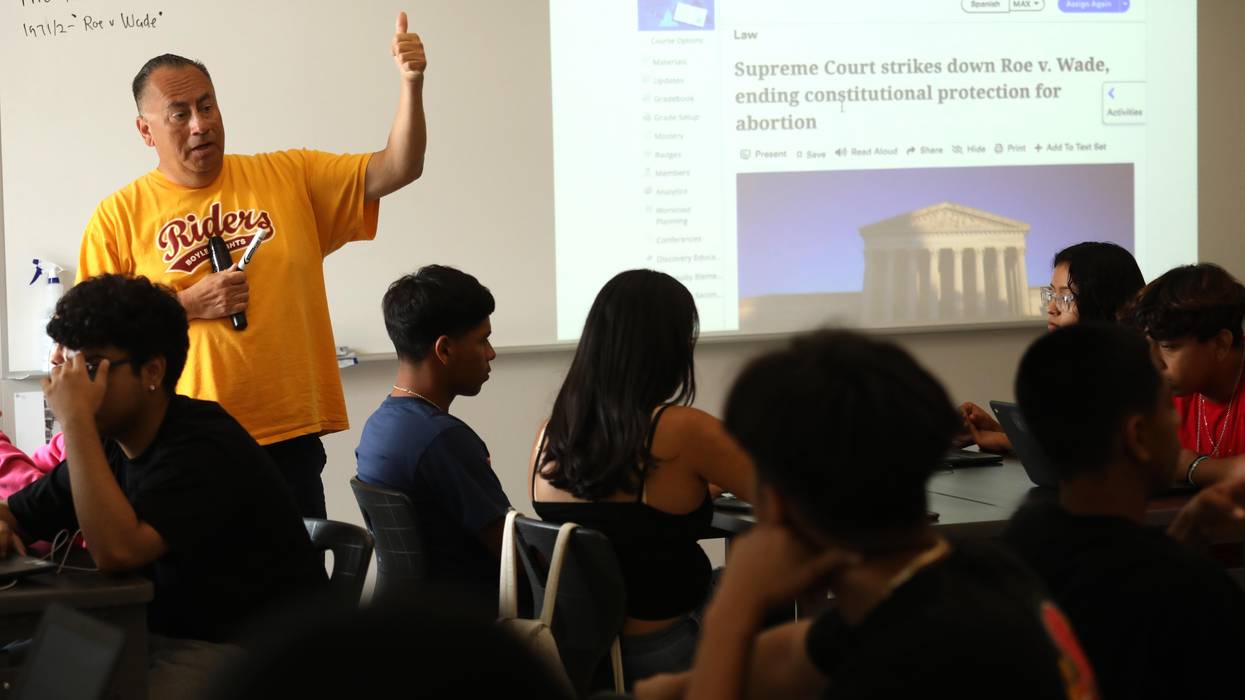
"They are battling education funding cuts, out-of-control Immigration and Customs Enforcement agents, limitations on what they can say, much less teach, and an affordability crisis that's making it even harder for working families to get by, let alone get ahead," she emphasized. "No wonder they're stressed and talking about leaving the profession. All of this is taking its toll."
The survey results followed a report released late last month by the Center for Economic and Policy Research and the Economic Policy Institute that suggests leaving the field could lead to a pay boost. Sylvia Allegretto, a senior economist at CEPR and research associate at EPI, found that "in 2025, the teacher pay penalty stood at an estimated 25.2%—meaning teachers earned about a quarter less than comparable college graduates in other professions."
"Inflation-adjusted weekly wages for public school teachers fell 6.2% over the last three decades, while wages for other college graduates rose 28.8% over the same period," according to the report. "Teachers typically receive better benefits packages than other professionals, but after accounting for the difference in benefits, teachers' total compensation penalty was 14.5% in 2025."
Allegretto said in a statement that "the decades-long teacher pay penalty has taken a heavy toll on public education. Yet, policymakers have failed to make the needed investments to reverse course. That failure is especially troubling in a country as wealthy as the United States, with more than enough resources for its public schools to be the envy of the world."
It's not just teachers who are contending with soaring costs as school resumes; parents and students are also facing high prices for academic supplies and other essentials, including food, fuel, healthcare, and housing, due to the Iran War, Trump's tariffs, and GOP cuts to key programs.
With the midterm elections just two months away, Senate Democrats on Wednesday released a roundup of recent reporting on how families are struggling with back-to-school season, and said that "as Trump continues to claim affordability is a 'hoax' and a 'con job,' Americans are feeling the strain of Trump's policies on their pocketbooks."
"Headlines from across the country this summer lay bare Trump's cost-of-living crisis as families get ready to send their kids back to school," Senate Democrats stressed. "Parents are worried about the cost of school supplies and their kids' lunches, gas prices are at an all-time high for August, and families' vacations had to be cut short as rising inflation and the cost of airfare hit wallets."
"Trump's attempts to pass the buck belie Americans' reality: His illegal war in Iran, his tariffs, and the rest of Republicans' failed economic policies have made life unaffordable for families nationwide," they added. "Because of President Trump and Republicans' broken promises, working families across the country are now paying more but getting less—and they're fed up."
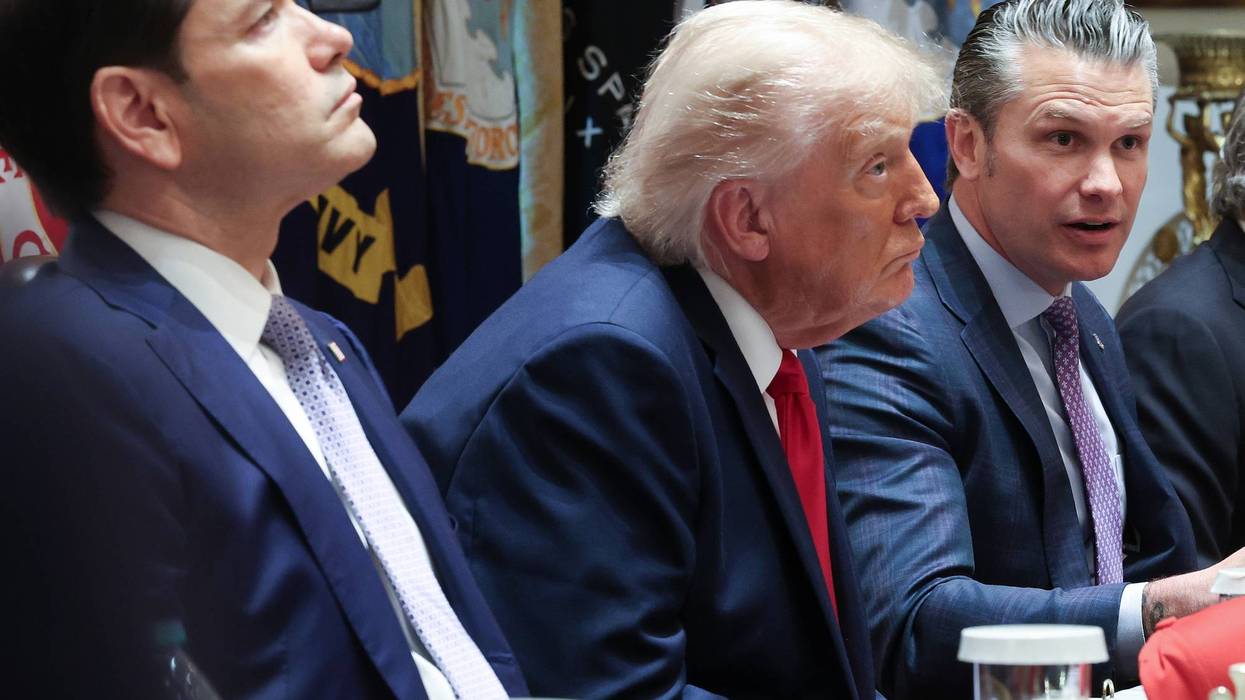
One columnist said it’s impossible to know the true extent to which the war has hit Americans’ pocketbooks, but “this figure should be understood as a rough sketch that conveys the magnitude of Trump’s folly.”
As President Donald Trump's war with Iran crosses the six-month mark without an end in sight, a new analysis calculates that it has cost the average American household at least $1,200 more than they would have paid if it had never started.
That is according to Mark Zandi, the chief economist at Moody’s Analytics, who was quoted by New Yorker columnist John Cassidy on Monday as he sought to look beyond military costs to determine the true extent to which the war has impacted Americans' pocketbooks.
Cassidy wrote that the task of reaching a solid number is "far from straightforward," especially since, in his assessment, the Pentagon has been "less than forthright about many aspects of the conflict," including the cost.
Defense Secretary Pete Hegseth told the Senate Appropriations Committee in July that the conflict had cost roughly $37.5 billion.
But prior to that, NBC News reported on internal Pentagon estimates that put the cost of the conflict between $80 billion and $100 billion when accounting for the cost to repair damage to US military bases, which has occurred on a level that, according to former Marine Col. Mark Cancian, has not been seen since World War II.
These costs do not include the additional $73 billion that House Republicans have approved for defense and intelligence related to the war, which will come up for a Senate vote in September.
"Whatever the true figure is, it’s a considerable sum that comes on top of the bloated trillion-dollar Pentagon budget that has already been approved for 2026, and it is money that could, in theory, be used for other purposes," Cassidy wrote.
He cited a recent analysis by the Center for American Progress (CAP), which found that the $73 billion could “provide full Medicaid coverage for 5 million more people, with $33 billion left over."
Some of those remaining funds could be used to provide free school lunch for every child in America, provide free childcare for 1 million children, or extend the Affordable Care Act tax credits that Republicans allowed to expire last year, which would reduce premiums for around 20 million Americans.
Trump has explicitly emphasized that funding the war is coming at the expense of other priorities.
“We’re fighting wars. We can’t take care of daycare. You gotta let a state take care of daycare, and they should pay for it too,” he said in April. “It’s not possible for us to take care of daycare, Medicaid, Medicare, all these individual things.”
Just taking the lower-bound $80 billion cost estimate would mean the average household has been forced to pay about $300 more as a result of the war, using the same methodology that the National Priorities Project used to estimate the cost to taxpayers in April. But this is only a fraction of the overall cost.
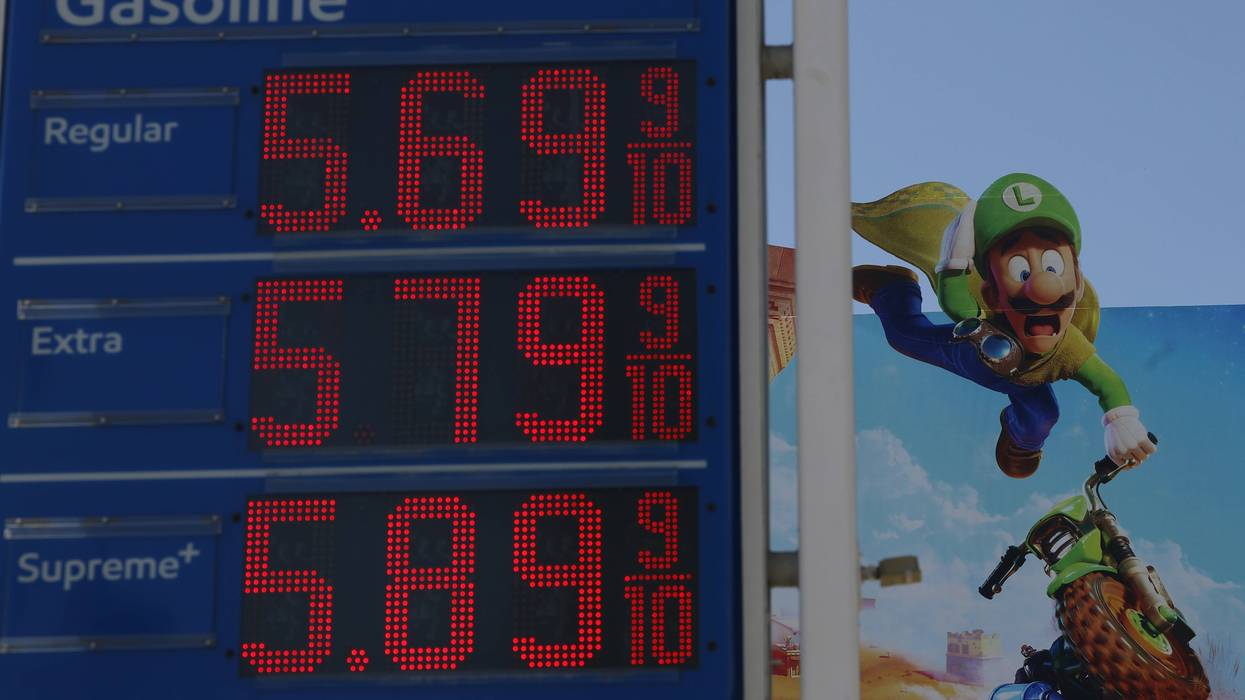
Average gasoline prices have shot up by more than $1 since the war began, while the price of diesel has risen by roughly half. Citing an energy-cost tracker maintained by the Climate Solutions Lab at Brown University’s Watson School of International and Public Affairs, Cassidy said these combined price hikes have cost Americans an additional $93 billion—more than an extra $700 per household.
Oil and fertilizer prices have also shot up, rippling through the economy and contributing to higher food prices. The overall rate of inflation has climbed to 3.4%, up from 2.4% in February. Cassidy notes that inflation has also hiked market interest rates, "raising the costs of mortgages, car loans, and other types of consumer credit."
Combining all these added costs, Zandi estimated that the average household had paid roughly an extra $1,200 in the six months since the war started, but emphasized that this was only a conservative estimate.
"Rather than being taken as a precise number," Cassidy added, "this figure should be understood as a rough sketch that conveys the magnitude of Trump’s folly."
As the midterms approach, Trump's approval rating has hit an all-time low of just 33% according to a poll out Monday from Reuters/Ipsos, which also found just 36% approval for the war.
Meanwhile, 71% of Americans, including 4 in 10 Republicans, said they disapprove of how Trump is handling the cost of living. This has caused the longstanding Republican advantage in the economy to evaporate, with 36% of registered voters saying in a poll last week they believe Democrats are better prepared to tackle the cost of living compared with 28% of Republicans.
"Absent a break in the war’s current stalemate between now and the November midterms," Cassidy said, "the president and his party may end up paying a higher political price. But the economic costs of the conflict can’t be reversed."