

SUBSCRIBE TO OUR FREE NEWSLETTER
Daily news & progressive opinion—funded by the people, not the corporations—delivered straight to your inbox.
5
#000000
#FFFFFF
To donate by check, phone, or other method, see our More Ways to Give page.
Daily news & progressive opinion—funded by the people, not the corporations—delivered straight to your inbox.
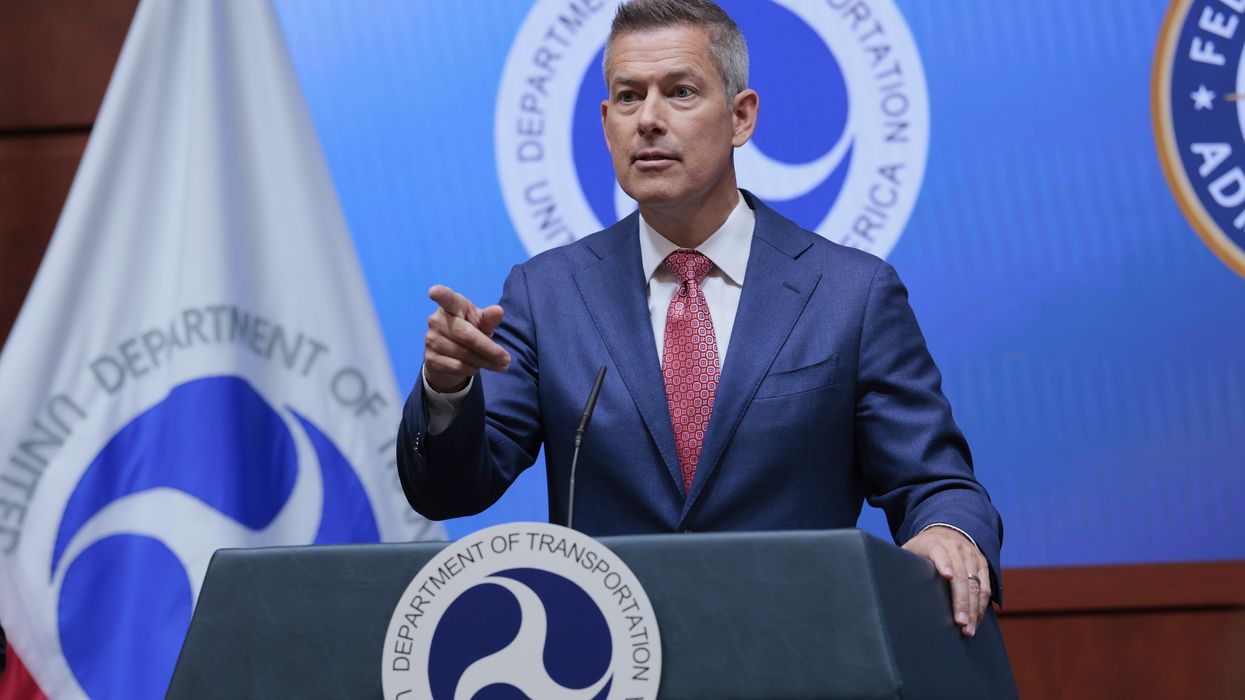
The transportation secretary has called for upgrades to the systems used by air traffic controllers; he voted against such improvements when he was in Congress.
Travelers at Newark Liberty International Airport in New Jersey on Monday were still being impacted by flight delays and cancellations after numerous technical issues in recent days interrupted air traffic control operations—disruptions that U.S. Transportation Secretary Sean Duffy said Sunday are likely to spread to the nation's other airports.
Duffy told NBC's "Meet the Press" on Sunday that he is currently "concerned about the whole airspace," but said traveling by air is still safe.
"The lights are blinking, the sirens are turning," said Duffy. "What you see in Newark is gonna happen in other places across the country."
The Federal Aviation Administration (FAA) said in a statement that Newark's most recent technical disruption on Sunday was the result of a "telecommunications issue" at Philadelphia Terminal Radar Approach Control (TRACON) Area C facility, which guides aircraft in and out of Newark.
Air traffic control systems were also disrupted on Friday, with controllers at the same facility losing radar and radio contact for about 90 seconds.
At least five air traffic controllers at TRACON Area C are currently on 45 days of trauma leave after a similar incident on April 28 during a busy afternoon.
The air traffic control team at the facility lost contact with all planes while they were managing 15-20 flights. One air traffic controller at Newark told NBC News after this incident that the airport is "not a safe situation right now for the flying public."
The disruption led to thousands of flight cancellations and delays—some longer than five hours—in and out of Newark, which serves more than 24 million travelers per year and is the nation's 12th busiest airport.
Duffy denied on Sunday that job cuts affecting about 400 staffers at the FAA—spearheaded by the so-called Department of Government Efficiency, headed by billionaire tech mogul Elon Musk—had anything to do with the problems at Newark.
But representatives of the Professional Aviation Safety Specialists union, which represents about 11,000 employees who support air traffic controllers, warned earlier this year that layoffs would result in critical workers guiding planes in and out of airports with less support from the FAA.
The job cuts affected workers including administrative and logistics technicians, aeronautical information specialists, and maintenance mechanics.
The FAA has blamed many of the issues at Newark, where TRACON Area C has been affected by outages four times since November, on equipment failures and staffing shortages.
Duffy has called for air travel upgrades including investments in digital flight data management, improvements to radio systems, and extending the retirement age for air traffic controllers to 61, up from 56.
On CNN last week, Kaitlan Collins pointed out that Duffy, then a Republican member of the U.S. House, joined his party in voting against upgrades to air traffic control systems.
On Sunday, signs were already emerging that staffing and technical issues could be spreading to other airports with impacts on travel.
An equipment outage at Hartsfield-Jackson Atlanta International Airport—the busiest in the world—led to a ground stop for more than an hour, delaying 1,337 flights. FAA staffing shortages at a control tower in Austin, Texas also led to delays for 145 flights.
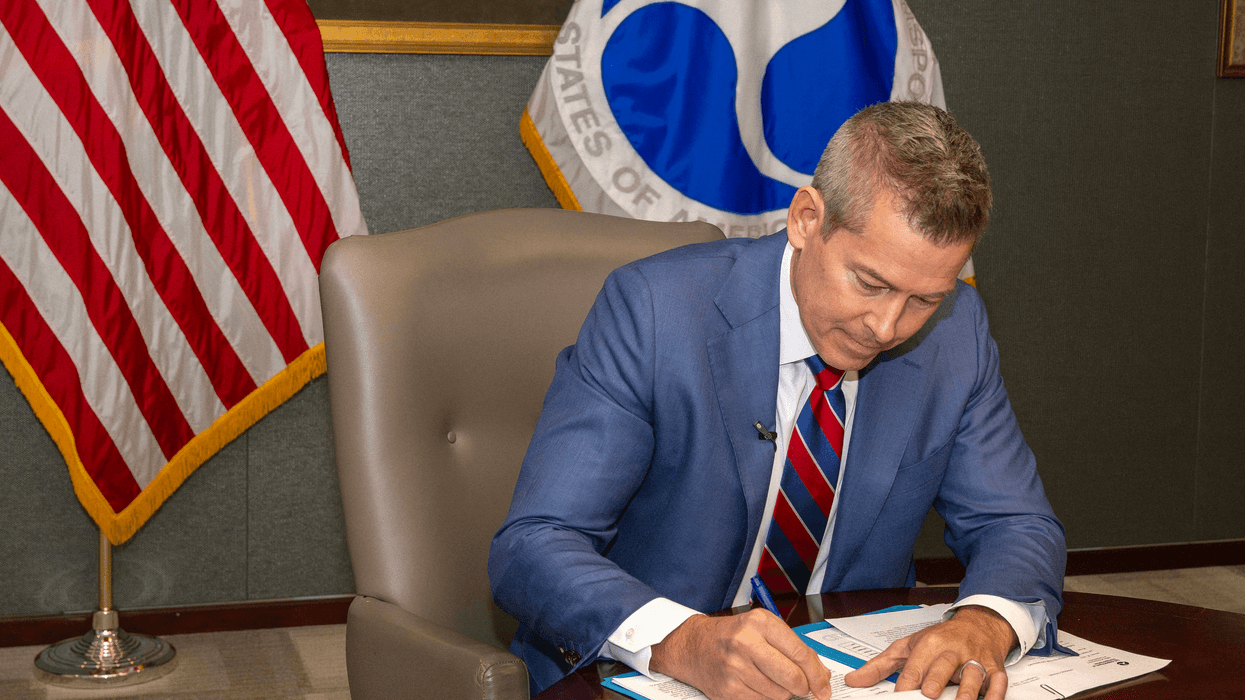
"Sean Duffy is selling American families out to Big Oil, burdening us with higher fuel prices and more polluting gas-guzzlers that harm our health," said one campaigner.
In a move decried by climate and environmental advocates, newly confirmed Republican U.S. Transportation Secretary Sean Duffy on Tuesday directed agency staff to immediately begin the process of rescinding or replacing former President Joe Biden's historic clean car pollution standards.
Duffy's first official act after being confirmed by the U.S. Senate in a 77-22 vote was to sign a memo acknowledging Republican President Donald Trump's policy of promoting fossil fuel use and ordering National Highway Traffic Safety Administration (NHTSA) personnel to "commence an immediate review and reconsideration of all existing fuel economy standards applicable to all models of motor vehicles produced from model year 2022 forward."
The memo singles out Biden's finalized Corporate Average Fuel Economy (CAFE) standards, which regulate how far vehicles must travel on a single gallon of fuel. U.S. Department of Transportation (DOT) officials estimated the new standards would have pushed the average fuel efficiency of new cars and sport utility vehicles over 50 miles per gallon by 2031. The Biden administration subsequently weakened the rules.
"The memorandum signed today specifically reduces the burdensome and overly restrictive fuel standards that have needlessly driven up the cost of a car in order to push a radical Green New Deal agenda," Duffy said in a statement. "The American people should not be forced to sacrifice choice and affordability when purchasing a new car."
However, according to a 2024 NHTSA analysis, Biden's CAFE standards would have saved consumers nearly $23 billion in fuel costs and avoided the burning of approximately 70 billion gallons of gasoline through 2050.
Critics of the Trump administration's fossil fuel agenda also underscored the importance of CAFE standards in reducing gasoline and diesel consumption and combating planetary heating, which is driven primarily by burning fossil fuels. Some also noted that Duffy questions whether human activity is causing climate change.
"These commonsense, popular fuel economy standards save drivers money at the pump and reduce dangerous pollution from vehicles," Karen García, director of the Sierra Club's Clean Transportation for All campaign, said in a statement Wednesday. "Drivers spend excessive amounts of money to fuel their cars, and it's often a large part of household expenses."
"Sean Duffy is selling American families out to Big Oil, burdening us with higher fuel prices and more polluting gas-guzzlers that harm our health," García added.
Duffy's announcement is part of a wider Trump administration push to roll back Biden's efforts to boost electric vehicles. The U.S. Environmental Protection Agency is also taking aim at California's plan to ban the sale of gasoline-only new vehicles by 2035.
"As sad as it is, it's no surprise that climate denier Sean Duffy's first act at DOT is to advance Trump's harmful deregulatory agenda and roll back fuel economy standards," Will Anderson, electric vehicle policy advocate with Public Citizen's Climate Program, said Wednesday.
"Such a rollback would not only hinder consumer choices for more fuel-efficient vehicles while putting the U.S. auto industry further behind global competitors, it would raise consumer's costs when fueling—all to boost oil and gas industry profits," Anderson added.
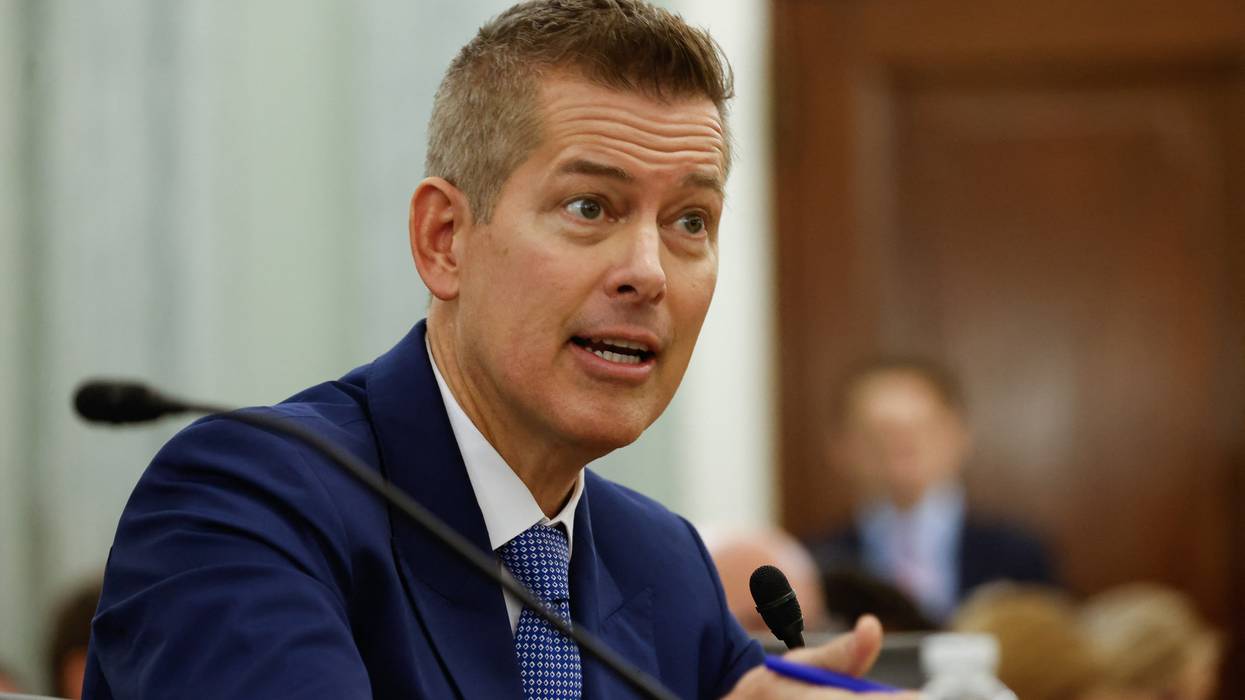
"Will Duffy use his power to protect the bottom line of his former corporate clients by scrapping basic transparency protections at the expense of everyday Americans?" asked one critic.
U.S. senators on Wednesday held confirmation hearings for numerous nominees for positions in President-elect Donald Trump's Cabinet, including two who would oversee pollution rules—and climate action groups warned that both men would face major conflicts of interest due to their work for the very industries they would be tasked with regulating.
As Common Dreams reported, energy secretary Chris Wright is a longtime denier of the climate crisis who's made his fortune in the fossil fuel industry, and as lawmakers were hearing from him Wednesday, transportation secretary nominee Sean Duffy was testifying before the Senate Commerce, Science, and Transportation Committee on his experience and political views.
The hearing, said government watchdog Accountable.US, "failed to resolve concerns around a major conflict of interest" tied to Duffy due to his past lobbying for the same airlines that are currently suing the Department of Transportation (DOT).
Duffy, a former Republican congressman from Wisconsin, became a lobbyist for BGR Government Affairs in 2019, after serving in the House. He and the firm were hired by "Partnership for Open Skies," which includes as its members American, United, and Delta airlines, to lobby for a "U.S. open skies policy."
Those airlines all joined a lawsuit against the DOT last May, challenging the Biden administration's rule to "protect airline passengers from surprise junk fees when purchasing a ticket."
"DOT needs leadership that prioritizes strong safety standards and environmental justice—not someone with limited qualifications to address these urgent challenges."
"Sean Duffy's lobbying work for the same airlines now suing to overturn a Transportation Department rule against surprise junk fees poses a major conflict," said Tony Carrk, executive director of Accountable. "Will Duffy use his power to protect the bottom line of his former corporate clients by scrapping basic transparency protections at the expense of everyday Americans? Duffy is just one of several Trump nominees with similar conflicts of interest that confirm the incoming administration intends to take care of wealthy corporate special interests first and working people last."
At the hearing, said Accountable, Duffy failed to answer questions about his past lobbying and his comments in 2022 about the DOT's push to investigate Southwest Airlines' holiday scheduling crisis.
"Southwest will fix this… [Secretary of Transportation] Pete Buttigieg never will," said Duffy at the time.
Accountable said the nominee's position begged the question, "If Duffy had been the transportation secretary during this crisis, what, if anything, would he have done to protect consumers? Or would he have solely relied on market forces to determine Southwest's penalty, allowing the company to avoid accountability while leaving current and future passengers without restitution or support?"
Kelsey Crane of the climate group Earthworks warned that Duffy's "complete disregard for climate science and disdain for clean energy is deeply concerning."
The DOT plays a "critical role in regulating methane emissions from oil and gas pipelines and permitting oil and gas export terminals that threaten public health and the climate," said Crane, but similar to Wright, Duffy has dismissed the warnings of "climate alarmists" and suggested climate science is an "agenda of control."
"Frontline communities are already suffering the effects of climate pollution and inadequate oversight," said Crane. "DOT needs leadership that prioritizes strong safety standards and environmental justice—not someone with limited qualifications to address these urgent challenges. Sean Duffy's close ties to the oil and gas industry and denial of clear climate science raises serious doubts about his ability to safeguard public health and the climate."
In his post-congressional career as a Fox News host, Duffy used his platform to attack Environmental Protection Agency (EPA) standards aimed at expanding access to clean vehicles, said the Sierra Club's Katherine García—evidence of his "dangerous and misinformed beliefs."
"We need a secretary of transportation that understands the reality that transportation is the leading source of climate emissions and is committed to clean transportation solutions that will help protect our communities," said García, the director of the group's Clean Transportation for All campaign. "Sean Duffy has no business running DOT and we urge the Senate to reject him."
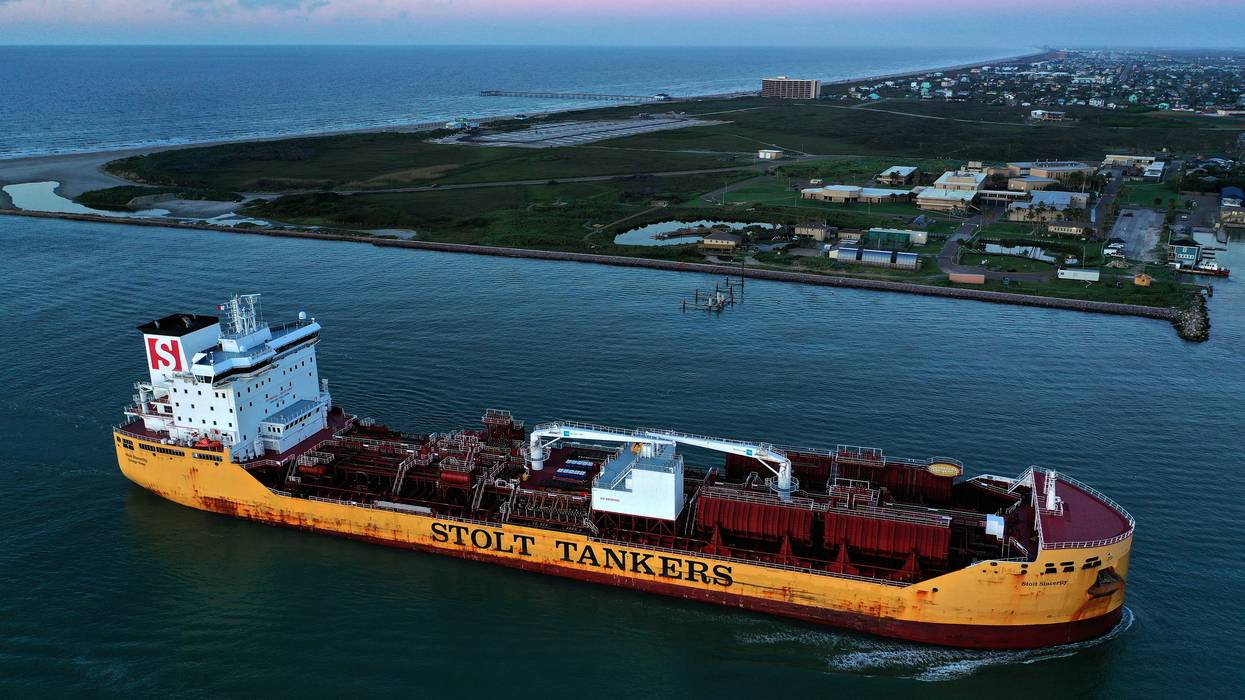
"Nothing about this project is in alignment with Biden's climate and environmental justice goals," said one campaigner.
Climate action groups are vehemently rejecting the Biden administration's claim that the approval of a new offshore oil terminal—planned to be the largest in the U.S.—is in the "national interest," after the U.S. Department of Transportation announced the project had met several federal requirements and could begin operations by 2027.
The agency's Maritime Administration said last week that Enterprise Product Partners, a Houston-based pipeline company, had been granted a deepwater port license to build the Sea Port Oil Terminal (SPOT) near Freeport, Texas following a five-year federal review process.
The federal government determined the $1.8 billion terminal project had undergone sufficient environmental impact reviews and would overall benefit the country—even as it was projected by the Sierra Club, which has fought SPOT for several years, to emit greenhouse gases equivalent to those of nearly 90 coal-fired power plants.
"The evidence is clear that SPOT would be catastrophic to the climate, wildlife, and frontline communities of the Gulf," said Devorah Ancel, senior attorney with the Sierra Club. "It threatens the future existence of the endangered Rice's whale with a population of less than fifty, and its ozone pollution would compromise the health of thousands of Gulf residents who have endured decades of fossil fuel industry pollution. Make no mistake, SPOT is not in the national interest."
The project is expected to include two pipelines that would carry crude oil to the deepwater port each day, enabling the export of 2 million barrels of crude oil, loaded onto two supertankers at once, daily.
"Nothing about this project is in alignment with Biden's climate and environmental justice goals," said Kelsey Crane, senior policy advocate at Earthworks. "The communities that will be impacted by SPOT have once again been ignored and will be forced to live with the threat of more oil spills, explosions, and pollution. The best way to protect the public and the climate from the harms of oil is to keep it in the ground."
Allie Rosenbluth, U.S. manager at Oil Change International, noted that the project has been approved despite the International Energy Agency's clear assessment in 2021 that "all new investments in oil and gas projects must stop if the world is going to reach its climate goals," including limiting planetary heating to 1.5°C.
"The Biden administration's decision to approve the Sea Port Oil Terminal is a grave mistake. This approval will only harm local communities and ecosystems, and lead to even more devastating impacts of the climate crisis," said Rosenbluth. "The U.S. is already the largest producer of oil and gas and has the largest expansion plans globally. Instead of continuing this legacy of harm by approving fossil fuel projects, President Biden should be listening to the science and the masses of his constituents calling for an end to fossil fuels."
The direct action group Climate Defiance expressed doubt that the approval of SPOT will help Biden win over any voters as the 2024 election approaches.
Nine in 10 Democratic voters and Democratic-leaning independents told Pew Research Center last year that they believe the U.S. should prioritize developing renewable energy sources—and two-thirds of Republican voters under age 30 agreed.
"This project would be the single-largest oil export terminal in the U.S." said the group. "We are being boiled alive here, literally burned to death by 'moderate' politicians who see fit to torch us in the name of quarterly profits. How can we live like this? How can this go on?"
Last year was the hottest on record, and the first three months of 2024 have each broken records for high global temperatures. Scientists found last year that climate disasters including wildfires in Canada and extreme heat in Europe were made far more likely by fossil-fueled planetary heating.
Local organizers in Texas condemned the Biden administration's decision to ignore campaigners who have warned of the danger SPOT poses to marine habitats as well as people who live in the area where two crude oil pipelines have now been given final approval to run.
"We continue to struggle to see why Biden and [Transportation Secretary Pete] Buttigieg prefer to protect the corporate profits of billion-dollar oil giants like Enbridge and Enterprise over the hardcore objections of the people who would have to live with the consequences of pipelines criss-crossing our beaches," said Trevor Carroll, Brazoria County lead organizer with Texas Campaign for the Environment. "If you care about environmental justice and the climate, you just can't support a monstrosity like SPOT. The local community and the global climate justice movement are continuing to fight... This is not over."
Melanie Oldham, director of Better Brazoria, said SPOT will be "an oil spill waiting to happen that would not only lower property value, but harm our local ecosystems, ecotourism, beaches, recreation, and kill marine life like the endangered Rice's whale and Kemp's Ridley sea turtles."
"Those of us residents, beachgoers, and voters that have for the past four years opposed the SPOT offshore terminal and pipelines are very disappointed with the approval of the project license," said Oldham. "President Biden has again broken promises to protect frontline communities in Surfside and Freeport."
The administration's approval came three months after the White House announced it was delaying consideration of new gas export terminals, and the same day the federal government said fossil fuel companies will have to pay higher royalties in order to drill on federal lands.
But those climate actions paired with the SPOT approval amount only to "flip flopping," said Climate Defiance.
"It is not enough that the administration stopped new gas exports if they are going to back stab us with this death-sentence decision now," said the group. "This is not us being 'ungrateful.' This is the science. The pure, unvarnished, science."
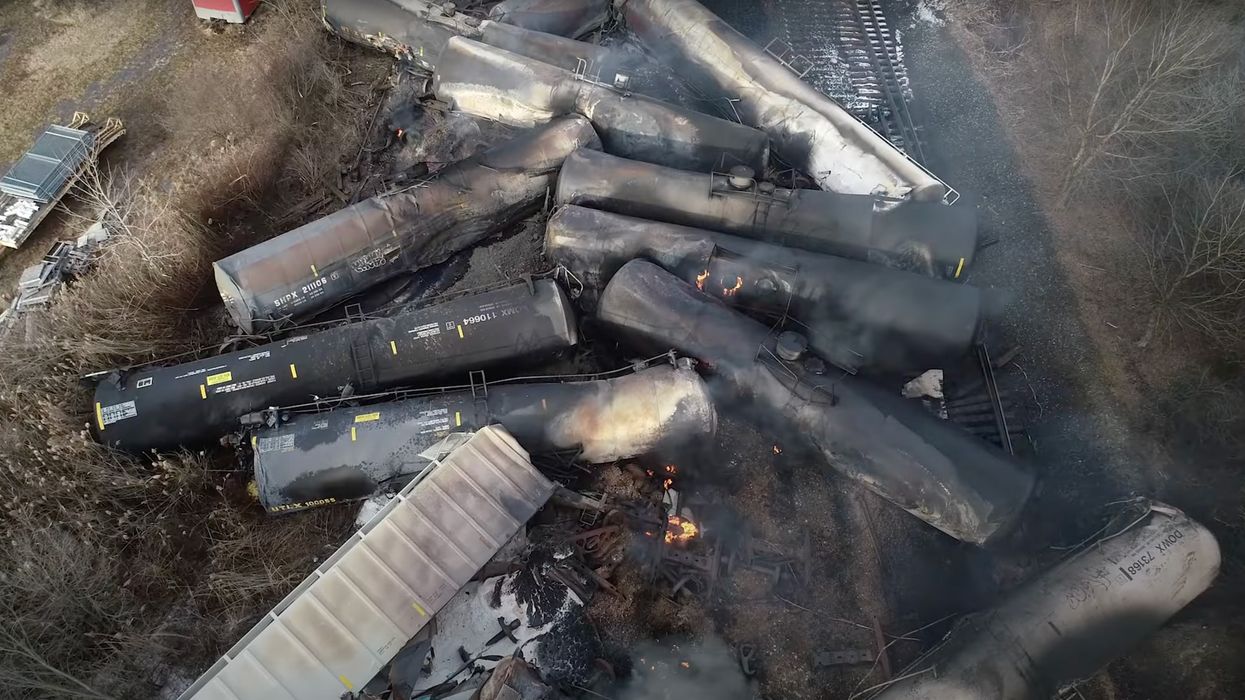
"Congress must pass a comprehensive rail safety bill that addresses the issues rooted in the industry's current operating practices," said one labor group.
Six months after a Norfolk Southern freight train carrying hazardous materials derailed and burned in East Palestine, Ohio, railroad workers on Thursday urged Congress to pass comprehensive safety legislation to stop their employers from "choosing Wall Street over Main Street."
"On this somber occasion, rail labor unions once again renew our calls for safety reforms," the Transportation Trades Department (TTD) of the AFL-CIO, which represents 37 unions, said in a statement. "For years, workers have sounded the alarm about deadly safety conditions in the freight rail industry. The industry's safety failures contribute to more than 1,000 freight train derailments a year."
"There have been more than 60 high-profile derailments since East Palestine, including multiple [incidents] in Ohio, Pennsylvania, and Montana," the labor group continued. "Through it all, freight rail companies have maintained their fundamental disregard for public safety. Safety is just a buzzword to the railroads."
TTD added:
Since the East Palestine disaster, rail companies have lobbied to evade or weaken safety provisions, such as the two-person crew minimum staffing standard in legislation pending before Congress. They have also sought to gut proposed safety requirements for rail inspections, defect detectors, and more. While fending off proposed safety measures, railroads have also repeatedly sought waivers from existing federal safety rules.
Shortly after the February 3 East Palestine derailment, chemical spill, and burnoff—which released toxins into the air and forced the evacuation of area residents—rail workers blamed what one member of the Brotherhood of Locomotive Engineers and Trainmen-Teamsters union called "greedy profiteers who externalize risks and reap profits at our expense."
In the wake of recent rail accidents, workers, politicians, and safety advocates pointed to the railroad industry's profit-maximizing scheduling system that forces fewer workers to manage longer trains in less time. Unions and progressive lawmakers contend that this makes the nation's rail system more dangerous and contributes to derailments.
Some critics also noted that rail industry operatives spent more than a half billion dollars lobbying against improved railroad safety rules at the federal and state levels over the past two decades, while others drew attention to the billions of dollars in stock buybacks and dividends issued by railroad companies—money advocates say would be better spent on ensuring better staffing and safety levels.
On Thursday, The Lever reported that Occidental Petroleum, the company that manufactured the toxic chemicals released during the East Palestine disaster, gave $2 million to the leading Senate Republican super PAC as "rail safety legislation stalled in Congress."
In March, U.S. Sens. Sherrod Brown (D-Ohio), J.D. Vance (R-Ohio), Bob Casey (D-Pa.), Marco Rubio (R-Fla.), John Fetterman (D-Pa.), and Josh Hawley (R-Mo.) introduced the bipartisan Railway Safety Act of 2023, legislation that would impose limits on freight train lengths—which in some cases currently exceed three miles.
While welcomed by some safety advocates, critics said the bill has "loopholes big enough to operate a 7,000-foot train through."
The Railway Safety Act was introduced a day after Democratic U.S. Reps. Ro Khanna (D-Calif.) and Chris Deluzio (D-Pa.) put forth a bill that would require the U.S. Department of Transportation to impose stricter regulations on trains carrying hazardous materials.
Later in March, Sens. John Fetterman (D-Pa.), Bob Casey (D-Pa.), and Sherrod Brown (D-Ohio) introduced the Railway Accountability Act, which would direct the Federal Railroad Administration to study wheel-related accidents and mechanical defects.
The legislation would also implement new brake safety measures, improve switchyard safety protocols, ensure rail companies provide adequate safety equipment to their workers, and compel large freight operators to report close calls and dangerous events.
Advocates lamented that none of the bills have passed in the six months since East Palestine.
"Congress must pass a comprehensive rail safety bill that addresses the issues rooted in the industry's current operating practices," TTD said. "Absent these federal actions, rail corporations will keep choosing Wall Street over Main Street and rail safety will further deteriorate."
"Above all, rail corporations must grapple with the moral bankruptcy of their current safety operations and come to their senses," TTD added. "If the moral calculation is not persuasive, perhaps the financial calculation will be."

"The Department of Justice is standing up for passengers, workers, and communities across the country," said one expert.
Consumer and labor advocates on Tuesday welcomed a U.S. Department of Justice antitrust lawsuit seeking to block JetBlue's proposed $3.8 billion acquisition of Spirit Airlines, its biggest competitor, a deal that critics say would harm passengers and workers.
The Department of Justice (DOJ), along with the attorneys general of Massachusetts, New York, and Washington, D.C., allege in the civil antitrust suit that "by eliminating that competition and further consolidating the United States airlines industry, the proposed transaction will increase fares and reduce choice on routes across the country, raising costs for the flying public and harming cost-conscious fliers most acutely."
While the two airlines argue that their merger would increase competition, U.S. Attorney General Merrick Garland said in a statement that the deal "would result in higher fares and fewer choices for tens of millions of travelers, with the greatest impact felt by those who rely on what are known as ultra-low-cost carriers in order to fly."
"Americans want more choices and lower prices for airline tickets, not another giant merger."
Consumer advocacy groups agreed with Garland's assessment.
"In blocking this blatantly anti-competitive deal, the Department of Justice is standing up for passengers, workers, and communities across the country," William J. McGee, senior fellow for aviation and travel at the American Economic Liberties Project, said in a statement. "Don't believe JetBlue's corporate spin: Allowing JetBlue to gobble up a low-cost competitor and accelerate concentration in the aviation industry will immediately drive up fares nationwide."
Transport Workers Union of America (TWU)—which represents JetBlue flight attendants—also opposes the deal.
"We have yet to see a credible argument that a consolidated JetBlue-Spirit will enhance competition in the domestic airline industry," TWU international president John Samuelsen wrote in a letter to Garland and U.S. Transportation Secretary Pete Buttigieg last month.
"Workers and passengers will be harmed, just as they have been in many past airline consolidations, as the new airline follows the business practices, pricing strategies, and labor cost-cutting practices previous combined carriers have undergone," Samuelsen added.
Some opponents of the airline megadeal noted that the U.S. Department of Transportation (DOT) has the power to do more to block anti-competitive mergers and acquisitions.
As the Economic Liberties Project noted: "The DOT already has broad, existing authority under the Clayton Act to block airline mergers. Similarly, under Title 49 of the U.S. Code, DOT has broad authority to investigate and prosecute anti-competitive airline mergers, and to deny route transfers that contravene the public interest or affect domestic competition."
The group also highlighted President Joe Biden's call for Buttigieg to deliver financial relief to air travelers and align the DOT with the White House's plan to promote a more competitive economy.
"Secretary Buttigieg and the Department of Transportation have broad authority to block harmful mergers and promote competition throughout the airline industry," McGee said. "We're also pleased to see reporting that DOT plans to use their power, embracing President Biden's competition agenda, to stop the JetBlue-Spirit deal."