

SUBSCRIBE TO OUR FREE NEWSLETTER
Daily news & progressive opinion—funded by the people, not the corporations—delivered straight to your inbox.
5
#000000
#FFFFFF
To donate by check, phone, or other method, see our More Ways to Give page.
Daily news & progressive opinion—funded by the people, not the corporations—delivered straight to your inbox.
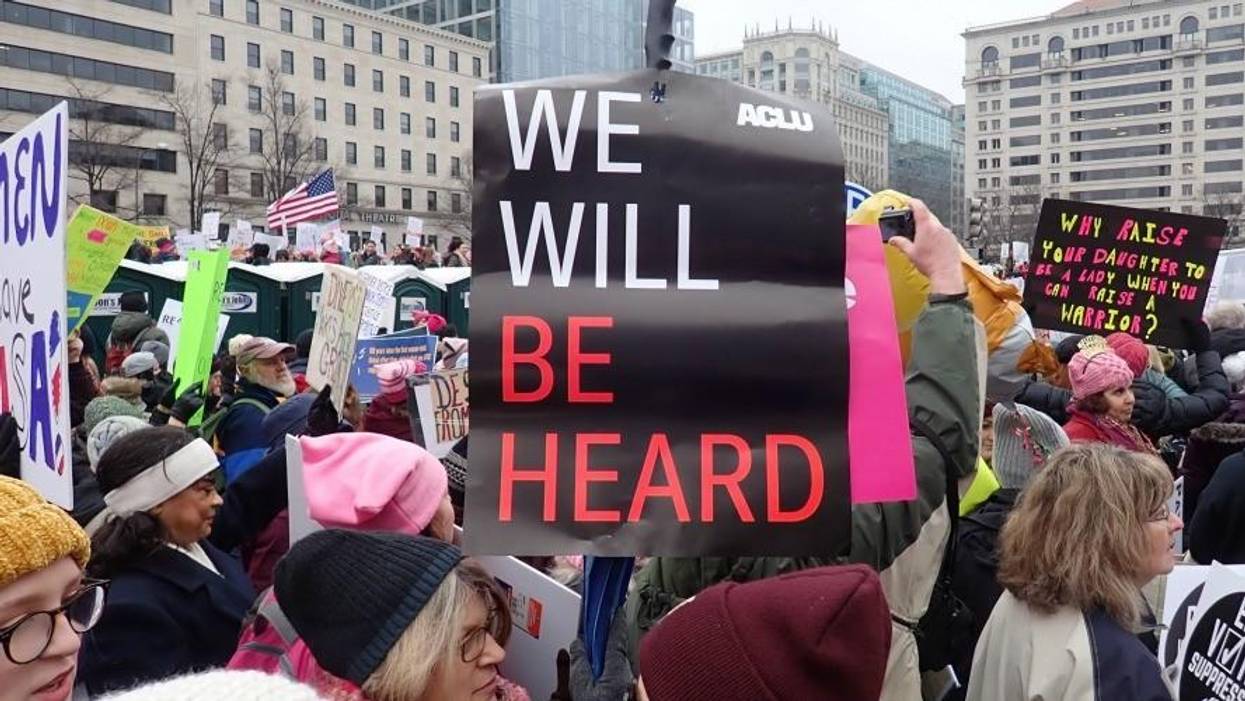
Rape culture is defined by Oxford as "a society or environment whose prevailing social attitudes have the effect of normalizing or trivializing sexual assault and abuse". When Judge Aaron Persky sentenced Brock Turner to 6 months in jail (he ended up serving only 3) for raping an unconscious woman, that was an example of rape culture. When the teenage football players who raped a girl in Steubenville, Ohio received more public sympathy than their victim, that was an example of rape culture. When the GOP defended Brett Kavanaugh as he was being accused of sexual assault by Dr. Christine Blasey Ford, that was an example of rape culture, too. And when Nancy Pelosi said "Joe Biden is Joe Biden", despite 8 women having come forward in 2019 with allegations of inappropriate non-consensual touch against him and despite Tara Reade coming forward with a disturbing allegation of digital rape, that, too was an example of rape culture.
Rape culture holds victims to a higher standard than it does abusers. Rape culture allows us to turn a victim's life upside down, looking at every tweet, post, public or private statement, for any inconsistencies, even when it has nothing to do with the crime perpetrated against them. Especially when it has nothing to do with that crime. Rape culture does this while making sure we're never allowed to ask the same things of the alleged perpetrator. We don't turn their lives upside down. We ask them for a denial, they give it, and then we move on. Nancy Pelosi, in a recent CNN interview, said she was done talking about the Tara Reade allegations. Case closed. Nothing to see here. Move along. Rape culture.
"Rape culture thrives in the dark. It hates the light. It tries to tell victims and future victims that the dark is normal. That the dark is the way it's always been, and the way it always will be."
In the case of Tara Reade, Joe Biden's documented history of public lying is never looked at. His fantastic and completely false claim of being arrested in South Africa while visiting Nelson Mandela goes unmentioned by politicians and the media. His years of lies about having been involved in the civil rights movement go unnoticed. We're not allowed to talk about why he had to drop out of a presidential race because he plagiarized and then lied about it multiple times on the campaign trail. We only seem to have permission to deconstruct his victim, Tara Reade. We question the timing of her disclosure. We say she changed her story. We look for inconsistencies in her claims about filing a complaint after she was sexually harassed while working for then-Senator Biden. We share hit pieces on social media that paint her as a "manipulative, deceitful user" because she may have been late on her rent and owed people money. We attempt to look into every nook and cranny of her life, and while doing so, make sure we keep the spotlight off of the man accused of victimizing her. It's hot under those lights, best we keep them turned on the victim.
In rape culture, we say the alleged perpetrator is a "good man". That's what we're saying about Biden now. He passed the Violence Against Women Act. He was Obama's VP. Sure, he gets a little handsy sometimes, but he doesn't mean anything by it. He didn't mean to offend or harm women when he sniffed their hair, planted long kisses on their heads while touching their waists from behind, touched their thighs or caressed them - all without their consent. Joe Biden is Joe Biden. Move along.
Senator Dianne Feinstein waded into the world of rape culture and victim-blaming when she said of Tara Reade, "Where has she been all of these years?". Questioning the timing of a victim's disclosure is the epitome of rape culture. It's what defense attorneys who represent men accused of sexual assault do. All the time. It's an uninformed and ignorant way of looking at rape. It's understandable when it comes from the mouths of lawyers defending rapists, like when it was uttered by Harvey Weinstein's lawyers - that's their job. It is completely unacceptable when it comes from a leading Democrat like Feinstein. The Democrats were supposed to be the party of #MeToo. They were supposed to be the party that didn't defend men credibly accuse of rape. They were supposed to be the opposite of the Republicans, who defended Trump and Kavanaugh. They were supposed to be, but when it comes to rape and sexual assault, they are not.
Rape culture pervades every institution in our society. College campuses are notorious for sweeping rape under the rug. They've been called out on it. A young student from a renowned university walked around campus carrying her mattress to remind people that she was raped by another student and that she felt she wasn't getting justice. She brought her mattress to graduation. Her rapist didn't have to carry a thing.
Most victims don't carry their mattresses around with them. Brock Turner's victim doesn't carry the dumpster around that Turner dragged her behind when he raped her. Anita Hill doesn't carry the Coke can around that Clarence Thomas said someone may have put a pubic hair on. Dr. Blasey Ford doesn't carry the bed around that Brett Kavanaugh held her down on when he assaulted her. And Tara Reade doesn't carry the cold wall around that Joe Biden pinned her against when he groped her, kissed her, and penetrated her with his fingers.
But they do.
I wish I was in the room when Senator Feinstein asked about Tara Reade, "Where has she been all these years?" I would have answered. I would have said:
She's been carrying around that wall. Trying not to think about it. Trying to go to sleep each night and praying she doesn't have nightmares again. She's been swimming in decades of self-blame and self-doubt, like every other victim of rape. She's been trying to raise a daughter in a world steeped with rape culture, praying it will be different for her. She's been painfully going back and forth, for years, about whether to come forward about her rapist. She's been second-guessing her years of silence like so many other victims do. She's been harder on herself than you'll ever be on her. That's what rape does. It leaves a trauma that stays for years, or for a lifetime. It makes you question yourself. It makes you doubt whether you even deserve to have a voice. And it keeps you silent. For years. For decades. For a lifetime. That's where she's been. Where every other rape victim has been. The dark. And your question has one purpose only: to push her back there.
When victims finally come forward, out of the dark, it can be terrifying. Coming into the light feels scary when you've been in the dark for years. It feels unfamiliar. It feels blinding. It feels unsafe.
I was a director of two rape crisis centers in New York. I've seen children and adults who've lived in the dark and kept their secrets for years finally come forward, finally find their voice. I've seen 10-year-olds who were raped by their fathers sit on witness stands while the family members of their rapist sit behind him, supporting him, staring her down. I've seen women in their fifties come forward, after decades of living in the dark, and finally talk about how they were raped when they were nineteen. I've seen men come forward, too, telling their stories of how they were raped in foster homes, or at soccer practice. And I've seen the good people I work with, counselors and advocates and attorneys, stand with these victims when they came into the light. So it was less scary. So it felt safer. So they could get used to being in the light and not crawl back into the dark.
"Victims are still carrying their mattresses, their walls. But we can't see them. We've pushed them back into the dark. It's safer for us when they're there."
Rape culture thrives in the dark. It hates the light. It tries to tell victims and future victims that the dark is normal. That the dark is the way it's always been, and the way it always will be. It succeeds in hiding the sun, keeping the light away and changing the subject. It makes excuses for the dark. Joe Biden is Joe Biden. Boys will be boys. Move along. Leave the room. Turn off the light.
At one rape crisis center where I was a director, there was a thirteen-year-old girl who was repeatedly sexually abused by her mother's boyfriend. He raped her, then he prostituted her out to his friends, other adult men who also raped her. Unlike most child abusers, he was arrested, tried and found guilty. The day he was sentenced, that thirteen-year-old girl stayed home from school and took her own life. She didn't want to spend a lifetime carrying her mattress. She didn't want to spend a lifetime in the dark. She found her voice, but it was silenced. Her mother still loved the man who raped her daughter. She still had pictures of him around the house. She still referred to him as a "good man".
It's hard when someone you like, someone you think is a good man or woman, is accused of rape. Our first instinct is to not believe it. That's normal. But when the evidence starts to pile up, when multiple witnesses come forward, as is the case with Tara Reade, saying she told them decades ago about how Joe Biden raped her, it gets harder to not believe it. When Tara's mother's voice crosses space and time to ask Larry King in 1993 about a serious problem her daughter was having with a prominent senator, it's even harder. That's where rape culture comes in. It gives us an out. Like the mother who said her daughter's rapist was a "good man". It makes it easier to move through this world thinking men we like don't rape, thinking victims are liars. He's a good man, something must be wrong with her.
And all the while we do this, the victims are still carrying their mattresses, their walls. But we can't see them. We've pushed them back into the dark. It's safer for us when they're there. Then we can go back to our denials. Then we can breathe easy.
Joe Biden is Joe Biden.
He passed the Violence Against Women Act. He's just a little handsy. He means well.
Turn off the light.
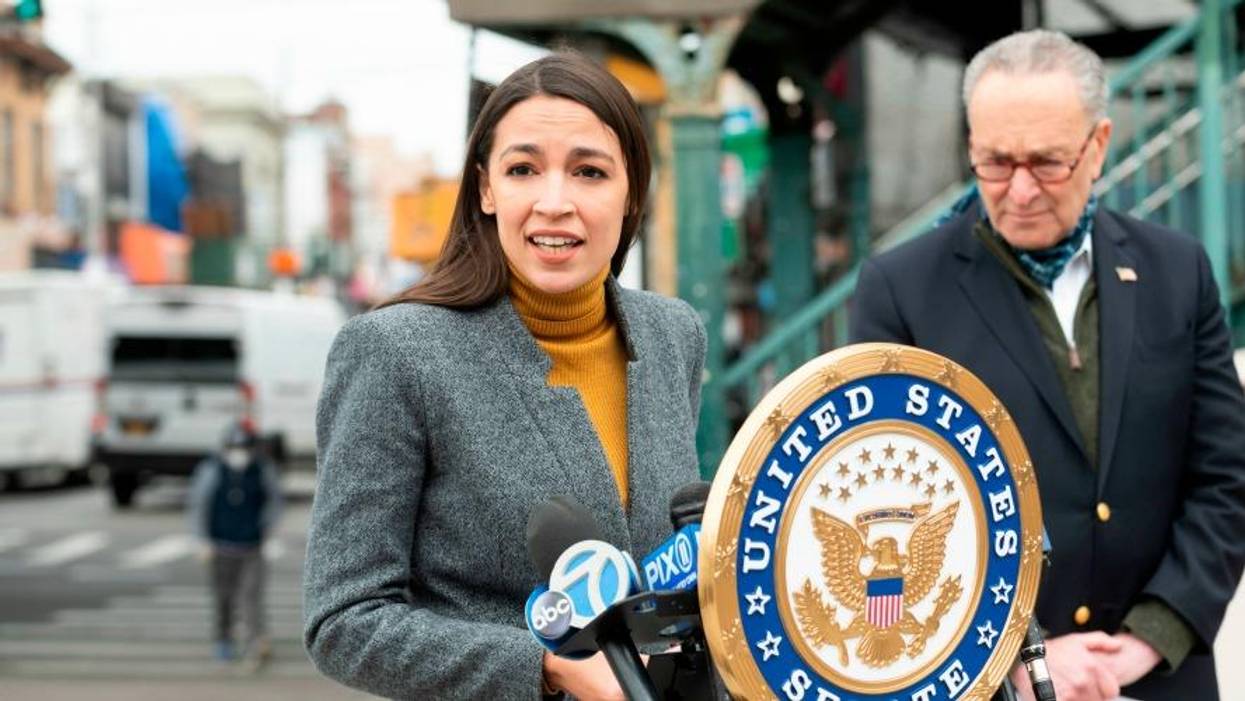
Following her call for former Vice President Joe Biden to reach out to progressives in order to win the 2020 general election against President Donald Trump, Rep. Alexandria Ocasio-Cortez accepted an invitation to co-chair the Biden campaign's newly-formed "unity task force" on the climate.
Ocasio-Cortez will join former Secretary of State John Kerry in leading the task force, which also counts among its members Sunrise Movement co-founder Varshini Prakash and Poor People's Campaign leader Catherine Flowers.
Both Sen. Bernie Sanders (I-Vt.), who suspended his presidential campaign last month, and Biden nominated members of their campaigns to join the panels.
A spokesperson for Ocasio-Cortez, Lauren Hitt, said in a statement that the congresswoman "will be fully accountable to" members of the climate justice community while serving on the task force.
"She believes the movement will only be successful if we continue to apply pressure both inside and outside the system," Hitt said. "This is just one element of the broader fight for just policies."
Ocasio-Cortez's appointment to the panel comes a month after she said in a New York Times interview that she intends to support Biden in the general election, but that he must work closely with and listen to progressives to win over the vast majority of Democratic voters who support bold policy proposals like the Green New Deal, Medicare for All, and economic reforms focused on working people.
"If Biden is only doing things he's comfortable with, then it's not enough," Ocasio-Cortez said last month, adding that Biden's campaign had not yet reached out to her. Days before her interview, Sanders had suspended his campaign, urging Biden to bring both of their teams together to "work out real solutions to these very, very important problems."
"I commend Joe Biden for working together with my campaign to assemble a group of leading thinkers and activists who can and will unify our party in a transformational and progressive direction," Sanders said Wednesday.
Justice Democrats Waleed Shahid wrote that Ocasio-Cortez's appointment to the climate task force is in line with what progressive groups demanded when they called on Biden to "Earn Our Vote" last month.
Other progressives and former Sanders surrogates and advisers who are joining Biden's new committees include:
"The work of the task forces will be essential to identifying ways to build on our progress and not simply turn the clock back to a time before Donald Trump, but transform our country," Biden said in a statement Wednesday.
That comment from Biden echoed Ocasio-Cortez's words in her interview last month, when she said, "I just don't know if this message of 'We're going to go back to the way things were' is going to work for the people for who the way things were was really bad."
On Twitter, Prakash shared why, "after much deliberation," she had accepted the invitation to join the climate task force.
"What I do on a task force is much less important than what we do collectively as a movement this year," Prakash wrote. "Our political power exists because of our people power."
"As I step onto this task force," she added, "I'm taking each and every member of our movement with me. I will fight as hard as I can for a platform that will do the most good for the most people."
Hidden among the grease and grime of the Tara Reade rape discussion -- "Should we believe her? To what extent? Would Biden really do such a thing? But what if a public discussion leads to Trump's reelection?" -- lies the shadow of another rape accusation.
Undiscussed, rarely brought up, as carefully hidden or moreso by the Democratic Party-supporting media as the Tara Reade story was, stands the rape charge by Juanita Broaddrick against 32-year-old Arkansas Attorney General Bill Clinton, a rape said to have occurred in 1978.
The facts are these (source: a nicely researched 2017 piece by Dylan Mathews at Vox). First, this is what Broaddrick says happened:
In 1978, Broaddrick was volunteering for Clinton's gubernatorial campaign, and claims she met him when he visited his campaign office in her home town of Van Buren, Arkansas, that April. She says he then invited her to visit his office in Little Rock, which Broaddrick agreed to do a week later, when she was in the state Capitol anyway for a conference of nursing home administrators. Once she was at a hotel in Little Rock, she claims Clinton told her that he wasn't going to the campaign headquarters and offered to meet her in her hotel lobby coffee shop instead. Once he arrived, she says he called her room and suggested that they have coffee there, since the lobby had too many reporters. Broaddrick says she agreed.
Then according to a 1999 Washington Post story:
As she tells the story, they spent only a few minutes chatting by the window -- Clinton pointed to an old jail he wanted to renovate if he became governor -- before he began kissing her. She resisted his advances, she said, but soon he pulled her back onto the bed and forcibly had sex with her. She said she did not scream because everything happened so quickly. Her upper lip was bruised and swollen after the encounter because, she said, he had grabbed onto it with his mouth.
"The last thing he said to me was, 'You better get some ice for that.' And he put on his sunglasses and walked out the door," she recalled.
Broaddrick's story has no third-party witness, but quite a lot of contemporaneous corroboration:
The Other Side
Opposed to this evidence lie the usual adversarial questions about why Broaddrick delayed so long to say something, why she chose the time she did to come forward, and what her underlying motives might have been. Bill Clinton was being impeached for the Monica Lewinski affair -- pilloried, really, by Ken Starr's special prosecutor's office -- when Broaddrick's story was leaked to the public.
The response to this has been that Broaddrick, according to Vox, "had been courted to come forward about the allegations by Clinton enemies for years," and refused many pleas that she speak out.
"She only came forward after she was interviewed by Independent Counsel Kenneth Starr's office and her allegation leaked. Broaddrick told the [Wall Street] Journal [here] that NBC News reporter Lisa Myers pursued her for nearly a year before she agreed to an interview, and that she came forward because she wanted to rebut false rumors circulating after her statements to prosecutors (like that David Broaddrick had accepted hush money from the Clintons in exchange for silence)."
In short, if Vox's account is correct, Broaddrick was almost literally the most reluctant of reluctant witnesses at a time when Bill Clinton was beset on all sides with eager ones.
Did Hillary Clinton Weigh In?
It's an ugly story, both in the context in which it occurred -- the dubiously moral, hypocritical Republican Party assaulting a presidency it never considered legitimate using charges they themselves were guilty of at the time -- and in the Broaddrick story itself.
And the ugliness continued, according to Broaddrick, shortly after the event. In a 1999 interview she gave to the Drudge Report and quoted by Vox, Broaddrick said that "mere weeks after the alleged [1978] assault, Hillary Clinton had tried to thank her for her silence on the matter at a political rally." Broaddrick:
She came directly to me as soon as she hit the door. I had been there only a few minutes, I only wanted to make an appearance and leave. She caught me and took my hand and said 'I am so happy to meet you. I want you to know that we appreciate everything you do for Bill.'
Here her husband had just done this to me, and she was coming up to thank me? It was scary...I started to turn away and she held onto my hand and reiterated her phrase -- looking less friendly and repeated her statement----'Everything you do for Bill'. I said nothing. She wasn't letting me get away until she made her point. She talked low, the smile faded on the second thank you. I just released her hand from mine and left the gathering.
No one knows for sure what happened between Broaddrick and Bill Clinton in the hotel room save Broaddrick and Clinton himself, just as no one but Broaddrick and Hillary Clinton knows for sure what passed between them at the rally just a few weeks later -- and only Clinton herself knows for sure what she meant to convey, regardless of how Broaddrick took it.
But if Christine Blasey Ford is credible (in my opinion, eminently so), then Tara Reade is credible at the very least -- and so is Juanita Broaddrick.
The #MeToo Era: The Briefest of Lights in 40 Years of Darkness
Why bring this up? Because the alleged Broaddrick rape occurred in 1978 -- and here we are, in 2020, with many of the same actors, all with the same loyalties, using much the same tactics to silence and sidestep the consequences of almost the same (alleged) crime, the forceable rape of a low-level female political associate by a high-level male with a history of intruding on women.
Juanita Broaddrick, 1978; Cover-up continuing, 2020
Tara Reade, 1993; Cover-up continuing, 2020
Has nothing changed for Democratic Party leaders in those 42 years?
It's almost as though the #MeToo era, two and a half years at most, the briefest of lights in two dark generations, never occurred at all.
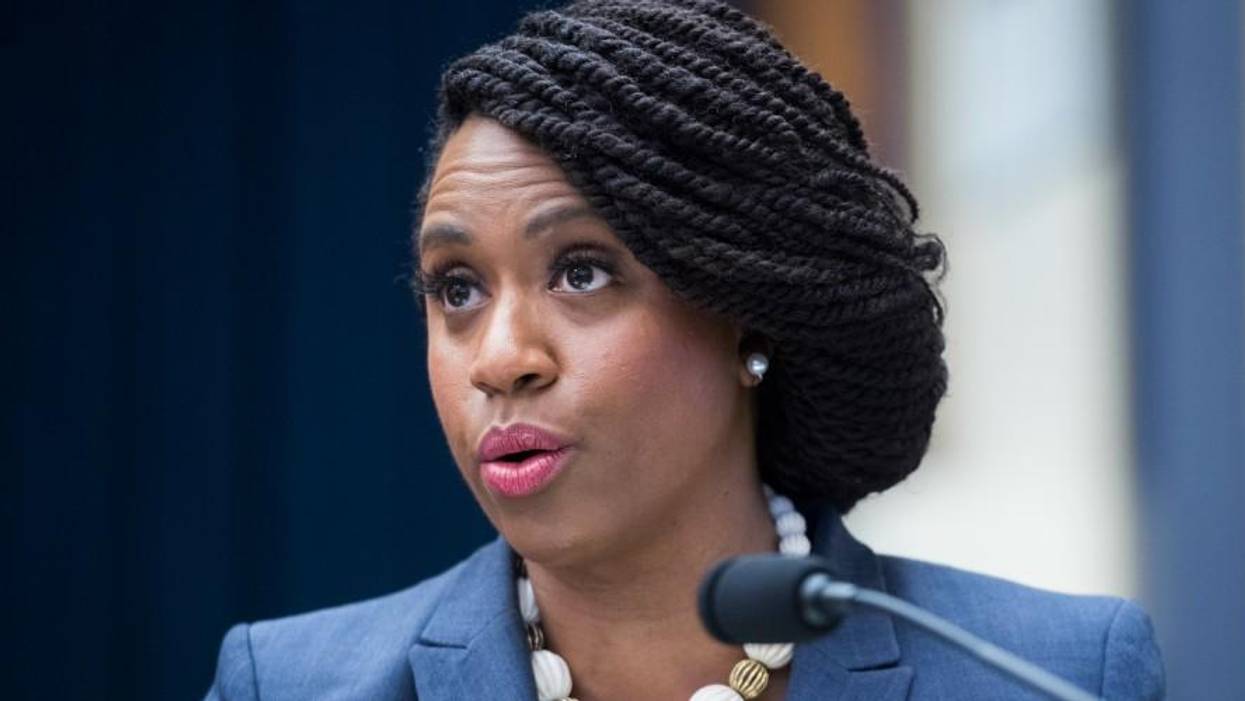
Rep. Ayanna Pressley drew praise Monday for a blog post addressing the sexual assault allegation against presumptive Democratic presidential nominee Joe Biden and calling for a "necessary" conversation about true survivor justice.
Pressley also called for a response from Biden "that models the empathy, diligence, and acknowledgement of broken systems that this conversation demands."
The Medium post by Pressley, a Massachusetts Democrat who last year endorsed Biden's then-primary rival Sen. Elizabeth Warren, refers to not only Biden's alleged 1993 assault of former Senate aide Tara Reade but also the hopes of "survivors and marginalized people from all walks of life." The essay eyes the current political moment as a possible turning point for inching the nation closer "to reconciling our history of structural violence and oppression" and notes that Pressley is herself a survivor.
Pressley wrote, in part:
We are in the throes of an election of the greatest consequence--one that will determine if core rights and tenets of democracy survive in this nation. The stakes cannot be overstated. But I have no patience for any person who tells me that is a reason to lower my voice. I reject the false choice that my party and our nominee can't address the allegations at hand and defeat the occupant of the White House. [...]
It will take discipline and courage, but survivors and marginalized people from all walks of life are watching, wondering if--this time--te conversation might actually change. So I'm here to ask the Biden campaign and the nominee to give a response that models the empathy, diligence, and acknowledgement of broken systems that this conversation demands. I'm asking for true partnership with survivors and advocates, and for policy commitments that get us closer as a nation to reconciling our history of structural violence and oppression.
"This is leadership," said author and ZORA senior editor Morgan Jerkins.
Shaunna Thomas, co-founder of women's justice advocacy organization UltraViolet, called Pressley's op-ed "honest and courageous" and said it echoes "what so many of us are looking for."
Pressley's post came the same day Sens. Ed Markey (D-Mass.) and Jeff Merkley (D-Ore.) backed the call for an independent investigation into Reade's allegation.
The Hill reported:
"We need an investigation that has independence that will then ensure that the facts are established," Markey said on his way to a late afternoon confirmation vote in the Capitol.
"It should be independent," he added.
Merkley had a similar assessment. "I think it's important to have appropriate independent scrutiny brought to bear to help inform all of us about the situation," he said.
Sen. Time Kaine, (D-Va.) also said Monday he wanted "to get all the Senate records and see if there was ever a complaint filed" by Reade. If law prevents the complaint's disclsoure, the law should be changed so that the complaint can be revealed, Kaine added.
Biden last week denied the allegations. "The claims are false," he said.
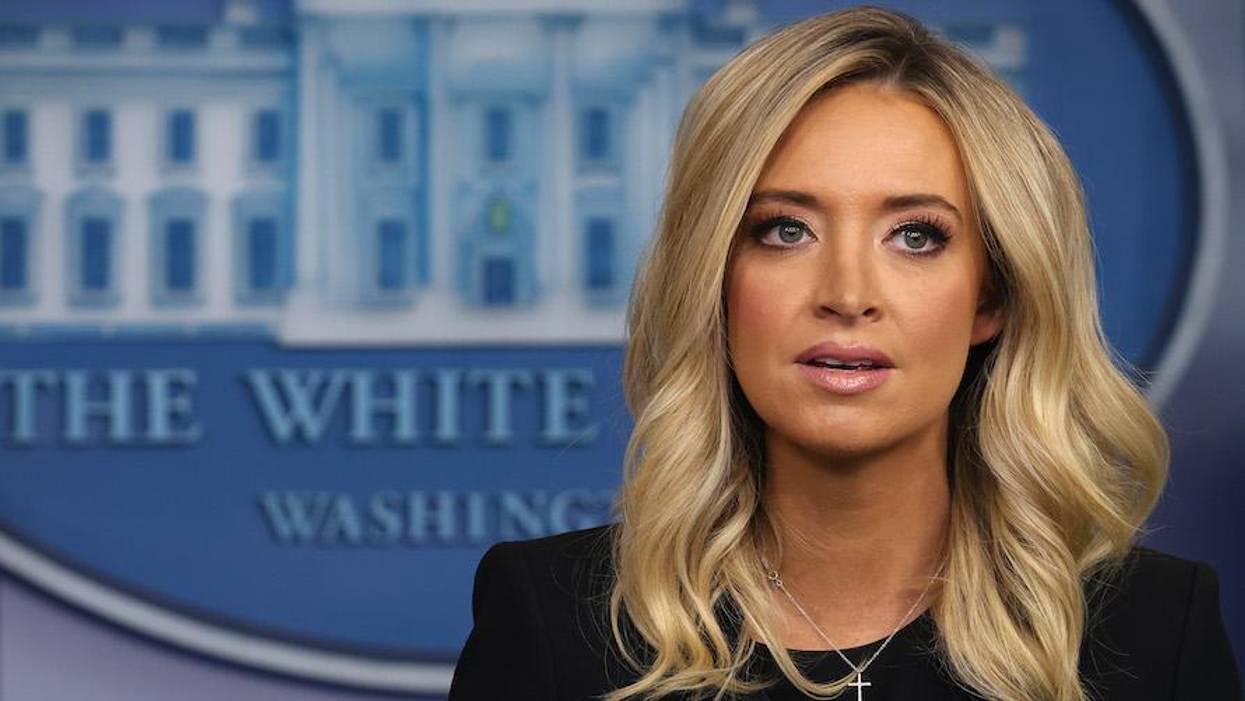
Newly-minted White House press secretary Kayleigh McEnany on Friday gave reporters their first regular briefing in the press room in over a year and kicked off the event by promising the media and American people, "I'll never lie to you."
"You have my word on that," said McEnany.
But McEnany lied repeatedly over the course of the 32 minute briefing--the first outright falsehood, as Vox reporter Aaron Rupar noted, coming just 15 minutes after her pledge to the truth.
As Rupar explained:
McEnany's first lie from the White House podium came in response to a question about comments President Donald Trump made earlier in the day characterizing Tara Reade's sexual assault allegation against Joe Biden as "far more compelling" than the accusations made against Supreme Court Justice Brett Kavanaugh during his confirmation hearings. Asked to flesh out Trump's thinking, McEnany characterized the Kavanaugh allegations as "verifiably false."
The complaints against Kavanaugh, while not proven, were not found to be "verifiably false"--they were found to be credible.
The secretary followed up those lies by lying about newly published FBI documents and notes about the investigation into General Michael Flynn, the disgraced former National Security Advisor to President Donald Trump. Flynn faces up to five years in prison for lying to the FBI during the course of the investigation though federal prosecutors have asked for only a six month sentence after his guilty plea.
At the podium, McEnany implied that FBI notes laid out a plot to trick Flynn into lying to investigators--but the notes only offer it as one option for investigators along with determining if the advisor was telling the truth about his communications with Russia.
Watch the full briefing:

In both a written statement and an appearance on MSNBC Friday morning, former Vice President Joe Biden denied that he sexually assaulted former Senate aide Tara Reade in 1993, the first time the presumptive Democratic nominee has personally addressed the allegation in public.
"No, it is not true," Biden said on MSNBC. "I'm saying unequivocally it never, never happened. And it didn't. It never happened... The claims are false."
Biden's denial came as he faced growing pressure to address Reade's allegation that he cornered her in the halls of the U.S. Capitol building and penetrated her with his fingers, a claim that was corroborated by a former neighbor of Reade's in an interview with Business Insider earlier this week.
In a written statement posted to Medium, Biden called on the Secretary of the Senate to request that the National Archives identify and "make available to the press" any complaint filed by Reade.
Reade said she submitted a complaint about Biden to a congressional human resources office.
"There is only one place a complaint of this kind could be--the National Archives," Biden said. "If there was ever any such complaint, the record will be there."
In reaction to Biden's denial, the women's group Time's Up Now, which advocates on behalf of sexual assault victims, said the former vice president's comments should be seen as a sign of progress but by "no means is the conversation about sexual assault and power in America over."
"We have reached a pivotal moment in our nation when candidates for president are accused of sexual assault," said Tina Tchen, the group's president and CEO, in a statement. "Today, Vice President Joe Biden sat down and directly addressed the allegation against him with the seriousness it deserves, something that the current president has never done."
"No longer can claims like this go ignored," added Tchen. "Biden needed to address Tara Reade's allegation today. We call for complete transparency into this claim and the multiple claims against President Donald Trump. As we go forward, American voters are entitled to a full understanding of all allegations of this nature. Women should be heard, treated respectfully, and have their allegations taken seriously."
Ana Maria Archila, co-executive director of the Center for Popular Democracy, said that the #MeToo movement's demand for Biden to address the accusation and demonstrate leadership on the crucial issue of sexual assault and violence against women "is not in contradiction with our commitment to defeat Trump. It is, in fact, central to that effort."
According to Archila, "Those who are accused of perpetuating or enabling violence have a role to play in the effort to transform our society. They can model how to receive with empathy and circumspection the stories of individuals or communities who speak about the harm they have endured. They can model how to tease out from the story of one person the elements of our collective experience, and they can model willingness to take responsibility."
"This morning he spoke for the first time about the allegations by Tara Reade, and issued yet another blanket denial of the assault, without any reflections on how women, and survivors of all genders, are treated in our society," she said. "As someone seeking to govern the country, he has a responsibility to model how to hold the pain of survivors and speak about the reality of our collective experience, even as he denies the allegations against him. That is the role of a leader."
But while the accusations against Biden must be fully investigated, Archila said that with Trump in the White House, "Our country is at a moment of grave danger."
"We cannot afford to have four more years of Trump," she added, "and we will do everything necessary to defeat him in November."

The hashtag #FireChrisHayes was trending on Twitter Thursday as the MSNBC anchor came under attack from liberals for airing a hard news report Wednesday night on allegations from former Senate staffer Tara Reade that former Vice President Joe Biden--the presumptive Democratic Party presidential nominee--sexually assaulted her in the Capitol building in 1993.
"The fact that 'firing' Chris Hayes is trending because he said the media needed to cover allegations of sexual misconduct made by a women even when they're directed at powerful people who are respected is...just....peak 2020," tweeted Lindsey Boylan, a progressive candidate for Congress in New York's 10th District.
In his report on the allegation, Hayes went through the facts and soberly presented the case both for and against the allegation. The measured analysis provoked ire from Democrat-aligned critics like conspiracy theorist Bill Palmer, who demanded MSNBC remove the longtime "All In" host for reporting the news.
The network at press time did not have the segment available for viewing on either its main site or on its YouTube channel.
As Common Dreams reported, the Reade scandal has prompted calls from Democrats for Biden to address the allegation. But the candidate himself has thus far remained silent, though his campaign has repeatedly denied the charges.
Progressives on Twitter Thursday pushed back against the attacks on Hayes.
Journalist Glenn Greenwald pointed out out that Hayes' own network was at least in part to blame for the partisan fire directed at the host.
"Chris Hayes has been one of the media's most virulent, relentless and arguably effective Trump critics--an all-consuming loathing for the president--but #FireChrisHayes was trending because he covered the sex assault allegations against Biden," tweeted Greenwald. "Shows what MSNBC has cultivated."
"Also, with this completely deranged backlash against Chris Hayes for the crime of covering what a news story--one that just happens to be unfavorable to Dems--you see the extreme career incentives for cable hosts never to tell their audiences anything they don't want to hear," Greenwald added.

Former Vice President Joe Biden is facing a growing demand to address the credible sexual assault allegation made by former Senate staffer Tara Reade as the Democratic Party itself faces accusations of hypocrisy in terms of the #MeToo movement.
"We have reached a point where it is journalistic malpractice for anyone interviewing Biden to refuse to ask him about Tara Reade's allegations, the mounting supporting evidence in her case and the numerous other allegations of his misconduct toward women," author and The Intercept co-founder Jeremy Scahill tweeted on Tuesday.
The increased pressure on Biden and his party comes as new reporting this week and last further corroborated Reade's account of the alleged 1993 attack, which Reade first detailed in full on journalist Katie Halper's podcast last month.
While Biden's presidential campaign has said the accusations are false, the deeper scrutiny into the case has made the silence of the candidate himself and many of his supporters all the more problematic for those in Democratic Party circles who in recent years have championed the #MeToo movement, which has as one of its central tenets the responsibility to take seriously such accusations by women against powerful men.
"This happened, and I know it did because I remember talking about it," Lynda LaCasse told Business Insider of the alleged attack.
LaCasse was Reade's neighbor in the mid 1990s and told the Insider that Reade shared details of the event in question with her in 1995 or '96.
"I remember her saying, here was this person that she was working for and she idolized him," LaCasse told the outlet. "And he kind of put her up against a wall. And he put his hand up her skirt and he put his fingers inside her. She felt like she was assaulted, and she really didn't feel there was anything she could do."
Lorraine Sanchez, a former legislative staffer in Sen. Jack O'Connell's office, also backed up Reade's accusation.
"[Reade said] she had been sexually harassed by her former boss while she was in DC," Sanchez told Insider, "and as a result of her voicing her concerns to her supervisors, she was let go, fired."
Audio that resurfaced last week also backs up Reade's claim. As Ryan Grim reported at The Intercept, Reade's mother called in to "Larry King Live" on August 11, 1993 to talk about how her daughter had suffered at the hands of a powerful boss and had no recourse other than the press.
"My daughter has just left there, after working for a prominent senator, and could not get through with her problems at all, and the only thing she could have done was go to the press, and she chose not to do it out of respect for him," said the anonymous woman, whom Reade confirmed to Grim was her mother.
With Biden now the presumptive nominee, the accusations have exposed a major obstacle for Democrats eager to defeat President Donald Trump--himself accused by dozens of women of sexual harassment and assault.
Writing for The Cut, journalist Rebecca Traister said the entire situation is a "grievous mess," one that has put Democratic women and other feminists in a nearly impossible position.
Now that he is the presumptive choice, [Biden] may in fact be the only presidential bulwark against Donald Trump, who is both murderous and incompetent and whose reelection would lead to further cataclysmic collapse of our environment, health-care system, courts, and democracy, with fatal results that will redound more negatively to women than to men and most negatively of all to women with the fewest resources. In the fight to prevent this, Biden and his campaign will be calling on women -- especially the women who have challenged him in the past, including on feminist grounds--to help him build support by rallying other women around him. That rallying will now have to entail somehow papering over the disgust and dismay provoked by multiple allegations of inappropriate touching and alleged assault made against yet another would-be president.
Traister specifically tackles the issue of what the accusations will mean for Biden's pick for vice president--who he said will be a woman--but others said the implications go beyond that for the Democratic presumptive nominee:
Sarah Jones, writing for the Intelligencer on Monday, noted that as "corroborative evidence for Reade's account begins to mount, Democratic voters find themselves in an unpalatable situation" just as the general election begins in earnest.
"Topping the ticket of one party is Donald Trump, who has been accused of sexual harassment and assault by over two dozen women," explained Jones. "On the other side is Biden, whose handling of the Anita Hill hearing and previous support for the Hyde Amendment, which bans the use of public funds for abortion, already made him a difficult candidate for some women to support."
In his Monday column for The Week, Ryan Cooper argued that the whole debacle has exposed serious hypocrisy among Democratic supporters who championed #MeToo, many of them now ignoring or explaining away allegations against their candidate after raising uproar when it was Trump or Supreme Court Justice Brett Kavanaugh facing similar charges.
"Now Democrats are set to blow a hole in the movement with their probable nomination of former Vice President Joe Biden for president," wrote Cooper.
The progress gained by the feminist movement will "be grossly undermined if Democrats choose to look past Biden's allegations for political reasons," Cooper argued. "Republicans already basically dismiss sexual assault allegations against their co-partisans out of hand; if Democrats do the same for the leader of their party it will do a great deal to move us back to the pre-#MeToo past, when far too many people looked the other way at abuses committed by powerful politicians. One cannot create a broad political norm against sexual misconduct if the issue becomes a partisan football for both parties."
At 3:00 pm ET on Tuesday, Biden is hosting a virtual town hall on the subject of Covid-19's specific impact on women.

It's been six days since Bernie Sanders disbanded his campaign for presidency, planning to remain on the ballot to push the Democratic Party platform further left. People are already painting broad strokes about the campaign's failures, even though it was partially done in by bad luck, including a literal pandemic.
With the rise of the novel coronavirus, reality has endorsed Sanders and his policies, as Keeanga Yahmatta-Taylor put it. Now we wait to see if the Democratic Party will accept reality during its convention this summer.
Sanders's "Not Me, Us" message has already taken root, both in movement spaces and electorally.
As Sanders said during his announcement, "While this campaign is coming to an end, our movement is not." Sanders has evidently taken that message to heart, jumping right into pushing the same progressive agenda he advocated for in his presidential campaign.
On Friday, Sanders--now fully back in his role as a Vermont Senator--announced an emergency Medicare for All bill with Representative Pramila Jayapal, Democrat of Washington. This was within forty-eight hours of his campaign suspension.
Already, there have been countless think pieces on the impact of his campaign, what he should or should not have done, and where the progressive movement will go from here. Days after Sanders suspended his campaign, Jacobin published the piece "Mass Politics, Not Movementism, Is the Future of the Left," which said Sanders's defeat "has the potential to be one of the most productive defeats the left has endured in decades, if we learn the right lessons from it."
If the "lesson" of Sanders's dropout is that socialists need to place more stock in the presidential election as a way to broaden the left coalition, I think we have a lot more disappointment coming.
Before we get left unity under a presidential candidate, we might want to ensure everyone has access to voting, considering our country's constant racist voter suppression, most recently seen in Wisconsin. Meanwhile, the Democratic Party's answer to Trump's win in 2016 was to turn their primary into a circus.
When the party's main response to us has been to tell us we're "too dumb to see the truth," and the mainstream media makes no attempts to hide their bias against Sanders, it's hard to expect people to keep believing their vote matters.
There has to be a middle ground where we can acknowledge the necessity of pushing for electoral gains, while also acknowledging that people power will ultimately be more significant in the long run.
As Astra Taylor recently wrote for In These Times, "Leftists have long talked about inside and outside strategies as though they were in opposition, but the Sanders campaign made the argument that they can and must be united, difficult though this process may be. The energy and radicalism of the streets needs to be brought to bear on electoral politics and into the halls of power. That remains the needle the left has to thread."
Sanders's mantra "Not Me, Us" was a legitimate attempt to disrupt politics as usual. Before and after his late 2019 heart attack, Buzzfeed News's Ruby Cramer followed the Sanders campaign, which showed that Sanders had doubts all along about its ability to win. His real goal was for us to stop believing in candidates and start believing in ourselves.
Just think of the movements that have begun or grown since 2016: the Sunrise Movement, student debt forgiveness, the immigrant justice movement with groups like Cosecha, the push for Medicare For All, the Me Too Movement, the teacher labor movement . . . the list goes on.
It would be impossible to claim that these movements could have grown without three things: Occupy Wall Street's mass mobilization of people worldwide and mainstream introduction to many of the ideas that become cornerstones of Sanders's platform; the template of the Black Lives Matter Movement in the first half of the 2010s, showing what can be accomplished by taking to the streets and changing society; and the Sanders campaign, which was an incubator for some of the same people now working full time on these movements.
Leaving our hopes for the 2020 election with Joe Biden shows how much work there is to do to further these movements, considering Biden's platform and track record, which includes allegations of sexual assault and misconduct.
There is still plenty of reason to be optimistic about the ability of social movements to bring about real change, especially given the opportunities created by the disruption of the pandemic.
After Sanders suspended his campaign, some groups--including the U.S. Youth Climate Strike--announced that they would not endorse Biden, but on April 13, Sanders himself announced his endorsement of Biden. Sanders had already committed to endorsing the eventual nominee, but his official endorsement hasn't automatically translated to some of his followers. Briahna Joy Gray, who up until last week served as Sanders's press secretary, announced she would not endorse Biden until his platform moved further left.
Sanders's "Not Me, Us" message has already taken root, both in movement spaces and electorally. Hundreds of people who have historically been left out of politics--people of color, queer and trans folks, immigrants--are now running and successfully winning campaigns at local, state, and federal levels. And there is still plenty of reason to be optimistic about the ability of social movements to bring about real change, especially given the opportunities created by the disruption of the pandemic.
You know what has given me hope? On an unseasonably warm day this past January, I wrote about a group of youth climate organizers in New Hampshire. They invited me to have dinner with them at a raucous house that hosted some of the young activists, who had traveled from as far as California and as close as Rhode Island, to knock doors for the Sunrise Movement, and ultimately for Sanders.
They played games and invited me in. They sang songs around a table until nearly 1 a.m. It was one of the few progressive spaces I've been in since 2016 where the dominant mood was hope, not exhaustion or fear.
That's our future. We just have to keep fighting. Bernie Sanders certainly will.
The recent allegations of rape against Joe Biden have created a firestorm online. The accuser, Tara Reade, spoke with Katie Halper on her podcast last month and described in grim detail how Joe Biden violated her when she was a staffer in his office in 1993. Her story was graphic, detailing how she was digitally penetrated by Mr. Biden as he pinned her up against a wall.
The response has been sadly partisan, with those who support Joe Biden and want to see him as the eventual nominee of the Democratic Party roundly dismissing Ms. Reade's charges as baseless and motivated by politics. When Reade came out with part of her story last April, she was doxxed and labeled a Putin supporter, and it's been pointed out that she now supports Bernie Sanders for President as well. But none of these things should matter. Rape and sexual assault are not violations exclusive to one political party over another. Tara Reade's story is credible, and the media and political establishment need to hear her.
As someone who has spent most of his career working with victims of sexual violence and currently teaches about this type of trauma at the university level, I can say that Tara Reade's story rings true, like so many other stories of sexual assault I have heard throughout my professional career. That she waited so long to tell her full story, only disclosing part of the story last year, has been a criticism of detractors, but this is exactly how so many victims of sexual trauma handle their disclosures.
The trauma of sexual violence can affect mind, body and soul. A victim's sense of time and place can be turned upside down. Memories often enter consciousness in pieces, unlike memories of non-traumatic events which are easier to recall fully and in a linear fashion. In the account, Ms. Reade remembered seemingly innocuous details: her legs hurting from walking on the marble floor on her way to meet Biden the day of the assault; wearing a skirt and no stockings because it was hot; the coldness of the wall she was pinned against.
Reade's recollection of what was said during the encounter is spotty, with two chilling exceptions. The first: "C'mon, man, I heard you liked me," Biden's preemptive suggestion that she was to blame for what was happening to her. The second, simply: "You mean nothing to me."
Many people who believed Dr. Blasey Ford when she came forward with her allegations against Brett Kavanaugh are the same people now attempting to dismantle Tara Reade's story. They only need to turn to Blasey Ford's testimony before the Senate to understand why Reade's story should be taken seriously.
When Senators asked why she couldn't remember linear details of her account with Kavanaugh, Blasey Ford, a professor of psychology at Palo Alto University and a research psychologist at the Stanford University School of Medicine, explained how the brain responds to trauma, sometimes creating disjointed memories, and how seemingly unimportant details can stand out while other key details may be lost. When Republicans criticized Blasey Ford for taking so long to come forward with her story, Democrats rightly came to her defense, pointing out that victims often take decades to come forward with their stories. Why the same deference is not given to Tara Reade is as perplexing as it is troubling.
In the sexual violence advocacy community it is well understood that survivors take time to tell their full stories. While I was a director at an advocacy agency, a young girl who was sexually abused by a male relative told police he fondled her above her clothing. Months later she spoke about the penetration. This is typical for victims of trauma. Rarely does the story come out all at once.
When Tara Reade joined other women in April of 2019 speaking about Biden's on-going issue with inappropriate personal boundaries, she spoke about how he put his hands on her and caressed her neck. She did not speak about the most egregious abuse. Response from Biden supporters was swift and condemnatory. All of the women were publicly criticized, their stories dismissed, and their characters attacked.
In the age of #MeToo many people still question why survivors waver and hesitate in coming forward with their assaults. Imagine the additional pressure a survivor feels when an abuser holds a position of authority, is well known, and is among the politically powerful.
Despite the veracity with which news outlets jumped on the Blasey-Ford allegations, the media has been slow to acknowledge Reade's story. Amanda Marcotte, in her March 31 piece in Salon, tries to present a case for the media's hesitation, but ends up using the excuses of Reade's detractors to muddy the waters and lessen the impact these allegations should have. Marcotte subtly points out that Reade only worked for Biden "briefly," as if that's somehow a factor in likelihood or severity of an assault. She points out that there were no witnesses, which is true; perpetrators rarely violate victims in front of others, although Biden's personal boundary issues are available in numerous instances for anyone to see. Marcotte claims Reade's story has "changed over time." It has not. Details have been included now that Reade wasn't comfortable including in the past.
Finally, Marcotte slams Reade for tweeting a post supportive of Russia. Why would this matter? Anyone can get raped, even people who like countries Marcotte and others find distasteful. Questioning from a place of understanding is one thing, feeding into rape-culture narrative is another. It is imperative to understand the difference.
It is important to understand why the term rape applies here. According to the Department of Justice in their expanded definition of rape, penetration of the body by anything, including fingers or an object, meets the standard. This is what Joe Biden has been accused of. It is serious, and it is disturbing.
Yes, Tara Reade took decades to tell her whole story to the public. Yes, we are in the middle of a contentious primary season and a presidential election with much on the line. And, yes, allegations of sexual assault or rape against the current leader in the Democratic primaries are inconvenient. But rape is even more inconvenient. I have learned this from the courageous survivors I have known throughout my professional career and in my personal life. It happens when you least expect it. It is intrusive, disruptive and life altering. Survivors do not get to choose when they are violated, but they do get to choose when and how they come forward.