

SUBSCRIBE TO OUR FREE NEWSLETTER
Daily news & progressive opinion—funded by the people, not the corporations—delivered straight to your inbox.
5
#000000
#FFFFFF
To donate by check, phone, or other method, see our More Ways to Give page.
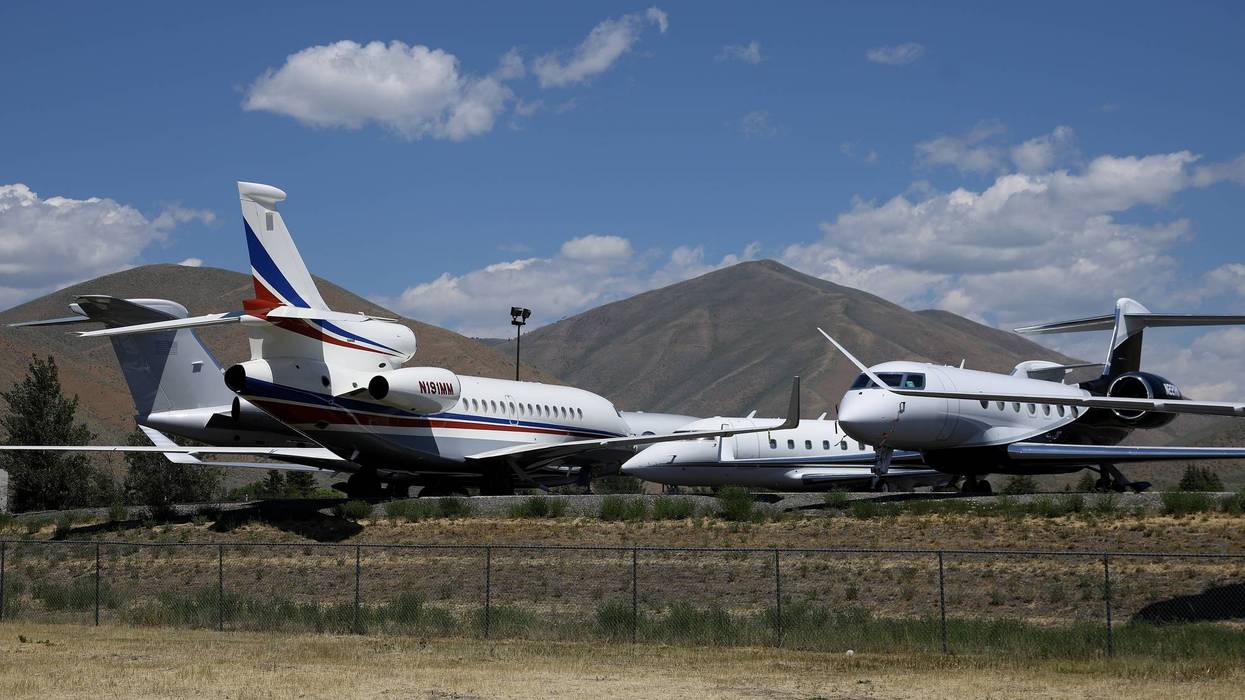
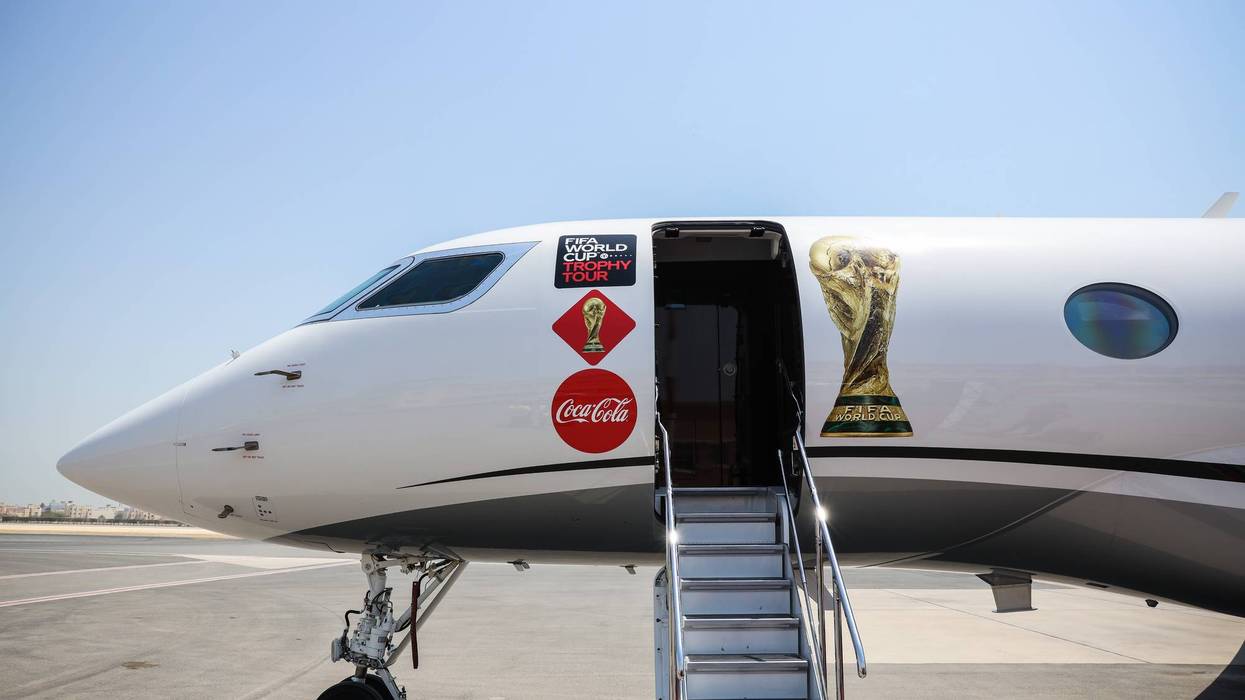

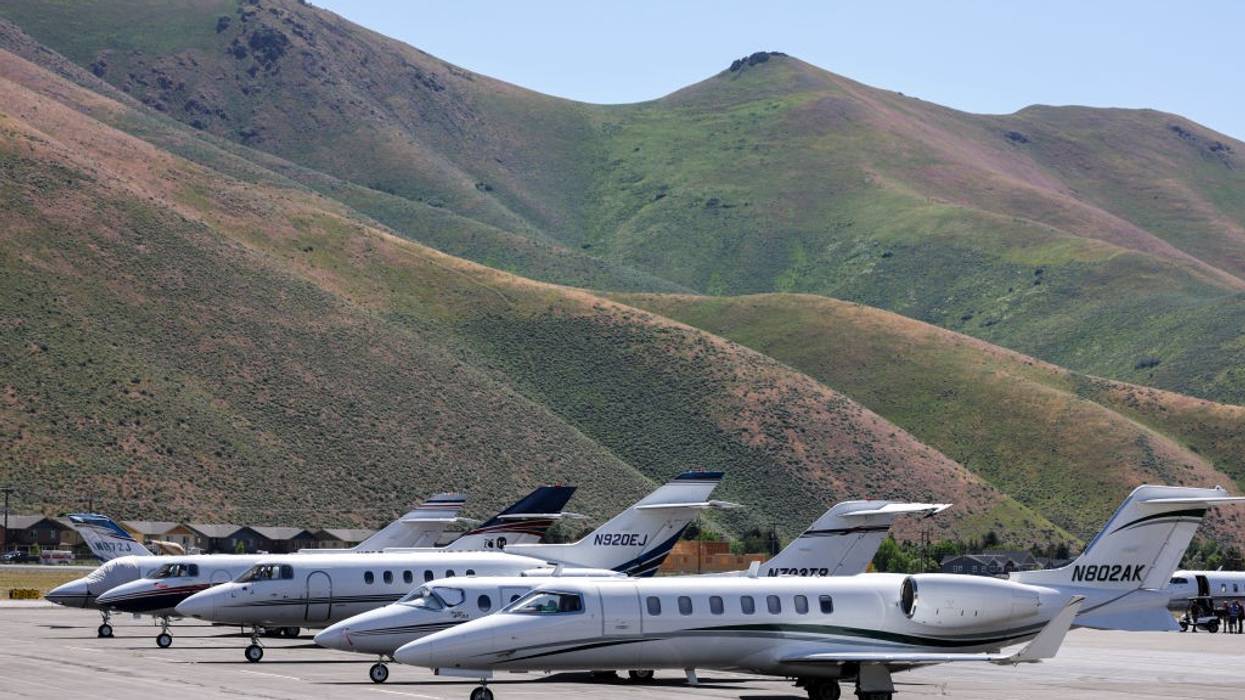
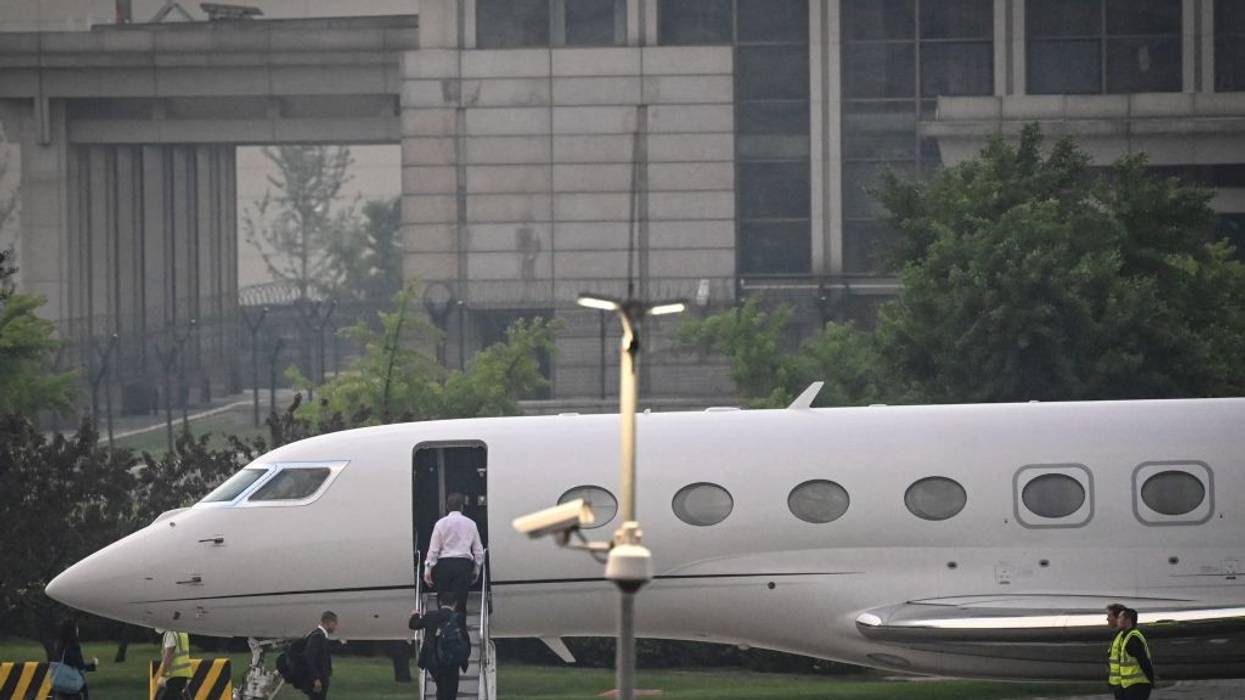
"The superrich are treating our planet like their personal playground, setting it ablaze for pleasure and profit," said Oxfam executive director Amitabh Behar in a statement. "Their dirty investments and luxury toys—private jets and yachts—aren't just symbols of excess; they're a direct threat to people and the planet."
The report explains that "Oxfam was able to identify the private jets belonging to 23 of 50 of the world's richest billionaires; the others either do not own private jets or have kept them out of the public record."
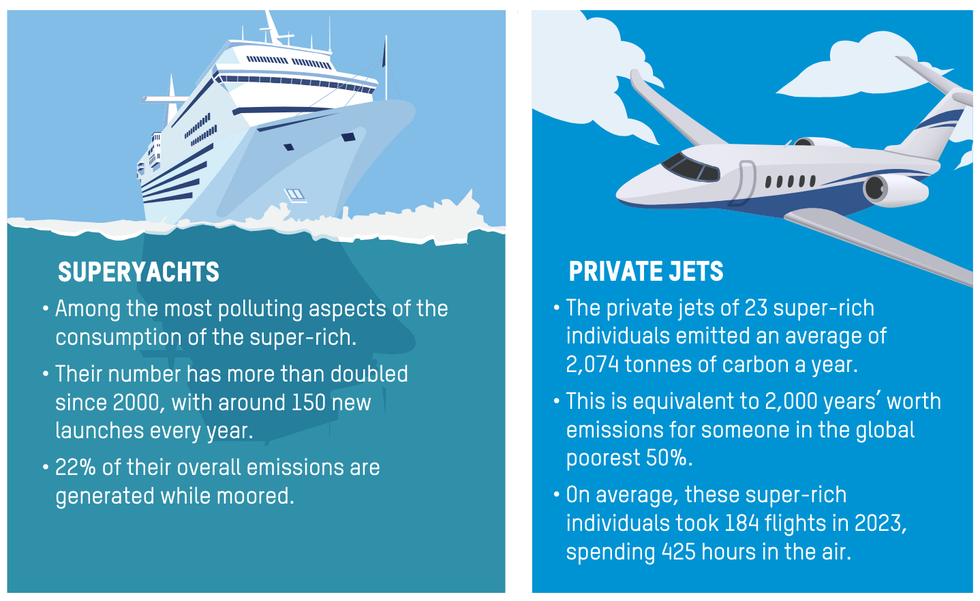
"On average, these 23 billionaires each took 184 flights—spending 425 hours in the air—over a 12-month period. That is equivalent to each of them circumnavigating the globe 10 times," the publication continues. "On average, the private jets of these 23 superrich individuals emitted 2,074 tonnes of carbon a year. This is equivalent to 300 years' worth of emissions for the average person in the world, or over 2,000 years' worth for someone in the global poorest 50%."
For example, Elon Musk, the world's richest person based on Monday updates to the Bloomberg and Forbes lists, "owns (at least) two private jets which together produce 5,497 tonnes of CO2 per year," the study highlights. "This is the equivalent of 834 years' worth of emissions for the average person in the world, or 5,437 years' worth for someone in the poorest 50%."
"The two private jets owned by Jeff Bezos, founder and executive chairman of Amazon, collectively spent almost 25 days in the air, emitting 2,908 tonnes of CO2. It would take the average U.S. Amazon employee almost 207 years to emit that much," the document adds. Bezos is the world's second- or third-richest person, according to the various billionaire indexes.
The report says that "the number of superyachts has more than doubled since 2000, with around 150 new launches every year. Not only do these giant ships guzzle an immense amount of fuel for propulsion, their air conditioning, swimming pools, and extensive staff further add to emissions. Although they are moored for most of the year, about 22% of their overall emissions are generated during this 'downtime.'"
"Superyachts are exempt from both E.U. carbon pricing and International Maritime Organization emissions rules," the publication points out. "Oxfam was able to identify 23 superyachts owned by 18 of the 50 billionaires in our study. These floating mansions traveled an average of 12,465 nautical miles a year: This is equivalent to each superyacht crossing the Atlantic almost four times."
According to the group:
Oxfam estimates the average annual carbon footprint of each these yachts to be 5,672 tonnes, which is more than three times the emissions of the billionaires' private jets. This is equivalent to 860 years of emissions for the average person in the world, and 5,610 times the average of someone in the global poorest 50%.
The Walton family, heirs of the Walmart retail chain, own three superyachts worth over $500 million. They traveled 56,000 nautical miles in a year with a combined carbon footprint of 18,000 tonnes: This is equivalent to the carbon emissions of around 1,714 Walmart shop workers. The company that has generated their extreme wealth has also been found to drive economic inequality in the USA through low wages, workplace discrimination, and huge CEO pay.
In terms of investments, the study says, "the richest 1% control 43% of global financial assets, and billionaires control (either as CEOs or principal investors) 34% of the 50 largest listed companies in the world, and 7 out of the 10 largest. The investment footprint of the superrich is the most important element of their overall impact on people and the planet."
The organization found that "the average investment emissions of 50 of the world's richest billionaires were around 2.6 million tonnes of CO2 equivalents (CO2e) each. That is around 340 times their emissions from private jets and superyachts combined."
"Each billionaire's investment emissions are equivalent to almost 400,000 years of consumption emissions by the average person, or 2.6 million years of consumption emissions by someone in the poorest 50% of the world," the report says. "Almost 40% of the investments analyzed in Oxfam's research were in highly polluting industries including: oil, mining, shipping, and cement. Only one billionaire, Gautam Adani, has significant investments in renewable energy—which account for 18% of his overall investment portfolio. Just 24% of the companies that these billionaires invested in have set net-zero targets."
The publication also features "a new analysis of the inequality in the impacts of climate breakdown."
Behar concluded that "Oxfam's research makes it painfully clear: The extreme emissions of the richest, from their luxury lifestyles and even more from their polluting investments, are fueling inequality, hunger, and—make no mistake—threatening lives. It's not just unfair that their reckless pollution and unbridled greed is fueling the very crisis threatening our collective future—it's lethal."
The document's final section includes detailed recommendations to reduce the emissions of the richest, make polluters pay, and "reimagine our economies and societies to deliver well-being and planetary flourishing."
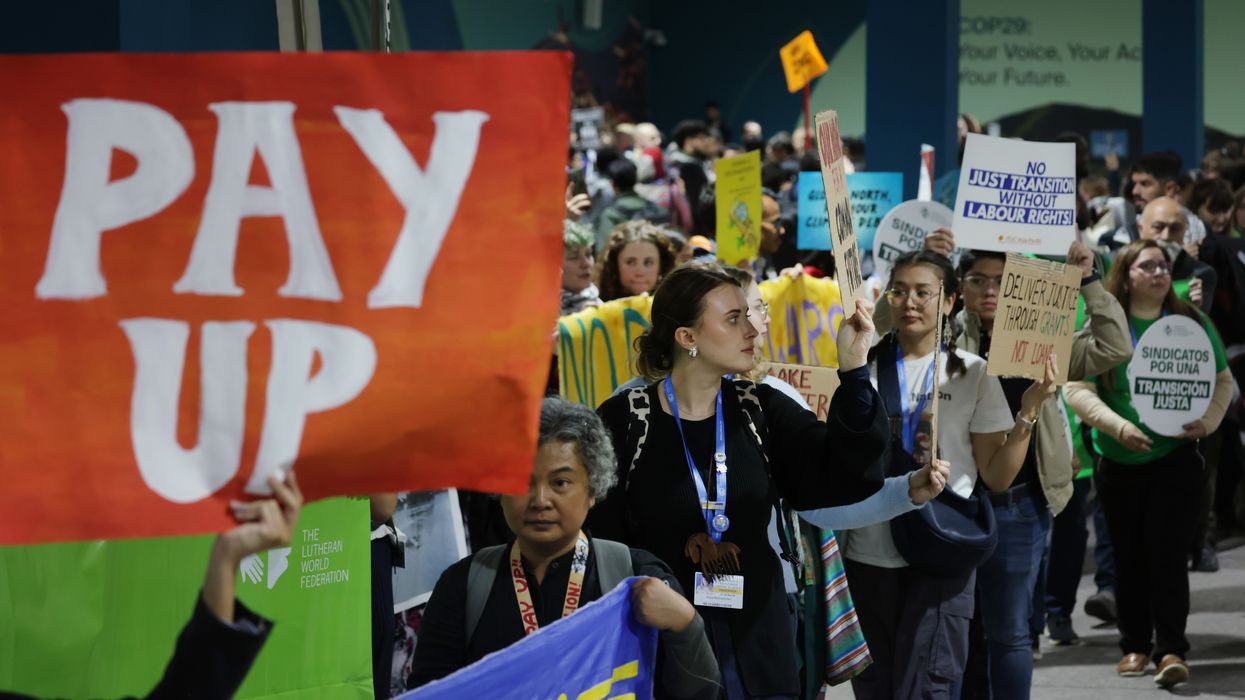
The report is a reminder of how rich and powerful people are impeding efforts to meet the goals of the Paris climate agreement, whose government signatories will be gathering in Baku next month to discuss efforts to limit global temperature rise this century to 1.5°C.
"The wealth of the world's 2,781 billionaires has soared to $14.2 trillion," the study notes. "If it was invested in renewable energy and energy efficiency measures by 2030, this wealth could cover the entire funding gap between what governments have pledged and what is needed to keep global warming below 1.5°C, according to estimates by the International Renewable Energy Agency."
On the surface, the choice to rely on SAFs for green aviation makes all the sense in the world. Unlike hydrogen- or battery-powered aircraft, SAFs can be easily integrated into the existing infrastructure of air transport and support long-haul flights of six hours or more.
But there are two fundamental problems with this approach.
The best and most effective way to lower the carbon footprint of the aviation sector is simply to fly less.
The first is that the aviation industry has an unreliable record of meeting SAF production targets. The International Air Transport Association (IATA), for example, announced in 2007 its goal to produce close to 9 billion gallons of SAFs by 2017. But this proved to be wishful thinking, and IATA proceeded to adjust its production targets lower and lower with each passing year to no avail. Even the aim of 2% production share by 2025 is still too grand. SAFs currently represent a negligible 0.2% of total jet fuel supply, causing a majority of airline executives to be skeptical about their ability to meet their self-declared climate goals by mid century.
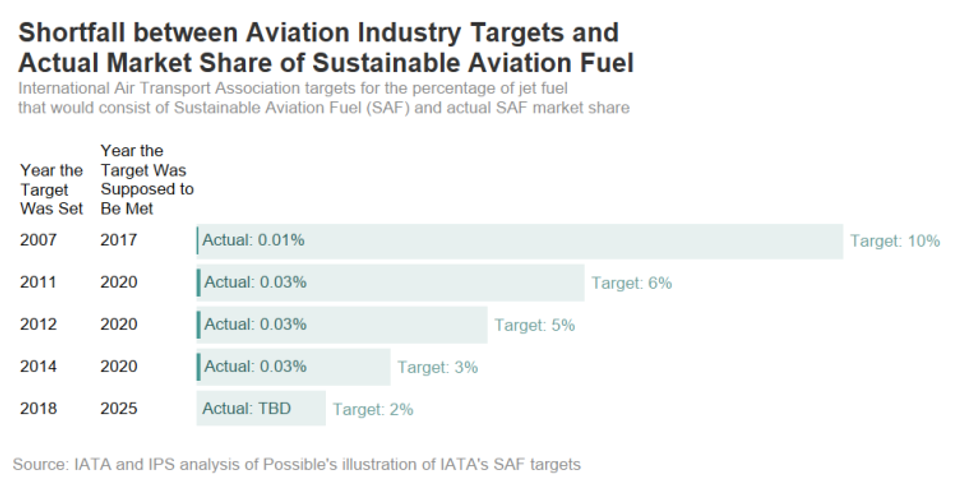
Part of the challenge in bringing more SAFs to market is the costs associated with its production. SAFs are more than twice as expensive as their petroleum-based counterparts. The aviation industry, producers of alternative energies, and their representative bodies are depending on the government to play a more active role in making the price of SAFs more competitive and expanding its availability on the international market through subsidies and tax incentives.
But this ignores the second problem: the rapid expansion of SAFs actively undermines the goal of achieving net zero.
That is because biogenic and biomass feedstocks are needed to immediately increase SAF production, requiring land-use changes and the destruction of nature-based solutions to climate change. In other words, agricultural land would prioritize the energy demands of an ever-growing aviation sector instead of growing crops to feed the planet. It will also disincentivize the regrowth of trees that remove and store carbon from our atmosphere.
Research and analysis of a dozen different roadmaps for aviation decarbonization through the large-scale adoption of SAFs demonstrate a negative environmental outcome. It paradoxically sabotages its own aspirations for achieving net zero due to the decades-long lag in biological carbon sequestration. Even putting those concerns aside, research and expert opinion dispute the ability of SAFs to meet the growing needs and demands of the aviation industry.
This puts the Biden administration’s SAF production target of 3 billion gallons per year by 2030—from the current 24.5 million gallons produced in 2023—into a new perspective. The World Resources Institute has condemned the administration’s new guidance for allowing the inclusion of crop-based biofuels like ethanol to qualify as a SAF feedstock. Corn-based ethanol is not sustainable and its inclusion directly undermines the government’s stated climate goals. And since the administration is preparing to grant lavish subsidies and tax credits to SAF producers, this has the potential to be a massive misallocation of public resources.
The best and most effective way to lower the carbon footprint of the aviation sector is simply to fly less. This is especially true for private aviation; a mode of transportation that fully epitomizes carbon inequality. It is the ultrawealthy who fly in luxury private jets and, as a result, emit 10 times more pollutants per passenger compared to commercial air travelers.
A more efficient use of our public resources is to invest in the decarbonization of other vital sectors of the economy. The electrification of our bus fleet and the construction of green public transportation are low-hanging fruit. Those are some of the many steps we need to take to usher in the much-needed green transition and save our planet from climate catastrophe.
