

SUBSCRIBE TO OUR FREE NEWSLETTER
Daily news & progressive opinion—funded by the people, not the corporations—delivered straight to your inbox.
5
#000000
#FFFFFF
To donate by check, phone, or other method, see our More Ways to Give page.
Daily news & progressive opinion—funded by the people, not the corporations—delivered straight to your inbox.
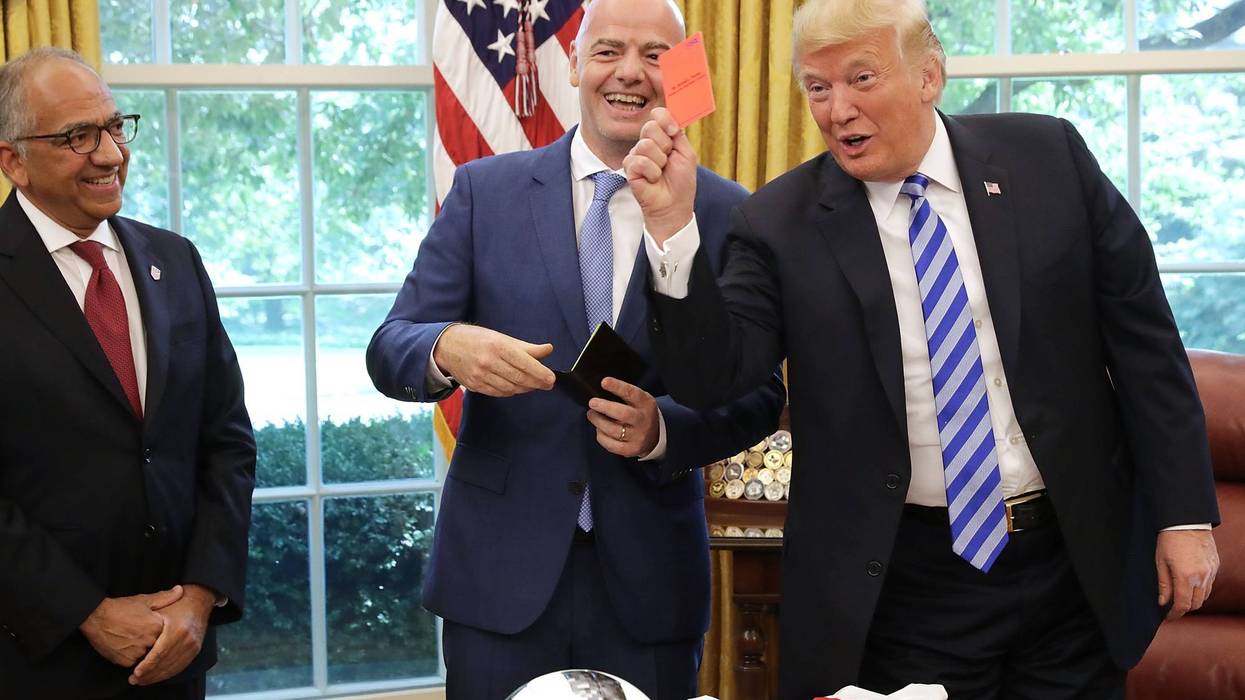
Gianni Infantino has long been a target of criticism from football fans, in no small part due to his relationship with President Donald Trump.
Gianni Infantino, president of the Fédération Internationale de Football Association, is facing a criminal probe over his ill-fated scheme to sell profits generated by the World Cup to private equity investors.
According to a Thursday report in The Associated Press, attorneys representing the Union of European Football Associations (UEFA), the governing body of European football, filed discovery requests with two US courts seeking documents related to the scheme, which Infantino abandoned earlier this month after near-universal pushback from other football organizations.
In New York, UEFA asked the court to subpoena Thrive Capital Management, a venture capital firm founded by Josh Kushner, the younger brother of Jared Kushner, President Donald Trump's son-in-law.
"Thrive and Kushner were to be the anchor investors intending to pay FIFA $4.2 billion for a 20% stake in a subsidiary that would run the soccer body’s commercial events, including the World Cup," reported the AP.
In Florida, UEFA requested subpoenas for files held by FIFA Americas and FWC2026, two FIFA businesses based in the state.
UEFA attorneys revealed that they "are contemplating a Swiss criminal proceeding against Infantino and possibly other FIFA officials for criminal mismanagement" related to the failed sell-off scheme.
The attorneys also accused the FIFA boss of creating a vehicle so that he and his allies could "acquire a permanent stake in and otherwise profit from FIFA’s most valuable assets to the detriment of FIFA, its members, and other parties within the football family."
Infantino has long been a target of criticism from football fans, in no small part due to his relationship with Trump.
The FIFA boss was widely ridiculed last year when he awarded Trump the first-ever "FIFA Peace Prize" less than two months before the president would launch an illegal war against Iran.
And during this year's World Cup, Trump and his administration led a pressure campaign that successfully got FIFA to drop a one-game ban for Folarin Balogun, a top player on the US Men’s National Team, drawing widespread accusations of corruption and favoritism.
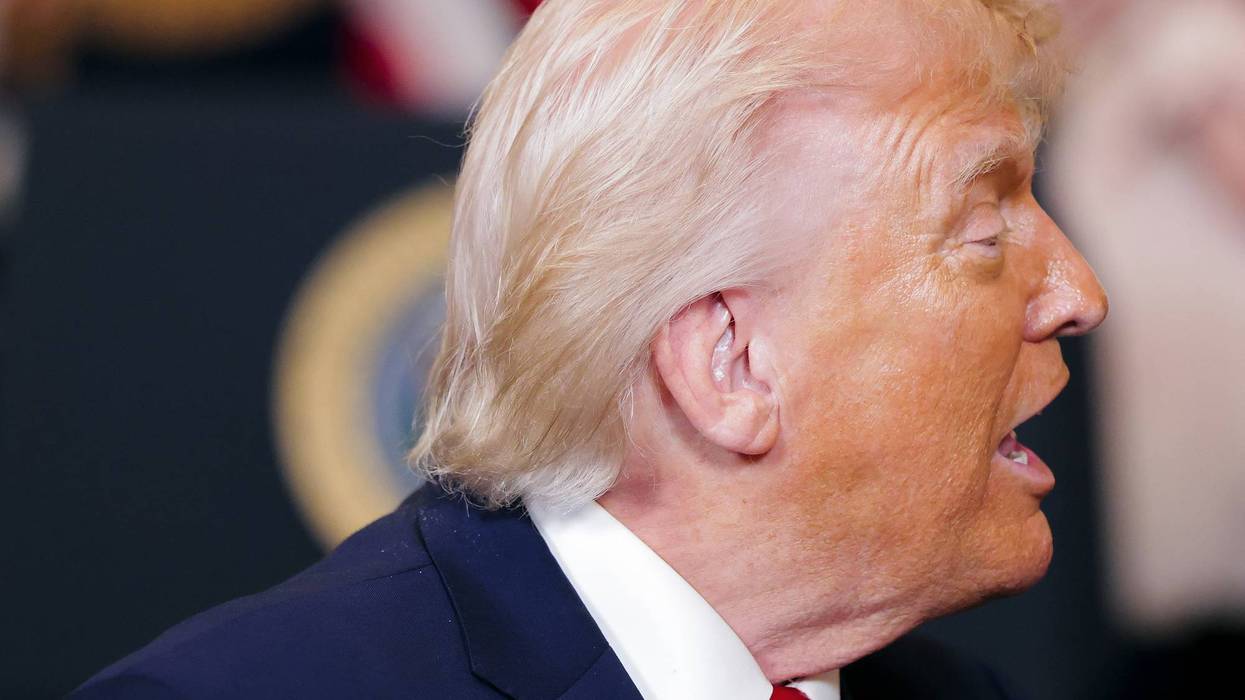
From the Iran War to the World Cup, President Donald Trump follows his destructive urges.
I want to play sockhim (oh, sorry, sockher) for President Donald Trump. In our world today, there’s nothing, it seems, he can’t fiddle with or kick around or, for that matter, sock. And whenever he feels it’s necessary (or simply has the urge to do so), he’s always been willing to sockthem, whoever they might be. If something then goes wrong, as with Iran and the global economy right now, thanks to his wild and wildly destructive acts, so what? He’s still Donald Trump and can do the equivalent again somewhere else in some other way the next second-minute-hour-day-week-month-year.
I’m thinking, of course, not just about his unbearable urge to bomb Iran for the 940th (9,400th?) time, as oil and gas prices surge once again, but about his relatively recent intervention in the soccer World Cup to ensure that one of the best players on the US team, who had committed a foul, was red-carded off the field by a referee, and then was denied permission to play in the next game against the Belgian team, could instead compete in that very game. And of course, since everything You Know Who does is headlined, you know just what happened next: The World Cup organization, FIFA, gave way instantly, that player was indeed in the next game, and the US team still lost to Belgium by a significant margin.
And Donald J. Trump just rolled right on. No matter what goes wrong, he never loses. (If you think otherwise, ask him and you’ll find out that you couldn’t be more off base!)
I sometimes try to imagine telling my parents, who died deep in the last century, about “our” president. The only way I could do so, I suspect, would be by comparing him to Sen. Joseph McCarthy, the Donald Trump of the early 1950s, who claimed that his opponents were “commies” and, in a distinctly Trumpian fashion, swore that he had a (fictional) list of 205 State Department employees who were members of the American Communist Party and later that the US Army, too, had been infiltrated by commies. His charges would be the focus of the 1954 televised Army-McCarthy Hearings, which did me the great favor (at age 10) of putting a television set in our apartment for the first time so that my mom, Irma Selz, then a well-known political and theatrical caricaturist, could draw McCarthy and crew for the New York Post.
At a time when this planet of ours needed rescuing (from us, of course), the American people reelected a man who continues to openly promise to send us—all too literally—to the blazes.
And yes, he was an all-American monster, distinctly clobbering various figures and destroying certain American lives. Still, in the end, he was condemned by the Senate and essentially drank himself to death, only affecting our all-American world for a few years and (at least in comparison with You Know Who) in a relatively modest way.
Historically speaking, Donald Trump, president (no less!) of the United States of America twice, puts him to shame. Of course, once upon a time (believe it or not), Joseph McCarthy and Donald Trump had the very same adviser (at different moments, of course), Roy Cohn, who, in the (all too literal) end, may have helped create a president from beyond the grave.
McCarthy only had a relatively brief moment at center stage before falling apart in a big-time fashion. Donald Trump, on the other hand, simply goes on and on and (yes!) on, whacking away at so many of the rest of us—Iran being at the top of his list, right now—day after day, week after week, year after year, while our world begins to disintegrate under us. (Oh, sorry, my mistake even to refer in passing to climate change when “our” president considers it a first-class “con job“!)
Joe McCarthy was functionally ejected from his political world and then essentially ejected himself from ours. Unfortunately, Donald Trump took our world by storm, two (out of three) times, while tossing out so many others in the process. And now, at least in climate terms, he seems intent on ejecting us all from Planet Earth.
If I had told you his tale early in this century, you would never have believed me. In fact, you would have thought me an idiot and a half (maybe even three-quarters). Donald Trump, the president of the United States (at least) twice and so many others of us his apprentices? You must be kidding! Once upon a time, that would have seemed beyond inconceivable for even a second, no less at least eight years. You simply wouldn’t have believed that so much of the Republican Party (and all too many other Americans) would ever have become Trumpublicans.
Under the circumstances, can there be any question that we now live in an upside-down, gloom-and-doom version of a fairy-tale world? Why, just as I was writing this, President Trump decided to launch a new series of air strikes against Iran (yes, Iran!), claiming that “we have a score to settle.” And he’s certainly a big-time score-settler, though who really knows what he’s doing or why—probably not even him. He just seems to get the urge to sockittothem and we’re off to the races.
Isn’t it strange that the man who, once upon a time, wrote The Art of the Deal can’t quite seem to imagine making a deal with anyone anymore? Actually, as he said recently when it comes to Iran: “We’re going to have a deal. We may just do it without a deal, because you know what, it’s easier.” Perhaps he should now change the title of his book to The Art of Doing Without a Deal.
And, of course, that shouldn’t be surprising when the people he’s dealing with there are, as he put it recently, “scum. They’re sick people. They’re led by sick people, and they’re vicious, violent people,” He summed things up this way when it comes to Iran, “Far as I’m concerned, it’s just a waste of time dealing with them. They’re liars… there’s something wrong with them. They’re cuckoo. As far as I’m concerned, it’s over.” (No matter at all that, only weeks earlier, he had praised them as “very rational people,” “nice to deal with.”)
And what do you do when you’re dealing with sick scum? You bomb the crap out of them. Or, to put it in sports terms, you sockthem to hell.
At a time when this planet of ours needed rescuing (from us, of course), the American people reelected a man who continues to openly promise to send us—all too literally—to the blazes. He’s simply hot, hot, hot, the very word he used for Trumpian rapper and “White House Barbi” Nicki Minaj. (”We also have a woman that is so respected and so hot and so great and such a great friend of, I don’t say conservative, I say of common sense.”)
You, of course, could say the very same thing about Donald J. Trump. He’s so hot, and the one thing he seems determined to do on this overheating planet of ours is heat ever more of it (which war, of course, accomplishes in a particularly striking fashion).
So, here we all are with a president determined to play sockher, sockhim, sockthem, and sockplanetEarth for at least another two and a half years. And where will we all be then? Sockme if I know?
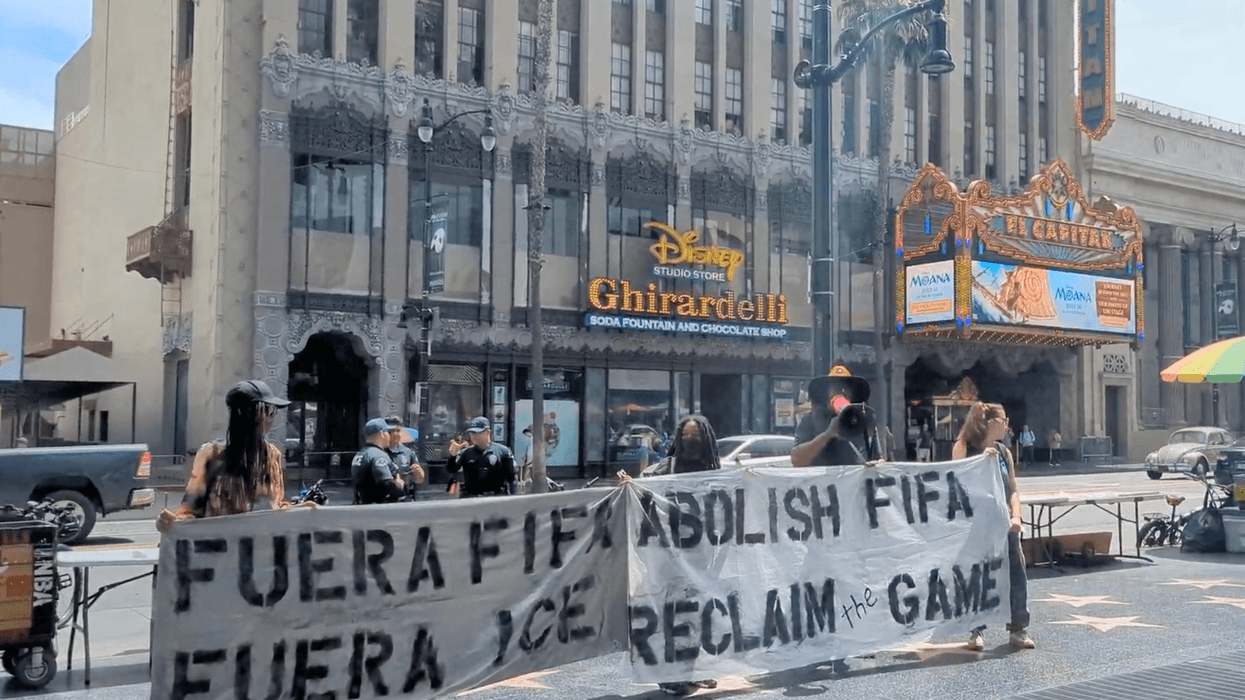
The city’s FIFA World Cup experience raises questions about the costs and benefits of hosting.
The FIFA World Cup is over, but with the 2027 Super Bowl and 2028 Olympics on the horizon, Los Angeles’ mega-event spree is just beginning. Paul Krekorian, a former LA City councilmember and now head of the mayor’s Office of Major Events, has declared the World Cup a triumph for the city.
“Even some of the naysayers about the ’28 [Olympic] games,” he told The New York Times, “will have to look at the unmitigated success of the World Cup here in Los Angeles and say, 'OK, now I understand what you’ve been talking about, when you talk about the benefit of major events. Now I get how this is beneficial to Angelenos.'”
As one of those so-called “naysayers,” I disagree. LA’s World Cup experience reinforces concerns about the city’s ongoing efforts to bring one sports mega event after another to the region. Hosting major events always gobbles up public resources that could otherwise be directed toward pressing needs, while host cities under pressure to sparkle on camera often violate residents’ rights.
The people paid to organize these big events, like Krekorian, love to repeat myths about mega-event benefits while pooh-poohing questions about the costs. But saying, "No" to more mega events is saying, "Yes’ to a city that puts residents ahead of corporate sponsors. It’s saying, "Yes" to a city that puts long-term planning ahead of last-minute scrambling.
The host committee’s human rights listicle fails to acknowledge that mega events’ own massive security apparatuses often threaten residents’ rights and safety.
Bidding to host one major sports event after another is the explicit goal of the LA Sports and Entertainment Commission (LASEC), a little-known but influential organization that acts as the local host committee for both the FIFA World Cup and the Super Bowl.
As LA’s World Cup host committee, LASEC has refused to publish the host city contract with FIFA. That means Angelenos do not know who exactly is paying—and how much they’re paying—for the significant additional city and county-run security, transportation, and sanitation services that come with hosting. Refusing to disclose that information is shady business. What is LASEC hiding? (Probably at least the fact that taxpayers are footing a large bill.) If LASEC leaders show such little regard for basic transparency, why should residents allow them to continue shaping the region’s commitments?
Because World Cup hosts have a record of violating human rights as they prepare for and host the mega event, each 2026 host committee was supposed to develop a plan to proactively protect human rights. LA’s long-overdue “plan” turned out to be a list of existing laws and hotlines. Several local advocacy groups have concluded that human rights were an afterthought for LASEC.
The host committee’s human rights listicle fails to acknowledge that mega events’ own massive security apparatuses often threaten residents’ rights and safety. On the day of the first game in the US, for example, snipers in military fatigues sat on rooftops about a mile from the temporarily renamed “Los Angeles Stadium,” pointing rifles down in the direction of Black and Latino kids playing soccer at a street festival. Over LA’s eight game days, the area around the stadium was teeming with local, state, and federal police. Some prevented local residents from accessing their own homes; some hassled and ticketed street vendors; and others monitored the area’s extensive (and expanding) AI-powered surveillance systems, technology that has been denounced by privacy and human rights organizations. Before and during the World Cup, federal agents conducted multiple raids on a LA city park, one where homelessness and drug use are visible. The raids allegedly targeted drug trafficking networks but have had the effects of displacing vulnerable individuals and disrupting essential harm reduction services. It seems likely these spectacular policing operations were timed with the park’s World Cup watch parties in mind.
The militarization of relatively small urban areas for the World Cup offers us just a taste of the much larger, more invasive operations Angelenos can expect to see with the 2028 Olympics, as police forces try to “secure” more of the region. Unfortunately, like LASEC, LA28 is showing little appetite to take human rights seriously. Its own months-late “human rights strategy” suggests unsheltered Angelenos will be displaced from event areas, a recipe for trampling on human rights. The strategy does not mention Immigration and Customs Enforcement once, even though ICE will be a core part of Olympic security operations. While there were few reports of ICE around the Los Angeles Stadium for the World Cup, ICE arrests surged across LA and the nation while we consumed the beautiful game. ICE’s efforts will be more concentrated on LA for the Olympics.
Krekorian talks up the benefits of hosting major events. The meager “legacy” projects promoted by LA’s World Cup Host Committee—26 community grants, two volunteer days, and one soccer clinic—reflects a paradigm shift from past World Cup and Olympic host cities that promised large-scale urban transformation as legacy projects. While it’s good that LA leaders aren’t overpromising at the same scale and public expense, we’re now left with a new question: Without marquee legacy investments, what justifies the financial and social costs of hosting?
LASEC argues that mega events bring lasting economic benefits, but these claims have been consistently debunked by economists. The assertion that events generate a long-term tourism boost? There’s little evidence of that for already popular destinations like LA. The promise of a short-term bump in tourist spending? Mega events attract sports-loving tourists but actually deter other potential visitors. So while attendees spend a lot of money at stadiums and multinational hotels, other cultural attractions and businesses struggle during big events. Just ask the Louvre about the Paris 2024 Olympics. During this World Cup, much like for the 2022 Super Bowl, the owners and staff of several local businesses near the Los Angeles Stadium told me game days were bad for business, as their regular customers stayed away to avoid chaotic traffic.
Beyond one-off grants and volunteer days, LA’s World Cup “legacy” boils down to intangibles, like the moments of collective effervescence and the sense of witnessing history. These intangibles are why I love watching the World Cup. But they do not justify the costs of hosting.
LASEC is unwilling to be transparent with the public and uninterested in grappling seriously with human rights concerns. This World Cup has not demonstrated that mega events generate substantive benefits that warrant the immense expenditure of city and county resources. LA must put a stop to LASEC’s plans to continue diverting public resources to one mega event after another.
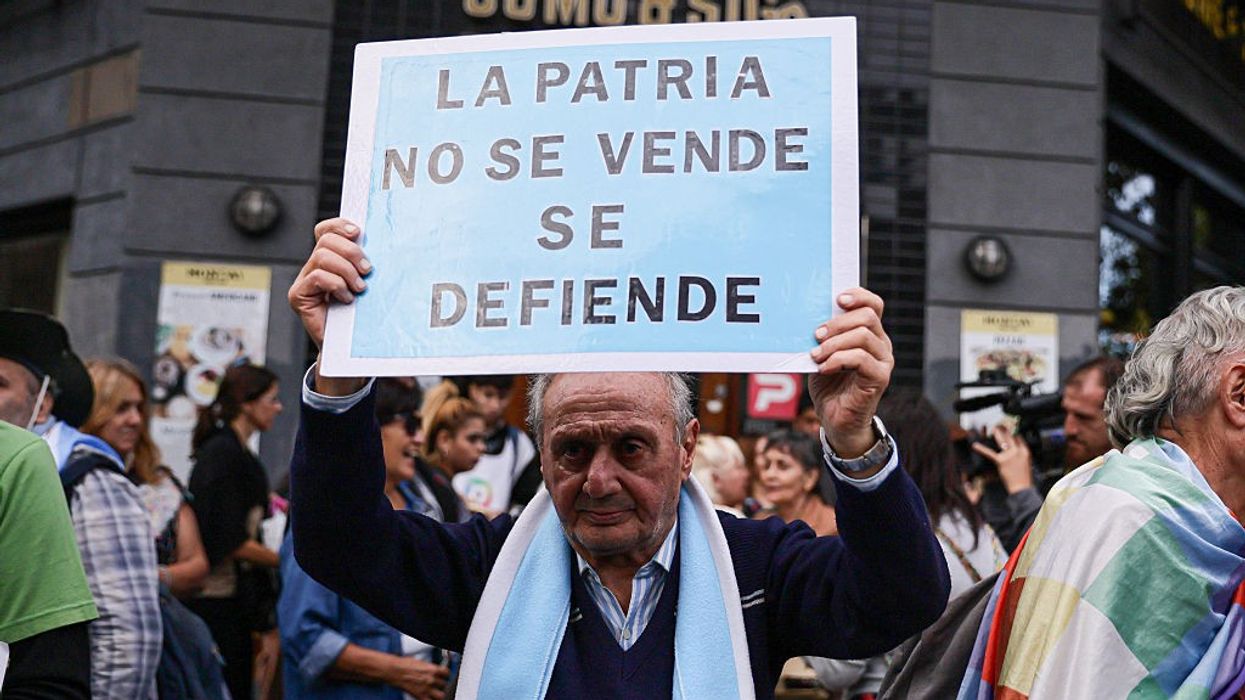
The Argentine national football team does not belong to Javier Milei. Nor does it belong to Benjamin Netanyahu. Argentina does not speak with one voice.
One day before the FIFA Men’s World Cup final between Argentina and Spain, Israeli Prime Minister Benjamin Netanyahu expressed his support for Argentina. In a video released before the match, he said: “I don’t hide that I’m a fan of Argentina. I think most Israeli citizens do. That is because President Milei has revolutionized Israel’s relationship with Argentina, and we have no greater nor better friends. Which is why we support them.”
Both media outlets known for supporting Palestinian solidarity and media outlets affiliated with or supportive of the Israeli state immediately framed the World Cup final as a proxy for the relationship between Palestine and Israel. The final turned into a symbolic contest due to the official state policies of Argentina and Spain toward Palestine and Israel. Acts of individual actors, for example, Lionel Messi’s commercial connection with Israeli companies or his visit to Israel and the occupied West Bank as part of a 2013 “Peace Tour” organized by Barcelona or Lamin Yamal’s waving of a Palestinian flag after the La Liga championship, were turned into symbols of the collective stance of a nation and became reasons enough to support or oppose a specific team in the World Cup final.
As a Bangladeshi-American who grew up in Bangladesh—a country known for its passion for Latin American football powerhouses and its split loyalties between Argentina and Brazil—I have been a fan of the Argentine men’s football team since the age of 10. I have also been in solidarity with the Palestinian struggle for freedom since I was old enough to read newspapers. I found it appalling to see the head of a genocidal state publicly endorse my favorite men’s football team and to watch Palestinian solidarity become over simplistically reduced to supporting or opposing a football team. Can we end settler-colonial violence by winning a football match?
While people have argued that symbols matter, I would urge them to consider how such symbolism ignores two important points: First, it overlooks the problem of transforming one of the world’s most celebrated sporting spectacles into a stage upon which Benjamin Netanyahu’s ethnonationalist genocidal project can be publicly performed and normalized. Second, people are not their governments. Argentina’s self-proclaimed “most Zionist president in the world” Javier Milei’s unconditional alignment with Netanyahu’s government does not reflect the fact that Argentina is also the home to a substantial and increasingly visible Palestinian solidarity movement.
To reduce Argentina to its president is to reproduce a colonial logic that erases the vibrant historical and contemporary social movements, labor struggles, Indigenous resistance, feminist and queer organizing, anti-racist and anti-fascist activism, and transnational solidarity engagements that have long shaped political life in Argentina.
Using sports as a platform for promoting geopolitical interests is not new. Sports have always been entangled with powerful states and institutions. They were exported globally as tools of European colonial expansion, serving as instruments of the so-called civilizing mission, mechanisms of control, and tactics of assimilation between the 16th and the 20th centuries. Many colonized and indigenous communities have also turned sports into powerful symbols of defiance, through which they subverted the master’s tools, beat the colonizers at their own game, and transformed stadiums and playing fields into communal spaces for practicing decolonial solidarity and organizing resistance away from colonial surveillance and policing.
Football is no exception. The imperial and colonial legacy still shapes the way football—especially the FIFA Men’s World Cup—is organized, governed, and experienced today. Concerns have been raised about the displacement of the unhoused population by local governments in US host cities. Immigration and Customs Enforcement continued to arbitrarily and violently target, deport, and kill members of communities of color through paramilitary-style operations while World Cup matches were held across US cities. In Canadian and Mexican host cities, marginalized and minoritized communities expressed concerns about disruptions to water supplies, threats to land access, rising living costs, and disruptive infrastructural development.
Even though FIFA has chosen the official slogan “United as One” for the 2026 Men’s World Cup, a series of events has already demonstrated that the powerful and the powerless are not united and that the playing field is not level for everyone. US President Donald Trump has publicly intervened in FIFA’s disciplinary process, and FIFA President Gianni Infantino’s cozy relationship with Trump has raised serious concerns. Unusually strict travel restrictions disproportionately affected the Iranian team's World Cup experience. The 2026 FIFA World Cup has repeatedly been used and abused to exert both hard and soft neoliberal, disciplinary, and diplomatic power.
By expressing support for the Argentine men’s football team, Netanyahu also utilized the World Cup to manufacture legitimacy for the Israeli settler-colonial apartheid state that has a long history of systematically evicting, segregating, displacing, and killing Indigenous Palestinians. He has appropriated this transnational sporting spectacle as an instrument for promoting and normalizing his settler-colonial mission.
What is at stake, however, extends beyond the universalization of a violent settler-colonial regime.
Drawing on Edward Said, I would argue that Netanyahu’s embrace of Argentina illustrates how the Israeli settler-colonial project is not just about colonizing Palestinian land and annihilating the Indigenous Palestinian population. The settler-colonial project involves careful production of knowledge through a politics of representation, turning representation into a technology of discursive and political rule. Through his symbolic embrace, Netanyahu deliberately erases complexities and contradictions, propagating an oversimplified and monolithic discourse about the state of Argentina and its communities. In his representation, Argentina is no longer a society of millions negotiating overlapping and competing political traditions; it becomes merely an extension of President Javier Milei’s geopolitical loyalties.
Yet Milei does not constitute Argentina.
To reduce Argentina to its president is to reproduce a colonial logic that erases the vibrant historical and contemporary social movements, labor struggles, Indigenous resistance, feminist and queer organizing, anti-racist and anti-fascist activism, and transnational solidarity engagements that have long shaped political life in Argentina. It renders invisible the thousands of Argentines who have mobilized in solidarity with Palestinians despite President Milei’s continuing unabashed support for Israel, including members of Argentine Jewish organizations critical of Israeli state-sponsored settler-colonial violence, as well as union organizers, students, artists, and social justice activists who refuse to equate support for Palestinian liberation with hostility toward Jewish lives and communities.
For example, the Comité Argentino de Solidaridad con el Pueblo Palestino (Argentine Solidarity Committee with the Palestinian People) organizes national demonstrations, educational events, BDS campaigns, and solidarity actions across Argentina. It ran a nationwide campaign under the slogan, “Argentina Rejects Genocide in Gaza” and mobilized a massive demonstration involving thousands of people in Buenos Aires in July 2025. A diverse collective of Argentine lawyers, doctors, educators, politicians, journalists, and activists participated in the Global Sumud Flotilla, which attempted to break the Israeli criminal blockade and carried humanitarian aid to Gaza. Judíos por Palestina (Jews for Palestine) operates in Argentina as part of the Global Jews for Palestine Network, which is known for its rejection of Zionism, Israeli apartheid, and genocidal state policies.
A 2026 Pew Research Center survey found that 55% of Argentines hold “very unfavorable” or “somewhat unfavorable” views of Israel. Only 21% view the country favorably. Argentina recognized Palestine as a “free and independent state” under former President Cristina Fernández de Kirchner back in 2010—more than 13 years before Spain formally recognized the state of Palestine. The Argentine football legend Diego Maradona, who famously said, “In my heart, I am Palestinian,” was known for his vocal critiques of the settler-colonial violence of the Israeli state.
The issue is not whether a political leader may cheer for Argentina. The issue is how the imperial and settler-colonial power repeatedly attempts to equate a diplomatic alliance between Milei and Netanyahu with the political imagination of the entire population of Argentina.
The Argentine national football team does not belong to Javier Milei. Nor does it belong to Benjamin Netanyahu. Argentina does not speak with one voice. The Argentine football team belongs to generations of communities that have transformed football into an archive of collective memory—of neighborhood life, working-class identity, migration, anti-authoritarian and democratic struggles, joy, grief, and resistance. To appropriate that symbolic inheritance for the purpose of normalizing settler-colonial violence is to strip football of its decolonial legacy. No geopolitical alliance—and no World Cup final—can or should erase that legacy.
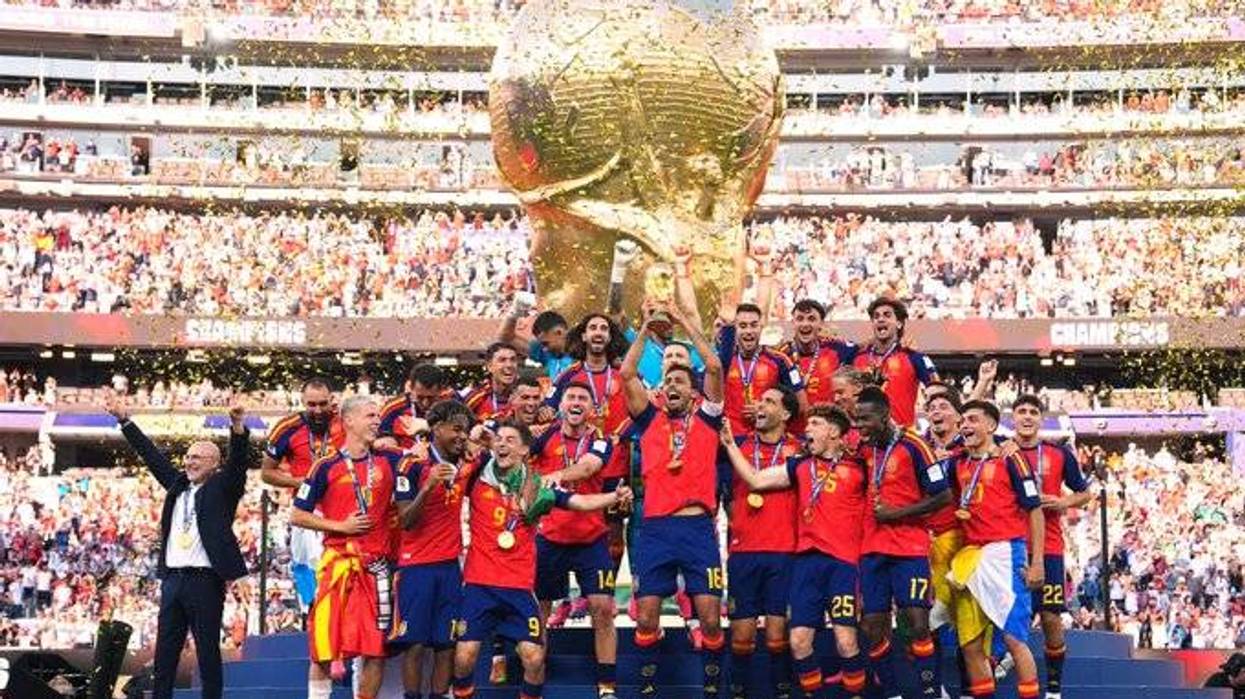
The 2026 World Cup was a lesson in how authoritarians capture what we love and how we refuse to let them.
I inherited a few things from my father, who, as the story goes, when I was a baby in Transylvania, swam across a frozen river to escape communist Romania, toward a faith that we could forge our own brave futures, free from ethnic oppression. I inherited his unruly curls, refusing control and predictability. I inherited his sometimes comic rage at injustice. I inherited his love of the beautiful game, its history, its ever-evolving, complex entanglements with state and power. His faith that people who have little can stand proudly against nations who have stolen their wealth, and refuse to back down.
He is no longer here for me to talk to about the World Cup. And this impossible and forever grief has been opened fresh as I try to imagine what he would say about what we have watched unfold in the 2026 games. There is a chip inside the ball now. It hums at 500 times a second, registering contacts no eye can see, no crowd can feel, no player can dispute. It enters the conversation as an indisputable, objective data point, asserting authority over anyone and everyone. On the third of July, in Toronto, that sensor ended Croatia's World Cup. Joško Gvardiol had bundled home what looked like an equalizer 13 minutes into stoppage time, and for a few delirious seconds the stadium believed. Then according to officials the sensor detected the smallest brush of a teammate's hair against the ball, on its way to the man who set up the goal. FIFA officials decided it was enough to call it offside. The goal was erased. Portugal advanced, 2-1. A machine had registered what no human present could, and in registering it, unmade a moment of collective joy.
FIFA insists the call was correct. Perhaps it was. I can’t say, the beautiful game is rife with instances when fans felt distraught by calls refs have made. But I can say that this is different. We have built a tournament where correctness is now adjudicated by inertial sensors and video rooms and it lies beyond dispute. Eduardo Galeano, the great Uruguayan chronicler of the game, warned us. "The more the technocrats program it down to the smallest detail," he wrote, "the more the powerful manipulate it, football continues to be the art of the unforeseeable." The chip in the ball is the technocrat's dream: a game with the unforeseeable engineered out. It is not just that the game has been made less human under the guise of objectivity. It is that the fantasy of objectivity itself has become the cudgel.
Here is what I am reflecting on, wishing I could discuss with my dad, at the close of this tournament: The promise of VAR was never really neutrality. It was the appearance of neutrality, which is a different and more useful thing if you happen to hold power. The appearance of objectivity is not a side effect of the manipulation; instead, it is the mechanism, because a decision the machine is presumed to have made is a decision no one thinks to question. A goal-line sensor cannot be bribed. But the humans who decide when to consult it, what angle to review, which foul to freeze and which to wave through, can be, and the data increasingly suggests they have been, whether by conscious design or the gravitational pull of a superstar's fame and the money this can make for FIFA.
This World Cup has gifted us many lessons and reminders, one of them is that supposed objectivity is not the same thing as fairness.
Similarly, there are echoes of this pattern in Egypt against Argentina in the round of 16. Egypt led early. Mostafa Ziko put the ball in the net for what would have been a two-goal cushion, and VAR chalked it off for the faintest infraction in the buildup. Late in the match, with Egypt still level, a shove in the box went unpunished by the same system that had been so exacting minutes before. Argentina scored in the 90-second minute and advanced, 3-2. Egypt's football association filed a formal complaint. Their coach made clear the issue when he said his team had suffered an injustice, and suggested that FIFA needed Lionel Messi to keep playing. Analysts who reviewed the tournament's VAR data found that Argentina and Mexico received the most favorable review outcomes of any teams at the tournament, while Croatia and Iran received the least. From this data it appears that a system built to remove human judgment from the game continues to produce outcomes that track, with uncomfortable fidelity, who those in power most need to keep around to increase earnings.
The instances telling this story are culminating into a chorus. In an Iran-Belgium match, a goal was disallowed because VAR determined that an Iranian player's rear end, not his foot, not his knee, but the curve of his backside, had drifted a fraction past the last defender. It was, on its face, absurd, and it was also revealing, because it showed the machine doing exactly what it was built to do: finding a violation so microscopic that no stadium, no broadcast, no human referee running at full speed could ever have called it in real time, and then presenting that finding as more true, more final, than what 40,000 people had just watched with their own eyes. Such instances, of which there are others, are leading fans and experts alike to ask whether VAR had gone too far. In this variation, football survived for 150 years on the premise that referees would sometimes be wrong, and that this was a condition of the game being played by humans, for humans, at human speed. It appears that under the guise of taking away the possibility of human error to allocate the decision to VAR, we are simply relocating the injustice somewhere less visible and giving it a machine's alibi.
This World Cup has gifted us many lessons and reminders, one of them is that supposed objectivity is not the same thing as fairness, and a system that claims the first while abandoning the second is more dangerous than one that never claimed either, because it forecloses the argument. You cannot appeal to a sensor's conscience. What we need, and what this World Cup has made painfully clear we are losing, is the return of human judgment, fallible and accountable and answerable to a crowd, back into the center of the game. And this goes for on the pitch and off the pitch.
If you want to understand who the 2026 World Cup is really for, watch what happens 22 minutes into each half. The rhythm is interrupted, and the play stops. Not because it is dangerously hot, though with climate change it too often is; the breaks run on schedule even in roofed, air-conditioned stadiums. They stop because FIFA decreed a mandatory three-minute "hydration break" in all 104 matches, "regardless of heat conditions." It is the first World Cup in history to do so. Officially, the line is that this is about player welfare, but if we follow the money a different story emerges.
Soccer, alone among the major North American television products, historically offered almost no in-game commercial inventory. Ninety minutes, two halves, no timeouts to sell. The mandatory breaks changed that overnight, manufacturing 208 guaranteed advertising windows across the tournament and restructuring the game into four quarters, conveniently familiar to the American fan and the American businesses FIFA is courting. Media buyers estimate Fox Sports alone stands to reap a minimum of $250 million from these breaks, with plausible figures running to half a billion. Former England defender Gary Neville called it what it is: a "stealth advertising break."
Heat is real, and climate change is making it deadlier. Here, a genuine safety concern has been laundered into a revenue engine, and the game's rhythm, its uninterrupted, breath-held flow, the very thing that distinguishes it, has been sold for the price of a commercial slot. Once you see that the game's own rhythm is for sale, the question is no longer whether other decisions are being bent, only which ones, and in whose favor.
And yet, capitalism did not manage to buy everything. Not everyone in this tournament was for sale, and not everyone who showed up did so for the sponsors.
Algeria, making the trip to the American Midwest, chose the college town of Lawrence, Kansas as their base. And Lawrence welcomed them with open arms. The University of Kansas marching band learned and played the Algerian national anthem. A local artist built a massive Algerian flag out of organic materials. No hydration break manufactured that. It happened because people decided, without being asked and without being paid, to open a door.
That reminder of who we are is also a gift we received from this World Cup alongside everything else this tournament has shown us about who is trying to own the game. There may be polarizing narratives that cultivate a sense of suspicion about people who do not think like us or look like us, but the world is filled with people who look at the visitor and welcome them with a song that reminds them of home.
Oh and perhaps the least surprising of all the events from this World Cup was the phone call. Folarin Balogun, the United States' top scorer, a Black, American-born son of Nigerian immigrants, playing for a nation whose president has spent the year trying to end birthright citizenship, was sent off against Bosnia on a red card, triggering an automatic one-match ban that FIFA had repeatedly described as beyond appeal. Days later, that unappealable ban vanished. FIFA invoked a probationary loophole to suspend the suspension, clearing Balogun to face Belgium in Seattle less than 24 hours after the decision. It was the first time since 1962 that a red card issued at a World Cup did not result in a suspension.
Trump personally called FIFA president Gianni Infantino to ask for a review. He then thanked FIFA publicly for "reversing a great injustice." Belgium's football association said it was "astonished," and UEFA called the reversal "unprecedented, incomprehensible, and unjustifiable." Speaking from the White House, Trump said he hadn't known what a red card was until this happened; once he found out, he said, "You got to be kidding," and picked up the phone.
Trump may think he can do anything in this world, but the consequences are ours to carry and ours to refuse.
Infantino had handed Trump the inaugural "FIFA Peace Prize" the year before, an award invented, it is hard not to conclude, to flatter a notoriously fragile ego. And a supposedly ironclad suspension dissolved within days of a presidential request, reshaping how an opponent could prepare for a knockout match. When the game's governance rearranges itself around a head of state's preference, the fix does not have to be spoken to be real. Of course, this is all according to the script of authoritarian power hoarding that the Trump administration follows.
The United States lost to Belgium, 1-4, eliminated in the Round of 16. Balogun played, amid a firestorm no team should have to carry onto a pitch, and the US was outclassed from the opening minutes to the final whistle. There is a version of this story where I tell you the team was cursed, or simply outmatched, and maybe some of both is true. But it is hard, watching that scoreline, not to think of everything this team had earned up to that point, the grit against Bosnia, the composure that got them here, and everything Trump's intervention cost them in return: a level playing field to lose on, if lose they had to; the dignity of an opponent who did not have cause to call the whole thing rigged before kickoff; a story about their own merit instead of a story about a president's ego.
The team was better than the man who could not let them face Belgium without first bending the rules in their favor. He gave them a phone call. He did not give them a win. That, too, is a lesson: Intervention dressed as favor still costs the person it claims to help. Trump needed his own father to intervene to keep him afloat as a young man, bailing him out with millions he did not earn. He does not seem to understand that a team should not be, and cannot be, rescued into victory. It can only be robbed of the chance to win or lose on its own terms. Trump may think he can do anything in this world, but the consequences are ours to carry and ours to refuse.
Another thing I inherited from my father (who much like Maradona, was also a scoundrel and a genius) is my love of history. And if we look at the history of this sport we find that football never really belonged to the corporate sponsors, the technocrats, and the authoritarian strongmen. It has a dispersed history, thousands of years old; ancestors of the sport were present in pre-Hispanic American culture and in ancient Rome. Before it was standardized into the sport we know today, football was a folk practice, a public riot of a thing in which entire English villages chased a stuffed ball across open country and used the chaos as an occasion for popular justice.
What ended the people's sport was the enclosure of the commons, when the English parliament converted collective fields into private profit and the gentry moved to regulate the festivals of people they had just dispossessed. The standardized game that followed, codified in the elite schools of the 1840s, was explicitly a tool of order: a way to discipline boys and, later, to keep factory workers fit for labor and distracted from dissent. The chip in the ball, the hydration break timed to the ad break, is only the enclosure's newest fence, an attempt to measure and monetize the very unruliness that made the commons worth having in the first place.
And yet. Every attempt to control the game produced its own resistance. Scottish workers, migrating for wages, carried with them a "combination game" of passing and possession, a style rooted in the cooperation and solidarity of the factory floor, set against the individualist "kick and rush" of their bosses. When the First World War pulled men into the trenches, women took their places in the factories and on the pitch; the Dick, Kerr Ladies drew 10,000 spectators to a charity match in 1917, only to be shoved back into domestic invisibility once the men returned. And in Brazil, where the colonial elite first played football in whites-only clubs, Black, mixed-race, and Indigenous players took the imported game and reinvented it. Arthur Friedenreich, son of a German businessman and a Black washerwoman, fouled without protection because referees refused to blow the whistle for him, learned to weave and swerve and vanish from contact. That is where the dribble was born. The dribble developed as an act of survival and resistance, a body making itself impossible to catch in a world built to exclude it.
History has a wonderful way of exposing commercial breaks, all-knowing sensors, and presidential phone calls for the small, ridiculous things they are. The game has always been a site of capture and a site of escape. Maradona was a genius and a scoundrel, the hand of God and the man ruined by it. We should not sanctify the players or the fans or the game itself. The Egyptian ultras who helped topple President Hosni Mubarak, who stood in Tahrir Square and paid for it with their lives at Port Said, also carried their own contradictions. Everything is a story of everything. There is no pure resistance untouched by the thing it resists.
But there is always resistance. That is the point French philosopher Michel Foucault wrote about brilliantly: Where there is power, there is resistance, not outside it, but woven through it. The disciplinary schoolyard produced the combination game. The colonial clubs produced Friedenreich's dribble. The chip in the ball, and the biases it has laundered into data, produced an Egyptian federation that stood up to corporate oligarchs, and a Kansas college town that decided, sensor or no sensor, to throw a party for a team it had no obligation to love. And this summer, a nation of half a million people produced something no sensor could measure at all.
The Blue Sharks of Cabo Verde had never been to a World Cup. Ranked 67th in the world, they drew with Spain, scored their first-ever World Cup goal against Uruguay, and clawed their way out of the group as its runners-up, the first debutant to reach the knockout stage since Slovakia in 2010. Then, in the Round of 32, they met the reigning champions, Messi and Argentina, and refused to be a footnote. Messi scored early. Cabo Verde equalized in the second half. Argentina retook the lead two minutes into extra time. Cabo Verde equalized again, in the 103rd minute, when Sidny Lopes Cabral curled a shot into the top corner that made me want to kneel on the ground in a prayer of gratitude. Then in the chaos of bodies clashing deep in the second period of extra time, mere minutes from penalties, Argentina scored to survive, 3-2. The reigning champions of the world barely avoided the biggest upset in World Cup history, against a nation smaller than most American counties.
And Cabo Verde was incandescent. They were brilliant. They played the beautiful game with joy. A tiny island nation, a former Portuguese colony, had stood on the largest stage the sport offers and refused fear, anger, and pettiness. They embodied joy. No sensor could register what that meant. No commercial break could sell it. No phone call from any president could reverse it.
Football, no matter how much authoritarians and corporate greed try to stifle it, is the art of the unforeseeable. Just as we are.
And then the final offered us an impeccable microcosm of the metanarrative. Spain beat Argentina 1-0, a tournament of collective, patient, disciplined possession culminating in a team that simply held the ball and refused to be provoked, that stayed connected until the opposition frayed. Argentina was formidable and proud, and played most of extra time a man down after a red card. This was no clean fable of virtue over villainy, only two proud teams and their contradictions. On Sunday we watched lessons unfolding on the pitch that we need to hang on to during these times of rising authoritarianism: hold your shape, keep the ball, don't let the other side bait you into their game, and the pressure eventually tells on them, not you.
And there, lingering in the confetti where he did not belong, was Trump, booed as he took the stage, presenting the trophy and then refusing to leave it, until Infantino had to usher him aside so the winners could have their moment. Two Argentine players declined his handshake. And by the next morning, Spain's football federation had posted its official victory photo with the president cropped cleanly out of the frame. Trump could not bully himself into the celebration of the victors. He did not earn his place on the podium. And the Spanish team preserved their joy and made sure history would center those who earned their place.
The powerful will keep trying to program the game down to its smallest detail, to meter its joy, monetize its pauses, and bend its rules toward whoever holds the most valuable tickets and the peace prizes. Yet. The ball keeps moving in ways the sensors did not predict. The dribble keeps being invented, on waste ground and back streets, by people the game was designed to exclude. Football continues to be the art of the unforeseeable. It was never theirs to own. It was always, at its heart, ours.
My father, after working third shifts at a car parts factory in the Midwest, would stay awake to watch the World Cup, screaming at judgments refs made, screaming at the striker who refused to be a team player and let others score who were in better positions.
What would he say, the man who survived torture by an authoritarian state, the man who risked everything so his children could join him eventually in the "land of the free"? I can't say for certain. I did not inherit his gift for spicy gab; my father was hilarious, with a fantastically foul mouth and a searing sense of humor. But maybe I can tap into that sometimes-comic rage. Trump is a grifter, and state leaders and corporations regularly buy his favors. He has tried to ruin everything meaningful about this country: our excellent higher education system, our ability to coexist in diverse joy and learn and create and build together, our immigrant sisters and brothers, our trans sisters and brothers, any of us trying to survive by working hard. He has mocked our love of this world and of each other. And now, no surprise, he is trying to squeeze the soul out of this sport too.
But my dad and Eduardo Galeano are both right. Football, no matter how much authoritarians and corporate greed try to stifle it, is the art of the unforeseeable. Just as we are. They have not written our future. We are writing it. Football is just another reminder that yes, things are entangled and complicated, and our gods are also scoundrels, and a sensor can be wrong even when it insists it cannot be. But we are the ones writing what comes next, and the unforeseeable, stubborn and ungovernable, is our power too.
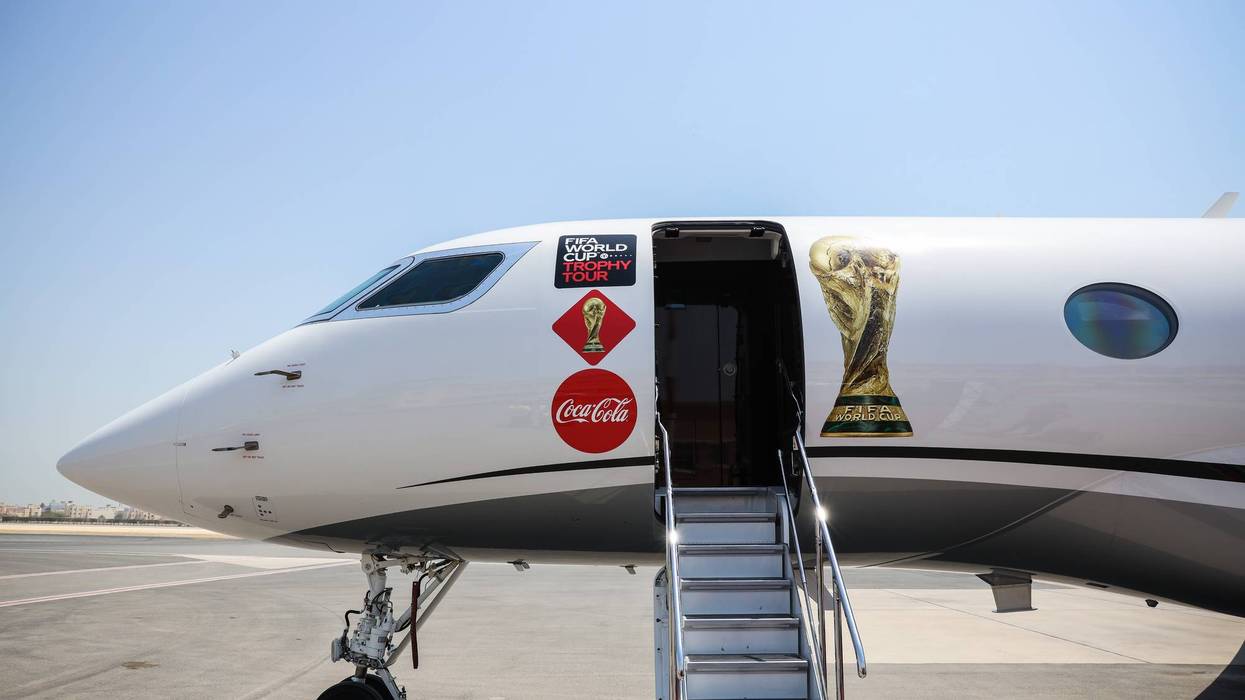
A new private jet emissions tracker shows 136 kilotonnes of additional emissions before the final match.
As fans gather for the FIFA World Cup final match, pitting Spain against defending champion Argentina, New York City has been engulfed in a shroud of wildfire smoke.
At the same time, thousands of wealthy fans are arriving in luxury private jets, the most carbon-emissions polluting form of transportation. This seems an appropriate image for what may prove to be the most polluting sports tournament in world history, thanks in part to private jet excess.
The wildfire smoke, from several hundred uncontrolled blazes across Ontario and northern Minnesota, have contributing to air quality emergencies across the northern U.S. On Thursday, the city of Detroit registered a whopping 724 on the Air Quality Index. Index ratings over 300 are considered a health emergency for all living things.
Scientists are often cautious about attributing blame to climate change, but there is little doubt these wildfires are supercharged by global climate change, as forests dry out and atmospheric rain cycles are disrupted.
On Saturday, the air quality in East Rutherford, New Jersey registered 157, an “unhealthy” level. The pollution index is anticipated to improve for the Finals, with weather shifts and a thunderstorm scrubbing the air. This may bring the pollutant index to 100, considered “moderate” but posing risks for sensitive groups including older adults, children, and those with lung or heart disease.
Compounding the injustice, ordinary fans, taxpayers, and the flying public subsidize the pollution spewing activity of the high-flying private jet class. Private jets don’t chip in their fair share of the cost of airspace, let alone their environmental impact. And last year, the U.S. Congress slathered on more tax breaks for private jets and their ultra-wealthy users.
These tax breaks don’t even address the biggest subsidy: the ability of private jets to avoid any responsibility for the health and environmental costs of their pollution impacts.
With an assist from our new IPS Private Jet Emission Tracker, designed to assess the impact of special events, we know that thousands of private jets have already attended the first 102 matches of the FIFA World Cup. Prior to the final match, the private jets attending the tournament have spewed an estimated 136 kt of additional carbon pollution into the atmosphere, the equivalent of driving 31,723 gasoline powered cars for a year. The Tracker looks at private jet activity in match-host cities over five years and documents the spike in activity.
In our assessment, Red Card for Private Jets at the FIFA World Cup, we document the excessive emissions and the costs to everyone else. We call on FIFA to ban private jets at matches and live up to their pledge to be carbon neutral by 2040.
FIFA should also stop designing tournaments that span continents and cater to the ultra-wealthy private jet class and not ordinary fans. The 2030 FIFA World Cup will be played in six different countries, with most matches in Morocco, Portugal, and Spain. But in honor of the 100th anniversary of the World Cup, the opening matches will be played in the South American nations of Uruguay, Argentina and Paraguay.
FIFA is clearly competing to produce the world’s most polluting sport competition. They must do more to protect the players, the fans, and our planet. The World Cup belongs to everyone, not just the private jet class.
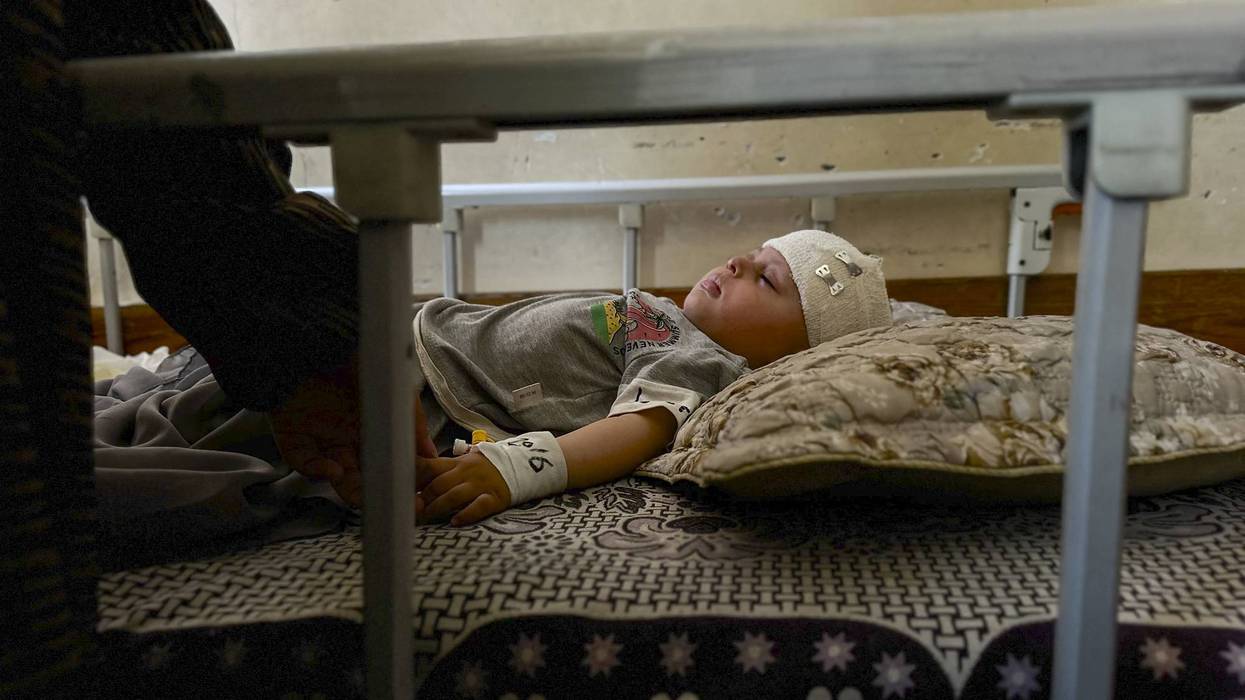
In Gaza, where “the essence of childhood has been destroyed,” even the smallest acts of humanity have become acts punishable by death.
Mohamed al-Wahidi, 57 years old, a husband, father and grandfather, spent his days doing what aid workers do in a place with almost nothing left: clearing rubble, reopening roads, repairing a leaking pipe, filling a community water tank, or building tents for families with nowhere else to go. In his spare time, he carried out a “perilous project” setting up screens and generators across Gaza so people could watch the World Cup. On the eve of Egypt's match against Argentina, Israel killed him along with the 33-year-old taxi driver as well as two young brothers, ages 8 and 10, walking nearby. Israel's military said it was investigating “the incident.”
As it almost always does, Israel commits murder first, then trumps up a pretext after the kill.
Al-Wahidi is one name in Gaza's daily killing rituals under the supposed ceasefire. Israel has murdered more than 1,100 Palestinians in the Strip since October 2025—265 of them children. Not a single Israeli civilian has been killed on the other side. This is the "peace" Trump's board is managing.
Nearly 1 million people remain trapped in tents through a Gaza summer where temperatures reach 35°C. Season after season, they are left exposed to the elements: first a freezing winter, then the merciless heat of summer. Families survive in tent cities or beneath dangling concrete slabs in destroyed buildings. Meanwhile, Israel continues to block shade nets and plastic sheeting at the border, just as it blocked warm blankets during the winter.
This is what the Board of Peace normalizes: an occupying power expanding while a one-sided truce remains in force, a starvation policy rebranded as a stabilization success.
Children bake in tents, while Israel keeps pushing the civilian population into smaller corridors. When the so-called Board of Peace was formed, Israel occupied 53% of Gaza. A month later, 60%. By late May, Prime Minister Benjamin Netanyahu ordered the Israel Defense Forces to seize 70%, squeezing 2.3 million human beings into an ever-shrinking cage away from all the farming areas. Energy Minister Eli Cohen has said the quiet part out loud, telling Israeli radio that Israeli control will keep growing “until we reach 100%.” The next phase envisions corralling Palestinians into fenced “humanitarian shelters” near the ruins of Rafah as part of the ultimate ethnic cleansing program, cynically marketed as a “plan for free movement.”
Concentration camps built on the same mechanisms Nazi Germany used to cage Jews in World War II. A United Nations independent commission of inquiry released this summer found that Israel's killing of children in Gaza is not collateral damage of war but part of a strategy to destroy the biological continuity of Palestinian society. Acts that meet the legal definition for war crimes and the crime against humanity.
Israel has murdered or injured more than 10% of Gaza’s population since October 2023. At least 20,179 children, more than 5,000 under 5 years old, and another 44,143 injured. The number of murdered children is one-third of the total number of dead Palestinians in Gaza. The commission documented children shot by snipers and quadcopter-mounted rifles with a precision that ruled out accidents and cited Israeli soldiers' own testimonies where soldiers celebrate and congratulate each other after murdering civilians. The commission called Gaza the most dangerous place on Earth to be a child.
In June, a father named Bahaa Abu Al-Ajeen watched an Israeli soldier kneel and shoot his 3-year-old son in the head as the boy cried in his arms near Deir al-Balah. In April, 9-year-old Ritaj Rihan was shot through the mouth while standing in a classroom tent waiting for her teacher. These are not outliers under a ceasefire. They are the continuation of an Israeli genocide under the shadow of the ceasefire.
When Israel and the US launched their war against Iran at the end of February, Israel closed every crossing into Gaza outright. Not because there is any connection, but because of Israel’s malevolent nature and because it can get away with it under the fog of war. Weekly truck deliveries collapsed from an average of roughly 4,200 down to just 590. Kerem Shalom and Zikim remain the only crossings still functioning, and even now, roughly half the trucks arriving from Egypt are turned away rather than unloaded.
As of now, aid volumes have never recovered to where they stood before the Iran war, let alone reached the minimum the UN says Gaza needs. Four UN agencies have already warned that the famine the ceasefire was supposed to end could return without sustained access. Sixty-eight percent of Gaza's population is now burning garbage to cook because there isn't enough gas. Not one of Gaza's 37 hospitals is fully operational; only 19 are even partially running. Nearly half of essential medicines are out of stock, and Israel is delaying the surgical equipment needed to treat the more than 43,000 people left with life-changing injuries. More than 40,000 people who will likely become permanently disabled for lack of treatment are another phase of Israel's silent genocide.
The Board of Peace's own six-month progress report claims aid distribution rose 70% and that basic food needs have been “stabilized” for the first time since 2023. In the art of euphemism, 70% of zero is zero, and basic food has “stabilized,” meaning shipments are entering regularly, but not that it is adequate. Conspicuously absent from the report is any mention that aid truck deliveries have never returned to their pre-Iran war levels and remain well below the minimum the UN itself considers necessary.
The board's own biannual report to the Security Council spends its pages blaming the Palestinian resistance, with no mention of an occupying army that has pushed past the ceasefire's demarcated line, nor Israel’s order to aid groups like Doctors Without Borders, the Norwegian Refugee Council, and Oxfam to choose between handing over staff names to a government that targets humanitarian workers, or ceasing operations in Gaza entirely.
Even how to count the murdered journalists is contested. The Committee to Protect Journalists (CPJ) was pressured to redefine who qualifies as a “Palestinian” journalist. The move was intended to give Israel a license to kill Palestinian reporters with impunity. A CPJ board member who objected to considering Israel's request was removed within days of protesting publicly. The board ultimately kept its definition intact, but only after stripping 20 murdered Palestinian journalists from the count.
This is what the Board of Peace normalizes: an occupying power expanding while a one-sided truce remains in force, a starvation policy rebranded as a stabilization success, concentration camps as a housing plan, ethnic cleansing as free movement, and a licensed death toll that keeps climbing with impunity.
A grandfather who wanted nothing more than to give displaced families an hour of joy watching a soccer match instead became another name on the ever-growing list of genocide victims. In Gaza, where “the essence of childhood has been destroyed,” even the smallest acts of humanity have become acts punishable by death.
Peace was never the board’s plan. Genocide management was.
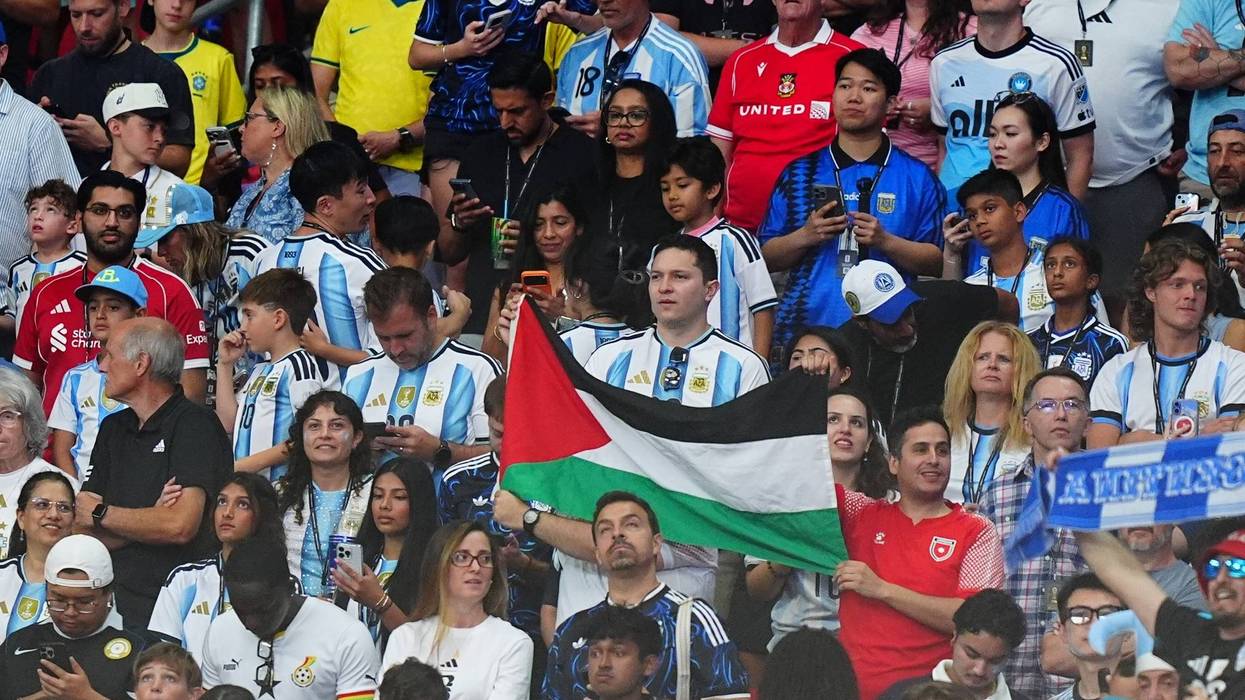
The support shown for Palestinians has been especially inspiring at a World Cup that, like others, has been tainted by more signs of corruption.
The Palestinian national soccer team isn’t playing in this year’s World Cup. But despite a national and global crackdown on pro-Palestinian protest and speech, the games have witnessed an outpouring of support for Palestinians. Fans, players, and coaches from the likes of Egypt, Scotland, Brazil, South Korea, Morocco, Mexico, Turkey, Norway, Senegal, Bosnia and Herzegovina, Algeria, Spain, and perhaps all 48 countries playing have publicly shown support for Palestinian lives and their struggle for freedom and a return to lands taken since 1948.
This comes after nearly three years in which the world has watched the Israeli government respond to October 7, 2023 Hamas attacks on Israel, which killed around 1,200, with a war that has killed more than 73,000, mostly civilians, and is widely considered a genocide by international experts.
Games have featured Palestinian flags held aloft in stadiums and by players and coaches on the fields. Chants of “Free Palestine” have come from the stands and the streets surrounding games. People have attended games wearing the Palestinian national team jersey. Others have flown banners reading, “Kick Israel Out of FIFA” and “Red Card Israel.” (FIFA is the infamously corrupt international organization that runs the tournament; a red card is given to soccer players ejected and banned from games for foul play.)
The support shown for Palestinians has been especially inspiring at a World Cup that, like others, has been tainted by more signs of corruption. Most recently, President Donald Trump called FIFA’s president to overturn a red-card ban for a US player so that he could participate in what turned out to be a lopsided loss for Team America. The FIFA president also awarded Trump a meaningless “peace prize” not long before the United States joined Israel in an illegal and historically unpopular war in Iran.
“Palestinian families don’t get their homes back because people flew a flag in a stadium. But movements build over time and through moments of visibility, through the accumulation of pressure, and through the refusal to let the issue disappear.”
Expressions of solidarity at soccer games don’t change anything on their own. During the days of the tournament alone, the Israeli government, which receives extensive military backing from the US government, has killed dozens of people in Gaza. Before a match between Argentina and Egypt, Israel killed Mohammed al-Wahidi, a representative of an Egyptian humanitarian organization in Gaza, along with two children and another person, on the day al-Wahidi was organizing a Gaza City viewing party to watch the game. (Al-Wahidi is one of more than 1,000 Palestinians, including hundreds of women and children, reported killed by the Israeli military in Gaza since the officially declared “ceasefire” last year.)
A soccer tournament, alone, doesn’t solve anything, Palestinian journalist Dina El-Kurd has said: “Palestinian families don’t get their homes back because people flew a flag in a stadium. But movements build over time and through moments of visibility, through the accumulation of pressure, and through the refusal to let the issue disappear.”
Egypt’s coach Hossam Hassan has been one of the most bravely and consistently outspoken. “Before being Arab, Muslim, Christian, or anything else, I am a human being,” he said in a press conference when he might have only spoken about playing against probably history’s greatest-ever player in Lionel Messi and Argentina. “Through football—the world’s soft power—I want to send a message,” he said. “Please let the Palestinian people live. I ask athletes and journalists everywhere to help deliver that message.”
Along with coaches, journalists, and players—including, one hopes, the likes of Messi—isn’t that a message to share at viewing parties, bars, and family gatherings during the World Cup’s final matches—and beyond?
The red, green, and black colors of the Palestinian flag are easy enough to apply as face paint. I’ll be taking some small steps by wearing a Palestine jersey and using the games to raise funds for humanitarian relief in Gaza. Discussing the morality of continuing US military support for the Israeli government is a start.
Journalist El Kurd says she’s felt a kind of hope seeing the flag waived in stadiums: “It’s not the hope that this will be resolved soon or easily, but the hope that says Palestinians are not alone and the cause is not forgotten.”

"I can think of only one thing more satiric than the only country on Earth that still routinely makes fun of soccer fixing the world’s biggest soccer tournament in their own favor. That would be fixing it and losing anyway," said one observer.
President Donald Trump's meddling in the 2026 FIFA World Cup came back to haunt him on Monday after Belgium demolished the US Men's National Team in a 4-1 rout.
On Sunday, multiple reports revealed that FIFA had overturned its one-game ban of top US player Folarin Balogun after Trump placed a phone call to FIFA President Gianni Infantino urging him to review referees’ decision to give Balogun a red card.
Trump's interference with the World Cup's disciplinary procedures and FIFA's decision to suspend Balogun's red card and allow him to play in the wake of Trump's call both drew sharp condemnation from longtime sports journalists and professional footballers, who said it called the integrity of the entire competition into question.
Concerns about the US winning a tainted victory due to Trump were ultimately banished, however, when Belgium dominated the US and eliminated them from the tournament.
After Belgium scored its fourth goal of the night, its players ridiculed Trump by doing an impersonation of the dance the president often performs at campaign rallies.
La selección de #Belgica se burla de Trump y en su casa. pic.twitter.com/sQEwyKqM3L
— ZuritaCarpio (@ZuritaCarpio) July 7, 2026
The Belgian team's social media accounts also took a shot at the president by posting images of victorious players alongside the caption, "Overturn this."
Overturn this. 🧏♂️ #USABEL pic.twitter.com/KcBAJp3Z7d
— Belgian Red Devils (@BelRedDevils) July 7, 2026
Media outlet MeidasTouch observed after the US loss that there have now been multiple occasions where the president has injected himself into a major sporting event, only to see his preferred competitor come up short.
"Sports fans are calling it the Trump curse," MeidasTouch wrote in a social media post. "He attended the Super Bowl and predicted a Chiefs win, but the Eagles blew them out... He sat in the owner’s suite when the Knicks snapped their huge playoff streak in NBA Finals Game 3. And he attended the Ryder Cup where Europe topped the US team."
A Tuesday report in USA Today similarly examined the possibility of a "Trump curse" in sporting events, of which the US Men's National Team's "error-plagued, idea-less, and lackluster performance" was only the latest example.
In a Tuesday column in The Financial Times, Edward Luce linked Trump's failed meddling in the World Cup with other disastrous initiatives such as his infamously botched renovation of the Lincoln Memorial Reflecting Pool.
"Call it the anti-Midas touch," Luce quipped. "Donald Trump loves gold. Yet so much of what he handles, from reflecting pools to US alliances, seems to turn into something else."
French newspaper Le Monde also took a dig at the president in its report on the US-Belgium match, writing sarcastically that "we are being told that Donald Trump wants to launch a legal action against Gianni Infantino, accusing the Belgian national team of having played football this Tuesday."
Writing in The Guardian on Tuesday, columnist Marina Hyde noted that Trump had turned global public opinion squarely against the US team in the tournament, and there was "joy" at seeing the president's machinations flop.
"It really brought the world together," Hyde remarked. "The last time this many people cheered on a Belgian resistance, it was 1914 and the Germans had just crossed the Meuse."
In a Monday column published by The Globe and Mail in Canada, Cathal Kelly declared that Trump's failed intervention had turned the US into a "laughingstock."
"I can think of only one thing more satiric than the only country on Earth that still routinely makes fun of soccer fixing the world’s biggest soccer tournament in their own favor," wrote Kelly. "That would be fixing it and losing anyway."
No other event, short perhaps of a nuclear war or a comet strike, could bring the entire planet together.
Simon Kuper is 56 now. His first memory of a World Cup, if not his first-ever vivid memory—for many of us who grew up outside the United States, the two are often the same—was the 1978 final between the Netherlands and Argentina. “I recall that night as vividly as almost anything else in my childhood,” he writes in World Cup Fever. “A World Cup is like Proust’s Madeleine. Each new World Cup reminds you of past World Cups, and the people you watched them with.” The book is a history of the World Cup through a few dozen madeleines.
For Americans, it’s as good a guide as any to a tournament of paradoxes, this too-big-to-fail quadrennial festival of corruption, cheating, profiteering, nationalist chauvinism, and mostly crappy soccer that nevertheless can hypnotize and transport to a utopia of competition as idealized and convincing as Pelé’s deification of the sport as “the beautiful game.” I think we watch not so much for the thrill—you have to admit that most games at this watered-down level are snoozfests (“such a party off the field but so dull on it,” as Kuper writes) but for the nostalgia of a game that never existed, but that we reimagine with every match.
“So much of a modern World Cup is repetition, especially as you grow older,” Kuper writes. “After decades of tournaments shown live on TV, each new France-Brazil or England-Argentina or Holland-Germany is just a repeat of earlier versions. Each victory or red card or controversy is a quotation of past ones. A match can never mean as much as it did the first time around. Win or lose this one, you know it isn’t the end of the story: At some point in the next few decades, there’ll be a replay. Repetition turns down the emotional dial of World Cups.”
He’s right, with a caveat: The World Cup is like Jorge Luis Borges’s idea that we rewrite every story every time we read one. The very same game will be remembered a billion different times in a way that the World Series or the Super Bowl or cricket’s World Cup never could be, because no other sport has the World Cup’s reach. No other event, short perhaps of a nuclear war or a comet strike, could bring the entire planet together.
It exists to transform illusion into reality. The illusion is that we are one world playing the same game, speaking the same language, respecting the same rules, existing on a level playing field regardless of origin, race, religion, even fifa ranking.
So just as the tournament is a paradox of beauty and foulness, we all have paradoxical relationships with it, even those of us who don’t follow it. Our refusal to follow it is itself a statement, like the citizen who snubs the ballot box on election day. They, too, are making a statement. Like it or not, the World Cup reminds us that we are on the same planet, that we all share the same blood that kicks a ball the same way, but with a billion splendid variations.
No two soccer fans will see the same game the same way or ever agree about anything soccer, just as I had my differences with Kuper’s book and some of his interpretations: “And once your country has won the World Cup once or twice, it’s generally enough. The more you win, the less it matters.” Tell that to the winners. But he’s better placed than most to guide us. His lineage reads like a demographic World Cup. He was born in Uganda to South African parents, spent his early years in England as a British citizen, moved to the Netherlands when he was 7, studied in England and the United States (Oxford, Harvard), was naturalized a French citizen, now living in Paris with his French wife and raising French children who identified as French, and spent most of his career covering soccer for the London-based Financial Times.
The 1978 World Cup was the first of his innumerable crushing disappointments, as World Cups always must be for 95% of fans. Every four years there’s only one winner out of 195 nations. That one stung Kuper more because the Dutch lost the final for the second time in a row, having lost to Germany in 1974. This time they were playing in Argentina, whose team had blatantly cheated its way to the final. It wasn’t unusual for a tournament stitched in fraud and corruption since its first edition in 1930. It still is, fawning to authoritarian regimes, from Benito Mussolini’s Italy to the junta’s Argentina, Vladimir Putin’s Russia, dictatorial emirs’ Qatar the last time around, and now Donald Trump’s diminished America. Thankfully Canada and Mexico are here to redeem this World Cup, which they also share.
The murderous military dictatorship of Jorge Rafael Videla showcased the 1978 World Cup the way Adolf Hitler showcased the 1936 Olympics, as a distraction masked in bogus legitimacy. Videla had the “disappearance” of some 30,000 dissidents to his name by the time he was done, and that night watched the final alongside Henry Kissinger, a fellow criminal against humanity, who had also helped Videla rig a match to ensure Argentina’s appearance in the final.
I remember that final too. It was my second. My first was Germany-Holland in 1974, my one and only memory of watching with my dad, who died two years later. We watched Argentina-Holland live, my mother, my grandmother, our Dutch Catholic priest, and me on our black-and-white TV in the dining room of our house in Hamlaya, a tiny village in the mountains of Lebanon where we thought we’d escaped the war and where the signal from Cyprus was always clear. Father Niederer didn’t have a TV. He spent the evening with us and his high hopes, especially after the Dutch managed to hold Argentina to a tie through the first 90 minutes. In the 90th minute a Dutch striker had almost won it, hitting the goal post instead. Extra time briefly ended Father Niederer’s faith as Argentina scored once, then again to take the title in a 3-1 match. The junta won. All those masses for nothing. Kuper had also watched with his grandparents when he was 8 in Leiden, the smaller town between Amsterdam and The Hague. For Kuper, the next two decades were all TV watching, then as an in-person spectator until he started reporting about the World Cup for the Financial Times in 1994, the first the United States hosted (with Kissinger’s help). This year will be his ninth. He now proposes to tell you A Soccer Journey in Nine Tournaments, as goes the book’s subtitle, by synthesizing four decades of his reporter’s notebooks. (The English edition calls it A Footballing Journey in Nine Tournaments: Snobs would have you believe that calling it anything but football is a misnomer. I don’t play that game and use the terms interchangeably.)
Wisely, Kuper is not interested in recounting matches. Football matches are like military battles and soap operas. “There’s nothing deader, for a writer, than a dead football match. I’m sorry, but you really had to be there,” he writes. Kuper is interested in the unexpected insights into national character that an improvised dance party might reveal; in the endemic corruption of a tournament that turns us all into addicts every four years; in the failed promise of economic booms that leaves the poor in host countries like Brazil, South Africa, Qatar, and Mexico as exploited as in colonial times. The colonist is fifa, the dictatorial soccer federation expecting to reap $14 billion from this year’s tournament.
Kuper describes the exploitation in South Africa, Brazil, and Qatar, the regressive, repressive American ally that spent more than $200 billion preparing for a 2022 tournament built on the graveyards of imported labor working in near-slave conditions and without rights. “Under Qatar’s traditional ‘kafala’ system, migrant workers were practically the property of their employers,” Kuper writes. “A boss could deport an employee for no reason, or hold their passport and keep them in Qatar against their will.” Qatar had promised to reform the kafala system. The moment Argentina hoisted the 2022 trophy at Lusail Stadium, all promises vanished. Now Saudi Arabia, an even more regressive, undemocratic country with its own kafala system, is set to host in 2034.
The book at first felt disheveled, jumping from one scant segment to another like so many rapid passes in a game, as if Kuper was eager to throw in every anecdote he could find in his notebooks. Kuper’s interview with Diego Maradona, one of the game’s greatest players and one of its most distasteful characters, is pointless other than to show Kuper scored the five-minute encounter.
European journalists have no problem buying access, either, or accepting lavish gifts: “I flew to the Chelsea-Manchester United Champions League final in Moscow as a guest of UEFA, the European football authority. I had a fabulous room in the five-star Marriott Grand Hotel. (Did UEFA corrupt me? I don’t think so.)” He never makes the connection between that sort of payola and the buying of referees and game-fixing he documents so well.
Some of his insights are no more penetrating than comparing Germany’s emerging prosperity on and off the pitch in 1990 to a bus driver’s “villa with a veranda in a spotless village,” or telling us that “A World Cup can’t change a country. But it can divert an individual’s life path,” as if there were anything comparable between France’s decline into riots, fading power, and economic stagnation after the 1998 World Cup with his decision to quit the Financial Times and become a French citizen. As all World Cup books must, this one pays homage to cheaters like Maradona, biters like Uruguay’s Luis Suárez, criers like Portugal’s Cristiano Ronaldo, and charisma-challenged virtuosos like Messi, now hobbling through his last show.
Soon you get used to the Kuper style. It has the verve of 1970s Dutch football—total football, as they called it—placing every element of the game in service of the story without letting judgments necessarily mar the exuberance. Yes, the game is corrupt—there’s a hint that even Nelson Mandela had a part in the $10 million bribe disguised as a cultural gift that bought the World Cup for South Africa—but there was that priceless moment when the Japanese let loose on their own soil at the Japan-Belgium match in 2002 and showed the world a joy we’d rarely seen. There may have been hooliganism in the past, but in pubs and on trains fans from opposing teams typically drink and dance together. Kuper unfortunately doesn’t venture into calculating the demographics of World Cup-conceived babies every four years. I suspect the cross-fertilization is as rich as during the Crusades. But he documents an alarming incidence of heart attacks during every tournament.
Another paradox: World Cup play is inferior to anything you’ll see in club football in top leagues in England, Germany, Spain, Italy, and France: Any of those countries’ top clubs could beat all but the four or five highest ranked national teams at the World Cup, if not even them. Any league match is technically more proficient and cohesive than a World Cup match. Any league match lacks those ridiculous disparities we’re going to see when, say, Spain plays Cape Verde or Germany plays Curaçao, that Caribbean Dutch protectorate with the population of Flagler County (think Ronald Reagan’s Marines invading Grenada).
Just 16 countries traveled to Germany when I watched my first World Cup in 1974. The format went to 24 in 1982, then 32 in 1998, and now 48 countries—a quarter of the planet’s nations. There’s really nothing wrong with that. Elitism is over. We can’t democratize the world. We can democratize the World Cup, though there’s no doubt fifa expanded the thing to shake down more cash even as it dilutes and cheapens play. The federation’s mercantilism handed Mexico and Canada only 13 games each, compared to 78 in the United States, an imbalance as insulting as our president’s attempts to destroy both countries’ economies while ridiculing one and reducing the other to a mass of criminals, and getting a fifa “prize” for it.
Still, we look past the absurd. “Most football fans took it for granted that FIFA was corrupt,” Kuper writes, needlessly capitalizing the federation’s acronym the way some media still capitalize “covid.” Diseases should not so blithely be respected. “They’d heard the stories of officials stashing bribes in secret bank accounts. However, fans care more about what happens on the field. Once we start to doubt that the matches we are seeing are real, the emotion we invest in World Cups becomes pointless.” In the spirit of magic realism, why not give Curaçao and Cape Verde a chance on the same stage as the greats? It’s not as if the American team belongs there, either, if it’s quality we’re looking for. But there they are.
We’re mostly missing the point if we watch the World Cup for quality. Like the Olympics but without the frazzle of a zillion sports scattered like so many pixels on our screens, it’s our quadrennial dreamland on these simple, perfectly groomed fields where cubism and leaves of grass meet so the world’s teams kick around a planet-shaped sphere as luck and fate outscores the best of them.
“The World Cup exists to transform reality into illusion,” the Mexican novelist Juan Villoro wrote in an article for The New York Times this week. I think of it more in reverse: It exists to transform illusion into reality. The illusion is that we are one world playing the same game, speaking the same language, respecting the same rules, existing on a level playing field regardless of origin, race, religion, even fifa ranking. The reality is that for those five weeks, away from the dingbattery of dignitaries and fifa’s sycophantry, away from the tensions between Canada, Mexico, and the United States—on the pitch, in pubs, in living rooms, in street parties, in the palmed stadiums of our smartphoned hands and maybe even in our hearts, despairing as we are the rest of the time—that illusion may well be true.