
SUBSCRIBE TO OUR FREE NEWSLETTER
Daily news & progressive opinion—funded by the people, not the corporations—delivered straight to your inbox.
5
#000000
#FFFFFF
To donate by check, phone, or other method, see our More Ways to Give page.


Daily news & progressive opinion—funded by the people, not the corporations—delivered straight to your inbox.
"The level of wealth that Mr. Musk has reached requires human exploitation, wage theft, wage suppression, anti-competitive markets, monopolistic control, price collusion, inadequate tax systems, and corruption."
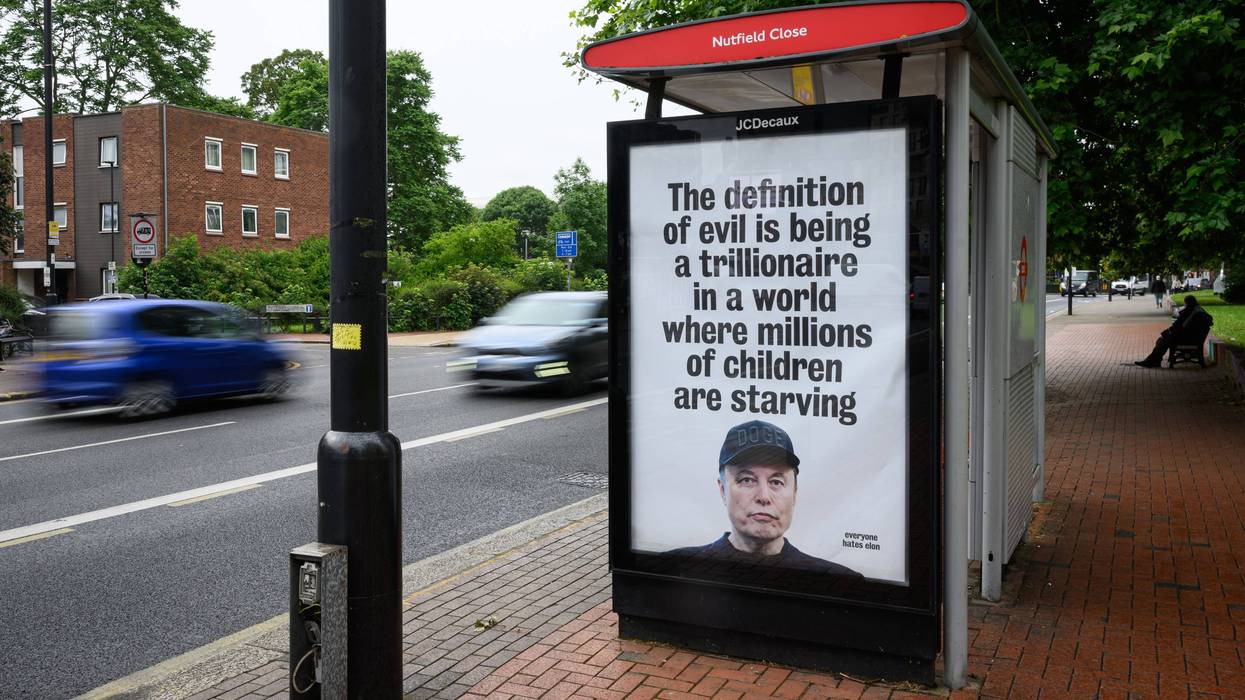
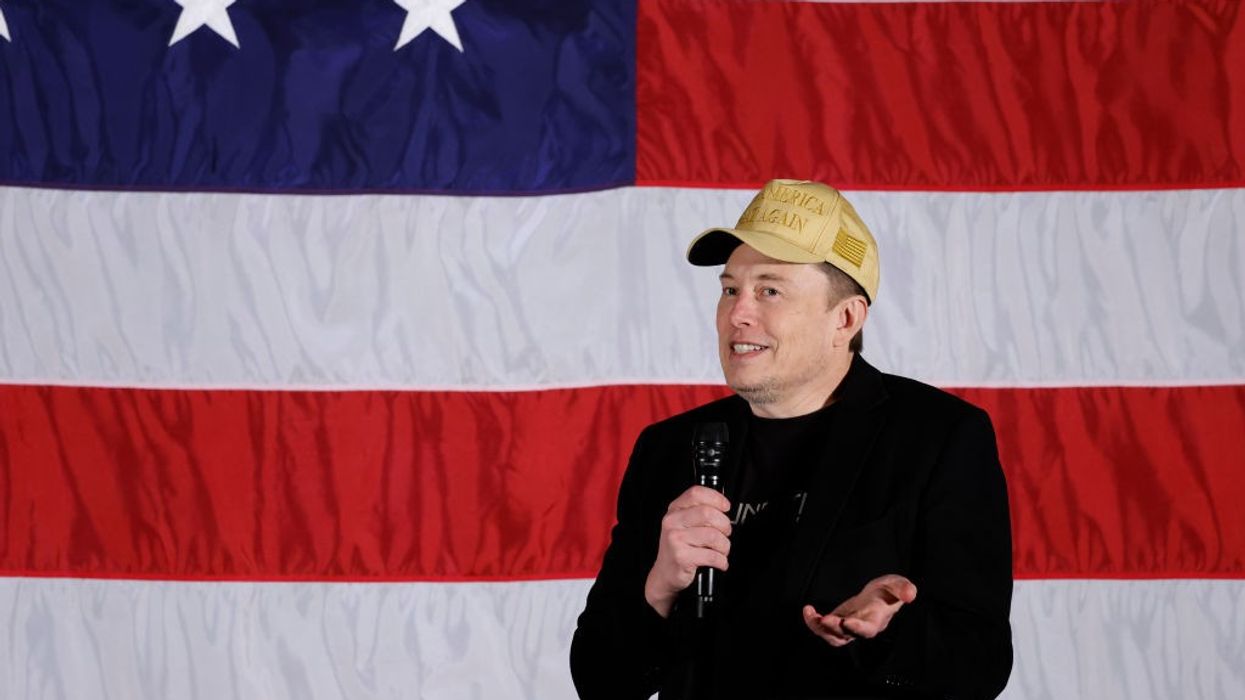
Elon Musk's net worth surged past $1 trillion on Friday as SpaceX—the rocket company he founded and controls—made its debut on the public market, prompting global revulsion and calls for an aggressive wealth tax to rein in out-of-control inequality.
“Musk became the world's first trillionaire because our tax system shields the wealth of the ultra-wealthy from taxation while requiring working to people pay taxes on every paycheck," said Igor Volsky, director of the Tax the Greedy Billionaires Campaign. "Today’s milestone should serve as a wake-up call to us all."
"Unless we plan to cede control and agency over our future to a handful of ultra-wealthy individuals, lawmakers must pursue bold tax policies that actually meet this moment—not just slowing the accumulation of extreme wealth, but reversing it," Volsky added. "That means passing taxes on billionaire wealth ambitious enough to make the ultra-wealthy less wealthy, reduce the stranglehold they have over our economy and democracy, and restore the ideal that no one in America gets to buy their way to unchecked power.”
Reuters reported Friday that "most of Musk's wealth now rests with SpaceX, where he holds a stake worth roughly $866 billion."
"Along with Tesla and the rest of his properties, his net worth will exceed $1.1 trillion when the stock begins trading Friday," Reuters noted. "The tally includes stock components that would vest over time."
While Musk's on-paper fortune could drop below the trillion-dollar mark if SpaceX's stock price drops below $135 per share—which is highly possible, as experts argue the company's valuation is absurd—campaigners said Friday that the milestone is an appalling product of a society that has allowed the mega-rich to dictate policy, funneling immense wealth to the very top while millions worldwide face hunger, violent displacement, and preventable disease. Oxfam has estimated that just a 10% tax on Musk's fortune could lift 800 million people above the extreme poverty line.
“Eighty-six of Americans are worried about the price of food. Elon Musk is a trillionaire. These two things are deeply, inherently connected," said Erica Payne, founder and president of the advocacy group Patriotic Millionaires. "The level of wealth that Mr. Musk has reached requires human exploitation, wage theft, wage suppression, anti-competitive markets, monopolistic control, price collusion, inadequate tax systems, and corruption. Mostly inadequate tax systems and corruption."
Musk's companies, including SpaceX, have relied heavily on and benefited massively from government contracts, subsidies, and research, while paying minimal taxes.
The New York Times reported last year that SpaceX "has most likely paid little to no federal income taxes since its founding in 2002 and has privately told investors that it may never have to pay any, according to internal company documents." As for Tesla, the Institute on Taxation and Economic Policy found earlier this year that the company "avoided almost all federal income tax on over $12 billion of US income over the past three years."
Musk, whose immense wealth is largely stock appreciation that is not taxed in the US unless shares are sold, paid nothing in federal income taxes in 2018, according to ProPublica. "Between 2014 and 2018, he had a true tax rate of 3.27%," the investigative outlet noted.
Writer Elizabeth Spiers argued Friday that "trillionaires shouldn't exist," noting in a column for The Nation that "as Musk's wealth multiplies, he continues to prosper on the public dime."
"Musk’s cosmic-scale wealth-hoarding is particularly abhorrent when you place it against the backdrop of how much damage he’s done," wrote Spiers. "It’s hard to quantify the scale of destruction and deprivation that he will never personally be held accountable for. How do you value the lives of the hundreds of thousands of people who have died since Musk, in his words, gleefully 'fed [USAID] into the woodchipper'? How do you value the lives of people who will die because DOGE cut major biomedical research funding?"
"Musk has enriched himself via a rigged investment economy ensuring that those with the most contribute the least—or in many cases, nothing at all," Spiers added.
The arrival of our first trillionaire could well mark the date America’s oligarchy becomes unbreakable.
I wrote my first post for Inequality.org, "Our First Trillionaire: Only a Matter of Time," over 12 years ago. I hoped, at the time, that the post would age poorly. After all, the presence of a trillionaire on American soil would certify that we had unquestionably reached an oligarchic concentration of our nation’s wealth.
Unfortunately, that post has aged remarkably well. If anything, I now see my forecasting as too timid.
Elon Musk’s personal wealth now sits at about $750 billion. That total represents an annual average increase of 23% over the $60 billion Bill Gates fortune of 2013. At that rate of increase, America will boast its first trillionaire at least a decade before 2039, the year I gave CNBC writer Eric Rosenbaum in 2014 as the date our nation would most likely see its first trillionaire.
Back in 2013, I worried mightily that the absence of a reliable mechanism in America’s tax system to limit the growth rate of extreme fortunes would cause the wealth share of the richest Americans to rise to ever-higher levels. Wealth at America’s economic summit, I noted, was growing at a faster rate than the nation’s aggregate wealth, and that rapid growth was bringing a disturbing arithmetic into play.
America now finds itself in a democracy-destroying downward cycle. Extreme wealth begets a political power that begets policy choices that lead to even more extreme wealth concentration.
“If the wealth of one group within a nation grows at a faster rate than the nation’s aggregate wealth,” I pointed out, “that group’s share of the aggregate wealth must increase over time. That’s a mathematical certainty. And the level of subsequent wealth concentration has no limit.”
Our country’s wealth concentration story has played out exactly that way over the past dozen years, as economist Gabriel Zucman has detailed. The nation’s top .00001%—a mere 19 households—has increased its share of America’s wealth from 0.1% in 1982 to 1.81% in 2024. Of the country’s $148 trillion total wealth in December 2024, those 19 households held $2.6 trillion. In the past year, their wealth total has increased to well over $3 trillion.
That increase has produced a stunning annual increase in the wealth share of that ultra-elite group, nearly 7% per year on average. To achieve that rate of wealth share growth, the wealth of our top .00001%—one ten-millionth of America’s households—has had to grow at an average rate nearly seven percentage points above the average annual growth rate of the country’s wealth.
Over a decade ago, I told CNBC that America’s march to oligarchy would revolve around a considerable increase in the concentration of wealth within the billionaire class. Those 19 households in our top .00001% comprise 5% of America’s top .0002% (380 households, or roughly, the Forbes 400). Their share of the wealth of that larger group of billionaires now stands at about 50% today, a quadrupling since 1982.
What has generated America’s increasingly oligarchic wealth concentration? The worst culprit, I’d argue, continues to be a federal income tax system that not only lacks a reliable mechanism to rein in the growth of massive fortunes but does the exact opposite, exacerbating wealth inequality when we most need it contained.
Specifically, our tax system applies an extremely regressive tax rate to capital gains, the principal form of economic income flowing to our billionaire class. The effective annual income tax rate on the capital gains of our richest often runs less than 5%. That reality has baked into America’s cake a continuing concentration of our country’s wealth.
In 2013, with Mexico’s Carlos Slim then the world’s wealthiest person, I contemplated the concentration of power that would accompany the arrival of American trillionaires.
“Unless basic US tax policy changes,” I noted, “the United States will be mathematically certain to reach Mexican-like levels of wealth concentration. The only questions: Who will be our Carlos Slim and how kindly will our trillionaires treat us.”
Indeed, the gap between America’s level of wealth concentration and Mexico’s has closed considerably over the past 12 years. Slim, still the wealthiest Mexican, has seen his share of Mexico’s total wealth fall since 2013. But the share of American wealth held by the wealthiest American—Gates in 2013 and Musk in 2025—has tripled.
And we saw the accompanying concentration of power become vividly visible at President Donald Trump’s second inauguration. On the inaugural stand, Elon Musk, Jeff Bezos, and Mark Zuckerberg all sat center stage.
We see that same concentration in the funding of our politics. In the 2024 election, reports Americans for Tax Fairness, our billionaires collectively accounted for $2.6 billion of the $15.9 billion in total political spending, a total lopsidedly on the Republican side.
Musk alone spent about $277 million in 2024, a tiny one-thousandth of his net worth at the time, but nearly 2% of total political spending in a nation of 340 million people. At his current level of wealth, Musk could drop $1 billion by himself into the 2026 election without breaking much of a financial sweat.
But those numbers only hint at the political power our richest now wield. Billionaire control over our nation’s major media outlets far exceeds the influence of direct billionaire political spending.
The six billionaires with wealth over $200 billion all control either a major media outlet or a major social media platform. Musk, of course, owns Twitter. Zuckerberg, through Meta, controls Facebook and Instagram. Bezos owns the Washington Post. Larry Ellison’s son, David, holds a controlling interest in Paramount, the media giant that owns CBS and is seeking to acquire control of Warner Bros. Discovery. The Ellisons also have their eyes on the US operations of TikTok. Larry Page and Sergey Brin remain the largest shareholders of Alphabet, the corporate colossus that controls Google and YouTube.
What does that billionaire lock grip over our largest media translate into? Everything from a Washington Post editorial page that rails against wealth taxation to the placing of America’s most respected weekly network TV news show, "60 Minutes," in the censorious hands of the right-wing ideologue Bari Weiss.
America now finds itself in a democracy-destroying downward cycle. Extreme wealth begets a political power that begets policy choices that lead to even more extreme wealth concentration. The challenge of breaking that cycle could hardly be more daunting.
The arrival of our first trillionaire could well mark the date America’s oligarchy becomes unbreakable. Let’s not let that happen.
Until Congress addresses the fundamental power imbalance allowing billionaires to benefit from—and drive—government dysfunction, Americans will remain trapped in a game of shutdown chicken.
Most people are surprised to learn government shutdowns, and the ensuing fingerpointing, haven’t always been a mainstay of American politics. To understand how we got to this point, we must first examine who benefits from shutdowns.
For decades, conservatives in Congress have used one manufactured budget crisis after another to drive a narrative that the government doesn’t work—while quietly enriching their billionaire backers.
The most recent example came just before August recess, when House Republicans advanced a little-noticed government funding bill to gut the Internal Revenue Service base budget by $2.8 billion. Translation? Roll out the red carpet for tax cheats with nine-figure bank accounts.
The numbers don’t lie. In 1990, before shutdown politics became normalized, America had 66 billionaires controlling $240 billion. Today, roughly 700 billionaires hoard over $7 trillion—a 28-fold explosion in wealth. As billionaire wealth exploded, the total share of wealth controlled by the bottom half of the country shrank.
We must tax billionaires to break up the dangerous concentration of wealth that allows them to hold our democracy and economy hostage.
This wasn’t accidental. It happened in part because government dysfunction means big paydays for America’s ultra wealthy, who take advantage of shutdowns and spending cuts to evade taxes, skirt consumer protections to maximize profits, and promote privatization. The current shutdown paused antitrust cases that could break up Amazon and Apple, for instance.
Unsurprisingly, the ultra-wealthy beneficiaries of shutdown chaos are often major donors to far right GOP politicians and outside organizations lobbying for that chaos.
For example, billionaires Jeffrey Yass and Robert Mercer are two of the biggest funders of Club for Growth, a key hard-right group behind the GOP-led 2013 shutdown over the Affordable Care Act (ACA).
The ACA wasn’t just healthcare reform—it also raised billions of dollars in new taxes from ultra-wealthy households. Shutting down the government over its possible repeal would have been a no-brainer for Yass and Mercer, both of whom were also engaged in legally questionable tax-avoidance schemes at the time.
In the Club for Growth’s view, repealing the ACA and its taxes on the ultra rich was a win. A shutdown that froze IRS audits and enforcement was a win. Allowing the government to reopen only after Democrats conceded to deep spending cuts was a win. Dysfunction that “proved” the inability of government to function efficiently was a win. The only losers would be the American people.
While the demands in shutdowns vary, the crisis often only resolves with Democrats accepting GOP spending cuts that weaken regulatory capacity and benefit wealthy industries at the expense of everyday Americans.
Conservatives have learned they might lose their nominal objective—like cuts to Medicare or repealing the ACA. But by drawing attention away from their attacks on good government, they win by losing.
While the March 2025 partisan funding bill avoided a shutdown, it slashed $13 billion from domestic priorities, gutted IRS enforcement funding to target wealthy tax cheats, and hobbled regulatory agencies that safeguard working families—while simultaneously empowering the Trump administration (and billionaire allies like Elon Musk’s DOGE) with broad discretion to reallocate remaining funds at will.
Working people are frustrated by this toxic game. We must tax billionaires to break up the dangerous concentration of wealth that allows them to hold our democracy and economy hostage.
Taxing billionaires is a consensus issue, with support rising sharply as the consequences of unchecked, extreme wealth play out.
Recent Impact Research polling found broad and intense support for raising taxes on billionaires among likely voters in 2026 battleground congressional districts and states. And a recent Morning Consult poll found that even 70% of Republicans believe “the wealthiest Americans should pay higher taxes”—up from 62% just six years ago.
Until Congress addresses the fundamental power imbalance allowing billionaires to benefit from—and drive—government dysfunction, Americans will remain trapped in a game of shutdown chicken. It’s time to tax billionaires and return the power to the people.