
SUBSCRIBE TO OUR FREE NEWSLETTER
Daily news & progressive opinion—funded by the people, not the corporations—delivered straight to your inbox.
5
#000000
#FFFFFF
To donate by check, phone, or other method, see our More Ways to Give page.


Daily news & progressive opinion—funded by the people, not the corporations—delivered straight to your inbox.
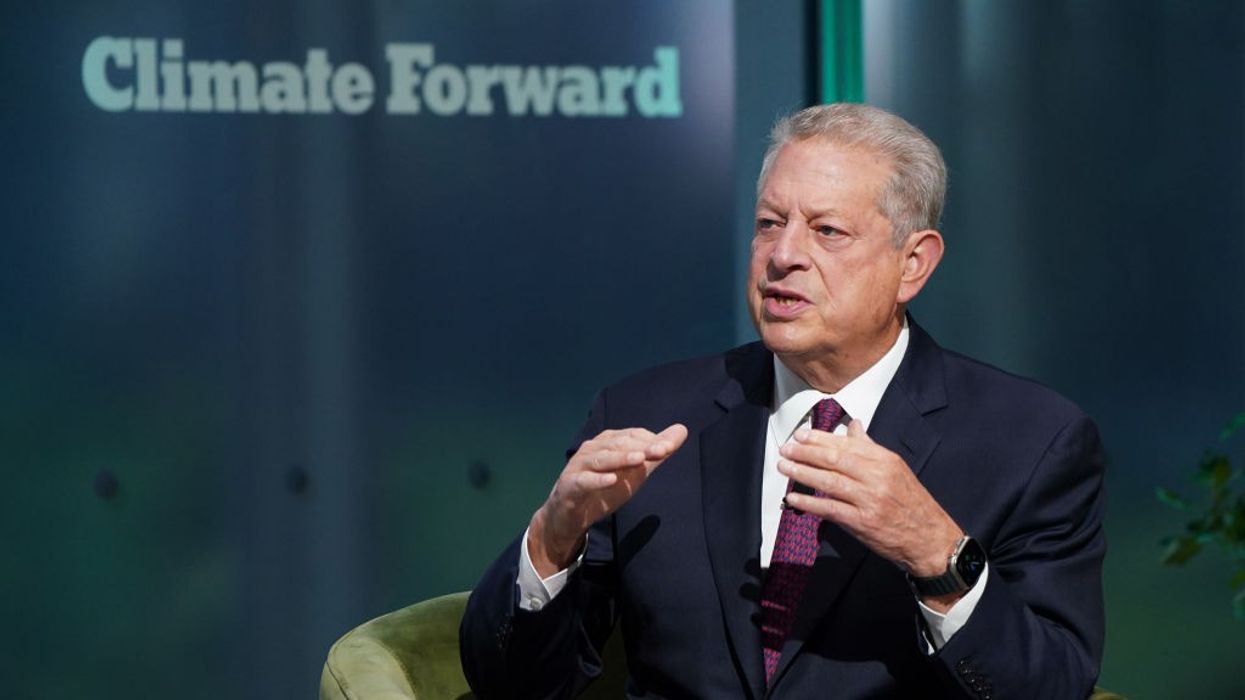
At an event coinciding with the U.N. General Assembly in New York, Gore said he used to believe the sector sincerely wanted to be part of the solution to the climate crisis, but now he thinks it's clear they are not.
Former U.S. Vice President Al Gore, a long-time climate activist, had harsh words for the fossil fuel industry on Thursday.
"Many of the largest companies have engaged in massive fraud," he said at The New York Times' Climate Forward event, as the Independent reported. "For some decades now, they've followed the playbook of the tobacco industry, using these very sophisticated, lavishly financed strategies for deceiving people."
Gore, who won the Nobel Peace Prize in 2007, criticized the industry for using their influence to lobby against effective climate action.
"The climate crisis is a fossil fuel crisis."
"The fossil fuel companies, given their record today, are far more effective at capturing politicians than they are at capturing emissions," he said.
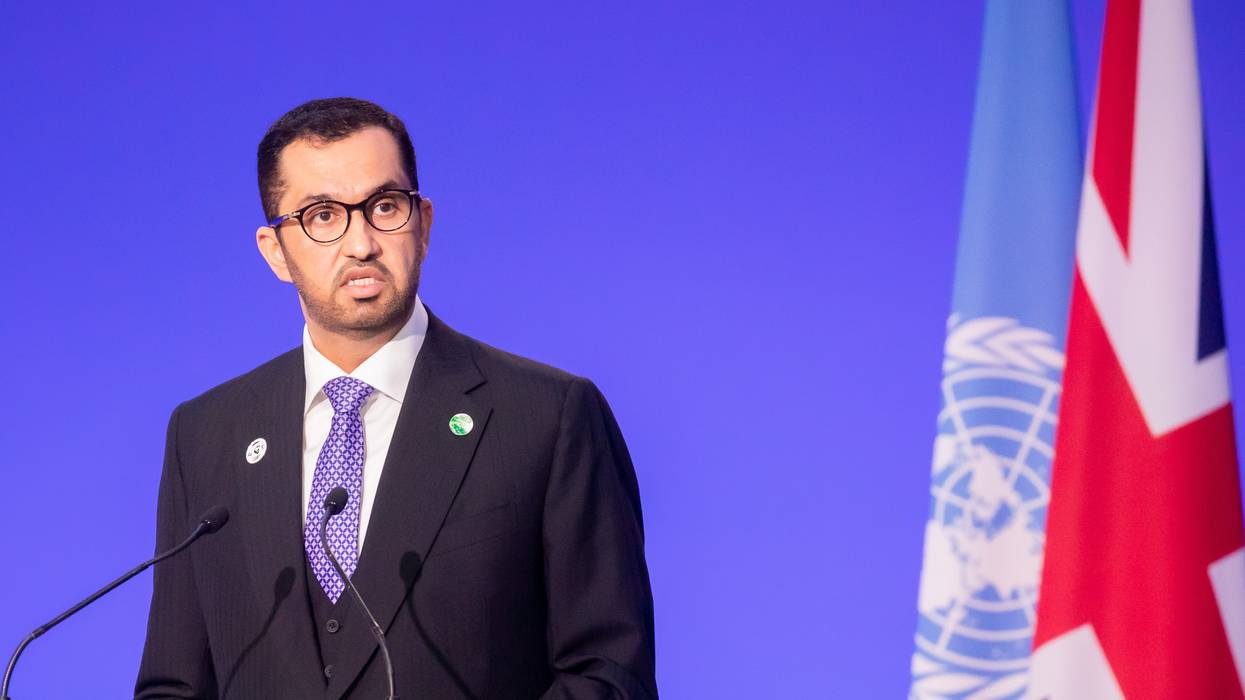
Now, he warned, the sector had set its sights on the United Nations COP28 climate change conference in the United Arab Emirates with the appointment of the UAE's state oil company CEO Sultan Ahmed Al Jaber to lead the talks.
"That's just, like, taking the disguise off," Gore said, as The New York Times reported. "They've been trying to capture this process for a long time."
Gore's remarks reflect a recent shift in the tone of his climate advocacy. In a TED Talk filmed in July and released in August, Gore made many of the same arguments about fossil fuel lobbying and Al Jaber's appointment.
"The climate crisis is a fossil fuel crisis," he said. "The solutions are going to come from a discussion and collaboration about phasing out fossil fuels."
After listening to the talk, journalist Emily Atkin wrote in her newsletter Heated:
With this new talk, it's become clear that the man who made An Inconvenient Truth famous is no longer primarily focused on convincing people that the climate crisis is real or dangerous. He's turned a corner, and is now focused on convincing people that if they truly care about solving the climate crisis, they must turn their ire toward the fossil fuel industry—and boot them from the negotiating table before it's too late.
Gore acknowledged the shift in his thinking himself on Thursday.
"I was one of many who felt for a long time that the fossil fuel companies, or at least many of them, were sincere in saying that they wanted to be a meaningful part of bringing solutions to this crisis," Gore said, as The Independent reported. "But I think that it's now clear they are not. Fossil fuel industry speaks with forked tongue."
While he acknowledged that it was not fair to expect the industry to solve a crisis its business model encouraged it to perpetuate, "it's more than fair to ask them to get out of the way, and stop blocking the efforts of everybody else to solve this crisis," he said. "I think it's time to call them out."
Gore's remarks came as world leaders and climate activists and experts gathered in New York for the U.N. General Assembly and Secretary-General António Guterres' Climate Ambition Summit, held the day before.
He is also not the only prominent mainstream climate voice to have turned on the fossil fuel sector.
Former Executive Secretary of the U.N. Framework Convention on Climate Change Christiana Figueres, who helped negotiate the Paris agreement, said that she did not think the industry should be invited to COP28.
"If they are going to be there only to be obstructors, and only to put spanners into the system, they should not be there," she said at a conference Thursday organized by Covering Climate Now, as The Guardian reported.
Her remarks echoed an opinion piece she wrote for Al Jazeera in July, in which she said she was wrong to believe that the sector could be part of the solution.
"My patience ran out, and I say this with sadness," she said Thursday.
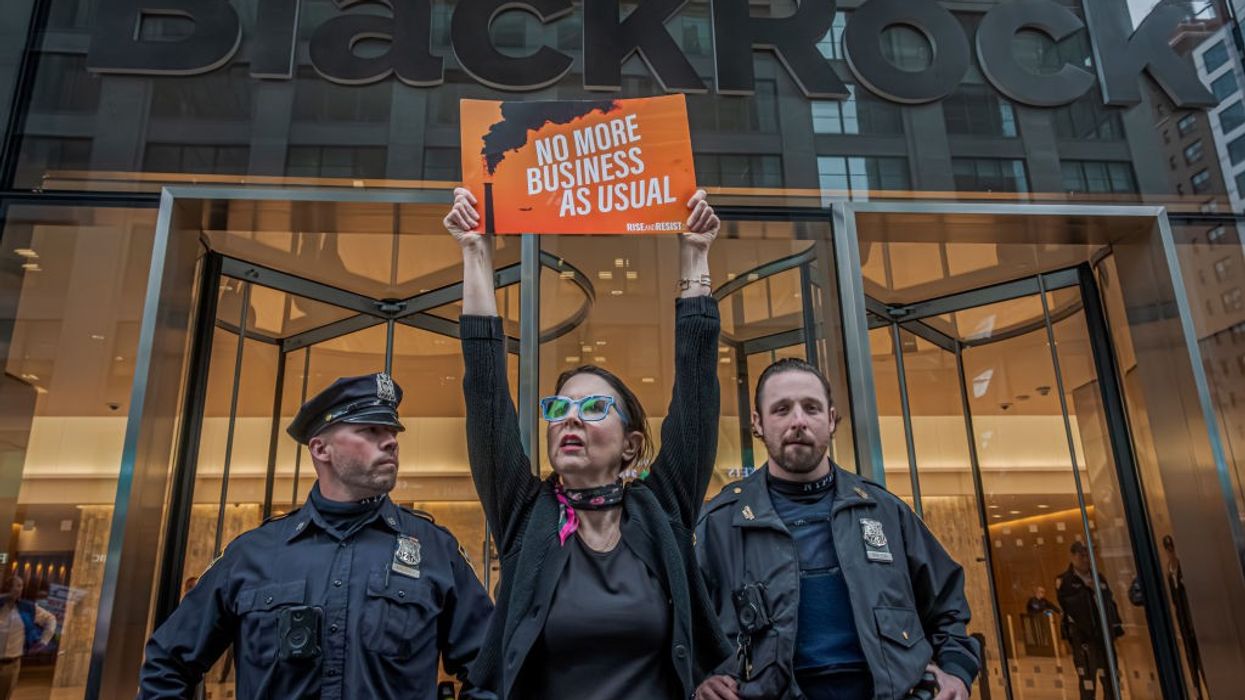
While our planet was experiencing its hottest month of all time, the Earth’s biggest pile of cash named to its board of directors the CEO of the world’s largest oil company, Saudi Aramco.
A problem with conspiracy theories—aside from the fact that they always get around to involving “ the Jews”—is that they distract us from what’s happening in plain sight.
So, in case you missed it, here’s the biggest thing that happened in the world last week: While our planet was experiencing its hottest month of all time, the Earth’s biggest pile of cash (the asset manager BlackRock, with $8.59 trillion dollars under management) named to its board of directors the CEO of the world’s largest oil company, Saudi Aramco, which has produced more carbon emissions than any firm on earth.
This decision was barely even noted— The New York Times produced a nine-paragraph account in its Dealbook newsletter. And yet think of what it means. It is the ultimate signal that the world’s financial community has decided to essentially give up on even the modest commitments they made a couple of years ago in Glasgow, where they said they would work to decarbonize their portfolios.
It’s gross when the PGA does business with the murderous Saudi regime; it’s life-or-death for everyone when the biggest business in the world sucks up to the biggest oil company.
Two things have happened since they made those big pledges (BlackRock’s Larry Fink said at the time, “We are on the edge of a fundamental reshaping of finance” to deal with the climate crisis). First, the war in Ukraine produced huge profits for the oil industry, as their old pal Vladimir Putin (who once hung a medal around the neck of Exxon’s CEO) pushed the price of petroleum into the stratosphere. And second, the oil industry’s bought-and-paid-for politicians in red-state America wrote nasty letters about “ESG investing” and threatened to break ties with the Wall Street firms that were “going woke.” Those two developments were more than enough to persuade barons like Fink to walk back their professed concern with a planet on fire. He is clearly a go-along get-along guy, and where we’re going is—well, if not hell then someplace with a similar temperature. (So far seven people have died and 85 have been hospitalized in Phoenix simply from burns from touching the pavement). It’s gross when the PGA does business with the murderous Saudi regime; it’s life-or-death for everyone when the biggest business in the world sucks up to the biggest oil company.
So what does stand-up leadership look like? Here’s Brad Lander, the comptroller of New York City. It’s not a sexy job (not like, say, running for president as your first public office). He’s the money guy, balancing the city’s books. But New York City has a lot of money, and that money gives you the power to do useful things that help people. When it got unbearably hot, Lander put out a video pointing out that the big banks the city does business with were still bankrolling the fossil fuel industry. It is straightforward, powerful, plainspoken:
And a few days later, when the Saudi Aramco news came out, Lander was again just about the only public servant I saw react:
“BlackRock has clearly stated that climate risk is an investment risk, but actions speak louder than words,” New York City Comptroller Brad Lander said in an emailed statement. “At a time when financial institutions need to take a collective approach to addressing the financial risks from climate change, BlackRock shareholders expect climate-competent, not climate-conflicted, directors.”
This matters. BlackRock is the largest external money manager for the city of New York. Lander can move that business and it will hurt BlackRock; and his words will at least be heard in the din of Wall Street. Others are starting to figure out just how irredeemable the fossil fuel industry is. Here, for instance, is an editorial in the Los Angeles Times last week that I think is the most forthright declaration ever on Big Oil by a major American newspaper. Forget pretending that the Exxons and Aramcos will ever change their stripes: instead, “kick them to the curb.” I’m going to quote from it at length because the paper’s editorial board was not engaging in the usual tentative to-ing and fro-ing. They just said it:
It should be obvious by now that fossil fuel companies have no real plans to change in response to the climate crisis. And that the only way forward is without them.
Some high-profile environmental leaders have come to a similar conclusion recently, among them influential climate negotiator Christiana Figueres, under whose tenure as executive secretary of the United Nations Framework Convention on Climate Change the landmark 2015 Paris agreement was developed. She wrote in Al Jazeera earlier this month that after years of holding out hope that oil and gas companies would wake up and participate in the decarbonization of the economy, their actions over the last 12 months have changed her mind.
Former Vice President Al Gore, a longtime champion for climate action, has also been speaking with refreshing frankness about fossil fuel industry obstruction, decrying “anti-climate plotting” by companies that refuse to disclose their emissions or commit to phasing them out while they successfully push government policies to slow down the transition to clean energy.
It’s a little late for powerful voices from older generations to come to the realization that fossil fuel companies aren’t operating in good faith and will fight climate action until the bitter end. But it’s welcome nonetheless, and there’s clear generational shift in that direction that offers some hope. Polling last year by the Pew Research Center found that while most Americans are reluctant to ditch fossil fuels, younger adults are much more supportive of phasing out oil, gas, and coal entirely.
This is the spirit that we desperately need—the spirit that focuses on the actual, the concrete, the things before our eyes. Like the unbearable heat. Not long before his assassination, Robert F. Kennedy gave a speech at the University of Kansas where he spoke about the real with as much eloquence as any American ever mustered. There was a man who could have been forgiven a conspiracy theory or two—after all, his brother had been killed just five years before. But here’s where he was focused:
Our Gross National Product, now, is over $800 billion dollars a year, but that Gross National Product—if we judge the United States of America by that—that Gross National Product counts air pollution and cigarette advertising, and ambulances to clear our highways of carnage. It counts special locks for our doors and the jails for the people who break them. It counts the destruction of the redwood and the loss of our natural wonder in chaotic sprawl. It counts napalm and counts nuclear warheads and armored cars for the police to fight the riots in our cities. It counts Whitman's rifle and Speck's knife, and the television programs which glorify violence in order to sell toys to our children. Yet the gross national product does not allow for the health of our children, the quality of their education, or the joy of their play. It does not include the beauty of our poetry or the strength of our marriages, the intelligence of our public debate or the integrity of our public officials. It measures neither our wit nor our courage, neither our wisdom nor our learning, neither our compassion nor our devotion to our country, it measures everything in short, except that which makes life worthwhile. And it can tell us everything about America except why we are proud that we are Americans.
Brad Lander, born the next year, is heir to that tradition, and so are the editorialists of the Los Angeles Times, and so are all the other Americans who keep their eye on the moment.
"The fossil fuel industry is facing decline, no matter what," said Christiana Figueres. "It is D-Day for them."
As the world endures record-shattering heat and other consequences of the global climate emergency, the United Nations' former climate chief admitted this week that she was wrong for believing the fossil fuel industry would be an authentic partner in helping to solve the planetary crisis.
The mea culpa from Christiana Figueres, former executive secretary of the U.N. Framework Convention on Climate Change (UNFCCC), came in the form of an
Al Jazeera op-ed on Thursday.
"More than most members of the climate community, I have for years held space for the oil and gas industry to finally wake up and stand up to its critical responsibility in history," Figueres wrote. "I have done so because I was convinced the global economy could not be decarbonized without their constructive participation and I was therefore willing to support the transformation of their business model."
"But what the industry is doing with its unprecedented profits over the past 12 months has changed my mind," she explained in the wake of fossil fuel companies exploiting the Covid-19 pandemic and Russia's invasion of Ukraine to price gouge consumers and breaking records by raking in over $400 billion in profits last year.
"What the industry is doing with its unprecedented profits over the past 12 months has changed my mind."
The fossil fuel industry "could and should" be pouring its money into the global renewable energy transition, the former UNFCCC leader asserted.
Instead, she added, oil and gas giants are maintaining or even rolling back already-mediocre climate pledges, pursuing new polluting projects, fighting back against policies to promote more responsible investing, "paying higher dividends to shareholders, buying back more shares and—in some countries—lobbying governments to reverse clean energy policies while paying lip service to change."
After noting that "there are some exceptions to these sweeping generalizations" and executives questioned about the industry's failures "often cite some version of the prisoner's dilemma," Figueres declared: "Let's get real. We have reached the point where decarbonization will happen with the fossil fuel industry or without them."
"Exponential growth of renewables is the new reality," she wrote, citing reports from the International Energy Agency and Rocky Mountain Institute. "The fossil fuel industry is facing decline, no matter what. It is D-Day for them."
Now, according to Figueres, "the powerful state-owned companies as well as international firms have to decide whether they transition to the energies of the 21st century and thereby accelerate the exponential curve of the energy transition, or if their flame dies out while they remain blind and in pernicious resistance."
The column was welcomed by scientists, reporters, and campaigners around the world—many of whom have long highlighted the fossil fuel sector's fight against the swift transition experts say is necessary to prevent climate catastrophe and criticized leaders like Figueres for previously insisting on industry involvement.
With the article, Figueres "unleashes on fossil fuel firms, and rightly so,"
tweeted Bill Hare, CEO and senior scientist at the global institute Climate Analytics. "Shell, BP, Woodside, Total, Chevron, Santos, etc. are expanding gas/oil production when this should be reducing. They can only do this because they are enabled by compliant politicians."
Similarly praising her "brilliant piece... on the apathetic fossil fuel industry," Jack Bedford, climate adaptation officer at the U.K.'s Somerset Wildlife Trust, said that "if they're smart they'll fully switch to decarbonization. If not they'll get left behind in the renewable energy future, but could be such a dead weight they curse [the Earth,] leaving a hostile climate as their legacy."
Adam Currie, a climate justice campaigner in New Zealand,
tweeted that "this is big from the former executive secretary of the UNFCCC; acknowledging it was a mistake to trust fossil fuel corporations to decarbonize voluntarily—the criminal actions of oil majors have changed her mind. It's not just activists; everyone is saying #KickPollutersOut."
Climate disinformation expert Genevieve Guenther, founding director of the U.S.-based group End Climate Silence and affiliate faculty at the New School,
agreed.
"This is a huge deal coming from Christiana Figueres," Guenther said of her admission. "I hope other decision-makers will listen."
The column comes as the UNFCCC and world leaders prepare for COP28 in the United Arab Emirates later this year. The UAE has
faced intense global criticism—including from Figueres, who led the Paris agreement negotiations—because Sultan Al Jaber, who heads the Abu Dhabi National Oil Company, is set to serve as the climate summit's president.
"This is what happens when a petrostate and an oil executive lead global climate talks," said one critic.
With six months to go until the 2023 United Nations Climate Change Conference, or COP28, is set to take place in Dubai, comments by the designated president of the summit about his approach to mitigating the climate crisis are already setting off alarm bells with critics including former United Nations climate chief Christiana Figueres.
As The Guardian reported Tuesday, Figueres addressed in a recent episode of her podcast, "Outrage and Optimism," a speech given earlier this month by Sultan al-Jaber, the CEO of Abu Dhabi National Oil Company (ADNOC), whose appointment as president of COP28 sparked outrage among climate campaigners in January.
In comments Figueres described as "very worrisome," al-Jaber said at the Petersburg Climate Dialogue in Berlin that policymakers should focus on drawing down "fossil fuel emissions"—but not the extraction of fossil fuels themselves.
"We must be laser focused on phasing out fossil fuel emissions, while phasing up viable, affordable zero carbon alternatives," said al-Jaber, adding that "smart government regulation to... make carbon capture commercially viable" is needed.
Figueres, former executive secretary of the U.N. Framework Convention on Climate Change, said al-Jaber was suggesting COP28 will support carbon capture and storage (CCS) technology—an unproven method of removing carbon emissions from smokestacks at power plants, which has failed in at least two high-profile projects in the United States and which climate campaigners say only serves as a distraction from genuine solutions to the climate emergency–eliminating the extraction of fossil fuels and transitioning to renewable energy.
"He is trying to say: 'Look, those of us who are producers of fossil fuels will be responsible for our emissions through enhanced carbon capture and storage. And we, or the COP presidency, will also support the zero carbon alternatives,'" said Figueres.
She added that dozens of countries have pushed for far-reaching commitments at previous global climate summits, with small island nations on the frontlines of the climate crisis joined by several countries in the Global North at last year's COP27 in unsuccessfully pushing for an agreement that called for a "phase-out" of fossil fuels instead of a "phase-down."
Al-Jaber's endorsement of a position embraced by fossil fuel companies like the one he heads is "very dangerous," said Figueres. "I just don't see most countries, and certainly not the vulnerable countries, being willing to support the COP president on this because it is a direct threat to their survival."
Instead of investing in CCS—which companies have poured billions of dollars into over the last several years with no success stories to show for it, as U.S. watchdog Food & Water Watch said this week—scientists have warned that policymakers must slash carbon emissions by 45% by 2030 in order to limit global heating to 1.5°C.
"We do not have CCS commercially available and viable over the next five to seven years," Figueres said. "It's just not going to happen."
While CCS costs an estimated $50 to $200 per tonne of carbon dioxide, according to the Intergovernmental Panel on Climate Change, energy experts agreed in a U.N. report released in 2021 that investing in renewable energy sources would save $55 billion in a year.
As one European official told Climate Home News this month, CCS is currently a "luxury technology" that is currently being promoted mainly by "fossil exporting countries," while renewable energy sources "are the most affordable and readily available mitigation technologies."
Al-Jaber has been joined by United Arab Emirates Environment Minister Mariam bint Mohammed Almheiri in attempting to tamp down expectations that COP28 will yield far-reaching action to draw down the use of fossil fuels, as scientists have demanded.
In February, Almheiri said at the Munich Security Conference that "we need the oil and gas sector to be with us," while saying the industry should "phase out oil and gas in a just way."
Journalist Khaled Diab said after al-Jaber's comments this month that "this is what happens when a petrostate and an oil executive lead global climate talks."
"When you are the president of the COP," said Figueres, "you cannot put forward the position of the country that you're coming from."
The latest United Nations (UN) analysis of the climate pledges of world governments reveals the commitments are not enough to avert "climate catastrophe," green groups warned on Friday.
UN climate chief Christiana Figueres and German State Secretary Jochen Flasbarth presented in Berlin on Friday their report (pdf) on the effects of 146 participating countries' Intended Nationally Determined Contributions (INDCs)--representing 86 percent of global greenhouse gas emissions--submitted ahead of the UN's upcoming COP21 climate talks in Paris.
"While this round of pledges is a step in the right direction, they only take us from a 4 C catastrophe to a 3 C disaster."
--Tim Gore, Oxfam
Their conclusion: the pledges will not be sufficient "to reverse by 2025 and 2030 the upward trend of global emissions. Furthermore, estimated annual aggregate emission levels resulting from their implementation do not fall within least-cost 2degC scenarios levels."
"The INDCs can limit the forecast temperature rise to around 2.7C by 2100, by no means enough but a lot lower than the estimated four, five, or more degrees of warming projected by many prior to the INDCs," Figueres said.
In fact, if emissions continue unchecked, current trends indicate that the global temperature rise could be as much as 4.5 degrees Celsius by 2100, the UN reported—well above the threshold climate experts say would cause catastrophic floods, droughts, and other extreme weather events.
The report said a 2degC goal is still within reach. However, climate activists warned that meeting such a goal will require much more aggressive action by wealthy nations. Many of these nations have recently been criticized for their lackluster pledges and attempts to evade financial obligations to developing countries.
"We're going to need to see more ambition in Paris," 350.org strategy and communications director Jamie Henn said on Friday. "The targets currently on the table still aren't enough to prevent climate catastrophe. To close the gap, politicians must settle on a clear mechanism to increase ambition, make real financial commitments, and agree to a unifying goal of completely decarbonizing the global economy."
However, the current inadequate pledges are "still enough to signal investors that the age of fossil fuels is over--there's no way to meet these targets, let alone the stronger ones necessary, without a full-scale transition to renewable energy," Henn said.
Tim Gore, head of food and climate policy at humanitarian aid group Oxfam, added, "The UN's verdict reveals that, while the world is progressing, much more needs to be done. While this round of pledges is a step in the right direction, they only take us from a 4 C catastrophe to a 3 C disaster."
"The targets currently on the table still aren't enough to prevent climate catastrophe."
--Jamie Henn, 350
The Least Developed Countries (LDC), a coalition of frontline nations participating in the climate talks, were even more critical of the findings. These findings come just days after preliminary negotiations in Bonn ended without a concrete plan for rich countries to step up their participation.
"Today's analysis shows the urgent need to address the lack of ambition within the INDCs," said LDC chair and Angolan diplomat Giza Gaspar-Martins. "Governments must do more in Paris, but the work does not end there. For the INDCs to succeed, they must be adjusted before 2020 and reviewed in five-year cycles from 2020 to ensure national actions quickly and rapidly progress, or we all face a grim and uncertain future."
Small island nations are particularly vulnerable to rising sea levels, Gaspar-Martins continued. "For 48 of the world's poorest and most vulnerable countries, economic development, regional food security and ecosystems are at risk in this 2C 'safe zone'. So we once again call on the world to grow its ambition for a 1.5C target," he said.
While the New York Times editorial board says, "The Paris [climate summit] may well be the world's last, best chance to get a grip on a problem that, absent urgent action over the next decade, could spin out of control", most are already bracing for another massive failure by the political elite at what is being disparagingly described as the "Conference of Polluters".
This is a reality is because the pledges being made by countries in advance of the COP21 in Paris are simply insufficient. Open Democracy has reported, "Cambridge University number cruncher Chris Hope concluded that if the European Union countries cut emissions by 40 percent by 2030 (as they have pledged), if the rest of the developed countries follow the U.S. commitment, and if the developing countries follow China's promise, the most likely result will be a [disastrous] global temperature rise of 3.6 degrees Celsius in 2100." As for Canada, the Harper government pledged an extremely weak 30 percent reduction below 2005 levels by 2030 (which equals 14 percent below 1990 levels by 2030).
In addition to this, Patrick Bond laments, "There are no reliable state allies of climate justice at present and indeed there really are no high-profile progressives working within the COPs. It's a huge problem for UN reformers because it leaves them without a policy jam-maker inside to accompany activist tree-shaking outside. The UN head of the COP process is an oft-compromised carbon trader, Christiana Figueres. Although once there were heroic delegates badgering the COP process, they are all gone now... If you are serious about climate justice, the message from these COP experiences is unmistakable: going inside is suicide."
But Bond writes there is hope in grassroots mobilization. He says, "A great deal of coalition building has occurred in France and indeed across Europe [since last August]. The proximate goal is to use awareness of the Paris COP21 to generate events around the world in national capitals on November 28 and 29 - just before the summit begins - and on December 12, as it climaxes. ...Projects [are being planned] like November 27-29 mass actions aimed at municipalities; a Brussels-Paris activist train; ...the Alternatiba alternatives project with 200 participating villages from the Basque country up to Brussels, which will culminate on September 26-27..."
In a similar track, Campaign Against Climate Change has proposed, "We want everyone to know that the students in Paris will be occupying their universities on Monday 7 December, and on Tuesday they will be dancing out of the colleges onto the streets and asking everyone to join them. ...We want to begin now campaigning for university and college occupations in our own countries. We will be doing that in the UK. We invite you to join us in your country."
Rising Tide North America is calling for a series of mass actions across the United States and Canada. They note, "From September to the end of November, Flood the System envisions an escalating series of direct actions and demonstrations targeting the economic and political systems at the root of the crisis, inspired by recent movements led by low-wage workers, immigrants, and communities responding to police brutality."
And ETC executive director Pat Mooney says, "[Paris] should start like [the big march this past September in] New York and end like Seattle. Shut the thing down."
The Council of Canadians is currently in the process of determining what our intervention will be at the time of the UN climate talks this November 30 to December 11.
We have been campaigning to stop the Energy East and Trans Mountain pipelines as well as other carbon intensive projects - like fracking and the Site C dam - because of their climate change impacts and calling for sustainable energy solutions, just transition strategies and good green jobs. Maude Barlow has also been highlighting, "If water is mentioned at all [in climate talks], it is as one more victim of climate change, almost always solely attributed to the burning of fossil fuels. The fact that destroying water-retentive landscapes is in and of itself a major cause of climate change is not part of the analysis or discussion in climate change circles."
We took part in the protests and counter-summits at the time of the UN climate talks in Copenhagen in 2009, Cancun in 2010 and Lima in 2014. We recognize both the importance and the very real limits of those strategies for Paris in 2015.
In the most recent issue of Adbusters, Gwynne Dyer writes that the "climate wars" of the future will be driven by three factors: the closing of borders to the waves of climate refugees who lack water and whose land has dried up and blown away; the proliferation of failed states who can no longer feed their people; and the increased number of dams between countries that share a river system. Mike Hodder writes in that same issue of Adbusters that, "A commitment was made to resolve the issues that collapsed in Lima once and for all this December in Paris, but world leaders have repeatedly let us down. If an agreement can't be made at the upcoming U.N. Climate Conference we are staring into the face of a global environmental genocide from which there is no turning back. Our only shot at curbing climate change - our only shot at survival, may be revolution."
The stakes are evidently planetary survival and the world will be watching Paris this year.