

SUBSCRIBE TO OUR FREE NEWSLETTER
Daily news & progressive opinion—funded by the people, not the corporations—delivered straight to your inbox.
5
#000000
#FFFFFF
To donate by check, phone, or other method, see our More Ways to Give page.
Daily news & progressive opinion—funded by the people, not the corporations—delivered straight to your inbox.
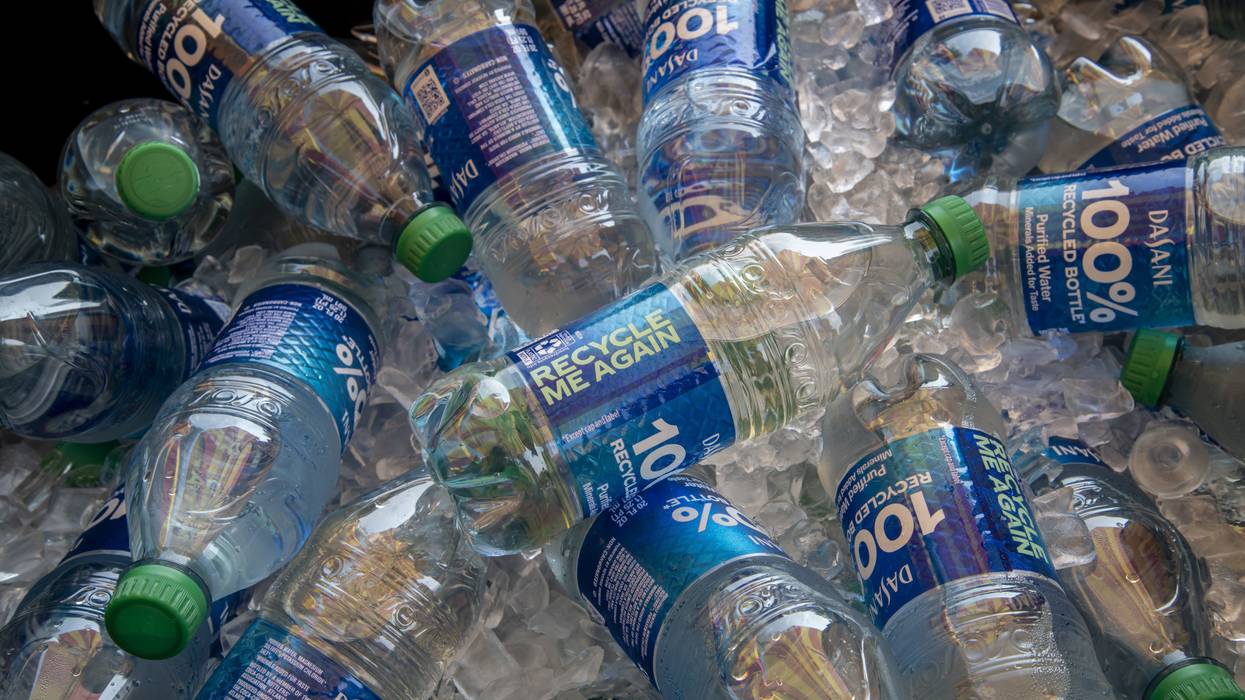
"When the new president takes office in January, we urge them to transition America from a leader in creating plastic pollution to a leader in combating it," said the head of the anti-plastic pollution group.
The group Beyond Plastics on Wednesday expressed hope that the next U.S. president "is up for the challenge" of reversing course on the annual plastic pollution that is currently projected to nearly double by 2040, and released a 27-point agenda to guide the winner of the November election.
"The next president of the United States should use a combination of approaches to significantly reduce the production, use, transport, and disposal of plastics for the sake of public health and the environment," reads the list of proposed priorities. "These include directives issued to federal agencies and efforts to work with Congress to introduce and pass relevant federal legislation."
The group released the agenda as countries including the U.S. prepare to participate in talks in November to finalize a global plastics treaty, aiming to cut down on the 15 million metric tons of plastic that end up in oceans each year and reduce human exposure to thousands of hazardous chemicals used to manufacture plastic.
The next U.S. president, said Judith Enck, president of Beyond Plastics, "has an opportunity—and a responsibility—to prioritize people and the planet over industry profits, and finally require companies to kick their toxic plastic habit."
The priorities listed by Beyond Plastics include steps that federal agencies should take to reduce plastic pollution in the U.S. and abroad, and legislation that either Democratic presidential nominee Kamala Harris or Republican nominee Donald Trump should push Congress to pass.
Executive actions proposed by Beyond Plastics include:
The group also called on the next administration to push for the passage of "a strong national packaging reduction bill" that would require a 50% reduction in plastic packaging over 10 years; the Break Free From Plastic Pollution Act; the Farewell to Foam Act, which would phase out plastic foam food containers, disposable foam picnic coolers, and packing "peanuts"; and laws enabling local governments, states, and businesses to apply for federal funding to develop waste reduction, reuse, and refill programs.
"The next president of the United States should use a combination of approaches to significantly reduce the production, use, transport, and disposal of plastics for the sake of public health and the environment."
With the average American creating 200 pounds of plastic waste per year, said Enck, the U.S. now "generates more plastic waste than any other country and is doing little to change that."
Revolving Door Project researcher Hannah Story Brown noted after Beyond Plastics published its priorities list that as the California attorney general, Harris "brought a first-of-its-kind greenwashing lawsuit against plastic bottle companies for making biodegradability claims back in 2011."
"A Harris Justice Department could and should go further in combating this toxic industry's misleading marketing," said Brown.
In contrast, U.S. Rep. Jared Huffman (D-Calif.), a co-sponsor of the Break Free From Plastic Pollution Act and part of the U.S. delegation taking part in global plastics treaty talks, told Politico earlier this year that "in the unthinkable scenario of a second Trump presidency, we're going to get nowhere on plastics."
Mario Loyola, a senior research fellow at the Heritage Foundation and an associate director of regulatory reform under Trump during his presidential term, told the outlet that the Republican nominee would likely be "skeptical" that the treaty to reduce plastic pollution "was the best agreement that could have been reached."
Enck said that "when the new president takes office in January, we urge them to transition America from a leader in creating plastic pollution to a leader in combating it."
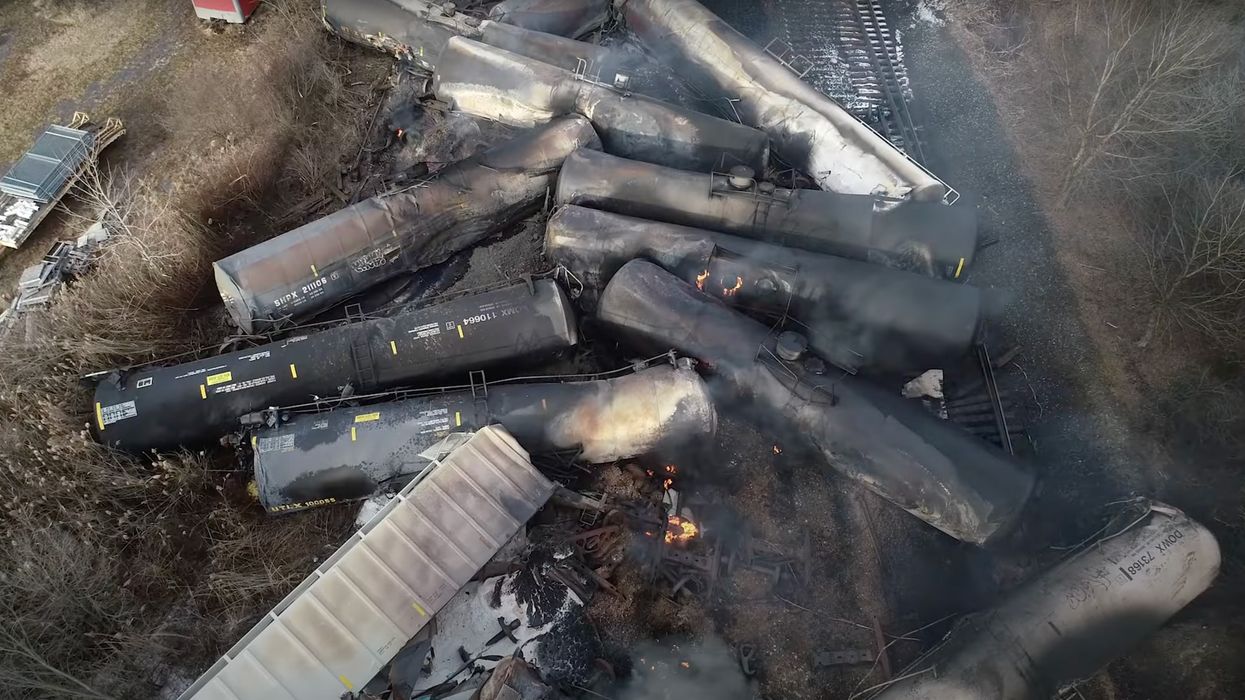
"This is one of the most important chemical review processes ever undertaken by the EPA," said one of the agency's former regional administrators.
The U.S. Environmental Protection Agency announced Thursday that it had begun the process of prioritizing vinyl chloride for evaluation under the Toxic Substances Control Act.
Vinyl chloride, which is primarily used to make polyvinyl chloride (PVC) plastic, was one of five chemicals the agency earmarked for a risk assessment. The move comes eight months after a disastrous train derailment in East Palestine, Ohio, which included five cars carrying 115,000 gallons of the dangerous chemical.
"We have seen firsthand what vinyl chloride can do to a community," Hilary Flint, vice president of Unity Council for the East Palestine Train Derailment and director of communications and community engagement for Beaver County Marcellus Awareness Community, said in a statement.
"This is a step in the right direction, and we will continue to fight for a total vinyl chloride ban," Flint continued. "We want to make sure what happened after the East Palestine train derailment is the last vinyl chloride disaster in the United States."
Vinyl chloride is a known carcinogen that has been linked to liver, brain, lung, and blood cancers. It can also harm the neurological system and suppress immunity. Despite this, it is one of the most produced chemicals by volume in both the U.S. and internationally. In 2019, billions of pounds were manufactured in the U.S. alone.
"Most vinyl chloride is used to make polyvinyl chloride (PVC) plastic, which poses significant health and environmental problems that have been known for over 50 years," Judith Enck, president of Beyond Plastics and former EPA regional administrator, said in the EPA announcement. "This is one of the most important chemical review processes ever undertaken by the EPA."
"The examination of all routes of exposure prescribed by the law will lead EPA to the conclusion that vinyl chloride is far too dangerous to make or use, and should be banned."
A TSCA review will require the EPA to assess all the ways people can be exposed to vinyl chloride, both in terms of what it can pollute and how the exposure can take place. That means looking at how it contaminates soil, air, and water and how it impacts workers, frontline communities, and communities exposed during disasters like the East Palestine derailment. A full 27% of the people who live within three miles of a facility where vinyl chloride is used or made are children, and the evaluation will require the EPA to consider how the chemical impacts young people specifically.
Liz Hitchcock, director of Toxic Free Future's Safer Chemicals Healthy Families federal policy program, said the EPA's decision was "welcome news."
"The examination of all routes of exposure prescribed by the law will lead EPA to the conclusion that vinyl chloride is far too dangerous to make or use, and should be banned," Hitchcock said.
The other chemicals that the EPA will assess are acetaldehyde, acrylonitrile, benzenamine, and 4,4'-Methylene bis(2-chloroaniline) (MBOCA). Four out of the five chemicals are used in plastic production and all of them are used to make petrochemicals.
The EPA now has 12 months to determine whether or not the five chemicals are "High Priority Substances," after which it will begin the risk evaluation. The public will be able to comment on all of the chemicals.
"We applaud EPA for echoing states' concerns about the threat of vinyl chloride and PVC to communities. This action, along with action by states to restrict the use of PVC in packaging and building materials in favor of safer materials, will help communities thrive," Sarah Doll, national director of Safer States, said in a statement. "The urgency of vinyl chloride's threat means we need action from all levels of government."

A new study stresses urgent action is required to tackle a "growing plastic smog" of over 170 trillion particles in the world's oceans.
On the heels of a historic agreement to protect the biodiversity of the high seas, researchers from around the world published a study this week underscoring the need for rapid, sweeping action to address "unprecedented" plastic pollution of oceans and sharply reduce global production.
"We've found an alarming trend of exponential growth of microplastics in the global ocean since the millennium, reaching over 170 trillion plastic particles,"
said lead author Marcus Eriksen, co-founder of the 5 Gyres Institute in California. "This is a stark warning that we must act now at a global scale."
For the peer-reviewed study, published Wednesday in the journal PLOS ONE, researchers based in the United States, Sweden, Chile, and Australia examined previously published and new data on floating plastic pollution between 1979-2019 from 11,777 stations across the North Atlantic, South Atlantic, North Pacific, South Pacific, Indian, and Mediterranean regions.
"Without substantial widespread policy changes, the rate at which plastics enter aquatic environments will increase approximately 2.6-fold from 2016 to 2040."
"The situation is much worse than expected,"
explained co-author Patricia Villarrubia-Gómez, a researcher at the Stockholm Resilience Center in Sweden. "In 2014, it was estimated that there were 5 trillion plastic particles in the ocean. Now, less than 10 years later, we're up at 170 trillion."
Specifically, they estimate the world's oceans contain a "growing plastic smog" of approximately 82-358 trillion particles, or an average of 171 trillion particles that are primarily microplastics. As
The Washington Post noted, that "is more than 21,000 pieces of plastic for each of the Earth's 8 billion residents."
The study states that "we observed no clear detectable trend until 1990, a fluctuating but stagnant trend from then until 2005, and a rapid increase until the present. This observed acceleration of plastic densities in the world's oceans, also reported for beaches around the globe, demands urgent international policy interventions."
"Without substantial widespread policy changes," the study warns, "the rate at which plastics enter aquatic environments will increase approximately 2.6-fold from 2016 to 2040."
Eriksen argued that given the current conditions, humanity must "stop focusing on cleanup and recycling, and usher in an age of corporate responsibility for the entire life of the things they make."
"Cleanup is futile if we continue to produce plastic at the current rate, and we have heard about recycling for too long while the plastic industry simultaneously rejects any commitments to buy recycled material or design for recyclability," the scientist said.
The research comes amid efforts to create a United Nations treaty on plastic pollution by next year. After 175 nations agreed to craft such a pact during a March 2022 meeting in Kenya, Uruguay hosted the first round of negotiations late last year. A second session of talks in France is scheduled for May.
According to Eriksen, "We need a strong, legally binding U.N. global treaty on plastic pollution that stops the problem at the source."
In comments to The Guardian, study co-author Edward J. Carpenter, of the Estuary & Ocean Science Center at San Francisco State University, also called for governments across the globe to ambitiously tackle the crisis.
"We know the ocean is a vital ecosystem and we have solutions to prevent plastic pollution. But plastic pollution continues to grow and has a toxic effect on marine life," he said. "There must be legislation to limit the production and sale of single-use plastics or marine life will be further degraded. Humans need healthy oceans for a livable planet."
Judith Enck, a former U.S. Environmental Protection Agency regional administrator who is now president of the organzation Beyond Plastics, echoed the study authors' demand for dramatically cutting down on production.
"The plastics and petrochemical industries are making it impossible to curb the amount of plastic contaminating our oceans," she said in an email to CNN. "New research is always helpful, but we don't need to wait for new research to take action—the problem is already painfully clear, in the plastic accumulating in our oceans, air, soil, food, and bodies."
As Richard Thompson, a professor at the U.K.'s Plymouth University who was not involved in the study, told BBC News: "We are all agreed there is too much plastic in the ocean. We urgently need to move to solutions-focused research."

"Promoting the utilization of captured CO2 in petrochemicals, plastics, and fuels, as your legislation would encourage, will perpetuate environmental justice harms and subsidize the oil and gas industry to do it."
More than 100 organizations on Monday urged the congressional sponsors of a new proposal that would boost the tax credit for certain carbon capture projects to shift their focus to solutions that will actually address the fossil fuel-driven climate emergency.
The groups—including 350.org, Beyond Plastics, Center for Biological Diversity, Food & Water Watch, Indigenous Environmental Network, Michigan Environmental Justice Coalition (MEJC) Action!, Physicians for Social Responsibility, Science and Environmental Health Network (SEHN), and Waterspirit—oppose the Captured Carbon Utilization Parity Act (S. 542/H.R. 1262).
Introduced last week by Sens. Sheldon Whitehouse (D-R.I.) and Bill Cassidy (R-La.) and Reps. David Schweikert (R-Ariz.) and Terri Sewell (D-Ala.), the legislation would increase the 45Q tax credit for carbon capture and utilization (CCU) "to match the incentives for carbon capture and storage (CCS) for both direct air capture (DAC) and the power and industrial sectors."
The groups sent a letter to the four sponsors arguing that:
This bill does not advance climate solutions, but is rather a giveaway to fossil fuel companies and other corporate polluters under the guise of climate action. Promoting the utilization of captured CO2 in petrochemicals, plastics, and fuels, as your legislation would encourage, will perpetuate environmental justice harms and subsidize the oil and gas industry to do it. Rather than perpetuating these climate scams, we encourage you to support the elimination of subsidies for the fossil fuel industry instead of enriching them through carbon capture schemes.
In addition to stressing that such projects consume a lot of water while producing emissions and chemical waste—further endangering frontline communities that are disproportuantely home to people of color and low-income individuals—the organizations pointed out that "carbon capture has a long history of overpromising and under-delivering."
"The overwhelming majority of captured carbon to date has been used to increase oil production via enhanced oil recovery (EOR)," the letter highlights. "The myth of a massive carbon management paradigm that uses and re-uses carbon dioxide on any large scale serves only to greenwash the reality of how carbon dioxide is used: for oil production."
"As laid bare in an investigation from the U.S. Treasury Inspector General for Tax Administration, the 45Q tax credit is rife with abuse as credits are improperly claimed," the letter further notes. "Moreover, documents uncovered by the House Oversight Committee's investigation into major oil companies and climate disinformation revealed that the biggest proponents of CCS also understand the technology to be costly, ineffective, and requiring continued and increasing government subsidization."
"The myth of a massive carbon management paradigm that uses and re-uses carbon dioxide on any large scale serves only to greenwash the reality of how carbon dioxide is used: for oil production."
Citing a report from the United Nations' Intergovernmental Panel on Climate Change, the organizations also explained that "in contrast to things like solar power and batteries, carbon capture is not the kind of technology that gets significantly cheaper over time, and increasing public subsidies to spark a carbon management industry will not result in a self-sustaining system."
According to dozens of groups representing communities across the country, "The carbon utilization fantasy should be abandoned, with focus restored on the solutions we know will help combat the climate crisis, like renewable energy and storage, electrification, energy efficiency, real zero-waste materials systems, agroecology, and more."
SEHN executive director Carolyn Raffensperger told Common Dreams that her group is supporting the letter "because carbon capture use and sequestration (CCUS) is the fossil fuel industry's diabolical plan to line its investors' pockets with public money" and "the antithesis of a climate solution in that it delays real, tried and true solutions."
"Further, the entire 45Q tax credit program turns sound environmental policy on its head: Instead of requiring the polluter to pay for its damage, 45Q tax credits pay the polluter to pollute," Raffensperger added. Pointing to proposed CO2 pipelines in Iowa, she said:
Keenly aware of the climate crisis, we investigated the claims that industry was making that we could address climate by putting a big machine on top of various polluting facilities and transporting the CO2 across the countryside and burying it deep underground. What we discovered was that the entire enterprise would require more energy than the original facility required. It will disrupt farm land and pose grave risks in case of a pipeline rupture. Even worse, we found that this vast complex system of carbon capture, transportation, and either use or disposal is horribly under-regulated by [the Environmental Protection Agency], the Pipeline and Hazardous Materials Safety Administration, the [Internal Revenue Service], and others. The frosting on this toxic cake is that the public pays the fossil fuel industry with public money and the public gets no climate benefit. If anything, CCUS makes climate change worse.
"Heed the lessons of the recent train derailment and pipeline disasters. That is, fix the regulatory mess before pouring money into 45Q tax credits," she urged U.S. lawmakers. "The tax credits are like shoveling coal into the boiler of a runaway train."
MEJC Action! backed the letter "because of the dangers CCUS presents to environmental justice communities in Michigan," Juan Jhong-Chung, the group's climate justice director, told Common Dreams. "Our communities are already overburdened by polluted air and water because of fossil fuel power plants and other toxic industrial infrastructure. We do not want government subsidies going to technologies that will perpetuate harms and impact the health of our families."
"Most projects where CCUS can be deployed are Black, Brown, and poor communities," the campaigner added. "We don't need more respiratory issues, we deserve clean pollution-free renewable energy."
As Rachel Dawn Davis, public policy and justice organizer at Waterspirit, said Monday in an email to Common Dreams, independent science has already shown that investments in carbon capture "would be a waste of money and time," and "we are experiencing the sixth mass extinction; we have no time to continue wasting."
"If we are to provide a livable future for current and future generations of young people and all creation, we must invest solely in renewable energy, not furthering fossil fuel fallacies," she emphasized. "Subsidies going to the most heinous polluters are only continuing through this legislation; congressional representatives must know better by now."
This post has been updated with comment from MEJC Action!.
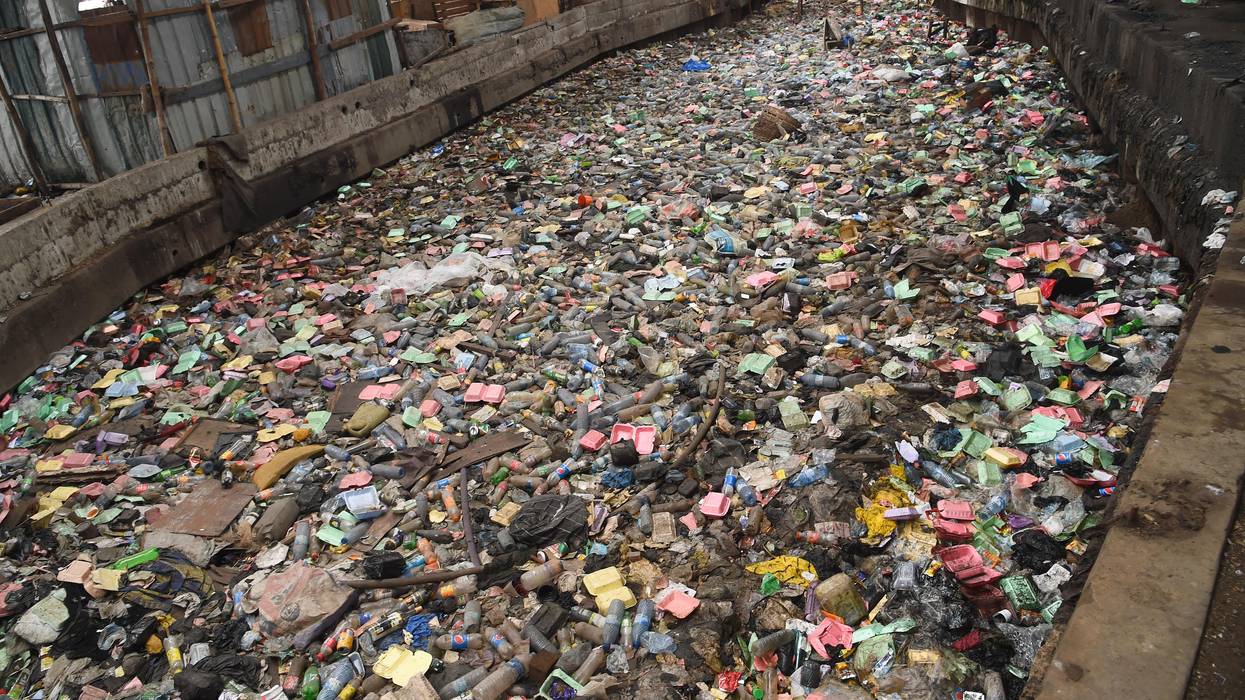
Back in 1967 people were electrified by "The Graduate," especially the scene of 40+ Anne Bancroft seducing 21-year-old Dustin Hoffman. But there was another iconic moment when one of his parents' friends definitively pronounces one word to Hoffman that would assure his future business success: "plastics."
A half-century later the world is being choked by plastic waste from huge items to the smallest micro bits, each causing a slow death to our beautiful living system. As I revisited this non-regenerative life cycle of many pieces of plastic lodged in my brain and yours, it suddenly reminded me of something I learned about in the 1970s, the nuclear fuel cycle.
When Prop 13 was on the California ballot encouraging us to vote for nuclear energy, guaranteed to be cheap, clean, and efficient, my husband and I joined with others to explore this too-good-to-be-true source of energy. We soon learned that what we were not told was that the waste from the power plants would be toxic for 250,000 years and could not be safely stored and protected against earthquakes or terrorist attacks for starters.
Dealing with radioactive materials was and still is a very serious threat to one's health if not life itself. In response, for one year we gave talks and educated others about the deadly life cycle of nuclear fuel--mining the uranium, transporting the raw material to a nuclear plant where the fuel would produce energy through the fission process, storing the spent fuel rods in cooling ponds, and deconstructing the nuclear plant at the end of its approximate 20-year life of producing that "cheap, clean, and efficient" energy.
But the critical question was, and still is, what to do with the spent fuel material? Shooting it into space was an idea. Storing it in caves or deep areas in the ground was another suggestion. But for a quarter-million years? Under whose watch? And at what cost (hint: at least $300 billion and counting)?
Fortunately, after research and lots of soul searching in the wake of the near-meltdown at Three Mile Island nuclear power plant, it was decided not to pursue building more nuclear power plants in the US, though 93 of them still operate.
Since then, there have been a number of leaks, issues with stolen uranium that could be used to make "dirty bombs," and actual meltdowns. Think Chernobyl or Fukushima.
The fuel cycle of mining the uranium, transporting it around the country, constructing nuclear power plants, and then facing with waste materials that are life-threatening and toxic to the living system closely resembles the plastic dilemma.
Back in the '40s and '50s, turning oil into plastic was also a product and a promise too good to be true. Sadly, it has taken 50 years for us to realize the long-term, life-threatening effect of plastics on the living system.
Like nuclear waste, they too have a non-regenerative life cycle with no way to take care of the used plastic. A small percent of the plastic can be reused or repurposed, but at least 90 percent is continuing to accumulate in streams, rivers, and other water sources, ending up in the oceans and then in the fish billions of humans eat.
Plastic waste is mistaken for food by animals and birds, causing them to starve to death. There is simply no safe way to dispose of the amount of plastic being created. Plastics are killing animals, polluting water sources critical to populations, and causing serious health effects to people, the long-term implications still unfolding. For nuclear waste and for plastic, there is no "away."
We can live without most radioactive materials (yes, nuclear medicine, which generates tiny amounts of waste relative to weapons and power plants, is likely here to stay) and most plastic, especially disposables (yes, the durable plastic that lasts years has a somewhat superior cost/benefit outcome in many cases).
These are moral questions. How much do we love Life? What are we willing to sacrifice to assure that the wonders of nature will be preserved? We are living in a time when our choices for comfort are now threatening Life itself. We know that these biosystem crises threaten all life. It's really in our hands and the time is now.
We can do this, as individuals and as a society.

As the global pollution crisis continues to endanger the world's ecosystems, people, and climate, the United Nations warned Thursday that "a drastic reduction in unnecessary, avoidable, and problematic plastic"--achieved through a rapid transition from fossil fuels to renewable energy and a shift to more sustainable patterns of production and consumption--is key to cutting down on waste at the needed scale.
"Continuing with business-as-usual is simply not an option."
From Pollution to Solution: A Global Assessment of Marine Litter and Plastic Pollution, a new comprehensive assessment and visualization from the U.N. Environment Program (UNEP), shows that plastic pollution in aquatic ecosystems has risen substantially in recent years and is projected to more than double by 2030, exacerbating detrimental ecological, public health, and economic consequences.
"This assessment provides the strongest scientific argument to date for the urgency to act, and for collective action to protect and restore our oceans from source to sea," Inger Andersen, executive director of UNEP, said in a statement. "A major concern is the fate of breakdown products, such as microplastics and chemical additives, many of which are known to be toxic, and hazardous to both human and wildlife health, and ecosystems."
Plastic accounts for 85% of marine litter, the report notes, and without meaningful interventions, plastic pollution in waterways and on coastlines could nearly triple by 2040--with 23 to 37 million metric tons of plastic waste flowing into seas each year, up from the current annual volume of 11 million metric tons.
Plastic pollution poses a dire threat to biodiversity. According to UNEP, "All marine life--from plankton and shellfish to birds, turtles, and mammals--faces the grave risk of toxification, behavioral disorder, starvation, and suffocation" due to the increasing volume of litter. Corals, mangroves, and seagrass beds are also adversely affected by plastic waste, which prevents them from receiving oxygen and light.
Moreover, human beings are "similarly vulnerable on multiple fronts to plastic pollution in water sources, which could cause hormonal changes, developmental disorders, reproductive abnormalities, and cancer," UNEP explains. "Plastics are ingested through seafood, drinks, and even common salt; they penetrate the skin and are inhaled when suspended in the air."
The global economy, meanwhile, is not immune to the problem of plastic waste, which causes significant harm. According to UNEP, "The economic costs of marine plastic pollution with respect to its impacts on tourism, fisheries, and aquaculture, together with other costs such as those of clean-ups, were estimated to be at least USD $6 billion to $19 billion globally in 2018."
By 2040, the agency adds, "there could be a USD $100 billion annual financial risk for businesses if governments require them to cover waste management costs at expected volumes and recyclability. High levels of plastic waste can also lead to a rise in illegal domestic and international waste disposal."
In addition to the negative impacts of plastic pollution on the biosphere as well as human health and livelihoods, the report, published 10 days before the start of COP 26, emphasizes that the production of plastics intensifies the climate emergency.
Plastic products are derived from oil and gas-based petrochemicals, and they create greenhouse gas emissions across their entire life cycle. "Using a life cycle analysis, 2015 greenhouse gas emissions from plastics were 1.7 gigatonnes of CO2 equivalent (GtCO2e), and are projected to increase to approximately 6.5 GtCO2e by 2050, or 15% of the global carbon budget," UNEP notes.
Furthermore, the report points out, "the ocean is the planet's largest carbon sink, storing as much as 90% of the additional heat that carbon emissions have trapped in our atmosphere and one-third of the additional carbon dioxide generated since the industrial revolution." Plastic waste damages aquatic ecosystems, making it harder for them "to both offset and remain resilient to climate change."
The assessment, which will inform discussions at the U.N. Environment Assembly in 2022, comes on the heels of another new analysis by Beyond Plastics at Bennington College, which shows that the fossil fuel and petrochemical industries are expanding production, leading to more waste and putting plastics "on track to outpace coal plants as a major contributor to climate change in the U.S. by 2030."
"The speed at which ocean plastic pollution is capturing public attention is encouraging," said Andersen. "It is vital that we use this momentum to focus on the opportunities for a clean, healthy, and resilient ocean."
As the report explains:
While the quantity of marine plastics that we need to tackle is so large it's hard to fathom, science tells us that most of the solutions we need already exist. Numerous regional, national, and local activities are helping reduce the flow of plastics into the ocean, such as the Regional Seas Conventions; national bans on single-use plastic products; business and government commitments to reduce, redesign, and reuse plastic products [and] increase the recycled plastic content in new products; curbside initiatives; and municipal bag bans.
"Breaking the Plastic Wave", a global analysis of how to change the trajectory of plastic waste, reveals that we can reduce the amount of plastic entering the ocean by about 80% in the next two decades if we utilize existing technologies and solutions.
However, "while we have the know-how, we need the political will and urgent action by governments to tackle the mounting crisis," the report continues. Despite being the world's biggest per-capita plastic polluters, both the United States and the United Kingdom have so far refused to join an international treaty to curb the amount of plastic waste destined for landfills and habitats.
"Continuing with business-as-usual is simply not an option," the report adds, nor is it possible to recycle our way out of the plastic pollution crisis.
"Recycling can help to reduce plastic production and plastic waste," say the authors. "However, a major problem is the low recycling rate of plastics worldwide, which is currently less than 10%."
Seemingly better alternatives to single-use plastics, including products labeled biodegradable, "present another problem," the report warns, "as they may take a number of years to degrade in the oceans and, as litter, can present the same risks as conventional plastic."
The authors emphasize the systemic nature of the problem, pointing to "critical market failures, such as the low price of virgin fossil fuel feedstocks compared to recycled materials, disjointed efforts in informal and formal plastic waste management, and the lack of consensus on global solutions."
Addressing the plastic pollution crisis requires immediate global cooperation to slash the production of waste, says UNEP, which means "a transformation across the whole plastic value chain."
"Further investments need to be made in far more robust and effective monitoring systems to identify the sources, scale, and fate of plastic, and the development of a risk framework, which is currently missing on a global level," UNEP argues.
"Ultimately," the agency adds, "a shift to circular approaches is necessary, including sustainable consumption and production practices, accelerated development and adoption of alternatives by businesses, and increased consumer awareness to enable more responsible choices."