

SUBSCRIBE TO OUR FREE NEWSLETTER
Daily news & progressive opinion—funded by the people, not the corporations—delivered straight to your inbox.
5
#000000
#FFFFFF
To donate by check, phone, or other method, see our More Ways to Give page.
Daily news & progressive opinion—funded by the people, not the corporations—delivered straight to your inbox.
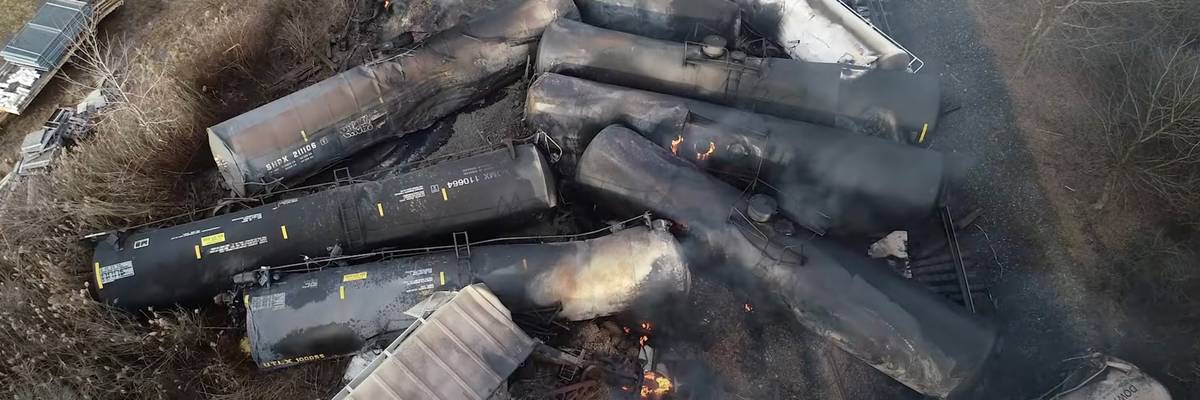
This video screenshot released by the U.S. National Transportation Safety Board (NTSB) shows the site of a derailed freight train in East Palestine, Ohio, on February 6, 2023.
"This is one of the most important chemical review processes ever undertaken by the EPA," said one of the agency's former regional administrators.
The U.S. Environmental Protection Agency announced Thursday that it had begun the process of prioritizing vinyl chloride for evaluation under the Toxic Substances Control Act.
Vinyl chloride, which is primarily used to make polyvinyl chloride (PVC) plastic, was one of five chemicals the agency earmarked for a risk assessment. The move comes eight months after a disastrous train derailment in East Palestine, Ohio, which included five cars carrying 115,000 gallons of the dangerous chemical.
"We have seen firsthand what vinyl chloride can do to a community," Hilary Flint, vice president of Unity Council for the East Palestine Train Derailment and director of communications and community engagement for Beaver County Marcellus Awareness Community, said in a statement.
"This is a step in the right direction, and we will continue to fight for a total vinyl chloride ban," Flint continued. "We want to make sure what happened after the East Palestine train derailment is the last vinyl chloride disaster in the United States."
Vinyl chloride is a known carcinogen that has been linked to liver, brain, lung, and blood cancers. It can also harm the neurological system and suppress immunity. Despite this, it is one of the most produced chemicals by volume in both the U.S. and internationally. In 2019, billions of pounds were manufactured in the U.S. alone.
"Most vinyl chloride is used to make polyvinyl chloride (PVC) plastic, which poses significant health and environmental problems that have been known for over 50 years," Judith Enck, president of Beyond Plastics and former EPA regional administrator, said in the EPA announcement. "This is one of the most important chemical review processes ever undertaken by the EPA."
"The examination of all routes of exposure prescribed by the law will lead EPA to the conclusion that vinyl chloride is far too dangerous to make or use, and should be banned."
A TSCA review will require the EPA to assess all the ways people can be exposed to vinyl chloride, both in terms of what it can pollute and how the exposure can take place. That means looking at how it contaminates soil, air, and water and how it impacts workers, frontline communities, and communities exposed during disasters like the East Palestine derailment. A full 27% of the people who live within three miles of a facility where vinyl chloride is used or made are children, and the evaluation will require the EPA to consider how the chemical impacts young people specifically.
Liz Hitchcock, director of Toxic Free Future's Safer Chemicals Healthy Families federal policy program, said the EPA's decision was "welcome news."
"The examination of all routes of exposure prescribed by the law will lead EPA to the conclusion that vinyl chloride is far too dangerous to make or use, and should be banned," Hitchcock said.
The other chemicals that the EPA will assess are acetaldehyde, acrylonitrile, benzenamine, and 4,4'-Methylene bis(2-chloroaniline) (MBOCA). Four out of the five chemicals are used in plastic production and all of them are used to make petrochemicals.
The EPA now has 12 months to determine whether or not the five chemicals are "High Priority Substances," after which it will begin the risk evaluation. The public will be able to comment on all of the chemicals.
"We applaud EPA for echoing states' concerns about the threat of vinyl chloride and PVC to communities. This action, along with action by states to restrict the use of PVC in packaging and building materials in favor of safer materials, will help communities thrive," Sarah Doll, national director of Safer States, said in a statement. "The urgency of vinyl chloride's threat means we need action from all levels of government."
Dear Common Dreams reader, It’s been nearly 30 years since I co-founded Common Dreams with my late wife, Lina Newhouser. We had the radical notion that journalism should serve the public good, not corporate profits. It was clear to us from the outset what it would take to build such a project. No paid advertisements. No corporate sponsors. No millionaire publisher telling us what to think or do. Many people said we wouldn't last a year, but we proved those doubters wrong. Together with a tremendous team of journalists and dedicated staff, we built an independent media outlet free from the constraints of profits and corporate control. Our mission has always been simple: To inform. To inspire. To ignite change for the common good. Building Common Dreams was not easy. Our survival was never guaranteed. When you take on the most powerful forces—Wall Street greed, fossil fuel industry destruction, Big Tech lobbyists, and uber-rich oligarchs who have spent billions upon billions rigging the economy and democracy in their favor—the only bulwark you have is supporters who believe in your work. But here’s the urgent message from me today. It's never been this bad out there. And it's never been this hard to keep us going. At the very moment Common Dreams is most needed, the threats we face are intensifying. We need your support now more than ever. We don't accept corporate advertising and never will. We don't have a paywall because we don't think people should be blocked from critical news based on their ability to pay. Everything we do is funded by the donations of readers like you. When everyone does the little they can afford, we are strong. But if that support retreats or dries up, so do we. Will you donate now to make sure Common Dreams not only survives but thrives? —Craig Brown, Co-founder |
The U.S. Environmental Protection Agency announced Thursday that it had begun the process of prioritizing vinyl chloride for evaluation under the Toxic Substances Control Act.
Vinyl chloride, which is primarily used to make polyvinyl chloride (PVC) plastic, was one of five chemicals the agency earmarked for a risk assessment. The move comes eight months after a disastrous train derailment in East Palestine, Ohio, which included five cars carrying 115,000 gallons of the dangerous chemical.
"We have seen firsthand what vinyl chloride can do to a community," Hilary Flint, vice president of Unity Council for the East Palestine Train Derailment and director of communications and community engagement for Beaver County Marcellus Awareness Community, said in a statement.
"This is a step in the right direction, and we will continue to fight for a total vinyl chloride ban," Flint continued. "We want to make sure what happened after the East Palestine train derailment is the last vinyl chloride disaster in the United States."
Vinyl chloride is a known carcinogen that has been linked to liver, brain, lung, and blood cancers. It can also harm the neurological system and suppress immunity. Despite this, it is one of the most produced chemicals by volume in both the U.S. and internationally. In 2019, billions of pounds were manufactured in the U.S. alone.
"Most vinyl chloride is used to make polyvinyl chloride (PVC) plastic, which poses significant health and environmental problems that have been known for over 50 years," Judith Enck, president of Beyond Plastics and former EPA regional administrator, said in the EPA announcement. "This is one of the most important chemical review processes ever undertaken by the EPA."
"The examination of all routes of exposure prescribed by the law will lead EPA to the conclusion that vinyl chloride is far too dangerous to make or use, and should be banned."
A TSCA review will require the EPA to assess all the ways people can be exposed to vinyl chloride, both in terms of what it can pollute and how the exposure can take place. That means looking at how it contaminates soil, air, and water and how it impacts workers, frontline communities, and communities exposed during disasters like the East Palestine derailment. A full 27% of the people who live within three miles of a facility where vinyl chloride is used or made are children, and the evaluation will require the EPA to consider how the chemical impacts young people specifically.
Liz Hitchcock, director of Toxic Free Future's Safer Chemicals Healthy Families federal policy program, said the EPA's decision was "welcome news."
"The examination of all routes of exposure prescribed by the law will lead EPA to the conclusion that vinyl chloride is far too dangerous to make or use, and should be banned," Hitchcock said.
The other chemicals that the EPA will assess are acetaldehyde, acrylonitrile, benzenamine, and 4,4'-Methylene bis(2-chloroaniline) (MBOCA). Four out of the five chemicals are used in plastic production and all of them are used to make petrochemicals.
The EPA now has 12 months to determine whether or not the five chemicals are "High Priority Substances," after which it will begin the risk evaluation. The public will be able to comment on all of the chemicals.
"We applaud EPA for echoing states' concerns about the threat of vinyl chloride and PVC to communities. This action, along with action by states to restrict the use of PVC in packaging and building materials in favor of safer materials, will help communities thrive," Sarah Doll, national director of Safer States, said in a statement. "The urgency of vinyl chloride's threat means we need action from all levels of government."
The U.S. Environmental Protection Agency announced Thursday that it had begun the process of prioritizing vinyl chloride for evaluation under the Toxic Substances Control Act.
Vinyl chloride, which is primarily used to make polyvinyl chloride (PVC) plastic, was one of five chemicals the agency earmarked for a risk assessment. The move comes eight months after a disastrous train derailment in East Palestine, Ohio, which included five cars carrying 115,000 gallons of the dangerous chemical.
"We have seen firsthand what vinyl chloride can do to a community," Hilary Flint, vice president of Unity Council for the East Palestine Train Derailment and director of communications and community engagement for Beaver County Marcellus Awareness Community, said in a statement.
"This is a step in the right direction, and we will continue to fight for a total vinyl chloride ban," Flint continued. "We want to make sure what happened after the East Palestine train derailment is the last vinyl chloride disaster in the United States."
Vinyl chloride is a known carcinogen that has been linked to liver, brain, lung, and blood cancers. It can also harm the neurological system and suppress immunity. Despite this, it is one of the most produced chemicals by volume in both the U.S. and internationally. In 2019, billions of pounds were manufactured in the U.S. alone.
"Most vinyl chloride is used to make polyvinyl chloride (PVC) plastic, which poses significant health and environmental problems that have been known for over 50 years," Judith Enck, president of Beyond Plastics and former EPA regional administrator, said in the EPA announcement. "This is one of the most important chemical review processes ever undertaken by the EPA."
"The examination of all routes of exposure prescribed by the law will lead EPA to the conclusion that vinyl chloride is far too dangerous to make or use, and should be banned."
A TSCA review will require the EPA to assess all the ways people can be exposed to vinyl chloride, both in terms of what it can pollute and how the exposure can take place. That means looking at how it contaminates soil, air, and water and how it impacts workers, frontline communities, and communities exposed during disasters like the East Palestine derailment. A full 27% of the people who live within three miles of a facility where vinyl chloride is used or made are children, and the evaluation will require the EPA to consider how the chemical impacts young people specifically.
Liz Hitchcock, director of Toxic Free Future's Safer Chemicals Healthy Families federal policy program, said the EPA's decision was "welcome news."
"The examination of all routes of exposure prescribed by the law will lead EPA to the conclusion that vinyl chloride is far too dangerous to make or use, and should be banned," Hitchcock said.
The other chemicals that the EPA will assess are acetaldehyde, acrylonitrile, benzenamine, and 4,4'-Methylene bis(2-chloroaniline) (MBOCA). Four out of the five chemicals are used in plastic production and all of them are used to make petrochemicals.
The EPA now has 12 months to determine whether or not the five chemicals are "High Priority Substances," after which it will begin the risk evaluation. The public will be able to comment on all of the chemicals.
"We applaud EPA for echoing states' concerns about the threat of vinyl chloride and PVC to communities. This action, along with action by states to restrict the use of PVC in packaging and building materials in favor of safer materials, will help communities thrive," Sarah Doll, national director of Safer States, said in a statement. "The urgency of vinyl chloride's threat means we need action from all levels of government."

