

SUBSCRIBE TO OUR FREE NEWSLETTER
Daily news & progressive opinion—funded by the people, not the corporations—delivered straight to your inbox.
5
#000000
#FFFFFF
To donate by check, phone, or other method, see our More Ways to Give page.
Daily news & progressive opinion—funded by the people, not the corporations—delivered straight to your inbox.
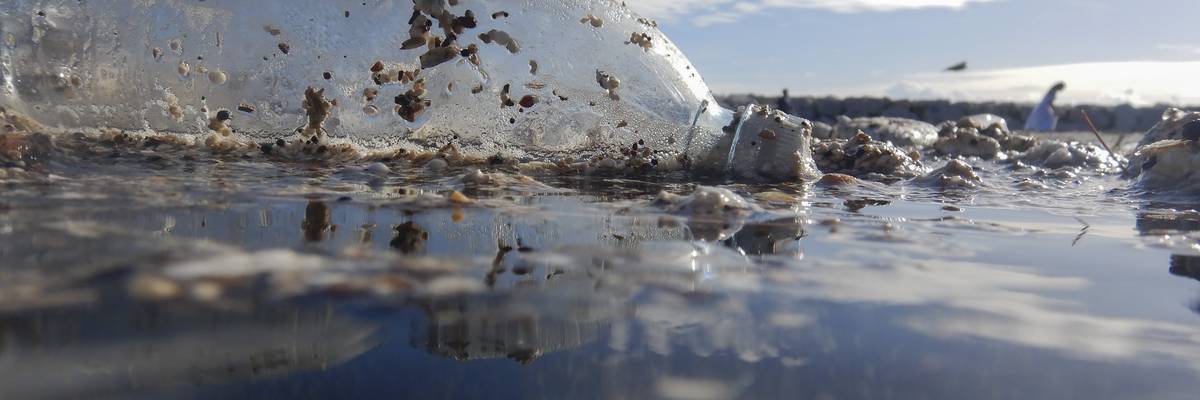
Plastic bottles washed up on the beach due to storms in Naples, Italy on November 23, 2022.
A new study stresses urgent action is required to tackle a "growing plastic smog" of over 170 trillion particles in the world's oceans.
On the heels of a historic agreement to protect the biodiversity of the high seas, researchers from around the world published a study this week underscoring the need for rapid, sweeping action to address "unprecedented" plastic pollution of oceans and sharply reduce global production.
"We've found an alarming trend of exponential growth of microplastics in the global ocean since the millennium, reaching over 170 trillion plastic particles,"
said lead author Marcus Eriksen, co-founder of the 5 Gyres Institute in California. "This is a stark warning that we must act now at a global scale."
For the peer-reviewed study, published Wednesday in the journal PLOS ONE, researchers based in the United States, Sweden, Chile, and Australia examined previously published and new data on floating plastic pollution between 1979-2019 from 11,777 stations across the North Atlantic, South Atlantic, North Pacific, South Pacific, Indian, and Mediterranean regions.
"Without substantial widespread policy changes, the rate at which plastics enter aquatic environments will increase approximately 2.6-fold from 2016 to 2040."
"The situation is much worse than expected,"
explained co-author Patricia Villarrubia-Gómez, a researcher at the Stockholm Resilience Center in Sweden. "In 2014, it was estimated that there were 5 trillion plastic particles in the ocean. Now, less than 10 years later, we're up at 170 trillion."
Specifically, they estimate the world's oceans contain a "growing plastic smog" of approximately 82-358 trillion particles, or an average of 171 trillion particles that are primarily microplastics. As
The Washington Post noted, that "is more than 21,000 pieces of plastic for each of the Earth's 8 billion residents."
The study states that "we observed no clear detectable trend until 1990, a fluctuating but stagnant trend from then until 2005, and a rapid increase until the present. This observed acceleration of plastic densities in the world's oceans, also reported for beaches around the globe, demands urgent international policy interventions."
"Without substantial widespread policy changes," the study warns, "the rate at which plastics enter aquatic environments will increase approximately 2.6-fold from 2016 to 2040."
Eriksen argued that given the current conditions, humanity must "stop focusing on cleanup and recycling, and usher in an age of corporate responsibility for the entire life of the things they make."
"Cleanup is futile if we continue to produce plastic at the current rate, and we have heard about recycling for too long while the plastic industry simultaneously rejects any commitments to buy recycled material or design for recyclability," the scientist said.
The research comes amid efforts to create a United Nations treaty on plastic pollution by next year. After 175 nations agreed to craft such a pact during a March 2022 meeting in Kenya, Uruguay hosted the first round of negotiations late last year. A second session of talks in France is scheduled for May.
According to Eriksen, "We need a strong, legally binding U.N. global treaty on plastic pollution that stops the problem at the source."
In comments to The Guardian, study co-author Edward J. Carpenter, of the Estuary & Ocean Science Center at San Francisco State University, also called for governments across the globe to ambitiously tackle the crisis.
"We know the ocean is a vital ecosystem and we have solutions to prevent plastic pollution. But plastic pollution continues to grow and has a toxic effect on marine life," he said. "There must be legislation to limit the production and sale of single-use plastics or marine life will be further degraded. Humans need healthy oceans for a livable planet."
Judith Enck, a former U.S. Environmental Protection Agency regional administrator who is now president of the organzation Beyond Plastics, echoed the study authors' demand for dramatically cutting down on production.
"The plastics and petrochemical industries are making it impossible to curb the amount of plastic contaminating our oceans," she said in an email to CNN. "New research is always helpful, but we don't need to wait for new research to take action—the problem is already painfully clear, in the plastic accumulating in our oceans, air, soil, food, and bodies."
As Richard Thompson, a professor at the U.K.'s Plymouth University who was not involved in the study, told BBC News: "We are all agreed there is too much plastic in the ocean. We urgently need to move to solutions-focused research."
Dear Common Dreams reader, It’s been nearly 30 years since I co-founded Common Dreams with my late wife, Lina Newhouser. We had the radical notion that journalism should serve the public good, not corporate profits. It was clear to us from the outset what it would take to build such a project. No paid advertisements. No corporate sponsors. No millionaire publisher telling us what to think or do. Many people said we wouldn't last a year, but we proved those doubters wrong. Together with a tremendous team of journalists and dedicated staff, we built an independent media outlet free from the constraints of profits and corporate control. Our mission has always been simple: To inform. To inspire. To ignite change for the common good. Building Common Dreams was not easy. Our survival was never guaranteed. When you take on the most powerful forces—Wall Street greed, fossil fuel industry destruction, Big Tech lobbyists, and uber-rich oligarchs who have spent billions upon billions rigging the economy and democracy in their favor—the only bulwark you have is supporters who believe in your work. But here’s the urgent message from me today. It's never been this bad out there. And it's never been this hard to keep us going. At the very moment Common Dreams is most needed, the threats we face are intensifying. We need your support now more than ever. We don't accept corporate advertising and never will. We don't have a paywall because we don't think people should be blocked from critical news based on their ability to pay. Everything we do is funded by the donations of readers like you. When everyone does the little they can afford, we are strong. But if that support retreats or dries up, so do we. Will you donate now to make sure Common Dreams not only survives but thrives? —Craig Brown, Co-founder |
On the heels of a historic agreement to protect the biodiversity of the high seas, researchers from around the world published a study this week underscoring the need for rapid, sweeping action to address "unprecedented" plastic pollution of oceans and sharply reduce global production.
"We've found an alarming trend of exponential growth of microplastics in the global ocean since the millennium, reaching over 170 trillion plastic particles,"
said lead author Marcus Eriksen, co-founder of the 5 Gyres Institute in California. "This is a stark warning that we must act now at a global scale."
For the peer-reviewed study, published Wednesday in the journal PLOS ONE, researchers based in the United States, Sweden, Chile, and Australia examined previously published and new data on floating plastic pollution between 1979-2019 from 11,777 stations across the North Atlantic, South Atlantic, North Pacific, South Pacific, Indian, and Mediterranean regions.
"Without substantial widespread policy changes, the rate at which plastics enter aquatic environments will increase approximately 2.6-fold from 2016 to 2040."
"The situation is much worse than expected,"
explained co-author Patricia Villarrubia-Gómez, a researcher at the Stockholm Resilience Center in Sweden. "In 2014, it was estimated that there were 5 trillion plastic particles in the ocean. Now, less than 10 years later, we're up at 170 trillion."
Specifically, they estimate the world's oceans contain a "growing plastic smog" of approximately 82-358 trillion particles, or an average of 171 trillion particles that are primarily microplastics. As
The Washington Post noted, that "is more than 21,000 pieces of plastic for each of the Earth's 8 billion residents."
The study states that "we observed no clear detectable trend until 1990, a fluctuating but stagnant trend from then until 2005, and a rapid increase until the present. This observed acceleration of plastic densities in the world's oceans, also reported for beaches around the globe, demands urgent international policy interventions."
"Without substantial widespread policy changes," the study warns, "the rate at which plastics enter aquatic environments will increase approximately 2.6-fold from 2016 to 2040."
Eriksen argued that given the current conditions, humanity must "stop focusing on cleanup and recycling, and usher in an age of corporate responsibility for the entire life of the things they make."
"Cleanup is futile if we continue to produce plastic at the current rate, and we have heard about recycling for too long while the plastic industry simultaneously rejects any commitments to buy recycled material or design for recyclability," the scientist said.
The research comes amid efforts to create a United Nations treaty on plastic pollution by next year. After 175 nations agreed to craft such a pact during a March 2022 meeting in Kenya, Uruguay hosted the first round of negotiations late last year. A second session of talks in France is scheduled for May.
According to Eriksen, "We need a strong, legally binding U.N. global treaty on plastic pollution that stops the problem at the source."
In comments to The Guardian, study co-author Edward J. Carpenter, of the Estuary & Ocean Science Center at San Francisco State University, also called for governments across the globe to ambitiously tackle the crisis.
"We know the ocean is a vital ecosystem and we have solutions to prevent plastic pollution. But plastic pollution continues to grow and has a toxic effect on marine life," he said. "There must be legislation to limit the production and sale of single-use plastics or marine life will be further degraded. Humans need healthy oceans for a livable planet."
Judith Enck, a former U.S. Environmental Protection Agency regional administrator who is now president of the organzation Beyond Plastics, echoed the study authors' demand for dramatically cutting down on production.
"The plastics and petrochemical industries are making it impossible to curb the amount of plastic contaminating our oceans," she said in an email to CNN. "New research is always helpful, but we don't need to wait for new research to take action—the problem is already painfully clear, in the plastic accumulating in our oceans, air, soil, food, and bodies."
As Richard Thompson, a professor at the U.K.'s Plymouth University who was not involved in the study, told BBC News: "We are all agreed there is too much plastic in the ocean. We urgently need to move to solutions-focused research."
On the heels of a historic agreement to protect the biodiversity of the high seas, researchers from around the world published a study this week underscoring the need for rapid, sweeping action to address "unprecedented" plastic pollution of oceans and sharply reduce global production.
"We've found an alarming trend of exponential growth of microplastics in the global ocean since the millennium, reaching over 170 trillion plastic particles,"
said lead author Marcus Eriksen, co-founder of the 5 Gyres Institute in California. "This is a stark warning that we must act now at a global scale."
For the peer-reviewed study, published Wednesday in the journal PLOS ONE, researchers based in the United States, Sweden, Chile, and Australia examined previously published and new data on floating plastic pollution between 1979-2019 from 11,777 stations across the North Atlantic, South Atlantic, North Pacific, South Pacific, Indian, and Mediterranean regions.
"Without substantial widespread policy changes, the rate at which plastics enter aquatic environments will increase approximately 2.6-fold from 2016 to 2040."
"The situation is much worse than expected,"
explained co-author Patricia Villarrubia-Gómez, a researcher at the Stockholm Resilience Center in Sweden. "In 2014, it was estimated that there were 5 trillion plastic particles in the ocean. Now, less than 10 years later, we're up at 170 trillion."
Specifically, they estimate the world's oceans contain a "growing plastic smog" of approximately 82-358 trillion particles, or an average of 171 trillion particles that are primarily microplastics. As
The Washington Post noted, that "is more than 21,000 pieces of plastic for each of the Earth's 8 billion residents."
The study states that "we observed no clear detectable trend until 1990, a fluctuating but stagnant trend from then until 2005, and a rapid increase until the present. This observed acceleration of plastic densities in the world's oceans, also reported for beaches around the globe, demands urgent international policy interventions."
"Without substantial widespread policy changes," the study warns, "the rate at which plastics enter aquatic environments will increase approximately 2.6-fold from 2016 to 2040."
Eriksen argued that given the current conditions, humanity must "stop focusing on cleanup and recycling, and usher in an age of corporate responsibility for the entire life of the things they make."
"Cleanup is futile if we continue to produce plastic at the current rate, and we have heard about recycling for too long while the plastic industry simultaneously rejects any commitments to buy recycled material or design for recyclability," the scientist said.
The research comes amid efforts to create a United Nations treaty on plastic pollution by next year. After 175 nations agreed to craft such a pact during a March 2022 meeting in Kenya, Uruguay hosted the first round of negotiations late last year. A second session of talks in France is scheduled for May.
According to Eriksen, "We need a strong, legally binding U.N. global treaty on plastic pollution that stops the problem at the source."
In comments to The Guardian, study co-author Edward J. Carpenter, of the Estuary & Ocean Science Center at San Francisco State University, also called for governments across the globe to ambitiously tackle the crisis.
"We know the ocean is a vital ecosystem and we have solutions to prevent plastic pollution. But plastic pollution continues to grow and has a toxic effect on marine life," he said. "There must be legislation to limit the production and sale of single-use plastics or marine life will be further degraded. Humans need healthy oceans for a livable planet."
Judith Enck, a former U.S. Environmental Protection Agency regional administrator who is now president of the organzation Beyond Plastics, echoed the study authors' demand for dramatically cutting down on production.
"The plastics and petrochemical industries are making it impossible to curb the amount of plastic contaminating our oceans," she said in an email to CNN. "New research is always helpful, but we don't need to wait for new research to take action—the problem is already painfully clear, in the plastic accumulating in our oceans, air, soil, food, and bodies."
As Richard Thompson, a professor at the U.K.'s Plymouth University who was not involved in the study, told BBC News: "We are all agreed there is too much plastic in the ocean. We urgently need to move to solutions-focused research."

