

SUBSCRIBE TO OUR FREE NEWSLETTER
Daily news & progressive opinion—funded by the people, not the corporations—delivered straight to your inbox.
5
#000000
#FFFFFF
To donate by check, phone, or other method, see our More Ways to Give page.
Daily news & progressive opinion—funded by the people, not the corporations—delivered straight to your inbox.
In an effort to draw a proverbial "line in the sand" against continued investment in fossil fuel projects, activists are taking their fight once again to Wall Street. They are demanding 18 major banks walk away from a $2.2 billion loan with Enbridge, the corporation that is currently attempting to build the Line 3 tar sands pipeline across indigenous lands in Minnesota.
"Less than two months from now, on March 31st, 18 banks have a $2.2 billion loan to Enbridge due for renewal. Between now and then, we are going to do everything in our power to make it loud and clear to bank executives: They must walk away from Line 3 -- or there will be consequences," said Amy Gray, a Co-Coordinator of Stop the Money Pipeline.
Beginning today, Stop the Money Pipeline -- a diverse coalition of over 150 organizations pushing financial institutions to end support for fossil fuels and other climate-harming industries -- will initiate a campaign aimed at banks to #DefundLine3. They will deluge CEOs and board members of targeted banks with emails and phone calls, organize Covid-safe street protests, rallies and social media campaigns to ratchet up the pressure.
Enbridge Inc., a Canadian energy infrastructure company operating across North America, has been pushing to replace its existing Line 3 pipeline with a larger pipe that would carry 760,000 barrels of tar sands oil per day from Edmonton, Alberta, through Minnesota, to Superior, Wisconsin. Instead of safely decommissioning the existing Line 3, Enbridge wants to abandon it in the ground and build an entirely new $7 billion pipeline.
As indigenous activists in Minnesota continue to fight a brutal on-the-ground battle to stall construction by chaining themselves to equipment, standing in front of tractors and using any means available, including the creative use of pianos - to stop construction activities, STMP plans to take its fight directly to the banks.
The banks that activists are targeting include US banks JP Morgan Chase, Citigroup, Bank of America, as well as TD Bank, the Royal Bank of Canada and the European banks Barclays Bank, HSBC, Credit Suisse and Deutsche Bank. (See full list banks funding Line 3 here.)
For many activists Line 3 represents a watershed moment in the United States ability to move ahead of the impending Climate Emergency in a transformative way. Upon entering office, President Joe Biden cancelled the Keystone XL as promised and the current Dakota Access Pipeline has been derailed by legal challenges - and if they are able to force banks to end financial support to Line 3, it could serve as the death blow to the entire idea of fossil fuels as environmentally sound or acceptable investments.
According to the Intergovernmental Panel on Climate Change (IPCC) groundbreaking report all nations must cut global greenhouse gas emissions in half by 2030 and to net zero by 2050, if we are to keep global warming below the dangerous level of 1.5 degree Celsius above pre industrial levels. This small window becomes even smaller and some argue impossible unless we shift dramatically from fossil fuel investments and usage.
"If built, Line 3, a massive toxic tar sands pipeline, would destroy the sacred wild rice beds my people depend on for our food, our culture and our way of life. It would contribute as much to the climate crisis as 50 new coal-fired power plants and bring thousands of out-of-state workers to northern MN in the middle of a deadly pandemic, threatening already vulnerable rural, Indigenous communities with the virus even more. It would also endanger 800 wetlands and 200 waterways," said Tara Houska, (Couchiching First Nation) tribal attorney to STMP supporters in an email letter today.
Tara's struggle has drawn national attention and increased hope, particularly after President Biden cancelled Keystone XL. Major figures including Congresswoman Ilhan Omar (D-MN) have visited the front lines and Rep. Omar recently penned a letter to President Biden saying "Under even the best-case scenarios for climate change, we cannot afford to build more fossil fuel infrastructure. That is especially true for projects like Line 3, which are designed for the dirtiest and most carbon-intensive fossil fuel there is, tar sands crude oil. Climate change is not just a risk, but a risk multiplier - all of the other known and unknown impacts of Line 3 will be greatly exacerbated by climate change."
In a release from the Congresswoman's office, she voiced the concerns of Indigenous communities and activists are also extremely worried about Enbridge's track record of toxic spills which shows "Enbridge has presided over some of the worst pipeline catastrophes in our nation's history. They amassed over 800 spills between 1999 and 2010 alone, including the devastating Kalamazoo River disaster, the largest inland oil spill in U.S. history. They've been sued by multiple states for failing to adequately inspect and operate their pipelines."
The Congresswoman's worries about the environmental impact of Line 3 are not without merit.
For climate activists, Line 3 is symbolic of Donald Trump's toxic legacy to indigenous people and our nation. Its construction would add another 193 million tons of greenhouse gases to the atmosphere annually, which would be as bad as putting another 38 million vehicles on the road.
While increasing numbers of notables are joining the struggle to end Line 3, STMP will utilize the building momentum to engage in a series of protests, as well as media and social media campaigns designed to highlight the role of banks in funding the climate crisis and to reinforce the idea that the return on investments in fossil fuels no longer serves our best interests as a planet and is certainly not worth our future.
"Funding Line 3 is an unconscionable act at any time, but especially during a time when there is but a small window for us to move toward a zero-carbon economy in a way that ensures a future for the next generation simply because some JP Morgan or Bank of America executive prioritize profits over people is sickening. We won't let them take our future - not without a fight," noted Alec Connon, Co-Coordinator at Stop the Money Pipeline.
The Stop the Money Pipeline coalition is over 160 organizations strong holding the financial backers of climate chaos accountable.
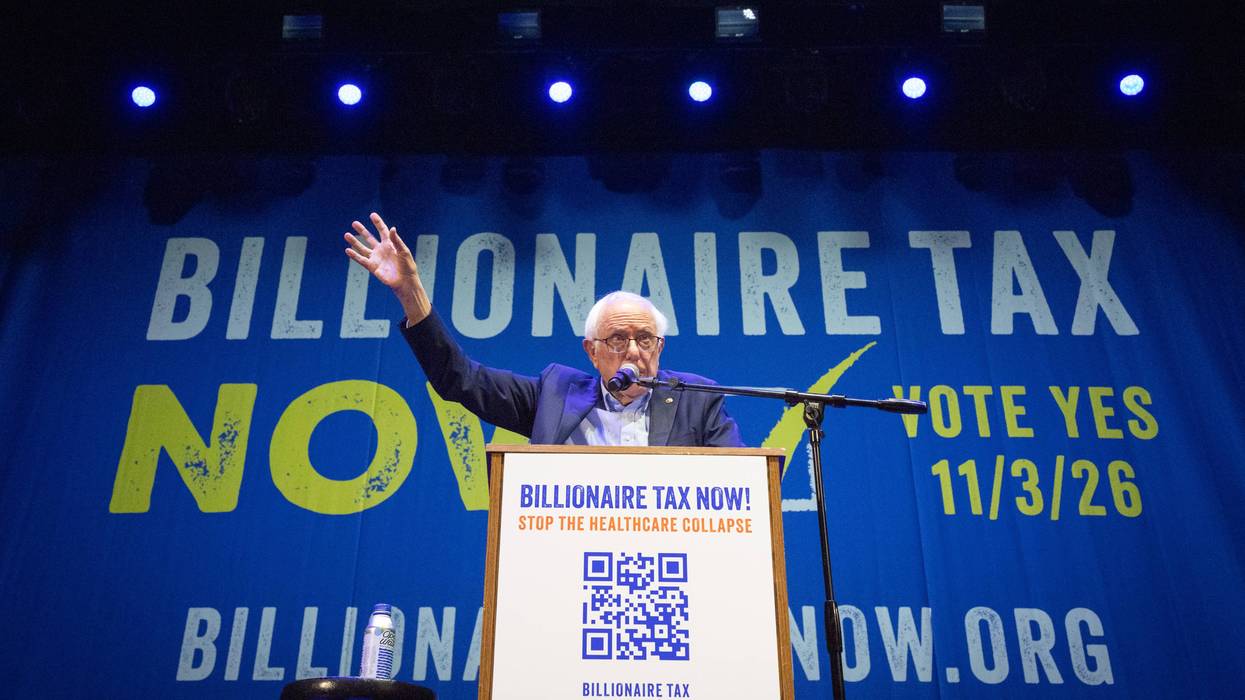
The democratic socialist senator said he's returning to the Golden State "to demand that billionaires finally pay their fair share and help elect strong progressives to Congress."
US Sen. Bernie Sanders is set to rally in California this weekend with Reps. Ro Khanna and Aisha Wahab in support of Proposition 40, a November ballot measure that would impose a one-time 5% tax on the wealth of the state's billionaires to fund healthcare and education amid historic cuts to social spending by President Donald Trump and the Republican-controlled Congress.
Sanders (I-Vt.) announced the upcoming appearances Monday on social media as the Prop 40 campaign enters its final weeks, with billionaire opponents pouring millions of dollars into efforts to defeat it.
In San Francisco on Saturday and Los Angeles next Monday, Sanders will headline “Ballots Over Billionaires” rallies hosted by SEIU United Healthcare Workers West, which led the introduction of the voter initiative.
Sanders will be joined in San Francisco and Los Angeles by Khanna (D-Calif.) and Jane Kim, a progressive candidate for California insurance commissioner and former San Francisco supervisor who was the state and regional political director for Sanders' 2020 presidential campaign. Sanders won California's Democratic primary that year.
“Sen. Bernie Sanders is a champion for working people, and I’m honored to have his support in the final stretch of our campaign as we rally for affordability and insurance for all,” Kim told Inside California Politics.
On Sunday, Sanders is also scheduled to speak at a canvass launch with Wahab (D-Calif.) in Livermore before heading south to Bakersfield, where he is hosting a Fighting Oligarchy rally with special guest Randy Villegas, the Democratic nominee for California's 22nd Congressional District.
"On November 3rd, at a time of unprecedented income and wealth inequality, the people of California will decide whether to pass a 5% wealth tax on more than 200 billionaires in California who are worth $2.2 trillion," Sanders said in a recent social media post. "Proposition 40 would raise enough revenue to prevent 3 million working-class Californians from losing the healthcare they currently have as a result of Trump’s so-called Big Beautiful Bill."
"Last year, these billionaires became $500 billion richer," he continued. "As a result of a rigged tax code, they pay a lower effective tax rate than a plumber or a nurse. The greed of these billionaires is really extraordinary."
"Instead of paying their fair share of taxes, billionaires are now spending $229 million—0.01% of their wealth—to oppose a 5% tax on their wealth," Sanders added.
Prop 40 may be the most hotly contested measure on California's midterm ballot. The initiative enjoys strong support from California progressives but is opposed not only by billionaires and their interests but also by outgoing Democratic Gov. Gavin Newsom—who is widely believed to be preparing to run for president—and both candidates running to succeed him as governor, Democratic former US secretary of health and human services Xavier Becerra and Republican commentator Steve Hilton.
Billionaire-backed opposition has intensified as November's midterms approach. Building a Better California, funded by Silicon Valley billionaires including Google co-founder Sergey Brin, has put millions of dollars into the fight against Prop 40.
Recent polling from the Public Policy Institute of California showed Prop 40 narrowly leading 52%-46%.
"Let's be clear: These billionaires have more money than they could spend in over 100 lifetimes," Sanders said last week. "How many mansions do they need? How many yachts do they need? How many private jets do they need?"
"I say to the billionaire class: Control your greed," the senator added. "Show a bit of compassion to working families and their kids in California."
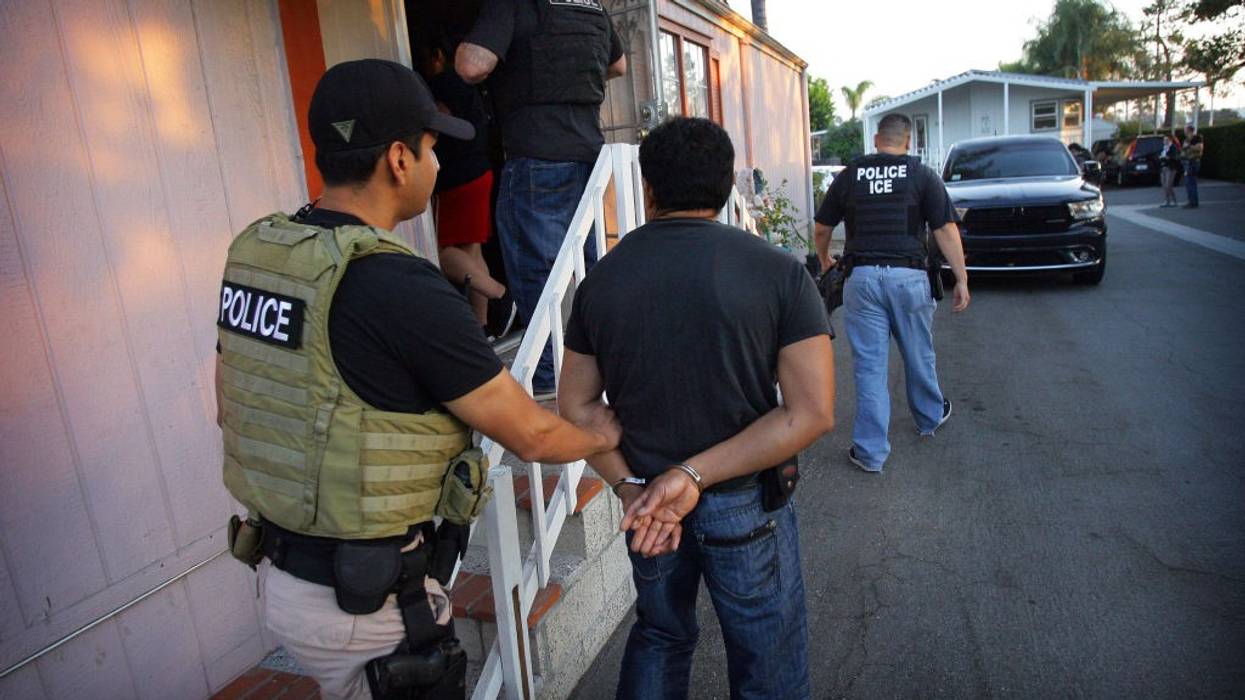
“The detentions are happening in a flash—we’re talking, like, 90 seconds from the time ICE shows up to that person being driven away,” said one immigration attorney.
The Trump administration may have deliberately toned down its highly visible, militarized immigration raids that generated widespread backlash, but US Immigration and Customs Enforcement is arresting more people than ever, an investigation published Monday by The Guardian revealed.
The British newspaper examined what it called the increasingly “invisibilized” immigration dragnet reaching into workplaces, airports, traffic stops, convenience stores, and communities far from the US-Mexico border, declaring "ICE is everywhere."
“Before, [ICE] were storming around, making a lot of noise,” Gracie Willis, a rapid-response attorney with the National Immigration Project, told The Guardian. “Now, they are moving more quietly.”
"More quietly" does not mean fewer arrests. In fact, The Guardian reported that ICE apprehended nearly 50,000 people in July, a record high. The agency has also more than doubled its workforce this year to more than 22,000 officers and staff after Congress provided the Department of Homeland Security with $75 billion in additional funding.
As of September 15, ICE had also signed more than 2,500 agreements allowing state and local law enforcement agencies to participate in federal immigration enforcement.
“The detentions are happening in a flash—we’re talking, like, 90 seconds from the time ICE shows up to that person being driven away,” Willis said. “And often they are moving very quietly, with very soft feet.”
The shift in tactics came after the administration's highly publicized operations provoked intense opposition, especially following a series of fatal shootings, including of American citizens.
President Donald Trump said earlier this year that “maybe we could use a little bit of a softer touch,” while Homeland Security Secretary Markwayne Mullin told senators that "my goal in six months is that we’re not in the lead story every single day.”
Still, immigration attorney Kate Lincoln-Goldfinch told The Guardian that “we’re seeing a lot of racial profiling" in immigration enforcement, adding that agents “might have their sights set on a big job site... and just slowly patrol that site and just take people in day after day until nobody’s going to work there anymore.”
The Guardian investigation comes amid continued condemnation of ICE's methods.
Amnesty International published a report last week based on interviews with 154 people affected by enforcement operations in Chicago, Minneapolis-St. Paul, New Orleans, and Washington, DC, documenting allegations including racial discrimination, arbitrary detention, excessive force, unlawful surveillance, incommunicado detention, and inhumane detention conditions.
“Masked and armed federal agents attacking people in the streets with impunity doesn’t make our communities safer—it puts everyone in danger,” said Amnesty International USA Executive Director Nadia Daar. “ICE is fundamentally broken and cannot be fixed.”
An increasing number of Republicans—especially those facing tough reelection battles—are criticizing the administration's heavy-handed immigration enforcement.
A campaign ad for Congresswoman Monica De La Cruz (R-Texas) even features a woman whose husband the lawmaker helped free from immigration detention.
“I have been very direct with the White House, with leadership, that enforcement policy should be focused on the criminals and on the cartels that are terrorizing our communities,” De La Cruz said last week during an interview on "The Joe Pags Show."
“They should not be on hardworking immigrants that are navigating the immigration process," she added.
In July, Democratic lawmakers sent a letter to Department of Homeland Security officials noting that agents had shot at least 22 people during Trump's second term, and that in multiple cases, federal authorities had made allegations against shooting victims that were later contradicted by evidence.
More than 50 people have died in ICE custody since Trump returned to the White House last year.
“Clearly, the White House has bet on the wrong horse.”
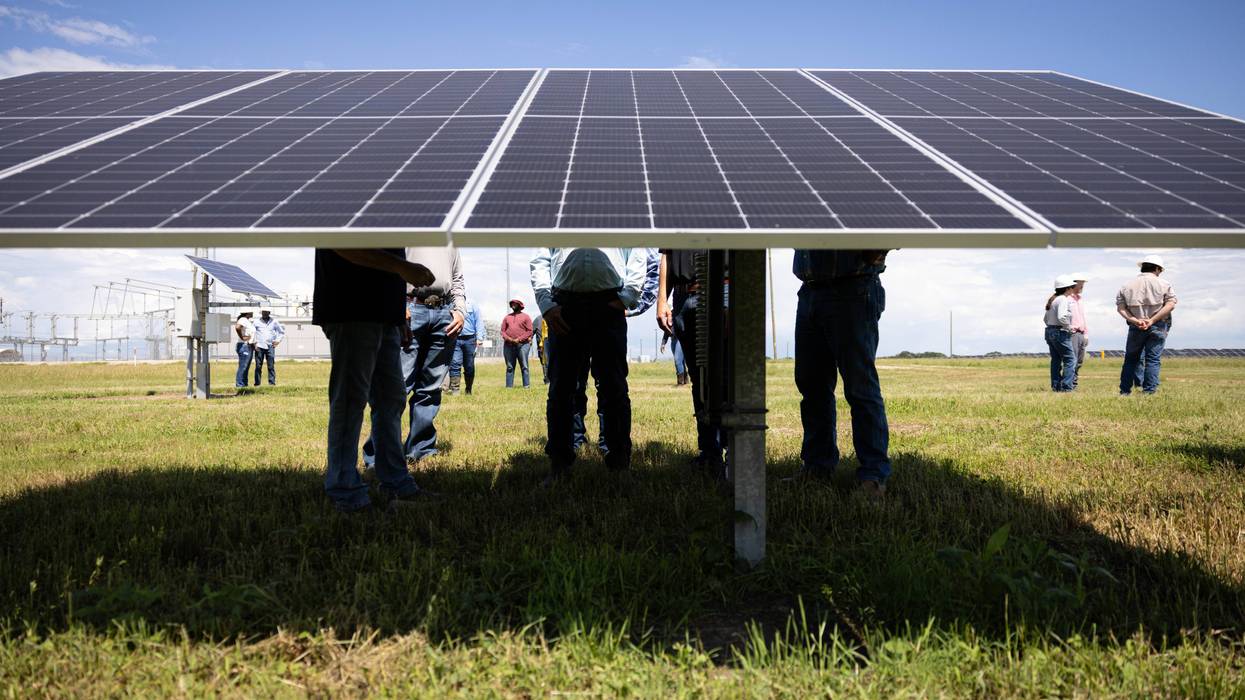
The Trump administration has waged a multi-front war on clean energy during the president's second term. But according to newly published government data, it hasn't worked.
Over the past 18 months, despite the administration’s best efforts, solar, wind, and battery storage added nearly 89 gigawatts of capacity—more than 30 times the growth of fossil fuels and nuclear power combined.
That is according to an analysis of new data from the US Energy Information Administration (EIA) released Monday by the nonprofit SUN DAY Campaign, which tracks federal renewable energy data.
From February 2025 through July 2026, utility solar capacity—large-scale projects that provide electricity to power grids—rose 33% over the previous year compared with the same time during 2025, while wind capacity rose 8%. The storage capacity for batteries, meanwhile, roughly doubled.
By contrast, US coal capacity dropped by 2.4%. Natural gas capacity rose by just 1.5%, while the capacity for fossil fuels and nuclear power combined rose by just 0.3%.
At the start of the second Trump administration, renewables accounted for a combined 22.3% share of US electrical generation. Eighteen months later, they now account for 29%.
“Over the last 18 months, the Trump administration has used every conceivable trick to delay, hinder, or cancel new clean energy projects,” said the SUN DAY Campaign’s executive director, Ken Bossong.
This has included an effective ban on wind development, a repeal of clean-energy tax credits in last year's Republican budget law, a rollback of electric vehicle subsidies, and the cancellation of solar grants, as well as a host of policies meant to ramp up the production of oil, coal, and gas.
The growth of solar and wind reflects an economic reality that Trump has struggled to reverse: Wind and solar are among the cheapest sources of new electricity in much of the country, according to data from the EIA, which expects solar to remain the fastest-growing US source of power generation through 2027.
"Clearly," Bossong said, "the White House has bet on the wrong horse.”
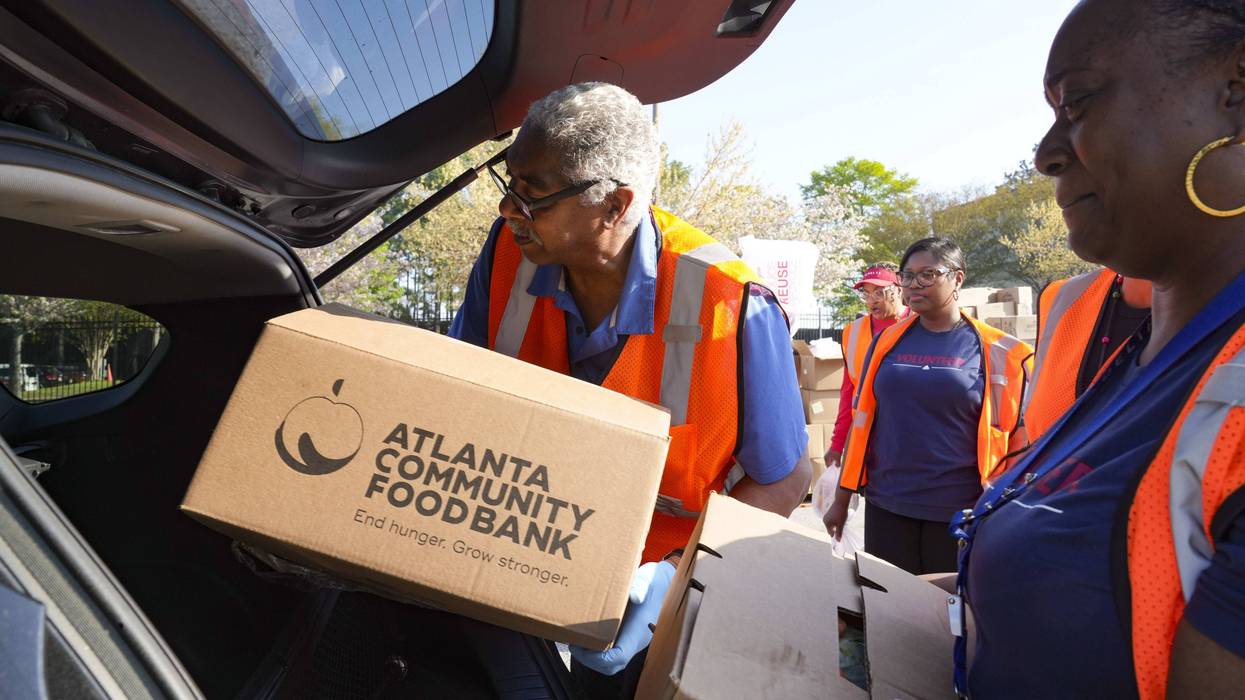
"It’s really hard for people in the United States to understand the scale of hunger."
Two of President Donald Trump's signature policies—the illegal war with Iran and cuts to the Supplemental Nutrition Assistance Program—are putting pressure on food banks throughout the country in the form of higher demand from clients and increased shipping costs.
In a Sunday report from Meidas News, reporter Scott MacFarlane published interviews with several food bank officials who said the increased cost of energy caused by Trump's Iran War has strained their ability to serve their communities.
From a demand side, more families have been relying on food banks because the increased cost of gasoline has left them with less money to spend at the grocery store.
And from a supply perspective, record-high diesel prices have hurt food banks' budgets by increasing transportation costs for staple items.
Craig Rice, chief executive officer at the Manna Food Center in Maryland, told MacFarlane that his organization is "seeing so many people come to us, who’ve never come to [the food bank] before."
"It used to be people who were working hourly-wage jobs," Rice added. "Now we see people who are salary employees. They may have been stable at one price, but suddenly they’re impacted by gas prices."
Amy Beros, president of the Food Bank of Central and Eastern North Carolina, similarly told MacFarlane that organizations in her region have seen demand for food services increase by between "20% to 60%" over the last year.
"It’s really hard for people in the United States to understand the scale of hunger," Beros said, "because it doesn’t look like it looks on TV."
The strain on food banks isn't just limited to one state or region.
Greta Faworski, associate director of Kalamazoo Loaves and Fishes, said in an interview published Monday with Michigan advance that she's seen a 56% increase in people who are reaching out to her organization for help.
Faworski said the recent surge in demand was akin to what she saw last year during a nationwide delay in SNAP benefits in the wake of a federal government shutdown.
"On an average day, we serve about 800 people a day," explained Faworski. "When there was notification because of the government shutdown that November SNAP benefits would not be released on time, in one week, we saw an increase to where we were serving 1,200 people a day."
The problem is expected to grow more acute because state governments starting next month will have to pay for a largest share of SNAP administrative costs due to provisions in the 2025 One Big Beautiful Bill Act.
A report published last week by Spectrum News 13 put a spotlight on how surging diesel costs are squeezing food banks in central Florida.
Greg Higgerson, chief development officer for Second Harvest Food Bank, told Spectrum News 13 that his organization's fuel bill is "somwhere around $15,00 per month," which he said was "up significantly from this time last year."
And like food banks elsewhere in the US, Higgerson said, the Second Harvest Food Bank is being forced to pay higher costs as demand for its services is going up.
“It’s going to be harder to make ends meet in the next few months,” Higgerson said. “There’s going to be more people. We know that, we see it already, and it’s going to cost more to help those folks.”
"The fact that they’re dropping this rule into place abruptly, without a comment period," said one advocate, "shows how little they care about the safety of our students.”
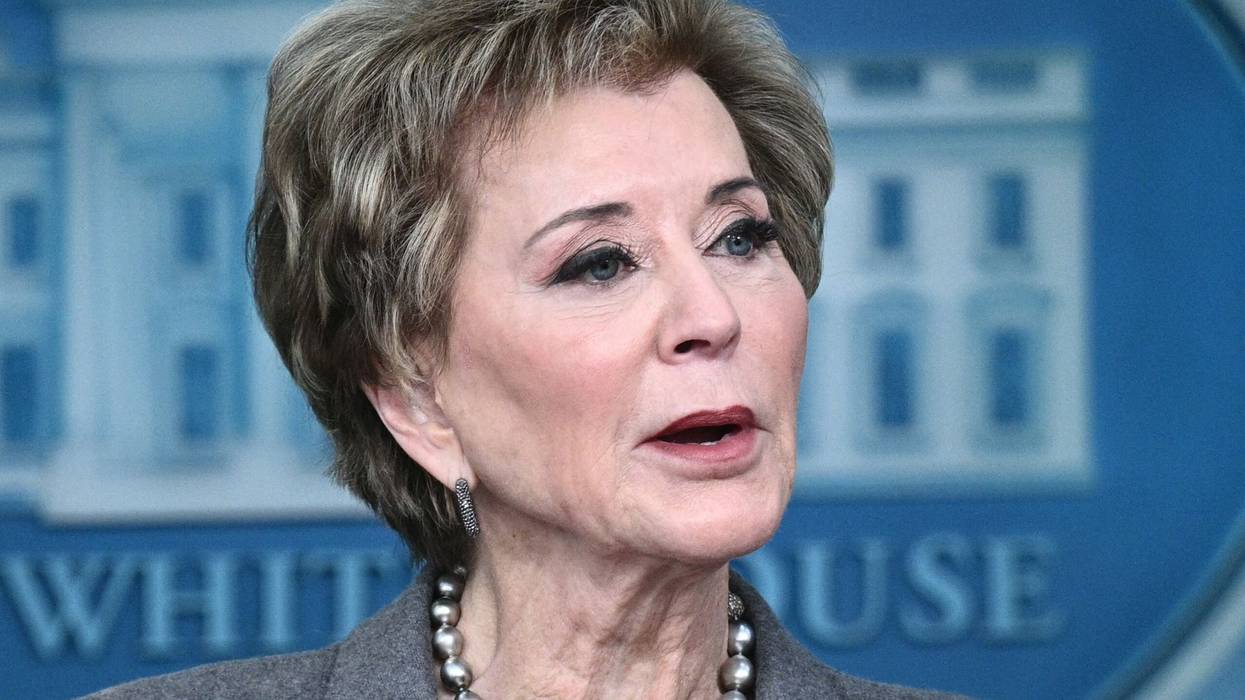
Education Secretary Linda McMahon's announcement that the Trump administration was formally rescinding Biden-era anti-discrimination protections was enough to spark outrage among women's rights and LGBTQ+ advocates on Monday—but one group pointed to officials' decision to make the change without gathering feedback from the public as even more reason for outcry.
"You get no say," said Human Rights Campaign (HRC) as the Education Department announced it was taking former President Joe Biden's Title IX rules off the books and returning to President Donald Trump's 2020 regulations, which set stricter standards for what constitutes sexual harassment and requires colleges to hold court-like hearings regarding complaints of sexual misconduct, complete with witnesses who can challenge the credibility of survivors or the accused.
HRC said the administration was displaying "contempt for the rule of law and democratic governance" as it "denied the public any opportunity to comment on the dangers of returning to these prior rules, and has announced that the changes will go into effect tomorrow."
"In its typical Orwellian fashion, the administration claims that 'engaging in public notice and comment would be contrary to public interest," said HRC.
Biden had amended Title IX regulations in 2024, clarifying protections against discrimination for students who are pregnant or are parents, transgender, or have other sex differences, and strengthening protections against sexual harassment and assault. The guidelines were subject to court challenges brought by Republican states.
The Trump administration has already been enforcing aspects of its own interpretation of Title IX, including by targeting schools that allow transgender students to play on women's and girls' sports teams. The Education Department said on social media Monday that in rescinding Biden's Title IX rules, "the Trump administration is formally putting into regulation what the law has said all along: Title IX’s protections are based on SEX, not 'gender identity.'"
Kelley Robinson, president of HRC, said Monday that Title IX "is, quite simply, about protecting students and ensuring that they are safe from abuse, harassment, and discrimination while they pursue their education. But Donald Trump and his cronies aren’t interested in any of that."
"Instead of enforcing protections for students, they’re rescinding them," said Robinson. "They don’t care if sexual harassment and assault go unaddressed. And they’re happy to strip funding away from school districts and states that are actually trying to keep students safe. We know who will be hurt: women, girls, and others who are vulnerable to sexual harassment, assault, and abuse—including LGBTQ+ students. The fact that they’re dropping this rule into place abruptly, without a comment period, denying families, educators, loved ones and the students themselves a say in how they should be treated, shows how little they care about the safety of our students.”
Democratic Gov. JB Pritzker of Illinois, a vocal critic of Trump and a potential 2028 presidential contender, said Monday that his state would continue working to ensure that all students of all gender identities are safe on campuses. He accused Trump of "once again attacking the civil rights protections that help make our country great."
At the National Women's Law Center, Shiwali Patel, the group's senior director of education justice, noted that the decision came as prosecutors reopened a high-profile sexual assault case at Cornell University, following public outrage.
“The Cornell University case is a devastating example of why robust federal Title IX enforcement matters,” said Patel. “Sexual harassment and assault continue to be pervasive in schools and, to the fullest extent possible, we should be working to enforce the laws that protect student survivors of sexual violence. Yet, Education Secretary Linda McMahon and the Trump administration have decided to ignore what survivors need, instead weaponizing Title IX to attack trans students."
“While the administration is unlawfully eroding protections for trans students under the guise of ‘protecting women and girls,’ they are systematically weakening the very laws that keep students safe and schools accountable," added Patel. "‘Protecting women and girls’ means not limiting Title IX protections based on students’ reproductive traits and anatomy and enforcing Title IX to make sure schools are inclusive spaces that provide equal educational opportunity for all students.”
At HRC, Robinson said the decision "drives home how essential it is that we take action at the polls this November to start bringing some accountability to an administration that has turned its back on the very students Title IX was written to protect.”
"Oil companies will get a windfall from gutting the fuel economy standards, but the rest of us are going to be handing over more of our hard-earned paychecks to fill up the tank," said one environmental lawyer.
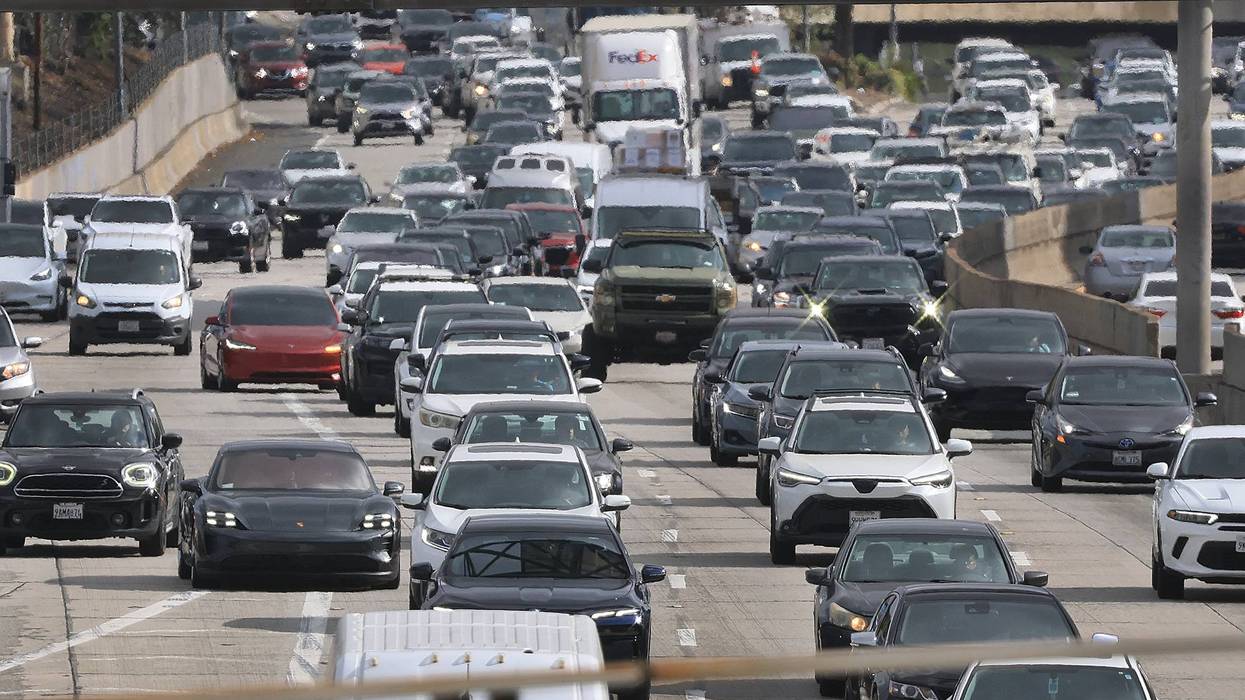
Scientists and environmental advocates are warning that the Trump administration's rollback of fuel economy standards for cars and trucks will not only lead to more pollution but also hurt cash-strapped consumers already reeling from gas price spikes.
The administration announced on Monday that it was weakening the Corporate Average Fuel Economy (CAFE) standards, which require automakers to increase the fuel efficiency of their vehicles each year.
Biden administration rules required a 2% annual increase in fuel-efficiency standards, with the goal of bringing most vehicles to an average of 50.4 miles per gallon by 2031. Under President Donald Trump, the annual target has been reduced to just a 1% improvement each year, meaning five years from now the average car would be required to get just under 34.9 mpg.
The Department of Transportation, which finalized the rule, has argued that efficiency standards put an unnecessary burden on carmakers and has projected that lowering them will “reduce the average cost of a new vehicle by $1,300 for American families" and "save the American people $138 billion over the next five years."
Transportation Secretary Sean Duffy described the Biden-era increase as one that "forced automakers to produce more expensive electric vehicles that American families didn’t want."
But Dave Cooke, senior vehicles analyst for the Union of Concerned Scientists’ (UCS) Clean Transportation Program, argues that rather than being a benefit to consumers, “the federal government’s decision to gut fuel economy standards is a handout to automakers and oil companies that will strap American consumers already struggling with an affordability crisis.”
His group has estimated that since CAFE standards were first introduced in 2010, they have saved auto owners about $321 billion at the gas pump. And over just the past seven months, during which Trump's war with Iran has caused gas prices to soar around the country, UCS estimates that consumers have saved $32 billion.
"Any small reduction in upfront vehicle costs will be outweighed by higher fuel expenses," Cooke said.
The National Highway Traffic Safety Administration (NHTSA) itself estimated in an impact analysis for the rule days ago that, as a result of the rule change, Americans will consume roughly 122 billion more gallons of gas than they would under the 2024 standards, resulting in average lifetime fuel costs of more than $1,600 more per vehicle—more than the administration estimates consumers will save by buying cheaper cars.
Transportation already accounted for about 17% of average US household spending in 2024, the latest year for which the Bureau of Labor Statistics has published data. Meanwhile, as the war with Iran has driven up costs, oil companies are reporting record profits. The top eight brought in nearly $93 billion in earnings in the second quarter of this year alone, according to an analysis by The Guardian.
"Oil companies will get a windfall from gutting the fuel economy standards, but the rest of us are going to be handing over more of our hard-earned paychecks to fill up the tank," said Atid Kimelman, an attorney at the NRDC.
Americans won't just spend more money; they'll also produce way more planet-heating greenhouse gases. The standards being rolled back were projected by NHTSA to prevent about 659 million metric tons of carbon dioxide, 825,000 metric tons of methane, and roughly 24,000 metric tons of nitrous oxide emissions through 2050.
The Center for Biological Diversity pointed out that the US is already the world's largest oil guzzler, accounting for 20% of global use, and that transportation is the No. 1 consumer of that oil.
"This move spells short- and long-term disaster for people’s health, the planet, and even US automakers who’ll sit on the sidelines while clean cars advance around the world," said Dan Becker, the director of the group's Safe Climate Transport Campaign. "This standard was the biggest single step any nation has taken to save gas, money at the pump, and auto pollution.”
Matthew Davis, vice president of federal policy for the League of Conservation Voters, emphasized that fuel efficiency standards are popular with the American public. A nationwide survey last month by the Global Strategy Group found that 73% of voters nationwide said they'd support "reestablishing fuel efficiency standards for cars and trucks."
"It is no secret that Trump promised handouts to Big Oil in exchange for campaign spending," Davis said, "and he is delivering for those billionaire CEOs and polluters while he hurts working families, American manufacturing competitiveness, public health, and the environment at every turn.”
“This is not normal," said the president of the union representing CDC workers. "What we are witnessing is the dismantling of public health infrastructure our country relies on."
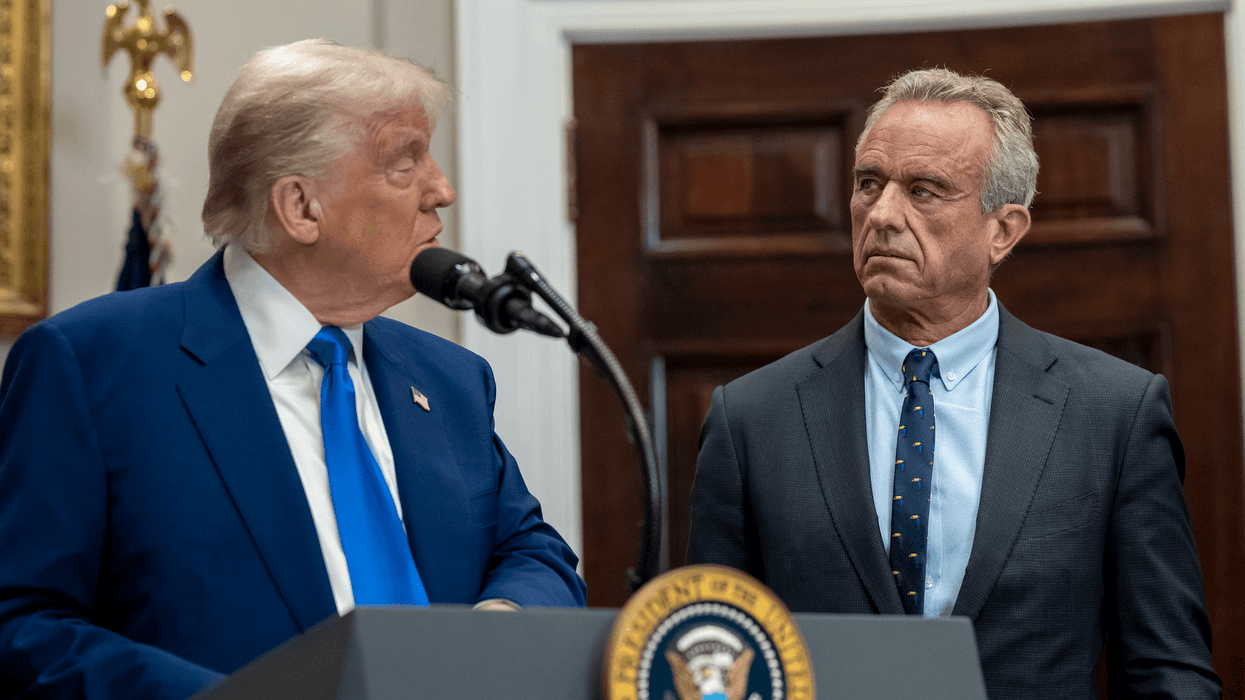
Reporting published over the weekend detailing the "zombified" state of the preeminent public health institution in the US, the Centers for Disease Control and Prevention, sparked deep alarm among advocates and experts, who warned that President Donald Trump's gutting of the agency leaves the country badly unequipped to handle future emergencies.
"The grim state of affairs at the Trump CDC should terrify everyone," Brad Woodhouse, president of the advocacy group Protect Our Care, said in a statement on Monday in response to reporting by The New York Times, which shows how Health and Human Services Secretary Robert F. Kennedy Jr. and other administration officials have made the CDC "a skeleton of the powerhouse it was."
The Times noted that, as of May 2026, the CDC had 30% fewer employees than it did before the Trump administration initiated mass layoffs at the agency and across the federal government last year.
There is also a leadership vacuum at the agency, according to the Times, which reported that "only one of the 11 center directors from March 2025 remains at the agency" and "most of the other centers are being run by acting directors, some of whom were elevated from jobs one or two levels below." The current CDC director is Dr. Erica Schwartz, who "has made no public statements about the importance of childhood vaccines or corrected misinformation from her boss, Mr. Kennedy," the Times observed, even as recorded measles cases reach levels not seen in decades.
"Interviews with more than 30 current and former employees reveal the agency is now tightly controlled by Mr. Kennedy and his associates, and its scientists are finding it increasingly difficult to do their jobs effectively," the newspaper reported.
Dr. Demetre Daskalakis, who headed the CDC's respiratory disease center before resigning in protest last year, told the Times that the Trump CDC "is not acting like how an agency like that should act." In his resignation letter, posted to social media in August 2025, Daskalakis warned that "the nation’s health security is at risk and is in the hands of people focusing on ideological self-interest."
According to the Times, the CDC's center for emerging and zoonotic diseases, which manages Ebola and hantavirus, "now has nearly 300 fewer employees than in March 2025, and the respiratory disease center has lost nearly 200—about 17% in each case."
"RFK Jr. has gutted the office that works on dangerous, killer emerging diseases," US Sen. Chris Murphy (D-Conn.) wrote over the weekend. "Disaster in waiting."
Woodhouse of Protect Our Care said Monday that "after a catastrophic global pandemic followed by a record-breaking measles crisis, the CDC should be better prepared than ever."
"Instead, the agency keeps getting caught with its pants down thanks to Donald Trump and RFK Jr.’s self-sabotage and war on science," said Woodhouse. "Investigations are coming, but resignations should come much sooner.”
The Times reporting coincided with new data from American Federation of Government Employees (AFGE) Local 2883, which represents CDC workers. The union said the CDC has lost over 3,800 employees during Trump's second term, nearly a third of the agency's total workforce.
“This is not normal," said Yolanda Jacobs, president of AFGE Local 2883. "What we are witnessing is the dismantling of public health infrastructure our country relies on."
"CDC workers have endured eighteen months of chaos and confusion, from detrimental layoffs and RIFs, to being left in a constant state of panic about job security. This turmoil cannot continue," Jacobs added. "Our workers, who have dedicated their lives to serving the American people, deserve better. Our country deserves an agency that is fully prepared to protect the public’s health within and outside its own doors. Protecting our nation’s public health workers also protects our nation’s public health.”
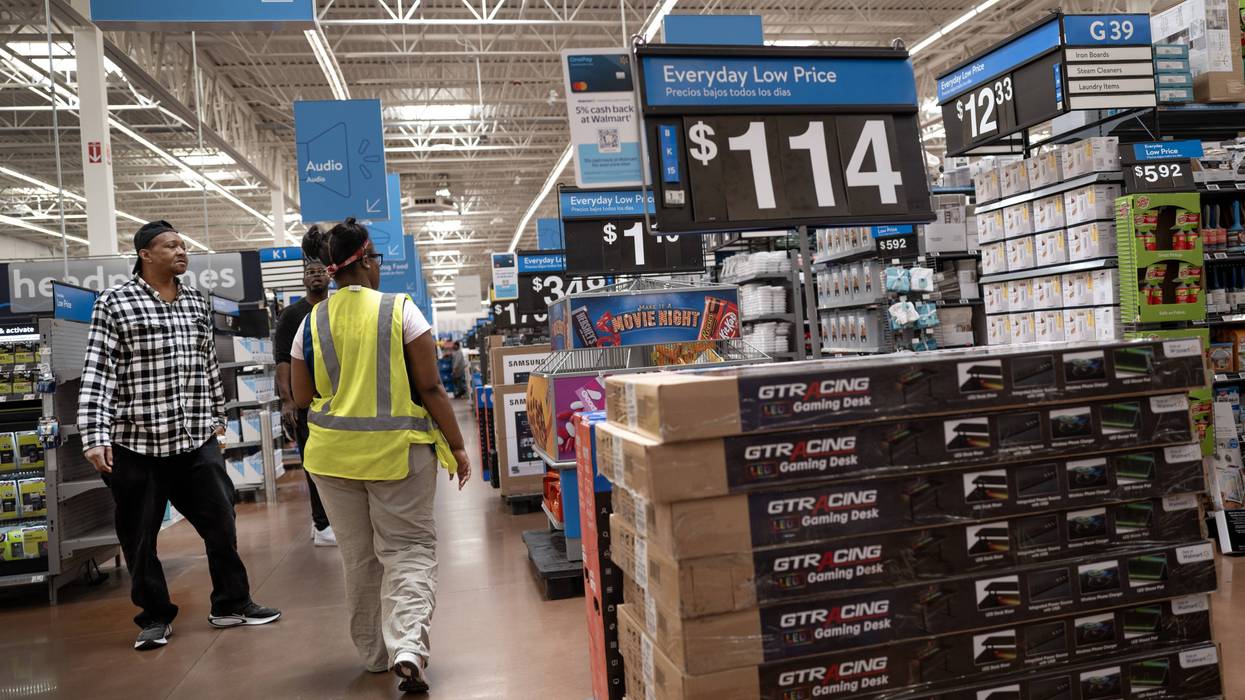
"Shoppers shouldn’t have to outsmart an algorithm, decode the fine print, or fight their way out of a subscription just to get a fair deal."
Groundwork Collaborative on Monday unveiled a proposal for a "Shopper's Bill of Rights," which it said would shield US consumers from rampant corporate greed.
Noting the long history of consumer protection legislation, Groundwork Collaborative makes the case that new rules are desperately needed in an era where companies can use artificial intelligence to construct elaborate pricing schemes aimed at extracting every last dollar from shoppers.
The group cites its own past work documenting Instacart's use of AI to target specific shoppers with higher prices to argue that corporate America badly needs stronger oversight to stop them from gouging consumers.
"Instacart is hardly a lone actor," the group writes. "Unchecked pricing shenanigans are spreading to every corner of our economy, and consumers are rightfully angry."
With this in mind, Groundwork Collaborative proposes 12 regulations aimed at protecting consumers from getting relentlessly nickel-and-dimed by big corporations.
The first proposal is giving consumers the right to an all-in price, meaning companies must let shoppers buy a good or service for its advertised price without tacking on assorted fees.
"The takeout order that looked like a quick fix for a hectic night can double in price once delivery fees pile up," the group explains, "while a few clicks to buy concert tickets can leave a fan staring at a final box office bill that is more than 25% higher than the base price that lured them in. This deception is lucrative, as hidden fees get shoppers to spend 20% more than they would if they saw the full price upfront."
Another proposal takes on the kind of surveillance pricing documented in Groundwork Collective's Instacart report, where companies use consumers' personal data to individually increase prices based on a number of factors in their personal browsing and shopping histories.
"Rapid advances in cloud computing, data collection, surveillance technologies, and artificial intelligence now equip companies to purchase, track, store, and analyze consumers’ personal data at an unimaginable scale," the group writes. "Armed with troves of personal data, companies can increasingly determine your particular pain point: how much you, specifically, can be pushed to pay."
Groundwork Collaborative recommends banning surveillance pricing altogether, while also cracking down on companies' powers to collect and sell consumers' personal browsing data.
The group also says that lawmakers should look into stopping dynamic pricing schemes, which don't target consumers on an individual basis but nonetheless make unpredictable prices changes depending on a wide number of factors.
While dynamic pricing was originally designed for industries to handle scarcities, Groundwork Collaborative notes that it has since spread to businesses that are in no danger of facing product shortages.
"Grocery stores are not rationing cans of beans and Wendy’s is not running out of fries," the group explains. "Still, shoppers have no way to tell the difference. Pricing algorithms are a black box, so when the price spikes, you have little way to know whether supply actually tightened, demand really surged, or the company simply spotted an opportunity to squeeze you."
Here is a full list of policies Groundwork Collaborative is proposing:
- Right to an All-In Price: The Price You See Is The Price You Pay
- Right to a Fair Price: Pricing Products, Not People
- Right to a Predictable Price: Reining In The Dynamic Pricing Rollercoaster
- Right to Cancellation: Cancel With a Click
- Right to Repair: If You Own It, You Can Fix It
- Right to Your Own Agent: AI That Works For You, Not The Corporate Bottom Line
- Right to Resale: What You Buy Is Yours to Sell
- Right to a Level Playing Field: Giving Small Businesses a Chance to Compete
- Right to Comparison Shop: Taking the Guesswork Out of Comparison Shopping With Unit Pricing
- Right to a Refund: Ending The Runaround on Refunds
- Right to Proper Billing: Know What You Owe and Why
- Right to a Competitive Price: Bring Antitrust Into the 21st Century
Lindsay Owens, president and CEO of Groundwork Collaborative, accused corporate America of "deploying a dizzying array of tricks and tactics to reinvent the ripoff and squeeze American consumers," and said it's well past time for the government to step in.
"Shoppers shouldn’t have to outsmart an algorithm, decode the fine print, or fight their way out of a subscription just to get a fair deal," Owens said. "Policymakers should put simple guardrails in place to protect consumers from the high-tech ways corporations are gouging us—the Shoppers’ Bill of Rights is a good place to start."

One Palestinian from Gaza said the imagery "shows you the Israeli barbarism and terrorism that the world lets happen."
Updated Google satellite imagery shared Monday on social media provides a new perspective on the staggering scale of Israel's obliteration of the Gaza Strip, showing entire neighborhoods reduced to rubble and vast stretches of a formerly dense urban landscape transformed into barren wasteland.
The images from Google—which is accused of complicity in the Gaza genocide—can be viewed on both Google Earth and Google Maps and show extensive destruction throughout the Palestinian territory. In some locations, roads and familiar landmarks remain visible amid enormous fields of gray rubble where homes, businesses, schools, and other civilian structures once stood.
"I've walked through much of the destruction in Gaza myself, but I couldn't bear looking at the map," Palestinian journalist Abubaker Abed posted on social media. "It shows you the Israeli barbarism and terrorism that the world lets happen."
"I've been to those places, I have seen the scale of the destruction—it was really heartbreaking," Abed told The New Arab. "But when you see all the destruction in just one active website, it really broke my heart. I couldn't even bear continuing looking at that because seeing the place where I grew up, seeing the place where I was born, [lying] in ruins in that way was absolutely heart-shattering."
US writer Linda Mamoun noted that "Google Maps shows photos and reviews for thousands of places in Gaza that don’t exist anymore. You can scroll through an entire world that Israel destroyed."
The Google images help affirm independent assessments documenting the extraordinary scale of Gaza's destruction. According to the United Nations Satellite Center (UNOSAT), 201,290 structures—or approximately 82% of all structures in Gaza—had sustained damage as of June. More than 134,400 structures were classified as destroyed, while over 13,800 were severely damaged. UNOSAT also estimated that 328,627 housing units had been damaged.
The devastation shown in the new imagery is particularly stark in Rafah in southern Gaza. Israel ignored a May 2024 order from the International Court of Justice to "immediately halt" its assault on the city of approximately 275,000 people, as well as other acts enumerated in Article II of the Genocide Convention. A South Africa-led genocide case against Israel at the ICJ is currently in the written phase, which will continue until at least May 2029.
"You can scroll through an entire world that Israel destroyed."
"Look at these satellite images of Gaza and listen to the inconsistency, the hypocrisy, and the ugliness of the soul of the deniers... who will tell you above all not to use the word genocide," wrote Rima Hassan, a French leftist member of European Parliament.
In a social media post, UK journalist David Yelland said: "I recommend spending a few minutes on Google Earth today looking at Gaza. Keeping the media out has meant we have not seen this before. Make your own mind up."
Another British journalist, Piers Morgan, called the images "horrifying."
"Now we know why [Israeli Prime Minister Benjamin] Netanyahu continues to ban international media from Gaza," he added.
A UN report published last week estimates that approximately 1.9 million of Gaza's roughly 2.2 million people have been displaced by Israel's assault—many of them more than once—and around 60% of the strip's residents have lost their homes. The publication also said that 92% of economic establishments in Gaza were destroyed or damaged, and that the territory needs about $71.5 billion for reconstruction and recovery.
Since launching the war in retaliation for the Hamas-led attack of October 7, 2023, Israeli forces have killed at least 74,022 Palestinians and wounded upward of 175,980 others, according to Gaza officials. The majority of those killed, they say, were women and children. At least 1,421 Palestinians have been killed and 4,983 wounded since the October 2025 ceasefire took effect.
Netanyahu and Yoav Gallant, his former minister of defense, are wanted by the International Criminal Court in The Hague for alleged war crimes and crimes against humanity in Gaza, including murder and forced starvation.
Some Israelis and their supporters expressed satisfaction and even pride in the satellite images of Gaza's annihilation.
"If updated Google satellite images of Gaza have not troubled you, see a doctor," said Lebanese diplomat Mohamad Safa. "Supporting mass killing and distribution on this scale is really a pathological issue."
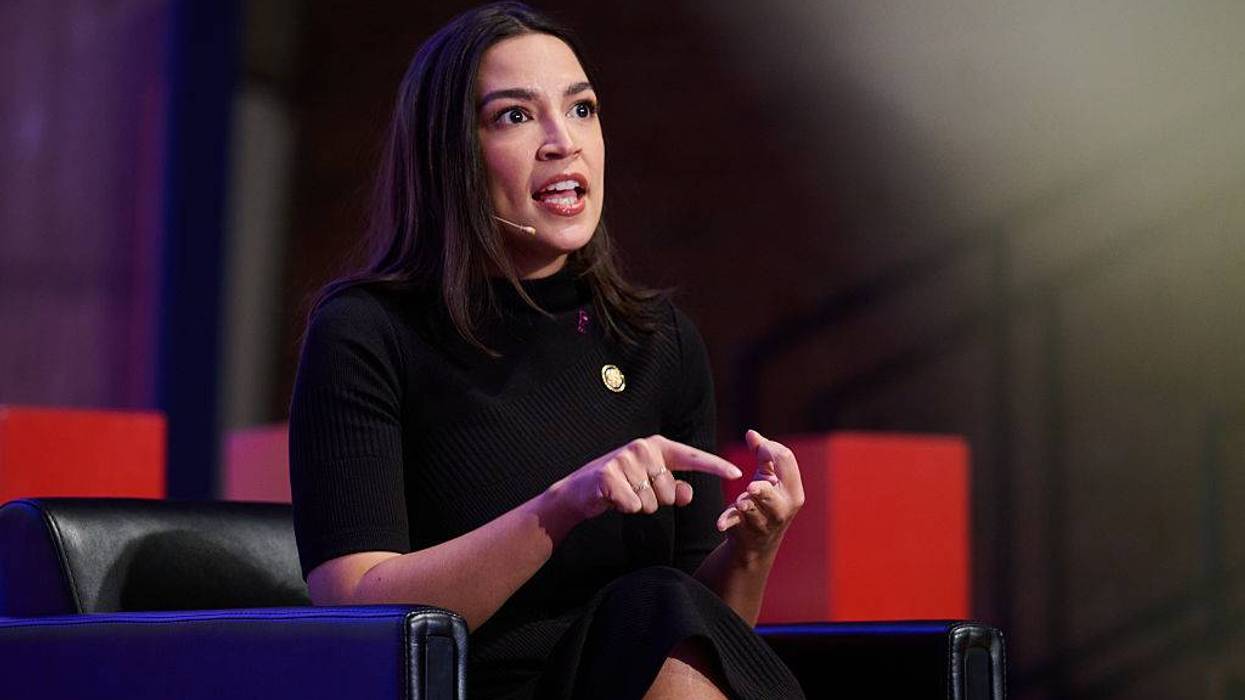
The congresswoman spoke in Ithaca, New York and other cities ahead of a possible 2028 US Senate run.
As national outrage grew over an alleged rape of a former Cornell University student by seven members of a fraternity in 2024, US Rep. Alexandria Ocasio-Cortez on Sunday condemned a culture in which students accused of sexual assault are "protected" while survivors like the woman in the Cornell case, identified as Jane Doe, are often forced out of their campus communities.
The progressive New York Democrat spoke at a town hall in Ithaca, which has been rocked in recent weeks by the news that Doe filed a lawsuit against the school and several campus organizations and individuals over the alleged crime.
Ocasio-Cortez is visiting several cities across New York State this week, kicking off a voter outreach effort and meeting local officials ahead of a possible 2028 US Senate run. She has also been named as a potential presidential candidate. The event she spoke at Sunday was hosted by More Perfect University and titled "Students vs. Billionaires," but Ocasio-Cortez began by speaking about the case, which prosecutors on Monday said they were reopening after learning of new evidence.
"The fact that Jane Doe, that survivor, lost her education—because you can't stay in school when something like that happens to you... the fact that she had to lose her education and those men were protected by an institution and granted an Ivy League degree as a reward—never again," said Ocasio-Cortez. "Never again."
.@AOC calls out Cornell University and shares her message to sexual assault survivors:
“The fact that Jane Doe, that survivor, lost her education… and those men were protected by an institution and granted an Ivy League Education — never again.” pic.twitter.com/rViWgbdUm0
— More Perfect University (@MPUniversityUS) September 27, 2026
The Cornell case centers around an incident that allegedly took place in October 2024 at the Chi Phi fraternity house in Ithaca, according to the plaintiff's lawsuit.
The student was visiting a friend at the house and was intoxicated when two male students coerced her into snorting a substance that they said was ketamine, the lawsuit says. She was then sexually assaulted, and one of the men subsequently sent a message in the fraternity's group chat on Snapchat inviting other members to assault the victim.
Doe's attorney, Thomas Giuffra, has said that two of the seven men named in the lawsuit were expelled from the school, while others were temporarily suspended or required to attend workshops or write essays.
Giuffra has also said that the Cornell Police Department did not follow up with Doe after her initial report, and that she was never contacted by a "specially trained detective or district attorney" regarding her allegations.
“In my experience, speaking with an abuse survivor requires delicacy, understanding, and specialized training," Giuffra told ABC News. "An average university police officer would not have these skills."
Matthew Van Houten, the district attorney for Tompkins County, New York, told ABC News Monday that his office was reopening an investigation into the case and considering whether to bring criminal charges. He told the outlet that the details of the assault in the lawsuit were "dramatically different” from the plaintiff's statement to police in 2024, when his office relied on the Cornell Police Department's investigation.
Two of the men accused in the lawsuit denied to ABC that they had committed sexual assault.
In 2024, Van Houten said, the victim did not allege that she was drugged or that she didn't consent to sexual activities. He also said his office had not been not provided with a screenshot of the Snapchat messages.
Giuffra suggested the university authorities had not passed the evidence along to the DA's office for its review of the investigation.
“My client went to the Cornell University Police because a crime was committed," Giuffra told ABC News. "It was the obligation of the police to investigate the complaints. They were given the group chat inviting the members of the fraternity to rape my client. This was a critical piece of evidence supporting that a crime had occurred. Despite this there was no follow-up with Ms. Doe either by the Cornell Police or the Tompkins County district attorney."
Ocasio-Cortez said Sunday that the fact that the students "posted in a group chat... means it was normal to them. That means it was acceptable to them. This is a culture, this is norms, these are practices. And what we must do is understand that we cannot protect those spaces anymore. We cannot."
After the lawsuit was filed on September 14, student journalists at the Cornell Daily Sun expressed outrage at the university's failure to publicly release information from a Title IX investigation Cornell officials opened regarding the alleged rape, which resulted in the expulsions and lesser punishments of the men accused of the attack.
"Safety is not adjacent to the educational mission—safety is, in fact, its precondition," wrote the editors of the student-run newspaper. "Cornell has said as much, in the document that governs the student conduct, which announces that it is 'intended to preserve a higher education community and residential campus where ‘any person’ in the community can pursue their education in a secure and nourishing environment.'"
"So we ask the questions the university has left unanswered," continued the editors. "If Cornell follows the law, then we should have access to a public deposition issued from the school, the Title IX investigation opened in January 2025, and how it concluded. Why were these men allowed to 'pursue their education in a secure and nourishing environment' and she was not? Why was she not informed of the outcome of her own Title IX investigation? Who benefited from the 23 months of elapsed time when the public knew nothing?"
The editorial named the seven men accused in the plaintiff's lawsuit, writing, "We know who you are and we refuse to let you benefit from this university's concealment."
Cornell on Monday released a statement saying it supported the Tompkins County DA's decision to reopen an investigation into the case, and rejecting claims that officials had not properly sanctioned the men named in the lawsuit.
In Ithaca, Ocasio-Cortez said that "a lot of work" needs to be done at the federal level to protect college students from assaults on campuses.
"The culture of rape," said the congresswoman, "is protected in elite institutions across the United States, including Cornell University... This entire country is sick and tired of not just financially corrupt, but morally corrupt leadership."