SUBSCRIBE TO OUR FREE NEWSLETTER
Daily news & progressive opinion—funded by the people, not the corporations—delivered straight to your inbox.
5
#000000
#FFFFFF
To donate by check, phone, or other method, see our More Ways to Give page.
Daily news & progressive opinion—funded by the people, not the corporations—delivered straight to your inbox.
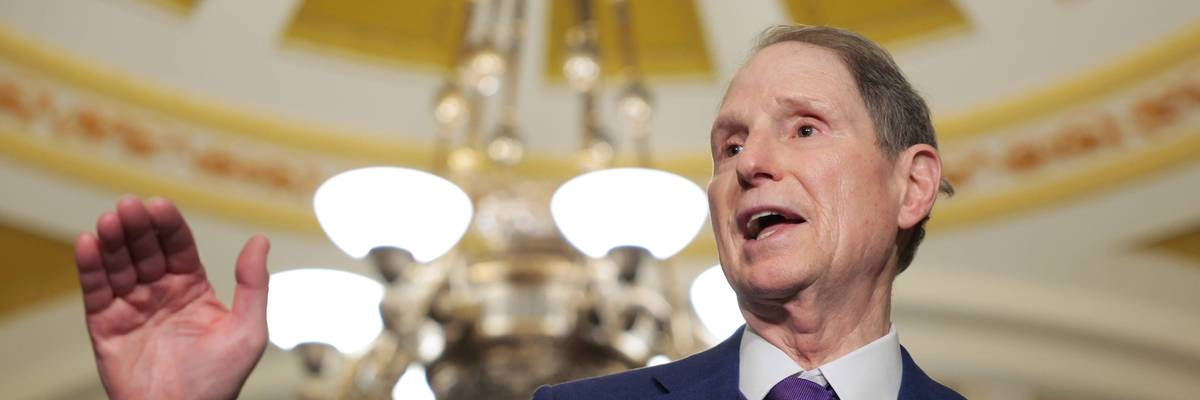
US Sen. Ron Wyden (D-Ore.) speaks to reporters following a Senate Democratic policy luncheon at the US Capitol on December 9, 2025 in Washington, DC.
"When Big Pharma gets richer off the back of a grandmother struggling to pay for cancer medication, the system is broken."
Led by Senate Finance Committee Chair Ron Wyden, four Democratic senators on Wednesday outlined plans to reduce the costs of prescription drugs after President Donald Trump claimed he would do so—only to allow Big Pharma companies to delay negotiating lower prices and secure "zero commitments" from top executives on making lifesaving medications more affordable for millions of Americans.
“There is no greater fraud than Donald J. Trump when it comes to lower drug prices,” Wyden (D-Ore.) said. “Our doors are wide open to anybody who wants to take the bold next step forward on lowering drug costs for Americans."
Along with a "flash report" on Trump's "broken promises" regarding his pledge to bring drug prices down “to levels nobody ever thought was possible," Wyden sent a Dear Colleague letter to Democratic senators regarding his committee's plans to follow through with lowering costs.
"Finance Committee minority staff will dedicate substantial time and effort this year to developing the next generation of healthcare solutions that lower costs for American families," Wyden wrote. "These solutions will rein in Big Pharma’s outrageous price increases, lower costs for consumers, guarantee predictability for patients, and reduce wasteful government spending that pads the profits of big corporations. Alongside the co-signers of this letter, I invite you to be a part of this bold vision."
The letter, co-signed by Sens. Catherine Cortez Masto (D-Nev.), Peter Welch (D-Vt.), and Ruben Gallego (D-Ariz.), notes that "the only concrete drug pricing policy Trump enacted within the past year was a price hike for the biggest blockbuster cancer drugs on Earth, giving an $8.8 billion windfall to the pharmaceutical industry."
In contrast, the senators wrote, the Senate Finance Committee will develop policies to incorporate international pricing models into the Medicare drug price negotiation framework, including by allowing Health and Human Services Secretary Robert F. Kennedy Jr. to consider international prices as a factor or penalize drugmakers when pricing for US customers exceeds international benchmarks.
“Democrats are determined to bring prices down, and we’re willing to work with anyone to find concrete ways to do it."
The committee will also work to end Republican "blockbuster drug bailouts from negotiation," like the ones included in the One Big Beautiful Bill Act that shielded several high-priced drugs—including the cancer drug Keytruda—from Medicare price negotiations.
"The Republican budget bill contained a nearly $9 billion sweetheart deal that benefits the biggest drug companies by delaying or exempting some lifesaving medications from negotiation," reads the Democrats' flash report.
Gallego said that "when Big Pharma gets richer off the back of a grandmother struggling to pay for cancer medication, the system is broken."
"That’s what this is all about: Big Pharma execs sitting in their fancy corner offices profiting off of sick, working-class Americans,” the senator said. “We are not going to accept an America where millions of families live in fear of getting sick and needing to fill a prescription. We are going to fight and fight hard for a healthcare system that does what Donald Trump never did: actually lower costs for working families.”
The lawmakers emphasized that even if manufacturers are forced to lower drug prices, patients are not currently guaranteed to directly benefit, because as much as 45% of the $5.4 trillion the US spends on healthcare annually is "absorbed by middlemen such as insurers, pharmacy benefit managers (PBMs), and drug distributors."
"Healthcare middlemen profit when drug costs are high because they make money off of drug margin or payments that are linked to the price of a drug, ripping off patients who pay more than they should. Medicare Part D and the patients it serves should stop footing the bill for inflated drug prices and instead pay for drugs in a more transparent manner that reduces middleman margin," wrote the senators.
The Finance Committee will develop policies to eliminate abuses in the prescription drug supply chain including "egregious drug price markups," and to ensure that patient cost-sharing on drugs more closely aligns with the costs to plans and PBMs.
Finally, the Democrats said they would work to fix the "unmitigated disaster" that Trump and Kennedy have been "for innovation and drug development," as the administration has proposed slashing the National Institutes of Health budget by 40% and has cut off access to treatment for an estimated 74,000 patients who were enrolled in NIH clinical trials.
The Finance Committee, they said, plans to create new incentives for innovation and drug development, including through the tax code.
In their flash report, the Democrats wrote that while failing to force Big Pharma to the negotiating table to save money for Americans, Trump "has been parading Big Pharma executives through the White House, claiming to be cutting cost-saving deals with these corporations."
"One look under the hood reveals the truth: Trump is giving them a pass on tariffs, while receiving zero commitments about how they will lower costs for taxpayers and patients," they wrote. "Donald Trump is getting fleeced by Big Pharma CEOs, and Americans are going to foot the bill."
Welch said that the president "loves to talk a big game and make promises to working families about lowering prescription drug prices. But in reality, his administration is handling this like a PR problem: They’ve got to keep moving and talking about it, but then do nothing to really address the crisis."
“Democrats are determined to bring prices down, and we’re willing to work with anyone to find concrete ways to do it," said Welch. "We’re going to lower healthcare costs and ensure everyone can access affordable, lifesaving, and pain-relieving medication.”
Dear Common Dreams reader, It’s been nearly 30 years since I co-founded Common Dreams with my late wife, Lina Newhouser. We had the radical notion that journalism should serve the public good, not corporate profits. It was clear to us from the outset what it would take to build such a project. No paid advertisements. No corporate sponsors. No millionaire publisher telling us what to think or do. Many people said we wouldn't last a year, but we proved those doubters wrong. Together with a tremendous team of journalists and dedicated staff, we built an independent media outlet free from the constraints of profits and corporate control. Our mission has always been simple: To inform. To inspire. To ignite change for the common good. Building Common Dreams was not easy. Our survival was never guaranteed. When you take on the most powerful forces—Wall Street greed, fossil fuel industry destruction, Big Tech lobbyists, and uber-rich oligarchs who have spent billions upon billions rigging the economy and democracy in their favor—the only bulwark you have is supporters who believe in your work. But here’s the urgent message from me today. It's never been this bad out there. And it's never been this hard to keep us going. At the very moment Common Dreams is most needed, the threats we face are intensifying. We need your support now more than ever. We don't accept corporate advertising and never will. We don't have a paywall because we don't think people should be blocked from critical news based on their ability to pay. Everything we do is funded by the donations of readers like you. When everyone does the little they can afford, we are strong. But if that support retreats or dries up, so do we. Will you donate now to make sure Common Dreams not only survives but thrives? —Craig Brown, Co-founder |
Led by Senate Finance Committee Chair Ron Wyden, four Democratic senators on Wednesday outlined plans to reduce the costs of prescription drugs after President Donald Trump claimed he would do so—only to allow Big Pharma companies to delay negotiating lower prices and secure "zero commitments" from top executives on making lifesaving medications more affordable for millions of Americans.
“There is no greater fraud than Donald J. Trump when it comes to lower drug prices,” Wyden (D-Ore.) said. “Our doors are wide open to anybody who wants to take the bold next step forward on lowering drug costs for Americans."
Along with a "flash report" on Trump's "broken promises" regarding his pledge to bring drug prices down “to levels nobody ever thought was possible," Wyden sent a Dear Colleague letter to Democratic senators regarding his committee's plans to follow through with lowering costs.
"Finance Committee minority staff will dedicate substantial time and effort this year to developing the next generation of healthcare solutions that lower costs for American families," Wyden wrote. "These solutions will rein in Big Pharma’s outrageous price increases, lower costs for consumers, guarantee predictability for patients, and reduce wasteful government spending that pads the profits of big corporations. Alongside the co-signers of this letter, I invite you to be a part of this bold vision."
The letter, co-signed by Sens. Catherine Cortez Masto (D-Nev.), Peter Welch (D-Vt.), and Ruben Gallego (D-Ariz.), notes that "the only concrete drug pricing policy Trump enacted within the past year was a price hike for the biggest blockbuster cancer drugs on Earth, giving an $8.8 billion windfall to the pharmaceutical industry."
In contrast, the senators wrote, the Senate Finance Committee will develop policies to incorporate international pricing models into the Medicare drug price negotiation framework, including by allowing Health and Human Services Secretary Robert F. Kennedy Jr. to consider international prices as a factor or penalize drugmakers when pricing for US customers exceeds international benchmarks.
“Democrats are determined to bring prices down, and we’re willing to work with anyone to find concrete ways to do it."
The committee will also work to end Republican "blockbuster drug bailouts from negotiation," like the ones included in the One Big Beautiful Bill Act that shielded several high-priced drugs—including the cancer drug Keytruda—from Medicare price negotiations.
"The Republican budget bill contained a nearly $9 billion sweetheart deal that benefits the biggest drug companies by delaying or exempting some lifesaving medications from negotiation," reads the Democrats' flash report.
Gallego said that "when Big Pharma gets richer off the back of a grandmother struggling to pay for cancer medication, the system is broken."
"That’s what this is all about: Big Pharma execs sitting in their fancy corner offices profiting off of sick, working-class Americans,” the senator said. “We are not going to accept an America where millions of families live in fear of getting sick and needing to fill a prescription. We are going to fight and fight hard for a healthcare system that does what Donald Trump never did: actually lower costs for working families.”
The lawmakers emphasized that even if manufacturers are forced to lower drug prices, patients are not currently guaranteed to directly benefit, because as much as 45% of the $5.4 trillion the US spends on healthcare annually is "absorbed by middlemen such as insurers, pharmacy benefit managers (PBMs), and drug distributors."
"Healthcare middlemen profit when drug costs are high because they make money off of drug margin or payments that are linked to the price of a drug, ripping off patients who pay more than they should. Medicare Part D and the patients it serves should stop footing the bill for inflated drug prices and instead pay for drugs in a more transparent manner that reduces middleman margin," wrote the senators.
The Finance Committee will develop policies to eliminate abuses in the prescription drug supply chain including "egregious drug price markups," and to ensure that patient cost-sharing on drugs more closely aligns with the costs to plans and PBMs.
Finally, the Democrats said they would work to fix the "unmitigated disaster" that Trump and Kennedy have been "for innovation and drug development," as the administration has proposed slashing the National Institutes of Health budget by 40% and has cut off access to treatment for an estimated 74,000 patients who were enrolled in NIH clinical trials.
The Finance Committee, they said, plans to create new incentives for innovation and drug development, including through the tax code.
In their flash report, the Democrats wrote that while failing to force Big Pharma to the negotiating table to save money for Americans, Trump "has been parading Big Pharma executives through the White House, claiming to be cutting cost-saving deals with these corporations."
"One look under the hood reveals the truth: Trump is giving them a pass on tariffs, while receiving zero commitments about how they will lower costs for taxpayers and patients," they wrote. "Donald Trump is getting fleeced by Big Pharma CEOs, and Americans are going to foot the bill."
Welch said that the president "loves to talk a big game and make promises to working families about lowering prescription drug prices. But in reality, his administration is handling this like a PR problem: They’ve got to keep moving and talking about it, but then do nothing to really address the crisis."
“Democrats are determined to bring prices down, and we’re willing to work with anyone to find concrete ways to do it," said Welch. "We’re going to lower healthcare costs and ensure everyone can access affordable, lifesaving, and pain-relieving medication.”
Led by Senate Finance Committee Chair Ron Wyden, four Democratic senators on Wednesday outlined plans to reduce the costs of prescription drugs after President Donald Trump claimed he would do so—only to allow Big Pharma companies to delay negotiating lower prices and secure "zero commitments" from top executives on making lifesaving medications more affordable for millions of Americans.
“There is no greater fraud than Donald J. Trump when it comes to lower drug prices,” Wyden (D-Ore.) said. “Our doors are wide open to anybody who wants to take the bold next step forward on lowering drug costs for Americans."
Along with a "flash report" on Trump's "broken promises" regarding his pledge to bring drug prices down “to levels nobody ever thought was possible," Wyden sent a Dear Colleague letter to Democratic senators regarding his committee's plans to follow through with lowering costs.
"Finance Committee minority staff will dedicate substantial time and effort this year to developing the next generation of healthcare solutions that lower costs for American families," Wyden wrote. "These solutions will rein in Big Pharma’s outrageous price increases, lower costs for consumers, guarantee predictability for patients, and reduce wasteful government spending that pads the profits of big corporations. Alongside the co-signers of this letter, I invite you to be a part of this bold vision."
The letter, co-signed by Sens. Catherine Cortez Masto (D-Nev.), Peter Welch (D-Vt.), and Ruben Gallego (D-Ariz.), notes that "the only concrete drug pricing policy Trump enacted within the past year was a price hike for the biggest blockbuster cancer drugs on Earth, giving an $8.8 billion windfall to the pharmaceutical industry."
In contrast, the senators wrote, the Senate Finance Committee will develop policies to incorporate international pricing models into the Medicare drug price negotiation framework, including by allowing Health and Human Services Secretary Robert F. Kennedy Jr. to consider international prices as a factor or penalize drugmakers when pricing for US customers exceeds international benchmarks.
“Democrats are determined to bring prices down, and we’re willing to work with anyone to find concrete ways to do it."
The committee will also work to end Republican "blockbuster drug bailouts from negotiation," like the ones included in the One Big Beautiful Bill Act that shielded several high-priced drugs—including the cancer drug Keytruda—from Medicare price negotiations.
"The Republican budget bill contained a nearly $9 billion sweetheart deal that benefits the biggest drug companies by delaying or exempting some lifesaving medications from negotiation," reads the Democrats' flash report.
Gallego said that "when Big Pharma gets richer off the back of a grandmother struggling to pay for cancer medication, the system is broken."
"That’s what this is all about: Big Pharma execs sitting in their fancy corner offices profiting off of sick, working-class Americans,” the senator said. “We are not going to accept an America where millions of families live in fear of getting sick and needing to fill a prescription. We are going to fight and fight hard for a healthcare system that does what Donald Trump never did: actually lower costs for working families.”
The lawmakers emphasized that even if manufacturers are forced to lower drug prices, patients are not currently guaranteed to directly benefit, because as much as 45% of the $5.4 trillion the US spends on healthcare annually is "absorbed by middlemen such as insurers, pharmacy benefit managers (PBMs), and drug distributors."
"Healthcare middlemen profit when drug costs are high because they make money off of drug margin or payments that are linked to the price of a drug, ripping off patients who pay more than they should. Medicare Part D and the patients it serves should stop footing the bill for inflated drug prices and instead pay for drugs in a more transparent manner that reduces middleman margin," wrote the senators.
The Finance Committee will develop policies to eliminate abuses in the prescription drug supply chain including "egregious drug price markups," and to ensure that patient cost-sharing on drugs more closely aligns with the costs to plans and PBMs.
Finally, the Democrats said they would work to fix the "unmitigated disaster" that Trump and Kennedy have been "for innovation and drug development," as the administration has proposed slashing the National Institutes of Health budget by 40% and has cut off access to treatment for an estimated 74,000 patients who were enrolled in NIH clinical trials.
The Finance Committee, they said, plans to create new incentives for innovation and drug development, including through the tax code.
In their flash report, the Democrats wrote that while failing to force Big Pharma to the negotiating table to save money for Americans, Trump "has been parading Big Pharma executives through the White House, claiming to be cutting cost-saving deals with these corporations."
"One look under the hood reveals the truth: Trump is giving them a pass on tariffs, while receiving zero commitments about how they will lower costs for taxpayers and patients," they wrote. "Donald Trump is getting fleeced by Big Pharma CEOs, and Americans are going to foot the bill."
Welch said that the president "loves to talk a big game and make promises to working families about lowering prescription drug prices. But in reality, his administration is handling this like a PR problem: They’ve got to keep moving and talking about it, but then do nothing to really address the crisis."
“Democrats are determined to bring prices down, and we’re willing to work with anyone to find concrete ways to do it," said Welch. "We’re going to lower healthcare costs and ensure everyone can access affordable, lifesaving, and pain-relieving medication.”