SUBSCRIBE TO OUR FREE NEWSLETTER
Daily news & progressive opinion—funded by the people, not the corporations—delivered straight to your inbox.
5
#000000
#FFFFFF
To donate by check, phone, or other method, see our More Ways to Give page.
Daily news & progressive opinion—funded by the people, not the corporations—delivered straight to your inbox.
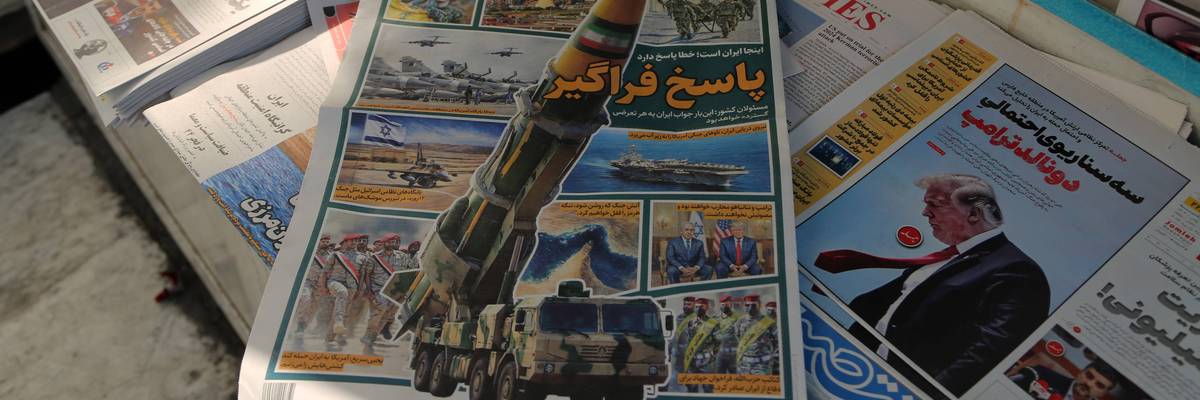
Newspapers in Iran's capital, Tehran, prominently featured statements by US President Donald Trump suggesting that military options against Iran could be considered following interventions in protests across the country on January 28, 2026.
"This isn’t about the nukes or the missile program. This is about regime change," a former senior intelligence official told Drop Site News.
Senior officials in the US military have told a key Middle East ally that President Donald Trump may strike Iran as soon as this weekend, as part of an operation that may seek to decapitate the Islamic Republic's government, according to a report published Friday by Drop Site News.
While the Trump administration reportedly envisions attacks against nuclear, ballistic, and other military sites around Iran, a former senior US intelligence official who is acting as an informal advisor to Trump told the outlet: "This isn’t about the nukes or the missile program. This is about regime change."
As Iran has been roiled by the largest wave of protests since the Islamic Revolution in 1979, Trump has repeatedly threatened to launch strikes, which he has claimed would be in retaliation for the nation's security forces killing demonstrators.
While counts vary widely, the US-based Human Rights Activists News Agency reported Friday that Iranian security forces have killed more than 6,000 protesters in a brutal crackdown that has largely quelled the unrest seen earlier this month.
According to the senior official, who has worked as a consultant for Arab governments, Trump's war planners hope that a strike on the Islamic Revolutionary Guard Corps (IRGC) would galvanize Iranians to return to the streets and eventually deliver a knockout blow to their government.
He said that Israeli Prime Minister Benjamin Netanyahu, who has long sought to push the US to engage in direct conflict with Iran, “is hoping for an attack,” and is “assuring Trump that Israel can help put in place a new government that is friendly with the West.”
In the Oval Office on Friday, Trump told reporters that the US has a “large armada, flotilla, call it whatever you want, heading towards Iran right now." He said that the armada was "larger than Venezuela," referring to the buildup of ships leading up to the US invasion of the Latin American country earlier this month to overthrow its president, Nicolás Maduro.
According to Drop Site, two senior intelligence officials from an unnamed Arab country said they received word that a US attack could come “imminently," potentially as soon as Sunday.
Brigadier General Mohammad Akraminia, Iran’s military spokesperson, in an interview on Iranian TV on Thursday, said that a strike against Iran would likely play out very differently from the one launched in June against three Iranian nuclear sites. Iran's response was limited: an attack on a single US military base in Qatar, which it telegraphed beforehand.
“If such a miscalculation is made by the Americans, it will certainly not unfold the way Trump imagines—carrying out a quick operation and then, two hours later, tweeting that the operation is over,” Akraminia said.
“The scope of war will certainly extend across the entire region, he added. "From the Zionist regime to countries that host American military bases, all will be within range of our missiles and drones.”
Trump has said "time is running out" for Iran to come to the table to negotiate a new nuclear agreement with the United States, one with much more stringent restrictions than the one the president ripped up in 2018.
According to the New York Times:
US and European officials say that in talks, they have put three demands in front of the Iranians: a permanent end to all enrichment of uranium and disposal of its current stockpiles, limits on the range and number of their ballistic missiles, and an end to all support for proxy groups in the Middle East, including Hamas, Hezbollah and the Houthis operating in Yemen.
As the Times pointed out, "Notably absent from those demands... was any reference to protecting the protesters."
Iranian Foreign Minister Abbas Araghchi stated on Friday that Tehran would “welcome negotiations that ensure Iran’s right to peaceful nuclear activity” and that it would not “negotiate anything related to our conventional arms, including missiles. This is something we cannot risk.”
He said Iran would not agree to any deal that halts uranium enrichment on its soil, which it has said it has the right to pursue under the terms of the Nuclear Nonproliferation Treaty (NPT). "We do not want to enter into any kind of negotiation that is doomed to failure and can then be used as another pretext for another war," he told Al-Monitor.
Speaking to reporters at the White House on Friday, Trump said Iran “wants to make a deal” but did not elaborate on what that meant. “We’ll see what happens. I can say this: They do want to make a deal."
Mohamed ElBaradei, former director general of the United Nations' International Atomic Energy Agency, has condemned Trump's threats.
"The continued unilateral threats of a military strike against Iran in the absence of any clear and present danger and in violation of international law, bring to mind the same grim scene before the illegal and immoral Iraq war with its lies and horrifying consequences," he wrote on social media. "Human life and regional destruction don’t seem to matter."
Dear Common Dreams reader, It’s been nearly 30 years since I co-founded Common Dreams with my late wife, Lina Newhouser. We had the radical notion that journalism should serve the public good, not corporate profits. It was clear to us from the outset what it would take to build such a project. No paid advertisements. No corporate sponsors. No millionaire publisher telling us what to think or do. Many people said we wouldn't last a year, but we proved those doubters wrong. Together with a tremendous team of journalists and dedicated staff, we built an independent media outlet free from the constraints of profits and corporate control. Our mission has always been simple: To inform. To inspire. To ignite change for the common good. Building Common Dreams was not easy. Our survival was never guaranteed. When you take on the most powerful forces—Wall Street greed, fossil fuel industry destruction, Big Tech lobbyists, and uber-rich oligarchs who have spent billions upon billions rigging the economy and democracy in their favor—the only bulwark you have is supporters who believe in your work. But here’s the urgent message from me today. It's never been this bad out there. And it's never been this hard to keep us going. At the very moment Common Dreams is most needed, the threats we face are intensifying. We need your support now more than ever. We don't accept corporate advertising and never will. We don't have a paywall because we don't think people should be blocked from critical news based on their ability to pay. Everything we do is funded by the donations of readers like you. When everyone does the little they can afford, we are strong. But if that support retreats or dries up, so do we. Will you donate now to make sure Common Dreams not only survives but thrives? —Craig Brown, Co-founder |
Senior officials in the US military have told a key Middle East ally that President Donald Trump may strike Iran as soon as this weekend, as part of an operation that may seek to decapitate the Islamic Republic's government, according to a report published Friday by Drop Site News.
While the Trump administration reportedly envisions attacks against nuclear, ballistic, and other military sites around Iran, a former senior US intelligence official who is acting as an informal advisor to Trump told the outlet: "This isn’t about the nukes or the missile program. This is about regime change."
As Iran has been roiled by the largest wave of protests since the Islamic Revolution in 1979, Trump has repeatedly threatened to launch strikes, which he has claimed would be in retaliation for the nation's security forces killing demonstrators.
While counts vary widely, the US-based Human Rights Activists News Agency reported Friday that Iranian security forces have killed more than 6,000 protesters in a brutal crackdown that has largely quelled the unrest seen earlier this month.
According to the senior official, who has worked as a consultant for Arab governments, Trump's war planners hope that a strike on the Islamic Revolutionary Guard Corps (IRGC) would galvanize Iranians to return to the streets and eventually deliver a knockout blow to their government.
He said that Israeli Prime Minister Benjamin Netanyahu, who has long sought to push the US to engage in direct conflict with Iran, “is hoping for an attack,” and is “assuring Trump that Israel can help put in place a new government that is friendly with the West.”
In the Oval Office on Friday, Trump told reporters that the US has a “large armada, flotilla, call it whatever you want, heading towards Iran right now." He said that the armada was "larger than Venezuela," referring to the buildup of ships leading up to the US invasion of the Latin American country earlier this month to overthrow its president, Nicolás Maduro.
According to Drop Site, two senior intelligence officials from an unnamed Arab country said they received word that a US attack could come “imminently," potentially as soon as Sunday.
Brigadier General Mohammad Akraminia, Iran’s military spokesperson, in an interview on Iranian TV on Thursday, said that a strike against Iran would likely play out very differently from the one launched in June against three Iranian nuclear sites. Iran's response was limited: an attack on a single US military base in Qatar, which it telegraphed beforehand.
“If such a miscalculation is made by the Americans, it will certainly not unfold the way Trump imagines—carrying out a quick operation and then, two hours later, tweeting that the operation is over,” Akraminia said.
“The scope of war will certainly extend across the entire region, he added. "From the Zionist regime to countries that host American military bases, all will be within range of our missiles and drones.”
Trump has said "time is running out" for Iran to come to the table to negotiate a new nuclear agreement with the United States, one with much more stringent restrictions than the one the president ripped up in 2018.
According to the New York Times:
US and European officials say that in talks, they have put three demands in front of the Iranians: a permanent end to all enrichment of uranium and disposal of its current stockpiles, limits on the range and number of their ballistic missiles, and an end to all support for proxy groups in the Middle East, including Hamas, Hezbollah and the Houthis operating in Yemen.
As the Times pointed out, "Notably absent from those demands... was any reference to protecting the protesters."
Iranian Foreign Minister Abbas Araghchi stated on Friday that Tehran would “welcome negotiations that ensure Iran’s right to peaceful nuclear activity” and that it would not “negotiate anything related to our conventional arms, including missiles. This is something we cannot risk.”
He said Iran would not agree to any deal that halts uranium enrichment on its soil, which it has said it has the right to pursue under the terms of the Nuclear Nonproliferation Treaty (NPT). "We do not want to enter into any kind of negotiation that is doomed to failure and can then be used as another pretext for another war," he told Al-Monitor.
Speaking to reporters at the White House on Friday, Trump said Iran “wants to make a deal” but did not elaborate on what that meant. “We’ll see what happens. I can say this: They do want to make a deal."
Mohamed ElBaradei, former director general of the United Nations' International Atomic Energy Agency, has condemned Trump's threats.
"The continued unilateral threats of a military strike against Iran in the absence of any clear and present danger and in violation of international law, bring to mind the same grim scene before the illegal and immoral Iraq war with its lies and horrifying consequences," he wrote on social media. "Human life and regional destruction don’t seem to matter."
Senior officials in the US military have told a key Middle East ally that President Donald Trump may strike Iran as soon as this weekend, as part of an operation that may seek to decapitate the Islamic Republic's government, according to a report published Friday by Drop Site News.
While the Trump administration reportedly envisions attacks against nuclear, ballistic, and other military sites around Iran, a former senior US intelligence official who is acting as an informal advisor to Trump told the outlet: "This isn’t about the nukes or the missile program. This is about regime change."
As Iran has been roiled by the largest wave of protests since the Islamic Revolution in 1979, Trump has repeatedly threatened to launch strikes, which he has claimed would be in retaliation for the nation's security forces killing demonstrators.
While counts vary widely, the US-based Human Rights Activists News Agency reported Friday that Iranian security forces have killed more than 6,000 protesters in a brutal crackdown that has largely quelled the unrest seen earlier this month.
According to the senior official, who has worked as a consultant for Arab governments, Trump's war planners hope that a strike on the Islamic Revolutionary Guard Corps (IRGC) would galvanize Iranians to return to the streets and eventually deliver a knockout blow to their government.
He said that Israeli Prime Minister Benjamin Netanyahu, who has long sought to push the US to engage in direct conflict with Iran, “is hoping for an attack,” and is “assuring Trump that Israel can help put in place a new government that is friendly with the West.”
In the Oval Office on Friday, Trump told reporters that the US has a “large armada, flotilla, call it whatever you want, heading towards Iran right now." He said that the armada was "larger than Venezuela," referring to the buildup of ships leading up to the US invasion of the Latin American country earlier this month to overthrow its president, Nicolás Maduro.
According to Drop Site, two senior intelligence officials from an unnamed Arab country said they received word that a US attack could come “imminently," potentially as soon as Sunday.
Brigadier General Mohammad Akraminia, Iran’s military spokesperson, in an interview on Iranian TV on Thursday, said that a strike against Iran would likely play out very differently from the one launched in June against three Iranian nuclear sites. Iran's response was limited: an attack on a single US military base in Qatar, which it telegraphed beforehand.
“If such a miscalculation is made by the Americans, it will certainly not unfold the way Trump imagines—carrying out a quick operation and then, two hours later, tweeting that the operation is over,” Akraminia said.
“The scope of war will certainly extend across the entire region, he added. "From the Zionist regime to countries that host American military bases, all will be within range of our missiles and drones.”
Trump has said "time is running out" for Iran to come to the table to negotiate a new nuclear agreement with the United States, one with much more stringent restrictions than the one the president ripped up in 2018.
According to the New York Times:
US and European officials say that in talks, they have put three demands in front of the Iranians: a permanent end to all enrichment of uranium and disposal of its current stockpiles, limits on the range and number of their ballistic missiles, and an end to all support for proxy groups in the Middle East, including Hamas, Hezbollah and the Houthis operating in Yemen.
As the Times pointed out, "Notably absent from those demands... was any reference to protecting the protesters."
Iranian Foreign Minister Abbas Araghchi stated on Friday that Tehran would “welcome negotiations that ensure Iran’s right to peaceful nuclear activity” and that it would not “negotiate anything related to our conventional arms, including missiles. This is something we cannot risk.”
He said Iran would not agree to any deal that halts uranium enrichment on its soil, which it has said it has the right to pursue under the terms of the Nuclear Nonproliferation Treaty (NPT). "We do not want to enter into any kind of negotiation that is doomed to failure and can then be used as another pretext for another war," he told Al-Monitor.
Speaking to reporters at the White House on Friday, Trump said Iran “wants to make a deal” but did not elaborate on what that meant. “We’ll see what happens. I can say this: They do want to make a deal."
Mohamed ElBaradei, former director general of the United Nations' International Atomic Energy Agency, has condemned Trump's threats.
"The continued unilateral threats of a military strike against Iran in the absence of any clear and present danger and in violation of international law, bring to mind the same grim scene before the illegal and immoral Iraq war with its lies and horrifying consequences," he wrote on social media. "Human life and regional destruction don’t seem to matter."