

SUBSCRIBE TO OUR FREE NEWSLETTER
Daily news & progressive opinion—funded by the people, not the corporations—delivered straight to your inbox.
5
#000000
#FFFFFF
To donate by check, phone, or other method, see our More Ways to Give page.
Daily news & progressive opinion—funded by the people, not the corporations—delivered straight to your inbox.
Matt Johnson, matt@directactioneverywhere.com, 319.464.5985
Over 600 activists with the animal rights network Direct Action Everywhere (DxE) are marching to a massive duck slaughterhouse (FACEBOOK LIVE), with dozens planning to lock their necks to the slaughterhouse shackles and other machinery. The facility, which has ties to farm-to-table pioneer Alice Waters and slaughters 1 million ducks annually, has been the subject of numerous reports of animal cruelty, including birds with gaping wounds and collapsed on the wire floor. Despite these complaints -- and damning opinions by a prominent veterinarian and a former federal prosecutor -- local authorities have failed to take action against the company. The activists, who donned veterinarian-approved biosecurity gear as they entered the facility to give aid to sick and injured animals, say their actions are a necessary response to a pattern of corporate and government misconduct.
"The conditions are not normal, accepted industry practice," former assistant US Attorney Bonnie Klapper, who reviewed undercover footage and veterinarian reports regarding the facility, said. "They are evidence of severe neglect and lack of treatment rising to the level of animal cruelty."
Former Baywatch actress Alexandra Paul will attempt to negotiate for the rescue of any animals in need of medical care.
In the past year, dozens of activists have been arrested and charged in relation to nonviolent animal rights activism in Sonoma County. The activists say the prosecutions, which have been pushed by elected officials who take donations from agribusiness interests, are examples of the improper use of government resources to defend corporate interests. Now both a prominent criminal law scholar, UC Hastings scholar Hadar Aviram, and former federal prosecutor agree.
"When law enforcement has become aware of the existence of animal cruelty, its response has not been to address [it]," Klapper said. "To the contrary, the response has been to hunt down and arrest the rescuers and even attempt to return the injured, sick, dying animals to the agricultural facility."
The nonviolent protest of the massive duck farm, which was previously investigated by the animal rights group Mercy for Animals in 2014, is merely the latest instance of activists taking direct action to address the cruelty of Sonoma County factory farms. In September 2018, 58 activists were arrested on felony charges for attempting to give aid to starving animals at a farm supplying Petaluma Poultry, part of the largest organic chicken producer in the nation. Despite internal government reports showing downed and starving animals at the facility, District Attorney Jill Ravitch declined to prosecute the company -- and instead charged the activists with dozens of felonies.
"The government is protecting powerful corporate interests, even where those companies are engaged in unlawful, fraudulent, and tortuous practices," DxE co-founder and former law professor Wayne Hsiung, a defendant in the Petaluma Poultry case, said. "We're merely asking the elected officials in Sonoma County to enforce the law -- including against animal-abusing corporations."
The undue influence of animal agriculture, activists say, has led to lax regulation, the non-enforcement of animal cruelty laws, and the criminalization of acts of compassion towards animals. Now, the activists say, a grassroots movement is rising to challenge that abuse.
Investigators with Direct Action Everywhere (DxE) enter farms, slaughterhouses, and other agricultural facilities to document abuses and rescue sick and injured animals. DxE's investigatory work has been featured in The New York Times, Nightline, and a viral Glenn Greenwald expose, and DxE activists led the recent effort to ban fur products in San Francisco. Activists have been
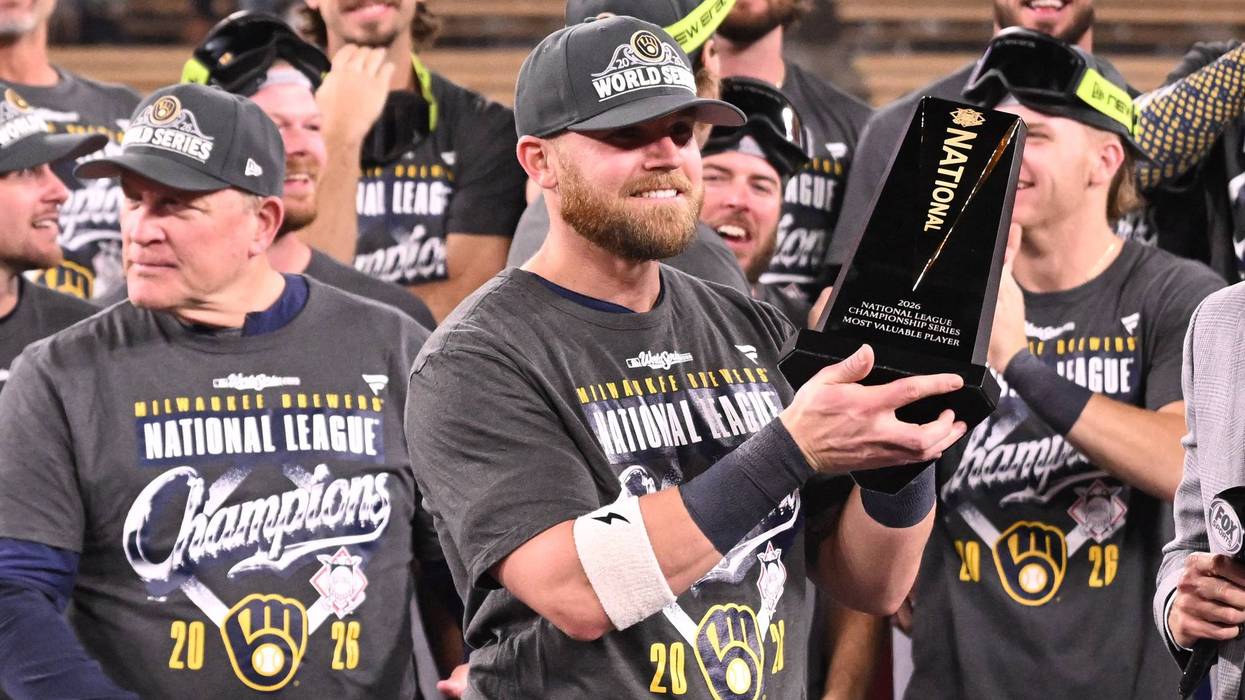
"If even a professional athlete is saying this, maybe healthcare should just be universal and free."
First baseman Jake Bauers of the Milwaukee Brewers helped his team end a 44-year drought Thursday night as they won the National League Championship Series to place them in the World Series, but in the process he kicked off a discussion—whether intentionally or not—about the role of employer-based health insurance that undergirds the for-profit system in the US.
While generating headlines throughout the pennant race due to his outstanding hitting and field play, Bauers' journey to the top of Major League Baseball has Cinderella elements. Just two years ago, the Wall Street Journal reported Thursday, Bauers was ready to retire from the sport's highest level.
"He had been playing professional baseball since he was just 17, spending more than a decade bouncing across seven different organizations with little success," the paper reported. "After batting .199 for the Milwaukee Brewers in 2024, he was frustrated, burned out, and ready to move on.”
Life outside of baseball intervened, however, but in a way that is familiar to millions of American families, not just those of pro athletes who can garner millions in lucrative contracts and endorsement deals.
“Bauers’ wife, Lauren, learned she was pregnant with the couple’s second child," the WSJ explained. "Suddenly, Jake’s plan to become a stay-at-home dad while Lauren returned to her teaching job no longer seemed viable. They needed health insurance—so Bauers begrudgingly decided to give his floundering athletic career one last chance."
After battling the Los Angeles Dodgers to a defeat on Wednesday, taking a 3-0 lead in the series his team would ultimately win in a clean sweep the following night, Bauers brought up that decision regarding his second child and his family's healthcare needs in a post-game interview.
Hahaha! What an awesome country! https://t.co/IYJmu5ZP0y
— Darkwoke Duck (@DylanTweetin) October 15, 2026
While the group of sportscasters conducting the interview laughed about the explanation, others who witnessed Bauer's explanation recognized something more profound in what he described.
"If even a professional athlete is saying this, maybe healthcare should just be universal and free," said Luke Savage, a columnist for the left-wing magazine Jacobin.
In a subsequent Substack post published Thursday, Savage expanded on his thoughts about Bauer's situation, writing:
This obviously doesn’t rank anywhere near the top when it comes to horror stories about America’s healthcare system, but I still can’t get over how completely insane it is to hear. This is an elite professional athlete talking! And it’s the guaranteed outcome of a system that links health insurance so tightly to employment. In this case, that meant that a young couple’s desire to start a family was conditional on [squints] the ability of one partner to secure a contract with a professional baseball team (and, to a lesser extent, be good enough at the sport to work his way back up from the minors).
There are only so many ways to repeat the obvious here, but tying health insurance to employment is a Dickensian horror show. It gives employers tremendous power over their workers and forces people to stay in jobs they hate or want to leave. The same is true of private health care in general. It devastates families, burdens them with crippling medical debt, and limits their ability to have children. It stops them from seeking treatment when they’re sick and makes going to the hospital an economic decision. Even among those who can afford insurance, it creates different tiers of care and inevitably means that rich people get it faster and at higher quality — which is just another way of saying the American healthcare system ascribes your life greater or lesser moral weight depending on your bank balance.
Wendell Potter, a former health insurance executive turned whistleblower who now leads the nonprofit Center for Health & Democracy, agreed that Bauers, though his status as a professional athlete makes his situation seem exceptional, is incredibly normal within the nation's broken healthcare system.
"Sometimes it takes a high-profile sports figure or celebrity to help Americans understand how absurd and unfair our healthcare system is," Potter explained to Common Dreams. "If Jake Bauers did everything he could to stay in baseball primarily because he and his wife were terrified of losing health insurance that was tied to his job, imagine how many other Americans stay in jobs they would leave if it weren’t for their employer-sponsored coverage."
While Bauers may have been lucky to stay in the major leagues, said Potter, and even luckier to help his team make it to the World Series, the reality is that he—like millions of American workers—could have potentially been cut at any time, losing his job and his access to the health coverage he received through his employer.
"Millions of Americans are not so lucky. Many get laid off or have their jobs eliminated," Potter continued. "They lose not only their jobs but their family’s health insurance. No other developed country has a system in which their citizens are locked into a job they’d like to leave or are scared to death of losing. I wish more prominent people in sports and entertainment would speak up as Bauer did about how vulnerable so many of us are to losing both our jobs and our health insurance."
"The reality," said Potter on Friday, "is that almost all Americans who are not covered by traditional Medicare are in danger of losing our health benefits and access to care because of a layoff or cuts to Medicaid that force millions into the ranks of the uninsured."
In 2019, a Business Insider poll showed that most Americans with employer-sponsored health coverage support switching over to Medicare for All, undermining the often repeated right-wing narrative that the US workers are wedded to the for-profit insurance plans provided to them.
As Common Dreams reported at the time, the survey showed that 59% of respondents who have employer-provided insurance “said they would support switching their employer-based health insurance to a government plan under Medicare for All” as long as the quality of their coverage was maintained or improved.
In a post on his Health Care Un-Covered blog last month, Potter detailed how nearly 40% of Americans admit they’ve stayed in a job longer than they wanted for the very specific reason that they or a family member needed the health coverage that came with it. The term for this dynamic is called "job lock," he notes. And nothing about this "is new to anyone who’s been paying attention," he writes. "What’s changed is how much sharper and more current the evidence has gotten" in recent years.
While there was nothing political or partisan in the way Bauer has shared his story about healthcare, the fact of the matter is that the scale of the employer-based system in the US is deeply tied to the anxieties that individuals and families experience. With Republicans actively undermining and attacking the floundering system that already exists, Savage in his column bemoans leaders from both parties who fail to embrace what has long been recognized by experts and progressives as the only viable solution to the crises: a universal, single-payer model best expressed by the Medicare for All legislation put forth by Sen. Bernie Sanders (I-Vt.) in the US Senate and Rep. Pramila Jayapal and others in the US House.
Exasperated by a political system that has denied US workers and families a better healthcare system, Savage asks the question: "What does one even say at this point?"
The so-called "debate" over healthcare system in the US, he said, "is nothing of the kind."
"The leaderships of both major parties oppose healthcare that’s free, universal, and public because they’re as addicted to dead market dogmas as they are to donations from a powerful industry," he writes. "The dumbest people alive will tell you that healthcare is best delivered by the marketplace and that the ability to purchase it as a commodity like any other is, in fact, the essence of freedom. Nothing could be further from the truth."
In his column from last month, Potter notes that critics of the employer-based system have long existed on the ideological right and left and argues that as long as health coverage remains "tethered to a single employer, job lock isn’t a glitch in the system," but rather "the system working as designed."
"The fact that people across the political spectrum have recognized that for decades," he concludes, "is exactly why it’s worth pressing the case again now."
Go Brewers!

“Unfortunately, I know very well that none of them will be prosecuted for what they have done and continue to do,” she said.
A gang of masked Israeli settlers brutalized a Washington Post journalist on Friday while they attacked Palestinian olive farmers and set fire to their grove in the occupied West Bank—the latest in an escalating series of state-backed terrorist attacks amid the Palestinian olive-growing season.
Roughly 80 masked men from a nearby hilltop settlement descended upon an olive grove near the village of Abu Falah, north of Ramallah. Video shows them hurling rocks and torching olive trees as Palestinian families fled downhill.
Gunfire could be heard, and at least two Palestinian men were reportedly wounded in the attack. Four more were reportedly hurt in separate attacks nearby.
Documenting the attack was 63-year-old Heidi Levine, an award-winning American photojournalist with the Post who has more than four decades of experience covering wars around the world.
Amid the rampage, Levine—clad in a helmet and a vest with a bright blue "PRESS" marker—was knocked to the dirt by a group of masked settlers, according to video posted by the American journalist Jasper Nathaniel, who was on the scene.
Another video shared by Israeli activist and journalist Andrey Khrzhanovskiy shows one of the settlers repeatedly beating Levine with a long stick while she lies on the ground defenseless. Levine later said she was kicked approximately 50 times and that the attackers took all of her recording equipment and other electronic devices.
Palestinian men reportedly threw stones to ward off the attackers, allowing other journalists to reach Levine.
A video shows Nathaniel, Khrzhanovskiy, and others rushing to a bloodied Levine and helping her to her feet. "They took everything," she said. "They took all my stuff." More Israeli settlers hurled rocks at them as they fled the scene.
Levine was taken to a hospital in Ramallah after Palestinian colleagues helped her get an ambulance. From her hospital bed, she spoke about the attack.
"My son Michael has always told me that his biggest fear would be that his mother would be killed by the settlers," Levine said, noting that she'd covered the Israel-Palestine conflict for more than three decades and also been attacked 15 years ago.
"I was attacked, pushed to the ground," she said. "Luckily I had my flak jacket and helmet; otherwise I probably wouldn’t even be here, because they just kept kicking me and kicking me."
Levine, who is Jewish by birth, described the attackers as "Jewish terrorists" who "are giving everyone in the country a horrible reputation."
"I don't know how a parent could raise such monsters," she said.
"While we are relieved that Heidi has received medical care and is safe," said Washington Post executive editor Matt Murray in a statement Friday morning, "we are outraged by this unwarranted attack on a journalist doing her job and urge a thorough investigation and follow-through from authorities.”
Levine, however, said she was confident that her attackers would never face justice. "Sadly, none of them will be prosecuted," she told reporters. "I am sure of it.”
Particularly in recent years, under a far-right government that has accelerated the expansion of illegal settlements, settlers almost never face legal consequences for violent attacks.
A Guardian investigation found that from 2020 to 2025, more than 96% of police investigations into settler violence concluded without indictments, and only 2% resulted in convictions. Since 2020, despite dozens of fatal attacks, only one Israeli has been charged with killing a Palestinian in the West Bank.
"This violence does not happen in a vacuum. Israel enables it."
Lt. Col. Ariella Mazor, chief international spokesperson for the Israel Defense Forces, told the Post that the incident is under investigation by the IDF and claimed the military had sent battalions to the West Bank to contain the outbreak of violence.
However, according to eyewitnesses, the Israeli military itself was reportedly involved in the attack on the village, firing tear gas at the Palestinians. Soldiers reportedly drove military jeeps through the olive groves and stood beside settlers rather than dispersing them.
Israeli activist Oren Ziv told the Post, “The army did nothing to stop the settlers."
This has been the case in many of the more than 1,600 documented attacks that have occurred over the first eight months of the year—during which at least 23 Palestinians were killed and over 1,100 injured, according to the United Nations.
 Israeli army soldiers stand behind a masked man swinging a slingshot while hurling stones at Palestinians who had gathered for the annual olive harvest season, during an attack by Israeli settlers on the Palestinian village of Beita, south of Nablus in the occupied West Bank, on October 10, 2025. (Photo by Jaafar Ashtiyeh/AFP via Getty Images)
Investigations by Amnesty International and Human Rights Watch have documented soldiers standing by as settlers attack Palestinians and destroy their property, shielding settlers from Palestinians attempting to defend themselves, and sometimes directly participating in attacks. Israeli authorities have also armed thousands of settlers and incorporated many into military units.
Israel's Foreign Press Association, which independently provided video of settlers brutalizing Levine, said it had repeatedly warned Israeli authorities about threats to foreign journalists working in the West Bank. "Our repeated calls for action to confront this lawlessness have been ignored," the group said.
"You can see the settlers who attacked Heidi Levine," said Breaking the Silence, a human rights group led by Israeli veterans. "But what you can’t see is the state behind them: a state that funds them, arms them, and, above all, grants them near-total impunity for their actions. This violence does not happen in a vacuum. Israel enables it."
At least nine Americans have been killed by Israeli settlers or security forces in the West Bank since January 2022, while numerous others have been injured—including journalists, human rights activists, and Palestinian Americans visiting family.
Members of Congress have requested information from the State Department about Israeli settler attacks on Americans, but have found themselves stonewalled by Trump administration officials.
Neri Zilber, a journalist and adviser to the US-based Israel Policy Forum, noted the lack of response from American institutions to the surge of settler terrorism.
"This happens every day in the West Bank. Every single day," he wrote on social media. "Palestinians attacked, journalists attacked, Israeli and foreign observers attacked. When is the IDF going to start taking this seriously? And where is the US Embassy and Trump administration?"
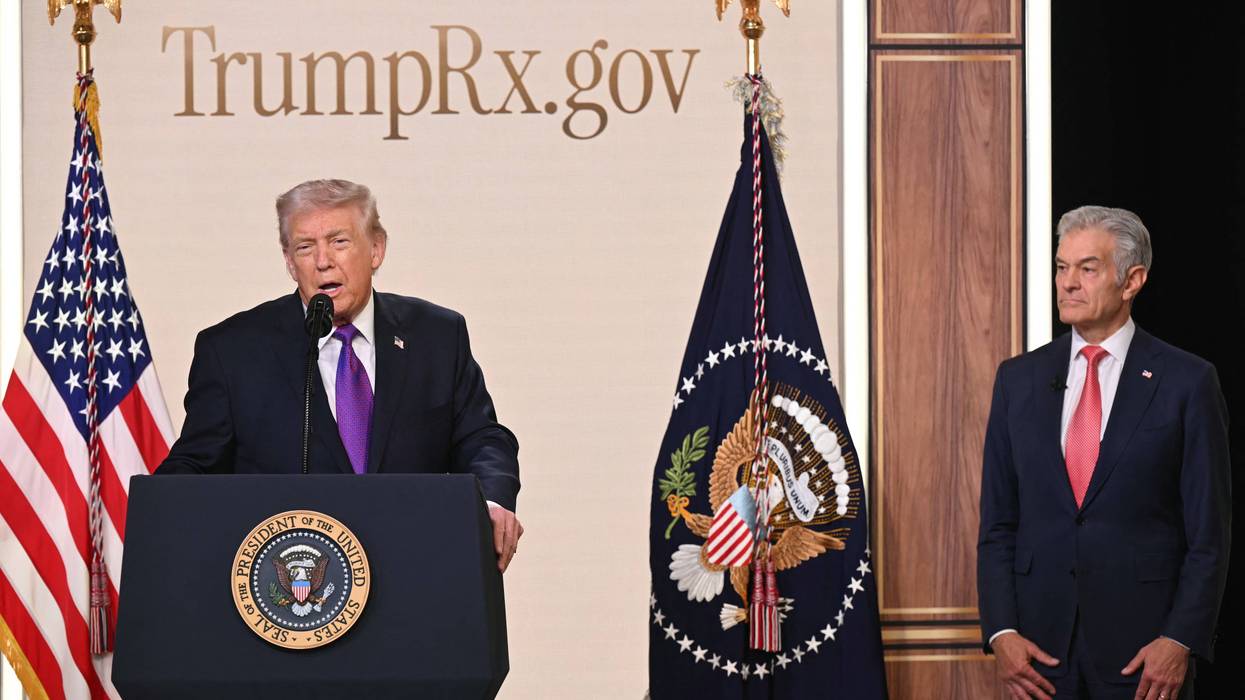
"Trump and congressional Republicans intentionally force seniors to pay more for cancer treatment so that Big Pharma can rake in more money that Trump can personally profit from."
An analysis released Friday by Democrats on the congressional Joint Economic Committee details how US President Donald Trump loaded up on shares of major pharmaceutical companies last year as his administration and Republican allies enacted policies that benefited the industry—at the expense seniors and other patients.
The JEC analysis estimates that Trump increased his stock holdings in the pharmaceutical sector from $1.7 million in 2024 to as much as $56.2 million last year. The committee notes that Trump, who has repeatedly promised to cut drug prices while implementing policies that raised them, "held as much as $39.1 million in stock in the same Big Pharma companies that directly benefited" from a budget package that the president signed into law last summer.
“Trump and congressional Republicans intentionally force seniors to pay more for cancer treatment so that Big Pharma can rake in more money that Trump can personally profit from," said Sen. Maggie Hassan (D-NH), the JEC's ranking member. "It’s outrageous and yet typical from this president, who makes the American people foot the bill again and again for his own gains."
Tucked in the Trump-GOP budget law was a provision exempting some widely used, high-priced prescription drugs from Medicare price negotiations. Merck's cancer medication Keytruda was one of the drugs temporarily shielded by the provision; Merck appears more than 60 times in the president's 2025 financial disclosure.
The JEC analysis notes that "in 2025, Merck reported $18.8 billion in US revenues for Keytruda, which helped the company net $22.5 billion in profits that year, a 16% increase compared to 2024."
The president also made big purchases of stock in Johnson & Johnson, AbbVie, Pfizer, and Amgen last year. The JEC found that each of those companies "had at least one drug that benefited from the carveouts" in the Trump-GOP budget law.
Additionally, the Trump administration has entered friendly agreements with pharmaceutical companies in which the president is invested, including Pfizer and Eli Lilly.
“Trump’s drug pricing deals are a mirage, designed to convince Americans that he’s taken significant action on drug pricing while creating minimal if any downside for Big Pharma,” Peter Maybarduk, access to medicines director for the consumer advocacy group Public Citizen, said last month after his organization obtained heavily redacted texts of the agreements.
"The texts show Trump handing out favors to Big Pharma, undercutting his own models to lower prices, and throwing the support of the US government behind corporate decisions to deny medicines entirely to other countries," said Maybarduk.

"How does democracy function when one person can donate $150 million for one Senate race?" said one observer.
The world's richest man is spending an unprecedented sum of money to help Texas Attorney General Ken Paxton win a crucial US Senate race, according to Federal Election Commission filings disclosed Thursday.
As reported by the Texas Tribune, the filings show SpaceX CEO Elon Musk in September gave $158 million to the Senate Leadership Fund (SLF), the largest super PAC dedicated to defending Republicans' majority in the US Senate.
While the donation to SLF theoretically could have been directed toward any GOP Senate candidate, filings show the super PAC immediately plugged the Musk money into an entity called Texas PAC, which took to the air with advertisements praising Paxton and attacking Democratic rival James Talarico.
"Musk’s donations armed Senate Republicans to take over the airwaves in Texas," the Texas Tribune noted. "Using Texas PAC as the vessel to book airtime, SLF has thus far spent over $159 million on TV, radio, and digital advertising, double the outlay from Talarico’s campaign, according to media tracking firm AdImpact."
Polls have consistently shown Paxton trailing Talarico, whose campaign has raised an estimated $134.3 million from 1.3 million individual donors, 97% of whom donated $100 or less to the Texas Democrat.
This means that, in just one month, Musk singlehandedly gave Paxton more money than Talarico's campaign has raised since its inception in September 2025.
The sheer scale of Musk's contributions stunned Punchbowl News co-founder John Bresnahan.
"How does democracy function when one person can donate $150 million for one Senate race?" Bresnahan asked in a Thursday social media post. "In a state where one of his companies has major facilities?"
Melanie D'Arrigo, executive director of the Campaign for New York Health, indirectly answered Bresnahan's question by opining that Musk's attempt to buy an election shows "billionaires aren’t compatible with democracy."
Author EW Niedermeyer, a longtime critic of Musk, speculated that the billionaire moved his companies' operations from California to Texas so that he could "buy people like Ken Paxton wholesale."
Princeton historian Kevin Kruse argued that Talarico's campaign could turn Musk's massive intervention in the Senate race into an advantage.
"I'm begging James Talarico to run against Musk," Kruse wrote. "He's an unpopular and creepy white nationalist asshole billionaire whose approval rating in most polls is 20 points underwater. You can mock Paxton for needing to be bailed out and mock the puppet master pulling his strings."
Ron Filipkowski, editor-in-chief of MeidasTouch, pointed to the stark contrast in how the Talarico and Paxton campaigns are being funded.
"It’s corrupt Ken Paxton and his sugar daddy oligarch Elon Musk versus Talarico and tens of thousands of people giving $10 to $100," Filipkowski wrote. "Choose your brand of democracy."
Lisa Gilbert, co-president of Public Citizen, said the Musk donation shows a desperate need to completely overhaul the US campaign finance system.
"The current state of our campaign finance system allows one billionaire to supply the overwhelming share of a major party’s political funding," Gilbert said. "This is undemocratic and flat-out wrong. America should be a nation where the voices of regular people are heard just as loudly as the ultrawealthy."
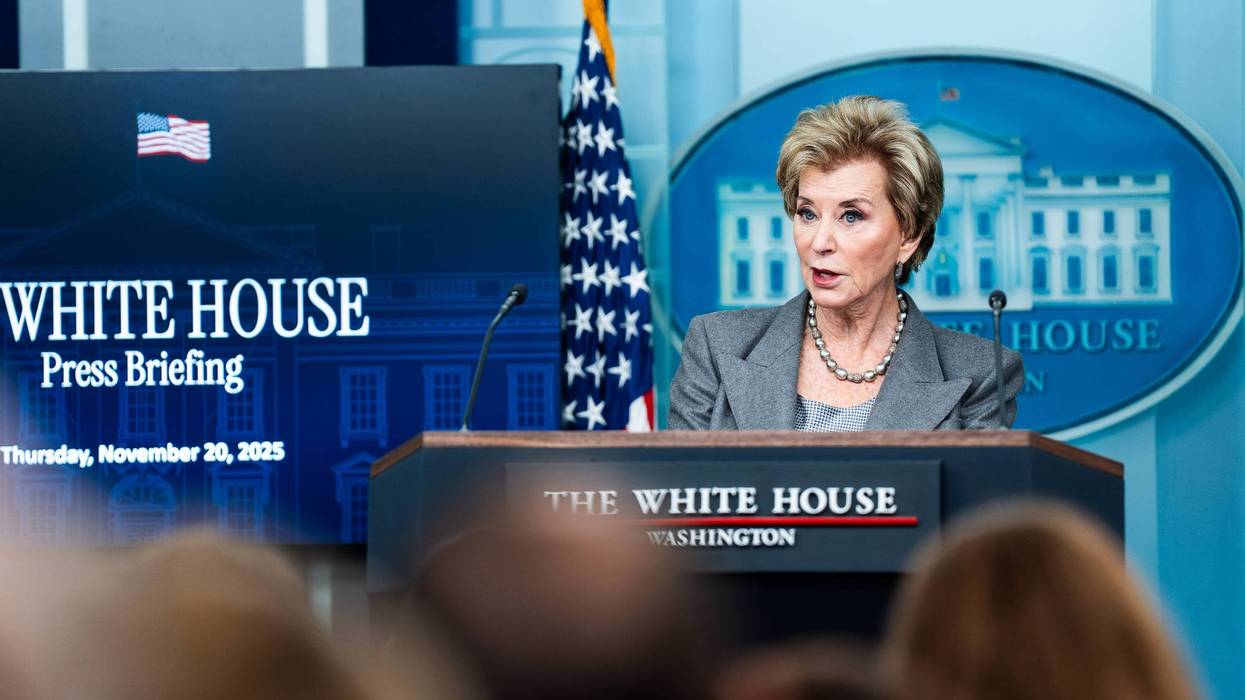
"This intentional sabotage only threatens to create true financial chaos in people’s lives," said Sen. Patty Murray.
The Trump administration is reportedly planning to remove the Federal Student Aid office from the Department of Education and establish a new independent agency tasked with managing roughly $1.6 trillion in debt owed by more than 40 million borrowers.
The plan, first reported by The Washington Sun on Thursday, comes as President Donald Trump works to illegally dismantle the Education Department without congressional authorization and assails student aid programs. Legally spinning off the Federal Student Aid office—the largest segment of the Education Department—would require an act of Congress, something that administration officials have "acknowledged internally," according to the Sun.
Sen. Patty Murray (D-Wash.), vice chair of the Senate Appropriations Committee, expressed outrage over the administration's reported plan, noting that the Trump administration has already gutted the student aid office's staff.
"Tens of millions of Americans are depending on government to actually work here," Murray said in a statement. "This intentional sabotage only threatens to create true financial chaos in people’s lives."
“Every family filling out the FAFSA, every student counting on a Pell Grant, and every borrower trying to make a student loan payment will pay for Trump’s idiotic obsession with abolishing the Department of Education," Murray added. "Americans do not support abolishing the Department of Education—they just want a financial aid system that works. I will keep fighting to block this illegal move every way I can, and it is past time for Republicans to join Democrats and put an end to this nonsense.”
The Sun's reporting marks the latest evidence that the Trump administration is working to follow through on the president's campaign promise to abolish the Department of Education, which is currently led by billionaire Linda McMahon. Over the summer, as Common Dreams reported, the Trump administration placed the department's work defending civil rights and students with disabilities under the authority of other federal agencies.
According to the Sun, Education Department officials are privately "concerned that the Trump administration is rushing" the Federal Student Aid spinoff "without considering the consequences to families and colleges around the country."
"The department’s senior leaders have told staff that student financial aid can be managed more effectively as an independent agency, but current and former officials said the department is taking a chaotic approach that is setting it up for failure," the Sun reported. "Details of the latest potential offloading remain scant, said one official involved in the planning."
The unnamed official told the outlet that the office "does not know how to be independent" because it depends on the Education Department for many of its functions.
Mike Pierce, executive director of the advocacy group Protect Borrowers, said in a statement Thursday that "the secret plan to eject FSA from the Education Department shows, yet again, that McMahon and Trump care more about pandering to their anti-government base than keeping their promise to tens of millions of Americans who cannot keep up with their bills."
Randi Weingarten, president of the American Federation of Teachers, said that "millions of teachers, nurses, and other public service workers are being buried by rising costs, including out-of-control student loan payments that are a direct result of President Trump's tax cuts for billionaires and Secretary McMahon’s callous mismanagement of the student debt portfolio."
“We had to sue McMahon once to force her to follow the law and respect borrowers’ rights to lower student loan payments, and this reorganization won't solve the issue—it will only make things worse," said Weingarten. "As voters head to the polls, they should remember that Trump and McMahon pretending to shrink the Department of Education—while in practice throttling its core functions in reams of red tape—is not doing anything to shrink working families’ bills.”

"Donald Trump promised to lower costs for American families," said the co-chair of the Not Above the Law Coalition. "Instead, he turned the presidency into his family's most profitable business."
A report released Thursday details how the family of President Donald Trump "pocketed more than $2.9 billion"—including "in cash and gifts from crypto ventures, legal settlements, a luxury jet from a foreign government, and corporate deals"—while Republican cuts to the Supplemental Nutrition Assistance Program left millions of Americans without critical food aid.
The report, "Let Them Eat Cake: Cost of Corruption," was published by the Not Above the Law Coalition—a group of more than 150 advocacy organizations mobilized against the Trump administration's corruption—and cites data from the Center for American Progress revealing over $2.9 billion in cash and gifts received by the Trump family since the 2024 election.
The bulk of that amount—more than $2.4 billion—comes from the cryptocurrency industry. Trump has boasted about how his administration won't investigate alleged crypto-related crimes.
Not only has Trump embraced crypto deregulation, he also pardoned Changpeng Zhao, the founder of cryptocurrency exchange Binance, who pleaded guilty to money-laundering charges in 2023. Binance has provided critical support for World Liberty Financial, the crypto venture enriching the Trump family.
"The Trump family cashed in on the presidency while American families paid the price," Not Above the Law said in a statement. "Over the same period, Trump signed a budget law that cut almost $187 billion from SNAP, leaving 5.2 million fewer people with help buying groceries."
That law, the so-called One Big Beautiful Bill Act, ushered in the biggest cuts to both SNAP and Medicaid in those programs' histories.
According to the report, "The Trump family's take alone could cover a full year of groceries for about 1.3 million people on SNAP."
"At the same time, Trump's pardons let wealthy allies and fraudsters walk away from nearly $1.7 billion owed to victims and taxpayers," the publication adds.
Not Above the Law noted that "foreign money flowed straight to the [Trump] family" via an investment vehicle controlled by the United Arab Emirates' national security adviser, who "put $500 million into World Liberty Financial, and the administration soon cleared advanced [artificial intelligence] chip exports to the UAE."
The report highlights that "Trump also accepted a roughly $400 million luxury jet from Qatar."
Not Above the Law said that, in addition to groceries for 1.3 million people for a year, the $2.9 billion could buy "more than 600 million free school lunches, or three months of groceries for the 5.2 million people who lost SNAP benefits."
In addition to the nearly $3 billion the report says Trump's family pocketed, the coalition noted "companies backed by Trump's sons have collected $3.2 billion in federal funds, including a fast-tracked $620 million Pentagon loan" to a business in which Donald Trump Jr. invested.
"Donald Trump promised to lower costs for American families. Instead, he turned the presidency into his family's most profitable business," said Lisa Gilbert, Not Above the Law co-chair and co-president of the consumer advocacy group Public Citizen. "While the Trumps collected nearly $3 billion from crypto schemes, foreign governments, and corporations seeking favors, millions of Americans lost help putting food on the table. Congress must stop the self-dealing and hold this administration accountable."
The new analysis follows a report published earlier this year by a group of Democratic US senators accusing the president and his family of turning “the power of the presidency into eye-popping profits,” with Trump increasing his personal net worth by more than $2 billion during his second term alone, according to official disclosures.
Also on Thursday, The Washington Post reported on companies and billionaire CEOs who donated a combined $333 million to Trump’s White House ballroom project, as well as previously undisclosed donors who have benefited from a presidential pardon, government contracts, and at least one closed federal investigation.
"This is what corruption is all about," Sen. Bernie Sanders (I-Vt.) said in response to the Post report. "We don’t want a government of, by, and for the billionaire class. FIGHT BACK."

"No words can adequately express the grief our community is experiencing," said the Bend-La Pine Schools superintendent.
A 16-year-old boy killed three children—ages 5, 8, and 11—and a teacher in a Thursday shooting at Silver Rail Elementary in Bend, Oregon.
Bend Police Chief Mike Krantz confirmed their deaths during an evening press conference, where he was joined by department communications manager Sheila Miller, Bend-La Pine Schools Superintendent Steven Cook, Mayor Melanie Kebler, and Gov. Tina Kotek.
Krantz said the shooter was killed by a community member who saw the teenager enter the school with a long gun. Neither of them has been named publicly, nor have any of the victims—including a 7-year-old child and another teacher who were transported to the medical facility St. Charles Bend.
During an earlier press conference, Miller told journalists that just minutes after receiving 911 calls that an unknown person had shot into a car and entered the school, police officers were on the scene at 1:02 pm Pacific time—and they reported that the suspect had been shot and killed inside the school.
Miller said that there will be a large law enforcement presence in the area, and Federal Bureau of Investigation Director Kash Patel confirmed that includes FBI agents. A reunification location for families was set up at Journey Church.
As The Oregonian reported:
Kayla Jensen, the president of the school’s Parent Teacher Organization, said she and other parents were gathered at the church, awaiting word about their children.“ We are unsure. We have not gotten any news. We are all here,” Jensen said. She said she could not offer any further comment.
"We are stunned and heartbroken by this senseless tragedy," Cook, the superintendent, said in a statement. "We extend our deepest sympathy to the families and to everyone affected by this violence."
"No words can adequately express the grief our community is experiencing," Cook added. "Our immediate priorities are caring for our students and staff and assisting law enforcement and emergency responders."
US Sen. Jeff Merkley (D-Ore.) said that "as details continue to come out, my heart is with the Bend community and all of the students and families affected. No one should have to fear violence at school."
Congresswoman Maxine Dexter (D-Ore.) wrote on social media that "this is a devastating day for Oregon. My heart is with the Bend community, and every family who is being impacted by this tragic, senseless shooting. Schools should be places of learning, friendship, and joy. It is incumbent on me, and every lawmaker, to do everything we can to ensure our kids are safe."
Sen. Ron Wyden (D-Ore.) also stressed the need for policy action, saying: "My heart is with the victims of today’s shooting at Silver Rail Elementary School and their loved ones now facing the consequences of another school shooting in America. Once again, we must ask how many schools must be shot up before Republicans agree to act to curb gun violence."
Angela Ferrell-Zabala, executive director of the advocacy group Moms Demand Action, said that "today, families in Bend are living through every parent's worst nightmare... No parent should have to wonder whether the school drop-off will be the last time they see their child. This is not normal, and we cannot allow it to become normal."
"In an average year, 655 people die and 719 are wounded by guns in Oregon," she noted. "Guns are also the leading cause of death among children and teens in the state, with an average of 34 children and teens dying by guns every year."
Giffords—a gun violence prevention group led by former Congresswoman Gabrielle Giffords, an Arizona Democrat who survived an assassination attempt—said that "our hearts are with the terrified children and the families anxiously waiting to hear that their loved ones are safe. We cannot keep accepting this as a fact of life."
The former congresswoman similarly said that "my heart is completely broken for the children, families, teachers, and entire Silver Rail Elementary community in Bend, Oregon today. Elementary school should be about jungle gyms, math class, and making new friends—not learning where to hide from a shooter. We cannot keep asking our children to be brave enough to survive school shootings. Our leaders must be brave enough to stop them."
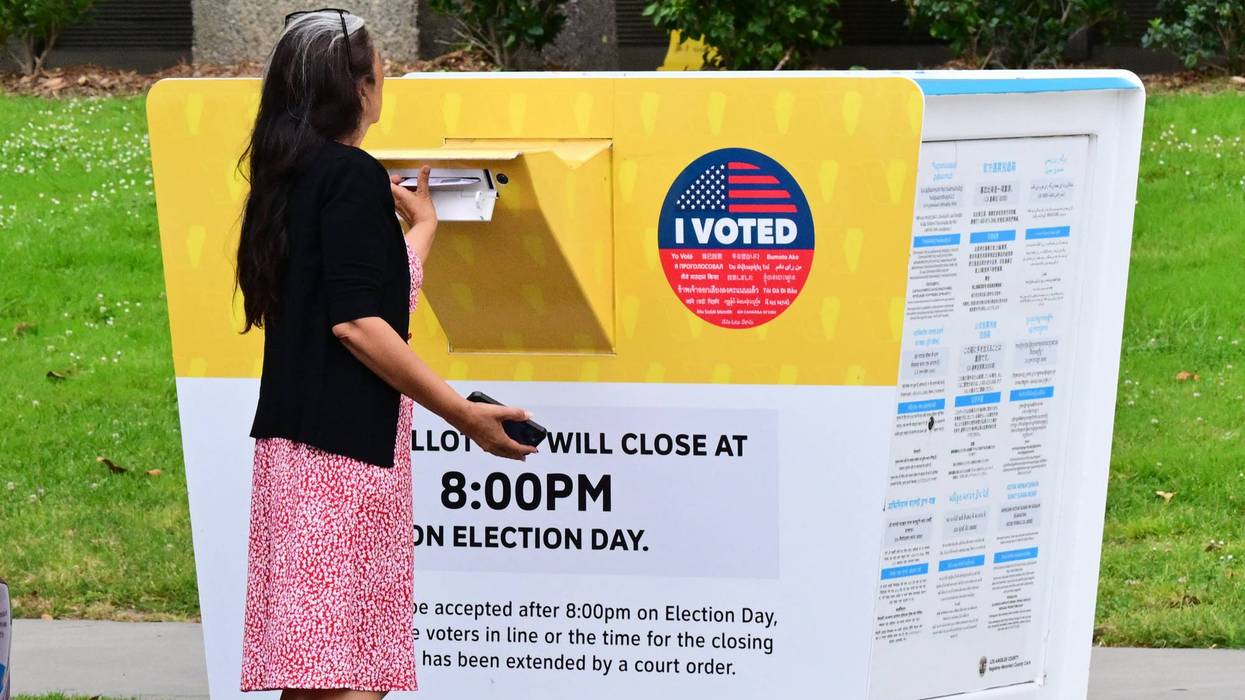
California Secretary of State Shirley Weber said DOJ was “demanding unprecedented measures that threaten thousands of Californians' right to vote, based on unverifiable information."
In what one former election official called a significant "escalation" of President Donald Trump's interference in the midterm elections, his Department of Justice sued California on Thursday for not disqualifying over 20,000 mail ballots from voters it claims could be noncitizens.
The suit comes two days after acting Deputy US Attorney General Trent McCotter sent a letter demanding that, within 48 hours, state election officials set aside ballots from a list of voters it determined were ineligible to vote using federal databases administered by the Department of Homeland Security (DHS)—systems that have previously been shown to regularly spit out errors.
When other states, like Nevada, Texas, and Missouri, have used the DHS system to vet their voter rolls for noncitizens, investigations have found that it incorrectly flagged hundreds of US citizens as ineligible to vote.
California officials have said the list of names was provided to them on a thumb drive, which came with a password written on a sticky note. They did not consider this to be a secure device and refused to open it. The letter was sent more than a week after California began sending mail ballots to 23 million registered voters.
The state refused to set the ballots aside, saying that the administration had not provided credible evidence that the voters were not citizens and that eligible voters could be disenfranchised. In its complaint Thursday, the DOJ called on the court to stop the ballots from being tallied until the citizenship status of each voter could be independently verified. It also requested that the state not send a ballot to anyone who has not yet received one.
The DOJ's batch of roughly 20,000 supposedly ineligible voters is a significant reduction from the 190,000 that Homeland Security Secretary Markwayne Mullin alleged were registered in the state back in July. When California asked for the underlying data and methodology for that figure, DHS declined to provide it.
"What happened to those 170,000?" said California Attorney General Rob Bonta at a press conference on Thursday. "They just got those wrong."
This highlights the concerns states have expressed about using the DHS system to purge their voter rolls. In refusing the DOJ's request, state officials have noted that in Nevada, the system flagged 185 voters as possible noncitizens only for state officials to determine that every single one of them was a US citizen.
California Secretary of State Shirley Weber responded to the DOJ's lawsuit with a sharply worded letter, accusing it of “demanding unprecedented measures that threaten thousands of Californians' right to vote, based on unverifiable information or methodology that you still fail to explain or provide.”
Weber described it as an effort to block “thousands of Californians’ right to vote” weeks before an election and said, “The extraordinary measures you demand are contrary to both federal and state law.” Federal law prohibits states from systematically purging voter rolls within 90 days of an election.
“We are not impressed with the federal government’s letter. We are not impressed with its lawsuit," Bonta said. “This is what the federal government does. They lie, they advance misinformation, disinformation, they advance conspiracy theories. They try to sow distrust with those lies."
“Their timing is rife with and smacks of and reeks of desperation and bad faith, to do this during an election,” he said.
Stephen Richer, the former Republican Maricopa County recorder in Arizona, described the government's lawsuit as "a real escalation by the federal government."
"I've mostly said 'Calm, calm. It's going to be OK' with respect to federal involvement in election administration," he wrote on social media. "This lawsuit—in October, in the middle of early voting—that asks election officials to disqualify certain voters based on suspect databases, not conclusive evidence, which definitely could have been alleged before early voting began... This does represent an escalation."
The University of California, Los Angeles (UCLA) Voting Rights Project filed an emergency brief on Thursday seeking to stop the DOJ from using its list to withhold ballots.
"With voting already underway, eligible citizens should not have their ballots withheld based on a federal list they have never seen and have had no opportunity to challenge," said its director, Chad Dunn. "We are asking the court to intervene before voters suffer harm that cannot be corrected after Election Day."
Sen. Alex Padilla (D-Calif.) said in a statement that the Trump DOJ "is now actively trying to interfere in the 2026 elections and strong-arm California into purging names from our voter rolls and blocking mail ballots based purely on vague allegations less than three weeks before Election Day."
He added, "This lawsuit has no legal basis or evidence behind it and is nothing more than a blatant abuse of power designed to sow distrust in our elections and threaten Americans’ right to vote."

"If she was Israeli, this image would be front-page news," said one observer.
A Palestinian toddler watched, screaming in horror, as her mother was burned alive in an Israeli airstrike on their Gaza City home early Wednesday that left the wounded girl orphaned—and received almost no coverage in US corporate media.
Reem Asaad Awad was killed when an Israeli helicopter attacked her family's apartment in the Rimal neighborhood at approximately 3:48 am local time Wednesday, the Palestinian Center for Human Rights reported.
Trapped inside the burning apartment was Awad's daughter, Maryam Ahmed Ghanem, whose age has been reported as between 2 and 4 years old. Prominent Palestinian author Mosab Abu Toha said family friends confirmed the child was born in February 2024.
Palestinian journalist Ali al-Jaafrawi witnessed and recorded the immediate aftermath of the strike.
"There are children are screaming alive inside," al-Jaafrawi is heard saying as he approached the building.
"I went up to the apartment. There were flames everywhere," al-Jaafrawi told Al Jazeera. "I went in despite the fire and smoke and heard a little girl screaming inside. I went in, found her, and rescued her immediately. I carried her and handed her to people so they could take her to hospital."
"I went back to rescue others and to document what happened, but I suffocated and lost consciousness because of the thick smoke," he added. "I saw a woman on fire inside the apartment."
Photos and video recordings show Ghanem being treated for injuries, including burns, at al-Shifa Hospital in Gaza City, which is struggling to operate after much of the facility was destroyed or damaged by Israeli forces, who besieged and raided the complex multiple times since October 2023.
Abu Toha, who saw Ghanem in the hospital, said the child "kept repeating the same heartbreaking words: 'I want my mum. My body hurts. There was a lot of fire.'"
Ghanem—whose father, Ahmad Ghanem, was reportedly killed by Israeli forces early in their genocidal assault—has joined the ranks of the more than 56,000 Gaza children who have lost at least one of their parents in the war, according to the United Nations Children's Fund.
"Reem and Ahmad had waited four years to conceive Maryam," Abu Toha wrote. "Four years of waiting and hoping to bring a child into this world. Ahmad never lived to see his daughter’s face. Reem lived long enough to watch her little girl grow for two-and-a-half years before she was burned alive in front of her. Now Maryam is an orphan, fighting to survive her horrific burns."
Ghanem's grandfather told Middle East Eye that the child and her mother "did nothing wrong."
"They were sleeping quietly at night," he said. "There was no one in the apartment except the two of them."
Israel said it is investigating the strike, which it claimed—without providing evidence—targeted a member of Hamas.
Dismissing a nominal yearlong ceasefire during which at least 1,500 Palestinians have been killed and over 5,000 others wounded by Israeli attacks, the grandfather said that "honestly, there is no security."
"I fear for my family," he added. "All people are afraid, not just me. There is still assassination, war, hunger, poverty, and destruction... Nothing has changed."
The horrific footage of the strike's fiery aftermath evoked imagery from earlier in Israel's onslaught, including video of a 7-year-old girl trying to escape an inferno caused by bombing that killed dozens of Palestinians—among them her mother and siblings—and a teenager photographed burning alive after Israeli forces bombed a tent encampment.
Some observers noted the almost complete absence of US media reporting on the story, with the apparent exception of CBS News, which published video of the burning apartment in a Facebook Reel.
"This little girl watched her mother be burned alive in Gaza. If she was Israeli, this image would be front-page news. But Israel can kill Palestinians in the most horrific ways without generating any headlines," US historian, author, and political analyst Assal Rad said on social media.
"Video has been circulating all day; you can hear the little girl cry and see her engulfed in smoke," Rad said in a separate post. "I can’t find headlines in Western media *because* the story is horrific. They want you to forget."
The Washington, DC-based Council on American-Islamic Relations (CAIR) issued a statement calling on members of Congress "to condemn Israel for burning a Palestinian mother alive while her daughter watched in Gaza."
“The horrific video of a little girl surrounded by fire as her mother burns to death in their home exemplifies the reality of Israel’s genocide in Gaza," CAIR said. "We cannot comprehend how any political leader with a conscience could continue to fund the sheer cruelty of the Israeli government and the war criminals who carry out its orders."
"Members of Congress must condemn this atrocity and demand an immediate end to all US support for Israel’s ongoing genocide in Gaza," the group added.
The US has provided Israel with tens of billions of dollars in armed aid, as well as diplomatic cover, including repeated vetoes of a series of United Nations Security Council ceasefire resolutions, throughout the three-year annihilation of Gaza, which has left more than 250,000 Palestinians dead or wounded.
Trita Parsi, executive vice president of the Quincy Institute for Responsible Statecraft, weighed in on the attack on Bluesky.
"I have reached the limits of my ability to put words to pure evil," he wrote. "Once again, Israel burned another family in Gaza alive. But the image of the... daughter in the family watching the rest of her family die in the flames will haunt me for the rest of my life."
"But," Parsi added, "will it haunt Israel?"
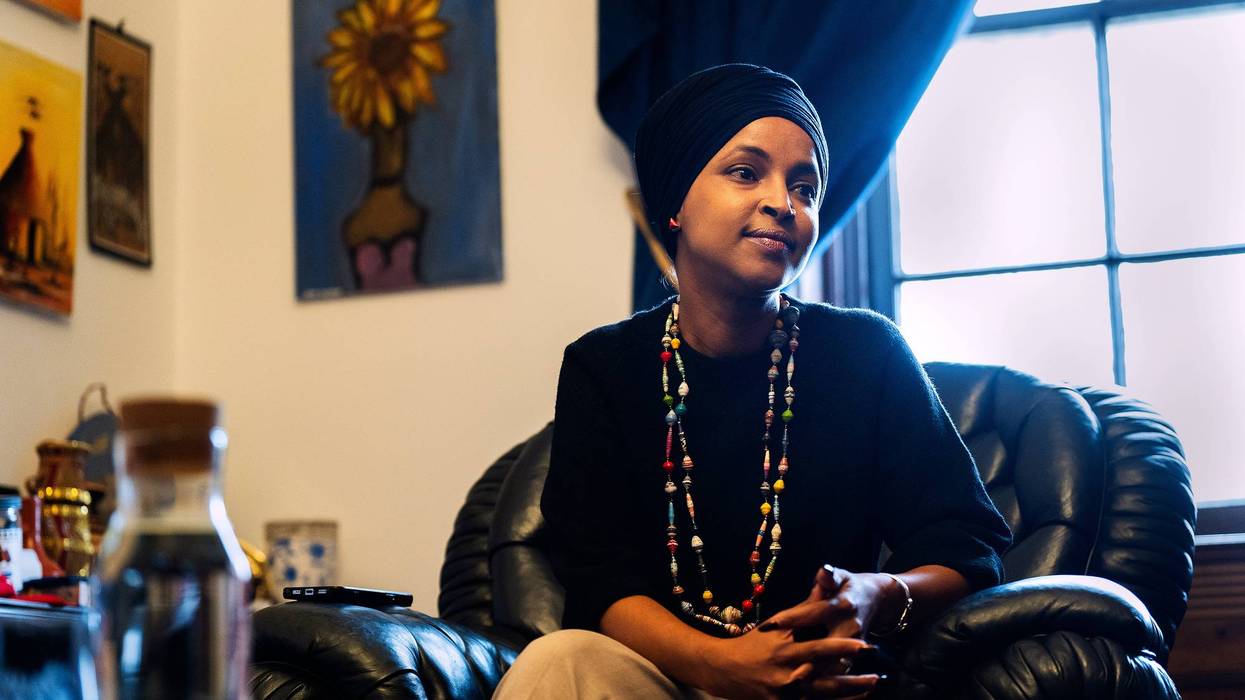
"To Trump, no American value or principle is too important to be shredded for his own personal gain."
The office of Rep. Ilhan Omar slammed the Trump administration on Thursday over its reported plot to have the Minnesota Democrat stripped of her US citizenship.
On Wednesday, The Wall Street Journal reported that the raid on Omar's home carried out earlier this week by Department of Homeland Security agents was part of and effort to build "a case to strip her of her US citizenship and ultimately deport her."
"The multipronged effort is focused at least in part on how Omar obtained her citizenship after she arrived in the US from Somalia decades ago," the Journal explained. "Investigators are focused both on the congresswoman and actions of her deceased father."
Omar spokesperson Jackie Rogers responded to the report by accusing President Donald Trump of engaging in "desperate attempt to justify his extraordinary abuse of power."
"This is politically motivated and an escalation of Trump’s personal vendetta against her lasting over a decade," Rogers told HuffPost. "He has lied about her family, about her immigration history, and about her love of this country."
Rogers also accused Trump of acting like a dictator by singling out a member of the opposition party for punishment.
"This isn’t a legitimate law enforcement action," said Rogers, "it is an authoritarian move to silence an opponent right before an election where he and his party will be rejected by Americans in historic proportions... To Trump, no American value or principle is too important to be shredded for his own personal gain."
Author John Ganz on Thursday published an analysis of the reported Omar deportation plot, which he said is "undoubtedly driven by racial and religious animus" and also "a serious assault on the constitutional order being carried out through the executive branch’s legal and bureaucratic machinery."
Ganz argued that a serious attempt to strip Omar of her citizenship and remove her from the country would be a major escalation from the Trump administration toward establishing an outright totalitarian state.
"Authoritarian governments suppress political opposition and deprive their subjects of particular rights," Ganz explained. "Totalitarian movements aspire to something much more radical: the destruction of the independent political and juridical personhood. They attack not merely the liberties of particular citizens they seek to repress, but the concept of citizenship itself—and then, ultimately, the concept of shared humanity."