

SUBSCRIBE TO OUR FREE NEWSLETTER
Daily news & progressive opinion—funded by the people, not the corporations—delivered straight to your inbox.
5
#000000
#FFFFFF
To donate by check, phone, or other method, see our More Ways to Give page.
Daily news & progressive opinion—funded by the people, not the corporations—delivered straight to your inbox.

"As always, he is telling us what the plan is," said one critic. "We must take it seriously."
US President Donald Trump has spent his second term threatening takeovers of various other countries, from Canada and Cuba to Greenland, and on Monday he shared on social media a map that fueled fresh fears of his imperialist "Donroe Doctrine."
The map on Trump's Truth Social platform shows the US flag over not only the United States but also Canada, Greenland, Iceland, Mexico, and multiple countries in Central America and the Caribbean.
The post was swiftly condemned across platforms, with Congressman Jonathan Jackson (D-Ill.) declaring that "this is unacceptable."
Journalist Stephen Robinson wrote on X that "another world leader posting something like this would have to apologize before their immediate removal."
Amy McGrath, a retired Marine fighter pilot and former Democratic US Senate candidate from Kentucky, wondered, "What would we do and say if the Chinese president posted a map of China taking over the Western Pacific?"
Carl Bildt, co-chair of the European Council on Foreign Relations and former prime minister of Sweden, similarly said: "What would happen if Xi Jinping posted a map where [China] has taken over all of East Asia, and [President Vladimir] Putin one of [Russia] having absorbed all of Western Europe? It would have been seen as either insane or dangerous—or both."
While some critics called Trump "absolutely bonkers" and "f*cking insane," Dr. Brian Goldman, a Canadian emergency physician who's also an author and broadcaster, asserted: "That's not insanity. That's intention."
Democratic strategist Michelle Kinney agreed, saying: "As always, he is telling us what the plan is. We must take it seriously."
Melanie D'Arrigo, executive director of the Campaign for New York Health, suggested that "the reason why Republicans attack education is so that people don't recognize the history that repeats itself."
Without directly mentioning Trump or his map, Mexican President Sheinbaum said in Spanish on Monday, "We reaffirm that Mexico is neither nor will be a colony or protectorate of any foreign country. Proudly we are a free, independent, and sovereign nation."
While Trump is a prolific poster, the map followed a series of posts from Sunday—including other maps and images produced with artificial intelligence—that led progressive influencer Harry Sisson to conclude that the president was "having a mental health episode online" and call for his removal from office.
"This man is unwell. 25th Amendment NOW," Sisson said, cataloging posts on a range of topics, from Trump's recent renaming of Lake Ontario amid tough trade talks with Canada, to the suggestion that New Mexico should be dubbed "New America."
The latter was ripped by several Democratic officials, including New Mexico's governor, Michelle Lujan Grisham, who responded that her state's name "isn't up for debate—it's been ours since before the United States existed."
"What is up for debate? Who's showing up for working families," she continued. "While the president tries to distract Americans from his disastrous war in Iran, gas prices keep soaring. Americans are also spending more at the grocery store, losing access to healthcare and wondering if they'll ever be able to afford a home. Under Democratic leadership here in New Mexico, we're providing families with free childcare and college, protecting access to healthcare, and investing in housing. While the White House wastes time coloring on maps, Nuevo México is busy doing the work."
In addition to waging an illegal war on Iran, Trump this term has invaded Venezuela to abduct President Nicolás Maduro and take control of the country's oil reserves, become the US commander-in-chief to bomb the most countries, and killed over 225 people by blowing up boats allegedly smuggling drugs through international waters. He's also threatened to seize the Panama Canal and possibly attack nations including Colombia and Mexico.
As Iran has responded to Trump's war by restricting traffic through the Strait of Hormuz, the president has teased declaring the key waterway a US territory and naming it after himself. He's also dubbed the Gulf of Mexico "the Gulf of America" and fought to put his name on the John F. Kennedy Center for the Performing Arts in Washington, DC.
With the US midterm elections less than two months away, some Democrats in Congress have stepped up their critiques of Trump's foreign policy—including a delegation of progressive congressional lawmakers and candidates who headed to Uruguay last month for the third Pan-American Congress.
Shortly after that gathering, delegation member Congressman Jesús “Chuy” García (D-Ill.) stressed that "progressives reject the violent, imperialistic Donroe Doctrine, and believe in a foreign policy rooted in cooperation, diplomacy, and sovereign equality."
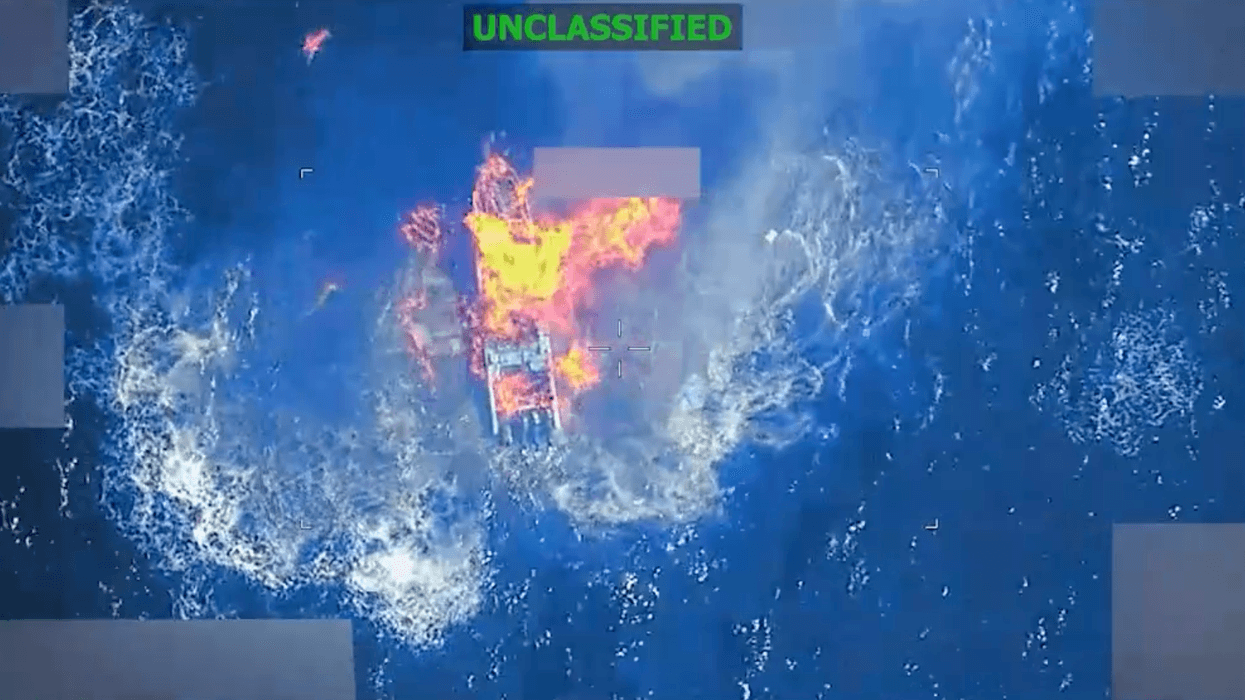
Performative violence—aka executions without trial at sea—overshadows how the administration is building a new US policy towards the hemisphere: acts of murder as a tool to create permanent structures of dominance and extraction.
“American dominance in the Western Hemisphere will never be questioned again,” declared the State Department in a new video tying, somewhat improbably, the Monroe Doctrine of 1823 to killing people on boats in the Caribbean and Pacific 200 years later. Blowing up speedboats supposedly to stop fentanyl smuggling—which notably does not come to the US on speedboats—appears senseless. As a counter-narcotics strategy, it is ineffective, an assessment echoed by the DEA. The performative violence overshadows its role in building a new US policy towards the hemisphere: acts of murder as a tool to create permanent structures of US dominance and extraction.
Laid out in the December 2025 National Security Strategy (NSS), the “Donroe Doctrine” aims to restore US preeminence in a region where it has been eclipsed by China, convert security claims into exceptional military authority against “narco-terrorists,” institutionalize that authority through permanent commands, “enlist and expand” governments aligned with Washington, and use it to secure strategic and commercial access. The desired end: military cooperation, trade agreements, access to critical minerals and rare earths, likely accompanied by shady personal deals for the Trump family. Democratic backsliding, in a region where democracy is still relatively young, is a necessary condition for its success.
The Donroe Doctrine's architecture is still under construction. Latin American governments can still resist Washington’s pressures, refusing to co-create his transactional order. Greater regional integration would rebalance that bargaining power, helping less powerful countries impose conditions, defend constitutional limits, reject particular operations, and withstand the costs of US pressure. More than 100 legislators, political leaders, and experts from 15 countries are gathering at the Third Pan-American Congress in Montevideo this weekend to strengthen regional collaboration, the basis for an alternate architecture to one premised on US domination.
- YouTube
Resistance to US coercion, however, also depends on democratic repair within the region. Governments captured by authoritarian leaders cannot provide a durable basis for sovereignty. Corruption erodes state capacity and public trust, making foreign military solutions more appealing. The Trump administration is betting on a hemispheric doctrine that favors authoritarian leaders, eager to share in corruption.
The Donroe Doctrine’s highest profile proof of concept began with airstrikes on boats off the coast of Venezuela, to the killing of fishermen in the Pacific—since revealed to be a covert CIA program—to August’s announcement of a new Joint Task Force-Western Hemisphere, establishing a standing headquarters for efforts to turn such extrajudicial killings into joint operations with allied governments. This maps onto the administration's Shield of the Americas, a coalition of right-wing Latin American governments allied with the Trump administration. From the abduction of Venezuela’s President Nicolás Maduro to the boat strikes murders, all leaned on two forever wars framing and justification that long predated Trump: The War on Drugs and the War on Terror.
The Trump administration is betting on a hemispheric doctrine that favors authoritarian leaders, eager to share in corruption.
Targeting supposed smugglers, many of them probably fishermen, as “narcoterrorists” is a way to move trafficking from the framework of criminal law into the claimed authorities of war. Suspects become targets not of investigation but of immediate execution, secret assessments replacing due process and evidence in courts. The urgency of national security puts executive discretion over judicial authority. The boat strikes publicly declare exceptional authority of the executive. The Pentagon’s and CIA’s programs institutionalize it.
Like the War on Terror, this framing pictures an enemy and creates an industry to manage. It creates quid pro quo partnerships with other governments who leverage military cooperation into access to US foreign assistance, weapons, intelligence, and diplomatic cover for unsavory ends, whether domestic repression, corruption, or state murder of their own. With public opinion showing falling trust in all institutions but the military, stoking fears of all-powerful narcoterrorists serve mutual interests of reactionaries in Washington, Bogotá, and Tegucigalpa. The main risk is that it creates bureaucratic structures that outlive sitting administrations. With multilateral cooperation and institutions on the decline, this new military-industrial complex makes it nearly irreversible.
It also creates tools for meddling in domestic partisan politics. The success of Trump’s “Shield of the Americas” is predicated on Latin America’s continued turn to the right. Ecuador and Colombia have already agreed to “joint” military strikes on their territory, which are likely to become unilateral US strikes. Trump openly intervened in supporting the election of Nasry Asfura in Honduras, as it is currently doing with Flávio Bolsonaro in Brazil. That many of these allies are themselves tied to the drug trade is of little consequence: Colombia’s President de la Espriella made a career as a defense attorney for top narcos, Ecuador’s president Noboa’s family’s fruit business was found to be transporting cocaine, and Honduras’ former president Juan Orlando Hernández won a Trump pardon after his US conviction on drug-trafficking charges.
The project functions more easily where democratic foundations are weak and leaders face fewer constraints from citizens, legislatures, courts, and independent institutions, reflecting Trump’s own effort to weaken checks on executive authority inside the United States. Bukele in El Salvador provides a marquee case for using the specter of crime to consolidate a permanent “state of exception” and authoritarian rule. Such regimes can authorize operations, share intelligence, sign agreements, allocate land, and suppress opposition with less scrutiny.
Democratic scrutiny can expose the climate costs of extraction, contest land allocations and territorial interventions, demand transparency over contracts, and insist that resource wealth benefit the public. Corruption circumvents those checks by connecting external power with local gatekeepers able to transfer public resources and protect the bargain. The lack of transparency surrounding more than $13 billion collected by the United States from Venezuelan oil sales illustrates the scale of the accountability problem.
For the region, the emerging system depends on governments choosing to participate and institutions holding its authority. As progressives in the United States, we must challenge the false counternarcotics claims, unchecked lethal force, and waste of public resources sustaining this project, and hold our government accountable. Regional resistance and democratic repair must proceed together.
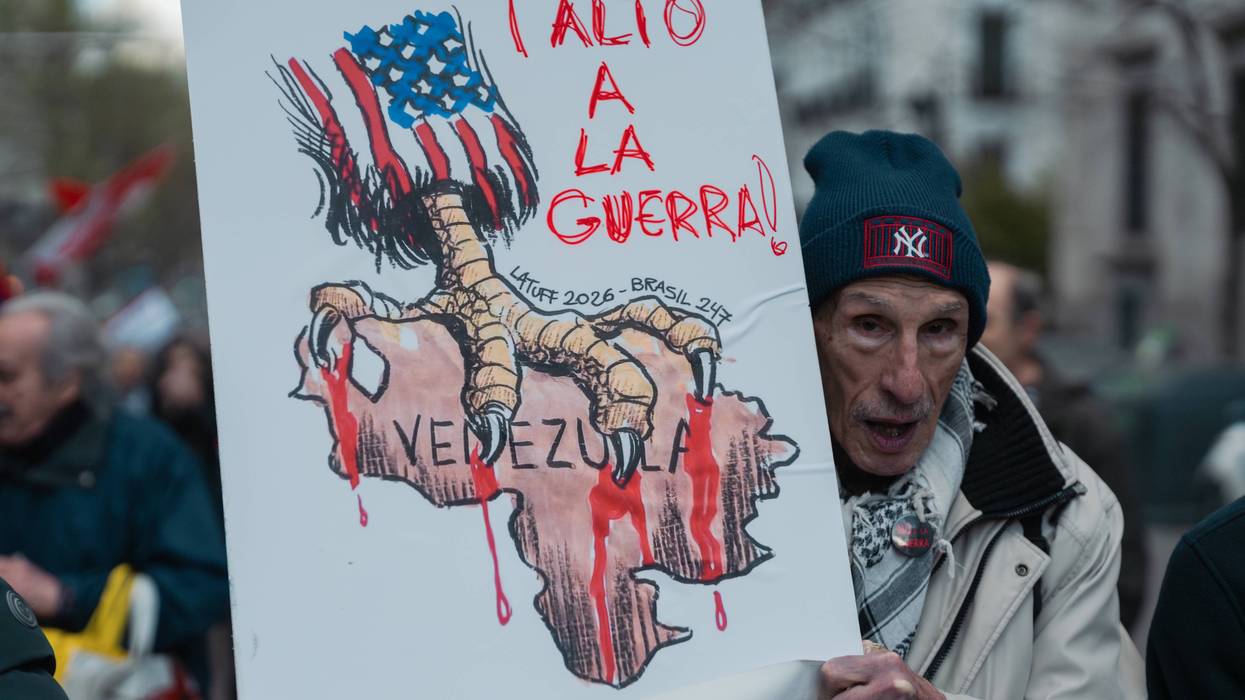
“We need to build a durable and lasting coalition of progressives that can take on the right-wing forces and answer them with the necessary call of the people,” said Congresswoman Pramila Jayapal.
A delegation of progressive congressional lawmakers and candidates is set to head to Uruguay this week to take part in a conference focused on Pan-American solidarity amid the resurgence of both US imperialism and right-wing governments in the hemisphere.
The third Pan-American Congress, to take place in the Uruguayan capital Montevideo, will bring together progressive legislators from North, Central, and South America and the Caribbean to discuss what organizers describe as hemispheric cooperation based on "solidarity between peoples" and "sovereignty among nations"—a vision sharply at odds with what critics have dubbed US President Donald Trump's "Donroe Doctrine" militant imperialism.
The US delegation will be led by Rep. Pramila Jayapal (D-Wash.), joined by Rep. Jesús “Chuy” García (D-Ill.), Democratic congressional candidate Dr. Adam Hamawy of New Jersey, and three members of Democratic Socialists of America also running for Congress: Claire Valdez and Darializa Avila Chevalier of New York and Chris Rabb from Pennsylvania.
"We need to build a durable and lasting coalition of progressives that can take on the right-wing forces and answer them with the necessary call of the people,” Jayapal said in a video posted to social media.
We need a foreign policy based on partnership, exchange, and mutual respect.I spoke with @elpais.com about joining the upcoming Panamerican Congress and the need to fight back against far-right extremism across the globe. Read more here:
[image or embed]
— Congresswoman Pramila Jayapal (@jayapal.house.gov) August 17, 2026 at 12:46 PM
Sen. Bernie Sanders (I-Vt.) is slated to address the conference remotely. Congressional Progressive Caucus Chair Greg Casar (D-Texas) will not attend but expressed his support for “pushing back against right-wing radicalization, tackling the climate crisis, and addressing our joint economic crisis.”
In an interview with El País published over the weekend, Japayal called the conference "an opportunity to hear from our Latin American counterparts about what is happening on the ground: how US foreign policy is affecting them and how we can work together to build a progressive movement and combat far-right disinformation. The United States is doing a lot of pain with our Donroe Doctrine."
Jayapal is leading a letter signed by Sanders, Casar, García, and seven other progressive Democrats asking Secretary of State Marco Rubio "to answer for the regional implications of the 'Trump Corollary' to the Monroe Doctrine, and ground US foreign policy toward the Western Hemisphere on the principles of mutual respect and advancement of human rights."
"The interventions conducted under the banner of the ‘Donroe Doctrine' appear to follow a partisan playbook: the endorsement of favored candidates, the placement of political allies, the weaponization of tariffs and sanctions, and, where those fail, the application of direct military force," the lawmakers wrote. "These are tactics that destabilize our hemisphere and endanger our neighbors."
Before this year's Panamerican Congress, I'm demanding the Trump administration answer for their "Donroe” Doctrine.It follows a partisan playbook of tactics that destabilize our hemisphere and endanger our neighbors.
[image or embed]
— Congresswoman Pramila Jayapal (@jayapal.house.gov) August 17, 2026 at 3:30 PM
Two of the letter's signatories, Reps. Nydia Velázquez (D-NY) and Delia Ramirez (D-Ill.), earlier this year introduced the New Good Neighbor Act, a bill inspired by the short-lived period when the Franklin D. Roosevelt administration pursued policies of nonintervention and improved diplomatic relations with Latin America in the 1930s.
Since returning to the White House just last year, Trump—who campaigned as the "peace president"—has bombed and invaded Venezuela to abduct President Nicolás Maduro and his wife, launched airstrikes against what he claims without evidence are drug-smuggling boats in the Caribbean Sea and Pacific Ocean, and deployed troops to Ecuador as part of a joint campaign against alleged drug gangs dubbed Operation Total Extermination.
Trump has also ordered the military to plan an invasion to seize the Panama Canal, threatened to “take” Cuba, possibly attack Mexico and Colombia, invade and annex Greenland, and somehow make Canada the “51st state.”
That’s just in the Western Hemisphere. Overall, Trump has bombed seven countries around the world since returning to the White House and 10 nations over the course of his two terms—including Iran, where he launched an increasingly protracted illegal war in concert with Israel.
Just last week, Ramirez dismissed as a "cheap piece of imperialist propaganda" a video published by the State Department hailing the Monroe Doctrine, which was cited to justify numerous US wars of aggression, conquest, destabilizing invasions, the overthrow of democratically elected governments, and support for pro-Washington military dictatorships.
Issued in December 1823 by President James Monroe as Spanish colonies in the Americas won their independence, the eponymous doctrine states that European powers should not establish new colonies or interfere politically in the independent states of the Western Hemisphere. While it was partly a response to European attempts to restore colonial rule in Latin America, the Monroe Doctrine also asserted US hegemony over the Americas.
According to John Coatsworth, a historian specializing in Latin America, the US has launched at least 41 interventions that successfully overthrew governments in the Americas since 1898. The number of US military interventions in the region is much higher.
Former Colombian President Ernesto Samper, who is attending the conference, told The Hill on Monday that the resurgence of right-wing leaders, including Abelardo de la Espriella in his country, is “leading us toward a form of neofascism."
Samper said that Trump's "hegemonic aggression" in the Americas shows that the hemisphere "deserves a progressive and sensible response, which I hope will emerge from this forum."
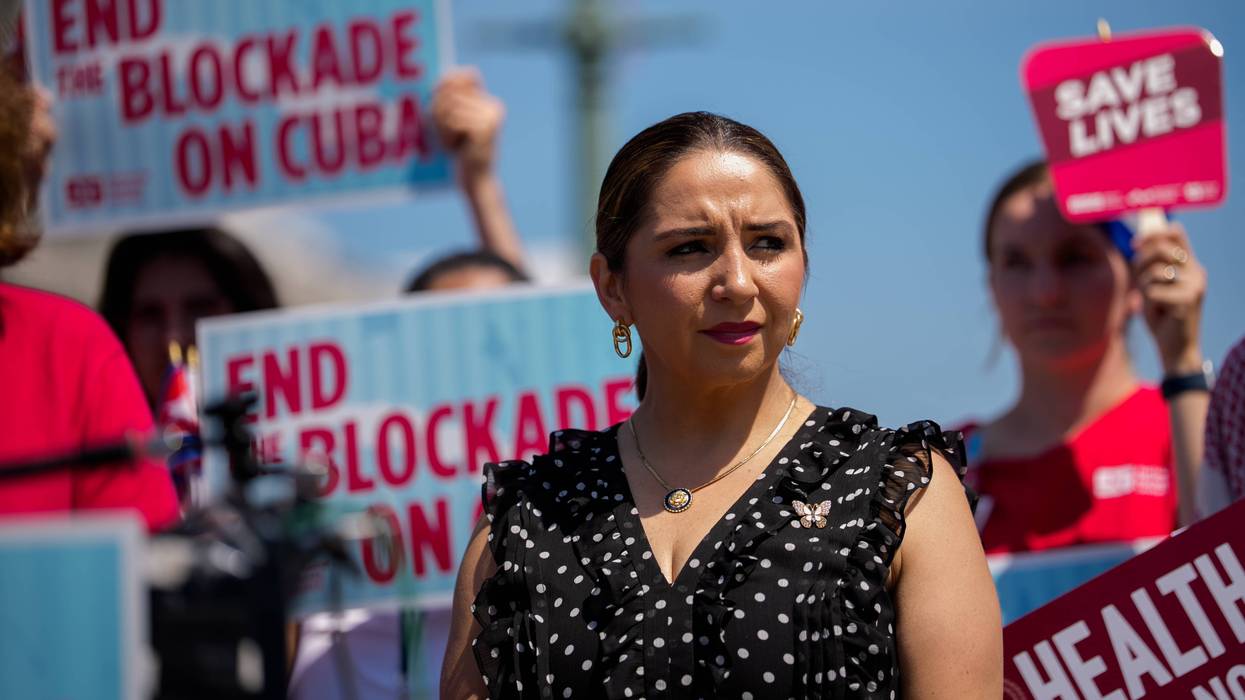
"Despite what warmongers want you to believe, the Monroe Doctrine undermines the partnerships needed to confront our complex challenges," said Rep. Delia Ramirez. "We must change course."
A congresswoman whose parents immigrated to the United States during US-backed genocidal dictatorships in Guatemala on Tuesday excoriated a State Department video hailing the Monroe Doctrine, an imperialist policy used by Washington to declare the Western Hemisphere its exclusive sphere of influence while masking aggression as protection from outside powers.
The roughly five-minute State Department video presents the Monroe Doctrine as a continuous thread in US foreign policy from 1823 to today, culminating in January's abduction of Venezuelan President Nicolás Maduro. It starts with President James Monroe's warning that the Americas were no longer open to European colonization, then moves through the Spanish-American War—launched by President William McKinley on false pretenses—the Roosevelt Corollary, the Cold War and Cuban Missile Crisis, and finally to the Trump administration.
"American dominance in the Western Hemisphere will never be questioned again," the State Department said in a social media post promoting the video.
Responding to the clip, Congresswoman Delia Ramirez (D-Ill.) said: "What a cheap piece of imperialist propaganda. The Monroe Doctrine's legacy is political instability, deep poverty, extreme migration, and colonialism throughout Latin America and the Caribbean."
Declared in December 1823 by Monroe as Spanish colonies in the Americas won their independence, the doctrine states that European powers should not establish new colonies or interfere politically in the independent states of the Western Hemisphere. While it was partly a response to European attempts to restore colonial rule in Latin America, the Monroe Doctrine also asserted US hegemony over the Americas.
Over time, the Monroe Doctrine was transformed from a warning against European imperialism into a rationale for US imperial interventions and conquest, beginning with waging war on Mexico—again, under false pretenses, this time challenged by opponents including a young congressman named Abraham Lincoln—that resulted in the seizure of more than half of Mexican territory.
The US attempted to use the Monroe Doctrine to justify acquisition of a 10-mile zone around the Panama Canal via "gunboat diplomacy" and, after the 1904 Roosevelt Corollary, the right to intervene in Latin American and Caribbean countries when it judged their governments unstable, indebted, hostile, or vulnerable to foreign influence. Invasions and occupations of Cuba, Haiti, the Dominican Republic, and Nicaragua followed.
During the Cold War, successive US administrations used the largely imagined communist "threat" as pretext for CIA overthrows of democratically elected governments in Guatemala, Chile, Brazil, and other countries outside the Americas, including Iran and Congo—none of which were actually run by communists. The US also backed the ill-fated Bay of Pigs invasion, attempts to assassinate Cuban leader Fidel Castro, and terrorism targeting his regime and the Cuban people. Right-wing, pro-US military dictatorships were installed and lavished with financial, armed, and security aid, including torture training by operatives from the CIA, USAID, and other agencies.
The State Department video was not well received throughout Latin America. One Brazilian news site resented its "threatening tone," while Cuban media underscored the socialist island's sovereignty amid fears of a takeover repeatedly teased by US President Donald Trump.
In addition to illegal airstrikes on alleged drug-smuggling boats in the Caribbean Sea and Pacific Ocean and bombing and invasion of Venezuela to kidnap Maduro and his wife, the US under Trump has deployed troops to Ecuador as part of a joint campaign against alleged drug gangs dubbed Operation Total Extermination. Trump has also ordered the military to plan an invasion to seize the Panama Canal, attack Mexico and Colombia, invade and annex Greenland, and somehow make Canada the “51st state.”
Critics and supporters alike have called Trump's aggressive policies in the Americas the "Donroe Doctrine."
All told, Trump has bombed seven countries around the world since returning to the White House and 10 nations over the course of his two terms—including Iran, where he launched an illegal war with Israel.
Respondents to international public opinion surveys have repeatedly named the United States as the biggest threat to world peace. The late former US President Jimmy Carter even called his own country the "most warlike nation in the history of the world."
The US has attacked, invaded, or bombed dozens of countries and supported most right-wing dictatorships in the world since the end of World War II. It has overthrown or attempted to overthrow numerous foreign governments and has actively sought to crush many people’s liberation movements over that same period. It has also meddled in elections in countries that are allies and adversaries alike.
"Despite what warmongers want you to believe, the Monroe Doctrine undermines the partnerships needed to confront our complex challenges," Ramirez said on Tuesday. "We must change course. We must pass the New Good Neighbor Act."
Named after the short-lived period when the Franklin D. Roosevelt administration pursued policies of nonintervention and improved diplomatic relations with Latin America in the 1930s, the New Good Neighbor Act—a resolution introduced in February by Ramirez and Rep. Nydia Velazquez (D-NY)—calls on the US to adopt a new approach to the region based on cooperation, not confrontation.
“For more than 200 years, the United States has used the Monroe Doctrine to justify a paternalistic, damaging approach to relations with Latin America and the Caribbean," Ramirez said at the time. "As a result, the legacy of our nation’s foreign policy in those regions is political instability, deep poverty, extreme migration, and colonialism. It is well past time we change our approach."
“We must recognize our interconnectedness and admit that the Monroe Doctrine undermines the partnership needed to confront the complex challenges of this century," she added. "We must become better neighbors."
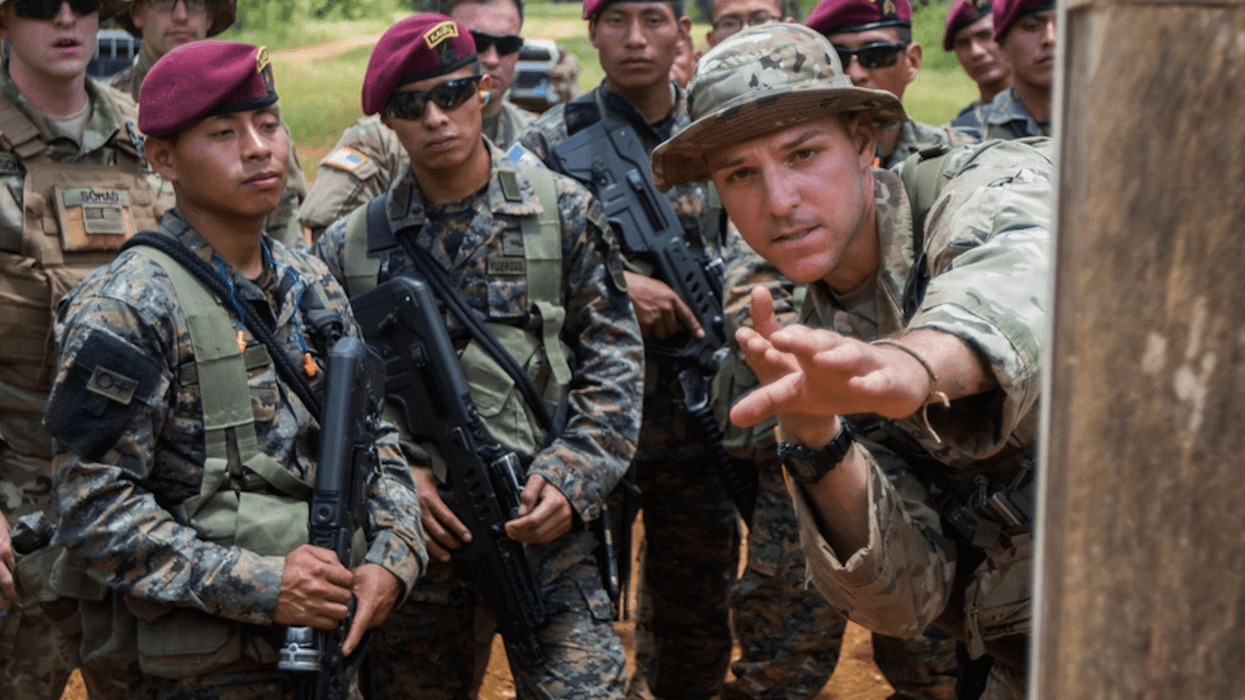
While acknowledging a request for US support in fighting drug cartels, Guatemala's president on Thursday refuted reporting by The New York Times claiming his government "has agreed to carry out joint strikes with the United States military inside its territory"—action that would violate the country's Constitution.
Citing "three people familiar with the talks," the Times reported that "President Bernardo Arévalo of Guatemala agreed to both airstrikes and other military action in a call with [US] Defense Secretary Pete Hegseth... with operations to start as early as next month."
However, Arévalo's office pushed back in a statement stressing that “there is no agreement authorizing foreign military operations by any country in national territory."
The presidential statement said that Guatemalan Defense Minister Henry Sáenz wrote to Hegseth "to request US cooperation in operations led by Guatemalan security forces against narco-trafficking organizations as part of a strategy launched in 2024."
"This request falls within the framework of existing bilateral agreements on the matter, and adheres to constitutional provisions and laws regarding cooperation agreements on civil and military security," the office added.
Arévalo's office stressed that Guatemala's Constitution stipulates that foreign military forces can only be deployed in the country if authorized by a two-thirds vote of the national Legislature.
A source from Arévalo's government told El País Thursday on condition of anonymity that the Trump administration has been exerting "great pressure" for two months.
“What they offered us is to select one or two places to bomb and televise everything," the source said. "But we have been clear that this is not going to happen. It cannot operate a US military force in the country, simply because it is unconstitutional."
Arévalo's office said it is seeking US assistance in training, strategic and tactical support, and intelligence sharing, pointing to recent actions against drug trafficking, including the capture of an arsenal in Las Cruces, Petén, the seizure of a narcotics laboratory in Ayutla, San Marcos, and the capture of numerous suspected narco-traffickers.
Asked during a Thursday press conference about the possibility of joint combat operations like those reportedly carried out by US and Ecuadorian forces in the South American nation, Arévalo claimed unfamiliarity with the details of the agreement between those two countries.
Progressive US lawmakers are demanding answers about “reports of serious human rights violations and the bombing of what appear to have been civilian facilities" in Ecuador, including a "dairy and cattle farm with no known links to armed groups or drug trafficking" where unarmed civilians were allegedly tortured.
Arévalo brushed off a suggestion that his request for US cooperation could open the door to human rights violations in Guatemala, telling reporters that "the best defense against any violation of human rights is our respect and commitment to the laws of the republic and to current legislation."
While Guatemala does suffer from serious narco-trafficking issues, many Guatemalans are wary of US intervention, given past meddling including the 1954 CIA-orchestrated overthrow of reformist President Jacobo Árbenz, which was followed by decades of right-wing repression, civil war, and a US-backed genocide against Indigenous Mayan peoples during which around 200,000 people were killed.
In March, the Trump administration lifted longstanding restrictions on arms transfers to Guatemala.
“Now, our soldiers are going to have access to modern technology, radars, night viewfinders," Sáenz told La Hora on Friday.
The defense minister said he discussed closer counter-narcotics cooperation with the United States during the “Shield of the Americas” summit, during which senior officials from over a dozen nations—most of them ruled by right-wing governments—gathered at President Donald Trump's golf resort near Miami.
In addition to Guatemala, the Trump administration has been trying to pressure other Latin American nations into launching joint military operations against narco-traffickers. President Claudia Sheinbaum of Mexico has vehemently rejected US requests, even as President Donald Trump has threatened "to do something" about cartels in her country.
“The epicenter of cartel violence is not Mexico, it’s the United States,” Sheinbaum defiantly declared in March. “The cartels are fueled by the United States’ demand for drugs and armed with US weapons, and thanks to the United States, they are able to orchestrate enormous bloodshed and chaos throughout Latin America.”
In January, Trump ordered the bombing and invasion of Venezuela, whose president, Nicolás Maduro, was abducted to the United States on dubious "narco-terrorism" allegations that were then significantly walked back.
Trump has also threatened to attack Colombia, Panama, and Cuba, whose people are bracing for what many observers fear is an impending US war. If Trump does order military action against Cuba, it would be the 12th country he's attacked during the course of his two White House terms. Trump also ordered the ongoing bombing campaign targeting boats his administration claims—without providing evidence—were smuggling drugs in the Caribbean Sea and Pacific Ocean. Around 200 people have been killed by the US strikes.
As Nick Turse of The Intercept reported Wednesday:
Trump has turned the Western Hemisphere into a war zone as part of what he and others have called the Donroe Doctrine. This bastardization of the 1823 Monroe Doctrine has been used to justify strikes on civilian boats in the Caribbean Sea and Pacific Ocean; an attack on Venezuela and the abduction of its president; CIA operations in Mexico; joint counter-cartel operations in Ecuador dubbed “Operation Total Extermination”; and increased military and intelligence operations elsewhere in Latin America.
Experts contend that, like the boat strikes, any airstrikes carried out against drug cartels would likely constitute illegal acts of murder, even if conducted with the permission of governments in targeted countries.
“As with the boat strikes, depending on the facts, further attacks could amount to premeditated killings outside of armed conflict, which some of us lawyers would refer to as murder,” former US State Department lawyer Brian Finucane told The New York Times on Thursday.
“Congress never authorized any of these strikes," he added. "So US personnel who participate in these actions could face consequences down the road, after the Trump administration.”
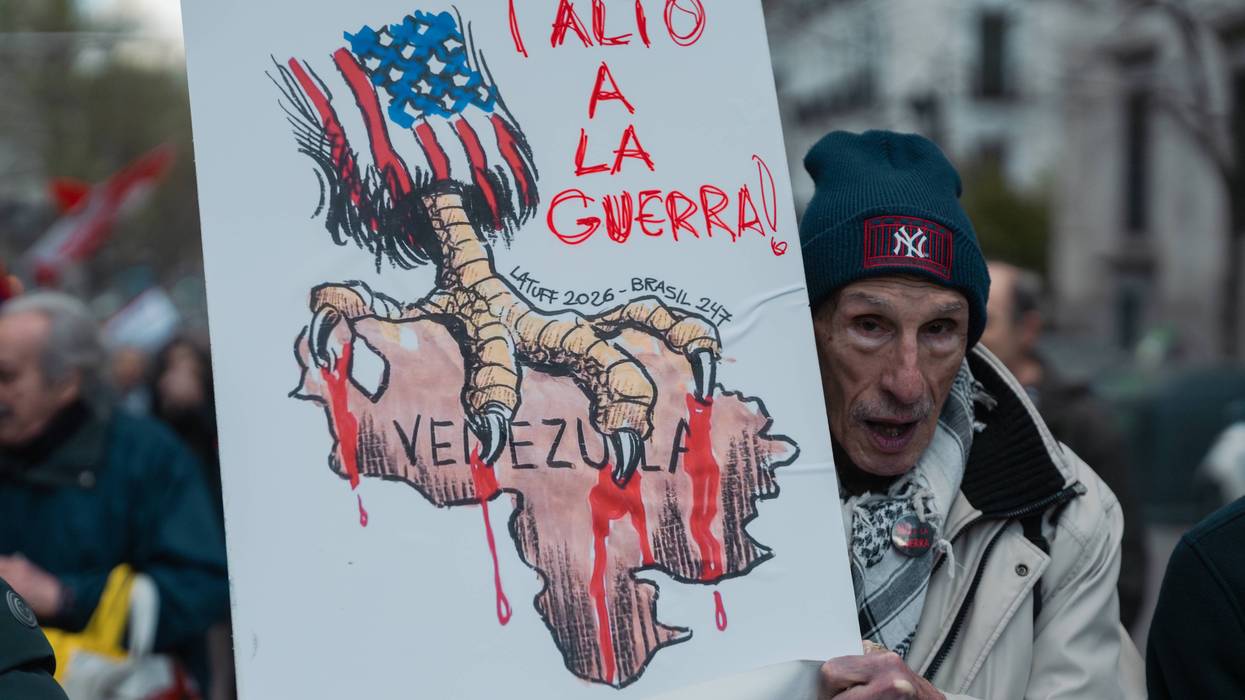
“Across the country people are going bankrupt and dying prematurely because of lack of healthcare, but the US government has billions to spend on imperialist violence to enrich corporations," said one researcher.
As the basic needs of millions of Americans are sacrificed upon the altar of waning US global domination, an analysis unveiled Thursday revealss that the Trump administration has spent billions of dollars on illegal military aggression against Venezuela and civilian boats alleged without evidence to be smuggling drugs off the coast of Latin America.
The Costs of War Project at Brown University's Watson School of International and Public Affairs published an analysis by a pair of researchers who "found that spending on Operation Southern Spear and Operation Absolute Resolve in Venezuela, the Caribbean, and the Eastern Pacific cost at least $4.7 billion from August 1, 2025 to March 31, 2026."
The researchers—Hanna Homestead of the Institute for Policy Studies' National Priorities Project and Jennifer Kavanagh of the think tank Defense Priorities—also found that "costs will continue to mount as some naval assets and aircraft remain in the region and strikes continue."
"This estimate is only partial due to lack of information, and does not include long-term budgetary costs such as veterans benefits," an introduction to the analysis states.
BREAKING: Since August 2025, the U.S. has spent at least $4.7 billion on operations in Latin America and the Caribbean, including the operation to oust Maduro. [THREAD, 1/11]
[image or embed]
— The Costs of War Project (@costsofwar.bsky.social) April 23, 2026 at 8:41 AM
In addition to the financial burden, the analysis notes the human costs of enforcing the so-called "Donroe Doctrine."
"While not the topic of this paper, they are essential to note at the outset," the publication states. "The raid and capture of Venezuelan President Nicolás Maduro during Operation Absolute Resolve resulted in approximately 75 known fatalities. These include 32 Cuban personnel killed, at least 23 Venezuelan security officers killed, and at least two civilian deaths."
US strikes "against unarmed vessels in the Caribbean and Eastern Pacific between September 2, 2025 and March 31, 2026 have killed at least 163 people," the authors added. "In addition, at least one American service member died while deployed to the Caribbean in February 2026 when two US ships collided."
The toll from Trump's boat-bombing spree has since risen to more than 180 following additional reported strikes. Survivors of somemi bombings allege they were tortured by their US captors. The US military and Trump administration have provided no solid evidence to support their claims that the boats were transporting illicit narcotics.
Homestead and Kavanagh noted in their analysis that "to date, Congress has not authorized the use of force in the Caribbean or Eastern Pacific and the Pentagon has not provided information about costs of Venezuela-related operations, even as they continue to mount."
There have been more than 50 boat bombings since Trump launched his campaign last September. Relatives of people killed in or missing after the strikes insist their loved ones were fishers with no links to the drug trade, an assertion echoed by leaders in Venezuela, Colombia, and some Caribbean island nations.
Multiple war powers resolutions aimed at reining in Trump's ability to wage war on Venezuela or bomb boats on the high seas without congressional authorization have been rejected by the Republican-controlled Congress.
In addition to the bombing and invasion of Venezuela and the boat strikes, the Trump administration has deployed troops to Ecuador as part of a joint campaign against alleged drug gangs dubbed Operation Total Extermination. Trump has also ordered the military to plan an invasion to seize the Panama Canal, threatened to "take" Cuba, possibly attack Mexico and Colombia, invade and annex Greenland, and somehow make Canada the "51st state."
That's just in the Western Hemisphere. Overall, Trump has bombed seven countries around the world since returning to the White House and 10 nations over the course of his two terms—including Iran, where he launched an illegal war with Israel.
The Costs of War Project rose to prominence by tracking the human and financial price of the so-called US War on Terror, which since September 2001 has resulted in over 940,000 direct deaths, including at least 432,000 civilians, in five studied countries, at a monetary cost of around $8 trillion.
Homestead and Kavanagh wrote in their analysis that the $4.7 billion figure "is a conservative estimate, and the greatest costs may yet be to come," as "operations do not have a clear end date and are actively expanding."
"They carry significant human, financial, and strategic costs and risk," the researchers contended. "American taxpayers, who are increasingly unable to afford basic needs, have a right to know how their tax dollars are spent."
Homestead told The Intercept on Thursday that "across the country people are going bankrupt and dying prematurely because of lack of healthcare, but the US government has billions to spend on imperialist violence to enrich corporations—from Venezuela to Iran—without any regard for human rights, life, or rule of law."
“This situation illustrates why greater restraint on Pentagon spending—which primarily benefits private contractors—is so necessary," she added.
This, as Trump seeks a record $1.5 trillion allocation for military spending in the next federal budget—despite the national debt approaching a staggering $40 trillion—while proposing billions of dollars in cuts to vital social programs.

An Ecuadorian human rights group has called for a probe after “bombings, burning of homes, arbitrary detentions, torture, and threats against the civilian population” by the joint US-Ecuadorian military operation.
Just a day after President Donald Trump suggested that he'd use his crushing economic blockade in a bid to "take" Cuba, an administration official said much more American warfare is on the horizon across Latin America.
It's called "Operation Total Extermination," according to Joseph M. Humire, the acting assistant secretary of war for homeland defense and Americas security affairs, who testified last week before the House Armed Services Committee.
Humire explained in written testimony that beginning on March 3, the US Department of Defense (which the Trump administration refers to as the Department of War) "supported, at the request of Ecuador, bilateral kinetic actions against cartel targets along the Colombia-Ecuador border."
"The joint effort," Humire said, "is the start of a military offensive by Ecuador against transnational criminal organizations with the support of the US, setting the pace for regional, deterrence-focused operations against cartel infrastructure throughout Latin America and the Caribbean."
The operation with Ecuador, led by the right-wing president Daniel Noboa, is part of "Operation Southern Spear," the Trump administration's illegal bombing campaign in the Caribbean and eastern Pacific Ocean, targeted at boats accused, with little evidence, of ferrying drugs to the US.
The latest of these bombings, which killed at least two more people, occurred on Friday and brought the total death toll since September of last year up to at least 160.
No casualty counts have yet been released by the US or Ecuadorian government for its operations to target what they said were "domestic terrorist organizations." But reports from those on the ground suggest they may have been similarly bloody.
Víctor Gómez, a journalist for the Ecuadorian outlet Radio Sucumbíos, conducted interviews with the residents of the rural town of San Martín in northeastern Ecuador near the Colombian border, who said their community was attacked twice by Ecuadorian and American forces on March 3 and 6.
Noboa celebrated the attacks on the area, which he said housed "a training ground for drug traffickers," and reportedly the home of "Mono Tole," who is the leader of the Colombian drug trafficking group known as the Border Commandos.
But Gómez described the town as having "no trenches, no firing ranges, no traces of a clandestine military infrastructure," adding that "the only things there are horses, cows, and donkeys, at least that's what can be seen on the Radio Sucumbíos cameras."
Locals, many of whom did not have their names published to avoid retaliation, describe military patrols landing on the riverbank on March 3 and launching an "ambush" against four farmers.
“They tied my hands and feet and then hung me up. They put me in a bucket of water, as long as I could stand it… they kicked me, they hit me with the butt of a gun," one of the workers described.
Another said that the soldiers "were looking for someone we didn't know... they told us to hand things over, but we had nothing to hand over."
The soldiers then reportedly "doused the main house and the wooden kitchen with gasoline" and set it ablaze, leaving the flames to consume large amounts of farm equipment.
As residents attempted to advocate for their loved ones, the farm owner said, "The commander in charge wouldn't let us near; they greeted us with gunfire until they took them away."
The four captured farmers were reportedly transported by helicopter to the capital of Sucumbíos, Lago Agrio, where one of the young men described being taken to a tiny room and tortured.
“They shocked us with that thing they called a taser," he said. "They poured water on me and placed it on my ribs and asked us questions."
After finding no evidence of guilt, authorities released the four men near a hospital in the capital.
Three days later, planes and helicopters flew over San Martín, dropping bombs on the ruins of the same house that had already been burnt to the ground three days earlier and on another abandoned house.
Video of that bombing was shared on social media by the Ecuadorian Armed Forces.
“First they burned it on the 3rd, and then on the 6th they came to bomb it. That’s what they did," said the farm's owner.
“How can it be a training camp if this is a livestock area?" he asked. "There is nothing to justify it, there are no training grounds, there is nothing."
The Alliance for Human Rights Ecuador has called for an investigation into the military's alleged "bombings, burning of homes, arbitrary detentions, torture, and threats against the civilian population," which it said were "serious violations of international humanitarian law."
The fallout from the attack has spilled over to create an international incident with neighboring Colombia. Two weeks after the bombing of San Martín, an unexploded 500 lb. bomb was discovered on a farm on the other side of the San Miguel River in Colombia's Putumayo region.
The bomb was identified as a US-made Mark-82. According to the New York Times, "had the bomb exploded, it would have done so with the force of 192 pounds of TNT" and could have harmed people as far as over 1,900 feet away.
"We're being bombed by Ecuador," said Colombian President Gustavo Petro in response to the explosive's discovery. Noboa denied the accusation, saying that "we are acting in our territory, not yours."
Following the US military's January abduction of Venezuelan President Nicolás Maduro, whom the US Department of Justice accused of drug trafficking, leaks have suggested that the US may soon attempt to bring similar charges against Petro, another left-wing leader who has resisted cooperation with Trump. Petro has denied accusations of drug trafficking.
One unnamed official told Nick Turse of The Intercept that attacks along the Ecuador-Colombia border "increasingly look like a coordinated campaign to foment 'discord' if not conflict" in the country.
In his hearing before Congress, Humire said that the US military was providing Ecuador with “capabilities that they otherwise would not have."
Humire said he was not sure how many strikes have been conducted on land so far as part of Operation Total Extermination, but responded "yes" when asked by the committee's ranking member, Rep. Adam Smith (D-Wash.), if the Department of Defense would “be moving to a lot more terrestrial strikes."
He said that these attacks were "just the beginning" of a much broader campaign, adding that the US has entered into agreements with 17 partner nations in the Western Hemisphere as part of the so-called Americas Counter Cartel Coalition.
While Humire said the nations that have reached these agreements "want this support and most of them all are looking for this,” the same cannot necessarily be said for the people living in the crossfire of the operation.
Gomez said that the people of San Martín are still living with “psychological trauma” following the attack. According to the town's vice president, Vicente Garrid, families are living in constant fear that their homes could be targeted next.
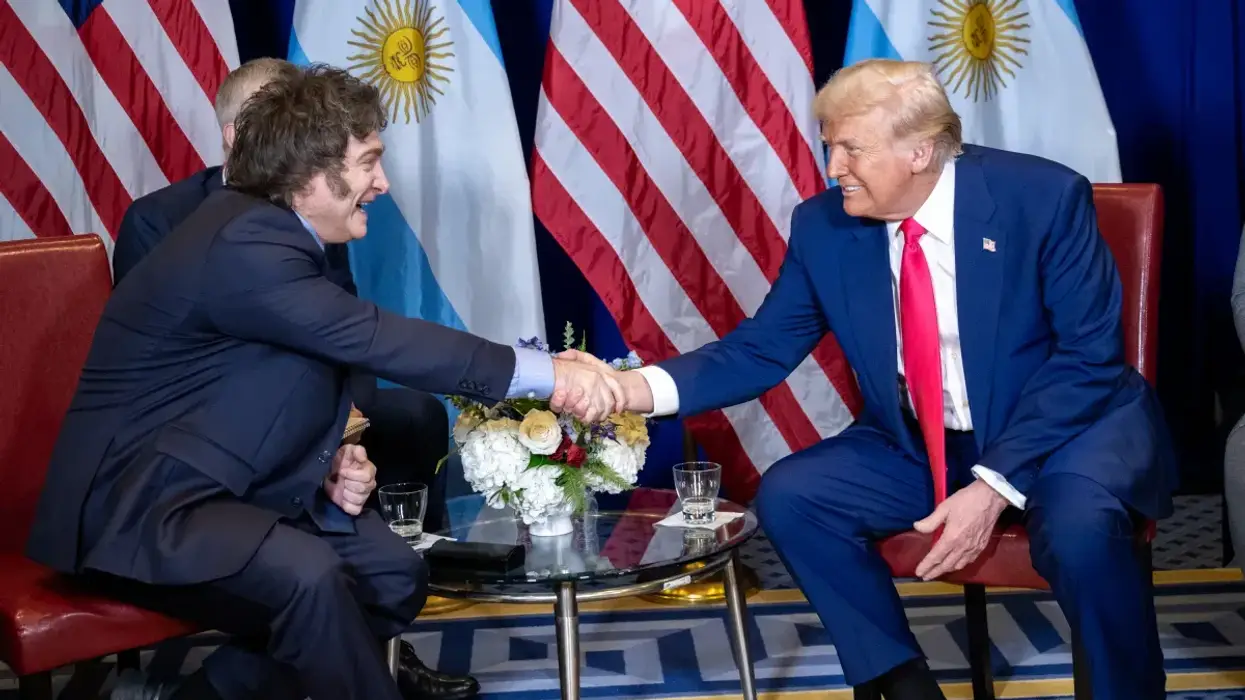
The group of Caribbean and Latin American leaders attending Trump’s weekend summit in Miami are the fan club of his aggressive interventionism, his so-called “war on narco-terror,” and his administration’s attacks on left-wing governments and movements.
For nearly three years the Dominican Republic had been excitedly preparing to host the region’s biggest multilateral event: the 2025 Summit of the Americas, bringing together the leaders of nearly every government in the Western Hemisphere. But on November 3, only a month before the summit was to take place, the DR’s foreign ministry abruptly announced the postponement of the event citing “recent climatic events” (i.e., hurricanes) and “profound divisions that currently hamper productive dialogue in the hemisphere.”
Indeed, regional “divisions”—others might say “alarm” or “outrage”—had intensified during the fall of 2025 following the US’ massive military build-up in the Caribbean, its air strikes against alleged drug boats—resulting in scores of extrajudicial killings—and the threats of a US attack on Venezuela. Past summits, including the 2022 summit in Los Angeles, had seen Latin American leaders fiercely push back against US regional policies. Fearing a potential public relations disaster, DR President Luis Abinader—following consultations with US Secretary of State Marco Rubio—decided that pulling the plug was the best option.
So far there’s no word of a new date for the Summit of the Americas. This weekend, however, President Donald Trump will convene a far smaller hemispheric summit at his golf resort in Miami. The group of Caribbean and Latin American leaders that will be attending Trump’s summit—entitled “Shield of the Americas”—are fans of his aggressive interventionism, his so-called “war on narco-terror,” and his administration’s attacks on left-wing governments and movements in the region. They have earned their exclusive invitations through various forms of tribute and by pledging their continued loyalty, though it remains to be seen whether Trump and Rubio will succeed in garnering support for every point on their agenda, in particular for their effort to push China out of the region.
***
Featuring a who’s who of the Latin American hard right, Trump’s divisions-free summit is reminiscent of recent Conservative Political Action Conferences (CPACs) held in Brazil, Argentina and Paraguay. Like those conferences—in which Argentina’s anarcho-capitalist president Javier Milei and Chile’s far-right president-elect José Antonio Kast have shared the stage with MAGA luminaries like Steve Bannon—the “Shield” summit appears designed to further promote Trump-aligned far-right cultish ideologies in the Americas. As an added bonus, it will be held at the National Trump Doral Miami, ensuring a solid weekend of revenue for Trump’s resort as well as quick, easy travel to and from Mar-a-Lago for the US president.
Still, it remains to be seen whether Trump—whose overall attitude toward the region and its inhabitants oscillates between contempt and indifference—will be willing to invest real time and energy in cultivating this group of leaders.
Each of the summit invitees—numbering 12 at last count—can claim to have advanced the US administration’s regional objectives in one way or another. Many have engaged in sustained attacks against left-wing governments and movements that have resisted Trump’s imperial ambitions. Milei, for instance, has repeatedly insulted President Lula da Silva of Brazil and thrown his support behind former Brazilian president Jair Bolsonaro, convicted last year of plotting a military coup against Lula.
Daniel Noboa of Ecuador, in addition to persecuting left-wing opponents at home, has engaged in an unprovoked tariff war against Colombia’s progressive president—and vocal Trump critic—Gustavo Petro. On March 4, for no apparent reason other than that of wanting to please Trump and Rubio, Noboa expelled the entire diplomatic staff at Cuba’s embassy in Quito. Similarly, Honduras’ recently-elected right-wing president Nasry Asfura rescinded a medical cooperation agreement with Cuba, leading to the departure of more than 150 Cuban doctors that had been serving low-income communities. This offering will have surely warmed the heart of Marco Rubio, who has been pressuring countries around the world to terminate similar agreements in order to eliminate one of Cuba’s few sources of foreign income.
Above all, the cohort of right-wingers attending the summit have been supportive of Trump’s “war on narco-terror,” currently the main vehicle for advancing Trump’s policy of expanding US political and economic influence in the region, referred to both mockingly and seriously as the “Donroe Doctrine.” The first signs of this “war” date back to the first day of Trump’s second term, when he instructed Rubio to designate various drug cartels and Latin American gangs as “foreign terrorist organizations.” It became real when, in late July of last year, the US president ordered a massive build-up of naval and aerial military assets in the south Caribbean and directed US Southern Command (Southcom) to conduct illegal aerial strikes against suspected drug boats, leading so far to over 150 extrajudicial killings of mostly unknown civilians.
On January 3, following months of threats of US intervention in Venezuela, US forces conducted an unprovoked military attack and invasion of Venezuela and abducted President Nicolás Maduro and his wife Cilia Flores, who were flown to New York to await trial on dubious charges. The next day, the members of the Community of Latin American and Caribbean States (CELAC, by its Spanish initials) met and discussed a statement denouncing the illegal attack on Venezuela. Nine governments opposed the statement and effectively blocked its release. The leaders of those governments, except for that of politically unstable Peru, are now on the “Shield of the Americas” invitation list. Two other leaders who’d been elected but hadn’t taken office—Kast of Chile and Asfura of Honduras—defended the attack, and have been invited as well.
A number of governments have gone even further in embracing Trump’s “narco-terror war.” After the US administration designated the fictitious Venezuelan drug organization “Cartel de los Soles” as a Specially Designated Global Terrorist, later identifying Maduro as its leader, the presidents of Argentina, Ecuador, Paraguay, and the DR (all “Shield” invitees) did the same. Given the lack of real evidence that this so-called cartel exists, the US Department of Justice removed the term from its indictment of Maduro; however, the terrorist designation remains in the books in the US and in those four Latin American countries.
Many of the governments represented at the Miami summit have adopted the term “narco-terror” in official discourse and policy statements. Noboa, whose security forces are allegedly responsible for forced disappearances and widespread human rights abuses, has launched his own “war on narco-terror” in Ecuador. On March 3 the US and Ecuador announced joint military operations targeting “terrorist organizations” with US special forces supporting Ecuadorian commandos to “combat the scourge of narco-terrorism,” per Southcom. Other summit invitees, including Argentina, the DR, Bolivia, and El Salvador appear to be getting in the game as well and Paraguay, like Ecuador, has signed a Status of Forces Agreement with the US administration, allowing the presence of US troops and providing them with immunity from local prosecution.
It’s possible that the Trump administration considers that framing US military expansionism in the hemisphere as a combined war on terrorism and drug-trafficking is helpful in garnering public support, though there’s not much indication that it has, outside of the Republican MAGA base. But it’s hard to claim, with a straight face, that President Trump is genuinely determined to fight drug trafficking knowing that he recently pardoned former Honduran president Juan Orlando Hernández, who was serving a 45-year sentence for his role in enabling the importation of more than 400 tons of cocaine to the US. Or when one considers that one of his primary partners in his drug war is President Noboa, whose family’s business appears to be implicated in cocaine trafficking, according to a recent investigation by the Organized Crime and Corruption Reporting Project.
As of the writing of this article, there are few details about the agenda of the summit except that apparently “security” and “foreign interference” will be discussed. Regarding “security,” Trump, Rubio, and Defense Secretary Peter Hegseth—who are all reportedly attending—probably won’t need to do much to convince their allies to double down further on the “narco-terror” threat. Given recent events, it’s likely they’ll focus more on shoring up regional support for the war with Iran, which has so far received mostly tepid backing, with the exception of presidents Milei, Kast, and Santiago Peña of Paraguay, who have all cheered on the joint US-Israeli attacks. They may also seek more overt backing for the intense US regime change effort targeting Cuba, which involves an oil blockade that could soon cause a “humanitarian collapse,” according to the United Nations. Trump and many Republicans have said that when they’re done in Iran, “Cuba is next.”
By “foreign interference” the White House is presumably not referring to US interference in Latin America and the Caribbean, which has been a constant for many decades but has reached new heights under Trump. Instead, the term is widely understood in Washington as primarily a reference to China’s growing regional influence. Here it is far from certain that Trump and his team will make much progress given the massive economic benefits derived from Chinese trade and investment. China is currently the top trading partner for Brazil, Chile, Ecuador, and Paraguay and the second biggest trading partner for nearly all of the other countries represented at the summit.
Many of these leaders have engaged in strident rhetoric against the PRC, but ultimately have quietly chosen to strengthen relations with the world’s second-biggest (and soon biggest) economy. Milei, for instance, referred to the Chinese government as “assassins” and said that he refused to do business with communists. He has completely changed his tune now: At Davos this year he called China “a great trading partner” and said that he plans to visit Beijing this year.
According to a schedule that the White House shared with the media, President Trump will participate in the “Shield of the Americas” summit for two and half hours and then fly back to Mar-a-Lago in the afternoon. With 12 other heads of state present, it’s doubtful that much will be achieved. There will be speeches—one can expect a long, rambling speech by Trump in which he’s likely to congratulate himself again for his “success” in Venezuela—there will doubtless be many selfies taken with Trump, but it’s unlikely that there will be anything resembling real dialogue.
Instead, the summit’s goal appears to be, first, offering the leaders limited face time with Trump as a sort of recompense for their loyalty and various good deeds. Some of these leaders have already received decisive support from Trump. Shortly before a key congressional election in Argentina, the US Treasury offered Milei’s government a $20 billion bailout, which stabilized the country’s economy and helped Milei’s party clinch a major electoral victory. Late last year, Trump interfered in a big way in Honduras’ election by endorsing Asfura’s candidacy and threatening to exact an economic punishment on the whole country if voters didn’t elect him. Asfura ended up winning by a razor thin margin that was contested by his opponents.
For leaders of some of the smaller countries, participating in the summit is itself a big reward, one that allows them to show domestic constituencies that their pliant behavior has paid off in the form of privileged access to the US president. For Trinidad’s Persad-Bissessar, who supported Trump’s boat strikes even after Trinidadian civilians were killed, and Guyanese president Irfan Aali, who promised US oil companies “preferential treatment” in their bids to operate in Guyana’s booming oil sector, the participation in such an exclusive event with Trump is, in itself, the reward.
Finally, it’s likely that, through this brief summit, Trump and Rubio are hoping to consolidate a hemispheric posse of sorts—a group of obedient allies who will continue to defend the administration’s interventionism and its violations of sovereignty and international law and that will eagerly participate in the expansion of the US’ militarized security agenda.
Still, it remains to be seen whether Trump—whose overall attitude toward the region and its inhabitants oscillates between contempt and indifference—will be willing to invest real time and energy in cultivating this group of leaders. His appointment of Kristi Noem as “special envoy” to the summit, as part of a maneuver to remove her from the position of Homeland Security Secretary, doesn’t send the most positive signal to his far-right guests. Even they may be cringing at the thought of the future of the summit being in the hands of a firebrand immigration enforcer who played a key role in the persecution and stigmatization of migrants that beckoned primarily from Latin America and the Caribbean.
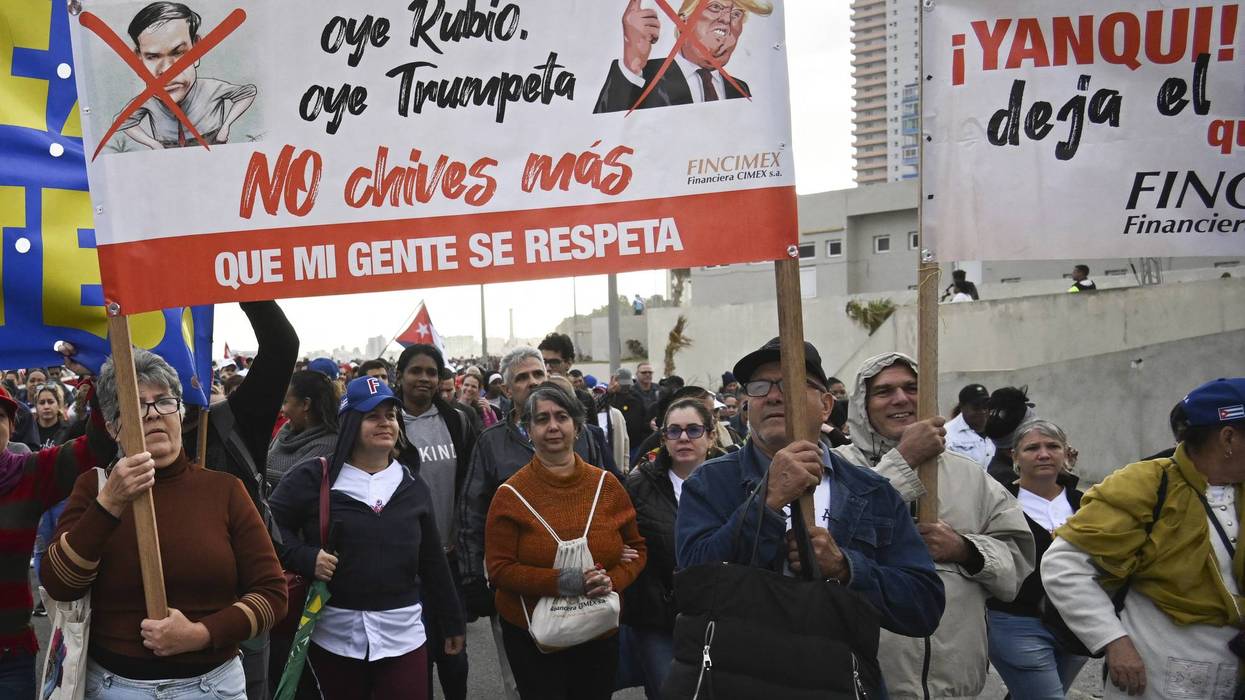
For Trump, regime change in Cuba will cement his legacy. For Rubio, it will mark the culmination of his childhood dream. In their equation, they win and Cuba—like Venezuela, Puerto Rico, Hawai’i, Guam, and so many nations before it—loses its independence and freedom.
The Trump administration’s total blockade on oil imports to Cuba is jeopardizing the lives of millions across the island. It is resulting in severe blackouts that are disrupting food production, hospitals, schools, public transport, and tourism.
Despite this, the people of Cuba remain defiant. As Cuban President Miguel Díaz-Canel remarks: “The collapse lies in the imperial mindset, but not in the mindset of the Cubans. I know we are going to live through difficult times, but we will overcome them together with creative resilience.”
President Donald Trump alleges that Cuba poses “an unusual and extraordinary threat” for two reasons. First, its relationship with “hostile countries” and “transnational terrorist groups,” including Russia, China, Iran, and Hamas. Second, Trump alleges that Cuba’s “communist ideas, policies, and practices” are a threat to the region and endanger the lives of its citizens.
Neither of these is the real reason, however. In January 2026, Trump praised Canada’s trade deal with China as “a good thing.” He told reporters, “If you can get a deal with China, you should do that.” While Trump did threaten retaliatory tariffs against Canada a few days later, his own administration has boasted about the “historic agreement” it reached with China on trade. Trump himself raves about his “extremely good” relationship with Chinese President Xi Jinping. He even invited Xi to join his Board of Peace.
For Trump, colonialism is not solely about exploitation and systematic theft—it is a means of reshaping the world in his self-obsessed image.
Likewise, Trump purports to have a good relationship with Russian President Vladimir Putin. Trump has described Putin as a “genius” and a “strong leader,” and their relationship as “very, very good.” He even praised Putin’s invasion of Ukraine. During a radio interview, Trump said: “Putin declares a big portion of the Ukraine—of Ukraine—Putin declares it as independent. Oh, that’s wonderful. He used the word ‘independent’ and ‘we’re gonna go out and we’re gonna go in and we’re gonna help keep peace.’ You gotta say that’s pretty savvy.” Despite his war crimes, Trump also invited Putin to be part of the Board of Peace.
Clearly, Trump has no issue forming close relationships with “hostile countries.”
Concerns about destabilizing the region or harms to the Cuban people are also false flags. The Trump administration has issued illegal military strikes on boats in the Caribbean Sea and Pacific Ocean that have killed at least 130 people; violated international law by invading Venezuela and kidnapping President Nicolás Maduro; threatened several nations in the region including Colombia, Mexico, Panama, Greenland, Canada, as well as Cuba and Venezuela. Compared to Cuba, the Trump administration is, in orders of magnitude, a significantly greater threat to regional stability.
Moreover, Trump does not care whatsoever about the well-being of Cubans. If he did, he would not have undone President Barack Obama’s attempts at normalizing US-Cuba relations. If he cared, then his administration would not have paused a humanitarian program that allowed Cubans to enter the US and remain here legally for two years. Rather than protecting a group that has overwhelmingly supported him, the Trump administration is mass deporting Cubans back to the very country it is now economically asphyxiating.
This vile disregard, however, is not surprising—Trump does not care about global stability. He does not care about American citizens. And he especially does not care about the peoples of Asian, African, Caribbean, and Latin American countries.
No, Trump’s blatant act of global terrorism against Cuba is not about national security, communism, or saving lives. This act of deprived cruelty masquerading as foreign policy is about narcissism, private interest, and personal grievances.
According to a US official, Trump believes that successfully ending the Castro era would cement his legacy by accomplishing what presidents since John F. Kennedy have failed to do. This is among his chief motivations.
Whether it’s adding his name to the Kennedy Center, building the “Arch de Trump,” or whining about the Nobel Peace Prize he thinks he deserves, Trump is obsessed with himself and his legacy. At Turning Point USA’s 2025 AmericaFest Conference, conservative commentator Jesse Watters recounts asking Trump about why his “big, beautiful ballroom” is so extravagant—“four times the size of the White House.” Watters told the audience, “[Trump] said, ‘Jesse, it’s a monument. I’m building a monument to myself—because no one else will.’”
For Trump, colonialism is not solely about exploitation and systematic theft—it is a means of reshaping the world in his self-obsessed image. In his mind, colonized lands are monuments to his greatness and ego; another property upon which he can stamp his name and expand his golden empire; further proof that only he can bring peace and order to the world.
Trump’s narcissism is why he labelled himself the “Acting President of Venezuela” after his administration kidnapped Maduro—a blatant violation of international law reduced to self-aggrandizement.
This is why he posted a video of an ethnically cleansed “Trump Gaza” filled with palm trees, luxury buildings, and, of course, a towering golden statue of himself. Mass displacement and genocide are simply steppingstones in his pursuit of more self-praise.
Cuba will be no different. He will torture Cuba in the hopes of forcing them to submit to his will and cement his legacy. To force them to “make a deal, before it is too late.” For Trump, all this cruelty is business as usual. As he puts it, “Sometimes, part of making a deal is denigrating your competition.”
That said, Trump’s is not the only ego at play here. Reportedly, Secretary of State Marco Rubio is deliberately blocking negotiations between high-level officials from Havana and Washington. This, despite both Trump and Díaz-Canel insisting that they are open to talks.
Rubio has long since advocated for total regime change in Cuba. In his memoir American Son, Rubio writes about the profound impact his Castro-hating grandfather and President Ronald Reagan’s militant anti-communism had on his political beliefs. He writes that, as a child, “I boasted I would someday lead an army of exiles to overthrow Fidel Castro and become president of a free Cuba.” When applying to law school, his personal essay expressed his “intention to use [his] law degree one day to help construct a new legal and political system for a free Cuba.”
We were too late to stop Trump’s illegal invasion of Venezuela; but we can still save Cuba. From Argentina to Canada, we must unite.
Throughout his life, Rubio has expressed the same sentiment: For Cuba to be free, the Castro regime must end and be replaced with a new political system. For Rubio, Díaz-Canel is no different than Castro. As he sees it, “The dictatorship of Díaz-Canel follows the same tactics as the Castro regime, censoring and repressing members of the opposition.” As such, there can be no negotiations: “Every concession made to the [Díaz-Canel] regime is a betrayal of those who are fighting for freedom on the island.” Thus, Rubio opposed Obama’s attempts at normalizing relations with Cuba, warned against President Joe Biden recommitting to the “failed Obama Administration policy of rewarding Raúl Castro and Miguel Díaz-Canel,” and is now actively blocking negotiations between the two nations. For Rubio, there is only one way forward. The current regime must end, and the era of President Rubio must begin—an illicit inauguration that Trump has already endorsed.
Beyond his own twisted personal desires, many of Rubio’s constituents and backers are also anti-Castro and anti-communist. As journalists Ryan Grim, Noah Kulwin, and José Luis Granados Ceja with Drop Site News write, “If Trump successfully lands a deal with the Cuban government that Rubio would have to sign off on, Rubio would be left to either betray his life’s cause and that of his backers in Miami, or resign in protest.”
The stakes are much higher and far more personal for Rubio than Trump. But in the end, neither care about Cuba nor its people. For Trump, regime change in Cuba will cement his legacy. For Rubio, it will mark the culmination of his childhood dream. In their equation, they win and Cuba—like Venezuela, Puerto Rico, Hawai’i, Guam, and so many nations before it—loses its independence and freedom.
Now is the time for nations across the Americas and the Caribbean to band together against Trump’s vile Donroe Doctrine. President Claudia Sheinbaum should be praised for her efforts to aid Cuba, but this is not a fight Mexico can win alone. Nor should it have to; this impacts all of us.
Let’s be clear: Regardless of current US relationships, no country is safe from Trump’s colonial aggression and narcissistic whims. Whether it’s betraying the Kurds in Syria or threatening NATO allies, Trump will do whatever it takes to satisfy his own ambitions. Trump’s allies in the region, like Dominican Republic President Luis Abinader and Argentine President Javier Milei, would do well to remember this.
We were too late to stop Trump’s illegal invasion of Venezuela; but we can still save Cuba. From Argentina to Canada, we must unite. We cannot allow ourselves to be at the mercy of Trump’s delusions of grandeur. We must act now to save Cuba.
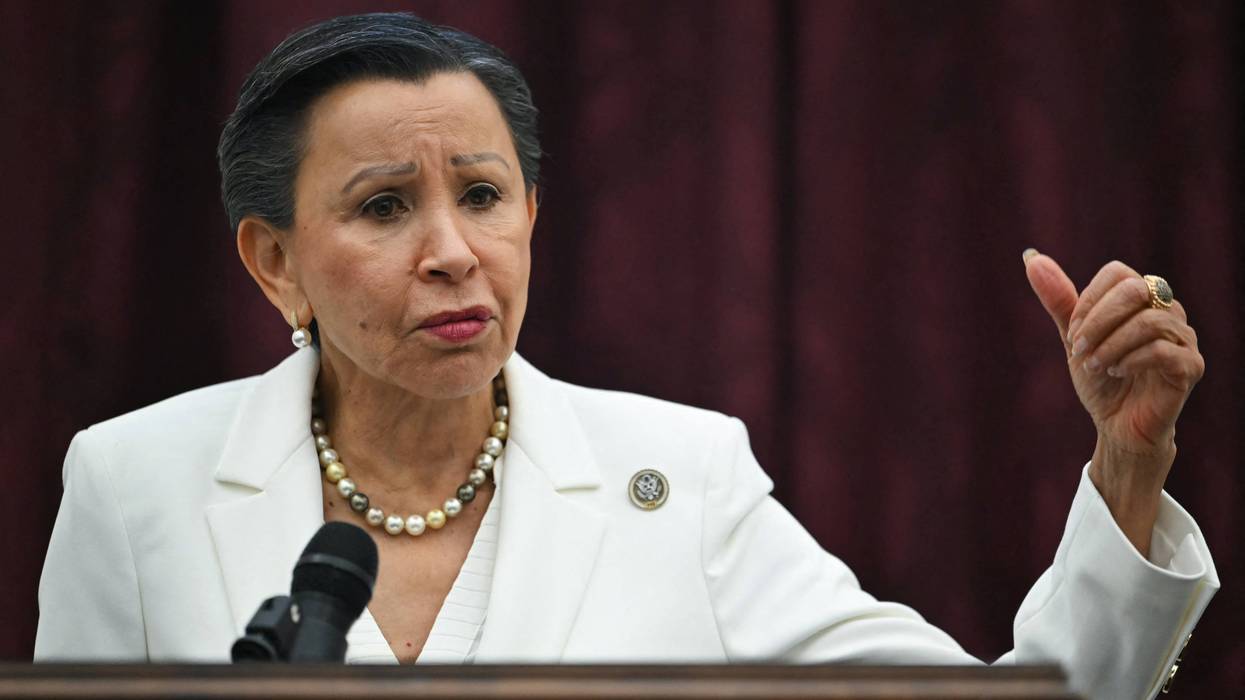
"We need to finally leave the Monroe Doctrine behind and pursue a foreign policy grounded in mutual respect and shared prosperity," said Rep. Nydia Velázquez, introducing the New Good Neighbor Act with Rep. Delia Ramirez.
With the death toll from President Donald Trump's boat bombings of alleged drug traffickers now at 130 after a Monday strike, a pair of progressive congresswomen on Tuesday called for ending the Monroe Doctrine and establishing a "New Good Neighbor" policy toward Latin America and the Caribbean.
In 1823, then-President James Monroe "declared the Western Hemisphere off limits to powerful countries in Europe," NPR noted last month. "Fast forward, and President Trump is reviving the Monroe Doctrine to justify intervening in places like Venezuela, and threatening further action in other parts of Latin America and Greenland."
Trump's version of the policy has been dubbed the "Donroe Doctrine." After US forces boarded the Aquila II, a Venezuela-linked oil tanker, in the Indian Ocean, David Adler, co-general coordinator of Progressive International, said Monday that "the Donroe Doctrine is not simply a vision for the hemisphere. It is a doctrine of global domination."
In response to the president's recent actions—from his boat bombings and pardon of convicted drug trafficker and former Honduran President Juan Orlando Hernández, to his oil blockade of Venezuela and raid that overthrew the South American country's president, Nicolás Maduro—US Reps. Nydia Velázquez (D-NY) and Delia Ramirez (D-Ill.) introduced the New Good Neighbor Act.
"This administration's aggressive stance toward Latin America makes this resolution critical," said Velázquez in a statement. "Their 'Donroe Doctrine' is simply a more grotesque version of the interventionist policies that have failed us for two centuries."
"The United States and Latin America face shared challenges in drug trafficking, migration, and climate change," she continued. "We can only solve these through real partnership, not coercion. We need to finally leave the Monroe Doctrine behind and pursue a foreign policy grounded in mutual respect and shared prosperity."
Ramirez similarly said that "for more than 200 years, the United States has used the Monroe Doctrine to justify a paternalistic, damaging approach to relations with Latin America and the Caribbean. As a result, the legacy of our nation's foreign policy in those regions is political instability, deep poverty, extreme migration, and colonialism. It is well past time we change our approach."
"We must recognize our interconnectedness and admit that the Monroe Doctrine undermines the partnership needed to confront the complex challenges of this century," she argued. "We must become better neighbors. That is why I am proud to join Congresswoman Nydia Velázquez to develop an approach to foreign policy that advances our collective interests and builds a stronger coalition throughout the Americas and the rest of the world."
The original Good Neighbor Policy was adopted by former President Franklin D. Roosevelt in the 1930s, in an attempt at reverse US imperialism in Latin America. The aim was to curb military interventions, center respect for national sovereignty, and prioritize diplomacy and trade.
As the sponsors' offices summarized, the new resolution calls for:
The measure isn't likely to advance in a Republican-controlled Congress that has failed to pass various war powers resolutions that would rein in Trump's boat strikes and aggression toward Venezuela, but it offers Democrats an opportunity to make their foreign policy positions clear going into the midterms—in which Velázquez, who is 72, has decided not to seek reelection.
So far, it is backed by Democratic Reps. Greg Casar (Texas), Yvette Clarke (NY), Jesús "Chuy" García (Ill.), Sylvia García (Texas), Adelita Grijalva (Ariz.), Eleanor Holmes Norton (DC), Jonathan Jackson (Ill.), Pramila Jayapal (Wash.), Hank Johnson (Ga.), Summer Lee (Pa.), Alexandria Ocasio-Cortez (D-NY), Ilhan Omar (Minn.), Mark Pocan (Wis.), Jan Schakowsky (Ill.), Lateefah Simon (Calif.), and Rashida Tlaib (Mich.). Like Velázquez, Chuy García and Schakowsky are also retiring after this term.
Leaders from organizations including the Center for Economic and Policy Research (CEPR), the United Methodist Church's board, and We Are CASA also backed the bill and commended the sponsors for, as Cavan Kharrazian of Demand Progress, put it "advancing a new framework for US engagement in the region grounded in mutual respect, sovereignty, and cooperation rather than coercion or threats."
Alex Main, CEPR's director of international policy, stressed that "Trump is waging a new offensive against Latin America and the Caribbean—conducting illegal and unprovoked military attacks and extrajudicial killings and brazenly intervening in other countries' domestic affairs in an undisguised effort to exert control over the region's resources and politics."
"But while Trump’s actions are especially egregious, they are just the latest chapter of a centuries-old story of US military political and economic interference that has subverted democracy and fueled instability and human rights crimes across the hemisphere," Main continued. "It is in the interest of the US to reject this doctrine of unilateral domination and chart a new course for US-Latin American relations—to treat our Latin American siblings as vecinos, not vassals."
Sharing yet another brief black-and-white video on social media, US Southern Command on Monday announced a "lethal kinetic strike on a vessel" allegedly "transiting along known narco-trafficking routes in the Eastern Pacific." SOUTHCOM added that "two narco-terrorists were killed and one survived the strike," which prompted a search for the survivor.
Legal experts and various members of Congress have described the killings as murder on the high seas. Reiterating that position in response to the latest bombing disclosure, Amnesty International USA urged Americans to pressure lawmakers to act.
"US military helpfully publishes evidence of its mass murder of civilians at sea," said Ben Saul, a professor at Australia's University of Sydney and the United Nations special rapporteur on the promotion and protection of human rights and fundamental freedoms while countering terrorism. "Over to you, US Department of Justice, to do your job and bring murder suspects to justice."