
SUBSCRIBE TO OUR FREE NEWSLETTER
Daily news & progressive opinion—funded by the people, not the corporations—delivered straight to your inbox.
5
#000000
#FFFFFF
To donate by check, phone, or other method, see our More Ways to Give page.


Daily news & progressive opinion—funded by the people, not the corporations—delivered straight to your inbox.
Trump has consistently tried to change the subject whenever the issue of the Epstein scandal crops up, but nothing as dramatic as starting a war... until now.
On Christmas Day in 1997, Wag the Dog, a dark political satire directed by Barry Levinson and co-written by David Mamet, opened in theaters across the country. Hardly typical Christmas fare, the movie centered on crisis-management expert Conrad Brean, played by Robert De Niro, and Hollywood producer Stanley Motss, played by Dustin Hoffman, who fabricate a war to distract public attention from a presidential sex scandal.
Sound familiar?
In the film’s opening scene, presidential adviser Winifred Ames (Anne Heche) and other administration staff summon Brean to the White House to help clean up a mess. The president had just met with a group of teenage Firefly Girls from Santa Fe, they explain, and one of them expressed an interest in seeing a Frederick Remington sculpture in the Oval Office. The president escorted her there and sexually assaulted her.
The story leaked, and not only was The Washington Post about to run with it, but the president’s opponent also was about to air a TV commercial referencing it. With less than two weeks to go until election day, the story could derail the president’s reelection bid.
His attack on Iran will always be remembered as Trump’s war, a war started, in his own words, by a president who apparently “has absolutely no ability to negotiate.”
“We have to distract them” with a fake crisis, Brean tells the staffers, and after brainstorming a bit, hits upon a solution: “We have to go to war with somebody.” He concocts a story that Albania, a “shifty” country that “wants to destroy our way of life,” has smuggled a nuclear suitcase bomb into Canada and plans to sneak it across the border. He then enlists the help of Motss, and together they bamboozle the news media, the CIA, and the general public into believing the country is at war. The Oval Office sex scandal story gets lost in the shuffle and the president’s approval ratings rebound in time to win the election.
President Donald Trump also has a sex scandal that he wants to go away.
After simmering for months, the Jeffrey Epstein sex-trafficking story reached a full boil in February following the Justice Department’s January 30 release of 3.5 million additional file pages. On February 9, the department granted members of Congress access to unredacted files for the first time, and the next day, Rep. Jamie Raskin (D-Md.) told Axios that he found more than a million references to Trump. On February 11, Raskin and other members of the House Judiciary Committee grilled Attorney General Pam Bondi about the files, attracting quite a bit of attention even though she avoided answering their questions.Then, on February 24, came the potential coup de grâce. NPR reported that the Justice Department removed documents that mention Trump from the public Epstein database, including files related to allegations that Trump had sexually abused a minor.
NPR’s investigation found that a specific allegation only appeared in copies of the FBI list of claims and a Justice Department slideshow. Its details are explosive. As spelled out by NPR: “The woman who directly named Trump in her abuse allegation [to the FBI] claimed that around 1983, when she was around 13 years old, Epstein introduced her to Trump, ‘who subsequently forced her head down to his exposed penis which she subsequently bit. In response, Trump punched her in the head and kicked her out.’”
Four days after the NPR story ran, the United States and Israel attacked Iran and poof, the Epstein sex scandal story disappeared from the headlines. Unlike Wag the Dog, however, Trump started a real war, and as of this writing Al Jazeera was reporting that more than 1,000 Iranians are dead and more than 6,000 are wounded, according to Iranian state media.
Of course, the launch of Trump’s war at a time of heightened public interest in the Epstein files could be merely coincidental. The administration has offered various rationales for the attack, from regime change to eliminating Iran’s nuclear program and ballistic missiles, neither of which posed an imminent threat. Others have speculated that Trump is retaliating for alleged Iranian attempts on his life or squeezing China’s oil supplies to force it to rely more heavily on Saudi Arabia. Even so, there are at least two other notable examples of presidential attempts to divert attention from a politically damaging event by attacking another country.
One example was cited in Wag the Dog. In a scene in which Brean reassures Ames that a fake crisis would distract the public, he says, “That was the Reagan administration’s M.O.: Change the story.” Twenty-four hours after 240 Marines were killed in Beirut, he explains, Reagan invaded the tiny Caribbean nation of Grenada.
It is doubtful that many people are going to forget about Trump’s role in the Epstein saga. His victims are certainly not going to forget.
Brean was referring to an incident that happened on October 23, 1983, when a truck bomb destroyed the US Marine barracks in Beirut, Lebanon, killing 241 American servicemen. That same day, President Ronald Reagan approved final plans to invade Grenada during an attempted coup, ostensibly to protect 600 American medical students who, as it turned out, were not in any danger. On October 25, just two days after the Beirut bombing, US forces invaded Grenada. Story changed.
The second example falls into the category of life imitating art. According to Michael De Luca, production head at New Line Cinema when the studio released Wag the Dog, screenwriter David Mamet “was trying to think of something that would never happen in real life, like a president diddling a Girl Scout.” Just a few weeks after the film opened in US theaters, however, news of an eerily similar incident broke.
On January 17, 1998, the Drudge Report reported that Newsweek editors had killed a story exposing President Bill Clinton’s relationship with a 22-year-old White House intern, Monica Lewinsky. Four days later, the story of their tryst appeared in, ironically, The Washington Post.
On August 17, 1998, Clinton appeared on television following his testimony before a grand jury and finally acknowledged that he had “inappropriate intimate contact” with Lewinsky. Three days after that—the same day Lewinsky testified for a second time to the grand jury—Clinton launched 75 to 100 Tomahawk missiles at al-Qaeda targets in Afghanistan and Sudan in retaliation for the terrorist group’s August 7 bombings of US embassies in East Africa. Many said the timetable was more than a mere coincidence.
Trump has consistently tried to change the subject whenever the issue of the Epstein scandal crops up, but nothing as dramatic as starting a war. Even abducting Venezuela’s president doesn’t compare. But the stakes are now much higher than when Reagan invaded Grenada or Clinton hit back at al-Qaeda. The Iran conflict has quickly spiraled out of control. In less than a week, it involves at least 11 countries besides the main combatants Iran, Israel, and the United States.
It is more than ironic that Trump, who fancies himself a virtuoso dealmaker, started this unnecessary war. After all:
From the looks of it, Trump lied that Iran posed an imminent threat and—like Bush—has just destabilized the Middle East. It’s reminiscent of that line about the “Pottery Barn rule” attributed to Bush’s secretary of state, Colin Powell: “You break it, you own it.” His attack on Iran will always be remembered as Trump’s war, a war started, in his own words, by a president who apparently “has absolutely no ability to negotiate.”
Finally, keep in mind that despite Clinton’s attack on al-Qaeda, no one forgot that he perjured himself about his affair with Monica Lewinsky, which ultimately led to his impeachment. Likewise, it is doubtful that many people are going to forget about Trump’s role in the Epstein saga. His victims are certainly not going to forget. It only remains to be seen if it—along with his other transgressions—brings down his presidency.
This article first appeared at the Money Trail blog and is reposted here at Common Dreams with permission.
Radical Empathy must be fierce, stubborn, creative, persistent. We must hold on to each other, build community, be willing to take risks and accept consequences. Seek alternatives.
We always knew that humans could be monsters. We knew about Nazi Germany. We knew about the European slave trade, and about Jim Crow and its ritual lynchings. We knew about Europe’s genocide of Indigenous peoples in the Americas, and about the cruelty of European colonialism in Africa, Asia, and across the world. We knew about the genocidal wars in Korea, Vietnam, Iraq, Afghanistan.
But we also knew about the other end of the spectrum: the people in Europe who hid escaping Jews in their attics. The abolitionists, the Underground Railroad. The nonviolent movement in India that freed millions from British colonization. The pacifists who went to prison in refusal to kill. The Suffragettes; the labor movement; the civil rights movement; South Africa’s anti-apartheid movement; the liberation movements in South America, Africa, and Asia; the Western anti-war movements that finally brought the horrific US-sponsored wars in Southeast Asia to an end.
Somehow, we (or perhaps I should just say I) saw these opposing forces as continuous struggles, continuous choices, continuous needs to resist, build alternatives, create community, connect. A flux with, more or less, equal chances of success if we just kept going. Somehow, we also held a common belief, especially following the traumas of World War II, that there were universal human values, that we as ‘humanity’ could name them and subscribe to them, and that they could protect us from the evils that haunted our world. This seemed to give us space to act for the good, the just, the value of the universality of human rights.
Today, I’m not so sure of that.
There is no time to waste, no neutral space "in the middle." Clearly, in our own innocence, we have not taken seriously enough the depraved power of greed and cruelty, nor understood how far evil has reached. They have grabbed it all… almost.
Like so many others, I am unable to ignore the news about the latest horrific war, launched by the US and Israel against Iran, also unable to ignore the Epstein files and the revelations of the systemic corruption, the evil—no other word for it—that is built into the structures of power that rule not only the US, but the entire "Western" world and all that it dominates, while pretending to represent "democracy" and "human rights."
And the direct connection of these forces to the most evil, or at least the most visibly evil, disaster of our current period: the ongoing genocide in Gaza. And the connection of that genocide with the global arms trade, the US-UK-EU-Israel weapons and surveillance deals. The establishment of concentration camps in Albania for refugees seeking safety in Europe, the cyber-technology that identifies desperate people at the EU border in Eastern Europe by the warmth of their bodies, and sics Frontex attack dogs on them.
"The cruelty is the point." I’ve read this so many times about Israel’s policies and practices toward Palestinians, so extreme in Gaza, only slightly less so in the West Bank and Jerusalem. Children shot in the head, chest, genitals—target practice for Israel Defense Forces soldiers. TikTok videos making fun of Palestinian mothers grieving for their murdered babies. Israeli soldiers blowing up hospitals, universities, schools, refugee camps, and then sharing this online as if they are party jokes. Even a so-called "humanitarian aid program," luring starving people with food, and then shooting them as they desperately scrounge for a pack of flour or rice.
"The cruelty is the point."
And now the back story is revealed: Epstein’s circle of powerful white men, linked to child trafficking, rape, torture of the most defenseless, the most innocent, the least resilient. Meanwhile, these men run the most powerful countries in the world, lead the international banking establishment, steal resources from the citizenry, protect each other, trade off deals, influence, and wealth: "the Epstein class," as it is now being called. Within this cabal of evildoers are the so-called "trans-humanists," wishing to leverage their power to give themselves eternal life—while meanwhile calling for the killing of "all the poor people."
Look at them.
Blank, empty eyes. Stiff bodies. Angry faces. Immature, not as innocent children, but as confused, grown-up boys who never learned the most important lessons, who think they’re powerful because they have a lot of money. People who have understood nothing of the essence of life, people who have probably never held a baby in their arms, never grown a garden or helped a neighbor, never walked through a forest in wonder. Rich kids with simple, underdeveloped spirits, lured by superficial values and massive monetary wealth, now imagining their own eternal longevity. Men coming from loveless backgrounds, who, in our societies dominated by competition, individualism, and greed, have come to own the Earth’s resources and rule our world. (Mostly white) men, compensating for their own moral voids with fantasies of unlimited power, fueled by cruelty.
It is easy to trace the origins of this evil: oppressive medieval Christianity, white European supremacy, patriarchy built on the violent domination of women, greed and vacuous cruelty. Domination through violence and fear of violence.
The cruelty is the point.
Well, guess what. There are other forces alive in today’s world. Decades of resistance to domination and colonialism, the learnings of movements across the Global South, the freedom that Western hegemony for a few decades inadvertently released on its majority population, and access through social media to some of the reality of the actual horrors perpetrated in our names have together led to a worldwide awakening to fundamental injustices, and a worldwide longing for a livable, connected, survivable future.
How to capture this reality, how to describe the alternative to the evil cruelty that so dominates the stories of our time?
Let’s consider the idea of Radical Empathy, which, I believe, is our only hope.
What is Radical Empathy? We know these two words but, together, what do they mean?
Empathy is the ability to feel what the other feels, not the "sympathy" of feeling sorry for someone, but the ability to identify with the feelings of the other, to engage with those feelings as one’s own. To connect with other people, with other living beings, to connect with the planet and all life on it. Perhaps we can describe empathy as a mix of compassion, identification, and solidarity.
And radical means going to the roots, going all the way to the source. Radical has often been interpreted simply as extreme, but that does not do the concept justice. Radical means rooted, grounded, solid, strong.
Combine these two, and see here a powerful concept to help us resist the cruelty and evil now dominating our airwaves, threatening the future of all human and other life on our beautiful planet, threatening the planet itself.
Radical Empathy must be fierce, stubborn, creative, persistent. We must hold on to each other, build community, be willing to take risks and accept consequences. Seek alternatives. Stand in solidarity with all who resist oppression and the violence of power and greed.
We must hold and nurture our sense of humor: not joke telling, but the ability to see oneself in perspective, gently; the ability to use our creativity and the power of the unexpected to flip the story, turn reality around and move it in another direction. We must have the courage to stand up to unjust power, take the risks, and accept the consequences.
And we artists must nurture artistic bravery, using the power of the arts to tell truth, to build community, to turn our capacity for Radical Empathy into a force for good.
There is no time to waste, no neutral space "in the middle." Clearly, in our own innocence, we have not taken seriously enough the depraved power of greed and cruelty, nor understood how far evil has reached. They have grabbed it all… almost.
What they do not yet control: our spirits, our creativity, our ability to defy cruelty, to invent and reinvent Radical Empathy. And, thank you life, they do not control the youth of our world, who increasingly stand bravely against the organized cruelty of today’s powerful.
There is no guarantee that Radical Empathy will prevail, that the powers of connection, compassion, and love will be able to carry us to a place of repair, redress, reconnection, rebuilding, for all who have suffered from the unlimited cruelty of our time. There is no guarantee that our children and our grandchildren will grow and thrive in a world of compassion and connection.
But even if we do not succeed to turn the global tide, we will still be living our best possible lives as changemakers, planting seeds of change, creating islands of survival.
I remember, reading Joanna Macy, her admonition to embrace your grief. Look straight at the horrors, acknowledge the dangers, the threats to our world, the destruction, the cruelty.
And then look beyond, choose, and move together.
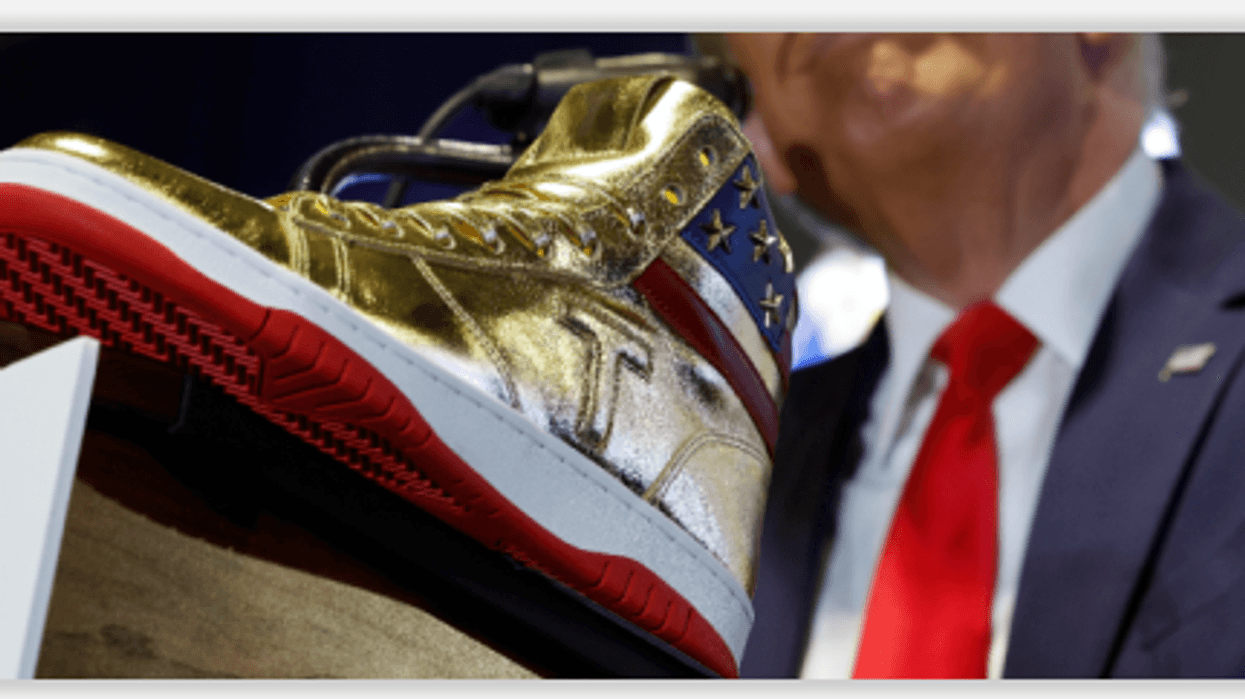
Trump loves nothing more than hearing his name and seeing it affixed, preferably in gold color, to apartment and office buildings, casinos, and consumer products.
At his February 2026 State of the Union address, Great Leader Donald Trump was atypically modest about his achievements as president in his second term. He has conquered inflation; ended eight wars; taken $1 off the price of gas; created jobs as never before; conquered unemployment; ridded the cities of criminals and immigrants; secured $18 trillion in investments with highly effective tariff wars; and created a peace board with a modest $1 billion entry fee.
Of course, none of these claims is true. But the president should be honored for his hard work and delusionary beliefs. President Trump loves nothing more than hearing his name and seeing it affixed, preferably in gold color, to apartment and office buildings, casinos, and consumer products. The board of trustees of John F. Kennedy Center for the Performing Arts, most of whom Trump appointed and whose chairman is Donald, voted to rename it the Trump-Kennedy Center. But more work is to be done. The following buildings, objects, and programs are just a first cut of the most important honors.
To ensure these and other possibilities, in February 2026 Trump’s representatives filed three applications with the United States Patent and Trademark Office to trademark his name for future use on an airport in a variety of possible names, along “clothing, handbags, luggage, jewelry, watches, and tie clips.” This would enable US citizens to continue to pay Trump through licensing fees. A reasonable patent lawyer might trademark “Grifting President™”.
Trump has already immortalized his legacy in: at least eight Trump towers, and at least 13 others never completed; 10 other Trump buildings, and a dozen more never completed; a handful of Trump hotels, but at least 18 never completed or renamed;15 golf courses, and five abroad, and several under discussion abroad funded by Qataris and Saudis; seven former casinos and four never completed that led to six bankruptcies; and 94 felonies and one case of sexual abuse.
Trump can already be satisfied to learn that scientists have named several creatures after him: a fragile yellow-white moth (Neopalpa donaldtrumpi), a fossil sea urchin (Tetragramma donaldtrumpi), and Dermophis donaldtrumpi, the proposed name for a new species of blind amphibious 10 centimeter-long worm.