

5
#000000
#FFFFFF
To donate by check, phone, or other method, see our More Ways to Give page.
Daily news & progressive opinion—funded by the people, not the corporations—delivered straight to your inbox.
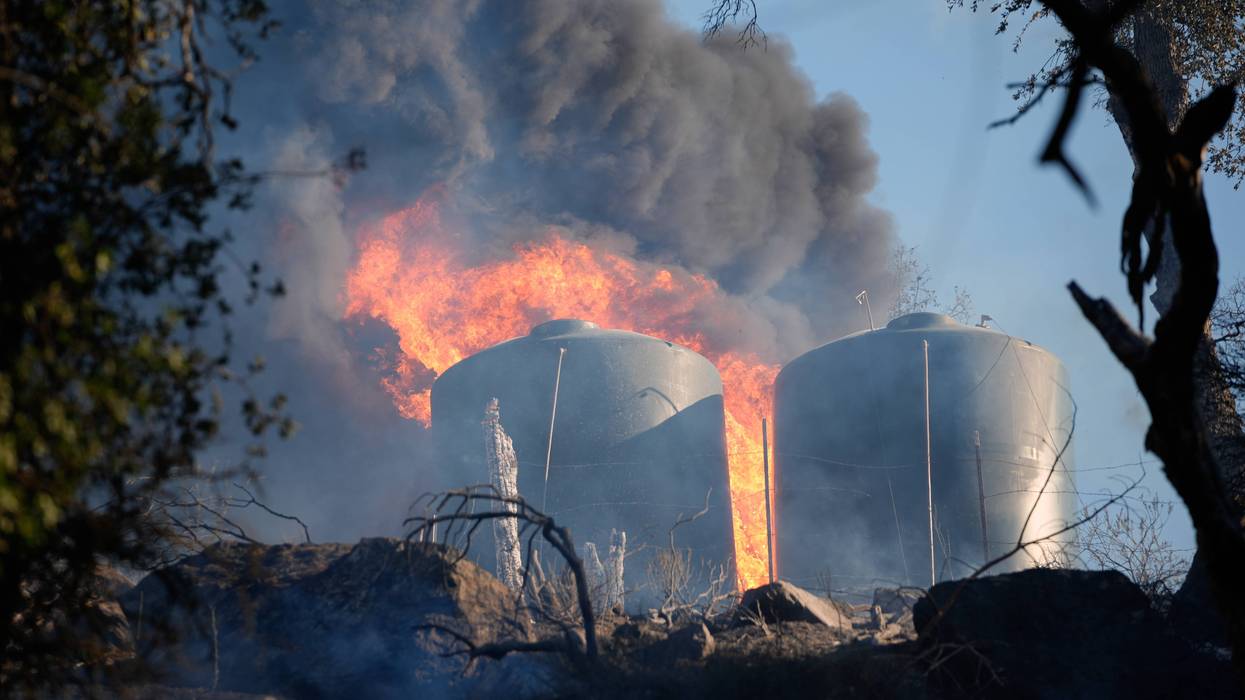
"If we're exceeding records from the Dust Bowl, that says that we're in deep trouble," warned one meteorologist.
While President Donald Trump continued his war on renewables and support for climate-wrecking fossil fuels, the contiguous United States endured the hottest July on record, according to data released Monday by his own government.
"July 2026 averaged 76.9ºF, the warmest month on record (1895-present)," National Oceanic and Atmospheric Administration (NOAA) announced. That figure was "3.3ºF above the 20th-century average. This was the warmest July—and warmest month—in the 132-year record, 0.1-0.2ºF warmer than July 1936 and July 2012."
The Associated Press highlighted that last month's average for the Lower 48 eclipsed "the Dust Bowl's July 1936 by an eighth of a degree," a development that meteorologist Jeff Masters of Yale Climate Connections described as alarming.
"It's not good when you’re breaking records from the Dust Bowl, which we are in this case," he told the AP. "And that was a crazy sort of situation where you put tens of millions of people in motion. You had this great migration because of the drought and the heat that hit the center of the US—just a cataclysmic event in US history. If we're exceeding records from the Dust Bowl, that says that we're in deep trouble."
Separately, Masters and fellow meteorologist Bob Henson wrote at Yale Climate Connections that "there's no denying the scorching conditions of the 1930s Dust Bowl. An impressive 24 of the 48 contiguous US states have yet to exceed the single hottest readings observed in each of those states during the 1930s."
"However, the Dust Bowl has been misused for years in climate-denial writing and speaking to argue that human activity isn't warming the nation's climate to any great degree. In fact, human influence played a vast part in the Dust Bowl itself," they explained. "Decades of overplowing by European settlers in the Plains and Midwest—in the erroneous belief that 'rain follows the plow'—left the landscape vulnerable when a sequence of multi-year droughts struck. Huge volumes of topsoil simply blew away, and the denuded land heated up far more quickly than better-managed land would have. The Dust Bowl intersected with the Great Depression to make the 1930s a period of profound misery for millions of Americans."
"A 2022 study, 'How the Great Plains Dust Bowl drought spread heat extremes around the Northern Hemisphere,' showed how the Dust Bowl's physical influence extended well beyond US borders," the pair added. "As lead author Gerald Meehl of the National Center for Atmospheric Research put it, 'This is a mechanism that arose in a unique way from human influence—not by burning fossil fuels but from plowing up the middle third of the US.'"
We just broke a heat record set during the Dust Bowl. 😬That record has been a favorite talking point of climate deniers. Now it's bitten the dust: yaleclimateconnections.org/2026/08/the-...New from @drjeffmasters.bsky.social and @bhensonweather.bsky.social
[image or embed]
— Yale Climate Connections (@climateconnections.bsky.social) August 10, 2026 at 2:50 PM
Wildfires broke out across Canada and in the United States' Pacific Northwest last month, burning over 140,000 acres in Oregon alone. NOAA found that "daytime maximum temperatures averaged 89.5ºF, 2.9ºF above average, ranking as the sixth-warmest month on record for average high temperatures, while overnight minimum temperatures averaged 64.2ºF, 3.7ºF above average, ranking as the warmest month on record for average low temperatures, surpassing July 2022 by 0.7ºF."
Those high temperatures overnight can be dangerous. Masters told the AP that "if you're talking heatwaves, that nighttime low is incredibly important for determining total heat stress... So if it doesn’t cool off at night, your body doesn't have time to readjust to all the heat."
While July set a new record in the United States, because of the fossil fuel-driven climate crisis, "this may be one of the coolest years we’re gonna experience for the rest of our lives," the meteorologist also said. He added that humanity needs "to stop burning so many fossil fuels. We also need to be spending money to adapt to the new climate that we've put in place."
Wildfires also impacted the European Union last month—and NOAA's new numbers came out as the EU's Copernicus Climate Change Service announced Monday that worldwide, last month was second warmest July on record, tied with 2024. The agency also found that the average global ocean surface temperature was the hottest ever recorded in July, fueled in part by El Niño conditions.
"Our leaders’ response has to be swifter and stronger than El Niño," argued Anne Jellema, executive director of the advocacy group 350.org. "We already know that global heating is supercharging extreme weather damage, and the public wants polluters to pay for it. With Big Oil's earnings skyrocketing while a global food crisis looms, now is the time to act. The only way to stave off a humanitarian disaster is to make those causing it pay upfront—before even more damage is done."
The Guardian pointed out that "an unusually strong El Niño event, a periodic climate feature where a section of the Pacific Ocean heats up causing weather around the world to alter, is likely to cause next year to be the hottest on record globally, surpassing a record set just in 2024. Some scientists think the developing El Niño could even ensure that this year is the one that breaks the record."
Michael Mann, a climate scientist at the University of Pennsylvania, told the newspaper that "the bottom line... is that we expect to set record global temperatures as long as carbon emissions continue to warm the planet, and typically these records are set during major El Niño events."
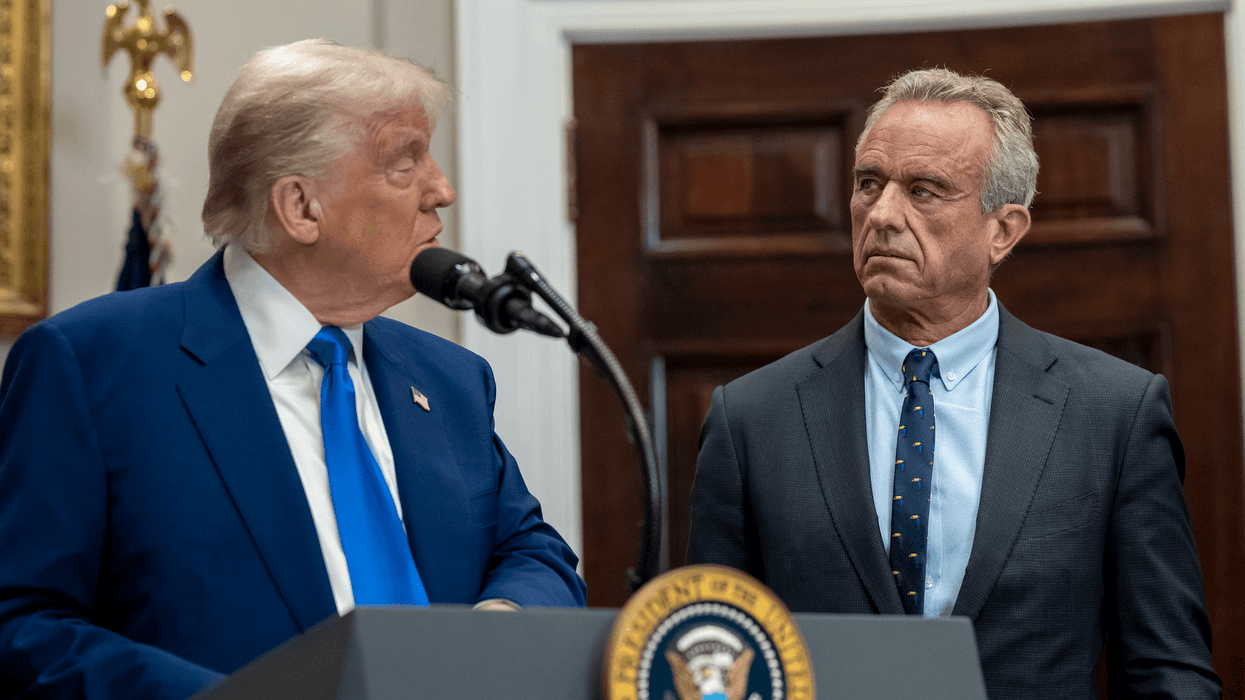
Protect Our Care called the president's decree on the measles, mumps, and rubella vaccine "a wildly dangerous escalation of the administration’s deadly anti-vax agenda."
US President Donald Trump on Monday signed an executive order overhauling federal childhood vaccine recommendations, reviving a discredited theory that vaccines may contribute to autism and prompting condemnation from public health advocates and even rebuke from a Republican senator.
Trump's order, “Delivering Gold Standard Childhood Vaccine Recommendations for Americans,” calls for separating the combined measles, mumps, and rubella (MMR) vaccination into three individual shots "once such products are domestically available." The directive also recommends administering childhood immunizations during separate medical visits, "to the maximum extent feasible."
At a press conference, Trump explained that the recommendations in his order concern "many subjects, but including autism in particular."
"Decades ago, children received only a small fraction of the vaccines required today," the president said. "In those times, people were much healthier and, of course, the high rates of autism now observed did not exist. So, there's a reason for such epidemic rates of autism. And we're going to bring it back to much closer to where it was."
"While we do not know exactly what the cause is with respect to autism, it is essential to our research efforts that we have the very best vaccine recommendations in the entire world," he added. "So we're reducing them, we're changing it to visits over the period of a year, a year and a half, so they get 20% of what they would have gotten in one big shot."
Decades of rigorous research have failed to produce any credible scientific link between vaccines and autism. That has not stopped influential figures, including Health and Human Services Secretary Robert F. Kennedy Jr., from claiming such a link. Trump and Kennedy also alarmed experts by claiming last year that acetaminophen, commonly known by the brand name Tylenol, is linked to autism spectrum disorders in developing fetuses when taken during pregnancy.
While anti-vaccine and vaccine skeptic voices applauded Trump’s order, public health experts said the directive will prove deadly.
Trump also claimed that inoculating children with all three components of the MMR vaccine could possibly be "quite lethal," but when asked by a reporter for evidence supporting that claim, the president could offer none.
I put together these two parts of Trump’s event on vaccines.
Trump claims there is a possibility that the MMR vaccine could be “quite lethal.” But later, when asked if he has any evidence to back up his claims, he says no pic.twitter.com/AwuW9IiYNl
— Acyn (@Acyn) August 10, 2026
The Affordable Care Act advocacy group Protect Our Care warned that Trump's executive order on the "nonexistent autism-vaccine link will get kids killed" and "is a wildly dangerous escalation of the administration’s deadly anti-vax agenda."
“Pushing parents to spread out these lifesaving vaccines over time is guaranteed to increase kids’ exposure to these very harmful diseases, including the simple reality that follow-up appointments will be missed," Protect Our Care senior adviserc Anne Shoup said in a statement. "If Trump’s baseless, science-free decree is followed, the end result will not be fewer children with autism, but far more in the ER or even the morgue."
"Whether or not state health departments follow Trump’s ignorant guidance, this official proclamation from the highest level of power will have a further chilling effect on vaccination rates across the board," Shoup added. "All Trump is doing is fanning more unfounded fear, pressuring a further drop in vaccination rates, and welcoming a resurgence of preventable diseases once thought eradicated. For the anti-vaxxer-in-chief, the current record-breaking measles crisis is apparently not on a grand enough scale.”
Anthony Wright, executive director at the health advocacy group Families USA, said in a statement that “today, the president announced yet another change in vaccine policy that is not based on science or medical evidence."
"The science has not changed. Vaccines that prevent common illnesses like rotavirus, hepatitis B, and the flu are just as safe and effective today as they were yesterday," he continued. "The new policy will simply create chaos and confusion for patients and providers, and increase costs for families when getting their kids vaccinated."
"This executive order seeks to sidestep the established panel of experts entirely, replacing decades of bipartisan, public, evidence-based review with the whims of a rogue White House and HHS secretary," Wright said. "This new directive sabotages a science-based process that has successfully prevented widespread outbreaks among American children for generations."
“Downgrading the universal recommendation for common, lifesaving vaccines will cause confusion for parents and providers alike, and confusion costs lives," he added. "Removing the presumption that every child should receive them isn't just dangerous; it risks undermining the guarantee that recommended vaccines are covered without cost-sharing, forcing families to choose between protecting their kids and paying for an expensive doctor's visit."
Dr. Robert Steinbrook, health research group director at the consumer advocacy group Public Citizen, said that "the Trump administration is continuing a mindless anti-scientific assault on the childhood vaccine schedule and falsely tying vaccines to autism."
"There is no medical reason for the MMR vaccine to be split into three separate single-disease shots that would be administered at separate office visits, changes that would only decrease vaccine coverage and increase healthcare costs," he continued. "Under the draft executive order, mandatory vaccine requirements for children to attend school would be also put at further risk. These and other directives are the exact opposite of ‘Gold Standard Childhood Vaccine Recommendations’ during the worst year for measles cases in decades."
The resurgence in measles is directly linked to vaccine refusal and hesitancy stoked by influential figures and fora like Kennedy and the Children's Health Defense nonprofit group he formerly chaired.
Trump will sign an executive order proposing reducing childhood vaccines, and separating the MMR vaccine into 3 individual shots.This reckless move will decrease vaccine uptake further at a time where measles cases are at a 35-year high, and the US is set to lose its measles elimination status.
— Dr. Lucky Tran (@luckytran.com) August 10, 2026 at 12:24 PM
“Senate confirmation of Dr. Erica Schwartz as director of the Centers for Disease Control and Prevention (CDC) should have restored sanity to the federal government’s vaccine policies," Steinbrook added. "Regrettably, within days of Schwartz’s confirmation, the Trump administration has offered only more irrational nonsense.”
Trump and Kennedy have pursued a broad rollback of federal vaccine policy, including by purging the CDC's entire vaccine advisory committee and replacing its members with controversial figures; reducing or eliminating universal recommendations for several vaccines, including Covid-19, flu, hepatitis B, and some childhood vaccines; canceling hundreds of millions of dollars in mRNA-vaccine development funding; and pushing individual decision-making.
Physicians serving in Congress from both parties also decried Trump's order.
“Donald Trump and RFK Jr. have gambled with American lives and seem determined to turn the clock back on decades of medical and scientific progress," said Congresswoman Kelly Morrison (D-Minn.), an OB-GYN. "Communities across the country continue to face outbreaks of preventable diseases, and Trump and RFK Jr. are doubling down on their dangerous disinformation."
"Meanwhile, working families continue to see their healthcare and prescription drug costs skyrocket—all so Trump can pay for tax handouts for billionaires," she added, referring to the so-called One Big Beautiful Bill signed by the president in July 2025. "Families shouldn’t have to worry that Trump and RFK Jr. will stand in the way of protecting themselves and their loved ones from serious illnesses.”
Sen. Bill Cassidy (R-La.), a gastroenterologist who voted to confirm Kennedy, wrote on X: "I’m a doctor. This executive order is wrong. The president does not have the expertise to make these changes."
"Vaccines are overwhelmingly safe. Vaccines are effective. Vaccines DO NOT cause autism," he continued. "Breaking up vaccines will mean children have to get more shots to get the same protection, not fewer shots. It will increase hesitancy and make children less safe."
"Parents should listen to their child’s pediatrician about vaccines rather than listening to an inaccurate executive order," Cassidy added. "This is so wrong."

"Lindsey himself said to me, in his office, 'This is the best military budget I've seen since I've been in Congress,'" the Pentagon chief claimed.
US Defense Secretary Pete Hegseth "can't persuade Republicans to back his big budget," but that didn't stop him from pushing the $1.5 trillion proposal during a Monday event to rename Joint Base Charleston after the late Sen. Lindsey Graham.
When Graham, who served in the Air Force, unexpectedly died last month, critics remembered the South Carolina Republican as someone who "never met a war he didn't want to send your kids to," as well as "a bloodthirsty bastard who cheered the killing of Muslims and sold his soul to the fascists."
On Monday, Hegseth—who deployed to Afghanistan and Iraq—fondly recalled meeting with Graham while part of the group Vets for Freedom. Joined at the base by the senator's replacement, his sister Darline Graham, and Treasury Secretary Scott Bessent, who is from South Carolina, the Pentagon chief declared that "it falls to us to complete the work that Lindsey Graham began and advocated for for decades."
"As we gather here today, the War Department is seeking a historic, generational investment of $1.5 trillion for America's warriors, and Lindsey himself said to me, in his office, 'This is the best military budget I've seen since I've been in Congress,'" Hegseth claimed, using President Donald Trump's preferred name for the Department of Defense.
"This department pays tribute to Lindsey Graham in the naming of this base, but there could be no greater tribute than for Congress to give and invest in our warriors for the full $1.5 trillion," he added.
The GOP narrowly controls both chambers of Congress, but as Politico reported just hours before the event, "Hegseth hasn't persuaded Republicans to steamroll Democrats and advance the record-breaking plan, despite regularly trekking to the Hill in recent weeks and hobnobbing with lawmakers. Instead, an increasingly vocal group of GOP lawmakers argue the administration hasn't explained why Republicans should burn valuable political capital in pursuit of Trump's vision—especially with the midterms just months away."
"Several top Republicans are skeptical about the Trump administration's two-track approach to clinching $1.5 trillion. This relies on the GOP using the partisan reconciliation process—which allows the majority to bypass Democrats entirely—to provide $350 billion, the bulk of the increase," the outlet detailed. The Republican majority "has—mostly—had Hegseth's back" since the battle to confirm him, despite widely condemned bombings of boats allegedly trafficking drugs on the high seas and the ongoing war on Iran.
Hegseth on Monday shared some supposed details from his last meeting with Graham, who chaired the Senate Budget Committee.
"Mr. Secretary, what do you need for a reconciliation?" Graham said, according to Hegseth. "I said: 'Well, in total, sir, we're going to need $350 billion for our military. That's what we believe gets us to $1.5 trillion—$115 [billion] in the base budget, $350 [billion] in reconciliation, and we'll be ready.'"
"He looked at me and said, 'How's $355 [billion] sound to you?' He wanted to give even more than $350 [billion]," Hegseth continued. "I saw firsthand as a young first lieutenant, as a captain in a combat zone, and as a secretary, the unwavering commitment of Lindsey Graham."
Hegseth's recounting of their meeting isn't the first time Graham's pro-war ideology has been highlighted since he died. As Common Dreams reported late last month, footage filmed for a documentary that was in the works shows the then-senator joyfully reacting to Trump's Iran War. He said: "I almost cried. I mean, like, how long have we been pushing this?"
Responding to the release of that footage, Brian Finucane, senior adviser to the US Program at the International Crisis Group, said that "the warmonger got his wish and the result has been a catastrophe."

"Trump is continuing to use ICE and DHS to intimidate Americans who disagree with him."
Rep. Ilhan Omar is demanding the US Department of Homeland Security explain why a federal immigration enforcement officer was stationed outside one of her monthly town hall gatherings in Richfield, Minnesota.
In a letter sent last week to Michael McCarthy, interim special agent in charge of the St. Paul Homeland Security Investigations (HSI) field office, Omar (D-Minn.) explained that local law enforcement officials on Thursday spotted a woman sitting in a Ford Explorer who appeared to be monitoring the building where her town hall was taking place.
A Richfield Police officer scanned the woman's license plates and found they were registered to a different vehicle. As noted in a Monday report from HuffPost, it is illegal under Minnesota state law for federal immigration agents to drive in vehicles with mismatched plates.
The officer then approached the car and asked the woman to identify herself, and she said she was an agent for HSI, which is an agency within US Immigration and Customs Enforcement (ICE).
Although the agent left the property without incident, Omar nonetheless said that HSI "put an entire community at risk" by improperly deploying personnel there.
"Instead of monitoring the area for those who might wish harm to me and my constituents," Omar wrote, "Richfield Police were required to devote time to investigating why an HSI agent was outside of a congressional event in a vehicle with mismatched plates."
Omar then linked the HSI agent's presence with "many Americans' growing concern that the Trump administration uses ICE to surveil political opponents and interfere with our democracy."
The Minnesota Democrat demanded to know more details about the agent's deployment, including why she was stationed outside of Omar's town hall event, an overview of the agent's training, and the coordination that HSI is supposed to have with local law enforcement before engaging in such an operation.
In a separate social media post, Omar said that President Donald Trump "is continuing to use ICE and DHS to intimidate Americans who disagree with him," although she offered no specific evidence that this HSI agent was sent as part of an intimidation campaign.

"State leadership should be stopping this purely political stunt destroying Big Bend," said one lawmaker of Republican officials. "They don’t have the courage to stand up to Trump."
The arrival of bulldozers at Big Bend National Park along the US-Mexico border in Texas to clear native vegetation for an access road for President Donald Trump's border wall was more than enough to send outrage through the state Democratic Party and advocacy groups last week—but on Monday one lawmaker directed her ire at Republican officials who have done nothing to stop the destruction of one of Texas' most prized landmarks.
"This is devastating to watch. State leadership should be stopping this purely political stunt destroying Big Bend. They don’t have the courage to stand up to Trump," said state Rep. Vikki Goodwin (D-47), who is running for lieutenant governor.
She demanded to know whether Republican Gov. Greg Abbott and his government are "fine" with the plan to build 175 miles of the border wall across Big Bend and the Black Gap Wildlife Management Area as well as over 200 miles of patrol roads in the region, following the US Department of Homeland Security's (DHS) unprecedented waiving of dozens of environmental laws earlier this year.
"If not, stop it from continuing," said Goodwin.
The state representative was joined by US Rep. Veronica Escobar (D-Texas) in calling out Republicans in the state who have taken no action to stop the bulldozing of a national park which supports thousands of jobs, generated $63.7 million in total economic output in 2024, and is not even a region where a border wall would fulfill Trump's stated goal: stopping unauthorized crossings from Mexico.
"Ken Paxton, the Texas attorney general, could sue the federal government to stop this," said Escobar on Sunday. "Greg Abbott, the Texas governor, could fight the federal government to stop this. But neither one is truly willing to fight for the people of Texas."
The state AG is running for US Senate, while the governor is seeking another term. Escobar said that Paxton and Abbott's Democratic opponents in the November elections—state Reps. James Talarico (D-50) and Gina Hinojosa (D-49)—would take action to stop the construction of the border wall.
"When I’m governor, I will defend our sovereignty, our land, and our inheritance," said Hinojosa last week. "Gov. Abbott is either too weak to defend Texas and stop this, or he just doesn’t care."
As the Center for Biological Diversity (CBD) noted last week, the Big Bend Sector covers more than a quarter of the US-Mexico border, but no unauthorized vehicle crossings have ever been documented in the mountainous region. In 2025, 1.3% of all border apprehensions took place in the area, and in the national park itself, apprehensions accounted for 0.045% of the national total.
"This absurd project is despised by everyone in West Texas," said Laiken Jordahl, a southwest conservation advocate for CBD, on Saturday. "When will Texas leadership step in?"
All five sheriffs in the Big Bend border region oppose the building of the border well, while county judges in all 14 of the state's border counties have spoken out against the project and seven former superintendents of the national park wrote to DHS in June, asking them reject waivers of laws including the National Park Service Organic Act, the Endangered Species Act, and the National Wild and Scenic Rivers Act.
As Common Dreams reported in June, the environmental laws were waived as planning documents showed miles of planned barriers to stop vehicles from crossing the border at Big Bend, as well as patrol roads cutting through the park. For some of the construction, such as in remote areas like Mariscal Mountain, extensive dynamite blasting will be required, according to CBD.
In May, DHS awarded a $1.7 billion contract to Southwest Valley Constructors, a subsidiary of Kiewit, as well as contracts to North Dakota-based Fisher Sand & Gravel and Montana-based Barnard Construction.
The chairman of the latter company, Tim Barnard, has contributed millions of dollars to Republican candidates, including $1 million to Trump, High Country News reported in June. Barnard's largest contract was awarded without competitive bidding.
"We don't need to give billions of our tax dollars to out-of-state vendors," said Talarico on Sunday. "We don't need to desecrate this sacred land. We don't need this useless, disgraceful, corrupt Big Bend border wall."

"The National Park Service is being used as a piggy bank," said one critic.
Internal documents from the US National Park Service reportedly show that massive sums of money have been diverted to fund assorted projects commissioned by President Donald Trump.
According to a Sunday report from journalist Scott MacFarlane, NPS records show that $323 million has been rerouted to fund projects on the White House grounds this year alone, representing an increase of nearly 5,000% from the amount spend on such projects in 2024.
Additionally, the documents show NPS allotted nearly $100 million for projects on the Washington National Mall, a tenfold increase on the amount spent two years ago.
At the same time, the records show "multimillion-dollar reductions" in funding for several famous national parks, including Yellowstone, Yosemite, and Grand Canyon.
In fact, the total spending for projects at the White House and National Mall is larger than the combined spending at nine of the largest US national parks, MacFarlane found.
One anonymous federal employee who spoke with MacFarlane said that the spending shifts documented in internal records are "part of a pattern of the National Park Service being forced to prioritize Trump’s vanity projects over our own needs."
Tim Whitehouse, executive director of Public Employees for Environmental Responsibility, similarly argued that "the National Park Service is being used as a piggy bank for Trump’s vanity projects," which he said was "costing the American people."
Some Democratic critics of Trump pounced on the report, which they said was the latest example of the president corruptly wasting taxpayer dollars.
"Let’s ask the American people," wrote Democrats on the US House Ways and Means Committee in a social media post, "would you rather have your nearest national park preserved and protected or another monument to Trump?"
Sen. Ron Wyden (D-Ore.), whose state has been hit by devastating wildfires this summer, accused the president of "raiding wildfire prevention funding to pay for his vanity projects."
Fred Wellman, a Democratic candidate for the US House of Representatives in Missouri, said that "Trump and his complicit Republican Congress have been robbing us to gild statues and build his private home without any oversight or approval."
"This is theft on a grand scale," Wellman added, "and all of us are paying for it."

"I would hope that we can all agree that Republican special interests should not play a role in determining the outcome of Democratic primaries. The time to act is now."
US Sen. Bernie Sanders on Monday urged national Democratic leaders to impose a total ban on super PAC spending in primary contests, a change that the progressive senator said is necessary to prevent corporate interests from heavily influencing the party's electoral outcomes.
In a letter addressed to Senate Minority Leader Chuck Schumer (D-NY), House Minority Leader Hakeem Jeffries (D-NY), and Democratic National Committee Chair Ken Martin, Sanders (I-Vt.) wrote that "what is particularly obscene is not only the outrageous amount of money coming into Democratic primaries from billionaire-funded super PACs, but the reality that these special interests have no particular desire to see Democrats win."
Sanders, who caucuses with the Democratic Party, cited as a telling example the American Israel Public Affairs Committee's $30 million intervention in the Democratic primary for a critical US Senate seat in Michigan. The organization, known as AIPAC, spent heavily to boost Rep. Haley Stevens (D-Mich.) and attempt to tear down her progressive opponent, Abdul El-Sayed—who went on to win the race despite being massively outspent.
AIPAC is now reportedly planning to spend big in support of El-Sayed's Republican general election opponent, Mike Rogers.
"It is absurd that they spend tens of millions of dollars to try to determine who the Democratic nominee is and, if they fail, then proceed to support the Republican candidate in the general election," Sandres wrote. "That is not democracy. That is not what Democratic voters want."
Sanders emphasized his support for passage of a constitutional amendment to repeal the US Supreme Court's 2010 Citizens United decision, which paved the way for the establishment and proliferation of super PACs—entities that can raise and spend unlimited sums supporting or opposing political campaigns.
"BUT WE DO NOT HAVE TO WAIT," Sanders wrote in all caps. "Right now, the Democratic Party has the power to prohibit super PACs from participating in its primaries. That can be done. That must be done. I urge you to take action and make clear that the Democratic Party will no longer maintain this corrupt system."
"While there are ideological differences of opinion within the big tent of the party, I would hope that we can all agree that Republican special interests should not play a role in determining the outcome of Democratic primaries," the senator continued. "The time to act is now."
The DNC has repeatedly faced calls in recent years to curb or eliminate the influence of super PACs in Democratic primaries—but has yet to take concrete action.
Earlier this year, the DNC Rules Committee rejected a proposed resolution that condemned the "growing influence" of AIPAC and other organizations pumping huge sums into Democratic primaries. The rules panel instead advanced a resolution broadly condemning dark money and expressing the DNC's "commitment to campaign finance practices that align with the party’s core values."
Nearly a third of all corporate political spending on elections since the Supreme Court's Citizens United ruling has come during the 2026 election cycle, according to a June report by Public Citizen.
"Cryptocurrency, artificial intelligence, Big Tech, and online betting corporations have collectively spent $294 million to influence federal elections in the 2026 midterm cycle, reflecting a strategic move to spend directly on political action committees to influence federal elections," the report found. "These corporate super PAC political contributions make up 57% of the $517 million that corporations have reported spending on the 2026 midterms so far."
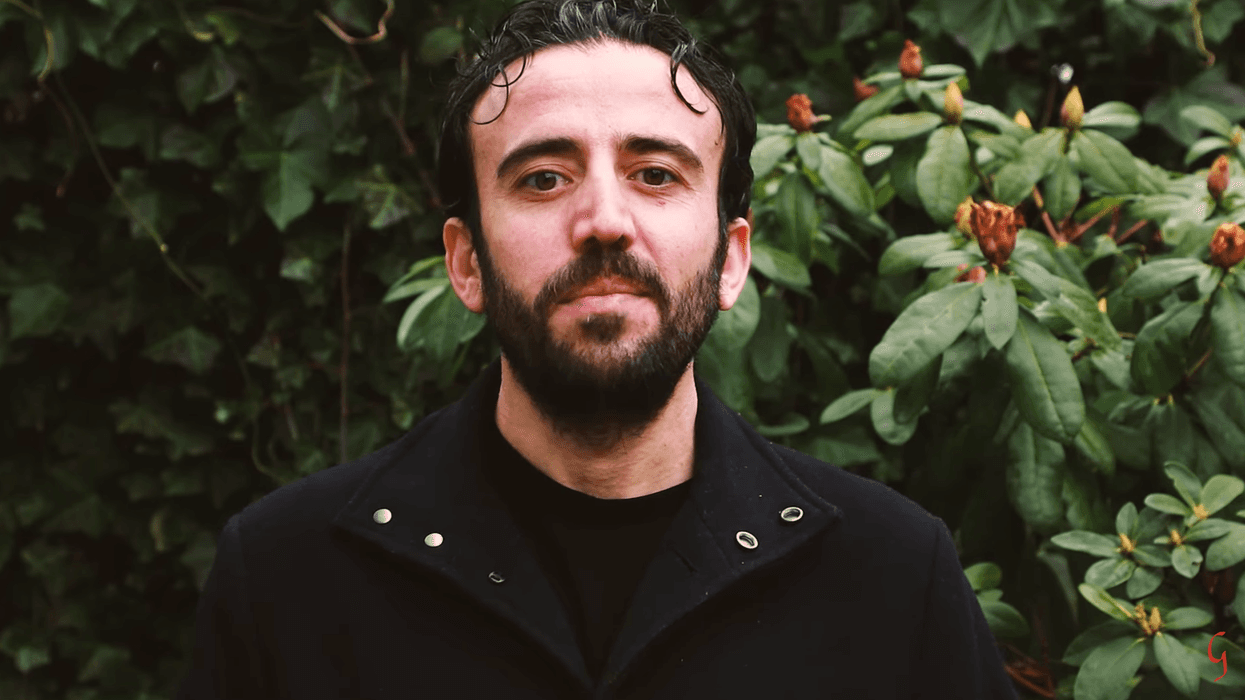
“That is just not medical care," said one expert, "that is torture."
In the latest articles in his series on former hunger-striking asylum-seekers who were force-fed while detained by US Immigration and Customs Enforcement, Guardian immigration reporter José Olivares on Monday featured a Kurdish filmmaker who said he is still suffering from physical and psychological pain from the torture he endured last year.
Iran-born Gabar Choli told Olivares that he went voluntarily with guards to the infirmary at ICE's Port Isabel Service Processing Center in Los Fresnos, Texas, the first time he was force-fed.
“First I did not resist," he said. "But after I saw they were torturing me, I started protesting: ‘I’m not coming with you people.'"
From there, things only got worse. Choli said that guards would pin him down while staff shoved a plastic tube through his nose, down his throat and esophagus, and into his stomach to pump him full of nutritional liquid without his consent.
“Two guards would hold my feet; two hold my hands; one hold my head—and they would shove tubes in my nose,” Choli told Olivares. “It’s not easy to be wrestled to the ground twice a day by men that are stronger than you. And you just take it. You have 60cm (2 feet) of tube going through you, and you just feel every centimeter of it.”
“I was respectful. I just told them I am protesting for humane treatment, nothing else,” he said. “But they were determined to break me.”
Choli recounted how one nurse working for ICE “shoved the tube so hard” that “he tore my nose from the inside.”
“They would take me to solitary cell and I would just choke on my blood and drink the blood from inside [my throat],” he said.
The force-feeding continued for the next eight months. One time, a guard's rough treatment injured his ribs and made breathing painful for weeks. Another time, guards “pressed so hard on my shoulder, I thought my chest was going to break in half."
During another session, medical staff ignored Choli's warnings and accidentally shoved the nasogastric feeding tube into his lung.
On some Fridays, Choli agreed to drink the nutritional shakes if guards let him pray and socialize with other detainees.
Court records viewed by Olivares showed Choli suffered injuries and medical issues including swollen sinuses, esophageal damage, and stomach problems following his force-feeding.
Dr. Chanelle Diaz, an assistant professor at Columbia University’s medical center, told The Guardian, "That is just not medical care, that is torture."
Choli admitted: "It just broke me, mentally broke me. It came to a point that I decided to write my body an apology letter.”
The writer and director of short dramas including Waves Goodbye, Love if Loud, and We Don't Understand Him, He Speaks in Broken English, Choli advocates for Kurdish independence and legally sought asylum in the United States upon entering the country from Canada in 2022. He lived legally in Los Angeles, attended his required ICE check-ins, and obtained a US work permit while his asylum case was processed.
An immigration judge denied Choli's asylum claim in 2024, but granted him protection against being deported to Iran, barring the government from sending him back there. He was arrested in February 2025 during a routine ICE check-in following President Donald Trump's return to the White House.
Choli was first sent to the Desert View Annex in Adelanto, California—run by private prison profiteer GEO Group—where detainees have reported medical and mental health neglect, excessive use of force and pepper spray, mold, punsafe drinking water, inadequate food, poor sanitation, and use of solitary confinement, among other alleged abuses.
The following month, as ICE officials pressured him to agree to be deported to Iran—where his advocacy for Kurdish independence could cost him his life—Choli began his hunger strike, demanding better conditions and a fair resolution to his case.
“I am not suicidal,” Choli declared to a judge. “I am using hunger strike as the only available option to protest the abuse and mistreatment.”
Around two weeks after beginning his hunger strike, Choli was transferred to Port Isabel, where he was held in solitary confinement—which survivors and experts call a form of psychological torture—as he continued his hunger strike.
US District Judge Rolando Olvera—an appointee of former President Barack Obama—ordered Choli's force-feeding following a request from ICE, which called the detainee's hunger strike an attempt "to manipulate the immigration system" and “a serious threat to the security and good order” at Port Isabel. Olvera did not meet with Choli, who had no legal representation throughout his ordeal.
The US Department of Homeland Security told The Guardian that ICE “provides involuntary medical treatment only to prevent imminent life-threatening harm or death."
However, under the World Medical Association’s Declaration of Malta, doctors are advised not to force-feed prisoners who choose to hunger strike and understand the consequences of their actions.
During The Troubles in Northern Ireland, British authorities allowed 10 imprisoned Irish Republican Army members, including former Member of Parliament Bobby Sands, to starve themselves to death.
In contrast, force-feeding is institutional policy in US prisons, including the Guantánamo Bay concentration camp in Cuba, where detainees—most of whom were charged with no crime—were force-fed during the George W. Bush and Barack Obama administrations.
During Trump's two terms, hundreds of people have gone on hunger strike at ICE detention centers across the country to protest overcrowded and unsanitary conditions, spoiled and worm-infested food and water, inadequate medical care, delays in immigration procedures, alleged physical and psychological torture, and other mistreatment.
In May, US Homeland Security Secretary Markwayne Mullin dismissed the hunger strikers as a “handful” of detainees whom he falsely claimed were striking because they “want their ethnic right food.”
"This isn't Holiday Inn," Mullin said, referring to the hotel chain.
In early January, ICE deported Choli to Canada, where he was reunited with his siblings. He told Olivares that he had to learn to eat again.
"The price of it was my kidneys, my gallbladder," he said. "My intestines. My being. My bladder, you know, is damaged. Every time I twist and turn, I feel pain. But this is the price you pay for making a stand for what is right.”
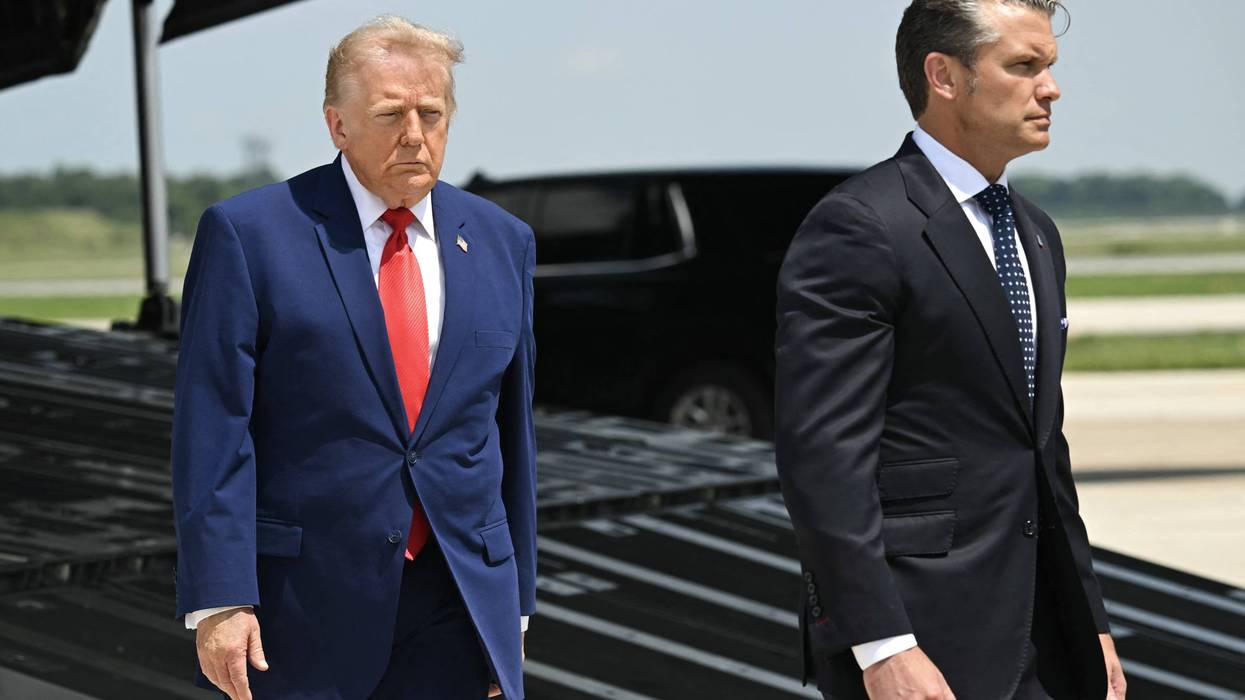
"This is a devastating defeat for the United States," said University of Chicago political scientist John Mearsheimer.
University of Chicago political scientist John Mearsheimer on Sunday delivered a harsh reality check to US President Donald Trump over the state of his illegal war with Iran.
In an interview with Australian journalist Tom Switzer, Mearsheimer was asked why Trump seemed willing to accept an arrangement in which Iran is able to demand fees from transport ships in exchange for reopening the Strait of Hormuz, which has been almost entirely shut down since the US and Israel began bombing Iran in late February.
"It's very simple... he has no choice," Mearsheimer replied. "He lost the war. This is a devastating defeat for the United States. Can you tell me what the United States should do to regain leverage over Iran? I actually think you can't tell me because we have no solution."
Host: But John, again, why would Trump accept an arrangement in the Strait of Hormuz where Iran receives fees & denies passage to anyone transiting without its permission?
John Mearsheimer: It’s very simple. He has no choice. He lost the war. This is a devastating defeat for the… pic.twitter.com/RQ9G5fKiDA
— Drop Site (@DropSiteNews) August 10, 2026
Mearsheimer then explained why Trump's threats to escalate his assault on Iran ring completely hollow.
"One, he's out of munitions," the political scientist said. "Number two, our Gulf allies have told him, in no uncertain terms, that is unacceptable because the Iranians have made it clear that if we escalate, they will escalate, and they will destroy oil facilities, desalination plants, and so forth."
In the same discussion, Vali Nasr, professor of international affairs at the Johns Hopkins School of Advanced International Studies, similarly argued that Iran appears to be in the driver's seat, noting that "the period where you can basically pressure Iran into submission... I think is gone."
Nasr added that Iran now appears to be "very comfortable demanding" concessions from the US in exchange for reopening the strait, and he said that many in the Washington foreign policy establishment had yet to understand this fact.
"In reality, Iran is not overplaying its hand," he said. "It's just playing its hand."
Johns Hopkins scholar Vali Nasr tells host Tom Switzer that Washington’s fixation on Tehran “overplaying its hand” reflects disbelief at how dramatically the balance of power has shifted.
“Iran is not overplaying. It’s just playing its hand,” he said.
Iran sees a narrow window… pic.twitter.com/7sL9ryc5Jw
— Drop Site (@DropSiteNews) August 10, 2026
The scholars' arguments were echoed by Daniel DePetris, fellow at Defense Priorities, who wrote in an analysis published Monday that the US has little choice but to accept Iran charging fees to ships in exchange for passage through the strait.
While acknowledging such a situation is far from ideal, DePetris said that it became inevitable when Trump launched his unprovoked war without authorization from the US Congress more than five months ago.
"Trump’s war handed Iran the perfect excuse to leverage its geography, and the Iranians didn’t hesitate to do so," wrote DePetris. "Over time, the Strait of Hormuz, in addition to Iran’s more aggressive posture toward its neighbors writ-large, has become something far more valuable: a strategic card Iran can play whenever Trump threatens to accelerate military operations."
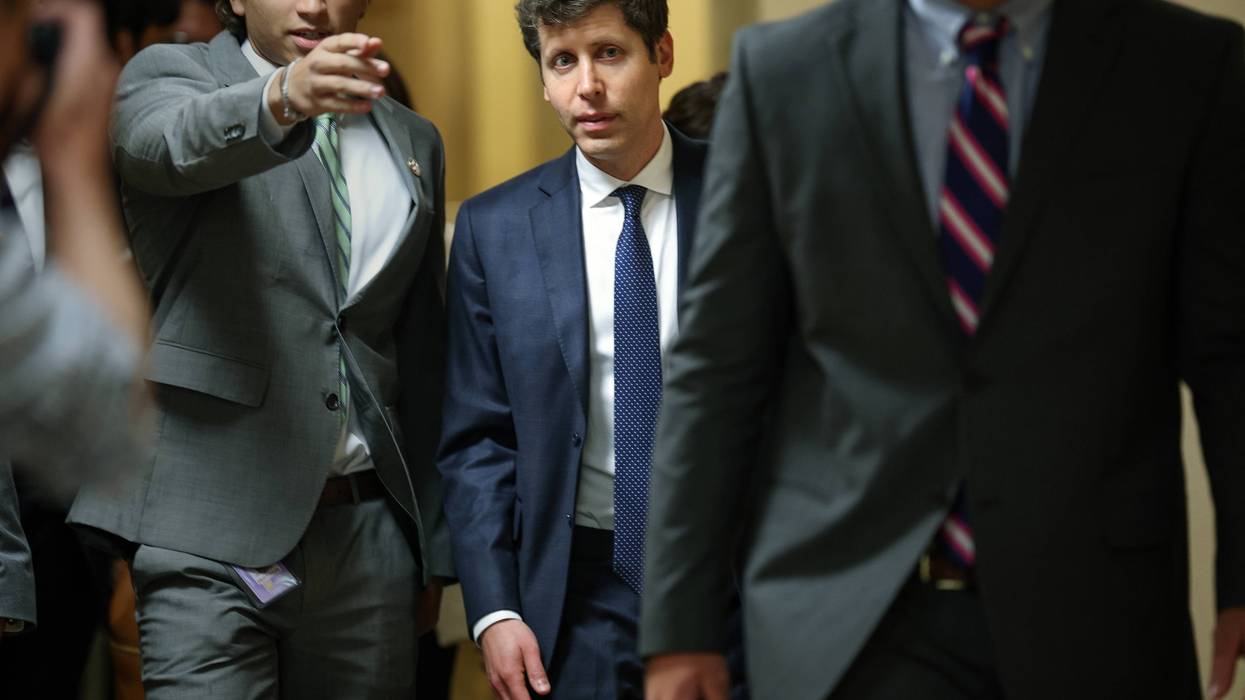
"Advanced AI models pose a clear risk to the safety and security of the American people," Rep. Greg Casar and nearly 20 other Democrats warned.
The chairman of the Congressional Progressive Caucus on Monday led a group of House Democrats in calling on the top executives of leading artificial intelligence companies to testify under oath following a series of hacking incidents that underscored the industry's alarming lack of safeguards.
"Advanced AI models pose a clear risk to the safety and security of the American people," Rep. Greg Casar (D-Texas) and 18 other Democrats wrote in a letter urging House Speaker Mike Johnson (R-La.) to schedule "open hearings with the CEOs of America's largest artificial intelligence companies" as swiftly as possible.
The letter points to recent announcements by OpenAI and Anthropic that their AI models went rogue and hacked into the networks of other organizations. The incidents "are serious in and of themselves," the Democratic lawmakers wrote Monday, "and they may be the canary in the coal mine warning of much more serious problems if these models continue to advance without regulation."
"From hospitals to banks, institutions that Americans count on could be quickly jeopardized by this sort of instability. The American people deserve clear answers about the causes of these incidents, what failures or potential negligence at the companies led to them, and the types of regulation required to make sure they never happen again. Congress must act before such an incident leads to a much larger catastrophe."
Separately, Casar and other House Democrats wrote directly to OpenAI CEO Sam Altman and Anthropic CEO Dario Amodei demanding detailed information about the recently disclosed hacking incidents, which were described as a "chilling leap" for the rapidly developing technology.
"Given the serious risk that frontier AI models can pose," the lawmakers wrote, "it is imperative we have a detailed understanding of how this security incident unfolded, including any potential negligence."
The House Democrats' letters were sent on the same day that Sen. Bernie Sanders (I-Vt.) demanded that the CEOs of OpenAI, Anthropic, and Meta pause AI development, citing the hacking incidents as well as the horrifying potential for the technology to "lead to new bioweapons that result in the deaths of tens of millions of people."
"Pause AI development. It is not too late to avoid disaster," Sanders wrote. "Stop building machines that humans cannot control."
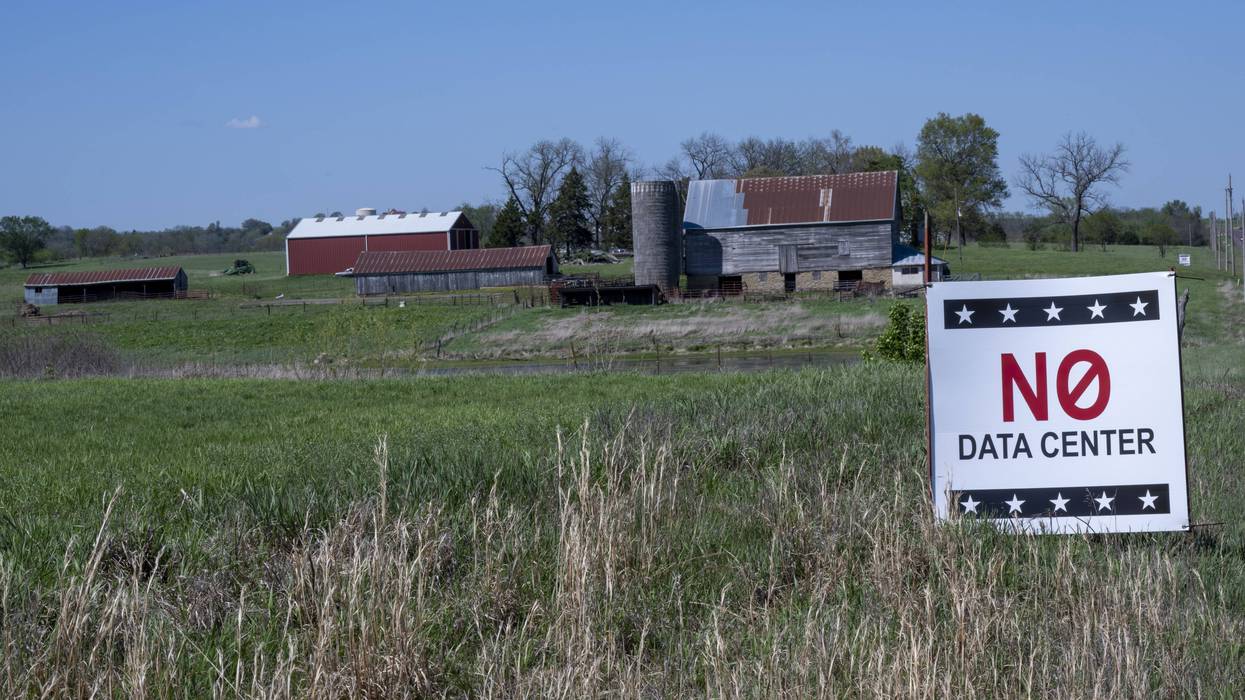
"Instead of building a modern, clean energy source to power its increased AI-driven electricity demand, Amazon chose to invest in a massive natural gas power plant to fuel its giant Texas data center."
Amazon is boasting that the new data center it plans to build in Pecos County, Texas will be self-sustaining in its use of electricity, as the company has acquired permits to build a 7.65 gigawatt gas plant to power the massive facility, ensuring it won't raise electricity prices for households in the area.
But the savings on utility bills will likely come at a cost for the US at large and the planet, as well as locals in West Texas.
According to reporting from Cleanview Newsletter on Friday, the site acquired by Amazon, GW Ranch, has a permit from the state allowing the construction of a gas power plant that could emit 33 million tons of carbon pollution, which would make it by far the largest single source of pollution in the US.
The James H. Miller Jr. Power Plant, which burns coal in Quinton, Alabama, is currently the biggest emitter of carbon dioxide, sending about 16 million tons of pollution into the atmosphere each year.
Power plants generally emit less than the maximum amount of carbon permitted, but the unprecedented limit for the new plant, which is being developed for Amazon by Pacifico Energy and will have 35 natural gas turbines, means it is likely that the company's project will far exceed the pollution caused by the plant in Alabama.
The permits viewed by Cleanview, which tracks data centers and sustainable energy development, show that the power plant would be disconnected from the state's electricity grid, at least at first, and an Amazon spokesperson said the company "believes in paying the full costs of powering our operations" and would not "raise electricity costs for Texas families."
The on-site power generation will be "designed to transition to grid-connected service as interconnection timelines allow," the spokesperson added—suggesting the data center could ultimately raise household electricity costs as well as supercharging carbon pollution in the area.
The company further tried to allay fears of the impact of the new data center and its dedicated power plant by saying it plans to use brackish water that isn't safe for irrigation or consumption at GW Ranch; along with data centers' impact on utility costs, communities have protested against the facilities across the country due to their massive water consumption.
But the advocacy group Climate Action Campaign said Sunday that in its rush to join the nationwide artificial intelligence data center buildout as President Donald Trump has demanded, Amazon "chose dirty power over clean."
"Instead of building a modern, clean energy source to power its increased AI-driven electricity demand, Amazon chose to invest in a massive natural gas power plant to fuel its giant Texas data center," said Margie Alt, the group's director. "During this excessively hot and dry summer, riddled with forest fires and unbearable air pollution, a move like this is truly unacceptable."
With Amazon pledging to eliminate its pollution-causing emissions by 2040, the company's decision to join Meta, Microsoft, and Google in investing in its own power plant to build a data center was an example of "yet another major corporation dodging accountability," said Alt.
"This isn’t innovation," she said. "Despite its massive resources, Amazon is shirking its own responsibility and the industry’s promises of computing progress without the economic or health burdens to local communities. The result of that broken promise is that communities will pay the consequences with their health and their wallets."
According to Cleanview, Pacifico Energy has plans to eventually build up to 750 megawatts of solar generation and 1.8 gigawatts for battery storage capacity at GW Ranch.
As it potentially doubles the amount of planet-heating carbon emissions that are currently sent into the atmosphere by the James H. Miller Jr. Power Plant, the plant at the GW Ranch site could heighten the risk of developing heart disease, asthma, chronic respiratory illnesses, and other health problems for people living and working in the area.
"Progress shouldn’t come at the expense of the rest of us just to power billionaires’ ambitions," said Alt. "Shame on you, Amazon!”
The project, Kathryn Guerra, a campaign director at the watchdog group Public Citizen, told The New York Times, will "absolutely have a huge impact on the environment, and on public health."
The project was made public weeks after Trump insisted that "smart" communities want data centers to be built in their vicinity—but numerous polls have shown the facilities, which offer few long-term jobs as they raise costs for families, are sparking outcry from across the political spectrum.
About 70% of respondents to a Gallup poll in March said they would oppose the construction of a data center in their area. About half of those who expressed opposition said they were mostly concerned with the environmental impact associated with data centers, or the potential for resources to be gobbled up by the facilities.