SUBSCRIBE TO OUR FREE NEWSLETTER
Daily news & progressive opinion—funded by the people, not the corporations—delivered straight to your inbox.
5
#000000
#FFFFFF
To donate by check, phone, or other method, see our More Ways to Give page.
A yearlong investigation published Friday by the Washington Post examines how a small number of billionaires, now richer than ever, have exploited openings provided by the US Supreme Court, lawmakers, and sleepwalking regulatory agencies to flood the American political system with cash and advance their ideological—and financial—interests.
The Post analysis reveals that the nation's top 20 billionaire donors pumped close to $5 billion combined into the US political system between 2015 and 2024, attempting to exert influence over both state-level and national elections.
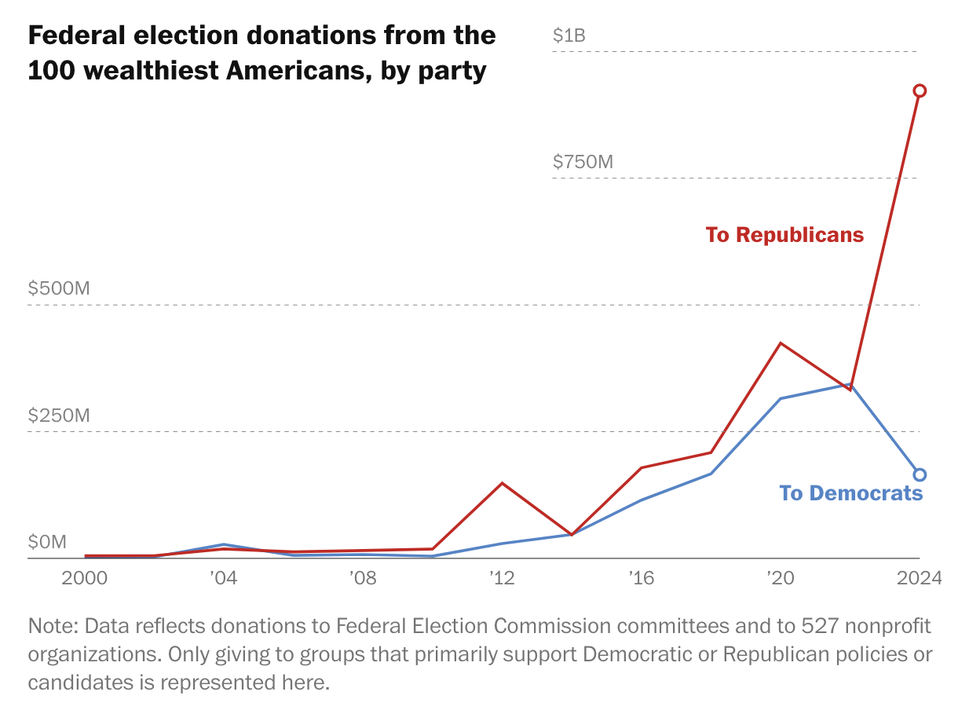
In 2024, the newspaper found, over 80% of federal campaign spending by the 100 richest Americans flowed to Republicans, who delivered once again for rich benefactors by enacting yet another round of highly regressive tax cuts this past summer.
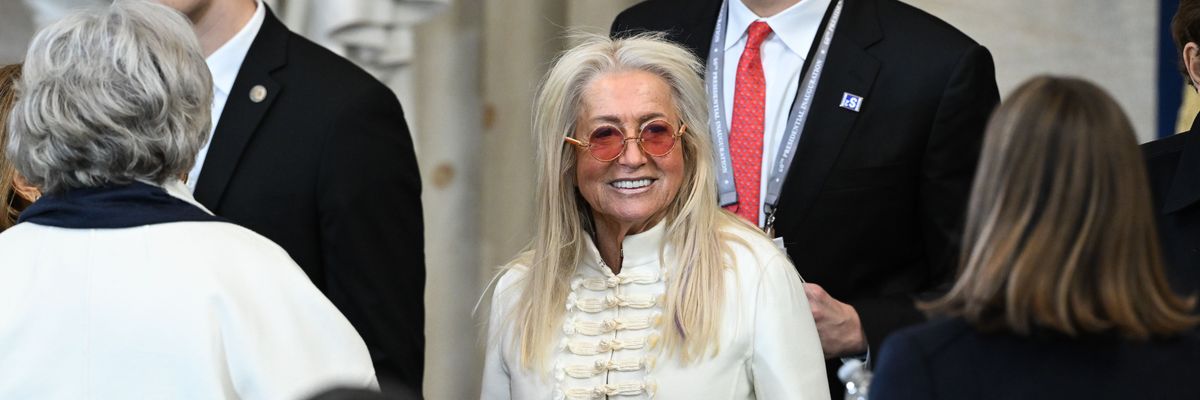
Topping the list of billionaire donors is Miriam Adelson and her late husband Sheldon, who have spent $621 million on federal races and $37 million on state races over the past decade, mostly backing Republican campaigns—including that of President Donald Trump.
Others on the list include former New York City Mayor Michael Bloomberg, shipping magnates Richard and Elizabeth Uihlein, hedge fund manager Ken Griffin, Tesla CEO Elon Musk, and investor George Soros.
"In three landmark decisions, starting with 2010’s Citizens United vs. FEC, federal courts gutted post-Watergate campaign finance restrictions, clearing the way for donors to contribute unlimited money to elections," the Post observed. "As a result, US politicians are more dependent on the largesse of the billionaire class than ever before, giving one-four-hundredth of 1% of Americans extraordinary influence over which politicians and policies succeed."
Sen. Sheldon Whitehouse (D-RI) called Citizens United, which spawned the super PACs that many billionaires now use as vehicles for unrestrained election spending, "the original sin."
"Five Supreme Court Republican appointees, many helped onto the Court by right-wing billionaires, open the floodgates for unlimited political spending," Whitehouse wrote in a social media post on Friday. "Then they refuse to police anonymous political spending they know is corrupting. This is the result."
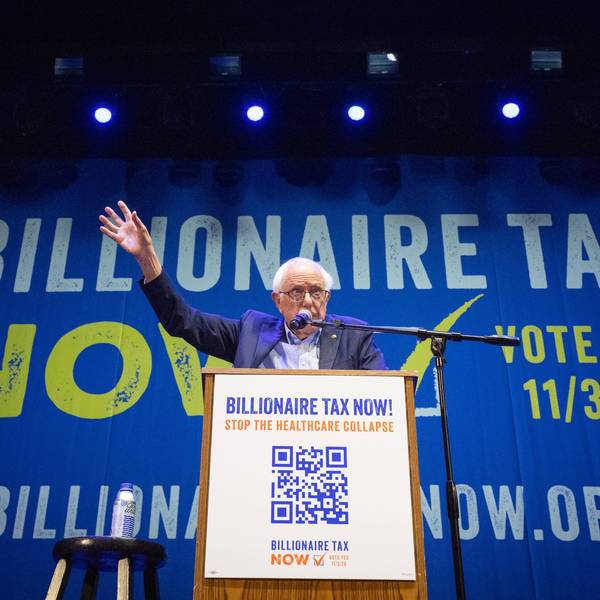
Sen. Bernie Sanders (I-Vt.), who has long decried the corrupting influence of billionaire and corporate money on American politics, said the Post investigation underscores why "we must overturn Citizens United and move to the public funding of elections."
"A majority of Americans agree: If democracy is to survive, billionaires cannot be allowed to buy elections," Sanders added.
As part of its probe, the Post conducted a survey aimed at determining how the US public feels about billionaires using a fraction of their immense fortunes—now at a record $8 trillion—to sway elections.
The survey of 2,500 Americans, conducted in September, found that 58% have a negative view of billionaires spending more money on elections. Forty-three percent of Americans, including 62% of Democrats and 21% of Republicans, believe billionaires have a negative impact on society overall.
“I don’t believe there is an ethical way for billionaires to even exist in this country,” Leah Welde, a 29-year-old Democrat and graduate school student in Philadelphia, told the Post. "To be sitting on that amount of money while citizens in this country are unhoused, hungry, and without medical care is abhorrent. I believe in spreading wealth."
A yearlong investigation published Friday by the Washington Post examines how a small number of billionaires, now richer than ever, have exploited openings provided by the US Supreme Court, lawmakers, and sleepwalking regulatory agencies to flood the American political system with cash and advance their ideological—and financial—interests.
The Post analysis reveals that the nation's top 20 billionaire donors pumped close to $5 billion combined into the US political system between 2015 and 2024, attempting to exert influence over both state-level and national elections.
In 2024, the newspaper found, over 80% of federal campaign spending by the 100 richest Americans flowed to Republicans, who delivered once again for rich benefactors by enacting yet another round of highly regressive tax cuts this past summer.
Topping the list of billionaire donors is Miriam Adelson and her late husband Sheldon, who have spent $621 million on federal races and $37 million on state races over the past decade, mostly backing Republican campaigns—including that of President Donald Trump.
Others on the list include former New York City Mayor Michael Bloomberg, shipping magnates Richard and Elizabeth Uihlein, hedge fund manager Ken Griffin, Tesla CEO Elon Musk, and investor George Soros.
"In three landmark decisions, starting with 2010’s Citizens United vs. FEC, federal courts gutted post-Watergate campaign finance restrictions, clearing the way for donors to contribute unlimited money to elections," the Post observed. "As a result, US politicians are more dependent on the largesse of the billionaire class than ever before, giving one-four-hundredth of 1% of Americans extraordinary influence over which politicians and policies succeed."
Sen. Sheldon Whitehouse (D-RI) called Citizens United, which spawned the super PACs that many billionaires now use as vehicles for unrestrained election spending, "the original sin."
"Five Supreme Court Republican appointees, many helped onto the Court by right-wing billionaires, open the floodgates for unlimited political spending," Whitehouse wrote in a social media post on Friday. "Then they refuse to police anonymous political spending they know is corrupting. This is the result."
Sen. Bernie Sanders (I-Vt.), who has long decried the corrupting influence of billionaire and corporate money on American politics, said the Post investigation underscores why "we must overturn Citizens United and move to the public funding of elections."
"A majority of Americans agree: If democracy is to survive, billionaires cannot be allowed to buy elections," Sanders added.
As part of its probe, the Post conducted a survey aimed at determining how the US public feels about billionaires using a fraction of their immense fortunes—now at a record $8 trillion—to sway elections.
The survey of 2,500 Americans, conducted in September, found that 58% have a negative view of billionaires spending more money on elections. Forty-three percent of Americans, including 62% of Democrats and 21% of Republicans, believe billionaires have a negative impact on society overall.
“I don’t believe there is an ethical way for billionaires to even exist in this country,” Leah Welde, a 29-year-old Democrat and graduate school student in Philadelphia, told the Post. "To be sitting on that amount of money while citizens in this country are unhoused, hungry, and without medical care is abhorrent. I believe in spreading wealth."
A yearlong investigation published Friday by the Washington Post examines how a small number of billionaires, now richer than ever, have exploited openings provided by the US Supreme Court, lawmakers, and sleepwalking regulatory agencies to flood the American political system with cash and advance their ideological—and financial—interests.
The Post analysis reveals that the nation's top 20 billionaire donors pumped close to $5 billion combined into the US political system between 2015 and 2024, attempting to exert influence over both state-level and national elections.
In 2024, the newspaper found, over 80% of federal campaign spending by the 100 richest Americans flowed to Republicans, who delivered once again for rich benefactors by enacting yet another round of highly regressive tax cuts this past summer.
Topping the list of billionaire donors is Miriam Adelson and her late husband Sheldon, who have spent $621 million on federal races and $37 million on state races over the past decade, mostly backing Republican campaigns—including that of President Donald Trump.
Others on the list include former New York City Mayor Michael Bloomberg, shipping magnates Richard and Elizabeth Uihlein, hedge fund manager Ken Griffin, Tesla CEO Elon Musk, and investor George Soros.
"In three landmark decisions, starting with 2010’s Citizens United vs. FEC, federal courts gutted post-Watergate campaign finance restrictions, clearing the way for donors to contribute unlimited money to elections," the Post observed. "As a result, US politicians are more dependent on the largesse of the billionaire class than ever before, giving one-four-hundredth of 1% of Americans extraordinary influence over which politicians and policies succeed."
Sen. Sheldon Whitehouse (D-RI) called Citizens United, which spawned the super PACs that many billionaires now use as vehicles for unrestrained election spending, "the original sin."
"Five Supreme Court Republican appointees, many helped onto the Court by right-wing billionaires, open the floodgates for unlimited political spending," Whitehouse wrote in a social media post on Friday. "Then they refuse to police anonymous political spending they know is corrupting. This is the result."
Sen. Bernie Sanders (I-Vt.), who has long decried the corrupting influence of billionaire and corporate money on American politics, said the Post investigation underscores why "we must overturn Citizens United and move to the public funding of elections."
"A majority of Americans agree: If democracy is to survive, billionaires cannot be allowed to buy elections," Sanders added.
As part of its probe, the Post conducted a survey aimed at determining how the US public feels about billionaires using a fraction of their immense fortunes—now at a record $8 trillion—to sway elections.
The survey of 2,500 Americans, conducted in September, found that 58% have a negative view of billionaires spending more money on elections. Forty-three percent of Americans, including 62% of Democrats and 21% of Republicans, believe billionaires have a negative impact on society overall.
“I don’t believe there is an ethical way for billionaires to even exist in this country,” Leah Welde, a 29-year-old Democrat and graduate school student in Philadelphia, told the Post. "To be sitting on that amount of money while citizens in this country are unhoused, hungry, and without medical care is abhorrent. I believe in spreading wealth."