

SUBSCRIBE TO OUR FREE NEWSLETTER
Daily news & progressive opinion—funded by the people, not the corporations—delivered straight to your inbox.
5
#000000
#FFFFFF
To donate by check, phone, or other method, see our More Ways to Give page.
Daily news & progressive opinion—funded by the people, not the corporations—delivered straight to your inbox.
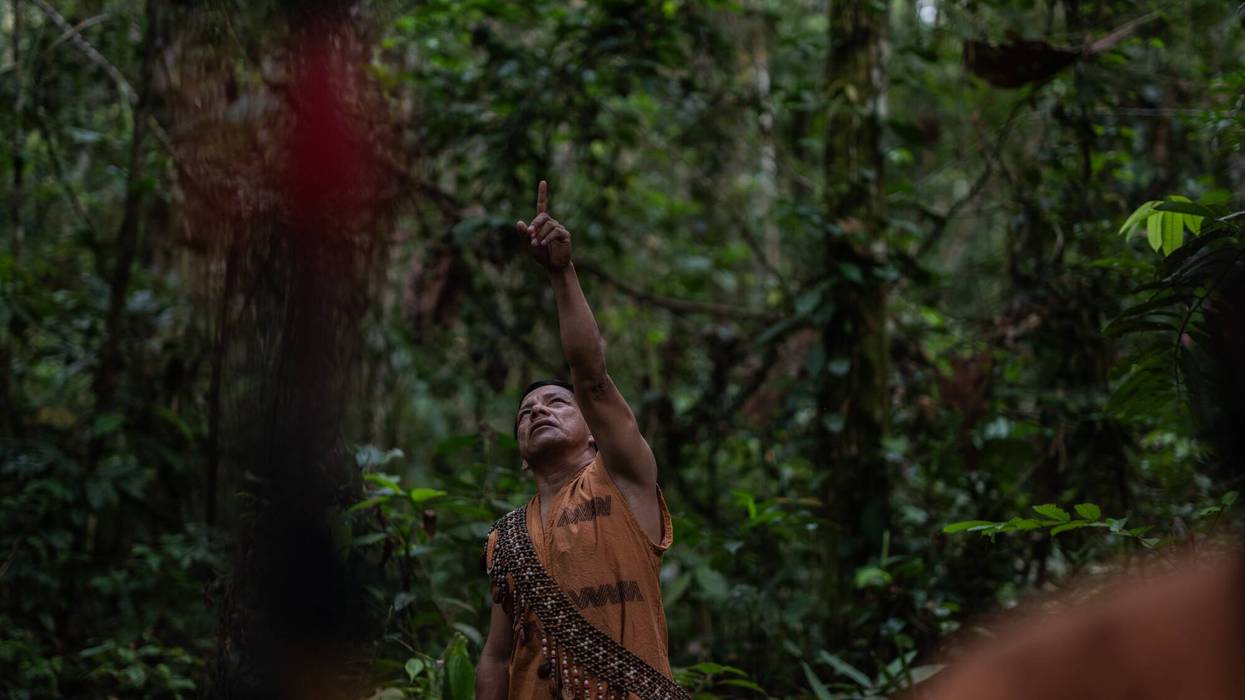
"When foreign aid retreats, Indigenous peoples and small-scale farmers can be left with fewer resources and less support as they defend the forests, rivers, and other ecosystems that sustain their communities and help keep the global climate stable,” one campaigner said.
A total of 124 people were killed defending the environment in 2025, according to a Global Witness report released Wednesday, as the global rise of authoritarianism and a dramatic decline in foreign aid makes the lives and work of environmental and humans rights advocates more challenging.
The report singles out the administration of US President Donald Trump—which dismantled the US Agency for International Development, delayed paying other United Nations fees, and has shown a broader disregard for international humans rights norms and the institutions that uphold them—for worsening the global climate for defenders. In 2025, total development aid plummeted by a record 23%, depleting the resources available to local communities and the organizations that support them.
“The effects of these budget cuts are not abstract," Juliana Vélez Echeverri, a senior campaigner at Global Witness, said in a statement. “In Colombia, projects working to promote and protect human rights and support defenders have been hit by the sudden drop in foreign aid, particularly from the US. When foreign aid retreats, Indigenous peoples and small-scale farmers can be left with fewer resources and less support as they defend the forests, rivers, and other ecosystems that sustain their communities and help keep the global climate stable.”
"We can’t prevent climate change when they kill those who protect the environment."
Colombia was the deadliest country for land defenders for the fourth year in a row with 39 killings, followed by Brazil with 26, and Honduras and the Philippines with 12 each. As the site of 85% of the killings, Latin America was the deadliest region, as it has been since Global Witness began counting the killings of environmental defenders in 2012. Indigenous people remain especially vulnerable to violence, as over three-quarters of the people killed in 2025 were either Indigenous, Afro-descendant, or small-scale farmers.
"For Indigenous peoples, land is life," said Joan Carling, executive director of Indigenous Peoples’ Rights International, in the report foreword. "Any threat to our lands, territories, and resources is a threat to our very existence—our cultures, our identities, our dignity, and our future generations. That is why our communities were willing to risk everything to protect them."
Seven of the Indigenous people killed in 2025 were members of Indigenous guards established to patrol and protect their territories from illegal encroachment. For example, the Indigenous Guard of the Kakataibo People of Peru was formed in 2022 to protect their rainforest home from illegal cocoa growing and logging.
“Defending our territory is important to us as a community and as a people, and we’re proud to support the climate that we all depend on," said Segundo Ispón, commander of Peru’s Kakataibo Indigenous Guard, in a statement. "In our culture, the work of defending our resources and territory is taught from an early age. But for this next generation coming up, the work is more dangerous than ever.”
The experience of the Kakataibo reflects another growing trend that endangers defenders: the rise of organized crime amid weakening state authority to oppose it. More than one-third of killings in 2025 were linked to organized crime or hitmen. And more than half of the killings were due to land disputes, "demonstrating how authorities’ failure to resolve competing land claims or demarcate territory paves the way for attacks on defenders and their communities," the report authors said.
As Ispón said in the report: “There is inaction from the state, inaction from the authorities. Faced with that, what do we do? We protect ourselves. We take care of each other.”
Yet the rise in lawlessness goes hand in hand with a rise in government repression against activists, making it difficult to get accurate information about the numbers of defenders killed. While the 124 figure is lower than the 142 killed in 2024 or the 196 killed in 2023, the report authors noted that "these figures are likely a significant underestimate, as many cases go unreported.
They added: "This is typical of situations involving serious armed conflict and genocide, where generalized insecurity and mass killings make identifying and verifying individual cases difficult. Research is also challenging in repressive contexts where victims and civil society groups face reprisals for reporting and documenting abuses."
Indeed, civic freedom tracker CIVICUS Monitor considers 10 of the 15 countries in which deaths were reported to be repressed.
Furthermore, the number killed does not reflect other forms of harassment and repression, such as the criminalization or weaponization of social media against activists, both of which are common in Asia.
The report comes as the state of the global environment is ever more dire, with the United Nations warning the planet is now on a path to overshoot the 1.5°C Paris Agreement goal even as the US, the No. 1 historical emitter, has jettisoned all attempts at climate policy under Trump.
"We can’t prevent climate change when they kill those who protect the environment," Amnesty Norway policy adviser Frank Conde Tangberg wrote on social media in response to the report.
The Indigenous and local voices being violently silenced could have a lot to teach global leaders at a crucial moment, if only they would listen.
As Carling wrote:
In today’s world, that ancestral knowledge is vindicated every day. From sustainable agriculture to climate-resilient water management, Indigenous peoples’ customs offer effective climate solutions.
But the climate crisis is testing our capacity to adapt to the natural world. It is too drastic, too vast in scale. Rather than try to respond to this emergency on our own, we want to contribute to collective global efforts.
Instead of being listened to, however, Indigenous peoples are being excluded from major decision-making spaces. As a result, the very projects touted as solutions—renewable energy, transition minerals—drive land grabs, dispossession, and violence. We call this “green colonialism.”
After land grabs, mining was the industry linked to the most deaths in 2025, followed by logging and agribusiness.
Yet another way forward is still possible. As Carling concluded: "Indigenous peoples and our knowledge must be at the heart of climate decision-making. Our role as custodians of land, our understanding of the consequences of climate breakdown, and our collective resistance to dispossession must have an influence on policy at the centre of power."
"But this can only happen when our territories are secure and our people protected from harm," she said. "States and leaders must work with us firstly to ensure that our communities are safe—and then to tackle the environmental crises that pose an existential threat to us all."
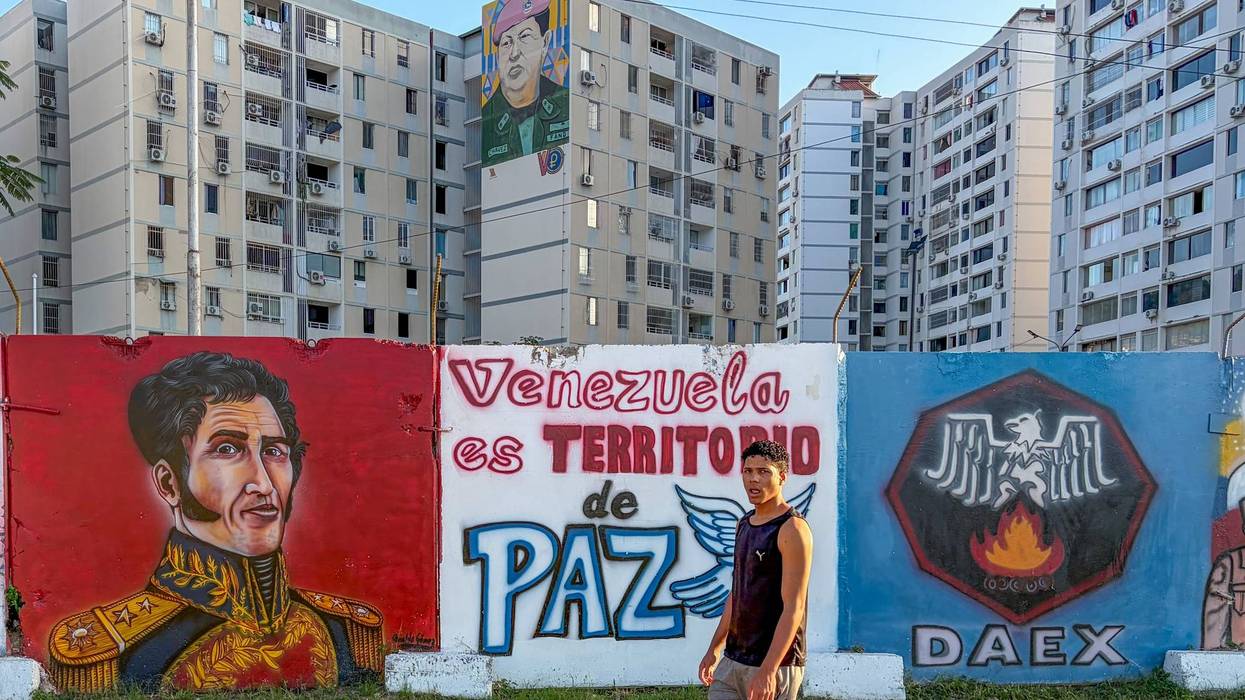
The solidarity movement must unite in the broadest alliance around the defense of national sovereignty and the right to self-determination, strongly opposing the farcical New York trial of Nicolás Maduro and Cilia Flores, demanding the lifting of all sanctions, and calling for the return of stolen assets.
“Nothing is easier than to be idealistic on behalf of others.”—Karl Marx, 1858
Under cover of night, the US military kidnapped the lawful Venezuelan President Nicolás Maduro and his wife and National Assembly deputy Cilia Flores on January 3, 2026. Collateral damage included over 100 fatalities of civilians and Cuban and Venezuelan guards.
This unprovoked surprise attack flagrantly violated international law. The hegemon acted in full expectation that it could operate with impunity. Even the neighboring left-leaning governments of Brazil and Colombia offered only mild rebukes. Then Venezuelan Foreign Minister Yván Gil said, “We found ourselves alone.” That is the context in which subsequent developments need to be understood.
The egregious military action culminated a quarter of a century of US and allied (particularly Canada and the UK) machinations against Venezuela: asphyxiating sanctions, stolen assets, diplomatic isolation, cyberattacks, assassination attempts, mercenary invasions, and establishing an ersatz parallel government. For the two months preceding the invasion, the US navy blockaded oil shipments. Still the empire’s goal of regime change was not achieved.
Washington and its allies failed to destroy Chavismo, the movement founded by Hugo Chávez and carried forward by his successor Nicolás Maduro. Venezuela did not collapse or degenerate into chaos after the decapitation. Domestic peace prevailed.
The US-backed and funded far-right opposition did not seize power, but found itself ever more marginalized and in disarray.
The Chavista leadership continued in a seamless constitutional succession with Vice President Delcy Rodríguez sworn in as acting president. The unity of the top command held firm, backed by the National Assembly and supreme court. Likewise, the civic-military union and the communes and grassroots Chavista institutions fully supported the government.
Notably, the core Chavista leadership, the military, Socialist Party, and communal formations have remained united under tremendous pressure—pressure designed to fracture that unifying accord.
Relying on its overwhelming military superiority, Washington made a Mafia-style offer you can’t refuse. US Secretary of State Marco Rubio called Rodríguez on that day of infamy and delivered an ultimatum to collaborate with the US or face the country’s military destruction and the murder of her and other leaders. Variations of this scenario are corroborated by both the corporate press and Chavista sources.
President Donald Trump explicitly threatened, “There is more where that came from.” The alternative was the devastation currently being rained down on Iran, a country with far greater military capacity. With US forces deployed throughout the region and off its coast, a military confrontation would have meant annihilation, including the destruction of the oil industry. Rodríguez did what any responsible leader would do given the existing options; she made a tactical retreat in the face of overwhelming force.
All the Chavista state institutions and the powerful universe of grassroots organizations that sustain the revolution remain intact. Yet US imperialism, by having a gun pointed to the government’s head, is in a position to exert substantial coercion leading to unpalatable decisions, such as Alex Saab’s deportation.
These accommodations reflect pressures that those of us on the outside can only imagine. How the solidarity movement should respond is a central question.
Former Chávez official Sergio Rodríguez Gelfenstein describes the current negotiations as an exercise in essential national self-preservation. He observes, “What is at stake is the survival of the State and the republic, which if lost, would make the discussion on any other topic banal.” As former Venezuelan Foreign Minister Jorge Arreaza said, “Everything is now negotiated,” with Washington obliged to be in daily give-and-take with Caracas.
Legislative reform had long been on Maduro’s agenda. However, revisions to laws governing the exploitation of hydrocarbons and hard minerals involved offering generous conditions to international capital in order to attract much-needed foreign investment (which Cuba is also doing).
The new amnesty law, another planned initiative, is a key instrument promoting reconciliation and denying extremist elements arguments to incite violence. The law strictly excludes “anyone who has committed war crimes, human rights violations, homicide, drug trafficking, or treason.”
The government is in negotiations with the moderate opposition. Such successive rounds of dialogue were a recurring feature of the Maduro presidency.
Rodríguez has counseled prudence and strategic patience. Notably, the core Chavista leadership, the military, Socialist Party, and communal formations have remained united under tremendous pressure—pressure designed to fracture that unifying accord.
The US has reversed itself and in practice recognizes the Venezuelan government as legitimate. The Bolivarian project has not only persisted but forced its greatest adversary to come to some accommodation.
Not since 2019 had the US allowed transactions with Venezuela’s central bank and major state banks. US restrictions had previously cut Venezuela off from the global financial system, preventing access to dollar-denominated transactions and US financial channels. Oil sales to the US have resumed, with some revenues returning to the domestic economy. The US-dominated International Monetary Fund (IMF) is again engaged with Venezuela. Rodríguez has stated that Venezuela is not seeking IMF loans, but access to its own frozen funds.
As a Venezuelan activist friend said, “You gringos tell us how to make our revolution when our problem is you have failed to make yours.”
Although sanctions largely remain in place, special licenses and a temporary easing of economic restrictions for earthquake relief have provided some breathing room for Venezuela’s besieged economy while also facilitating oil flows to the US. The concessions are limited and reversible, leaving the broader structure of US economic warfare intact. Still, the arrangement is preferable to the total oil blockade imposed immediately before the January 3 assault.
Rodríguez has repeatedly demanded that Venezuela be free of sanctions, while formally seeking the release of Venezuelan assets abroad to address the devastation caused by the earthquakes. She has even appealed to King Charles III for the return of 31 tons of Venezuelan gold held by the Bank of England.
The balance of forces confronting today’s Venezuelan leadership is substantially less favorable than under Chávez, so judging its compromises by an idealized Chávez-era standard is mistaken.
Some internationals invoke Chávez to discredit the current leadership. Overlooked is that during Chávez’s presidency, Venezuela sold oil almost exclusively to the US, when dependency was significant. Ignoring the changed context, infantile leftist claims are made that Chávez never compromised and that “one does not negotiate with the enemy,” forgetting the famous advice from Fidel Castro during the 2002 coup: “Don't immolate yourself, Hugo.”
Chávez governed during a commodities boom that provided the Bolivarian project with resources for material benefits markedly unavailable today under sanctions. The geopolitical context has shifted significantly since Chávez’s time, especially under the present “Donroe Doctrine.” Not since Maduro’s victory in July 2024 has a left-leaning candidate won in Latin America. The last seven presidential elections have been swept by the right. Until this broader reactionary trajectory is reversed, further retreats are likely.
The purpose and cumulative impact of the illegal unilateral coercive measures have been to erode public support for the government. Years of comprehensive sanctions—despite the 2021-2025 economic recovery following an approximately 75% GDP contraction—have left Venezuela in a vulnerable position. Currently the Venezuelan economy is operating at roughly 30% of its pre-sanctions level.
The Rodríguez government is trying to buy time to recover the economy, although the June 24 earthquakes dealt a terrible blow. According to the United Nations, direct physical damage is estimated at over $37 billion, representing over one-third of Venezuela’s gross domestic product.
Most Venezuelans want domestic peace and a return to prosperity, not a confrontation with the empire.
Those were the words of Fidel Castro as he was organizing the Cuban Revolution in 1956. Most dangerous for the sister Bolivarian Revolution is the suggestion that the current leadership has betrayed the cause and that a truly leftist “third way” can be fostered to replace them. There have always been competing factions within the Bolivarian movement. But political choices must ultimately be resolved within Venezuela itself, without interference from internationals.
These “third way” analyses, rejecting both Caracas and Washington, typically fail to address what Venezuelans could realistically do at this historical juncture—long on what’s wrong but short on viable alternatives.
Venezuelans will determine their path without foreign interference, either right or left. Solidarity necessitates efforts to accompany and uplift, not dictate.
It was not so long ago that it was the likes of far-right María Corina Machado who highlighted “cracks and fissures within the Chavista ranks” and anticipated “the beginning of a social explosion” against the elected Venezuelan government. Now some solidarity activists are saying the same.
The “tragic essence” of left disunity in Bolivia should be a cautionary lesson of what could happen in Venezuela. The Chavista leadership is painfully aware of this, hence their vigorous effort to establish the broadest united front against US colonization. Rather than being traitors to the cause, the Rodríguezes and Interior Minister Diosdado Cabello represent the most militant Chavistas—fighters from the very inception of the revolution.
Constructive criticism and solidarity activism need not be counterposed. Dissident opinions are appropriate when contextualized and given as part of a collaborative effort to advance common goals—not as individualistic venting.
Some among the left have appointed themselves as guardians of the faith judging negatively from afar the very difficult and risky tactical retreat undertaken by the Bolivarian leadership, even though it prevented a suicidal military confrontation with US imperialism.
The international left’s angst and disappointment regarding Venezuela’s retreats is understandable. But the Global South is not about to fulfill the revolutionary aspirations of those living in the belly of the beast. That, it should be clear, is the task for people in the imperial core.
As a Venezuelan activist friend said, “You gringos tell us how to make our revolution when our problem is you have failed to make yours.”
Venezuelans will determine their path without foreign interference, either right or left. Solidarity necessitates efforts to accompany and uplift, not dictate. Internationals living in the US, Canada, and the UK need to place the primary focus on our own imperialists. All other contradictions are secondary.
The solidarity movement must unite in the broadest alliance around the defense of national sovereignty and the right to self-determination, strongly opposing the farcical New York trial of Nicolás Maduro and Cilia Flores, demanding the lifting of all sanctions, and calling for the return of stolen assets.
El pueblo unido jamás será vencido.
(A united people will never be defeated.
"ICE shows up, and nothing but chaos.”
This is a developing story… Please check back for updates…
Less than a week after Republicans in Congress passed $70 billion in new funding for President Donald Trump's mass deportation campaign, an immigration agent reportedly shot at a fleeing vehicle in New Jersey on Monday.
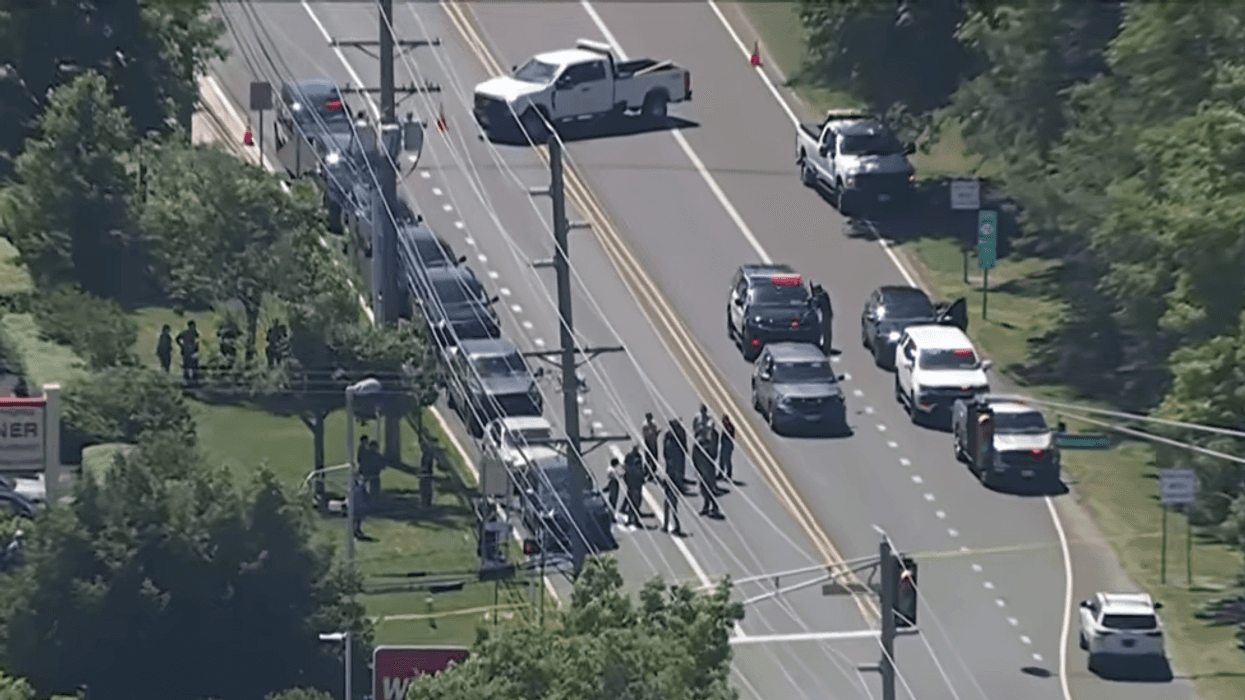
According to the police department of Stafford Township, Immigration and Customs Enforcement "was attempting to apprehend a suspect when the suspect fled from the scene in a vehicle, striking [an ICE agent]" on Monday morning around 9:30 am near a Wawa convenience store.
ICE identified the suspect as a Peruvian national, Friedrich Castillo-Ormeno, whom the agency said was given a final order of removal on January 30. Aside from describing him as an "illegal alien," ICE provided no other information about his background or any criminal history.
On June 15, 2026, ICE law enforcement officers were conducting a targeted vehicle stop in Manahawkin, New Jersey to arrest Freidrich Castillo-Ormeno, an illegal alien from Peru who was released into our country under the Biden administration. He was given a final order of removal…
— U.S. Immigration and Customs Enforcement (@ICEgov) June 15, 2026
"The agent discharged his firearm at the vehicle, reportedly striking it," the Stafford police said. "The suspect fled the scene in the vehicle and has not been located at this time." Onlookers told NBC 10 Philadelphia that bullets struck the driver's van and may have blown out the back window.
The police added that “the agent reportedly sustained unknown injuries." According to Patch, officers went to the scene and performed first aid on the agent before transporting him for further treatment. Sources told NBC 10 Philadelphia that he is expected to make a full recovery.
"It is unknown if the suspect was injured at this time," the Stafford police said, adding that although Castillo-Ormeno fled the scene, “there is no reason to believe there is any concern for the public’s safety.”
Under the Department of Homeland Security's use-of-force policy, agents are not supposed to shoot at fleeing vehicles unless the officer believes they are at imminent risk of death or serious physical injury.
ICE said Castillo-Ormeno "weaponized his vehicle and struck an officer, resulting in the officer discharging his weapon."
According to Patch, local police are not conducting an investigation into the incident, and all further updates will come from the FBI.
Under Trump, the US Department of Justice has faced criticism for locking state and local investigators out of investigations into the shootings of US citizens Renee Good and Alex Pretti in Minneapolis earlier this year and spreading false information to justify their deaths.
Minnesota became the center of a national wave of resistance to ICE that ultimately pushed federal immigration agencies to retreat on some of their most extreme tactics, though the mass deportation push against immigrants largely without criminal histories has not subsided.
New Jersey has met ICE with its own share of pushback. Last month, US Sen. Andy Kim (D-NJ) was pepper-sprayed by federal agents outside the privately run Delaney Hall detention facility in Newark. Demonstrators had shown up in solidarity with hundreds of detainees who had gone on a hunger and labor strike to protest the squalid conditions in the facility, and protests have continued for weeks.
Although Stafford Township is overwhelmingly Republican, The Daily Beast found that in the immediate aftermath of Monday's reported shooting, some residents in a local Facebook group were wary about the tumult that ICE's presence could bring.
"Immigrants have been in Stafford for decades with no problems,” one resident wrote in a local Facebook group where the incident is being discussed. “They are respectful and hardworking. ICE shows up, and nothing but chaos.”
“Who shoots at a van?" wrote another Stafford resident, who added that "[ICE] training is brutal."