

SUBSCRIBE TO OUR FREE NEWSLETTER
Daily news & progressive opinion—funded by the people, not the corporations—delivered straight to your inbox.
5
#000000
#FFFFFF
To donate by check, phone, or other method, see our More Ways to Give page.
Daily news & progressive opinion—funded by the people, not the corporations—delivered straight to your inbox.
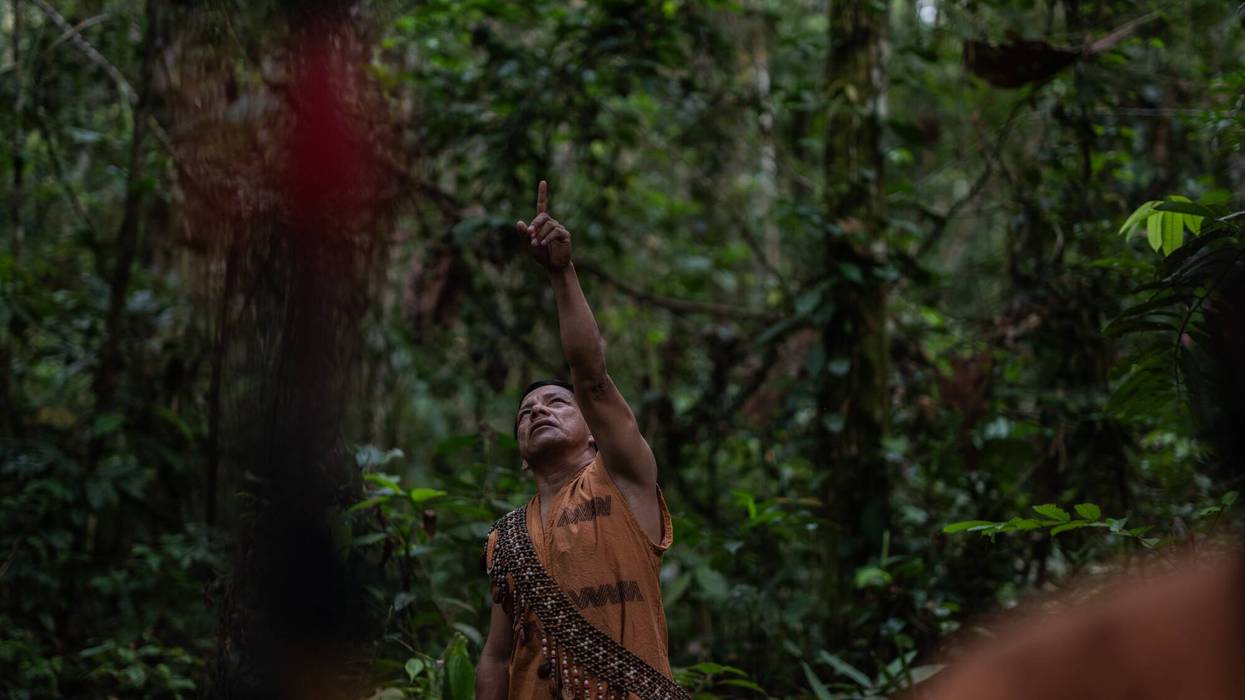
"When foreign aid retreats, Indigenous peoples and small-scale farmers can be left with fewer resources and less support as they defend the forests, rivers, and other ecosystems that sustain their communities and help keep the global climate stable,” one campaigner said.
A total of 124 people were killed defending the environment in 2025, according to a Global Witness report released Wednesday, as the global rise of authoritarianism and a dramatic decline in foreign aid makes the lives and work of environmental and humans rights advocates more challenging.
The report singles out the administration of US President Donald Trump—which dismantled the US Agency for International Development, delayed paying other United Nations fees, and has shown a broader disregard for international humans rights norms and the institutions that uphold them—for worsening the global climate for defenders. In 2025, total development aid plummeted by a record 23%, depleting the resources available to local communities and the organizations that support them.
“The effects of these budget cuts are not abstract," Juliana Vélez Echeverri, a senior campaigner at Global Witness, said in a statement. “In Colombia, projects working to promote and protect human rights and support defenders have been hit by the sudden drop in foreign aid, particularly from the US. When foreign aid retreats, Indigenous peoples and small-scale farmers can be left with fewer resources and less support as they defend the forests, rivers, and other ecosystems that sustain their communities and help keep the global climate stable.”
"We can’t prevent climate change when they kill those who protect the environment."
Colombia was the deadliest country for land defenders for the fourth year in a row with 39 killings, followed by Brazil with 26, and Honduras and the Philippines with 12 each. As the site of 85% of the killings, Latin America was the deadliest region, as it has been since Global Witness began counting the killings of environmental defenders in 2012. Indigenous people remain especially vulnerable to violence, as over three-quarters of the people killed in 2025 were either Indigenous, Afro-descendant, or small-scale farmers.
"For Indigenous peoples, land is life," said Joan Carling, executive director of Indigenous Peoples’ Rights International, in the report foreword. "Any threat to our lands, territories, and resources is a threat to our very existence—our cultures, our identities, our dignity, and our future generations. That is why our communities were willing to risk everything to protect them."
Seven of the Indigenous people killed in 2025 were members of Indigenous guards established to patrol and protect their territories from illegal encroachment. For example, the Indigenous Guard of the Kakataibo People of Peru was formed in 2022 to protect their rainforest home from illegal cocoa growing and logging.
“Defending our territory is important to us as a community and as a people, and we’re proud to support the climate that we all depend on," said Segundo Ispón, commander of Peru’s Kakataibo Indigenous Guard, in a statement. "In our culture, the work of defending our resources and territory is taught from an early age. But for this next generation coming up, the work is more dangerous than ever.”
The experience of the Kakataibo reflects another growing trend that endangers defenders: the rise of organized crime amid weakening state authority to oppose it. More than one-third of killings in 2025 were linked to organized crime or hitmen. And more than half of the killings were due to land disputes, "demonstrating how authorities’ failure to resolve competing land claims or demarcate territory paves the way for attacks on defenders and their communities," the report authors said.
As Ispón said in the report: “There is inaction from the state, inaction from the authorities. Faced with that, what do we do? We protect ourselves. We take care of each other.”
Yet the rise in lawlessness goes hand in hand with a rise in government repression against activists, making it difficult to get accurate information about the numbers of defenders killed. While the 124 figure is lower than the 142 killed in 2024 or the 196 killed in 2023, the report authors noted that "these figures are likely a significant underestimate, as many cases go unreported.
They added: "This is typical of situations involving serious armed conflict and genocide, where generalized insecurity and mass killings make identifying and verifying individual cases difficult. Research is also challenging in repressive contexts where victims and civil society groups face reprisals for reporting and documenting abuses."
Indeed, civic freedom tracker CIVICUS Monitor considers 10 of the 15 countries in which deaths were reported to be repressed.
Furthermore, the number killed does not reflect other forms of harassment and repression, such as the criminalization or weaponization of social media against activists, both of which are common in Asia.
The report comes as the state of the global environment is ever more dire, with the United Nations warning the planet is now on a path to overshoot the 1.5°C Paris Agreement goal even as the US, the No. 1 historical emitter, has jettisoned all attempts at climate policy under Trump.
"We can’t prevent climate change when they kill those who protect the environment," Amnesty Norway policy adviser Frank Conde Tangberg wrote on social media in response to the report.
The Indigenous and local voices being violently silenced could have a lot to teach global leaders at a crucial moment, if only they would listen.
As Carling wrote:
In today’s world, that ancestral knowledge is vindicated every day. From sustainable agriculture to climate-resilient water management, Indigenous peoples’ customs offer effective climate solutions.
But the climate crisis is testing our capacity to adapt to the natural world. It is too drastic, too vast in scale. Rather than try to respond to this emergency on our own, we want to contribute to collective global efforts.
Instead of being listened to, however, Indigenous peoples are being excluded from major decision-making spaces. As a result, the very projects touted as solutions—renewable energy, transition minerals—drive land grabs, dispossession, and violence. We call this “green colonialism.”
After land grabs, mining was the industry linked to the most deaths in 2025, followed by logging and agribusiness.
Yet another way forward is still possible. As Carling concluded: "Indigenous peoples and our knowledge must be at the heart of climate decision-making. Our role as custodians of land, our understanding of the consequences of climate breakdown, and our collective resistance to dispossession must have an influence on policy at the centre of power."
"But this can only happen when our territories are secure and our people protected from harm," she said. "States and leaders must work with us firstly to ensure that our communities are safe—and then to tackle the environmental crises that pose an existential threat to us all."

"Trump's true priority, ahead of absolutely everything else, is to go down in history in big letters," said one journalist. "Remaking everything, no matter in which direction or with what consequences."
President Donald Trump said on Monday that he is considering trying to annex Venezuela and make it a US state in an imperialist effort to seize more of its oil wealth.
It's one of nearly half a dozen nations or territories Trump has threatened to use US military might to illegally conquer and add to the US during his term, including Greenland, Canada, Cuba, and Panama.
According to Fox News correspondent John Roberts, Trump said in a phone call that he was “seriously considering making Venezuela the 51st US state,” citing the Latin American nation's possession of tens of trillions of dollars worth of oil.
“They were miserable. Now they’re happy. It’s being well run,” Trump recently told Full Measure's Sharyl Attkisson. “The oil that’s coming out is enormous, the biggest in many years. And the Big Oil companies are going in with the biggest, most beautiful rigs you’ve ever seen.”
One poll from the Venezuelan firm Meganálisis in March found that while the public was initially happy to be rid of their autocratic president, Nicolás Maduro—who was abducted by US forces in January—the majority now feel that Trump's action had little to do with democracy or the well-being of the Venezuelan people and more to do with handing control of the country's nationalized oil reserves to American companies, which Trump stated as his primary objective after ousting Maduro.
Trump left Maduro's vice president, Delcy Rodríguez, in place as Venezuela's interim leader with the promise that she'd act as a pliant collaborator with the US, whom she allowed to declare control over Venezuela's oil resources "indefinitely" amid market transitions.
The environmental activist group Global Witness has estimated that over the next 10 years, as much as $150 billion in oil revenue that was expected to go to the Venezuelan treasury, which could have funded projects to develop the impoverished country, instead may flow into the coffers of foreign companies.
Trump has spoken about the idea of Venezuela becoming the 51st state before, including after the country defeated Italy in the World Baseball Classic in March, when he posted on Truth Social: “STATEHOOD, #51, ANYONE?”
Last month, during a discussion about his desire to "take" Iran's oil, Trump described his takeover of Venezuela as something akin to the resource-hungry imperial conquests of centuries past.
"I'm a businessman first," he told reporters during a press briefing. "We've taken hundreds of millions of barrels [of oil], hundreds of millions... and paid for that war many, many times over. You know the old days, 'to the winner belong the spoils.' And I said, 'Why don't we use that?' We haven't had that in this country probably in 100 years." He then went on to lament the US-led efforts to "rebuild" Germany after World War II.
While the US has lifted personal sanctions on Rodríguez and some sanctions on the Venezuelan oil and banking sectors, most of the sanctions that have contributed to the country's economic collapse remain in place. "Full unrestricted access to global capital markets has not been restored," explained Roger D. Harris from the Task Force on the Americas and the US Peace Council in Common Dreams last week.
Actually adding Venezuela as a US state would require approval from both Congress and Venezuela itself—and Trump does not appear to have the latter.
Issuing a rare rebuke of the US on Monday, Rodríguez responded that becoming the 51st state "would never have been considered" by Venezuela.
"If there is one thing we Venezuelan men and women have, it is that we love our independence process, we love our heroes and heroines of independence," the interim leader said.
Though wars of conquest are expressly forbidden under international law, it's not clear what leverage Rodríguez would have to resist if Trump attempted to make good on his goal of expanding US territory.
Argemino Barro, a Spanish political journalist and author, said the possibility that he's serious can't be dismissed.
"Yes, of course, we can dismiss it as provocation or delusion, say that it's impracticable for XYZ reasons, etc. But this kind of comment is a window into the mindset of a man who fabricates his own reality, and not only that, but imposes it on others," Barro said. "Trump wants to build the world's largest triumphal arch right in the middle of Washington, overshadowing the Lincoln Memorial; he wants his face on coins and passports; his name appears on institutions, one airport. Annexing Venezuela, in his mind, fits 100%."
"I think Trump's true priority, ahead of absolutely everything else, is to go down in history in big letters. To enter the league of Alexander the Great, Jesus Christ, and Genghis Khan," he added. "Remaking everything, no matter in which direction or with what consequences."
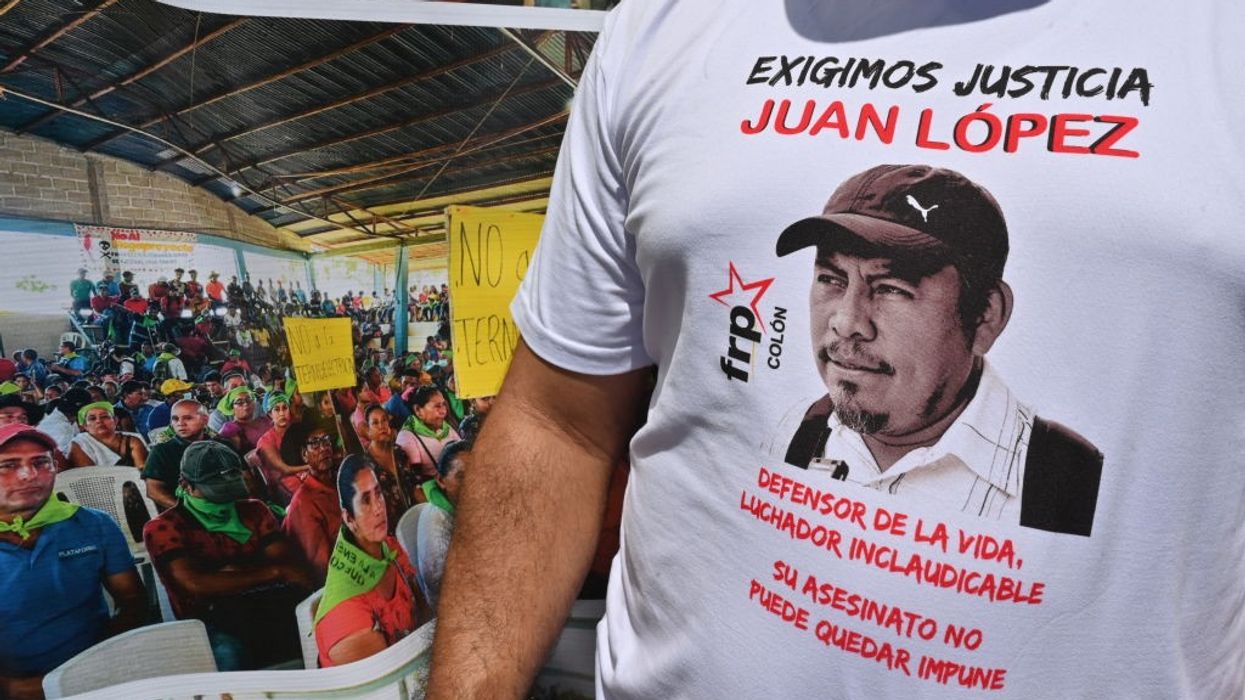
"It is critical that governments and companies turn the tide to uphold defenders’ rights and protect them rather than persecute them," said the lead author of the new Global Witness report.
At least 142 people were killed and four were confirmed missing last year for "bravely speaking out or taking action to defend their rights to land and a clean, healthy, and sustainable environment," according to an annual Global Witness report published Wednesday.
"Year after year, land and environmental defenders—those protecting our forests, rivers, and lands across the world—continue to be met with unspeakable violence," said Laura Furones, the report's lead author, in a statement. "They are being hunted, harassed, and killed—not for breaking laws, but for defending life itself."
"Standing up to injustice should never be a death sentence," Furones declared. "It is critical that governments and companies turn the tide to uphold defenders' rights and protect them rather than persecute them. We desperately need defenders to keep our planet safe. If we turn our backs on them, we forfeit our future."
The report, Roots of Resistance, begins by listing the activists who were murdered or disappeared for six months or more in 2024. It also says: "We acknowledge that the names of many defenders who were killed or disappeared last year may be missing, and we may never know how many more gave their lives to protect our planet. We honor their work too."
The most dangerous country for environmental defenders, by far, was Colombia, with 48 deaths. Jani Silva, a defender there living under state protection, said that "as this report shows, the vast majority of defenders under attack are not defenders by choice—including myself. We are defenders because our homes, land, communities, and lives are under threat. So much more must be done to ensure communities have rights and that those who stand up for them are protected."
Colombia was followed by Guatemala (20), Mexico (18), Brazil (12), the Philippines (7), Honduras (5), Indonesia (5), Nicaragua (4), Peru (4), the Democratic Republic of Congo (4), Ecuador (3), and Liberia (3). There was one confirmed killing each in Russia, India, Venezuela, Argentina, Madagascar, Turkey, Cameroon, Cambodia, and the Dominican Republic. The four disappearances were in Chile, Honduras, Mexico, and the Philippines.
"This brings the total figure to 2,253 since we started reporting on attacks in 2012. This appalling statistic illustrates the persistent nature of violence against defenders," the report states. It stresses that while the new figure is lower than the 196 cases in 2023, "this does not indicate that the situation for defenders is improving."
The report notes that "120 (82%) of all the cases we documented in 2024 took place in Latin America," while 16 killings occurred in Asia and nine were in Africa. It emphasizes that "underreporting remains an issue globally, particularly across Asia and Africa. Obstacles to verify suspected violations also present a problem, particularly documenting cases in active conflict zones."
A third of all land and environmental defenders killed or disappeared last year were Indigenous. The deadliest industry was mining and extractives, at 29, followed by logging (8), agribusiness (4), roads and infrastructure (2), hydropower (1), and poaching.
In addition to detailing who was killed or disappeared, what they fought for, and how "the current system is failing defenders," the report offers recommendations for "how states and businesses can better protect defenders."
Currently, said Global Witness project lead Rachel Cox, "states across the world are weaponizing their legal systems to silence those speaking out in defense of our planet."
"Amid rampant resource use, escalating environmental pressure, and a rapidly closing window to limit warming to 1.5°C, they are treating land and environmental defenders like they are a major inconvenience instead of canaries in a coal mine about to explode," she continued.
"Meanwhile, governments are failing to hold those responsible for defender attacks to account—spurring the cycle of killings with little consequence," she added. "World leaders must acknowledge the role they must play in ending this once and for all."
The recommendation section specifically points to the upcoming United Nations climate summit, COP30, in Belém, Brazil, "a city amid one of the world's most biodiverse regions—and one of the most dangerous countries to be a land and the environment defender."
"The protection and meaningful participation of land and environmental defenders at COP30 and beyond is an essential element of the fight against climate change," the document says. "It must become a core principle of the Parties to the UN Framework Convention on Climate Change (UNFCCC) and the Convention on Biological Diversity process."
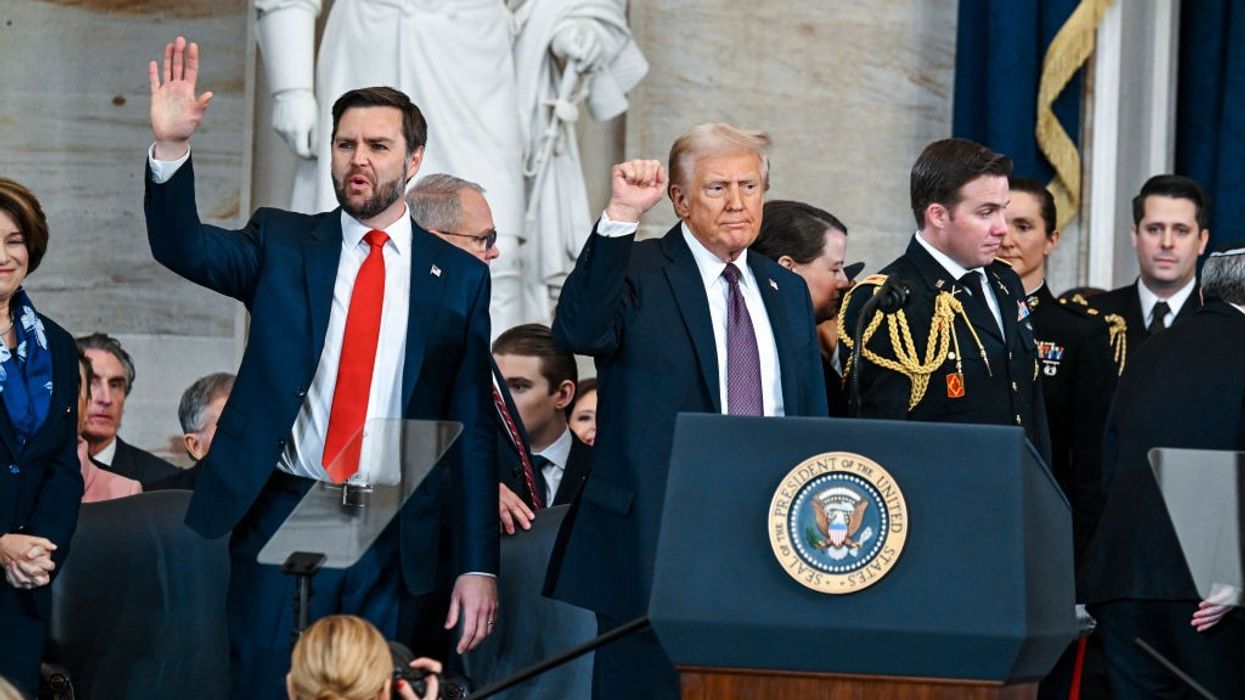
"Every month that Donald Trump has been in power, we've seen a raft of anti-climate measures come out which are music to the fossil fuel industry's ears," said one investigator.
Oil, gas, and coal companies and individuals linked to the climate-wrecking fossil fuel industry contributed more than $19 million to U.S. President Donald Trump's second inaugural fund, an analysis by a leading international environmental and human rights group revealed Wednesday.
Scouring itemized U.S Federal Election Commission data, Global Witness identified 47 individual donations to the Trump-Vance Inaugural Committee between November 2024 and January 2025 totaling $19,151,933. Using an artificial intelligence tool developed by Global Witness to identify corporate lobbyists, the group's researchers were able to automatically determine each donor's ties to the fossil fuel industry.
Global Witness said the $19.15 million figure "is likely an underestimate, as we did not count donations from diversified investors and businesses who couldn't be said to primarily represent the fossil fuel industry," and individuals with common names that couldn't be identified were not included in the final report.
According to the analysis:
The list of donors includes individuals who were given ambassadorships or key positions in the Trump Cabinet.
For example, billionaire Warren Stephens donated $4 million on December 2, 2024, the same day Trump nominated him to be U.S. ambassador to the U.K. Stephens has extensive links to the oil and gas industry but also invests in other sectors and wasn't included in our calculations of fossil fuel industry donors.
Trump also nominated Melinda Hildebrand—who donated $500,000 to the president's inaugural fund—to be U.S. ambassador to Costa Rica.
Hildebrand is the vice president of Hilcorp Ventures, which claims to be of the largest privately owned oil and gas producers in the U.S. Her husband, founder and chairman of Hilcorp, donated another $500,000.
Among fossil fuel corporations, Chevron was by far the largest contributor to Trump's inauguration fund, giving $2 million. Other companies including ExxonMobil, ConocoPhillips, and Occidental Petroleum each donated $1 million.
Overall, Big Oil gave $445 million to Trump and other Republican candidates during the 2024 election cycle.
Trump, who ran on a "drill, baby, drill" energy policy, has signed a series of executive orders aimed at boosting fossil fuel production, including by declaring a fake "energy emergency" in a push to fast-track permit approvals. He also tapped former fossil fuel executives to head the Department of Energy and Interior Department, which have pursued a policy of opening up more public lands and waters for fossil fuel development.
At the same time, the Trump administration dropped out of the Paris climate agreement for the second time and moved to roll back the modest climate progress achieved under former President Joe Biden.
"It's no surprise the oil and gas industry handed millions to Donald Trump for his inauguration, and they seem to have reaped a huge return on their investment," Global Witness senior data investigator Nicu Calcea said in a statement Wednesday.
"Every month that Donald Trump has been in power, we've seen a raft of anti-climate measures come out which are music to the fossil fuel industry's ears," Calcea continued. "From plans to steamroll through dirty new coal plants, to the attempted quashing of 'polluter pays' laws that would hold oil giants accountable, it's clear where his political priorities lie."
"While Trump sides with his friends in oil and gas, we must keep up the fight for a fair, green future—that means pushing for wind and solar where we live, backing polluters pay bills, and resisting the development of oil, gas and coal projects across the country," he added.
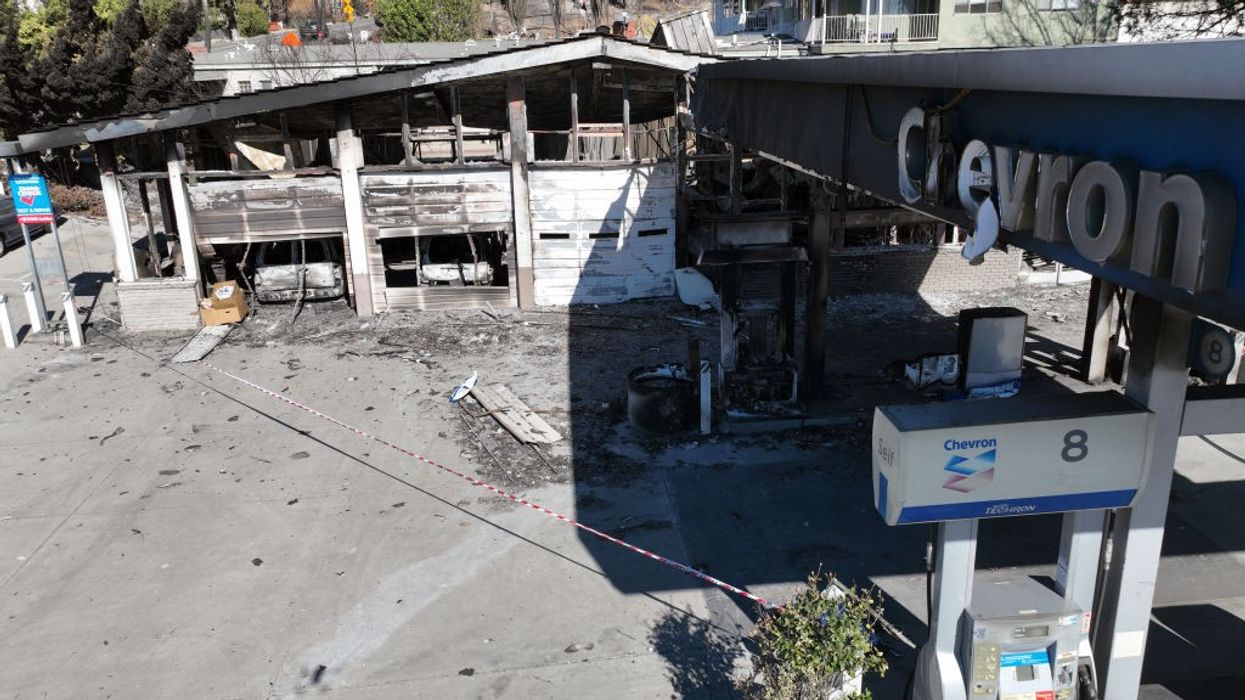
"Megarich oil firms like Chevron and Exxon are knowingly driving and profiting from the climate crisis," said a Global Witness leader. "It's time they picked up the costs of repair."
As Chevron and ExxonMobil on Friday reported tens of billions in 2024 profits, campaigners intensified their demand for Big Oil to pay for the catastrophic levels of destruction caused by recent fires around Los Angeles, California, which were made more likely by the fossil fuel-driven climate emergency.
"As LA residents reel from the damage done to their city, it's important we point out who has been driving the fossil fuel pollution that is turbo-charging climate disasters," said Lela Stanley, head of Fossil Fuel Investigations at Global Witness, in a statement. "Big Oil bosses have worked with their friends in politics to bake dirty fossil fuels into our energy systems, block climate action, and spread lies about climate change to divide and distract us."
"Instead of accounting for our safety or the health of the planet, megarich oil firms like Chevron and Exxon are knowingly driving and profiting from the climate crisis," she continued. "It's time they picked up the costs of repair."
Texas-based ExxonMobil's net income for last quarter was $7.6 billion, bringing its full-year total to $33.7 billion, the company said Friday. Chevron—which last August relocated its headquarters from San Ramon, California, to Houston—had profits of $3.2 billion during the fourth quarter and $17.7 billion throughout 2024, the hottest year on record.
"Just a quarter of these U.S. oil giants' annual profits could pay for $1 million payouts to each LA household that has lost a home."
Responding to the two companies' more than $51 billion in combined earnings, Stanley said that "just a quarter of these U.S. oil giants' annual profits could pay for $1 million payouts to each LA household that has lost a home. What's small change to Big Oil could have a transformative effect on ordinary people's lives."
Chevron earlier this month announced it would donate $1 million total to the American National Red Cross, California Fire Foundation, and Los Angeles Chamber of Commerce Small Business Disaster Recovery Fund to aid recovery from what could be the costliest fire disaster in U.S. history.
Global Witness highlighted the World Weather Attribution's
finding that global heating—primarily caused by humanity's continued extraction and use of fossil fuels—made the weather conditions that caused the Los Angeles fires 35% more probable.
"Despite alarm from climate scientists over global heating and a surge in fossil fuel-driven disasters," the organization noted, "Exxon and Chevron have continued to expand their oil production, with the firms producing +4% and +3% more in 2024 than they did in 2023, respectively."
Chevron, the group added, "has actively sought to avoid paying out in the wake of climate disasters like the LA wildfires, spending $30 million with the Western States Petroleum Association—one of the U.S.'s largest fossil fuel trade groups—lobbying against a polluters pay-style bill."
During California's last legislative session, lawmakers introduced, but did not pass, a "climate superfund bill" that would make polluters pay into a fund for disaster prevention and cleanup. The fires have sparked a fresh push for such legislation.
Californians are fleeing wildfires while Exxon & Chevron rake in $36B+ in profits. Polluters profit, taxpayers foot the bill. California can’t wait, we must pass a #ClimateSuperfund bill so companies driving the climate crisis pay for the damage 💰 #MakePollutersPay
[image or embed]
— Stop the Money Pipeline ( @stopmoneypipeline.bsky.social) January 11, 2025 at 3:43 PM
On Monday, California state Sen. Scott Wiener (D-11) introduced a bill that would allow homeowners, businesses, and insurance companies impacted by climate disasters to recover losses by taking legal action against oil and gas companies, which have not only fueled the global climate emergency but also spent decades misleading the public about the harms of their products.
There are also renewed calls for accountability via the courts. California is among the U.S. states and municipalities suing fossil fuel companies—including Chevron and Exxon—for their decades of deception. The Center for Climate Integrity said earlier this month that the latest fires "underscore the importance of California's effort to hold Big Oil accountable in court for its climate lies."
At least 29 deaths are
connected to this month's fires in the state. Attorney and Public Citizen Climate Program Accountability Project director Aaron Regunberg last year co-authored a legal memo about bringing criminal charges against fossil fuel companies. During a January 16 press conference, he said that "it's involuntary manslaughter to recklessly cause a death. Local prosecutors should consider whether Big Oil's conduct here amounts to violations of these kind of criminal laws."

"Ordinary people shouldn't pay for disasters they couldn't prevent," said one group. "But Big Oil should"
In the wake of one of the hottest summers ever recorded in the United States and the deadly destruction wrought by Hurricane Helene, climate defenders on Monday urged Congress to pass recently introduced legislation that would make polluters pay into a $1 trillion fund to finance efforts to combat the planetary emergency.
"Emissions from burning oil, gas, and coal are cooking the planet and super-charging deadly heatwaves, floods, and storms," the international NGO Global Witness said in a statement. "Several major fossil fuel firms knew for decades about the climate impacts of their products, but they ignored scientific advice and denied the climate crisis was happening."
"The Polluters Pay Climate Fund Act can help redress this injustice by making fossil fuel companies pay for some of the damage they're doing to America," the group added. "This would create a $1 trillion fund that would pay for climate disaster relief and efforts to help keep us cool and safe. They can afford it—in 2023 the top five oil and gas producers in the U.S. made over $74 billion in profits."
Introduced last month by Sen. Chris Van Hollen (D-Md.) and Reps. Jerry Nadler (D-N.Y.) and Judy Chu (D-Calif.), the Polluters Pay Climate Fund is backed by dozens of climate and environmental justice groups.
"From sweltering heat waves to rising sea levels to ever more intense storms, our planet is screaming out every day for us to take action on global warming," Van Hollen said at the time of the bill's introduction. "And after fueling the climate crisis for decades, big polluters can no longer run from their responsibility to address the harm they have done."
"The principle behind this legislation is simple but very powerful—polluters should pay to clean up the mess they made and build a more resilient future, and those who have polluted the most should pay the most," the senator added.
With an eye on next month's U.S. presidential election, campaigners demanded a president who will make polluters pay for fueling the climate crisis. With former President Donald Trump, the Republican nominee, running on a "
drill, baby, drill" platform and previously calling climate change a "Chinese hoax," activists have focused on imploring Democratic Vice President Kamala Harris to make fossil fuel companies pay for their damages.
"We need a president who is willing to take on Big Oil. A president who will make polluters pay for the damage they've done to our climate," the Make Polluters Pay campaign said in a video posted last week on social media.
"As California's attorney general, Kamala Harris prosecuted big polluters like BP and Chevron and launched an investigation into ExxonMobil's climate lies," the video continues. "As vice president, she cast the tie-breaking vote on the Inflation Reduction Act, helping lower energy costs and reduce our dependence on fossil fuels."
"Kamala Harris says she'll take on corporate price gouging and hold Big Oil accountable. Donald Trump? He's asking the oil companies for bribes," the video adds, referring to his promise to fossil fuel executives that he would gut the Biden administration's climate regulations if they donated $1 billion to his campaign.
Fossil Free Media director Jamie Henn cited a December 2023 survey conducted by his group and Data for Progress that found 64% of U.S. voters—including 89% of Democrats, 58% of Democrats, and 42% of Republicans—are more likely to vote for a candidate "who will make polluters pay for climate damages."
The campaigners' calls come as extreme weather fueled by the burning of fossil fuels
wreaks havoc around the world, including in the United States, where Hurricane Helene and its remnants tore a deadly path of destruction from the Florida Gulf Coast to the mountains of North Carolina. The storm has claimed at least 121 lives across the Southeast.
"It's obscene that communities across North Carolina are suffering and dying from the reality of the climate emergency while Donald Trump denies that it even exists," Brett Hartl, political director at the Center for Biological Diversity Action Fund, said in a statement.
"While roads, bridges, and entire towns are being washed away, Trump and Project 2025 plan to gut [the Federal Emergency Management Agency] and roadblock every agency from confronting the climate crisis," he said, referring to the right-wing blueprint for overhauling the federal government. "Vice President Harris will act on climate change, and she'll hold the polluters that caused it accountable for their willful destruction."
Responding to Helene's devastation, Sen. Elizabeth Warren (D-Mass.) said on social media Monday that "I'm heartsick for the families who lost their homes and their loved ones."
"It's a sad reality that this hurricane rapidly intensified into a powerful Category 4 storm because of climate change," she added. "We must do more to confront the climate crisis as we rebuild."
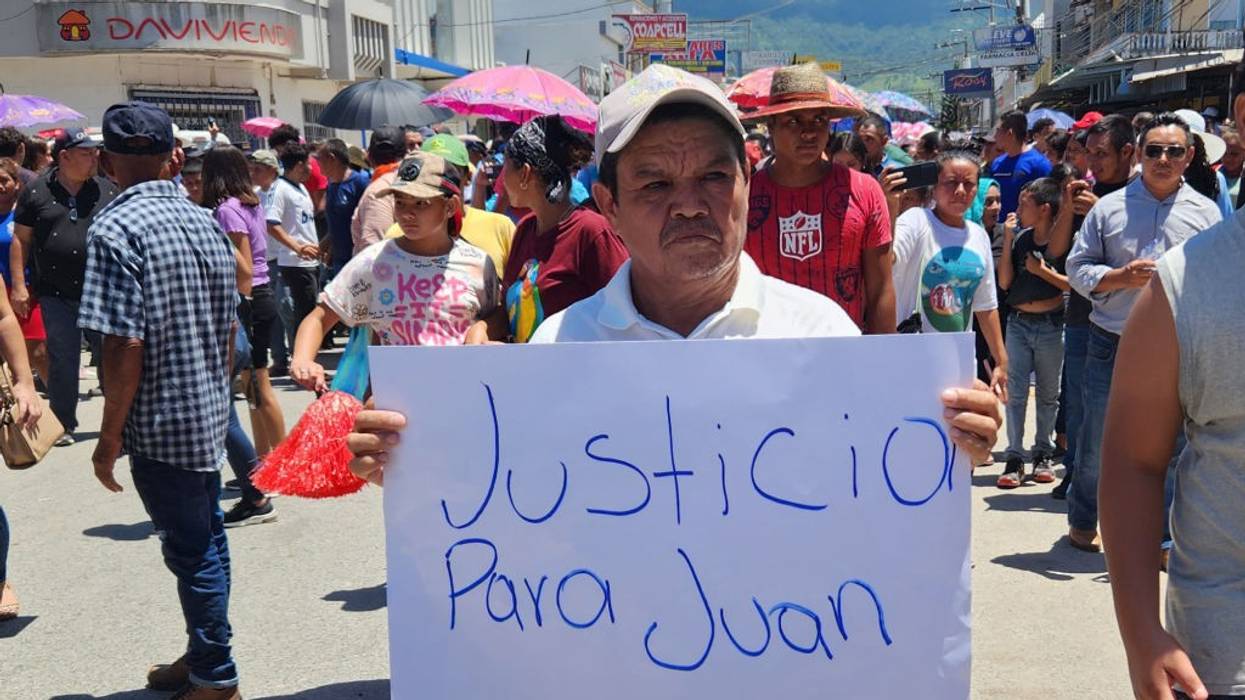
"If you start defending common interests in this country, you clash with major interests," López said before his death.
Environment and anti-corruption activist Juan López was killed in Tocoa, Honduras on Saturday in the latest attack on environmental defenders in the country.
López, who had long received death threats but continued to speak out, was gunned down by motorcyclists while leaving church.
Honduran leaders have denounced his killing as murder and vowed to prosecute the perpetrators. No one has yet been arrested. López had in recent days called for the resignation of Adán Fúnez, Tocoa's longtime mayor, for alleged involvement in organized crime and drug trafficking, according to Contrecorriente, an investigative media outlet.
López, a local councilor and member of the Committee for the Defense of Common and Public Goods of Tocoa (CMDBCP, in Spanish), had long defended forests and rivers from threats posed by mining and hydroelectric companies. He is the fourth CMDBCP member to be killed since last year.
"We condemn the vile murder of Juan López, a renowned defender of common and public goods, councilor of the municipality of Tocoa, a great human being, a great historical fighter, a dear friend," Angélica Álvarez, Honduas' acting human rights minister, wrote on social media. "We demand justice, investigation, and prison for his cowardly murderers."
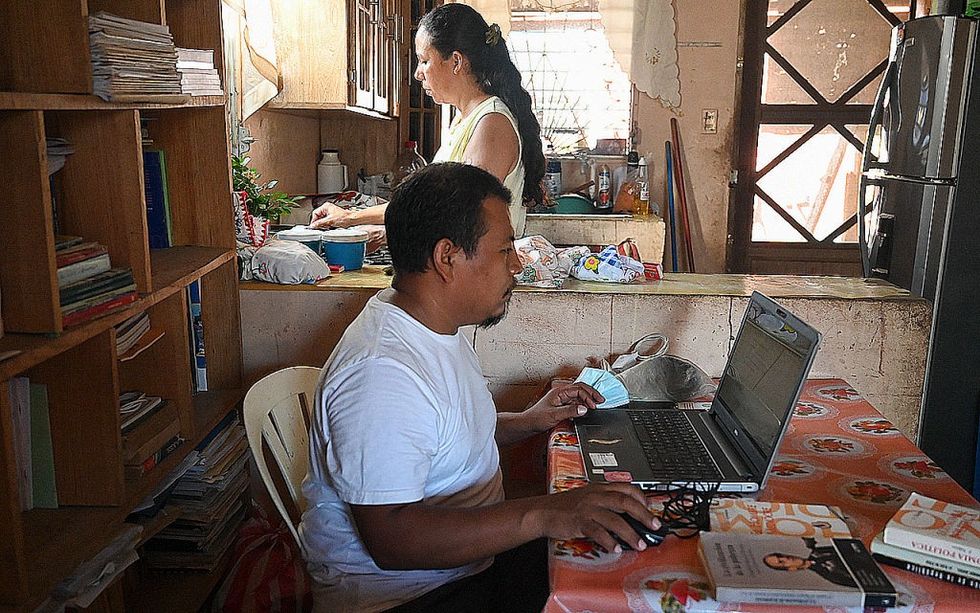 Honduran environmentalist Juan López works at his home in Tocoa, Honduras, in September 2021. López was killed on September 14, 2024. (Photo: Orlando Sierra/AFP via Getty Images)
López was a member of the ruling Libre party, which has held national power since President Xiomara Castro, a leftist, took office in January 2022. However, he wasn't afraid to call out corruption in his own party.
The last three weeks brought scandal to the party after a video from 2013 emerged in which Carlos Zelaya, a Libre lawmaker and Castro's brother-in-law, and Fúnez, the Tocoa mayor, who's also a party member, are seen negotiating with alleged drug traffickers. Zelaya and Fúnez were trying to boost Castro's 2013 presidential campaign, which was unsuccessful.
Carlos Zelaya resigned office amid the scandal. He is the brother of Castro's husband, Manuel "Mel" Zelaya, who led the country from 2006 until 2009 and serves as her principal adviser. There have also been calls for Castro herself to resign.
Amid the national fallout, the video leak also led to debate in Tocoa, a city of more than 100,000 in the country's north, just inland from the Atlantic Ocean. López denounced Fúnez and called for him to resign as Carlos Zelaya had.
It's not clear which of López's political enemies may have ordered his death, but his safety was known to be at risk. He understood that it came with the work he did. He had long fought for the preservation of the Guapinol and San Pedro rivers and the Carlos Escaleras nature reserve.
"If you start defending common interests in this country, you clash with major interests," López told Agence France-Presse in 2021.
"If you leave home, you always have in mind that you do not know what might happen, if you are going to return," he added.
Last year, the Inter-American Commission on Human Rights moved to establish protections for 30 CMDBCP members including López, who reported threats by a gang member, a local businessperson, and a mining company representative. Two men on motorcycles appeared near his home in recent months, the commission reported, according to Reuters.
Ismael Moreno, a well-known Jesuit priest and social reformer, called for an international commission to work alongside Honduran prosecutors to investigate López's killing, given the lack of public confidence in the country's institutions, Contrecorriente reported.
The vast majority of global attacks on environmental defenders take place in Latin America, according to a report released last week by Global Witness, a watchdog group. In 2023, Honduras, despite its relatively small population, tied for third in the world in the number of defenders killed, at 18, behind only Colombia and Brazil.

"Activists and their communities are essential in efforts to prevent and remedy harms caused by climate damaging industries," one campaigner said. "We cannot afford to, nor should we tolerate, losing any more lives."
Almost 200 people were killed in 2023 for attempting to protect their lands and communities from ecological devastation, Global Witness revealed Tuesday.
This raises the total number of environmental defenders killed between 2012—when Global Witness began publishing its annual reports—and 2023 to 2,106.
"As the climate crisis accelerates, those who use their voice to courageously defend our planet are met with violence, intimidation, and murder," Laura Furones, the report's lead author and senior adviser to the Land and Environmental Defenders Campaign at Global Witness, said in a statement. "Our data shows that the number of killings remains alarmingly high, a situation that is simply unacceptable."
At least 196 people were murdered in 2023, 79 of them in Colombia, which was both the deadliest country for defenders last year and the deadliest overall. In 2023, more defenders were killed in Colombia than have ever been killed in one country in a given year since Global Witness began its calculations.
While the government of left-wing President Gustavo Petro has promised to protect activists, organizers on the ground say the situation has only gotten worse for defenders in the past year. Colombia will host the 16th Conference of Parties to the Convention on Biological Diversity in October, and has promised to highlight the role of defenders in protecting nature. This presents a "historic opportunity" to stand up for the rights of environmental activists, Global Witness said.
Overall, Latin America is the deadliest region for defenders, making up 85% of killings in 2023. It was home to the four deadliest countries for defenders—Colombia, Brazil, Honduras, and Mexico—which together accounted for 70% of all killings. Honduras also saw the highest number of killings per capita, both in 2023 and over the past 11 years.
"It is the job of leaders to listen and make sure that defenders can speak out without risk."
The fifth deadliest country for defenders in 2023 was the Philippines, which saw 17 people killed. Overall, nearly 500 people have been murdered in Asia since 2012, with the Philippines remaining the deadliest country in the region during that time. Global Witness recorded four deaths in Africa in 2023, and 116 since 2012, but noted that this is likely a "gross underestimate" as killings on the continent are more difficult to document due to a lack of information.
Global Witness cannot always link a particular industry to the murders of the land defenders who oppose environmental harm. In Colombia, for example, it estimates that half of people killed in 2023 were killed by organized criminal elements. However, for the deaths it was able to connect, most people died after opposing mining operations at 25. This was followed by logging (5), fishing (5), agribusiness (4), roads and infrastructure (4), and hydropower (2).
The threat of even more mining-related violence looms as nations scramble for the critical minerals necessary for the transition away from fossil fuels and toward renewable forms of energy. This dovetails with another component of Global Witness' findings: the disproportionate violence borne by Indigenous communities for defending their homes. Of the defenders killed in 2023, nearly half were Indigenous peoples or Afrodescendants, and almost half of the minerals needed for the energy transition are located on or near Indigenous or peasant land.
Jenifer Lasimbang, an Indigenous Orang Asal woman from Malaysia and executive director of Indigenous Peoples of Asia Solidarity Fund, explained the situation her community faces:
In Malaysia, as in many other countries, we Indigenous Peoples have been subject to wave after wave of destruction. First came the logging and oil palm companies. As a result, nearly 80% of the land surface in Malaysian Borneo has been cleared or severely damaged.
Now, as the world moves away from a fossil-fuel based economy, we're seeing a rush for critical minerals, essential to succeed in the transition to a green economy.
With Malaysia the regional leader in aluminium, iron and manganese production, extracting rare minerals isn't new to us. But our experience so far has been that this comes at a huge environmental cost.
The Malaysian government is issuing an increasing number of prospecting and mining licenses. We know what this new "green rush" means for us. We know it's going to get worse while demand for resources remains high.
Lasimbang said that her community did not oppose development itself, but an "unsustainable and unequal global system" predicated on ever-increasing consumption, and that world leaders should learn from Indigenous communities like hers how to sustain a society without destroying the environment.
"There is only really one thing left to say: Trust us. Let us lead. We will take you with us," Lasimbang said.
While global awareness of the climate crisis and commitments to address it should have translated into greater protections for those on the frontlines of defending biodiversity, that has not been the case. Since the Paris agreement was signed in 2015, at least 1,500 defenders have been murdered, Global Witness said.
Even in wealthier countries like the U.K., E.U., and U.S. where killings are less frequent, governments have increasingly repressed environmental activists by criminalizing protest. In 2023, Global Witness observed that the "global surge in anti-protest legislation persisted."
For example, in 2023 the U.K. expanded its Public Order Act to allow police to prosecute certain protests that disrupted national infrastructure or caused "more than a minor" disturbance. In November of that year, police arrested at least 630 people for marching slowly on a public road to protest new fossil fuel projects.
In the U.S., more than 20 states have passed "critical infrastructure" laws that target protests against fossil fuel projects like pipelines. E.U. countries have passed similar laws as well.
Even in the developed world, the criminalization of protest can turn deadly: In January 2023, police in Georgia shot and killed 26-year-old defender Manuel Esteban Paez Terán, or Tortuguita, as they were camping out in a local forest to prevent it from being bulldozed to facilitate the construction of a "Cop City" training facility.
To protect defenders worldwide, Global Witness called on governments and businesses to document attacks and hold perpetrators to account.
"Governments cannot stand idly by; they must take decisive action to protect defenders and to address the underlying drivers of violence against them," Furones said. "Activists and their communities are essential in efforts to prevent and remedy harms caused by climate damaging industries. We cannot afford to, nor should we tolerate, losing any more lives."
Nonhle Mbuthuma of South Africa, who won the Goldman Environmental Prize in 2024, wrote in the report's forward that both defenders and governments had a role to play in creating a more just and sustainable world as it teeters on the brink of climate and ecological breakdown.
"Now it is my role, as a defender, to push elite power to take radical action that swings us away from fossil fuels and toward systems that benefit the whole of society," Mbuthuma wrote. "It is the job of leaders to listen and make sure that defenders can speak out without risk. This is the responsibility of all wealthy and resource-rich countries across the planet."
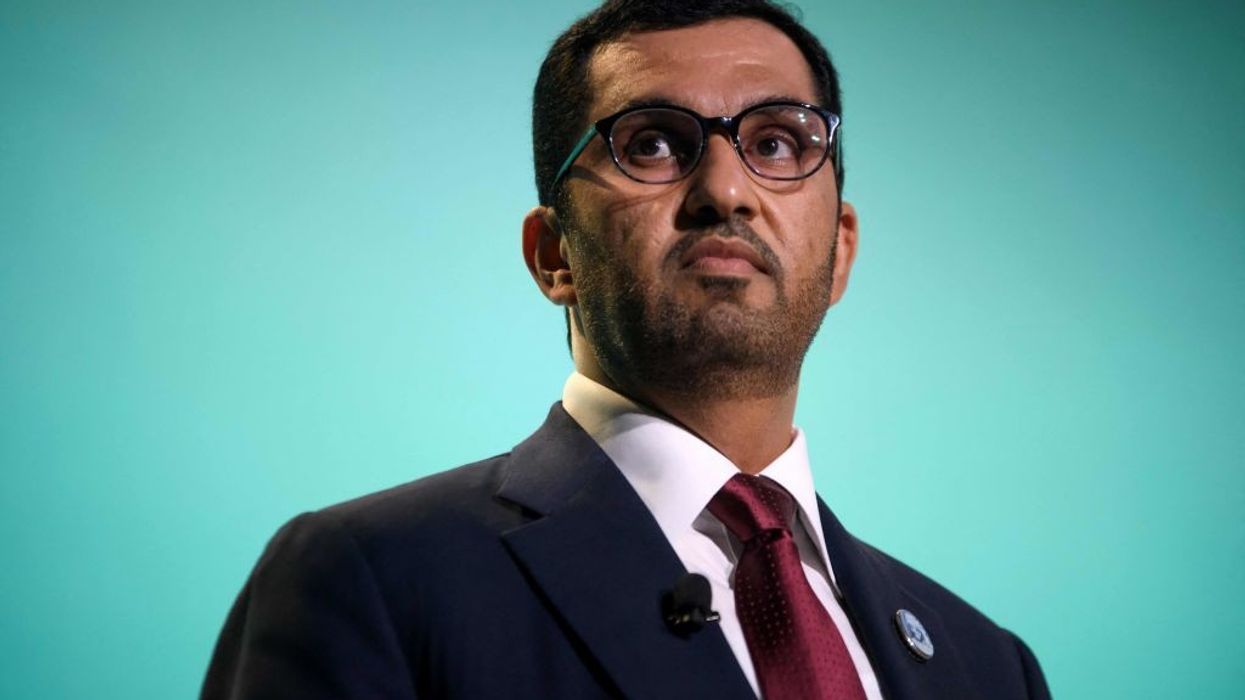
"Make no mistake, COP28 was hijacked by the interests of the fossil fuel industry," said one campaigner.
A new analysis released by human rights and anti-corruption group Global Witness on Wednesday left no room for doubt, said one campaigner, that the host country of last year's United Nations climate summit, the United Arab Emirates, prioritized fossil fuel interests over the planet.
"Make no mistake, COP28 was hijacked by the interests of the fossil fuel industry," said Patrick Galey, senior investigator for Global Witness, referring to the 28th Conference of the Parties of the United Nations Framework Convention on Climate Change (UNFCCC).
The analysis showed that the UAE's Abu Dhabi National Oil Company (ADNOC) used the COP28 presidency of its CEO, Sultan Ahmed Al Jaber, to seek deals worth nearly $100 billion with oil, gas, and petrochemical companies in at least 12 countries.
Fossil fuel firms, said Galey, "weren't content simply to block or stall genuine climate policy but used the opportunity to pursue more climate-wrecking oil and gas deals."
Al Jaber previously denied that ADNOC used COP28 to further its business interests after a leak of briefing documents that instructed the company to discuss fossil fuel deals with at least 16 states that were present at the talks.
According to Global Witness, the company sought deals with at least 11 of those countries and at least one other that had not been included in the leaked documents.
The group's investigation found that the UAE redoubled its investment in oil and gas in Egypt in 2023, the year Al Jaber presided over COP28. ADNOC finalized a deal with TotalEnergies Marketing Egypt, purchasing a 50% stake in the company for a reported $200 million—resulting in the UAE now jointly operating 240 service stations across the country and contributing to its record profits posted in 2023.
Other deals sought by ADNOC with COP28 participants include a joint venture with BP to buy a 50% stake in NewMed Energy in Israel and multiple bids for a stake in Braskem, the largest petrochemical producer in Latin America. The company is part-owned by Brazil's state-run oil and gas producer Petrobas.
ADNOC also finalized deals worth an estimated $17 billion with Lukoil in Russia and Wintershall in Germany to develop the Hail and Ghasha gas field in the UAE.
Global Witness' findings bolstered a report by the Center for Climate Reporting and the BBC in November, which showed Al Jaber used his position at COP28 to push for fossil fuel deals with foreign governments.
The report confirms the worst fears of climate campaigners, who were incensed in early 2023 when Al Jaber was named the president of the U.N.'s largest annual climate conference and warned of conflicts of interest due to his position at the helm of ADNOC.
As it turns out, said Galey, "the UAE knew exactly what it was doing and was not let down—COP28 seems to have been molded towards the benefit of its state oil company."
"As depressing as it is dystopian, climate talks must never be allowed to create more climate chaos," he added.
The analysis was released weeks after U.S. Sen. Jeff Merkley (D-Ore.) and Rep. Jan Schakowsky (D-Ill.) led 24 Democratic lawmakers in writing to Secretary of State Antony Blinken and White House Senior Advisor John Podesta, urging them to support conflict of interest guidelines ahead of COP29, which is scheduled to take place in November in Baku, Azerbaijan.
With Mukhtar Babayev, the country's ecology and natural resources minister who worked for a state-owned oil and gas company for more than 20 years, set to preside over the conference, Galey said that "COP28 seems to have provided other petrostates with a sinister playbook to copy and paste from."
"As the UAE passes the baton onto Azerbaijan, we are now looking at the possibility of consecutive COPs being hijacked for the interests of big polluters and their profits," said Galey, noting that scientists have warned the planet is "dangerously close" to heating that exceeds 1.5°C.
Global Witness pointed to recently announced plans to partially privatize the State Oil Company of Azerbaijan (SOCAR) ahead of COP29, "with its downstream and petrochemical subsidiaries made available to help attract foreign investments."
Rep. Rashida Tlaib (D-Mich.), who signed the letter spearheaded by Merkley and Schakowsky, said Global Witness' report "is a disturbing warning about the potential for further fossil fuel corruption at COP29, which incredibly will also be hosted by another fossil fuel executive."
"I will continue urging the U.S. and UNFCCC to adopt new policies to prevent these absurd conflicts of interest that frustrate the international community's work to address the urgent threats of climate change," she said.
Global Witness reached out to ADNOC, SOCAR, and COP29 for comment regarding its investigation, and was told that ADNOC is working to "secure, reliable, and responsible supply of energy to support a just, orderly, and equitable global energy transition and that allegations regarding Al Jaber's deal-making at COP28 are "false, not true, incorrect, and not accurate."
A COP29 spokesperson said Azerbaijan is "100% committed to bringing countries together with the ambition of keeping the 1.5° target within reach."
Rep. Barbara Lee (D-Calif.), said in a statement Wednesday that Babayev should be removed "from any leadership role at COP29."
"It is an absolute scandal that the UNFCCC has two years running put an oil and gas executive in charge of this event," she said, "thus putting foxes in charge of the henhouse."
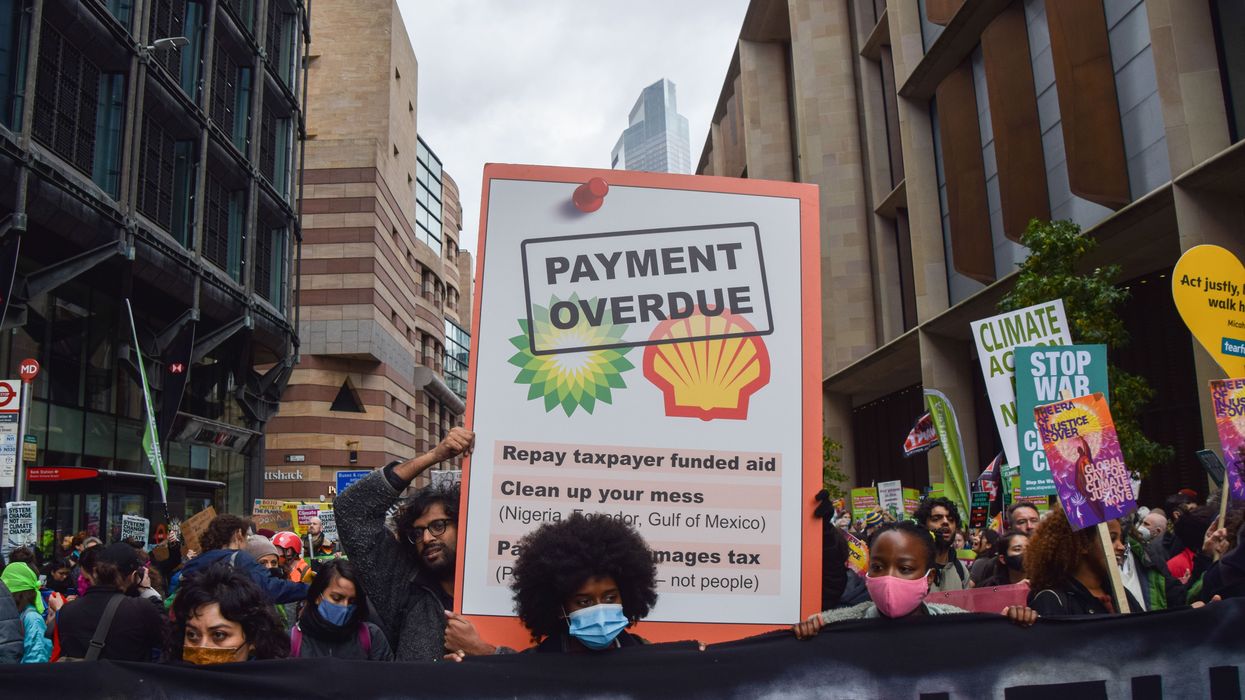
"Instead of helping to rebuild Ukraine, ease the burden of high bills, or support countries suffering from the climate crisis, BP is making the rich richer," one campaigner said.
Oil major BP has paid out $27.4 billion to shareholders since Russia invaded Ukraine in February 2022, Global Witness found in an analysis published Tuesday.
The environmental justice group released its calculations one day after BP announced its profits for the first quarter of 2024: The company made a total of $2.7 billion and spent $1.75 billion—more than half that amount—on share buybacks.
"It's obscene that anyone would profit from the Ukraine war, the energy crisis, or the climate crisis, but that's what's happening," Alice Harrison, head of fossil fuel campaigns at Global Witness, said in a statement. "With the biggest spoils going to one of the richest, most destructive industries in the world—the fossil fuel industry."
"Since Russia's invasion of Ukraine, [oil companies] are seen as providing countries with energy security rather than being terrible companies polluting the world—and they have used that to their advantage."
BP's first-quarter profit announcement came one day after the Financial Times reported that shareholders expected the company to relax its plans to reduce oil and gas production. The company is currently the only major player in the industry that has committed to actually curbing production, with a reduction target of 25% of 2019 levels by 2030. That target, set in 2023, was already a scaling back of its 2020 goal to cut production by 40% by the end of the decade.
However, in January, Murray Auchincloss replaced Bernard Looney as BP's CEO, and shareholders say he has different priorities.
"Murray is saying outwardly that there's no change, but behind the scenes he's being a lot more pragmatic, returns-focused, and hard-nosed about it," one anonymous investor told FT. "We'd all love them to build more in renewables but from a shareholder point of view, returns are not there."
Shareholders also spoke candidly about how Russia's invasion of Ukraine had impacted the industry.
"Since Russia's invasion of Ukraine, [oil companies] are seen as providing countries with energy security rather than being terrible companies polluting the world—and they have used that to their advantage," one said.
Another speculated that BP's rumored change in strategy was "partly a response to market pricing" as higher interest rates made renewable energy projects more expensive while the Ukraine war raised oil prices.
In a recent letter to BP's board, activist shareholder Bluebell Capital Partners said that if the company was planning to raise production, as it had suggested privately to shareholders, then that "should be reflected in BP's official communication and targets."
However, a U.S. Senate hearing last week focusing on major oil companies including BP revealed that the industry has a history of saying one thing and doing another when it comes to climate targets. For example, while BP has committed to the Paris climate agreement on its website, in internal emails shared at the hearing, the company admitted that "no one is committed to anything, other than to stay in the game."
In response to BP's quarterly profits, Oxfam argued that oil and gas companies cannot be trusted to regulate themselves.
"With BP's earnings once again in the billions and its oil production higher than the last quarter, we clearly cannot rely on fossil fuel companies to lead us out of the escalating climate crisis," Oxfam Great Britain's senior climate justice policy adviser, Chiara Ligouri, said in a statement. "The buck must stop with the government. Instead of adding fuel to the fire by allowing new oil and gas licenses, they can and should be taxing fossil fuel companies like BP more to ensure they pay their fair share for damage caused by their activities."
"We need faster and fairer action to support people living in poverty—in the U.K. and globally—who did the least to cause the crisis but who are now suffering the most, and fossil fuel companies should foot the bill," Ligouri added.
Harrison of Global Witness also called for a transition to renewable energy.
"Instead of helping to rebuild Ukraine, ease the burden of high bills, or support countries suffering from the climate crisis, BP is making the rich richer," Harrison said. "And this will continue to be the case until we make the urgent switch to a clean energy system."