
SUBSCRIBE TO OUR FREE NEWSLETTER
Daily news & progressive opinion—funded by the people, not the corporations—delivered straight to your inbox.
5
#000000
#FFFFFF
To donate by check, phone, or other method, see our More Ways to Give page.


Daily news & progressive opinion—funded by the people, not the corporations—delivered straight to your inbox.
The United States needs new public media policies to redress a history of racism and xenophobia.
In communities across the nation, millions of immigrants are living in harmony with native-born residents, with neighbors, coworkers, and friends collectively caring for each other. Yet we rarely see those stories uplifted on the nightly news or on the front pages of local newspapers; those stories never go viral on social-media platforms. That’s because these kinds of stories don’t help the politically powerful in our country, and they don’t boost the profits of corporate media empires.
Instead we see, on repeat, the lie that noncitizen immigrants are voting in droves. People with millions of followers—like Elon Musk—are routinely spreading this lie on social media.
We see hateful rhetoric about immigrants of color. During a Univision town hall last month, Donald Trump re-upped the notorious lie about Springfield, Ohio’s Haitian community.
Our nation has yet to reckon with the deadly role our media system has played in the creation and distribution of narratives that have harmed countless people, including Ohio’s Haitian community.
We see coordinated campaigns to dissuade Black and Latino voters from participating in our democracy, with baseless claims that the U.S. election might not happen, or that police will be monitoring polling stations to round up voters who lack the “proper” documentation.
The intent of this rhetoric is to scare voters of color from going to the polls, to pander to anti-immigrant sentiments, to stir up fear and hysteria, to drive voter turnout of white people who are scared about the changing demographics of this country, and to legitimize authoritarian power grabs based on lack of trust in our electoral process.
And our nation’s dominant media and tech companies are complicit in all of this.
Far-right figures, including Ohio’s junior senator, continue to spread the falsehood that Springfield’s Haitian immigrants are eating pets. Both traditional and social media have amplified this conspiracy theory—and an entire community of innocent people continues to live in fear.
Many of us understand that these are outlandish lies—yet they are resonating with people who have fallen prey to anti-Haitian, anti-Black, and xenophobic talking points that are disseminated on media outlets like Fox News or on social-media platforms. This is part of a pattern in media coverage that stretches back hundreds of years.
The nation’s earliest newspapers supported enslavement by profiting off ads promoting the sale of enslaved people and the recapture of those who fled for freedom. In the ensuing years, powerful media institutions supported lynching and racial segregation.
More recently, several newspapers apologized for their histories of supporting segregation and white supremacy. But these outlets have yet to redress the harm they’ve caused or their roles in supporting racial hierarchies. Meanwhile, local-TV newscasts dehumanize communities of color through their crime coverage, reporting that has long proven lucrative for media conglomerates.
It’s not surprising that most people in the United States know very little about immigrants of color since the dominant narrative in corporate media portrays immigrants as criminals who are dangerous invaders.
The sober truth is that racism is profitable for social and traditional media companies alike. If-it-bleeds-it-leads coverage and “copaganda” serve as strategies to attract larger audiences. And powerful media figures are happy to look the other way if it means this incendiary rhetoric will help their companies’ bottom lines. Former CBS chairman and CEO Les Moonves admitted this when discussing the 2016 Trump campaign at an investor conference:
“Who would have thought that this circus would come to town?” said Moonves. “But, you know, it may not be good for America, but it’s damn good for CBS. The money’s rolling in.” Never mind the harmful impacts that Trump’s white-nationalist screeds were having on Black and Brown people across the country.
Many media executives share this sentiment, which helps explain why so little coverage illustrates the humanity of people who are forced to leave their homes and loved ones to escape violence and political instability stemming from histories of colonialism, and environmental destruction resulting from climate change. It explains why there are so few stories on people who are seeking employment and a better life for their families.
Even less coverage focuses on how U.S. foreign policy has economically, politically, and socially destabilized countries in the Americas like Haiti—and prompted thousands to flee their homelands. Despite our country’s long history of interventionist policies in Haiti—which has included an occupation and the support of deadly dictatorships—the public knows very little about the country, and the people we are told to fear.
“Haiti has been and continues to be the main laboratory for U.S. imperial machinations in the region and throughout the world,” University of British Columbia Professor Jemima Pierre wrote last year.
University of Toledo Professor Ayendy Bonifacio’s article “Tracing the Anti-Haitianism Behind the Springfield Scapegoating” explains that when Haitians overthrew their colonial enslavers to form the world’s first Black republic in 1804, it struck “fear into the hearts of slaveholders and their political allies, who wielded considerable influence over the nation’s major newspapers.”
Bonifacio notes that “during and after the Haitian Revolution, the U.S. press frequently reported on the supposed barbarism and primitiveness of Haiti and its people. Indeed, stories have circulated about Haitians eating animals and practicing cannibalism since the country’s founding.”
This anti-Haitian—and anti-Black—rhetoric has extended to other communities of color. In recent years, the Asian American Pacific Islander community has suffered from an increase in xenophobic news coverage that has criminalized both immigrants and U.S.-born residents. Reporting that fomented anti-Asian hate played a significant role in the adoption of racist policies such as the Chinese Exclusion Act of 1882 and the incarceration of Japanese Americans during World War II. The Los Angeles Times and The Seattle Times issued apologies over the past decade for supporting the imprisonment of Japanese Americans.
Meanwhile, hateful government policies and the media coverage that propped them up resulted in the deportation of more than 1 million Mexicans and Mexican Americans in the early 1930s—and then again in a 1954 campaign with the racist name “Operation Wetback.” The latter received supportive coverage from papers like the Los Angeles Times, which acknowledged in 2020 that the publication had served as an “uncritical mouthpiece for Washington.”
Our nation has yet to reckon with the deadly role our media system has played in the creation and distribution of narratives that have harmed countless people, including Ohio’s Haitian community.
We need government policies that support the development of a new media system that redresses this history of racism and xenophobia—a system where journalism supports the realization of a multiracial democracy rather than one that undermines it.
"Trump and Vance's positions of authority do not immunize them from the consequences that would fall—and have fallen—upon anyone else."
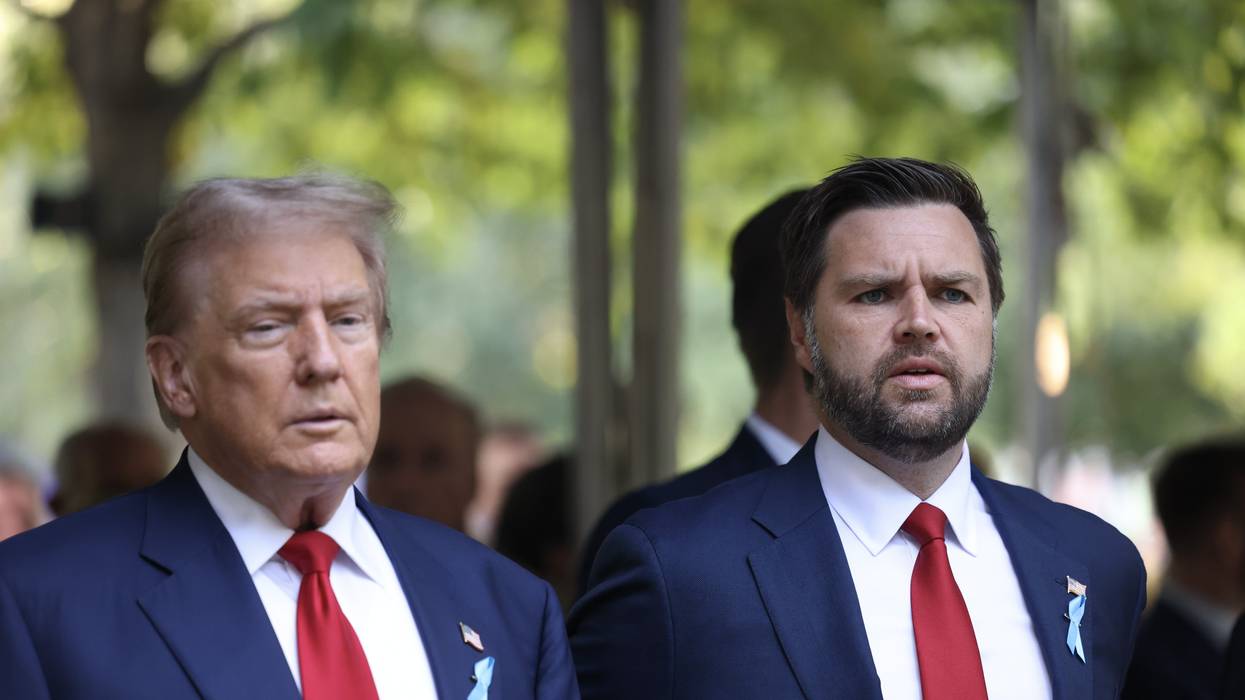
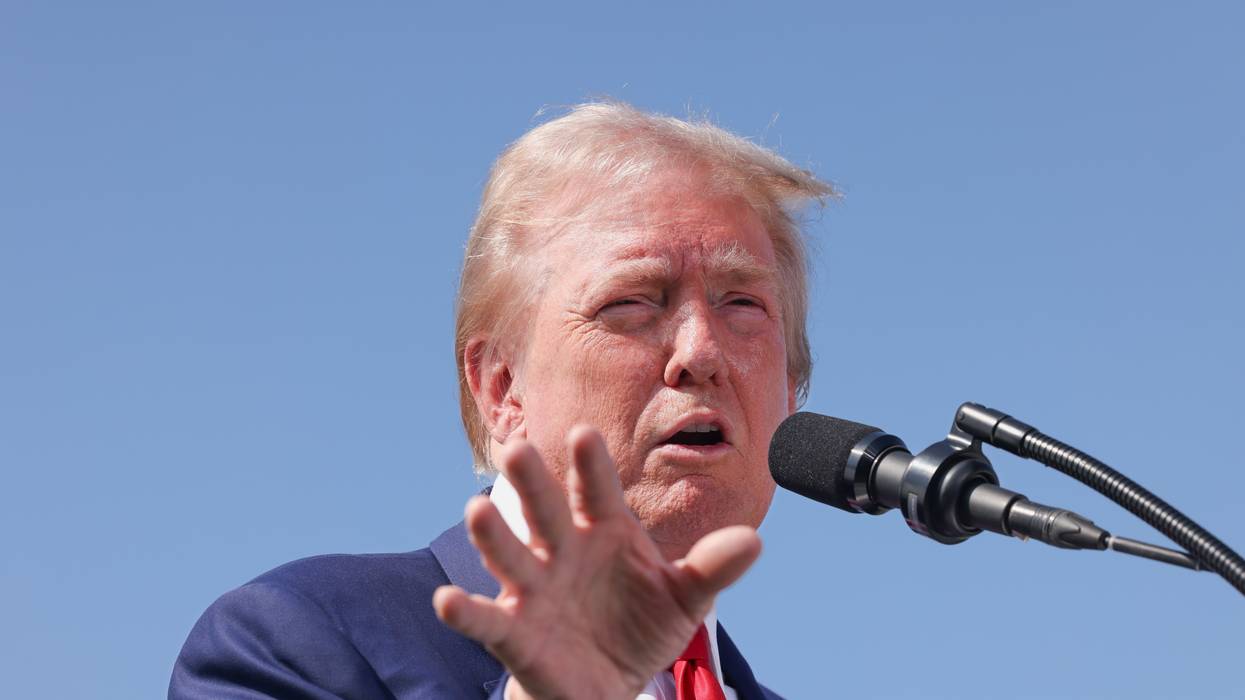
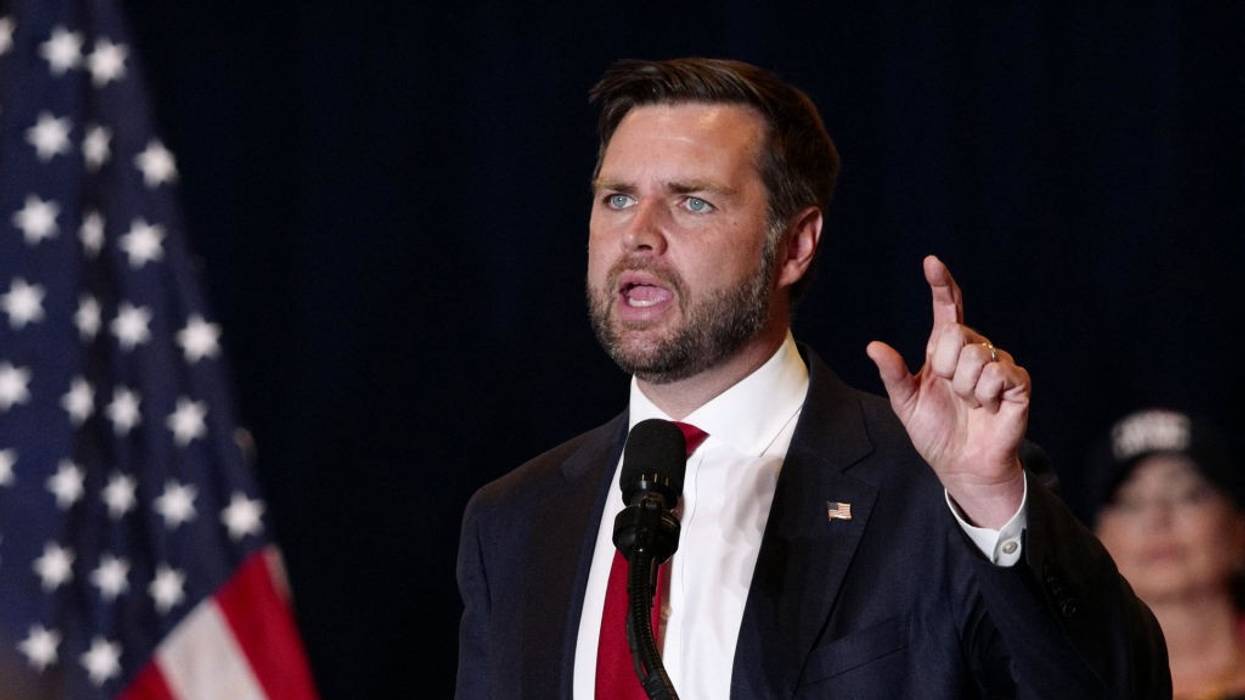
Legal experts from an advocacy group and a civil rights law firm on Friday called for a county prosecutor to issue criminal charges against former President Donald Trump and Sen. JD Vance for their role in propagating lies about the Haitian community in Springfield, Ohio.
Constitutional lawyers with Free Speech For People, a Massachusetts-based advocacy group, and Hughes Socol Piers Resnick & Dym, a Chicago-based law firm, issued a joint letter to Clark County prosecutor Daniel Driscoll in support of a criminal complaint brought by Haitian Bridge Alliance (HBA), a San Diego-based rights group, on September 24.
The complaint alleges that Trump and Vance (R-Ohio), the Republican presidential and vice presidential nominees, disrupted public services, made false alarms, and engaged in telecommunications harassment and aggravated menacing.
Last month, Trump and Vance repeatedly claimed that Haitian immigrants in Springfield were stealing pets to eat them—the claims, which had no credible basis, were widely derided as racist.
The two Republicans' promulgation of the false rumors led to 33 bomb threats in Springfield, as well as other threats on individuals and elected officials, according to the HBA complaint; state troopers had to be deployed to the town, and some schools and public buildings were closed or evacuated.
Friday's joint letter argues that Trump and Vance repeated the dangerous claims after they knew them to be false and that their statements predictably caused security threats; it characterizes this as "severe criminal misconduct."
"Trump and Vance's continuous use of their national platform to spread dangerous falsehoods that foreseeably cause widespread civic disruption against already marginalized communities falls squarely within the criminal charges your office has been asked to evaluate," the letter says.
"Trump and Vance's positions of authority do not immunize them from the consequences that would fall—and have fallen—upon anyone else," the authors also wrote.
BREAKING: We just issued a joint letter w/ attorneys at @HSPRD in support of @HaitianBridge, urging the Clark County Ohio prosecutor to pursue criminal charges against Trump & Vance for dangerous, inflammatory, & repeated lies about the Haitian community. https://t.co/0M8JlB5IIh
— Free Speech For People (@FSFP) October 18, 2024
The criminal complaint, called an affidavit, was filed under a Ohio law that allows citizens to seek criminal charges. It asks that the prosecutor find probable cause to arrest Trump and Vance.
A panel of local judges referred the matter to Driscoll on October 4, but so far he's not taken public action or set a date for a hearing, which Subodh Chandra, the Ohio lawyer that filed the complaint for HBA, has said is a requirement before a complaint can be quashed. HBA is keen to have such a public airing of the facts, the Los Angeles Times reported last month.
The letter from Free Speech For People and Hughes Socol Piers Resnick & Dym argues that free speech is not a valid defense for Trump and Vance in this case, as "the evidence overwhelmingly establishes" that their "speech was knowingly false."
"Trump and Vance made a calculated decision to repeat racist falsehoods... knowing their calls would activate their supporters and others into disruptive and violent action," the letter says.
What we do to billions of animals legally in the U.S. food system is far more extensive, not to mention ghastly, than much of the animal sacrifices that may occur in other people’s religious rituals.
The stories about Haitian migrants in Springfield, Ohio, eating pets have been debunked. Even the woman who filed a police report accusing Haitian migrants of stealing her cat apologized when she later found her cat in her own basement. Sadly, despite being proven false, the damage from these unfounded claims has been severe. Haitians living in Springfield have been subject to hate crimes and threats from people who believe the lie and have coupled their outrage with bigotry to terrorize a community of migrants who are living and working legally in the community through the Temporary Protective Status designation.
Despite the fact that there is no substantiation for the stories, a friend tried to convince me that Haitians are really, truly eating cats and dogs. The evidence, he insisted, came from police bodycam footage. As it turned out, the footage he was talking about was from an arrest of a woman—who was not Haitian—in another part of Ohio who allegedly killed and ate a cat. This woman was born and raised in America and apparently has a mental health disorder. When I pointed these facts out to my friend, he still didn’t acknowledge his error. Instead, he sent me a description of Vodou (aka Voodoo), a religion practiced by many Haitians, which included descriptions of animal sacrifice. He wrote that it would be better if this religion died out and its immigrant practitioners assimilated into American culture.
Perhaps this particularly pernicious and bigoted moment in our polarized society could be a wake-up call to become a bit more introspective and cultivate some moral consistency in how we treat others.
My head was spinning. There were so many ways I could respond. Should I focus on helping him to acknowledge that his original claim was false? Should I point out that his Irish family and my Jewish family were vilified for their cultural differences when they came to this country and invite him to reflect upon his negative judgments about newer immigrants? Should I talk about the range of religious injunctions, not confined to Vodou, which cause harm to animals? I didn’t know where to begin.
Because we’d discussed animal cruelty many times in the past, after mentioning all the points above, I further responded that what we do to billions of animals legally in the U.S. food system is far more extensive, not to mention ghastly, than much of the animal sacrifices that may occur in other people’s religious rituals. Moreover, I pointed out, he was an enthusiastic participant in the cruelty we inflict on cows, pigs, chickens, turkeys, and other animals raised for food because he regularly consumes meat, dairy, and eggs. Until now, he’d never expressed much concern about the welfare of animals, often telling me that he cares more about people than animals. Suddenly, along with millions of other Americans who erroneously believe Haitians are eating dogs and cats, he claims to care a lot.
In our culture, most people recoil at the thought of eating dogs and cats and believe it would be wrong to do so. But if it’s wrong to eat dogs and cats, then how is it right to eat pigs—known to be as or more intelligent than dogs—or to consume cows and chickens, both able to feel pain just as acutely as cats and cockatiels do? If we look inward to consider who we eat, we may discover justifications but little disgust or moral outrage.
And yet, the abuse we inflict upon billions of farmed animals each year is on a scale nearly unimaginable. For example, dairy cows in the United States are forced to produce a calf every year, and when they are born, the newborns are taken away from their distraught mothers on their first day of life. We then take the milk meant for the calves for ourselves. The cows are then forced to produce 5 to 10 times the amount of milk they would naturally produce to feed their young, resulting in mastitis, a painful udder infection necessitating antibiotic treatment in about half the dairy cows in the United States. After years of this cycle of artificial insemination, birth, and perpetual milking, their milk production declines. At that point, the cows are sent to slaughter, usually to become hamburger or processed meat.
What about chickens and turkeys, whose names we hurl as an insult of cowardice (for the former) and stupidity (for the latter) even though these birds are brave and intelligent? Almost all of them live the entirety of their lives in crowded, ammonia-saturated buildings; are debeaked without painkillers to prevent them from pecking each other to death in their confinement; and, if they are being used for egg production, are likely caged so tightly they cannot even stretch a wing.
Where is the outrage? Where is the disgust? In her book Why We Love Dogs, Eat Pigs, and Wear Cows, psychologist Melanie Joy describes the invisible belief system, which she calls carnism, that leads us to eat certain animals while protecting others. It is this invisible belief system that explains our horror at the thought of people eating pets—a horror we might conceivably express around the dinner table as we gnaw on the rib of a pig or the wing of a hen.
I’d like to hope that the false accusations made against Haitian migrants will help us realize the glass houses we’re living in so that we stop throwing stones. Perhaps this particularly pernicious and bigoted moment in our polarized society could be a wake-up call to become a bit more introspective and cultivate some moral consistency in how we treat others. And then maybe we’ll each take a step toward minimizing the harm we cause humans and nonhumans alike.
The case of Shelbyville, Tennessee is proof that when communities come together—across racial and class lines—they can challenge hate and demand real change.
As racial tensions escalate in Springfield, Ohio, Haitian families are facing violent threats and harassment, reflecting a wider pattern of fear and division that’s being felt across the country. This isn’t just about racism and xenophobia; it’s also about political leaders exploiting white fear to distract from systemic failures.
But there is hope. Shelbyville, Tennessee—a town with similar challenges—demonstrates how communities can transform this tide of hate into a movement for justice.
While smaller and less white than Springfield, Shelbyville shares a common profile: Both towns have faced long-standing economic hardship, spurred by the loss of manufacturing jobs. Both have also seen more recent immigrant arrivals. With this combination of economic struggle and demographic shifts, both towns have been targeted for racial scapegoating and organized white hate.
Unlike many anti-racist efforts among white people that focus on personal behavior or privilege awareness for a liberal, middle-class audience, the BCLP focused on real-world issues affecting white working-class people.
Much like how the Proud Boys and KKK descended on Springfield, white nationalists set their sights on Shelbyville five years ago. They chose the town because Somali refugee resettlement challenged their vision of a “white ethnostate.”
But instead of giving in to fear, many in Shelbyville pushed back. They organized counter events, like a pozole potluck just blocks away from the white nationalists’ rally—a peaceful, community-centered response that drew far more participants than the hate rally itself.
Similarly, many in Springfield have flocked to Haitian businesses in support, rejecting white, racist hate.
In Shelbyville, a handful of residents knew more needed to be done to confront the hate long-term, and they could not leave the fight solely to their immigrant neighbors. They needed to address the root causes of division and show white community members that their true enemies weren’t refugees or immigrants.
They started small, going door to door to alert neighbors about the hate group’s presence, identifying allies, and asking residents about their real concerns. What they found was telling—most people were far more worried about economic issues than about immigration. Residents complained about a few exploitative landlords monopolizing rental housing in the mostly low-income town.
Springfield faces similar challenges: a severe lack of affordable housing (a crisis across the nation) and politicians blaming Haitian Americans for those problems instead of tackling the real culprits—such as failed policies and exploitative landlords. Indeed, residents of Springfield have long faced a lack of adequate services across the board. One Springfield resident, interviewed by journalist Aymann Ismail, explained how he receives just $23 per month in food stamps, nowhere near enough to survive. When pressed further, many residents agreed that government neglect, not Haitian families, was responsible for their struggles.
Back in Shelbyville, the rejection of organized hate grew into something bigger—the Bedford County Listening Project (BCLP). The group adopted a “shared interest” approach, highlighting how white residents, struggling just as much as their immigrant neighbors, could benefit from joining forces to fight systemic injustices. The BCLP shows white residents that racism isn’t just morally wrong—it is a tool used by the powerful to divide them and maintain the status quo.
Unlike many anti-racist efforts among white people that focus on personal behavior or privilege awareness for a liberal, middle-class audience, the BCLP focused on real-world issues affecting white working-class people. They organized for tenant’s rights, fought to improve housing policies, and even helped elect one of their own to the city council—unseating a decades-long incumbent. They also tackled racism head-on, playing a key role in defeating an anti-refugee ordinance in 2019 and standing up to the KKK’s efforts to intimidate the town during the 2020 election.
This isn’t some story about a group of progressive activists. As their staff organizer explained, “None of them were activists prior to this. And nobody was Democrat.” Some even voted for former U.S. President Donald Trump in 2016, though most had not voted at all. What united them wasn’t ideology, but a shared desire to improve their lives and community.
One BCLP member summed it up: “That [anti-]refugee thing was doing nothing. It was just another dumb tactic” to distract from what really matters—jobs, schools, and housing.
The Shelbyville case is proof that when communities come together—across racial and class lines—they can challenge hate and demand real change. The real question is which groups will reach these communities first, those like the Bedford County Listening Project or hate groups like the Proud Boys?
The BCLP isn’t an isolated example. It’s part of a growing movement, supported by national groups like Showing Up for Racial Justice and other grassroots organizations that are working to unite predominately white communities with people of color in the fight for justice. These groups know that we’re all in this fight together, and they need our support.
As our nation encounters mounting levels of extremism and political violence, intentionally fueled by mainstream political actors, communities like Shelbyville and Springfield show us two ways forward. One succumbs to fear and division, while the other fights for solidarity and justice.
The choice is ours.
"The Haitian community is suffering in fear because of Trump and Vance's relentless, irresponsible, false alarms, and public services have been disrupted," said an attorney representing the Haitian Bridge Alliance.
Accusing Republican presidential candidate Donald Trump and his running mate, U.S. Sen. JD Vance, of wreaking "havoc" on Springfield, Ohio by spreading lies about the Haitian community there, a national immigrant rights group on Tuesday filed criminal charges against the right-wing politicians.
Guerline Jozef, executive director of the Haitian Bridge Alliance, sought Trump and Vance's arrest under Ohio Revised Code Sections 2935.09 and 2935.10(A), which allow private citizens to "file an affidavit charging the offense committed" and direct a court to issue arrest warrants or refer the matter for investigation.
In recent weeks, buildings in Springfield, including schools, have been the targets of at least 33 bomb threats, which authorities said stemmed from derogatory remarks made by Trump, Vance, and other Republican lawmakers about Haitians there.
Vance and Trump amplified a conspiracy theory—since disavowed by one of the earliest people to spread the story online—that Haitian immigrants in Springfield have been stealing and eating neighbors' pets. Their repeated references to the false stories have been denounced as "blood libel" by critics, and Vance has said more than once in recent days that he's fully aware the rumors are untrue, but has no regrets about spreading them.
"Trump and Vance must be held accountable to the rule of law. Anyone else who wreaked havoc the way they did would have been arrested by now."
"The Haitian community is suffering in fear because of Trump and Vance's relentless, irresponsible, false alarms, and public services have been disrupted," said Subodh Chandra, the lead counsel representing Jozef. "Trump and Vance must be held accountable to the rule of law. Anyone else who wreaked havoc the way they did would have been arrested by now."
The criminal charges in the affidavit include disrupting public services "by causing widespread bomb and other threats," making false alarms "by continuing to repeat lies that state and local officials have said were false," and committing telecommunications harassment "by spreading claims they know to be false during the presidential debate, campaign rallies, nationally televised interviews, and social media."
Continuing a trend of previous Trump campaigns, he and Vance have made fear-mongering about immigration a top priority. Chandra, an experienced First Amendment litigator, compared Trump and Vance's actions to "those who shout 'fire!' in a crowded theater."
"There's nothing special about Trump and Vance that entitles them to get away with what they've done and are doing," Chandra said. "They think they're above the law. They're not."
Nobody has done more to bring hatred and violence into the political arena than the Republican nominee for president.
The FBI is investigating the source of suspicious packages sent to election offices in 21 states. Some election offices have been evacuated; staff are frightened.
Suspicious packages, bomb threats, death threats, harassment, assassination attempts, and violence are consequences of the politics of hate, now emanating more ferociously than ever from Trump and his sycophants.
Many explanations have been offered for why two assassination attempts have been made on Trump over the last two months. Some blame easy access to assault weapons; I’m sure that’s part of it.
But the real incitement to violence in America is hatefulness — hate speech, fearsome lies, and dangerous, paranoid rumors — the epicenter of which is Trump.
Trump blames the intensifying climate of violence on Kamala Harris and the Democrats: “Their rhetoric is causing me to be shot at,” he said. “Because of this Communist Left Rhetoric, the bullets are flying, and it will only get worse!” he wrote in a social media post. Trump’s campaign has circulated a list of so-called “incendiary” remarks Democrats have made against Trump and posted video clips from top Democrats calling him a “threat.”
JD Vance says “we cannot tell the American people that one candidate is a fascist and if he’s elected it is going to be the end of American democracy.”
Hello? Calling Trump a fascist and a threat to democracy is not inciting violence; it’s telling the truth. American voters need to be made aware, if they aren’t already.
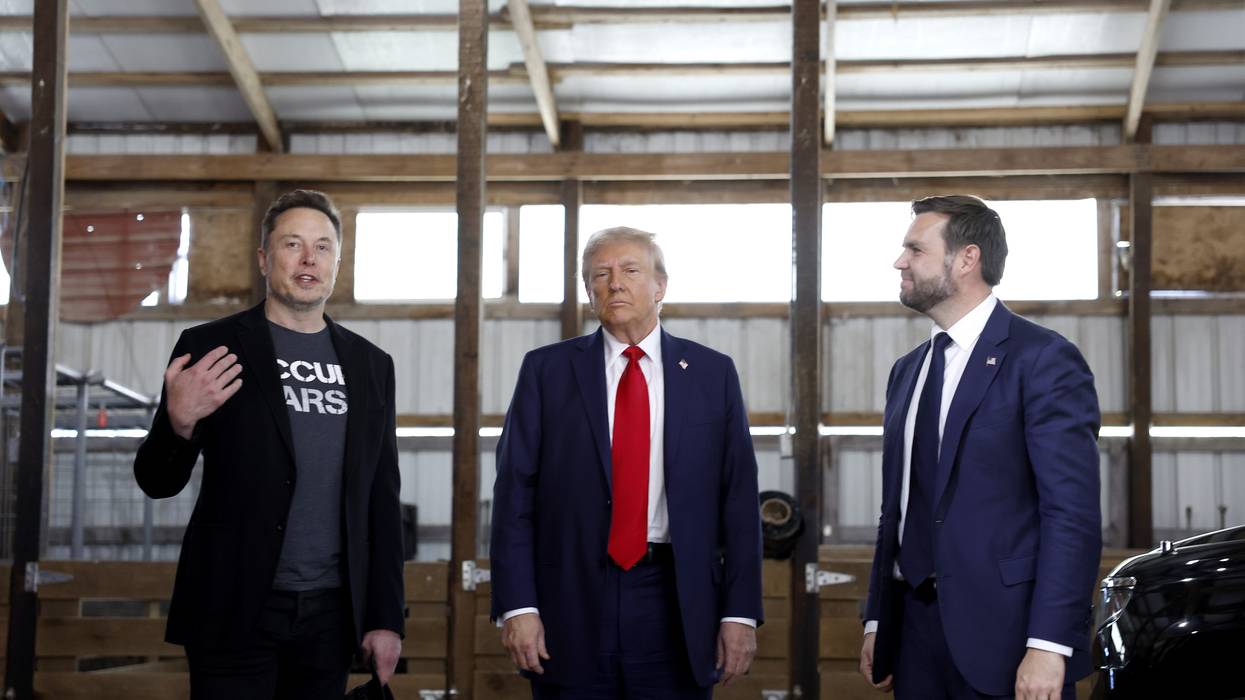
Let’s be clear: The most significant cause of the upsurge in political violence — including the two attempts on Trump’s life — is Trump himself, along with his close allies Vance and Elon Musk, and other cranks and crackpots that have come along for the ride.
Trump’s proclivity for violence was evident when he urged his followers to march on the U.S. Capitol on January 6, 2021, knowing they were carrying deadly weapons.
He has urged supporters to beat up hecklers; mocked the near-fatal attack on the husband of the Democratic House speaker; suggested that a general he deemed disloyal be executed; threatened to shoot looters and undocumented migrants; warned of “potential death & destruction” if indicted in his New York criminal case; made the ludicrous claim that “Babies are being executed after birth”; and predicted a “bloodbath” if he’s not elected in November.
Trump has never taken responsibility for the consequences of his hatefulness.
He still insists he was not responsible for the attack on the Capitol. Yet since the attack, he has suggested the mob might have been correct in wanting to hang his vice president. And he has called for those arrested in connection with the attack to be released, casting them as “hostages,” “political prisoners,” and “patriots,” whom he will pardon if reelected.
His incendiary rhetoric about immigrants — calling them “vermin,” claiming they’re “poisoning the blood” of America, charging that the United States is “under invasion” from “thousands and thousands and thousands of terrorists” — is worsening the hate and violence.
His baseless claims that Haitian immigrants in Springfield, Ohio, are eating people’s pets continues to generate bomb threats and death threats there. Schools and government offices have been closed. After more than 33 such bomb threats, Ohio’s governor has provided state police to conduct daily sweeps of Springfield schools.
“We did not have threats” before the claims, said Springfield Mayor Rob Rue, referring to the accusations made by Trump and JD Vance. “We need peace. We need help, not hate.”
When Trump was asked last week if he denounced the bomb threats, he said, “I don’t know what happened with the bomb threats” and repeated the lie that Springfield had been “taken over by illegal migrants, and that’s a terrible thing that happened.” In fact, Haitian immigrants are in Springfield legally.
The word “hate” has become Trump’s signature utterance.
During the presidential debate, he claimed that President Biden “hates” Harris, that Harris “hates” Israel and also hates Arabs. After Taylor Swift endorsed Harris, he posted “I HATE TAYLOR SWIFT” in capital letters.
Hate is the single most powerful emotion Trump elicits from his followers. Hate fuels his candidacy. Hate gives Trump’s entire MAGA movement its purpose and meaning.
Trump’s closest allies are magnifying Trump’s hate.
Vance has doubled down on the false claim that Haitians are eating pets in Springfield. He also says he’ll continue to describe Haitian residents there as “illegal aliens,” although most have been granted temporary protected legal status in the U.S. because of Haiti’s crisis.
Elon Musk posted to his 198 million followers on X, just hours after the alleged assassination attempt on Trump, that “no one is even trying” to assassinate President Joe Biden or Vice President Kamala Harris. Musk has since deleted the post and said it was intended as a joke, but millions saw it — confirming that Musk is a threat to the nation’s security.
Meanwhile, Musk’s blatant refusal to moderate hateful lies on his X platform — and his descent into reposting many of them — is also contributing to the rise of hate in America and around the world.
Musk’s X blared out lies that caused race riots in the U.K. Musk himself shared lies that the U.K. was going to open detainment camps for rioters. He claimed that the ex-first minister of Scotland, Humza Yousaf, a Muslim, “loathes white people.”
When Europe’s Digital Commissioner Thierry Breton reminded Musk of his legal obligation to stop the “amplification of harmful content,” he responded by tweeting out a meme: “Take a big step back and literally, fuck your own face!”
Before Musk bought Twitter and turned it into X, Twitter had suspended Trump from the platform “due to the risk of further incitement of violence.” Musk has reinstated Trump.
Hate is a dangerous corrosive. It undermines civility, eats away social trust, dissolves bonds of community and nation.
A week ago Sunday, even before the second attempted assassination of Trump, the Libertarian Party of New Hampshire posted on X that “Anyone who murders Kamala Harris would be an American hero.”
The party deleted the post, but two days later it posted on X a lengthy follow-up referring to historical instances of violence supposedly “necessary to advance or protect freedom,” including the assassination of “past tyrants like Abraham Lincoln,” and stating that “it’s good when authoritarians” (that is, “progressives, socialists, and democrats”) are made to “feel unsafe or uncomfortable.”
Trump, Vance, Musk, New Hampshire’s Libertarian Party, and the neo-Nazis they’ve attracted to Springfield, Ohio show how infectious hate can be as its venom spreads through political bottom-feeders and the swamps of the Internet.
Those who wield hate for personal ambition are among the vilest of human beings.
How to deal with the hate that Trump and his enablers are fueling?
We must call them out for what they’re doing. We must vote against the haters now running for office, from Trump on down, and urge others to join us.
In the case of Musk, we must boycott his products and push the U.S. government to terminate all contracts with him. Musk is a threat to national security.
Most fundamentally, we must hold all purveyors of hate accountable for the consequences of their hatefulness.
When, if ever, will these reputedly serious and sober thinkers join other conservative Republicans and reject the politics of hate and violence?
During the recent presidential debate, former president Trump claimed that Haitian migrants living in Springfield, Ohio were stealing pets from their neighbors—cats and dogs—and eating them. This completely fabricated story originated from nether regions of the far-right. Then the lies were mainstreamed by Trump’s running mate, JD Vance. After the debate, Vance continued to advance the lies, even though repeated investigations by officials on the ground found nothing, not even missing geese.
Vance and Trump have doubled down on their accusations, with predictable results—bomb threats to schools in Springfield, personal threats against officials who have told the truth about the fabricated claims.
Such ugly utterances are not primarily designed to be believed. Vance himself suggests that the lies are of value because they attract attention to an issue he and Trump want to highlight, the alleged mortal danger that immigrants present to “real” Americans. This is an old tactic for Trump. Many Trumpists who loudly applauded his 2016 promise at rallies that Mexico would pay for the wall also said to interviewers they did not believe they would. Wild applause without belief. Such reiterated pronouncements, rather, activate and intensify racial resentments already installed in certain white audiences. The dog and cat legend—as Vance now calls it—both activates and intensifies visceral hatreds in the audience installed in the soft tissues of life through years of insistence and repetition. And it places immigration at the center of debate, rather than allowing sufficient light to be shed on other issues such as inequality, climate, and gender. So, belief is not the key issue here, as students of fascist rhetoric have discovered. And factual correction is not enough to erase the pegs upon which racial, gender, and immigration hatred hang.
We note this incident, not only because it is so odious and typical of the campaign the Trump-Vance ticket runs, but also because Vance himself embraces the ideas of far-right academics, hailing from such places—to name a few—as Princeton, Notre Dame, Hillsdale College, Harvard University, and the Claremont Institute. Some of these academics have pedigrees connecting them to students of Leo Strauss and Harry Jaffa. Some are affiliated with the Heritage Foundation. Some are legal theorists of “natural law.” Many have overlapping affiliations. Names such as Robbie George, Adrian Vermeule, Charles Kestler, John Eastman, and Hadley Arkes are more familiar to insiders to the world of legal and political theory than they are to the more general public.
As Haitian-American children in Springfield face bomb threats, as new reports of women dying after being refused care for suffering incomplete abortions or miscarriages, as the death threats against election officials multiply, as Trump promises to jail his opponents and to introduce mass detention camps, has not academic support for Trumpist ideas descended into gaslighting?
We are familiar with these people ourselves, because we too are political theorists. Of course, ideological differences have long been in play among various schools of political theory in the American academy. And there has regularly been crossover between the rarified heights of the academy and the world of public intellectuals. But rarely have pronouncements of those considered to be conservative academic thinkers departed so far from the norms and ideals of a democratic society.
Recently, we traveled to Philadelphia to attend the American Political Science Association annual meeting. While there, we discovered that a series of panels were being sponsored by the Claremont Institute. Since many Claremont fellows have openly embraced Trump’s politics, we were surprised to see their panels listed, because we recalled that in the wake of the insurrection of January 6, Claremont had withdrawn from the convention in the wake of protests against them. Now it is timely again, not to oust such participants from the program but to actively expose and protest the damage they do to democracy.
Think, for instance, of Patrick Deneen, a non-Straussian figure. Perhaps the single most prominent political theorist to embrace the idea of the establishment of a new post-democratic “regime,” to use the term favored by Straussians, Deneen’s book from 2018, "Why Liberalism Failed" asserted that the more liberalism succeeds as a practical political agenda, the more it fails to achieve the goals of a better and freer life for those governed by it. In that book, Deneen didn’t embrace a positive political agenda.
But then Deneen accepted an invitation by Victor Orban, the authoritarian ruler of Hungary. He now embraces a version of “illiberal democracy” akin to what Orban has established there. Deneen’s most recent book, "Regime Change," has become a must read for intellectual members of the far right in the MAGA universe. There, under the cover of “populism” that seems to eschew the need for democratic institutions of representation, he presents a vision of what might be called “degraded Straussianism,” that is, an authoritarianism in the form of a radical right Platonism embracing secret rule by philosophers.
We mention Deneen because he has been cited repeatedly in reports on the intellectual influences on JD Vance. Vance has shown himself to be a misogynist and a fervent anti-abortion Catholic (like Deneen). Vance’s attacks on women who are not mothers supports his deeper argument against sexual and gender equality, in favor of a patriarchal order, and a general return to an older social order.
Vance’s attack on women is consistent with the underlying substance of Deneen’s argument: The liberal logic of progress results in a “disintegration of how we live. . . Ideals and ends of integration must confront and defeat liberal disintegration." This is how to return to the common good.
His recommendations to achieve that common good are anything but common. What is needed, Deneen suggests, is a return to “traditional culture,” though he does not discuss the violence and degradations that will be needed to force women, gays, Blacks, transgender people, and other minorities to accept such a return. Perhaps that part is to be left to Trump? He even recognizes that such an argument may sound bad to many, bound as it is to a tradition of racism. But he suggests that such a charge provides a liberal excuse to besmirch the good values associated with the binding force of tradition. He writes, “Today, the very power of the accusation is now extended to accusations of those who defend such institutions as family defined as a man and a woman; the desirability of children born in conjugal marriage; orthodox biblical religious beliefs; and against those who seek limitations on sexual licentiousness, such as pornography.”
And so it goes. Deneen defends the idea of a tightly woven, exclusionary nation, opposing it to globalism and cosmopolitanism. He, like so many other Trump academic legitimizers, endorses nationalism as a form of civic religion. He attacks toleration as leading to a general intolerance, that intolerance further leading to a more generalized relativism corrosive of the common good, producing a practical totalitarianism based upon what he identifies as the most fundamental separation of all: “. . . the so-called separation of church and state.” In short, for Deneen as for Vance, Christianity is the vilified source of what is best, and what is best is a nationalism that binds everyone in a hierarchy, with his version of Christianity at the top. The only democracy Deneen in the end supports is what he calls a “democracy of prayer.”
Why bring all that up now? Well, as the presidential campaign enters its final phase the racist attacks, the misogynist rhetoric of insult and hate, the homophobic and transgender-hating advocacy of repressive policies, the aggressive embrace of a particular, exclusive form of Christian faith, the threats of arrest made against political opponents, and the threats of violence by supportive MAGA mobs--all on the part of the Trump/Vance campaign--have reached new levels of intensity and fervor. Democracy itself is threatened. Professors who have embraced Trump in the past, calling him a populist, can no longer credibly do so without also condoning the violence that Trump and Vance constantly incite.
Where does this leave those intellectuals who contributed to the Project 2025 playbook? What about theorists who have embraced doctrines propagated by the fellows of the Claremont Institute? Where does this leave political theorists such as Patrick Deneen? To our knowledge, none has so far condemned either Trump or Vance for their dangerous, destructive statements, let alone ask themselves how their political cover sustains that violence. As Haitian-American children in Springfield face bomb threats, as new reports of women dying after being refused care for suffering incomplete abortions or miscarriages, as the death threats against election officials multiply, as Trump promises to jail his opponents and to introduce mass detention camps, has not academic support for Trumpist ideas descended into gaslighting? When, if ever, will these reputedly serious and sober thinkers join other conservative Republicans and reject the politics of hate and violence?
Unfortunately, we aren’t too hopeful that the radical academic right will respond to such a call. They seem, in a metaphor employed by a fascist predecessor, to be prepared to ride the tiger. Of course, we know how that story ends.
"The lies and conspiracies about Haitians are part of a larger volume of anti-immigrant and dehumanizing rhetoric that actively courts political violence," one immigrant rights advocate said.
U.S. President Donald Trump escalated his attack on the Haitian immigrant community of Springfield, Ohio on Friday when he promised to begin his mass deportation plan there if elected president.
"We will do large deportations from Springfield, Ohio, large deportations," Trump told reporters at his golf course near Los Angeles, California. "We're going to get these people out. We're bringing them back to Venezuela."
Trump's remarks come despite the fact that most of the immigrants in Springfield are from Haiti and are in the country legally. Trump had previously pledged to deport the 15 to 20 million people who he says are or will be in this country illegally by the time he takes office. Speaking on Friday, he repeated his vow to carry out the "largest deportations in the history of our country," starting in Springfield and Aurora, Colorado, where online rumors have exaggerated isolated incidents of Venezuelan gang activity.
"This is Hitlerian rhetoric," USA Today columnist Rex Huppke wrote on social media in response to Trump's statement. "That's not being hyperbolic. He's dehumanizing legal immigrants, and for some reason saying he'll deport Haitians to Venezuela. I've followed Trump since the beginning. He has devolved to his most base, hateful level, an often incoherent racist."
Schools and city buildings in Springfield have received bomb threats in recent days after Trump and his running mate Ohio Sen. JD Vance elevated unfounded online rumors that newly arrived Haitian immigrants in the city were stealing and eating pets. One journalist referred to the Trump campaign's rhetoric as "blood libel."
Around 12,000 to 15,000 Haitian immigrants have moved to Springfield in recent years, and the overwhelming majority are there legally with temporary protected status.
"The majority of Americans who reject this dark and dystopic vision and the lies courting violence should come together to denounce this outrageous spectacle of hatred and to chart a different direction for our nation."
"It's essential to recognize the larger strategy on display from the Republican Party and their allies," Vanessa Cárdenas, executive director of America's Voice, said in a statement Friday. "The lies and conspiracies about Haitians are part of a larger volume of anti-immigrant and dehumanizing rhetoric that actively courts political violence."
Cárdenas continued: "In addition to the lies about Haitians, which echo tropes like the antisemitic blood libel, Trump described this nation in increasingly violent and graphic terms... What's the potential response from an unhinged supporter hearing those words and believing those threats? It is violence like the Haitian community is fearful of, and Jewish, Latino, and Black Americans have already experienced in places like Pittsburgh, El Paso, and Buffalo."
Cárdenas also referenced a promise Trump made last Saturday that his mass deportations would be "bloody."
"The majority of Americans who reject this dark and dystopic vision and the lies courting violence should come together to denounce this outrageous spectacle of hatred and to chart a different direction for our nation," Cárdenas said.
Meanwhile, an immigrant rights group in Colorado also spoke up against Trump's deportation threats.
"Trump's fear mongering is as dangerous as it is dishonest," Gladis Ibarra, the co-executive director of the Colorado Immigrant Rights Coalition, said in a statement. "He doesn't care about Aurora or Colorado. He's using us as political pawns to push a racist agenda that paints our entire community in a bad light, and we won't fall for it. Immigrants are our teachers, our neighbors, our parents, and our children. We will not let them be demonized or ripped from our communities."
"Trump and Vance are trying to start a race riot," said one New York Times columnist.
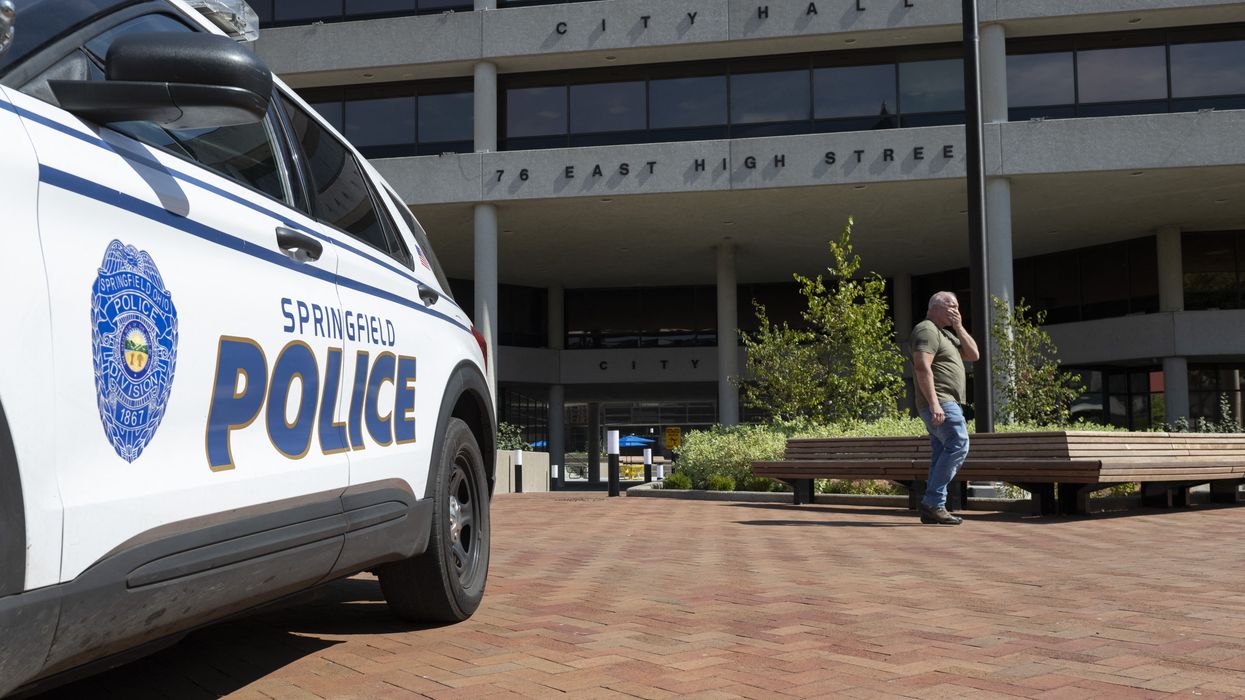
For the second consecutive day on Friday, schools in Springfield, Ohio were forced to close after receiving bomb threats as the city remained at the center of a political firestorm after Republican presidential candidate Donald Trump, his running mate Sen. JD Vance, and other prominent Republicans have spread unproven rumors and racist smears about Haitian migrants in the city.
A spokesperson for the school district said Perrin Woods Elementary School, Snowhill Elementary School, and Cliff Park High School were among the public buildings that were forced to evacuate, and Roosevelt Middle School administrators closed the school for the day based on information received from the Springfield Police Department.
Other city business also ground to a halt as the Bureau of Motor Vehicles and the Ohio License Bureau Southside received emailed threats.
Police said they were working to determine the source of the threats. On Thursday, Springfield Mayor Rob Rue said the nature of the bomb threat that came in via email made clear it was a "hateful response to immigration in our town."
But hours after Rue said that it was "frustrating when national politicians, on the national stage, mischaracterize what is actually going on and misrepresent our community," Vance persisted in spreading bigoted misinformation on the social media platform X.
The junior senator from Ohio repeated a claim that "there has been a massive rise in communicable diseases" in Springfield due to an influx of Haitian migrants, about 12,000-15,000 of whom have moved to the city in recent years and have received a warm welcome from many employers.
Authorities have said reports of a rise in diseases in Springfield are false, as are claims—also spread widely by politicians including Vance and Trump, that Haitian immigrants have been stealing and eating people's pets in the city.
Condemning Vance's latest diatribe, John DiLillo said that if Springfield suffers actual violence following the threats, "it will be his fault."
Trump also continued attacking the Haitian community on Friday, saying in a speech that immigrants have "descended upon" the town and "destroyed the way of life."
Republican lawmakers and activists have frequently said they support "legal immigration" and aim to stop the flow of undocumented immigrants into the U.S.—a topic Trump quickly pivoted to on Friday when asked by a reporter why his campaign continues to focus on Springfield. The majority of Haitian people in Springfield are authorized to be in the U.S., with some benefiting from the Temporary Protected Status program.
New York Times columnist Jamelle Bouie warned against reducing the Trump campaign's outlandish lies about Haitian people in Springfield—ones that have also been spread by neo-Nazis—to an election season meme.
"What they're doing is called a blood libel," said Bouie. "It is smearing a group of people with the accusation that they are killing, in the case of Jews in medieval Europe, killing children, in the case of Haitian immigrants in 2024 United States, killing pets and eating them... And the purpose and the point of a blood libel is to incite violence... to drive people to commit violence against others out of fear, anger, and hatred."
"Trump and Vance are trying to start a race riot," he added.
President Joe Biden addressed the issue on Friday in a speech, saying the Trump's campaign attacks on Haitian immigrants are "simply wrong."
"It has no place in America," said the president. "He has to stop what he's doing."
"White supremacist and antidemocratic movements have always used the claim that so-called Black savages are coming to destroy, especially when political power is up for grabs," said one critic. "This is no different."
U.S. vice presidential candidate JD Vance and other Republicans including congressional lawmakers and Elon Musk, the billionaire owner of the X social media platform, were excoriated Monday for spreading unsubstantiated rumors that Haitian immigrants are killing and eating pets and park wildlife in an Ohio town.
Vance, who is also the junior U.S. senator from Ohio,
wrote Monday on X—formerly known as Twitter—that "months ago, I raised the issue of Haitian illegal immigrants draining social services and generally causing chaos all over Springfield, Ohio."
"Reports now show that people have had their pets abducted and eaten by people who shouldn't be in this country," he added. "Where is our border czar?"
Haitians were also accused of killing and eating ducks and geese in the city's Snyder Park. However, a photo
purportedly showing a Haitian immigrant walking down a Springfield street carrying a dead bird was actually of an American and was taken in Columbus, Ohio—nearly 50 miles away.
The cat rumor originated nearly 100 miles away in Canton, Ohio, where a mentally ill woman—also an American—was
arrested last month for allegedly killing and eating a cat.
During a July Senate Banking, Housing, and Urban Affairs Committee hearing, Vance read a letter from Springfield City Manager Bryan Heck, a Republican, highlighting some of the challenges faced by municipal officials struggling to accommodate thousands of Haitian immigrants.
Nowhere in the letter are pet-eating Haitians mentioned. Both Heck and Springfield police officials have
refuted the rumor.
"We wish to clarify that there have been no credible reports or specific claims of pets being harmed, injured, or abused by individuals within the immigrant community," Heck
told The Hill. "Additionally, there have been no verified instances of immigrants engaging in illegal activities such as squatting or littering in front of residents' homes."
By the time mainstream media outlets began debunking the rumor, it had already gone viral. Sen. Ted Cruz (R-Texas)
posted a meme showing two scared kittens with the caption, "Pease vote for Trump so Haitian immigrants don't eat us."
Musk, meanwhile,
reposted an AI-generated meme published by House Judiciary Committee Republicans showing Trump hugging animals with the caption, "Protect our ducks and kittens in Ohio!"
Many observers reacted with disgust to the rumor-spreading Republicans.
"In MAGA world, the alleged pet-eating is already a matter of fact, and Republican elected officials, including Vance, are hurrying to join the clout rush, the scramble to get attention and likes and followers by treating it as a serious issue," wrote Washington Post columnist Philip Bump.
"This is a central reason that Vance and others on the right are susceptible to being described as 'weird,'" Bump added. "There's an online world in which things get taken to the nth-degree because its economy rewards that sort of hyperbole. But then these obsessions and claims are taken out of that bubble and presented to everyone else and they don't hold up. What else can you do but marvel at how strange it all is?"
Erik Crew, staff attorney at the Haitian Bridge Alliance, an advocacy group,
told The Hill that "this is the same old anti-Black playbook that we've seen for hundreds of years in Ohio being rolled out to divide and create hate, especially around election times."
Crew continued:
White supremacist and antidemocratic movements have always used the claim that so-called Black savages are coming to destroy, especially when political power is up for grabs. This is no different. This time they are saying it is Haitians, and this time it is being used to try to score political points around immigration as well.
The fact is Haitian immigrants have been coming to Springfield seeking to come and contribute to U.S. democracy and the economy, and Springfield and Ohio will benefit from that like U.S. communities have benefited in the past from Black immigrants' contributions.
"The fact is the rumors about Haitians in Springfield and pets have already been debunked, but we won't stop hearing them because certain people will want to keep spreading them as the election nears," he added.
Dave Zirin, sports editor at
The Nation, was more blunt in his reaction.
"You are a racist piece of shit," he
wrote to Vance on X. "You lie like Trump without an inkling of his twisted charisma."