

SUBSCRIBE TO OUR FREE NEWSLETTER
Daily news & progressive opinion—funded by the people, not the corporations—delivered straight to your inbox.
5
#000000
#FFFFFF
To donate by check, phone, or other method, see our More Ways to Give page.
Daily news & progressive opinion—funded by the people, not the corporations—delivered straight to your inbox.

“Through its third country deportation deals, the Trump administration is putting millions of taxpayer dollars into the hands of foreign governments, while turning a blind eye to the human costs," reads a new Senate report.
Using secretive agreements, often with countries that have histories of human rights abuses, the Trump administration has "expanded and institutionalized" a system in which the government deports migrants to nations where they have never lived, according to a report released Friday by Democrats on the US Senate Foreign Relations Committee.
The report, titled At What Cost? Inside the Trump Administration’s Secret Deportation Deals, was commissioned by Sen. Jeanne Shaheen (D-NH) and is the first comprehensive review of the administration's coercive and secretive agreements with countries including El Salvador, Equatorial Guinea, and Eswatini.
Third-country deportations were "previously a rare tool used only in exceptional circumstances," said the authors, but "the Trump administration has broadened this practice into a sprawling system of global removals," sending direct financial payments of $32 million in taxpayer money to foreign governments.
Five countries, which also include Palau and Rwanda, entered into those deals and have taken 300 people. In all, the administration has spent more than $40 million on the deportations, according to the report.
“This report outlines the troubling practice by the Trump administration of deporting individuals to third countries—places where these people have no connection—at great expense to the American taxpayer and raises serious questions,” said Shaheen, the ranking member of the committee. “Through its third country deportation deals, the Trump administration is putting millions of taxpayer dollars into the hands of foreign governments... For an administration that claims to be reigning in fraud, waste, and abuse, this policy is the epitome of all three.”
The senators conducted a 10-month review of the administration's agreements and third country deportations through January 2026, with staff traveling to the countries and meeting with people who have been deported, attorneys, US and foreign officials, and human rights organizations.
The agreements, said the senators, amount to an "expensive and dangerous form of shadow diplomacy that prioritizes the appearance of toughness over the security of Americans" and includes little oversight over whether public funds are being used to finance human trafficking or rights abuses.
While the agreements include "blanket language" on upholding international human rights laws, the report states, the senators' extensive review uncovered no evidence that the administration is conducting systemic monitoring or follow-up enforcement, "raising serious concerns that the assurances made by foreign governments exist only on paper and that the United States is turning a blind eye to what happens to migrants in third countries."
Cart Weiland, a deputy assistant secretary at the US State Department, was questioned by the Senate Foreign Relations Committee about his work helping to establish the third country agreements and "could not articulate whether any oversight on their treatment had been conducted. Instead, he reiterated that 'the agreement has a provision that explicitly mandates adherence to international human rights treaties and conventions.'"
Committee staff members also heard from US officials in one country that they had been instructed "not to follow up on the treatment of deportees."
A Trump administration attorney even acknowledged in a federal court case regarding deportations to Ghana, another country that has entered into agreements with the administration, that it appeared "Ghana was violating assurances it had provided the United States, including that it would comply with the Convention Against Torture, after sending a migrant onward to a country where they would likely be tortured."
The senators also found that the administration is likely using third countries to circumvent US immigration law—carrying out removals "that US law would otherwise prohibit, such as sending protected individuals onward to countries where they may face persecution or death."
The majority of migrants flown to third countries have had court-ordered protections prohibiting the US from sending them back to their home countries, where they could face persecution or torture.
"One migrant with protective orders stated: 'While at the fuel stop in the US Virgin Islands, the apparent head [US Immigration and Customs Enforcement] official on the plane... told me that those on the plane were being sent to Ghana and that Ghana would send us to our home countries," according to the report.
The document said that "the Trump administration’s defense is that the United States 'does not have the power to tell Ghana what to do,'" a claim it also made after garnering condemnation for its use of the Alien Enemies Act to deport about 250 Venezuelan migrants to El Salvador, where they were imprisoned in the notorious Terrorism Confinement Center (CECOT).
The report also details how the administration has threatened some countries with increased tariffs, travel bans, or cuts to US foreign aid if they don't enter into the deals.
"The Trump administration is expending political capital in its bilateral relationships that could instead be used to advance more pressing USb national security interests, while not being transparent about the full extent of its deal-making, including what is being offered to foreign governments," reads the report.
The senators emphasized that they released their report "as the administration is aggressively seeking to strip hundreds of thousands of migrants of legal status in the United States through the ending of temporary protected status and humanitarian parole, among other avenues, increasing the risk of expanded third country deportations."
The Democrats on the committee said they would continue to conduct oversight of the agreements and demand transparency.
"The Trump administration should cease its use of these third country deportation deals," they said, "which are putting millions of taxpayer dollars into the hands of foreign governments without oversight while turning a blind eye to the potential human cost."
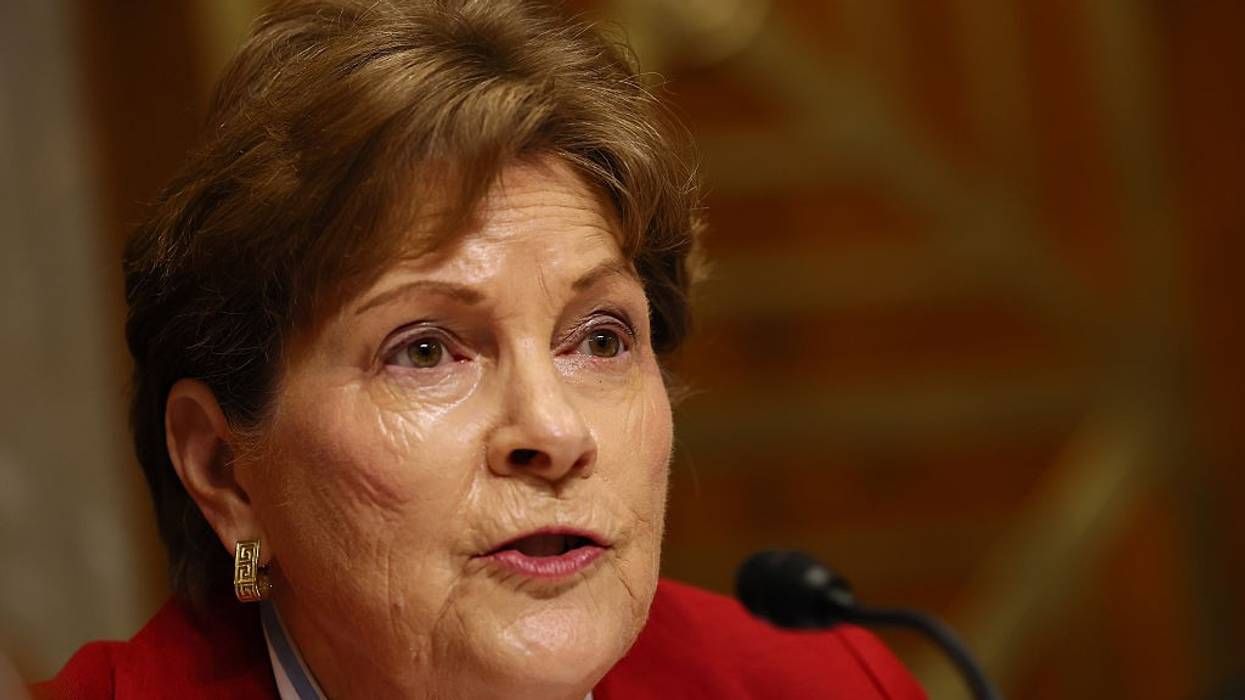
"We should have done more," said Jeanne Shaheen, the top Democrat on the Senate Foreign Relations Committee. "Everybody should have said more sooner."
The top Democrat on the Senate Foreign Relations Committee said Sunday that Congress had failed to act to prevent starvation in Gaza, which she acknowledged was the fault of Israel's blockade on aid entering the strip.
On Friday, the UN-backed Integrated Food Security Phase Classification (IPC) declared that an "entirely man-made" famine is taking place in Gaza—marking just the fifth time the notoriously cautious organization has declared a famine since it was established in 2004.
In reaction to this news, Sen. Jeanne Shaheen (D-N.H.) issued her most forceful condemnation of Israel's actions in an interview on CBS's Face the Nation, describing it as "a shameful black mark on humanity that the world has allowed this to happen and that Israel is allowing this to happen."
(Video: Face the Nation)
Shaheen, who was calling in from Amman, Jordan, after visiting the country's Humanitarian Assistance Program, said, "They are trying to get 150 trucks a day into Israel."
"Israel," the senator said, "has prevented those trucks from going in in a way that would provide the nutrition that Gazans need to prevent starvation."
According to the IPC report, a quarter of all Palestinians in Gaza–more than 500,000 people–are starving, with that number expected to rise to more than 640,000 by the end of September.
Rebuking claims from Prime Minister Benjamin Netanyahu's office that famine designation was an antisemitic "blood libel," Shaheen said, "The reality is that we have people dying because they are systematically being starved to death because Israel is refusing to allow in the humanitarian aid that people need to keep alive."
"Not only that," she said, "they've already started planning another incursion into Gaza in ways that are going to kill more people."
"This is not acceptable," she said. "The world needs to speak out."
The world, notably, has been speaking out against Israel's conduct in Gaza for well over a year as evidence mounted of its leaders' genocidal intent.
South Africa accused Israel of genocide in January 2024, citing statements by numerous top Israeli officials who expressed the goal of wiping out or displacing the people of Gaza entirely, often through the policy of intentional starvation.
The IPC, meanwhile, warned as early as December 2023 that Gaza faced a "very high risk of famine" unless access to humanitarian aid was improved immediately.
Shaheen, who has since said she will not seek reelection in 2026, was among the first wave of Democrats to publicly break with the mainstream party line on Gaza, saying that then-President Joe Biden was "too slow in pushing Netanyahu to come to a ceasefire," and voting to block weapons shipments to Israel. However, she did not voice these criticisms until December 2024, after Donald Trump had already been reelected.
It took until late last month—when starvation had become so widespread that one in five children in Gaza City faced malnutrition—for the majority of Senate Democrats to finally back a resolution to block more arms to Israel.
"We should be doing more, and we should have done more. Absolutely," Shaheen said Sunday. "Everybody should have said more sooner."
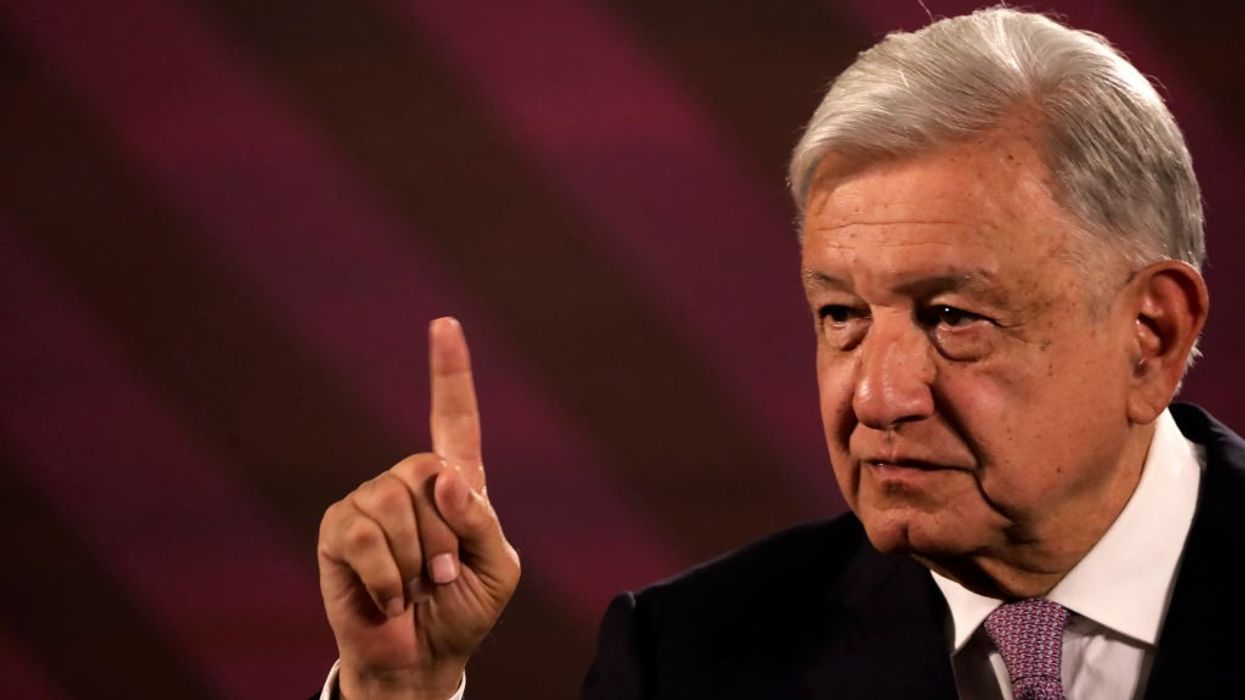
"They have to learn to respect Mexico's sovereignty," Mexican President Andrés Manuel López Obrador said of the U.S. and Canada after their ambassadors weighed in on his controversial proposal.
Outgoing Mexican President Andrés Manuel López Obrador put the embassies of the United States and Canada on time out Tuesday after their top diplomats and other influential figures weighed in against controversial proposed reforms to Mexico's judicial system.
"The relationship with Ken Salazar is good, but it's on pause. We're going to give ourselves our time," López Obrador—who is widely known as AMLO— said during his morning press conference, referring to the U.S. ambassador. The president said the "pause" also applies to Canada, whose ambassador, Graeme Clark, voiced alarm over the proposed reforms.
"They have to learn to respect Mexico's sovereignty, because we are not going to give them advice there, nor to say that it is okay and what is wrong," he added. "We want them to be respectful, there is a reciprocal relationship in terms of sovereignty."
López Obrador's move came after Salazar asserted last week that "popular direct election of judges is a major risk to the functioning of Mexico's democracy."
"We understand the importance of Mexico's fight against judicial corruption. But direct political election of judges, in my view, would not address judicial corruption nor would it strengthen the judicial branch of government," the ambassador continued. "It would also weaken the efforts to make North American economic integration a reality and would create turbulence as the debate over direct election will continue over the next several years."
"I believe faith and trust in the rule of law are one of the many shared values which unite our nations, while for the private sector, they lay the groundwork for building confidence and inspiring investment in a stable and predictable environment," Salazar added.
Clark subsequently said that Canadian "investors are concerned; they want stability, they want a judicial system that works if there are problems."
López Obrador accused the ambassadors of "recklessness" during his Tuesday press conference, adding that "there are things that only concern our country."
It's not just the ambassadors. On Tuesday, U.S. Senate Foreign Relations Committee Chair Ben Cardin (D-Md.), Ranking Member James Risch (R-Idaho), and Sens. Tim Kaine (D-Va.) and Marco Rubio (R-Fla.) said in a joint statement that they "are deeply concerned that the proposed judicial reforms in Mexico would undermine the independence and transparency of the country's judiciary, jeopardizing critical economic and security interests shared by our two nations."
"We are also alarmed that several other constitutional reforms currently under discussion may contradict commitments made in the U.S.-Mexico-Canada Trade Agreement, which is scheduled for review in 2026," the senators added.
The Global Enterprise Council, the Mexico City-based lobbyist for 63 multinational corporations operating in Mexico—including Walmart, American Express, AT&T, General Motors, Microsoft, and ExxonMobil—is also opposing the proposed judicial reforms, as are other organizations including the New York City Bar Association and the Washington Post editorial board.
López Obrador's "Plan C" proposes a sweeping overhaul of Mexico's corruption-ridden judiciary. The plan's most controversial reform would make judges at all levels of the judiciary—who are currently appointed—elected officials. All current sitting judges would be up for election in 2025 and 2027.
The president argues these reforms are necessary to combat corruption and impunity in Mexico's judicial system. He has
accused Mexican Supreme Court justices of being "supporters of the oligarchy, not of democracy" and says they oppose Plan C because "they do not want a government of the people."
Plan C—which came after an earlier proposal was blocked by the Supreme Court—has sparked nationwide protests by opponents, who say López Obrador is trying to weaken the judiciary and the National Electoral Institute and entrench his ruling Morena party as former Mexico City Mayor Claudia Sheinbaum, a close ally of the president, prepares to replace him on October 1 after winning June's election in a landslide.
Tensions between Mexico and the United States have been mounting for months over Mexican perceptions of U.S. meddling, including dubiously timed corporate media
reports of alleged links between López Obrador and drug cartels.
Last week, López Obrador said that Salazar's statement "expressing a position on this strictly domestic matter of the Mexican state represents unacceptable interference, contravenes the sovereignty of the United Mexican States, and does not reflect the degree of mutual respect that characterizes the relations between our governments."
"This is an overtly interventionist attitude; I hope it does not happen again," he added.
In separate remarks last week, López Obrador also accused the U.S. of funding organizations working to undermine the Mexican government under the guise of human rights.
For example, the U.S. Agency for International Development—whose decadeslong history of meddling in Latin America runs the gamut from
kidnapping and torturing unhoused Uruguayans to death for instructional purposes to an attempt at toppling Cuba's revolutionary government by infiltrating the island's hip-hop scene—has financially supported Mexicans Against Corruption and Impunity, a frequent critic of the López Obrador administration.
During his Tuesday press conference, López Obrador reminded Mexicans of centuries of U.S. aggression and meddling in Mexico's internal affairs.
"For many years… the United States has applied an interventionist policy throughout America, ever since it established the Monroe Doctrine," he said.
López Obrador recounted how Mexico lost half its territory as a result of the 1846-48 U.S. invasion—carried out on false pretexts decried by a young congressman from Illinois named Abraham Lincoln—and endured seven months of U.S. occupation of Veracruz in 1914.
The president stressed that having trade agreements with the U.S. does not mean that Washington has the right to meddle in Mexican affairs.
"The treaty is not for us to cede our sovereignty, the treaty is about trade, about forging good economic and commercial ties that suit both nations," he said Tuesday. "But that doesn't mean Mexico must become an appendix, a colony, or a protectorate."
"If you are going to expel Santos, how can you allow... somebody like Menendez to remain in the Senate?"
After the U.S. House of Representatives on Friday voted to expel Republican New York Congressman George Santos, Sen. John Fetterman renewed his demand for similar action against Sen. Bob Menendez.
Fetterman (D-Pa.) has been calling for Menendez (D-N.J.) to exit the Senate since he was indicted in September and accused aiding the government of Egypt, engaging in "a corrupt relationship" with multiple businessmen, and accepting bribes in the form of "cash, gold, payments toward a home mortgage, compensation for a low-or-no-show job, a luxury vehicle, and other things of value."
Menendez has temporarily stepped down as chair of the Senate Foreign Relations Committee but refused to voluntarily leave the chamber, even after he was hit with another federal charge in October for allegedly acting as an unregistered agent for Egpyt.
Appearing on "The View" Friday, Fetterman argued that Menendez's alleged actions are "much more sinister and serious" than those of Santos—who faces 23 charges including wire fraud, aggravated identity theft, and conspiracy to commit offenses against the United States.
"He needs to go. And if you are going to expel Santos, how can you allow... somebody like Menendez to remain in the Senate?" said Fetterman, who previously returned $5,000 that his colleague gave to his 2022 campaign. "Menendez, I think, is really a senator for Egypt, not New Jersey."
Asked about the fact that Menendez has not been convicted of any crimes, Fetterman responded that "he has the right for his day in court... but he doesn't have the right to have those kind of votes [in the Senate]. That's not a right and I think we need to make that kind of decision to send him out."
Congressman Rob Menendez (D-N.J.)—the embattled senator's son, who has not been accused of any wrongdoing—was among the 105 Republicans and 206 Democrats who voted Friday to expel Santos. It was a reversal from his position last month, before the House Ethics Committee released its report on the New Yorker's alleged misconduct and criminal activity.

Just Foreign Policy's Aída Chávez said the charges against him "are very serious and call into question Sen. Menendez's character and ability to perform his role as chair of Senate Foreign Relations Committee."
Update (5:00 pm ET):
U.S. Senate Majority Leader Chuck Schumer confirmed Friday afternoon that Sen. Bob Menendez will temporarily step down as head of the chamber's foreign relations panel after the New Jersey Democrat was hit with federal bribery charges.
"Bob Menendez has been a dedicated public servant and is always fighting hard for the people of New Jersey. He has a right to due process and a fair trial," said Schumer (D-N.Y.). "Sen. Menendez has rightly decided to step down temporarily from his position as chairman of the Foreign Relations Committee until the matter has been resolved."
Earlier:
U.S. Sen. Bob Menendez on Friday faced calls to step down from his powerful chairmanship of the Foreign Relations Committee, or resign altogether, following another damning federal indictment for alleged bribery.
The New Jersey Democrat and his wife, Nadine Menendez, are accused of engaging in "a corrupt relationship" with the businessmen—Wael "Will" Hana, Jose Uribe, and Fred Daibes—and accepting bribes in the form of "cash, gold, payments toward a home mortgage, compensation for a low-or-no-show job, a luxury vehicle, and other things of value."
Nadine Menendez and the businessmen are also facing charges. The indictment says that the senator "provided sensitive U.S. government information and took other steps that secretly aided the government of Egypt," as well as "improperly advised and pressured an official at the United States Department of Agriculture for the purpose of protecting a business monopoly granted to Hana."
The senator also used his role to "disrupt a criminal investigation and prosecution undertaken by the New Jersey Attorney General's Office" related to Uribe, the indictment adds. Menendez further recommended that President Joe Biden nominate Philip R. Sellinger as U.S. attorney for the District of New Jersey, because he believed the lawyer could be influenced regarding a federal criminal prosecution of Daibes.
"It's time for Sen. Menendez to resign. The stain of corruption continuously taints Menendez."
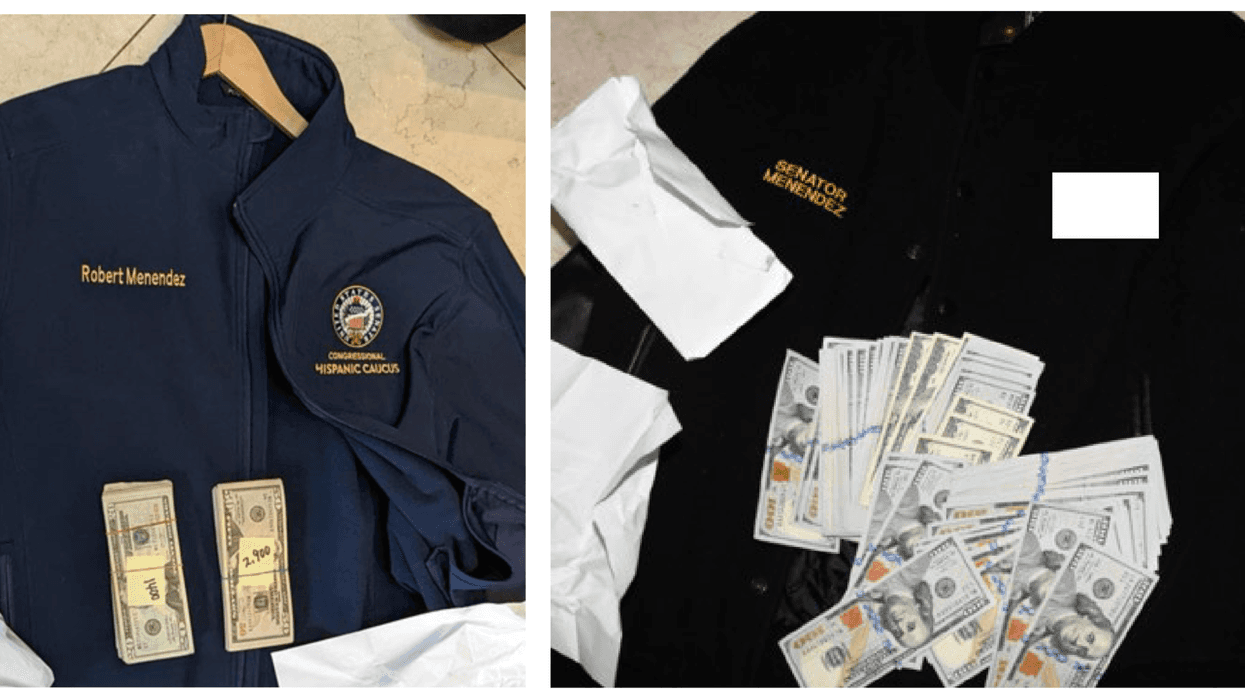
In June 2022 searches of the couple's New Jersey home and a safety deposit box, federal agents found "cash, gold, the luxury vehicle, and home furnishings," the document details. "Over $480,000 in cash—much of it stuffed into envelopes and hidden in clothing, closets, and a safe—was discovered in the home, along with over $ 70,000 in Nadine Menendez's safe deposit box."
The 69-year-old senator, who is up for reelection next year, was previously indicted on federal bribery charges in 2015. He temporarily stepped down as the top Democrat on the Senate Foreign Relations Committee. Due to a hung jury, the case ended as a mistrial in 2017. The following year, prosecutors decided not to seek a new trial and Menendez was reelected for his current term.
In a statement Friday, the senator said in part that "I have been falsely accused before because I refused to back down to the powers that be and the people of New Jersey were able to see through the smoke and mirrors and recognize I was innocent."
Nadine Menendez's lawyer, David Schertler, told The New York Times that she "denies any criminal conduct and will vigorously contest these charges in court."
The newspaper reported that while representatives for two of the businessmen could not immediately be reached for comment, a spokesperson for Hana said that "we are still reviewing the charges but based upon our initial review, they have absolutely no merit."
A spokesperson for the Southern District of New York, Nicholas Biase, told the
Times that all five defendants are set to appear in Manhattan federal court on Wednesday.
Stressing that the charges against him "are very serious and call into question Sen. Menendez's character and ability to perform his role as chair of U.S. Senate Foreign Relations Committee," Just Foreign Policy communications director Aída Chávez on Friday urged the senator "to do the right thing and to step down for the duration of these legal proceedings, as he did in 2015."
Given that Menendez is accused of using his post to enrich himself while guiding U.S. foreign policy in a "harmful direction," Chávez argued, Senate leadership should consider a new chair who "is in line with the overwhelming majority of the American people—as well as presidents such as [Barack] Obama and Biden—who want a foreign policy focused on diplomatic solutions."
"Sen. Menendez is notorious for placing roadblocks in the path of efforts by diplomats to reduce tensions and avert war," she explained. "He is also among the senators most responsible for supporting [former President Donald] Trump's cruel efforts to tighten indiscriminate sanctions against innocent populations in places like Cuba and Venezuela, which is a major cause of the surge in migrants at the border and in U.S. cities."
While the senator has not publicly confirmed his plans, NBC News reported that "a source close to Menendez says he will step down as chair," in line with Senate Democratic Conference rules regarding felony charges against members of leadership.
Some critics are calling on him to resign as a senator. Citizens for Responsibility and Ethics in Washington (CREW) president Noah Bookbinder, a former federal corruption prosecutor, said in a statement that "with these latest revelations, it's time for Sen. Menendez to resign. The stain of corruption continuously taints Menendez."
"CREW has for years raised concerns about Menendez potentially selling his position, and the Senate Ethics Committee previously found serious misconduct by him. The conduct outlined in today's indictment and the evidence presented are even more damning," he added. "The people of New Jersey should not have to be constantly questioning whether one of their senators is taking action for them or to line his pockets. Menendez deserves a fair trial and a presumption of innocence on these latest charges, but it is not appropriate for him to remain in office. Out of respect for the institution of the Senate, he must step down."
The charges against Menendez come amid discussions of corruption on Capitol Hill due to recent revelations about multiple members of the U.S. Supreme Court—including reporting on Friday that conservative Justice Clarence Thomas secretly attended at least two donor events for the Koch network, yet another example of his ties to right-wing billionaires with business before the court.
The Debt Collective wrote on social media Friday, "Who does Bob Menendez think he is, a Supreme Court justice?"
This post has been updated with comment from CREW.
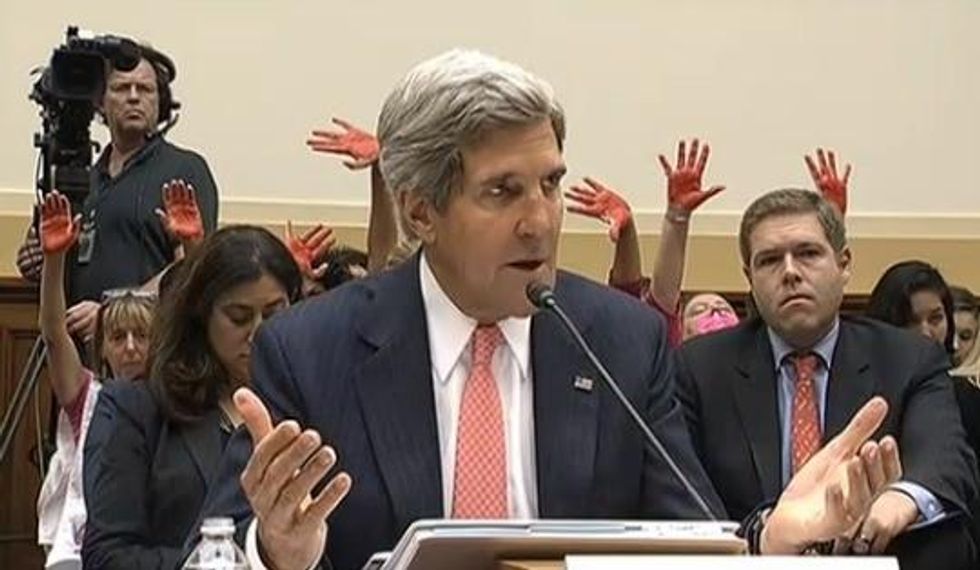
The Obama administration continued its effort to persuade members of the House of Representatives to sanction its push for war in Syria on Wednesday as Secretary of State John Kerry, Secretary of Defense Chuck Hagel and Chairman of the Joint Chiefs of Staff Gen. Martin Dempsey appear before the House Foreign Affairs Committee.
The hearing follows a similar one that took place before the Senate Foreign Relations Committee on Tuesday. That hearing resulted in the formulation of a new resolution penned by committee members that could receive a vote as early as Wednesday.
In the Senate, Obama is likely to need 60 votes to overcome a potential filibuster, USA Today notes, while at least 217 votes are necessary in the House, which currently has two empty seats.
However, Obama has suggested that he may go through with an attack on Syria regardless of how the votes turn out.
_________________________________________