
SUBSCRIBE TO OUR FREE NEWSLETTER
Daily news & progressive opinion—funded by the people, not the corporations—delivered straight to your inbox.
5
#000000
#FFFFFF
To donate by check, phone, or other method, see our More Ways to Give page.


Daily news & progressive opinion—funded by the people, not the corporations—delivered straight to your inbox.
Our wars, barring the use of nuclear weapons, could prove to be next to nothing compared to nature’s war of revenge on humanity.
From the earliest kingdoms to late last night, history has been the story not just of the rise of great powers but of their decline and fall. So, normally, there would be nothing particularly out of the ordinary about the aging America of Joe Biden and Donald Trump, a classic imperial power distinctly in decline and threatening to split into pieces.
As it happens, though, there’s something all too new about the 21st-century decline and fall of that other great power of the Cold War era—you know, not the Soviet Union. After all, the present downhill slide of this country is happening on a planet that itself is distinctly in trouble in terms of what’s always passed for a decent human life—and that, believe me, is something new under the sun. In fact, in some fashion, the scenario all of us, each in our own fashion, are now living through may be the least known ever.
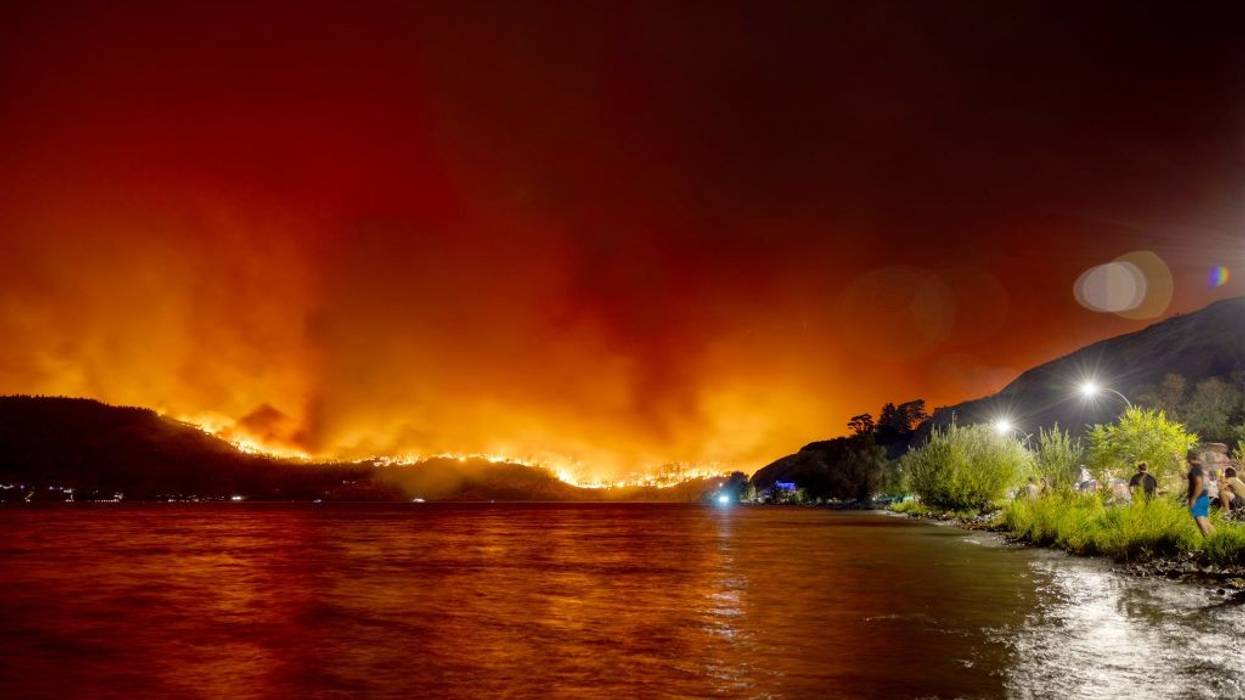
Think of it, if you will, as the orange-sky scenario. I’m sure you remember when New York City’s skyline went orange thanks to the smoke from hundreds of wildfires then burning across Canada that drifted our way. And though it’s hardly even considered news anymore, as of August 25, nearly three months later, there were still 1,033 active wildfires scorching that country, 656 of them “out of control.” Consider that and then try to get your mind around a planet capable of producing such a phenomenon!
What’s different today is that, while those particular orange skies may have been over parts of the eastern United States, what lay behind them wasn’t just an all-American but a global story of decline.
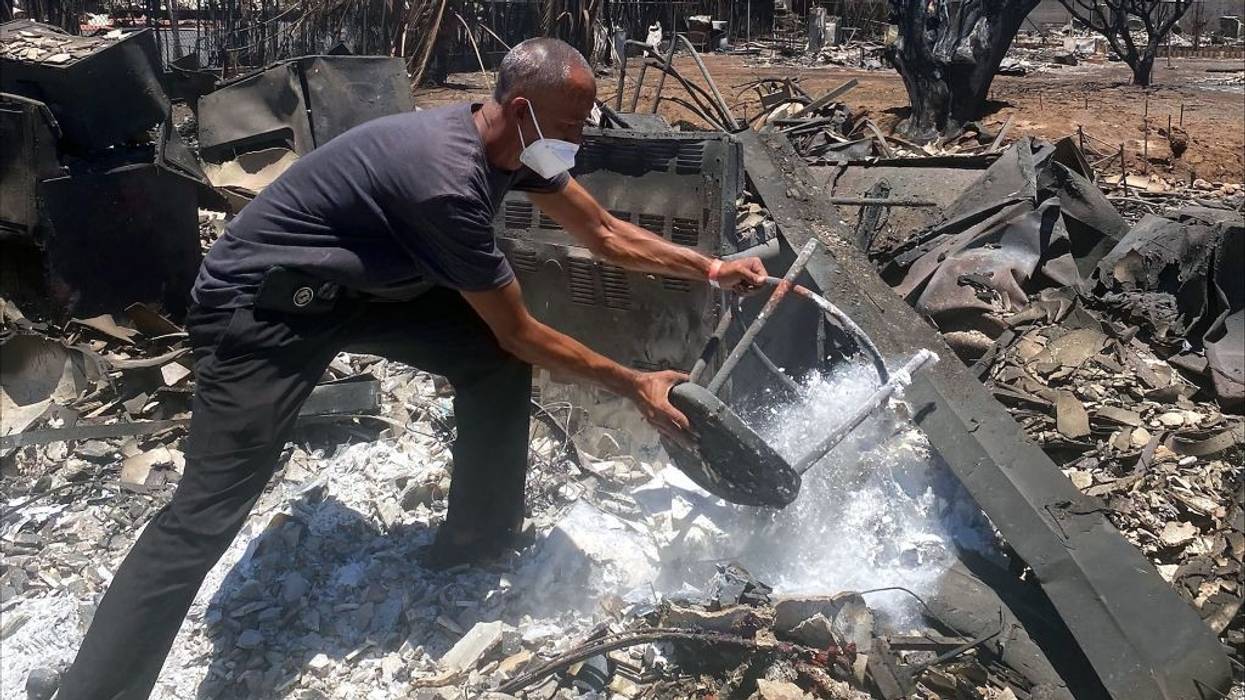
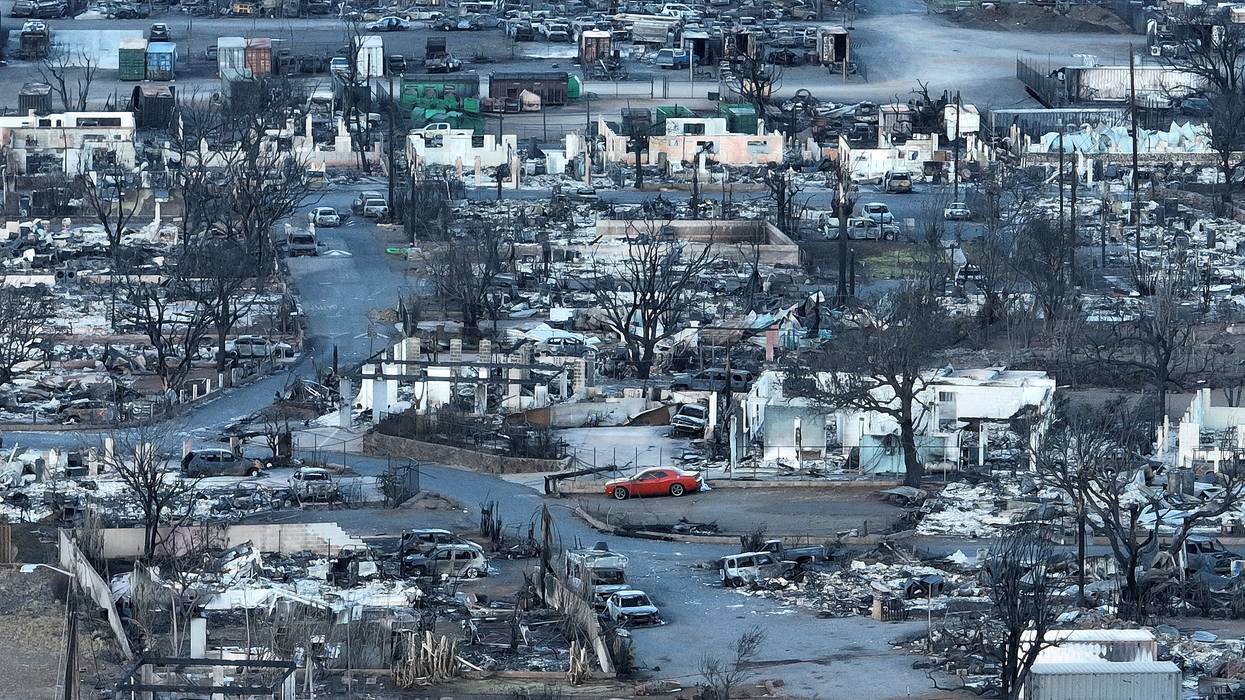
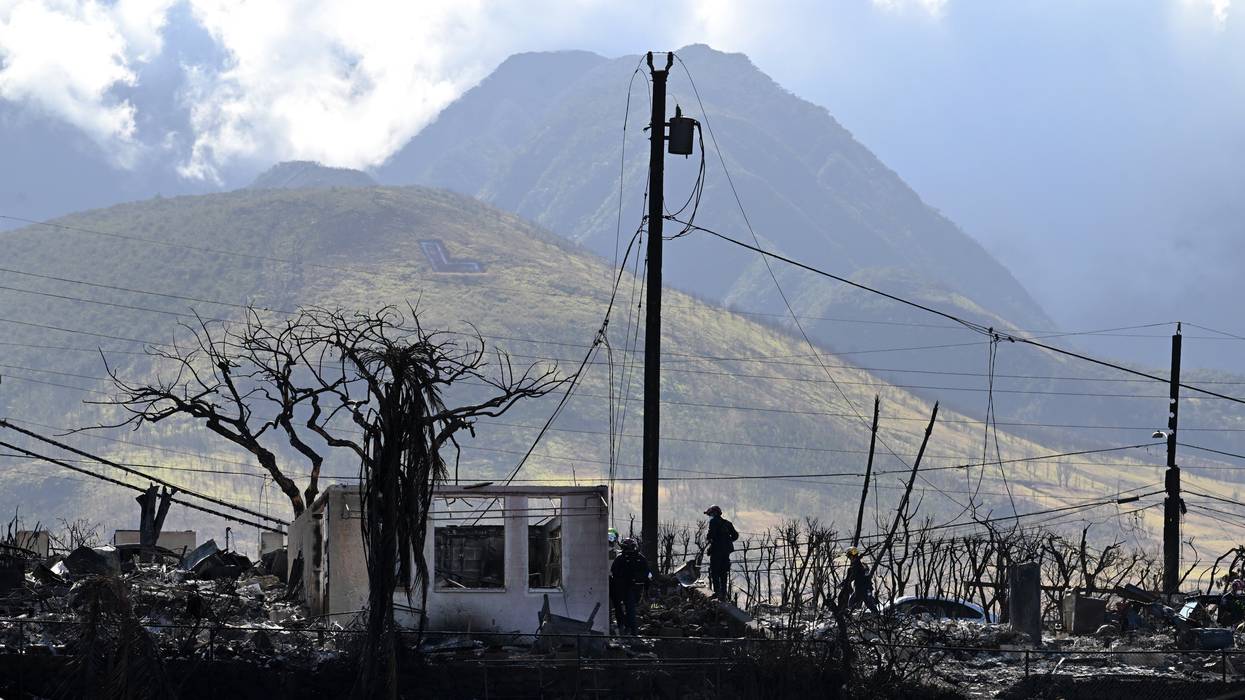
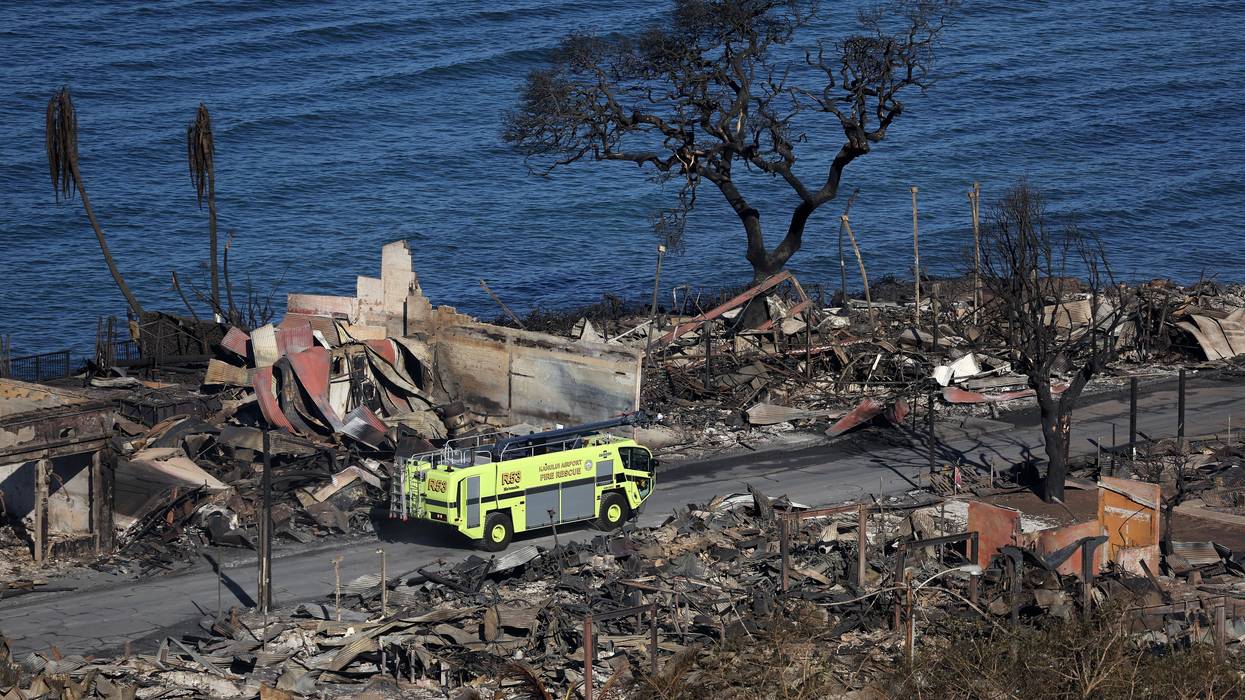
Let me imagine for a moment that I was on Maui in early August as that first hint of smoke entered my house (not, of course, that I have a house on that island). What followed was a fire of unprecedented severity, fueled by fierce winds from a relatively distant hurricane and invasive grasses dried by a “severe drought.” That fire then burst into the town of Lahaina and burnt it to the ground, a catastrophe that caused more than 100 known deaths and left hundreds more missing.
I want to say that it was a fire “beyond compare,” especially in Hawaii where, for most of its history, as Elizabeth Kolbert recently reminded us, “fire simply wasn’t part of the islands’ ecology.” But honestly, when it comes to climate disasters, you can’t say “beyond compare” about much of anything anymore. Not on this planet, not now. Yes, climate change—the heat and lack of moisture—had dried out that island’s largely alien greenery, making it ever more combustible. There was also that hurricane, admittedly hundreds of miles away but directing brutal fire-spreading winds Maui’s way. And for context, consider that, since the 1950s, the average temperature of Hawaii has risen by about two degrees and summers have become increasingly brutal in terms of heat.
Still, the fire that destroyed Lahaina—2,700 structures simply wiped out—was the deadliest in the United States in more than a century. But count on one thing: 100 years from now, if there still is a United States and another terrible fire occurs, no one will be saying that it was the deadliest in “more than a century.” However sad it may be to write, ever more horrific fires are now the definition of our future.
All of us are potentially living in Lahaina in some fashion.
In the end, in fact, it doesn’t matter whether we’re talking about Hawaii or Iran, Algeria or Greece, China or Spain, Phoenix, Arizona, or the island of Sardinia. Across the planet, horrifying “natural” (though under the circumstances, they should be considered distinctly unnatural) fire, flood, and heat records were set this summer. Both June and July were the hottest versions of those months ever, and 2023 is clearly rushing toward its own global heat record. So, mourn for Maui now. After all, a decade, no less a century, from now, nothing that happened this summer will be remembered as the planet’s ongoing crisis only breaks yet more records and grows ever more severe. Even today, when it comes to heat, nothing—not even emperor penguins in Antarctica—is unaffected.
And it’s not just on land (or ice) either. Don’t forget the water. As Bill McKibben noted recently, “In the past 150 years, we’ve made the ocean soak up, on average, the heat equivalent of a Hiroshima-size nuclear bomb every second and a half; in recent years, that’s increased to five or six Hiroshimas a second.” Imagine that! In other words, Hurricane Idalia, the first (and undoubtedly anything but last) hurricane of Florida’s present storm season, crossed startlingly heated waters that had only recently set records, gaining power from them as it hit the state as a Category 4 storm.
War? It was once hell on Earth and—see the conflict in the Ukraine, where there are already almost 500,000 casualties with no end in sight—in so many ways it still is. However, in the end, our wars, barring the use of nuclear weapons, could prove to be next to nothing compared to nature’s war of revenge on humanity. And yet, perhaps the most striking thing about us is that, from the Ukraine to Taiwan, we’re proving remarkably unable to focus on what’s truly new and horrific about life on this planet.
I was born 79 years ago on an Earth plunged into a global war, the second of that century. It would conclude just over a year later after my country discovered a way to end it all. I hardly need to tell you that I’m thinking about the atomic bombings of Hiroshima and Nagasaki and, in the decades that followed, the vast atomic arsenals built up by the two superpowers of that era, the Soviet Union and the United States. As it happens, Russia still has a humongous nuclear arsenal and the U.S., with the second largest on the planet, is planning to put up to $2 trillion into “modernizing” it over the next three decades. Meanwhile, nine countries now possess nuclear weapons—with the capacity of doing to the planet what had once been done to those two Japanese cities.
The possibility that such weaponry could actually be used has, of course, become a news topic because of the Ukraine War. But in 1945, when J. Robert Oppenheimer (of movie fame) was preparing the first test of such a weapon in the New Mexican desert, no one knew that humanity had already discovered another way to do the very same thing to itself, even if in slow motion. From the industrial revolution on, by burning fossil fuels and sending ever greater quantities of greenhouse gases into the atmosphere, we’ve been preparing year by year, decade by decade, century by century, for a different kind of apocalypse. Now, we know—or at least should know—that we’re deeply engaged in what could be a world-ending affair (or minimally an ending of the world as we’ve known it all these centuries).
And these days, thanks to that, all of us are potentially living in Lahaina in some fashion.
For the last 22 years, the United States has been fighting a global war on terror that, from Afghanistan to Iraq, Pakistan to Niger, has been a disaster of the first order. So many of our taxpayer dollars have gone into that “war” and ever rising Pentagon and national security state budgets. Meanwhile, the true war of all wars on planet Earth—think of it as a global war of terror—has simply worsened without a significant enough mobilization to truly deal with it. It should be no surprise then that, in 2023, the most greenhouse gases ever are entering the atmosphere.
In such a context, you might imagine that humanity—all of us—would rally around, if not the flag, then the green banner of an ecologically decent planet. And yet, that money pouring into the Pentagon is going into the development of things like AI-run drones for a future possible war with China over the island of Taiwan. And that focus—China seems no less committed to such a future—only ensures that the historically greatest greenhouse gas emitter (the United States) and the greatest one of the present moment (China) will not ally in any meaningful way to fight the true battle humanity faces. In other words, that global war of terror, the one we’ve sparked (so to speak), will only intensify.
In that sense, in launching his invasion of Ukraine, Vladimir Putin’s greatest crime wasn’t simply against the Ukrainians, but against humanity. It was another way to ensure that the global war of terror would grow fiercer and that the Lahainas of the future would burn more intensely. And that’s not just because any form of warfare puts startling amounts of greenhouse gases into the atmosphere. (The U.S. military, in fact, emits more carbon dioxide than whole countries and is the world’s largest institutional emitter of greenhouse gases.) The war Putin launched, while undoubtedly a major greenhouse gas producer, also has taken our attention off the potentially most devastating war on this planet.
Don’t you wonder what any of those fossil-fuel CEOs will say to their grandkids? I do.
Meanwhile, though China leads the world in creating and installing alternative energy systems, it also greenlights, on average, two new coal-powered plants a week and is building six times more of those plants than the rest of the world combined. And don’t forget the major fossil-fuel companies that continue to ravage the planet in search of present and future profits. In 2022, Chevron, ConocoPhillips, Exxon, and Shell saw $1 trillion in sales and all four reported record profits.
Yes, you can certainly find evidence of parts of humanity acting to rein in, if not simply eliminate, fossil fuels, even in places like Texas. It’s not that nothing whatsoever is being done. Joe Biden, for instance, oversaw the passage of the Inflation Reduction Act, which is spurring hundreds of billions of dollars of investments in clean energy (even if he also greenlighted the giant ConocoPhillips Willow project that could extract more than 600 million barrels of oil from an overheating Alaska during the next 30 years).
But in such a moment, the other party in the United States, once known as the Republicans, is now filled with outright climate-change deniers and forceful supporters of the further development of fossil fuels. It seems almost beyond imagining and yet, if polling is to be believed, the man who represents so many of them, Donald Trump, has a genuine chance of ending up back in the White House.
While some of those Trumpublicans may be delusional, the CEOs of the giant oil companies undoubtedly aren’t. They know just what their companies are doing to our world. Thanks to its scientists, the top officials of Exxon, in fact, had a remarkably accurate sense of what kind of damage their products could cause back in—yes!—the 1970s and the company’s response, in part, was to put money into think tanks promoting climate-change denial.
Don’t you wonder what any of those fossil-fuel CEOs will say to their grandkids? I do.
Meanwhile, the global war of terror, which only becomes more destructive by the month, has already put September 11 to shame in Lahaina and elsewhere on this increasingly beleaguered planet of ours. And sadly enough, in that war of nature, we humans are the terrorists and those fossil-fuel company CEOs are our very own Osama bin Ladens.

This September, we must acknowledge that the same greed that toppled the Hawaiian Kingdom has just destroyed Lāhainā and its people.
Aloha. A warm welcome and a fond farewell. An essence of being—with love, peace, compassion, and mutual respect. A way of living in harmony with the people and land around us with mercy, sympathy, grace, and kindness. Aloha to this September’s Hawaiian History Month.
This month my people are hurting. The deadliest wildfire in Hawai‘i’s history just devastated the town of Lāhainā on Maui, the historic town that served as the first capital of the Hawaiian Kingdom. This was the deadliest wildfire in the United States in a century. At least 115 people have been killed. Hundreds are still missing and unaccounted for. The land search for survivors was completed on August 28, and survivors are no longer expected. The suffering is incomprehensible. Suffering that now stacks on top of the Hawaiian peoples’ continued suffering from the illegal occupation of their land.
‘Āina Momona, an organization dedicated to achieving environmental health and sustainability through social justice and the de-occupying of Hawaiian lands, recently shared a YouTube video titled “Pa‘a Ke Aupuni The Reel History of Hawai‘i”. This hour-long video is essential viewing for anyone with an interest in Hawai‘i, history, or humanity. Deepening my knowledge of the land from which my ancestors hail was a healing act.
The movement for Hawaiian sovereignty is part of a larger struggle for collective liberation.
The story of Hawai‘i is full of awe, brilliance, and pride. Early Hawaiians developed a sophisticated navigation system using the stars, currents, and winds to traverse the Pacific Ocean. They were experts in engineering and food production. By the mid-1800s, nearly 100% of Hawaiians could read and write, making Hawai‘i one of the most literate countries in the world. Hawai‘i became the first non-European country to join the Family of Nations which inspired other countries to secure their internationally recognized sovereignty. Hawaiians were so advanced that their ‘Iolani Palace was outfitted with electric lights in 1882, years before the White House would receive those amenities. Hula and Hawaiian music are important in communities around the world to this day.
Hawai‘i’s story is also a sad story of the horrors of capitalism and colonialism. One of a peaceful, sovereign nation overthrown by U.S. military-backed businessmen who were greedy for profit. So greedy that they formed a political party, spread fake news, illegally overthrew the Hawaiian government, defied the U.S. government, and declared themselves the new Hawaiian government without the approval of Hawaiians. To boost their profits in the sugar business, those businessmen colluded with the U.S. government to colonize Hawai‘i.
A recent conversation with my uncle Jonli reminded me that this history is not so far away. Four generations ago my ancestors lived through the overthrow. Just three generations back, my nana witnessed the passing of Queen Lili‘uokalani, Hawai‘i’s last monarch whose September 2 birthday inspired Hawaiian History Month. This history grounds me in the necessity of spreading the truth and learning from our elders. Indigenous peoples and our cultures depend on it.
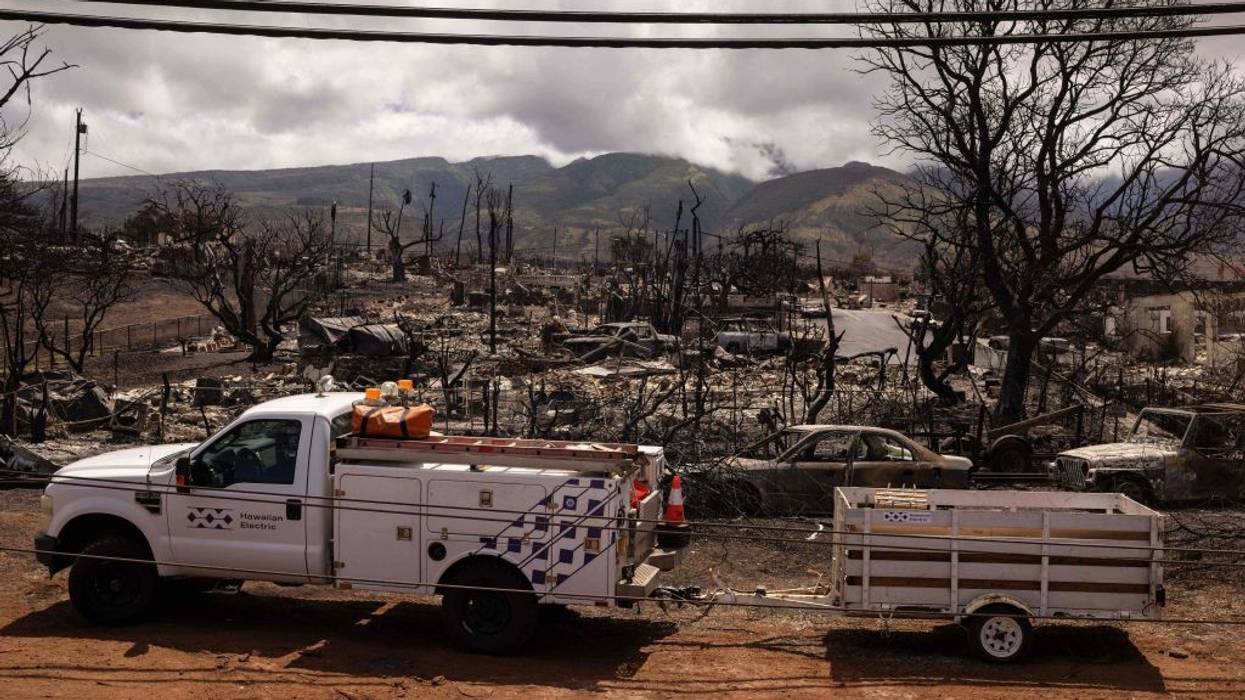
This Hawaiian History month we must acknowledge that the same greed that toppled the Hawaiian Kingdom has just destroyed Lāhainā and its people. The dry conditions that set the stage for the wildfire was a direct result of “centuries of water diversion, greed, and land mismanagement by companies like West Maui Land Co.”, ‘Āina Momona recently wrote. Maui county has sued Hawaiian Electric Company for failing to de-energize their power lines after red flag warnings. Their electrified power lines were blown over by the winds that helped the wildfire spread at such a rapid pace. Human caused climate change played an undeniable role in creating the drought, dry conditions, and winds that fueled this wildfire. Climate scientists have been warning us that disasters like this will be more frequent and severe unless we make rapid, far-reaching, and unprecedented changes in all aspects of society.
The government failed to adequately care for the people in the aftermath of the wildfire. Instead, emergency relief was successfully led and executed by Maui community members who stepped up in the state’s absence. Their strength, compassion, and mutual aid remind us that only we can keep us safe, that any hope for survival lies in the power of the people.
The movement for Hawaiian sovereignty is part of a larger struggle for collective liberation. Among many things, the Lāhainā tragedy is a plea for the revolutionary politics the struggle requires. Politics to move us beyond capitalism and into socialism. Beyond police, prisons, private property, and into freedom.
A socialism based on direct democracy where people can choose to live without monarchs, presidents, or rulers all together. Where everyone affected by a decision has the opportunity to have their say in making that decision.
A world where goods are produced according to need, not profit. Where land is returned to its original stewards so they can collectively care for it once again. A world guided by Indigenous values like generosity, cooperation, community, reciprocity, and aloha.
You can visit hawaiiponoi.info to learn more about Hawaiian History Month. To support the wildfire victims and the movement for Hawaiian sovereignty, please visit kaainamomona.org.
A better, happier, more liberated world is possible. Aloha.
As we look forward to how we not only rebuild, but work to reduce the threat of these climate change-fueled disasters, we have to change who is leading this work.
In the wake of the Maui fires, Governor Josh Green moved to prevent the sale of land to outside investors in an effort to prevent disaster capitalism, a common pattern we’ve seen play out in the wake of disasters from Hurricane Katrina to the tsunami in Thailand. This is an important first step to prevent further displacement of Native Hawaiians, but it only scratches the surface of a deeper issue.
In the days after the devastating wildfires on Maui, we saw patients with burns, wounds, infections, chronic disease flare-ups, displacement and, overwhelmingly, mental health crises. Neither of us would have ever imagined experiencing such a tragic crisis as a physician or seeing the amount of devastation right here at home. Treating these patients—and hundreds of Native Hawaiians in our careers—brings to life what research shows: When Native Hawaiians’ connection to land is severed, we suffer.
This is because when the land is sick, so are we.
Centuries before European settlers arrived in Hawai‘i, Native Hawaiians developed an elaborate and highly sophisticated public health system based on socioreligious tenets to ensure equitable access, availability, and distribution of natural resources to help minimize, if not eliminate, starvation and illness across islands with finite resources.
Human-triggered climate change is the latest environmental injustice threatening Native Hawaiian health and wellness. The Maui fires make this clear. The causes of the fires are complicated, but climate change played a key part. Climate change causes stronger, more frequent storms and droughts, and we see that in Hawai‘i, which is suffering worsening drought conditions, despite being surrounded by ocean. Dry conditions and dangerous wind changes produced by Hurricane Dora fueled the fires.
In responding to this disaster and charting a path forward, we need to look to those with the greatest commitment to acting as stewards of Hawai‘i. Centuries before European settlers arrived in Hawai‘i, Native Hawaiians developed an elaborate and highly sophisticated public health system based on socioreligious tenets to ensure equitable access, availability, and distribution of natural resources to help minimize, if not eliminate, starvation and illness across islands with finite resources.
Colonization changed Hawaiʻi’s natural landscape, through deforestation for sugarcane, pineapple, and cattle. Water from mountains was redirected from natural streams and aquifers to flow instead through concrete irrigation ditches, feeding golf courses and hotels. Fire-prone invasive grass species replaced native vegetation.
As we look forward to how we not only rebuild, but work to reduce the threat of these climate change-fueled disasters, we have to change who is leading this work. An important solution is stewardship of land by Native people. Indigenous peoples maintain sustainable relationships with their environment and recognize and respond to environmental changes in creative ways, drawing on traditional knowledge and science to find solutions that can help society at large. When Native communities have sovereignty to take care of the land, it helps everyone.
This work of respecting Native Hawaiian leadership is already happening. We are both kiaʻi (stewards) of sacred places, like Loko Iʻa Pāʻaiau, a 400-year-old royal fishpond at Pearl Harbor that was contaminated with fuel from military operations. Restoration of Pāʻaiau is one example of how allowing Hawaiians to practice aloha ʻāina—to honor and advocate for land so it will sustain all inhabitants—leads to increased community well-being and resilience, as demonstrated by the return of healthy native plants, animals, human descendants, and relationships in the area. Restoration remains incomplete until the flow of freshwater from the mountains is restored, but stewardship efforts persist forward, through a collaborative community-based partnership with the U.S. Navy, Native Hawaiians, and the larger community, centered around a practice of aloha.
There is a lot of blame going around right now; we do need to look at how the Maui fires happened, but we must focus on moving forward. That can only happen when Native Hawaiians are central to the decision making surrounding how our land is treated.
Tradition teaches that Hawaiians descend from nature gods; thus, to heal Native Hawaiians, we must heal the 'āina that sustains us. Like our connections with those who love and nurture us, our relationship with ʻāina dramatically influences overall health and wellness. If we are able to progress with centering land practices around Indigenous knowledge and rights, Hawai‘i can model how to recover from climate-related disasters in ways that build safer, healthier futures for our children and future generations.
Preventing outsiders from buying land in Lāhainā is important, but only preserves a troubled status quo. We need to build a better future, one that is informed by Native Hawaiians’ shared history, knowledge, and connections with the land. We need Native Hawaiians on the land, and at the table.
Much is now understood about climate change and how best to convey information about it clearly: It’s important to lead with the main point that the planet is warming, and that fossil fuel combustion is the greatest contributor.
When wildfires tore across Maui on August 9, devastating the Hawaiian island gem, media covered the disaster extensively. Broadcast news featured dramatic photographs that showed the horrors of the island’s destruction, with online videos shared everywhere from The Weather Channel to Inside Edition. Reporting carried testimonial descriptions like “war zone” and “apocalyptic.” On Twitter, before-and-after pictures of Lahaina confirmed that the town, home to Indigenous communities and historic sites, no longer existed.
Most of the corporate press focused on the island’s sensational visual destruction, official responses, body counts, and destroyed structures. Meanwhile, news reports largely confused or denied the climate crisis’s contribution to the fire, and ignored the connections between fossil fuel use, increased CO2 levels, and planetary heating.
A long Washington Post piece (8/9/23) described Maui’s power outages, cell phone blackout, clogged roads, and evacuations. It made no mention of the climate crisis.
The following day, the Post (8/10/23) reported that “the fires left 89 people dead and damaged or destroyed more than 2,200 structures and buildings.” Headlining the article, “What We Know About the Cause of the Maui Wildfires,” the paper didn’t include “climate change” or its synonyms in the text. Instead, the Post identified three “risk” factors: “months of drought, low humidity, and high winds.” What caused the months of drought on a tropical island not previously prone to wildfires? The Post didn’t seem interested in pursuing the question.
The piece also offered no information for understanding the similarities to the fires that had raged across Canada and turned the skies of the Northeast an eerie color of orange only two months earlier (FAIR.org, 7/18/23). The only reference point the Post gave for comparison was Hurricane Lane, which hit the Hawaiian Islands in 2018, causing heavy rains and later burning 3,000 acres of land—yet the reporters made no connection between climate instability and stronger, more intense storms.
Though under the heading of “Climate,” no mention was made of the changing climate.
The San Francisco Chronicle (8/10/23) published a stand-alone photo essay with captions, many taken with drones or aerial photography, that included a series of before-and-after images of Lahaina and the loss of historic sites, including the scorching of the banyan tree planted in 1870 to mark the 50th anniversary of the arrival of missionaries on the island. Though under the heading of “Climate,” no mention was made of the changing climate.
Some in the press did draw connections to the climate crisis. For instance, Axios (8/10/23), in a piece headlined, “The Climate Link to Maui’s Wildfire Tragedy,” framed the disaster within a climate discourse: “Researchers say climate change has likely been a contributing factor to the deadly wildfires in Hawaii.” Axios also drew correlations to the “summer of blistering, record-breaking heat, that puts climate in focus,” referencing the wildfires destroying Canadian forests and creating a health hazard across the U.S.
Importantly, Axios went further, admitting that climate change is a consequence of human activity: “Increased wildfire risk is also a symptom of human-caused climate change, scientists say.” A link took readers to previous Axios reporting (5/16/22) on research that tracks wildfire risks to the built environment, writing, “Climate change will cause a steep increase in the exposure of U.S. properties to wildfire risks during the next 30 years.” Yet even while making these connections, Axios failed to include fossil fuels and CO2 in the text.
A New York Times piece headlined “How Climate Change Turned Lush Hawaii into a Tinder Box” (8/10/23) seemed focused on climate disruption: “As the planet heats up, no place is protected from disasters.” It documented the “long-term decline” in annual rainfall,” matter-of-factly citing multiple causes such as El Niño fluctuations, storms moving north, and less cloud cover. But like Axios, the Times remained silent on what’s at the root of all this: fossil fuel combustion, and the gas and oil industries.
More, the Times asserted “It’s difficult to directly attribute any single hurricane to climate change”—as though there are some weather events that are affected by the climate, and others that are not. This is the discredited language of climate denial and doubt, pushed for decades by Exxon and other mega-fossil fuel corporations. Why include it, when the next sentence acknowledges that bigger storms result from increasing temperatures?
The report released by the IPCC in 2021 (8/9/21) did not mince words:
The alarm bells are deafening, and the evidence is irrefutable: Greenhouse gas emissions from fossil fuel burning and deforestation are choking our planet and putting billions of people at immediate risk.
The U.N. Secretary-General called it “code red for humanity.” Bill McKibben’s 2021 review of the report in the New Yorker (8/11/21) charged humans with “wreaking havoc” on the planet: We are “setting it on fire.”
Much is now understood about climate change and how best to convey information about it clearly. It’s important to lead with the main point that the planet is warming, and that fossil fuel combustion is the greatest contributor. In Communicating the Science of Climate Change (2011), Richard Summerville and Susan Joy Hassol of Climate Communication write that a common mistake in climate messaging is overdoing “the level of detail, and people can have difficulty sorting out what is important. In short, the more you say, the less they hear.”
Two days later, The Washington Post (8/12/23) had solidified what can be described as a “discourse of confusion” with the headline, “Maui Fires Not Just Due to Climate Change but a ‘Compound Disaster.’”
There is not just one “standout factor,” it asserted, but different “agents acting together.” The article explained that rising temperatures contributed to the severity of the blaze, but “global warming could not have driven the fires by itself.” Other “human influences” on “climate and environment” are causing these disasters to escalate. Making a distinction between planetary warming and other “human influences” on “environment” muddies the connections between a warming planet and extreme weather events, and confuses the realities of climate disruption. It obscures who is responsible and what must change.
For climate scientist David Ho (Twitter, 8/10/23), a professor at the University of Hawaii at Manoa, the cause of the Maui fires was straightforward and stated clearly:
People associate Hawaii with tropical conditions, but rainfall has been decreasing for decades because of climate change, drying out the lush landscape and making it increasingly susceptible to wildfire damage.
Another climate scientist and energy policy expert, Leah Stokes at UC Santa Barbara, was also clear about climate change and the Maui fires. Over a image of Lahaina, she posted (Twitter, 8/9/23): “This is climate change. Every day we delay cutting fossil fuels, more tragedies like this happen.”
When ABC News (8/15/23) went even further and published the headline: “Why Climate Change Can’t Be Blamed for the Maui Wildfires,” climate reporter Emily Atkin, of the newsletter Heated (8/17/23), went to the article’s sources to ask if the headline phrasing accurately reflected their comments. They all said their words had been taken out of context. The headline was later edited to add “entirely” after “blamed.”
The incident was picked by the Poynter Institute (8/18/23), which quoted Atkin saying, “Climate change absolutely can be partially blamed for the severity of the Maui disaster because climate change worsens wildfires, and climate change plays a role in literally all weather events.”
That sort of reporting done by the Post and ABC discourages much-needed action—as does reporting like NPR’s “The Role Climate Change Played in Hawaii’s Devastating Wildfires” (All Things Considered, 8/10/23). That piece led with standard crisis reporting and a resident of Lahaina who said everything he had is gone, then moved to details of an island in ruins. Testimonial descriptions included one woman’s story of jumping into the water and witnessing her pet and friend dying. A mobile doctor says, “It just seems unfair.” We are left with feelings of despair.
Reporting on our environmental crisis, heavy on description and ratings-driven horror, and mostly devoid of clear explanations and solutions, most establishment media offer only despair and inevitability. It has long been understood that the presentation of images and discussions of the horrors of environmental and human suffering, presented without direct actions to be taken, are experienced as an anguishing emotional blow.
As Erin Hawley and Gabi Mocatta wrote in Popular Communication (4/22), addressing planetary suffering should be told with new stories where audiences can “write themselves into the story of building a better future.” Solution-focused storytelling offers accurate documentation of the crisis, but follows with policies able to address our current climate emergency, and even details of available technologies and transformative climate solutions (FAIR.org, 7/18/23).
Corporate journalism is currently failing to tell, accurately and compellingly, the most important story of our time.
There are solutions in place, which are rarely mentioned in corporate media. For example, Stanford University published research (One Earth, 12/20/19) that compared alternative energy to the existing model in 143 countries, accounting for 99.7% of the world’s CO2 emissions. Researchers found that transitioning to 100% wind, water, and solar (WWS) reduces global energy needs by 57%, energy costs by 61%, and social costs by 91%, while avoiding blackouts and creating millions more jobs than lost.
As Native Hawaiian Kaniela Ing told Democracy Now! (8/11/23): “We need to end and phase out, deny all new fossil fuel permits, and really empower the communities that build back ourselves democratically. That’s the solution for it.”
Corporate journalism is currently failing to tell, accurately and compellingly, the most important story of our time: what the causes of the climate crisis are, and what can be done to stop the destruction of people and the planet as we know it.
"Justice is returning control of public resources like land and water to the people," wrote one activist. "For too long the strings of Maui and thousands of communities like it have been pulled by forces indifferent to their soul."
As Maui County faces a daunting recovery from the deadliest U.S. wildfire in over a century—with at least 115 confirmed deaths as of Tuesday, around 1,000 people still unaccounted for, and a rebuild expected to cost billions of dollars—fears and fights over land and water are highlighting the long history of colonialism and exploitation in the Hawaiian Islands.
"It's disaster capitalism at its finest," Hokuao Pellegrino, a seventh-generation Native Hawaiian farmer, educator, and president of the nonprofit Hui o Nā Wai 'Ehā, told CNN in a Monday segment about Maui's current water battles.
Disaster capitalism, as journalist Naomi Klein explained in her 2007 book The Shock Doctrine, is "orchestrated raids on the public sphere in the wake of catastrophic events, combined with the treatment of disasters as exciting market opportunities."
Fire spread by hurricane winds earlier this month leveled Lahaina, a Maui tourist destination that was previously the capital of the Hawaiian Kingdom, before an 1893 coup led by American expatriates and sugar planters. The United States formally annexed the islands in 1898. Hawaii became a U.S. territory in 1900 and the 50th state in 1959.
"Disaster capitalism has taken many forms in different contexts," Klein wrote last week in a Guardian column with Kapua'ala Sproat, a University of Hawaii at Manoa law professor and director of the Ka Huli Ao Center for Excellence in Native Hawaiian Law.
"It's always a little different, which is why some Native Hawaiians have taken to calling their unique version by a slightly different term: plantation disaster capitalism," the pair continued. "It's a name that speaks to contemporary forms of neocolonialism and climate profiteering, like the real estate agents who have been cold-calling Lahaina residents who have lost everything to the fire and prodding them to sell their ancestral lands rather than wait for compensation. But it also places these moves inside the long and ongoing history of settler colonial resource theft and trickery, making clear that while disaster capitalism might have some modern disguises, it's a very old tactic. A tactic that Native Hawaiians have a great deal of experience resisting."
As Klein and Sproat detailed:
For over a century, water across Maui Komohana, the western region of the island, has been extracted to benefit outside interests: first large sugar plantations and, more recently, their corporate successors. The companies—including West Maui Land Co. (WML) and its subsidiaries, as well as Kaanapali Land Management and Maui Land & Pineapple Inc.—have devoured the island's natural resources to develop McMansions, colonial-style subdivisions, luxury resorts, and golf courses where cane and pineapple once grew.
This historical and modern plantation economy has taken a tremendous toll on water in particular, draining Indigenous ecologies of their natural moisture. Lahaina, once known as the Venice of the Pacific, has been transformed into a parched desert, which is part of what has made it so vulnerable to fire.
A few days after flames tore through Lahaina, Hawaiian state Attorney General Anne Lopez announced a probe into the formal response. Her sweeping investigation includes a five-hour delay in the state Commission on Water Resource Management (CWRM)—which is responsible for how much water flows through streams—approving WML's request to fill its private reservoirs that are not connected to local hydrants but the company was willing to make available to firefighters.
The delay was reportedly the result of unsuccessful attempts to reach a farmer of taro—or kalo, a root vegetable sacred to Native Hawaiians—affected by the diversion. Activists and officials have pointed out that wind would have prevented helicopter crews from reaching the WML reservoirs for firefighting. According to the Honolulu Civil Beat, "The company suffered no significant property damage in the fires."
A water official involved with the delay, Kaleo Manuel, was then reassigned to another Hawaii Department of Land and Natural Resources division—though the DLNR said in a statement last week that the shift was part of an effort "to focus on the necessary work to assist the people of Maui recover from the devastation of wildfires" and "does not suggest that First Deputy Manuel did anything wrong."
In a lawsuit filed Monday, Maui residents Kekai Keahi and Jennifer Kamaho'i Mather argue that the redeployment was illegal, and ask a Hawaii court to void the decision and affirm that any such move must be made in an open meeting to allow public testimony.
Hawaii Public Radio reported Tuesday that while decision has also "prompted serious concerns" from CWRM members, the state attorney general's office claims the case is "wholly without merit" and plans to file a motion to dismiss it.
"One thing that people need to understand especially those from far away is that there's been a great deal of water conflict on Maui for many years," Hawaii Gov. Josh Green said during a press briefing last week. "It's important that we're honest about this. People have been fighting against the release of water to fight fires. I'll leave that to you to explore."
The Democratic governor has faced criticism for the comments and for suspending the "state water code, to the extent necessary to respond to the emergency," through his recent proclamations relating to wildfires.
As the Civil Beat reported:
"No one's trying to oppose the use of water to fight fires," said Isaac Moriwake, an attorney with Earthjustice. "That was unfair for the governor to go there."
The real issue, Moriwake said, is that West Maui Land Co. is trying to use the fire as an excuse to gain control over the region's water supply.
Moriwake points out that Hawaii Board of Land and Natural Resources Chair Dawn Chang has agreed to amend—temporarily—several water regulations, at West Maui Land Co.'s request, pursuant to an emergency declaration related to the fire issued by Green. That included a provision allowing companies like West Maui Land to fill its reservoirs when fire was reported in the area.
"They should stop trying to use this tragedy for cheap advantage," Moriwake said.
Kamanamaikalani Beamer, a former member of the CWRM, also challenged Green's claims about community members fighting against the release of water for firefighting, telling The Washington Post that "in my eight years on the water commission, I never heard, in a single hearing, that testimony from anyone in the community."
Lahaina's Native Hawaiian community "has fought for literally generations to seek justice and balance for the streams and the community and other usages," added Beamer, a professor at the University of Hawaii at Manoa's Center for Hawaiian Studies.
According to The New York Times:
Wayne Tanaka, director of the Sierra Club of Hawaii, said conservationists had supported the use of water for fire reserves. But he said he worried that water companies and large landowners use fire protection as an excuse to hoard water for commercial purposes.
"No one has opposed the need to reserve water for firefighting, but we want to know how much they actually use for that purpose," Mr. Tanaka said.
Sproat made similar remarks in an appearance on
Democracy Now! last week after her column with Klein was published.
"Plantation disaster capitalism, I think, is, unfortunately, the perfect term for what's going on in Maui Komohana, or in West Maui, right now," Sproat said. "The plantations, the large landed interests that have had control over not just the land, but really much of Hawaii's and Maui Komohana's resources for the last several centuries, are using this opportunity, are using this time of tremendous trauma for the people of Maui, to swoop in and to get past the law, basically."
"They're using the emergency proclamation that the governor put into place the day after the fires to, you know, ravage Lahaina, and they're using this as an opportunity to try to get their way, especially with respect to water resources, something they could not achieve when the law and Hawaii's water code, in particular, were in place," she explained.
During a Thursday interview with the Civil Beat, Green "defended his position that government, developers, and environmental and cultural activists need to work together to resolve issues," but also insisted that Lahaina's rebuild "will be done with direct input from fire survivors, the island, and its mayor," and "new construction will be primarily to house locals and not to favor large developers."
A coalition of community members gathered at Maui's Wahikuli Beach Park for a Friday press conference about rebuilding. Keahi—one of the residents behind the suit over Manuel's redeployment—said that "we don't want to hear the governor's office saying that we have a plan for Lahaina because none of us ever got to speak to the governor."
Reporting from the event, Hawaii Public Radio explained that Nā 'Ohana O Lele—or the Families of Lele, in honor of Lahaina's ancient name—has three demands for Green: "One is to allow the community time to heal before rebuilding. Two is to let Lahaina lead the planning process. And three is to amend the emergency proclamation to ensure Hawaii's open meeting regulation or 'Sunshine Law' remains in full force."
Noting the group's demands, Kaniela Ing, a seventh-generation Native Hawaiian and national director of Green New Deal Network, wrote Monday for The Nation, "The vision is clear: The restoration of Lahaina should be by the community, for the community."
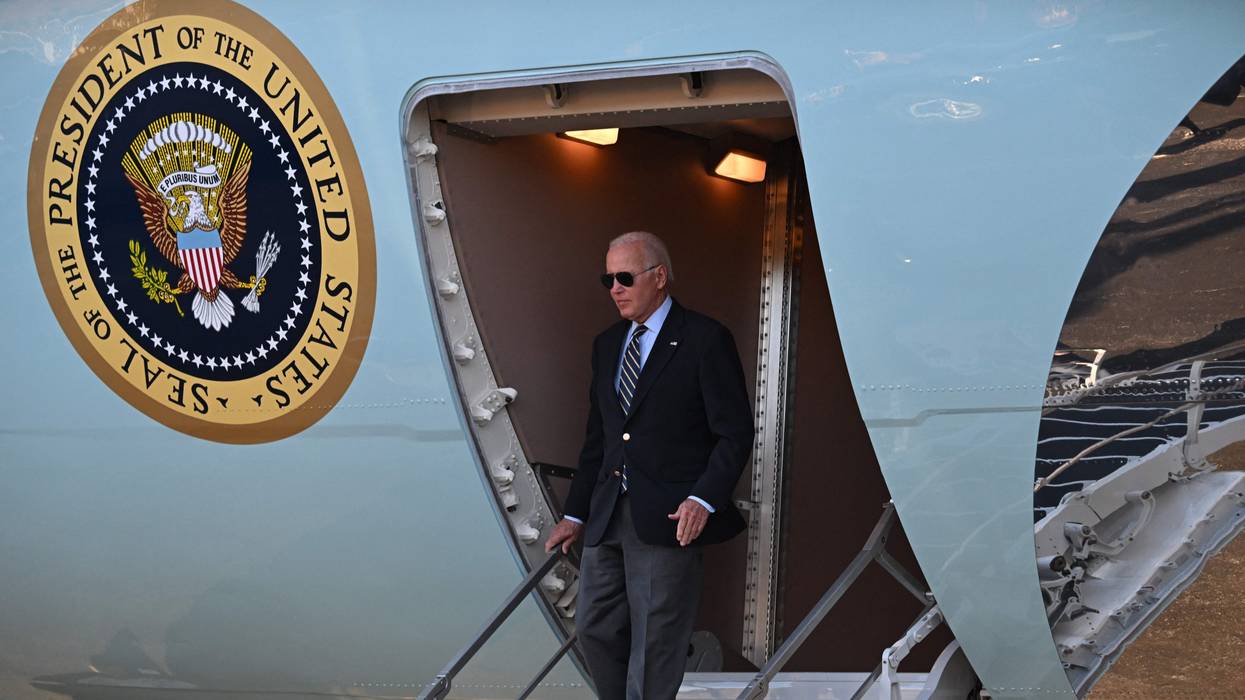
President Joe Biden and First Lady Jill Biden traveled to Maui on Monday to tour the destruction and meet first responders and survivors. In a pair of speeches, the president claimed that "we're going to rebuild the way the people of Maui want to build."
"It's time to rebuild this community the way you want it built—the way you want it—so it's still a community, not a group of beautiful homes, but a community," Biden declared at the Lahaina Civic Center, provoking applause from residents impacted by fires.
Still, Hawaiians stress that such words from government officials are not enough—action is also required. Ing wrote Monday that "political and legislative fights lie ahead to ensure that rebuilding efforts steer clear of the pitfalls of external influences, and that resources are channeled to foster local resilience and empowerment."
"True justice doesn't lie merely in acknowledging the climate crisis," he argued. "Justice is returning control of public resources like land and water to the people. It's about recognizing that for too long the strings of Maui and thousands of communities like it have been pulled by forces indifferent to their soul. It's acknowledging that survivors aren't just figures in a news report but the heartbeats of a resilient community that demands its rightful place in shaping its future."
Picking Hawaiian Electric up before or out of bankruptcy and converting it to a public good will insure the state with reliable, citizen-centered electricity for years to come while guaranteeing minimal disruption for employees.
Following the tragic—and perhaps criminal—fires in Lahaina, the state of Hawaii should purchase Hawaiian Electric, the sole provider of electric power to the state, and run it as a publicly owned utility. Here’s why.
When it comes to electric utilities, there are basically only two types of companies: private and public. The main difference between the two is one of incentives.
Private companies, owned by shareholders, have a singular primary goal: to make money. Every action they take must be scrutinized in the light of their impact on profits, because if profits aren’t maintained at a level acceptable to the shareholders, the senior level of management is looking at being replaced by people who will prioritize profits.
People served by publicly owned power companies pay less for electricity, get better service, and have fewer outages.
Public companies, owned by the governments representing the people they serve or run as co-ops and owned by the consumers themselves, also have a singular primary goal: serve the people as well as possible. Every action they take is scrutinized by the people and the government to make sure that people are getting the services they need, in the way they need, at a price they can afford.
Private for-profit electricity utilities not only cost their customers more and generally provide poorer service, but they also have such a long history of ripping people off to increase profits that every state in the union has had to create a regulatory agency to control their worst impulses.
This “public management” to oversee the private company’s management adds another layer of cost, on top of the profits extracted as dividends paid to shareholders, paid by the customers being burdened by privately owned power companies.
Hawaiian Electric is a private, shareholder-owned for-profit corporation, much like California’s PG&E. And, if investigations turn up further evidence of what’s already being reported in the media—that the Lahaina fires were possibly caused by the power company’s failure to turn off the power when the winds hit gale force—they’ll be as responsible for the deaths there as PG&E was for deaths from multiple wildfires in California. Those deaths cost PG&E billions.
This is part of why the company’s shares right now are in the tank, trading around $13 after years of bouncing between $30 and $40.
The market is anticipating lawsuits like the ones that bankrupted PG&E (a half-dozen have already been filed against Hawaiian Power, including a class action), driving down the share price, making now a perfect time for the state to buy out the company. Wells Fargo says they believe the stock will settle around $8 a share making it an amazing bargain.
In fact, the company filed a brief this week with the U.S. Securities and Exchange Commission (SEC), which regulates private companies, revealing that they are looking into bankruptcy.
People served by publicly owned power companies pay less for electricity, get better service, and have fewer outages. Serving over 49 million (1 in 7) Americans, including large cities like Austin, Nashville, Los Angeles, and Seattle as well as over 2,000 communities across the country, public power companies return an average of 20% more to their communities than do private power companies.
Customers of privately owned power companies suffer an average of 150 minutes of lost power per year; for customers of publicly owned power companies it’s only 62 minutes per year. Being responsive to their communities’ concerns, in 2019 fully 40% of all power generated by publicly owned companies came from renewable resources.
This only makes sense. While the management of a private company is always looking for ways to cut costs to satisfy shareholder demands for higher dividends, the management of publicly owned companies spend their time every day looking for ways to better serve their customers.
Not only that, private corporations can get away with behaviors that are imprisonable crimes when committed by government employees. These “now legal” breaches of the public trust include self-dealing, handing off cash to family members, paying off politicians, and harassing or firing whistleblowers.
As In the Public Interest notes:
[P]rivate providers are generally not subject to conflict‐of‐interest laws, nepotism statutes or ordinances, ethics codes or whistleblower protection for their employees, or restrictions on political involvement.
Back in 2015, when Hawaiian Electric announced it was in negotiations to be purchased by a big Florida power corporation, citizens of Hawaii got together and launched a series of plans and petitions to flip the company to public ownership. These plans ranged from the state taking over the entire company to breaking it up into smaller parts that were owned by the governments of each island or major city.
Forty legislators and county council members met at the state Capitol to request the legislature consider taking over Hawaiian Electric and turning it public. They were led by former Energy Committee Chair Chris Lee.
The group formed on Oahu was called KULOLO (Keep Our Utility Locally Owned and Locally Operated), named after a well-known fudge-like Hawaiian desert made from taro and coconut. City Council Chair Ernie Martin put forth the resolution to the city for a feasibility study.
On the Big Island, citizens and legislators formed the Hawaii Island Energy Cooperative. Its members included some well-known names from the area: Richard Ha of Hamakua Farms, state Sen. Russell Ruderman, and Department of Hawaiian Home Lands Commissioner Wallace Ishibashi. They went so far as to hire a big PR firm (Hastings and Pleadwell) to sell the idea to citizens.
Maui Mayor Alan Arakawa was serious, too: he awarded $70,000 to the consulting firm Guernsey for a study of the viability of transitioning that city’s power to a municipally owned utility.
But then the deal fell through and the conversation about taking over the company went silent.
Now it’s back.
A sense of crisis around Hawaiian Electric is already in the air. Just a few days ago, State Senator Angus McKelvey (D-Maui) told the Honolulu State Advertiser:
The consequences [of the fire] are beyond measure. I hope that this will be the mother of all wake-up calls. People need to have comfort that this won’t happen ever again.
The senator, who’s been in the legislature for 18 years, added that the privately owned power company has repeatedly resisted calls from him and other legislators to spend money to harden their power systems by burying cables where they can’t cause fires:
“They fight it tooth and nail,” he told the Advertiser. “There’s zero excuse in my mind why power lines in Lahaina shouldn’t be underground now. No amount of money should be a reason not to do it.”
Disaster workers are still searching for bodies in Lahaina, but, with over 100 dead and counting, the fire already represents the worst American wildfire death toll in over a century.
Hawaiian Electric not only provides an essential service (which shouldn’t be exploited for profits), but also employs about 3,800 people across the islands.
Picking it up before or out of bankruptcy and converting it to a public good will insure the state with reliable, citizen-centered electricity for years to come while guaranteeing minimal disruption for those employees (other than the senior executives with their fat paychecks, like the CEO, who makes $3.8 million a year, who will probably need to be replaced).
Back when Enron was collapsing, our local utility here in Portland, Oregon, was one of their affiliates and on the block for sale. The city scraped together the asking price and a small premium to sweeten the pot, but the company refused to sell to a municipality or state, wanting to keep the utility in for-profit hands. It’s now called Portland General Electric (PGE).
Portlanders got screwed (I’ve personally experienced multiple days of power outages almost every year since) and we didn’t even get a T-shirt out of the deal.
During our last power outage, a month or two ago, PGE came out and strung a temporary high-voltage power line, attaching it to trees (!), to keep our neighborhood lit; we’re now bracing for the winter winds.
PGE, after all, has to come up with the $6.2 million in annual compensation its CEO gets, not to mention the other high-paid senior executives and the $158 million in dividends it paid to its stockholders last year. Fixing my neighborhood naturally competes with that priority.
Which is why Hawaii needs to move on this quick, before other for-profit utilities get into the act as happened here in Oregon. The corporate raiders will soon be circling, even as Lahaina buries its dead.
Every-man-for-himself politics will have to yield to we’re-all-in-this-together; otherwise, it’s going to be far grimmer than it already is.
I didn’t expect to love Yellowknife, the capital of Canada’s Northwest Territories—a lot of the towns of the far north always seem hunkered down to me, a collection of Quonset huts braced against the long winter. Yellowknife, though, was charming: I hadn’t been off the airplane three minutes before the northern lights broke through, a green wave cracking across the sky. The next morning I wandered the shores of Great Slave Lake, past houses perched on the rocks of the vast shore like the most picturesque parts of downeast Maine. In between meetings with First Nations leaders key in the pipeline fights of the last decade, I wandered the trails around the capitol building—among other things, I happened across a pure black morph of a fox, one of the loveliest creatures I’ve ever seen.
And now Yellowknife is being evacuated—its 20,000 residents trying to drive south down the long road towards Edmonton, or being flown out in shifts from its small airport, even as flames and smoke lick at the city limits.
It’s important—in this year that has seen global warming come fully to life—to describe accurately what’s happening on our planet. And one key thing is: the number of places humans can safely live is now shrinking. Fast. The size of the board on which we can play the great game of human civilization is getting smaller.
So far we’re mostly failing the tests of solidarity or generosity or justice that these migrations produce.
Yellowknife this week, and Maui, and Tenerife in the Canary Islands, and Kelowna, a beautiful city in British Columbia’s Okanagan country. The pictures from each looked more or less the same: walls of orange flame and billows of black smoke. In each case many of the people hardest hit were Indigenous; in each case fear and sadness and anger and above all uncertainty. What would be left? When might we return? Could we build back?
The story of human civilization has been steady expansion. Out of Africa into the surrounding continents. Out along the river corridors and ocean coasts as trade grew. Into new territory as we cut down forests or filled in swamps. But that steady expansion has now turned into a contraction. There are places it’s getting harder and harder to live, because it burns or floods. Or because the threat of fire and water is enough to drive up the price of insurance past the point where people can afford it.
For a while we try to fight off this contraction—we have such wonderfully deep roots to the places where we came up. But eventually it’s too hot or too expensive—when you can’t grow food any more, for instance, you have to leave.
So far we’re mostly failing the tests of solidarity or generosity or justice that these migrations produce. The E.U., for instance, has this year paid huge sums to the government of Tunisia in exchange for “border security,” i.e., for warehousing Africans fleeing drought:
‘We all heard that the prime minister of Italy paid the Tunisian president a lot of money to keep the Blacks away from the country,’ Kelvin, a 32-year-old Nigerian migrant, said on Saturday from Tunisia’s border with Libya.
Like other sub-Saharan African migrants, many of whom can enter Tunisia without visas, he had spent several months cleaning houses and working construction in Sfax, scraping together the smuggler’s fee for a boat to Europe. Then, he said, Tunisians in uniforms broke through his door, beat him until his ankle fractured, and put him on a bus to the desert.
But the size of this tide will eventually overwhelm any such effort, on that border or ours, or pretty much any other. Job one, of course, is to limit the rise in temperature so that fewer people have to flee: Remember, at this point each extra tenth of a degree takes another 140 million humans out of what scientists call prime human habitat:
By late this century, according to a study published last month in the journal Nature Sustainability, 3 to 6 billion people, or between a third and a half of humanity, could be trapped outside of that zone, facing extreme heat, food scarcity, and higher death rates, unless emissions are sharply curtailed or mass migration is accommodated.
But even if we do everything right at this point, there’s already extraordinary quantities of human tragedy inexorably in motion. So along with new solar panels and new batteries, we need new/old ethics of solidarity. We’re going to have to settle the places that still work with creativity and grace; the idea that we can sprawl suburbs across our best remaining land is sillier all the time. Infill, densification, community—these are going to need to be our watchwords. Housing is, by this standard, a key environmental solution. Every-man-for-himself politics will have to yield to we’re-all-in-this-together; otherwise, it’s going to be far grimmer than it already is.
Matters are moving quickly now.
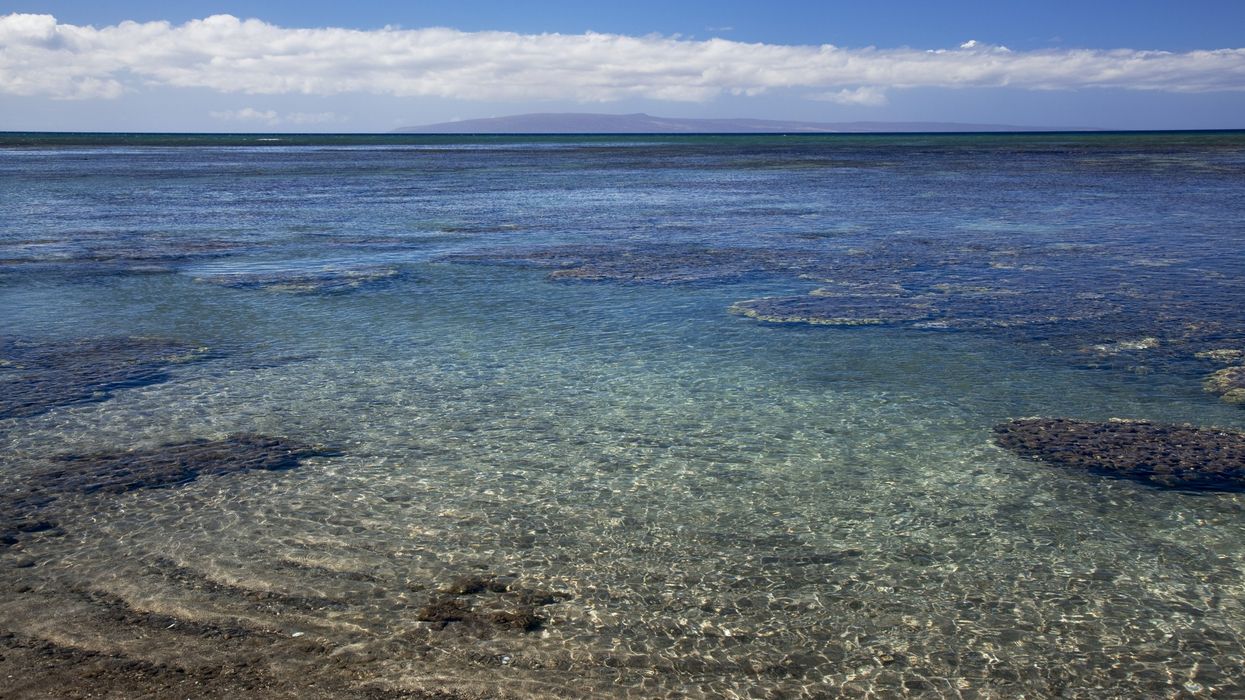
Scientists warn that debris from the Maui fires pose a signficant threat to vulnerable coral reefs.
The wildfires that engulfed the town of Lahaina, Maui, last week killed at least 111 people. But it's not only human lives that could be lost.
Scientists say that forecast rains could wash the ash and toxic debris from the fires into the ocean, where they could have a devastating impact on marine ecosystems that are already stressed by pollution and the climate crisis.
"You have a reef that is already damaged by many other things and then you have a sedimentation event on top of that," California Academy of Sciences ichthyology curator Luiz Rocha told The Guardian Friday. "A lot more coral are going to die."
"Keeping those reefs safe is one of our higher priorities."
The fire debris pose several threats to the reefs. For one, the corals may accidentally gobble up pollutants in the fire debris, mistaking them for plankton.
"We don't know what was in those houses, and a lot of times when things burn and when they mix together, they can form other things that can be dangerous," U.S. Coast Guard Pacific Strike Team Lieutenant Trent Brown told The Garden Island Wednesday of the contents of potential runoff.
If those toxins end up in the water, it could be devastating for the reefs.
"The corals are attached to the bottom of the ocean, they cannot move," Jennifer Smith, director of the Marine Biology Research Division at University of California, San Diego, told NBC Bay Area Tuesday. "So if you were to rain a bunch of sediment, ash, debris on top of them, they could essentially become smothered. Add to that a lot of this ash and debris could have chemical toxins."
Beyond smothering the reefs, the sediment could also provide food for algal blooms that would block the sunlight.
"It is going to heavily damage the coral reefs," Rocha told The Guardian further. "They depend on clear water to survive."
One dangerous pollutant has already entered the water because of the fires: oil. The oil has spilled from boats in the Lahaina Marina that sank during the disaster, and the U.S. Coast Guard is working to contain it, as well as prevent any runoff from reaching the reefs, by setting up booms around storm drains and the marina itself.
"Keeping those reefs safe is one of our higher priorities," Brown told The Garden Island. "I know that's a very valuable natural resource here in the Hawaiian Islands, and that's what all that boom is there for—to try to minimize any impacts for those reefs, either from physical debris or sorts of toxic chemicals."
West Maui's reefs are vital economically for attracting tourism, culturally for their importance to Indigenous Hawaiians, and ecologically for their role in the islands' broader ocean community, The Guardian explained. They spawn coral that help build reefs in the rest of Maui, Lanai, Molokai, and Kahoolawe, and one threatened reef—the Olowalu—hosts the largest population of manta rays in the U.S.
"These reefs have high concentrations of endemic marine species that don't live anywhere else in the world," Rob Ferguson, an expert in coral reef watershed management who works with the National Oceanic and Atmospheric Administration's coral reef conservation program, told The Guardian.
Above the waves, the fires also took a devastating toll on domesticated animals.
Maui Humane Society head Lisa Labrecque told reporters Monday that residents lost around 3,000 pets during the blaze, as Vox reported.
"Our veterinary, humane enforcement, and search and rescue teams are reporting back every day that there are many stray animals. Cats, dogs, rabbits, tortoises, birds, livestock etc.," the group wrote in a Facebook post Thursday.
In a statement Wednesday, the national Humane Society said that while it was hard to gauge the exact number of animal casualties, "it's likely the toll is significant."
"Thankfully," the group added, "local organizations such as the Maui Humane Society and Hawaii Veterinary Medical Association are working with others to find animal survivors and give them a fighting chance."
"President Biden should unequivocally voice his support for the people of Maui and Honolulu in their efforts to put fossil fuel companies on trial for their climate deception and make polluters pay," said one activist.
As President Joe Biden prepares to visit Maui next week amid Hawaiian wildfires that have prompted a federal disaster declaration, he faces fresh calls to declare a national climate emergency and support a pair of local lawsuits against the planet-wrecking fossil fuel industry.
The lawsuits against Big Oil were filed in 2020 by Oahu's City and County of Honolulu as well as Maui County—where a fire last week killed at least 111 people, caused over $5 billion in damage, and devastated Lahaina, the former capital of the Hawaiian Kingdom. Both complaints highlight how rising global temperatures are making fires on the islands worse.
"Hawaii communities are on the frontlines of the fight to hold Big Oil companies accountable for knowingly increasing the risks of deadly wildfires and other climate disasters," Richard Wiles, president of the Center for Climate Integrity (CCI), said Friday. "President Biden should unequivocally voice his support for the people of Maui and Honolulu in their efforts to put fossil fuel companies on trial for their climate deception and make polluters pay for the damage they have caused."
The Supreme Court of Hawaii on Thursday heard oral arguments for the fossil fuel industry's attempts to dismiss the Honolulu case. After the hearing, Matthew Gonser, chief resilience officer and executive director of Honolulu's Office of Climate Change, Sustainability, and Resiliency, said: "We appreciate today's thorough inquiry and remain confident in the strength of our case. We look forward to the court's forthcoming decision as we continue to litigate the case and move toward trial."
Just ahead of the hearing, CCI declared that "the deadly fires in Maui underscore how urgent it is to make polluters pay for fueling the climate crisis," and "the people of Honolulu and Maui deserve their day to put Big Oil on trial."
Wiles added Friday that "simply connecting the deadly Maui fires and other recent disasters to climate change is not enough; it's time for President Biden to make clear to the American people that the oil and gas industry must be held accountable for their lies and pollution that continue to fuel the climate crisis."
Whether Biden will take a position on the Hawaiian climate cases is hard to predict, given his administration's mixed messages on such litigation. While the U.S. Department of Justice in March backed Colorado communities suing Big Oil, the DOJ has also recently claimed in a federal court filing for the youth-led case Juliana v. United States that "there is no constitutional right to a stable climate system."
The president and First Lady Jill Biden are scheduled to visit Maui on Monday. According to the White House, the Bidens "will be welcomed by state and local leaders to see firsthand the impacts of the wildfires and the devastating loss of life and land that has occurred on the island, as well as discuss the next steps in the recovery effort."
The historic blaze that spread rapidly because of winds from Hurricane Dora and ultimately leveled Lahaina has sparked national conversations about the climate emergency. Scientists have long warned that producing planet-heating emissions with human activities like fossil fuel use will make fires and hurricanes more devastating.
The wreckage and early assessments of what rebuilding requires have also generated fears among locals about more exploitation from rich outsiders—continuing a long trend in the Hawaiian Islands, which were annexed by the United States in 1898 and became the 50th state in 1959.
Kaniela Ing, national director of the Green New Deal Network and a seventh-generation Kanaka Maoli (Native Hawaiian) from Maui, wrote Thursday for TIME that "it felt like Goddess Papahānaumoku—Earth Mother, herself—raging at humanity's hubris. The disturbing silence left by the missing and the mourned souls tells of a disaster that's unnatural, shaped by the human hand—a byproduct of the dangerous dance between climate change and centuries of colonial greed."
"My greatest fear is that this trajectory of exploitation will continue in the recovery from the Maui wildfires," he continued. "As whispers of reshaping Lahaina emerge, with wealthy developers eager to mold it to their vision, our generation's vision for social and environmental justice grows even firmer. Our recovery from the wildfires can't just be about combating climate change—it has to be about returning control of our cherished lands to the people who hold them dear."
"At the national level, it's past time for President Biden to officially recognize the climate crisis by declaring a climate emergency," added Ing, a former state legislator. "This would enable him to halt the destructive fossil fuel production driving these disasters. Furthermore, substantial federal investments on the scale of trillions are required to prevent catastrophes like this one in the future and prioritize the welfare of working families in mitigation and recovery efforts."
The Hawaiian fires are part of a summer of unprecedented heat that scientists already concluded "would have been virtually impossible" without the burning of fossil fuels—conditions that have inspired other demands for a climate emergency declaration.
The Center for Biological Diversity last year released a report detailing all that Biden could do if the heeded those calls. Report co-author Jean Su said at the time that "declaring a climate emergency isn't a catchphrase, it's a vital suite of actions to protect people and the planet from this crisis."
The fire struck as the young plaintiffs of Montana won a historic legal victory acknowledging their right to a “clean and healthful environment.”
Climate change-fueled drought and high winds created the perfect conditions for raging wildfires across the Hawaiiian island of Maui last week, burning the historic town of Lāhainā to the ground. As of Thursday, the death toll was 111, but that number is expected to go much higher as the difficult task of searching the acres of burnt wreckage slowly proceeds. The number of people killed by the massive conflagration could surpass 1,000.
The fire struck on August 8, not long after the hottest July in recorded human history, and just as a decision was issued in an historic climate trial that took place in Helena, Montana, over 3,000 miles away. There, 16 young Montanans, aged five to 22, were suing the State of Montana for violating their constitutional right to a “clean and healthful environment.” After almost two and a half years of litigation, Montana Judge Kathy Seeley ruled in favor of the youth plaintiffs, declaring Montana law mandating aggressive promotion of fossil fuels at the expense of the climate was “unconstitutional on its face.”
Vixay Phonxaylinkham, a tourist visiting Lāhainā, told Reuters while at a shelter on Maui,
It got really real when we saw the flames, and I had to think fast. We had to get out. We left our vehicle. Myself and my wife and our five kids, we all got in the ocean. We found a floating board that we hung onto… It was just so surreal. Everything was burning around, explosions, cars blowing up, embers just flying. We couldn’t breathe. There was no air.
Countless stories are emerging of people who ran toward the flames to save a family member, friend, or pet, and perished in the wind-driven, 2,000°F wall of fire.
“I was born and raised in Maui. I’m Kānaka Maoli, Native Hawaiian, come from seven generations. And our island is on fire,” Kaniela Ing, former member of the Hawai‘i House of Representatives and now the national director of the Green New Deal Network, said on the Democracy Now! news hour. “Our most historic town was set ablaze by wildfires. Hundreds of people have been evacuated and hospitalized. The death toll is climbing, and people are searching for loved ones right now… We’re a tropical island here on Maui. We’re not supposed to have wildfires.”
“Lahaina Town is often characterized as a tourist town, but the people who live there—which should be the focus—tend to be some of the most rooted Native Hawaiians that I’ve ever met,” Ing explained. “They’re really the keepers of the ancestral knowledge… the fire is a tragic symbol of this trajectory’s terminal point, like where it all ends up if you continue down this mode of extraction as a way to live.”
In the same week that Judge Seeley issued her ruling, barring Montana from implementing its pro-fossil fuel laws, the state had 43 active wildfires, fanned by record-breaking triple-digit temperatures and high winds.
Extraction was central to the case made by the Montana youths who prevailed at trial. In the same week that Judge Seeley issued her ruling, barring Montana from implementing its pro-fossil fuel laws, the state had 43 active wildfires, fanned by record-breaking triple-digit temperatures and high winds.
“Montana is one of the states in our country that has had laws on the books that requires it to promote fossil fuel energy and fossil fuel development at a time when we’re in a climate emergency,” Julia Olson, chief legal counsel and founder of Our Children’s Trust, the non-profit law group representing the youth plaintiffs, said on Democracy Now! “Their laws also require them to ignore the consequences of that and the ways in which greenhouse gas emissions fuel the climate crisis. So, these young people used the Montana Constitution, which protects not just the right to a clean and healthful environment, but also the right to dignity, to health and safety and happiness and equal protection of the law.”
Olson and Our Children’s Trust have similar cases pending in other states, including in Hawai‘i, and in the case known as Juliana v. United States.
“In 2015, we filed a case on behalf of 21 youth… against the federal government for its active role in causing the climate crisis,” Olson said. “The Biden administration and the attorney general, Garland, and Solicitor General Prelogar are fighting tooth and nail, just like the Trump administration did, to stop this trial.” In one of its most recent court filings in the Juliana case, as reported by Lever News, the Biden administration argued “there is no constitutional right to a stable climate system.”
The youth plaintiffs of Montana, Hawai‘i, and elsewhere beg to differ, as do the Native Hawaiians and residents of Maui. The climate crisis is not a looming threat; it is here now.