
SUBSCRIBE TO OUR FREE NEWSLETTER
Daily news & progressive opinion—funded by the people, not the corporations—delivered straight to your inbox.
5
#000000
#FFFFFF
To donate by check, phone, or other method, see our More Ways to Give page.


Daily news & progressive opinion—funded by the people, not the corporations—delivered straight to your inbox.
"The October 2025 ceasefire has led to measurable gains in humanitarian access and overall conditions across the Gaza Strip. However, the situation remains deeply fragile."
Although the Gaza Strip is no longer officially enduring famine, a majority of Palestinians there are suffering "crisis or worse" levels of hunger in an emergency that is expected to worsen in the coming months if Israel's bombardment and siege—which many experts say is a key component of an ongoing genocide—continue.
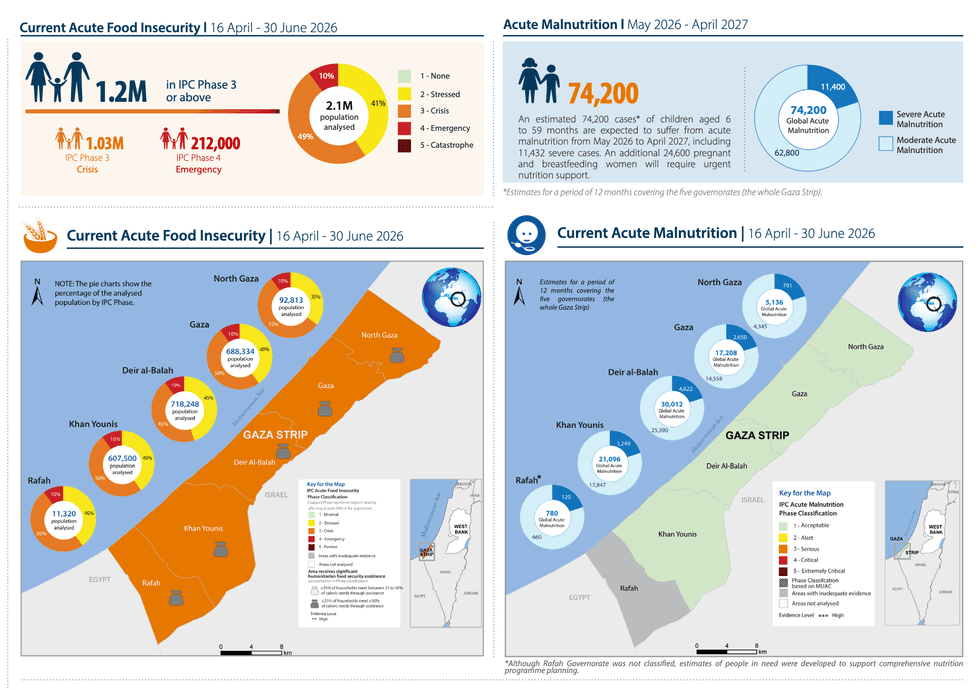
The Integrated Phase Food Security Classification—which ranks food security levels on a scale of 1 to 5—on Thursday published an analysis showing that from mid-April to the end of June, more than 1.2 million people, or 59% of Gaza’s population, were experiencing IPC Phase 3 (crisis) or worse levels of food insecurity. This included about 212,000 people in IPC Phase 4 (emergency). All five Gaza governorates were classified as being in Phase 3.
"After two years of conflict, the October 2025 ceasefire has led to measurable gains in humanitarian access and overall conditions across the Gaza Strip," IPC said in a statement. "However, the situation remains deeply fragile, with civilians continuing to endure harsh conditions."
#Gaza Strip The Oct 2025 ceasefire has led to measurable gains in humanitarian access & conditions across the Gaza Strip, yet the situation remains deeply fragile. 1.4 million people are facing high levels of acute food insecurity through Dec 2026. More: www.ipcinfo.org/ipcinfo-webs...
[image or embed]
— The Integrated Food Security Phase Classification (@theipcinfo.bsky.social) July 23, 2026 at 5:43 AM
This marks an improvement from a year ago, when a "worst-case scenario" was developing into a Phase 5 (catastrophe) famine that was formally declared by the IPC in August 2025. At least hundreds of Palestinians, many of them children, have died from malnutrition since Israel launched its US-backed war on Gaza in retaliation for the Hamas-led attack of October 7, 2023.
The IPC declared last December that while Gaza was no longer in a famine, the situation remained critical for the war-ravaged Palestinians there. The new IPC report warns that two-thirds of Gaza's population are projected to face Phase 3 crisis conditions by the end of the year.
The organization also said that 74,200 Palestinian children under the age of 5 in Gaza will likely need treatment for acute malnutrition through next April.
Responding to the new IPC data, United Nations Children's Fund Executive Director Catherine Russell said Thursday that “acute malnutrition has fallen, but many children are still going hungry, and some children may never fully recover from prolonged lack of proper nutrition."
"This progress shows that when humanitarian access improves and aid gets through, children can be pulled back from the brink," she added. "But it rests on a supplementary feeding program that doesn’t reach all children, and where funding is running out."
Israeli forces have killed or wounded more than 250,000 Palestinians since then, and forcibly displaced, starved, or sickened over 2 million others since then, resulting in worldwide allegations of genocide embodied in an International Court of Justice case filed by South Africa at the end of 2023 and now formally supported by nearly 20 nations.
Leading global famine experts accused Israel of deliberately starving Palestinians in Gaza. The International Criminal Court arrest warrants issued in late 2024 for Israeli Prime Minister Benjamin Netanyahu and Yoav Gallant, his former defense minister who ordered the "complete siege" of Gaza, accuse the pair of crimes against humanity and war crimes, including murder and forced starvation.
Like many members of their public, Israeli and US officials under both the Biden and Trump administrations initially denied that Israel was starving Gazans. However, Israeli officials warned in private that Gaza was facing starvation, while US President Donald Trump, Vice President JD Vance, and other administration figures have acknowledged that Palestinians were starving to death in the strip. That did not stop them from continuing to give billions of dollars in US armed aid to Israel.
In response to the new IPC report, acting United Nations World Food Program Executive Director Carl Skau said that “there is progress on food security in Gaza, but it is fragile and can easily be reversed."
"The overall humanitarian situation remains brutal: Families lack water, sanitation, and medicine," Skau added. "We need sustained access, funding, and stability so people of Gaza can begin recovery.”
The heads of various United Nations agencies concurred that a lasting peace—which Israel is not allowing as it continues bombing and besieging Gaza despite a nominal nine-month ceasefire—is imperative for that recovery.
“Food security in Gaza cannot recover unless local food production starts again and farmers, herders, fishers, and other producers can rebuild their livelihoods,” UN Food and Agriculture Organization Director-General Qu Dongyu said on Thursday. “Producers need access to farmland and the sea, and to seeds, tools, livestock supplies, and other agricultural inputs, as well as technical support."
"Restrictions on agricultural imports and humanitarian supplies must be lifted," Qu added. "Without these essentials, food production, and security will remain a pressing situation."
The IPC said that "recent gains remain fragile," and that "advancing peace plans is essential to support recovery, enable the safe return of displaced populations, and help households rebuild their livelihoods."
About 375,000 people have been pushed into famine after 30 months of civil war, said the world's top hunger monitor.
The world's top authority on hunger said Monday that a ceasefire in Sudan is needed to "contain the extreme levels of acute food insecurity and acute malnutrition" that have taken hold in the war-ravaged African country as it declared famine has spread to two regions there.
The Integrated Food Security Phase Classification (IPC), a United Nations-backed partnership, said it has detected famine in el-Fasher, the city in North Darfur State that the government's former allied militia, the Rapid Support Forces (RSF), seized last week, and Kadugli town in South Kordofan.
The IPC said at least 20 other areas in Darfur and Kordofan are at risk of famine, but fighting between the RSF and Sudanese government forces has impeded the group's assessments in places like the besieged town of Dilling, where the situation is likely "similar" to that of Kadugli.
"Urgent steps should be taken to allow full humanitarian access and assessment in this area," said the IPC.
In the towns where experts have been able to take stock of the humanitarian disaster—now one of the worst in the world, according to the United Nations—hundreds of thousands of people are facing “a total collapse of livelihoods, starvation, extremely high levels of malnutrition, and death.”
The IPC, which rates hunger on a scale of 1-5, determines that famine has taken hold in places where malnutrition has caused at least two deaths per 10,000 people, or four deaths per 10,000 children under the age of 5; at least 1 in 5 households severely lack food; and at least 30% of children have been found to suffer from acute malnutrition.
In the two regions included in the IPC report Monday, about 375,000 people have been pushed into famine (IPC Phase 5), and another 6.3 million people across the country face are in IPC Phase 4, classified as an "emergency" hunger crisis.
More than 21 million people face acute levels of food insecurity.
Towns near el-Fasher are also at risk of famine, including Tawila, Melit, and Tawisha.
Food supplies have been largely cut off in el-Fasher over the last 18 months as it has been under siege by the RSF, which killed more than 1,500 people in massacres last week as it took over the city.
Nearly 10 million people have been internally displaced by the civil war—the world's largest displacement crisis—with many sheltering in overcrowded public buildings with inadequate access to food as well as sanitation.
More than 19 million people in Sudan are expected to experience acute food insecurity by January 2026 as humanitarian aid groups continue to be blocked from getting supplies to starving households and harvests in Darfur and Kordofan are expected to be "well below average due to insecurity, despite favorable agroclimatic conditions."
Food prices are also expected to remain high and ultimately rise in the first half of next year as stocks decline.
"An immediate ceasefire and humanitarian access are a must to prevent further deterioration and save lives!" said Tedros Adhanom Ghebreyesus, director-general of the World Health Organization.
The IPC said only 21% of people in need currently have access to humanitarian aid, and in Kadugli, the aid group Save the Children said that its food supplies ran out in September as fighting there escalated.
Tens of thousands of people in the town are trapped there as the RSF—which is backed by the United Arab Emirates, whose government has received military support from the US—tries to seize more territory.
The IPC previously declared famine in three refugee camps near el-Fasher and in part of South and West Kordofan provinces, since fighting began in April 2023.
The UN has estimated more than 40,000 people have been killed, but aid groups warn the true death toll is likely much higher.
The International Court of Justice said Monday that it is "taking immediate steps regarding the alleged crimes in el-Fasher to preserve and collect relevant evidence for its use in future prosecutions."
"When there is not enough food, children become acutely malnourished, and then they die slowly and painfully," the CEO of Save the Children told a United Nations Security Council meeting this week.
Inger Ashing, the CEO of Save the Children, delivered an urgent plea for action to end the Israeli-created humanitarian catastrophe in Gaza, which she described in graphic terms.
Ashing told a United Nations Security Council meeting on Wednesday that there can be no doubt that Gaza is facing a full-blown famine that will result in mass starvation unless the international community steps in to end it.
"When there is not enough food, children become acutely malnourished, and then they die slowly and painfully," she said. "This, in simple terms, is what famine is."
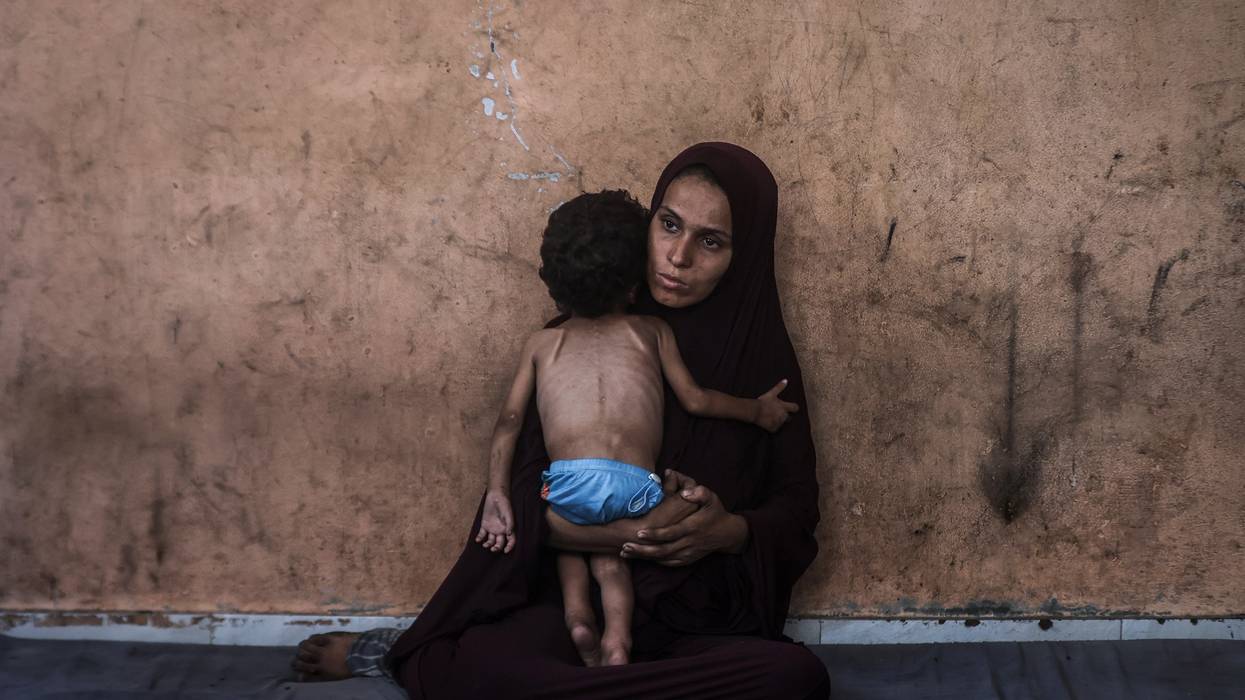
Ashing then described how Palestinian children's bodies are eating their own muscles and organs just to stay alive amid systemic hunger imposed by Israel's military blockade.
"Children do not have the strength to speak or even cry out in agony," she said. "They lie there, emaciated, quite literally wasting away."
Cindy McCain, the executive director of the United Nations World Food Program, put out a video statement Thursday morning in which she said that Gaza was "at a breaking point" due to mass hunger.
"Half a million people here in Gaza are starving, and many more are on the edge," she said. "Famine is expected in the coming weeks if food doesn't reach the thousands of starving families here fast enough. The desperation is overwhelming."
McCain emphasized that the World Food Programme can reach these starving civilians and save lives, but added that it first needed "safe routes and sustained access" to Gaza to make it happen.
"We must deliver at the scale this crisis demands," she said.
Ashing and McCain's pleas for action came less than a week after the United Nations-backed Integrated Food Security Phase Classification Initiative (IPC) declared a famine in Gaza that it warned was projected to get even worse in the coming weeks.
"Between mid-August and the end of September 2025, conditions are expected to further worsen with famine projected to expand to Deir al-Balah and Khan Younis," the IPC stated. "Nearly a third of the population (641,000 people) are expected to face catastrophic conditions (IPC Phase 5), while those in emergency (IPC Phase 4) will likely rise to 1.14 million (58%). Acute malnutrition is projected to continue worsening rapidly."
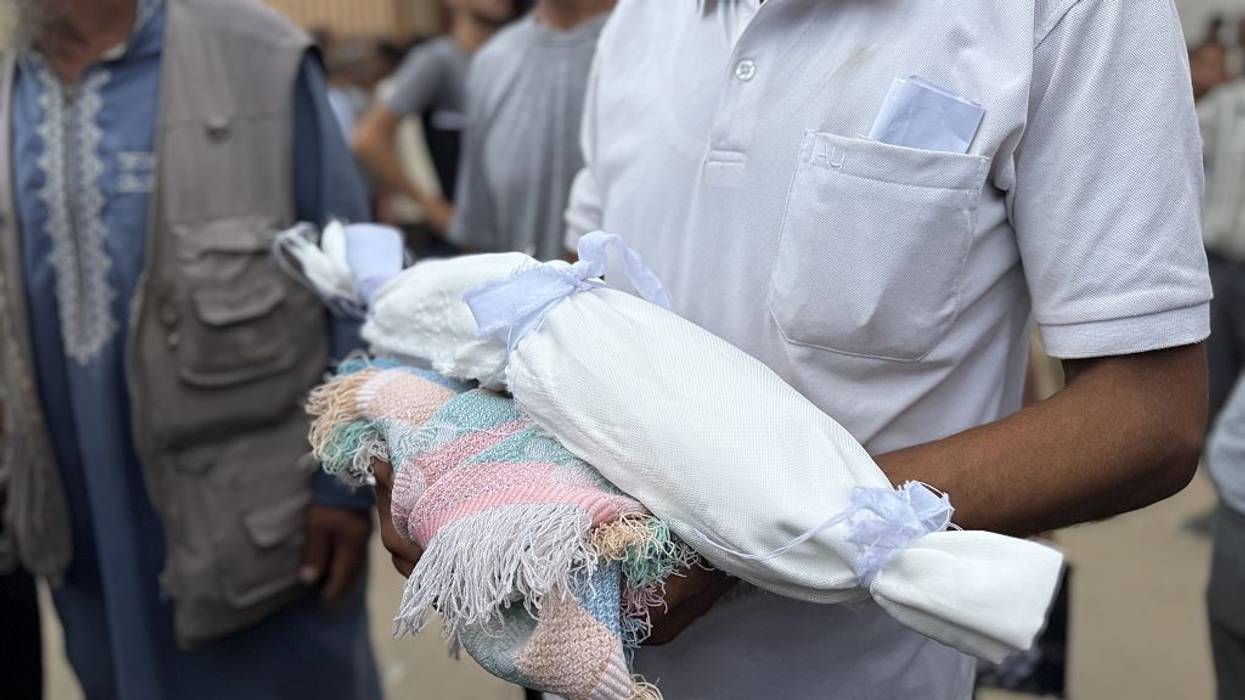
The Gaza Health Ministry has estimated that 317 people in Gaza, including 121 children, have so far died from severe hunger as a result of the Israeli blockade.
While acknowledging that "hunger is a real issue in Gaza," the US ambassador to the UN repeated a debunked claim that the world's leading authority on starvation lowered its standards to declare a famine.
Every member nation of the United Nations Security Council except the United States on Wednesday affirmed that Israel's engineered famine in Gaza is "man-made" as 10 more Palestinians died of starvation amid what UN experts warned is a worsening crisis.
Fourteen of the 15 Security Council members issued a joint statement calling for an immediate Gaza ceasefire, release of all remaining hostages held by Hamas, and lifting of all Israeli restrictions on aid delivery into the embattled strip, where hundreds of Palestinians have died from starvation and hundreds of thousands more are starving.
"Famine in Gaza must be stopped immediately," they said. "Time is of the essence. The humanitarian emergency must be addressed without delay and Israel must reverse course."
"We express our profound alarm and distress at the IPC data on Gaza, published last Friday. It clearly and unequivocally confirms famine," the statement said, referring to the Integrated Food Security Phase Classification's declaration of Phase 5, or a famine "catastrophe," in the strip.
"We trust the IPC's work and methodology," the 14 countries declared. "This is the first time famine has been officially confirmed in the Middle East region. Every day, more persons are dying as a result of malnutrition, many of them children."
"This is a man-made crisis," the statement stresses. "The use of starvation as a weapon of war is clearly prohibited under international humanitarian law."
Israel, which is facing a genocide case at the UN's International Court of Justice, denies the existence of famine in Gaza. Israeli Prime Minister Benjamin Netanyahu and former Defense Minister Yoav Gallant are wanted by the International Court of Justice for alleged war crimes and crimes against humanity, including murder and forced starvation.
The 14 countries issuing the joint statement are: Algeria, China, Denmark, France, Greece, Guyana, Pakistan, Panama, the Republic of Korea, the Russian Federation, Sierra Leone, Slovenia, Somalia, and the United Kingdom.
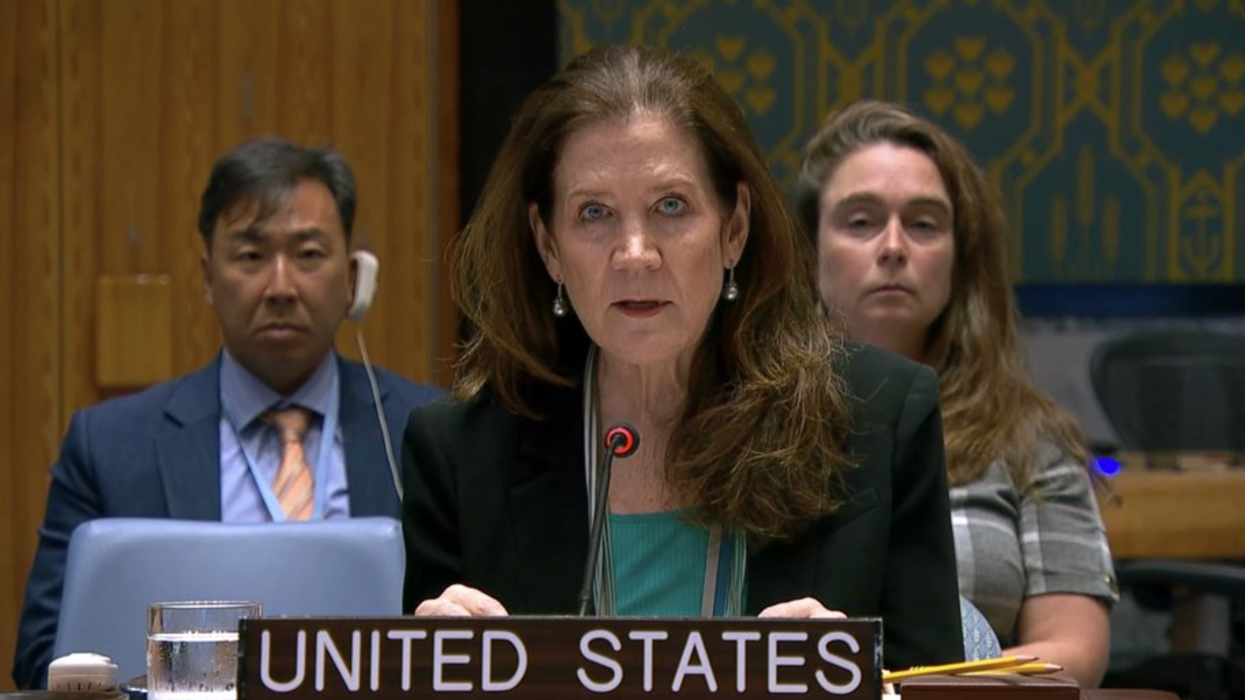
While acknowledging that "hunger is a real issue in Gaza and that there are significant humanitarian needs which must be met," US Ambassador to the UN Dorothy Shea rejected the resolution and the IPC's findings.
"We can only solve problems with credibility and integrity," Shea told the Security Council. "Unfortunately, the recent report from the IPC doesn't pass the test on either."
Shea also repeated the debunked claim that the IPC's "normal standards were changed for [the IPC famine] declaration."
The Security Council's affirmation that the Gaza famine is man-made mirrors the findings of food experts who have accused Israel of orchestrating a carefully planned campaign of mass starvation in the strip.
The UN Palestinian Rights Bureau and UN humanitarian officials also warned Wednesday that the famine in Gaza is "only getting worse."
"Over half a million people currently face starvation, destitution, and death," the humanitarian experts said. "By the end of September, that number could exceed 640,000."
"Failure to act now will have irreversible consequences," they added.
Wednesday's UN actions came as Israel intensified Operation Gideon's Chariots 2, the campaign to conquer, occupy, and ethnically cleanse around 1 million Palestinians from Gaza, possibly into a reportedly proposed concentration camp that would be built over the ruins of the southern city of Rafah.
The Gaza Health Ministry (GHM) on Wednesday reported 10 more Palestinian deaths "due to famine and malnutrition" over the past 24 hours, including two children, bringing the number of famine victims to at least 313, 119 of them children.
All told, Israel's 691-day assault and siege on Gaza has left at least 230,000 Palestinians dead, maimed, or missing, according to the GHM.
"We should have done more," said Jeanne Shaheen, the top Democrat on the Senate Foreign Relations Committee. "Everybody should have said more sooner."
The top Democrat on the Senate Foreign Relations Committee said Sunday that Congress had failed to act to prevent starvation in Gaza, which she acknowledged was the fault of Israel's blockade on aid entering the strip.
On Friday, the UN-backed Integrated Food Security Phase Classification (IPC) declared that an "entirely man-made" famine is taking place in Gaza—marking just the fifth time the notoriously cautious organization has declared a famine since it was established in 2004.
In reaction to this news, Sen. Jeanne Shaheen (D-N.H.) issued her most forceful condemnation of Israel's actions in an interview on CBS's Face the Nation, describing it as "a shameful black mark on humanity that the world has allowed this to happen and that Israel is allowing this to happen."
(Video: Face the Nation)
Shaheen, who was calling in from Amman, Jordan, after visiting the country's Humanitarian Assistance Program, said, "They are trying to get 150 trucks a day into Israel."
"Israel," the senator said, "has prevented those trucks from going in in a way that would provide the nutrition that Gazans need to prevent starvation."
According to the IPC report, a quarter of all Palestinians in Gaza–more than 500,000 people–are starving, with that number expected to rise to more than 640,000 by the end of September.
Rebuking claims from Prime Minister Benjamin Netanyahu's office that famine designation was an antisemitic "blood libel," Shaheen said, "The reality is that we have people dying because they are systematically being starved to death because Israel is refusing to allow in the humanitarian aid that people need to keep alive."
"Not only that," she said, "they've already started planning another incursion into Gaza in ways that are going to kill more people."
"This is not acceptable," she said. "The world needs to speak out."
The world, notably, has been speaking out against Israel's conduct in Gaza for well over a year as evidence mounted of its leaders' genocidal intent.
South Africa accused Israel of genocide in January 2024, citing statements by numerous top Israeli officials who expressed the goal of wiping out or displacing the people of Gaza entirely, often through the policy of intentional starvation.
The IPC, meanwhile, warned as early as December 2023 that Gaza faced a "very high risk of famine" unless access to humanitarian aid was improved immediately.
Shaheen, who has since said she will not seek reelection in 2026, was among the first wave of Democrats to publicly break with the mainstream party line on Gaza, saying that then-President Joe Biden was "too slow in pushing Netanyahu to come to a ceasefire," and voting to block weapons shipments to Israel. However, she did not voice these criticisms until December 2024, after Donald Trump had already been reelected.
It took until late last month—when starvation had become so widespread that one in five children in Gaza City faced malnutrition—for the majority of Senate Democrats to finally back a resolution to block more arms to Israel.
"We should be doing more, and we should have done more. Absolutely," Shaheen said Sunday. "Everybody should have said more sooner."
"This is not an unavoidable famine, this is a campaign of mass extermination," said Jewish Voice for Peace.
International outrage mounted Friday following the official declaration of full-blown famine in Gaza, with human rights defenders underscoring the preventable nature of a crisis caused by Israel's 22-month US-backed obliteration and siege of the Palestinian territory.
As Common Dreams reported, the Integrated Food Security Phase Classification (IPC)—the world's leading authority on hunger crises—issued a "special snapshot" on the situation in Gaza confirming the embattled Palestinian enclave has entered Phase 5, or catastrophic famine, characterized by "starvation, death, destitution, and extremely critical acute malnutrition levels."
According to the IPC, more than 500,000 Gazans are suffering Phase 5 conditions, more than 1 million Palestinians are currently in Phase 4 ("emergency"), and nearly 400,000 others are in Phase 3 ("crisis").
Hundreds of Palestinians have starved to death in Gaza, including at least 112 children, according to local health officials. Thousands more Palestinians have been killed or wounded while seeking food aid, including more than 850 people slain at or near distribution points run by the Gaza Humanitarian Foundation—described as "death traps"—where Israeli soldiers said they were ordered to fire live bullets and artillery shells into crowds of civilians.
"It is a famine on all of our watch. Everyone owns this."
The starvation crisis is so severe that even Israeli media and US President Donald Trump and senior members of his administration have addressed it, with Vice President JD Vance recently acknowledging that "you've got little kids who are clearly starving to death."
Critics—some of whom noted warnings of imminent starvation in Gaza dating back to late 2023—stressed that the Gaza famine is entirely the result of Israeli policies and practices.
"It is a famine that we could have prevented, if we had been allowed. Yet food stacks up at borders because of systematic obstruction by Israel," United Nations Undersecretary-General for Humanitarian Affairs and Emergency Relief Coordinator Tom Fletcher said during a Friday press briefing.
"It is a famine we could have prevented"
UN emergency coordinator Tom Fletcher says people should read the IPC report "in sorrow and in anger"
pic.twitter.com/X1dekCrQFh
— Peter Stefanovic (@PeterStefanovi2) August 22, 2025
"It is a famine within a few hundred meters of food, in a fertile land," he continued. "It is a famine that we repeatedly warned of, but that the international media has not been allowed in to cover. To bear witness. It is a famine openly promoted by some Israeli leaders as a weapon of war."
"It is a famine on all of our watch. Everyone owns this," Fletcher contended. "The Gaza famine is the world's famine. It is a famine that asks, 'But what did you do?' A famine that will and must haunt us all. It is a predictable and a preventable famine. It is a famine that must spur the world to more urgent action."
"My ask, my plea, my demand to [Israeli Prime Minister Benjamin] Netanyahu and anyone who can reach him: Enough," he added. "Ceasefire. Open the crossings, north and south, all of them. Let us get food and other supplies in, unimpeded and at the massive scale required. End the retribution. It is too late for far too many. But not for everyone in Gaza. Enough. For humanity's sake, let us in."
Irish Foreign Minister Simon Harris—who is also defense minister and the equivalent of deputy prime minister—called the situation in Gaza "heartbreaking and devastating."
"It is sickening and despicable," Harris continued. "In [Ireland], we have called it out for what it is—a genocide."
Erika Guevara Rosas, the senior director for research, advocacy, policy, and campaigns at Amnesty International—one of many international human rights groups accusing Israel of genocide—said Friday that "this famine is the direct consequence of Israel's deliberate campaign of starvation in Gaza."
"It is all the more harrowing that this famine is an entirely man-made, deliberately orchestrated, and preventable catastrophe," she continued. "The deliberate obstruction of humanitarian aid, the destruction of life-sustaining infrastructure, and the direct killings of civilians are a clear manifestation of how Israel is inflicting conditions of life calculated to bring about the physical destruction of Palestinians in Gaza as part of its ongoing genocide."
"With every hour that passes without decisive international action, more Palestinian lives are lost, and Gaza City edges closer to complete annihilation," Guevara Rosas added, referring to Israel's launch of Operation Gideon's Chariots 2, a campaign to conquer, occupy, and ethnically cleanse 1 million Palestinians, possibly into a concentration camp proposed for construction over the ruins of Rafah.
"History will never forgive us for standing by as emaciated children die, while food remains just miles away, yet blocked by Israel," Guevara Rosas asserted. "To even begin reversing the devastating consequences of Israel's inhumane policies and actions, the world must take action now."
The US group Jewish Voice for Peace (JVP), which has led many protests against the Gaza genocide, said on the social media site Bluesky, "This is not an unavoidable famine, this is a campaign of mass extermination."
Today, the Integrated Food Security Phase Classification (IPC), a UN body, declared a state of famine in Gaza. While this is horrific news, it does not come as a surprise.
[image or embed]
— Jewish Voice for Peace (@jvp.bsky.social) August 22, 2025 at 9:23 AM
"The legacy of this genocide will last beyond any of our lifetimes," JVP added. "We've arrived at this point after decades of the US doing everything in its power to defend and fund the Israeli government's policies of ethnic cleansing, land theft, and now starvation and genocide. This depravity must end."
These statements follow similar condemnations earlier Friday by UN Secretary-General António Guterres, UN human right chief Volker Türk, and many others around the world on the 686th day of Israel's assault and siege, which have left more than 228,000 Palestinians dead, maimed, or missing, according to the Gaza Health Ministry.
Coinciding with the IPC designation, a report published Friday by Forensic Architecture and the World Peace Foundation detailed how Israel has dismantled the time-tested civilian aid distribution model and replaced it with a military-based system in which many Palestinians are not only dying from starvation but are also being killed while trying to obtain food.
The Israeli human rights group B'Tselem—which, along with Physicians for Human Rights-Israel recently became the first two groups in Israel to acknowledge the Gaza genocide—also published a report Friday on Israel's weaponized starvation of the strip.
Meanwhile, Israeli government officials responded to the IPC announcement in the same manner in which they've dismissed accusations of genocide for the past 22 months.
Netanyahu—who is a fugitive from the International Criminal Court wanted for alleged crimes against humanity and war crimes including murder and forced starvation—called the IPC report "an outright lie."
"Israel does not have a policy of starvation," the prime minister incredulously claimed. "Israel has a policy of preventing starvation."
According to the Gaza Health Ministry, two more Palestinians starved to death in Gaza within the past 24 hours, including a 5-month-old infant.
"The famine declared today in Gaza," said Volker Türk, "is the direct result of actions taken by the Israeli government."
United Nations human rights Chief Volker Türk on Friday accused the Israeli government of causing widespread starvation in Gaza that he said may constitute a war crime.
Shortly after the Integrated Food Security Phase Classification (IPC) officially declared that conditions in Gaza constituted a famine, Türk laid the blame for the humanitarian disaster directly at the feet of Israel.
"The famine declared today in Gaza... is the direct result of actions taken by the Israeli Government," he said. "It has unlawfully restricted the entry and distribution of humanitarian assistance and other goods necessary for the survival of the civilian population in the Gaza strip."
Türk noted that the Israeli military had "destroyed critical civilian infrastructure and almost all agricultural land, banned fishing, and forcibly displaced the population," all of which resulted in the starvation crisis in Gaza.
"It is a war crime to use starvation as a method of warfare, and the resulting deaths may also amount to the war crime of willful killing," Türk continued. "Israeli authorities must take immediate steps to end the famine in the Gaza Governorate and prevent further loss of life across the Gaza strip. They must ensure immediate entry of humanitarian assistance in sufficient amounts, and full access to UN and other humanitarian organizations."
UN Secretary-General António Guterres said that the IPC report confirmed that the starvation in Gaza is a "man-made disaster, a moral indictment—and a failure of humanity itself."
"Famine is not about food; it is the deliberate collapse of the systems needed for human survival," Guterres emphasized. "As the occupying power, Israel has unequivocal obligations under international law—including the duty of ensuring food and medical supplies of the population... No more excuses. The time for action is not tomorrow—it is now."
The IPC report emphasized that, as bad as the situation in Gaza currently is, it is projected to get even worse in the coming weeks.
"Between mid-August and the end of September 2025, conditions are expected to further worsen with famine projected to expand to Deir al-Balah and Khan Younis," the IPC stated. "Nearly a third of the population (641,000 people) are expected to face catastrophic conditions (IPC Phase 5), while those in emergency (IPC Phase 4) will likely rise to 1.14 million (58%). Acute malnutrition is projected to continue worsening rapidly."
The Gaza Health Ministry has estimated that 272 people in Gaza, including 112 children, have so far died from severe hunger as a result of the Israeli blockade. Additionally, international charity Save the Children earlier this month said that 43% of pregnant and breastfeeding women who showed up to its clinics in Gaza last month were malnourished, which represented a threefold increase since March, when the Israeli military imposed a total siege on the enclave.
"An entirely man-made famine," said one United Nations expert. "The threshold of famine has been reached with widespread starvation and malnutrition across the war-torn enclave including among children."
The latest alert on Gaza from the world's leading authority on starvation and malnutrition is not a warning of what could come in the besieged enclave, where Israel is still blocking nearly all humanitarian aid, but of the "worst-case scenario" that has already taken hold.
" Famine is currently playing out in the Gaza Strip," said the Integrated Phase Food Security Classification (IPC), which ranks food security levels on a scale of 1 to 5, in its Tuesday analysis.
Since the IPC's analysis in May, in which it projected that half a million Palestinians in Gaza would reach Phase 5—Catastrophe, defined as an "extreme lack of food"—by September, Israel's bombardments and ground operations have intensified, and people's access to food across the enclave has continued to be "alarmingly erratic and extremely perilous," said the IPC, with more than 1,000 people killed while trying to access food and humanitarian aid.
Between May and July, the proportion of households facing extreme hunger has doubled in Gaza, said the IPC, and the food consumption threshold for famine "has already been passed for most areas of the Gaza Strip." One in three people in Gaza are now going days at a time without consuming any food.
At least 147 people have died from starvation, according to Gaza's Health Ministry.
In May, the IPC projected that malnutrition would soon reach critical levels in the governorates of North Gaza, Gaza, and Rafah, with more than 70,000 children under age 5 and 17,000 pregnant and breastfeeding women facing acute malnutrition—and said all of Gaza was facing "a risk of famine."
Tuesday's report, said the International Rescue Committee, was "a devastating but entirely predictable confirmation of what the IRC and the wider humanitarian community have long warned: Israel's restrictions on aid have created the conditions for famine, and the window to prevent mass death is rapidly closing."
More than 20,000 children have been admitted to health centers for treatment for acute malnutrition, with more than 3,000 facing severe malnourishment—the effects of which, said the IRC, can be "lifelong and irreversible" in children who survive.
At least 16 children under 5 have died from starvation since July 17, said the IPC—representing a "rapid increase" in hunger-related deaths that is unlikely to slow down without an end to Israel's blockade and a major ramp-up in the distribution of humanitarian aid—which is currently sitting in thousands of trucks just outside the enclave, as the United Nations Relief and Works Agency for Palestine Refugees in the Near East (UNRWA) said Tuesday.
"The worst-case scenario of famine is now happening in Gaza according to the leading world experts," said Philippe Lazzarini, the UNRWA commissioner-general, whose agency has provided aid and services to Palestinians in Gaza for decades. "An entirely man-made famine. The threshold of famine has been reached with widespread starvation and malnutrition across the war-torn enclave including among children. More than 100 people have died due to hunger in the past few weeks alone. The only way to reverse this catastrophe is to flood Gaza with a massive scale up of aid."
An estimated 62,000 metric tons of staple food—not including fresh foods like vegetables and meat—is required to enter Gaza each month to cover the basic needs of the population. In May and June, only 19,900-37,800 metric tons of food entered the enclave. That includes food provided by the U.S.- and Israel-backed Gaza Humanitarian Foundation, where Israeli soldiers have reported that they were directed to shoot at Palestinian civilians trying to access aid.
"People are starving not because food is unavailable, but because access is blocked, local agrifood systems have collapsed, and families can no longer sustain even the most basic livelihoods," said U.N. Food and Agriculture Organization Director-General Qu Dongyu. "We urgently need safe and sustained humanitarian access and immediate support to restore local food production and livelihoods—this is the only way to prevent further loss of life. The right to food is a basic human right."
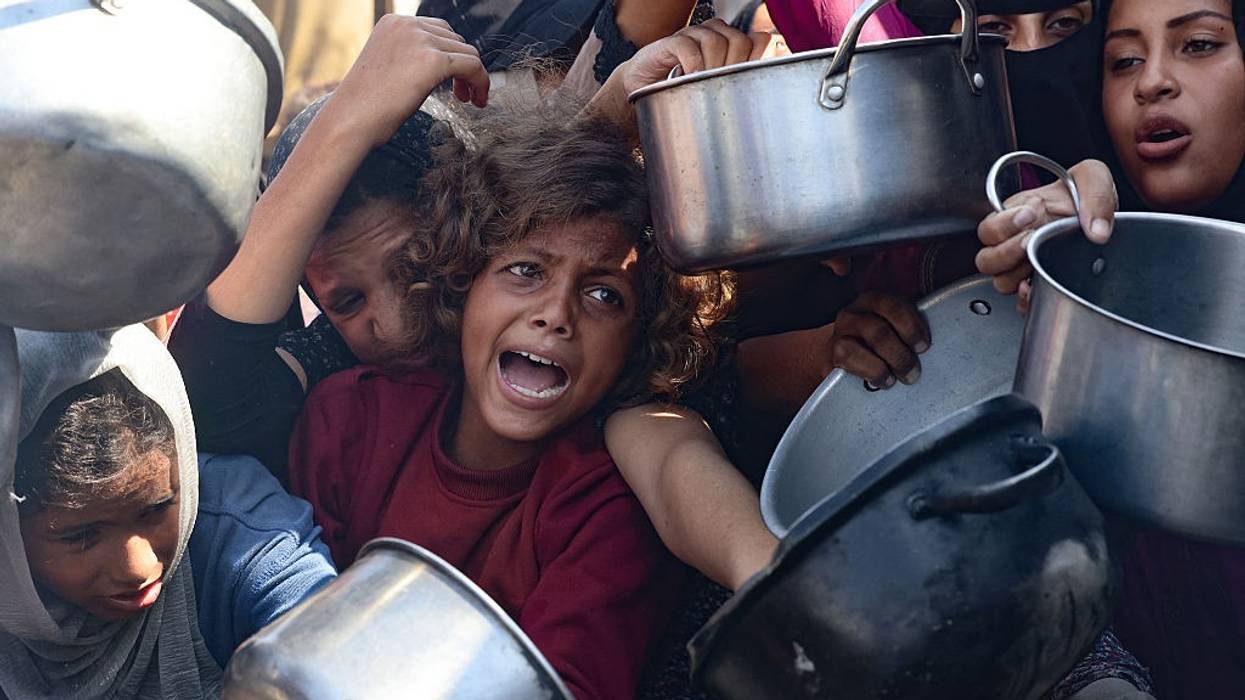
As international outrage has grown over the images of starving Palestinians in recent days—with even the U.S. corporate media and Democratic establishment finally speaking out against Israel's blocking of humanitarian aid—Israel has paused some fighting and allowed airdrops of food, which aid groups have condemned as a "grotesque distraction" that will provide nowhere near the aid that's needed.
"Israel's genocide has thrown Gaza into the final chaotic stages of a full-blown human catastrophe," said Bushra Khalidi, policy lead for Oxfam in the occupied Palestinian territories. "Airdrops, and brief pauses for relative crumbs of aid, is nowhere near enough to prevent human death at an unimaginable scale. We need urgent forceful diplomacy and whatever restrictive measures are necessary in order to achieve an immediate and unconditional cease-fire, break Israel's siege, and allow humanitarian aid to flow freely and safely throughout Gaza."
As Common Dreams reported Monday, Republican leaders in the U.S. including President Donald Trump and House Speaker Mike Johnson (R-La.) have shown no signs that they will act on the new data in the IPC report; both continued to dismiss the international condemnation of Israel's blockade in Gaza, repeating debunked claims that Hamas is to blame for the starvation of Palestinians.
The U.S. has continued to provide the Israel Defense Forces with support despite its own laws stating that the U.S. cannot send military aid to countries that block humanitarian aid.
Khalidi said the IPC's new warning of "an unfolding famine—one created entirely by Israel's murderous siege—must finally rouse the international community to act with a clarity and resolve that has so far been beyond it."
"World leaders have been variously divided, complicit, uncaring, and collectively ineffectual in stopping Israel's campaign of erasure," said Khalidi. "In failing to protect the Palestinian people, they have no more excuses left. Ending Israel's genocide of Gaza is a test not only of our world order but of our collective humanity."
The government accused the monitor of "issuing unreliable reports that undermine Sudan's sovereignty and dignity" as aid and human rights experts called for global action to boost humanitarian assistance.
The Sudanese government suspended cooperation with a global hunger monitor on Monday, on the eve of the initiative announcing that the African country's civil war has driven the expansion of a famine first declared at a refugee camp earlier this year and expected to keep growing next year without a cease-fire.
Alarm over widespread
hunger in Sudan has mounted since fighting erupted between the Sudanese Armed Forces (SAF)—the nation's official military—and the Rapid Support Forces (RSF) in April 2023. The famine declaration for Zamzam camp, which houses hundreds of thousands of internally displaced persons (IDPs) in North Darfur, came in August.
Reuters—which reported on Sudan's Monday letter to the Integrated Food Security Phase Classification (IPC) and its Famine Review Committee (FRC)—noted that its "investigation found that the Sudanese government obstructed the IPC's work earlier this year, delaying by months a famine determination for the sprawling Zamzam camp."
The government's new letter accuses the monitor of "issuing unreliable reports that undermine Sudan's sovereignty and dignity," according to Reuters. "It says the forthcoming IPC report lacks updated malnutrition data and assessments of crop productivity during the recent summer rainy season. The growing season was successful, the letter says. It also notes 'serious concerns' about the IPC's ability to collect data from territories controlled by the RSF."
The IPC report, released Tuesday, states that "the FRC classifies famine (IPC phase 5) for the period of October to November 2024 in Zamzam, Abu Shouk, and Al Salam camps, as well as in the Western Nuba Mountains, affecting both residents and IDPs. Between December 2024 and May 2025, famine (IPC phase 5) is projected to continue in the same areas and expand in the North Darfur localities of Um Kadadah, Melit, El Fasher, At Tawisha, and Al Lait."
"There is a risk of famine in the Central Nuba Mountains and in areas likely to experience high influxes of IDPs in North and South Darfur," the report notes. It adds that "the population in areas of intense conflict in Khartoum (Mayo and Alingaz in Jebel Awlia) and Al Jazirah (Medani Al Kubra and Sharg Al Jazirah) might be experiencing the same conditions as that of the areas classified in famine," but "the lack of recent data prevents the FRC from confirming whether famine thresholds have been surpassed."
The document stresses that "the current analysis reflects the situation during the harvest period, a time when hunger and acute malnutrition are typically at their lowest. From December onwards, there will be few seasonal mitigating factors that could improve conditions on the ground. Only a halt to the conflict, and significant scale-up and scale-out of assistance can prevent an even greater catastrophe."
According to experts, 24.6 million people in Sudan—or half the nation's population—face "high levels of acute food insecurity (IPC phase 3 or above)" and more than 12 million have been displaced by the current conflict, including over 3.2 million who have fled to neighboring countries.
Leaders at the United Nations Children's Fund (UNICEF), Food and Agriculture Organization (FAO), and World Food Program (WFP) expressed concern over the Tuesday report and renewed calls for action.
"We must stop famine in the Sudan—it can be done," said Rein Paulsen, FAO's director of emergencies and resilience. "We need immediate and unimpeded humanitarian access to deliver food, water, health, and lifesaving emergency agricultural assistance to pull people from the brink. Above all, the immediate cessation of hostilities is an essential first step. We must act now, collectively, and at scale, for the sake of millions of people whose lives are at risk."
Jean-Martin Bauer, WFP's director of food security and nutrition analysis, emphasized that across Sudan, "people are getting weaker and weaker and are dying as they have had little to no access to food for months and months."
"WFP is doing everything we can to get a steady and constant flow of food assistance to the hungriest and hardest-to-reach places in Sudan," Bauer continued. "We are constantly adapting our operations as the conflict evolves, delivering assistance where and when we can. But recent operational progress is fragile as the situation on the ground is volatile and dangerous."
UNICEF's director of emergency operations, Lucia Elmi, pointed out that "the ongoing conflict, continuous displacements, and recurrent disease outbreaks have created a dangerous breeding ground for malnutrition in Sudan."
"Millions of young lives hang in the balance," Elmi warned. "The delivery of lifesaving therapeutic food, water, and medicine can help stop the deadly malnutrition crisis in its tracks, but we need safe, sustained, and unimpeded access to reach the most vulnerable children and save lives."
Human Rights Watch also took note of the new data and called out the warring parties for "willfully" obstructing aid. As Belkis Wille, an associate director in the crisis, conflict, and arms division of the U.S.-based group, wrote Tuesday:
In South Kordofan's Nuba Mountains, we witnessed famine for ourselves.
In October, we traveled to the Nuba Mountains to interview people displaced by attacks by the RSF and its allies. Witnesses described killings, rape, and destruction in the South Kordofan towns of Habila and Fayu, just 20 km away.
The impact of starvation was clear to see. Almost every person we spoke to bore the marks of hunger. One 8-year-old boy I met, died of starvation during our five-day visit. We saw no international organizations or U.N. agencies providing food assistance during our time there and kept wondering whether some of the people would survive more than a couple of months without aid.
"Before more civilians, including children, die of starvation in Sudan, governments should impose consequences on those responsible. The U.N. Security Council meeting on Sudan on December 19 again contained powerful speeches but little in the way of concrete action," Willie added. "The U.N. and donors should make a concerted push for immediate aid access throughout Sudan and massively increase support to local responders. The U.N. should also be much clearer and public about the scale of the challenges they face. Civilians in the Nuba Mountains and North Darfur cannot wait till the new year."
"The international community must apply relentless pressure to achieve a cease-fire and ensure sustained humanitarian access now," said one advocate.
More than 1 in 5 people in the Gaza Strip are "facing catastrophic levels of food insecurity" amid Israel's relentless assault and siege against the Palestinian territory, according to a draft report set to be published Tuesday by the United Nations' hunger monitoring system.
The latest Integrated Food Security Phase Classification (IPC) Acute Food Insecurity Special Snapshot—which was previewed by various news agencies—says that more than 495,000 Gazans—who already face "an extreme lack of food, starvation, and exhaustion"—are expected to suffer the highest level of starvation over the coming months.
The draft report states that while a sharp increase in food aid in northern Gaza in March and April can be credited with "likely averting a famine," the situation is "deteriorating again following renewed hostilities."
"A high risk of famine persists across the whole of the Gaza Strip as long as conflict continues and humanitarian access is restricted," IPC noted.
The IPC draft report also says more than half of all Gaza households had to sell or swap clothing in order to obtain food, and that the majority of Gazan families often "do not have any food to eat in the house, and over 20% go entire days and nights without eating."
"The population cannot endure these hardships any longer."
Kate Phillips-Barrasso, vice president of global policy and advocacy at Mercy Corps, an Oregon-based humanitarian NGO, told The Guardian that "people are enduring subhuman conditions resorting to desperate measures like boiling weeds, eating animal feed, and exchanging clothes for money to stave off hunger and keep their children alive."
"The humanitarian situation is deteriorating rapidly, and the specter of famine continues to hang over Gaza," she added. "The international community must apply relentless pressure to achieve a cease-fire and ensure sustained humanitarian access now. The population cannot endure these hardships any longer."
Although the IPC stopped short of the rare step of declaring a famine in Gaza, it warned that "the recent trajectory is negative and highly unstable."
"Should this continue, the improvements seen in April could be rapidly reversed," the agency added.
The IPC's famine review panel previously said there is not enough data to make a determination on whether there is a famine in Gaza since research was being blocked by "conflict and humanitarian access constraints."
The Geneva-based group Euro-Mediterranean Human Rights Monitor said Monday that "the Famine Review Committee's inability to declare the current food situation in the Gaza Strip to be a famine does not negate the existence of famine in the strip, as pockets of famine are forming and spreading among different age groups, particularly children, and there is a noticeable increase in deaths from hunger, malnutrition, and related diseases."
"The committee's failure to declare the existence of a famine is solely related to its inability to provide certain technical information because of illegal Israeli restrictions and policies that aim to conceal evidence related to the crimes it commits and prevent criminal investigations into them by independent U.N. and international committees, particularly by preventing these committees from entering the strip," the group added.
U.N. World Food Program Executive Director Cindy McCain said last month that "full-blown famine" had taken hold in Gaza and was spreading south. According to Gaza officials, at least 40 people—mostly children—have died from malnutrition and dehydration during the 262-day Israeli onslaught. Almost all of the victims are from northern Gaza.
Israel began bombing, and later invaded, Gaza after Hamas-led attacks left more than 1,100 Israelis and others dead and over 240 others kidnapped on October 7. At least some of the victims were killed by Israeli forces in so-called "friendly fire" incidents, according to Israeli and international media reports.
Since then, Israeli forces have killed at least 37,626 Palestinians—most of them women and children—in Gaza, while wounding over 86,000 others, according to Palestinian and international agencies. At least 11,000 people, including over 4,000 children, are missing and presumed dead and buried beneath the rubble of hundreds of thousands of bombed-out homes and other buildings.
Michael Fakhri, the United Nations special rapporteur on the right to food and a law professor at the University of Oregon, said in late February that Israel is committing genocide by intentionally starving Gazans. Israel's siege—and Israeli attacks on humanitarian aid shipments, workers, and recipients—are being reviewed by the International Court of Justice as part of a South Africa-led genocide case backed by over 30 countries and regional blocs.