

SUBSCRIBE TO OUR FREE NEWSLETTER
Daily news & progressive opinion—funded by the people, not the corporations—delivered straight to your inbox.
5
#000000
#FFFFFF
To donate by check, phone, or other method, see our More Ways to Give page.
Daily news & progressive opinion—funded by the people, not the corporations—delivered straight to your inbox.

When Netanyahu proposed to Trump that they embark on regime change in Iran by assassinating its top leadership, neither seems to have imagined that this action would come back to bite them.
Soon after the Israeli and US attacks on Iran assassinated its supreme leader, Ayatollah Ali Khamenei, and four of his family members, as well as other senior leaders, President Donald Trump urged Iranians to rise up, saying: “To the great proud people of Iran, I say tonight that the hour of your freedom is at hand. When we are finished, take over your government. It will be yours to take. This will be probably be your only chance for generations." Israeli Prime Minister Benjamin Netanyahu did the same in a video addressing the Iranian people, saying, “This is an opportunity that comes only once in every generation.” He called on them to “take to the streets in your millions and unite to bring down the ruling system.”
However, far from creating the outcome they fervently hoped for, the regime that emerged, after further assassinations, is “younger, savvier, ruthless, and more hard-line than ever.”
This is also evidenced by the choice of the second son of Khamenei as the new supreme leader. Mojtaba Khamenei (who was also injured in the attack on the Khamenei residence) was elected by a unanimous vote of the Assembly of Experts—after pressure by the Islamic Revolutionary Guard Corps (IRGC) with whom he has close ties. According to the Atlantic Council, “In political ideology and jurisprudence, Khamenei is considered to be more hard-line than his father.” Moreover, a source in Tehran notes: “They’ve just killed his family... He’s bloodthirsty now.”
The hard-liners appear to have further strengthened their hand during the recent week-long funeral events attended by millions. Ultra hard-line politicians are now publicly condemning the Iranian politicians involved in peace talks, including Parliamentary Speaker Mohammad Bagher Ghalibad and Foreign Minister Abbas Araghchi. This may account for the resumption of Iranian attacks on ships in the Strait of Hormuz in recent days—in spite of the ceasefire—which has led to several new rounds of fighting between the US and Iran.
The massive funeral event not only confirmed Khamenei’s status as a martyr, but also galvanized a tremendous desire for revenge in the Iranian population, with mourners waving red flags of revenge, chanting, “Death to America” and “Death to Israel,” and carrying signs calling for the killing of Trump and Netanyahu.
On the second day of the events, to thunderous applause, Poet Mohammad Resouli stated ominously: “Why is the most bastard man in the world still alive? The world is no longer a good place for Trump. Why should we not kill the man who killed our imam? It would be a disgrace if we did not.”
The attacks on Iran were, in fact, a violation of international law, since they do not meet the requirements of Article 51 of the United Nations Charter regarding the right to self-defense but, instead, violate Article 2(4), which states, “All Members shall refrain in their international relations from the threat or use of force against the territorial integrity or political independence of any state, or in any other manner inconsistent with the Purposes of the United Nations.”
In an article in The Guardian, entitled “Into the Void: How Trump Killed International Law,” the authors argue that “amid this chaos, there has been one consistent target for Trump’s contempt: the constraints imposed by international law, and its value system built around national sovereignty, including the prohibition of the use of force...” Indeed, in an interview with The New York Times in January, Trump made this point explicit: “I don’t need international law,” arguing that his power is limited only by “my own morality, my own mind.”
The killing of Khamenei was also in breach of the generally-accepted international taboo against the assassination of leaders. In fact, Trump also violated domestic US law—by violating Executive Order 11906, which states that “no employee of the United States Government shall engage in or conspire to engage in, political assassination.” This order, signed by President Gerald Ford 50 years ago, followed congressional investigations into previous US assassination plots against foreign leaders, such as Fidel Castro. Presidents Jimmy Carter and Ronald Reagan both broadened the scope of the ban, which is still in force, by dropping the “political” qualifier, making it illegal to “engage in assassination” per se.
Taboos such as these represent socially agreed-upon norms that certain actions are forbidden, and they play a crucial role in maintaining social order. Their codification in law helps to solidify the regulation of social interaction. Breaking a taboo can have serious consequences that, in extreme circumstances, can trigger violence.
In an article entitled, “Trump Opens the Pandora’s Box of Assassination,” Columbia University historian Timothy Naftali writes:
As killing foreign leaders gets easier for us, harming our leaders also presumably gets easier for others. The international taboo against foreign political assassinations has arguably had a stabilizing effect... To put a fine point on it, however tempting it may be to eliminate troublesome foreign leaders, no policy makers in a democracy wants to spark acts of retaliation that cost the lives of our own leaders in turn.
Luca Trenta and Arturo Jiminez-Bacardi, in “Khamenei Killing and the Perilous Death of the Assassination Ban,” suggest, “When a new Congress is sworn in next year, it should open an investigation into the Khamenei operation, hold public deliberations on the role of assassination in US foreign policy, and finally enact a statutory ban that unambiguously prohibits and criminalizes assassination once and for all.”
It has been argued that both the US and Israel began lowering their restrictions to the taboo on assassinations (or “targeted killings” as the US likes to call them or “eliminations” as the Israelis call them) in response to major terrorist attacks.
After the horrendous events of 9/11, and during the subsequent “war on terror,” it became common practice for the US to assassinate al-Qaeda operatives, including Osama-bin-Laden, as well as “terrorists” from other groups. Wikipedia offers a long list.
At the end of Trump’s first term, the US took a step closer to assassinating members of government when, on January 3, 2020, it assassinated Qasem Soleimani, “the second most powerful man in Iran,” who was commander of the Quds Force branch of the IRGC—justifying it by calling him a “terrorist” and providing a long list of grievous abuses.
However, it wasn’t long before the dangers of this action became evident, as US authorities uncovered several plots by Iranians to assassinate Trump administration officials associated with the killing, including Trump himself.
Israel also seemed to have increased its policy of “eliminations” following the horrific October 7, 2023 events, by assassinating the Hamas leader, Ismail Haniyeh, in Tehran in July 2024 and Hezbollah leader, Hassan Nasrallah, in September 2024, as well as many others. A long list is also available on Wikipedia.
Clearly, Trump is already feeling the heat from the Khamenei assassination. In a news conference at the end of the recent NATO summit in Türkiye, he said, “I’m No. 1 on the kill list for Iran,” joking that he would rather be “No. 1 on TikTok.” He added: “They had leaders; they’re gone, and they had another set of leaders; they’re gone. Now they have another set of leaders, they may be gone, who knows, and you know, I may be gone too, because I’m their No. 1 target.”
Indeed, because of concerns for his security, the Secret Service urged Trump to fly from Türkiye to the UK on the old Air Force One (which he did) rather than taking the retrofitted Qatari-gifted plane, since there are questions about whether the new Air Force One has the same defensive systems as the old one.
The intense Iranian desire for revenge will be likely to plague Trump, Netanyahu, members of their administrations, and their security services into the foreseeable future.
Surely it would have been much wiser to have adhered to international and domestic law and to have respected the taboo on the assassination of leaders. After all, this is what international law and established taboos are meant to do—establish rules of behavior to protect the social and international order.
As Trenta and Jimenez-Bacardi state:
The political vacuums that follow the assassination of heads of state can lead to civil war, chaos, unrest, and cycles of revenge. The Khamenei assassination has already turned into a regional war and sparked a global economic crisis. Simply put, a new era of political assassinations is likely to make the world less safe.
Let us hope that the revenge currently being called for in Iran never eventuates. Not only would it be tragic for a US president to be assassinated, but it could also be disastrous for Iran, since Trump has vowed that he would destroy the country in the event that it were successful in assassinating him, saying: “That would be the end. I’ve left instructions, if they do it, they get obliterated, there won’t be anything left.”
This has to be taken seriously since it could lead to even more unspeakable outcomes, potentially the breaking of another crucial taboo—on the use of nuclear weapons.
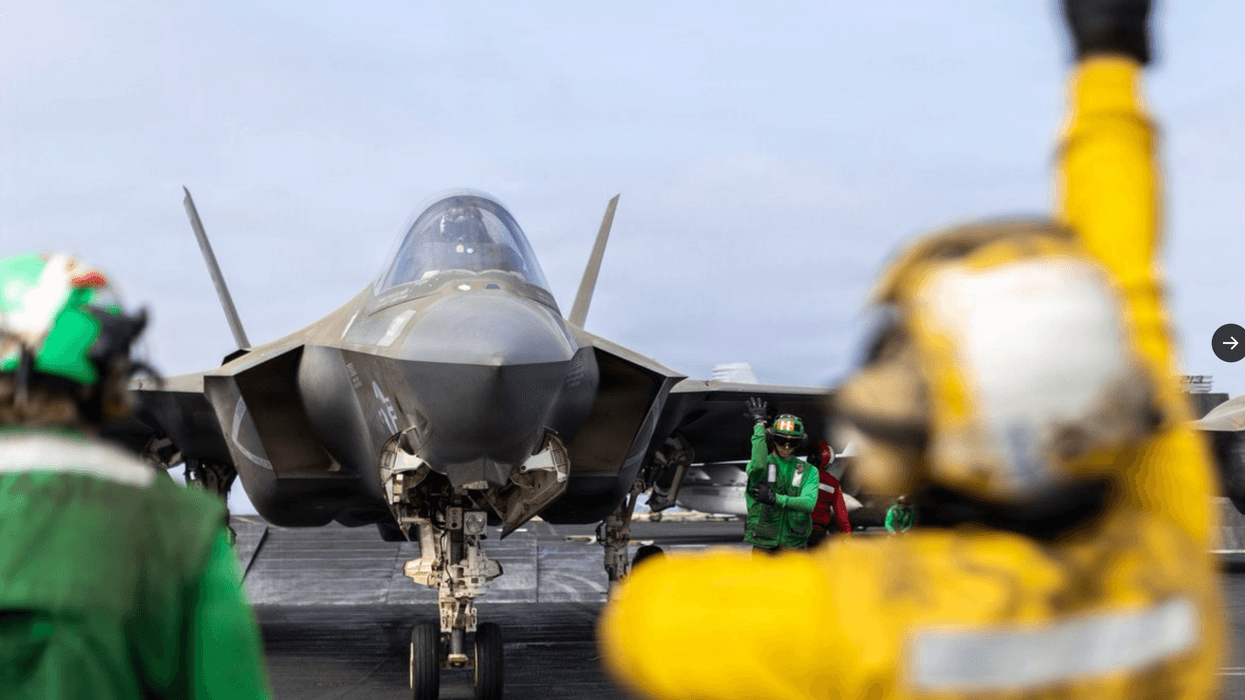
"Listen to the American people. Follow the Constitution," said Just Foreign Policy. "End these illegal and unauthorized hostilities against Iran. NOW."
Less than two weeks after declaring for the umpteenth time that the illegal US-Israeli war on Iran is over, President Donald Trump on Tuesday approved fresh military strikes on the Mideast country over attacks on three merchant ships off the coast of Oman.
"US Central Command forces have begun launching a series of powerful strikes against Iran to impose heavy costs for targeting and attacking commercial shipping crewed by innocent civilians in an international waterway," CENTCOM said on X. "The US strikes are in response to Iranian attacks on three commercial vessels that were transiting the Strait of Hormuz. Iran’s demonstrated aggression was unwarranted, dangerous, and a clear violation of the ceasefire."
Iranian officials blamed the US for the renewed hostilities, claiming efforts to reopen the Strait of Hormuz constitute a violation of the memorandum of understanding (MOU) signed last month, under which Tehran and the Omani government are in charge of managing shipping in the vital waterway controlled by Iran, through which around a fifth of the world's exported oil passed prior to the war.
“But the US has been trying somehow to open new routes," Iran's Foreign Ministry said.
The new US strikes came hours after the Trump administration canceled the 60-day license issued last month by the Treasury Department that waived sanctions on Iranian petroleum exports.
“Iran will only reap benefits if they exhibit good behavior,” an unnamed US official speaking on condition of anonymity told CNBC on Tuesday. “Iran’s actions in the strait were wholly unacceptable to the United States and will be met with consequences.”
Trump has been saying that the Iran War—which began on February 28 with airstrikes including the massacre of 156 students and staff at an elementary school in Minab—was nearly or completely over since early March.
According to Iranian officials, more than 30,000 people have been killed or wounded by US-Israeli strikes during the war. Iranian counterattacks have killed at least 13 US service members. Scores of people in Israel and US-allied Gulf states have been killed and thousands more wounded by Iranian missile and drone strikes.
On Monday, Trump vowed that the US will win the war "one way or the other."
"We're either going to make a deal, or we're going to finish the job," he said. "It won't be tough to finish the job."
The MOU signed by Trump and Iran—and rejected by Israel—had been fiercely criticized in the United States by Republicans and centrist Democrats for leaving Iran in what experts say is a stronger strategic position than before the war, despite the devastation wrought by US-Israeli airstrikes.
Some critics argued that the MOU demanded less of Iran than the Joint Comprehensive Plan of Action—also known as the Iran nuclear deal—signed during the Obama administration but unilaterally abrogated by Trump during his first term, despite verified Iranian compliance.
Talks aimed at a permanent end to the 129-day war—which followed last summer's separate US and Israeli attacks on Iran that killed or wounded more than 5,000 people—were on hold for the multiday funeral of former Iranian Supreme Leader Ali Khamenei, who was slain by US-Israeli bombing on the first day of strikes in February.
Tuesday's renewed US strikes on Iran prompted fresh calls for a lasting ceasefire in the region.
"Listen to the American people. Follow the Constitution," the nonpartisan US advocacy group Just Foreign Policy said on social media. "End these illegal and unauthorized hostilities against Iran. NOW."

Prediction markets represent a further commodification of war, violence, and death—one that risks manufacturing consent for more violence by providing people with a financial incentive for it.
On February 27, more than 150 accounts placed bets on Polymarket accurately predicting that the US would strike Iran by the following day. Of these accounts, at least 16 made a profit of over $100,000, and at least 109 made over $10,000. The New York Times found one anonymous account that had spent $60,000 in the days before the strikes and made nearly half a million dollars.
Given the timing of these bets, this has raised concerns about insider trading. Bubblemaps, an analytics platform that turns blockchain data into interactive visuals, found a cluster of linked accounts that made $1.2 million by making very specific bets with near-perfect accuracy. This includes betting that the US and Israel would attack Iran on February 28.
What’s more, their analysis found that this was not an isolated incident. For instance, in June 2025, two of these accounts bet $10,000 and $100,000 that Israel would launch military strikes against Iran just days before they did. Those strikes were part of a surprise attack that Israel had been covertly planning for months.
This is a serious issue, but let’s be clear: The idea that this kind of insider trading is not happening under the most overtly corrupt presidential administration in US history is quite frankly laughable. Indeed, the Trump administration is actively supporting Polymarket and Kalshi against ongoing efforts by states to ban them. Coincidentally, Donald Trump Jr. has invested in Polymarket through his venture capital firm and is a strategic advisor for Kalshi. Any decision that benefits those companies would likewise benefit Trump’s family.
An outright ban won’t change the fact that we are a nation where millions of people believe it is completely fine to gamble on death.
But the problem here is larger than the Trump fraud network. Prediction markets represent a further commodification of war, violence, and death—one that distracts from the injustices of war and the suffering of its victims. It is a commodification that risks manufacturing consent for more violence by providing people with a financial incentive for it. While it stopped amid public backlash, Polymarket was allowing people to place bets on whether a nuclear bomb would be detonated by the end of 2026 or 2027. Over $800,000 worth of bets had been placed before the market was taken down.
Betting on such grotesque violence is not only morally repugnant in itself, it risks desensitizing us to the true human cost of that destruction. What’s happening in Iran is not a just war being waged against a legitimate threat. America is not freeing the Iranian people—it is murdering children and destroying a nation without any regard for who will pick up the pieces. This is senseless carnage carried out by two morally bankrupt countries against a nation that, regardless of one’s feeling toward it, did everything it could to prevent this war.
None of these deaths had to happen. And yet, companies like Kalshi and Polymarket were fueling people’s desires for violence. In January, Kalshi began taking bets on whether Ayatollah Ali Khamenei would be “out as Supreme Leader” before February 1, March 1, April 1, July 1, or September 1, 2026. This was a lucrative market that attracted more than $54 million in trades. When his assassination was confirmed on February 28, those who had put money on “before March 1” thought they had "won" big.
Instead, Kalshi invoked a “death carveout” clause to avoid paying customers their "winnings." A Kalshi spokesperson said that the company “included every precaution on this market to make sure people could not trade on the outcome of death.”
Their consumers disagree. They filed a lawsuit against Kalshi alleging that they were drawn to the “Khamenei Market” because they understood “with an American naval armada amassed on Iran’s doorstep and military conflict not merely foreseeable but widely anticipated,” Khamenei would “most likely” be removed from office “through his death.”
In other words, these people were intentionally betting that the US would kill Khamenei and are upset because their earnings were denied. This is true regardless of what Kalshi intended or whatever precautions it took. The market itself created the possibility—the perverse hope—that Khamenei’s death might enrich their own.
For those bettors, Khamenei’s assassination was a personal victory; the injustice was that Kalshi denied them their rightful spoils. A business executive in New York told the Washington Post that he had placed two bets totaling $3,460 that Khamenei would be “out” by March 1 and was expecting to "win" $63,000. He remarked: “I was booking my trip to Courchevel. Then they changed the rules… and everybody got screwed.”
Except not everyone got screwed: the Iranian people did. They are the ones who lost everything. That business executive—almost assuredly overpaid—will not miss those "winnings." But Iranians will miss the loved ones they lost. Those deaths are an absolute loss. They can never be recovered, replaced, or recuperated.
These markets should be banned, and there is some congressional momentum on that issue. But an outright ban won’t change the fact that we are a nation where millions of people believe it is completely fine to gamble on death. We are a nation whose government actively posts inane memes and jokes about the illegal war it is conducting in clear violation of international law.
Things must change: We cannot allow ourselves to be driven to moral depravity by a conman and his lackeys. We must end this illegal war. We must help the Iranian people rebuild their country. We must become, in short, a nation that condemns deaths and cherishes life.

Mr. President. I am connected to all of humanity, all of life. And so are you. When someone is murdered, part of all of us is murdered.
“The missile hit during the school’s morning session. In Iran, the school week runs from Saturday to Thursday, so when US and Israeli bombs began falling at around 10:00 am on Saturday, classes were under way. At a point between 10:00 am and 10:45 am, a missile directly hit Shajareh Tayyebeh school, in Minab, southern Iran, demolishing its concrete building and killing dozens of seven to 12-year-old girls.” —The Guardian
War is not an abstraction. It’s living hell... or dying hell. When the United States and Israel (President Donald Trump and Prime Minister Benjamin Netanyahu) started bombing Iran, I felt the collective human soul begin to vibrate once again, and I began screaming to myself: This is not who we are!
Even though it is.
Our “interests” are what matter, right? Individual human lives are far less important—just read the news. And the larger the death toll, the more abstract those lives get. What isn’t abstract, apparently—what really matters—are the nation’s interests, whatever the hell those are. And interests grow increasingly simplistic as a war goes on, ultimately amounting to winning... not losing.
Every new war reopens an enormous question: How do we evolve beyond this?
I must stand up to this lie and its missiles. I must join the millions—billions?—of others around the globe and stare this lie in its face. We are fully human, not half-human or 10% human or whatever, Mr. President. I am connected to all of humanity, all of life. And so are you. When someone is murdered, part of all of us is murdered.
So I refuse to look at this latest war with abstraction or indifference. As I write, the estimated total of Iranian deaths by US and Israeli bombs is over 1,000 (and the number may well have gone up since I began this sentence). A total of 153 cities across Iran have been damaged by the bombing, according to NBC News, and at this point there have been over 1,000 attacks on the country.
And yes, Ayatollah Ali Khamenei, the “supreme leader,” has been killed. He was a brutal leader. But his murder does not justify all the others, let alone does it justify the possibility of another US “war without end” and the shattering and slaughter of an entire country.
I return to The Guardian words quoted above, which, as far as I’m concerned, get at the true nature of war. They refer to the US-Israeli bombing of a girls’ school in Minab, a coastal city in southeastern Iran on Saturday morning, just as “Operation Epic Fury” began—and just after school started.
The Guardian story continues:
Photographs and verified videos from the site, which the Guardian has not published due to their graphic nature, show children’s bodies lying partly buried under the debris. In one video, a very small child’s severed arm is pulled from the rubble. Colorful backpacks covered with blood and concrete dust sit among the ruins. One girl wears a green dress with gingham patches on her pockets and the collar, her form partly obscured by a black body bag. Screams can be heard in the background.
One distraught man stands in the ruins of the school, waving textbooks and worksheets as rescuers dig by hand through the debris. "These are the schoolbooks of the children who are under these ruins, under this rubble here," he shouts. "You can see the blood of these children on these books. These are civilians, who are not in the military. This was a school and they came to study."
Iranian state media reported that 168 people were killed in the school’s bombing—mostly young girls, but also teachers and staff. And 95 others were injured. And the hellish nature of this story doesn’t necessarily end here. According to research by Al Jazeera, the bombing of the Shajareh Tayyebeh school may have been deliberate, not simply an accident, but there’s no definite proof of this. In any case, whether deliberate or “collateral,” the bombing happened. And it was not an abstraction.
When a new war begins, humanity’s cancer continues. As the Cabinet of the Progressive International put it:
These strikes did not begin today. They are an extension of a longer project to redraw the map of West Asia by force. From Afghanistan to Iraq, Libya to Syria, Yemen to Iran, each escalation is a stepping stone in a broader project to suffocate regional sovereignty in the service of US and Israeli interests. Each has left behind shattered states, displaced populations, and the wreckage of societies that dared to assert independence.
Imperialist war does not liberate peoples—it subjugates them.
Every new war reopens an enormous question: How do we evolve beyond this? There will always be conflict—not to mention fear, greed, the complexity of getting along—but I know... and so do many others... that we can scrape and crawl and find our way beyond turning conflict into war. We can and we must. Extinction also looms.
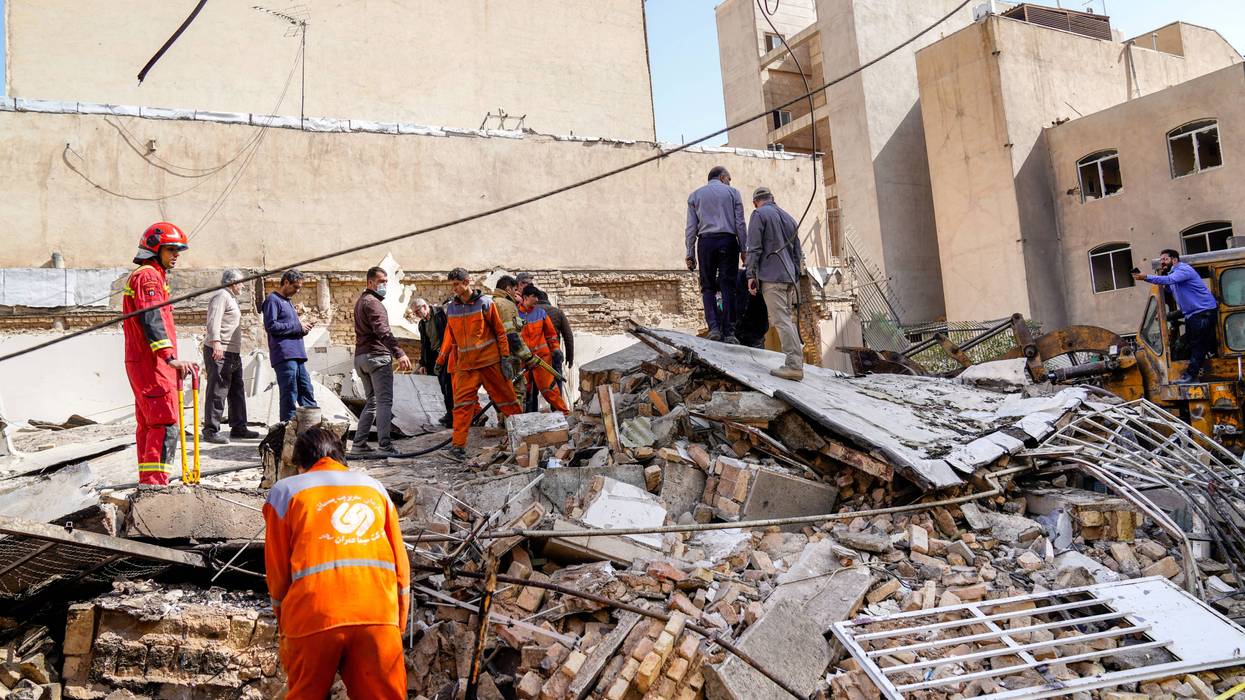
"For Iranians already suffering under repression, sanctions, and economic hardship, this escalation will mean only more pain," said the president of the National Iranian American Council.
US President Donald Trump and Israeli officials claimed Iran's supreme leader, 86-year-old Ali Khamenei, was killed in an airstrike on Saturday, along with other senior Iranian figures.
The US and Israeli militaries targeted Khamenei and other Iranian leaders with their opening barrage of strikes, part of an operation that was reportedly planned for months—with the launch date decided weeks ago—even as Trump claimed to be open to a diplomatic off-ramp. NPR, citing an anonymous source, reported that an Israeli strike killed Khamenei.
Trump made clear that Khamenei's alleged killing, which the Iranian government has not confirmed, would not stop the deadly military onslaught, which the US president launched in coordination with Israel without authorization from Congress and in clear violation of international law. The US president said explicitly in remarks early Saturday that his goal was to topple the Iranian government—something that analysts stressed is not synonymous with assassinating the supreme leader.
In a Truth Social post, Trump wrote that "heavy and pinpoint bombing... will continue, uninterrupted throughout the week or, as long as necessary to achieve our objective of PEACE THROUGHOUT THE MIDDLE EAST AND, INDEED, THE WORLD!"
Iran has responded to the US and Israeli assault with drone and missile attacks on Israel and American military bases across the Middle East. The US Central Command said in a statement that there have not yet been any reports of American casualties and that "damage to US installations was minimal."
In Iran, more than 200 people have been killed by US-Israeli airstrikes and around 700 others injured, according to the Iranian Red Crescent, a toll that's sure to grow in the coming days as rescue workers search through rubble. More than 80 people—mostly young children—were killed in an Israeli strike on a school in southern Iran.
Jamal Abdi, president of the National Iranian American Council, said in a statement that "for Iranians already suffering under repression, sanctions, and economic hardship, this escalation will mean only more pain."
“Bombing Tehran will not bring security. It will endanger civilians, place US service members at risk, empower the most repressive and violent elements inside Iran, and destabilize the region for years to come," said Abdi. "Congress must act immediately to reassert its constitutional authority and halt further escalation. The pending War Powers resolutions must come to a vote without delay. Lawmakers must make clear that there is no authorization for war with Iran."