

SUBSCRIBE TO OUR FREE NEWSLETTER
Daily news & progressive opinion—funded by the people, not the corporations—delivered straight to your inbox.
5
#000000
#FFFFFF
To donate by check, phone, or other method, see our More Ways to Give page.
Daily news & progressive opinion—funded by the people, not the corporations—delivered straight to your inbox.

One critic said the Commodity Futures Trading Commission's "cheerleading for prediction markets truly knows no bounds."
Consumer advocacy groups are accusing the Trump administration of engaging in "lawlessness on behalf of well-connected gambling interests" after the Commodity Futures Trading Commission instructed the prediction market giant Kalshi to continue operating in New York, in defiance of a federal court order.
In a Tuesday statement, the CFTC said it "exercised its emergency authority" and "ordered" Kalshi to "continue to operate in accordance with the Commodity Exchange Act’s Core Principles." The statement came weeks after a federal judge denied Kalshi's bid to prevent New York from enforcing its gambling laws against the platform, which allows users to "trade on the outcome of real-world events." The CFTC's action also came after New York sued Kalshi for allegedly "running an illegal gambling operation."
Benjamin Schiffrin, director of securities policy for the advocacy group Better Markets, said in a statement that it appears the CFTC "believes that the law does not apply to it."
"Now that New York has sued Kalshi to prevent it from circumventing state gambling laws, the CFTC has directed Kalshi to continue to operate even if a court enjoins it from doing so," said Schiffrin. "This is not the first time the CFTC has directed Kalshi to violate a court order. It did so after a Michigan state court ordered Kalshi to void, cancel, and refund some bets. The CFTC is now directing Kalshi to violate the orders of a federal court. Its cheerleading for prediction markets truly knows no bounds."
New York's lawsuit, filed late last month, seeks a court order stopping Kalshi from "operating as an unlicensed gambling business and requiring the company to pay fines, forfeit all illegal gains, and pay restitution to users."
The CFTC, headed by Trump-appointed Chairman Michael Selig, has launched a sweeping effort to prevent states from regulating prediction markets, arguing the federal agency has sole regulatory authority over the platforms. States have pushed back, accusing the CFTC of exceeding its powers.
In a statement on Wednesday, Public Citizen's Tyson Slocum called the CFTC's intervention on behalf of Kalshi in New York "a massive overreach."
“After the federal court rejected gambling platform Kalshi’s request to continue offering gambling products to New Yorkers while the state challenged their legality, the CFTC has swooped in, declaring a phony emergency, and issued an order allowing Kalshi to defy federal courts and a US state," said Slocum. "The Commodity Exchange Act should not permit such gambling platforms, and until there is reasonable and lawful regulation at the federal level, states should be the ones—not the CFTC—making the decisions on how to regulate gambling.”
"These markets risk creating perverse incentives, undermining public trust, and commodifying human suffering in ways that warrant careful scrutiny."
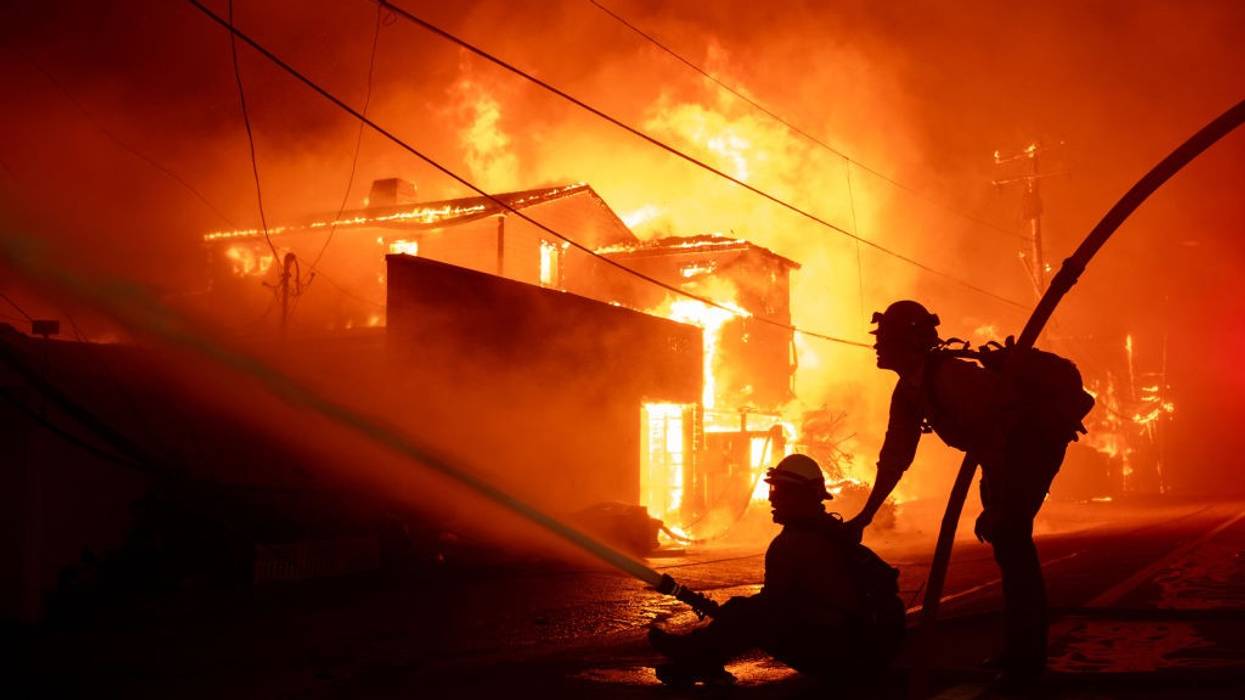
As wildfires ravaged large swaths of the Western US, a group of Democratic senators on Monday called on federal regulators to rein in prediction markets offering contracts tied to such disasters, warning that turning climate-fueled extreme weather into financial wagers creates "perverse incentives" that could motivate arson and other crimes.
In a letter to Commodity Futures Trading Commission (CFTC) Chair Michael Selig, Sens. Jeff Merkley (Ore.), Alex Padilla (Calif.), Jeanne Shaheen (NH), Adam Schiff (Calif.), Jacky Rosen (Nevada), Catherine Cortez Masto (Nevada), Martin Heinrich (NM), Ron Wyden (Ore.), and Amy Klobuchar (Minn.) wrote that "prediction markets have been enabled to expand rapidly, increasingly inviting speculation on war, political violence, disasters, and public emergencies that raise ethical and public policy concerns."
"These markets risk creating perverse incentives, undermining public trust, and commodifying human suffering in ways that warrant careful scrutiny," the lawmakers continued. "Recent public reports have highlighted how Polymarket—the largest prediction market platform in the world—accepted more than $1.2 million in bets surrounding the Palisades and Eaton fires in January 2025. These fires devastated the Los Angeles area, claiming the lives of 31 people and destroying more than 16,000 structures."
"Offering bets on destructive wildfires threatens to minimize communities’ suffering all so the rich and powerful can profit," the letter argues. "There’s also the heightened risk—according to state and local fire officials—that individuals could be tempted to commit arson in order to make sure their bets are successful."
"By offering contracts on fires, prediction market sites run the risk of encouraging people to influence fires that have already started, creating additional concerns around public safety and insider trading," the senators added.
The CFTC controversially considers Polymarket and Kalshi designated contract markets (DCMs)—over which the federal agency has control versus state gambling regimes—and is currently developing nationwide rules.
The letter's signers asked Selig:
"As the United States faces yet another record-breaking fire season this year, the [CFTC] cannot allow these prediction markets to offer unrestricted betting on wildfires," the senators stressed. "While these bets appear to be offered only on the offshore Polymarket site, it is only a matter of time before other US-based designated contract markets try to offer these. The CFTC must lead the charge to rein in these contracts in the US and offshore and put in place commonsense guardrails to prevent people from profiting as wildfires threaten communities."
In addition to wildfires, Polymarket users can place wagers related to earthquakes, hurricanes, and volcanic eruptions.
Polymarket responded to the senators' letter in a statement to Claims Journal saying, "When tragedy unfolds, people turn to the news for commentary and to Polymarket for information.”
"While we recognize the risks associated with these markets, removing them does not prevent a tragedy," the company added. "It only makes timely, market-based information less accessible to those seeking to understand what may happen next.”
The senators' letter came days after Democratic New York Attorney General Letitia James announced a lawsuit targeting Polymarket competitor Kalshi for operating as “an illegal gambling operation" in "flagrant disregard” for the Empire State’s “Constitution, penal laws, and other statutes.”
Last month, a coalition of consumer advocacy groups condemned the CFTC's attempt to allow platforms like Kalshi and Polymarket “a green light to bypass state gambling regimes.”
“Calling a sports wager an ‘event contract’ does not transform it into a legitimate tool for managing economic risk,” said Eric Naing, communications director for Demand Progress Education Fund, one of the groups decrying the regulator's approach to such companies.
"We urge the commission to withdraw this proposal, enforce the rules already on the books, and return its attention to the derivatives markets it was created to protect—and which genuinely need its attention."
A coalition of consumer advocacy groups on Friday forcefully condemned the Commodity Futures Trading Commission's move to give prediction market platforms like Kalshi and Polymarket "a green light to bypass state gambling regimes."
Users of these platforms can bet on future events, from the outcome of a sports game to the language of a political speech, by buying "shares," or "contracts." The Trump administration claims the platforms are not gambling operations, but derivatives markets because, as Chair Michael Selig has noted, "Congress has entrusted the CFTC with the sole authority to regulate" those.
Various state leaders and organizations have pushed back, arguing that "calling a sports wager an 'event contract' does not transform it into a legitimate tool for managing economic risk," as Demand Progress Education Fund communications director Eric Naing said Friday. "The CFTC should not allow federal derivatives law to become a back door for nationwide gambling."
However, the CFTC has stuck to its position, publicly backed by President Donald Trump, who has declared that the agency must have "exclusive authority" over this "major industry," which "we must protect." The Republican—who infamously bankrupted multiple casinos—notably has a company exploring how to cash in on the sector.
The CFTC announced its proposed rules for prediction markets in March, followed by an update last month. In a Friday letter to the agency chair, Demand Progress Education Fund and 10 other organizations wrote that "we oppose the proposal in its entirety. It fails as a matter of law, as a matter of policy, and as a matter of institutional competence, and we emphatically urge the commission to withdraw it."
"When Kalshi and Polymarket launched just five years ago, they were curiosities; today Kalshi alone is valued at $22 billion and processes an annualized volume of $178 billion in trades every month," the coalition detailed. "This proposal should be understood for what it is: a green light for these immense and largely unregulated financial speculation platforms to offer sports betting nationwide and aggressively market it to the public, bypassing the community and mental health protections that states and tribal authorities have spent generations building to address the risks present in this type of speculative activity."
The fact that 89% of Kalshi's total fee revenue comes from sports-related contracts "should settle the question of whether these companies are derivatives exchanges or sportsbooks," according to the coalition, which also includes Americans for Financial Reform Education Fund, Better Markets, Center for Digital Democracy, New Jersey Appleseed Public Interest Law Center, Open Markets Institute, Oregon Consumer Justice, Oregon Consumer League, Protect Borrowers, Public Good Law Center, and Revolving Door Project.
However, the organizations also challenge the CFTC's interpretation of the Commodity Exchange Act, writing that the proposal's "framing inverts the statute's logic and Congress' intent, by treating contracts as presumptively allowed unless found contrary to the public interest through a case-by-case inquiry."
If the agency charges ahead with its current plans, "ordinary people will pay the price," the groups warned. "Expanded sports betting has increased personal bankruptcies, reduced household savings, and led to higher rates of domestic violence. Prediction markets supercharge these effects: they run 24/7 in your pocket and aggressively market to young adults, who may make low bets initially but ramp up their commitment over time. Seventy percent of users lose money, and 70% of all profits go to 0.04% of traders. Those outcomes define a casino that has figured out how to escape the regulations that casinos have to follow, like responsible gaming disclosures and financial stability protections for their customers."
"The proposal also does almost nothing to address the insider trading problem that makes prediction markets much more easily manipulated than the structures of ordinary gambling," the coalition wrote—just over a week after the White House had to address one of Trump's teleprompter operators allegedly using his access to the president's speech plans to make money on Kalshi.
The organizations further argued that "even if the commission were the right institution to police all of this, it is not capable of doing so. The CFTC, which oversees $400 trillion in US derivatives markets, has a budget frozen at $365 million... Adding nationwide responsibility for sports betting, entertainment wagering, and political gambling on top of that is not a proper expansion of the agency's mission, and it would mean that the farmers, manufacturers, and energy companies who depend on well-functioning commodity markets will pay the price."
"We urge the commission to withdraw this proposal, enforce the rules already on the books, and return its attention to the derivatives markets it was created to protect—and which genuinely need its attention," concluded the coalition. "The regulation of gambling and gaming belongs with the states and tribal authorities that have the experience, the tools, and the democratic accountability to do the job."
"Public Citizen again calls on the CFTC to wake up and do its job of overseeing the prediction market industry and enforcing the insider trading laws," said the watchdog's government affairs lobbyist.
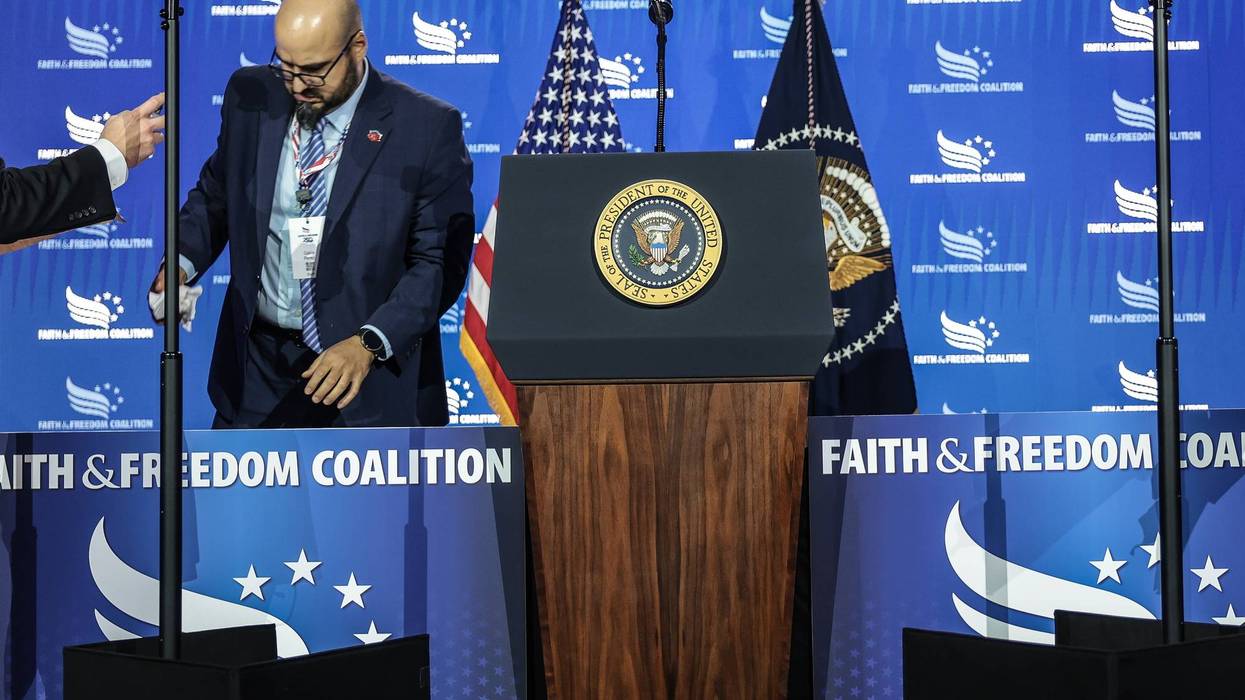
As Kalshi confirmed Thursday that it referred a White House teleprompter operator to federal regulators for flagged bets on its prediction market, President Donald Trump's press secretary denounced the suspended staffer's reported actions—without addressing any of the mounting outrage over how her boss has cashed in on his return to the Oval Office.
Citing unnamed sources, ABC News reported that Gabriel Perez, who has been one of Trump's teleprompter operators since his first presidential campaign, is in talks with federal regulators at the Commodity Futures Trading Commission (CFTC) "to settle allegations he used his inside knowledge of the president's speeches to win more than $100,000."
"Of all Trump's closest aides, sources say Perez typically has the final eyes on nearly all of the president's prepared remarks—and is often known to take last-minute edits from Trump himself," the outlet detailed. Federal investigators reportedly found that Perez bet on words or topics mentioned by Trump in more than a dozen speeches.
While the CFTC declined to comment, Robert DeNault, Kalshi's head of enforcement, told multiple media outlets that "our surveillance team promptly flagged and referred these trades to the CFTC after an exchange investigation. We have been assisting regulators on this matter and provided evidence we collected, as we do in any referral."
Asked about the insider trading allegations on Thursday—just hours before Trump was set to deliver a prime-time address on election security—White House Press Secretary Karoline Leavitt told reporters that Perez has been put on unpaid administrative leave, at the direction of the president himself, and called his reported behavior a "disgrace."
"The White House has extremely strict ethical guidelines with respect to issues like this," Leavitt also claimed.
As National Public Radio detailed Thursday:
In March, White House staff received a memo warning against using nonpublic government information to place bets on Kalshi and its biggest competitor, Polymarket.
The memo, which was reviewed by NPR, stated that it is a criminal offense for anyone inside the White House to "buy" or "sell" on the sites. Prediction markets offer "yes" or "no" contracts that change in price based on the speculation of bettors. Aides in the White House were told in the memo that misusing government information "is a very serious offense and will not be tolerated."
The US Department of Justice this year has charged at least two people for their use of Polymarket: US Army special forces soldier who allegedly gambled on the abduction of Venezuelan President Nicolás Maduro, and a Google software engineer accused of using internal company information to place bets; they've both pleaded not guilty.
However, in the case of Perez, "the CFTC alerted federal prosecutors in Manhattan, who declined to open a criminal investigation," according to ABC News. Instead, he's discussing a potential settlement that would require him "to give back his profits and refrain from making similar trades."
Responding to the reporting in a Thursday statement, Craig Holman, government affairs lobbyist at the watchdog group Public Citizen, noted that "betting on political events on the prediction markets has become highly profitable for a small handful of anonymous bettors."
"Ever since the American invasion of Venezuela and Iran, a few people have been placing very large bets moments before the events take place, and scoring millions in profits," he emphasized. "The timing and accuracy of these bets strongly suggest insider trading, probably by a few individuals in the know within the Trump administration."
The reported behavior by Perez "is further evidence of illegal insider trading on the prediction markets—an industry that the Commodity Futures Trading Commission has let operate like the Wild West," Holman continued. "Public Citizen again calls on the CFTC to wake up and do its job of overseeing the prediction market industry and enforcing the insider trading laws."
The New York Times reported in May that the Trump administration has stacked CFTC with industry insiders who have systematically "mowed down" staffers interested in providing oversight on prediction markets like Polymarket and Kalshi.
Meanwhile, according to recently unveiled annual financial disclosures, Trump made an unprecedented $2.2 billion—more than half of it from his family's cryptocurrency exploits—during his first year back in the White House.
Based on those disclosures, Trump may have finally "crossed a line that even the presidency cannot erase, violating the nation's insider trading laws," Sen. Ed Markey (D-Mass.)—who helped write those laws—highlighted in a Wednesday blog post.
Trump—who infamously bankrupted multiple Atlantic City casinos—also has plans to get into prediction markets. His social media company, Trump Media and Technology Group, said last October that it would soon launch a prediction betting marketplace on Truth Social.
Those who push for and profit from war have learned over many years that neither Republicans or Democrats will hold them accountable. A new Congress post November has a real opportunity to change that.
Now that an initial diplomatic deal between the US and Iran has been signed and intensive negotiations are under way to fully end the war, Congress should do everything possible to ensure this agreement is fully implemented. While the agreement is likely to have imperfections—thanks in large part to President Donald Trump harming US leverage and interests with a disastrous war—it would be a massive mistake to attack the deal simply because it comes from this president. The key question to consider is what steps Congress can take to ensure it becomes a durable peace—rather than merely a pause before the next round of war.
With all the human loss, destruction, and global stakes, we must stop this war, but also ensure that the conditions of peace don’t lay the groundwork for a return to conflict—or inspire its repetition elsewhere. The political and financial cost of ending this war must fall on those who aided and profited from it. The question is whether we build the safeguards to make it last.
In June 2025, it was already clear that accepting President Trump’s false narrative of absolute victory (claiming to have fully obliterated Iran’s nuclear sites) would not end US-Iran tensions. Any peace will remain fragile if the conditions that produced the war persist: the might-makes-right mindset that proved hollow against Iran’s strategic resilience; the preference for militarism over diplomacy, from Trump’s Joint-Comprehensive Plan-of-Action withdrawal to Biden’s failure to pursue a serious alternative to “maximum pressure” sanctions; the unconditional support for Israel even when it runs counter to US interests.
It is highly possible that during the initial 60 days of negotiations contemplated in the MOU, Israel will continue military action against Iran or in Lebanon to provoke a reaction and restart the cycle. The US cannot fully control what Israel would do. But it can stop aiding and abetting the war, which would make it far more difficult for Israel to sustain a campaign to spoil diplomacy.
The problem is not a single president or party. It is the power structures that ensure those who profit from war never pay its cost, regardless of who holds office.
Military action against Iran failed at producing any of its intended objectives, while it incurred costs that are in some cases irreversible and in others generational. The lives lost will not come back. The destruction of civilian infrastructure will shape Iranian society for decades. And the war has granted perverse legitimacy to a brutal regime, recasting the government of the Islamic Republic not as the oppressor it is, but as David against Goliath, the underdog resistor against foreign aggression. Diplomacy produced better results at far lower cost on every measure that matters.
This war confirmed what few wanted to acknowledge: that US military bases across the Gulf, sold as a projection of strength, are also a profound vulnerability. Each base became a potential target, each host government a hostage to escalation. For many Gulf governments, American military backing is a useful substitute for political legitimacy at home. Yet the war exposed the limits of that bargain: The same shield that promised security also turned them into targets.
Turning the Strait of Hormuz into a battlefield made this dynamic undeniable. Its closure hit energy markets and created rare pressure for de-escalation from Gulf elites who felt the costs directly. But while some elites were squeezed, others made billions. The system is designed so the profiteers are never the ones paying the ultimate price. That is exactly why temporary market pressure is not a substitute for structural accountability to prevent future conflicts.
Those who profit from war have learned over many years that neither Republicans or Democrats will hold them accountable. A new Congress post November has a real opportunity to change that—to serve US interests, meaning the American people, not a select elite. With $72 billion spent on the Iran war, a $1.5 trillion military budget, and war contractors more powerful and unaccountable than ever, Congress needs to investigate all war profiteers, from arms contractors to companies like the drone firm backed by the Trump sons that sought to sell interceptors to the very Gulf states being attacked, a direct conflict of interest.
In a relatively new dystopian innovation in war capitalism during the war, prediction markets like Polymarket saw millions in bets on everything from the timing of strikes to casualty estimates. Suspected insider accounts netted $2.4 million on Iran War bets with a 98% win rate. This kind of betting on war outcomes by those with proximity to power blurs the line between forecasting and profiteering. It must also be addressed.
We do not even have to wait for elections in November to start this process. The growing support for War Powers resolutions with majority house support just this month, and the 40 senators backing the Joint Resolution of Disapproval to withhold certain arms from Israel, show what may be possible when Congress does its job. Congress should condition support, block escalation, and hold hearings on the legality of what has been done.
Such measures would serve a deeper purpose: signaling that a new Congress, and eventually a new administration, can offer something more than a return to the previous status quo: a set of concrete actions that change how war is authorized, how money is spent, and who benefits.
The problem is not a single president or party. It is the power structures that ensure those who profit from war never pay its cost, regardless of who holds office.
Corruption and war profiteering are not merely governance issues. They are theft from the American people, through unaccountable war spending, the unaffordable prices it produces, and an elite class that never pays for the policies it pushes. A Congress that treats corruption and war profiteering as harm against the public and responds accordingly would demonstrate what a functioning democracy actually looks like.
The Trump administration last week sued Minnesota after it passed a law banning prediction markets from operating in the state.
A Sunday report in The New York Times revealed how the Trump administration is using a key government agency to shut down any efforts to regulate online betting markets such as Kalshi and Polymarket.
According to the Times, the administration has stacked the Commodity Futures Trading Commission (CFTC) with industry insiders who have systematically "mowed down" staffers at the agency who have expressed interest in providing oversight on prediction markets.
Among other things, the report documented how multiple officials at CTFC have been put on leave simply for asking questions about the betting markets' ties to members of President Donald Trump's family or for having past experience enforcing regulations related to cryptocurrencies.
What's more, the Times found that even being an industry insider isn't enough to guarantee good standing in the agency. Brian Quintenz, who was tapped by Trump to lead CTFC last year, saw his nomination withdrawn after he drew the ire of Cameron and Tyler Winklevoss for refusing to support their cryptocurrency exchange's complaint against the agency.
Revelations about industry insiders rolling over regulators at CTFC come as the Trump administration is fighting any attempts by states to regulate prediction markets.
As explained in a Thursday report from CNBC, the Trump administration is "fighting a multi-front battle to stop the state actions and assert its regulatory authority," with CTFC arguing that it is "the only entity that can regulate" betting platforms.
16 different states are engaged in legal proceedings against the platforms, and Minnesota last week passed a law to ban them outright, which immediately drew a lawsuit from the administration.
The new Minnesota law, which is scheduled to take effect in August, bans prediction markets "from hosting, creating or advertising in the state," according to ABC News.
In an interview with ABC, Minnesota state Rep. Emma Greenman (D-63B) said she authored the legislation because she has grown increasingly concerned about young people in the state seeing their finances drained from placing online bets.
"We're seeing studies come out that say [the companies] are targeting 18- to 21-year-olds," said Greenman, "and we are seeing gambling starting younger and younger."
CFTC Chair Michael Selig last month warned states against trying to regulate prediction markets, which he said would "circumvent the clear directive of Congress."
"Our message to Wisconsin is the same as to New York, Arizona, and others," said Selig. "If you interfere with the operation of federal law in regulating financial markets, we will sue you."
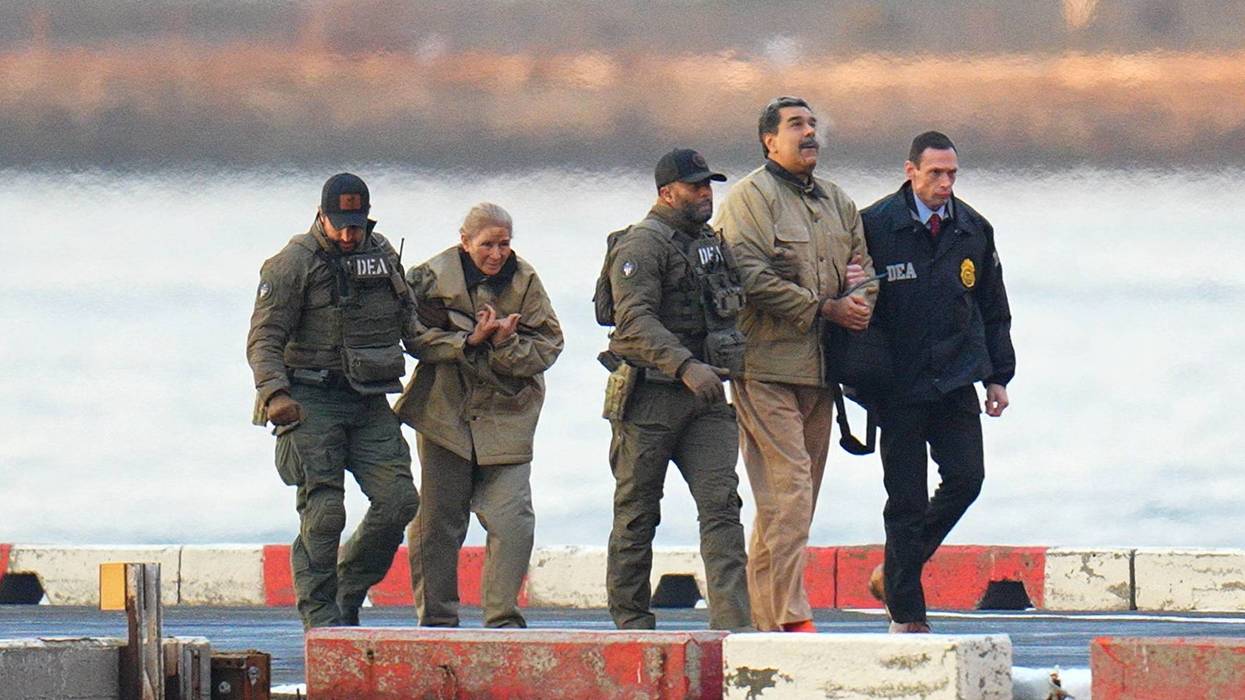
One House Democrat said the soldier charged with placing successful bets using classified information was "probably just copying what he's seeing elsewhere."
The US Justice Department announced Thursday that an American special forces soldier has been arrested and charged for pocketing over $400,000 by betting, on the basis of classified information, on the timing of the Trump administration's illegal abduction of Nicolás Maduro earlier this year.
Gannon Ken Van Dyke, an active-duty soldier in the US Army who was involved in planning and executing the operation to kidnap Maduro in early January, was charged with "unlawful use of confidential government information for personal gain, theft of nonpublic government information, commodities fraud, wire fraud, and making an unlawful monetary transaction," the Justice Department said in a statement.
Van Dyke placed a total of 13 bets worth roughly $33,000 on the prediction platform Polymarket. All of his bets took the "yes" position on questions pertaining to whether US forces would invade Venezuela and remove Maduro before the end of January.
The unsealing of the Van Dyke indictment came amid mounting concerns that insiders at the Trump administration—which experts and watchdogs have deemed the most brazenly corrupt administration in US history—are profiting off nonpublic knowledge.
"This soldier was probably just copying what he’s seeing elsewhere," said Rep. Raja Krishnamoorthi (D-Ill.). "The culture of insider trading and corruption starts at the top and is permeating everywhere and everything. This is what people hate about our government now."
One expert gestured at the absurdity of a soldier who placed bets on the Venezuela operation being arrested—but not those in charge of ordering the operation itself, which was a flagrant violation of international law.
"I hear someone was arrested in connection with the patently illegal invasion of Venezuela," wrote Brian Finucane, senior adviser to the US Program at the International Crisis Group. "Can't wait to see who is going to be held accountable for this lawless use of military force..."
President Donald Trump, who has profited massively from his second term in the White House, told reporters on Thursday that he wasn't aware of the charges against Van Dyke. The president then asked, "Was he betting that they would get [Maduro] or they wouldn't get him?"
"That’s like Pete Rose betting on his own team," said Trump, referring to the Major League Baseball player and manager who was banned for gambling on games. "Now, if he bet against his team, that would be no good."
Reporter: There was a special forces soldier involved in the capture of Maduro who was arrested on suspicion of insider trading. Are you concerned that federal employees are betting on these reduction markets and potentially getting rich?
Trump: Well, I don't know about it. Was… pic.twitter.com/zmPNGuVL1s
— Acyn (@Acyn) April 23, 2026
Suspiciously timed bets on both the Maduro abduction and the US military assault on Iran have sparked alarm about potentially widespread, lucrative insider trading at the Trump administration and among those in the president's orbit.
Last month, The Financial Times reported that Pentagon Secretary Pete Hegseth's broker tried to make a multimillion-dollar investment in weapons stocks in the weeks leading up to the US-Israeli attack on Iran.
"The Iran War has become a corruption racket for the people close to President Trump," said Sen. Chris Murphy (D-Conn.), the lead Senate sponsor of legislation that would prohibit "wagering on government actions, terrorism, war, assassination, and events where an individual knows or controls the outcome."
“After you make us lose $900,000, we will invest no less than that to finish you.”
An Israeli journalist said he's received death threats from gamblers demanding he change an accurate report about an Iranian missile strike in order to help them win a bet on the prediction app Polymarket.
On Monday, Emanuel Fabian, a military correspondent for The Times of Israel, wrote that he was confused when he suddenly received several requests to correct a report on March 10 that an Iranian missile had struck Israeli territory.
Fabian said he'd based his report on information from "rescue services" as well as "footage that emerged showing the massive explosion caused by the missile’s warhead." No injuries were reported from the impact, as the missile struck an empty area outside the city of Beit Shemesh, near Jerusalem.
"What I thought was a seemingly minor incident during the war has turned into days of harassment and death threats against me," Fabian said.
Hours after posting the report to the paper's live blog, Fabian said he received an email, from a user identifying as Aviv, claiming that what had hit the ground was not a missile, but an interceptor fragment.
Fabian contended military sources had confirmed it was a missile and that the impact was far too large to have been from only an interceptor.
He then received another email from a user named Daniel with the exact same gripe. Daniel described having an "urgent request" for the report to be changed and told Fabian that by changing it, "you would be helping me, many others, and, of course, the state of Israel."
Daniel sent Fabian several more emails over the next couple of days demanding a correction, and the tone continued to grow more urgent.
"I ask again, if you could handle this as soon as possible, it would help us a lot," Daniel said on Thursday. "It’s really important, if possible, still this morning."
Other users messaged him with the same complaint over email and the messaging app Discord. It was only when Fabian received more angry replies from two more users on X that he realized what was going on.
"Checking those X accounts, both appeared to be involved in gambling on the Polymarket betting site," he explained. "As far as I now understand, the emails I received were intended to confirm whether or not a missile had hit Israel on March 10 in order to resolve a prediction on Polymarket."
Polymarket is a cryptocurrency-based prediction market where users buy and sell shares tied to real‑world events, enabling them to bet on the likelihood of future events, including those in wartime.
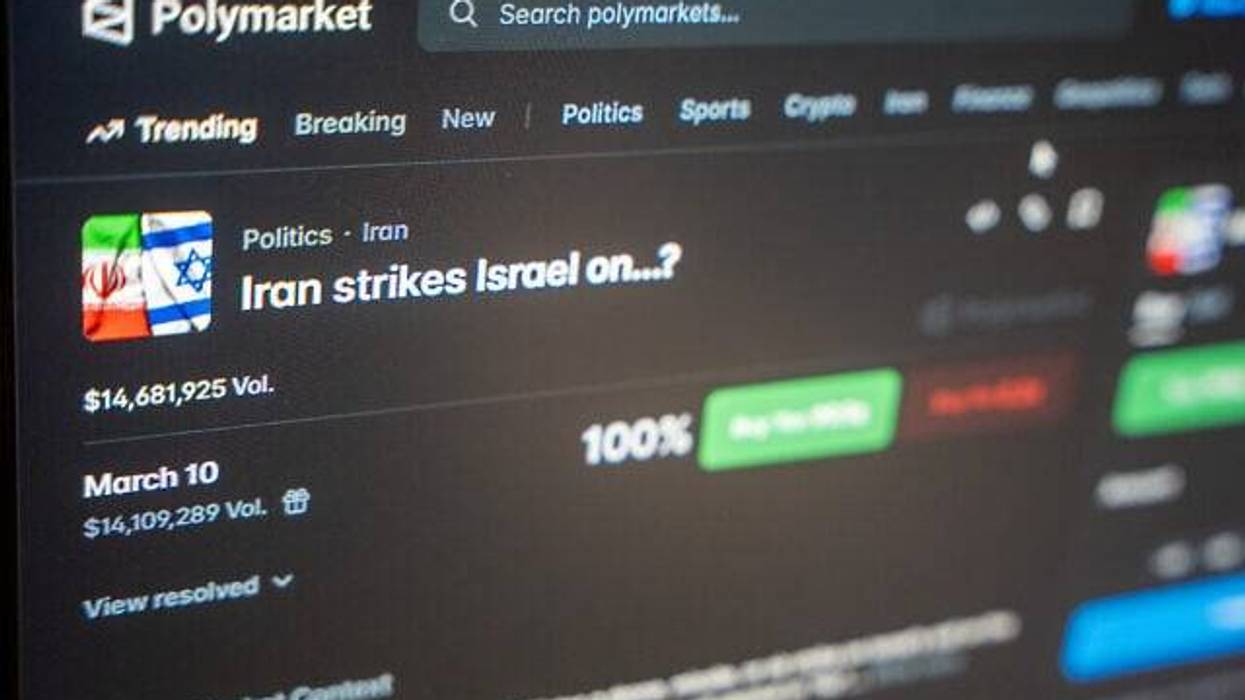
Fabian found that the people clamoring for his attention had put money on whether Iran would strike Israel on March 10. "This market will resolve to ‘Yes’ if Iran initiates a drone, missile, or air strike on Israel’s soil on the listed date in Israel Time (GMT+2). Otherwise, this market will resolve to ‘No’,” the website explained. However, it stipulates that intercepted missiles would not receive a "yes" verdict.
As of March 16, gamblers had wagered more than $14 million on the event.
Over the next several days, requests continued to roll in from people demanding a correction to the story.
One user presented a fabricated email, purportedly from Fabian to Daniel, stating that the Israel Defense Forces had confirmed the missiles were intercepted and that he planned to correct the story.
Fabian was later approached by a colleague at another publication, who said his friend had asked him to reach out for the story to be changed. After being confronted, the friend admitted that he had money on the wager too, and offered some of his winnings to Fabian's colleague if he could persuade the journalist to change the story.
By the weekend, the messages had become violent. Fabian said a user identified as Haim accosted him with several threatening messages in Hebrew over WhatsApp:
"You have exactly half an hour to correct your attempt at influence,” Haim wrote. "Despite the fact that you received countless inquiries—you insist on leaving it that way.”
“If you do not correct this by 01:00 Israel time today, March 15, you are bringing upon yourself damage you have never imagined you would suffer,” he threatened, in a very lengthy message.
Haim also attempted to call me via WhatsApp multiple times during the night, before sending me more messages.
“You have no idea how much you’ve put yourself at risk. Today is the most significant day of your career. You have two choices: either believe that we have the capabilities, and after you make us lose $900,000 we will invest no less than that to finish you."
Haim also threatened Fabian by referring "with specific details" to his home address, his parents, and family.
After receiving several more threats and being contacted by someone purporting to be a "lawyer," Fabian went to the police, who he said are now investigating the situation.
The threats continued into Monday, after Fabian ran into a bomb shelter amid another Iranian missile attack.
"The attempt by these gamblers to pressure me to change my reporting so that they would win their bet did not and will not succeed," Fabian said. "But I do worry that other journalists may not be as ethical if they are promised some of the winnings."
He said that journalists are in a unique position to "exploit their knowledge for insider trading on the platform."
Polymarket and other similar "prediction market" apps like Kalshi have come under similar scrutiny in the United States for allowing users to place suspiciously timed bets on military actions taken by the Trump administration.
Earlier this month, the watchdog group Public Citizen sent a letter to the chair of the Commodity Futures Trading Commission (CFTC), which regulates prediction markets, outlining a series of "highly suspicious" bets made just before President Donald Trump launched strikes against Iran on February 28. Among the big winners were what the Wall Street Journal described as "six suspected insiders,” whose immaculately timed wagers netted them a $1.2 million profit.
In January, another trader made more than $436,000 after betting that Veneuzelan President Nicolás Maduro would be removed from power just hours before Trump launched an operation to remove him.
In the face of state regulations, the Trump administration has sought to ease restrictions on betting apps. The Trump family's media company offers access to prediction markets on its Truth Social platform via Crypto.com. Meanwhile, Donald Trump Jr. is an adviser to both Polymarket and Kalshi.
US Sen. Chris Murphy (D-Conn.), who has emerged as a leading critic of prediction markets, described Fabian's account as a "bone-chilling story."
The senator said: "We need to end prediction markets for government action. NOW."

Prediction markets represent a further commodification of war, violence, and death—one that risks manufacturing consent for more violence by providing people with a financial incentive for it.
On February 27, more than 150 accounts placed bets on Polymarket accurately predicting that the US would strike Iran by the following day. Of these accounts, at least 16 made a profit of over $100,000, and at least 109 made over $10,000. The New York Times found one anonymous account that had spent $60,000 in the days before the strikes and made nearly half a million dollars.
Given the timing of these bets, this has raised concerns about insider trading. Bubblemaps, an analytics platform that turns blockchain data into interactive visuals, found a cluster of linked accounts that made $1.2 million by making very specific bets with near-perfect accuracy. This includes betting that the US and Israel would attack Iran on February 28.
What’s more, their analysis found that this was not an isolated incident. For instance, in June 2025, two of these accounts bet $10,000 and $100,000 that Israel would launch military strikes against Iran just days before they did. Those strikes were part of a surprise attack that Israel had been covertly planning for months.
This is a serious issue, but let’s be clear: The idea that this kind of insider trading is not happening under the most overtly corrupt presidential administration in US history is quite frankly laughable. Indeed, the Trump administration is actively supporting Polymarket and Kalshi against ongoing efforts by states to ban them. Coincidentally, Donald Trump Jr. has invested in Polymarket through his venture capital firm and is a strategic advisor for Kalshi. Any decision that benefits those companies would likewise benefit Trump’s family.
An outright ban won’t change the fact that we are a nation where millions of people believe it is completely fine to gamble on death.
But the problem here is larger than the Trump fraud network. Prediction markets represent a further commodification of war, violence, and death—one that distracts from the injustices of war and the suffering of its victims. It is a commodification that risks manufacturing consent for more violence by providing people with a financial incentive for it. While it stopped amid public backlash, Polymarket was allowing people to place bets on whether a nuclear bomb would be detonated by the end of 2026 or 2027. Over $800,000 worth of bets had been placed before the market was taken down.
Betting on such grotesque violence is not only morally repugnant in itself, it risks desensitizing us to the true human cost of that destruction. What’s happening in Iran is not a just war being waged against a legitimate threat. America is not freeing the Iranian people—it is murdering children and destroying a nation without any regard for who will pick up the pieces. This is senseless carnage carried out by two morally bankrupt countries against a nation that, regardless of one’s feeling toward it, did everything it could to prevent this war.
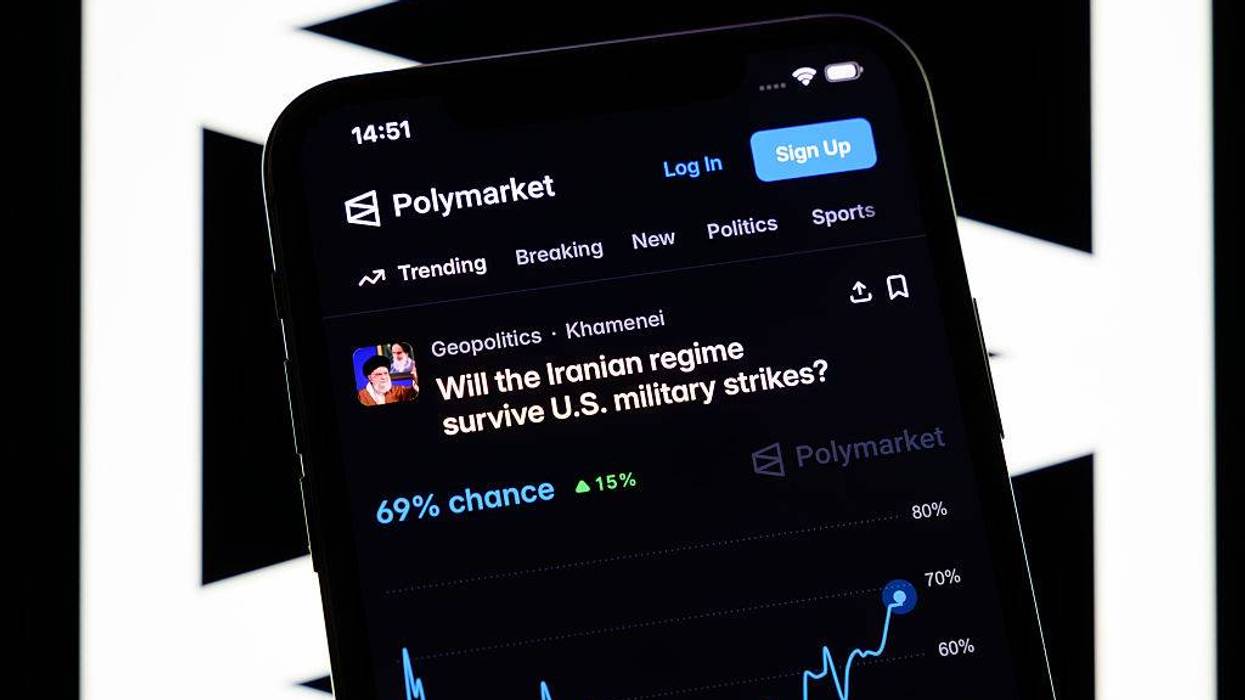
None of these deaths had to happen. And yet, companies like Kalshi and Polymarket were fueling people’s desires for violence. In January, Kalshi began taking bets on whether Ayatollah Ali Khamenei would be “out as Supreme Leader” before February 1, March 1, April 1, July 1, or September 1, 2026. This was a lucrative market that attracted more than $54 million in trades. When his assassination was confirmed on February 28, those who had put money on “before March 1” thought they had "won" big.
Instead, Kalshi invoked a “death carveout” clause to avoid paying customers their "winnings." A Kalshi spokesperson said that the company “included every precaution on this market to make sure people could not trade on the outcome of death.”
Their consumers disagree. They filed a lawsuit against Kalshi alleging that they were drawn to the “Khamenei Market” because they understood “with an American naval armada amassed on Iran’s doorstep and military conflict not merely foreseeable but widely anticipated,” Khamenei would “most likely” be removed from office “through his death.”
In other words, these people were intentionally betting that the US would kill Khamenei and are upset because their earnings were denied. This is true regardless of what Kalshi intended or whatever precautions it took. The market itself created the possibility—the perverse hope—that Khamenei’s death might enrich their own.
For those bettors, Khamenei’s assassination was a personal victory; the injustice was that Kalshi denied them their rightful spoils. A business executive in New York told the Washington Post that he had placed two bets totaling $3,460 that Khamenei would be “out” by March 1 and was expecting to "win" $63,000. He remarked: “I was booking my trip to Courchevel. Then they changed the rules… and everybody got screwed.”
Except not everyone got screwed: the Iranian people did. They are the ones who lost everything. That business executive—almost assuredly overpaid—will not miss those "winnings." But Iranians will miss the loved ones they lost. Those deaths are an absolute loss. They can never be recovered, replaced, or recuperated.
These markets should be banned, and there is some congressional momentum on that issue. But an outright ban won’t change the fact that we are a nation where millions of people believe it is completely fine to gamble on death. We are a nation whose government actively posts inane memes and jokes about the illegal war it is conducting in clear violation of international law.
Things must change: We cannot allow ourselves to be driven to moral depravity by a conman and his lackeys. We must end this illegal war. We must help the Iranian people rebuild their country. We must become, in short, a nation that condemns deaths and cherishes life.

"Several very substantial bets were placed in the last-minute moments prior to the February 28 attack," said a representative for Public Citizen.
A consumer watchdog group is calling on the federal agency that regulates prediction markets to investigate what it says are a series of "highly suspicious bets" placed on President Donald Trump's war with Iran.
In a letter sent on Thursday to Michael Selig, the chair of the Commodity Futures Trading Commission (CFTC), a representative for the group Public Citizen pointed out that users have been able to make off with six-figure winnings from betting on political outcomes using platforms like Kalshi and Polymarket, which "advertise that you can bet on almost anything, anywhere."
"While bets on the future of the Iranian regime had been sporadic and imprecise for months before the invasion, several very substantial bets were placed in the last-minute moments prior to the February 28 attack," wrote Public Citizen's government affairs lobbyist Craig Holman.
"For most of the year, bets of [Iranian Supreme Leader Ayatollah Ali Khamenei] being removed from power were long shots and low-balled guesses," Holman said. "In just the few hours before public announcement of the February 28 attacks, the odds and amount of the bets changed radically, rising from small bets at less than 25% to a few very large bets at over 50%. In the end, a few anonymous bettors hit the nail on its head and became very wealthy."
Holman pointed to a report from NPR that an anonymous account with the username “Magamyman” made more than $553,000 placing bets on Polymarket just before the Iranian leader was killed by an Israeli strike Saturday.
The Wall Street Journal, meanwhile, reported findings from the crypto analytics firm Bubblemaps, which identified “six suspected insiders” who had won a $1.2 million profit on a US strike through Polymarket. As the Journal wrote:
Most of them bet on a strike by February 28, which turned out to be the exact date of the operation, the firm said. One such user bet $26,000 and won over $200,000, a return upward of 657%.
These users’ bets were among half a billion placed on Polymarket alone regarding the precise timing of US strikes on Iran.
Sen. Chris Murphy (D-Conn.) said "it’s insane this is legal" and that "people around Trump are profiting off war and death." He added that he was "introducing legislation ASAP to ban this."
Holman asked Selig to identify the users who placed the highly lucrative bets and who, within the Trump and Netanyahu administrations, may have been privy to insider knowledge about the strikes.
The Trump family is deeply intertwined with the world of prediction markets. The president's media company, earlier this year, partnered with Crypto.com to launch its own prediction platform called "Truth Predict." Meanwhile, Donald Trump Jr. is an adviser to both Polymarket and Kalshi.
The president's CFTC chair, Selig—who has appointed the CEOs of prediction market platforms as advisers—has sought to shield betting markets from regulatory scrutiny, describing his goal as ushering in "the Golden Age of American financial markets."
Last month, facing what he called “an onslaught of state-led litigation,” Selig made the legally questionable assertion that Congress had given his agency the exclusive authority to regulate these platforms, not as tightly controlled gambling hubs but as commodities markets, which have much looser rules.
The Iran war is not the first time that mystery users have walked away with massive hauls after placing fortuitously timed bets on Trump's military operations. In January, a user won $436,000 on a bet that Venezuelan President Nicolás Maduro would be ousted by the end of the month, which they'd placed just hours before Trump's operation to remove him from power.
“Allowing prediction market platforms to bet on virtually anything, any time, is a recipe for disaster,” Holman said. “The American people should not have to wonder whether government officials are exploiting their access to classified information to make a quick buck. The CFTC must act swiftly to regulate platforms like Kalshi and Polymarket in order to protect the public.”