

SUBSCRIBE TO OUR FREE NEWSLETTER
Daily news & progressive opinion—funded by the people, not the corporations—delivered straight to your inbox.
5
#000000
#FFFFFF
To donate by check, phone, or other method, see our More Ways to Give page.
Daily news & progressive opinion—funded by the people, not the corporations—delivered straight to your inbox.
David Carle (Leahy) 202 224-3693
Michael Briggs (Sanders) 202 224-5141
Paul Heintz (Welch) 202 226-8346
Sue Allen (Shumlin) 802 828-3333
Flanking
Gov. Peter Shumlin at a Statehouse press conference, the Vermont
congressional delegation today announced federal legislation to let
states in 2014 provide better health care at less cost.
A
provision by U.S. Sen. Bernie Sanders (I-Vt.) in the new federal health
care law allows states to propose pilot programs in 2017. Now Vermont's
congressional delegates - Sen. Patrick Leahy (D), Sanders, and Rep.
Peter Welch (D) - have drafted a bill
to authorize federal waivers three years sooner. Sanders will introduce
the bill in the Senate for himself and Leahy, and Welch will introduce
the bill in the House.
Sanders
said, "At a time when 50 million Americans lack health insurance and
when the cost of health care continues to soar, it is my strong hope
that Vermont will lead the nation in a new direction through a
Medicare-for-all single-payer approach. The goal is clear: quality,
cost-effective health care for all Vermonters. This is essential not
only for the wellbeing of all Vermonters but for job creation. We must
do all we can to lower the crushing costs of health care that are now
devastating Vermont businesses and their employees. I look forward to
working with Sen. Leahy and Rep. Welch to get the appropriate waivers
and flexibility for us to go forward toward a single-payer system."
Welch
said, "When Vermont innovates, the nation often follows our lead.
Providing Vermont and other states with the flexibility to build upon
health care reform will result in better care and greater access at a
lower cost. Allowing us to become a laboratory for innovation and
excellence will help Vermonters, while once again allowing us to lead
the way."
Leahy
said, "While some in Washington are trying to turn the clock back on
health reform, Vermont instead is moving forward. This state waiver
bill will give Vermont and other states the choice to go above and
beyond what the federal health care law does by devising their own
reforms. Vermont has always been a leader in health care quality and
access, and this bill will give our state the flexibility we want to
offer Vermonters the best care and coverage while controlling costs."
Shumlin said The Affordable Care Act
"will bring Vermont critical money to make our health care system work
better and to cover some of the uninsured. We want to do it better and
faster than the federal law contemplates. We want to control costs and
cover everyone. I am so pleased that our congressional delegation
supports us in this effort, and I thank them for introducing this
important legislation. This is just the beginning of this process, and
there are other waivers we will need to get it done. If we work
together, I am convinced we can persuade the federal government they
should not stand in our way."
This
press conference came one day before a report is to be delivered to the
state Legislature by William Hsiao, the Harvard University economist,
outlining health care options for Vermont that could require a federal
waiver to be implemented.
The
new national health law will provide insurance for 32 million more
Americans and make other significant strides, but Leahy, Sanders and
Welch said Congress and the Obama administration should let states make
additional improvements.
Under
their bill, states would be able to seek U.S. Health and Human Services
Department approval to implement pilot health care systems beginning in
2014. To qualify, state plans would have to be at least as comprehensive and affordable as the federal model and cover at least as many people.
States could not offer lower quality or less affordable coverage. A
single-payer system like Vermont is considering or any other state
initiative could not cause the federal government to incur more costs.
The
waiver provision also requires HHS to create a coordinated process so
states in a single application also could seek waivers already available
under Medicare, Medicaid, and the children's health insurance program.
A fact sheet on the new "State Leadership in Healthcare Act" is available here.
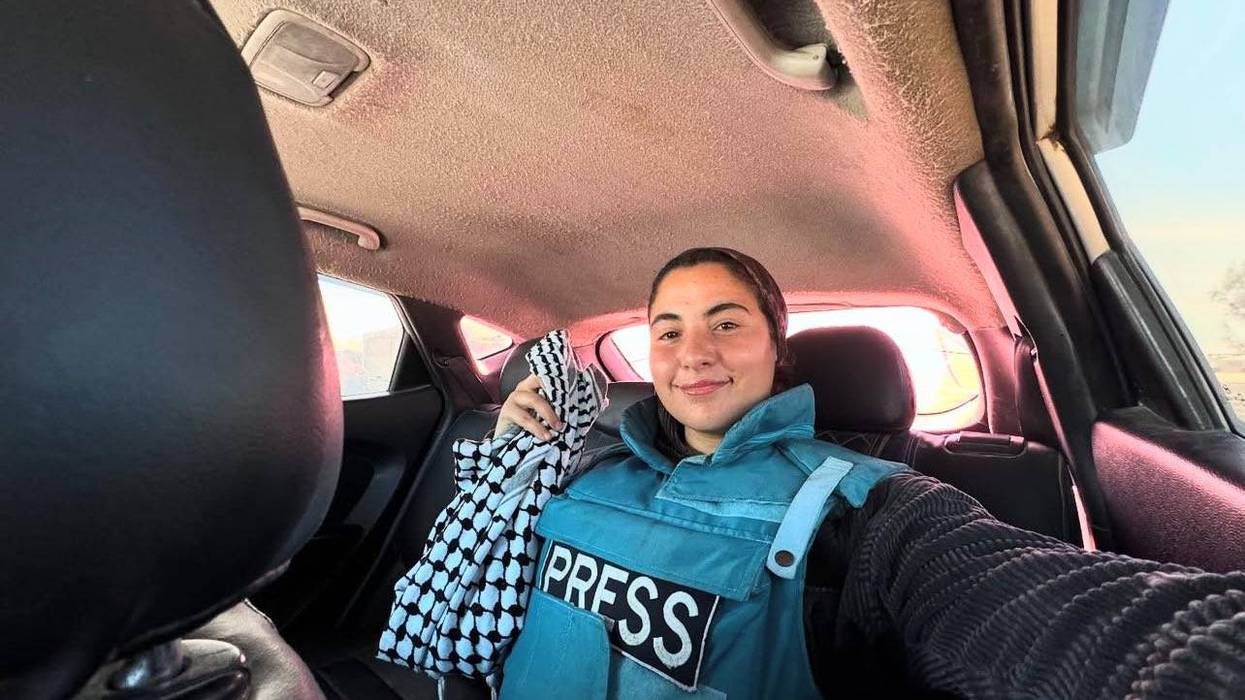
The ban of journalist Bisan Owda comes amid an alleged wave of censorship after the platform was taken over by a clique of Trump-aligned investors, including the pro-Israel megadonor Larry Ellison.
Bisan Owda is still alive, but not on TikTok.
The award-winning Palestinian journalist and filmmaker found that her social media account had been suddenly terminated days ago, as part of an alleged wave of censorship following the platform's formal takeover by American investors last Thursday.
“TikTok deleted my account. I had 1.4 million followers there, and I have been building that platform for four years,” the 28-year-old Owda said in a video posted to her other social media accounts on Wednesday, just days after TikTok's new owners assumed control.
“I expected that it would be restricted," she said, "not banned forever."
Owda had achieved a massive following for her daily vlogs documenting life amid Israel's genocide in the Gaza Strip. She showed herself constantly on the move, one of the nearly 2 million residents in the strip forcibly displaced by the military onslaught, and gave viewers a firsthand account of Israel's attacks on hospitals, its leveling of neighborhoods, and its assassinations of journalists.
Each of them began with the signature phrase: "It's Bisan from Gaza, and I'm still alive."
A documentary with that title, produced with the Al Jazeera media network, won multiple awards, including an Emmy in 2024 for news and documentary filmmaking.
Owda's videos, which are mostly in English, gave Western audiences a humanizing glimpse into the lives of Palestinian people victimized by the war. She was one of many Palestinians who shared their stories on platforms like TikTok, which American legislators blamed for the titanic shift in youth public opinion against Israel since the genocide began in October 2023.
In 2024, then-Sen. Mitt Romney (R-Utah) infamously justified the bipartisan push to ban the platform by decrying the "overwhelming" volume of "mentions of Palestinians" on it.
Others, including Sen. Josh Hawley (R-Mo.) and then-Sen. Marco Rubio (R-Fla.), who is now the secretary of state, expressed similar sentiments that TikTok was a critical front in an information war for the minds of young people.
In the video announcing her ban, Owda drew attention to comments by Israeli Prime Minister Benjamin Netanyahu, who said in September that social media was the most important "battlefield" on which Israel needed to engage.
Netanyahu said the "most important purchase" going on at the time was the sale of TikTok from the Chinese company ByteDance to American investors, which had been enforced via an executive order from US President Donald Trump.
Among those investors was Oracle CEO Larry Ellison, who now holds both a 15% stake in TikTok and the primary responsibility for data security and algorithm oversight. In addition to being a major donor to Republican causes, Ellison describes himself as having a "deep emotional connection to the state of Israel," has been listed as the largest private donor to Israeli military causes, and is a close personal friend of Netanyahu.
Other major stakeholders include the US-based private equity firm Silver Lake, which has close ties to Trump's son-in-law Jared Kushner, and the Emirati investment firm MGX, which contributed an unprecedented $2 billion in a deal to help Trump's lucrative cryptocurrency startup, World Liberty Financial.
Owda also highlighted comments made by Adam Presser, the new CEO of TikTok, describing changes he'd help to make to the platform while working as its head of operations in the US that limited use of the word "Zionist" in a negative context.
"We made a change to designate the use of the term 'Zionist' as a proxy for a protected attribute as hate speech," Presser said. "So if someone were to use 'Zionist,' of course, you can use it in the sense of you're a proud Zionist. But if you're using it in the context of degrading somebody, calling somebody a Zionist as a dirty name, then that gets designated as hate speech to be moderated against."
The apparent censorship of Owda comes as many other users report that their content critical of the Trump administration has been throttled in the days following the takeover by the new owners.
Users have found themselves unable to upload content critical of US Immigration and Customs Enforcement (ICE) and unable to send direct messages containing the word "Epstein," referring to the late sex trafficker Jeffrey Epstein, whose relationship with Trump has come under scrutiny of late.
TikTok's owners have denied censoring content, blaming the issues on a power outage at an Oracle data center.
Following these reports, Democratic California Gov. Gavin Newsom launched an investigation into whether the platform was censoring anti-Trump content.
According to CNBC, the daily average number of users deleting TikTok has shot up by 150% since the new owners took over.
Over the past week, hundreds of thousands of users have flocked to a new platform called UpScrolled, which was launched in July 2025 by Palestinian-Australian app developer Issam Hijazi, who said he created it as a counter to the overwhelming presence of pro-Israel content on established platforms.
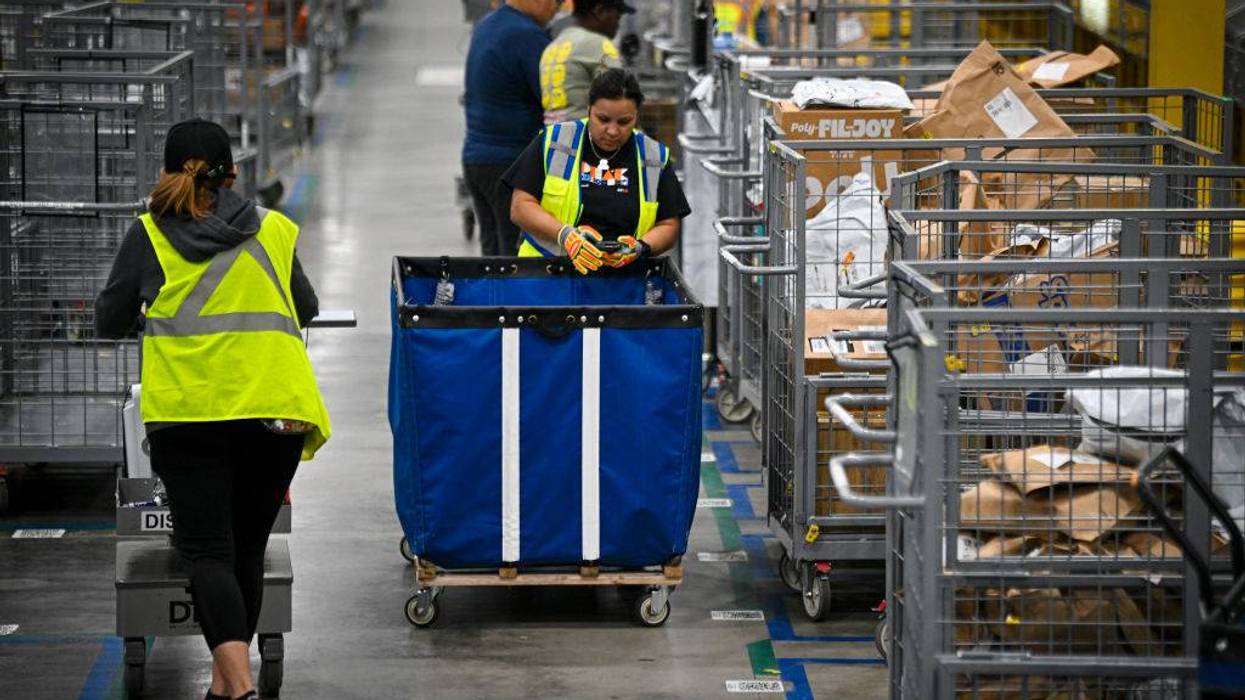
"When taking into account predicted downward revisions, the data says we’re losing jobs," said one economic analyst.
Although President Donald Trump has given himself glowing marks for his economic record, the US job market has continued showing signs of weakness amid recent layoffs from some major employers.
The Associated Press on Thursday published a roundup of corporate layoffs that have been announced in recent months, highlighted by Amazon, which announced it was cutting an additional 16,000 jobs on Wednesday; United Parcel Service, which on Tuesday revealed plans to slash 30,000 jobs; and chemical maker Dow, which on Thursday said it would be reducing its workforce by 3,000.
And as reported by CNBC, retailer Home Depot announced on Wednesday that it was eliminating 800 positions as it struggles with slower sales that company executives blame on a dampened housing market caused by high interest rates.
The latest layoffs are not merely anecdotal data, but symbolic of a labor market that has been stuck in a rut for several months. As noted by economic analyst Steve Rattner in a Thursday social media post, average monthly employment growth has been "slightly above zero" ever since Trump first announced his market-shaking tariffs in April.
"When taking into account predicted downward revisions," Rattner added, "the data says we’re losing jobs."
This week's announced Amazon layoffs drew the ire of Americans for Tax Fairness, which pointed out that the Jeff Bezos-founded online retail giant has been the beneficiary of several big-ticket tax breaks for more the last several years.
"We've given Amazon $9.5 BILLION in tax breaks over the last 7 years," the group explained. "And for what? Their CEO made $263 million from 2018-2024. Since 2013, they've spent $857 million on stock buybacks and $161 million on lobbying. And they just announced they're laying off 16,000 workers."
The Washington Post, which is owned by Bezos, is reportedly bracing for layoffs of its own.
A Thursday report from Semafor revealed that the Post's White House reporters wrote a letter to Bezos imploring him to back off a plan to make substantial cuts throughout the paper's staff.
"The effort from the Washington Post’s White House reporters comes as staffers are scrambling to preserve their jobs, with layoffs set to hit the newsroom hard in the coming weeks," Semafor reported. "Unconfirmed rumors have circulated in recent days about the scope of the cuts, which are expected to be as high as 300."

"Trump's energy and climate policies, including his heedless preoccupation with exploiting Greenland and the rest of the Arctic for oil and gas resources, risk a far more rapid meltdown of the Arctic."
As warnings about the dangers of President Donald Trump's Greenland threats mount, experts are sounding the alarm over what his takeover of the self-governing Danish territory that straddles the Arctic Circle would mean for a world that is already heating up due to humanity's continued reliance on fossil fuels.
Since returning to office last January—in part thanks to campaign cash from fossil fuel giants—Trump has called climate change "the greatest con job ever perpetrated on the world" in a UN speech and constantly prioritized big polluters over working people and the planet, including by ditching dozens of international organizations and treaties, such as the Paris Agreement. The president's first year back in power was also among the hottest on record, according to his own government and various scientific institutions.
"His fixation on Greenland is an admission that climate change is real," John Conger, a former Pentagon official in the Obama administration who is now an adviser to the Center for Climate and Security, a research institute, told the New York Times earlier this month.
The Arctic is warming 2-4 times faster than most of the Earth. As reflective sea ice melts and is replaced by darker land or water, more heat from the sun is absorbed, causing a temperature increase that further accelerates melting. Atlantic Council distinguished fellow Sherri Goodman recently told the Washington Post that "it's partly the melting of sea ice making it more attractive for the economic development that he'd pursue in Greenland."
"It's partly the melting of sea ice making it more attractive for the economic development that he'd pursue in Greenland."
Regional warming is opening up potential shipping routes and access to natural resources, from minerals needed for renewable energy technologies to oil. While the Trump administration is now engaged in talks with Greenland and Denmark, the president has said he wants the island—whose people don't want to join the United States—because of "national security" concerns, claiming that if he doesn't take it over, China or Russia will.
"Climate change is a significant national security risk," said Goodman, who was deputy undersecretary of defense for environmental security during the Clinton administration. "The openings of sea lanes, the changing ice conditions, are contributing to the intense geopolitical situations we're experiencing."
Fears eased a bit last week, when Trump backed off threats to impose tariffs on European countries opposed to his Greenland takeover and potentially use US military force to seize the territory. While in Switzerland for the Davos summit, he also announced the "framework of a future deal with respect to Greenland and, in fact, the entire Arctic Region."
Danish Foreign Minister Lars Løkke Rasmussen told reporters in Brussels on Thursday that negotiations between his country, Greenland, and the United States the previous day had a "very constructive atmosphere and tone, and new meetings are planned," according to CNBC.
"It's not that things are solved, but it is good because now we are back to what we agreed in Washington exactly two weeks and a day ago. After that, there was a major detour. Things were escalating, but now we are back on track," Rasmussen said. "It's not that we can conclude anything, but I am slightly more optimistic today than a week ago."
Even so, Trump has made clear that the plans to deliver on his campaign pledge to "drill, baby, drill," and as Politico detailed:According to an assessment by the US Geological Survey, Greenland "contains approximately 31,400 million barrels oil equivalent (MMBOE) of oil" and other fuel products, including around 148 trillion cubic feet of natural gas.
"That's the kind of reserves that if they were discovered in Saudi Arabia or Qatar, businesses would be jumping for joy," said Ajay Parmar, a senior crude markets analyst with commodities intelligence firm ICIS.
"Of course, given it's in Greenland, there would be technical challenges putting in place the piping to extract it and get it around the world," he said. "But there's still a major commercial opportunity there, even if it would require a lot of time and effort to make it work."
However, in 2021, Greenland introduced a moratorium on oil and gas exploitation after the socialist, pro-independence Inuit Ataqatigiit party took power, vowing to "take the climate crisis seriously."
It's unclear whether that ban will survive current negotiations, or if Trump will return to threats of taking Greenland by force.
Paul Bledsoe a lecturer at American University’s Center for Environmental Policy who held various roles in the Clinton administration, wrote in a Thursday opinion piece for the Hill that "Trump's energy and climate policies, including his heedless preoccupation with exploiting Greenland and the rest of the Arctic for oil and gas resources, risk a far more rapid meltdown of the Arctic, with disastrous consequences for nations and people around the world."
"More than half of the Arctic's reflective ice has melted in the last 50 years, and a recent study in the journal Nature found that the Arctic will be free of sea ice entirely for at least a day before 2030," he noted. "Should Arctic sea ice be allowed to melt, which may happen within just two decades or even sooner, absorption of the sun's heat by the newly open northern ocean will add the equivalent of 25 years of worldwide carbon dioxide emissions, pushing already dangerous global temperatures of 2.7°F above preindustrial levels toward climatic instability."
"This loss of Arctic sea ice is just one of more than a dozen temperature-sensitive tipping points scientists have now identified, including in ocean currents and the Amazon rainforest, that risk unleashing super-heating around the globe," Bledsoe continued. He also highlighted that "huge new shipping traffic in the Arctic and industrial development of oil and gas in the region will greatly increase the amount of climate pollution, including from carbon dioxide, methane, and especially black carbon soot, which is already washing out onto Arctic ice and increasing melting rates tremendously."
"Huge new shipping traffic in the Arctic and industrial development of oil and gas in the region will greatly increase the amount of climate pollution, including from carbon dioxide, methane, and especially black carbon soot."
US planet-heating emissions "are now rising again under Trump," thanks to him abandoning key climate agreements and imposing policies on close coal-fired power plants, methane regulations, carbon dioxide standards, and more, the expert added. Given that the president's "anti-climate policies have already been damaging to the Arctic and global climate protection," Bledsoe warned against letting his quest for Greenland "increase the chances of disastrous, runaway climate change."
Bledsoe's warning coincided with a Thursday letter from over 120 civil society groups—including Friends of the Earth, Greenpeace International, Oil Change International, Public Citizen, and Zero Hour—urging European Union leaders to resist Trump's "fossil-fueled imperialism" in solidarity with Latin America and Greenland.
The coalition called on the bloc's leaders to introduce a United Nations motion condemning Trump's violations of international law, cancel the US-EU trade deal, renew the European Green Deal, end contracts for importing or financing US liquefied natural gas, create a roadmap to phase out gas, defend EU methane rules, and support for the First International Conference on the Just Transition Away from Fossil Fuels.
"As long as the EU accedes to Trump's demands," the coalition wrote, "it will be switching one dangerous dependency for another, giving up its sovereignty bit by bit, losing the competitiveness battle, deepening the climate crisis which will be putting its own people's lives at even higher risk from extreme weather, and jeopardizing its ambitions to be seen as a global climate leader."