
SUBSCRIBE TO OUR FREE NEWSLETTER
Daily news & progressive opinion—funded by the people, not the corporations—delivered straight to your inbox.
5
#000000
#FFFFFF
To donate by check, phone, or other method, see our More Ways to Give page.


Daily news & progressive opinion—funded by the people, not the corporations—delivered straight to your inbox.
"Divine's confirmation makes clear that Trump lied to voters when he said he would 'leave it to the states,' and he is actively working to eliminate abortion access nationwide," said a prominent reproductive rights advocate.
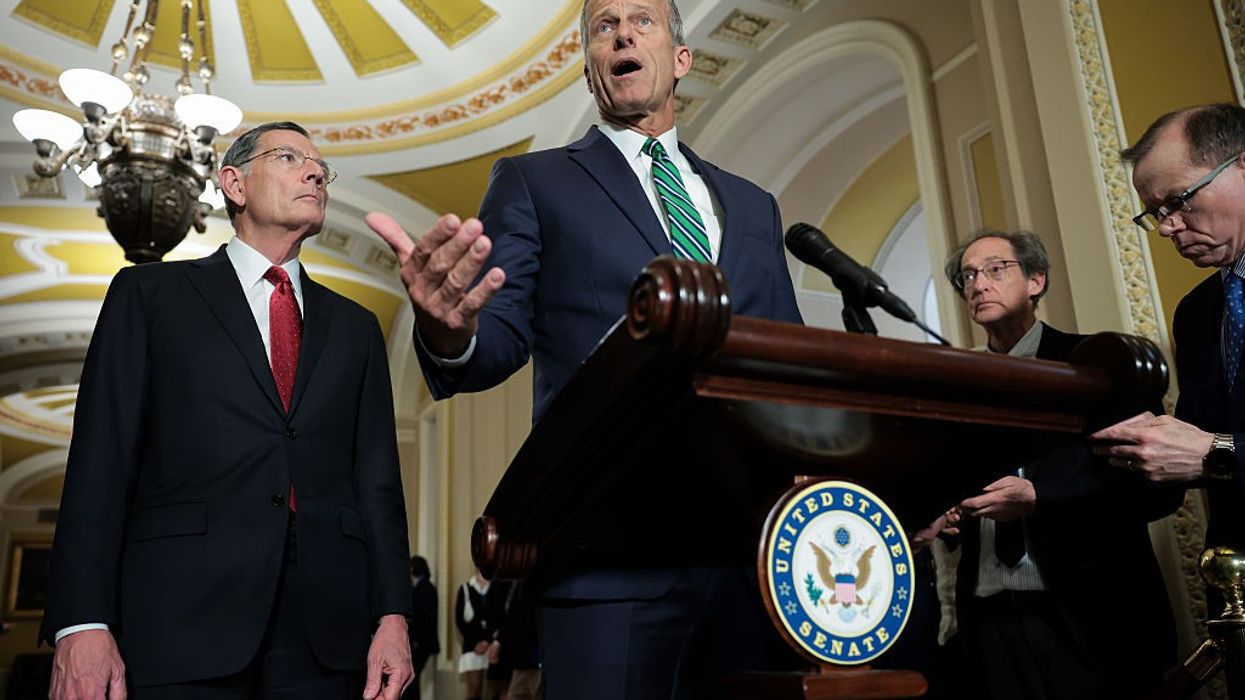
Several advocacy groups expressed outrage on Tuesday after the United States Senate voted to confirm Missouri Solicitor General Joshua Divine to be a United States District Judge for the Eastern and Western Districts of Missouri.
Divine, who was confirmed by a vote of 51 in favor to 46 against, is one of several judicial nominees of U.S. President Donald Trump who has been singled out by advocates for what they describe as his extreme record on a number of issues ranging from reproductive freedoms to LGBTQ rights to relief for student loan borrowers.
Every member of the Senate Democratic caucus voted against Divine’s confirmation with the exception of Sen. Angus King (I-Maine), who voted in favor. All Republicans voting in the Senate on Tuesday supported Divine’s confirmation, while three GOP senators—John Kennedy of Louisiana, Markwayne Mullin of Oklahoma, and Mitch McConnell of Kentucky—did not vote.
Mini Timmaraju, president and CEO of abortion rights advocacy organization Reproductive Freedom for All, argued that Divine's nomination and confirmation were a sign that Trump and the GOP would not be content to leave abortion rights up to individual states.
"Divine's confirmation makes clear that Trump lied to voters when he said he would 'leave it to the states,' and he is actively working to eliminate abortion access nationwide," she said. "Federal courts are a critical line of defense to preserve reproductive healthcare, and these appointments are a dangerous sign of what's to come."
Winston Berkman-Breen, legal director of the Student Borrower Protection Center (SBPC), accused Divine of building a political career on the backs of student loan borrowers who were in dire need of relief from the massive debts they incurred while pursuing an education.
"Time and time again in his lawsuits challenging legal student loan payment and relief programs, Divine took extreme positions at odds with traditional judicial interpretations related to injury, standing, and venue," he said. "Because of Divine, millions of student loan borrowers remain buried in crushing debt. Divine's actions exceeded the bounds of zealous advocacy and were a direct affront to judicial procedure. Americans deserve a judge who will review the facts of the case before them and apply the law under the Constitution and as passed by Congress—not an ideologue who will manipulate those laws to obtain the outcome he prefers."
Lena Zwarensteyn, senior director of the fair courts program and an advisor at The Leadership Conference on Civil and Human Rights, didn't focus on any specific issue and instead took an all-of-the-above approach to condemning what she described as Divine's unfitness for the federal bench.
"The Senate's confirmation of Joshua Divine to the federal bench in Missouri... installs into a lifetime judgeship an individual who does not possess the requisite experience to be a federal judge and who has time and time again demonstrated significant hostility to our civil and human rights," she argued. "His limited legal career—which includes a record of intense opposition to reproductive rights, LGBTQ equality, student loan borrowers, and more—is disqualifying. Our courts, our communities, and our democracy deserve better. Senators must ensure that judicial nominees are fair-minded, actually qualified for the job, and faithful to the rule of law and Constitution rather than to an anti-civil rights agenda."
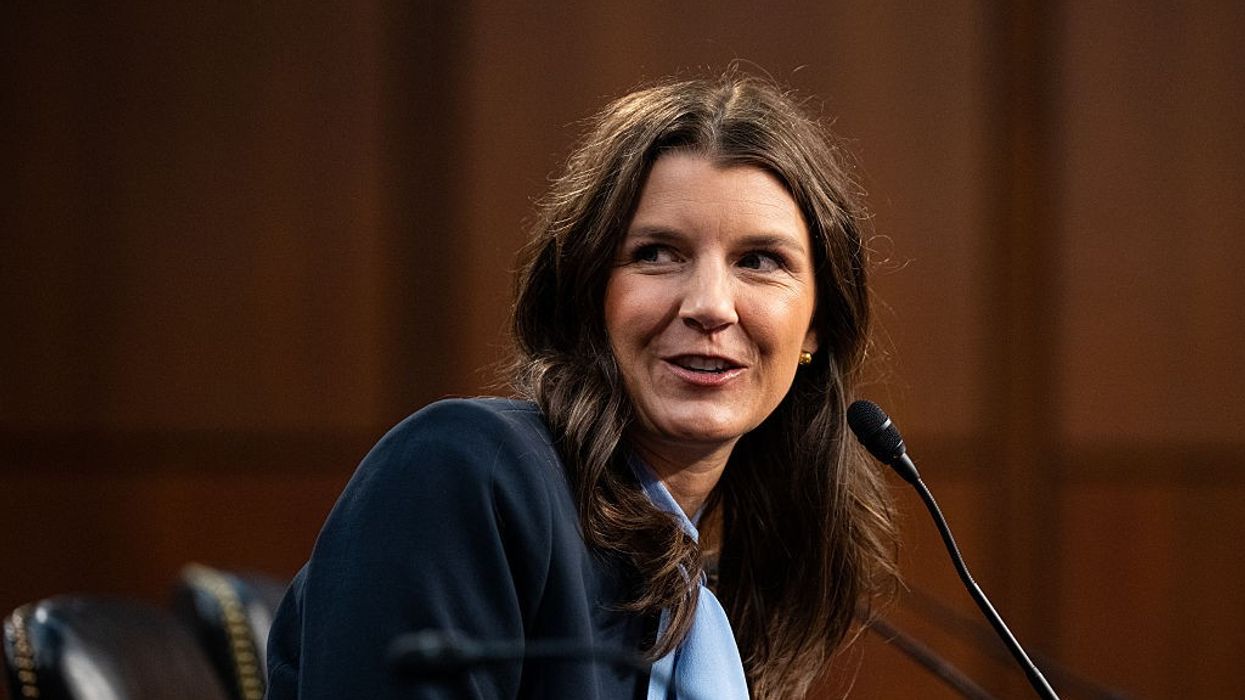
"If confirmed," said one watchdog leader, "these nominees would be expected to not only look the other way as the building blocks of America's democracy are gutted, but to pave the way for Trump's radical agenda."
U.S. President Donald Trump worked to force the federal judiciary to the far right with 234 confirmed nominees during his previous term, and he continued that mission on Wednesday, when the first slate of his second-term selections attended a Senate hearing.
Trump has announced 11 nominees, but only Whitney Hermandorfer, his pick to serve on the Cincinnati, Ohio-based U.S. Court of Appeals for the 6th Circuit, and four candidates to be district court judges in Missouri—Zachary Bluestone, Joshua Divine, Maria Lanahan, and Cristian Stevens—came before the Senate Judiciary Committee, which considers them before a full floor vote.
Just hours before the hearing began, Maggie Jo Buchanan, interim executive director of the advocacy group Demand Justice, wrote for Salon that "Trump's judicial nominees are key to the far right's crusade against our courts."
"If confirmed, these nominees would be expected to not only look the other way as the building blocks of America's democracy are gutted, but to pave the way for Trump's radical agenda—gutting reproductive freedoms and allowing the administration to take healthcare away from millions," she warned. "Many of them have histories of defending anti-choice legislation and other radical policies championed by Trump and his MAGA allies in Congress."
"Trump is picking up where he left off in his first term by using judicial nominees to advance an extreme agenda that undermines Americans' fundamental freedoms."
Buchanan wasn't alone in sounding the alarm about threats to healthcare. In anticipation of the hearing, the watchdog Accountable.US published a report detailing how "Trump's first judicial picks have a dangerous record of undermining fundamental freedoms, with a number of them who have a record of directly targeting reproductive rights."
Accountable.US cited Hermandorfer defending Tennessee's near-total ban on abortion as director of strategic litigation for the state attorney general's office, as well as Divine, Missouri's solicitor general, and his deputy, Lanahan, supporting extreme anti-choice efforts in their state.
"Trump is picking up where he left off in his first term by using judicial nominees to advance an extreme agenda that undermines Americans' fundamental freedoms," said Accountable.US president Caroline Ciccone. "But this time, Trump is selecting nominees with personal allegiances to the president, who will go even further in using the bench to cut off Americans' rights. Senators should know a vote to confirm Trump's judicial nominees is a vote to radically undermine reproductive freedom."
Reproductive rights aren't the only topical concern. Buchanan noted that "some of the nominees in this first slate have also supported Trump's attack on birthright citizenship, which has been widely viewed as unconstitutional. And in true loyalist fashion, one worked to defend Trump by seeking to interfere in New York's attempt to hold Trump accountable for state crimes."
The nominee who got involved in the New York case is Divine, who is also under fire for targeting the Biden administration's attempt to provide student debt relief. Student Borrower Protection Center legal director Winston Berkman-Breen said Wednesday that the nominee "built his political brand off the suffering of tens of millions of student loan borrowers across this country, and now the Trump administration is rewarding him with a position that will let him enshrine his personal ideologies into law."
"Time and time again in his lawsuits challenging legal student loan payment and relief programs, Divine took extreme positions at odds with traditional judicial interpretations related to injury, standing, and venue," Berkman-Breen pointed out. "Because of Divine, millions of student loan borrowers remain buried in crushing debt."
"Divine's actions exceeded the bounds of zealous advocacy and were a direct affront to judicial procedure," he added. "Americans deserve a judge who will review the facts of the case before them and apply the law under the Constitution and as passed by Congress—not an ideologue who will manipulate those laws to obtain the outcome he prefers."
The Leadership Conference on Civil and Human Rights, a coalition of more than 240 national organizations, similarly asserted in a Tuesday letter that "at a time when so many of our fundamental civil rights are under attack, we need to trust that our judges will impartially and fairly rule on cases without bias or animus."
The coalition specifically took aim at Trump's 6th Circuit nominee, writing that "unfortunately, a careful review of Ms. Hermandorfer’s record shows a demonstrated hostility towards our civil and human rights that is disqualifying for a judicial nominee. We strongly urge the Senate to oppose her nomination."
Earthjustice Action legislative director of the Access to Justice Program Coby Dolan stressed in a Wednesday statement that "we need principled judges who will uphold the law and serve as a bulwark against this administration's brazen attacks on the rule of law and our environment."
"It is the Senate's constitutional obligation to rigorously scrutinize these nominees, asking tough questions to determine whether they are impartial, believe in the government's ability to tackle our most pressing issues, and understand the difference between facts and politics," Dolan added. "We need oversight, not rubber stamps."
The Senate is controlled by the GOP, but only narrowly. Buchanan argued that "given what we are seeing out of the administration, there is no acceptable reason for Senate Democrats to assist their Republican colleagues in pushing through Trump's judicial nominees."
'Some Senate Dems voiced regret for supporting Trump’s cabinet nominees who were seen as mainstream but went full MAGA once confirmed Senators should not set themselves up for the same feelings of shame in voting for Trump's nominees for lifetime appointments' mmmhmm www.salon.com/2025/06/04/t...
[image or embed]
— Barred and Boujee and NEWLYWED aka Madiba Dennie (@audrelawdamercy.bsky.social) June 4, 2025 at 1:19 PM
The committee's ranking member, Sen. Dick Durbin (D-Ill.) on Wednesday pointed to U.S. Attorney General Pam Bondi's recent decision to limit the American Bar Association's (ABA) access to information about judicial nominees as proof that "the Trump administration is clearly just trying to cover for unqualified and extreme nominees."
Time reported last week that Bondi's "move against the ABA came a day after Trump announced six new judicial nominees, which included top Justice Department official Emil Bove being put forward to serve as a judge on the United States Court of Appeals for the 3rd Circuit."
The other five newly announced nominees—Ed Artau, Kyle Dudek, Anne-Leigh Gaylord Moe, John Guard, and Jordan E. Pratt—are on track to serve as district judges in Florida.
"They're just cruel and want to take as much as possible from the folks who have very little," said one student borrower advocacy group.
With the Trump administration restarting collection efforts on defaulted student loans after a five-year reprieve on Monday, Mike Pierce of the Student Borrower Protection Center said the move "will further fan the flames of economic chaos for working families across this country"—particularly as the White House threatens to garnish the wages of people who struggle to make higher monthly payments.
The SBPC joined nearly 200 other organizations in sending a letter to the acting undersecretary of education, James Bergeron, condemning the administration's efforts to gut income-driven repayment options and eliminate the Public Service Loan Forgiveness Program, which has delivered student debt relief to 1 million public service workers since it was implemented in 2007.
"The administration should move to enact policies that better protect student borrowers, rather than pursue misguided policies that will drive up costs and weaken protections," wrote the groups.
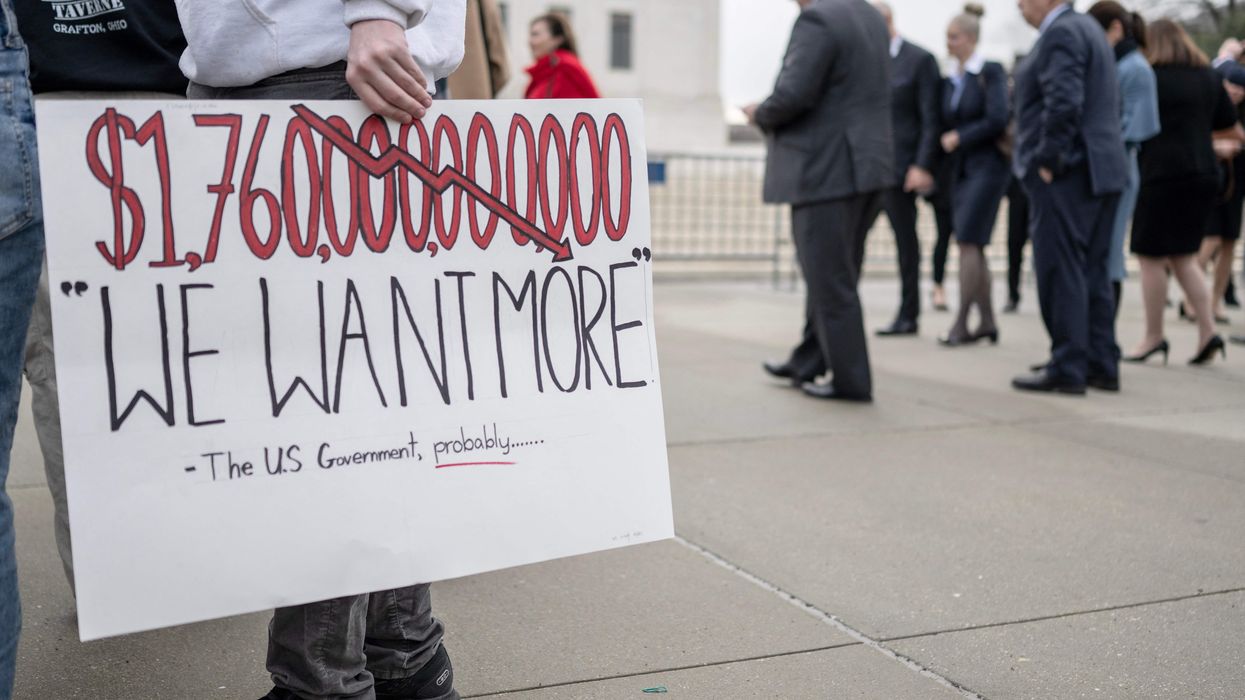
More than 42 million Americans have student debt, with more than $1.6 trillion owed in total. More than 5 million borrowers are currently in default, and that number could grow to about 10 million as the Trump administration ends programs that have been aimed at helping people pay off their loans in manageable amounts each month.
Collections are beginning months after Republican-led lawsuits succeeded in blocking former President Joe Biden's Saving on a Valuable Education (SAVE) plan, and days after the GOP members of the House Education and Workforce Committee advanced more than $350 billion in proposed funding cuts for education programs—cuts that government watchdog Accountable.US said are "paving the way for tax cuts for themselves, billionaire donors, and corporations."
The Republicans approved:
"To pay for tax cuts for the richest in this country, congressional Republicans are willing to gut the programs tens of millions of Americans rely on," said Tony Carrk, executive director of Accountable.US. "Their education markup makes it abundantly clear that they're not just going to gut Medicaid, they're proposing hundreds of billions of dollars of cuts to programs that provide more opportunities for everyday Americans to access higher education. These cuts are a betrayal of congressional Republicans' promise to make government work for Americans and to lower their costs; in fact, it will do quite the opposite."
The Debt Collective, a union of student loan borrowers, pointed out that the Trump administration isn't required by law to begin collecting student debt on Monday.
"They're just cruel and want to take as much as possible from the folks who have very little," said the group.
Aside from garnishing borrowers' wages, the administration could further devastate millions of people as credit scores could tank when the Education Department begins collection activity.
The Federal Reserve projected in March that people with delinquencies could see their credit scores plummet by as many as 171 points, leading to higher costs for borrowers who later take out mortgages, car loans, and sign up for credit cards.
U.S. Rep. Ayanna Pressley (D-Mass.) called President Donald Trump's threat to garnish wages in order to collect student debt "unconscionable."
The president and Education Secretary Linda McMahon, said Pressley, "should NOT be seizing people's hard-earned wages, tax refunds, and Social Security checks."
"By effectively freezing the nation's student loan system, the new administration seems intent on making life harder for working people."
A leading teachers union announced Wednesday that it is suing the Trump administration for cutting off public service workers with federal student loans from affordable repayment and debt relief programs.
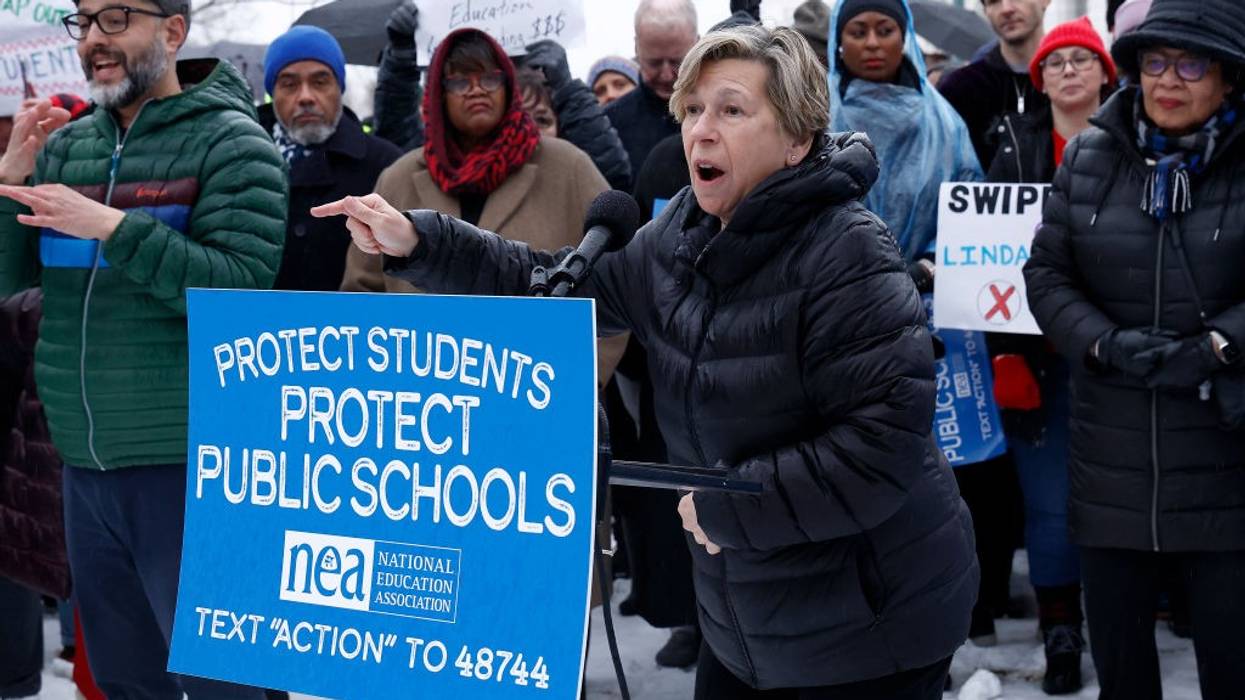
"By effectively freezing the nation's student loan system, the new administration seems intent on making life harder for working people, including for millions of borrowers who have taken on student debt so they can go to college," said American Federation of Teachers (AFT) president Randi Weingarten in a statement. "The former president tried to fix the system for 45 million Americans, but the new president is breaking it again."
"The AFT has fought tirelessly to make college more affordable by limiting student debt for public service workers and countless others—progress that's now in jeopardy because of this illegal and immoral decision to deny borrowers their rights under the law,” the union leader continued. "Today, we're suing to restore access to the statutory programs that are an anchor for so many, and that cannot be simply stripped away by executive fiat."
The 1.8 million-member union is represented by the law firm Berger Montague PC and the Student Borrower Protection Center (SBPC), which filed the federal lawsuit late Tuesday in Washington, D.C.
"The U.S. government, through the U.S. Department of Education (ED or the department), is the country's largest creditor of student loans," the complaint notes. "Today, there are nearly 43 million federal student loan borrowers, with approximately $1.62 trillion outstanding in debt."
As the filing details, Congress "designed this federal student loan program to expand access to higher education and increase economic mobility regardless of one's financial station," and specifically "directed ED to offer income-driven repayment (IDR) plans that tie a borrower's monthly payment to their income."
However, under President Donald Trump and Education Secretary Linda McMahon, the department has shut down IDR plans and not "indicated when it will—if ever—resurrect the programs," the complaint continues. "The result: borrowers are unable to access affordable monthly payment plans, some borrowers are being thrust into default on their debt, and some public service workers are being denied their statutory right to lower their monthly payment and earn credit towards Public Service Loan Forgiveness (PSLF)."
"This is not occurring in a vacuum for student loan borrowers," the document stresses. "It comes in the context of the president repeatedly announcing his plans to close the Department of Education, which was created by an act of Congress. And, it is on the heels of the recent equally unlawful actions to gut critical student loan protections from the Consumer Financial Protection Bureau."
Additionally, as Common Dreams reported earlier this month, Trump has directly attacked the PSLF with an executive order excluding from the debt relief program "organizations that engage in activities that have a substantial illegal purpose," targeting groups that help immigrants and transgender youth and organize protests that involve actions such as blocking roads.
"A significant number of AFT's membership has student debt, is working in public service, and has sought or will try to seek access to an IDR plan," the suit explains. "These borrowers simply want to pay back their student loans according to the terms that Congress, and their contracts, provide."
The AFT asked the court to declare that the Education Department is "unlawfully withholding" IDR plans and the PSLF program, and prevent the ED from "collecting from borrowers who are eligible for income-driven repayment until it satisfies its statutory, regulatory, and contractual obligations." The union also wants the court to order the department to fulfil those obligations.
"Student loan borrowers are desperate for help, struggling to keep up with spiking monthly payments in a sinking economy, all while President Trump plays politics with the student loan system," said SBPC executive director Mike Pierce. "Borrowers have a legal right to payments they can afford and today we are demanding that these rights are enforced by a federal judge."
"Threatening to punish hardworking Americans for their employers' perceived political views is about as flagrant a violation of the First Amendment as you can imagine," said one critic.
Criticism of U.S. President Donald Trump's executive order intended to limit a program that forgives the federal student loans of borrowers who take public service jobs has grown since he signed it on Friday.
Opponents frame the order as yet another attempt by Trump to quash dissent. The Republican president directed Education Secretary Linda McMahon to propose revisions to the Public Service Loan Forgiveness (PSLF) Program, in coordination with Treasury Secretary Scott Bessent, to exclude "organizations that engage in activities that have a substantial illegal purpose."
The order targets employers "aiding or abetting" violations of federal immigration law and the administration's definition of illegal discrimination, engaging in a pattern of violating state law such as disorderly conduct and obstruction of highways, "supporting terrorism," and "child abuse, including the chemical and surgical castration or mutilation of children or the trafficking of children to so-called transgender sanctuary states for purposes of emancipation from their lawful parents."
Student Defense president Aaron Ament said in a statement that "when PSLF was created by a bipartisan act of Congress and signed into law by [President] George W. Bush, it was a promise from the United States government to its citizens—if you give back to America, America will give back to you."
"In the nearly two decades since, across administrations of both parties, Americans have worked hard and made life decisions under the assumption that the U.S. keeps its word," Ament continued. "Threatening to punish hardworking Americans for their employers' perceived political views is about as flagrant a violation of the First Amendment as you can imagine."
Nadine Chabrier, senior policy counsel at the Center for Responsible Lending, similarly highlighted "serious" First Amendment concerns, saying that "by penalizing individuals seeking loan forgiveness for their associations and the expressive conduct of their employers, new rulemakings could infringe on fundamental rights to speech and association."
"The executive order also undermines the very purpose of PSLF, which Congress established to encourage careers in public service across a broad range of fields," she said. "Stripping PSLF eligibility from nonprofit employees based on the nature of their work will deter skilled professionals from pursuing careers that benefit the public good, weaken critical services for underserved populations and hamper efforts to strengthen vulnerable communities."
American Federation of Teachers (AFT) president Randi Weingarten explained that "PSLF is based on the idea that borrowers who make 10 years of repayments, and who often forgo higher wages in the private sector, can avoid a lifelong debt sentence."
The teachers union sued the Trump's first-term education secretary, Betsy DeVos, "and rogue loan servicers for their failure to administer the program—and we won," Weingarten noted. "This latest assault on borrowers' livelihoods is a cruel attempt to finish the demolition job that DeVos started. The goal is to sow chaos and confusion—separately, the PSLF application form has already been taken offline, making it effectively inaccessible."
The Economic Policy Institute pointed out Monday that "since the creation of the PSLF program, more than 1 million borrowers have received student loan forgiveness, largely due to fixes made under the Biden administration."
"More than 2 million individuals currently qualify for the PSLF program, according to the Department of Education," the think tank added. "The executive order could potentially narrow which organizations qualify for the program."
Student Borrower Protection Center executive director Mike Pierce blasted the order as "blatantly illegal and an all-out weaponization of debt intended to silence speech that does not align with President Trump's MAGA agenda."
"It is an attack on working families everywhere and will have a chilling effect on our public service workforce doing the work every day to support our local communities," Pierce warned. "Teachers, nurses, service members, and other public service workers deserve better than to be used as pawns in Donald Trump's radical right-wing political project to destroy civil society. This will raise costs for working people while doing nothing to make America safer or healthier."
In addition to scathing critiques, some groups threatened to challenge the order. Weingarten vowed that "the AFT won't stop fighting, in court and in Congress, until every single public service worker gets the help the law affords them."
Ament declared that "if the Trump administration follows through on this threat, they can plan to see us in court."
"This sends a dangerous message to corporate America that financial fraud and abuse will go unchecked," said one critic.
Consumer advocates on Thursday slammed the Trump administration for dropping various enforcement actions against companies accused of activities that include ripping off savings account holders, illegally collecting on student loans, and engaging in an unlawful mortgage broker kickback scheme.
The Consumer Financial Protection Bureau's notices of voluntary dismissal came as the U.S. Senate Committee on Banking, Housing, and Urban Affairs held a hearing for Jonathan McKernan, President Donald Trump's pick to lead the CFPB—which Accountable.US executive director Tony Carrk has called "a gift to big banks and special interests."
"We're getting a very strong message here that if you're a bank, if you're a student loan servicer, and you're violating the law, the CFPB is not only not going to pursue you, they're going to let you out of your case scot-free."
While the former Federal Deposit Insurance Corporation board member awaits confirmation from the GOP-controlled Senate, Trump and Russell Vought, the CFPB's temporary leader, have wasted no time trying to gut the agency and undo the work of its former director, Rohit Chopra, who oversaw cases against the following companies:
Court paperwork "in the Rocket Homes case notes that the 'Consumer Financial Protection Bureau dismisses this action, with prejudice, against all defendants,'" according to The Associated Press. "Dismissing a case without prejudice means that it cannot be refiled. Similar wording was used in the dismissals of the CFPB's Capital One and Vanderbilt Mortgage suits."
Those decisions came after the CFPB last week
dropped a case against SoLo Funds, which the agency accused of misleading borrowers about loan costs. Vought had then teased further action, saying on social media Sunday that "shockingly, the CFPB tried to destroy this company, SoLo, which incurred millions in legal fees and had to lay off 30% of its workforce. It was wrong and we dismissed the case. More to come but the weaponization of 'consumer protection' must end."
Meanwhile, critics like Christine Chen Zinner, consumer policy counsel at Americans for Financial Reform, are framing the CFPB's dismissals as a betrayal of the agency's mission.
"The old CFPB stood ready to protect consumers and wrestle back the ill-gotten gains of big banks like Capital One," Chen Zinner said Thursday. "With this decision, the Trump-appointed leadership is letting Capital One steal $2 billion from its depositors, another example of this administration standing up for Wall Street at the expense of everyday people who deserve the CFPB's protection."
Erin Witte, director of consumer protection at the Consumer Federation of America, also released a statement focused on the bank case.
"The CFPB was created to be a watchdog for big banks, not a lapdog, and dismissing this case is a gift to Capital One," said Witte. "$2 billion is a drop in the bucket for Capital One–less than half a percent of its total assets—but returning this money would make a huge difference to the hardworking Americans who trusted Capital One to safeguard their savings and were kept in the dark about how to earn more."
Witte also described the full list of dismissals as "unprecedented," and told Reuters, "We're getting a very strong message here that if you're a bank, if you're a student loan servicer, and you're violating the law, the CFPB is not only not going to pursue you, they're going to let you out of your case scot-free."
Accountable.US highlighted that "the news stands in stark and alarming contrast to McKernan's remarks... to senators, promising to review all existing CFPB lawsuits before making any decisions around dropping litigation."
Student Borrower Protection Center executive director Mike Pierce said in a statement about the PHEAA case that "Russ Vought and Donald Trump sided with a lawless and corrupt student loan company at the expense of borrowers across the country—another sign that powerful financial interests are driving the capture and demolition of the federal consumer watchdog."
"This is a slap in the face to students, student loan borrowers, and working people everywhere," Pierce continued. "PHEAA lied to some of the poorest and most vulnerable Americans, then illegally hounded them for debt that they did not owe, all to make a buck. And today, cowardly political sycophants backed down on the federal government’s only effort to hold PHEAA accountable."
"Of course, like all fascist toadies, Russ Vought will rightly be forgotten by history and sink into well-deserved irrelevance. But until then, law enforcement at every level of government must rush in to fill the void left by a federal consumer protection agency that now stands only to serve billionaires and big corporations," he added. "Remember: these people prey on those in need because they are motivated only by the desire to exercise power, and they are motivated to do so because they are cowards. It is everyone's job to remind Vought and his cronies of their powers' limits, and to remind the world of their cowardice."
Lauren Saunders, associate director of the National Consumer Law Center, also directed some blame at billionaire Elon Musk, the head of Trump's so-called Department of Government Efficiency, which is leading the administration's efforts to slash the federal workforce and spending.
"The Trump administration and Elon Musk are showing us exactly what it means not to have ordinary people protected by a strong Consumer Financial Protection Bureau—they are dismissing enforcement cases that sought to return billions to working families harmed by corporations accused of egregious conduct that violated the law," said Saunders. "On top of the stop-work order and firing of CFPB workers doing their jobs, this sends a dangerous message to corporate America that financial fraud and abuse will go unchecked. We must preserve a strong, independent, and functional CFPB to stand up to corporate bullies."
Sen. Elizabeth Warren (D-Mass.), a former bankruptcy professor, is the mastermind behind the CFPB. She is also the ranking member of the panel which McKernan appeared before on Thursday. The American Prospect executive editor David Dayen reported that the senator informed the nominee about the dismissals during the hearing.
"Literally while you've been sitting here and you've been talking about the importance of following the law, we get the news that the CFPB is dropping lawsuits against companies that are cheating American families, or alleged to be cheating American families," Warren said. "It seems to me the timing of that announcement is designed to embarrass you and to show exactly who is in charge of this agency right now: Elon Musk and his little band of hackers."
"Voters are clear about what they want: lower prices, better jobs, vital programs protected and expanded, and for the wealthy to pay their fair share in taxes."
The Republican Party is intent on permanently extending the 2017 tax cuts which primarily benefited the wealthiest earners and corporations—a priority that would cost an estimated $4.6 trillion and which has sent lawmakers searching for potential spending offsets including cuts to Medicare, food assistance, and renewable energy programs.
But polling released Tuesday suggested the GOP is likely to face widespread outcry—and potential opposition from vulnerable Republicans who don't want to risk angering voters—as a majority of Americans are vehemently opposed to paying for tax cuts for the wealthy by slashing public programs.
The new poll, taken by Data for Progress on behalf of the progressive advocacy groups Groundwork Collaborative and the Student Borrower Protection Center, found that although Republican lawmakers have demonized efforts to provide relief to student loan borrowers, the party's potential overhaul of the income-based repayment program isn't popular among voters of any political ideology.
Nearly two-thirds of respondents said they don't want the repayment plan eliminated, including 56% of Republican voters and 70% of Independents who said they oppose funding cuts for federal student loans and grants.
The GOP's plan would save an estimated $127.3 billion over 10 years by forcing the average student loan borrower to pay nearly $200 more per month.
"Most people don't have an extra $200 a month to throw toward their student loan bill," Michele Shepard Zampini, senior director of college affordability at the Institute for College Access & Success, told CNBC on Monday.
"Voters overwhelmingly reject efforts to cut critical supports that working families rely on."
Despite that fact, said Aissa Canchola Bañez, policy director for the Student Borrower Protection Center, the GOP's budget proposals would "cut taxes for their billionaire buddies by raiding the pockets of Americans with student debt and families already struggling to pay for college."
"This polling makes it crystal clear," she said. "Voters overwhelmingly reject efforts to cut critical supports that working families rely on."
Republicans can also expect to see pushback if they attempt cuts to Medicare and Medicaid, the survey found. Ninety percent of respondents said they want Medicare funding to increase or remain the same; 87% said the same for Medicaid. Republicans are planning to unveil the first-ever work requirements for Medicaid, which provides healthcare coverage for low-income people and those with disabilities, in an upcoming budget bill.
As Politico reported Sunday, Republican lawmakers are "increasingly alarmed" that Rep. Jodey Arrington (R-Texas), chair of the House Budget Committee, "keeps raising Medicare reforms as a potential spending offset."
More than 80% of respondents also don't want Republicans to make cuts to the Supplemental Nutrition Assistance Program (SNAP), commonly known as food stamps, which the GOP is also planning to make subject to expanded work requirements.
Those who want funding for SNAP to increase or stay the same include 67% of Republicans and 75% of Independents.
The polling may leave Republican leaders wondering what programs they will be able to cut without facing outcry from angry voters who rely on public services—but Elizabeth Pancotti, managing director of policy and advocacy for Groundwork Collaborative, suggested in a statement Tuesday that the answer is simple: The GOP must abandon its plan to dole out more tax breaks for the rich.
"Voters are clear about what they want: Lower prices, better jobs, vital programs protected and expanded, and for the wealthy to pay their fair share in taxes," said Pancotti. "And yet, Republicans in both chambers of Congress are working overtime to achieve the exact opposite."
President Donald Trump has called on the GOP to advance his taxation, immigration, and energy agenda in "one big, beautiful bill," while Senate Republican leaders have begun work on two separate bills, with taxes dealt with later in the year.
"Whether one bill or two," said Pancotti, "House and Senate GOP members are aligned on wanting to cut lifesaving programs in order to enrich their billionaire friends and donors, and voters are taking note."
"Opponents of democracy are terrified that they will lose again at the ballot box in November and are rushing to right-wing judges to hamstring democratic governance," said one observer.
A Republican-appointed U.S. federal judge in Georgia raised eyebrows and objections Thursday after taking what observers called the "unprecedented" step of blocking a rule that hasn't even been finalized in order to stop the Biden administration from implementing a plan to deliver promised debt relief to millions of student borrowers.
U.S. District Judge for the Southern District of Georgia James Randal Hall issued an order blocking the Biden administration's proposed federal student debt relief rule. Hall—an appointee of former President George W. Bush—granted a motion by a coalition of right-wing state attorneys general to preempt the rule's eventual implementation.
"The court is substituting its judgment for those elected to serve the public," American Federation of Teachers president Randi Weingarten said in response to the ruling. "It subverts the democratic process and denies relief to student loan borrowers, many of whom rely on debt relief programs already advanced by the Biden-Harris administration."
"This court's unprecedented decision to block a rule that does not yet exist is not only bad for the 30 million borrowers who were relying on the administration to deliver much-needed relief," she continued. "It's a harbinger of the chaos and corruption right-wing judges seek to force on the American people."
Mike Pierce, executive director of the Student Borrower Protection Center—which called the ruling "dangerous and unprecedented"—denounced Hall for preventing the Biden administration from delivering student debt relief "even though no plan has been finalized."
"This is an extraordinary break with precedent and a brazen move by the conservative movement to shift even more power to unelected, unaccountable red-state judges," he said. "Opponents of democracy are terrified that they will lose again at the ballot box in November and are rushing to right-wing judges to hamstring democratic governance."
"This is the clearest sign yet that Project 2025 is already terrorizing student loan borrowers through a slow-moving judicial coup," Pierce added, referring to a conservative coalition's agenda for a far-right takeover of the federal government—which critics warn would worsen the U.S. student debt crisis.
Biden's proposal would forgive some or all student debt for around 30 million borrowers who have been repaying undergraduate loans for at least 20 years, or graduate loans for 25 years.
Hall's order is based on what he said was the plaintiffs' "substantial likelihood of success on the merits given the rule's lack of statutory authority" and U.S. Education Secretary Miguel Cardona's "attempt to implement a rule contrary to normal procedures."
"This is especially true in light of the recent rulings across the country striking down similar federal student loan forgiveness plans," he added.
The U.S. Supreme Court's right-wing supermajority last year struck down Biden's initial plan to relieve up to $20,000 in federal scholastic debt for around 40 million borrowers, and last month the justices kept in place a sweeping suspension of the administration's Saving on a Valuable Education (SAVE) program, which aims to lower monthly repayments and hasten loan forgiveness.
While praising the Biden administration's move "to stave off this reckless attack from extremist politicians and judges," advocates stressed that "broad-based debt cancellation is the only solution."
The Biden administration responded to an appellate court temporarily blocking one of its student debt relief programs by pausing payments for the 8 million borrowers already enrolled—a move welcomed by advocates, even as some called for further action.
U.S. Secretary of Education Miguel Cardona acknowledged in a statement that the 8th Circuit Court of Appeals' ruling against President Joe Biden's Saving on a Valuable Education (SAVE) plan "could have devastating consequences for millions of student loan borrowers crushed by unaffordable monthly payments if it remains in effect."
"It's shameful that politically motivated lawsuits waged by Republican elected officials are once again standing in the way of lower payments for millions of borrowers," Cardona continued. "Borrowers enrolled in the SAVE plan will be placed in an interest-free forbearance while our administration continues to vigorously defend the SAVE plan in court. The department will be providing regular updates to borrowers affected by these rulings in the coming days."
The appellate court's Thursday ruling was just the latest in a series of legal decisions endangering one of the administration's surviving policies to help Americans with burdensome student loans. Biden's attempt to roll out a broader debt cancellation program last year was thwarted by the U.S. Supreme Court's right-wing justices.
Despite that setback, the Democratic president has continued to pursue relief programs while seeking reelection in November. Biden and Vice President Kamala Harris are preparing to face former Republican President Donald Trump and Sen. JD Vance (R-Ohio). Analyses have warned that Trump's return to the White House would worsen the U.S. student debt crisis.
"It wasn't so long ago that a million borrowers defaulted on their student loans every single year, mainly because they couldn't afford the payments," Cardona noted Friday. "The SAVE plan is a bold and urgently needed effort to fix what's broken in our student loan system and make financing a higher education more affordable in this country. The Biden-Harris administration remains committed to delivering as much relief as possible for as many borrowers as possible."
"Already, we've approved an unprecedented $169 billion in relief for nearly 4.8 million Americans, including teachers, veterans, and other public servants, students who were cheated by their colleges, borrowers with disabilities, and more," he added. "And from larger Pell Grants to free community college, President Biden, Vice President Harris, and I continue to believe that college affordability is a cause worth fighting for—and we're not giving up."
The Student Borrower Protection Center, which had advocated for a payment pause after Thursday's ruling, thanked Cardona "for taking swift action to protect the millions of borrowers enrolled in SAVE."
"Opponents of SAVE have inflicted mass confusion and chaos across the entire student loan system—all borrowers are at risk," the group added. "Halt student loan payments and protect borrowers ASAP!"
American Federation of Teachers president Randi Weingarten put out a statement on Friday praising the administration's action "to stave off this reckless attack from extremist politicians and judges."
"But we shouldn't even be in this situation," she stressed. "These borrowers are on a roller coaster that's being forced off the rails by far-right politicians who will do anything in their power to hurt them, rather than help them get the relief they deserve."
"We are grateful that the Biden-Harris administration will continue to push for affordable monthly payments as bad faith actors continue to throw up roadblock after roadblock," she added. "In the end, broad-based debt cancellation is the only solution—and we will continue to advocate for it through every avenue available."
While also welcoming the pause as the court battle continues, the Debt Collective said Friday: "But no need to stop there—pause everyone's payments. Unburden them from what has been."
Recalling when student debt payments were halted because of the Covid-19 pandemic, initially under Trump and then Biden, the group also said that the president "never should have restarted student loan payments," calling it "an unforced error."
Advocates are calling for "shutting the student loan system down until borrowers have access to the rights they were promised."
Student debt cancellation advocates on Thursday responded to a federal appeals court blocking implementation of one of U.S. President Joe Biden's relief programs by demanding a shutdown of the whole system to spare borrowers and the economy.
The U.S. Court of Appeals for the 8th Circuit's temporary ruling against the administration's Saving on a Valuable Education (SAVE) plan comes just over a year after the Supreme Court struck down Biden's sweeping student debt cancellation proposal.
Although the high court's right-wing supermajority has thwarted Biden's attempt to deliver his promised broad relief, the administration has pursued initiatives including the SAVE program, which sets monthly payments based on borrowers' income.
Over half of the more than 8 million borrowers who have enrolled in the program have a $0 monthly payment, according to the U.S. Department of Education. SAVE also enables borrowers to have their balances canceled after 10, 20, or 25 years.
GOP state officials led by Kansas Attorney General Kris Kobach challenged the program, leading to Thursday's ruling—just the latest in a series of various decisions about the program. The 8th Circuit issued a stay until the court rules on a request for a preliminary injunction.
"Today's extreme, unsigned, single-sentence order from a judge out of Missouri's 8th Circuit Court of Appeals just sent the student loan system into chaos and borrowers will be forced to pay the price," warned Student Borrower Protection Center (SBPC) executive director Mike Pierce in a statement.
"It is clear that the Biden administration can and must protect borrowers from this partisan lawfare—that means shutting the student loan system down until borrowers have access to the rights they were promised under the law," he argued.
In addition to echoing Pierce's call for shutting down the system "to mitigate the widespread economic harm that could be imposed on borrowers," SBPC deputy executive director Persis Yu suggested the legal battle was politically motivated.
"Right-wing politicians are using the courts to wreak havoc on the student loan system and put the economic stability of tens of millions of borrowers and their families at risk. Make no mistake: These lawsuits are shameful political gamesmanship designed to hurt President Biden at all costs, and borrowers are merely collateral damage," Yu said. "Unfortunately, today, the special interests have prevailed, imperiling the financial security of millions and throwing the student loan system into an untenable chaos."
An Education Department spokesperson said in a statement Thursday that "we are assessing the impacts of this ruling and will be in touch directly with borrowers with any impacts that affect them."
"Our administration will continue to aggressively defend the SAVE Plan," the spokesperson added. "And, we won't stop fighting against Republican elected officials' efforts to raise costs on millions of their own constituents' student loan payments."
The 8th Circuit's decision came on the same day as the Biden administration's announcement that it is canceling $1.2 billion in student loans for borrowers who work in public service through changes to another federal program.
"These 35,000 borrowers approved for forgiveness today are public service workers—teachers, nurses, law enforcement officials, and first responders who have dedicated their lives to strengthening their communities, and because of the fixes we made to Public Service Loan Forgiveness, they will now have more breathing room to support themselves and their families," Biden said in a statement.
Biden—who has faced progressive pressure to keep pursuing bolder debt relief policies—is currently seeking reelection, though the Democrat has endured growing calls to step aside since his poor debate performance last month.
Former President Donald Trump this week formally became the Republican nominee and announced Sen. JD Vance (R-Ohio) as his running mate. Multiple analyses have warned that the U.S. student debt crisis would worsen under Trump.