

SUBSCRIBE TO OUR FREE NEWSLETTER
Daily news & progressive opinion—funded by the people, not the corporations—delivered straight to your inbox.
5
#000000
#FFFFFF
To donate by check, phone, or other method, see our More Ways to Give page.
Daily news & progressive opinion—funded by the people, not the corporations—delivered straight to your inbox.
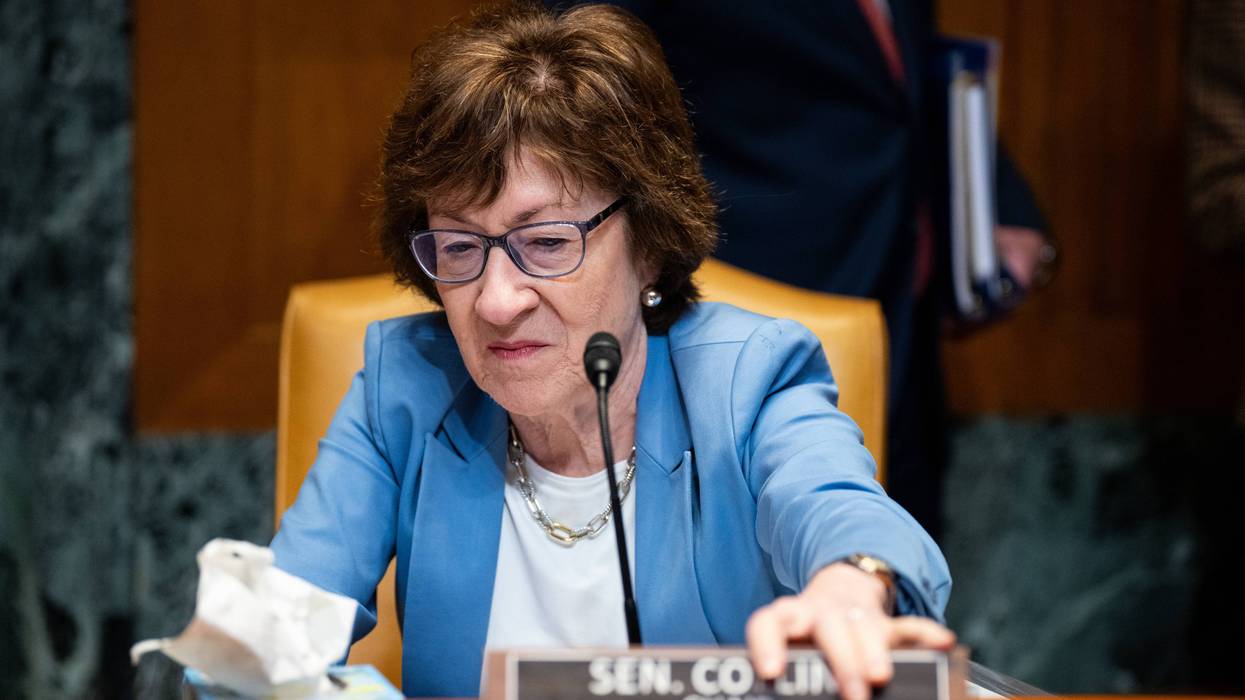
"Susan Collins cares far more about protecting bank executives’ millions than protecting the rest of us from BS overdraft fees," said Platner's campaign manager.
Graham Platner's campaign is accusing Sen. Susan Collins of siding with banking interests after she joined Senate Republicans in blocking a Democratic measure to protect consumers from unexpected overdraft fees.
On Wednesday, the GOP voted largely along party lines against a set of Democratic resolutions aiming to restore Consumer Financial Protection Bureau (CFPB) policies killed by the Trump administration.
In what its acting director, Russell Vought, has described as an effort to effectively dismantle the bureau, which has been credited with delivering more than $21 billion in consumer relief since its creation, he has rescinded 67 policies that protected Americans from junk fees, medical debt, lending discrimination, and other financial abuses.
One resolution voted down Wednesday would have restored a scrapped CFPB guidance against debt collectors hounding consumers over false or inflated medical debts. Another would have reaffirmed that the bureau can scrutinize financial companies for predatory credit practices aimed at military families.
These Democratic resolutions were not expected to pass in a Republican-controlled Senate, but were instead meant to force Republicans to put themselves on the record as standing against consumer interests.
As President Donald Trump takes a beating from voters on the economy, the votes will serve as ammunition as Democrats run with the message that the GOP has "abandoned consumers and is making life more expensive for them," as the CFPB's architect, Sen. Elizabeth Warren (D-Mass), said on Wednesday.
Platner is already deploying that ammunition in one of November's marquee races, hammering Collins (R-Maine) for voting with the GOP against restoring a guidance enacted by the Biden administration that required banks to obtain customers' consent before charging overdraft fees for ATM and one-time debit card transactions.
"Last night, Susan Collins voted once again to make it easier for big banks to hit Maine families with predatory overdraft fees," his campaign said in an email on Thursday. "Her vote to block even a debate on restoring basic consumer protections was just the latest reminder of where Collins' real loyalties lie."
"There is no legitimate policy rationale for voting against basic consumer protections on overdraft fees,” said Platner's campaign manager, Ben Chin. “But Susan Collins cares far more about protecting bank executives’ millions than protecting the rest of us from BS overdraft fees. This vote is yet another example of this deeply unfortunate reality.”
According to data from OpenSecrets, Collins has received nearly $1.8 million this cycle in contributions from the financial sector, including more than $570,000 from private equity and investment firms, which the Platner campaign said were "among the most predatory actors in the American economy."
She's also received more than $44,000 from commercial banks and holding companies that have a particular interest in her stance on overdraft fees.
The Pine Tree Results PAC, which has thrown about $12.7 million behind Collins, likewise got nearly a third of its funding from figures in the financial sector, particularly in private equity and hedge funds with a broader interest in neutering the CFPB.
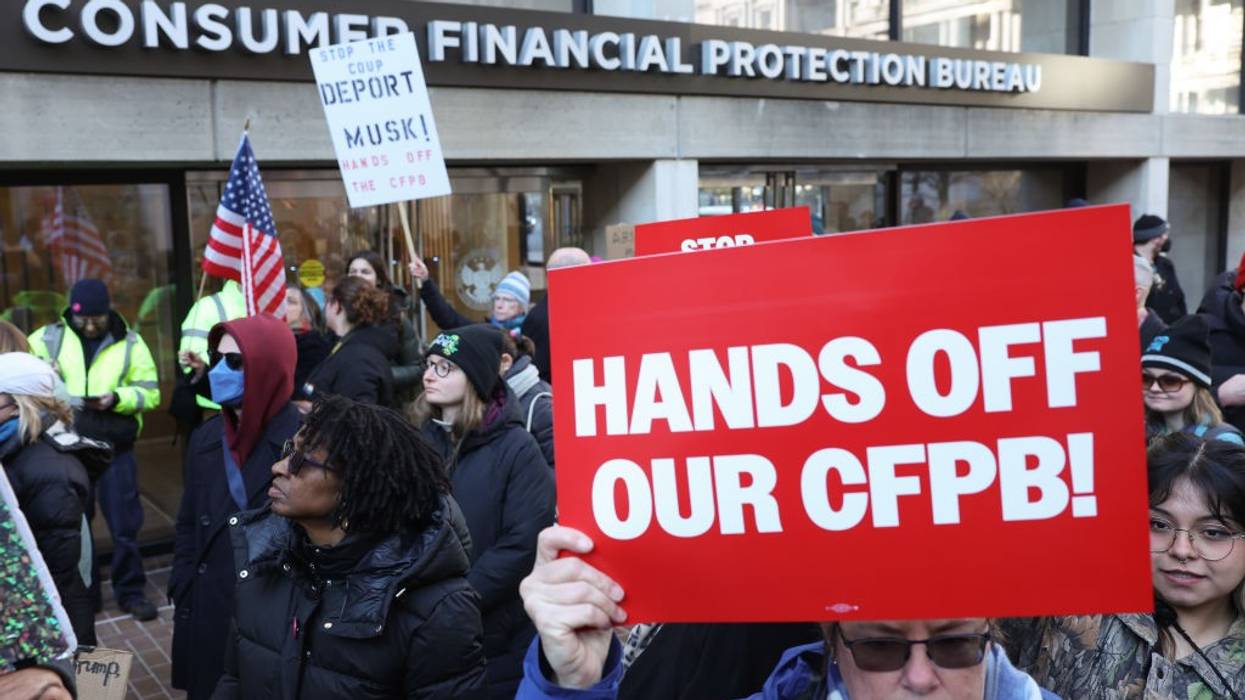
Congress can’t allow the White House to eliminate an agency that’s helped millions of Americans, with billions of dollars returned to them by scams, fraudsters, and megabanks that prey on low-income citizens.
Over the past year, the Trump administration has sought to gut the Consumer Financial Protection Bureau through cuts and layoffs, and by hamstringing its enforcement powers, claiming the agency is hurting large banks through overregulation. Acting CFPB Director Russ Vought has sought to reduce the agency's staff by 90% and to freeze spending since February.
A group of 21 states, plus the District of Columbia, sued the Trump administration in December to stop it from defunding the CFPB. The administration responded by telling the court that the government is legally barred from seeking new funding from the Federal Reserve, the bureau’s primary source of money, alluding to the fact that the agency will eventually go broke later this year. The next step in the case will be the DC Court of Appeals to hear arguments in late February.
The CFPB's enforcement actions, like the 22 pending cases against banks, highlight its vital role in safeguarding consumers from unfair practices, which the current threats jeopardize.
So, what does this mean for the country? The CFPB's weakening could leave consumers vulnerable to predatory practices, unfair fees, and fraud, risking their financial stability.
The Biden administration's pressure on banks and financial institutions on the issue led them to agree to refund more than $240 million to customers, a win secured by actual, formal regulation. Trump and Vought have rolled that back, too.
The CFPB’s Small Dollar Rule was created to curb abusive payday lending practices, especially repeated debit attempts that drain bank accounts and trigger cascading overdraft and Non-Sufficient Funds (NSF) fees. That goal is sound and worthy. The problem is not the rule’s intent, but how it operates alongside bank fee structures and in a financial marketplace devoid of smart, progressive-minded credit options.
The small dollar rule makes automatic repayments—which help keep the cost of borrowing to the bare minimum—incredibly tricky to execute. After two consecutive failed payment attempts, covered lenders generally cannot try again unless the borrower specifically authorizes another attempt, which can leave payments stalled when ordinary life disruptions intervene. Regulators have warned that charging multiple NSF fees tied to re-presented transactions can harm consumers. This is true not just because a single missed payment can still trigger NSF fee collection and financial harm, undermining a rule meant to protect borrowers acting in good faith. It’s also because lenders are now further limiting credit to the most high-risk borrowers, including gig economy workers, who are also those most in need of emergency credit, forcing them to borrow via ultra-expensive bank and credit union overdrafts and NSFs. And when payments are not made, inevitably, borrowers’ personal credit ratings take a hit. Of course, this affects poor people and those with bad credit harder than anyone else.
Trump and Vought's shuttering of the CFPB without fixing this situation, including by pushing banks hard to provide credit to consumers at lower cost and even by standing up a viable alternative to current credit options through something like Postal Banking, would make the problem of high-interest debt worse for Americans. Moreover, because Trump and Vought refuse to act against extortionate overdraft and NSF fees, as the Biden administration did, they’re exposing consumers to high-cost debt, where they effectively borrow from the bank, too. The Biden administration's pressure on banks and financial institutions on the issue led them to agree to refund more than $240 million to customers, a win secured by actual, formal regulation. Trump and Vought have rolled that back, too.
The CFPB has largely helped people when they have problems with a financial institution, product, or transaction by allowing customers to submit complaints, which the agency then works on their behalf. Since its inception, 98% of the 9 million total complaints have received “timely responses” from the institutions or companies to which customers reported them to the CFPB. Of all the complaints, almost 400,000 were submitted by US military members, and nearly 200,000 were submitted by seniors.
The results have been staggering. CFPB data as of December, 2024 shows a whopping $21 billion has been returned to more than 205 million Americans who were financially harmed by institutions. In addition, over $5 billion in civil penalties have been imposed on guilty banks and individuals.
Congress can’t allow the White House to eliminate an agency that’s helped millions of Americans, with billions of dollars returned to them by scams, fraudsters, and megabanks that prey on low-income citizens. And if the Trump administration is determined to do so, it’s time for congressional Democrats to focus on developing credit alternatives that can allow consumers to escape some of the financial madness.
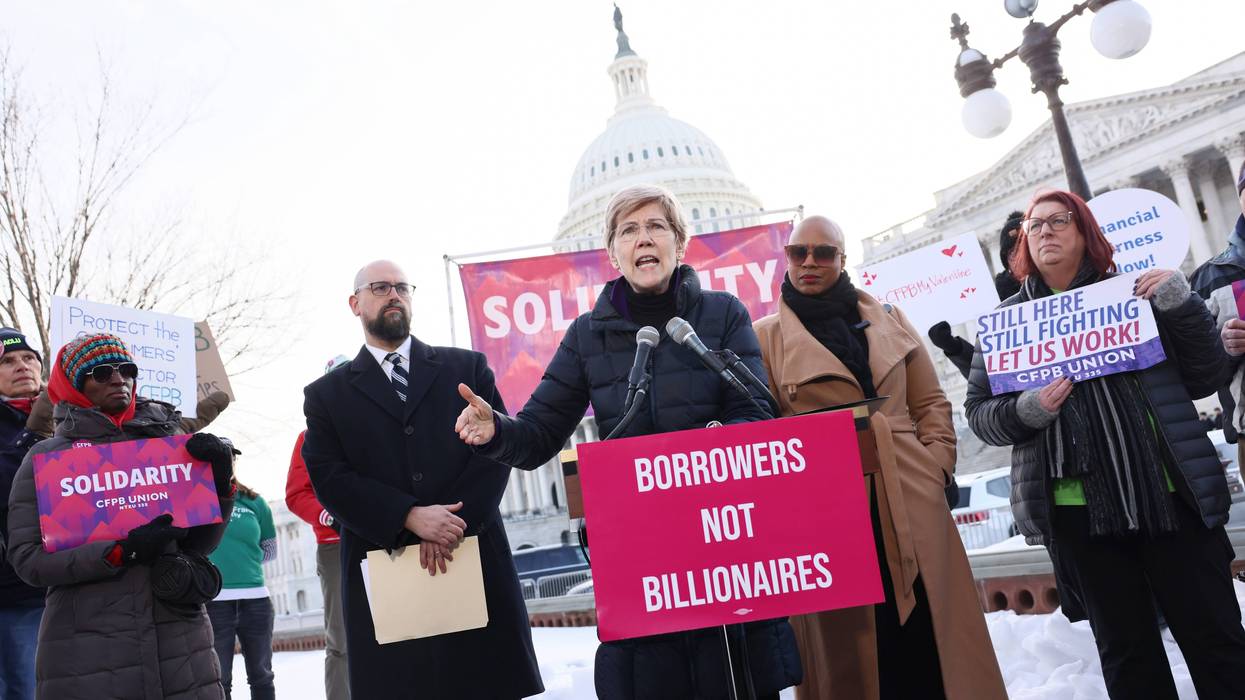
"When you're counting the way that costs have gone up for American families over the last year, be sure to include the cost of getting cheated," said Sen. Elizabeth Warren.
The Trump administration's ongoing effort to dismantle the Consumer Financial Protection Bureau cost Americans nearly $20 billion in just a year, according to a report released Monday as Democratic lawmakers and campaigners marked the anniversary of the White House's hostile takeover and gutting of the CFPB.
The new report was assembled by Democrats on the Senate Banking Committee led by Sen. Elizabeth Warren (D-Mass.), an architect and champion of the CFPB. Citing bureau documents, publicly available data, and federal analyses, the report estimates that the Trump administration's mass dismissal of enforcement actions against abusive corporations, failure to distribute settlement payments, rescission of CFPB rules and guidance, and attack on the bureau's Consumer Complaint Program have collectively cost US consumers $19 billion over the past year.
That figure, the report emphasizes, "does not even begin to cover costs Americans could have been scammed out of due to a sidelined CFPB."
“Donald Trump promised to lower costs for Americans ‘On Day One.’ Instead, he is trying to shut down an agency that protects Americans from getting scammed out of their money by big banks and giant corporations,” Warren said in a statement. “As a result, Trump’s attempt to sideline the CFPB has cost families billions of dollars over the last year alone. We're going to keep fighting for the CFPB and against the billionaires who want to get rid of it.”
The report was released to mark one year since Russell Vought, the White House budget chief and acting CFPB director, ordered the bureau to effectively shut down its operations, including rulemaking and investigations into corporate wrongdoing.
Lawmakers have not confirmed Vought—a Project 2025 architect who has been explicit about his desire to kill the CFPB—as bureau chief, but he has remained in the acting director role thanks to White House legal maneuvers. In recent months, Vought has tried to starve the CFPB of funding—an effort that, for now, has been stymied in court.
"We want to put it out," Vought said in an interview late last year, boasting about mass firings that have left the consumer agency skeletal. "We will be successful probably within the next two or three months."
Another ridiculous price tag that Trump is forcing you to pay.
This is YOUR money.
You deserve a government that works for you, not against you and your financial interests. https://t.co/yd6hpYriXw
— Senator Andy Kim (@SenatorAndyKim) February 9, 2026
Prior to the start of President Donald Trump's second White House term, the CFPB had returned around $21 billion to US consumers scammed by banks and other corporations since the bureau's creation in the wake of the Great Recession.
"When you're counting the way that costs have gone up for American families over the last year, be sure to include the cost of getting cheated, because Donald Trump has driven that cost through the roof," Warren said during a rally with fellow Democratic lawmakers and advocates in Washington, DC on Monday.
"We are here today to remind Donald Trump and to remind all those Republicans who support him and enable him, to remind every one of them that they can kick this agency, they can try to hold this agency down, they can try to starve this agency, they can try to tie up the people who work at this agency, but at the end of the day, they will not kill this agency," said Warren. "We will stay in this fight, and we will win."

"While seemingly minor, these little annoyances add up."
Corporate profits in the US have surged in recent decades, with subscription-based businesses reporting some of the biggest revenue growth as more Americans use streaming services and sign up for "subscribe and save" models in a quest for ease and convenience.
While promising consumers that subscribing to a service will save them money and time, subscription-based businesses have made canceling the services increasingly difficult, contributing to Americans spending 60% longer on the phone with customer service lines than they did two decades ago.
And although corporations hardly need the extra money, making cancellations more arduous for customers can boost their revenue by anywhere from 14% to over 200%, according to the think tank Groundwork Collaborative, which released a report Monday on what it calls "the annoyance economy."
The labyrinthine processes that millions of Americans face each year when they try to cancel subscription services is just one part of the annoyance economy, according to Groundwork, which detailed the seemingly endless time, money, and patience people spend "just trying to get basic things done"—as well as efforts by corporations and the Trump administration to make sure it stays that way.
While millions are struggling with the rising costs of groceries, healthcare, housing, childcare, and just about everything else, the report explains how—thanks to corporate greed and a White House intent on enabling it—Americans are also shelling out at least $165 billion per year in fees as well as lost time.
In addition to cancellation processes, the annoyance economy includes the $90 billion people across the US spend every year on junk fees when they buy concert tickets, make hotel reservations, and order food delivery; rental application fees that keep people from even attempting to move to new housing that could put them closer to work or school; and administrative healthcare tasks like obtaining coverage information and resolving questions about premiums and deductibles.
"While seemingly minor, these little annoyances add up," wrote Groundwork policy fellow Chad Maisel and Stanford University economist Neale Mahoney, the authors of the report, who cited a 2019 survey that found 1 in 4 respondents delayed getting healthcare or avoided it altogether specifically because of the administrative tasks they had to complete in order to get an appointment and make sure it was covered.
"All told, American workers collectively spend about $21.6-billion-worth of time each year dealing with healthcare administration, between calls, claims, explanations, and paperwork, according to a recent analysis."
Another new poll from Data for Progress found that nearly 80% of Americans reported "at least a little frustration" when coordinating their healthcare and filling out health insurance paperwork.
"All told, American workers collectively spend about $21.6-billion-worth of time each year dealing with healthcare administration, between calls, claims, explanations, and paperwork," reads the report, citing another recent analysis. "Polling confirms this: More than 1 in 3 Americans report dealing with health insurance headaches more than 20 times per year."
With frustration over health insurance companies' practices increasingly common, reads the report, "policymakers are missing important opportunities to take on a handful of egregious and particularly annoying practices."
Lawmakers could require insurance companies to make it easy for patients to fill out and submit claims online—instead of downloading, printing, and physically mailing claim forms with itemized receipts as Cigna requires patients to do.
Congress could also create a "healthcare sludge unit" to monitor and root out "needless friction throughout the healthcare experience."
Such a project could leverage tools "like 'blind shopper' experiments, public feedback lines, and direct engagement with industry to surface and fix barriers that waste patients’ time and erode trust."
The report also takes on the spam texts and calls that have become all-to-familiar to anyone with a cellphone.
"Text messaging, once reserved for conversation with friends and family, now resembles our email spam folders, dominated by unsolicited offers from companies, politicians, and fraudsters," wrote Maisel and Mahoney, who shared that on the day they wrote about spam in the report, "one of us received five spam calls, a text from 'Victoria' offering a $500-a-day job, and two breathless fundraising messages from political candidates we’ve never supported—or even heard of."
Those spam communications were some of the more than 130 million scam and illegal marketing calls Americans receive each day and the nearly 20 billion texts that were sent each month over the past year—leading "virtually all respondents" to Data for Progress' poll to report that the calls and texts are at least "a little frustrating" and 68% call them "very frustrating."
State and federal lawmakers could and should take action against spam calls and texts, said Maisel and Mahoney. Congress should modernize the Telephone Consumer Protection Act (TCPA), which was passed in 1991—well before companies began inundating Americans' inboxes with the newest robocalling and texting software.
"If a platform automatically dials from a stored list of numbers, it’s now exempt from the TCPA’s rules," reads the report. "The result: far more robocall and spam text operations can legally target people without their consent. Congress should update the definition of autodialer to include any callers and texters who automatically contact stored numbers, unless there’s real human involvement in sending each message."
Former President Joe Biden's Federal Communications Commission tried to close the "lead generator loophole,” which allows third-party marketers to collect people's contact information and sell it to dozens, sometimes hundreds, of businesses, but companies sued over the FCC's action and won in court.
President Donald Trump could issue an executive order directing federal agencies "to leverage all available resources and authorities to end robocalls and spam texts once and for all," said Maisel and Mahoney.
But the authors noted that the Trump administration's mass layoffs across the government would make enforcement more difficult.
"The Department of Justice also needs to prioritize enforcement against bad actors," they wrote. "While the FCC can levy fines for violations, it cannot pursue their collection without the DOJ. Of the eight robocalling forfeiture orders referred by the FCC, the DOJ has pursued only two for collection."
In the case of the hoops consumers are made to jump through in order to cancel subscriptions and services, the report emphasizes that the federal government has made significant inroads before to help the public.
The Consumer Financial Protection Bureau (CFPB) intervened in 2023 and stopped Toyota Motor Credit from continuing its practice of routing all consumer calls through a hotline "where representatives were instructed to keep promoting products until a consumer asked to cancel three times, at which point they were told cancellation was only possible by submitting a written request."
Under the Biden administration, the Federal Trade Commission (FTC) was lauded by consumer advocates for its click-to-cancel rule in 2024, requiring sellers to “make it as easy for consumers to cancel their enrollment as it was to sign up."
But Trump's FTC last year delayed implementation of the rule after industry groups said that "it would take a substantial amount of time to come into compliance.” A federal appeals court then effectively killed the rule altogether.
While the fees that gradually trickle out of Americans' bank accounts into the annoyance economy are often small individually, the report emphasizes that they add up—and the consequences of these business practices and the government's failure to stop them "extend beyond wasted time and money."
"When life is reduced to jumping through an endless series of hoops—just to fix a billing error, secure a refund, or cancel a subscription—it breeds cynicism and disengagement," reads the report. "If the government can remove even a few of those obstacles, we can show the American people that someone is paying attention and begin the long process of rebuilding public trust."
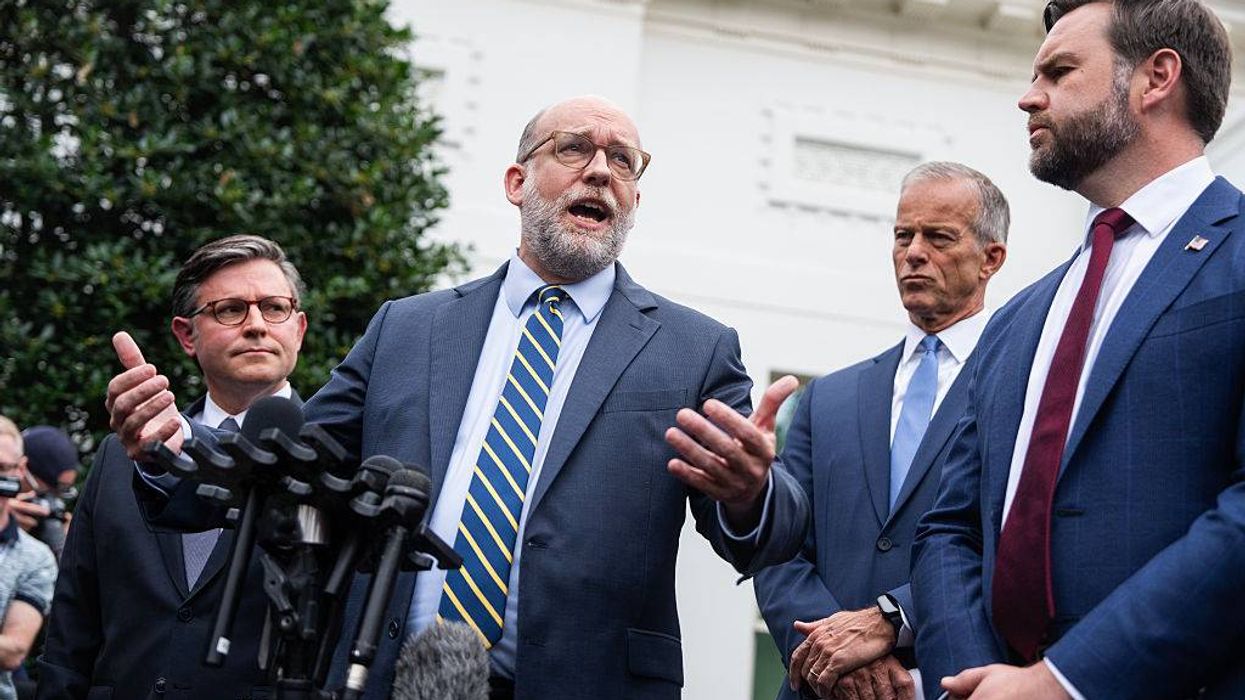
"If the CFPB is not there, people have nowhere to turn when they get cheated," said Sen. Elizabeth Warren.
President Donald Trump and his administration have been openly plotting to scrap the nation's top consumer protection watchdog, but a federal judge has at least temporarily put those plans on hold.
US District Judge Amy Berman Jackson ruled on Tuesday that the US Federal Reserve must continue providing funds to the Consumer Financial Protection Bureau (CFPB), rejecting the Trump administration's claims that the nation's central bank currently lacks the "combined earnings" to fund the bureau's operations.
The administration had argued that the Federal Reserve should not be making payments to the CFPB because it has been operating at a loss since 2022, when it began a series of aggressive interest rate hikes aimed at taming inflation.
However, Jackson rejected this reasoning and accused the administration of using it as a cover to defund an agency that the president and top officials such as Russell Vought, director of the Office of Management and Budget, had long expressed a desire to abolish.
"It appears that defendants’ new understanding of 'combined earnings' is an unsupported and transparent attempt to starve the CPFB of funding," the judge wrote.
The CFPB must now be funded at least until the DC Circuit of Appeals weighs in on an ongoing lawsuit brought by the National Treasury Employees Union (NTEU) against Vought over layoffs at the agency that is scheduled for hearings in February.
The NTEU took a victory lap in the wake of the ruling and taunted Vought for his defeat.
"Yet another loss for Rusty Vought," the union posted on Bluesky. "Wonder how much longer Donald is going to put up with this?"
While it will continue to receive funding for the time being, the CFPB has still seen its ability to fulfill its mission severely diminished during Trump's second term.
A Tuesday report from Reuters claimed that the CFPB is "on the brink of collapse" given that the Trump administration, congressional Republicans, and industry lawsuits have "undone a decade's worth of CFPB rules on matters ranging from medical debt and student loans to credit card late fees, overdraft charges and mortgage lending."
The report also noted that, during Trump's second term, the CFPB has "dropped or paused its probes and enforcement actions, and stopped supervising the consumer finance industries, leading to a string of resignations" at the agency.
Sen. Elizabeth Warren (D-Mass.), who first drew up plans to create the CFPB in the wake of the 2008 global financial crisis, explained the agency's importance in an interview with Reuters.
"I was stunned by the number of people in financial trouble who had lost a job or got sick but who had also been cheated by one or more of their creditors," she said. "For no agency was consumer protection a first priority, it was somewhere between fifth and 10th, which meant there was just no cop on the beat. If the CFPB is not there, people have nowhere to turn when they get cheated."

"By refusing to fund the CFPB, even when legal and appropriate funding mechanisms are available, the Trump administration has sharpened its message that it does not care about affordability."
A coalition of attorneys general from across the US sued White House budget chief Russell Vought on Monday over his effort to completely starve the Consumer Financial Protection Bureau of funding, a ploy that—if successful—would eliminate a key path of recourse for Americans harmed by corporate abuses.
The lawsuit was filed in a federal court in Portland, Oregon by the top law enforcement officials of 20 states—including New York, California, Maine, and Hawaii—and the District of Columbia. The suit notes that Vought, in his capacity as acting director of the consumer bureau, "has worked tirelessly to terminate the CFPB’s operations by any means necessary—denying plaintiffs access to CFPB resources to which they are statutorily entitled."
The attorneys general specifically challenge Vought's "unlawful" refusal to request CFPB funding from the Federal Reserve. Under the law that established the consumer bureau, the agency receives funding from the Fed rather than congressional appropriations.
Vought has advanced a tortured definition of "earnings" to argue the Fed lacks funds from which the CFPB can draw, leaving him with no choice but to allow the agency he and his far-right allies have long opposed to languish.
The new lawsuit argues that Vought's position violates the Administrative Procedure Act and the US Constitution. If allowed to stand, Vought's refusal to seek CFPB funds would "make it all but certain that the CFPB will run out of funding completely in January 2026."
California Attorney General Bonta said in a statement Monday that the Trump administration’s "latest effort to destroy the CFPB means that hundreds of thousands of consumer complaints will fall on deaf ears."
"By refusing to fund the CFPB, even when legal and appropriate funding mechanisms are available, the Trump administration has sharpened its message that it does not care about affordability, that it does not care to be on the side of families and working Americans," said Bonta.
The CFPB has been a target of big banks and other powerful corporations since its creation in the wake of the 2008 financial crisis. The agency's success—it has returned more than $21 billion to consumers since 2011—has only intensified efforts by corporate-friendly lawmakers and right-wing bureaucrats to gut it.
Since taking control of the CFPB earlier this year, Vought has effectively shut down bureau operations and signaled a lax approach to enforcement.
US Sen. Elizabeth Warren (D-Mass.), an architect of the CFPB, applauded the state attorneys general for taking legal action against Vought.
“The Trump administration’s latest illegal attempt to shut down the Consumer Financial Protection Bureau will hurt families in every state across the country—and now states are fighting back," said Warren. "Today’s new lawsuit underscores how illegally starving the agency of funding would turn off the consumer complaint database that has helped millions of Americans at the end of their rope after getting scammed."
"If courts uphold the law," she added, "they’ll reject this attempt to sideline the financial cop on the beat that has returned more than $21 billion directly to Americans cheated by big banks or giant corporations.”
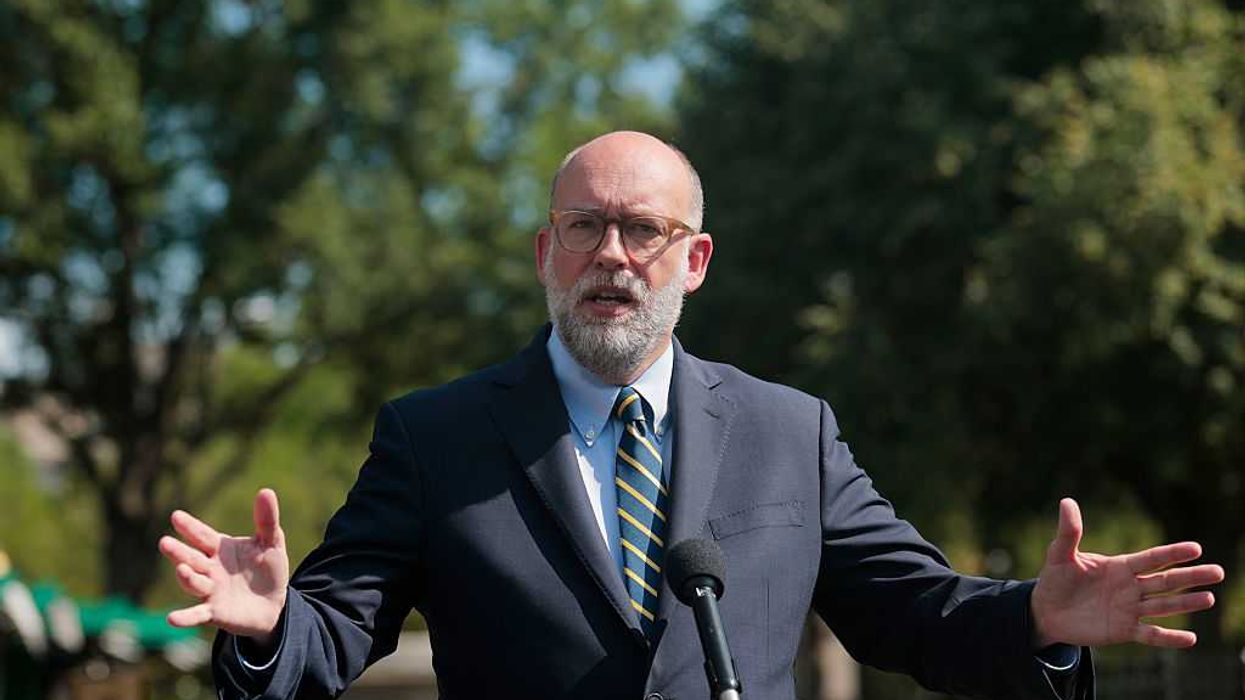
"What's next, 'Russell Vought Tells CFPB Examiners to Serve Tea to Their Wall Street Masters in Tiny French Maid Aprons'?"
“Why is Russell Vought showing the world his weird, creepy pledge of allegiance to big corporations? Have some dignity, Russell."
That's what Consumer Financial Protection Bureau Union member Alexis Goldstein said on Monday about the CFPB acting director's new "humility pledge" that examiners with the agency's Supervision Division will be forced to read to financial institutions before conducting reviews next year.
Several other CFPB Union members joined Goldstein in blasting Vought's pledge, including treasurer Gabe Hopkins, who said that "whoever wrote this has never even spoken to an examiner before, only been wined and dined by industry lobbyists."
The lengthy pledge states in part that the CFPB's "goal is to work collaboratively with the entities to review entities' processes
for compliance and/or remedy existing problems," and the agency "is doing so by encouraging self-reporting and resolving issues in Supervision, where feasible, instead of via Enforcement."
CFPB Union president Cat Farman inquired: "Is this fan fiction I'm reading? What's next, 'Russell Vought Tells CFPB Examiners to Serve Tea to Their Wall Street Masters in Tiny French Maid Aprons'?"
"Instead of traumatizing CFPB workers with his roleplay fantasies," Farman argued, "Vought should resign so we can finally do our jobs protecting Americans from Wall Street fraud again."
CFPB Workers don’t consent to Vought’s creepy “Humility Pledge” fantasy. nteu335.org/2025/11/24/c...
[image or embed]
— CFPB Union (@nteu335.bsky.social) November 24, 2025 at 11:17 AM
Vought—also the Senate-confirmed director of the Office of Management and Budget, a role he previously held during President Donald Trump's first term—has unsuccessfully tried to shutter the CFPB completely this year.
As the New York Times reported Monday:
The new pledge is, for now, mostly symbolic. Mr. Vought halted nearly all work at the bureau shortly after his arrival in February, and bank examinations have not resumed. The agency's hundreds of examiners have been told to spend their time closing out all open matters; they are currently barred from initiating new ones.
And Mr. Vought has refused to request money for the consumer bureau from the Federal Reserve, which funds its operations. The bureau warned in court filings that it would run out of operating cash early next year.
In a Friday statement announcing the pledge, the Vought-led agency claimed that under the Biden administration, the Supervision Division "was the weaponized arm of the CFPB."
The agency added that "where these exams were previously done with unnecessary personnel, outrageous travel expenses, and with the thuggery pervasive in prior leadership, they will now be done respectfully, promptly, professionally, and under budget."
Given that Vought "stopped all supervision exams in 2025, refuses to fund CFPB, and says he's shutting us down by 2026," CFPB Union member Doug Wilson asked: "So how will we supervise banks in 2026 if CFPB is closed? How can bank exams be 'under budget' if there is no budget?"
Ripping Vought's pledge and press release as "incredibly disrespectful to Supervision's dedicated workers," fellow CFPB Union member Tyler Creighton said that the pair of documents also "misunderstands or misconstrues Supervision's prior work."
"Supervision's workers have always conducted examinations professionally, efficiently, conscientiously, and with a focus on remedying consumer harm," Creighton said. "We will continue to do so as soon as Donald Trump and Vought end their 10-month suspension of examinations and let us get back to work for the American people."
Another CFPB Union member, Steve Wheeler, highlighted that "they're trying to make it sound like it’s groundbreaking to send notifications of exams ahead of time and keep data pulls relevant to the examined area, when those are things we already do."
Originally proposed by now-Sen. Elizabeth Warren (D-Mass.), the CFPB was created in the wake of the 2008 financial crisis via the Dodd-Frank Wall Street Reform and Consumer Protection Act, signed in 2010 by then-President Barack Obama.
Warren joined the CFPB Union members in calling out the new pledge, declaring that "Donald Trump is Wall Street first."
Union member Ravisha "Avi" Kumar pointed out that "under previous administrations, CFPB examiners protected consumers from banks, like Wells Fargo, that incentivized their employees to cut corners and overlook consumer harm. CFPB forced the banks to return that stolen money to consumers."
"Ironically, under this administration, Vought says he will incentivize examiners to rush jobs (cut corners) and stick to the surface (overlook consumer harm)," Kumar added. "How is that still consumer financial protection?"
The pledge announcement came a day after CFPB officials told staff that much of the agency workforce will be furloughed at the end of the year and that remaining consumer litigation will be sent to the US Department of Justice (DOJ).
"This is Russ Vought's latest illegal power grab in his ongoing plan to shut down the CFPB and protect CEOs instead of consumers," said Farman. "CFPB attorneys are afraid DOJ will dismiss these cases."
"Vought's already helped Wall Street swindle $18 billion from Americans this year," the union leader continued. "If Vought is going to keep refusing to fund CFPB in order to illegally dismantle the agency, while he wastes over $5 million of CFPB's dwindling budget on personal bodyguards, then it's time for Congress to impeach and remove Russell Vought from power."
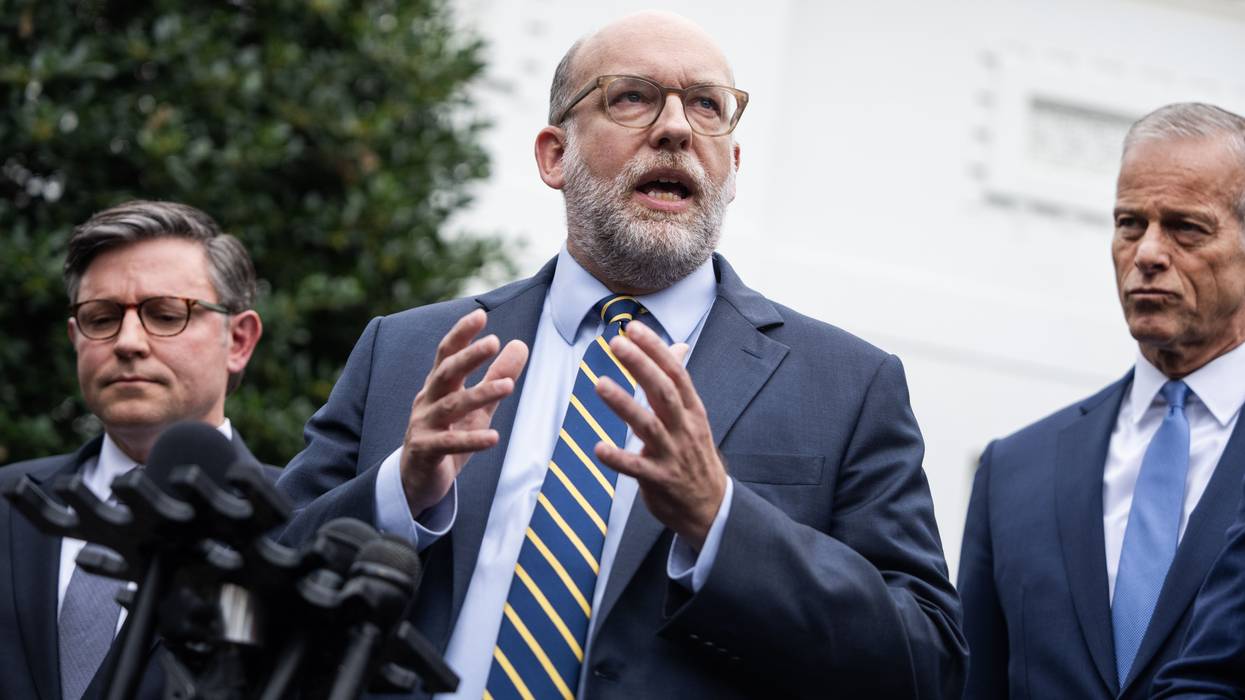
One consumer advocate said the effort adds "salt to the wound" as tens of millions of people face healthcare premium spikes that are likely to worsen the nation's medical debt crisis.
The Trump administration is moving to undercut state-level efforts to wipe medical debt from Americans' credit reports, just as millions across the country are facing massive healthcare premium increases stemming from congressional Republicans' refusal to extend Affordable Care Act subsidies.
On Tuesday, according to reporting by The Lever and Bloomberg Law, the Russell Vought-led Consumer Financial Protection Bureau (CFPB) will publish a nonbinding interpretive rule arguing that federal statute "generally preempts state laws that touch on areas of credit reporting."
The guidance aligns with views expressed by a Trump-appointed federal judge in Texas who, earlier this year, vacated a Biden-era CFPB rule that would have prohibited the inclusion of medical debt on consumer credit reports. The Trump administration, which has repeatedly violated court orders, is complying with the decision.
Medical debt is a growing crisis in the United States: Roughly 14 million adults owe more than $1,000 in medical debt, and an estimated 20% of Americans have medical debt on their credit reports.
Supporters of removing medical debt from credit reports argue it is not a reliable measure of creditworthiness. The Center for Consumer Law & Economic Justice at UC Berkeley notes that "medical debt often reflects the simple misfortune of getting sick unexpectedly and having to face a medical system that is rife with insurance stonewalling, delay, and mistakes."
More than a dozen states—including California, Colorado, and New York—have moved to curb the reporting of medical debt, which accounts for a significant percentage of personal bankruptcies in the US.
The Lever reported that the Trump administration's position that federal law overrides state laws is being echoed "by industry groups to advance their ongoing litigation to overturn the 15 state laws."
"For example," the outlet observed, "the Consumer Data Industry Association, which represents credit reporting companies like Equifax, Experian, and TransUnion, is likewise arguing that federal laws void state-level regulations of their conduct as part of their effort to block Maine's medical debt law."
Chi Chi Wu, an attorney at the National Consumer Law Center, told Bloomberg Law that the Trump CFPB's assault on efforts to remove medical debt from credit reports adds "salt to the wound" as tens of millions of people face surging healthcare premiums.
Writing for MSNBC over the weekend, Century Foundation president Julie Margetta Morgan warned that "the spike in premiums won't just blow an even bigger hole in families' future budgets."
"It will pour gasoline on the already raging fire of medical debt in this country," she added, "and government leaders at all levels are not prepared for it."
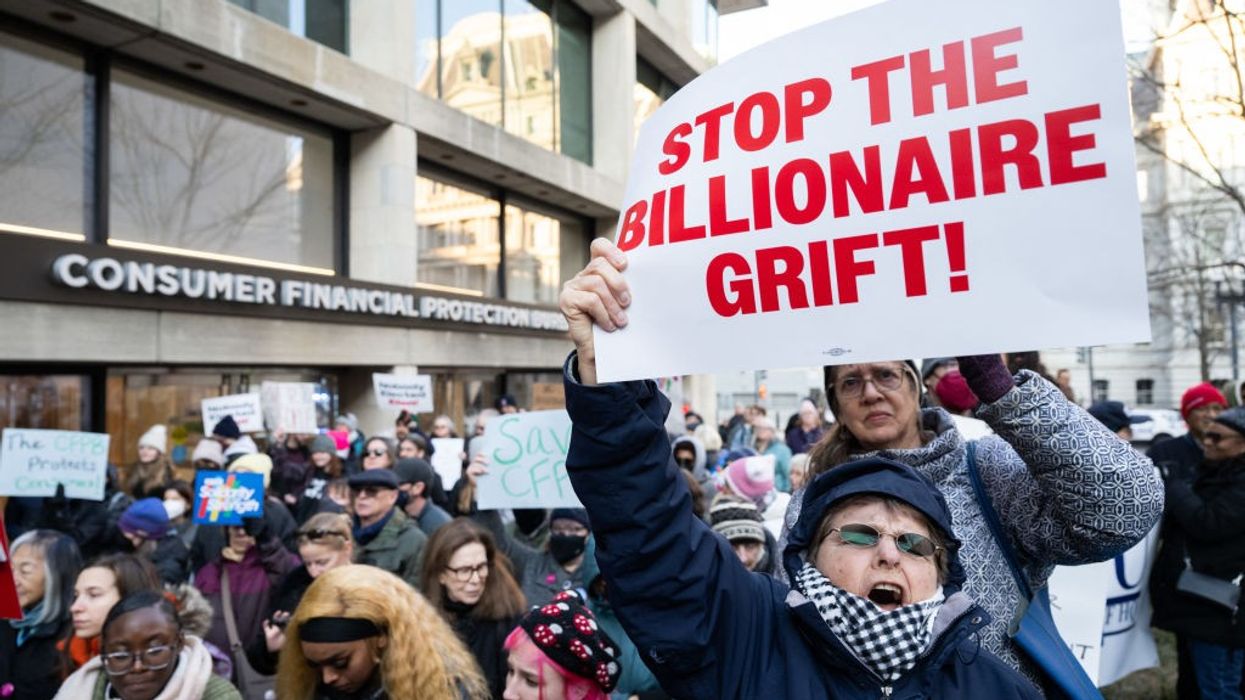
The Trump administration has gutted key financial regulators, eliminated services and protections, and eviscerated oversight and enforcement, setting people up for financial harm.
If Californians have a financial dream these days, it’s probably the modest goal of getting by, paycheck to paycheck. A more ambitious goal may be buying a house or building an emergency savings fund. But to a great degree these days, that dream is going to depend on decisions made by elected officials in Sacramento and Washington DC.
At the Academy of Financial Education, based in Fresno, California, we work with everyday people who are not only trying to get by, but are seeking long-term financial stability for their families. People like Aline, a restaurant consultant in the Bay Area, balancing budgets for her family and her business. Or Sara, who is working to increase her credit score and buy her first house.
A major impediment to their efforts is a financial system whose exploitative products flood their social media, TV, email inbox, and every other marketing channel. Buy now, pay later services are simply predatory loans in disguise, hiding the full cost of fees and charges associated with the service. And cryptocurrency, pitched as the next solution to our income woes, is barreling into our economy with little to no oversight.
Our own financial behaviors are intricately connected to the health and fairness of our financial system. The financial services industry, be it Wall Street or newfangled cryptocurrency peddlers, are using predatory and extractive practices that harm workers, families, and communities with impunity. Under their influence, the Trump administration has gutted key financial regulators, eliminated services and protections, and eviscerated oversight and enforcement, setting people up for financial harm. It is ready to allow cryptocurrency into 401k portfolios, putting secure retirements at risk.
In the seven months since the Trump administration arrived, its actions have cost consumers $18 billion.
The current administration has dismantled the Consumer Financial Protection Bureau (CFPB), one of the best financial advocates we have in the government. Since the start of this administration, CFPB staff have been fired, ordered to stop working on enforcement actions, and drop legal challenges to financial institutions that are causing people harm. Now hamstrung by funding cuts passed by the Republican Congress as well, it is unable to operate properly.
Congress created the CFPB after the 2008 financial crisis, itself a product of negligent financial institutions. Since then, the CFPB has returned $21 billion to 200 million people through its enforcement actions and saved tens of billions more by implementing commonsense safeguards. Safeguards including a cap on overdraft fees, removing medical debt from credit reports, and regulating tech companies providing shiny new financial products. In the seven months since the Trump administration arrived, its actions have cost consumers $18 billion.
A financial marketplace without the CFPB is an open playground for Wall Street, big banks, and tech companies to profit off you and me—without a single guardrail. Companies like Elon Musk’s PayPal, which almost came under supervision by the CFPB until the Republican Congress rolled back that plan.
The newest industry on the block is crypto. Crypto companies claim they provide financial opportunity, flexibility, and freedom, but we know this is a lie. In California alone, crypto scams run rampant enough that the Department of Financial Protection and Innovation (DFPI) has a running list of them. New legislation in the US Senate aims to all but exempt the majority of crypto platforms and digital assets from meaningful oversight. Cryptocurrency is on the verge of becoming an even more predatory and scammy activity.
The losses of financial protection and oversight make it harder for nonprofit organizations like mine, focused on financial empowerment, to help our clients and community with budgeting, credit scores, planning, and more because we do not—cannot—work in a vacuum. Dismantling the CFPB and allowing crypto to run unchecked creates new obstacles, vulnerabilities, and distractions for our clients, disrupting their ability to plan for the future and pursue their goals. They will be more likely to experience financial loss and unnecessary suffering, and they won’t have a government advocate like the CFPB to rely on.
We need our whole government watching out for working people, not big banks and tech companies. Costs continue to rise and new scams plague the financial marketplace—from predatory buy-now-pay-later loans to shady crypto scams. By deregulating our financial system and dismantling critical allies like the CFPB, our elected officials are leaving everyday Americans holding the bag.
"None of us can stand idly by while Russ Vought and Donald Trump destroy the agency that protects working Americans from financial predators," said the union president.
The head of a union representing employees of the US Consumer Financial Protection Bureau was among those who blasted a Friday ruling from a federal appellate court that lets President Donald Trump continue with an effort to gut the CFPB.
"Today's ruling is a disgrace. It empowers Donald Trump to unilaterally eliminate vital public services established by Congress," said CFPB Union president Cat Farman in a statement. "Without a functioning CFPB, there is less oversight of the biggest banks, which means more fraud and less help for veterans and the elderly who are major targets for financial scams."
The union president took aim at the acting leader of the CFPB, Office of Management and Budget Director Russ Vought, and Trump, who has a broader mission to tear apart the federal bureaucracy with his Department of Government Efficiency, previously led by billionaire Elon Musk.
"None of us can stand idly by while Russ Vought and Donald Trump destroy the agency that protects working Americans from financial predators," Farman declared. "CFPB workers aren't giving up our fight to defend the rule of law from executive overreach and protect the hard-earned paychecks of working people from Wall Street greed."
In Friday's 2-1 decision, a panel from the US Court of Appeals for the District of Columbia Circuit found that a district judge exceeded her authority by blocking the Trump administration's sweeping attack on the federal agency earlier this year. Judge Greg Katsas wrote the new opinion, joined by Judge Neomi Rao; they were both appointed by Trump during his first term.
Judge Nina Pillard—an appointee of former President Barack Obama, who signed the bill that established the CFPB—dissented. She wrote, "The notion that courts are powerless to prevent the president from abolishing the agencies of the federal government that he was elected to lead cannot be reconciled with either the constitutional separation of powers or our nation's commitment to a government of laws."
US Sen. Elizabeth Warren (D-Mass.), a former Harvard University professor who spearheaded the creation of the CFBP, stressed on social media Friday that "the fight continues."
This divided decision willfully ignores the Administration’s lawless attempt to destroy an agency created by Congress that has helped millions.But the Administration cannot yet resume its illegal attempt to shut down the CFPB. The fight continues.
[image or embed]
— Elizabeth Warren (@warren.senate.gov) August 15, 2025 at 3:25 PM
The Trump appointees' decision will not take effect immediately, giving critics time to seek further appeals. Adina Rosenbaum, an attorney with Public Citizen Litigation Group, which represented plaintiffs who sued over attacks on the CFPB, signaled that her organization may take further action.
"The Trump administration does not have the authority to abolish the Consumer Financial Protection Bureau, which was created by Congress and which plays an important role in protecting consumers across the country," Rosenbaum said in a statement.
"The district court found that the defendants were trying to eliminate the agency, and it entered an injunction to prohibit them from doing so while the case is ongoing. The court of appeals should have upheld that injunction to ensure that the administration does not illegally close the agency and deprive consumers of the protections to which they are entitled," she added. "We are strongly considering filing a petition for rehearing en banc."