

SUBSCRIBE TO OUR FREE NEWSLETTER
Daily news & progressive opinion—funded by the people, not the corporations—delivered straight to your inbox.
5
#000000
#FFFFFF
To donate by check, phone, or other method, see our More Ways to Give page.
Daily news & progressive opinion—funded by the people, not the corporations—delivered straight to your inbox.
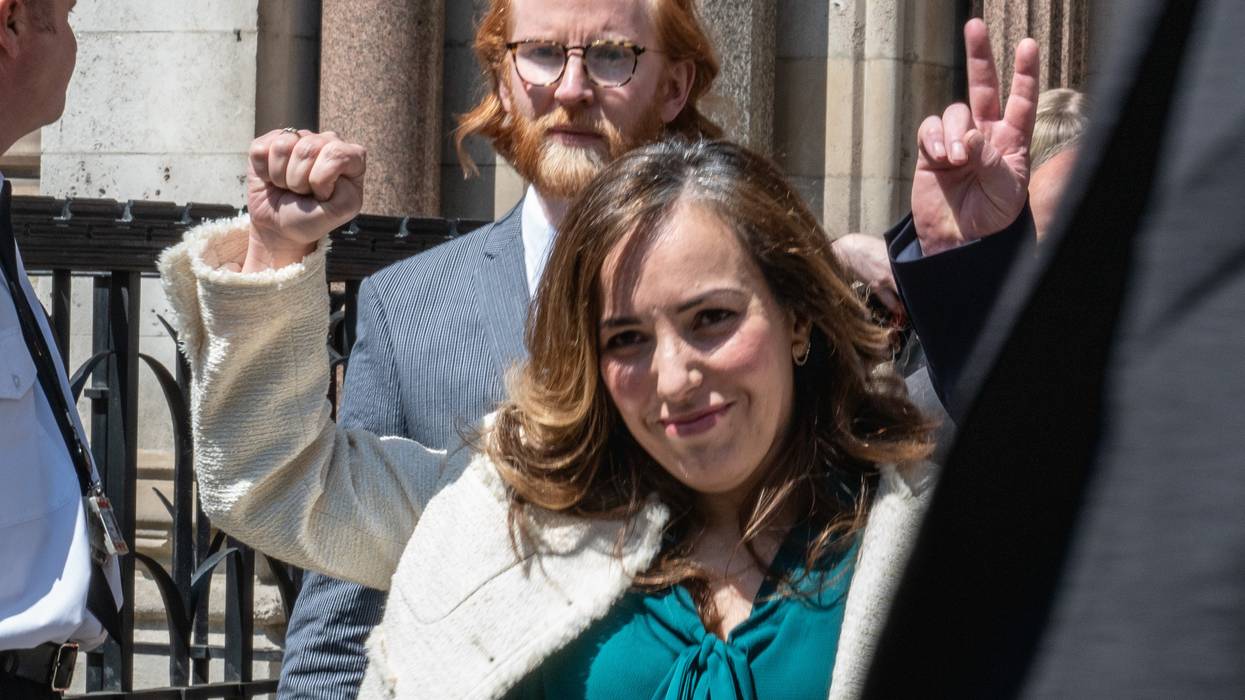
"The High Court's decision is a rare piece of positive news for Julian Assange and all defenders of press freedom," one Amnesty expert said.
WikiLeaks founder Julian Assange may appeal an extradition order to the U.S., the U.K. High Court ruled on Monday.
The 52-year-old Assange faces 17 charges of espionage and one charge of computer misuse due to WikiLeaks' publication of classified U.S. documents nearly 15 years ago. He has spent the last five years fighting extradition in London's high-security Belmarsh Prison.
"The High Court's decision is a rare piece of positive news for Julian Assange and all defenders of press freedom," Amnesty International legal adviser Simon Crowther said in response to the decision. "The High Court has rightly concluded that—if extradited to the USA, Assange will be at risk of serious abuse, including prolonged solitary confinement, which would violate the prohibition on torture or other ill-treatment."
"If the Biden administration cares about press freedom, it must drop the Assange case immediately."
The charges against Assange stem from WikiLeaks publications that revealed U.S. and U.K. war crimes in Iraq and Afghanistan. U.S. prosecutors argue that Assange persuaded and facilitated U.S. Army intelligence analyst Chelsea Manning in stealing classified documents that contained proof of these crimes, while Assange's lawyers maintain that he acted as a journalist and should be protected as one.
"Under the legal theory the government relies on in the indictment, any journalist could be convicted of violating the Espionage Act for obtaining or receiving national defense information from a source, communicating with a source to encourage them to provide national defense information, or publishing national defense information—acts journalists engage in every day," the Freedom of the Press Foundation (FPF) warned in a statement.
In March, the U.K.'s High Court delayed Assange's extradition until the Biden administration could provide certain assurances, including that Assange would have protection under the First Amendment and that he would not face the death penalty. The court gave the administration three weeks to respond, and set a May 20 hearing date to determine if the assurances were sufficient or if Asange could appeal his extradition.
During Monday's hearing, Assange's lawyers argued that the administration's assurances were "blatantly inadequate," according to The Associated Press.
While Assange's legal team accepted the assurance that the U.S. would not seek the death penalty as an "unambiguous executive promise," they did did not accept the U.S. response to whether or not Assange would be granted the same First Amendment rights as a U.S. citizen.
As The Guardian reported:
Edward Fitzgerald KC, representing Assange, said problems surrounding the assurances by the U.S. were "multifold" and they did not rule out the possibility of a U.S. court ruling that the WikiLeaks founder, as a foreigner, was not entitled to First Amendment rights.
The assurance was not that Assange could "rely" on First Amendment rights but "merely that he can seek to raise" them, Fitzgerald said.
In response to these arguments, High Court Judges Victoria Sharp and Jeremy Johnson determined that Assange could appeal his extradition.
WikiLeaks editor-in-chief Kristinn Hrafnsson said the ruling was "finally a glimmer of hope" for Assange.
The WikiLeaks founder's wife, Stella Assange, said the U.S. had put "lipstick on a pig—but the judges did not buy it," according to AP.
"As a family we are relieved but how long can this go on?" she asked. "This case is shameful and it is taking an enormous toll on Julian."
FPF deputy director of advocacy Caitlin Vogus said the group welcomed the decision and urged the court to deny the extradition request.
"But better yet, the Biden administration can and should end this case now," Vogus continued.
"If [U.S. President Joe] Biden continues to pursue the Assange prosecution, he risks creating a precedent that could be used against any reporter who exposes government secrets, even if they reveal official crimes," Vogus added. "If the Biden administration cares about press freedom, it must drop the Assange case immediately."
Amnesty's Crowther agreed: "The USA's ongoing attempt to prosecute Assange puts media freedom at risk worldwide. It ridicules the USA's obligations under international law, and their stated commitment to freedom of expression. In trying to imprison him, the U.S. is sending the unambiguous message that they have no respect for freedom of expression, and that they wish to send a warning to journalists and publishers everywhere: that they too could be targeted, for receiving and publishing classified material—even if doing so is in the public interest."
"As the fight continues in the U.K. courts, we call on the USA to finally put an end to this shameful saga, by dropping all the charges against Assange," Crowther continued. "This would bring the process in the U.K. to an immediate halt, and Julian Assange will be freed. Assange has already spent five years in prison in the U.K., much of which has been arbitrary."
Assange, whose has suffered from health problems, has been confined in one form or another since 2010. For nearly seven years before 2019, he sheltered in the Ecuadorian Embassy in London.
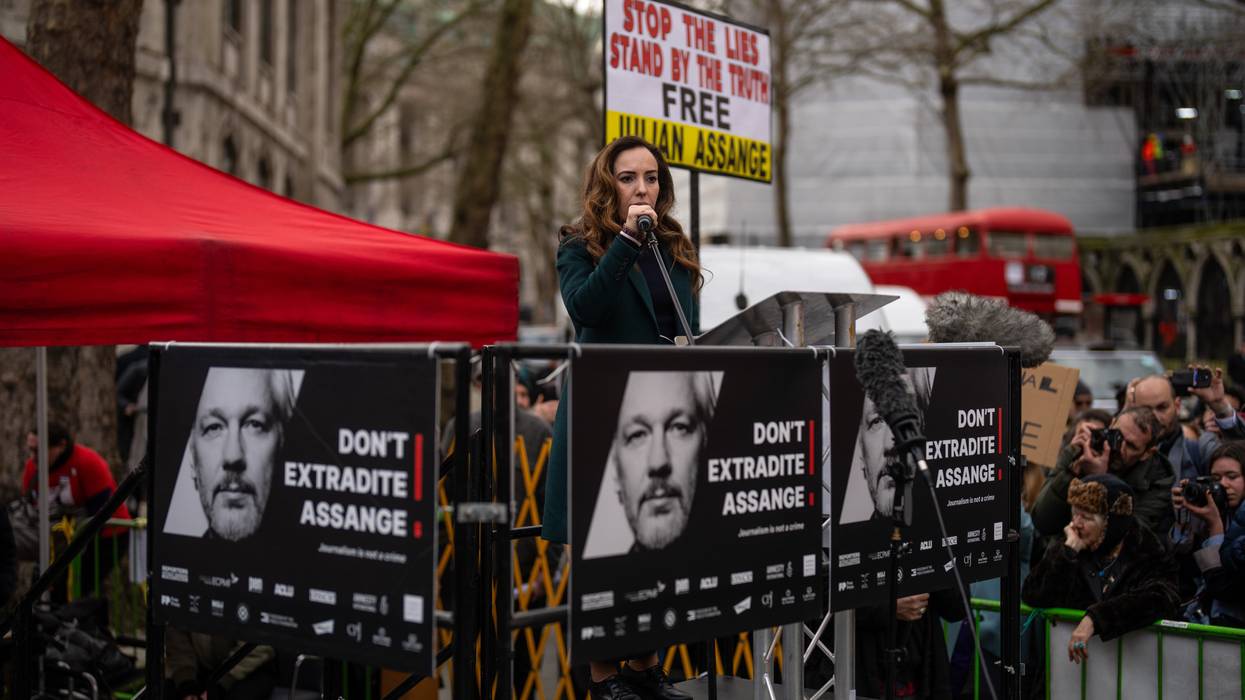
"The diplomatic note does nothing to relieve our family's extreme distress about his future—his grim expectation of spending the rest of his life in isolation in U.S. prison for publishing award-winning journalism."
The wife of jailed WikiLeaks founder Julian Assange sharply criticized "assurances" the U.S. government made as the U.K. High Court considers allowing the 52-year-old Australian's extradition to the United States, where he faces 175 years in prison.
The U.S. document states that if extradited, "Assange will have the ability to raise and seek to rely upon at trial (which includes any sentencing hearing) the rights and protections given under the First Amendment of the Constitution of the United States," though it points out that "a decision as to the applicability of the First Amendment is exclusively within the purview of the U.S. courts."
"A sentence of death will neither be sought nor imposed on Assange," the document adds, noting that he has not been charged with any offense for which that is a possible punishment. It comes after the U.K. court ruled last month that the Biden administration had until Tuesday to confirm that he wouldn't face the death penalty and if it did not, he could continue appealing his extradition.
Responding on social media, his wife, Stella Assange—who is an attorney—blasted the U.S. assurances as "weasel words."
"The United States has issued a nonassurance in relation to the First Amendment, and a standard assurance in relation to the death penalty," she said. "It makes no undertaking to withdraw the prosecution's previous assertion that Julian has no First Amendment rights because he is not a U.S citizen."
"The Biden administration must drop this dangerous prosecution before it is too late."
"Instead, the U.S. has limited itself to blatant weasel words claiming that Julian can 'seek to raise' the First Amendment if extradited," she added. "The diplomatic note does nothing to relieve our family's extreme distress about his future—his grim expectation of spending the rest of his life in isolation in U.S. prison for publishing award-winning journalism. The Biden administration must drop this dangerous prosecution before it is too late."
The U.K. court's next hearing is scheduled for May 20. Last week, reporters asked U.S. President Joe Biden about requests from Australian Prime Minister Anthony Albanese and members of the country's Parliament to drop the extradition effort and charges. He said that "we're considering it."
So far, the Biden administration has ignored significant pressure from Australian and U.S. politicians as well as human rights and press freedom groups, and continued to pursue the extradition of Julian Assange, who was charged under former President Donald Trump—the Republican expected to face the Democratic president in the November election.
Assange was charged under the Espionage Act and Computer Fraud and Abuse Act for publishing classified documents including the "Collateral Murder" video and the Afghan and Iraq war logs. Since British authorities dragged Assange out of the Ecuadorian Embassy in London—where he lived with political asylum for seven years—he has been jailed in the city's Belmarsh Prison.
The WikiLeaks founder's wife, with whom he has two children, was not alone in condemning the U.S. assurances on Tuesday.
"This 'assurance' should make journalists even more worried about how the Assange prosecution could impact press freedom in the U.S. and globally. The U.K. should grant Assange's appeal and refuse to extradite him," said the Freedom of the Press Foundation. "The U.S. doesn't disclaim the ability to argue that the First Amendment doesn't apply to Assange because of his nationality or other reasons, or for a court to rule against a First Amendment challenge to his prosecution."
Jameel Jaffer, director of the Knight First Amendment Institute, similarly said that "no one who cares about press freedom should take any comfort at all from the United States' assurance that Assange will be permitted to 'rely upon' the First Amendment."
"If the prosecution goes forward, the U.S. government will be trying to persuade American courts that the First Amendment poses no bar to the prosecution of a publisher under the Espionage Act," Jaffer warned. "And if the government is successful, no journalist will ever again be able to publish U.S. government secrets without risking her liberty."
"So the government's First Amendment assurances aren't responsive at all to the concerns that press freedom advocates have been raising," he concluded. "This case poses essentially the same threat to press freedom today as it did yesterday."
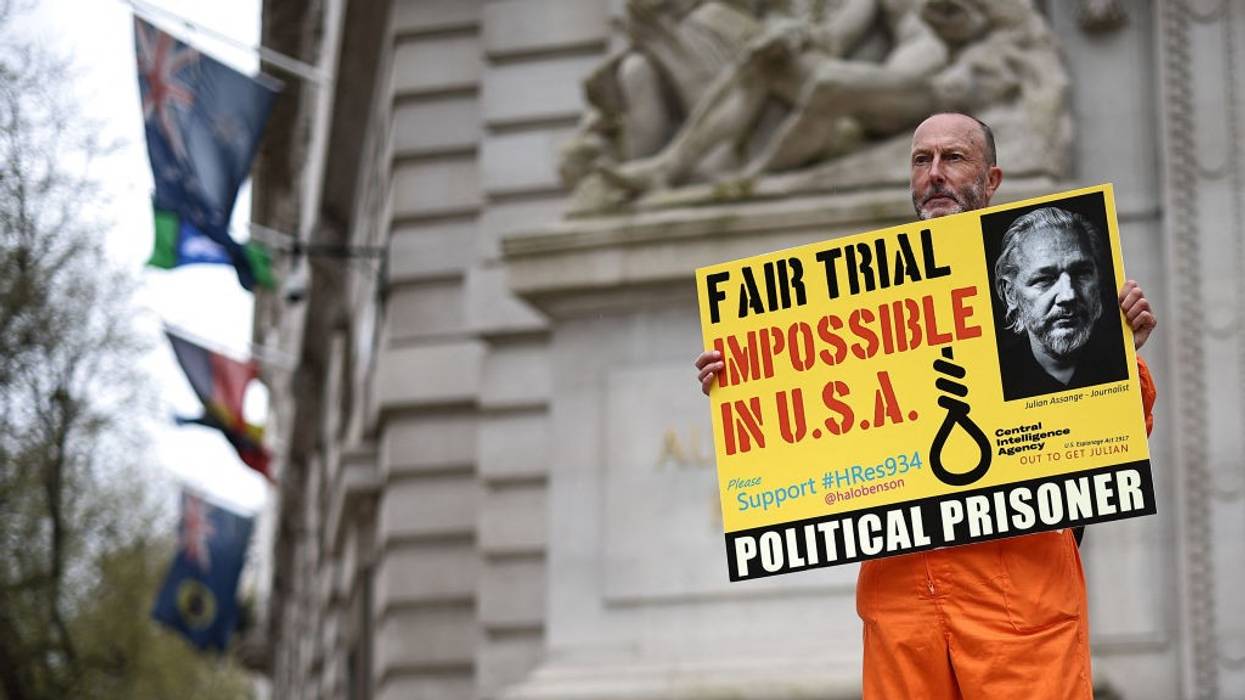
"This would be the best decision Biden ever made," said one supporter of the jailed WikiLeaks publisher.
U.S. President Joe Biden on Wednesday said his administration is weighing the Australian government's requests to drop charges against WikiLeaks founder Julian Assange, who has been deprived of his freedom since 2010 and is currently jailed in London's notorious Belmarsh Prison while fighting extradition to the United States.
Asked by reporters at the White House about requests from Australian Prime Minister Anthony Albanese and members of the country's Parliament for the U.S. and United Kingdom to drop the extradition effort and charges against Assange—an Australian citizen—Biden said that "we're considering it."
Stella Assange, Julian's wife, responded to Biden's remarks on social media. "Do the right thing," she wrote. "Drop the charges. #FreeAssangeNOW."
Srećko Horvat, a Croatian philosopher and co-founder of the Democracy in Europe Movement 2025 pan-European progressive political party,
said that "this would be the best decision Biden ever made."
British journalist Afshin Rattansi
asked, "Why has Julian Assange been put through this ordeal in the first place?"
Assange—who is 52 years old and suffers from various health problems—faces multiple U.S. charges under the Espionage Act and Computer Fraud and Abuse Act for his role in publishing classified government documents, some of them revealing war crimes and other misdeeds. Among the files published by WikiLeaks are the "Collateral Murder" video—which shows a U.S. Army helicopter crew killing a group of Iraqi civilians—the Afghan and Iraq war logs.
Three U.S. administrations have pursued charges against Assange. During the administration of former President Donald Trump—who is the presumptive 2024 Republican nominee—officials including then-Secretary of State Mike Pompeo allegedly plotted to assassinate Assange to avenge WikiLeaks' publication of the "Vault 7" documents exposing CIA electronic warfare and surveillance activities. In 2010, Trump called for Assange's execution.
The U.K. High Court ruled last month that Assange could not be immediately extradited to the U.S., where he faces up to 175 years behind bars if convicted on all counts. The tribunal gave the Biden administration until April 16 to guarantee that Assange won't face the death penalty. Absent such assurance, Assange will be allowed to continue appealing his extradition.
Last month, Assange's legal team denied reports that a plea deal with the U.S. government may have been in the works.
Assange has been imprisoned in Belmarsh since 2019. Before that, he spent nearly seven years in the Ecuadorian Embassy in London, where he had been granted political asylum under the government of leftist former President Rafael Correa.
The United Nations Working Group on Arbitrary Detention
found in 2016 that Assange had been arbitrarily deprived of his freedom since his first arrest on December 7, 2010. In 2019, Nils Melzer, then the U.N.'s special rapporteur on torture, said Assange had been subjected to "psychological torture."
Following the High Court's decision last month, Amnesty International legal adviser Simon Crowther said that "the U.S. must stop its politically motivated prosecution of Assange, which puts Assange and media freedom at risk worldwide."
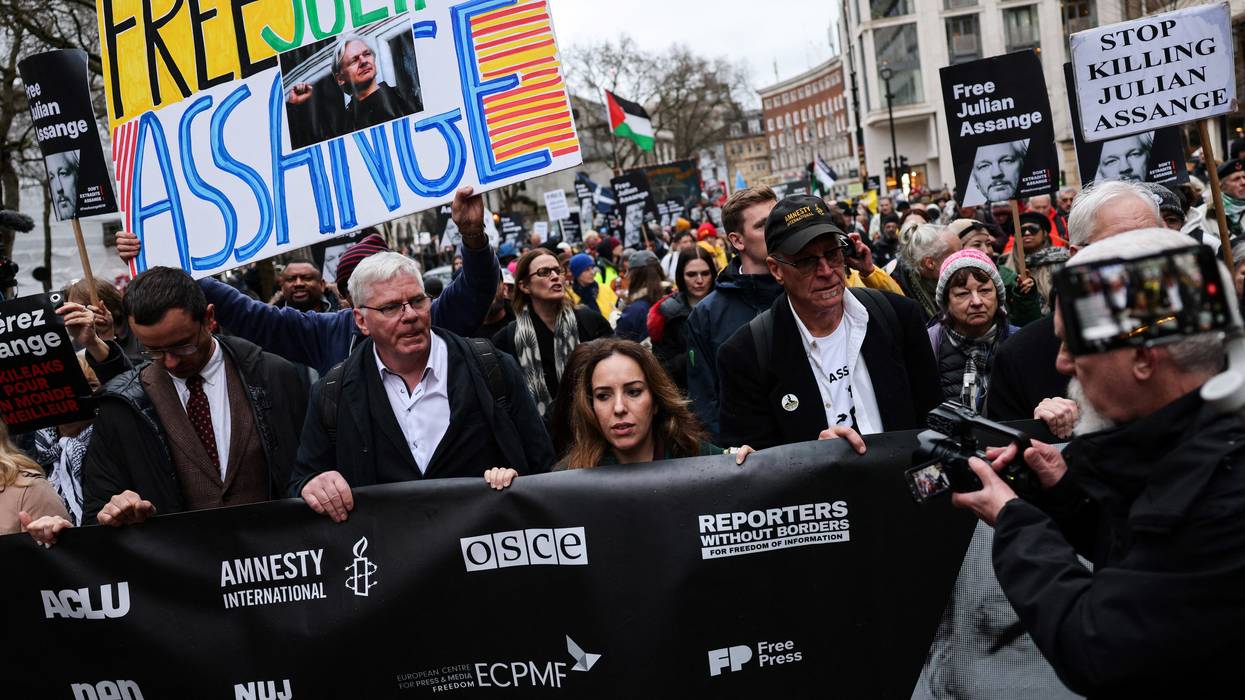
"Let me be very clear: This case is about journalism," said a campaigner with Reporters Without Borders. "It is about press freedom. If they make an exception of Julian Assange, the rule will be broken."
Supporters of WikiLeaks founder Julian Assange marched the streets of central London on Wednesday demanding his immediate release after U.S. government lawyers argued to the British High Court that the journalist should be extradited across the Atlantic to face espionage charges.
"How pathetic the U.S. case is," Stella Assange, the WikiLeaks founder's wife, told a crowd gathered outside Wednesday's court hearing, which represents the final legal avenue in the United Kingdom to prevent his extradition to the U.S.
"What they're trying argue is that state secrets trump revealing state crimes," Stella Assange said of U.S. lawyers. "This is the balance they're trying to shift. They want impunity, they don't want to be scrutinized, and journalism stands in the way."
BREAKING: @Stella_Assange explains the arguments laid out by the prosecution#FreeAssangeNOW pic.twitter.com/60M286NkMb
— Free Assange - #FreeAssange (@FreeAssangeNews) February 21, 2024
A decision in the case—which will decide whether Julian Assange can appeal his extradition—could be weeks, or even months, away.
If the British High Court rules that Assange can't appeal, his legal team is expected to ask the European Court of Human Rights to halt his extradition to the U.S., where Assange faces 17 counts of violating the Espionage Act and a possible 175-year prison sentence.
United Nationsexperts, international human rights groups, and even one British judge have argued that extradition to the U.S. would put the 52-year-old publisher's life at grave risk. Assange was unable to attend this week's hearings or even follow them virtually due to his poor health, his lawyers said.
But global calls from
press freedom groups, the government of Assange's home country, and others for the U.S. Justice Department to drop the case and let the publisher go free have not moved the Biden administration, which decided to continue pursuing Assange's extradition after inheriting the case from the Trump administration—whose CIA reportedly considered kidnapping or assassinating the WikiLeaks founder.
During Wednesday's hearing, the U.S. government's lawyers
argued that Assange's decision to seek out and publish classified U.S. documents—some of which exposed American war crimes—went "far beyond" what could be characterized as journalistic conduct, an argument that many journalists have rejected.
"It is impossible to overstate the dangerous precedent Mr. Assange's indictment under the Espionage Act and possible extradition sets: Every national security journalist who reports on classified information now faces possible Espionage Act charges," Laura Poitras, a journalist and documentary filmmaker, wrote in a New York Times op-ed in 2020. "It paves the way for the United States government to indict other international journalists and publishers. And it normalizes other countries' prosecution of journalists from the United States as spies."
Assange's lawyer, Edward Fitzgerald, similarly argued during the first day of the closely watched hearings on Tuesday that Assange is "being prosecuted for engaging in [the] ordinary journalistic practice of obtaining and publishing classified information, information that is both true and of obvious and important public interest."
Thousands marched through the streets to the office of the UK Prime Minister in Downing Street following the conclusion of Julian Assange's court hearing today, calling for his immediate release | via @MintPressNews #FreeAssange #FreeAssangeNOW pic.twitter.com/YIpjdoT65j
— WikiLeaks (@wikileaks) February 21, 2024
Rebecca Vincent, director of campaigns at Reporters Without Borders, said following Wednesday's hearing that "in these past two days, we have heard nothing new from the U.S. government."
"We have heard them double down on the same arguments that they've been making for 13 years," said Vincent. "Let me be very clear: This case is about journalism. It is about press freedom. If they make an exception of Julian Assange, the rule will be broken—and no one, no journalist, no publisher, no journalistic source, no media organization can ever be confident that their rights will be respected again."

"The responsibility still lies with the U.S. Department of Justice," said a Reporters Without Borders campaigner. "At any point, they could drop the charges, they could close this case, they could let Julian Assange free."
Press freedom advocates on Tuesday issued last-ditch calls for the Biden administration to drop the case against WikiLeaks founder Julian Assange as the journalist and publisher's legal team appeared before the United Kingdom's High Court to fight his extradition to the United States.
The hearings on Tuesday and Wednesday will determine whether Assange, who is 52 years old and in increasingly poor health, can appeal an earlier decision by the U.K. government to approve his extradition to the U.S., where he could be hit with a prison sentence of up to 175 years for publishing classified information—something that journalists do all the time.
Assange's disclosures revealed U.S. war crimes in Iraq and Afghanistan, including the killing of two Reuters journalists.
"It's a terrible thing that this hearing is necessary," Jameel Jaffer, executive director of the Knight First Amendment Institute at Columbia University, said in a statement Tuesday. "The U.S. Justice Department should never have charged Assange under the Espionage Act, because the indictment and prosecution of a publisher under this act poses a grave threat to press freedom."
"The indictment focuses almost entirely on the kinds of activities that national security journalists engage in routinely and as a necessary part of their work—cultivating sources, communicating with them confidentially, soliciting information from them, protecting their identities from disclosure, and publishing classified information," Jaffer added. "A successful prosecution of Assange on the basis of this indictment would criminalize a great deal of the investigative journalism that is absolutely crucial to our democracy."
Rebecca Vincent, director of campaigns at Reporters Without Borders, said during a rally during Tuesday's hearing that "we're not letting the U.S. government off the hook today no matter what happens here in London."
"The responsibility still lies with the U.S. Department of Justice," said Vincent. "At any point, they could drop the charges, they could close this case, they could let Julian Assange free."
RSF's Rebecca Vincent speaking outside Julian Assange court hearing this morning: "RSF is engaged because of Julian Assange's contribution to journalism...he exposed war crimes and human rights violations...If he is extradited, the chilling effect will be enormous" #FreeAssange pic.twitter.com/O87pQ4IHW3
— WikiLeaks (@wikileaks) February 20, 2024
Assange did not attend the first day of the critical hearings in person or by video link for health reasons. The publisher has been languishing in a high-security London prison for more than five years while fighting extradition to the U.S., which his supporters and wife say would be a death sentence.
"We have two big days ahead," Stella Assange, whom Julian married in prison in 2022, told supporters at a demonstration outside the London court on Tuesday. "We don't know what to expect, but you're here because the world is watching. They just cannot get away with this. Julian needs his freedom and we all need the truth."
Seth Stern, director of advocacy at the Freedom of the Press Foundation, warned Tuesday that "as Assange inches closer to extradition, the danger to press freedom grows."
"An Espionage Act trial and conviction of Assange in an American court would be a disaster for journalists and for journalism," said Stern. "If the Biden administration cares as much about press freedom as it claims, it wouldn't wait for the U.K. to send this dangerous case to American courts. The Department of Justice should drop the Assange case now."
"The U.S. is actually engaged in an admission—an admission that they now criminalize journalism."
Assange, who has been fighting U.S. extradition attempts for more than a decade, was indicted under the Trump administration in 2019 on 17 counts of violating the Espionage Act, and the Biden Justice Department has decided to continue pursuing the case against the WikiLeaks founder despite dire warnings about the implications for press freedom.
Edward Fitzgerald, Assange's attorney, said during Tuesday's hearing that "is being prosecuted for engaging in ordinary journalistic practice of obtaining and publishing classified information, information that is both true and of obvious and important public interest."
Fitzgerald argued Tuesday that sending Assange across the Atlantic would violate the U.S.-U.K. Extradition Treaty, which prohibits extraditions for political offenses.
Should the U.K. High Court reject Assange's attempt to appeal, the publisher's legal team is expected to ask the European Court of Human Rights to halt the extradition, warning that his life is in danger. The U.S. has insisted it would not subject Assange to harsh treatment, but United Nations experts and human rights groups have said such assurances are not to be trusted.
Stella Assange told the Australian Broadcasting Corporation ahead of Tuesday's hearing that the WikiLeaks founder would not accept a plea deal with the U.S. Justice Department in exchange for a lighter sentence.
"The only thing that he would be pleading to is journalism," she said. "He is being accused of receiving information from a source, information that was in the public interest, that belonged in the public, and the U.S. is actually engaged in an admission—an admission that they now criminalize journalism."
"That is the case that has been brought against Julian," Stella Assange added. "Journalism has been re-classed as espionage. An unprecedented prosecution has been taken against a publisher for the very first time in the more than 100-year history of this Act and it is going to set a precedent. It already is setting a precedent that can then be used against the rest of the press anywhere in the world."

"This could very well be the final hearing for Julian," said Stella Assange on the eve of the critical U.K. High Court session.
Stella Assange, the wife of Julian Assange, said Monday that the jailed WikiLeaks founder will likely die if he is extradited from Britain to the United States, where he could imprisoned for the rest of his life for publishing classified documents including numerous files exposing U.S. war crimes.
Assange's final appeal is scheduled to be heard on Tuesday by the U.K. High Court. The Australian publisher's supporters are calling it "Day X," and his wife told the BBC that it "could very well be the final hearing for Julian."
"There's no possibility for further appeal in this jurisdiction," she explained, adding that Assange could still seek an emergency injunction from the European Court of Human Rights.
Assange said her husband—who is 52 years old and suffers from physical and mental health problems including heart and respiratory issues—is very weak and "in a very difficult place."
"This case will determine if he lives or dies, essentially," she asserted.
Imprisoned in London's notorious Belmarsh Prison since April 2019, Assange could be sentenced to as many as 175 years behind bars if convicted of all the Espionage Act and Computer Fraud and Abuse Act charges against him.
WikiLeaks published a series of document dumps inculding "Collateral Murder" video—which shows a U.S. Army helicopter crew killing a group of Iraqi civilians—the Afghan War Diary, and the Iraq War Logs, which revealed American and allied war crimes.
In 2016, The United Nations Working Group on Arbitrary Detention found that Assange had been arbitrarily deprived of his freedom since his first arrest on December 7, 2010, including house arrest, imprisonment in London, and nearly seven years of political asylum in the Ecuadorian Embassy in the British capital.
Nils Melzer, the U.N.'s top torture official from 2016 to 2022, repeatedly said that Assange's treatment amounted to torture.
Alice Jill Edwards, the current U.N. special rapporteur on torture, is imploring the U.K. government to decline Assange's transfer to the U.S. because she says his health is likely to be "irreparably damaged" by extradition. Edwards cited conditions in U.S. prisons including the use of prolonged solitary confinement and excessive sentences as causes for concern.
Countless human rights defenders, press freedom advocates, and elected officials around the world have called on the U.S. to drop charges against Assange and for the U.K. to refuse his extradition.
"All eyes are on the U.K. High Court during this fateful hearing, but it remains to be seen whether the British judiciary can deliver some form of justice by preventing Assange's extradition at this late stage," Rebecca Vincent, campaigns director at Reporters Without Borders, said in a statement Monday.
"Regardless, none of this is inevitable—it remains within the U.S. government's power to bring this judicial tragedy to an end by dropping its 13-year-old case against Assange and ceasing this endless persecution," Vincent continued. "No one should face such treatment for publishing information in the public interest."
"It's time to protect journalism, press freedom, and all of our right to know," she added. "It's time to free Assange now."

"Navalny was an opposition figure, but his investigative journalism exposed the corruption of the ruling elites in Russia," said Stella Assange.
The wife of WikiLeaks founder and imprisoned journalist Julian Assange said Friday that the reported death of Russian opposition leader Alexei Navalny is "utterly devastating," pointing to his work uncovering corruption at the highest levels of Russian society.
"He was only 47. Had he not been imprisoned, he would be alive," Stella Assange wrote on social media. "Navalny was an opposition figure, but his investigative journalism exposed the corruption of the ruling elites in Russia."
"I feel for his wife Yulia and their two children, who will probably never really know what happened," she added. "Condolences to his friends and family."
Navalny's past release of confidential documents from the Russian government and state-run energy companies had drawn comparisons to Assange's work at WikiLeaks, which exposed U.S. war crimes in Iraq and Afghanistan as well as international corruption.
Assange is currently languishing in a maximum-security prison in London, awaiting a hearing next week that will determine whether he can appeal his extradition to the United States.
Stella Assange warned Thursday that her husband "will die" if he's extradited.
U.S. President Joe Biden, whose administration opted to run with the prosecution of Assange that began under former President Donald Trump, warned in 2021 that the consequences for Russia "would be devastating" if Navalny died in prison.
"They killed him. I am heartbroken."
Russia's Federal Penitentiary Service said in a statement Friday that Navalny lost consciousness after taking a walk at the penal colony above the Arctic Circle to which he was relocated in December. Navalny's health had badly deteriorated during his more than three years in prison on charges that he and human rights groups said were politically motivated.
Russia's prison service said Friday that "all necessary resuscitation measures were taken" after Navalny fell unconscious but were not successful.
"The ambulance doctors confirmed the death of the convict," the service added.
Leonid Volkov, Navalny's chief of staff, said he could not confirm the truth of Russian authorities' statement and that the opposition leader's attorney is heading to the prison where he was held.
"We have no grounds to believe state propaganda," Volkov wrote on social media. "If it's true, then it's not 'Navalny died,' but 'Putin killed Navalny,' nothing else. But I don't believe them for a second."
A spokesperson for Navalny said that "as soon as we have any information, we will report it."
Agnès Callamard, secretary-general Amnesty International, said in a statement that Navalny "was a prisoner of conscience jailed only for speaking out against a repressive government."
“He demanded political freedom for himself and his supporters. He called out corruption and challenged [Russian President Vladimir] Putin. His death is a devastating and dire indictment of life under the oppressive and stifling rule of the Kremlin," said Callamard. "He paid the ultimate price for being a critical voice, and championing freedom of expression."
"As the search for justice begins, it is clear, there are few avenues at our disposal," she added. "That's why it is crucial that the international community take concrete actions to hold all those responsible to account. We must urgently call upon the United Nations to employ its special procedures and mechanisms to address the death of Aleksei Navalny."
The Peace and Justice Project, an organization founded by former U.K. Labour Leader Jeremy Corbyn, wrote Friday that "the world is watching an assault on political freedom."
"From the death of Navalny in Russian custody, to Julian Assange's U.K. imprisonment, to the thousands of Palestinian political prisoners in Israel, to Modi's harassment of opponents in India, our duty is to speak up for justice," the group said.
Yanis Varoufakis, the former Greek finance minister and co-founder of Progressive International, agreed with that statement.
"Precisely," he responded on social media. "From the genocide of Palestinians to the slow murder of Julian Assange to the eradication of Navalny... universal rights and freedoms are under fire."
In separate posts about Navalny's death, Varoufakis said progressives worldwide "need to fight for the right of all people not to be condemned to slow death in solitary confinement" and that his thoughts were with "all political prisoners languishing in jails."
This story has been updated with a statement from Amnesty International.
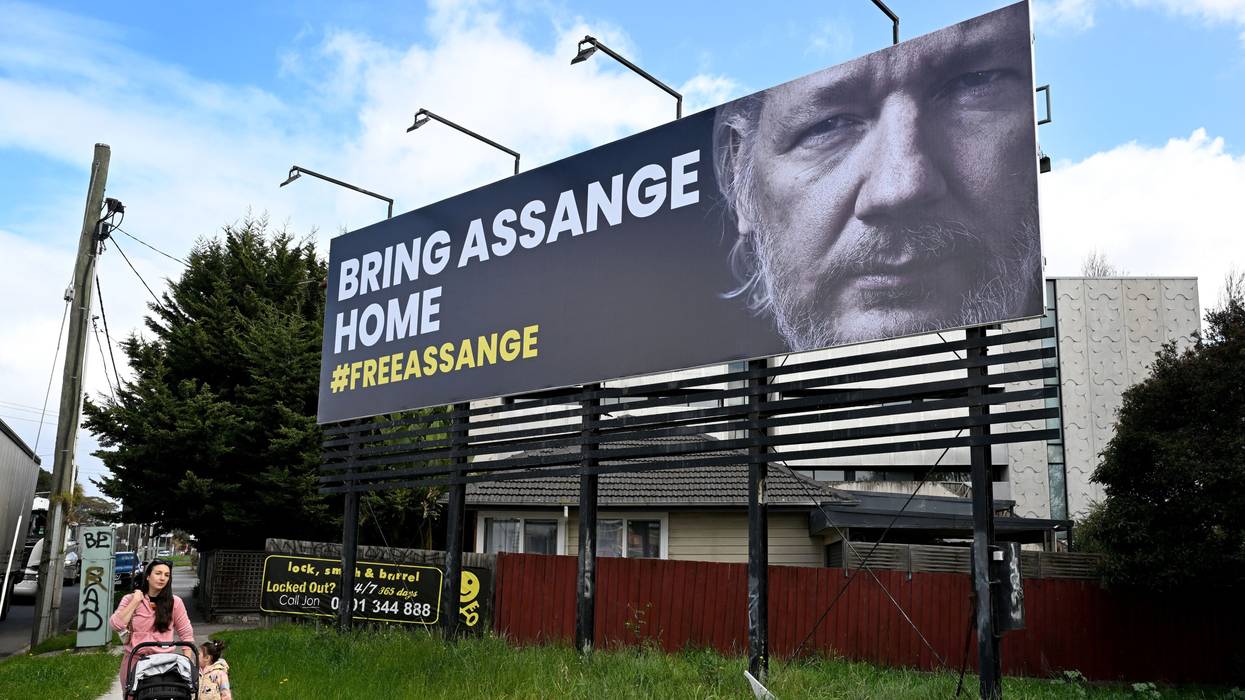
The vote "gives the government a real mandate to advocate very, very strongly for a political solution to bring Julian Assange home," said the journalist's brother.
As WikiLeaks founder Julian Assange awaits a two-day hearing before the United Kingdom's High Court next week on his possible extradition to the United States, lawmakers in his home country of Australia voted Wednesday in favor of pushing the U.S. and U.K. to allow Assange to return home instead.
"Enough is enough," said Australian Prime Minister Anthony Albanese regarding the U.S. case against Assange, who published thousands of classified diplomatic and military documents in 2010 that included evidence of U.S. war crimes. "This thing cannot just go on and on and on indefinitely."
The prime minister joined 85 other lawmakers in voting for a motion proposed by Andrew Wilkie, an Independent member of the country's House of Representatives, to demand that the U.S. and U.K. drop the extradition effort and bring the case against Assange "to a close so that Mr. Assange can return home to his family in Australia."
Forty-two lawmakers opposed the measure.
Assange has been held at London's high-security Belmarsh Prison for the past five years, having been arrested for skipping bail in a separate legal matter.
In the U.S., he faces 17 espionage charges over WikiLeaks' publication of the classified documents.
In 2021, a U.K. judge ruled that the U.S. could not extradite Assange on the charges, saying prison conditions in the U.S. would endanger Assange's life. The journalist's physical and mental health has been in decline since his imprisonment, and he has suffered a mini-stroke, severe depression, and suicidal ideation, according to his attorneys.
The Biden administration appealed the decision, and the following year a court ruled that the extradition could proceed.
The High Court is set to hear Assange's case on February 20-21 to determine whether he should be granted a full appeal to challenge his extradition, and his family and other supporters fear that if he loses the appeal, the U.K. could send him to the U.S. before he has a chance to appeal to the European Court of Human Rights.
Assange's wife, Stella Assange, said at a news conference on Thursday that the journalist could be on a plane to the U.S. "within days" if he loses the case.
"If he is extradited, he will die," she said.
On Wednesday, Amnesty International reiterated its call for the charges against Assange to be dropped, citing both "the risk of serious human rights violations" against him if he is held in the U.S. prison system and "a profound 'chilling effect' on global media freedom."
"The risk to publishers and investigative journalists around the world hangs in the balance. Should Julian Assange be sent to the U.S. and prosecuted there, global media freedoms will be on trial, too," said Julia Hall, Amnesty International's expert on counter-terrorism and criminal justice in Europe. "The public's right to information about what their governments are doing in their name will be profoundly undermined. The U.S. must drop the charges under the Espionage Act against Assange and bring an end to his arbitrary detention in the U.K."
Albanese said it is generally "not up to Australia to interfere in the legal processes of other countries, but it is appropriate for us to put our very strong view that those countries need to take into account the need for this to be concluded."
Speaking before Parliament ahead of the vote, Wilkie urged his colleagues to "stand for media freedom and the rights of journalists to do their jobs."
"Regardless of what you might think of Julian Assange," he said, "this has gone on too long... It must be brought to an end. And I'm confident that this Parliament can support this motion... It will send a very powerful political signal to the British government and the U.S. government."
Gabriel Shipton, Assange's brother, applauded Parliament for their show of support "at a crucial time" and said the vote "gives the government a real mandate to advocate very, very strongly for a political solution to bring Julian Assange home."
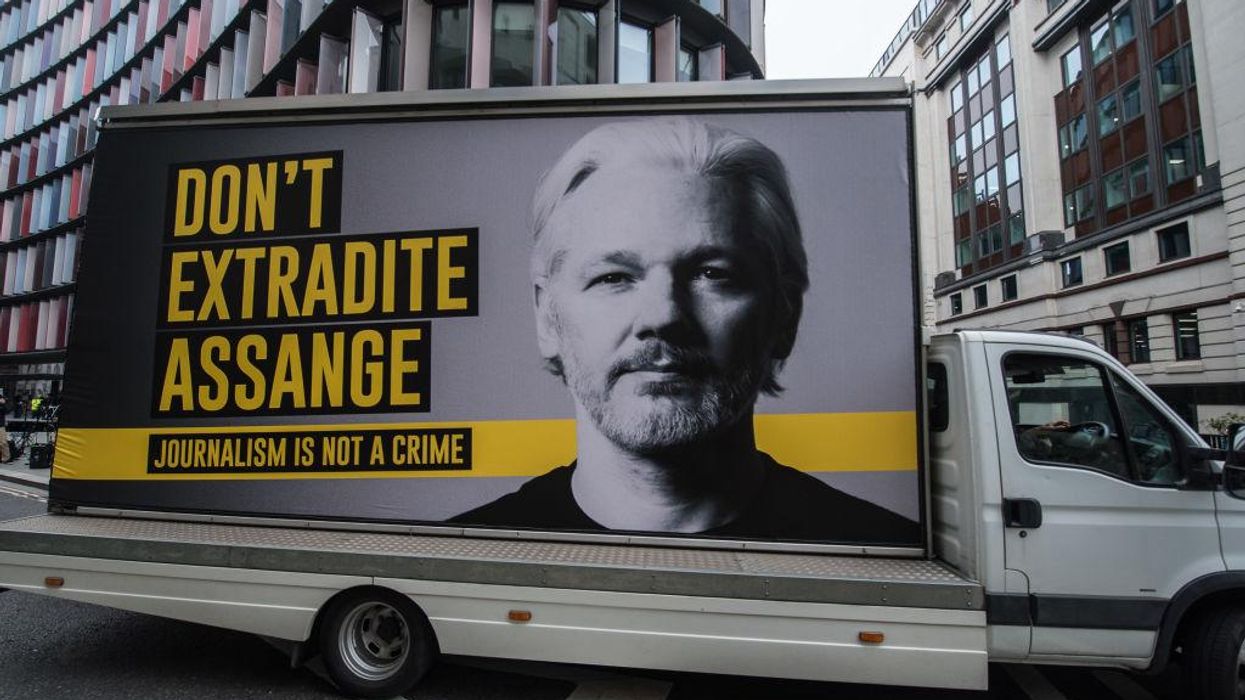
The failure of too many in the mainstream press is not only inexcusable, but ominous.
The persecution of Julian Assange, along with the climate of fear, wholesale government surveillance and use of the Espionage Act to prosecute whistleblowers, has emasculated investigative journalism. The press has not only failed to mount a sustained campaign to support Julian, whose extradition appears imminent, but no longer attempts to shine a light into the inner workings of power. This failure is not only inexcusable, but ominous.
The U.S. government, especially the military and agencies such as the CIA, the FBI, the NSA and Homeland Security, have no intention of stopping with Julian, who faces 170 years in prison if found guilty of violating 17 counts of the Espionage Act. They are cementing into place mechanisms of draconian state censorship, some features of which were exposed by Matt Taibbi in the Twitter Files, to construct a dystopian corporate totalitarianism.
The U.S. and the U.K. brazenly violated a series of judicial norms and diplomatic protocols to keep Julian trapped for seven years in the Ecuadorian Embassy after he had been granted political asylum by Ecuador. The CIA, through the Spanish security firm UC Global, made recordings of Julian’s meetings with his attorneys, which alone should invalidate the extradition case. Julian has been held for more than four years in the notorious Belmarsh high-security prison since the British Metropolitan Police dragged him out of the embassy on April 11, 2019. The embassy is supposed to be the sovereign territory of Ecuador. Julian has not been sentenced in this case for a crime. He is charged under the Espionage Act, although he is not a U.S. citizen and WikiLeaks is not a U.S.-based publication. The U.K. courts, which have engaged in what can only be described as a show trial, appear ready to turn him over to the U.S. once his final appeal, as we expect, is rejected. This could happen in a matter of days or weeks.
On Wednesday night at the School of Oriental and African Studies, University of London, Stella Assange, an attorney who is married to Julian; Matt Kennard, co-founder and chief investigator of Declassified UK, and I examined the collapse of the press, especially with regard to Julian’s case. You can watch our discussion here.
“I feel like I’m living in 1984,” Matt said. “This is a journalist who revealed more crimes of the world’s superpower than anyone in history. He’s sitting in a maximum-security prison in London. The state that wants to bring him over to that country to put him in prison for the rest of his life is on record as spying on his privileged conversations with his lawyers. They’re on record plotting to assassinate him. Any of those things, if you told someone from a different time ‘Yeah this is what happened and he was sent anyway and not only that, but the media didn’t cover it at all.’ It’s really scary. If they can do that to Assange, if civil society can drop the ball and the media can drop the ball, they can do that to any of us.”
When Julian and WikiLeaks released the secret diplomatic cables and Iraq War logs, which exposed numerous U.S. war crimes, including torture and the murder of civilians, corruption, diplomatic scandals, lies and spying by the U.S. government, the commercial media had no choice but to report the information. Julian and WikiLeaks shamed them into doing their job. But, even as they worked with Julian, organizations such as The New York Times and The Guardian were determined to destroy him. He threatened their journalistic model and exposed their accommodation with the centers of power.
“They hated him,” Matt said of the mainstream media reporters and editors. “They went to war with him immediately after those releases. I was working for The Financial Times in Washington in late 2010 when those releases happened. The reaction of the office at The Financial Times was one of the major reasons I got disillusioned with the mainstream media.”
Julian went from being a journalistic colleague to a pariah as soon as the information he provided to these news organizations was published. He endured, in the words of Nils Melzer, at the time the U.N. Special Rapporteur on Torture, “a relentless and unrestrained campaign of public mobbing, intimidation and defamation.” These attacks included “collective ridicule, insults and humiliation, to open instigation of violence and even repeated calls for his assassination.”
Julian was branded a hacker, although all the information he published was leaked to him by others. He was smeared as a sexual predator and a Russian spy, called a narcissist and accused of being unhygienic and slovenly. The ceaseless character assassination, amplified by a hostile media, saw him abandoned by many who had regarded him a hero.
“Once he had been dehumanized through isolation, ridicule and shame, just like the witches we used to burn at the stake, it was easy to deprive him of his most fundamental rights without provoking public outrage worldwide,” Melzer concluded.
The New York Times, The Guardian, Le Monde, El Pais and Der Spiegel, all of which published WikiLeaks documents provided by Julian, published a joint open letter on Nov. 28, 2022 calling on the U.S. government “to end its prosecution of Julian Assange for publishing secrets.”
But the demonization of Julian, which these publications helped to foster, had already been accomplished.
“It was pretty much an immediate shift,” Stella recalled. “While the media partners knew that Julian still had explosive material that still had to be released, they were partners. As soon as they had what they thought they wanted from him, they turned around and attacked him. You have to put yourself in the moment where the press was in 2010 when these stories broke. They were struggling for a financial model to survive. They hadn’t really adapted to the age of the internet. You had Julian coming in with a completely new model of journalism.”
There followed a WikiLeaks-isation of U.S. media outlets such as The New York Times, which adopted the innovations pioneered by WikiLeaks, including providing secure channels for whistleblowers to leak documents.
“Julian was a superstar,” Stella said. “He came from outside the ‘old boys’ network. He talked about how these revelations should lead to reform and how the Collateral Murder video reveals that this is a war crime.”
Julian was outraged when he saw the heavy redactions of the information he exposed in newspapers such as The Guardian. He criticized these publications for self-censoring to placate their advertisers and the powerful.
He exposed these news organizations, as Stella said, “for their own hypocrisy, for their own poor journalism.”
“I find it very ironic that you have all this talk of misinformation, that’s just cover for censorship,” Stella said. “There are all these new organizations that are subsidized to find misinformation. It’s just a means to control the narrative. If this whole disinformation age really took truth seriously, then all of these disinformation organizations would hold WikiLeaks up as the example, right? Julian’s model of journalism was what he called scientific journalism. It should be verifiable. You can write up an analysis of a news item, but you have to show what you’re basing it on. The cables are the perfect example of this. You write up an analysis of something that happened and you reference the cables and whatever else you’re basing your news story on.”
“This was a completely new model of journalism,” she continued. “It is one [that] journalists who understood themselves as gatekeepers hated. They didn’t like the WikiLeaks model. WikiLeaks was completely reader-funded. Its readers were global and responding enthusiastically. That’s why PayPal, MasterCard, Visa and Bank of America started the banking blockade in December 2010. This has become a standardized model of censorship to demonetize, to cut channels off from their readership and their supporters. The very first time this was done was in 2010 against WikiLeaks within two or three days of the U.S. State Department cables being published.”
While Visa cut off WikiLeaks, Stella noted, it continued to process donations to the Ku Klux Klan.
Julian’s “message was journalism can lead to reform, it can lead to justice, it can help victims, it can be used in court and it has been used in court in the European Court of Human Rights, even at the U.K. Supreme Court in the Chagos case here,” she said. “It has been used as evidence. This is a completely new approach to journalism. WikiLeaks is bigger than journalism because it’s authentic, official documents. It’s putting internal history into the public record at the disposal of the public and victims of state-sponsored crime. For the first time we were able to use these documents to seek justice, for example, in the case of the German citizen, Khalid El-Masri, who was abducted and tortured by the CIA. He was able to use WikiLeaks cables at the European Court of Human Rights when he sued Macedonia for the rendition. It was a completely new approach. It brought journalism to its maximum potential.”
The claims of objectivity and neutrality propagated by the mainstream media are a mechanism to prevent journalism from being used to challenge injustices or reform corrupt institutions.
“It’s completely alien, the idea that you might use journalism as a tool to better the world and inform people of what’s happening,” Matt said. “For them it’s a career. It’s a status symbol. I never had a crisis of conscience because I never wanted to be a journalist if I couldn’t do that.”
“For people who come out of university or journalism school, where do you go?” he asked. “People get mortgages. They have kids. They want to have a normal life…You enter the system. You slowly get all your rough edges shorn off. You become part of the uniformity of thought. I saw it explicitly at The Financial Times.”
“It’s a very insidious system,” Matt went on. “Journalists can say to themselves ‘I can write what I like,’ but obviously they can’t. I think it’s quite interesting starting Declassified with Mark Curtis in the sense that journalists don’t know how to react to us. We have a complete blackout in the mainstream media.”
“There has been something really sinister that has happened in the last twenty years, particularly at The Guardian,” he said. “The Guardian is just state-affiliated media. The early WikiLeaks releases in 2010 were done with The Guardian. I remember 2010 when those releases were happening with The Guardian and The New York Times. I’d read the same cables being covered in The Guardian and The New York Times and I’d always thought ‘Wow, we’re lucky to have The Guardian because The New York Times were taking a much more pro-U.S. pro-government position.’ That’s now flipped. I’d much prefer to read The New York Times covering this stuff. And I’m not saying it’s perfect. Neither of them were perfect, but there was a difference. I think what’s happened is clever state repression.”
The D-notice committee, he explained, is composed of journalists and state security officials in the U.K. who meet every six months. They discuss what journalists can and can’t publish. The committee sends out regular advisories.
The Guardian ignored advisories not to publish the revelations of illegal mass surveillance released by Edward Snowden. Finally, under intense pressure, including threats by the government to shut the paper down, The Guardian agreed to permit two Government Communication Headquarters (GCHQ) officials to oversee the destruction of the hard drives and memory devices that contained material provided by Snowden. The GCHQ officials on July 20, 2013 filmed three Guardian editors as they destroyed laptops with angle grinders and drills. The deputy editor of The Guardian, Paul Johnson — who was in the basement during the destruction of the laptops — was appointed to the D-notice committee. He served at the D-notice committee for four years. In his last committee meeting Johnson was thanked for “re-establishing links” between the committee and The Guardian. The paper’s adversarial reporting, by then, had been neutralized.
“The state realized after the war in Iraq that they needed to clamp down on the freedom in the British media,” Matt said. “The Daily Mirror under Piers Morgan…I don’t know if anyone remembers back in 2003, and I know he is a controversial character and he’s hated by a lot of people, including me, but he was editor at The Daily Mirror. It was a rare opening of what a mainstream tabloid newspaper can do if it’s doing proper journalism against the war, an illegal war. He had headlines made out of oil company logos. He did Bush and Blair with blood all over their hands, amazing stuff, every day for months. He had John Pilger on the front page, stuff you would never see now. There was a major street movement against the war. The state thought ‘Shit, this is not good, we’ve gotta clamp down.’”
This triggered the government campaign to neuter the press.
“I wouldn’t say we have a functioning media in terms of the newspapers,” he said.
“This is not just about Assange,” Matt continued. “This is about all of our futures, the future for our kids and our grandkids. The things we hold dear, democracy, freedom of speech, free press, they’re very, very fragile, much more fragile than we realize. That’s been exposed by Assange. If they get Assange, the levies will break. It’s not like they’re going to stop. That’s not how power works. They don’t pick off one person and say we’re going to hold off now. They’ll use those tools to go after anyone who wants to expose them.”
“If you’re working in an environment in London where there’s a journalist imprisoned for exposing war crimes, maybe not consciously but somewhere you [know you] shouldn’t do that,” Matt said. “You shouldn’t question power. You shouldn’t question people who are committing crimes secretly because you don’t know what’s going to happen…The U.K. government is trying to introduce laws which make it explicit that you can’t publish [their crimes]. They want to formalize what they’ve done to Assange and make it a crime to reveal war crimes and other things. When you have laws and a societal-wide psyche that you cannot question power, when they tell you what is in your interest, that’s fascism.”