
SUBSCRIBE TO OUR FREE NEWSLETTER
Daily news & progressive opinion—funded by the people, not the corporations—delivered straight to your inbox.
5
#000000
#FFFFFF
To donate by check, phone, or other method, see our More Ways to Give page.


Daily news & progressive opinion—funded by the people, not the corporations—delivered straight to your inbox.
D.C.rallies against Trump’s troops as more cities targeted
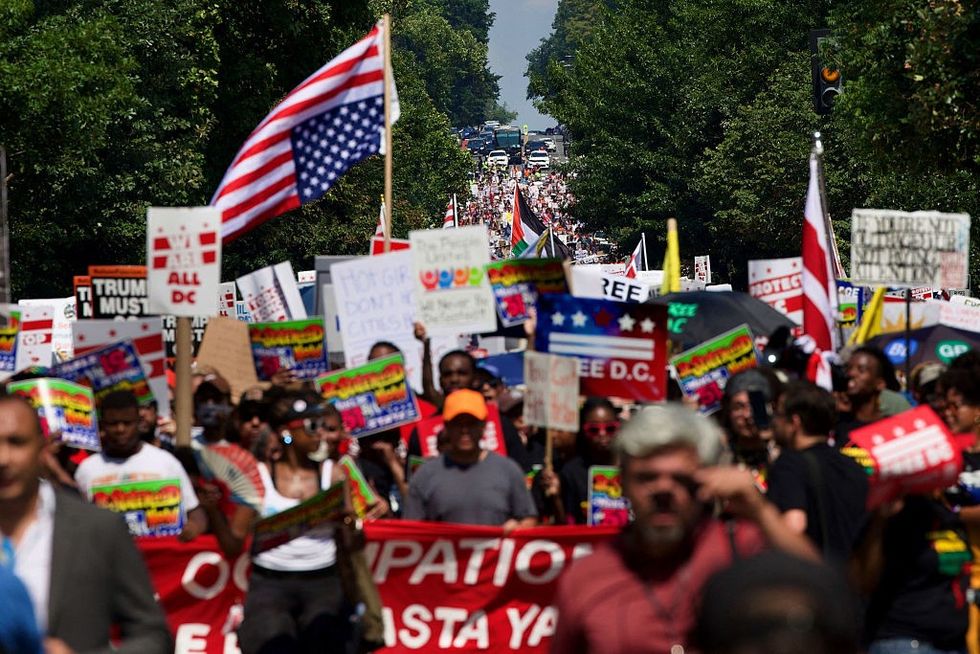
The heart of Washington, D.C., pulsed with defiance on Saturday as tens of thousands of demonstrators surged down 16th Street toward the White House. It was the city’s first major organized protest since President Donald Trump declared a state of emergency and unleashed federal troops onto its streets. Banners waved and voices rose in unison at the “We Are All D.C.” march, a massive show of resistance led by a coalition that included Free DC, defenders of local self-rule, Democracy Forward, and the American Civil Liberties Union. Their message was clear: the federal occupation of the capital must end.

“Today, in defense of the people and communities living under a military takeover of DC, we join in sending a clear and peaceful message: the American people will not bow to dictators. We are in solidarity with our neighbors and Black, Brown, immigrant, and other communities targeted. We will march, we will resist, and we will peacefully protest,” Democracy Forward wrote in a statement on X.
Thousands march to the White House united in our demand. We want federal forces out of DC Now!! Free DC! Free DC! #WeAreAllDC #FreeDC
[image or embed]
— Free DC (@freedcproject.bsky.social) September 6, 2025 at 1:07 PM
With Trump vowing crackdowns in other Democratic-led cities as well, he appeared to threaten Chicago with migrant deportations in a social media post with an image that parodied the 1979 Vietnam war movie "Apocalypse Now."
“I love the smell of deportations in the morning,” Trump said, converting a line about napalm in the Vietnam War to refer to deportations. “Chicago about to find out why it’s called the Department of WAR.”
Trump’s goal will be to avoid Yoon’s outcome and instead—like Putin and Orbán did in Russia and Hungary—ensure there won’t be any meaningful opposition within the GOP to his most extreme measures when they come.
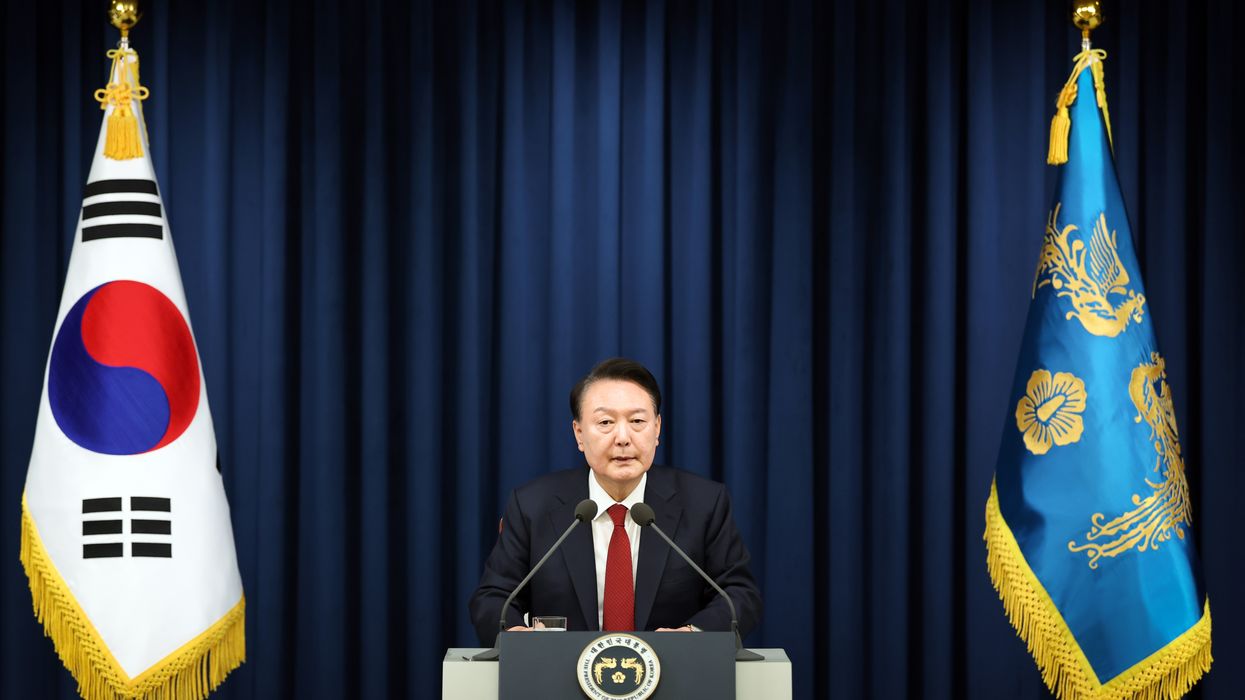
South Korean President Yoon Suk Yeol, whose declaration of a state of emergency yesterday shocked the world, has often been referred to (both within and outside of his country) as “South Korea’s Donald Trump.” A political outsider, he came to power with anti-establishment and often outrageously inflammatory rhetoric, trash talking women’s rights, “reforming” their healthcare system, and pushing hard for a neoliberal agenda that included raising the workweek from 52 to 69 hours.
In that, he reflects a growing trend among advanced democracies around the world, as decades of neoliberalism have weakened multiple nations’ abilities to sustain middle-class lifestyles while enriching an oligarch class that’s now reaching out—worldwid—to seize control of democratic governments to their own financial benefit.
Of all the events in world news over the past weeks—even more than the escalation of Russian President Vladimir Putin’s murderous crimes against Ukraine—President-elect Donald Trump and his authoritarian colleagues down at Mar-a-Lago are probably carefully watching what’s happening to Yoon and gaming out how a similar “emergency” action here in America might be recalibrated to have ultimate success.
If he wants to imitate Yoon’s initial declaration and successfully follow through on it, Trump will need to intimidate and bring to heel any Republicans who still think of themselves as more loyal to the nation and our Constitution than to him.
Yoon has now backed down in the face of opposition from the South Korean parliament; he couldn’t get one single vote from his own party in Parliament, and is now facing demands that he resign or be impeached.
The challenges Yoon faced included a 17% approval rating, the legislature having been captured by the opposition party, and, most importantly, that he had never forced the members of his own party to degrade themselves and perform acts of obedience in front of him.
Thus, when he tried this strongman move of declaring a state of emergency but had not, in fact, first set himself up as a strongman, it failed.
Trump’s goal will be to avoid Yoon’s outcome and instead—like Putin and Viktor Orbán did in Russia and Hungary—ensure there won’t be any meaningful opposition within the GOP to his most extreme measures when they come.
Yoon’s rightwing populist People Power Party (PPP) had lost control of parliament in the April elections to the more progressive Democratic Party of Korea (DPK); Trump will not have such a constraint in a few weeks when he takes the White House. Instead of fighting Democrats, Trump must figure out how to deal with opposition to his most extreme impulses from within his own Republican Party.
Thus, his putting forward outrageous, unqualified, and even occasionally anti-American candidates for cabinet positions is Trump’s first big step in the classic strongman move of softening up Republicans in the House and Senate so when the real fights—like over a state of emergency (and the martial law that could accompany it)—happen, his party members and the handful of “problem solver” quislings in the Democratic Party will have already surrendered their ability to resist him.
This, as I noted but our media seems to be ignoring, is where Yoon failed. Trump—if he’s successful at cowing Republicans in the Senate into rubber-stamping his picks or allowing recess appointments—may not have those constraints, since he will have ended opposition in the Senate, and his MAGA-seized GOP now also controls the House and the Supreme Court.
Nonetheless, if he wants to imitate Yoon’s initial declaration and successfully follow through on it, Trump will need to intimidate and bring to heel any Republicans who still think of themselves as more loyal to the nation and our Constitution than to him. Will they still exist by next February?
Yoon’s behavior serves as both a warning and a call to action: Democracies must stand vigilant against the creeping authoritarianism that threatens their core principles.
This is not a new strategy, as Timothy Snyder, Heidi Siegmund Cuda, or Ruth Ben-Ghiat will tell you in their excellent Substack newsletters.
One of the big points Fritz Thyssen made in his book I Paid Hitler was to note how he and other industrialists and politicians were required to scrape and bow before Adolf Hitler in the early months and years. There was a competition among the industrialists and German politicians alike after Hitler’s appointment as chancellor to see who could be the most publicly obsequious, slavish, and unctuous toward the new German leader.
Today in America we see a similar spectacle as politicians, media figures, business leaders, and foreign dignitaries flock to Mar-a-Lago to kiss Trump’s golden ass.
It was that exact behavior that paved the way for Hitler to shut down the German press, subserviate the Reichstag, and essentially shatter all opposition to his regime in less than half a year.
And it wasn’t just the political class who bowed to him; so, too, did most average Germans, who had become exhausted by the conflict exploding across the political spectrum and so tuned out, immersing themselves instead in sports, family, and entertainment.
As a result, every day brought a new outrage, a new norm destroyed, a new red line crossed, but each was small enough—like appointing an accused rapist and drunk or drug user to run the Justice Department or the Pentagon—that it created a buzz in the political media but wasn’t sufficient to bring even a dozen people out into the streets.
Fascism comes in on cat’s feet, step by gradual but inexorable step. It never starts with one great clashing explosion of evil or corruption that causes an entire nation to suddenly wake up and pour into the streets. There are no trumpets, drums, or cymbals. As Hemmingway wrote in The Sun Also Rises using the metaphor of bankruptcy, it happens “gradually, and then suddenly.”
It’s usually the story of an insidious gradualism, like what a German professor told Chicago reporter Milton Mayer about in 1954:
But of course this isn’t the way it happens. In between come all the hundreds of little steps, some of them imperceptible, each of them preparing you not to be shocked by the next. Step C is not so much worse than Step B, and, if you did not make a stand at Step B, why should you at Step C? And so on to Step D.
And one day, too late, your principles, if you were ever sensible of them, all rush in upon you. The burden of self-deception has grown too heavy, and some minor incident, in my case my little boy, hardly more than a baby, saying “Jew swine,” collapses it all at once, and you see that everything, everything, has changed and changed completely under your nose.
Yoon’s declaration of emergency and martial law was explicit: It banned all political activities of the National Assembly, local councils, political parties, and associations; prohibited gatherings, protests, and labor strikes; and placed the media under the authority of the Martial Law Command.
Trump has made similar threats to our media and promised to use the state’s power of guns and jails to “root out the communists, Marxists, fascists, and the radical left thugs that live like vermin within the confines of our country,” claiming, like Yoon did, that “the threat from outside forces is far less sinister, dangerous, and grave than the threat from within. Our threat is from within.”
Yoon’s effort to quickly convert South Korea into an autocratic state has so far backfired, in large part because of public opinion, a still-free press, and the courage of opposition and his own PPP politicians alike. The lesson Trump should learn from Yoon’s unsuccessful attempt is the need to avoid authoritarianism and instead embrace coalition-building, transparent governance, and a balanced approach to both domestic and foreign policy challenges.
Instead, it’s a virtual certainty that Trump is thinking Yoon should have acted before April, before the more progressive DPK took back over the parliament, and should have helped friendly oligarchs to seize the media in advance of his proclamation. And that he needs to move fast, before Democrats can regain power in the 2026 midterms that will be only 22 months away.
The resilience of democracy depends on the strength of its institutions, the vigilance of its citizens, and the commitment of its elected leaders of all parties to uphold democratic values. Yoon’s behavior serves as both a warning and a call to action: Democracies must stand vigilant against the creeping authoritarianism that threatens their core principles. As Trump’s return looms, these lessons cannot be ignored.
"The deaths of 132 people in state custody, arbitrary detention, mass criminal prosecutions, and the indiscriminate imprisonment of tens of thousands of people are incompatible with an effective, fair, and lasting public security strategy," said a regional director.
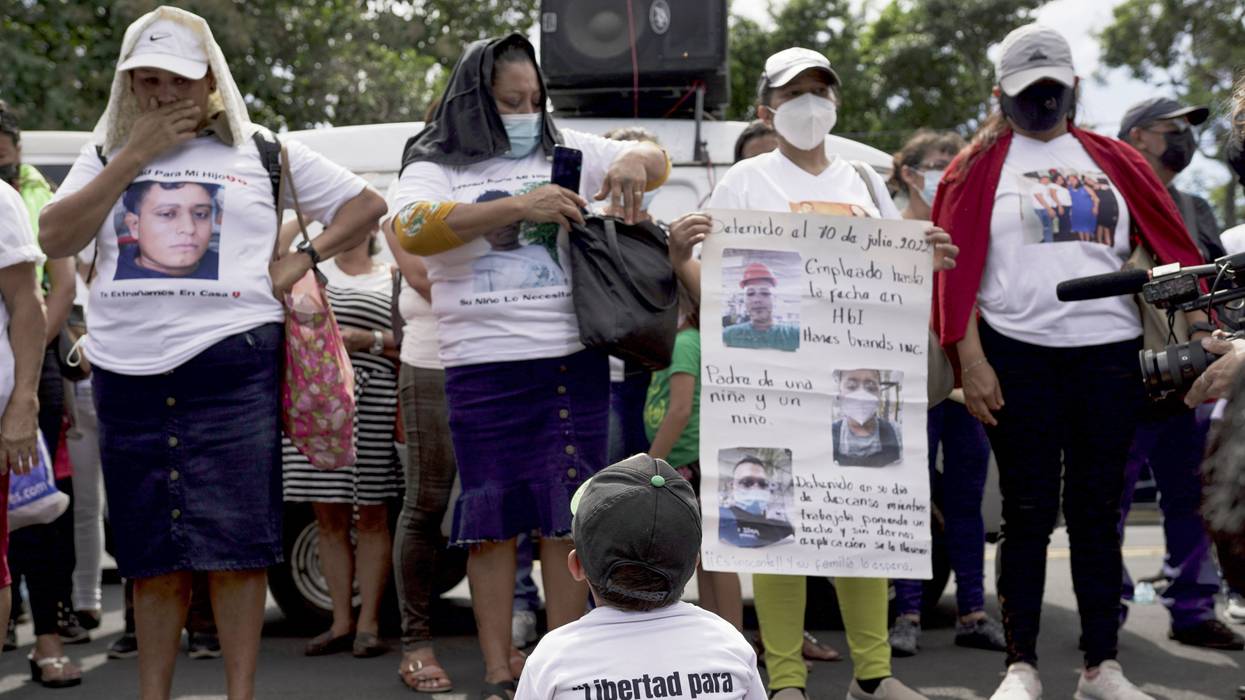
Just over a year into a "state of exception" in El Salvador, Amnesty International on Monday accused all three branches of government of enabling "the systematic, massive, and sustained violation of the human rights of the Salvadoran population" in a supposed effort to crack down on gang violence.
Since the Salvadoran President Nayib Bukele requested and the Legislative Assembly approved the state of emergency that suspended certain civil liberties in March 2022, lawmakers have repeatedly extended it, most recently last month. The policy has "allowed the arbitrary detention and imprisonment of more than 66,000 people," according to the global human rights group.
"The international community is alert to the grave human rights consequences of the state of emergency in El Salvador," said Erika Guevara-Rosas, Amnesty's Americas director. "The compliance of the institutions responsible for ensuring and administering justice in the country has led to the criminal justice system being weaponized to punish people, the majority of whom are from historically marginalized areas, when there is no evidence that they have committed a crime."
Specifically, according to the organization:
On the one hand, the executive, through the police, the armed forces, and the Ministry of Security, has designed and implemented a security strategy based on the excessive use of force, indiscriminate arbitrary detention, and the practice of cruel, inhuman, and degrading treatment including torture.
For its part, the legislature has for a year continued to approve and extend the period that the state of emergency, a measure whose nature is temporary and extraordinary, remains in force. In addition, it has supported a series of legal amendments that contravene international human rights standards ratified by the country.
Finally, the judiciary is not acting independently, is violating the right to due process, and is failing to combat impunity for the violations committed. The courts and auxiliary entities as well as those attached to the Public Prosecutor's Office are flagrantly failing in their duties in criminal proceedings.
"The deaths of 132 people in state custody, arbitrary detention, mass criminal prosecutions, and the indiscriminate imprisonment of tens of thousands of people are incompatible with an effective, fair, and lasting public security strategy," said Guevara-Rosas. "The systematic violation of human rights and the dismantling of the rule of law are not the answer to the problems facing the country. On the contrary, they set very dangerous precedents."
While the confirmed death toll as of last month is 132, Amnesty noted that "Salvadoran human rights organizations believe that there is underreporting because of reported cases of exhumations of victims from mass graves after families were finally able to learn of the deaths of individuals who had died months earlier."
In one case highlighted by the group, a 45-year-old man with mental disabilities was apprehended at his home in April 2022. His family spent months trying to locate him. In September, someone who claimed to have shared a cell with the man called his family and advised them to go to the Forensic Medicine Institute, because he believed the man died after being beaten by guards.
"He told us: 'Your relative vomited blood through his mouth and nose. I think he died, because they took him to the hospital and they never brought him back,'" the family said. The Forensic Medicine Institute informed them that he died after 36 days in custody and was buried in a mass grave. The family had his remains exhumed in October but is unaware of any investigation into his death.
That's part of a trend, according to Amnesty. Guevara-Rosas said that "in none of the 50 cases we have documented has it been possible to verify that there were investigation processes regarding the conduct of public officials. The fact that there are widespread human rights violations and virtually no ongoing criminal proceedings evidences the control exercised from the highest level so that all state powers obey this policy of indiscriminate imprisonment."
Along with documenting abuse by police and prison guards sometimes resulting in deaths from "beatings," "mechanical asphyxiation," and "multiple unidentified traumas," Amnesty interviewed people subjected to "extreme overcrowding in cells holding more than 100 people." Detainees disclosed a "lack of sanitation and access to basic services such as water, adequate food, medicines, and medical care," and said they were cut off from communicating with family.
"We see with alarm how overcrowding and torture continue to claim the lives of innocent people, with the complicity of all the institutions that are supposed to uphold their rights," said Guevara-Rosas. "The dehumanization that thousands of unjustly imprisoned people are suffering is intolerable and must be urgently addressed by international human rights protection mechanisms."
"Given the systematic nature of grave human rights violations, we call on international protection mechanisms to intervene urgently to avoid a major crisis in El Salvador," she added. "The Salvadoran state must know with certainty that the international community will not tolerate these kinds of policies."
Amnesty's findings and demands echo those of other advocacy groups, including Human Rights Watch, which released a lengthy report on the state of exception in December. Juanita Goebertus, the organization's Americas director, said at the time that "to put an end to gang violence and human rights violations, El Salvador's government should replace the state of emergency with an effective and rights-respective security policy that grants Salvadorans the safety they so dearly deserve."
Goebertus also argued that "the international community should redouble its efforts to help ensure that Salvadorans are safe from heinous crimes by gangs, human rights violations by security forces, and other abuse of power."
Al Jazeera reported Monday that "such criticism has done little, however, to deter Bukele, whose popularity has surged as the crackdown exerts pressure on networks of gangs that have brought violence and exploitation to many areas of the country for years."
The president, the outlet noted, "recently unveiled a new, megaprison to hold people rounded up under the state of emergency," saying in February that "this will be their new house, where they will live for decades, all mixed, unable to do any further harm to the population."
Bukele's five-year term is set to end next year. The president confirmed in September his intention to seek reelection despite arguments that doing so would be unconstitutional.
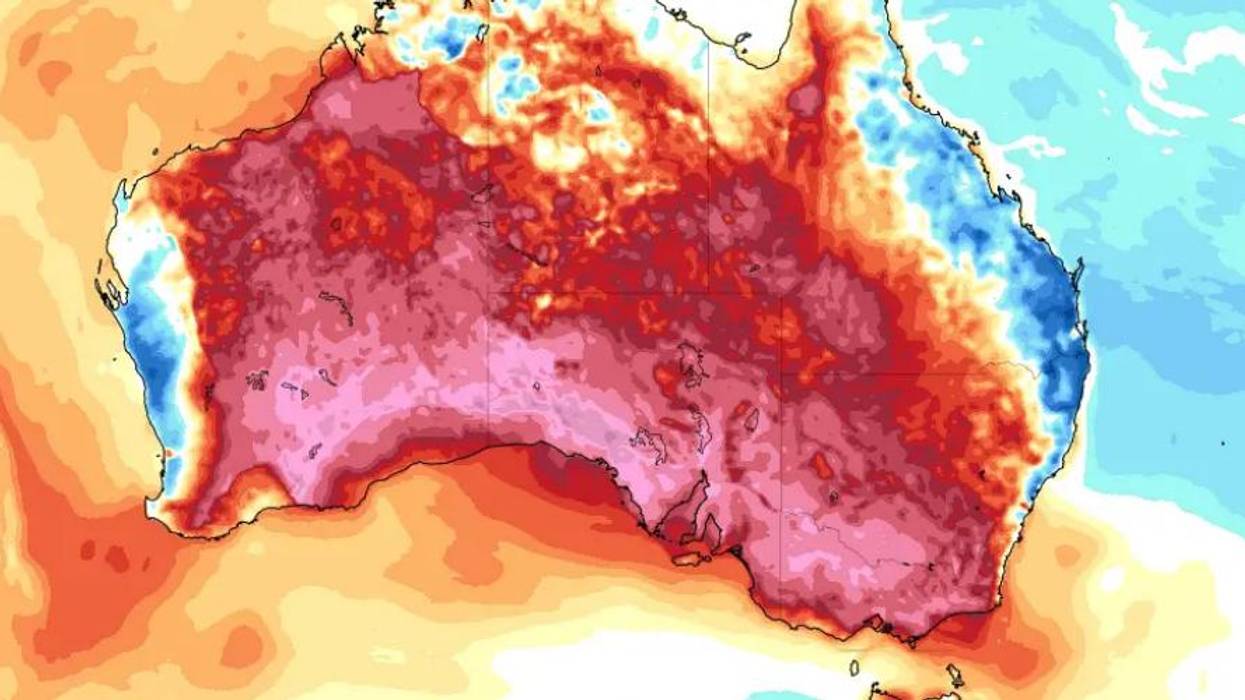
Calls for immediate and ambitious action to tackle the climate emergency piled up Thursday in response to preliminary analysis from Australia's Bureau of Meteorology that Wednesday smashed the nation's temperature record by a full 1degC just one day after the previous all-time record.
The first record was set Tuesday, when Australia's national average maximum temperature reached 40.9degC (105.6degF), eliciting alarm from climate and fire safety experts. Wednesday, the average rose to 41.9degC (107.4degF), sparking a fresh wave of warnings and demands for bold efforts to battle the planetary crisis.
"On Wednesday, Australia's heatwave reached incredible proportions," tweeted Kees van der Leun, a director at the American consultancy firm Navigant who works with energy sector clients in Europe and the Middle East.
"I think this is the single loudest alarm bell I've ever heard on global heating," added van der Leun. "Red lights flashing all over. Politicians not taking this as a call for climate action will probably never act at all."
Amid the mounting alarm, meteorologists warned Thursday that the record-smashing heat in Australia is set to continue. The Sydney Morning Herald reported that "the national temperature record could be broken for the third day in a row when it is analyzed on Friday."
New South Wales--which is Australia's most populous state and home to Sydney, the country's largest city--has been battling high temperatures and devastating bushfires for the past few months.
"While other parts of the country will cool down, NSW is bracing for deteriorating conditions on the weekend," according to the Herald. Saturday, the temperature could soar to 47degC (116.6degF) in Western Sydney.
Alongside higher temperatures in the coming days, Neil Bennett of the government's meteorology bureau told the newspaper, "the other thing that's similar to today is that there will be a southerly change during the day. So once again the fires will be impacted, and that's just going to exacerbate problems."
In response to over 100 wildfires raging across NSW--only half of which are under control--the state government on Thursday declared a seven-day state of emergency and announced a statewide total fire ban that will run through midnight Saturday.
According to The Associated Press:
New South Wales Premier Gladys Berejiklian said authorities were concerned with the unpredictable conditions.
"With extreme wind conditions, extreme hot temperatures, we have a good idea, a good sense, of where the most concerning areas are, but again when you've got those turbulent conditions, embers and spot fires can occur very unpredictably," she told reporters.
In addition to NSW, bushfires are also burning in the states of Queensland, South Australia, and Western Australia. The AP noted that "protesters on Thursday camped outside Prime Minister Scott Morrison's Sydney residence demanding urgent action on climate change."
Local climate advocacy groups shared updates from the scene:
Residents impacted by the blazes and leftist politicians have sharply criticized how Australia's Liberal-National Coalition government, led by Morrison, has handled the recent fires--and, more broadly, the global climate crisis.
Anthony Albanese, leader of Australia's Labour Party, addressed the need to step up federal government action in comments to reporters Thursday:
"The government needs to open their eyes and see through the smoke," Albanese tweeted, sharing a short clip of his remarks. "Bushfires are threatening homes and communities. This is a national crisis. We need a national response."
Michigan Governor Rick Snyder could have declared a state of emergency in Flint over its water contamination crisis months earlier than he did, according to new emails released Sunday that contradict the governor's defense of his delayed actions.
Snyder declared a state of emergency in Flint and Genesee County on January 5, months after acknowledging lead in the region's public water supply. He has repeatedly said he could not take action until local officials requested it, which Genesee County did on January 4.
However, a November 13 email from Michigan State Police (MSP) Captain Chris Kelenske, who also serves as the deputy state director of emergency management and homeland security, to Snyder's office reads, "As you know, the Governor can declare at any time, for any reason."
"The state will formally own the event if we put a Governor's Declaration in place," Kelenske wrote to Snyder's deputy legal counsel, Paul Smith. "This could be viewed as the state owning up to how the water issue was caused."
Previously released communications suggest that Snyder told state officials to suppress lead testing results and that the governor knew the water was toxic as far back as October 2014.
Kelenske also noted in the email that Snyder's office had not formally requested assistance. "A state declaration sets a precedent for issuing a state declaration for an infrastructure maintenance event," Kelenske wrote. "What if lead is found in other areas of the state's drinking water due to infrastructure issues? This action opens the door to any other jurisdiction with water quality issues."
State Sen. Jim Ananich (D-Flint) told the Detroit Free Press that the email is "further confirmation that there was much more concern about protecting the reputation of the governor and the state than there was protecting the citizens of Flint."
"It's infuriating," Ananich said.
Progress Michigan, a grassroots democracy group, wrote in a blog post on Monday, "This lie goes to the heart of Snyder's painfully slow and inadequate response to the Flint Water Crisis."
"Choosing to not declare a state of emergency in Flint further delayed critical resources to people who continue to struggle to get basic water needs met," the group stated. "Snyder needs to resign immediately. Revelation after revelation shows us just how badly he and his entire administration bungled the response to this crisis, which, he too, is responsible for creating."
Michigan Gov. Rick Snyder's successive emergency managers are now gone from Flint, but the wreckage of their rule there still pollutes many homes. The crisis in Flint is, on the surface, about water. In April 2014, the city switched from the Detroit water system, which it had used for more than 50 years, to the Flint River, ostensibly to save money. The Flint River water made people sick, and is likely to have caused disease that killed some residents. The corrosive water, left untreated, coursed through the city's water system, leaching heavy metals out of old pipes. The most toxic poison was lead, which can cause permanent brain damage. The damage to the people of Flint, the damage to the children who drank and bathed in the poisoned water, is incalculable. The water is still considered toxic to this day.
The Flint debacle also is about democracy. As a team of us from the "Democracy Now!" news hour traveled to Flint last weekend to report on the crisis, we received a text message from a native son of that city, Oscar-winning filmmaker Michael Moore. "Lead isn't the poison in Michigan. Fascism is," Michael wrote. "How do u toss a democratic election in the garbage and get away with it?"
Moore had just visited Flint to help organize a rally calling for the arrest of the governor. Rick Snyder ran for governor in 2010 as a fiscal conservative, and won in the tea-party wave of electoral victories that year. He pushed for a strengthened emergency-manager law, which would give him broader powers to take over city governments and school districts that were deemed (by a board that Snyder appointed) to be in a state of "financial emergency." The governor could then appoint an emergency manager with sweeping powers, overriding elected city councils and mayors, imposing severe austerity measures, selling off public assets and breaking existing contracts with labor unions. He did this primarily in black communities.
"We don't have just a water problem. We've got a democracy problem. We've got a dictatorship problem," Claire McClinton told me in Flint. She is a lifelong resident of the city, from a union family, and a lead organizer with the Democracy Defense League. She and her group were meeting just across the Flint city line at a restaurant in Flint Township, which never switched off the Detroit water. As they met, a woman approached them. Kawanne Armstrong was visibly upset, desperate to get clean water for her newborn grandson. Audrey Muhammad, one of those attending the meeting, offered her water that she had just bought for herself, which she had in her car. These two women, both, like 60 percent of Flint's residents, African-American, walked into the bitter cold to move gallon jugs of water from one car trunk to another. "It's for my grandson. He was born February 6. ... That's my concern," Armstrong told us.
We left that meeting and went to a Catholic church in Flint, where scores of people were preparing to head out, canvassing door to door to distribute water and water filters, and to assess the needs of each household. Union members from Detroit, social workers and plumbers from Ann Arbor, and many Flint residents were volunteering their time on a bitter-cold winter Saturday afternoon.
Last October, under enormous pressure, the governor was forced to switch Flint's water back to the Detroit source, but the damage to the pipes has been done, and toxins continue to leach into the water. Melissa Mays was in the church, as a founder of Water You Fighting For, an activist group. "All three of my sons are anemic now. They have bone pain every single day. They miss a lot of school because they're constantly sick. Their immune systems are compromised," she told us. She, too, is sick. "Almost every system of our bodies have been damaged." Despite her illness, she was out helping others.
The emergency manager is now gone, and the people of Flint have elected a mayor, Karen Weaver, who can actually represent them. She immediately declared a state of emergency, focusing national media attention on the crisis. She has demanded $55 million to jump-start the immediate repair of Flint's water system. Gov. Snyder has countered with a fund of $25 million, and insists that it be spent on contractors of his choice--conditions that Weaver rejects. "We're going to get rid of these lead pipes one house at a time, one street at a time, one neighborhood at a time, until they are all gone," Mayor Weaver said. "We cannot afford to wait any longer."
Two parallel investigations, state and federal, are underway in an attempt to determine if any crimes have been committed. The first step to healing Flint has been taken, though: the restoration of democratic control. All else will flow, like water, from that.
Despite widespread criticism over its threats to fundamental rights, French lawmakers on Tuesday voted to extend the state of emergency for an additional three months.
The 212 to 31 vote by the National Assembly extends the powers imposed following the November terrorist attacks until May 26.
The powers afforded by the state of emergency allow as the New York Times reports, "police to conduct raids of homes, businesses, associations and places of worship without judicial review and at any time. The police can place people under house arrest even if they do not have sufficient evidence of wrongdoing to detain or charge them."
"Our country is confronted with a terrorist threat more serious than any in our history," French Interior Minister Bernard Cazeneuve told lawmakers Tuesday.
Yet, as the Times adds, the new powers have not been effective. "Less than 1 percent of raids have resulted in new terrorism investigations, the Interior Ministry acknowledges."
Human rights and civil liberties watchdogs have widely rebuked the threats to freedoms due to increased state powers.
In reports released earlier this month, for example, Amnesty International and Human Rights Watch found that the sweeping new powers have been used in ways that have not only failed to uphold the rights of men, women, and children but have also been traumatizing.
"France has a responsibility to ensure public safety and try to prevent further attacks, but the police have used their new emergency powers in abusive, discriminatory, and unjustified ways," said Izza Leghtas, Western Europe researcher at Human Rights Watch. "This abuse has traumatized families and tarnished reputations, leaving targets feeling like second-class citizens."
As for how long the state of emergency could eventually continue, French Prime Minister Manuel Valls said in January that it might be "as long as is necessary" due to the threat from the Islamic State, adding, "It is a total and global war that we are facing with terrorism ... The war we are conducting must also be total, global, and ruthless."
Following months of pressure from activists and residents, California Governor Jerry Brown issued a state of emergency on Wednesday over the Porter Ranch gas leak that has been pouring tens of thousands of kilograms of methane into the air surrounding the community since October.
The order means "all necessary and viable actions" will be taken to stop the leak and ensure that the Southern California Gas Company (SoCal Gas), which owns the leaking natural gas injection well, is held accountable for the damage.
"It's about time," Alexandra Nagy, Southern California organizer at Food and Water Watch, told Common Dreams. "It's incredible. Now residents can actually get the assistance that they need."
Brown issued the state of emergency after making a quiet visit to the area earlier this week to tour the facility and meet with the Porter Ranch neighborhood council. According to a press release from the governor's office, Wednesday's order also directs action to protect public health.
"It is really going to...amplify the urgency of this issue and really expose how bad the problem is," Nagy said.
The leak, which has been ongoing since October, gained limited media attention after environmental and public health advocate Erin Brockovich declared it "a catastrophe the scale of which has not been seen since the 2010 BP oil spill." Residents living in proximity to the well, which is situated in Aliso Canyon, roughly 30 miles northwest of Los Angeles, reported having symptoms of methane exposure, including headaches, nausea, and in some cases, bleeding eyes and gums.
Brown's hesitance to issue an emergency order in the face of a growing public health crisis raised questions over a possible conflict of interest between the governor and SoCal Gas. Brown's sister, Kathleen L. Brown, is a paid member of the company's board.
On Monday, a constituent affairs representative with Brown's office told Common Dreams that he was unaware of any plans to declare a state of emergency, stating, "I think maybe he wants to wait until the situation develops a little bit more.... state of emergencies are a pretty big deal."
Nagy credited the swift turnaround to pressure from the community, stating Wednesday, "We've just been mounting pressure from all sides... This is a hard fought win for the residents of Porter Ranch and beyond affected by this noxious blowout."
"It was interesting that he wanted to do it in the quiet and in the dark, because he doesn't want to be held accountable publicly, and this is his opportunity to look like a hero and a leader on this," Nagy continued. "He's moving with it because that's where it's going."
While the order was welcome, activists have a broader objective--to shut down the Aliso Canyon facility and, ultimately, end the state's reliance on fossil fuels, Nagy said, declaring, "Addiction to natural gas is a problem."
To that end, activists in the area are organizing a hearing with city officials on Saturday to discuss an order for abatement, which requires companies acting out of compliance to shut down their operations. The order, issued by the South Coast Air Quality Management District (SCAQMD), "has the potential to shut down the Aliso Canyon Storage Facility temporarily or permanently," organizers explained in a Facebook post. "We need to rally and testify at the hearing this Saturday to demand AQMD uses their authority to #ShutItALLDown."
Activists plan to gather at Granada Hills Charter High School on Saturday for an 8 am rally ahead of the 9 am hearing.
"We are on a path to transitioning to clean energy," Nagy said. "[The leak has] been a wake-up call for this community.... We're all on the front lines of climate change."
Once again, in 2015, the oil and gas industry showed us the ludicrous lengths they will go to to frack more communities. In the process, they created ample fodder for Comedy Central, and the likes of John Oliver, John Stewart, Trevor Noah and Larry Wilmore. Here are a few of the worst head-shaking stunts that made the news in 2015:
5. If the ice is melting, can we drill there?
Really, Exxon? Are you serious? Separate investigations by Inside Climate News and the Los Angeles Times revealed this year that ExxonMobil's own researchers were aware of the devastating climate impact of extracting and burning fossil fuel as far back as 1981. In fact, over twenty years ago, in 1992, Exxon scientists were convinced that "potential global warming can only help lower exploration and development costs" for oil in the Arctic.
At least this story is so absurd that there is growing momentum toward opening a full Department of Justice investigation into what Exxon knew and when. There's no doubt that ExxonMobil spending $31 million since 1998 to fund climate-denier think tanks and politicians would be central to the case. We still have a lot to find out -- who knows what they're hiding about fracking? Take action, and we may just find out.
4. The Department of Health doesn't want to hear it
One of Pennsylvania's state slogans is "You've Got a Friend in Pennsylvania,", so it is more than ironic that the state's Department of Health workers have felt silenced on fracking, told to only record but not to respond to complaints from citizens about the gas industry. A list of buzzwords was circulated for identifying complaints that should only be handled by higher-up officials, because the issue was so politically sensitive.
In 2015, Food & Water Watch released an analysis of the sorts of complaints that were being recorded. The logs demonstrate that state residents are regularly reporting alarming health concerns, like breathing difficulty, noxious odors, headaches and nose bleeds, and that state agencies have failed to adequately respond and address these health problems from drilling and fracking.
3. If you pretend to help us, we have a deal
Political influence tells the story of the EPA's 2015 "final draft assessment" of fracking's impacts on drinking water. The 1000-page assessment -- with separate 1000-page case studies -- is chock full of information gaps, thanks to industry control of data and all the legal loopholes the industry enjoys to skirt concerns about public health.
And yet the Obama Administration closed the book with the misleading top-line: the "assessment shows no widespread, systemic impacts" to drinking water. The scientists reviewing the draft assessment have taken issue with this line. Food & Water Watch will keep focused on this story in 2016, and keep pressuring the EPA to reopen its three high-profile investigations into contamination at gas fields in Wyoming, Pennsylvania and Texas that the agency had abandoned.
It's absurd that the agency says next to nothing about those cases in its draft assessment, especially given that in Texas, the agency struck a deal with Range Resources. The EPA withdrew an emergency order against the company in exchange for cooperation in the study, but the company never had to come through on its end of the deal, and the whole industry was delighted with the Obama fracking study's misleading topline.
2. Shaking things up in Oklahoma
In a surprise "win," underdog state Oklahoma came in first place in 2015 for having the most earthquakes... in the world. Scientists point to the fluid injection from hydraulic fracturing as the cause for the outrageous increase in the number of earthquakes of magnitude 3.0 and up, going from about 2 per year (pre-fracking boom) to well over 600 in 2015.
Residents are beginning to sue for damages and injuries caused by the quakes, which oil and gas industry representatives find "tragic." In a memorable quote, Kim Hatfield, president of Crawley Petroleum, says that lawsuits like these could cause oil companies to not want to drill in Oklahoma - in his mind, a decision so devastating it would apparently make 'The Grapes of Wrath' "look like a comedy."
In this case, keep up the good work, guys: every time you sue for injuries or property damages caused by the quakes, which you are very much allowed to do, you're totally making it harder for companies to drill near your house. Which doesn't seem "tragic" at all to us.
Oklahoma isn't the only state suffering from a huge uptick in fracking-caused earthquakes, either. Our answer? Let's ban fracking.
1. Give us a few more months and we'll be sure to fix that little leak for you
In Porter Ranch, California, a gas storage facility in Aliso Canyon has been making residents sick since it started leaking - in October. Over a thousand people have had to move; the leak has increased state methane emissions by 25 percent; schools were scheduled to shut down; and in mid-December an official state of emergency was declared. Here's an idea: instead of shutting down elementary schools, let's take action to shut down the facility that's causing the problem.
As 2015 draws to a close, the effect of man-made climate change on extreme weather is on display across the globe, from "unprecedented" flooding in the UK and South America to deadly tornadoes in the U.S. to record-breaking heat in Australia.
Scientists have long warned that human-caused climate change increases the likelihood and intensity of extreme weather events, including torrential rainfall, superstorms, and droughts.
This year, the natural phenomenon known as El Nino is making the effects of man-made climate change worse, according to experts. And in reverse, climate change is exacerbating El Nino. As Common Dreams reported earlier this year, temporary warming of surface waters in the Pacific, known as El Nino, drives dramatic shifts in rainfall, temperature, and wind patterns worldwide and can last for months or even years. In fact, Oxfam has warned that the warming of the oceans as a result of climate change may double the frequency of the most powerful El Ninos.
"The specifics of what's happening where El Nino, Arctic dynamics, and underlying warming meet are, in a word, complex, and scientists are actively discussing how things might play out," wrote Erika Spanger-Siegfried of the Union of Concerned Scientists last week. "But the collective bottom line recognizes that global warming plays a role."
On the ground across the world, the effects have been dire.
Hundreds have been evacuated in the wake of "biblical" flooding across northern England, while The Independent reports on Monday that UK officials "were warned by the Government's own climate change advisers that they needed to take action to protect the increasing number of homes at high risk of flooding--but rejected the advice."
The Daily Mail reports that Labour Party officials and MPs for flood-hit Leeds Central Hilary Benn said the flooding showed that the debate about climate change is over.
"The need for improved flood defense is increasing really, really fast because the climate is changing," he said. There is "no doubt" that the world's climate is now different, he said, adding: "We've got to adapt to the changing climate, and improving our flood defenses is one of the urgent ways we need to do that."
Heavy flooding has forced more than 100,000 people to flee their homes throughout Paraguay, Uruguay, Argentina, and Brazil, Common Dreams reported on Sunday.
Meanwhile, in the U.S., heavy rains and flash floods have devastated parts of the Midwest and South, with Missouri Gov. Jay Nixon declaring a state of emergency and more severe storms--with the possibility of tornadoes--continuing to pound portions of the Southeast, including much of Mississippi, Alabama, and the Florida Panhandle, on Monday.
Already, the weather events are said to have killed at least 43 people.
The freak storms don't stop there. USA Today reported snow and ice brought whiteout conditions and locked up roads across parts of Texas, New Mexico, and Oklahoma.
Weather extremes have gone in a different direction on the other side of the globe. According to the Australia Associated Press on Monday, "lives and homes are under threat from an out-of-control bushfire in Western Australia's south-west region."
The news outlet notes the state has been experiencing a hot summer, and Perth recorded its second hottest day of the year on Monday, reaching 41.6deg C.