

SUBSCRIBE TO OUR FREE NEWSLETTER
Daily news & progressive opinion—funded by the people, not the corporations—delivered straight to your inbox.
5
#000000
#FFFFFF
To donate by check, phone, or other method, see our More Ways to Give page.
Daily news & progressive opinion—funded by the people, not the corporations—delivered straight to your inbox.
Modern motherhood has become obsessed with one word: choice. But a choice made under duress is no choice at all.
Mothers are seemingly given endless choices: to work or be a stay-at-home mom. Sleep train or not, breastfeed or bottle-feed. The list is endless.
But true choice only exists when the options are genuinely possible. For millions of mothers around the world, they aren't.
Reshma Saujani’s recent documentary, No Country for Mothers, has reignited a conversation about what it means to be a mother in a society that was never designed to support it. As clear evidence of this, more than 400,000 mothers of young children have left the US workforce, the steepest decline in 40 years. While Saujani’s documentary focuses on the United States, the friction it exposes is global.
There is a design flaw at the heart of modern motherhood:
Rather than judging mothers for these choices, we need to create a society that better supports them.
Our economies rely on the assumption of an uninterrupted worker, and our families rely on the expectation of an endlessly available mother.
We have witnessed this firsthand, as the founders of Kidogo Childcare Centres and Maziwa Breastfeeding, working alongside low-income mothers in Kenya, and as women who have confronted these tough choices ourselves.
Many of the mothers we work with either work informally, receiving sporadic daily income, or are living from paycheck to paycheck. For them, returning to work is not about ambition or professional identity. It is the only way they can feed their families. A few weeks without income can push a family onto the street.
However, if a mother is compelled to return to work, how is her child adequately cared for and fed?
Globally, the World Bank estimates 350 million children below primary school age need childcare but do not have access to it. Similarly, optimal breastfeeding could prevent more than 820,000 child deaths every single year and countless cases of serious illnesses, but working mothers are not supported to maintain breastfeeding.
Unfortunately, in the contexts we work in, maternity leave, safe and affordable childcare, lactation rooms, and breastfeeding breaks are nonexistent. Yet, when a child is left in unsuitable care or weaned off of breastmilk prematurely, we shift the blame to the mother—rather than the system that has failed her.
Society cannot expect mothers to work and then treat childcare and breastfeeding as a private burden for each woman to solve alone.
As female entrepreneurs, we face these impossible choices personally as well: Sabrina, feeling like she has missed out on early childhood development milestones for her own daughter, ironically while building the largest childcare network in Kenya; and Sahar, freezing her eggs to delay motherhood, while launching Kenya’s first wearable breast pump to allow mothers to balance working and breastfeeding.
Time and time again, we see these trade-offs play out: If a mother is working, she needs to find safe and adequate care. If she stays home, she must absorb the income loss. If she breastfeeds, she must do so without support, time, space, or privacy. If she cannot breastfeed, she is made to feel like she has failed.
When all these expectations collide, we call it choice. But for many mothers, it is not a choice at all. It is a system asking them to do the impossible.
Rather than confronting this friction directly, we often turn mothers against one another. The "trad wife" and the "girl boss" are presented as opposing ideals. Breastfeeding and formula feeding become moral tribes. Stay-at-home mothers and working mothers are asked to defend their choices as if one woman’s path invalidates another’s.
This reduces structural failures into identity camps. These divisions are not accidental. They distract us from the systems that create these impossible choices in the first place.
The choices are not being made from a place of agency—nor are they taken lightly. There is an immense amount of motherhood guilt with every decision. Rather than judging mothers for these choices, we need to create a society that better supports them.
To be sure, progress has been made to better support motherhood in some countries. For example, Sweden offers 480 days of parental leave with 80% of pay. However, across the globe, women's participation in the workforce is rising faster than the policies needed to support working mothers.
No Country for Mothers has clearly highlighted how mothers have been “failed by economic policies, workplace structures, political agendas, and cultural narratives that were never designed to support caregiving or family life.”
The impossible choices mothers face are the symptom, not the cause. Rather than expecting mothers to solve structural failures through individual sacrifice, we need our systems to adapt to motherhood.
Losing the critical WIC benefit would put a huge strain on our budget, not to mention increase my stress level as a busy working parent. And I know I’m not alone.
On Wednesday, Republicans in Congress are attempting to pass a bill that would make staggering cuts to WIC, the Special Supplemental Nutrition Program for Women, Infants, and Children. WIC gives expecting and new parents, babies, and children essential access to fresh fruits and vegetables, staple foods, breastfeeding support, formula, and health screenings. The Republicans’ proposal would slash the fruit and vegetable cash value benefit by 56% for kids and 70% for adults. I know firsthand how devastating these cuts would be to millions of families.
When I first became pregnant, it felt like I was screaming into a void. It was unplanned, I couldn’t get a solid job with benefits, and my husband was going through the immigration system. We spent months living in our friend’s basement. During this roller coaster of pregnancy, I spent every day physically ill, confused, anxious, and hopeless. I didn’t know how to find high-quality, respectful perinatal care and ended up having a traumatic birth.
This acute stress was sadly normal. Mental health challenges are the No. 1 complication of pregnancy and childbirth—not surprising, considering the harmful absence of paid leave, affordable childcare, and healthcare in the U.S. Luckily, a social worker got me signed up for Medicaid and WIC—true lifelines to get my family back on our feet.
This amounts to more than a 50% cut for children and an approximately 70% cut for adult participants—that’s barely enough to buy a carton of strawberries or blueberries!
That’s why I was appalled to hear that there’s a Republican spending bill being considered Wednesday in the House of Representatives that would massively cut the WIC cash value benefit for fruits and vegetables to only $11 per month for child participants, $13 per month for pregnant and postpartum participants, and $15 per month for breastfeeding participants. This amounts to more than a 50% cut for children and an approximately 70% cut for adult participants—that’s barely enough to buy a carton of strawberries or blueberries!
Over 34 million Americans face hunger each and every day, including 9 million children. These shocking numbers are even more concerning when we consider the increased nutritional needs of pregnant and lactating people, who need 300 to 400 additional calories per day to meet their energy needs and support the healthy growth of their baby. That’s why it’s so vital that nearly HALF of all babies in the United States receive crucial WIC support—that’s 6.6 million participants in total! Yet could be much greater–50% of parents, infants, and children eligible for WIC are not receiving it. There are many systematic barriers to parents signing up including lack of awareness, stigma, bureaucracy, and lack of time or funds to get to a clinic. Thankfully, remote services implemented during the pandemic have helped mitigate this, tangibly increasing WIC participation by 17% from 2022-2023.
In 2021, Congress increased WIC’s fruit and vegetable benefits to cover 50% of recommended intake under the Dietary Guidelines for Americans, which is hands down the most valuable part of WIC for my family. Between my always on-the-move baby, my 4 year old, and my appetite as a breastfeeding mom, we devour fresh fruits and veggies as fast as we buy them. But they’re incredibly expensive—I see grocery prices skyrocketing and I’m not just imagining things. According to the U.S. Department of Agriculture, the price of food rose by 11.4% last year. At the same time, greedy corporate giants like Kroger, Walmart, and Tyson are making record profits and shareholder payouts.
Losing the critical fruits and veggies benefit would put a huge strain on our budget, not to mention increase my stress level as a busy working parent. And I know I’m not alone. After years struggling for stability, I’m now a parent advocate with ParentsTogether, a family advocacy nonprofit with more than 3 million members nationwide. Everyday I hear from parents who confirm what I know firsthand—without WIC, pregnancy and those rough first years postpartum would be almost impossible. A recent survey of ParentsTogether members revealed that without this vital program, 64% of WIC recipients would have been unable to afford necessary formula to feed their infants, 52% would have been unable to afford enough food for themselves, and 75% of would not have been able to purchase the nutritious foods they needed.
The Republican proposal would slash a program we know is working. Enhanced fruit and vegetable benefits led to quick results: Within a few months of increased access, WIC children reported higher rates of fruit and vegetable consumption. In fact, a 2022 study from the National WIC Association and the Nutrition Policy Institute measured a ¼ cup per day increase in fruit and vegetable consumption for WIC-enrolled toddlers, helping young children get closer to federal recommendations, following the increase to WIC’s fruit and vegetable benefit.
If the Republican budget proposal passes, not only would 5 million pregnant people, babies, and toddlers experience dramatic reductions to their benefit, but experts say there could be waitlists for moms and kids to get on WIC for the first time in nearly 30 years. We can’t go back in time by letting even more families and babies in need go hungry! As a grateful WIC mom, I implore Congress to act now to ensure WIC receives the full funding it needs to continue being a safety net to millions of struggling parents, babies, and children.
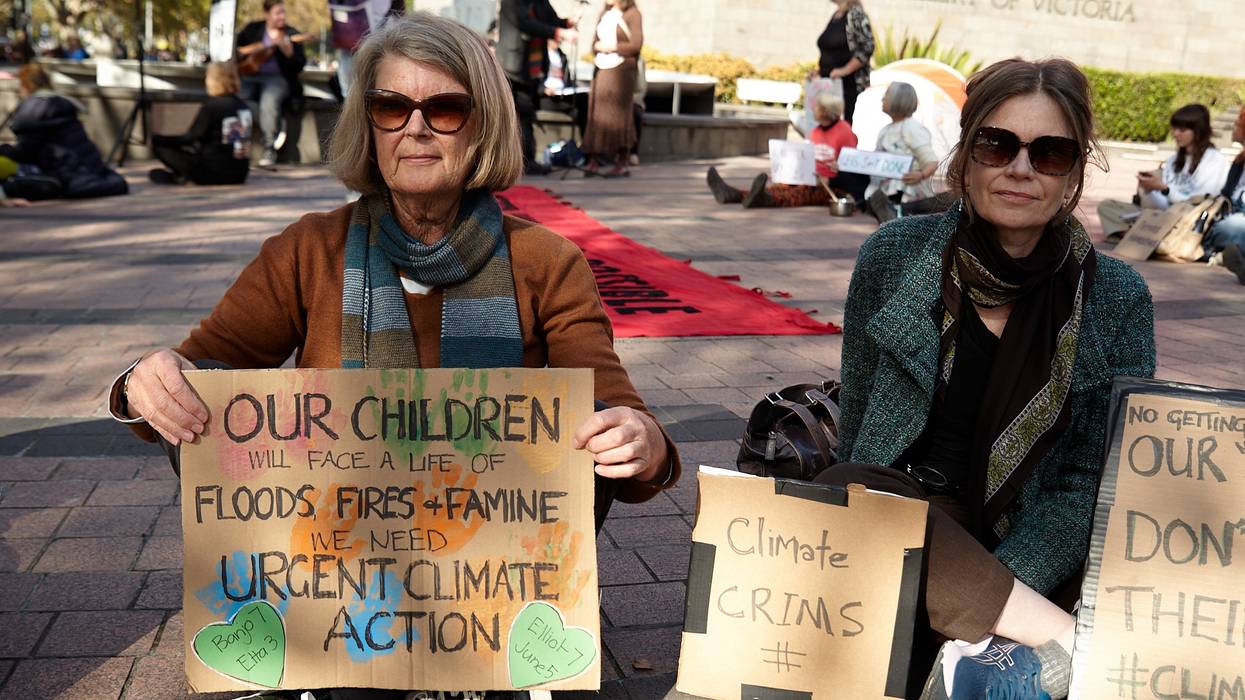
"If we don't act now, it will be too late," one mom warned. "I could not live with myself, as a mother, as a doctor, and as a human being, if we didn't do all we can to try and bring about the much-needed systemic change."
From Australia to Zimbabwe, mothers on Saturday peacefully occupied public spaces and called for urgent societal transformation to avert the worst impacts of the fossil fuel-driven climate emergency.
Joined by loved ones on the eve of Mother's Day, moms across the globe sat down in protest circles, where they highlighted the deadly consequences of the status quo and demanded lifesaving climate action.
"With our circles we convey that we refuse to look away, that we refuse to give up, and that we will do everything we can," Mother's Rebellion for Climate Justice said in a statement.
Participants made clear that children and impoverished people who bear the least responsibility for the climate crisis face the most harm, and that failing to fundamentally reform the global political economy threatens to decimate younger and future generations.
"Children are feeling betrayed because they see that governments are not doing enough, or are actively delaying meaningful climate action."
"Children are feeling betrayed because they see that governments are not doing enough, or are actively delaying meaningful climate action," said Marion, a mother and member of Doctors for Extinction Rebellion (Health for XR). "Those that are meant to protect and safeguard them, are ignoring and turning their backs on the children in this country, and on the children in the Global South who are already facing the impacts of a heating climate, as well as the fallout from environmental destruction and exploitation of resources."
"If we don't act now, it will be too late," Marion warned. "I could not live with myself, as a mother, as a doctor, and as a human being, if we didn't do all we can to try and bring about the much-needed systemic change."
Mothers' Rebellion, an offshoot of Extinction Rebellion launched last year in Sweden, describes itself as "a growing global community of women who want to be able to look our children in the eyes and say that we truly do all that we can." Fed up with "the lack of a powerful, transformative response from our politicians and leaders," the alliance "will not give up the fight for a sustainable present and future for the current and coming generations."
On Saturday, moms gathered in more than a dozen countries on every continent except Antarctica to build support for "the necessary changes to keep our planet healthy so that all its inhabitants can thrive," Extinction Rebellion Families (XR Families) explained.
Demonstrations took place in Australia, Costa Rica, Finland, Germany, India, Nigeria, Poland, Portugal, Sweden, Uganda, the United Kingdom, the United States, Zambia, and Zimbabwe.
"My heart aches when I think about the extreme heatwaves and devastating floods that my relatives in Malaysia have endured over the past few months," said Feng, a mother of two and member of XR Families. "It's not just about my family, but the countless others who are facing the brunt of climate change. That's why I will be at the Mothers' Rebellion, fighting for a livable planet for today’s children and all future generations. We owe it to them to take action now, before it's too late."
Kristine, a mother and member of Health for XR, said that "as healthcare professionals, it is our duty to identify and act on risks to children."
"As a mother and doctor, I cannot sit silently and watch this injustice to children across the world."
"Currently 85% of the burden of climate health impacts is falling on those under 5 years of age," said Kristine. "These health impacts include malnutrition, heat exposure, water scarcity, infectious diseases such as malaria and Lyme disease, and high levels of air pollution causing worsening asthma and childhood cancers."
"I am seeing these devastating impacts on children in my daily work, even in the U.K.," she continued. "As a mother and doctor, I cannot sit silently and watch this injustice to children across the world and that's why I will be at the Mothers' Rebellion and demand urgent climate action from world leaders."
According to XR Families:
Mothers' Rebellion wants a livable, socially just, inclusive world for all children. Almost all children on Earth are already exposed to at least one form of climate and environmental danger or stress. Mothers' Rebellion demand immediate action to reduce emissions to net-zero by 2025, starting with the phase-out of fossil fuels, and to protect and repair ecosystems whilst also addressing social inequality.
Approximately one billion children—nearly half the world’s 2.2 billion children—live in one of the 33 countries classified as [being at] "extremely high-risk" to the effects of climate change. These figures are likely to get worse as the impacts of climate change accelerate. The climate crisis is also affecting children's mental health. A global survey illustrates the depth of anxiety many young people are feeling about climate change. Nearly 60% of young people approached said they felt very worried or extremely worried. 83% think adults have failed to take care of the planet.
The Royal College of Pediatrics and Child Health is calling for child health to be a central theme in all climate change policy decisions. All children should have the right to clean air, safe water, sanitation, affordable and nutritious food, and shelter. The climate crisis is a child rights crisis, and governments should mobilize and allocate resources to protect those rights and include a child rights risk assessment as part of all climate policy decisions.
"I consider the crowning glory of my life to be in the presence of my four grandchildren," said Valerie, a retired doctor and Health XR member. "How, in my late autumn years, can I justify my existence on this beautiful planet if it is not dedicated to whatever action I trust may play a part in preserving it and its glorious biodiversity—for them and all the world's children, born and yet to be?"
"Nothing else in my life can take precedence over this," Valerie continued. "Science does not lie. I call upon all grandparents, parents, uncles, aunts and friends, older siblings, and those who work with young people in this ultimate expression of love for them—and for their children."
"Without a habitable planet, what value has everything else we may wish to bequeath to them?" she asked.
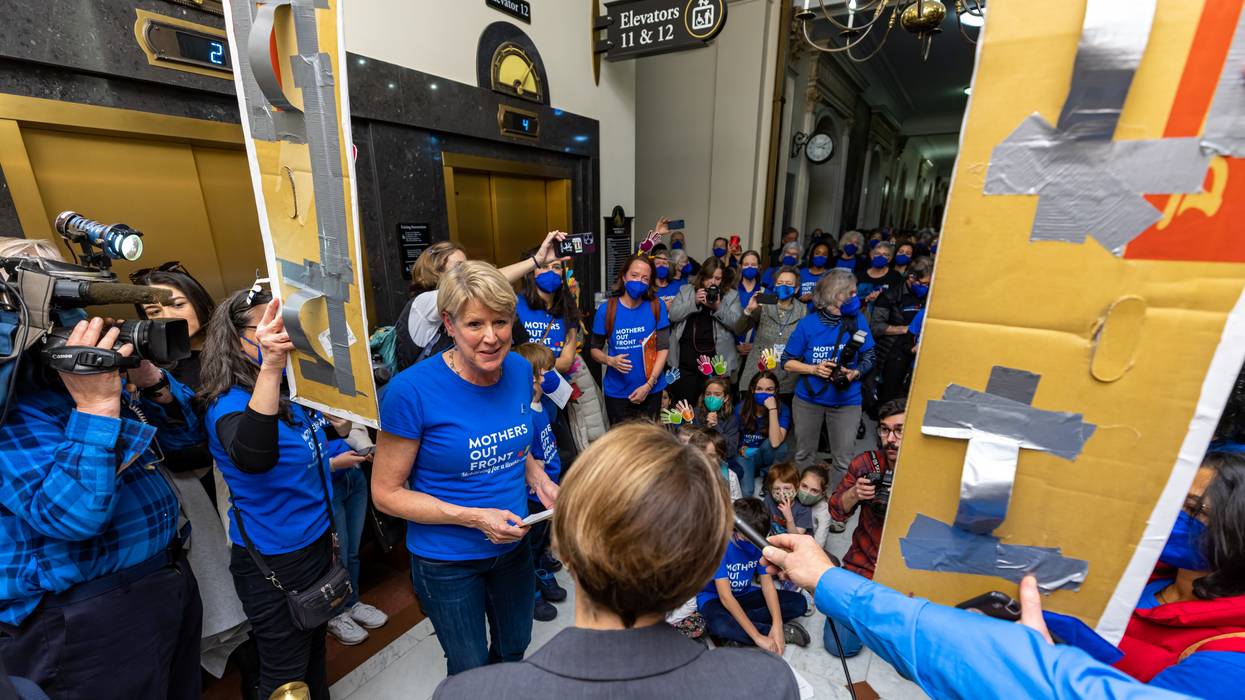
Moms are the best hope for Americans who are concerned about climate change.
To be a good mom, you have to be a great organizer. Whether it’s fair or not, in most families, moms organize just about everything—transportation to school and sporting events, shopping, meals, medical appointments, and much more. That’s why we’re the best hope for Americans who are concerned about climate change. We’re already skilled organizers. Many of us are already successfully applying our organizing skills to the climate crisis. If we want to have a planet that is safe for our kids, more of us need to do so.
While it’s mostly a forgotten history, Mother’s Day was never meant to be a day for expressing gratitude to mothers. The original Mother’s Day was an effort by women in the 1870s, horrified by the bloodshed of the Civil War, to exert their collective influence on our society in calling for peace. Julia Ward Howe led the charge, calling for a “festival which should be observed as Mother’s Day, and which should be devoted to the advocacy of peace doctrines.” Howe organized international peace conferences, and states created their own Mother’s Day festivities. She went on to advocate for women’s suffrage so women could shape our democracy as equal citizens.
Howe was by no means alone in recognizing the unique power of women—and particularly moms—coming together as an organized force for social change. Often these stories are left out of history textbooks that typically focus more on the individual heroism of charismatic leaders (usually white men), but from civil rights to marriage equality to vital environmental protections, women and moms have been key players in advancing public good.
This time around, it’s not the horrors of war that unites us but the terrifying prospect of a world made inhospitable for children–and all life–by the ravages of our climate crisis.
At Mothers Out Front, we’re carrying forward a vision of bold, women-led action in the tradition of what Howe exemplified and advocated. This time around, it’s not the horrors of war that unites us but the terrifying prospect of a world made inhospitable for children–and all life–by the ravages of our climate crisis.
In communities and states across the country, our moms have been advancing climate justice in a myriad of ways. They’ve helped pass policies in Massachusetts, California, and New York that protect families from pollution from oil and gas, whether that’s from appliances in their homes or drilling in their neighborhoods. They’ve pushed local school districts in Virginia and New York to transition to clean electric school bus fleets so that children don’t have to breathe dirty diesel fumes. They’ve secured more accurate air pollution monitoring in neighborhoods in Pueblo, Colorado, and run a successful no-idling campaign at Boston Logan International Airport to help address high asthma rates among children in East Boston. The list goes on. Energized by their collective concerns, our moms have become powerful leaders in their communities and beyond.
Mothers Out Front is one example of how mom power can be turned into a force for good. But if we're talking about the power of moms organizing, we have to talk about how motherhood has been weaponized by some groups as a front for reactionary, divisive politics. Oddly, far more media attention has been paid to this minority of moms who, under the guise of “parental rights,” promote banning books, removing curriculum that teaches about civil rights and racism, and restricting classroom discussion of gender identity and sexual orientation.
Sometimes it feels like those of us who have a more hopeful and inclusive vision for the kind of world we want for our children are being out-organized. There’s no reason for this.
We’ve learned at Mothers Out Front that any mom out there can learn how to organize effectively around creating a better world for her kids: Start by talking to other moms—get together, discover the values you share, and identify the changes you want to make in your community. You’ll be surprised by how your relationships with one another will sustain you and the work that you do together. Pick your targets. Strategize: Figure out how to turn the resources you have into the power you need to achieve your goals. Work in teams with clear roles so that you can share the responsibilities and decision-making. Start small, win early, get more moms involved, and build from there.
We need to pay more attention to the stories of moms who are working to make our world more safe, equitable, just, and sustainable. These are the moms who can inspire a sense of hope and agency in all of us, allow us to imagine a better path forward, and spur us into action.
This Mother’s Day, we would do well take inspiration from Julia Ward Howe and embrace the uniquely powerful role we can play as women and as moms in driving transformational change for a better world. Let’s get to work.
It is ever more urgent that we restore the spirit of our original Mother's Day—calling for World Peace.
The 19th century origins of Mother’s Day differ vastly in spirit and purpose from celebrations of it in the 20th and 21st centuries.
Mother’s Day was first inspired by two women with diverse but compatible social and political purposes. Prior to the Civil War, Ann Reeves Jarvis of West Virginia organized “Mothers’ Day Work Clubs” to teach women the basics of sanitation in food preparation and drinking water in a time of high infant and child mortality.
After the war, she organized “Mothers Friendship Day,” bringing mothers of sons who fought on both sides of the Civil War “to promote reconciliation.” Her daughter Anna Jarvis carried her mother’s legacy forward and convinced President Woodrow Wilson to establish the second Sunday in May as Mother’s Day. Jarvis became so disillusioned eventually with what she saw as the commercial sentimentalizing of and profiteering from Mother’s Day by the card, food, and floral industries that she disowned it.
Jarvis became so disillusioned eventually with what she saw as the commercial sentimentalizing of and profiteering from Mother’s Day by the card, food, and floral industries that she disowned it.
The first public “Mother’s Day for Peace” rally was held in New York City on June 2, 1872 at the inspiration of Julia Ward Howe, an ardent anti-war activist and promoter of world peace. Her 1870 Mother’s Day Proclamation passionately lamented the futile deaths in war and heralded action to stop future wars:
Arise then, women of this day! Arise, all women who have hearts…
Our sons shall not be taken from us to unlearn all that we have taught them of charity, mercy, and patience…
We women of one country will be too tender of those of another to allow our sons to be trained to injure theirs.
From the bosom of the devastated earth, a voice goes up with our own. It says, “Disarm, disarm!”…
Her Proclamation concluded calling for a congress of women all of nationalities to promote the “amicable settlement of international questions and the great and general interests of peace.”
This theme of engaging women across the world for peace has only grown more urgent. Try Googling “photos of negotiating to end war in Ukraine,” recommends Margot Wallström, Sweden’s former minister of foreign affairs: Women are largely absent. Despite a more than 20-year-old U.N. Resolution 1325 on Women, Peace, and Security that promotes including women “in all efforts for the promotion of peace and security, less that 10% of peace agreements have female signatories,” she states. Yet, research shows that with “more women involved in peace processes, more proposals are put on the table and agreements reached last longer.”
In my 2018 interview with Nigerian lawyer, mediator, peace activist, and member of WILPF Ayo Ayoola-Amale, she underscored the critical impact of women in peace negotiations. “The Liberian 2011 Nobel Prize laureate Leymah Gbowee, together with Christian and Muslim women, pressured warring parties into the 2003 negotiations that eventually ended years of horrific war in Liberia. Research has shown,” she added, “that where women’s inclusion is prioritized, peace is more probable, especially when women are in a position to influence decision making… Women take an inclusive approach whether it is stopping conflict, contributing to peace processes, or rebuilding their societies after conflict or war.”
For the eighth consecutive year, the Black Mama’s Bail Out initiative is posting bond on and near Mother’s Day for Black mothers in jail, women languishing in “cages” without a trial because they are too poor to post bail. Their action has highlighted the profiteering of the bail bonds industry and inspired nationwide community action. The U.S. puts more women in jails and prisons than any other country in the world. And while comprising roughly 6% of the U.S. population, Black women make up 22% of women’s imprisoned population. Most are arrested for low-level drug use, some on false charges; and most are mothers. Support Black Mama’s Bail Out fund this Mother’s Day.
I learned recently that “More phone calls are made on Mother’s Day than on any other day of the year.” And I understand why. As a child, I loved giving my mother a card and a present on Mother’s Day as an expression of my love and respect for her, and, after leaving home, I always called her on Mother’s Day. Now I look forward to honoring my sisters, cousins, and nieces as the wonderful mothers they are. But even more urgent is restoring the spirit of our original Mother’s Day—calling for World Peace, a call that is loud, persistent, insistent, public, and passionate.
Let us also remember that mothers wake up the morning after Mother’s Day to their social, economic, and political realities: poverty and food insecurity for almost 25% of single mothers, doing most of the unpaid domestic and caregiving work at home, pay discrimination, sexual violence for one in four women, and widespread sexual harassment. Rampant injustice that our society and the world must undo if we are ever to achieve peace.

We can't protect our children from the world, but we can show them that we're fighting for their future.
When my son was born last spring, I found myself in a strange world, one in which parents—particularly moms—are expected to be perfect and completely in control of every detail of a child's life. Whether it's buying the most non-toxic diapers or deciding on the best baby-feeding philosophies, each with their own line of products, there is an obsessive culture of consumerist perfection about raising a child. Somehow, amidst an increasingly unstable social context, mothers are expected to ensure a child's every moment is crafted with the expertise of a veteran Montessori preschool teacher, a pediatrician, and a consumer product expert all in one. At the back of our minds we know we can't be all these things, but we still try.
In part, it's just marketing. Momfluencers, social media companies, and corporations profit by fueling our parenting anxieties—we've been convinced that if we just consume the right products, our children will grow into little geniuses who never feel pain. And perhaps it's also a coping strategy: It's all too human that, when confronted with massive systemic crises like a pandemic or climate change, parents might turn inward and focus on the things we (think we) can control. Maybe if we buy the right toys or say the gentlest–yet firmest–words, we can shield our kids from the broken world.
I don't mean to disparage the anxiety new parents have over everyday choices. I too have spent too much time on the internet "researching" which sippy cup to buy. I too have wondered if I'm buying the "right" toys. (Spoiler: My son prefers playing with bits of cardboard and my husband's sneakers over virtually any toy.) And I'm not suggesting we neglect our babies and let them scrounge for food while we pursue loftier causes.
It's painful to admit that the decisions of the powerful may shape our children's lives even more than we can. But it's true. And it's why I view activism as part of my job as a parent.
But the time and energy so many of us put into seeking to control every moment and product in our kids' lives is not proportional to the real impact on our children. It doesn't matter if I feed my toddler organic snacks now if in 15 years the climate crisis wipes out our global food system. An Instagrammable play area won't shield my children from the trauma of a society in which school shootings have become a new normal. And even if I become the most perfect mom in the universe, that won't protect my baby from a crumbling social contract or a loss of their civil rights.
To really help our kids, there is a better way for parents to spend our limited extra energy and resources: activism. As individuals, we can't control much about our children's futures. But if we join together with other parents and exercise our collective power, we stand a better chance of ensuring our kids–and all kids–can survive and thrive. It's painful to admit that the decisions of the powerful may shape our children's lives even more than we can. But it's true. And it's why I view activism as part of my job as a parent.
Our children are under assault from all directions. The powerful refuse to divest from fossil fuels, even while young people watch their futures' disappear. Trans children can't access medical care. Teens can't get reproductive care. School children can't read stories with Black and LGBTQ characters. Hate crimes against Black, Queer, Muslim, and Jewish people are escalating. State and local governments are defunding public schools. Children have to walk into school each morning wondering if a gunman might kill them or their friends. In every way, our kids need us to fight for them.
If it sounds overwhelming to confront societal crises on top of the regular demands of parenting, that's because it is. But it's even more overwhelming for our children, who can only be insulated for so long before the fractured world comes crashing in. And when it does, what could be more reassuring than seeing their parents fighting for them? We owe our kids whatever extra time and energy we have—whether it's five minutes or five hours—to work to dismantle the systems that hurt us all.
The good news is you can actually do activism with your kids in ways that are enriching rather than burdensome. The group I work with, Climate Families NYC, plans kid-friendly protests replete with song, costumes, bubbles, and chalk. Our children love doing activism together, and when they hear about climate change in school or on the news, instead of feeling scared, they know they are part of the movement fighting back. Through meetings, playdates, and even direct actions outside Wall Street firms, we've built a community of mutual support.
Imagine if a million moms—and parents and caregivers (because this responsibility should be a shared one)—found an expectation to let go of and instead put the time, energy, and resources they gained into activism. Imagine the world we could build.
Years ago, I asked a close friend who had just had a baby if he felt different now that he was a parent. He said yes, what felt different was that now he was always a little afraid. Love for a child is carrying fear with you every day. But we have a choice of what to do with that fear—let corporations prey on us and our anxieties, siloed in our homes as we desperately try to be perfect, or channel our fears into action and community for the world our children deserve.
No one can do everything, but almost everyone can do something. Find your passion, find your people, and jump in. Like parenting, activism is never perfect, but it's what our kids, and we, really need.
How we die can say a lot about the societies we live in.
So many crises — from war to mass species die-offs to climate meltdown — afflict our world that we often don’t take time to draw insights from what generally passes for the small stuff, the things that happen all too close to home, including aging. Most of us don’t relish the prospect of getting old, much less watching our parents approach their deaths, something that’s even worse if you’re dying poor.
Having a parent die, whatever the circumstances, is bound to be wrenching. The best we daughters and sons can hope for is that our parents finish out their lives on their own terms and where they want to be — with loved ones nearby and suffering as little as possible. In recent years, the deaths of our own mothers at opposite ends of the globe seemed to highlight, in some modest fashion, the experiences of women who suffer debilitating health problems late in life, as well as the deep humanity and kindness shown them by the people whose work it is to help them exit this world in comfort and with dignity.
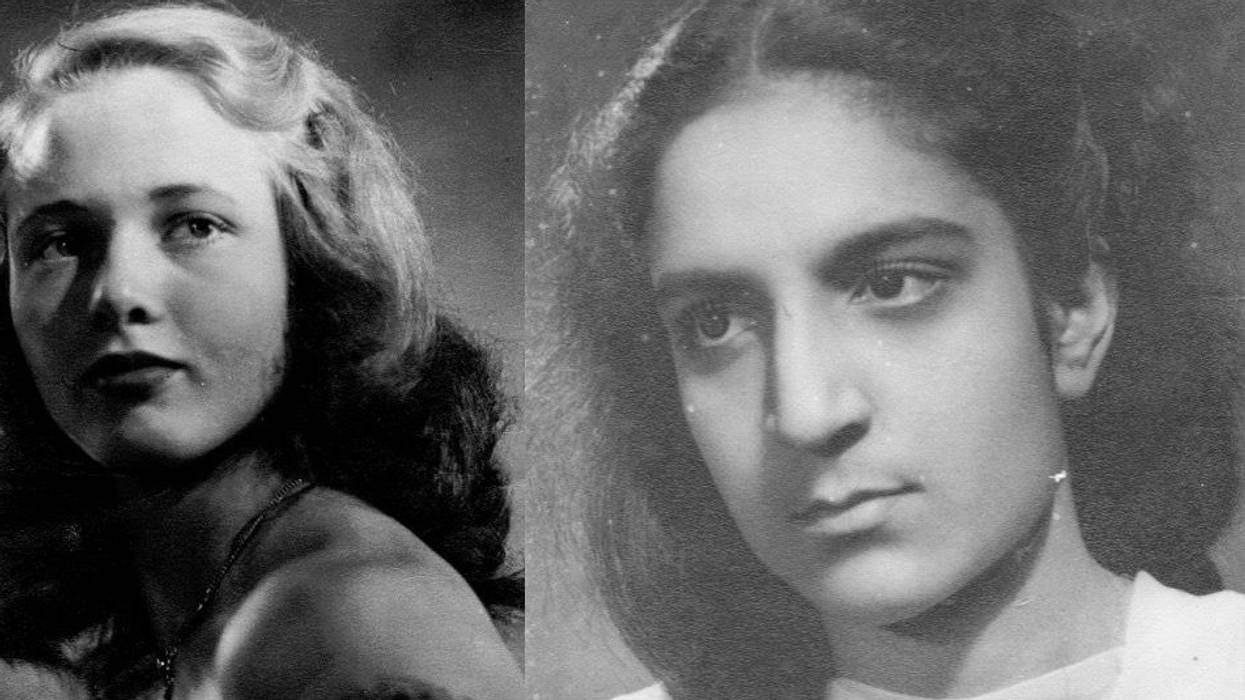
Priti’s mother Santosh Gulati and Stan’s mother Brenda Cox were born just four months apart in 1932-1933 and died four years apart in 2018 and 2023. Both lived through an era in which most women’s existences were still bound by the decisions men made. Still, they achieved a great deal despite such constraints and enjoyed relatively good health, only to be hit hard by medical problems in their last years.
During her final decade, Santosh battled breast cancer while also suffering the physical and mental anguish of a rare neurological disease, progressive supranuclear palsy (PSP). She succumbed in 2018, at age 86. In her last decade, Brenda endured the ravages of severe osteoporosis, including chronic, ever-increasing pain from a cascade of excruciating fractures in her spine, along with a broken ankle and fractured hips. In her final five years, she was also stricken by rapidly advancing dementia. She died this February at 90.
Brenda’s Story
In late 2018, Stan’s family began facing a conundrum experienced daily around the world: What will we do when Brenda can no longer take care of herself? Stan’s daughter Sheila answered that question admirably by quitting her job in Kansas and moving to Georgia to care for her then-85-year-old grandmother full-time. A year later, the Covid-19 pandemic struck. Had Sheila not been able and willing to give four years of her life to such work, Brenda might have ended up dying earlier in a care institution, isolated, with advancing dementia — and like so many less fortunate elderly people in those darkest pandemic days, having to say her final goodbyes by telephone. Instead, for almost three years, Brenda stayed out of Covid–19’s path and within reach of her far-flung family, even as her pain, physical disability, and dementia worsened. Then, one day in mid-December 2022, the pandemic finally came for her, carried most likely by a well-wishing visitor.
As her decline accelerated through January, she began losing her ability to swallow (partly because of her dementia), and the resulting aspiration of food and fluids worsened the pneumonia that had plagued her for months before she caught Covid. There was no way to reverse her decline. Before she was discharged from the hospital for the last time, her doctor asked us whether we wanted her problems to be treated “aggressively” with a feeding tube, intravenous fluids, and antibiotics, or whether we’d prefer to drop the losing battle with aspiration.
Brenda had been explicit in her advance directive: no artificial feeding. The whole family was in accord and committed to ensuring that she would feel as much happiness and comfort as possible in her home, with us, thanks to the indispensable support hospice nurses and aides provided us. In January 2023, she came home to the loving care of those hospice workers and her family.
With plenty of us there, someone (or ones) could always be holding Brenda’s hand, often both of them, every minute of her dwindling waking hours and for much of the time she slept as well. And we could do our best to remember the words she was whispering ever less frequently as the hours passed — almost all of them sweet or funny or both. We laughed through our tears. Two days before the end, she was using what little breath she had left to speak largely unintelligible words and phrases. Still, the last thing she whispered, on Valentine’s Day, was unmistakable: “I love all of you.”
Santosh’s Story
When Santosh Gulati died of PSP in December 2018, we were in Mumbai with her, as was most of her family. PSP, often misdiagnosed as Parkinson’s Disease, is one of the cruelest illnesses. It eats away at the mind and the body all too slowly, until — the final symptom suffered by most — you can no longer swallow. The last meal she enjoyed before the hospital’s doctors put her on a feeding tube — against her family’s wishes — was her favorite: meetha (sweet) toast. (Consider it the Indian version of French toast.)
Specialists in the hospital were horrified when we insisted that she die naturally, that they not use artificial feeding to keep her physical body alive while only prolonging her agony. Her doctor warned us sternly, “That decision will come back to haunt you later in life.”
We are indeed haunted, but not about our decision to let Priti’s mother die with some dignity. That was the only loving, humane choice we felt we could make. We are haunted by the fact that so many poor Adivasis (tribal people), Muslims, Dalits, Christians, and other minority groups are living and dying under Hindu supremacy, with no semblance of justice, equality, or dignity.
Consider Kalavati, a poor, lower-caste woman who was Santosh’s home caregiver. During one of her hospitalizations, Kalavati stayed in the room with her at night (because all patients were required to have a personal attendant present overnight) and only went home when daylight came and family members took over. One night in the hospital, Kalavati got a call notifying her that her oldest son, Arjun, who had been suffering from tuberculosis, was probably not going to make it to the morning. The first commuter train that could take her to her slum, however, wouldn’t depart until 4:00 a.m. Delayed for hours, she finally neared her house only to see her other two sons running toward her, shouting, “Ma, tu kahan thi? Bhaiya mar gaya!” (“Mama, where were you? Big brother has died!”)
All along, Kalavati had been in an impossible position. She had to work outside her home so that her family could have food and shelter, which meant that, for much of the time, she couldn’t cook or otherwise care for them. She couldn’t even hold her son’s hand as he died (as we did with our mothers). Once the funeral and the mourning period were over, she returned to care lovingly for Priti’s mother until Santosh, too, died.
So, we were grieving for her even as Kalavati grieved for Arjun. His tuberculosis had only worsened when he started drinking heavily, despondent over the stress of growing up poor with a delinquent father while losing the girl he loved. Kalavati had spent all her extra money just to get him into the hospital for treatment. “But he wouldn’t eat,” she told us, “or take his medicines and I had to throw them away. ‘Arjun, take your medicine,’ I said. ‘You will die if you don’t.’” As she so vividly recalled, he then replied, “No, Ma, I don’t want to live and you have my two young brothers to take care of.” There was no hope, the doctors told her. “After I brought him home, I tried giving him a little water, some pineapple juice… Then, in the end, my child’s body completely took hold of the ground. Khalas [finished]. There was no strength left in him to get up,” she told Priti through her tears. “Then I came to work [for Santosh] and after a few days he died.”
Kalavati is one of so many Indian women born into poverty-stricken families who, once married, are abandoned by their husbands and left to care for children singlehandedly. (Her husband left her in 2013.) Many of them also work as maids or caregivers to children or elders in middle-class homes. Out of desperation, many are compelled to neglect their own sons, daughters, and elders to earn a living that isn’t faintly enough to lift them out of poverty. At best, it’s just enough to help them and their loved ones survive. That’s no accident. It’s what keeps capitalism going in India.
Disparities in the kind of care people receive as they die are widespread, not only between but also within societies. For instance, American hospice use is lower among Black patients in part because, when discussing the end of life with them, physicians tend to provide less information about their diagnosis, outlook, and treatment options, including hospice.
One of the registered nurses whose care Brenda received (and who also came to our aid moments after Brenda died) was Black. We were curious about her experience in hospice work, so we got in touch with her a couple of days later. By text, Donna (not her real name) told us how she and her autistic son had suffered the effects of systemic racism in the overall medical system. She added, more broadly, that, in her 30 years of nursing, she has seen striking disparities in the treatment of White patients versus Black or Latino ones. However, she wrote, having worked in pediatrics, geriatrics, oncology, and hospice, “I have seen the least disparity in hospice care. Our hospice department is very sensitive to cultural differences and they do their best to provide the best care possible for everyone.” So, the chief racial disparity is not necessarily in the quality of hospice care but in the reduced opportunities for Black patients to get into it in the first place.
We are deeply mindful of how fortunate both of our families were to have our mothers’ sad final journeys end at home surrounded by our collective love. We were, above all, fortunate indeed to have the kinds of flexible work schedules most people don’t have, as well as the ability to travel, and enough funds to make it all possible. Far too many Indian and American families won’t have the resources to care for their loved ones at home as they age and die.
In India, only a small minority of families have access to adequate medical care for their loved ones in the last weeks of their lives and even fewer have hospice care that allows them to die with comfort and dignity. For Santosh, there was no hospice available. Her family, like many there, had to improvise. Medical care and the services of home caregivers are, however, far more affordable in India than in the U.S., thanks largely to the low wages of so many healthcare workers. But even then, among India’s poor majority, including Kalavati’s family, the costs of most medical care and all home care remain out of reach.
Most Indians do die at home with their families, but mainly without medical support. A recent study found that, of the 5.4 million people a year in India who need palliative care, only 1% receive it. Crucially, therefore, Santosh couldn’t benefit from the kinds of pain medications that kept Brenda comfortable during her last days. The experiences of our American and Indian families differed in other ways. Brenda’s doctors and nurses were open and frank about her prospects and didn’t urge extraordinary measures to keep her nominally alive; Santosh’s were not. Neither of our families is wealthy. Although we both did have the financial means necessary to care for our mothers, Brenda also benefited greatly from Medicare. India offered no such help for Santosh.
And one more factor: Brenda and all of us descended from her are White, so our efforts to make her last days good ones were not disrupted by systemic racism, as they are for so many in this country.
There’s a saying in India: jispe beet-tee hai woh he janata hai (only the one who’s going through it knows). Santosh used that with Priti once — speaking not of her own suffering but of someone else’s. In Santosh’s final weeks, old Bollywood songs would play each evening on the TV in her bedroom. Four years later, while we stood around Brenda’s bed at dusk as she breathed her last, a song Priti had heard in Santosh’s room the very evening she died played over and over in her head. It was from the 1971 film Anand, about a doctor who struggles to decide between keeping patients alive and accepting death when it’s inevitable:
“Kahin Door Jab Din Dhal Jaaye“
Kahin dur jab din dhal jaye
Sanjh ki dulhan badan churaye
Chupke se aaye
Mere khayalon ke aangan mein
Koi sapnon ke deep jalaye
(Somewhere far away when the day sets
The bride of dusk steals the body
She comes quietly
In the courtyard of my thoughts
Someone lights up lamps of dreams)
Kabhi yoon he jab hui bhojal saansen
Bhar aye baithe baithe jab yoon he ankhen
Kabhi machal ke pyaar se chal ke
Chhue koi mujhe par nazar na aye
Nazar na aye
Kahin dur…
(Sometimes just like that the breath becomes heavy
When my eyes well up just sitting there
Then, fluttering, moving with love
Someone, touches me, but I cannot see her
I cannot see her
Somewhere far away…)
Rest in peace, Brenda, Santosh, and every other mother who gave so much and suffered so greatly.