
SUBSCRIBE TO OUR FREE NEWSLETTER
Daily news & progressive opinion—funded by the people, not the corporations—delivered straight to your inbox.
5
#000000
#FFFFFF
To donate by check, phone, or other method, see our More Ways to Give page.


Daily news & progressive opinion—funded by the people, not the corporations—delivered straight to your inbox.
"There is now no justification for further delaying a hostage deal and a cease-fire. And there is absolutely no justification for continued U.S. support for Netanyahu's horrific policies, which are in clear violation of U.S. and international law."
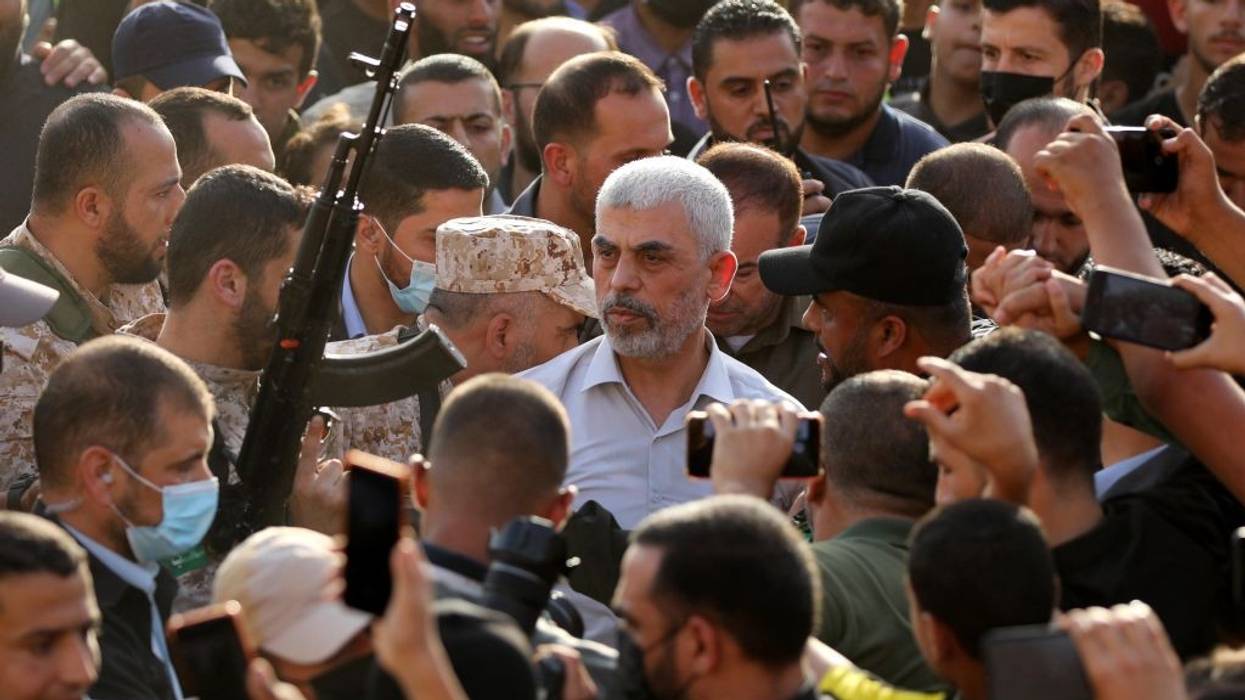
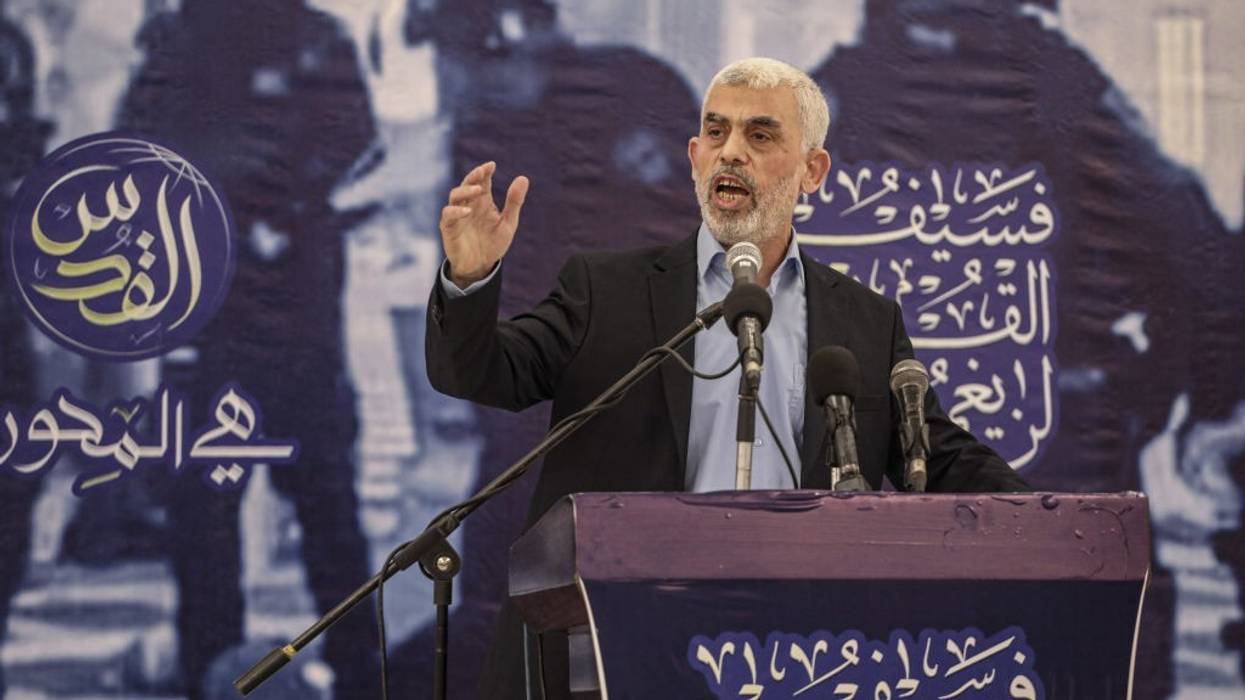
Confirmation that Hamas leader Yahya Sinwar has been killed by the Israeli military has lifted hopes that new traction can be found for a cease-fire deal in Gaza and Sen. Bernie Sanders (I-Vt.) was among those who said the development must be exploited to help end the "cruel and illegal war" that has largely targeted innocent Palestinian civilians.
With the death of Sinwar—first claimed by the Israeli military and confirmed publicly by Hamas officials Friday—Sanders said there should be no further obstacles for an end of the fighting and a surge of humanitarian aid to the people of Gaza.
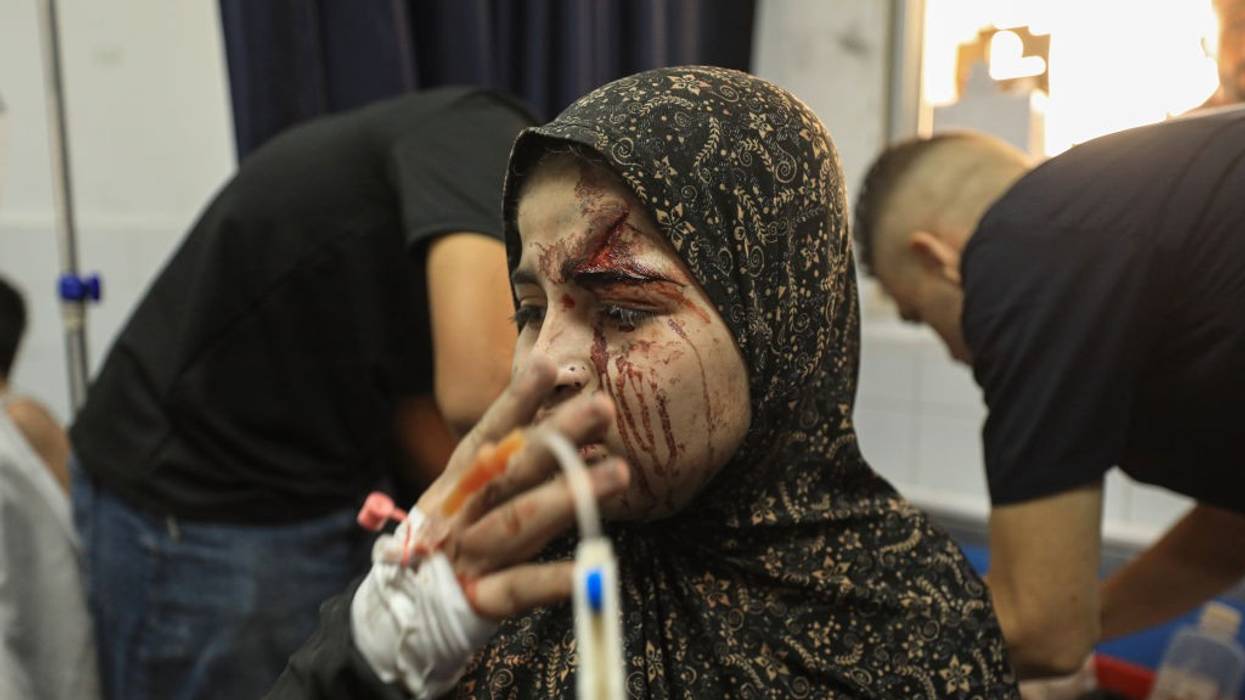
"There is now no justification for Prime Minister [Benjamin] Netanyahu and his extremist government to continue their all-out war against the Palestinian people, which has killed 42,000 Palestinians and injured 100,000—two-thirds of whom are women, children, and the elderly," Sanders said Thursday after the news broke.
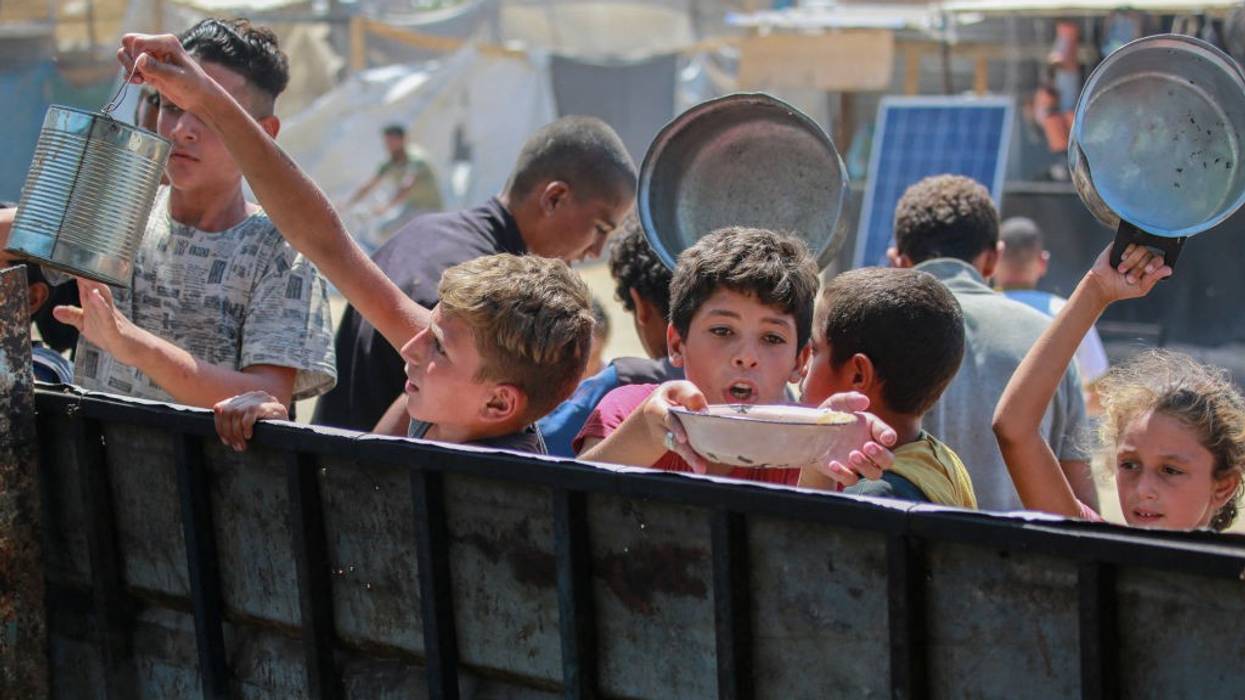
"There is no justification for continuing to deny humanitarian aid to the many thousands of children in Gaza who are starving," Sanders continued. "There is no justification for continuing to destroy the housing, healthcare, and infrastructure of Gaza. There is now no justification for further delaying a hostage deal and a cease-fire. And there is absolutely no justification for continued U.S. support for Netanyahu's horrific policies, which are in clear violation of U.S. and international law."
In a statement released from the White House after DNA testing was said to have confirmed the death of Sinwar—believed to have orchestrated Hamas' deadly attack against Israeli soldiers and civilians on October 7 of last year—President Joe Biden said his killing by Israeli forces in Gaza represented "a good day for Israel, for the United States, and for the world."
In his remarks, Biden added that he would be speaking "soon with Prime Minister Netanyahu and other Israeli leaders to congratulate them, to discuss the pathway for bringing the hostages home to their families, and for ending this war once and for all, which has caused so much devastation to innocent people."
As many major outlets reported, Sinwar's killing resulted in Biden joining with other world leaders to push for a cease-fire process that Netanyahu has steadfastly sabotaged. According to The Guardian:
Speaking as he arrived in Germany to meet European leaders, Biden said he felt "more hopeful" about the prospects of a cease-fire and would send the U.S. secretary of state, Antony Blinken, to Israel in the next four or five days.
Biden joined figures including his vice president, Kamala Harris, the British prime minister, Keir Starmer, the French president, Emmanuel Macron, and the German chancellor, Olaf Scholz, in urging progress towards a cease-fire.
Blinken held separate phone calls on Thursday with the Saudi foreign minister, Prince Faisal bin Farhan Al Saud, and the Qatari Prime Minister Sheikh Mohammed bin Abdulrahman Al Thani, on ending the conflict in the Middle East, the U.S. State Department said.
Despite new diplomatic gestures, however, there remains plenty of skepticism that Sinwar's death will change anything on the ground. In his public comments Thursday, Netanyahu promised that the killing of the leader would not alter Israel's commitment to fully crushing the Palestinian resistance in Gaza.
While Netanyahu said Israel "settled the score" by killing Sinwar, he promised that the war "will continue" until all the hostages were home. As critics have pointed out repeatedly, it was only a temporary cease-fire deal in November of 2023 that saw the safe return of Israeli hostages. In the meantime, many tens of thousands of innocent civilians in Gaza—men, women, and children—have been killed, maimed, or remain missing.
In a column Friday, Steven Simons, a distinguished fellow at Dartmouth College and senior research fellow at the Quincy Institute for Responsible Statecraft, argued that just because it's as good as time as any to reach a cease-fire deal, it doesn't mean the opposing sides will seize the opportunity.
"The question for both the Palestinians and Israelis is what happens next," wrote Simons. "If the two are smart, Sinwar's successors will offer to release all the remaining hostages, dead and alive, in exchange for an immediate cease-fire and a massive influx of humanitarian aid. The Israelis would be well-advised to declare victory and accept such an arrangement."
"The Biden administration, and presumably Vice President [Kamala] Harris, have signaled that Netanyahu’s government is skating on thin ice." he continued. However, Netanyahu "might calculate that he need only wait a few weeks for a president-elect Donald Trump and therefore pocket Sinwar's death and carry on with business as usual."
As far as Sanders is concerned, the only path forward is an immediate end to hostilities and the best way for the U.S. to facilitate that is to stop supplying Israel with weapons and end its political cover for Israel's many alleged war crimes, including the blocking of life-saving aid and indiscriminate bombing of civilian areas.
"When Congress returns," Sanders said, "the Senate will be voting on my Joint Resolutions of Disapproval to block offensive arms sales to Israel. We must end our complicity in this cruel and illegal war."
If the successors to Sinwar's leadership within Hamas are smart, they will offer to release all the remaining hostages, dead and alive, in exchange for an immediate ceasefire and a massive influx of humanitarian aid. The Israelis would be well-advised to declare victory and accept such an arrangement.
Yahya Sinwar’s death, which was confirmed by Israeli authorities Thursday, was long anticipated. Within Gaza, he was one of three key targets; the other two, Mohammad Deif and Marwan Issa were killed months ago.
Sinwar will be remembered by some as an inspired, defiant champion of Palestinian rights, by others as a false prophet and by still others as a bloodstained villain. The one aspect of his role in the 100-year war over Palestine, to paraphrase Rashid Khalidi’s book title, that most will agree upon, is that he failed to understand not only his adversary, but also his friends. He believed, among other things, that his October 7 attack would precipitate Israel’s collapse and that others in the Axis of Resistance would coordinate serious attacks against Israel with his own.
He timed his “big project,” as its planners called it, to exploit civil discord in Israel over Benjamin Netanyahu’s effort to hamstring the country’s Supreme Court and subordinate it to the will of the right-wing legislature. Netanyahu’s gambit spurred massive demonstrations against the government and led some in the reserves, including pilots, to declare that they would not serve until the court reform measure was shelved.
Sinwar interpreted this unrest as cracks in the foundation of the Israeli state. In the very long run he might well prove to have been right. But he was very wrong to think that these cracks could be widened by the big project. Indeed, Sinwar’s assault on Israel and the taking of hostages, was not the wedge he thought it would be, but rather the cement that instantaneously sealed the fault lines.
Sinwar united a factionalized society, reminded them of the rationale for their state and the dark history preceding it.
The result was an all-out war on Hamas. Traumatized Israelis, humiliated and scandalized by an historic intelligence failure, quickly coalesced in favor of a scorched-earth response and Netanyahu’s aim of total victory. And it was understood that as of October 7, Sinwar was dead, if unburied. Sinwar’s hubris triggered a massive assault that eviscerated Gaza’s civilian population and was — is — apparently replete with war crimes related to Israel’s failure to protect Gaza’s civilian population from attack, the targeting of humanitarian agencies, and the failure to ensure that Palestinian noncombatants had adequate access to food, water, and medical care.
Sinwar’s colossal misperception also led to Hezbollah's involvement, which to the grief of both Gazans and Lebanese, was too trivial to fulfill Sinwar’s expectations, but too much for Israel to ignore, as it emptied northern Israel of its inhabitants. This in turn brought Israel and Iran into direct conflict and threatened the escalation of a regional war. And it is undeniably regional — as Houthis increasingly target U.S. vessels in the Red Sea, the U.S. deploys B-2 bombers from Missouri to drop bunker busters on deeply buried installations in Yemen, and the Israelis bomb Yemen’s only port for the transfer of humanitarian assistance.
Sinwar understood well enough that many ordinary Gazans would die in furtherance of his vision of victory. In this, he evidently confused himself with Vo Nguyen Giap, who likewise understood that many Vietnamese would die, particularly in vast U.S. air raids on the North, but was correct in assessing that this would weaken the U.S. internationally, legitimize his campaign to destroy South Vietnam, and unify the country under Hanoi’s rule.
But North Vietnam had a powerful ally, a population many times the size of Gaza’s, a much larger land area, and a highly mobilized society and powerful army. And his adversary to the south was, unlike Israel, fatally divided against itself.
The question for both the Palestinians and Israelis is what happens next. If the two are smart, Sinwar’s successors will offer to release all the remaining hostages, dead and alive, in exchange for an immediate ceasefire and a massive influx of humanitarian aid. The Israelis would be well-advised to declare victory and accept such an arrangement.
The Biden administration, and presumably Vice President Harris, have signaled that Netanyahu’s government is skating on thin ice. The prime minister might calculate that he need only wait a few weeks for a president-elect Donald Trump and therefore pocket Sinwar’s death and carry on with business as usual. This might be a good bet.
But hedging might be a better bet, and that would mean using Sinwar’s death as a face-saving way to manage White House pressure.
Despite the unbelievable pain and loss, there is now a powerful energy that is unifying Palestinians around their cause, and the Arabs and the whole world around Palestine.
No one had expected that one year would be enough to recenter the Palestinian cause as the world’s most pressing issue, and that millions of people across the globe, would, once again rally for Palestinian freedom.
The last year witnessed an Israeli genocide in Gaza, unprecedented violence in the West Bank, but also legendary expressions of Palestinian sumud, or steadfastness.
It is not the enormity of the Israeli war, but the degree of the Palestinian sumud that has challenged what once seemed to be a foregone conclusion to the Palestinian struggle.
Yet, it turned out that the last chapter on Palestine was not yet ready to be written, and that it would not be Israeli Prime Minister Benjamin Netanyahu who would write it.
The ongoing war has exposed the limits of Israel’s military machine. The typical trajectory of Israel's relationship with the occupied Palestinians has been predicated on unhindered Israeli violence and deafening international silence. It was largely Israel that alone determined the timing and objectives of war. Its enemies, until recently, seemed to have no say over the matter.
Yet, this is no longer the case. Israeli war crimes are now met with Palestinian unity, Arab, Muslim and international solidarity, and early, albeit serious signs of legal accountability as well.
The ongoing war has exposed the limits of Israel’s military machine.
This is hardly what Netanyahu was hoping to achieve; just days before the start of the war, he stood in the United Nations General Assembly Hall carrying a map of a ‘New Middle East’, a map that had completely erased Palestine and the Palestinians.
"We must not give the Palestinians a veto over (..) peace," he said, as "Palestinians are only 2% of the Arab world." His arrogance didn’t last long, as that supposedly triumphant moment was short-lived.
Embattled Netanyahu is now mostly concerned about his own political survival. He is expanding the war front to escape his army’s humiliation in Gaza and is terrified by the prospect of an arrest warrant by the International Criminal Court.
And as the International Court of Justice (ICJ) continues to look into an ever-expanding file, accusing Israel of deliberate genocide in the Strip, the UNGA, on September 18, resolved that Israel must end its illegal occupation of Palestine within a year from the passing of its resolution on the matter.
It must be utterly disappointing for Netanyahu—who has worked tirelessly to normalize his occupation of Palestine—to be met with total and thundering international rejection of his schemes. The advisory opinion of the ICJ, on July 19, declaring that “Israel’s presence in the Occupied Palestinian Territory (is) unlawful” was another blow to Tel Aviv, which despite unlimited US support, failed to change international consensus on the illegality of the occupation.
In addition to the relentless Israeli violence, the Palestinian people have been marginalized as political actors. Since the Oslo Accords in 1993, their fate has been largely entrusted to a mostly unelected Palestinian leadership, which, with time, monopolized the Palestinian cause for its own financial and political interests.
The sumud of the Palestinians in Gaza, who have endured a year of mass killing, deliberate starvation and total destruction of all aspects of life, is helping reassert the political significance of a long-marginalized nation.
This shift is fundamental as it runs opposite to everything that Netanyahu had tried to achieve. In the years prior to the war, Israel seemed to be writing the final chapter of its settler colonial project in Palestine. It had subdued or co-opted the Palestinian leadership, perfected its siege on Gaza and was ready to annex much of the West Bank.
The sumud of the Palestinians in Gaza, who have endured a year of mass killing, deliberate starvation and total destruction of all aspects of life, is helping reassert the political significance of a long-marginalized nation.
Gaza became the least of Israel’s concerns, as any discussion around it was confined to the hermetic Israeli siege and the resulting humanitarian, though not political crisis.
While Palestinians in Gaza have tirelessly implored the world to pressure Israel to end the protracted siege, imposed in earnest in 2007, Tel Aviv continued to conduct its policies in the Strip according to the infamous logic of former top Israeli official, Dov Weissglas, who explained the rationale behind the blockade as "to put the Palestinians on a diet, but not to make them die of hunger."
But a year into the war, Palestinians, due to their own steadfastness, have become the center of any serious discussion on a peaceful future in the Middle East. Their collective courage and steadfastness have neutralized the Israeli military machine’s ability to exact political outcomes through violence.
True, the number of dead, missing or wounded in Gaza has already exceeded 150,000. The Strip, impoverished and dilapidated to begin with, is in total ruins. Every mosque, church or hospital has been destroyed or seriously damaged. Most of the region’s educational infrastructure has been obliterated. Yet, Israel hasn’t achieved any of its strategic objectives, which are ultimately united by a single goal, that of silencing the Palestinian quest for freedom, forever.
Despite the unbelievable pain and loss, there is now a powerful energy that is unifying Palestinians around their cause, and the Arabs and the whole world around Palestine. This shall have consequences that will last for many years, long after Netanyahu and his ilk of extremists are gone.
More than statistics, law, and politics, our nation’s role in the Palestinian genocide should shake our conscience and cause us to question its morality. Are human rights and justice good for some but not others?
The U.S. government often claims to stand for the rule of law, but this past year has made it painfully clear that this doesn’t apply to Palestinians. The moral, financial, and security costs of U.S. support for Israel’s rapidly expanding wars are adding up for Americans, too.
Since October 7, 2023, around 42,000 Palestinians have been killed in Gaza, plus over 700 more in the West Bank. Over 1,100 Israelis have been killed, too. These tragedies are a direct consequence of Israel’s illegal, U.S.-backed occupation of Palestinian territory and its war on Gaza, which must both end immediately.
From the mass killing and maiming of Palestinian civilians to the forced starvation and deliberate destruction of Gaza’s health infrastructure, Palestinians and international experts have warned from the start that Israel is committing a “textbook case of genocide” in Gaza.
The U.S. has enabled this ongoing genocide and other crimes by providing unconditional support for Israel despite mounting atrocities.
Despite the International Court of Justice finding genocide “plausible” and calling on Israel to prevent it and ensure the delivery of lifesaving aid, Israel — like the U.S. — has ignored all of the court’s orders.
The U.S. has enabled this ongoing genocide and other crimes by providing unconditional support for Israel despite mounting atrocities. This has emboldened Israel to expand its assault to Lebanon, Syria, and Yemen as it threatens to drag the U.S. into a wider war with Iran.
None of this is inevitable.
As Israel’s chief supplier of arms, the U.S. has sent billions worth of high-powered explosives since October 7, which have turned up at massacre after massacre committed by Israel’s military. That’s a violation of our own laws barring assistance to forces that commit human rights abuses or block delivery of humanitarian aid, as Israel has done.
“Our democracy is at stake” has been an ongoing refrain this election season. But it’s also a threat to our democracy when elected officials ignore the vast majority of their constituents who have rightly demanded a permanent ceasefire and arms embargo on Israel. Instead of listening to voters, our leaders have backed violent crackdowns on protests, which threatens our First Amendment rights.
The costs of war always reverberate at home. Our policymakers have expressed support for the war using racist, dehumanizing rhetoric, which has directly contributed to rising anti-Palestinian, Arab, and Muslim hate crimes, harassment, and discrimination.
And even though most Americans oppose Israel’s war on Gaza, we’re still paying for it.
Brown University’s Costs of War Project estimates that over the past year, the U.S. has spent at least $22.76 billion and counting on Israel’s onslaught in Gaza and other U.S. military operations in the surrounding region. In August, the Biden administration approved an additional $20 billion in arms sales to Israel.
All this comes on top of the $3.8 billion the U.S. already sends Israel in military aid each year. That same $3.8 billion a year could fund 29,915 registered nurses, 394,738 public housing units, or 39,158 elementary school teachers, according to the National Priorities Project.
As our post-COVID safety net continues to crumble, more people are left unable to afford housing, health care, groceries, education, and other basic necessities. Compounding these challenges, more states are battling climate disasters. We desperately need those funds at home, not funding wars and lawlessness abroad.
We desperately need those funds at home, not funding wars and lawlessness abroad.
Nevertheless, many of our elected officials would rather support the military-industrial complex than their own constituents. In a particularly flagrant example, Republican Senator Lindsey Graham recently appeared on Fox News to plead for more U.S. weapons for Israel in the aftermath of Hurricane Helene, which had ravaged his home state of South Carolina.
More than statistics, law, and politics, our nation’s role in the Palestinian genocide should shake our conscience and cause us to question its morality. Are human rights and justice good for some but not others? And can we recognize our complicity in this genocide and not take action to end it?
However one answers these questions, our shared humanity hangs in the balance.
We must understand what happened leading up to that nightmarish day and certainly we cannot be blind to has happened since.
On October 7th, the continuing genocide in Gaza and the massive bombings in Lebanon will likely be ignored by U.S. officials and media outlets as they solemnly commemorate the anniversary of Hamas’ attack on Israel. What they’ll ignore is that the history of the Israeli-Palestinian conflict didn’t begin on October 7th, nor did the suffering end on that day.
October 7th was a horrific day, to be sure, of condemnable acts committed by Hamas against innocents. It is important that the stories of those who were murdered and those taken as hostages be told and that we hear their cries and mourn their loss. And it’s right that Hamas be condemned for the crimes they committed. But history didn’t start on that nightmarish day, and it certainly didn’t end there either.
Since then, from what we know for certain, more than 41,000 Palestinians have been killed, 97,000 wounded, with upwards of 20,000 missing. Entire Palestinian families have been wiped out, neighborhoods leveled, most housing in Gaza has been destroyed along with its schools, hospitals, and infrastructure. Aid has been restricted, resulting in deaths from disease, starvation, and malnutrition. And all kinds of psychological disorders have taken hold resulting from prolonged trauma. What Israel has done we are told by respected international agencies is genocide—the destruction of a society, its culture, and well-being. And now the devastation and trauma are being extended to Lebanon.
When America’s political leaders and media commemorate the horror of October 7th, what happened after that day will not be considered. What began on October 8th and continues until now will be ignored. Worse still, those who dare to speak of the tragedy that followed will be denounced for their insensitivity to Jewish suffering. It will be as if the cries of the Israeli victims will drown out those of the Palestinians. One people’s pain will be prioritized over another’s. It’s something that Arabs have come to expect: They are not seen as equal human beings.
When America’s political leaders and media commemorate the horror of October 7th, what happened after that day will not be considered.
To be crude, this is not making a case for Palestinians winning the Victimhood Olympics. Rather it is merely a reminder that Palestinian lives matter as much as Israeli lives and that history didn’t begin or end on October 7th. But this is not the story that will be told on that day, in the U.S. media or in Congress or by the White House. And it’s not the way this story will enter our history books.
It’s often noted that history, as it’s taught in a society, is written by the dominant group. The story that is told is a function of the perspective of the person who’s relating it. It’s how they see it from where they stand, and its meaning is determined by where they choose to start their narrative.
When I was in school, the American history we learned began with Columbus’ “discovery” of what was termed “the New World.” “Indians” were savages and the “3/5ths compromise” was presented as a logical answer to how to count slaves in the census.
The world history we studied was Eurocentric. Islam was a barbaric threat; China was a mere footnote “discovered by Marco Polo”; Genghis Khan was a marauder. And the British and French, we were told, brought civilization to the primitive people of the south and east.
In reality, of course, the “New World” was populated with ancient civilizations that had built magnificent cultures, slavery was a barbaric institution, Islamic civilization taught the West a great deal, Genghis Khan was one of the great conveyors of culture from East to West, and colonialism was an evil that subjugated and exploited and distorted the economic and political development of the conquered nations. But that’s not the story that was taught, because those who wrote the history we learned in school began their story in 1492 and told it from the perspective of Americans or Europeans looking out at the world.
Public opinion in the U.S. is changing with more Americans understanding the Palestinian story and empathizing with their pain. This broader view, however, has not taken hold in official political and media circles.
Back to October 7th. Palestinians have a tragic story to tell of dispossession, displacement, and horrific oppression that began a century ago. But here in the U.S., their story is not the dominant narrative. The nightmare they’ve lived isn’t understood or is outright rejected.
In mid-October 2023 I had an encounter with a senior Biden administration official. After he spoke passionately about October 7th and the trauma it evoked for Jews everywhere, I told him I understood. I noted how my uncle, a U.S. soldier in WWII, told me about what he saw on entering the concentration camps in Nazi Germany. His stories and The Diary of Anne Frank, which I read in high school, helped me understand Jewish trauma and be understanding of their fears. I cautioned him, however, that there was another people who also had a history of trauma and that what Palestinians were seeing play out evoked for them the nightmare of the Nakba. We must, I insisted, be sensitive to the horror and trauma of both peoples. He angrily shot back, dismissing my observation saying that it smacked of “whataboutism.” I was stunned and angry. It was one thing for Israelis to feel that only their suffering matters and that anyone who attempts to distract from that one-sided view is either dismissive of Jewish pain or is defending those who inflict it. It’s quite another for U.S. officials and major media figures to share this view.
Public opinion in the U.S. is changing with more Americans understanding the Palestinian story and empathizing with their pain. This broader view, however, has not taken hold in official political and media circles. They still see history through the eyes of only one side. For them, only Israeli lives and suffering matters and the story of the current tragedy began and ended on October 7th.
An interview with Israeli academic, left-wing activist and resister Idan Landau, who has been jailed three times in military prison for refusing to serve in the Israel Defense Forces reserves and says that Israel is "a paranoid modern-day Sparta, with ultra-Orthodox, intolerant, and persecutional internal regime.”
One year after the Hamas’s October 7 terror attacks, and with most of Gaza literally destroyed and the conflict in the Middle East growing, one may wonder what the mood is inside Israel. Israel’s populace has supported the war in Gaza, opposes the two-state solution, but now also seems to offer enthusiastic support for the attacks in Lebanon and even a strike on Iran. In fact, Netanyahu’s popularity has been boosted following the Hezbollah attacks and his Likud party is back at the top of national surveys.
What has happened to Israel? What has happened to the Israeli peace movement? Why is the country on an increasingly illiberal, violent, and destructive path? In the interview that follows, Idan Landau sheds light into the current political and social environment inside Israel. Landau is full professor of linguistics in the Department of Linguistics at Tel Aviv University and writes a political blog (in Hebrew) on Israeli affairs.
C. J. Polychroniou: The October 7 attacks by Hamas’ military wing—the al-Qassam Brigades—and several other Palestinian armed groups shook Israel to its core, and the nature and scope of the operation, called Al-Aqsa Flood, which resulted in the deaths of nearly 1200 people while some 250 were taken as hostages to Gaza prompted the extreme far-right government of Benjamin Netanyahu to embark on a maniacal campaign against Gaza which has led so far to a Palestinian death toll that has risen to over 41,000 although the true death toll is undoubtedly much higher. Indeed, the utter destruction of Gaza was a stated objective as Israel’s war cabinet had vowed to wipe Hamas off the earth. Now, it’s been said that the attacks created a strong sense of solidarity among Israelis, with the overwhelming majority supporting the military response against Hamas, including limiting humanitarian aid to Gaza, but that old divisions have returned and that Israeli society is divided about the lessons of October 7. Can you give us a sense of the mood in Israel today, especially since Israel is pressing forward now on two fronts?
Idan Landau: Probably the single most divisive issue in Israel concerns the fate of the hostages. By now it is clear that the military “pressure” (a euphemism for rampant killing of Gazans) not only fails to facilitate the release of the hostages but directly contributes to their death. So the terms of the dilemma have grown more brutal: Are you or aren’t you willing to sacrifice the lives of the Israeli hostages for Netanyahu’s promise of “absolute victory”? Note how the human aspect has been removed; their lives are no longer considered the ultimate end, to which different means may be deployed. Their lives are one more strategic means, along with others, like holding on to the Philadelphi road, or using 2,000 pound bombs, etc. This reflects the increasing dehumanization that affects not just Israel’s victims but Israelis themselves.
Now, the constant demonstrations for the hostages, which attracted hundreds of thousands of Israelis, were a real nuisance to this government. It did and still does everything it can to demonize the demonstrators; they directly target family members of hostages—miserable fathers and mothers and siblings, who have gone through many sleepless nights of anxiety and sorrow—so that police forces and random mobs beat them up on the streets. In this context the new Lebanese/Iranian front really serves Netanyahu perfectly; it silences the protest, quite literally, as the emergency regulations simply prohibit people to gather outside. Even mainstream analysts agree that among Netanyahu’s motives for escalating this never-ending war with ever more new fronts is the forceful pacification of the internal divisions that threaten his coalition.
Israelis are traumatized, exhausted, and feel defenseless more than ever under this state of endless war. That’s exactly when societies cling together and refrain from challenging their most fundamental assumptions.
Regrettably, on the major questions of Israel’s policies there are no serious debates. Was it moral or wise to bomb Lebanese towns, kill around 2,000 Lebanese citizens since Oct. 7, and invade the villages in southern Lebanon? There’s increasing talk now about “a security zone”—the same false idol that persisted between 1982-2000 and which Israel eventually abandoned (tail between legs), and one that will surely be established in the Gaza Strip. There’s absolutely no promise of security in pushing your enemy a few kilometers away from the border if you constantly fuel its hatred. Thus, the most important lesson has not been learned: Military force cannot solve everything. And coming back to your question: Israelis are traumatized, exhausted, and feel defenseless more than ever under this state of endless war. That’s exactly when societies cling together and refrain from challenging their most fundamental assumptions.
C. J. Polychroniou: The situation in the West Bank has deteriorated significantly since the start of the war in Gaza. Settler attacks against Palestinians have increased dramatically and Israel is seizing a record amount of Palestinian land in the West Bank, which is in total violation of international law. Does mainstream Israeli society support what’s happening in the West Bank? Is there any resistance to the settlements in Palestinian territory?
Idan Landau: Here I can say that most Israeli media simply lost interest in these developments; an average Western observer probably knows more about them than an average Israeli. Only if you read Ha’aretz (around 5% exposure) are you exposed to the magnitude of land theft and state-sponsored terror in the West Bank. The media is totally complicit in these crimes, either by ignoring or by normalizing them. Importantly, since Oct. 7, the far right is working very hard to obliterate any distinction between Gaza and the West Bank, between Hamas and the Palestinian Authority, and erase any imaginable indication that Palestinians are as diverse as any other people. They’re all faceless terrorists, in Rafah or in Tulkarem, no difference. That’s the prevalent outlook. So daily incidents of forced evictions of herder communities or live shootings at unarmed demonstrators simply fall outside of that outlook; Israelis literally can’t see them, they are conceptually unequipped and often informationally deprived of any means to even consider what they think about such matters, let alone come to oppose them. It is really hard to convey how insulated the Israeli mind is, especially during the last year, from any hard evidence that we commit unjustified, unprovoked crimes on a massive scale. I don’t mean to exempt the common Israeli from responsibility. This ignorance is often willed, it is not a passive state, and it requires constant repression of unpleasant facts and findings, that do seep in (we can all watch CNN, we observe the mounting international disgust with our country).
It is really hard to convey how insulated the Israeli mind is, especially during the last year, from any hard evidence that we commit unjustified, unprovoked crimes on a massive scale.
With respect to “resistance,” there is a handful of very small, dedicated groups of activists, practicing so-called “protective presence” in threatened communities in the Jordan valley and South Hebron hills. Their success is real but limited. As to new settlements—I haven’t heard a voice of protest across the entire political spectrum. It’s totally normalized.
C. J. Polychroniou: What is the status of the investigation on the October 7 attacks? The first Israeli military report that was released in early July did not shed much light into the probe other than to say that the military was unprepared for what took place on that date although there are reliable reports that Israel knew of a Hamas’s attack plan over a year ago. But isn’t it true, as was recently reported in The Jerusalem Post, that IDF investigations are never intended to reveal the truth?
Idan Landau: Investigative committees are the ritualistic epilogue of wars in Israel. They reveal a jaw-dropping culture of negligence, arrogance, and typical Israeli dilettantism; they publish tomes full of vital recommendations; and nothing is ever done with them. This culture of self-assurance and lack of real interest in self-improvement is not specific to the army but it is accentuated there. I suspect that decades of fanatical reliance on military force have elevated the myth of “deterrence” to such levels that it is largely immune to evidential refutation. So even though we may see the separate dots of failure, nobody dares to connect them. We’ll see some local, operational “lessons” being drawn and possibly implemented, but the overall complacency (and underestimation of our enemies’ capabilities) will not change much. Keep in mind that there was a thorough investigation after the second Lebanon war (the Vinograd committee). In 2008, the committee published a very critical report on the military conceptions and political decision-making that led to that disastrous failure, and yet, we’ve seen them all over again on Oct. 7.
C. J. Polychroniou: It’s safe to say, as you noted earlier, that the release of the hostages has not been among Netanyahu’s objectives. Yet his popularity has rebounded since the Lebanon attacks and the latest survey found that if elections were held today his Likud Party would win. How do we explain the natural alliance that has been formed between the Israeli right, the messianic lunatics and the ultra-nationalists which essentially work together to prevent the possibility of Israel becoming (again) a liberal democracy?
Idan Landau: Well, you sort of said it yourself—it’s a collaboration that benefits all the parties involved. The far-right extremists advance their “Arabrein” vision of greater Israel; the promoters of the judicial reform get blanket support for their takeover of the judicial system; meanwhile the military industries and their satellites, a huge and ever-growing portion of Israeli economy, enjoy an endless boost; and the ultra-orthodox parties get more and more privileges in education, housing, taxation, etc. Every party in Netanyahu’s coalition, every single member of it, has a lot to lose from its demise, so they all cling to it no matter how terrible the crimes that it commits. The graver the crimes, the greater the price they will face, so obviously, the greater their devotion to its survival. Ultimately, and contrary to many analysts in the West, I don’t think Netanyahu is solely power-driven and only seeks refuge from his trials. I believe he shares the fundamental principles that guide the more outspoken Smotrich—Jewish supremacy, total control over the West Bank, brutal oppression of any Palestinian political leadership. So it’s a natural alliance.
Israel will not necessarily destroy itself, but it may well destroy everything that many people held dear and beautiful in it.
Why does the public keep supporting a government that clearly destroys our lives? Years of racist indoctrination, fueled by constant fear-mongering and demonization of any possible reconciliation with Arab enemies. Compared to those threats—some of which are real but not nearly as existential and fatal as the propaganda machine would have us believe—certain liberal or democratic rights seem like a luxury that are worth sacrificing. Especially if those who suffer the sacrifice happen to be Arabs.
C. J. Polychroniou: Peace has disappeared from Israeli political culture. Why is that?
Idan Landau: This is a natural outcome of all these processes. In addition, there is no real opposition in the Knesset. Outside of the Arab parties, no Jewish party dares to talk about peace. A thorough system of indoctrination has defamed the concept to the level of some despicable conspiracy by Hamas-loving lefties to sell the country to its worst enemies. This is what “peace” has come to mean in the discourse that is constantly nourished by Channel 14 (Israel’s Fox news) and other such outlets. The sad truth is that most Israelis were born into a hopeless political climate where peace is not an option. And it is very hard to imagine a future that was never even presented to you as an option.
Change and hope can only come from the West—the very same West that planted Israel in the Middle East out of colonial interests...
C. J. Polychroniou: In an op-ed that appeared in Haaretz on September 15, iconic Israeli journalist and author Gideon Levy posed a challenge to his fellow citizens by stating that “we live in a genocidal reality” and then asked whether Israelis should continue “living in a country that lives on blood.” Is Israel self-destructing?
Idan Landau: I will not venture any prophecies, but Israel has surely gone far enough beyond the semblance of a liberal democracy, and this, I believe, will not change in my lifetime (as I hinted, younger generations are even more militaristic, more despaired, more fanatical). Israel will not necessarily destroy itself, but it may well destroy everything that many people held dear and beautiful in it. It will persist as a paranoid modern-day Sparta, with ultra-Orthodox, intolerant and persecutional internal regime. Change and hope can only come from the West—the very same West that planted Israel in the Middle East out of colonial interests, armed and backed it throughout its military adventures for decades, acquiesced in its illegal expansion, and now faces the catastrophic, global repercussions of its commitment to endless war. Israel will not save itself; it has already surrendered to its worst self.
The United States has the power to end this carnage, not by pretending to plead with the Israelis to be more “careful” about civilian casualties, but by ending its own instrumental role in the slaughter of innocent men, women, and children.
On September 18th, the UN General Assembly is scheduled to debate and vote on a resolution calling on Israel to end “its unlawful presence in the Occupied Palestinian Territory" within six months. Given that the General Assembly, unlike the exclusive 15-member UN Security Council, allows all UN members to vote and there is no veto in the General Assembly, this is an opportunity for the world community to clearly express its opposition to Israel’s brutal occupation of Palestine.
If Israel predictably fails to heed a General Assembly resolution calling on it to withdraw its occupation forces and settlers from Gaza, the West Bank and East Jerusalem, and the United States then vetoes or threatens to veto a Security Council resolution to enforce the ICJ ruling, then the General Assembly could go a step further.
It could convene an Emergency Session to take up what is called a Uniting For Peace resolution, which could call for an arms embargo, an economic boycott or other UN sanctions against Israel - or even call for actions against the United States. Uniting for Peace resolutions have only been passed by the General Assembly five times since the procedure was first adopted in 1950.
It would certainly be unprecedented for the world to unite, in opposition to Israel and the United States, to save Palestine and enforce the ICJ ruling that Israel must withdraw from Gaza, the West Bank, and East Jerusalem.
The September 18 resolution comes in response to an historic ruling by the International Court of Justice (ICJ) on July 19, which found that “Israeli settlements in the West Bank and East Jerusalem, and the regime associated with them, have been established and are being maintained in violation of international law.”
The court ruled that Israel’s obligations under international law include “the evacuation of all settlers from existing settlements" and the payment of restitution to all who have been harmed by its illegal occupation. The passage of the General Assembly resolution by a large majority of members would demonstrate that countries all over the world support the ICJ ruling, and would be a small but important first step toward ensuring that Israel must live up to those obligations.
Israel’s President Netanyahu cavalierly dismissed the court ruling with a claim that, “The Jewish nation cannot be an occupier in its own land.” This is exactly the position that the court had rejected, ruling that Israel’s 1967 military invasion and occupation of the Occupied Palestinian Territories did not give it the right to settle its own people there, annex those territories, or make them part of Israel.
While Israel used its hotly disputed account of the October 7th events as a pretext to declare open season for the mass murder of Palestinians in Gaza, Israeli forces in the West Bank and East Jerusalem used it as a pretext to distribute assault rifles and other military-grade weapons to illegal Israeli settlers and unleash a new wave of violence there, too.
Armed settlers immediately started seizing more Palestinian land and shooting Palestinians. Israeli occupation forces either stood by and watched or joined in the violence, but did not intervene to defend Palestinians or hold their Israeli attackers accountable.
Since last October, occupation forces and armed settlers in the West Bank and East Jerusalem have now killed at least 700 people, including 159 children.
The escalation of violence and land seizures has been so flagrant that even the U.S. and European governments have felt obligated to impose sanctions on a small number of violent settlers and their organizations.
In Gaza, the Israeli military has been murdering Palestinians day after day for the past 11 months. The Palestinian Health Ministry has counted over 41,000 Palestinians killed in Gaza, but with the destruction of the hospitals that it relies on to identify and count the dead, this is now only a partial death toll. Medical researchers estimate that the total number of deaths in Gaza from the direct and indirect results of Israeli actions will be in the hundreds of thousands, even if the massacre were to end soon.
Israel and the United States are undoubtedly more and more isolated as a result of their roles in this genocide. Whether the United States can still coerce or browbeat a few of its traditional allies into rejecting or abstaining from the General Assembly resolution on September 18 will be a test of its residual “soft power.”
President Biden can claim to be exercising a certain kind of international leadership, but it is not the kind of leadership that any American can be proud of. The United States has muscled its way into a pivotal role in the ceasefire negotiations begun by Qatar and Egypt, and it has used that position to skillfully and repeatedly undermine any chance of a ceasefire, the release of hostages or an end to the genocide.
By failing to use any of its substantial leverage to pressure Israel, and disingenuously blaming Hamas for every failure in the negotiations, U.S. officials are ensuring that the genocide will continue for as long as they and and their Israeli allies want, while many Americans remain confused about their own government’s responsibility for the continuing bloodshed.
This is a continuation of the strategy by which the United States has stymied and prevented peace since 1967, falsely posing as an honest broker, while in fact remaining Israel’s staunchest ally and the critical diplomatic obstacle to a free Palestine.
In addition to cynically undermining any chance of a ceasefire, the United States has injected itself into debates over the future of Gaza, promoting the idea that a post-war government could be led by the Fatah-led Palestinian Authority, which many Palestinians view as hopelessly corrupt and compromised by subservience to Israel and the United States.
By failing to use any of its substantial leverage to pressure Israel, and disingenuously blaming Hamas for every failure in the negotiations, U.S. officials are ensuring that the genocide will continue for as long as they and and their Israeli allies want
China has taken a more constructive approach to resolving differences between Palestinian political groupings. It invited Hamas, Fatah and 12 other Palestinian groups to a three-day meeting in Beijing in July, where they all agreed to a “national unity” plan to form a post-war “interim national reconciliation government,” which would oversee relief and rebuilding in Gaza and organize a national Palestinian election to seat a new elected government.
Mustafa Barghouti, the secretary-general of the political movement called the Palestinian National Initiative, hailed the Beijing Declaration as going “much further” than previous reconciliation efforts, and said that the plan for a unity government “blocks Israeli efforts to create some kind of collaborative structure against Palestinian interests.” China has also called for an international peace conference to try to end the war.
As the world comes together in the General Assembly on September 18, it faces both a serious challenge and an unprecedented opportunity. Each time the General Assembly has met in recent years, a succession of leaders from the Global South has risen to lament the breakdown of the peaceful and just international order that the UN is supposed to represent, from the failure to end the war in Ukraine to inaction against the climate crisis to the persistence of neocolonialism in Africa.
Perhaps no crisis more clearly embodies the failure of the UN and the international system than the 57-year-old Israeli occupation of the Palestinian territories it invaded in 1967. At the same time that the United States has armed Israel to the teeth, it has vetoed 46 UN Security Council resolutions that either required Israel to comply with international law, called for an end to the occupation or for Palestinian statehood, or held Israel accountable for war crimes or illegal settlement building.
The ability of one Permanent Member of the Security Council to use its veto to block the rule of international law and the will of the rest of the world has always been widely recognized as the fatal flaw in the existing structure of the UN system.
When this structure was first announced in 1945, French writer Albert Camus wrote in Combat, the French Resistance newspaper he edited, that the veto would “effectively put an end to any idea of international democracy… The Five would thus retain forever the freedom of maneuver that would be forever denied the others.”
The General Assembly and the Security Council have debated a series of resolutions calling for a ceasefire in Gaza, and each debate has pitted the United States, Israel, and occasionally the United Kingdom or another U.S. ally, against the voices of the rest of the world calling in unison for peace in Gaza.
Of the UN’s 193 nations, 145 have now recognized Palestine as a sovereign nation comprising Gaza, the West Bank and East Jerusalem, and even more countries have voted for resolutions to end the occupation, prohibit Israeli settlements and support Palestinian self-determination and human rights.
For many decades, the United States’ unique position of unconditional support for Israel has been a critical factor in enabling Israeli war crimes and prolonging the intolerable plight of the Palestinian people.
In the crisis in Gaza, the U.S. military alliance with Israel involves the U.S. directly in the crime of genocide, as the United States provides the warplanes and bombs that are killing the largest numbers of Palestinians and literally destroying Gaza. The United States also deploys military liaison officers to assist Israel in planning its operations, special operations forces to provide intelligence and satellite communications, and trainers and technicians to teach Israeli forces to use and maintain new American weapons, such as F-35 warplanes.
The supply chain for the U.S. arsenal of genocide criss-crosses America, from weapons factories to military bases to procurement offices at the Pentagon and Central Command in Tampa. It feeds plane loads of weapons flying to military bases in Israel, from where these endless tons of steel and high explosives rain down on Gaza to shatter buildings, flesh and bones.
The U.S. role is greater than complicity - it is essential, active participation, without which the Israelis could not conduct this genocide in its present form, any more than the Germans could have run Auschwitz without gas chambers and poison gas.
And it is precisely because of the essential U.S. role in this genocide that the United States has the power to end it, not by pretending to plead with the Israelis to be more “careful” about civilian casualties, but by ending its own instrumental role in the genocide.
Every American of conscience should keep applying all kinds of pressure on our own government, but as long as it keeps ignoring the will of its own people, sending more weapons, vetoing Security Council resolutions and undermining peace negotiations, it is by default up to our neighbors around the world to muster the unity and political will to end the genocide.
It would certainly be unprecedented for the world to unite, in opposition to Israel and the United States, to save Palestine and enforce the ICJ ruling that Israel must withdraw from Gaza, the West Bank, and East Jerusalem. The world has rarely come together so unanimously since the founding of the United Nations in the aftermath of the Second World War in 1945. Even the catastrophic U.S.-British invasion and destruction of Iraq failed to provoke such united action.
But the lesson of that crisis, indeed the lesson of our time, is that this kind of unity is essential if we are ever to bring sanity, humanity and peace to our world. That can start with a decisive vote in the UN General Assembly on Wednesday, September 18, 2024.
It's the right thing to do morally and it's the wise thing to do politically. The polling data proves it and our shared humanity compels it.
If Kamala Harris, the Democratic nominee for U.S. president, were to take a decisive stance demanding that Israel agree to an immediate ceasefire and unimpeded aid to Palestinians, she would expand her vote lead over her Republican opponent, Donald Trump.
This is one of the key findings of a recent poll commissioned by the Arab American Institute working with pollster John Zogby. Between the Republican and Democratic conventions, AAI surveyed 2,505 U.S. voters to assess how the war in Gaza and U.S. policy toward Israel’s conduct of the war would impact their votes in November.
What the poll found was that 15% of all voters say that the crisis in Gaza would be “very important” in determining their vote (another 33% saying it’s “somewhat important”). But on this issue, like many others in today’s America, there is a deep partisan divide—withRepublicans more supportive of Israel and Democrats favoring Palestinians.
When asked how it would affect their vote if Harris were to demand that Israel agree to an immediate ceasefire and unimpeded human aid into Gaza, voters overwhelmingly support such a move, while only a scant number oppose it.
Looking more closely at the data, we find that the partisan divide actually results from deep differences in the views of the demographic groups forming each party’s base—with younger and non-white voters more sympathetic toward Palestinians and critical of Israel, and older, white, and “born-again” Christians much more favorable toward Israel.
For example, most voters in all groups, except Republicans and “born-again” voters, disapprove of the way Israel is conducting the war, feel Israel has used too much force in Gaza, want an immediate ceasefire, and oppose unrestricted financial and military support for Israel if it continues to operate in a manner that puts civilian lives at risk.
A plurality of all voters (43%) disapprove of how Israel is conducting the war, with only one-third approving. Those disapproving include 54% of Democrats and 52% of young voters.
In addition, 36% of all likely voters feel that Israel has used too much force, including 46% of 18–34-year-olds.
One area where there is near unanimity is with regard to the importance of an “immediate ceasefire.” Three-quarters of all voters say this is important to them—one-half say “very important” and another one-quarter say “somewhat important.” Only 11% say it’s “not important.” This super-majority includes Democrats, Republicans, and Independents and majorities of every demographic sub-group. The most substantial majorities come, of course, from young and non-white voters. Only very small percentages in all groups say an immediate ceasefire is not important.
Another area where there is strong support from most sub-sets of voters is in response to a question asking whether Israel should continue to receive unrestricted U.S. aid or whether that aid should be conditioned on Israel’s use of that aid in a way that harms civilians. Only 28% feel Israel should always receive unrestricted aid, while 51% say there should be no unrestricted aid if Israel endangers civilians. On this question, GOP voters are evenly split at 40%, while by a margin of 59% to 20% Democrats oppose unrestricted aid to Israel. Independents oppose it 56% to 26%.
Overall, the Biden administration receives low marks for its handling of the war—31% positive and 50% negative—a negative view shared by voters in all parties and demographic groups. The poll reveals that this dissatisfaction provides an opportunity for Vice President Harris. When asked how it would affect their vote if Harris were to demand that Israel agree to an immediate ceasefire and unimpeded human aid into Gaza, voters overwhelmingly support such a move, while only a scant number oppose it. A deeper look into the numbers shows significant gain and very little risk for Harris by taking this stand, including very positive outcomes and few negatives among most key groups, including a plurality of Jewish voters. It would also win her the support of a plurality of those traditionally Democratic voters who are currently supporting third-party candidates or who remain undecided. Overall, if Harris were to take this stand, her vote tally would increase from 44% to 50%.
One area where Harris can grow support is by building on her already stated compassion for Palestinian suffering, her call for an immediate ceasefire, and her implied concern for how Israel has acted in this war by making clear that there will be consequences if the war continues...
The same positive results hold true if Harris were to support a suspension of arms shipments and withhold diplomatic support for Israel until there was a ceasefire and withdrawal of forces from Gaza. Such a stand would increase her support from 44% to 49%.
The poll also revealed that Democrats, concerned with President Biden’s age and capacity, were overwhelmingly supportive of his decision to step down as a candidate. This was especially true among Democratic voters. The President’s policy toward Gaza was also a factor, especially among young and non-White voters.
At the start of August, VP Harris held a slim lead against former President Trump in both a head-to-head and multi-candidate contest. This poll found the same to be true.
Both Harris and Trump have consolidated support among voters from their respective parties. Harris’ favorable/unfavorable ratings are better than Trump’s, with her strongest support coming from young and non-White voters. Trump’s support is strongest among White and born-again voters. Given the deep divisions in the American electorate, the presidential contest will most likely remain close.
One area where Harris can grow support is by building on her already stated compassion for Palestinian suffering, her call for an immediate ceasefire, and her implied concern for how Israel has acted in this war by making clear that there will be consequences if the war continues, a step President Biden has been loath to take.
“Forgive us if we don’t give a shit if everybody there dies. It’s just the way we feel. It’s just the way Israelis feel," said Two Nice Jewish Boys co-host Eytan Weinstein.
A clip from an English-language Israeli podcast showing hosts Naor Meningher and Eytan Weinstein discussing the idea of eradicating all Palestinians in the occupied West Bank and Gaza has gone viral online.
In an episode of Two Nice Jewish Boys, which aired three weeks ago, host Weinstein said: “If you gave me a button to just erase Gaza, every single living being in Gaza would no longer be living tomorrow. I would press it in a second.”
He claimed that “most Israelis” would do the same.
Meningher added that they would also want to wipe out Palestinians in “the territories.”
“Because that’s the reality we live in, it’s us or them, and it has to be them,” Weinstein said.
He added that Israelis want “full-scale war.”
“Full-scale war wouldn’t mean that we’re just in Gaza,” he added. “And it also wouldn’t mean what we’re doing in Gaza, because in Gaza, maybe there’s mass destruction but there's not massive death.”
“Forgive us if we don’t give a shit if everybody there dies. It’s just the way we feel. It’s just the way Israelis feel,” Weinstein said.
In a later episode, the two discussed what they deemed to be Israel’s failures in its ongoing war on Gaza, with Weinstein saying that the government should stop “trying to get international acceptance” and “instill sovereignty over and annex the West Bank, Gaza… make it all Israel.”
Weinstein added that Israel’s “50-year plan” should involve conquering Lebanon. He also referred to Hezbollah and its allies as “goat fuckers.”
On the UN-led polio vaccination program currently underway in Gaza, Meningher said: “It’s unclear to me, why do we give this humanitarian relief when our hostages never saw a Red Cross?”
“The baby that’s born in Gaza is technically innocent, I could give zero fucks, I don’t care if he gets polio,” Weinstein said.
The clip of Weinstein and Meningher lauding the idea of all five million Palestinians in the Gaza Strip and West Bank being wiped out has drawn fierce criticism online.
“Radio Rwanda in full effect here. This is deeply disturbing,” journalist Samira Mohyedeen wrote on X, referring to the broadcasts that incited genocide against the Tutsis during the 1994 Rwandan genocide.
CBC journalist Evan Dyer shared the clip on X, pointing to Meningher’s former media roles in Israeli Prime Minister Benjamin Netanyahu’s last five political campaigns.
“This is not a fringe show or fringe people… the show is as mainstream as it gets,” Dyer wrote, citing a review of the podcast by Times of Israel that billed it as a “platform for free and open conversations.”
Journalist Najat Abdi also shared the video on X, saying that she did so “because there will come a time where animals like @EytanWeinstein will deny saying this, particularly when they will be held legally accountable for the incitement of genocide”.
“Platforms like @YouTube will also have to answer to this,” Abdi added.
In response, the podcast posted a gif of a finger pressing a red button.
A long-overdue cut-off of U.S. arms to Israel and recognition of the Palestinian right to self-determination would provide exactly the shock to the system that is needed.
The headlines emanating from Palestine-Israel, though ominous, should have been expected. The problem, of course, is that the Israeli government appears intent on making a desperately bad situation worse, and the administration of US President Joe Biden is acting as if doing what it’s been doing for the past three-and-a-half years is something other than pouring petrol on a raging fire.
The Israeli government continues to behave as if there are no consequences to its brutal behaviour. There is no let-up to its assault on Gaza as it routinely orders mass evacuations that force entire families to once again be uprooted. Bombings throughout Gaza have resulted in acute shortages of food, medicine and water. There are reports of children dying of malnutrition and now polio.
What the Israeli leadership cannot understand is that the anger and pain among the Palestinian people only create more resistance and new recruits for Hamas. For the past several months, the Israeli army has been confronting Hamas and other fighters in areas of Gaza’s northern and central regions that it claimed had been “cleared”. But as the US learnt in Vietnam, Afghanistan and Iraq, as long as the alien invader remains, no area is ever “cleared.”
Meanwhile, West Bank appears ready to explode. For several years now, the Israeli army and border police have been conducting deadly raids into Palestinian communities. Since the war in Gaza began, these have accelerated and become more lethal, accompanied by arial bombings.
To change this dynamic, the US must reverse course – and do so dramatically.
This isn’t all. Palestinians have long been plagued by extremist settler violence – burning, looting and even using deadly force. These rampages have been tolerated and often encouraged by Israeli military forces. This phenomenon has also grown in frequency and deadly intent.
To make matters worse, members of Prime Minister Benjamin Netanyahu’s governing coalition have engaged in provocations, in word and deed, that have egged on the extremist settlers, generating greater anger or fear among the captive Palestinian people. Illegal outposts have been legitimized, provided military protection, government services and weapons, and, for all intents and purposes, annexed to Israel proper. One minister has led extremists to invade Haram Al Sharif, declaring his intention to build a synagogue on the grounds of Al Aqsa Mosque. Another member of the governing coalition has said that the goal of the government should be to remove the bulk of the Palestinians from the West Bank, to make it more governable.
All of these combined appear to have been a boon to Hamas’s recruiting, with the group reportedly picking up new members not only in the occupied lands, but also among the Palestinian refugee population in Lebanon.
While this dance of death plays out, the Biden team acts clueless. It is exhausting itself trying to negotiate a ceasefire, which it must know by now that the Netanyahu government has no interest in accepting. No matter how the US tinkers with the terms to make them acceptable to the Israeli side (thereby making them unacceptable not only to Hamas, but to Egypt as well), Mr Netanyahu, afraid of losing his government, continues to either say “No” or commit some new outrage as a delaying tactic.
US redlines continue to be crossed and US law continues to be violated, but the Biden administration’s response is to send weapons and threaten those in the international community who call for accountability. The net effect is that Israel’s sense of impunity is reinforced. Palestinian anger, coupled with Hamas’s standing among an embittered population, continues to grow. And the US stands increasingly condemned in the eyes of the world as an enabler of Israeli actions.
What supposedly began as a retaliation against the October 7 attacks has now evolved into a full-fledged assault that is spawning more resistance with no end in sight. No one on any side should assume that any sort of victory can be won. Both Israeli and Palestinian societies have become more polarized. The well of bitterness that has been dug will take more than a generation to fill.
The forces that should be held accountable for the war are Hamas, for its horrific October attacks, and Israel, for its abominable response. But fault also lies squarely on the back of the US. For too long and for too many administrations, Washington has enabled Israel’s illegal actions. As a result, it has emboldened Israel’s extremists and killed off Israel’s peace forces. At the same time, it has rendered Palestinian moderates irrelevant, while empowering Palestinian extremists who are increasingly seen as the only way forward. And all this time, Israelis get rewarded, while Palestinians are punished. Palestinians are asked to make the hard choices, while little is asked of the Israelis – and when Israel refuses, there are no consequences.
To change this dynamic, the US must reverse course – and do so dramatically. A long-overdue cut-off of US arms to Israel and recognition of the Palestinian right to self-determination would provide exactly the shock to the system that is needed. It would force an internal debate in Israel, empowering those who want peace. It might also serve to send a message to the Palestinian people that their plight and rights are understood.
These actions, especially if followed up with determination and concrete steps, won’t end the conflict tomorrow, but they would surely put the region on a more productive path towards peace than the one it is on now.
Some will say that it is unlikely that Mr Biden could ever take such a step. But if he can muster the same resolve it took to step aside for Vice President Kamala Harris to run in November’s presidential election, he can find the courage to do this as well. It won’t undo the damage that has been done, but it would pave the way for his successor to move more easily towards a Palestinian-Israeli peace.