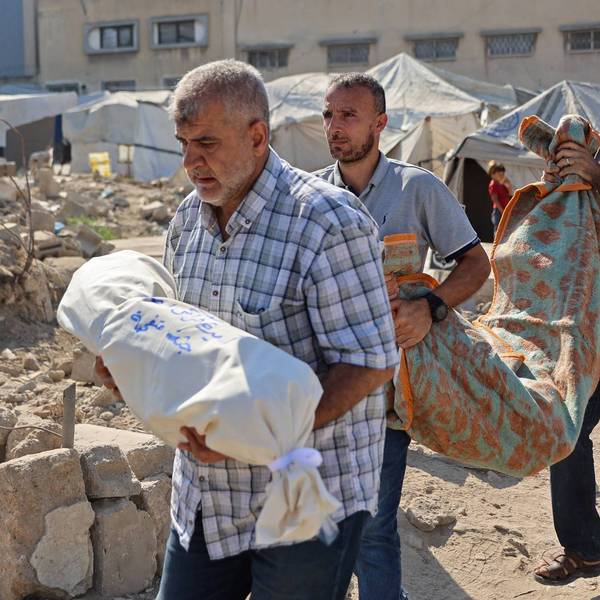
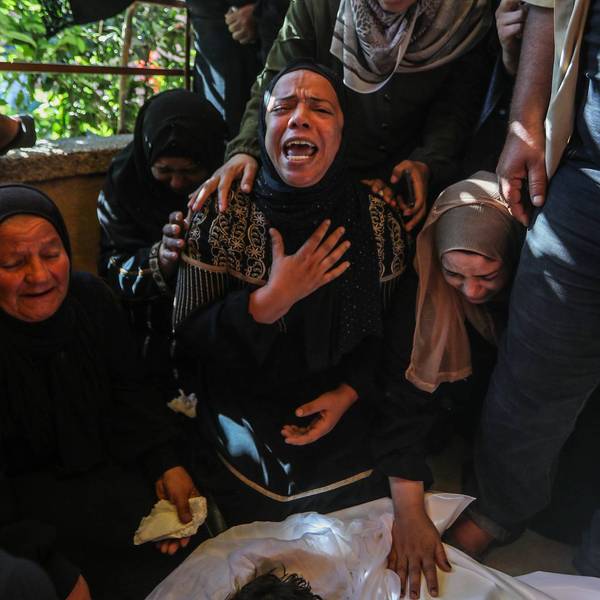

Palestinians injured in Israeli bombing attacks arrive on October 17, 2023 in Khan Yunis, in the southern Gaza Strip, Gaza.
One Year of Genocide and the Strength of Palestinians
Despite the unbelievable pain and loss, there is now a powerful energy that is unifying Palestinians around their cause, and the Arabs and the whole world around Palestine.
No one had expected that one year would be enough to recenter the Palestinian cause as the world’s most pressing issue, and that millions of people across the globe, would, once again rally for Palestinian freedom.
The last year witnessed an Israeli genocide in Gaza, unprecedented violence in the West Bank, but also legendary expressions of Palestinian sumud, or steadfastness.
It is not the enormity of the Israeli war, but the degree of the Palestinian sumud that has challenged what once seemed to be a foregone conclusion to the Palestinian struggle.
Yet, it turned out that the last chapter on Palestine was not yet ready to be written, and that it would not be Israeli Prime Minister Benjamin Netanyahu who would write it.
The ongoing war has exposed the limits of Israel’s military machine. The typical trajectory of Israel's relationship with the occupied Palestinians has been predicated on unhindered Israeli violence and deafening international silence. It was largely Israel that alone determined the timing and objectives of war. Its enemies, until recently, seemed to have no say over the matter.
Yet, this is no longer the case. Israeli war crimes are now met with Palestinian unity, Arab, Muslim and international solidarity, and early, albeit serious signs of legal accountability as well.
The ongoing war has exposed the limits of Israel’s military machine.
This is hardly what Netanyahu was hoping to achieve; just days before the start of the war, he stood in the United Nations General Assembly Hall carrying a map of a ‘New Middle East’, a map that had completely erased Palestine and the Palestinians.
"We must not give the Palestinians a veto over (..) peace," he said, as "Palestinians are only 2% of the Arab world." His arrogance didn’t last long, as that supposedly triumphant moment was short-lived.
Embattled Netanyahu is now mostly concerned about his own political survival. He is expanding the war front to escape his army’s humiliation in Gaza and is terrified by the prospect of an arrest warrant by the International Criminal Court.
And as the International Court of Justice (ICJ) continues to look into an ever-expanding file, accusing Israel of deliberate genocide in the Strip, the UNGA, on September 18, resolved that Israel must end its illegal occupation of Palestine within a year from the passing of its resolution on the matter.
It must be utterly disappointing for Netanyahu—who has worked tirelessly to normalize his occupation of Palestine—to be met with total and thundering international rejection of his schemes. The advisory opinion of the ICJ, on July 19, declaring that “Israel’s presence in the Occupied Palestinian Territory (is) unlawful” was another blow to Tel Aviv, which despite unlimited US support, failed to change international consensus on the illegality of the occupation.
In addition to the relentless Israeli violence, the Palestinian people have been marginalized as political actors. Since the Oslo Accords in 1993, their fate has been largely entrusted to a mostly unelected Palestinian leadership, which, with time, monopolized the Palestinian cause for its own financial and political interests.
The sumud of the Palestinians in Gaza, who have endured a year of mass killing, deliberate starvation and total destruction of all aspects of life, is helping reassert the political significance of a long-marginalized nation.
This shift is fundamental as it runs opposite to everything that Netanyahu had tried to achieve. In the years prior to the war, Israel seemed to be writing the final chapter of its settler colonial project in Palestine. It had subdued or co-opted the Palestinian leadership, perfected its siege on Gaza and was ready to annex much of the West Bank.
The sumud of the Palestinians in Gaza, who have endured a year of mass killing, deliberate starvation and total destruction of all aspects of life, is helping reassert the political significance of a long-marginalized nation.
Gaza became the least of Israel’s concerns, as any discussion around it was confined to the hermetic Israeli siege and the resulting humanitarian, though not political crisis.
While Palestinians in Gaza have tirelessly implored the world to pressure Israel to end the protracted siege, imposed in earnest in 2007, Tel Aviv continued to conduct its policies in the Strip according to the infamous logic of former top Israeli official, Dov Weissglas, who explained the rationale behind the blockade as "to put the Palestinians on a diet, but not to make them die of hunger."
But a year into the war, Palestinians, due to their own steadfastness, have become the center of any serious discussion on a peaceful future in the Middle East. Their collective courage and steadfastness have neutralized the Israeli military machine’s ability to exact political outcomes through violence.
True, the number of dead, missing or wounded in Gaza has already exceeded 150,000. The Strip, impoverished and dilapidated to begin with, is in total ruins. Every mosque, church or hospital has been destroyed or seriously damaged. Most of the region’s educational infrastructure has been obliterated. Yet, Israel hasn’t achieved any of its strategic objectives, which are ultimately united by a single goal, that of silencing the Palestinian quest for freedom, forever.
Despite the unbelievable pain and loss, there is now a powerful energy that is unifying Palestinians around their cause, and the Arabs and the whole world around Palestine. This shall have consequences that will last for many years, long after Netanyahu and his ilk of extremists are gone.
We are at a crossroads
This country and this world are at a monumental crossroads. In a few short weeks, US voters will have an opportunity to beat back the forces of fascism and confront the billionaires who are rigging the economy, our media system, and our democracy, making it increasingly impossible for ordinary people to get by. We’re not just talking about the election. We’re talking about what must be done once these fascist elements are vanquished from power. We need a bolder set of solutions than what either major party has so far been willing to offer and a working-class movement ready to fight like hell for it. Trump didn't emerge from nowhere. The conditions that fueled MAGA authoritarianism were created by decades of radical neoliberal economic policies and a corrupt political system dominated by corporate interests. They slashed taxes on the super-rich, promising that the benefits would trickle down. They said giveaways to the corporate titans would make life more affordable for the rest of us. It was all bullshit. And when a bitter, betrayed populace searches for someone to blame, right-wing demagogues have little trouble finding scapegoats. People know when they're being lied to, but you won't hear any of this from the corporate media. Only independent journalism—powered and funded by people who believe in building a better world—can deliver truly trustworthy daily news. Our Fall Campaign is underway, and we need your help. To power our newsroom through the rest of the year, we need to raise $125,000 by midnight on October 31. So if you share our vision, please contribute whatever you can to sustain our work. |
No one had expected that one year would be enough to recenter the Palestinian cause as the world’s most pressing issue, and that millions of people across the globe, would, once again rally for Palestinian freedom.
The last year witnessed an Israeli genocide in Gaza, unprecedented violence in the West Bank, but also legendary expressions of Palestinian sumud, or steadfastness.
It is not the enormity of the Israeli war, but the degree of the Palestinian sumud that has challenged what once seemed to be a foregone conclusion to the Palestinian struggle.
Yet, it turned out that the last chapter on Palestine was not yet ready to be written, and that it would not be Israeli Prime Minister Benjamin Netanyahu who would write it.
The ongoing war has exposed the limits of Israel’s military machine. The typical trajectory of Israel's relationship with the occupied Palestinians has been predicated on unhindered Israeli violence and deafening international silence. It was largely Israel that alone determined the timing and objectives of war. Its enemies, until recently, seemed to have no say over the matter.
Yet, this is no longer the case. Israeli war crimes are now met with Palestinian unity, Arab, Muslim and international solidarity, and early, albeit serious signs of legal accountability as well.
The ongoing war has exposed the limits of Israel’s military machine.
This is hardly what Netanyahu was hoping to achieve; just days before the start of the war, he stood in the United Nations General Assembly Hall carrying a map of a ‘New Middle East’, a map that had completely erased Palestine and the Palestinians.
"We must not give the Palestinians a veto over (..) peace," he said, as "Palestinians are only 2% of the Arab world." His arrogance didn’t last long, as that supposedly triumphant moment was short-lived.
Embattled Netanyahu is now mostly concerned about his own political survival. He is expanding the war front to escape his army’s humiliation in Gaza and is terrified by the prospect of an arrest warrant by the International Criminal Court.
And as the International Court of Justice (ICJ) continues to look into an ever-expanding file, accusing Israel of deliberate genocide in the Strip, the UNGA, on September 18, resolved that Israel must end its illegal occupation of Palestine within a year from the passing of its resolution on the matter.
It must be utterly disappointing for Netanyahu—who has worked tirelessly to normalize his occupation of Palestine—to be met with total and thundering international rejection of his schemes. The advisory opinion of the ICJ, on July 19, declaring that “Israel’s presence in the Occupied Palestinian Territory (is) unlawful” was another blow to Tel Aviv, which despite unlimited US support, failed to change international consensus on the illegality of the occupation.
In addition to the relentless Israeli violence, the Palestinian people have been marginalized as political actors. Since the Oslo Accords in 1993, their fate has been largely entrusted to a mostly unelected Palestinian leadership, which, with time, monopolized the Palestinian cause for its own financial and political interests.
The sumud of the Palestinians in Gaza, who have endured a year of mass killing, deliberate starvation and total destruction of all aspects of life, is helping reassert the political significance of a long-marginalized nation.
This shift is fundamental as it runs opposite to everything that Netanyahu had tried to achieve. In the years prior to the war, Israel seemed to be writing the final chapter of its settler colonial project in Palestine. It had subdued or co-opted the Palestinian leadership, perfected its siege on Gaza and was ready to annex much of the West Bank.
The sumud of the Palestinians in Gaza, who have endured a year of mass killing, deliberate starvation and total destruction of all aspects of life, is helping reassert the political significance of a long-marginalized nation.
Gaza became the least of Israel’s concerns, as any discussion around it was confined to the hermetic Israeli siege and the resulting humanitarian, though not political crisis.
While Palestinians in Gaza have tirelessly implored the world to pressure Israel to end the protracted siege, imposed in earnest in 2007, Tel Aviv continued to conduct its policies in the Strip according to the infamous logic of former top Israeli official, Dov Weissglas, who explained the rationale behind the blockade as "to put the Palestinians on a diet, but not to make them die of hunger."
But a year into the war, Palestinians, due to their own steadfastness, have become the center of any serious discussion on a peaceful future in the Middle East. Their collective courage and steadfastness have neutralized the Israeli military machine’s ability to exact political outcomes through violence.
True, the number of dead, missing or wounded in Gaza has already exceeded 150,000. The Strip, impoverished and dilapidated to begin with, is in total ruins. Every mosque, church or hospital has been destroyed or seriously damaged. Most of the region’s educational infrastructure has been obliterated. Yet, Israel hasn’t achieved any of its strategic objectives, which are ultimately united by a single goal, that of silencing the Palestinian quest for freedom, forever.
Despite the unbelievable pain and loss, there is now a powerful energy that is unifying Palestinians around their cause, and the Arabs and the whole world around Palestine. This shall have consequences that will last for many years, long after Netanyahu and his ilk of extremists are gone.
- As Surgeons, We Have Never Seen Cruelty Like Israel’s Genocide in Gaza ›
- 'Every Year It Is More Relevant': Palestinians Mark Land Day Amid Genocide ›
- Gaza Officials Publish List of Those Killed in Israeli Assault. The First 14 Pages Are Babies ›
- 1,022 Babies Among 21,500+ Children Killed by Israel in 1,000 Days of Gaza Genocide | Common Dreams ›
- Opinion | 1,000 Days of Genocide: The Legend of Gaza That Puts the World to Shame | Common Dreams ›
- Opinion | Despite State-Backed Israeli Settler Violence, the Palestinians Will Persevere | Common Dreams ›