

SUBSCRIBE TO OUR FREE NEWSLETTER
Daily news & progressive opinion—funded by the people, not the corporations—delivered straight to your inbox.
5
#000000
#FFFFFF
To donate by check, phone, or other method, see our More Ways to Give page.
Daily news & progressive opinion—funded by the people, not the corporations—delivered straight to your inbox.
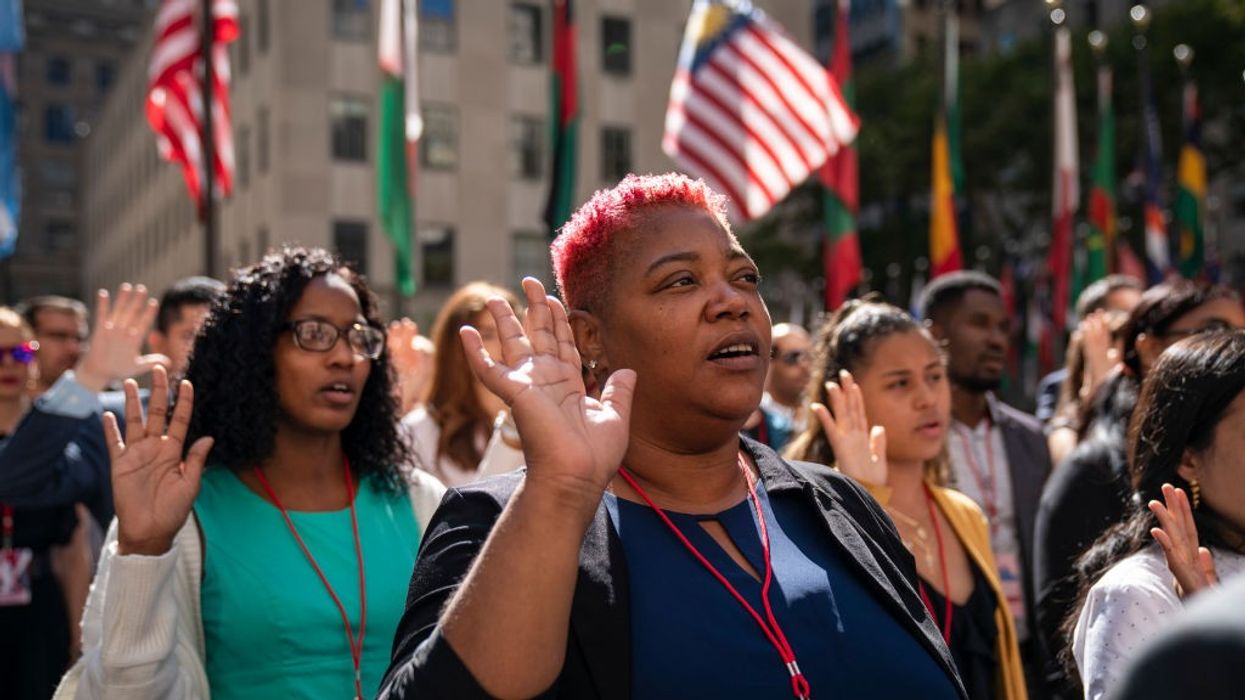
As we approach Election Day, just days before another potential government shutdown, we must reflect on how white supremacy has historically limited U.S. citizenship and threatened participation in our democracy.
This year marks the 100th anniversary of the Supreme Court’s ruling that Bhagat Singh Thind was ineligible for citizenship. Although he would have been considered “Aryan” or “Caucasian” as an Indian national at the time, the Court did not consider him “white,” and the prevailing law limited citizenship to “free white persons.” Among other things, U.S. citizenship gives people the ability to vote and participate in our democracy. As we approach Election Day on November 7th just days before another potential government shutdown, we must reflect on how white supremacy has historically limited U.S. citizenship and threatened participation in our democracy.
The people indigenous to the United States did not qualify as “free white persons” and did not receive citizenship until 1924. While some Indigenous Americans had long advocated for Indigenous rights, including citizenship, there were others who rejected U.S. citizenship as a violation of previously agreed-upon treaties with the United States. When the 14th Amendment was added to the Constitution in 1868, it was limited to individuals “subject to the jurisdiction thereof,” which excluded citizenship from Indigenous Americans.
Meanwhile, Black people in the United States, whether enslaved or free, obtained birthright citizenship through the 14th Amendment. This amendment – following decades of organizing, advocacy, and a civil war – was due in part to free African Americans assembling in state and national conventions starting in the 1830s. During the 1831 convention, the delegates surmised that if the federal government could relocate tens of thousands of Indigenous Americans from the southeastern United States to Indian Territory under the Indian Removal Act in 1830 resulting in the Trail of Tears, Black Americans faced a similar threat of removal. The delegates consequently advocated to have the rights and privileges of American citizens. In 1870, a couple years after the passage of the 14th Amendment, Congress extended eligibility for citizenship to include both white people and “persons of African descent.”
The concept of whiteness was (and continues to be) malleable, especially with respect to eligibility for U.S. citizenship. In 1848, the United States claimed hundreds of thousands of square miles of ceded territory following the Mexican-American War, fulfilling the dreams of expansionist-oriented Americans who believed in “Manifest Destiny.” The Treaty of Guadalupe Hidalgo promised citizenship to 75,000 to 100,000 Mexicans who lived in the new West and Southwest United States. Nearly 50 years later, a federal court in Texas ruled that a man of Mexican descent was eligible for citizenship due to this treaty.While the federal government conferred immediate U.S. citizenship to Mexicans, it was not willing to do so for Puerto Ricans and the residents of other newly acquired territories.
At the turn of the 19th century, the Spanish-American War ended with the United States assuming control of Guam, Puerto Rico, and the Philippines. The Treaty of Paris stripped the residents of the ceded territories of Spanish citizenship, but the federal government, for the first time in U.S. history, did not promise citizenship or eventual statehood to the three territories. Instead, Congress eventually designated them as “unincorporated territories” where the inhabitants had “nationality” status rather than U.S. citizenship. As non-citizen nationals, they had fewer rights and protections than that of U.S. citizens. A series of Supreme Court cases characterized the territories as “inhabited by alien races” and the residents as “foreign in a domestic sense.” The U.S. government went on to assume control of Eastern Samoa (now American Samoa), the Danish West Indies (now U.S. Virgin Islands), and the Northern Mariana Islands over the next 50 years. Congress ultimately conferred citizenship on territorial residents between 1917 and 1986 except for American Samoans, but they continue to have fewer rights and protections than citizens of the Union.
As the United States rationalized the limitations of citizenship for territorial residents, it found ways to create pathways to citizenship for immigrants primarily from Europe. In 1929, the federal government permitted immigrants who were overwhelmingly from Europe and arrived without admission records between June 1906 and July 1921 to have an after-the-fact arrival record, which enabled them to apply to become naturalized citizens. While Congress finally eliminated laws that prevented Asians from becoming naturalized citizens in 1952 – 162 years after explicitly limiting citizenship to “free white persons” – distinctions on access to citizenship remain. Congress updated that registry program four more times, most recently in 1986 under the Immigration Reform and Control Act, but it has not advanced the registry date in nearly 40 years. More than two-thirds of U.S. residents who lack a pathway to citizenship have lived in the United States for more than 10 years. Advocates today have been seeking the registry program to be updated once more for immigrants who arrived without admission records before 2015. Advancing the registry date provides a pathway to citizenship and protects people who have lived in the United States for years.
Citizenship, the question of American identity, and how it has been defined has evolved from who can be excluded to removing many of those restrictions. However, there continue to be distinctions between nationals and U.S. citizens residing in “unincorporated territories” from U.S. citizens living in the Union, and there continue to be U.S. residents who lack a pathway to citizenship. Policies and practices rooted in race-based thinking need to be changed to help us fulfill the promise of our American democracy.
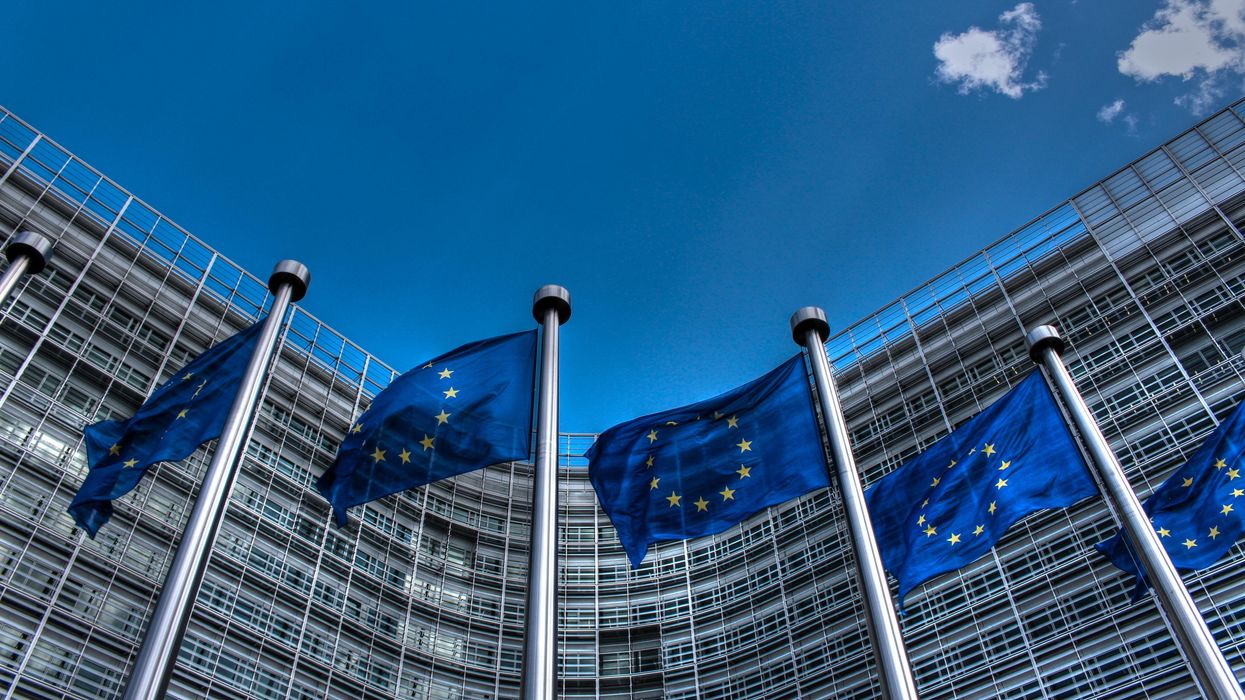
The anti-poverty charity Oxfam on Tuesday denounced the European Union's updated list of tax havens, which one expert at the group called a "whitewash" for removing one of the world's most infamous offshore safe harbors while exempting offenders in Europe.
"The current list makes the E.U. a hypocrite as major tax havens in Europe like Malta and Luxembourg escape."
The E.U. list of "noncooperative jurisdictions for tax purposes"--first published in 2017 in an effort to address rampant tax evasion--now includes Anguilla, the Bahamas and Turks and Caicos.
American Samoa, Fiji, Guam, Palau, Panama, Samoa, Trinidad and Tobago, the U.S. Virgin Islands, and Vanuatu remain on the list, while Bermuda was removed.
"How can anyone give this list any credibility? Bermuda is one of the world's worst tax havens with its zero corporate tax rate. Yet, the E.U. took it off the list after it made a few woolly promises to reform," said Oxfam E.U. tax expert Chiara Putaturo said in a statement.
"To add insult to injury, major European tax havens like Luxembourg are not on the list because all E.U. countries receive an automatic free pass," she added. "This is not a blacklist, it is a whitewash."
As the Panama Papers, Pandora Papers, OpenLux, and other investigative reports revealed how capitalist enterprises and the global superrich use offshore havens to avoid taxation--often through the use of shell companies--the European Commission last year launched an initiative "to fight against the misuse of shell entities for improper tax purposes."
However, Oxfam and others denounced the initiative--which excluded financial service firms--as inadequate while E.U. proposals to crack down on evasion and fraud have faced formidable obstacles, including from European countries like Luxembourg, Malta, and Ireland that have been called tax havens.
"Nothing has changed," said Putaturo, who argued that the E.U. "should automatically blacklist zero- and low-tax rate countries and hold European countries up to the same level of scrutiny as non-European countries."
Related Content

Noting the "free pass" given to members of the 27-nation bloc, Putaturo said that "the current list makes the E.U. a hypocrite as major tax havens in Europe like Malta and Luxembourg escape the list while countries outside Europe like Eswatini and Botswana risk being blacklisted."
"Stronger criteria could stop the industrial levels of tax dodging by the world's richest and corporates," she added. "Governments and ordinary people are facing the cost-of-living crisis. Ending tax havens could provide the much-needed hundreds of billions in revenue as the world's superrich would have to pay their fair share."
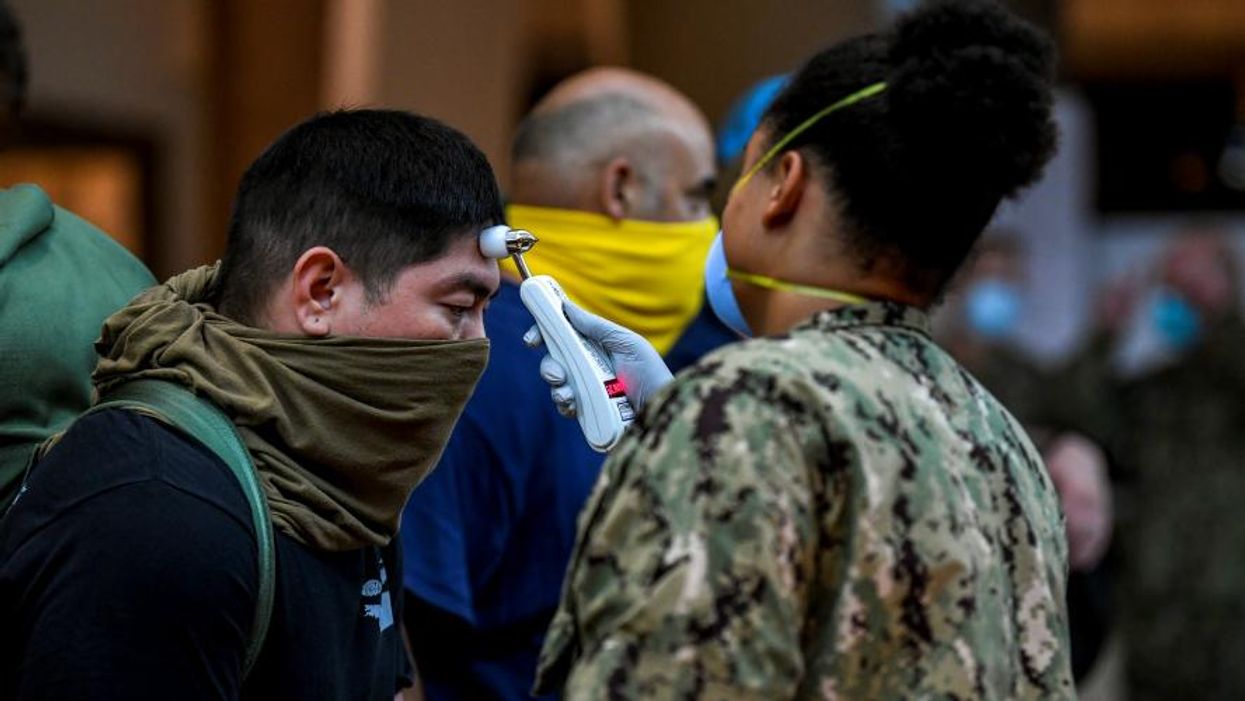
Guam has always been the U.S. military's best kept secret. Military secrecy isn't really new, but in the midst of the global pandemic the Pentagon ordered bases to stop publicly announcing their coronavirus cases. By July more than 29,000 service members had contracted the coronavirus, and this summer military and public health officials declared the U.S. military a source of transmission both domestically and abroad.
Guahan--the Indigenous name for Guam--is the hardest hit place in the Pacific region by the COVID-19 outbreak, and military transmission is clear. Since March 2020, aircraft carriers from the U.S.S. Roosevelt to the U.S.S. Ronald Reagan have offloaded thousands of infected sailors--many of whom contracted the virus for a second time and broke the island's quarantine restrictions. To date, COVID-19 has infected nearly 2% of the island's population of 165,000, putting the military on island in health condition "Charlie."
The U.S. military will continue to put the people of Guahan at risk, long after the pandemic ends without a fundamental dismantling of the colonial project. After all, the military has always been a hotspot for colonial violence, destroying environments and occupying Pacific Island territories with impunity for generations. Despite the irreversible damage and desecration it inflicts, the general public is largely ignorant of its operations.
"While threats from militarism and climate vulnerability are woven into everyday life in a U.S. colony, this situation has also been met with centuries of continuous resistance."
Politically Guahan is an "unincorporated territory," a designation unilaterally imposed after the U.S. engaged in bombing campaigns and landgrabs to recapture the island from Japan in World War II--in short, a twenty-first century colony. This place may just be the best kept secret that the U.S. has--a nearly forgotten island in Micronesia where the military conducts training and testing that it would never have attempted in the contiguous states.
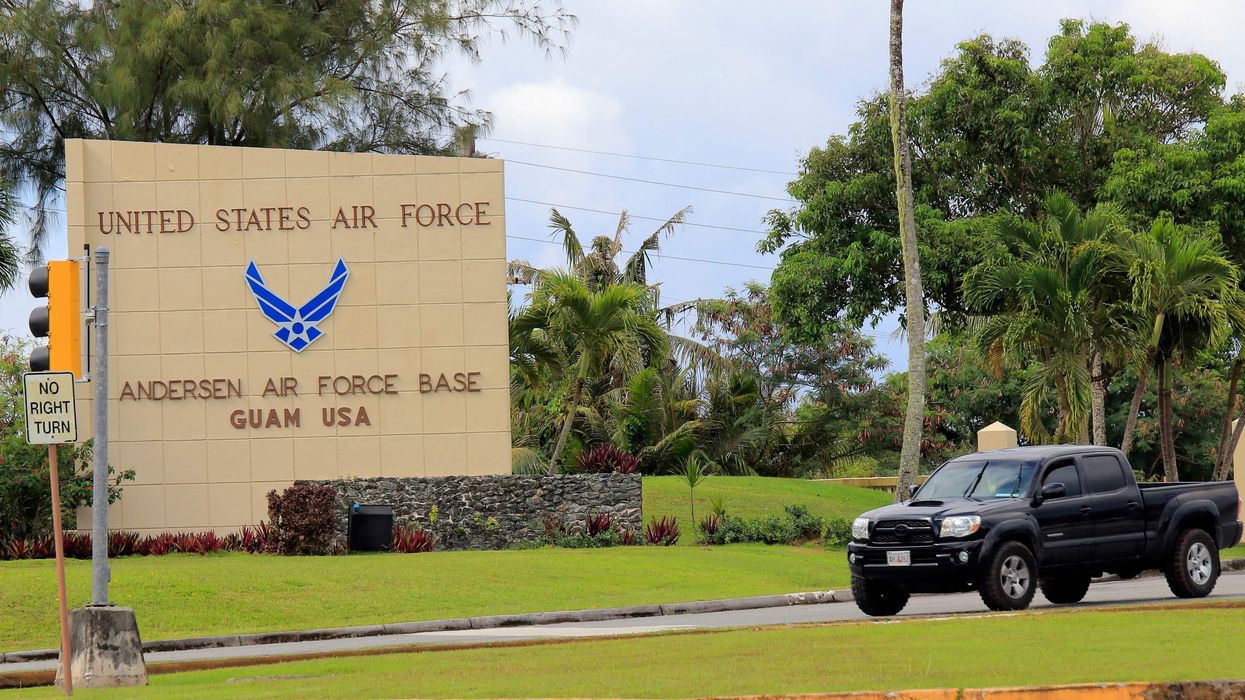
In 2020, the military continues to occupy nearly one-third of this westernmost U.S. territory in the Pacific. Andersen Airforce Base and Naval Base Guam are two major military bases that host bombers, serve as a home port to nuclear-powered fast attack submarines, maintain huge munitions and fuel storage facilities, maintain a helicopter squadron, operate a Terminal High Altitude Area Defense (THAAD) ballistic missile interceptor, and provide U.S. security forces to support the Department of Defense's military strategy in the Asia-Pacific region. The U.S. is also implementing plans to further inundate the island's existing military troop presence by relocating an additional 5,000 U.S. Marines from Okinawa to Guam. These elements of militarism are largely normalized as insuring security and protection, yet research reveals that it is the U.S. military presence which makes the island a target for attacks and threats ranging from missiles to climate change.
As the largest global force, the U.S. military is the single biggest consumer of fossil fuels, largest producer of greenhouse gases (GHGs), and single entity most responsible for destabilizing the Earth's climate. The Department of Defense is the greatest polluter worldwide with a continuous record of destroying environments and generating massive amounts of hazardous waste for its routine operations. Military expansion as well as the operation of bases exacerbate our shared climate emergency. Dispossession and environmental destruction from militarization demonstrates the overwhelming costs of U.S. empire--particularly among Indigenous communities throughout the Pacific and Indian country. Among the legacy of violence is racism, which existed long before Senate panel efforts to remove confederate namesakes from military bases.
While threats from militarism and climate vulnerability are woven into everyday life in a U.S. colony, this situation has also been met with centuries of continuous resistance. With a ceaseless movement for self-determination, Guahan and its Indigenous Chamoru people continue to challenge the narrative that the island and its surrounding waters are merely a strategic military base for the U.S. to destroy with its Pacific bombing ranges.
As Chamoru scholar Dr. Kenneth Gofigan Kuper explains, living "at the tip of the American military's spear" means living with militarization that is "responsible for environmental contamination, with toxic chemicals and heavy metals sludging through the island's arteries" and though the country is quickly approaching the U.S. Presidential election in November, Guahan has "no vote in the Electoral College, no representation in the U.S. Senate, only non-voting representation in the House of Representatives, and are under the 'plenary' -- or complete -- power of Congress."
While civic engagement and voting rights are important, U.S. colonization and militarization are constant threats to political power for the people of Guahan. Until the island exercises its inherent right to self-determination and the island chooses its own political future, decisions on everything from public health to climate action and the economy will be continuously deferred to external powers. The impacts of these injustices are clear in the midst of surging COVID-19 cases and deaths as the military continues its construction of a live-fire training range on sacred land in Guahan and executes "war games" like RIMPAC throughout the Pacific.
Though Guahan floats on the other side of the world, every sector of civil society is implicated in the military war machine--from pension funds and university endowments to your state and local municipalities--public and private assets are entangled up with military contractors, weapons manufacturers, and war. Such profiteering is largely normalized today. From public to private assets, every part of the "American" experience has profited from colonial control in the Pacific. Yet, divesting these dollars from destructive weapons and war could mean reinvesting in what the pandemic has revealed we all so desperately need--genuine security in public health, education, housing, food, green jobs and a just transition from fossil fuels. As the protests against anti-Black racism continue in cities like Kenosha, Portland, Oakland, Chicago and Philadelphia--rethinking and defunding the police also means divesting from the military industry that structures all our lives.
Centuries of continuous colonization are not Guahan's defining story, and neither is the COVID-19 pandemic exacerbated by the U.S. military's exceptionalism. The people of Guahan deserve even more than a symbolic change to military base names--they deserve an end to colonial violence.
This month I got two of the most distressing pieces of news I could imagine. The first was a headline: US to use Galapagos island as a military airfield. The second came from my grandmother: two of our family friends are in the end stages of Agent Orange poisoning.
I'm from Guam; one of the countless islands of the Pacific used by the United States military as a base. At just 8 miles wide and 30 miles long, about a third of our island is covered by military installations with more build-up expected. My family and my community know all too well what being used as an airfield means. 52,000 veterans have organized into the group Agent Orange Survivors of Guam to lobby for benefits related to their exposure to the infamous herbicide while serving in the Pacific.
While we are home to a vibrant indigenous community, beautiful and sadly rare flora and fauna, and a rich history, we are also home to stockpiled chemical weapons, countless ammunitions, regular bombings and live-fire trainings, and more consequences of a military positioned for a world of constant danger.
Former Ecuadorian president, Rafael Correa, took to Twitter after the announcement of the airfield saying, "Galapagos NO es un 'portaaviones' para uso gringo." Galapagos is "not an aircraft carrier" for the Americans. The sentiment is a familiar one. Many know my island as the United States' "unsinkable aircraft carrier." While we are home to a vibrant indigenous community, beautiful and sadly rare flora and fauna, and a rich history, we are also home to stockpiled chemical weapons, countless ammunitions, regular bombings and live-fire trainings, and more consequences of a military positioned for a world of constant danger.
Along with the physical consequences of being used as a military base, CHamorus (the indigenous people of Guam) and others around the US's more than 600 bases globally know the threats to sovereignty these installations bring with them. For CHamorus this has meant 500 years without self-determination as well as a system of rights that is left to the discretion of a Congress 8,000 miles away from Guam. The inhabitants of the island Diego Garcia experienced forcible removal from their homes as build up began. Panama created a constitution that would specifically allow United States military intervention resulting in 24 invasions between 1856 and 1989.
Ecuador's constitution explicitly states, "establishment of foreign military bases or foreign facilities for military purposes shall not be allowed," as the nation is "a territory of peace." Defense Minister Oswaldo Jarrin insists that no installation will have "permanence".
This reasoning has been seen in justification of United States presence at the Soto Canal Air Base in Honduras. While officials insist that the U.S. forces are simply "guests" on the site of the Honduran Air Force Academy, the installation is now more than 30 years old. As reported by the Associated Press in the late 80's, some U.S. officials describe the build-up as "temporary but indefinite."
Many of these bases are within indigenous communities, particularly communities whose natural environment is deeply integrated to a nation or a people's culture.
My family's home has been forced to leave our ecological future in the hands of the United States military, one of the largest polluters globally. In the Department of Defense's latest plans, about 1,000 acres (about 8%) of Guam's remaining native limestone forest will be razed. The sites of planned build-up are culturally significant to CHamoru people and artifacts continue to be unearthed as construction continues.
CHamoru activists and members of the State Historic Preservation Office have expressed needs to halt construction. Linda Aguon, the office's divisional supervisor, said, "We keep discovering things, we keep discovering things. Can't we just stop?" She was joined in questioning the planned build up by Senators Therese Terlaje and Kelly Marsh.
An environmental director with Marine Corps Activity Guam, Al Borja, responded insisting, "Will we preserve in place for latte shards from a pot that was dropped? That's not going to happen because I know the ranges have to be where they are, and that's not going to force us to reconsider this." Sentiments like this from representatives of the United States military, for me, are a reminder of the massive land seizures by the Department of Defense following the liberation of my grandmother and about 13,000 other CHamorus from a World War II era concentration camp.
In August of 1944, Guam was to become the forward base for United States attacks targeting Japan and to accomplish this goal the military seized 82% of the land of the island for military purposes (this is the high water mark of American land holdings on the island). Anyone without explicit authorization to access American military bases would be shot on sight if they were found on what had been taken as military land. Eighteen construction and engineering battalions immediately began construction of military outfits including what is now known as Anderson Airforce Base and began using it as the flight strip from which daily bombings of Japanese territory would occur by way of B-29's.
Since then just a few families have received little, in any, compensation for their lost land or severe health problems consistent with exposure to continuous simulated war.
This is a problem that has global importance. A report by Brown's Watson Institute published last week found that the average annual carbon footprint of the United States' military-industrial complex is about on par with that of the Netherlands: 153 million metric tons per year. And this is a conservative number given the secrecy of the Pentagon and the reporting loopholes for military organizations written into the Kyoto Protocol.
The Pentagon has significantly acknowledged the threats that continued carbon consumption poses. One of the report's authors, Neta Crawford, explains "We have defense forces so they protect us. If in the long run, these defense forces make us less secure then we need to rethink what we're doing." Still, build-up continues in Guam and, apparently, on Galapagos.
For the communities affected by these military installations, the continued political, cultural, and medical issues represent a far greater threat than that which the bases supposedly protect us from. They are an affront to self-determination and spell the end for a place's environment.

Guam doesn't feel like a target. When I have visited the island over the course of the past several decades, it has struck me as one of the most wildly beautiful places on earth, with an endless turquoise sea, dramatic limestone cliffs, and impossibly green hills, and one of the most welcoming. It residents' contemporary Chamorro cultural values emphasize family, generosity, non-confrontation, and respect for one's elders, neighbors, and guests.
Guam doesn't feel like a target. When I have visited the island over the course of the past several decades, it has struck me as one of the most wildly beautiful places on earth, with an endless turquoise sea, dramatic limestone cliffs, and impossibly green hills, and one of the most welcoming. It residents' contemporary Chamorro cultural values emphasize family, generosity, non-confrontation, and respect for one's elders, neighbors, and guests. But a target it is and was: today, of North Korea, in years past of the Soviet Union (the joke had it that no outsiders save the nuclear targeters in Moscow knew where Guam was), and in World War II, of invasion and abuse from Japan.
Each of these three nations' leaders saw Guam with its US military presence - so far from the United States, so close to them - as a danger and a provocation. Most news accounts of the last week note that Guam became a target of North Korea because it is loaded with US military personnel and equipment: Airmen and sailors, B-2 stealth bombers, fast attack submarines, advanced radar systems, and weapons depots that together can deliver enough explosive power, including nuclear weapons, to destroy every Asian city within thousands of miles.
Yet the Chamorro people who are the original inhabitants of these islands did not choose to become a target. They did not elect to be war booty, handed from Spain at the close of the Spanish-American War in 1898. They did not vote to give one-third of their land mass to the US military for military bases, and they did not opt, as a result of the mass in-migration of base workers and US veterans, to become a minority in their own homeland. Even if many citizens of Guam have chosen to find employment or prove their mettle or pride by putting on a US military uniform, they did not choose to become the launching pad for innumerable bombing runs over Vietnam or a conduit for military force to be applied in many elsewheres.
It is not clear what would have happened in the late 1940s if the US had followed the UN Charter's requirement for decolonization, a process then beginning everywhere around the world. To follow that US-supported charter would have required a vote on whether Guam, like all colonies, was to become an independent nation. Instead the US, fearing loss of a military asset, unilaterally made the people of Guam US citizens, even if second class, unable to vote for President or have voting representation in Congress.
What the United States government has since promised the people of Guam in return is protection, but the protection it needs, it turns out, is from threats that the US itself has generated by its massive militarization of the island. At the same time, it has failed to protect Guam's well-being as it should have, leaving a toxic legacy of buried mustard gas canisters from World War II, jet-fuel contaminated water supplies, and a Super Fund site with few rivals in scale.
Some on Guam focus less on history than on the reality of a US military presence that is not going to end anytime soon or on the symbolic benefits of being considered even a very junior member of the American family or of being the place "where America's day begins," as their license plates say. Many on Guam are less concerned about the background noise, yet again, of the saber-rattlers. They are instead focused on what they can do to prevent further military buildup, further provocation, and further losses: a planned move to Guam of thousands of US Marines from Okinawa - where they have worn out their welcome in a sovereign Japan--has generated anger, mobilization, and lawsuits. The US Navy has targeted a large area at the northern end of the island for a set of expansive firing ranges and is days away from destroying a thousand acres of pristine forest, several endangered species, and sacred historical sites, and will close public beaches and the fishing waters beyond the ranges while the ranges are in use. New soldiers and new facilities will threaten the already strained drinking water supply.
In a recent "Open Letter from Guam to America," resident Victoria-Lola Leon Guerrero writes to a country that only now hears about Guam's existence. She explains how her children hide under the playground slide as US B-2 bombers fly overhead, but how she otherwise lives in a land she loves, growing her own food, and living "the life my ancestors wanted for me and for them." And she asks President Trump and those who think like him about projecting power without really knowing what that means, on the backs of others, "to stop his bomb talk, and instead, ask yourself why Guam is still your colony in 2017."
Rather than producing more tourists for Guam, as President Trump bizarrely promised the Governor of Guam in last weekend's phone call, the President may be drawing people's attention to the undemocratic way in which Guam and its people have been treated, reduced by our government to the status of a targeted warship that they do not pilot. It is high time the US get into compliance with the UN Charter's basic promise of self-determination for each of the world's people and allow the people of Guam to decide whether they feel more secure as a nuclear target or a demilitarized island.

The morning following his "fire and fury" remarks on Tuesday--which promised retaliation if the North Korean regime continues to threaten the United States--President Donald Trump took to Twitter to praise America's "powerful" nuclear arsenal, comments that intensified the groundswell of calls to end the pro-war rhetoric and strip Trump of his nuclear-strike authority.
"No U.S. President, certainly not Trump, should have sole authority to initiate an unprovoked nuclear war."
--Sen. Ed Markey (D-Mass.)Trump's threat against North Korea came on the heels of a report by the Washington Post indicating that Pyongyang had "successfully produced a miniaturized nuclear warhead that can fit inside its missiles."
The Kim Jong-un regime responded just hours after Trump's remarks, promising to hasten "the tragic end of the American empire" and announcing it would review plans to "strike areas around the U.S. territory of Guam," where the U.S. maintains large military bases, "with medium-to-long-range strategic ballistic missiles."
Reacting to Trump's "crazy" comments and to the growing fear that the U.S. is inching closer to nuclear war, activists and lawmakers urged Congress to revive legislation that would strip the executive branch of the power to launch a pre-emptive nuclear strike.
"No U.S. President, certainly not Trump, should have sole authority to initiate an unprovoked nuclear war," wrote Sen. Ed Markey (D-Mass.).
In an interview with MSNBC's Chris Hayes Tuesday night, Markey said Trump's comments "bring us back to August of 1945, when nuclear weapons were dropped on Hiroshima and Nagasaki."
Watch the interview:
Others echoed Markey's call for legislation that would remove the power to launch a nuclear first strike from the president. Rep. Pramila Jayapal (D-Wash.), pointing to previous reporting by Common Dreams, highlighted the urgent necessity of removing the power to launch a nuclear first strike from the hands of the president--a move that has proven to be immensely popular.
In May, as Common Dreams reported, more than 500,000 people signed a petition expressing support for the Restricting First Use of Nuclear Weapons Act of 2017, a bill introduced by Rep. Ted Lieu (D-Calif.) that, if passed, would bar the president from launching a nuclear strike without congressional authorization.
"This saber-rattling from the president is dangerous," concluded Rep. Barbara Lee (D-Calif.). "We need to de-escalate tensions so that diplomacy can work."
Adding to the calls for de-escalation is a newly drafted petition by MoveOn.org, which is set to be delivered to the White House.
"The nuclear threat will not end as long as nations continue to claim that nuclear weapons are essential for their national security."
--Tomihisa Taue, mayor of Nagasaki, Japan
The petition, which already has over 57,000 signatures, reads: "Stop the insanity. Don't provoke a war with North Korea."
" Donald Trump is making us all more unsafe with every war-mongering comment, tweet, and threat. His rhetoric threatening North Korea with 'fire and fury' is exacerbating a dangerous situation, putting the people of Guam--and everyone around the world--in grave danger," the petition adds. "While a nuclear North Korea is a real concern, the answer must be diplomacy-first, not a rush to a potentially devastating nuclear war."
The growing threat of nuclear war comes as Wednesday marks the 72nd anniversary of the atomic bombing of Nagasaki, Japan by the U.S.
Carol Turner, vice chair of the Campaign for Nuclear Disarmament, said in a statement: "It beggars belief that the US president has chosen the 72nd anniversary to threaten North Korea with 'fire and fury like the world has never seen.' These words mark the real possibility of a nuclear confrontation."
Speaking at a memorial event on Wednesday, Tomihisa Taue, the mayor of Nagasaki, highlighted the "increasingly tense" international situation and argued that all nations should do away with nuclear weapons.
"A strong sense of anxiety is spreading across the globe that in the not too distant future these weapons could actually be used again," Taue said. "The nuclear threat will not end as long as nations continue to claim that nuclear weapons are essential for their national security."
Coming off a big win in Indiana and with the Democratic Party holding four more primaries this month, May could end up showing a resilient Bernie Sanders campaign despite the concerted effort of the mainstream press to count him out.
With upcoming contests in West Virginia, Kentucky, Oregon, and the territory of Guam, Politico reports Friday that Sanders could be poised for another upcoming "win streak" against rival Hillary Clinton:
Sanders points to his record of winning 18 states and the narrow margin separating him and Clinton in national polls as cause for remaining in the race.
He contends that he's the strongest Democratic candidate against presumptive GOP front-runner Donald Trump, and holds out hope that more super delegates in the states where he won will ultimately line up in his camp. Wins in West Virginia and Oregon, following his victory last week in Indiana, would bolster his argument...
With the West Virginia primary next Tuesday, Sanders has been campaigning heavily in the state where he has put his main focus on lifting up workers and the scourge of poverty that impacts large portions of the state and remains a too-often ignored epidemic nationwide.
At a meeting held at food bank in McDowell County, West Virginia on Thursday, Sanders told those gathered that it is a national shame that in the "wealthiest country in the history of the world" more than 47 million Americans live in poverty. In his opening remarks at what was billed as a community roundtable event, Sanders described his understanding of the problem:
Let's be clear. Living in poverty doesn't just mean you don't have enough money to buy a big screen TV, a fancy laptop computer, or the latest version of the iPhone.
It goes much, much deeper than that. In America today, being poor not only means you are less likely to have a grocery store in your community selling healthy food, far too often it means you don't know where your next meal is going to come from. In fact, 15 million children in America today are living in families that struggle to put enough food on the table.Living in poverty means you are less likely to have access to a doctor, a dentist, or a mental health care provider. And if you are lucky enough to see a doctor it means you are less likely to afford the prescription drugs a doctor prescribes to you. In fact, one out of five Americans between the ages of 18-64 cannot afford to fill their prescription medication at a drug store.
Living in poverty means you are less likely to have access to public transportation -- which makes it harder to find a job.
It means you are less likely to have access to child care. And you are more likely to do drugs and engage in self-destructive activities.
If you add all of these things up, what you will find is that yes, far too often, poverty is a death sentence in America.
In an interview with NPR this week, Sanders talked about why the focus on poverty is so important both in terms of the real people who experience it everyday and what it says about the political realities of the country, including what he sees as the shortcomings of the Democratic Party establishment. Sanders said:
I think one of the challenges we face, what my campaign is about, is making it clear that the Democratic Party must be on the side of working people and low-income people. Now I'm talking about poverty, and in this campaign I'm talking about the fact that we have the highest rate childhood poverty of almost any major country on Earth. That we have 47 million people living in poverty ... that we have 29 million people who have no health insurance, and we have thousands of people who die every year because they don't get to a doctor on time.
The Democratic Party must make a stand, and the stand is that you cannot be on the side of Wall Street. You cannot be on the side of that pharmaceutical industry -- which, by the way, charges our people the highest prices in the world for prescription drugs -- you gotta make a stand. And the stand we gotta make is the stand with the people in McDowell County, W.Va., and poor people and working people all over this country.
While the upcoming May primaries give the Sanders campaign "reasons to believe," as Politico puts it, his focus on such issues as free higher education, Medicare for all, and addressing surging income and wealth inequality that is fueling the support he's receiving.
Kelsey Pack, a 22-year-old from Beckley, West Virginia who attended a Sanders event later on Thursday in Charleston, described to the Charleston Gazette why hearing Sanders' message up close was only part of why she was so excited to attend.
"It wasn't necessarily about seeing him in person; it was about being surrounded by like-minded people," explained Pack. "I wanted to be part of the experience and part of the movement, and to be able to say that I was here."
"I already do know why I'm voting for [Sanders] -- that's solidified. I wanted to be around other people who are voting for him or thinking about voting for him. There's such a stigma around the people supporting him being 'freeloaders,' and I wanted to see for myself that that isn't the case."
And Debra "DL" Hamilton, a local campaign volunteer, told the Gazette she became involved because she believes so strongly in the Democratic presidential candidate's vision for the future.
"I'm an activist and also an active Democrat, and Bernie combines every sign I've ever carried with the real possibility of a future to believe in," Hamilton said. "West Virginia needs a future to believe in."