

SUBSCRIBE TO OUR FREE NEWSLETTER
Daily news & progressive opinion—funded by the people, not the corporations—delivered straight to your inbox.
5
#000000
#FFFFFF
To donate by check, phone, or other method, see our More Ways to Give page.
Daily news & progressive opinion—funded by the people, not the corporations—delivered straight to your inbox.
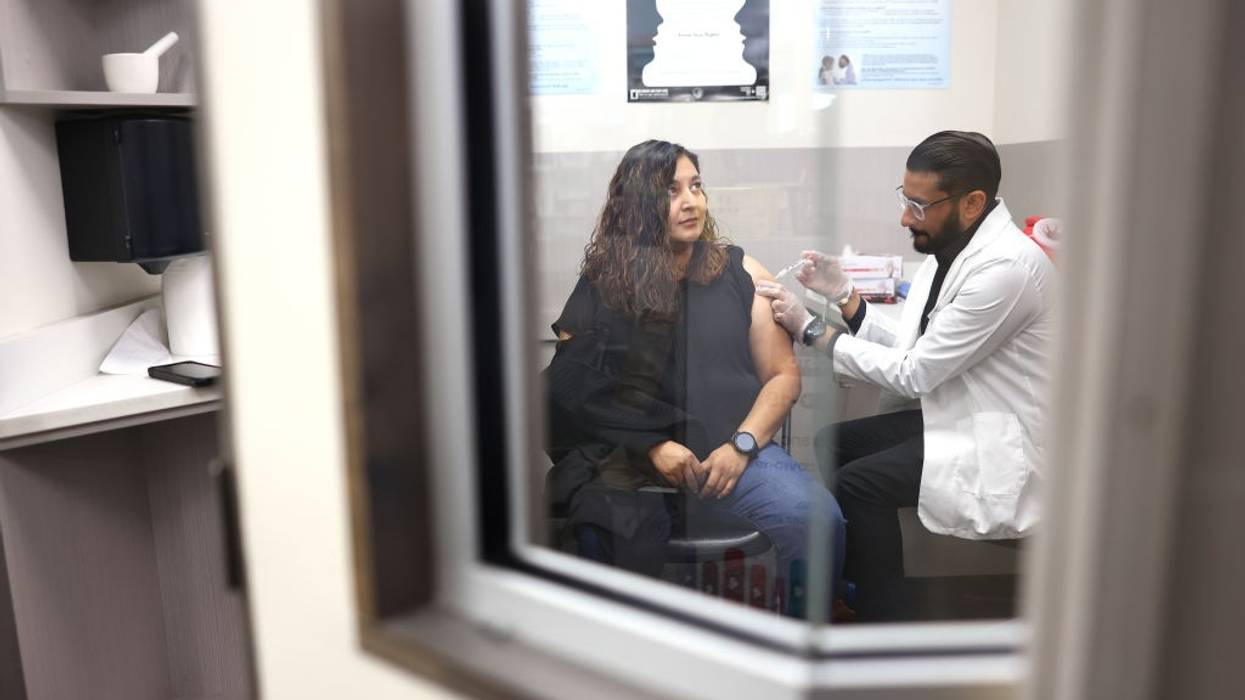
"What's at stake is we are reverting back to a system where a person's financial ability to be able to pay will determine their ability to be healthy."
The latest coronavirus vaccine costs up to $200 for the roughly 25 million uninsured people in the U.S., due to the defunding of a federal program that previously covered the costs, The Washington Post reported Tuesday.
It's the "latest tear in the safety net" as pandemic-era programs wind down, the newspaper reported. Covid-19 vaccines were free for everyone in the U.S. in 2021 and 2022, per federal policy. However, in January, congressional Republicans negotiated a deal that rescinded $6.1 billion in emergency coronavirus relief funding, which killed the Bridge Access Program, launched in April 2023, that covered the cost for the uninsured.
The latest version of the Covid-19 vaccine was approved on August 22 and costs just over $200 for uninsured patients at CVS pharmacies in Nashville and St. Louis—examples cited by the Post.
Raynard Washington, head of the Mecklenburg County health department in North Carolina and chair of the Big Cities Health Coalition, said that vaccine manufacturers Moderna and Pfizer-BioNTech should lower their prices to make the shots more affordable for health agencies.
"What's at stake is we are reverting back to a system where a person's financial ability to be able to pay will determine their ability to be healthy," Washington said.
News of the lack of affordable access to the Covid-19 vaccine for uninsured people led to outrage on social media, with one X user asking "Is this the way to keep the rest of us safe?" and another declaring: "This makes me want to scream."
People covered by Medicare—which insures Americans over the age of 65—and Medicaid can still receive Covid-19 vaccines for free. But roughly 25 million people in the U.S. under the age of 65 are uninsured and left to pay the sky-high rates; people of color are disproportionately represented in the ranks of the uninsured.
Moderna, Pfizer, and BioNTech have profited off of the sale of the vaccines even though U.S. and European taxpayers heavily subsidized their development. The companies told the Post that free vaccines would be available through patient assistance programs, but provided no details.
The Center for Disease Control and Prevention (CDC) said it had identified $62 million to purchase Covid-19 vaccines for distribution to health agencies, but officials say that's a "sliver" of what's needed, the paper reported.
The Biden administration in its budget requests repeatedly tried to establish a Vaccines for Adults program aimed at providing shots, including Covid-19 boosters, to uninsured adults, but the efforts stalled in Congress. The proposal was based on a federal Vaccines for Children program that's been active since the 1990s.
The new Covid-19 vaccine is recommended for everyone 6 months of age or older. It includes a level of protection against the KP.2 variant that accounted for roughly one quarter of U.S. cases this summer.
The public health emergency for Covid-19 ended in May 2023 but the virus has killed tens of thousands of people in the U.S. since then and can cause long-term complications.
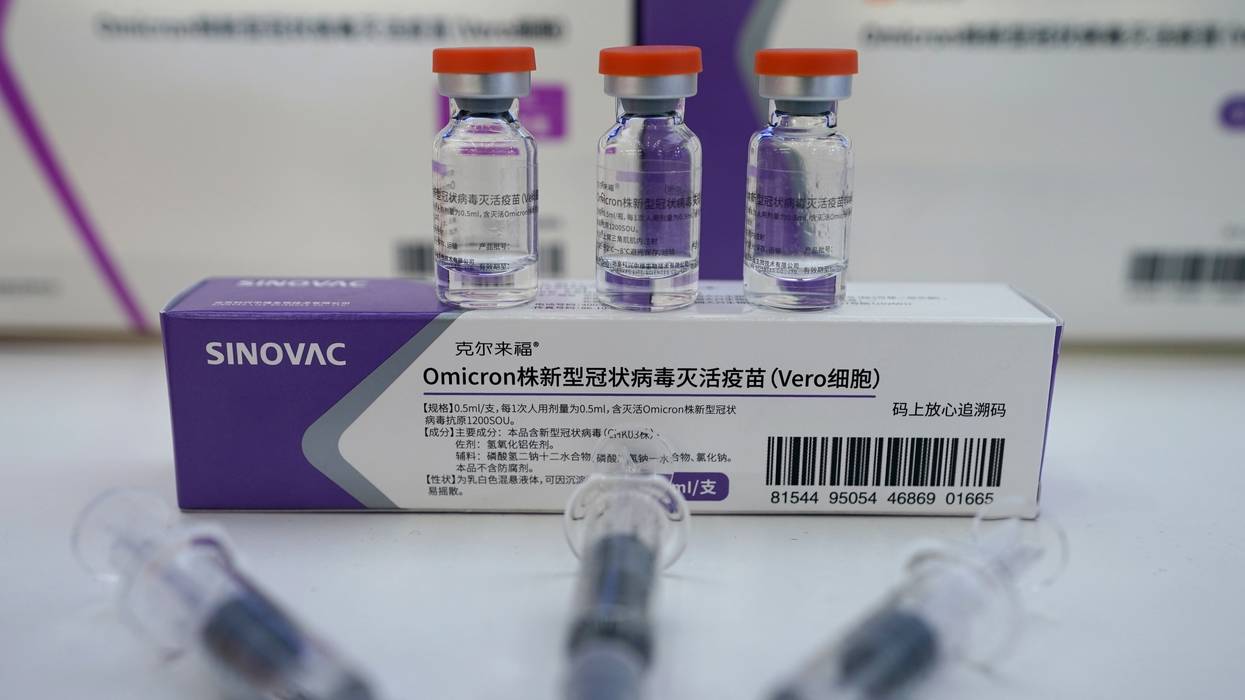
"I don't think it's defensible," an infectious disease specialist at Dartmouth said of the clandestine effort.
A Reuters investigation published Friday revealed that the Pentagon ran a "clandestine operation" aimed at discrediting China's coronavirus vaccines and treatments, a campaign that U.S. public health experts and others condemned as a cynical ploy that endangered lives for political purposes.
According to Reuters, the Pentagon's secretive campaign was designed to counter what the U.S. "perceived as China's growing influence in the Philippines," a country that was ravaged by Covid-19. The virus, which killed millions of people globally, was first detected in Wuhan, China in late 2019.
The campaign reportedly began in the spring of 2020 and was terminated in the middle of 2021 after it had expanded beyond Southeast Asia to Central Asia and the Middle East. U.S. officials involved in the effort worked "to sow doubt about the safety and efficacy of vaccines and other lifesaving aid that was being supplied by China" using "phony internet accounts meant to impersonate Filipinos," Reuters found.
"Social media posts decried the quality of face masks, test kits, and the first vaccine that would become available in the Philippines—China's Sinovac inoculation," the news agency added. "Reuters identified at least 300 accounts on X, formerly Twitter, that matched descriptions shared by former U.S. military officials familiar with the Philippines operation. Almost all were created in the summer of 2020 and centered on the slogan #Chinaangvirus—Tagalog for China is the virus."
One tweet that Reuters described as "typical" exclaimed that "COVID came from China and the VACCINE also came from China, don't trust China!"
Daniel Lucey, an infectious disease specialist at Dartmouth's Geisel School of Medicine who previously worked as a military physician, told Reuters that he was "extremely dismayed, disappointed and disillusioned to hear that the U.S. government would" conduct such an operation.
"I don't think it's defensible," Lucey added.
"We were literally ready to let people die to avoid giving China a PR win."
Others expressed outrage on social media. Justin Sandefur, a senior fellow at the Center for Global Development, called the Pentagon's campaign "truly shameful" and lamented that "we were literally ready to let people die to avoid giving China a PR win."
"That 'pork in the vaccine' nonsense you saw on Facebook was U.S. taxpayer-funded," Sandefur wrote.
Reuters reported that a "key part" of the Pentagon's strategy was to "amplify the disputed contention that, because vaccines sometimes contain pork gelatin, China's shots could be considered forbidden under Islamic law."
"Tailoring the propaganda campaign to local audiences across Central Asia and the Middle East, the Pentagon used a combination of fake social media accounts on multiple platforms to spread fear of China's vaccines among Muslims at a time when the virus was killing tens of thousands of people each day," the agency noted.
One senior U.S. military officer whom Reuters described as directly involved with the propaganda campaign in Southeast Asia told the outlet that "we didn't do a good job sharing vaccines with partners," so "what was left to us was to throw shade on China's." The U.S. and other rich countries repeatedly obstructed efforts to lift vaccine patents to more widely distribute coronavirus shots.
Pressed by Reuters, the Pentagon acknowledged that the U.S. military launched a propaganda effort attacking the efficacy of China's vaccine.
World Health Organization (WHO) guidance released in June 2022 stated that China's Sinovac vaccine is "safe and effective for all individuals aged 18 and above."
"A large phase 3 trial in Brazil showed that two doses, administered at an interval of 14 days, had an efficacy of 51% against symptomatic SARS-CoV-2 infection, 100% against severe COVID-19, and 100% against hospitalization starting 14 days after receiving the second dose," the WHO said.
Reuters reported that some within the U.S. State Department objected to the Pentagon's effort to promote skepticism about China's vaccine, arguing that a "health crisis was the wrong time to instill fear or anger through a psychological operation."
"But in 2019, before Covid surfaced in full force, then-Secretary of Defense Mark Esper signed a secret order that later paved the way for the launch of the U.S. military propaganda campaign," Reuters observed. "The order elevated the Pentagon's competition with China and Russia to the priority of active combat, enabling commanders to sidestep the State Department when conducting psyops against those adversaries."
"The Pentagon spending bill passed by Congress that year also explicitly authorized the military to conduct clandestine influence operations against other countries, even 'outside of areas of active hostilities,'" the agency added.
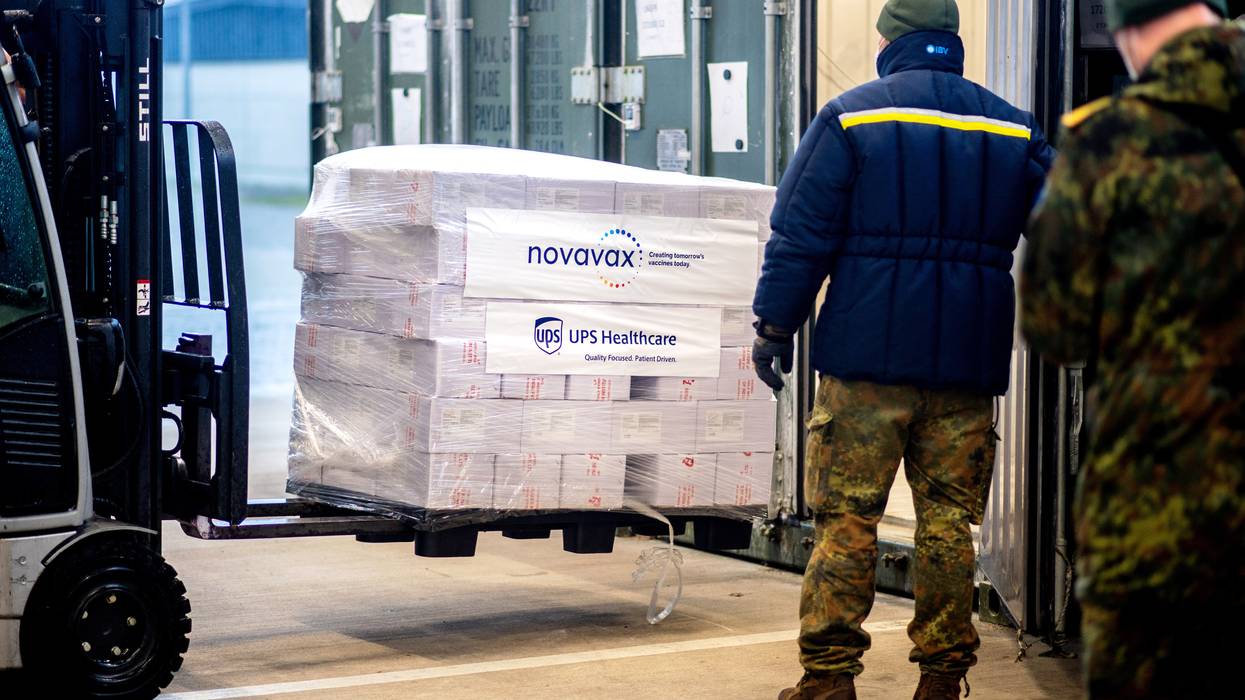
"Handing exclusive rights to publicly-funded vaccines and medicines to just a few companies simply does not work—for rich countries or poorer ones," said an adviser to the People's Vaccine Alliance.
Vaccine equity campaigners on Monday condemned European Union nations for hoarding Covid-19 vaccine doses at the expense of low-income countries after a new Politico analysis estimated that the bloc's members have thrown out at least €4 billion—roughly $4.4 billion—worth of the lifesaving shots.
That equates to around 215 million coronavirus vaccine doses—very likely an undercount, given that Politico wasn't able to obtain waste numbers from every E.U. member country.
"Calculations based on available data show that E.U. countries have discarded an average of 0.7 jabs for every member of their population," the outlet reported. "Top of the scale is Estonia, which binned more than one dose per inhabitant, followed closely by Germany, which also threw away the largest raw volume of jabs."
Piotr Kolczyński, E.U. health policy adviser at the People's Vaccine Alliance and Oxfam International, said in a statement that the new analysis is "further proof that the E.U. wasted millions of its Covid-19 vaccines, hoarded early in the pandemic, as it locked poorer countries out of access."
"The appalling waste in the world's pandemic response was disastrous," said Kolczyński. "Handing exclusive rights to publicly-funded vaccines and medicines to just a few companies simply does not work—for rich countries or poorer ones."
Politico attributed much of the waste to the E.U.'s massive 2021 deal with Pfizer and BioNTech, which agreed to sell 1.1 billion doses of their mRNA jab to members of the bloc as low-income countries struggled to obtain shots for their populations.
"Despite considering a significant reform to reign in pharmaceutical waste and profiteering within its borders, the EU fails to support similar efforts on the global stage."
E.U. members—Germany in particular—pushed back aggressively against the India and South Africa-led call for a Covid-19 vaccine patent waiver, which proponents said would have lifted key barriers to expanding vaccine manufacturing and access. Germany alone has wasted 83 million vaccine doses, according to Politico.
The pharmaceutical industry, for its part, lobbied aggressively to preserve its monopoly control over vaccine recipes and production, focusing significant attention on the European Commission.
With the global health emergency formally over, countries are currently negotiating the terms of a pandemic agreement that would govern how the international community responds to the next global crisis.
Reuters reported in September that "governments remain divided, failing to agree on some of the basics needed to strengthen health systems worldwide."
"Those basics, all issues that hindered a coordinated global response to the Covid-19 outbreak, include the sharing of information, costs, and vaccines," Reuters added. "The divisions arose anew in June, when the European Union negotiated new agreements with pharmaceutical companies to reserve vaccines for future pandemics. The agreements led critics to accuse the bloc of 'vaccine apartheid.'"
Last month, 18 members of the European Parliament wrote to the Council of the European Union and the European Commission expressing "concerns about the E.U.'s negotiating position."
"It proposes to continue relying solely on voluntary measures in the deployment of key public health interventions, such as the transfer of technology, know-how and 'trade secrets,' or the removal of intellectual property barriers," the lawmakers wrote. "In the meantime, the E.U. avoids specific commitments for equitable access to pandemic products."
As the People's Vaccine Alliance noted Monday, the E.U.'s latest proposed text "suggests removing transparency and equity measures."
"Despite considering a significant reform to reign in pharmaceutical waste and profiteering within its borders, the E.U. fails to support similar efforts on the global stage," said Kolczyński. "It is one rule for the E.U. and another for everyone else."
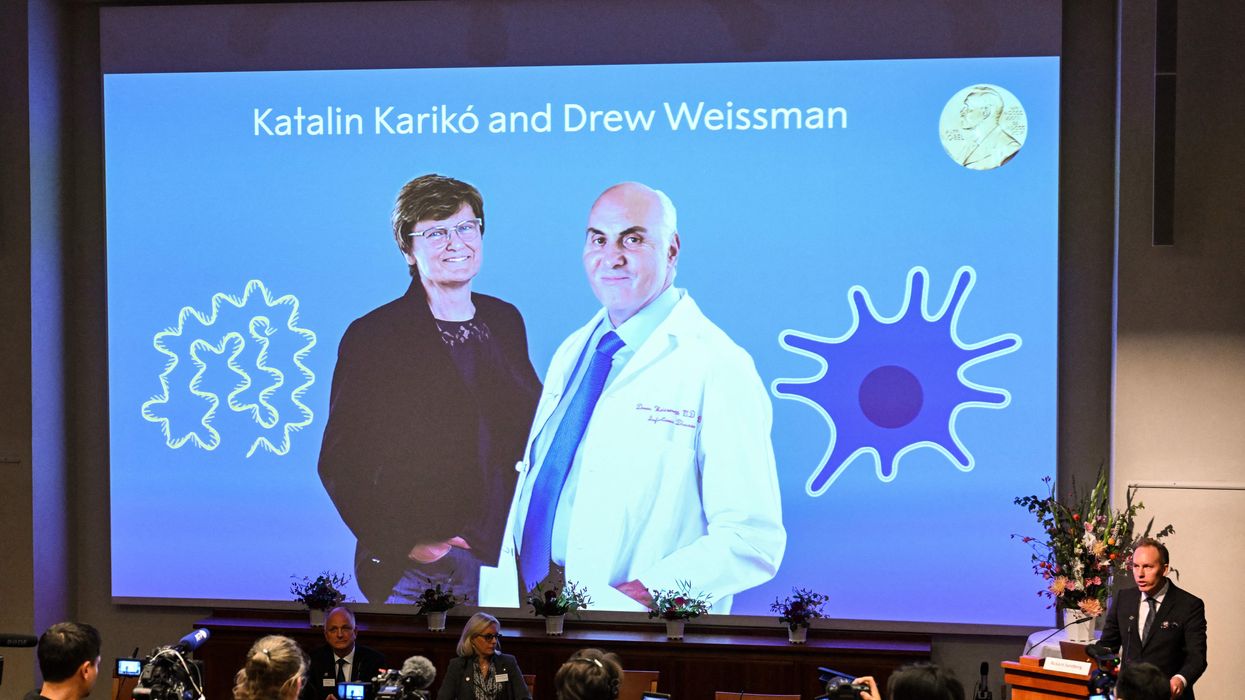
"Public funding delivers incredible medical advances and that should be a priority for all countries, but pharmaceutical companies cannot be trusted to share technology with the world."
Scientists Katalin Karikó and Drew Weissman were awarded the Nobel Prize in Physiology or Medicine on Monday for research that paved the way for the messenger RNA vaccines against Covid-19—critical work that, as campaigners quickly pointed out, benefited from substantial U.S. government funding.
Dr. Mohga Kamal-Yanni, policy co-lead for the People's Vaccine Alliance, said in a statement that "this award challenges the claim that it was solely big pharmaceutical companies who saved the world from Covid-19."
"Just like the Oxford-AstraZeneca vaccine, Karikó and Weissman's groundbreaking work on mRNA vaccines received a huge amount of public funding," said Kamal-Yanni. "Pharmaceutical companies have refused to share mRNA technologies with developers and researchers in developing countries."
The Nobel Prize committee credited Karikó and Weissman with fundamentally changing "our understanding of how mRNA interacts with our immune system."
"The laureates contributed to the unprecedented rate of vaccine development during one of the greatest threats to human health in modern times," the committee said.
As The Washington Post summarized, the pair "discovered how to chemically tweak messenger RNA, turning basic biology into a technology ready to change the world when the pandemic struck. Their discovery is incorporated into the coronavirus vaccines made by Moderna and Pfizer and its German partner, BioNTech, which have now been given billions of times."
But the Post and other major outlets covering Karikó and Weissman's Nobel prize-winning contributions did not emphasize—or even mention—that some of the scientists' work was funded by the National Institutes of Health. Karikó and Weissman patented their findings in 2006 and later licensed the patents to Moderna and BioNTech, Pfizer's coronavirus vaccine partner.
According to an analysis by Knowledge Ecology International (KEI), Weissman "appears as the principal investigator on a total of 42 projects funded by the National Institutes of Health (NIH) between 1998 and 2020, representing $18,323,060 in costs."
"Karikó was the principal investigator of four projects funded by the NIH between 2007 and 2011, totaling $1,234,462 in costs," KEI observed. "In other words, the United States government funded and has certain rights over at least some of the foundational Karikó and Weissman patents directed to mRNA discoveries."
"As governments discuss how to prepare for the next pandemic, they should learn from the story of mRNA."
Throughout the pandemic and into the present, vaccine makers such as Pfizer and Moderna have opposed global calls to share their vaccine recipes and technology with the world, fiercely clinging to their monopoly control over production and using that control to force governments into one-sided contracts favorable to the pharmaceutical industry—even though their vaccines were developed with massive public support.
A
study published in The BMJ earlier this year estimated that the U.S. government pumped nearly $32 billion into the development, production, and purchase of mRNA coronavirus vaccines.
The Biden administration, meanwhile, has declined to use its ownership of key patents or the leverage provided by public funding to force pharmaceutical companies to do everything they can to ensure the equitable distribution of lifesaving vaccine technology.
Kamal-Yanni of the People's Vaccine Alliance said Monday that "fortunately, Weissman is helping a WHO-backed mRNA program which aims to develop mRNA technology in lower-income countries, even while pharmaceutical companies refuse to share their know-how."
"As governments discuss how to prepare for the next pandemic, they should learn from the story of mRNA," said Kamal-Yanni. "Public funding delivers incredible medical advances and that should be a priority for all countries, but pharmaceutical companies cannot be trusted to share technology with the world."
Peter Maybarduk, director of the Access to Medicines program at Public Citizen, echoed that message, saying in a statement that "today's Nobel must ring as a call for equity and health justice, and a call to change a massively unjust pharmaceutical industry."
"Moderna, Pfizer, and BioNTech still largely control the available vaccines and in some countries have significantly increased their price, despite the billions in public funding on which the vaccines rely," said Maybarduk. "By supporting initiatives to share science and technology, and by funding vaccine infrastructure, governments can help blunt the effects of disease, and bring a coda of justice to a terribly unjust time."
This story has been updated to include a statement from Public Citizen.

"We were bullied into unfair and undemocratic terms," said one public health campaigner. "And we must ask: did they do it to other countries, too?"
Newly disclosed Covid-19 vaccine procurement contracts that the South African government signed with pharmaceutical companies included "overwhelmingly one-sided" terms that favored drug companies' bottom lines over public health, according to a review conducted by a coalition of experts and advocates.
Last month, a South African court ruled that the nation's government must make its vaccine contracts with pharmaceutical companies public after the Health Justice Initiative (HJI) sued in an effort to shine light on the secretive agreements.
HJI has published the government's contracts with Pfizer, Johnson & Johnson subsidiary Janssen, the Serum Institute of India, and Covax online, arguing that they reveal how Big Pharma "held South Africa to ransom."
In a detailed report released Tuesday, HJI and other organizations wrote that the contracts "placed governments in the Global South, and in turn, the people living in these countries, in an unenviable position of having to secure scarce supplies in a global emergency (2020-2022) with unusually hefty demands and conditions, including secrecy, a lack of transparency, and very little leverage against late or no delivery of supplies or inflated prices, resulting in gross profiteering."
The "most egregious example," according to the new report, was the South African government's deal with Johnson & Johnson, which traded "scarce or very delayed supplies for extractionist terms and conditions that undermine national sovereignty."
The U.S.-based company charged South Africa $10 per dose for its vaccine in the agreement, which was carried out under English and Welsh law. (The European Union reportedly paid $8.50 per dose for the Johnson & Johnson vaccine.)
Additionally, the deal required South Africa to make a nonrefundable down payment of $27.5 million.
According to HJI, the contracts with pharmaceutical giants made South Africa liable for at least $734 million in payments "with no guarantees of timely delivery." The contracts, none of which were agreed to under South African legal jurisdiction, also required South Africa to "seek permission" from drug companies to "divert or donate or sell doses which have already been paid for by the [South African] public, despite the benefit to other poorer countries or buyers."
"In a global pandemic, this is paternalistic and imperialist, harms public health programmatic planning, and deliberately reduces the autonomy of African states," the report says. "In particular—J&J, Pfizer, and COVAX did not commit... to supply volumes and dates, making it increasingly difficult to plan and run a timely and proper vaccination program."
Fatima Hassan, HJI's director, said Tuesday that "this deference to and fear of powerful pharmaceutical companies—in the middle of a crisis and in a constitutional democracy—is incredibly concerning."
"It shows how much power was put into the hands of private sector actors and how few options governments had, when acting alone, in the middle of a pandemic," said Hassan.
The pharmaceutical industry's control over vaccine supply and distribution in South Africa and around the world spawned what public health advocates described as vaccine apartheid, a system under which poor nations were left with little to no access to lifesaving shots as rich countries and drugmakers prioritized upholding restrictive patents in the face of a catastrophic pandemic.
Hassan said the newly disclosed contracts "reveal the phenomenal power that pharmaceutical companies wielded in negotiations."
"In our scramble for desperately needed vaccines, South Africa was forced to hand over unimaginable sums of money for overpriced vaccine doses," Hassan added. "We were bullied into unfair and undemocratic terms in contracts that were totally one-sided. Put simply, pharmaceutical companies held us to ransom. And we must ask: did they do it to other countries too?"
A 2021 report by the U.S.-based consumer advocacy group Public Citizen—which uncovered several unredacted Pfizer vaccine contracts—detailed how the corporation used its power in agreements with Brazil, Colombia, the European Commission, and the U.S. to "silence governments, throttle supply, shift risk, and maximize profits in the worst public health crisis in a century."
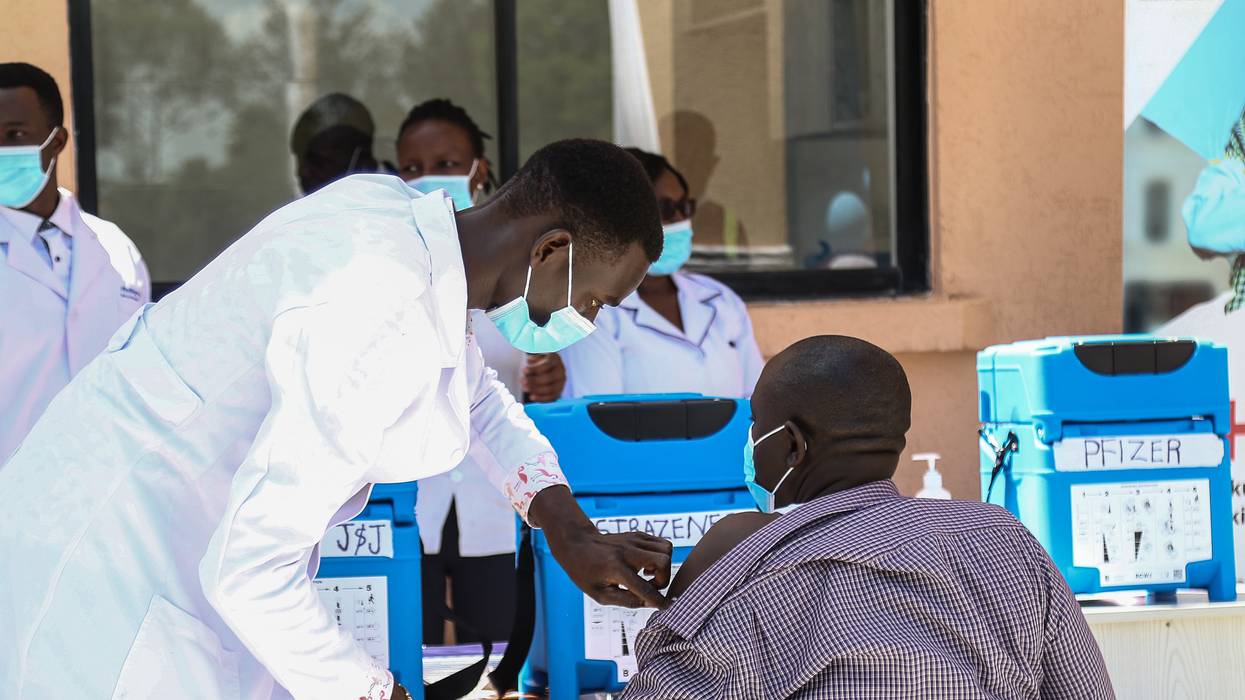
"The global response to Covid-19 failed the world's most vulnerable, prioritizing windfall profits ahead of public health," said one expert, calling on world leaders to "make structural changes in global health."
The World Health Organization's declaration Friday that Covid-19 is no longer a global health emergency elicited fresh calls for learning from the pandemic and dramatically expanding access to prevention and treatment for diseases in the future.
"Covid-19 may no longer be classified as the highest level of international emergency, but the virus has not gone away," said Dr. Mohga Kamal-Yanni, policy co-lead of the People's Vaccine Alliance, a global coalition working toward equitable access to medical technologies that help to prevent and respond to Covid-19 and future pandemics.
"There are billions of people in developing countries who still cannot access affordable Covid-19 tests and treatments," Kamal-Yanni stressed. "They need action from governments to remove the intellectual property barriers that prevent the widespread production of generic medicines."
"Rich countries behaved shamefully in this pandemic, upholding pharmaceutical monopolies and grabbing vaccines, tests, and medicines for their people, pushing developing countries to the back in the line."
WHO Director-General Tedros Adhanom Ghebreyesus said Friday that while the agency has documented almost 7 million deaths from the virus, "we know the toll is several times higher—at least 20 million." A study published last year in Nature and cited by the People's Vaccine Alliance estimates that 1.3 million fewer people would have died by the end of 2021 if Covid-19 vaccines were equitably distributed.
"Rich countries behaved shamefully in this pandemic, upholding pharmaceutical monopolies and grabbing vaccines, tests, and medicines for their people, pushing developing countries to the back in the line," said Kamal-Yanni. "And pharmaceutical companies are the biggest winners, achieving the biggest profit from a single medical product in history, while people died without access."
Ahead of the WHO announcement but in the wake of the annual general meetings of Johnson & Johnson, Merck, Moderna, and Pfizer, Amnesty International health adviser Tamaryn Nelson on Thursday lamented that the pharmaceutical giants declined to "right their wrongs" by passing resolutions to facilitate the universal distribution of Covid-19 vaccines.
"For the past three years, those at the helm of Big Pharma companies have seen earnings soar, while people in low- and lower-middle-income countries are still struggling to access lifesaving medicines," Nelson noted. "While their efforts to speedily develop Covid-19 vaccines should be recognized, it's clear pharmaceutical companies have failed in their human rights responsibilities when it comes to ensuring equal access—and continue to do so. Why aren't investors holding them to account?"
"With reports that Pfizer and Moderna are considering quadrupling the price of each Covid-19 vaccine in some countries, only 25% of people in low-income countries are now fully vaccinated and millions are still waiting for the first dose," she continued, calling the allocation of the shots "one of the worst examples of global inequality to date."
According to Nelson, "It's time for investors to ensure these companies are making structural changes with immediate effect to ensure the world can withstand future pandemics collectively, without leaving anyone behind."
Kamal-Yanni argued that tackling future crises will require more actively involving people from lower-income nations.
"The institutions set up to support developing countries, like COVAX and ACT-A, failed to involve developing countries in their creation or decision-making, and failed to deliver an equitable response," she said. "For future pandemics, preparation and response must be led by the Global South, instead of creating more global platforms dominated by donors."
"People in developing countries should never again wait for the 'good will' of rich countries, nor charitable actions of pharmaceutical companies," she asserted. "The world needs transformative commitments in the Pandemic Treaty and International Health Regulations to ensure knowledge and technology are shared, remove intellectual property barriers, and to support medical research and manufacturing in developing countries."
Negotiators aim to finalize a draft of the Pandemic Treaty for consideration by the 77th World Health Assembly in 2024.
"Just as with HIV, the global response to Covid-19 failed the world's most vulnerable, prioritizing windfall profits ahead of public health," said Kamal-Yanni. "World leaders must now learn from the last three years, and make structural changes in global health. Or else, we are doomed to repeat the mistakes of this pandemic in the next."
Dr. Uché Blackstock, a former emergency medicine professor who works to end bias and racism in healthcare, tweeted Friday that "it's truly unfortunate that both domestically and globally, other than vaccines—which I'm truly grateful to science for—there have been no significant improvement/investments in our public health infrastructure to keep people and their communities safe."
The Covid-19 crisis could have led to massive investments in health workers, workplace protections, and paid leave, Blackstock said in response to the WHO announcement. The United States could have shifted to universal healthcare and joined other nations of the Global North in promoting vaccine equity.
"It felt like THIS was our opportunity to do better!!" she added, also circulating a graphic shared by Dr. Madhu Pai showing that the 2.3 billion people who remain unvaccinated against Covid-19 are largely concentrated in low- and middle-income countries.
Pai also pointed to an "important" piece published Thursday in Science titled "Cascading Failures in Covid-19 Vaccine Equity."
Noting that "the proliferation of equity rhetoric does not appear to be matched by corresponding rates of progress in reducing global disparities," a trio of U.S.-based experts wrote for Science that "the stark gap between the pervasive rhetoric about equity and the dismal reality of the global vaccine distribution" the past three years "demands a collective reckoning."
"Expansive rhetoric and empty promises have surprising staying power," they added. "If we wish equity to have anything more than allegorical value, we must take the concept more seriously, beginning with a disciplined and deliberate examination of the equity-deficit cascade."
As Common Dreams reported throughout the Covid-19 crisis, experts have warned that preventing future pandemics requires not only improvements in healthcare systems but also global land use reforms—from conservation efforts to changes in agricultural practices—to stop the spillover of diseases from animals to humans.

"Put simply, Pfizer has plundered health systems for profit," said the People's Vaccine Alliance.
The U.S.-based pharmaceutical giant Pfizer reported Tuesday that it brought in a record-breaking $100.3 billion in revenue in 2022 and $31.4 billion in profit, sums that campaigners decried as "sickening" in the face of an ongoing pandemic and persistent inequities in coronavirus vaccine access.
"In one year alone, Pfizer's revenue has exceeded the total health expenditures of more than 100 countries combined," Julia Kosgei, policy co-lead for the People's Vaccine Alliance, said in a statement. "If it were a country, Pfizer would sit in the wealthiest third of nation-states. And it has amassed this fortune while jacking up prices on Covid-19 vaccines amid a pandemic that has devastated people’s livelihoods. Put simply, Pfizer has plundered health systems for profit."
Pfizer, led by CEO Albert Bourla, is the manufacturer of one of the two available mRNA vaccines for Covid-19, as well as the oral coronavirus treatment Paxlovid. The company reported $56 billion in sales of its Covid-19 vaccine and Paxlovid, though it said it expects sales to drop in the coming year as it moves to hike prices significantly on its vaccine—a plan that has drawn international alarm and outrage.
Globally, more than 2,600 people are dying from Covid-19 each day on average. According to Our World in Data, just over 26% of people in low-income nations have received at least one coronavirus vaccine dose as Pfizer and other pharmaceutical giants refuse to make their vaccine technology available to all—even though it was developed with the help of government funding and scientific advancements.
"Billions of people in developing countries still cannot access affordable Covid-19 medicines," said Kosgei. "Companies like Pfizer are gobbling up ever-greater proportions of health budgets and handing the spoils to wealthy shareholders—all while treating access for developing countries as little more than a PR initiative. We cannot go on like this."
The U.K.-based advocacy group Global Justice Now called Pfizer's record earnings report "sickening."
"With this latest 'all-time high' announcement, Pfizer now has revenues higher than the GDP of 133 countries, including 8 E.U. member states, and is the first pharma company ever to make $100 billion in a year," noted Tim Bierley, the group's pharma campaigner. "But not content with doubling its revenues with a pandemic windfall, they are now still moving to aggressively hike the price of Covid-19 booster doses, putting even more pressure on already struggling public health systems."
"Their latest record-breaking revenues are further proof that the company treated the pandemic as an opportunity to enrich its shareholders," Bierley added. "We can't allow Big Pharma companies to hold us to ransom in this way. We need the government to be bold and break with the monopoly patent model that fails people everywhere. It's time to put people's lives above corporate profit."
"A people-funded vaccine should be cheap and freely available."
Both Pfizer and Moderna have signaled plans to raise the prices of their vaccines to somewhere between $110 to $130 per dose in the U.S. as the Biden administration moves ahead with the commercialization of coronavirus inoculations, tests, and treatments—shifting costs onto patients and insurers and leaving the uninsured to shoulder significant payments.
The U.S. government has previously paid around $30 per dose for Pfizer's vaccine.
In recent days, the Biden administration has faced growing calls to use the federal government's ownership of key patents and other leverage to force Moderna and Pfizer to make their vaccines affordable and readily available to all who want them.
"The Biden administration should not allow Moderna to more than quadruple the price of the Covid vaccine to $130 when it costs just $2.85 to produce," Sen. Bernie Sanders (I-Vt.) tweeted on Sunday. "The Covid vaccine must be used to save lives, not to further enrich the billionaire owners of Moderna."
Moderna and Pfizer are also facing backlash from lawmakers overseas over their planned price increases.
In a letter to Bourla and Moderna CEO Stéphane Bancel on Tuesday, British MP Caroline Lucas of the Green Party and three other lawmakers wrote that with the National Health Service "already under significant pressure and the costs of medicines increasing year on year, we are extremely concerned about the multiple impacts of a possible price hike."
"Throughout its development, the Pfizer/BioNTech vaccine received huge amounts of public money and support internationally," the lawmakers wrote. "Even the mRNA technology that Pfizer/BioNTech employed in the Covid-19 vaccine is rooted in decades of publicly funded research. A people-funded vaccine should be cheap and freely available."
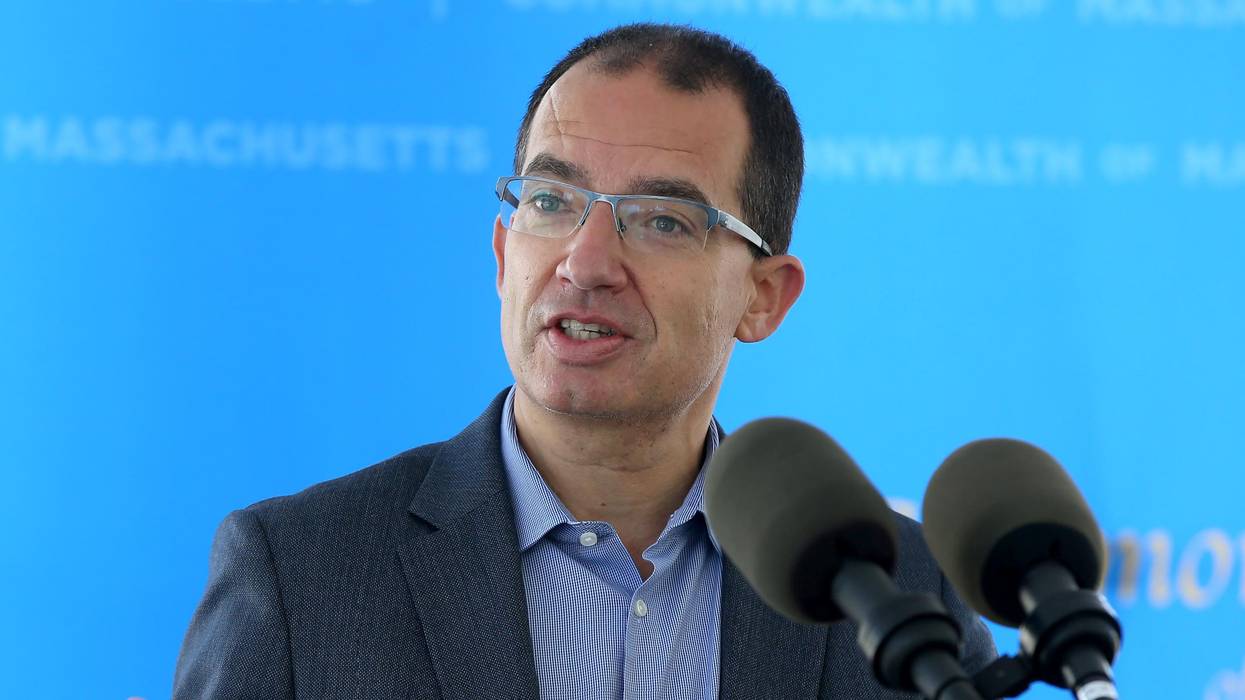
"This vaccine isn't just Moderna's, it was developed in collaboration with a government agency," said one campaigner. "It should be available and affordable for everyone, everywhere."
The Massachusetts-based pharmaceutical giant Moderna faced angry backlash on Tuesday following the CEO's announcement that the firm is considering pricing its Covid-19 vaccine somewhere between $100 and $130 per dose in the United States.
The upper end of that range, according to the People's Vaccine Alliance (PVA), would represent a 4,000% markup above the cost of manufacturing the shot, which experts have pegged at roughly $2.85 per dose.
"The sheer greed is obscene," said PVA policy co-lead Julia Kosgei, who stressed that "billions of taxpayer dollars went into the development of mRNA vaccines."
"This vaccine isn't just Moderna's, it was developed in collaboration with a government agency based on decades of publicly-funded research," Kosgei said. "It is the people's vaccine—and it should be available and affordable for everyone, everywhere."
Stephane Bancel, Moderna's billionaire CEO, defended the proposed price range in an interview on the sidelines of the J.P. Morgan Healthcare Conference in San Francisco, telling The Wall Street Journal that he believes "this type of pricing is consistent with the value" of the vaccine, which was developed with the crucial help of government scientists.
In 2020, Moderna admitted that 100% of the funding for its vaccine development program came from the federal government—which, despite its leverage, has refused to force the company to share its vaccine recipe with the world.
"We need to learn from this pandemic and break big pharma's monopolies."
Moderna's pricing plans come as the Biden administration is transitioning away from its free coronavirus vaccine program, shifting costs onto insurers and patients—and leaving the uninsured and underinsured with potentially significant bills.
In August, the Health and Human Services Department announced that "as early as January 2023, the administration anticipates no longer having federal funds to purchase or distribute vaccines and will need to transition these activities to the commercial market, similar to seasonal flu or other commercially available vaccines."
The Washington Post's Rachel Roubein noted Tuesday that "the federal government has paid far less for the company's vaccine than the potential price for commercial insurers. Moderna's updated booster shot cost the Biden administration about $26 per dose last summer, according to federal supply contracts."
The Kaiser Family Foundation (KFF) warned in a recent policy brief that the commercial price of coronavirus shots "could discourage vaccination."
"The suggested average price for Covid-19 vaccines after commercialization ($96 to $115 per dose) is significantly higher than the commercial price for the annual flu vaccine ($18 to 28 per dose), and could be a cost barrier for the uninsured and underinsured, who have no guaranteed mechanism for receiving COVID-19 (or any) vaccines once federal supplies are depleted," KFF observed. "While most consumers with public and private insurance will be protected from having to pay directly for vaccine costs, those who are uninsured and underinsured may face cost barriers when the federally-purchased vaccine doses are depleted. In addition, as private payers take on more of the cost of vaccinations and boosters, this could have a small upward effect on health insurance premiums."
In a statement, Kosgei argued that "it doesn't have to be like this."
"The World Health Organization is supporting a program to share mRNA vaccine technology with producers in low and middle-income countries," said Kosgei. "In a future pandemic, this could rapidly supply doses for the entire world, but Moderna's patents are standing in the way. We need to learn from this pandemic and break big pharma's monopolies."

A house of cards. A set of lies we have unconsciously accepted. That's what our certainties seem like during profound crises. Such episodes shock us into recognizing how unsafe our assumptions are. That is why this year has resembled a rapidly receding tide, forcing us to confront submerged truths.
We used to think, with good reason, that globalization had defanged national governments. Presidents cowered before the bond markets. Prime ministers ignored their country's poor but never Standard & Poor's. Finance ministers behaved like Goldman Sachs's knaves and the International Monetary Fund's satraps. Media moguls, oil men, and financiers, no less than left-wing critics of globalized capitalism, agreed that governments were no longer in control.
Then the pandemic struck. Overnight, governments grew claws and bared sharpened teeth. They closed borders and grounded planes, imposed draconian curfews on our cities, shut down our theatres and museums, and forbade us from comforting our dying parents. They even did what no one thought possible before the Apocalypse: they canceled sporting events.
The first secret was thus exposed: Governments retain inexorable power. What we discovered in 2020 is that governments had been choosing not to exercise their enormous powers so that those whom globalization had enriched could exercise their own.
The second truth is one that many people suspected but were too timid to call out: the money-tree is real. Governments that proclaimed their impecunity whenever called upon to pay for a hospital here or a school there suddenly discovered oodles of cash to pay for furlough wages, nationalize railways, take over airlines, support carmakers, and even prop up gyms and hairdressers.
Those who normally protest that money does not grow on trees, that governments must let the chips fall where they may, held their tongue. Financial markets celebrated, instead of throwing a fit at the state's spending spree.
Greece is a perfect case study of the third truth revealed this year: Solvency is a political decision, at least in the rich West. Back in 2015, Greece's public debt of EUR320 billion ($392 billion) towered over a national income of only EUR176 billion. The country's troubles were front page news around the world, and Europe's leaders lamented our insolvency.
Today, in the midst of a pandemic that has made a bad economy worse, Greece is not an issue, even though our public debt is EUR33 billion higher, and our income EUR13 billion lower, than in 2015. Europe's powers that be decided that a decade of dealing with Greece's bankruptcy was enough, so they chose to declare Greece solvent. As long as Greeks elect governments that consistently transfer to the borderless oligarchy whatever (public or private) wealth is left, the European Central Bank will do whatever it takes - buy as many Greek government bonds as necessary - to keep the country's insolvency out of the spotlight.
The fourth secret that 2020 brought into the open was that the mountains of concentrated private wealth we observe have very little to do with entrepreneurship. I have no doubt that Jeff Bezos, Elon Musk, or Warren Buffett have a knack for making money and cornering markets. But only a tiny percentage of their accumulated loot is the result of the creation of value.
Consider the stupendous increase since mid-March in the wealth of America's 614 billionaires. The additional $931 billion they amassed did not result from any innovation or ingenuity that generated additional profits. They got richer in their sleep, so to speak, as central banks flooded the financial system with manufactured money that caused asset prices, and thus billionaires' wealth, to skyrocket.
With the record-fast development, testing, approval, and rollout of COVID-19 vaccines, a fifth secret was revealed: science depends on state aid, and its effectiveness is oblivious to its public standing. Many commentators have waxed lyrical about markets' capacity to respond quickly to humanity's needs. But the irony should be lost on no one: the administration of the most anti-science US president ever - a president who ignored, intimidated, and mocked experts even during the worst pandemic in a century - allocated $10 billion to ensure that scientists had the resources they needed.
But there is a broader secret: While 2020 was a banner year for capitalists, capitalism is no more. How is that possible? How can capitalists flourish as capitalism evolves into something else?
Easily. Capitalism's greatest apostles, like Adam Smith, emphasized its unintended consequences: precisely because profit-seeking individuals have no regard for anyone else, they end up serving society. The key to converting private vice into public virtue is competition, which impels capitalists to pursue activities that maximize their profits. In a competitive market, that serves the common good by boosting the range and quality of available goods and services while constantly lowering prices.
It is not hard to see that capitalists can do much better with less competition. This is the sixth secret that 2020 exposed. Liberated from competition, colossal platform companies like Amazon did astonishingly well from capitalism's demise and its replacement by something resembling techno-feudalism.
But the seventh secret that this year revealed represents a silver lining. While bringing about radical change is never easy, it is now abundantly clear that everything could be different. There is no longer any reason why we should accept things as they are. On the contrary, the most important truth of 2020 is captured in Bertolt Brecht's apt and elegant aphorism: "Because things are the way they are, things will not remain the way they are."
I can think of no greater source of hope than this revelation, delivered in a year most would prefer to forget.