

SUBSCRIBE TO OUR FREE NEWSLETTER
Daily news & progressive opinion—funded by the people, not the corporations—delivered straight to your inbox.
5
#000000
#FFFFFF
To donate by check, phone, or other method, see our More Ways to Give page.
Daily news & progressive opinion—funded by the people, not the corporations—delivered straight to your inbox.
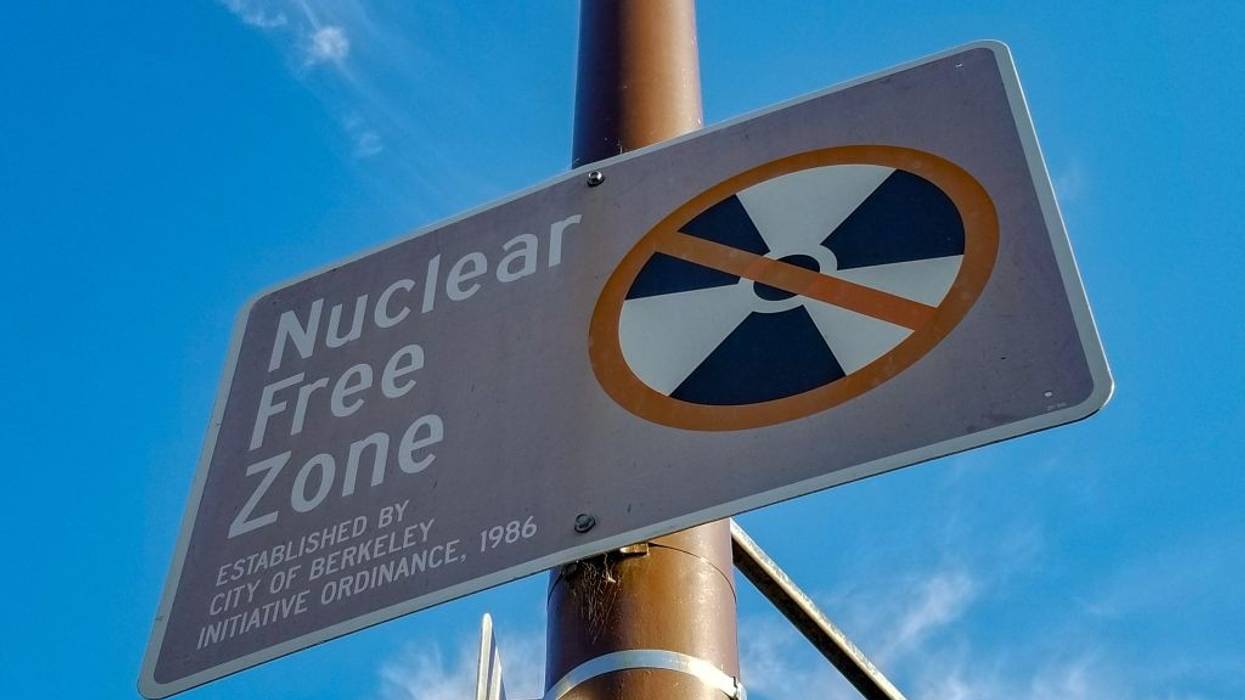
During this August 6-9 time, numerous events and actions are taking place across the US and worldwide calling for nuclear abolition. I hope you who read this can join in one such action where you reside.
“The development of nuclear weapons signifies not a country’s elevation to greatness, but its descent to the darkest depths of depravity. These weapons are not a necessary evil; they are the ultimate evil.”—A-bomb survivor Setsuko Thurlow, Nobel peace prize ceremony for ICAN, December 2017
This August 6-9 marks the 81st anniversary of the US atomic bombings of Hiroshima and Nagasaki. The United States is the only country to have ever used nuclear weapons, having committed the unspeakable sin and crime in 1945, thus ushering in the nuclear age.
Rather than repenting for the evil of building and using nuclear weapons, making reparations to the victims, and promising to eradicate its nuclear program, the US government has instead made nuclear weapons the cornerstone of its military policy. This policy holds that the United States must be prepared to use any military means necessary, including nuclear weapons, to protect and ensure its “vital” national security and geopolitical interests.
The US nuclear weapons program was conceived under a shroud of secrecy that continues to this day, and without the consent of the US people. Beginning with the Manhattan Project in 1940, the US has spent over $9 trillion on its nuclear weapons program.
The nuclear challenge before us is great, but not insurmountable.
To date, the US government refuses to adopt a “no first-use” nuclear policy, declaring it reserves the right to use nuclear weapons in the case of conflict. Therefore, a US president could unilaterally order a nuclear attack at any time. According to peace advocate and author Joseph Gerson, the US has prepared or threatened to use nuclear weapons against adversaries an estimated 30 times to bolster its aims.
Moreover, the Trump administration’s Nuclear Posture Review includes planning for limited nuclear war by developing low-yield nuclear weapons to counter an adversary’s limited use of nuclear weapons in any conflict. The US government is now continuing a several decades long process to modernize its nuclear arsenal at a cost of nearly $1 trillion. Instead of funding vital human needs programs, this exorbitant expenditure (along with the $1.5 trillion 2027 military budget) constitutes a direct theft from the poor! The US, along with the eight other nuclear nations, refuse to ratify the Treaty on the Prohibition of Nuclear Weapons (TPNW) which now deems nuclear weapons illegal under international law. To date, 75 nations have ratified the TPNW.
On January 27, 2026, the Bulletin of the Atomic Scientists reset the Doomsday Clock to 85 seconds before midnight, the closest to global catastrophe it has ever been. This is due to the existential threats of nuclear war and the climate crisis, AI, and worsening world tensions and other perils. The Ukraine war has further aggravated the nuclear threat between Russia and NATO.
The nuclear threat is further exacerbated by recent threats against Iran by President Donald Trump, including to “blast Iran into oblivion” and “back to the Stone Ages,” and his warning: “A whole civilization will die tonight, never to be brought back again.”
As a leading nuclear superpower, the US practices a double standard by calling on other nations to disarm while, at the same time, it refuses to disarm and instead is rapidly expanding its own arsenal.
AI technology also increases the risk of nuclear war. A study by King’s College London published earlier this year revealed that AI models used in 21 simulated nuclear crises escalated the conflict by threatening nuclear war in 95% of 329 turns of play.
As we confront the nuclear peril today, it is imperative that we hear and heed the testimony of those who were directly impacted by nuclear weapons. Since 1945, the Hibakusha has urgently called on all the nuclear nations to abolish nuclear weapons stating that “humanity and nuclear weapons cannot coexist.” Additionally, people of faith and conscience have actively opposed and resisted nuclear war preparations, including those of blessed memory such as Dorothy Day, co-founder of the Catholic Worker movement, who immediately condemned the 1945 bombing; Bishop Tom Gumbleton (first bishop president of Pax Christi USA); Fr. Daniel Berrigan, SJ; Philip Berrigan—all Pax Christi USA teachers of peace—Thomas Merton, OCSO; Sr. Anne Montgomery, RSCJ; Fr. Carl Kabat, OMI; Sr. Ardeth Platte, OP—as well as peacemakers today like Pax Christi USA teachers of peace Elizabeth McAlister and James and Shelley Douglass, plus Fr. Steve Kelly, SJ, and so many more!
Throughout the Nuclear Age, different church denominations, faith leaders, and organizations and groups, including International Physicians for the Prevention of Nuclear War, International Campaign to Abolish Nuclear Weapons, Physicians for Social Responsibility, Back from the Brink, and Warheads to Windmills have also called for the total elimination of nuclear weapons. And there have been countless non-violent actions for nuclear disarmament and ending war. Since 1980, plowshares peacemakers have enacted the biblical prophecy of beating swords into plowshares by hammering and using others symbols to literally begin the process of disarmament. I have been blessed to be part of two plowshares actions.
Catholic leaders have made significant statements regarding the use of nuclear weapons and present nuclear peril.
Last year, to mark the 80th anniversary of the atomic bombings, more than 500 people and 60 organizations in the US signed an Apology Petition to the Japanese people calling on the US government to apologize to Japan for the atomic bombings and pledge to ratify the TPNW. The mayor’s office of Nagasaki, Nihon Hidankyo (the main Hibakusha organization and 2024 Nobel Peace Prize recipient), and Catholic clergy and religious in Japan acknowledged receiving this petition and expressed their great appreciation.
Most recently, the groundbreaking “Rome Declaration for an Unarmed and Disarming Peace in the Age of Artificial Intelligence, Nuclear and Autonomous Weapons, New Digital Protocols, and Emerging Models of Digital Development,” was signed by over 200 Nobel laureates, leading AI innovators, and global academics.
Nuclear weapons are immoral and illegal, and no follower of Jesus should be involved in their production, financing, or use of them! The Catholic Church and all churches have a crucial role to play in helping to bring about a disarmed world. What if the church leadership in all denominations were to call on all Christians in the military nuclear chain of command to refuse orders to kill and use nuclear weapons, and publicly support those who do so? What if the churches could take the lead in calling for the conversion of arms industries to non-military production, while advocating for full and just protection of workers’ rights during the transition process? What if the church would provide material resources for those who quit their jobs for reasons of conscience? And what if the US Conference of Catholic Bishops and all Catholics—clergy, religious, and laity—and Christians in the US demanded that the US government ratify the TPNW? These efforts would go a long way to help create the climate necessary to bring about real disarmament.
Followers of the non-violent Jesus, who commands us to love and never to kill, cannot allow nuclear weapons, death-dealing technologies, and idols of death to ever be normalized, and must reject any ideology or theology that justifies war, genocide, and even omnicide. We need to adopt non-violent practices, as many are doing today, as a primary means to respond to conflict, to resist systemic violence and injustice, and advocating non-violent civilian defense as an alternative to militarized-based national security.
The nuclear challenge before us is great, but not insurmountable, for with God, and people acting on their faith convictions, all things are possible. History bears out this truth. I join with many peacemakers worldwide who believe that nuclear abolition can happen, and who are acting to make it a reality. During this August 6-9 time, numerous events and actions are taking place across the US and worldwide calling for nuclear abolition. I hope you who read this can join in one such action where you reside.
On September 4, 1989, six peacemakers and I participated in the Thames River Plowshares action in New London, Connecticut. We were able to swim and canoe to the docked USS Pennsylvania, the 10th Trident, and hammered and poured blood on the hull. Three of us, including myself, were able to climb on top of the submarine where we prayed for the abolition of nuclear weapons. From aboard this most destructive weapon, I believed then, as I do now, that if people have the faith to believe that disarmament is possible, and act on that faith, it can occur. Now is the time to act!
This article was first published on the Pax Christi USA web site.
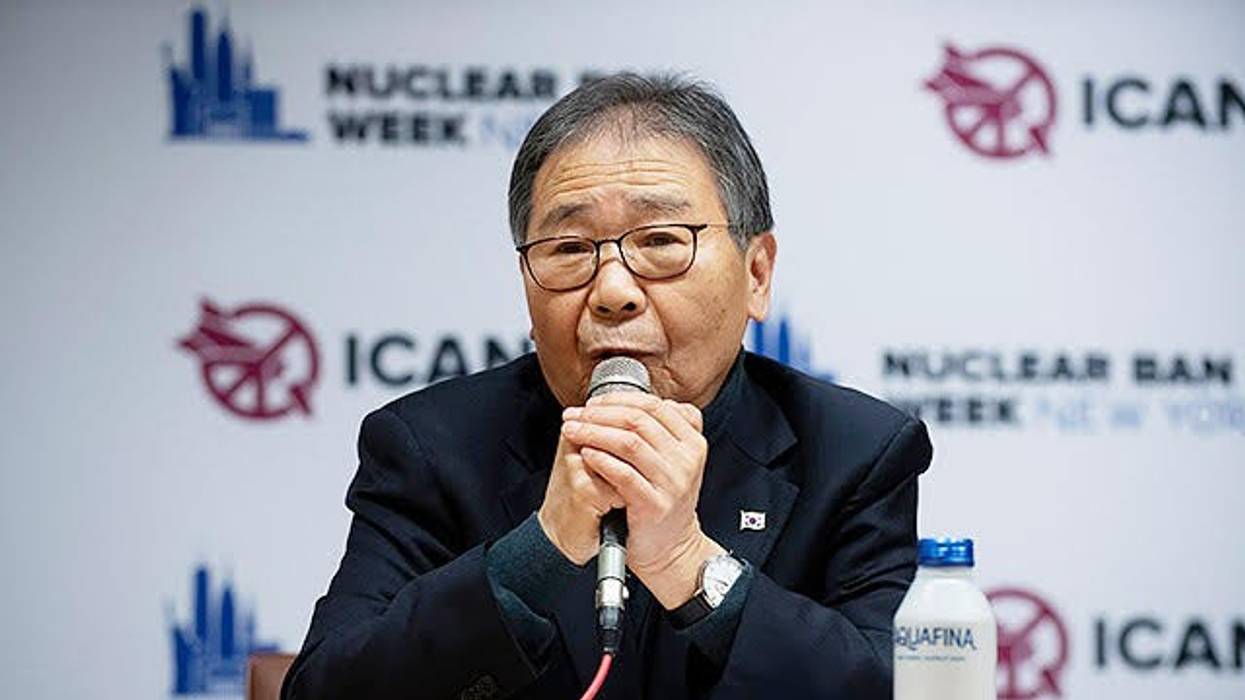
The International People’s Tribunal On The 1945 U.S. Atomic Bombings wants to hold the United States accountable for the dropping of atomic bombs on Hiroshima and Nagasaki.
On June 8, 2024, in Hiroshima, Japan, the International People’s Tribunal On The 1945 U.S. Atomic Bombings met with the goal of holding the United States accountable for the dropping of atomic bombs on Hiroshima and Nagasaki. This people’s tribunal focuses on the Korean bomb victims, 100,000 of whom were forcibly taken from their homeland by the Japanese to work in Hiroshima and Nagasaki during the war and were subsequently exposed to the A-bomb blasts.
The recent tribunal gathering in Hiroshima consisted of legal scholars from Germany, Switzerland, Australia, New Zealand, and the United States discussing legal theories to hold the U.S. accountable for violating international law for the 1945 atomic bombings, and attempting to establish the illegality of current nuclear threats and nuclear weapon states.
The tribunal and its Korean plaintiffs are also seeking an official apology from the United States to the Korean victims for the dropping of the two atomic bombs. First and second-generation victims of these bombings were present at the conference and gave powerful testimony as to the multigenerational effects from the bomb blasts.
To apologize would be an expression of regret and an accepting of responsibility by the United States, an acknowledgement that the bombing of these two civilian sites was unlawful and inflicted multigenerational pain and suffering on the victims.
The tribunal itself will hold its opening gavel proceedings in New York City in May of 2026 to coincide with the United Nations meeting on the Treaty on the Prohibition of Nuclear Weapons (TPNW).
Participants in the June 8 conference were given a tour of the Hiroshima Peace Memorial Park and the Hiroshima Peace Memorial Museum, which solemnly exhibits the horrific events of August 6, 1945. Throughout the museum are displays of the burnt and tattered remnants of children’s clothing, charred bicycles, panoramas of the city after detonation, and graphic pictures of atomic bomb victims staggering toward the rivers of Hiroshima in a futile effort to extinguis h their pain.
In a single white flash, some 70,000 souls were extinguished at 8:15 am on that August day. Black Rain followed, pouring down on the alive and the barely alive radioactive water. Charred bodies covered the ground and filled the rivers.
A stone step with the vague outline of a human shadow forever singed into it rests in the museum, allowing the viewer to ponder a person sitting there at the time of the blast, casting a shadow on the stone beneath them as the rest of the stone was bleached by radioactive light from the A-bomb blast. In the Peace Park on a grass hill is Memorial Mound, where the unclaimed ashes of tens of thousands of victims are stored.
Such images linger: A person incinerated and reduced to a shadow. A river so filled with charred corpses no one can enter its waters. Burnt skin falling from bodies like flaps of clothing. The bustling city turned to a hellscape of fire. A grass hill transformed to a charnel house. On an August morning, Hiroshima became Dante’s Inferno.
Cancers and keloids developed in the decades ahead, continuing to inflict pain and again victimize the Koreans who had been forcibly removed there. Healthcare for the ongoing illnesses was not provided to the Koreans by the Japanese or the U.S. For the past 79 years, they suffered.
But now they seek redress and justice.
The Koreans seek an apology from the United States for what has happened to them over these last eight decades. With dignity and great strength, they stood together on this June weekend of 2024 stating their case and asking that their plight be recognized.
Why now? What would an apology mean to the Korean victims?
To apologize would be an expression of regret and an accepting of responsibility by the United States, an acknowledgement that the bombing of these two civilian sites was unlawful and inflicted multigenerational pain and suffering on the victims. An apology would be a step toward reconciliation and lasting peace.
And why a people’s tribunal comprised of Korean, Japanese, American, European and other nationalities? What can its members hope to accomplish against powerful nation-states? Through the rule of law and the justice of international courts, they hope to gain legal remedy. And, equally important, they seek to stand with the victims. As legendary peace activist Philip Berrigan said, “Until we go into the breach with the victims, the victimization will not cease.”
During the conference, a memorial service to the Korean victims was held in the Peace Park. Japanese representatives spoke, Korean victims spoke, and in the audience were Americans invited to participate in the tribunal. People from three countries connected by the atomic bombings and bearing unreconciled grievances were present at this memorial service. At Ground Zero of the blast, they attempted to heal and reconcile, to move forward into a world without nuclear weapons.
The people, the citizens, are ready. The governments of each country must now follow. This tribunal seeks to make that happen.
“If the U.S., which bears the original sin, admits and apologizes for the responsibilities of the atomic bombings in 1945, then no country will ever contemplate using nuclear weapons. This is why I am participating as a plaintiff in the International People’s Tribunal to hold the U.S. accountable for dropping atomic bombs on Hiroshima and Nagasaki,” said Kee-youl Lee, from the First Generation of Korean Victims.
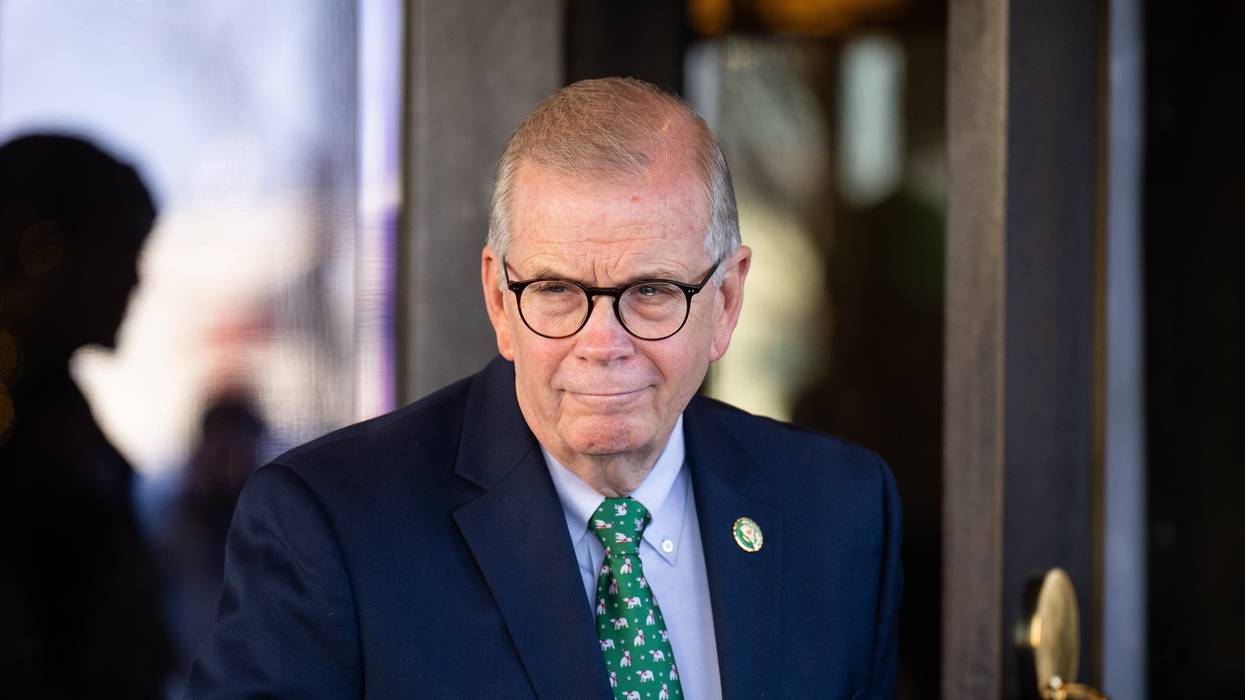
"To so casually call for what would result in the killing of every human being in Gaza sends the chilling message that Palestinian lives have no value," said one Palestinian rights advocate.
U.S. Rep. Tim Walberg became the latest Republican lawmaker to openly call for the genocide of Palestinian people in Gaza, saying at a town hall that instead of sending humanitarian aid to starving civilians there, the U.S. should "get it over quick" by dropping a nuclear bomb on the besieged enclave.
The Michigan Republican was asked by a voter why taxpayer money was being spent to build a port off the coast of Gaza at an event in the town of Dundee, in a video that was apparently recorded on March 25 and posted to social media on Saturday.
"We shouldn't be spending a dime on humanitarian aid. It should be like Nagasaki and Hiroshima," said Walberg, referring to the two Japanese cities where the U.S. detonated two atomic bombs in 1945, killing an estimated 214,000 people and leaving survivors with the effects of radiation, including chronic and deadly diseases.
Walberg's comments were made public a day after it was reported that the Biden administration had approved the transfer of new weapons to the Israel Defense Forces, including 2,000-pound bombs like those that have already made Israel's bombardment one of the deadliest and most destructive in modern history.
The White House has called on Israel to allow more humanitarian aid into Gaza, where at least 31 people—including 27 children—have already died of starvation as a result of Israel's near-total blockade on aid since October. Parts of northern Gaza are now experiencing famine, according to the Integrated Food Security Phase Classification global initiative (IPC), after months of warnings from experts that a man-made famine would eventually take hold unless humanitarian aid increased significantly.
The Israel Defense Forces' U.S.-backed bombardment of the enclave has killed at least 32,705 Palestinians so far.
Dawud Walid, executive director of the Michigan chapter of the Council on American-Islamic Relations, said Walberg's "clear call to genocide... should be condemned by all Americans who value human life and international law."
"To so casually call for what would result in the killing of every human being in Gaza sends the chilling message that Palestinian lives have no value," said Walid. "It is this dehumanization of the Palestinian people that has resulted in the ongoing slaughter and suffering we see every day in Gaza and the West Bank."
Mitchell Rivard, chief of staff to Rep. Dan Kildee (D-Mich.), said Walberg's comments illustrate "the Republican position on Gaza."
Earlier this month, Rep. Chuck Fleischmann (R-Tenn.) told a group of Palestinian rights advocates, "Goodbye to Palestine"—leading Rep. Becca Balint (D-Vt.) to say he had called "for the genocide of the Palestinian people."
Rep. Andy Ogles (R-Tenn.) in February told an activist, "I think we should kill 'em all," when asked about Palestinian children who have been killed by Israel with U.S. military support, while Sen. Lindsey Graham (R-S.C.) called for Israel to "level the place" soon after the war started.
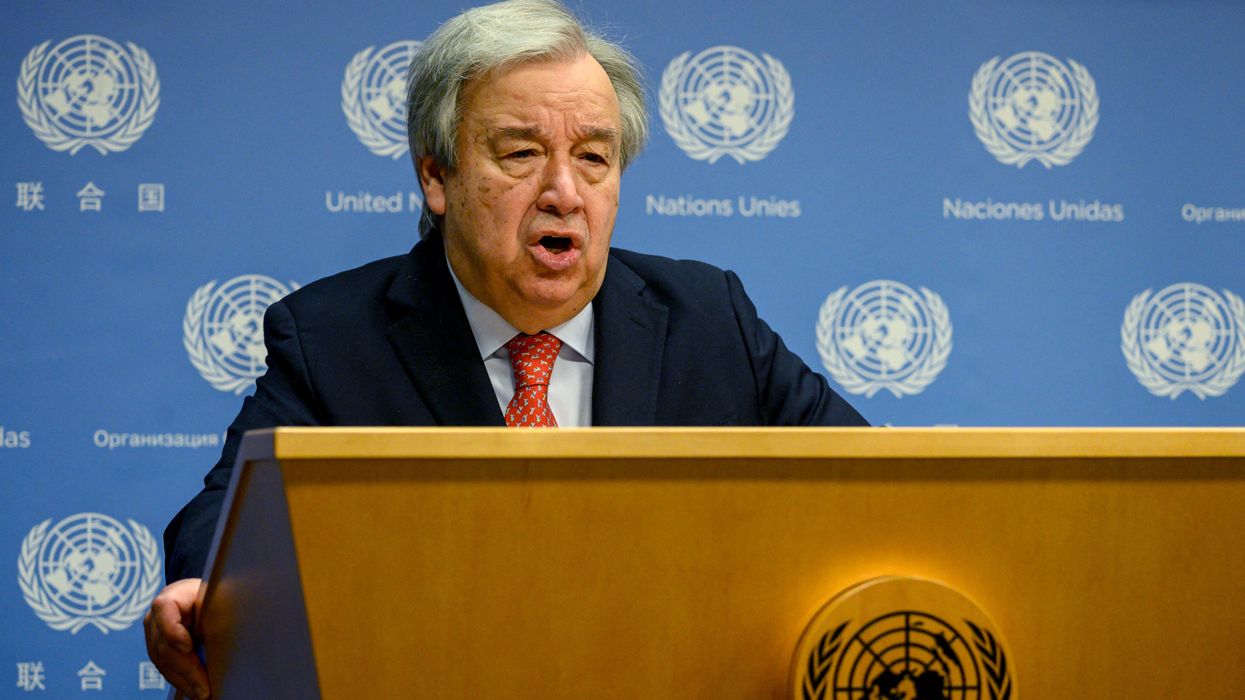
"We will not sit idly by as nuclear-armed states race to create even more dangerous weapons," he said, calling for abolishing such arms.
Nearly eight decades after the United States dropped an atomic bomb codenamed "Fat Man" on the Japanese city of Nagasaki, United Nations Secretary-General António Guterres on Wednesday was among the voices around the world renewing calls for eliminating nuclear weapons.
In a message to the Nagasaki Peace Memorial on the 78th anniversary of the 1945 bombing, Guterres said that "this ceremony is an opportunity to remember a moment of unmatched horror for humanity."
"We mourn those killed, whose memory will never fade. We remember the terrible destruction wrought upon this city and Hiroshima," he continued, referencing the Japanese city that was bombed a few days earlier. "We honor the unrelenting strength and resilience of the people of Nagasaki to rebuild."
"And we recognize the brave hibakusha, whose powerful and harrowing testimonies will forever stand as a reminder that we must achieve a world free of these inhumane weapons," he added, using the Japanese term for survivors of the World War II attacks.
In their name and in memory of the devastation decades ago, Guterres has made eliminating nuclear weapons the U.N.'s highest disarmament priority—at a time when the world is facing fresh threats of nuclear war.
Without naming any nations, Guterres declared Wednesday that "despite the terrible lessons of 1945, humanity now confronts a new arms race. Nuclear weapons are being used as tools of coercion."
"Weapons systems are being upgraded, and placed at the center of national security strategies, making these devices of death faster, more accurate, and stealthier. All this, at a moment when division and mistrust are pulling countries and regions apart," he pointed out. "The risk of nuclear catastrophe is now at its highest level since the Cold War."
Like the Cold War, the United States and Russia have by far the largest stockpiles of the nine nuclear-armed nations—though China is working to significantly boost its arsenal. The other countries with nukes are France, India, Israel, North Korea, Pakistan, and the United Kingdom.
Fears of a potential nuclear catastrophe have ramped up since early last year, when Russia invaded Ukraine, which is receiving military and humanitarian aid from multiple countries, including the United States.
Leaders in Moscow have repeatedly made nuclear threats throughout the ongoing war. Citing a 2020 decree from Russian President Vladimir Putin, Dmitry Medvedev—a former president who is now deputy chair of the country's Security Council—said late last month that if Ukraine's counteroffensive to force out invaders and reclaim territories is successful, "we would be forced to use a nuclear weapon."
Just days later, leading medical journals published a joint editorial warning that "current nuclear arms control and nonproliferation efforts are inadequate to protect the world's population against the threat of nuclear war by design, error, or miscalculation."
Noting that a U.S.-Russia war involving nukes "could kill 200 million people or more in the near term and potentially cause a global 'nuclear winter' that could kill 5-6 billion people, threatening the survival of humanity," the editorial stresses that "the prevention of any use of nuclear weapons is therefore an urgent public health priority" and advocates for abolition.
Guterres similarly said that "we will not sit idly by as nuclear-armed states race to create even more dangerous weapons" and "the only way to eliminate the nuclear risk is to eliminate nuclear weapons."
"The United Nations will continue working with global leaders to strengthen the global disarmament and nonproliferation regime—including through the Treaty on Nonproliferation of Nuclear Weapons and the Treaty on the Prohibition of Nuclear Weapons," pledged the U.N. chief, who last month launched a New Agenda for Peace policy brief that prioritizes disarmament.
"We can never forget what happened here," he added of the devastation in Japan. "We must lift the shadow of nuclear annihilation, once and for all. No more Nagasakis. No more Hiroshimas."
Guterres was far from alone in using the somber occasion to demand the abolition of nuclear weapons.
A peace declaration read during the Wednesday ceremony by Nagasaki Mayor Shiro Suzuki—and translated to English by The Mainichi—notes that the 1945 attack "stole the lives of 74,000 people by the end of the year. The hibakusha who survived developed leukemia, cancer, and other diseases years and decades after the bombing battle with suffering and anxiety due to the effects of radiation even now."
Echoing Hiroshima Mayor Kazumi Matsui's Sunday speech about that city's bombing, the Nagasaki declaration asserts that "as long as states are dependent on nuclear deterrence, we cannot realize a world without nuclear weapons. Eliminating nuclear weapons from the face of the Earth is the only way to truly protect our safety."
"Please visit the atomic bombing sites, see with your own eyes and sense the consequences of nuclear weapons. Please listen to the testimonies of hibakusha, a common inheritance of humankind that must continue to be talked about throughout the world," said Suzuki, whose parents were survivors. "Knowing the reality of the atomic bombings is the starting point for achieving a world without nuclear weapons, and could also be the driving force for changing the world."
"The historical backgrounds of the two parks will forever be different," said one survivor and peace activist.
Representatives of hibakusha—the Japanese community of survivors of the United States' bombings of Hiroshima and Nagasaki in 1945—are denouncing an agreement between the U.S. and Japan that equates the indiscriminate killing of hundreds of thousands of civilians with with at a World War II attack on a key U.S. naval base.
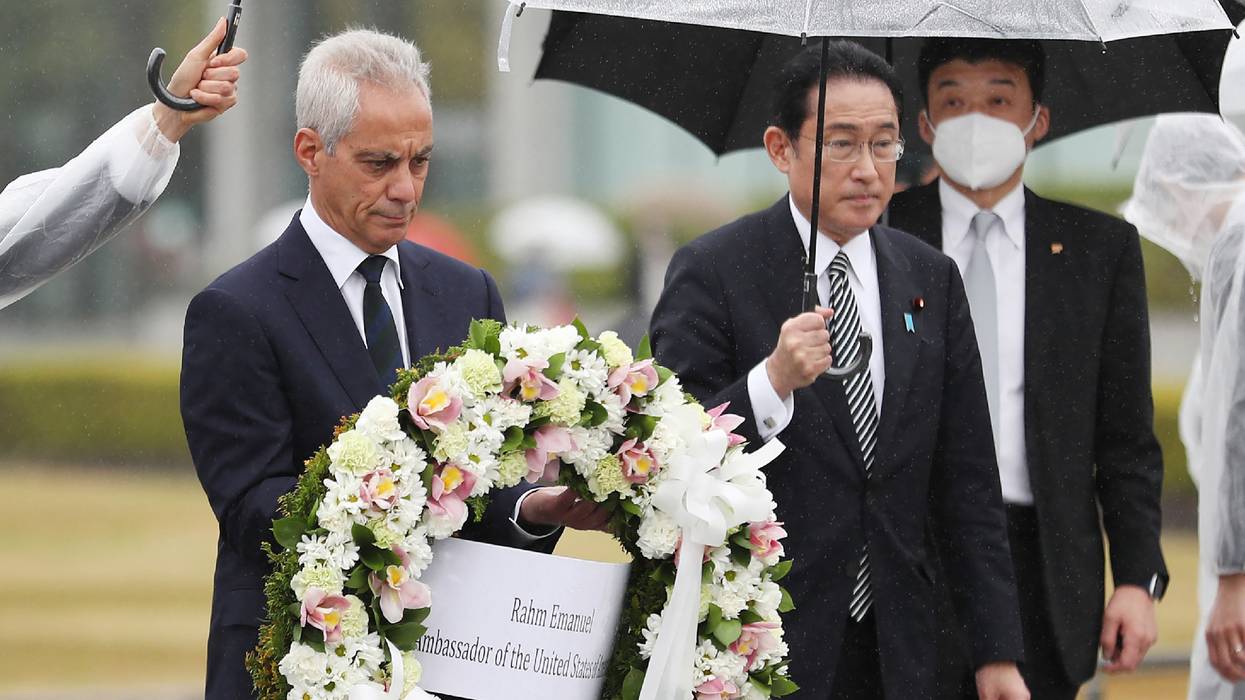
The Biden administration last week signed an agreement with Hiroshima Mayor Kazumi Matsui establishing a "sister-park" relationship between the Japanese city's Peace Memorial Park and the Pearl Harbor National Memorial.
At a signing ceremony at the U.S. Embassy in Tokyo, U.S. Ambassador to Japan Rahm Emanuel appeared to equate the events that the two parks memorialize.
"Nobody can go to Pearl Harbor, and nobody can go to the Hiroshima Peace Memorial and enter the front door, walk out the exit door and be the same person," Emanuel said.
Japan's surprise attack on Naval Station Pearl Harbor in Hawaii in 1941 killed roughly 2,300 U.S. military personnel.
The Truman administration's decision to drop an atomic bomb on Hiroshima in August 1945 immediately killed roughly 80,000 civilians, and a second bombing of Nagasaki killed about 70,000. Another 140,000 people died by the end of that year from the effects of the bombing.
The city of Hiroshima estimated that a total of 237,000 people were killed from radiation poisoning, cancer, and injuries in the five years after the attack.
Atsuko Yamamoto, a Japanese educator in Osaka, said the two attacks were "completely different" considering the scale and targets.
Several survivors wrote to Matsui ahead of the ceremony to question to purpose of the sister-park agreement, arguing that the two attacks "are historic lessons to learn from and to never repeat" but not "something that we should forgive each other for."
"The historical backgrounds of the two parks will forever be different," Haruko Moritaki, an A-bomb survivor and peace activist who advises the Hiroshima Association for the Abolition of Nuclear Weapons, told the Chugoku Shimbun newspaper.
In response to the pushback, Emanuel said people in Japan should not be "trapped" by the emotions of "anguish and angst" associated with the devastating bombings that took place nearly 80 years ago, and that the agreement between the U.S. and Japan "is the example of what I think this world desperately needs right now."
Kunihiko Sakuma, who chairs the Hiroshima Prefectural Confederation of A-Bomb Sufferers Organization, said reconciliation cannot truly be reached between the two countries until the U.S. acknowledges that "The A-bomb did not end the war and save the lives of American soldiers as the U.S. side likes to say."
"It was clear that Japan was going to lose," he told Nikkei Asia, saying the attack was unnecessary and meant as a display of U.S. military power.
"Unless that fundamental issue is addressed, we cannot just focus on the future," said Sakuma.
Keyoko was there during the bombing of Hiroshima on Monday, August 6, 1945. At 8:15 a.m. just before the glass of her house shattered into tiny pieces, her baby started screaming. Shards of glass covered her scalp. Keyoko looked out the window and saw the mushroom cloud hanging in the air over the city. She went outside her house looking for relatives among the piles of bodies and animal carcasses killed by the intense, radioactive heat, she saw buildings and concrete streets with vaporized shadows of human figures etched on them. People were running around begging for water.
* * * * *
"Little Boy" had been dropped from the Enola Gay, the B-29 bomber that flew over Hiroshima. Upon impact, the bomb generated an enormous amount of air pressure and heat and a significant amount of radiation (gamma rays and neutrons). A strong wind generated by the bomb destroyed most of the houses and buildings within a 1.5-mile radius. When the wind reached the mountains, it ricocheted and again hit the people in the city center. By the end of the year 140,000 civilians were dead. Another 60,000 people eventually died from the bomb's effects. Three days later a second bomb, "Fat Man," was dropped on Nagasaki resulting in the deaths of approximately 70,000 people by year's end. On August 15, Japanese Emperor Hirohito surrendered.
* * * * *
Howard served in the Army during the Korean War. He is convinced that dropping the bomb on Hiroshima "was the right thing to do" because the war cost the lives of many Japanese and American GIs.
Today, Howard is concerned about North Korea's nuclear capability. "If we can't negotiate with them, they'll attack South Korea." He also recognizes that North Korea is more of a threat to the United States than the Arab countries. "I fear more for my family and not myself. I could cope, but I don't want something drastic to happen to them."
September 11 shocked Howard. Hearing about the lost lives made him very upset, especially since it happened on U.S. soil. Nevertheless, Howard is tired of hearing about 9/11 because he doesn't think it compares at all to the trauma the Japanese attack on Pearl Harbor caused.
"I lost a friend at Pearl Harbor and it still hurts," he says.
* * * * *
Sister Barbara taught English in Hiroshima 1974-1994. As a volunteer at the A-Bomb Hospital where the 1945 bomb victims were still being treated, she saw people who were still badly scarred and some who were blinded or made deaf.
"The hospital patients changed my whole attitude toward life," says Sister Barbara, who grew up during World War II and was "gung ho" to win it. "But I could see how war affected people's lives." Sister Barbara used to go to the Hiroshima Peace Museum every August even though it made her physically ill.
"It hurts you inside," says Sister Barbara. "You realize that people are human beings and that something terrible happened to them."
For Sister Barbara, the atomic bomb no longer means the end of a terrible war. Instead she understands that it has become a mechanism that allows one people to hold tremendous destructive power over another people.
"I've seen the results of atomic weapons," she says. "It's enough to make you ask: why did it have to happen?"
* * * * *
Every August 6 the city of Hiroshima holds memorial ceremonies to remember those who died from the bomb. Tens of thousands of people attend. The memorial ceremony begins with a march from the Peace Cathedral to the Cenotaph, the central monument of the whole complex and the site of the stone coffin that holds the Register of A-Bomb Victims. During the ceremony the name of each victim is read. At night the city holds a lantern float on the river and people buy candles for every family member lost to the bomb attack. Peacemakers all over the world have adopted the lantern float as a memorial of this day in their towns and cities. They insert prayers, thoughts and messages of peace in their lanterns.
* * * * *
The Peace Memorial Museum in Hiroshima provides a tangible record of the grim reality of that day and about the powerful impact that weapons of mass destruction can have on a city. The first half of the museum gives visitors a sense of life before the bombing; it showcases children's toys, books and magazines as well as a model of the city before the bombing. The second half of the museum holds shocking wax figures of the victims: their clothes burned right off of them, their skin hanging in strips like tattered rags, flesh burned raw and sometimes exposed down to the bone, eye sockets gouged out.
Many pregnant women delivered deformed babies and women who carried eight-week-old fetuses bore children with smaller heads and lower intelligence. Children were also muted, that is, their bodies stopped growing. As a result, many young women exposed to the radiation vowed never to marry or to have children because they feared what they might produce. The message of the museum is "Ban nuclear weapons and make peace in the world." Unfortunately, the world has not seen fit to heed this message. Here is an accounting of the nuclear weapons stockpiles in the world, according to the Natural Resources Defense Council (NRDC), and published in Bulletin of Atomic Scientists:
Country - (Number of Warheads) - Year of First Test
United States - (9,960 (5,735 active)) -1945
Russia - (16,000 (5,830 active)) -1949
United Kingdom - (200) - 1952
France - (350) - 1960
China - (130) - 1964
India - (70-120) - 1974
Pakistan - (30-52) - 1998
North Korea - (1-10) - 2006
Israel - (75-200) - undeclared