

SUBSCRIBE TO OUR FREE NEWSLETTER
Daily news & progressive opinion—funded by the people, not the corporations—delivered straight to your inbox.
5
#000000
#FFFFFF
To donate by check, phone, or other method, see our More Ways to Give page.
Daily news & progressive opinion—funded by the people, not the corporations—delivered straight to your inbox.
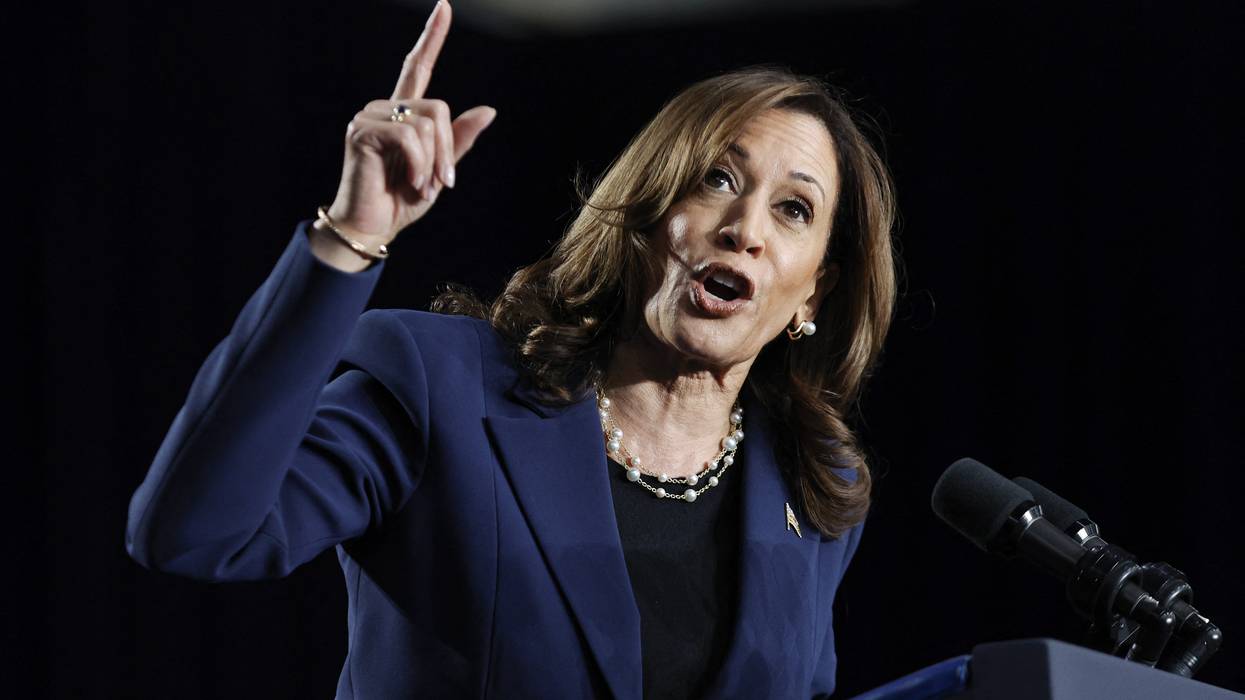
VP Harris’ recent political messaging about guns has been less about curbing them and more about how she and her running mate Tim Walz possess them. But that won’t prevent mass shootings.
It’s happened far more times than I care to remember. Waking up super early on Sunday morning to write my weekend column, I flip on the TV and there’s some dark and fuzzy video of multiple police cars, flashing blue and red outside some urban nightclub or restaurant, as the anchors solemnly report that while we were sleeping, there was yet another mass shooting in America.
But this Sunday morning, the news cut a little differently.
The rapid machine-gun-like fire had lit up a crowded street in Birmingham, Alabama, the city where I lived and worked as a young journalist in the early 1980s. CNN zoomed in with a map, and my heart sank because I instantly knew the exact area where four people were murdered and another 17 were injured, some seriously.
If a mass shooting happens in the dead of a Saturday night and America has forgotten about it by the time Sunday’s 1:00 pm NFL games kick off, did it make a sound?
The shooter, or possibly more than one shooter, fired more than 100 rounds at a packed sidewalk in the Birmingham entertainment district known as Five Points South, a few blocks from the University of Alabama-Birmingham campus. My fading 20-something memories of the place are fond ones—meeting journalist pals for a beer on the Deep South’s brutally humid summer nights, nodding along with the ever-present Alabama or Auburn fans, even drinking my first-ever Long Island iced tea (and, thankfully, one of my last) from a Mason jar.
Some 40 years later, it took just a few seconds for a shooter with a legal semi-automatic and, police believe, a “switch” that turned it into a machine gun, to shatter any happy recollections of the place, and the lives of the people there just out for a fun Saturday night.
“All of a sudden it was just gunshots, gunshots, gunshots,” 24-year-old Gabriel Eslami, who was on the line for the Hush hookah bar, told CNN. “I started running for my life”—but he was struck by a bullet in the leg and fell to the ground. When he looked up, the scene felt like a “horror movie... There are bodies laid out all over the sidewalk, gun smoke in the air. There are shoes. People ran out of their shoes trying to escape. I saw people hiding behind cars, laying under cars.”
It may have sounded like the climax of a gory Hollywood movie, but in 2024 news cycle, the Birmingham mass shooting was something of a blip. NPR did lead its Monday afternoon newscast with the story, but The New York Times buried its print article on page A14. In an age of school shootings and presidential assassination attempts, bursts of gunfire on crowded city streets are getting shorter and shorter shrift. This was, after all, the third quadruple murder in Birmingham this year, including one outside a public library. Didn’t hear about that? Me neither.
And yet like any mass shooting in the only developed nation that routinely has them, the Birmingham incident raised some serious questions about policy. Why has the gun-loving red state of Alabama not banned these switches, given their potential for mass carnage? Why has Birmingham seen its murder rate increase in 2024, even as crime is mostly falling nationally? Are we truly helpless to get high-powered assault weapons—subject to an imperfect but highly effective federal ban from 1994-2004—off the streets of America’s cities?
If a mass shooting happens in the dead of a Saturday night and America has forgotten about it by the time Sunday’s 1:00 pm NFL games kick off, did it make a sound?
Where is the sense of outrage from the Democratic ticket and the media that I felt when I saw that somebody used an assault rifle to carry out an act of terrorism in Birmingham?
One place where the bullets didn’t seem to have much impact was in the presidential race, where guns have been an issue, but not always in the ways one might expect. To be sure, the Democrats are the party that believes government can do something to reduce gun violence. I was there in Chicago’s United Center in August when the loved ones of gunfire victims gave poignant pleas to Democrats, and the party has vowed to again to ban assault rifles and enact common-sense gun laws—in the highly unlikely event it can get around a GOP Senate filibuster. Republican nominee Donald Trump brags that when he was president, “nothing happened” to stop mass killings.
The Democratic nominee, Vice President Kamala Harris, didn’t release a statement about the Birmingham shooting. Maybe there’s just too many mass shootings in America, or maybe it would be different if Alabama were a swing state. But also, Harris’ recent political messaging about guns has been less about curbing them and more about how she and her running mate Tim Walz possess them.
Harris again confirmed last week to Oprah Winfrey that she owns a gun for her personal protection from her prosecutor days, telling the TV icon that “if somebody’s breaking into my house, they’re getting shot.” First, if someone’s breaking into the vice president’s home, then the Secret Service is in worse shape than we thought. Second, multiple studies have shown that people with guns in their home are more likely to get shot than those who do not, so I’m not sure why Harris encourages that choice. Her campaign then released an online spot that kicked off with highlighting her gun ownership before saying all the right things, including support for an assault-weapons ban.
It’s Politics 101, right? Harris didn’t have to run in any primaries and woo left-wing Democrats as she did for a time in 2019, but now she hopes her affirmation of gun ownership will win over middle-of-the-road undecideds in the general election. Except where is the sense of outrage from the Democratic ticket and the media that I felt when I saw that somebody used an assault rifle to carry out an act of terrorism in Birmingham? Because that outrage is necessary to convince the public that we need some radical changes if people are going to feel safe again going out on a Saturday night, or putting our kids on a school bus.
A good president with a gun wouldn’t have stopped a mass killing in Birmingham. A good president with a moral crusade and a plan just might stop the next one.
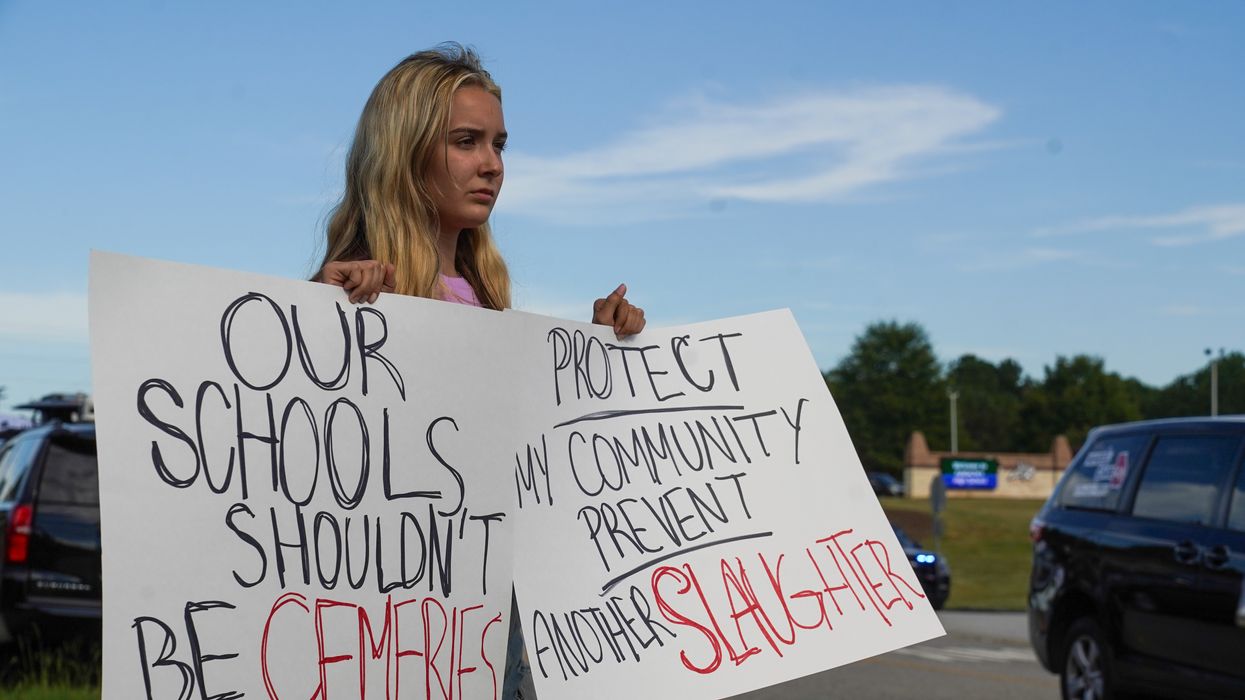
The shooter in Apalachee High School had an “AR-platform-style weapon,” the popular semi-automatic gun all-too-widely available in the U.S., with hundreds of variations flooding the multi-billion dollar gun market.
School shootings are recurring markers of a societal sickness, an unshakeable acceptance of violence and senseless death. The murder of two 14-year-old students and two teachers on Wednesday, and the wounding of nine others, at a mass shooting at Apalachee High School in Winder, Georgia, is the latest in this seemingly permanent contagion.
Ninth-grader Colt Gray, 14, had an “AR-platform-style weapon,” the popular semi-automatic gun all-too-widely available in the U.S., with hundreds of variations and modular accessories flooding the multi-billion dollar gun market.
We know that the accused lived in a home with guns, thanks to a statement from the FBI issued on Wednesday, that read in part:
In May 2023, the FBI… received several anonymous tips about online threats to commit a school shooting at an unidentified location and time. The online threats contained photographs of guns.
Within 24 hours, the FBI determined the online post originated in Georgia and the FBI’s Atlanta Field Office referred the information to the Jackson County Sheriff’s Office for action. The Jackson County Sheriff’s Office located a possible subject, a 13-year-old male, and interviewed him and his father. The father stated he had hunting guns in the house, but the subject did not have unsupervised access to them. The subject denied making the threats online. Jackson County alerted local schools for continued monitoring of the subject… there was no probable cause to take any additional law enforcement action.
Authorities had advance warning over a year earlier. Apalachee High School then reportedly received a telephoned threat on the morning of the shooting, warning five schools would be targeted, starting with Apalachee.
The so-called “AR platform” has become the weapon of choice for mass shooters. At the Uvalde mass school shooting in Texas on May 24, 2022, the teenaged shooter killed 21 people, injured 21 more, and held 400 law enforcement personnel at bay, while he killed children one by one for over an hour. It was the lethality of the AR rifle that kept those hundreds of heavily armed agents too frightened to intervene.
As a candidate for the Democratic nomination for the presidency in 2019, Kamala Harris, then a U.S. senator from California, made a renewal of the assault weapons ban a central part of her campaign. She called for the same as recently as December, 2023, while still just the running mate for President Joe Biden.
But now, amid a tight general election race against former President Donald Trump, Harris is being more measured. As news broke of the Apalachee shooting, Harris was taking the stage at a rally in New Hampshire.
“Our hearts are with all the students, the teachers and their families, of course, and we are grateful to the first responders and the law enforcement that were on the scene. But this is just a senseless tragedy on top of so many senseless tragedies,” she said. “We have to end this epidemic of gun violence in our country, once and for all… it doesn’t have to be this way.”
Kris Brown is the president of Brady, a gun violence prevention organization named after James Brady, the former press secretary for former President Ronald Reagan. Brady was shot in the head during the attempted assassination of Reagan. Brady survived, and went on with his wife Sarah to campaign for gun control.
“Jim and Sarah Brady are responsible for the Federal Assault Weapons Ban that was put into effect the year after the Brady Law passed in 1993. During the 10-year time period that that assault weapons ban was in effect, you saw a marked decrease in the kinds of mass shootings involving those firearms than in the previous period,” Kris Brown said on the Democracy Now! news hour, the day after the Apalachee shooting.
Brown is optimistic that positive change is possible, despite the entrenched power of the gun lobby.
“There is a growing desire for an assault weapons ban in this country,” she said, “including among Republicans and including among gun owners. So we will certainly push the Harris administration, if we have one, to make that a priority.”
These weapons of war, marketed to U.S. consumers as benign “modern sporting rifles,” need to be banned.
Assault weapons bans can work. A 1996 mass shooting in Australia left 35 dead and 23 injured. Almost immediately, that nation of gun lovers passed an assault weapons ban and mandatory buyback law. There hasn’t been a shooting anywhere near that scale there since.
Success won’t be so swift here in the U.S., a nation awash with hundreds of millions of guns. Still, the Harris-Walz campaign should make an assault weapons ban a central demand and take it to the voters in November. The lives of our nation’s children depend on it.
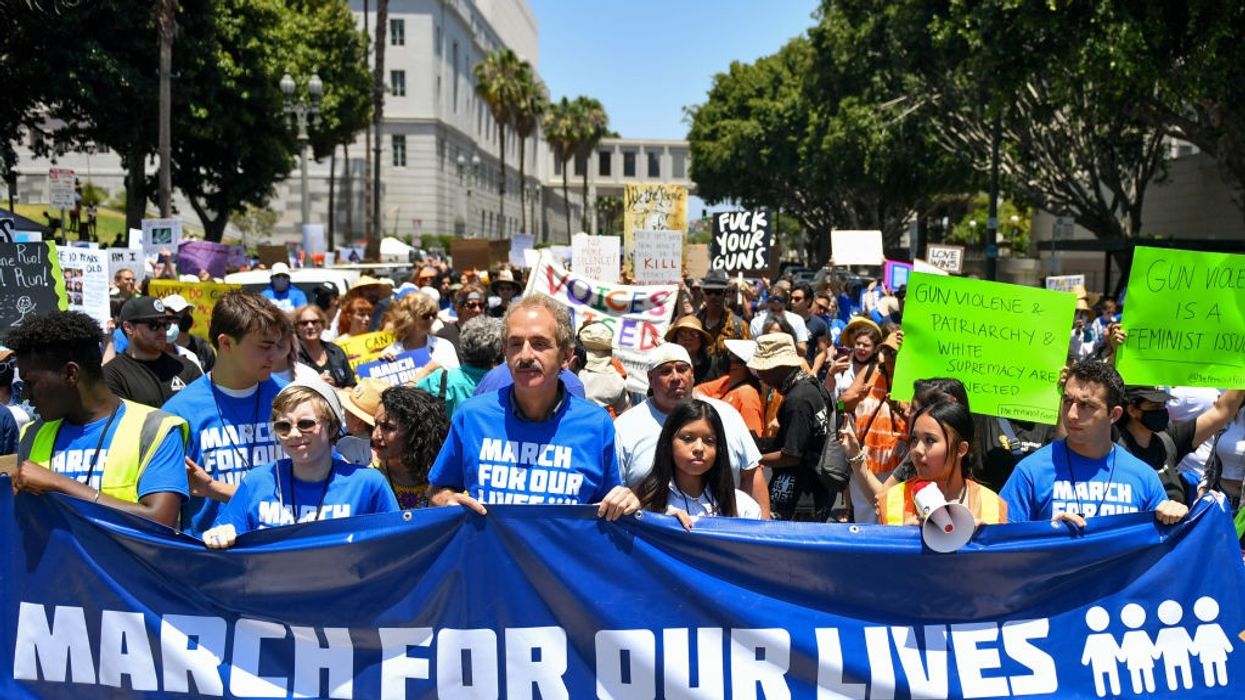
"Kamala Harris has proven herself to be a thoughtful and forceful leader on gun violence, who has time and again listened to young people and fought for our lives."
March for Our Lives, which was launched six years ago after yet another U.S. mass shooting, announced its first-ever political endorsement on Wednesday, backing Democratic Vice President Kamala Harris' bid for the White House.
"The stakes couldn't be higher," said the group, which was founded in the wake of the February 2018 massacre at Marjory Stoneman Douglas High School in Parkland, Florida. "As one of the largest youth-led movements in the nation, we are clear-eyed about the challenge ahead and we believe that Kamala Harris is uniquely suited to meet this moment."
Warning of the threat posed by Republican former President Donald Trump—who just survived an assassination attempt—and his running mate, U.S. Sen. JD Vance (R-Ohio), March for Our Lives said that "the country that young people will soon inherit stands at the precipice—on one side, authoritarianism that threatens our fundamental rights, including our right to live freely without fear of gun violence; on the other, a world where we can keep fighting to build the future that young people know we deserve."
"We need an ardent defender of democracy, a gun violence prevention champion, and a leader who will listen to young people, give us a seat at the table, and fight for our future. We believe that Kamala Harris is that candidate, and the right person to stand up for us and fight for the country we deserve," the organization continued, detailing how she has been "a forceful champion for gun safety and for young people" as vice president and a U.S. senator representing California.
"Young people are inheriting an increasingly precarious world," the group added, highlighting youth deaths from gun violence, Israel's war on the Gaza Strip, the escalating climate emergency, and far-right politicians pushing extremist policies. "We have been struggling to feel excited about voting in this election, and are increasingly pessimistic that change is possible. But we know that another Trump presidency is simply not an option that young people can afford—our lives are literally at stake."
Harris began seeking the Democratic nomination for November after President Joe Biden dropped out and endorsed her on Sunday. March for Our Lives said that "we call on her to run a campaign that fights for the policy solutions that young people want, like an assault weapons ban, action on climate change, a vigorous defense of abortion, court reform, and an immediate and lasting cease-fire in Gaza. Young people are savvy voters, who will see through empty promises and cynical horsetrading. We believe that Kamala will step above that and fight for a bold, progressive future—and we will hold her accountable for that."
Since Sunday, Parkland shooting survivor and March for Our Lives co-founder David Hogg has been fiercely supporting Harris, posting on his social media frequent updates about her historic fundraising successes over the past few days.
"Kamala Harris has proven herself to be a thoughtful and forceful leader on gun violence, who has time and again listened to young people and fought for our lives," Hogg said in a statement Wednesday. "Given her strong record on gun safety and prioritizing youth voices during her time in office, I'm proud that Kamala Harris will receive March for Our Lives' first-ever endorsement, and I'm so excited for our work to mobilize young people for her campaign."
Natalie Fall, the group's executive director, told ABC News—which first reported on the endorsement—that "we see a lot of energy around Vice President Harris in this election; there's no denying that. I think everybody's seeing it right now."
"I just think young people in particular didn't really see themselves represented or reflected in the Biden ticket in the way that they wanted. It's not to say that President Biden hasn't had great accomplishments," she explained. "But I think we need someone who can meet this moment and who is up to the challenge of taking Donald Trump to task and really defeating his effort to erode all of our institutions and our democracy."
March for Our Lives members plan to participate in this year's election through creative campaigns, door-knocking, and phone banks, Fall said. In a statement, she added that the group aims to elect not only Harris but also candidates "up and down the ballot" who support its priorities.
"March for Our Lives will work to mobilize young people across the country to support Vice President Harris and other down-ballot candidates, with a particular focus on the states and races where we can make up the margin of victory—in Arizona, New York, Michigan, and Florida," she pledged. "We are ready to double down on this commitment and elect the first woman, first Black woman, and the first person of South Asian descent to become our next president."
Welcoming the support, Harris' campaign manager, Julie Chávez Rodriguez, said that the vice president "is proud to earn this historic endorsement and she is committed to working closely with young people to end the epidemic of gun violence. Kamala Harris heads the first-ever White House Office of Gun Violence Prevention, and she worked for years in the Senate and as a prosecutor to keep guns out of our schools and off our streets."
"In stark contrast, Donald Trump promises to weaken regulations on guns, sides with the NRA over our children's safety, and reduced funding for public safety in every single one of his budget proposals," she added, referring to the National Rifle Association. "No one is more experienced at or more committed to stopping this senseless violence than the vice president. With the support of March for Our Lives, a powerful organizing force that has mobilized millions of young voters, Vice President Kamala Harris will win in November so that everyone has the freedom to live safe from gun violence."
The gun violence prevention group's endorsement adds to Harris' mounting pile. Throughout the week, she has also received support from many Democratic governors and members of Congress as well as climate, labor, and reproductive rights groups.
As young people rally behind Harris, she is also seeing support from advocates for older Americans. Nancy Altman, president of Social Security Works, wrote in a Wednesday opinion piece for Common Dreams that "Joe Biden has been the best president for seniors in over half a century. Kamala Harris will be even better."
This post has been updated with comment from Vice President Kamala Harris' campaign.
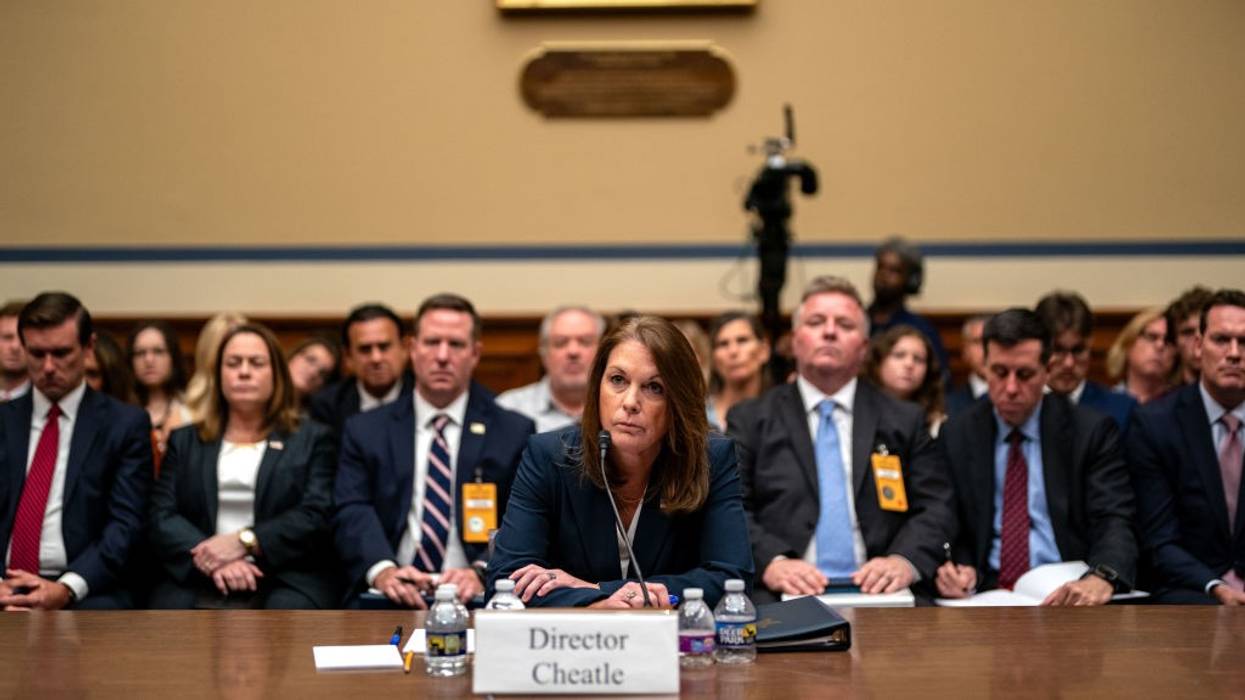
Kimberly Cheatle said in an email to colleagues that the agency "fell short" of its mission to protect U.S. leaders.
United States Secret Service Director Kimberly Cheatle resigned Tuesday following the attempted assassination of former President Donald Trump at a Pennsylvania campaign rally and intense bipartisan grilling by members of a congressional committee.
The New York Times reported that Cheatle—who led the Secret Service since September 2022—said in an internal email that the agency "fell short" of its mission to protect Trump, the Republican presidential nominee who was shot in the ear while speaking at a July 13 rally in Butler, Pennsylvania.
"In light of recent events, it is with a heavy heart that I have made the difficult decision to step down as your director," Cheatle wrote.
Calls for Cheatle's resignation mounted following her Monday testimony before the House Oversight and Accountability Committee, during which she acknowledged that "we failed" in "the Secret Service's solemn mission... to protect our nation's leaders."
Following the hearing, Rep. James Comer (R-Ky.), who chairs the committee, and Rep. Jamie Raskin (D-Md.), the ranking member, issued a joint letter accusing Cheatle of failing "to provide answers to basic questions regarding that stunning operational failure" and calling on her to resign "as a first step to allowing new leadership to swiftly address this crisis and rebuild the trust of a truly concerned Congress and the American people."
In her resignation email, Cheatle told colleagues, "I do not want my calls for resignation to be a distraction from the great work each and every one of you do towards our vital mission."
Responding to Cheatle's resignation, Raskin said that "yesterday's Oversight Committee hearing identified two urgent priorities in the wake of the assassination attempt against former President Donald Trump and the accompanying mass shooting. The first was the need for Director Cheatle to step down... We accomplished that today."
"The other urgent need was to ban assault weapons to protect the rest of us from mass shootings like the one that took place in Butler," he added. "As I made clear during yesterday's hearing, a weapon that can be used to commit a mass shooting at an event under the full protection of the Secret Service and state and local police is a danger to schoolchildren; Walmart shoppers; and congregants in church, synagogue, and mosque services."
Twenty-year-old Thomas Matthew Crooks used a legally purchased AR-15-style semiautomatic rifle to shoot Trump before he was killed by a Secret Service sniper. A rally attendee, Corey Comperatore, was fatally shot, and two other men were seriously injured by gunfire.
"As a weapon of war, the AR-15 has no legitimate place in our society," Raskin argued. "Congress must act now."
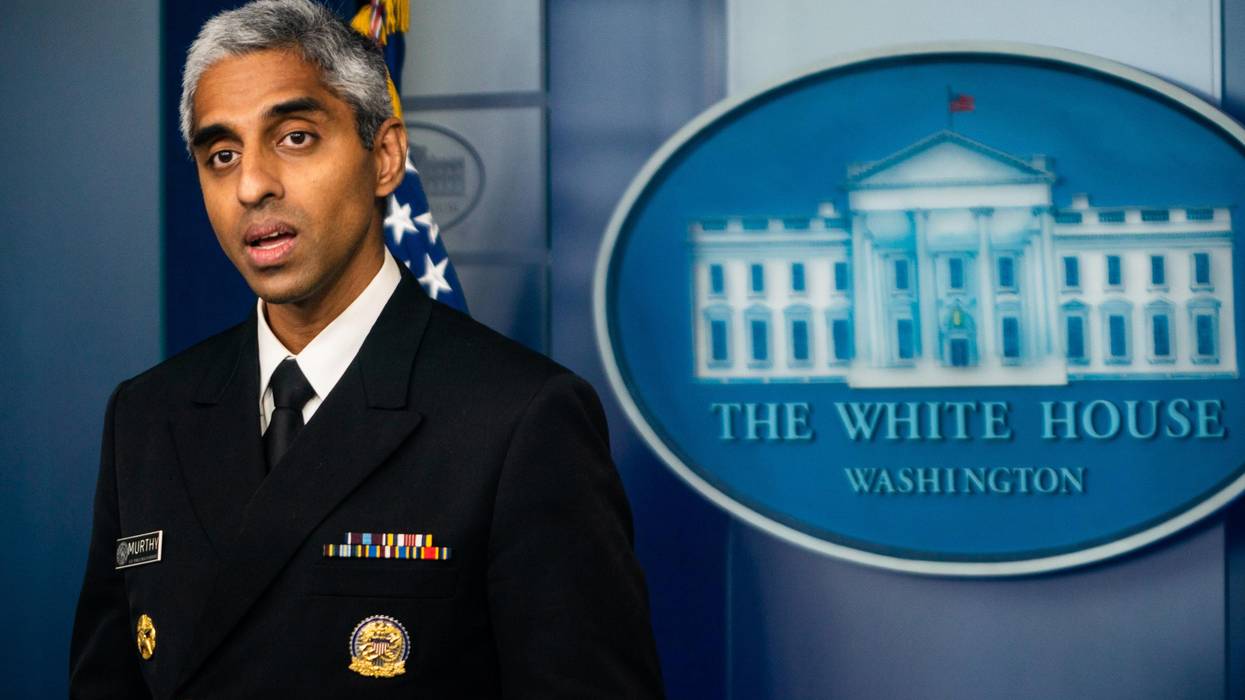
"To protect the health and well-being of Americans, especially our children, we must now act with the clarity, courage, and urgency that this moment demands," the surgeon general said.
U.S. Surgeon General Vivek Murthy issued a Surgeon General's Advisory on firearm violence on Tuesday, calling it a "public health crisis."
The advisory marks the first time that the nation's leading physician has published a warning on gun violence, which now joins the ranks of tobacco, skin cancer, and opioids as the subject of a surgeon general's publication.
"Firearm violence is a public health crisis," Murthy said in a video message announcing the report. "Our failure to address it is a moral crisis. To protect the health and well-being of Americans, especially our children, we must now act with the clarity, courage, and urgency that this moment demands."
The report comes after gun violence deaths in the U.S. reached their highest level in 30 years in 2021. According to the report, 54% of U.S. adults have either experienced a firearm-related incident directly or have a family member who has. Of those impacted, 21% were threatened with a firearm; 19% lost a family member to guns, including by suicide; 17% saw someone being shot; 4% used a gun to defend themselves; and 4% were injured by one.
Gun violence has been especially devastating for children. As of 2020, firearm injury overtook car accidents, cancer, drug overdoses, and poisoning as the leading cause of death for young people ages 1 to 19.
The U.S. stands out among similar nations for its level of gun violence. In 2015, the U.S. had 11.4 times the rate of gun-related deaths compared with 28 other high-income countries, and more than 90% of the children who died due to gun violence in those countries died in the U.S.
"I know it's been polarizing and I know it's been politicized, but if we can see it as a public health issue, we can come together and implement a public health solution."
While mass shootings grab headline attention and are on the rise, they only account for around 1% of gun-related deaths. The rise in gun-related deaths is in large part fueled by an increase in gun homicides over the past 10 years and gun suicides over the past 20. Still, mass-shootings take a disproportionate toll on the nation's mental health, with more than three quarters of U.S. adults reporting stress due to worries about experiencing one.
"Our children should not have to live in fear that they are going to get shot if they go to school. None of us should have to worry that going to the mall or concert, or house of worship means putting our lives at risk, or that we'll get a call that a loved one in a moment of crisis has taken their own life with a firearm," Murthy said. "All of us, regardless of our background or beliefs, want to live in a world that is safe for us and our children."
The issue of gun violence has been heavily politicized in recent years, something Murthy has both acknowledged and experienced. After comments he made about gun violence, the firearm lobby and some Senate Republicans opposed Murthy's confirmation as former U.S. President Barack Obama's surgeon general in 2014, The Associated Press explained. He was confirmed after promising not to use his office as a "bully pulpit on gun control."
Trump dismissed him as surgeon general in 2017 and, when President Joe Biden reappointed him, he again assured the Senate that gun violence would not be a priority during his tenure. However, Murthy also received counter-pressure to take up the issue from Democratic groups and other public health professionals, including four former surgeon generals.
"I want people to understand the full impact of firearm violence in our country, and I want them to see it as a public health issue," Murthy told The Washington Post. "I know it's been polarizing and I know it's been politicized, but if we can see it as a public health issue, we can come together and implement a public health solution."
Murthy told KFF News that this approach helped the U.S. tackle other major killers, such as tobacco after the surgeon general's landmark warning in 1964 that smoking caused cancer and other ailments.
"We saved so many lives, and that's what we can do here, too," Murthy said.
"There are many powerful forces who downplay the threat of gun violence because the status quo benefits them financially or politically, and I'm grateful that Surgeon General Dr. Vivek Murthy had the courage to do what he knows is best for our nation's health."
That said, the report does include recommendations that will require a political compromise in Congress, including a ban on automatic rifles and large-capacity magazines, universal background checks, more restrictions on firearms in public spaces, more penalties for improper safeguarding of firearms, and regulating firearms like any other consumer product.
The report also calls for measures such as community violence prevention programs, improved access to mental health services, and additional research into the best ways to reduce gun violence.
The advisory was welcomed by members of the public health community as well as gun violence prevention advocates.
"Today marks a pivotal moment in public health as the surgeon general has issued a new advisory declaring gun violence a public health crisis. As a pediatric surgeon and advocate for safer communities, I am deeply moved and resolute in supporting this call to action," Dr. Chethan Sathya, vice president of strategic initiatives and director of gun violence at Northwell Health, wrote on social media.
Joseph Sakran, executive vice chair of surgery at John Hopkins Hospital in Baltimore and chief medical officer for Brady United Against Gun Violence, told KFF Health News that the advisory was a "historic moment that sounds the alarm for all Americans."
In a statement, Sakran continued: "Historically, we have seen how the release of surgeon general reports on public health issues such as the dangers of smoking ignited a wave of policy, legal, and public health initiatives that saved countless American lives and in this case led to deprogramming our nation from the tobacco industry's lies. We hope this report will have the same resounding impact on the gun violence epidemic."
Former U.S. Rep. Gabby Giffords (D-Ariz.), founder of gun control organization GIFFORDS, said: "I have seen firsthand how shootings are a major threat to Americans' lives and well-being, and our leaders must view the problem as the public health crisis it is. There are many powerful forces who downplay the threat of gun violence because the status quo benefits them financially or politically, and I'm grateful that Surgeon General Dr. Vivek Murthy had the courage to do what he knows is best for our nation's health. Policymakers at every level of government have a responsibility to heed the declaration and take urgent action to protect their communities."
March For Our Lives noted on social media that the advisory came after "years of activist pressure."
"The gun lobby fought hard, but data doesn't lie," the group wrote. "Our push for more research and tighter laws is paying off, and we're starting to win BIG."
Both Sakran and Sathya argued that the report was not an end in itself, but a gateway to more effective prevention efforts.
"Let's heed this advisory not as a mere recommendation, but as a clarion call to action," Sathya concluded. "Together, we can turn the tide on gun violence and create a healthier, safer environment for all."

A new DOJ report on the shooting in Uvalde, Texas, is laced with vivid and horrifying detail on the failings of law enforcement, themselves fearing the AR-15 weaponry in the hands of the 18-year-old shooter.
Remember those twisted words by Wayne LaPierre, then leader of the National Rifle Association, just days after the
mass murder at Sandy Hook Elementary School in December 2012? Standing there proudly up on the stage, he said: “The only thing that stops a bad guy with a gun is a good guy with a gun.”
This January LaPierre resigned from his NRA leadership position ahead of the trial on charges of corruption by the State of New York. But his words after Sandy Hook sadly live on despite repeatedly being shown to be total bullshit. Glaringly so in the review of the 2022 mass shooting in Uvalde, Texas, by the Department of Justice (DOJ), released on January 18.
DOJ’s 575-page report, available in English and in Spanish, is laced with vivid and horrifying detail on the failings of law enforcement, themselves fearing the AR-15 weaponry in the hands of the 18-year-old shooter. Failings causing preventable death. Failings in providing adequate emergency medical care to wounded victims after law enforcement finally entered the classrooms. Failings as dozens of trained officers stood idly by without a leader armed to the teeth with their own AR-15-style firearms.
Here are the opening words by Associate Attorney General Vanita Gupta at the news briefing where the DOJ report was officially released, remarks following those by Attorney General Merrick Garland:
The Attorney General just gave a sense of the detailed timeline we have laid out, and the cascading failures that occurred over the course of the 77 minutes between when law enforcement arrived on the scene and when they finally entered the classroom. But we also know the pain—and the failures and missteps—did not end when law enforcement finally entered the classrooms and rescued the survivors.
It continued at minute 78, when it became clear that because there was no leader, there was no plan to triage the 35 victims in classrooms 111 and 112, many of whom had been shot. Victims were moved without appropriate precautions, victims who had already passed away were taken to the hospital in ambulances, while children with bullet wounds were put on school buses without any medical attention. In the commotion, one adult victim was placed on a walkway—on the ground outside—to be attended to. She died there.
As difficult as the vivid words in the report are to ignore, I am not naive. If history is any guide, some in Congress will mightily try to discount the DOJ report, continuing to block any subsequent movement on meaningful gun-control measures. Republican lawmakers in solidly Republican states, as a detailed article in The New York Times describes, are fraid their voter base would vote them out of office if they show any hint of supporting gun-control measures. Those Republicans are waiting for the report to fade away in the news cycle to collect dust.
But then, the victims of the gun carnage in Uvalde, and those before, deserve more than letting the report die buried in dust. They deserve someone taking the debate to the naysayers in Congress and state legislatures armed with hard facts about the effectiveness of gun-control measures, framed by the realities of having none in a gun-friendly state like Texas where the brutal carnage within Robb Elementary School happened. Yes, there is an association between lack of gun regulations in a state and the occurrence of mass shootings, as I describe below.
Here are some of the arguments I would make today replying to some of the naysaying comments (bolded below) common among members of Congress downplaying any need for gun control:
Gun control does not work and won’t reduce gun violence.
Wrong. Take requiring gun licenses, as required in a minority of states today. In his review of studies, Garen Wintemute, who directs the Violence Prevention Research Program at the University of California, Davis, writes in Health Affairs that license requirements for gun purchases “have repeatedly been associated with reduced rates of [gun] violence.” This body of research is clear.
Furthermore, Michael Siegel at Boston University and his research team found, as reported in Law and Human Behavior, that requiring one to get a permit to purchase firearms was associated with a 60% lower odds of a public mass shooting occurring in a state, controlling for state characteristics like population. Other researchers found the same thing.
Why? Because licenses to purchase firearms typically entail in-person applications and background checks involving multiple databases and, among other things, taking a gun safety course. Basically a more comprehensive examination than standalone background checks singularly taken at the point of a firearm sale.
Congress already passed the Bipartisan Safer Communities Act (BSCA) in 2022. Nothing more is needed.
Okay, but the BSCA basically only includes more funding for mental health initiatives.
Well, mental illness is the cause of most gun violence, especially mass shootings.
I agree mental troubles underlie many suicides, by firearms and otherwise. And extreme-risk or “red-flag” laws encouraged via funding in the BSCA have been shown to reduce suicides.
But research repeatedly finds that psychiatric disorders, as a comprehensive review by Rand Corporation concluded, are not the principal driver alone across the spectrum of firearm violence. And that includes not being a predictable factor in mass shootings. Sure, after a mass shooting, politicians and media search hard to find a motive and signs of mental troubles; retrospective interpretation to justify mental illness alone as cause. Retrospective interpretation, I submit, many of us not owning a gun would fail.
But an assaults weapon ban is going too far. Based only on the threatening appearance of guns, nothing more.
Maybe the 1994 ban automatically expiring in 2004 was based too much on physical appearance instead of functionality. But today, as criminologist Thomas Gabor and former ATF agent Julius Wachtel have each argued, a ban can be based on objective ballistic lethality, scoring firearms on components including caliber, muzzle velocity, firing rate, ammunition capacity, loading mechanism, and ability to add accessories that increase lethality.
Wachtel in his 2015 article in The Washington Post describes one extreme lethal ballistic feature about AR-15-style semi-automatic rifles. With “their most common calibers—7.62 and .223—these weapons discharge bullets whose extreme energy and velocity readily pierce protective garments commonly worn by police, opening cavities in flesh many times the diameter of the projectile and causing devastating wounds.” Hence, a herd of law enforcement personnel at Uvalde afraid of the weapon in the shooter’s hands milled around aimlessly for over an hour before doing anything.
And such carnage Wachtel describes was visited upon the children and teachers in Robb Elementary School on that fateful day in Uvalde, Texas.
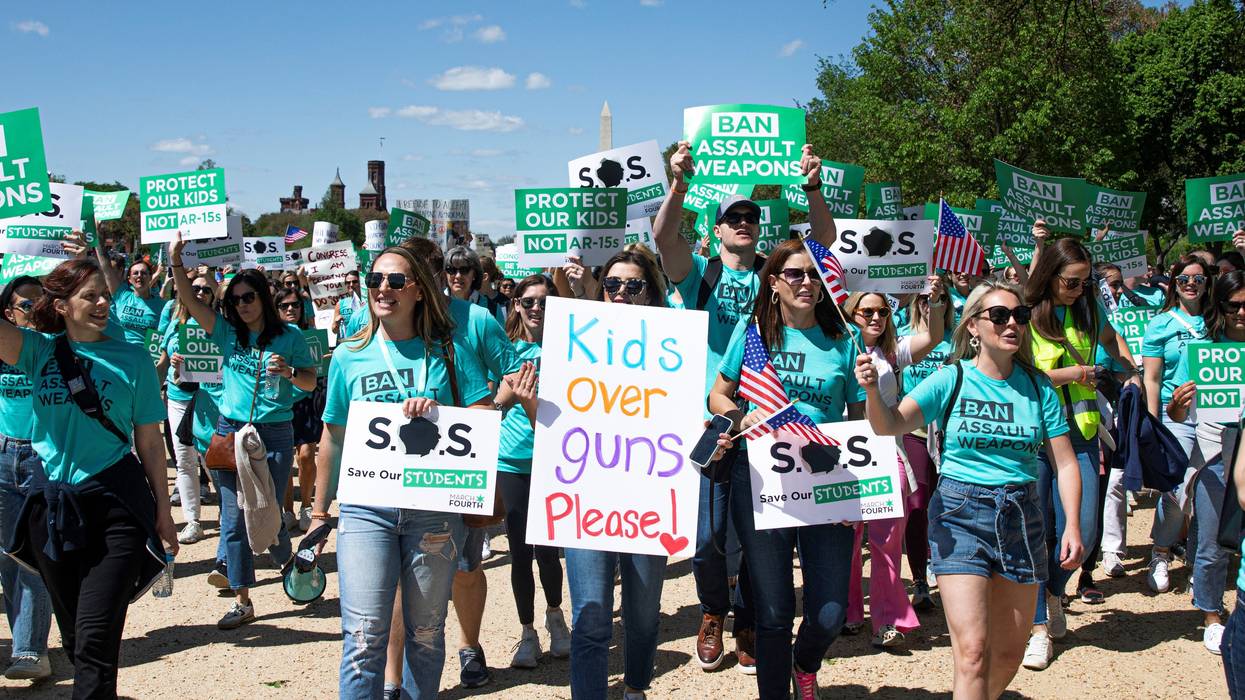
One lawyer said it is "proof that these laws are consistent with the Second Amendment and can—and should—be upheld by courts across the country."
Illinois Democrats and gun control advocates on Friday welcomed a federal appeals court decision upholding the state's ban on assault weapons and high-capacity magazines amid renewed demands for a similar restrictions nationwide in the wake of a mass shooting in Maine.
"The 7th Circuit Court of Appeals has affirmed what gun safety advocates have said from day one—the Protect Illinois Communities Act is a commonsense law that will keep Illinoisans safe," said Democratic Illinois Gov. JB Pritzker, who signed the law that state legislators passed after a July 4, 2022 massacre at a parade in Highland Park, a Chicago suburb.
"Despite constant attacks by the gun lobby that puts ideology over people's lives, here in Illinois we have stood up and said 'no more' to weapons of war on our streets," added Pritzker. "This is a victory for the members of the General Assembly who stood alongside families, students, and survivors who worked so hard to make this day a reality. Now Congress must act so Illinois is not an island surrounded by states with weak protections."
Illinois state Rep. Bob Morgan (D-58)—who represents Highland Park, was at the parade with his young children, and spearheaded the legislative fight for the law—similarly celebrated the new ruling "a huge win" while also calling for federal legislation.
Democratic Chicago Mayor Brandon Johnson also welcomed the decision, saying: "This landmark legislation is an important step for our communities, providing commonsense gun control measures that have been so desperately needed in our city and throughout the state. This decisive measure will aid in keeping weapons of war out of our neighborhoods and off our streets, creating safer communities for all."
The three-judge appellate panel collectively considered six cases challenging state and local bans: four out of the Southern District of Illinois; one against the state, Chicago, and Cook County; and another involving a firearm shop owner from suburban Naperville and the National Association for Gun Rights—who unsuccessfully sought an intervention from the U.S. Supreme Court.
The gun violence prevention group Brady served as counsel for the city of Naperville in the case. In response to the "important victory," Douglas Letter, the organization's chief legal officer, declared that "states and cities should have the right to stop these weapons of war from decimating our communities, and this ruling demonstrates that assault weapon and large-capacity magazine bans are indeed constitutional."
"When the victims of the Highland Park shooting were gunned down by an assault weapon, their local and state leaders took a stand to say enough is enough," he said. "The gun industry feels threatened by the groundswell of voices trying to hold them accountable, and after today, they should feel even more unsteady."
Everytown Law executive director Eric Tirschwell highlighted that the the Chicago-based court's ruling notably came after right-wing U.S. Supreme Court determined last year in New York State Rifle & Pistol Association Inc. v. Bruen that gun restrictions must be "consistent with the nation's historical tradition of firearm regulation."
The 2-1 decision Friday "to uphold this lifesaving law is not only a victory for gun safety," Tirschwell said, "it also marks the first significant appeals court decision on this issue since the Supreme Court's decision in Bruen and is proof that these laws are consistent with the Second Amendment and can—and should—be upheld by courts across the country."
U.S. Judges Diane Wood and Frank Easterbrook—respectively appointed by former Presidents Bill Clinton and Ronald Reagan—supported upholding the state and local laws, while Judge Michael Brennan, an appointee of President Donald Trump, dissented.
"The Second Amendment to the Constitution recognizes an individual right to 'keep and bear arms. Of that there can be no doubt, in the wake of the Supreme Court's decisions," Wood wrote, citing cases including Bruen. "But as we know from long experience with other fundamental rights, such as the right to free speech, the right peaceably to assemble, the right to vote, and the right to free exercise of religion, even the most important personal freedoms have their limits."
"Government may punish a deliberately false fire alarm; it may condition free assembly on the issuance of a permit; it may require voters to present a valid identification card; and it may punish child abuse even if it is done in the name of religion," she continued. "The right enshrined in the Second Amendment is no different."
Wood also pointed out that the ruling pertains to preliminary injunctive relief, so the panel did not "rule definitively on the constitutionality of the act or any of the municipal ordinances," meaning that the policies could face future challenges.
The decision in Illinois coincided with President Joe Biden's trip to Lewiston, Maine, where a mass shooter last month killed a total of 18 people at a bowling alley and a bar before being found dead from an apparent self-inflicted gunshot wound.
Biden—who is seeking reelection next year—and others in his administration have called for reinstating a federal assault weapons ban. After the Maine shooting, Vice President Kamala Harris said that "it is a false choice to suggest we must choose between either upholding the Second Amendment or passing reasonable gun safety laws to save lives. Congress can and must make background checks universal. Pass red flag laws. Ban high-capacity magazines. And renew the assault weapons ban."
Such policies are unlikely to pass during the current session, considering the makeup of Congress—though after the carnage in his hometown of Lewiston, Rep. Jared Golden (D-Maine) last month endorsed an assault weapons ban and sought forgiveness for his past opposition to it.
Polls consistently show that about 65% of Americans favor stricter gun control laws; if it’s true that majorities rule in democracies, then we’re apparently not a democracy.
The chamber of commerce photo of Lewiston, Maine, is a lovely image of a tidy American city of 37,000 beneath a canopy of resplendent autumn colors. It looks much like many of our own cities here in Wisconsin.
Sadly, the tragedy that unfolded in Lewiston last week could well have happened here. In fact, it has, and it will again. The victims were slaughtered in a bowling alley and a bar, businesses well-known in Wisconsin cities.
Eighteen dead in Lewiston. Many others injured. Thousands forever stained by the violent act of one man with an assault rifle. Predictably, some politicians rushed to tell us to pray. As though whatever God they want us to petition will forgive them on judgment day for failing to do something about this uniquely American carnage. So from this old bleeding-heart liberal I feel nothing but pity for those who could have made a difference but did not. If there is a hell, they’re going to be roasting for a long time.
For the rest of us, there are cold, hard facts:
It’s telling that the last statistic comes from the CDC. Yes, gun violence is a disease in America.
Most Americans, including those who don’t own a firearm, are opposed to eliminating guns. And it’s never going to happen. I own one, though I haven’t dusted it off since my hunting buddy died a decade ago. Hunting is as sacrosanct in Maine as it is in Wisconsin. A buddy who moved here from Portland, Maine, 47 miles from Lewiston, texted me last week about a pal of his in lockdown back home:
Just talked to my friend Bob… He is sitting in his house 20 minutes away from where it happened with his hunting rifles loaded, just hoping the guy sticks his head up.
Fair enough, but we know by now that more guns are not the answer.
Look, nothing is going to change much of the violence in a nation that embraces it. Remove assault rifles, and people will still kill each other. Suicides and accidental shootings by handguns will continue at high numbers. But for God’s sake, to do nothing is to admit we have failed our most innocent, be they school children, congregants in places of worship, shoppers in malls and grocery stores, or people in any number of other venues.
Hope seems hard to come by, but I’m placing mine with the young people who have grown up amid this carnage. The Lewiston shootings led to outcry from young activists, including David Hogg and Trevon Bosley, co-founder and board chair, respectively, of the March for Our Lives organization. They are members of the youth-led gun control movement born out of the country’s deadliest high school mass shooting: the 2018 slaughter of 17 humans in Parkland, Florida, and they represent thousands of young Americans demanding change.
They go after politicians of both stripes for the hypocrisy they spin. They dispel false claims and push for meaningful change. Want to make a difference? Support them with a donation. I just did.
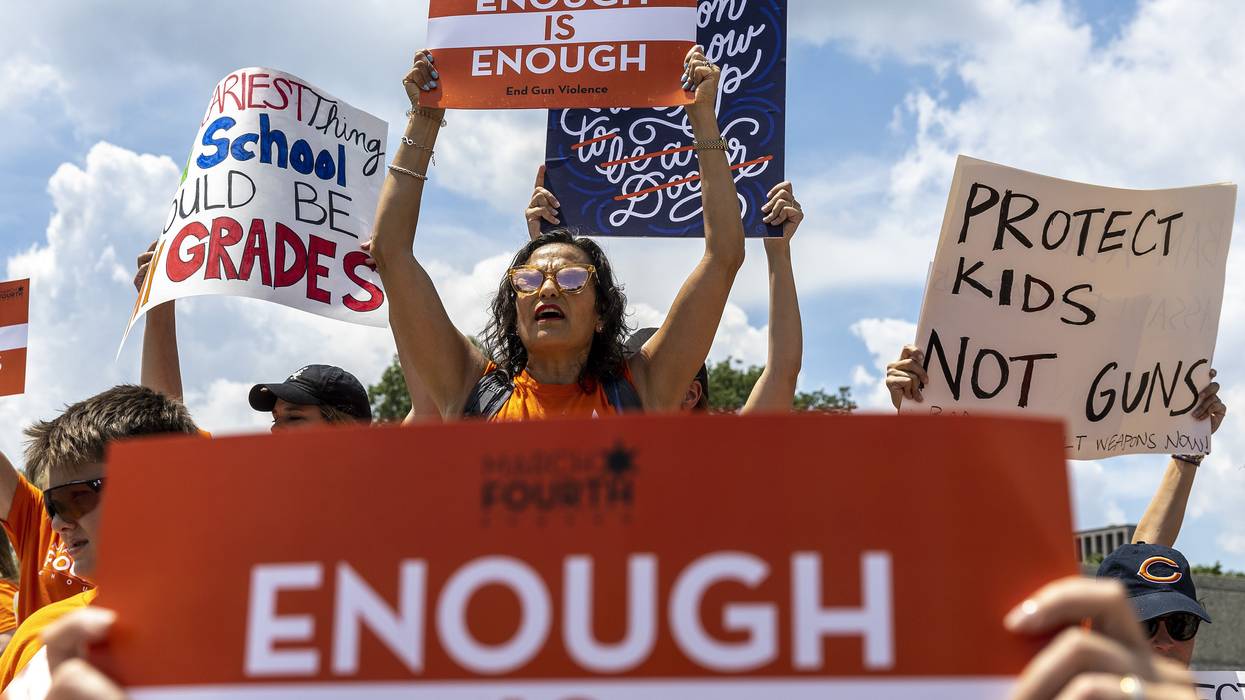
"How many more times do we have to wipe the blood off our streets before action is taken?" asked the Florida Democratic Party chair.
On the heels of Maine officials confirming that the shooter who killed 18 people in Lewiston earlier this week was found dead, shootings in Florida, Illinois, and Indianapolis early Sunday fueled further calls for action by U.S. lawmakers to reduce gun violence.
Around midnight, one person was killed and at least nine others were wounded at a Halloween party in Indianapolis, Indiana, local police said. The victims are ages 16-22 and it's not yet known who or how many people were shooting.
The Chicago Sun-Times reported that police said a suspected gunman is in custody after 15 people ages 26-53 were wounded near 1:00 am CT during a Halloween party in the North Lawndale neighborhood of Illinois' largest city.
Just before 3:00 am ET, "a fight between two groups turned deadly in Florida when a shooting in a Tampa street during Halloween festivities resulted in two deaths and 18 people hospitalized," according to The Associated Press.
As the AP detailed:
Police have not released the names of those killed, but Emmitt Wilson said his 14-year-old son, Elijah, was one of the fatalities. Wilson came to the scene Sunday after getting a call that his son was a victim.
"It's madness to me. I don't even feel like I'm here right now," Wilson said. "I hope the investigators do their job and find out who killed my son."
The Tampa Bay Times noted that "police said they have detained at least one person who surrendered into custody" and some injuries "might have been a result of the stampeding crowd and not necessarily gunshots."
Florida Democratic Party Chair Nikki Fried said in a statement: "This morning, we are waking up to news of another deadly shooting. Our communities are exhausted... My heart breaks for the victims' families whose children did not make it home, for the people who were injured in the gunfire, and hundreds of others who ran for their lives in Ybor City last night."
"Guns turned this night out into a nightmare," she added. "How many more times do we have to wipe the blood off our streets before action is taken? Once again, we urge Congress to do their jobs and pass responsible gun laws to protect all Americans from gun violence."
Moms Demand Action founder Shannon Watts called the incident "the logical outcome of Florida's permitless carry law, which went into effect in July" and means that "civilians no longer have to have background checks or training to carry hidden, loaded handguns in public."
Kris Brown, president of the gun violence prevention group Brady, declared in response to the violence in Tampa that "this isn't normal and we don't have to live this way," highlighting that the U.S. gun homicide rate is 26 times that of peer nations.
Since the massacre in Maine Wednesday night, the Illinois chapter of Moms Demand Action has also stressed in multiple social media posts that "we don't have to live like this."
After the mass shooting on Chicago's West Side early Sunday, the advocacy group said that "our thoughts are with all of those impacted by yet another senseless act of gun violence."
Moms Demand Action is among the organizations, gun violence survivors, and others who have urged Congress to reinstate the federal assault weapons ban that was in effect 1994-2004.
"By design, assault weapons kill as many people as quickly as possible," Everytown for Gun Safety said Sunday. "They don't belong in our communities. Congress enacted a lifesaving federal assault weapons ban before and they can do it again."
While U.S. Rep. Jared Golden (D-Maine) this week endorsed an assault weapons ban and sought forgiveness for his past opposition to the policy following the shootings in his hometown of Lewiston, any gun violence prevention legislation is unlikely to pass either chamber of Congress during this session.
Just hours before the violence in Lewiston, Republicans in the U.S. House of Representatives elected Louisiana Congressman Mike Johnson as speaker. The next day, in his first post-election interview, Johnson told Fox News' Sean Hannity that "the problem is the human heart. It's not guns. It's not the weapons."
"At the end of the day, we have to protect the right of the citizens to protect themselves and that's the Second Amendment, and that's why our party stands so strongly for that," the GOP leader continued, as the manhunt for the shooter was underway. "This is not the time to be talking legislation."
Responding Friday on social media, Congressman Emanuel Cleaver (D-Mo.) said: "America is not the only nation where evil exists. But we are the only nation on Earth that has more mass shootings than days on a calendar. It's the guns."
This post has been updated with reporting from the Tampa Bay Times.
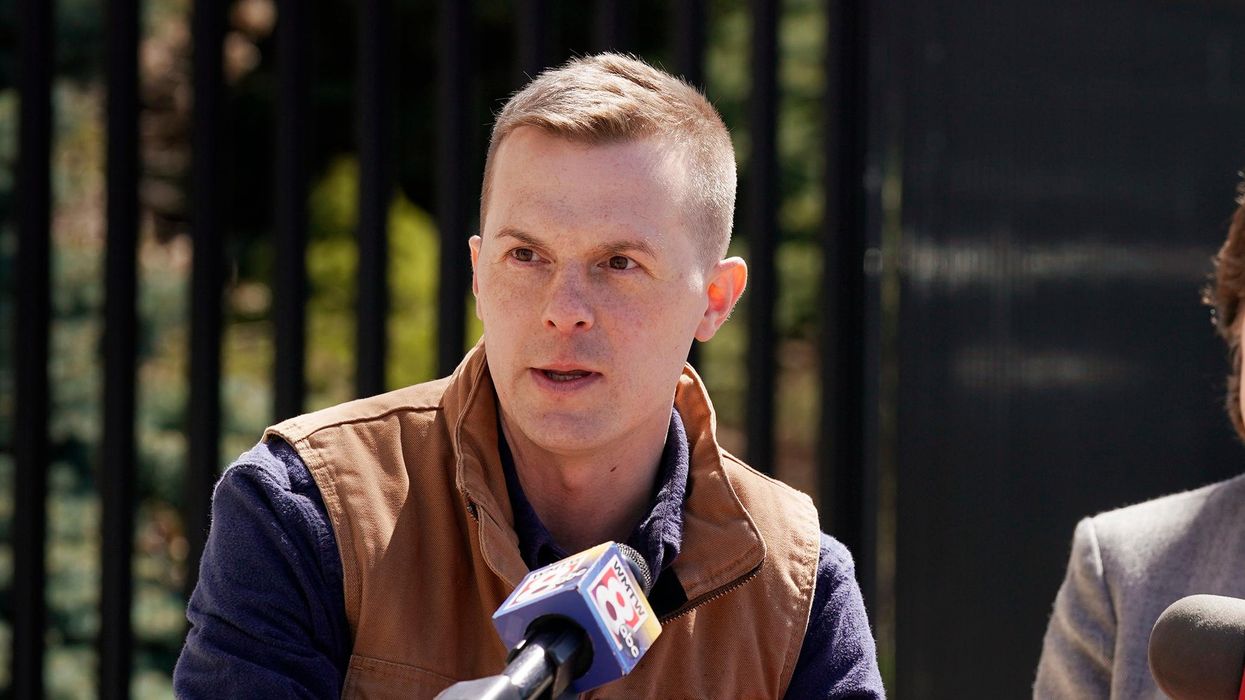
"It shouldn't have to take a tragedy in your own state to come around, but we welcome Rep. Golden in the fight to ban these weapons," said George Takei.
Progressives in Congress and on social media praised U.S. Rep. Jared Golden—one of the most conservative House Democrats—after he reversed course and embraced a ban on assault weapons following Wednesday night's mass shooting that left 18 people dead and 13 others wounded in his hometown of Lewiston, Maine.
"I have opposed efforts to ban deadly weapons of war, like the assault rifle used to carry out this crime," Golden said during a Thursday press conference, referring to the previous night's massacre at multiple locations. "The time has now come for me to take responsibility for this failure, which is why I now call on the United States Congress to ban assault rifles like the one used by the sick perpetrator of this mass killing in my hometown."
"For the good of my community, I will work with any colleague to get this done in the time that I have left in Congress," said Golden, a Marine Corps veteran who has broken with his party to vote against gun control measures including universal background checks. "To the people of Lewiston, my constituents throughout the 2nd District, to the families who lost loved ones, and to those who have been harmed, I ask for forgiveness and support as I seek to put an end to these terrible shootings."
Numerous progressive U.S. lawmakers took to social media to thank Golden.
"This is so powerful from my colleague Rep. Golden. Thank you for your humility and for giving everything you have to this fight to ban assault rifles," Congressional Progressive Caucus Chair Pramila Jayapal (D-Wash.) said on social media.
"My heart grieves for every lost life in your community and all those who are hurting and afraid," she added. "We must respond with action."
Rep. Barbara Lee (D-Calif.) asserted that "if more members of Congress had your courage, we could finally get these weapons of war off the streets and out of our communities."
Congresswoman Becca Balint (D-Vt.) said: "Jared Golden is facing a hard reelection campaign. He is making a choice that is the right thing to do for his district and for this country."
Gun control campaigner Fred Guttenberg—whose 14-year-old daughter Jamie Guttenberg was murdered in the 2018 Marjory Stoneman Douglas High School massacre in Parkland, Florida—said he is "truly thankful" that Golden "just apologized and called for an assault weapons ban."
"Honestly, though, I am sad and angry," he added. "Just imagine if he had before... Parkland or any other shooting. My message to any elected person is to support these measures before it happens in your community and before you need to apologize."
Actor and activist George Takei wrote that "one of the most conservative Democrats in the House, Jared Golden from Maine, has apologized for opposing a ban on assault weapons in the wake of the deadly shootings in his state."
"It shouldn't have to take a tragedy in your own state to come around, but we welcome Rep. Golden in the fight to ban these weapons," he added.
Maine's other House member, Rep. Chellie Pingree, told the Portland Press Herald Thursday that she has "always believed there was no good reason to own a military-style assault weapon."
Meanwhile, Republican U.S. Sen. Susan Collins of Maine—for whom Golden once worked on the Senate Homeland Security Committee—dodged reporters who on Thursday asked if she would support an assault weapons ban.
"I think it is more important that we ban very high-capacity magazines," she said. "I think that would have more input and more effectiveness. Certainly, there's always more that can be done."
Maine's other U.S. senator, Independent Angus King, expressed his incredulity over the shooting, noting what he called a "deep and long history of safe gun use in the state."
Hours before the massacre—allegedly perpetrated by an Army reservist with a history of mental health issues who remains on the run—both Collins and King voted for an amendment that critics say will make it easier for U.S. veterans with mental illness to keep or get guns. The measure passed 53-45.